Posted tagged ‘Funding terrorism’

Why Allying With Iran Helps ISIS

March 31, 2015

Why Allying With Iran Helps ISIS, Front Page Magazine, Daniel Greenfield, March 31, 2015

287x203xIslamic_State_IS_insurgents_Anbar_Province_Iraq1.jpg.pagespeed.ic.-peTL_37oH

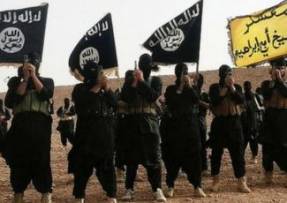
The Jihad is a machine for generating atrocities.

A new horror is deployed. Then it becomes routine. The horror of one decade, such as suicide bombing, has to be made dirtier and uglier by using women and children, by targeting houses of worship and families, and then finally superseded by the horror of another decade, mass beheadings.

Terrorism is a shock tactic. It only works if you’re horrified by it. If you get bored of ISIS beheading its victims, it will bring out child beheaders. It will set men on fire. Then it will have children set men on fire.

Like an acrobat juggling at a telethon, it’s always looking for ways to top its last trick.

In a crowded market, each Jihadist group has to be ambitious about its atrocities. No matter what horrifying thing an Islamic group did last year or last decade, another group will find a way to top it.

The old group will become the lesser evil. The new group will become the greater evil.

“If Hitler invaded Hell,” Churchill said of the Nazi invasion of the USSR, “I would at least make a favourable reference to the Devil in the House of Commons.”

There are a lot of favorable references to the Jihadist devil in Foggy Bottom where the terrible terror groups of yesteryear turn out to be misunderstood moderates who can help us fight this year’s devil. Obama’s Countering Violent Extremism program is tweeting Al Qaeda criticisms of ISIS. Iran and its Hezbollah terrorists no longer show up on the list of terror threats. Instead they’re our new allies.

When Western governments embrace the “lesser evil” doctrine, they ally with terrorists who are not fundamentally any different than the terrorists they are fighting. When ISIS broke through into the media, multiple stories emphasized that it was more extreme than Al Qaeda (despite having once identified as Al Qaeda.) But is a terrorist group that flies planes full of civilians into buildings full of civilians more moderate than a sister group that chops off heads on television? Is ISIS’s sex slavery more extreme than Iran’s practice of raping girls sentenced to death so that they don’t die as virgins?

The distinction between one evil and another is insignificant compared to their overall evil. The search for the lesser evil is really a search for ways to exonerate evil.

The Jihad creates endless greater evils. Today’s greater evil is tomorrow’s lesser evil. If another Jihadist group rises out of Syria that commits worse atrocities than ISIS, will we start thinking of the Islamic State’s rapists and headchoppers as moderates? The behavior of our diplomats suggests that we will.

Experts used the rise of ISIS to urge us to build ties with everyone from Hamas to Hezbollah to the Taliban to head off ISIS in their territories. The new president of Afghanistan is proposing apologies to the Taliban while defining ISIS as beyond the pale. Obama has chosen to turn over Iraq and Syria to Iran and its terrorist groups to fight ISIS.

If the process continues, then the United States will end up allying with terrorist groups to fight ISIS. And all this will accomplish is to make ISIS stronger while morally corrupting and discrediting our own fight against Islamic terrorism.

And if ISIS loses, there will always be a Super-ISIS that will be even worse.

We had few options in WW2, but ISIS is not the Wermacht. We don’t need to frantically scramble to ally with anyone against it; especially when the distinctions between it and our newfound allies are vague.

The Syrian opposition, that we armed and almost fought a war for, consists of Jihadists, many of them allied with Al Qaeda. But the Syrian government which we are now allied with, turned the Iraq War into a nightmare by funneling the suicide bombers across the border that ISIS used to kill American soldiers.

ISIS may be officially at war with the Syrian government, but it’s also selling oil to it, and there have been accusations that there is a secret understanding between Assad and ISIS.

How unlikely is that? Almost as unlikely as a Hitler-Stalin pact.

The Communists and the Nazis were tactically intertwined, despite their official ideological enmities, because they shared many of the same enemies (moderate governments, the rest of Europe) and many of the same goals (seizing territory, radicalizing populations, shattering the European order).

Iran and Sunni terrorist groups, including Al Qaeda, cooperate based on similar premises. That was why Al Qaeda could pick up terror tips from Iranian terror groups to prep for September 11. Both Sunni and Shiite Islamic revolutionaries want to topple governments, conquer territory and radicalize populations. Despite their mutual enmity, they share bigger enemies, like America, and bigger goals, destroying the current map of the Middle East and remaking it along completely different lines.

The collapse of the Iraqi military that led to ISIS marching on Baghdad was caused by its Shiite officer corps inserted into place by a sectarian Shiite government. That government was not interested in maintaining the American fantasy of a multicultural democratic Iraq. It wanted to crush the Sunnis and Kurds through a partnership with Iran. The collapse of the Iraqi military endangered its survival, but fulfilled its overall goal of driving recruitment to Shiite militias in Iraq trained and commanded by Iran.

Obama’s avoidance of Iraqi entanglements and panic at the ISIS juggernaut led him to a deal with Iran. The deal effectively gives control of Iraq to its Shiite proxies. The sheiks of the Sunni Awakening were ignored when they came to Washington. The Kurds have trouble getting weapons. Instead they’re going to the Shiite militias. By using ISIS to create a crisis, Iraq’s Shiite leaders forced a US deal with Iran.

ISIS has killed a lot of Shiites, but for Iran taking over Iraq is a small price to pay for losing the pesky ‘not really Shiite’ Alawites of Syria. And it hasn’t actually lost them yet.

Iran’s ideal situation would be an ISIS Caliphate spread across parts of Syria and Iraq that would destabilize the Sunni sphere. Like the Hitler-Stalin pact, such an arrangement could end with the ISIS Hitler stabbing the Iranian Stalin in the back, but ISIS does not actually need to defeat Assad. It is not a nationalist group and doesn’t believe in nations. Its focus is on ruling Sunni territories.

Sunni nations have far more to worry about from ISIS than Iran does. Its advance challenges the bonds that hold their nations together. Its goal is the destruction of the Sunni countries and kingdoms.

That is also Iran’s goal.

Both the USSR and Nazi Germany described Poland as an illegitimate child of Versailles. Iran and the Sunni Islamists likewise view the countries of the Middle East as illegitimate children of Sykes-Picot with Israel standing in for Poland as the infuriating “foreign-created” entity ruled by a “subject” people.

ISIS and Iran want to tear down those old borders and replace them with different allegiances. The USSR and the Nazis elevated ideology and race over the nation state. Iran and ISIS elevate the Islamic religion over the nation state. It’s an appeal that can destroy the Sunni nations that block Iran’s path to power.

The trouble with the “lesser evil” doctrine is that the lesser evil is often allied with the greater evil. Hitler used Stalin to cut off any hope of support for Eastern Europe. Stalin then used Hitler to conquer Eastern Europe. While huge numbers of Russians died, Stalin got what he wanted. And that’s all he cared about.

Shiites are dying, but Iran is getting what it wants from ISIS.

Before we start saying favorable things about the devil, we might want to think about the hell we’re getting into.

Obama’s Kabuki dance with Iran fueling mullahs’ hegemony in Middle East

March 26, 2015

Obama’s Kabuki dance with Iran fueling mullahs’ hegemony in Middle East, BreitbartJames Lyons, March 25, 2015

(The present House of Representatives, despite a Republican majority, is very unlikely to bring a bill of impeachment. If it did the present Senate, despite a modest Republican majority, would not convict; that would require a two-thirds majority of the Senators present. We are stuck with Obama at least until January of 2017– DM)

ap_ap-photo681-640x426The Associated Press

The current Kabuki dance ongoing in Geneva between Secretary of State John Kerry and Iranian Foreign Minister Mohammad Jamad Zarif regarding an agreement on Iran’s nuclear weapons program is a sham. Its outcome was pre-ordained many years ago by President Obama in his secret communications with the Iranian mullahs in 2008– at least according to one report.

These secret communications were exposed in a August 29, 2014 article written by Michael Ledeen in PJ Media and drew little attention then, but now must be addressed. According to Ledeen, shortly after Barack Obama clinched the Democratic nomination for president on June 3, 2008, he also opened a secret communication channel to the Iranian mullahs.  The message was that they should not sign any nuclear agreement with the Bush administration on preventing Iran from achieving a nuclear weapon capability. He informed them that he would be much easier to deal with once he assumed the presidency. He further assured the mullahs that he was a “friend” of the Iranian theocracy and that they would be very happy with his policies.

Today, Iran is the world’s leading state sponsor of terrorism that has been “at war” with the United States since the 1979 takeover of our Tehran U.S. Embassy. Since then, Iran has directed many “acts of war” against the United States that have cost the loss of thousands of American lives. Most importantly, Iran provided the key material and training support to the 9/11 hijackers, which cost the lives of 3,000 innocent Americans.

The secret channel was conducted through Ambassador William G. Miller, who previously served in Iran during the Shah’s reign. The Ambassador confirmed to Ledeen the aforementioned communications he personally held with the Iranian mullahs on behalf of candidate Obama during the 2008 campaign. The Iranian mullahs apparently believed the message since on July 20, 2oo8, the New York Times reported “Nuclear Talks with Iran End on a Deadlock.”  The main reason was that Iran would not address the “international demands that it stop enriching uranium.”  What a surprise!

The shocking fact is that candidate Obama secretly told the Iranian mullahs not to make a deal until he assumed the presidency, according to Ledeen’s report. They would then be able to make a much better agreement with him – and that’s exactly what’s happening. Some would consider what candidate Obama did was treason.

President Obama abandoned the requirement that Iran stop enriching uranium.  The result has been that Iran’s nuclear program has been greatly expanded with more secret underground facilities and expanded capability during the course of the long, drawn out negotiations. When the interim agreement, called the “Joint Plan of Action,” was announced in late 2013, the Iranian president openly bragged that the West had finally acknowledged Iran’s right to its uranium enrichment program.

Iran’s chief negotiator, Foreign Minister Zarif, furthermore bragged that Iran “did not agree to dismantle anything; not its centrifuges; not its ballistic missile program; not its nuclear programs.”  It also did not give up its role as the leading state sponsor of terrorism. By his cooperation with Iran in combatting the Islamic State, he is actually sanctioning de facto Iranian hegemony throughout the Persian Gulf region.

Andy McCarthy, in his book Faithless Execution, lays out a very detailed and logical case for President Obama’s impeachment. Even Liberal law professors are now talking about Obama’s many abuses of power, too many to list here.  A summary of President Obama’s extensive violations of law and dereliction of duty are covered on pages 11-26 of Faithless Execution. President Obama’s use and abuse of power is clearly out of control. We are in a Constitutional crisis.

The Constitution vests in the House of Representatives “the sole power of impeachment.”  With a Republican controlled House of Representatives, a simple House Majority can vote out articles of impeachment. However, successfully impeaching a president means removing him from office. Removal requires the president’s conviction on articles of impeachment by a two-thirds vote of the Senate. Even with a Republican controlled Senate, this will require much work.

Clearly the Speaker of the House of Representatives must start the process. If the current Speaker is unable to find the courage to start the impeachment proceedings, then he should resign. The House members should elect a new Speaker who is prepared to live up to his Oath of Office and protect the Constitution. The survival of America as we know it, as the shining city on the hill, must come first before any party politics.

The Kobani Precedent

March 25, 2015

The Kobani Precedent, [Bary] Rubin Center, March 25, 2015

(Whose side are “we” on in Iraq? Not the Kurds. Why not? Do “we” prefer an Iranian theocracy with nukes?– DM)

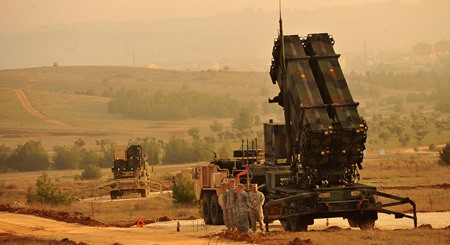
???????????????????U.S. Service members stand by a Patriot missile battery in Gaziantep, Turkey, Feb. 4, 2013, during a visit from U.S. Deputy Secretary of Defense Ashton B. Carter, not shown. U.S. and NATO Patriot missile batteries and personnel deployed to Turkey in support of NATO’s commitment to defending Turkey’s security during a period of regional instability. (DoD photo by Glenn Fawcett)

Unlike in Syria . . . in Iraq the US relates to the official government, mistakenly, as an ally.  This is leading to a potentially disastrous situation  whereby US air power is currently partnering with Iran-supported Shia militias against the Islamic State.

The most powerful of these militias have a presence in the government of Iraq. But they do not act under the orders of the elected Baghdad government, but rather in coordination with their sponsors in the Qods Force of the Iranian Revolutionary Guards Corps.

The Kurds, because of the existence among them of a secular, pro-western nationalist politics with real popular appeal, have unsurprisingly emerged as the only reliable partner.    On both the Shia and the Sunni sides, the strongest and prevailing forces are anti-western.

This reality is denied both by advocates for rapprochement with Iran, and by wishful-thinking supporters of the Syrian rebellion.  But it remains so.

*****************

Recently,  I attempted to undertake a reporting trip into the Kurdish Kobani enclave in northern Syria.  It would not have been my first visit, neither to Syria nor to Kobani.  For the first time, however, I found myself unable to enter.  Instead, I spent a frustrating but, as it turns out, instructive four days waiting in the border town of Suruc in south-east Turkey before running out of time and going home.

The episode was instructive because of what it indicated regarding the extent to which Kurdish control in the enclaves established in mid 2012 is now a fact acknowledged by all neighboring players, including the enemies of the Kurds.  This in itself has larger lessons regarding US and western policy in Syria and Iraq.

But I am getting ahead of myself.  First, let me complete the account of the episode on the border.    My intention had been to enter Kobani ‘illegally’ with the help of the Kurdish YPG and local smugglers.  This sounds more exciting than it is.    I have entered Syria in a similar way half a dozen times over the last two years, to the extent that it has become a not very pleasant but mundane procedure. This time, however, something was different.  I was placed in a local center with a number of other westerners waiting to make the trip. Then, it seemed, we were forgotten.

The westerners themselves were  an interesting bunch, whose varied presence was an indication of the curious pattern by which the Syrian Kurdish cause has entered public awareness in the west.

There was a group of European radical leftists, mainly Italians, who had come after being inspired by stories of the ‘Rojava revolution.’  A little noted element of the control by the Syrian franchise of the PKK of de facto sovereign areas of Syria has been the interest that this has generated in the circles of the western radical left.  These circles are ever on the lookout for something which allows their politics to encounter reality, in a way that does not bring immediate and obvious disaster.  As of now, ‘Rojava,’ given the leftist credentials of the PKK, is playing this role.  So the Europeans in question  wanted to ‘contribute’ to what they called the ‘revolution.’

Unfortunately, their preferred mode of support was leading to a situation of complete mutual bewilderment between themselves and the local Kurds.   Offered military training by their hosts, the radical leftists demurred.  They would not hold a gun for Rojava before they had seen it and been persuaded that it did indeed represent the peoples’ revolution that they hoped for.

Instead, they had a plan for the rebuilding of Kobani along sustainable and environmentally friendly lines, using natural materials  In addition, the health crisis and shortage of medicines in the devastated enclave led the radicals to believe that this might offer an appropriate context for popularizing various items of alternative and naturopathic medicine about which they themselves were enthusiastic.  (I’m not making any of this up).

All this had elicited the predictable reaction from the Kurds, who were trying to manage a humanitarian disaster and a determined attempt by murderous jihadis to destroy  them.  ‘Perhaps you could do the military training first and then we could talk about the other stuff?’ suggested Fawzia, the nice and helpful representative of the PYD who was responsible for us.  This led to further impassioned and theatrical responses from the Italians.

Apart from this crowd, there was a seasoned Chilean war reporter who looked on the leftists with impatience.  He was looking to get down to the frontlines south of Kobani, where the YPG was trying to cut the road from Raqqa to Aleppo at an important point close to the Euphrates.

Also, there was a polite and friendly lone American, a Baptist Christian, who had come to volunteer his services to the YPG.  That was us.

But as the days passed, it became clear that none of us appeared to be getting anywhere near Kobani any time soon.

The reasons given for the delay were plentiful, and unconvincing.  ‘It is the weather,’ Fawzia would say vaguely, ‘too much mud.’  But the presence of mud on the border in February was hardly a new development, so this couldn’t be the reason.

Finally, frustrated at the lack of information, I called a PKK friend based in Europe and asked for his help in finding out why we weren’t  moving.  He got back to me a little later.  ‘It seems the Turkish army is all over the border, more than usual. That’s the reason,’ he told me.

This was more plausible, if disappointing.  After four days on the border, I was out of time and set off back for Gaziantep and then home.  The Italians went to Diyarbakir to take part in a demonstration.  The Chilean and the American volunteer stayed and waited.

When I got back to Jerusalem, all rapidly became clear.  News reports were coming in about a large operation conducted by the Turkish army through Kobani and into Syria.  The operation involved the evacuation of the Turkish garrison at the tomb of Suleiman Shah, south of the enclave.  The American volunteer sent me a picture of the Turkish tanks on tank transporters driving though Suruc at the conclusion of the operation.

This operation was astonishing on a number of levels.

Despite stern Turkish denials, it could only have been carried out on the basis of full cooperation between the Turkish armed forces and the Kurdish fighters of the YPG in Kobani.  Obviously, any unauthorized entry of Turkish troops into the Kurdish canton would have meant an armed battle.

During the fight for Kobani last year, the Turkish government was very clearly quite content for the enclave to fall.  The Turkish army waited on the border, as the prospect of a generalized slaughter of the Kurds in Kobani came close to realization.

But of course, the slaughter didn’t happen.  In the end, the partnering of US air power with the competent and determined forces of the YPG on the ground delivered the first real defeat to the forces of the Islamic State in Syria.

This effective partnering has continued, and has now become the main military element in northern Syria in the battle against IS.

The combination of the YPG and the USAF is now nudging up to a second strategic achievement against the jihadis – namely, the cutting of the road from Tel Hamis to the town of al-Houl on the Iraqi border.   This road forms one of the main transport arteries linking the Islamic State’s conquests in Iraq to its heartland in the Syrian province of Raqqa.  If the links are cut, the prospect opens for the splitting of the Islamic State into a series of dis-connected enclaves.

The YPG-US partnership is particularly noteworthy, given that the YPG is neither more nor less than the Syrian representative of the PKK.  The latter, meanwhile, is a veteran presence on the US and EU lists of terror organizations.  Despite a faltering peace process, the PKK remains in conflict with Turkey, a member of NATO.

But the reality of the Kurdish-US alliance in northern Syria has clearly now been accepted by the Turks as an unarguable fait accompli, to the extent that they are now evidently willing to work together with the armed Syrian Kurds, where their interests require it.

It is an astonishing turnabout in the fortunes of the Kurds of Syria, who before 2011 constituted one of the region’s most brutally oppressed, and most forgotten minority populations.

This raises the question as to why this reversal of fortune has taken place.

Why is the YPG the chosen partner of the Americans in northern Syria, just as the Kurdish Pesh Merga further east is one of the preferred partners on the ground in Iraq?

The answer to this is clear, but not encouraging.  It is because in both countries, the only reliable, pro-western and militarily effective element on the ground is that of the Kurds.

Consider:  in northern Syria, other than the forces of the Islamic State, there are three other elements of real military and political import.  These are the forces of the Assad regime, the al-Qaeda affiliated Jabhat al-Nusra and the YPG.

In addition, there are a bewildering variety of disparate rebel battalions, with loyalties ranging from Salafi Islamism to Muslim Brotherhood style Islamism, to non-political opposition to the Assad regime.  Some of these groups operate independently.  Others are gathered in local alliances such as the Aleppo based Jabhat al-Shamiya (Levant Front), or the Syria-wide Islamic Front, which unites Salafi factions.

Despite the reported existence of a US staffed military operations room in Turkey, the latter two movements are either too weak, or too politically suspect (because of their Islamist nature), to form a potential partner for the US in northern Syria.

Nusra is for obvious reasons not a potential partner for the US in the fight against the Islamic State.  And the US continues to hold to its stated  goal that Bashar Assad should step down.  So the prospect of an overt alliance between the regime and the US against the Islamic State is not on the cards (despite the de facto American alliance with Assad’s  Iran-supported Shia Islamist allies in Iraq).

This leaves the Kurds, and only the Kurds, to work with.  And the un-stated alliance is sufficiently tight for it to begin to have effects also on Turkish-Kurdish relations in Syria, as seen in the Suleiman Shah operation.

But what are the broader implications of this absence of any other coherent partner on the ground?

The stark clarity of the northern Syria situation is replicated in all essentials in Iraq, though a more determined attempt by the US to deny this reality is under way in that country.

In Iraq, there is a clear and stated enemy of the US (the Islamic State), a clear and stated Kurdish ally of the west (the Kurdish Regional Government and its Pesh Merga) and an Iran-supported government which controls the capital and part of the territory of the country.

Unlike in Syria, however, in Iraq the US relates to the official government, mistakenly, as an ally.  This is leading to a potentially disastrous situation  whereby US air power is currently partnering with Iran-supported Shia militias against the Islamic State.

The most powerful of these militias have a presence in the government of Iraq. But they do not act under the orders of the elected Baghdad government, but rather in coordination with their sponsors in the Qods Force of the Iranian Revolutionary Guards Corps.

It is possible that the current partnering with Shia Islamist forces in Iraq is the result of a general US attempt now under way to achieve a historic rapprochement with Iran, as suggested by Michael Doran in a recent essay.  Or it may be that this reality has emerged as a result of poor analysis of the realities of the Levant and Iraq, resulting in a confused and flailing policy.  But either way, the result is an astonishing mess.

In northern Syria, the obvious absence of any partners other than the Kurds has produced a momentary tactical clarity.  But as the larger example of Iraq shows, this clarity is buried in a much larger strategic confusion.

This confusion, at root, derives from a failure to grasp what is taking place in Syria and in Iraq.

In both countries, the removal or weakening of powerful dictatorships has resulted in the emergence of conflict based on older, sub-state ethnic and sectarian identities.  The strength and persistence of these identities is testimony to the profound failure of the states of Syria and Iraq to develop anything resembling a sustainable national identity.  In both Syria and Iraq, the resultant conflict is essentially three-sided.  Sunni Arabs, Shia/Alawi Arabs and Kurds are fighting over the ruins of the state.

Because of the lamentable nature of Arab politics at the present time, the form that both Arab sides are taking is that of political Islam.   On the Shia side, the powerful Iranian structures dedicated to the creation and sponsorship of proxy movements are closely engaged with the clients in both countries (and in neighboring Lebanon.)

On the Sunni Arab side, a bewildering tangle of support from different regional and western states to various militias has emerged.  But two main formations may be discerned. These are the Islamic State, which has no overt state sponsor, and Jabhat al-Nusra, which has close links to Qatar.

In southern Syria, a western attempt to maintain armed forces linked to conservative and western-aligned Arab states (Jordan, Saudi Arabia) has proved somewhat more successful because of the close physical proximity of Jordan and the differing tribal and clan structures in this area when compared with the north.  Even here, however, Nusra is a powerful presence, and Islamic State itself recently appeared in the south Damascus area.

The Kurds, because of the existence among them of a secular, pro-western nationalist politics with real popular appeal, have unsurprisingly emerged as the only reliable partner.    On both the Shia and the Sunni sides, the strongest and prevailing forces are anti-western.

This reality is denied  both by advocates for rapprochement with Iran, and by wishful-thinking supporters of the Syrian rebellion.  But it remains so.  What are its implications for western policy?

Firstly, if the goal is to degrade the Islamic State, reduce it, split it, impoverish it, this can probably be achieved through the alliance of US air power and Kurdish ground forces.  But if the desire, genuinely, is to destroy the Islamic State, this can only be achieved through the employment of western boots on the ground.  This is the choice which is presented by reality.

Secondly, the desire to avoid this choice is leading to the disastrous partnering with Iraqi Shia forces loyal to Iran.  The winner from all this will be, unsurprisingly,  Iran. Neither Teheran nor its Shia militias are the moral superiors to Islamic State. The partnering with them is absurd both from a political and an ethical point of view.

Thirdly, the determination to maintain the territorial integrity of ‘Syria’ and ‘Iraq’ is one of the midwives of the current confusion.  Were it to be acknowledged that Humpty cannot be put back together again, it would then be possible to accurately ascertain which local players the west can partner with, and which it can not.

As of now, the determination to consider these areas as coherent states is leading to absurdities including the failure by the US to directly arm the pro-US Pesh Merga because the pro-Iranians in Baghdad object to this, the failure to revive relations with and directly supply Iraqi Sunni tribal elements in IS controlled areas for the same reason,  and the insistence on relating to all forces ostensibly acting on behalf of Baghdad as legitimate.

Ultimately, the mess in the former Syria and Iraq derives from a very western form of wishful thinking that is common to various sides of the debate in the west.  This is the refusal to accept that political Islam, of both Shia and Sunni varieties, has an unparalleled power of political mobilization among Arab populations in the Middle East at the present time, and that political Islam is a genuinely anti-western force, with genuinely murderous intentions.

For as long as that stark reality is denied, western policy will resemble our Italian leftist friends on the border, baffled and bewildered as they go about proposing ideas and notions utterly alien to and irrelevant to the local situation.

The reality of this situation means that the available partners for the west are minority nationalist projects  such as that of the Kurds (or the Jews,) and traditional, non-ideological conservative elites – such as the Egyptian military, the Hashemite monarchs, and in a more partial and problematic way, the Gulf monarchs.  Attempts to move beyond this limited but considerable array of potential allies will result in the strengthening of destructive, anti-western Islamist forces in the region, of either Sunni or Shia coloration.

As for the Syrian Kurds, they deserve their partnership with US air power, and the greater security it is bringing them.

The American Baptist volunteer, to conclude the story, made it across the border and is now training with the YPG.  He, at least, has a clear sense of who is who in the Middle East.  Hopefully, this sense will eventually percolate up to the policymaking community too.
Grand Gas Project Signifies Futility of Anti-Iran Sanctions: President

March 17, 2015

Grand Gas Project Signifies Futility of Anti-Iran Sanctions: President, Tasnim News Agency (Iranian), March 17, 2015

(Iran claims to have done quite well with sanctions, or what sanctions remained after November of 2013, despite all the money it has been spending in Iraq and Syria, not to mention terrorism elsewhere. Why, then, the demand that all sanctions be removed instanter? Will Kerry ask? Not likely.– DM)

139312261516169584940403

TEHRAN (Tasnim) – Iranian President Hassan Rouhani described the inauguration of the 12th development phase of the massive offshore South Pars gas field as a testimony to the ineffectiveness of the Western sanctions against Iran.

“The inauguration of the 12th phase illustrates that sanctions, pressures, and illegal and inhumane measures cannot push the (Iranian) nation back,” President Rouhani said in a Tuesday ceremony in the southern province of Bushehr for the official coming into service of the giant gas field’s 12th phase.The president explained that Iran’s gas production now exceeds 100 million cubic meters, stressing that such a great job has been accomplished while the country has been slapped with the cruel sanctions.Iran has also experienced economic growth and inflation reduction with the sanctions being in place, Rouhani added.

According to Oil Minister Bijan Namdar Zanganeh, the 12th phase, which has been totally designed and developed by the local experts, has cost more than $7.5 billion.

The 12th phase can produce 80 million cubic meters of gas and 120,000 barrels of gas condensates on a daily basis, bringing the country $17.5 million in revenue every day.

Zanganeh has also hailed the new phase as a helpful source of revenue while Iran is hit by “cruel economic sanctions” and the global oil price decline has diminished the country’s financial resources.

The 12th phase extends over an area of approximately 205 square kilometers along Iran-Qatar joint border. Located at a distance of 105 kilometers from the coast, the 12th phase alone contains about 5 percent of the whole gas reserves in the South Pars filed.

South Pars is part of a wider gas field that is shared with Qatar. The larger field covers an area of 9,700 square kilometers, 3,700 square kilometers of which are in Iran’s territorial waters (South Pars) in the Persian Gulf.

US intel. scraps Iran, Hezbollah from terrorist threats list

March 16, 2015

US intel. scraps Iran, Hezbollah from terrorist threats list, Iran Daily, March 16, 2015

(True or false? I have seen nothing to confirm the report in the “legitimate media,” but that’s not surprising. Here, thanks LS, is a link to the cited report. Iran appears to remain on the list (at page 14). Hezbollah appears, but as a victim of Sunni “extremists” in Lebanon.– DM)

image_650_365

The US National Intelligence has removed Iran and the Lebanese resistance movement, Hezbollah, from its list of “terrorist threats.”

US Director of National Intelligence James Clapper scrapped Iran and Hezbollah from the list in an annual report recently delivered to the US Senate, citing their efforts in fighting terrorists, including the ISIL Takfiri group, Press TV reported.

The unclassified version of the report titled “Worldwide Threat Assessment of the US Intelligence Communities,” which was released on February 26, 2015, noted Iran’s efforts to battle extremists, including those of the ISIL terrorist group, who were perceived to constitute the greatest terrorist threat to American interests worldwide.

Highlighting Iran’s regional role, the report pointed to the Islamic Republic’s “intentions to dampen sectarianism, build responsive partners, and deescalate tensions with Saudi Arabia.”

Iran has “overarching strategic goals of enhancing its security, prestige, and regional influence [that] have led it to pursue capabilities to meet its civilian goals,” the report said.

The report also said that Hezbollah is countering ISIL Takfiri terrorists in Syria and Iraq.

The ISIL Takfiri terrorists have taken control of swathes of territory in Iraq and Syria since last year.

Iran has repeatedly stressed that it will not interfere militarily in Iraq and Syria, but the Islamic Republic continues to provide support to both countries against ISIL in the form of defense consultation and humanitarian aid.

Obama’s Iran scheme is laid bare

March 13, 2015

Obama’s Iran scheme is laid bare, Washington Post, Jennifer Rubin, March 13, 2015

We surmised yesterday that the Obama administration had the idea to go to the United Nations to pass by resolution what Congress would never agree to: a lifting of sanctions on Iran in exchange for a nearly worthless deal in which Iran would keep thousands of centrifuges and get a 10-year glide path to nuclear breakout. Sen. Bob Corker (R-Tenn.), seeing what was afoot, demanded an explanation from the White House, calling such a scheme an “affront to the American people.”

On Thursday evening, after being pressed by irate Republicans, the National Security Council issued a defensive statement insisting that it would do no such thing. The story was handed to BuzzFeed:

The U.S. has “no intention” of using the United Nations to lock into place any potential deal with Iran over its nuclear program, a senior U.S. official said on Thursday.

The United States will not be “converting U.S. political commitments under a deal with Iran into legally binding obligations through a UN Security Council resolution,” Bernadette Meehan, spokesperson for the U.S. National Security Council, said in a statement emailed to BuzzFeed News.

“Past UNSC resolutions on Iran have called for a negotiated settlement of the Iran nuclear issue, and accordingly we would fully expect the UNSC to ‘endorse’ any deal with Iran and encourage its full implementation so as to resolve international concerns about Iran’s nuclear program,” Meehan continued. “But any such resolution would not change the nature of our commitments under such a deal, which would be wholly contained in the text of that deal.”

What is going on here? For starters, the existing U.N. resolutions obtained by President George W. Bush are much, much stricter than anything President Obama has indicated would be forthcoming. Those resolutions don’t permit Iran to keep thousands of centrifuges. They don’t give Iran a 10-year sunset. They require complete dismantling of Iran’s illicit program, full inspections and an accounting of past illicit behavior. In other words, any new deal negotiated by the administration would be weaker than — and in fact, in violation of — existing U.N. resolutions. That is why Obama would need to go back to the U.N., to water down, to cave into Iran’s demands.

This is not an original thought. For quite some time, former U.N. spokesman Richard Grenell has been warning that this is exactly what is coming down the pike. Last year Grenell wrote: “President Obama’s Geneva proposal to the permanent members of the United Nations Security Council allowing Iran to enrich some uranium violates previous UN resolutions demanding the Islamic Republic stop ‘all’ uranium enrichment activity. To avoid a violation of current UN resolutions, the permanent members must ask the entire Security Council to vote to weaken and supersede their previous demands.” He continued, “The UN’s four rounds of hard-fought sanctions on Iran and several other resolutions demanding compliance call for a full suspension of all enrichment activities, including research and development, then full verification of that suspension before negotiations on a permanent diplomatic solution begin. The sequencing was strategic. It was designed to build international confidence in a secretive country’s deceitful past.” But Obama deliberately departed from these restrictions, so he has always planned to go back. Otherwise, his deal would be in violation of existing international law.

That brings us to U.S. law. The U.N. resolutions don’t automatically become law, the administration was forced to concede. But under currentU.S. sanctions law, the president can waive them. And that is just what Obama intends to do. He will get the U.N. to water down international sanctions while he suspends U.S. sanctions. Why is this so dangerous? Mark Dubowitz, whose research and expertise helped lawmakers to construct the sanctions legislation, e-mails me:

President Obama risks undermining the entire sanctions edifice on which continued economic leverage depends. A future US president will need this leverage to enforce an Iran deal so that he can respond to Iranian noncompliance without resorting to either military strikes or surrender. But it increasingly appears that UN, EU and perhaps some US sanctions will be suspended and then reimposed or snap backed if Iran cheats. The snapback is a delusion. Reimposing sanctions is harder than it sounds. Amongst the United States, EU and UNSC, there are bound to be significant disputes on the evidence, differing assessments of the seriousness of infractions, fierce debates about the appropriate level of response and concerns about Iranian retaliation.

It’s also important to remember that when sanctions were first implemented, it took years before a critical mass of international companies terminated their business ties with Tehran. Once strictures are loosened, with so many international companies positioning to get back into Iran, it will be very difficult to persuade these companies to leave again. The Iranian regime will also adopt countermeasures to minimize its economic exposure to Western pressure when it anticipates that it will violate any nuclear agreement.

Obama’s legacy becomes demolition of the sanctions regime and an opening for Iran to either make a dash for breakout or to wait 10 years and get its stamped permission slip. The word for this is “containment.” The next president can reverse the waiver, but the Iranian economy will be on the road to recovery and the next president’s options will be severely limited. Iran might even have a bomb by then. As one conservative wag cracked, “If you like your sovereignty you can keep your sovereignty.” Yes, Obama tells us many soothing things but does whatever he wants.

What can Congress do? Well, it can express bipartisan outrage and pass a resolution deploring the president’s end run. But it must do more. Ideally, one would summon a bipartisan veto-proof majority to fix U.S. sanctions in law with no presidential waiver unless a deal meeting the existing U.N. resolutions was agreed upon. (I suppose Congress could use the power of the purse to defund our U.N. contributions, but let’s not get carried away.) But we also have to consider that this might simply be unattainable or susceptible to the argument that Congress can’t constitutionally eliminate all executive discretion. The next best option would be to increase the threshold for waiving existing and new sanctions — in other words, to narrow severely the president’s ability to waive U.S. sanctions, and require officials in the intelligence community and/or the military to add their certification (and thereby put their own credibility on the line as well). For example, U.S. sanctions would not be waived unless and until Iran gave a complete accounting of past nuclear activities and dismantled the Arak facility, things that the Iranians have refused to do and are objective criteria the president and the intelligence community could not honestly certify have occurred.

We have seen this again and again from this president — the complete contempt for coequal branches of government and determination to act in ways contrary to our constitutional structure and overwhelming public opinion (84 percent of Americans don’t favor a 10-year glide path to Iran getting a bomb). In the case of immigration, it took the form of an executive order overriding existing immigration laws under the theory that the president was using “discretion” to delay deportation of certain illegal immigrants. That is now in the courts. But his dual strategy of sabotaging strict U.N. resolutions and waiving U.S. sanctions is far more dangerous and nefarious. It gives primacy to an international body over Congress and the laws of the United States. It assumes sole authority in foreign affairs, something not envisioned in the Constitution, which divides powers between the two branches. Lawmakers have every right to feel as though they were misled and are being entirely marginalized once again.

A senior Republican on Capitol Hill tells me, “Everyone knows, including Democrats, that Obama and [Secretary of State John] Kerry are dangerously close to cutting a bad deal and lifting sanctions and shutting out Congress. If you don’t believe that just ask Democrats privately. They know it.” He remarks, “Instead of talking about that, we have a parade of faux outrage about Republicans and protocol, first the Bibi [Netanyahu] speech and now the letter. Historians will wonder why we did nothing to curb Iranian expansionism or shut down the nuclear program.”

The American people should demand that Congress affix existing sanctions in non-waivable legislation and tighten them as envisioned under the Menendez-Kirk legislation unless the new deal does what the president and the existing U.N. resolutions originally pledged to do — deprive Iran of an enrichment capacity sufficient to make a bomb.

Moreover, voters must demand that 2016 candidates disclose whether they would continue Obama’s explicit appeasement of Iran. Perhaps if Congress acted and 2016 candidates pledge to refuse to carry out this charade, the president would stiffen his spine and use all that as leverage to extract more concessions from Iran. Former Texas governor Rick Perry issued a forceful statement on Thursday. Wisconsin Gov. Scott Walker has also said “Republicans need to ensure that any deal President Obama reaches with Iran receives congressional review. Unless the White House is prepared to submit the Iran deal it negotiates for congressional approval, the next president should not be bound [by] it. I will continue to express that concern publicly to the President and directly to the American people.” Non-candidate Mitt Romney, who garnered respect for having been right on so many Obama foreign policy debacles, reiterates the Israeli prime minister’s message: “Walk away from a Swiss-cheese agreement; institute even more punitive and crippling sanctions than have been imposed; and remove those sanctions only when Iran agrees to dismantle its nuclear enrichment capability and to submit to unrestricted inspections. Finally, if contrary to reason and expectation those sanctions don’t bring Iran to its senses, prepare for a kinetic alternative.” But where are other candidates? Jeb Bush sounded sympathetic about the circumstances giving rise to Sen. Tom Cotton’s letter but refused to say he would not abide by a rotten deal not approved by Congress. His caution conveys weakness. All the top 2016 contenders need to stand up on this one.

If Congress and the 2016 contenders act forcefully, the White House may have to rethink its gambit. If not, the Iranians will know they won’t have a free ride (relief from sanctions) for very long.

There is one more problem for Obama. Our Sunni allies are not dim. They have every reason to be alarmed. They are already taking steps to “to match the nuclear capabilities Iran is allowed to maintain as part of any final agreement reached with world powers. This could include the ability to enrich uranium and to harvest the weapons-grade plutonium discharged in a nuclear reactor’s spent fuel.” An Obama deal of the type described would set off a Middle East arms race. Perhaps Congress should invite the king of Jordan or of Saudi Arabia to speak.

No wonder the White House was infuriated with Cotton: By suggesting there is a flaw in Obama’s scheme to leave out Congress, he made it less likely that the Iranians will be rewarded for their conduct and more likely that the next president would be able to extract concessions from Iran. He shined a light on what the administration was up to and let Democratic colleagues know they were being entirely left out of the loop by the president of their own party. He alerted the public to Obama’s belief that the U.N., not Congress, will be driving the Iran appeasement train. If the result of Cotton’s letter is to cement sanctions in law so that the president cannot waive them in his quest to appease Iran, the senator will be heralded as a heroic defender of the West’s security. If the result is to set the stage for a massive repudiation of Democratic leadership in both the Senate (should Democrats choose to drag their feet on cementing sanctions) and the White House, we can draw some comfort in the prospect of a large GOP majority in both houses and a Republican in the White House. Maybe they will have the gumption to prevent Iran from going nuclear. In any case, the message to Iran should be clear: The president’s shenanigans will not guarantee your quest for nuclear power; the only real insurance that your regime will survive is a binding treaty — and that is not happening unless you comply with existing U.N. resolutions.

Obama Gives Sisi the Netanyahu Treatment

March 12, 2015

Obama Gives Sisi the Netanyahu Treatment, Commentary Magazine, March 11, 2015

[O]ne of the major changes that took place on President Obama’s watch was a conscious decision to downgrade relations with Cairo, a nation that his predecessors of both parties had recognized as a lynchpin of U.S. interests in the region. The current weapons supply squeeze is not only a blow to the efforts of a nation that is actually willing to fight ISIS and other Islamist terrorists; it’s a statement about what it means to be an American ally in the age of Obama.

******************************

In a Middle East where Islamist terror groups and the Iranian regime and its allies have been on the offensive in recent years, the one bright spot for the West in the region (other, that is, than Israel) is the way Egypt has returned to its old role as a bulwark of moderation and opposition to extremism. The current government led by former general Abdel Fattah el-Sisi has clamped down on Hamas terrorists and has been willing to deploy its armed forces to fight ISIS in Libya while also clamping down on a Muslim Brotherhood movement that seeks to transform Egypt into another Islamist state. Yet despite this, the Obama administration is unhappy with Egypt. Much to Cairo’s consternation, the United States is squeezing its government on the military aid it needs to fight ISIS in Libya and Sinai terrorists. As the Israeli government has already learned to its sorrow, the Egyptians now understand that being an ally of the United States is a lot less comfortable position than to be a foe like Iran.

The ostensible reason for the holdup in aid is that the Egyptian government is a human-rights violator. Those concerns are accurate. Sisi’s government has been ruthless in cracking down on the same Muslim Brotherhood faction that was running the country until a popular coup brought it down in the summer of 2013. But contrary to the illusions of an Obama administration that hastened the fall of Hosni Mubarak and then foolishly embraced his Muslim Brotherhood successors, democracy was never one of the available options in Egypt.

The choice in Egypt remains stark. It’s either going to be run by Islamists bent on taking the most populous Arab country down the dark road of extremism or by a military regime that will keep that from happening. The obvious Western choice must be the latter, and Sisi has turned out to be an even better ally than Washington could have dreamed of, as he ensured that the Brotherhood would not return to power, took on Hamas in Gaza, and even made public calls for Muslims to turn against religious extremists.

But rather than that endearing him to the administration, this outstanding record has earned Sisi the Netanyahu treatment. Indeed, like other moderate Arab leaders in the Middle East, Sisi understands that President Obama has no great love for his country’s allies. Besotted as he is by the idea of bringing Iran in from the cold, the American government has allied itself with Tehran in the conflicts in both Iraq and Syria. He also understands that both of those ongoing wars were made far worse by the president’s dithering for years, a stance that may well have been motivated by a desire to avoid antagonizing Iran by seeking to topple their Syrian ally.

But those issues notwithstanding, one of the major changes that took place on President Obama’s watch was a conscious decision to downgrade relations with Cairo, a nation that his predecessors of both parties had recognized as a lynchpin of U.S. interests in the region. The current weapons supply squeeze is not only a blow to the efforts of a nation that is actually willing to fight ISIS and other Islamist terrorists; it’s a statement about what it means to be an American ally in the age of Obama.

As the Times of Israel reported:

On Monday Sisi was asked what he and the other Arab allies thought of U.S. leadership in the region. It is hard to put his response in words, mainly due to his prolonged silence.

“Difficult question,” he said after some moments, while his body language expressed contempt and disgust. “The suspending of US equipment and arms was an indicator for the public that the United States is not standing by the Egyptians.”

It turns out that although the American administration recently agreed to provide the Egyptian Air Force with Apache attack helicopters; it has been making it increasingly difficult for Cairo to make additional military purchases.

For example, the U.S. is delaying the shipment of tanks, spare parts and other weapons that the army desperately needs in its war against Islamic State.

This development raises serious questions not only about U.S.-Egyptian relations but the administration’s vision for the region.

This is, after all, a time when the administration is going all out to make common cause with Iran, an open enemy that is currently the leading state sponsor of terrorism in the world. President Obama is pursuing a diplomatic arrangement that will strengthen the Iranian regime and guarantee the survival of a nuclear program that moderate Arabs see as being as much of a threat to them as it is to Israel or the West.

The Egyptians understand that Washington isn’t interested in their friendship. Nor is the administration particularly supportive of Cairo’s efforts to rein in Hamas or to fight ISIS. Indeed, the Egyptians are now experiencing the same sort of treatment that has heretofore been reserved for the Israelis. That’s especially true in light of the arms resupply cutoff against Israel Obama ordered during last summer’s war in Gaza.

Despite flirting with Russia, Egypt may, like Israel, have no real alternative to the United States as an ally. Perhaps that’s why Obama takes it for granted. But if the U.S. is serious about fighting ISIS as opposed to just talking about it, Washington will have to start treating Egypt and its military as a priority rather than an embarrassment.

Dealing With the Iranian Death Cult

March 6, 2015

Dealing With the Iranian Death Cult, American ThinkerWarren Adler, March 2, 2015

The surprise attack on Pearl Harbor and the resultant bloodbath should stand as an example of how a rigidly brainwashed death cult like Iran will choose the apparent path of negotiation while hiding its lethal ambition under a camouflage of lies.

*****************

While Prime Minister Benjamin Netanyahu of Israel laid out a strong case for mistrusting Iranian intentions, he did not define the bedrock reason why Iran cannot be trusted. To do that, one must understand the captive mentality of the cult phenomena and how it distorts reason, brainwashes its adherents, and creates unquestioning followers.

For those of us with strong cognizant memories of the events before, during and after the stunning Japanese attack on Pearl Harbor on December 7th, 1941, the current negotiations with Iran to prevent this terror-sponsoring cultist state from developing a nuclear weapon seems chillingly similar.

Prior to that “day of infamy” as then President Franklin Roosevelt so aptly characterized it, the United States was locked in tense and complicated negotiations with Japan to settle conflicts that divided our two countries. They were many, involving a clash of perceived power divisions in the Pacific with underlying territorial and psychological issues leaving both countries at loggerheads.

The United States, satisfied that it had broken the Japanese military codes, felt secure enough that it could divine the Japanese positions on its statecraft and military plans. The Japanese, who had entered into a tripartite agreement with Hitler and Mussolini, felt secure in their military might and those of their Axis allies in the face of a largely militarily unprepared America to extract whatever concessions they were seeking from the United States.

It is true that America is not negotiating alone with Iran, but its position in the discussion and eventual outcome, by virtue of its historical leadership role, makes the comparison worth noting.

America in 1941 was facing comparative angst. President Roosevelt, who had promised to stay out of the war, was dealing with a reluctant public that had little appetite to enter the fray, although he had been persuaded by Winston Churchill to assist the Allies by providing armaments through the Lend-lease program. Even as negotiations with the Japanese proceeded, the Japanese had no intention of rapprochement and had actually been planning the assault on Pearl Harbor for many months before.

Worse, the American intelligence community was divided in their assessment of Japanese intentions and had not a clue about its cultist discipline. They were monstrously naive about the power of cult psychology and, unfortunately, they still are. Iran is run by death cult adherents operating under the guise of religion with all power, despite all the outward signs of alleged diversity, vested in one man.

Japan at that time was also being manipulated by cultists enmeshed in the doctrines of State Shinto, based on a degraded interpretation of the samurai Bushido code. They later initiated the suicide bomber pilot program, finding recruits eager to kill themselves for the emperor by smashing their planes into American ships. If that isn’t death cult conduct, then I’d like to know what is.

At the time of Pearl Harbor, Adolf Hitler, a charismatic and ruthless megalomaniac, had turned the Nazi Party into a brutal master race entitlement cult determined to make “Deutschland Uber Alles” a reality. Indeed, by then the Nazis had brainwashed the German people into the fanatic belief that they were going to fulfill that destiny in a thousand-year Reich, and Hitler had demonstrated his military prowess designed to reach that goal. He held total sway over the Germans, not unlike Ayatollah Khamenei and his cult followers in their control over Iran.

Nothing happens in Iran without the ayatollah’s approval. Indeed, the Islamic terrorist tentacles of the Iranian regime is considerable and unlikely to be deterred by mere negotiations. “Death to America” and “Death to Israel” are not just empty slogans. They are chosen statements of intent officially approved by the regime leader.

The State Shinto cult of emperor worship was manipulated by Japan’s power-hungry military to have the Japanese people believe in the inevitability of their own destiny to carve out their own empire in the Pacific. Indeed, they managed to persuade the revered Emperor Hirohito himself to agree to their machinations. His naive approval was all that was needed to bring the Japanese people on board, a typical cult scenario.

The weakest partner in this ménage a trois, Benito Mussolini, had earned himself some cred by an African adventure in Eritrea and North Africa.

Using the cult comparison, there seems to be little difference between Khomeini and Hitler, at least in terms of power. Hitler, like Khamenei today, calls the shots. Khamenei, his minions, and their vast network of Iranian-armed and financially-supported death cult Islamic terror cells is, by any rational measure, an existential danger to America, and certainly to Israel.

Indeed, nuclear bombs and long-range missiles in the hands of this cult could easily transform a mere perceived danger into a planetary disaster and fulfill their “death to” sloganeering.  Such power in the hand of the Iranian death cult will create a destructive capacity that by comparison makes Hitler’s armies seem like toy soldiers.

What history has taught us is that cults that have gained total power over their adherents will always use any means to gain their ends. They will employ any tactic that hastens their victory. They will lie, cheat, charm, brutalize, and kill anyone who stands in their way. They will demolish any obstacle that confronts them and inhibits their goals. They will dissimulate and deceive.

The idea that sanity will prevail when it comes to cult leaders is a false notion. Hitler, by the evidence of his suicide, appeared to have understood that death was a finality. Islamic terrorist’s have been brainwashed to believe that death, by sacrificing oneself to what they believe is their Prophet’s desire, is a continuation of physicality, offering perpetual pleasure through eternity in some imagined paradise.

The comparison with Pearl Harbor may seem farfetched and hysterical to some, but as 9/11 has illustrated, a cult in which adherents have no fear of death is a weapon of enormous power. Those who believe that leadership sanity and logic will prevail if Iran gets its bomb and actually uses it against their “Death to” objectives should understand that retaliation, which will surely come, could be welcomed by the Iranian perpetrators of the Jihad cult as a glorious suicide mission guaranteeing an entry ticket to their imagined paradise.

The surprise attack on Pearl Harbor and the resultant bloodbath should stand as an example of how a rigidly brainwashed death cult like Iran will choose the apparent path of negotiation while hiding its lethal ambition under a camouflage of lies.


Netanyahu tries to head off Iran’s machinations after Obama empowers Tehran as favored Mid East ally

March 2, 2015

Netanyahu tries to head off Iran’s machinations after Obama empowers Tehran as favored Mid East ally, DEBKAfile, March 1, 2015

Iran's Shite crescent

Netanyahu’s political rivals, while slamming him day by day, turn their gaze away from the encroaching Iranian forces taking up forward positions in Iraq, Syria and Lebanon, where they are busy fashioning a  Shiite Crescent that encircles Sunni Arab states as well as Israel.

It must be obvious that to bolster its rising status as the leading regional power, Iran must be reach the nuclear threshold – at the very least – if not nuclear armaments proper, or else how will Tehran be able to expand its territorial holdings and defend its lebensraum.

****************

Almost the last words Israeli Prime Minister Binyamin Netanyahu heard Sunday, March 1, as he took off for Washington to address Congress on Iran, was in effect “Don’t do it!” They came from a group of 180 senior ex-IDF military officers. After the personal abuse is weeded out of their message, what remains is that Netanyahu’s speech to a joint session of the US Congress Tuesday, March 3, was not worth making because it would damage relations with the US.

Maj. Gen. Amiram Levin, former Northern Command chief and ex-Deputy Director of the Mossad, put it this way: “Bibi, you are making an error in navigation; the target is Tehran not Washington.” He went on to say: “[Instead] of working hand in hand with the president,,, you go there and poke a finger in his eye.”

DEBKAfile’s analysts maintain that the navigation error is the general’s. Before shooting his slings and arrows at the Israeli prime minister’s office, he should long ago have taken note of President Barack Obama’s Middle East record in relation to Israel’s during his six years in the White House.

It took time to catch on to Obama’s two-faced policy towards Israel because it was handled with subtlety.

On the one hand, he made sure Israel was well supplied with all its material security needs. This enabled him to boast that no US president or administration before him had done as much to safeguard Israel’s security.

But behind this façade, Obama made sure that Israel’s security stayed firmly in the technical-material-financial realm and never crossed the line into a strategic relationship.

That was because he needed to keep his hands free for the objective of transferring the role of foremost US ally in the Middle East from Israel to Iran, a process that took into account the ayatollahs’ nuclear aspirations.

This process unfolding over recent years has left Israel face to face with a nakedly hostile Iran empowered by the United States.

Tehran is not letting its oft-repeated threat to wipe Israel off the map hang fire until its nuclear aspirations are assured of consummation under the negotiations continuing later this week in the Swiss town of Montreux between US Secretary John Kerry and Iranian Foreign Minsiter Mohammed Javad Zarif. In the meantime, without President Obama lifting a finger in defense of “Israel’s security,” Iran’s Revolutionary Guards Corps officers are drawing Israel into a military stranglehold on the ground.

Netanyahu’s political rivals, while slamming him day by day, turn their gaze away from the encroaching Iranian forces taking up forward positions in Iraq, Syria and Lebanon, where they are busy fashioning a  Shiite Crescent that encircles Sunni Arab states as well as Israel.

It must be obvious that to bolster its rising status as the leading regional power, Iran must be reach the nuclear threshold – at the very least – if not nuclear armaments proper, or else how will Tehran be able to expand its territorial holdings and defend its lebensraum.

This is not something that Barack Obama or his National Security Adviser Susan Rice are prepared to admit. They are not about to confirm intelligence reports, which expose the military collaboration between the Obama administration and Iran’s supreme leader Aytatollah Ali Khamenei as being piped through the office of Iraq’s Shiite Prime Minister Haider al-Abadi.

Washington denies that there is any such collaboration – or any suggestion that the White House had reviewed recommendations and assessments of an option for the Iranian Revolutionary Guards’ Al Qods Brigades to take over the ground war on the Islamic State in Iraq and Syria as American contractors.

Al Qods chief Gen. Qassem Soleimani is frequently spotted these days flitting between Baghdad, Damascus and Beirut, while his intelligence and liaison officers file reports to the Obama administration, through the Iraqi prime minister’s office, on their forthcoming military steps and wait for Washington’s approval.

America understandably lacks the will to have its ground forces embroiled in another Middle East war. Washington is therefore not about to turn away a regional power offering to undertake this task – even though it may be unleasing a bloody conflagration between Shiite and Sunni Muslims that would be hard to extinguish

Egypt, Saudi Arabia, the rest of the Gulf are as dismayed as Israel by Obama’s regional strategy, which, stripped of its diplomatic veneer, boils down to a straight trade: The US will allow Iran to reach the status of a pre-nuclear power and regional hegemon, while Tehran, in return, will send its officers and ground troops to fight in Iraq, Syria and even Afghanistan.

The 180 ex-IDF officers and Israel’s opposition leaders, Yitzhak Herzog and Tzipi Livni, were right when they argued that Israel’s bond with the US presidency is too valuable to jeopardize. But it is the Obama White House which is trifling with that bond – not Netanyahu, whose mission in Washington is no more than a tardy attempt to check Iran’s malignant machinations which go forward without restraint.

Sleeper Cell Documentary: Radical Islamic Camps in America

March 1, 2015

Sleeper Cell Documentary: Radical Islamic Camps in America, Counter Jihad ReportRyan Mauro, March 1, 2015

(“Islamophobia” or rational concern? Somehow, it seems unlikely that “jobs for jihadists” will deal satisfactorily with the problem. Thanks again to Counter Jihad Report, one of the few sites to deal adequately with such threats.– DM)


This Blaze TV episode of “For the Record” aired February 19, 2014 and is largely based on the research of Ryan Mauro of the Clarion Project. It exposes the network of Muslims of the Americas, a branch of the Pakistani group Jamaat ul-Fuqra, across the U.S. It is headquartered at “Islamberg,” New York.

Read about Mauro’s identification of an ul-Fuqra jihadist enclave in Texas:

Exclusive: Islamist Terror Enclave Discovered in Texas
The discovery led a dozen North American Muslim groups and Rep. Louie Gohmert (R-TX) to call on the State Department to list ul-Fuqra as a Foreign Terrorist Organization:

Muslims Join Clarion’s Call for ul-Fuqra to be Foreign Terrorist Org.
Texas Congressman: Terror Enclave Discovery ‘Appalling’