Posted tagged ‘Foreign Policy’

COLUMN ONE: The diplomatic track to war

April 3, 2015

COLUMN ONE: The diplomatic track to war, Jerusalem Post, Caroline Glick, April 4, 2015
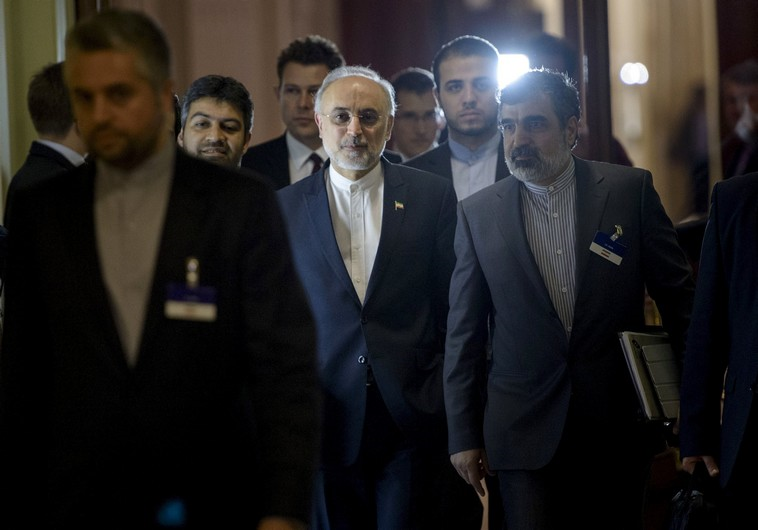
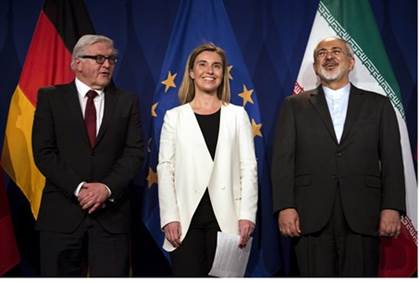
Iran negotiationsIran negotiations. (photo credit:REUTERS)

No one trusts Washington when Obama claims that he is committed to the security of Israel and the US’s Sunni allies in the region.

Iran is far more powerful than the PLO. But the Americans apparently believe they are immune from the consequences of their leaders’ policies. This is not the case for Israel or for our neighbors. We lack the luxury of ignoring the fact that Obama’s disastrous diplomacy has brought war upon us. Deal or no deal, we are again about to be forced to pay a price to maintain our freedom.
********************

Through their nuclear diplomacy, Obama and his comrades started the countdown to war.

The world powers assembled at Lausanne, Switzerland, with the representatives of the Islamic Republic may or may not reach a framework deal regarding Iran’s nuclear program. But succeed or fail, the disaster that their negotiations have unleashed is already unfolding. The damage they have caused is irreversible.

US President Barack Obama, his advisers and media cheerleaders have long presented his nuclear diplomacy with the Iran as the only way to avoid war. Obama and his supporters have castigated as warmongers those who oppose his policy of nuclear appeasement with the world’s most prolific state sponsor of terrorism.

But the opposite is the case. Had their view carried the day, war could have been averted.

Through their nuclear diplomacy, Obama and his comrades started the countdown to war.

In recent weeks we have watched the collapse of the allied powers’ negotiating positions.

They have conceded every position that might have placed a significant obstacle in Iran’s path to developing a nuclear arsenal.

They accepted Iran’s refusal to come clean on the military dimensions of its past nuclear work and so ensured that to the extent UN nuclear inspectors are able to access Iran’s nuclear installations, those inspections will not provide anything approaching a full picture of its nuclear status. By the same token, they bowed before Iran’s demand that inspectors be barred from all installations Iran defines as “military” and so enabled the ayatollahs to prevent the world from knowing anything worth knowing about its nuclear activities.

On the basis of Iran’s agreement to ship its stockpile of enriched uranium to Russia, the US accepted Iran’s demand that it be allowed to maintain and operate more than 6,000 centrifuges.

But when on Monday Iran went back on its word and refused to ship its uranium to Russia, the US didn’t respond by saying Iran couldn’t keep spinning 6,000 centrifuges. The US made excuses for Iran.

The US delegation willingly acceded to Iran’s demand that it be allowed to continue operating its fortified, underground enrichment facility at Fordow. In so doing, the US minimized the effectiveness of a future limited air campaign aimed at significantly reducing Iran’s nuclear capabilities.

With this broad range of great power concessions already in its pocket, the question of whether or not a deal is reached has become a secondary concern. The US and its negotiating partners have agreed to a set of understanding with the Iranians. Whether these understandings become a formal agreement or not is irrelevant because the understandings are already being implemented.

True, the US has not yet agreed to Iran’s demand for an immediate revocation of the economic sanctions now standing against it. But the notion that sanctions alone can pressure Iran into making nuclear concessions has been destroyed by Obama’s nuclear diplomacy in which the major concessions have all been made by the US.

No sanctions legislation that Congress may pass in the coming months will be able to force a change in Iran’s behavior if they are not accompanied by other coercive measures undertaken by the executive branch.

There is nothing new in this reality. For a regime with no qualms about repressing its society, economic sanctions are not an insurmountable challenge. But it is possible that if sanctions were implemented as part of a comprehensive plan to use limited coercive means to block Iran’s nuclear advance, they could have effectively blocked Iran’s progress to nuclear capabilities while preventing war. Such a comprehensive strategy could have included a proxy campaign to destabilize the regime by supporting regime opponents in their quest to overthrow the mullahs. It could have involved air strikes or sabotage of nuclear installations and strategic regime facilities like Revolutionary Guards command and control bases and ballistic missile storage facilities. It could have involved diplomatic isolation of Iran.

Moreover, if sanctions were combined with a stringent policy of blocking Iran’s regional expansion by supporting Iraqi sovereignty, supporting the now deposed government of Yemen and making a concerted effort to weaken Hezbollah and overthrow the Iranian-backed regime in Syria, then the US would have developed a strong deterrent position that would likely have convinced Iran that its interest was best served by curbing its imperialist enthusiasm and setting aside its nuclear ambitions.

In other words, a combination of these steps could have prevented war and prevented a nuclear Iran. But today, the US-led capitulation to Iran has pulled the rug out from any such comprehensive strategy. The administration has no credibility. No one trusts Obama to follow through on his declared commitment to prevent Iran from becoming a nuclear power.

No one trusts Washington when Obama claims that he is committed to the security of Israel and the US’s Sunni allies in the region.

And so we are now facing the unfolding disaster that Obama has wrought. The disaster is that deal or no deal, the US has just given the Iranians a green light to behave as if they have already built their nuclear umbrella. And they are in fact behaving in this manner.

They may not have a functional arsenal, but they act as though they do, and rightly so, because the US and its partners have just removed all significant obstacles from their path to nuclear capabilities. The Iranians know it. Their proxies know it. Their enemies know it.

As a consequence, all the regional implications of a nuclear armed Iran are already being played out. The surrounding Arab states led by Saudi Arabia are pursuing nuclear weapons. The path to a Middle East where every major and some minor actors have nuclear arsenals is before us.

Iran is working to expand its regional presence as if it were a nuclear state already. It is brazenly using its Yemeni Houthi proxy to gain maritime control over the Bab al-Mandab, which together with Iran’s control over the Straits of Hormuz completes its maritime control over shipping throughout the Middle East.

Israel, Jordan, Egypt, Saudi Arabia, Sudan and Eritrea, and their global trading partners will be faced with the fact that their primary maritime shipping route to Asia is controlled by Iran.

With its regional aggression now enjoying the indirect support of its nuclear negotiating partners led by the US, Iran has little to fear from the pan-Arab attempt to dislodge the Houthis from Aden and the Bab al-Mandab. If the Arabs succeed, Iran can regroup and launch a new offensive knowing it will face no repercussions for its aggression and imperialist endeavors.

Then of course there are Iran’s terror proxies.

Hezbollah, whose forces now operate openly in Syria and Lebanon, is reportedly active as well in Iraq and Yemen. These forces behave with a brazenness the likes of which we have never seen.

Hamas too believes that its nuclear-capable Iranian state sponsor ensures that regardless of its combat losses, it will be able to maintain its regime in Gaza and continue using its territory as a launching ground for assaults against Israel and Egypt.

Iran’s Shiite militias in Iraq have reportedly carried out heinous massacres of Sunnis who have fallen under their control and faced no international condemnation for their war crimes, operating as they are under Iran’s protection and sponsorship. And the Houthis, of course, just overthrew a Western-backed government that actively assisted the US and its allies in their campaign against al-Qaida.

For their proxies’ aggression, Iran has been rewarded with effective Western acceptance of its steps toward regional domination and nuclear armament.

Hezbollah’s activities represent an acute and strategic danger to Israel. Not only does Hezbollah now possess precision guided missiles that are capable of taking out strategic installations throughout the country, its arsenal of 100,000 missiles can cause a civilian disaster.

Hezbollah forces have been fighting in varied combat situations continuously for the past three years. Their combat capabilities are incomparably greater than those they fielded in the 2006 Second Lebanon War. There is every reason to believe that these Hezbollah fighters, now perched along Israel’s borders with Lebanon and Syria, can make good their threat to attack and hold fixed targets including border communities.

While Israel faces threats unlike any we have faced in recent decades that all emanate from Western-backed Iranian aggression and expansionism carried out under a Western-sanctioned Iranian nuclear umbrella, Israel is not alone in this reality. The unrolling disaster also threatens the moderate Sunni states including Jordan, Egypt, Saudi Arabia, Kuwait and the United Arab Emirates. The now regional war in Yemen is but the first act of the regional war at our doorstep.

There are many reasons this war is now inevitable.

Every state threatened by Iran has been watching the Western collapse in Switzerland.

They have been watching the Iranian advance on the ground. And today all of them are wondering the same thing: When and what should we strike to minimize the threats we are facing.

Everyone recognizes that the situation is only going to get worse. With each passing week, Iran’s power and brazenness will only increase.

Everyone understands this. And this week they learned that with Washington heading the committee welcoming Iran’s regional hegemony and nuclear capabilities, no outside power will stand up to Iran’s rise. The future of every state in the region hangs in the balance. And so, it can be expected that everyone is now working out a means to preempt and prevent a greater disaster.

These preemptive actions will no doubt include three categories of operations: striking Hezbollah’s missile arsenal; striking the Iranian Navy to limit its ability to project its force in the Bab al-Mandab; and conducting limited military operations to destroy a significant portion of Iran’s nuclear installations.

Friday is the eve of Passover. Thirteen years ago, Palestinian terrorists brought home the message of the Exodus when they blew up the Seder at Netanya’s Park Hotel, killing 30, wounding 140, and forcing Israel into war. The message of the Passover Haggada is that there are no shortcuts to freedom. To gain and keep it, you have to be willing to fight for it.

That war was caused by Israel’s embrace of the notion that you can bring peace through concessions that empower an enemy sworn to your destruction. The price of that delusion was thousands of lives lost and families destroyed.

Iran is far more powerful than the PLO. But the Americans apparently believe they are immune from the consequences of their leaders’ policies. This is not the case for Israel or for our neighbors. We lack the luxury of ignoring the fact that Obama’s disastrous diplomacy has brought war upon us. Deal or no deal, we are again about to be forced to pay a price to maintain our freedom.
Obama blinked, Iran didn’t

April 3, 2015

Obama blinked, Iran didn’t, Legal Insurrection, April 3, 2015

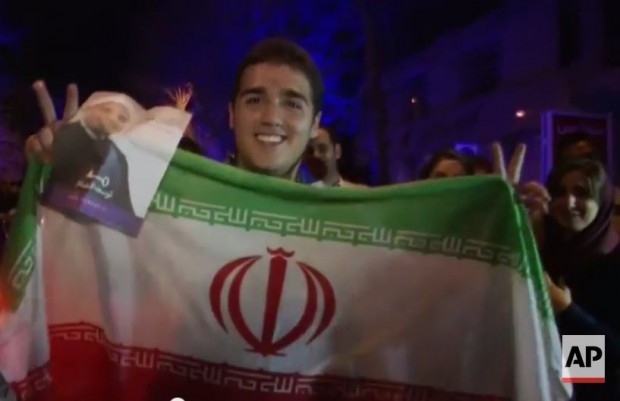
Iran celebrates

Well that “Framework” negotiation was fun.

For the Iranians, who got a great deal at least as far as a Framework goes.

As this WaPo editorial points out, the Obama administration gave up on key parameters:

THE “KEY parameters” for an agreement on Iran’s nuclear program released Thursday fall well short of the goals originally set by the Obama administration. None of Iran’s nuclear facilities — including the Fordow center buried under a mountain — will be closed. Not one of the country’s 19,000 centrifuges will be dismantled. Tehran’s existing stockpile of enriched uranium will be “reduced” but not necessarily shipped out of the country. In effect, Iran’s nuclear infrastructure will remain intact, though some of it will be mothballed for 10 years. When the accord lapses, the Islamic republic will instantly become a threshold nuclear state.

That’s a long way from the standard set by President Obama in 2012 when he declared that “the deal we’ll accept” with Iran “is that they end their nuclear program” and “abide by the U.N. resolutions that have been in place.” Those resolutions call for Iran to suspend the enrichment of uranium. Instead, under the agreement announced Thursday, enrichment will continue with 5,000 centrifuges for a decade, and all restraints on it will end in 15 years.

In his speech after the announcement, Obama took care not only to repeat the false rhetorical device of the only choice being between this deal and war, he blamed that choice on Israeli Prime Minister Benjamin Netanyahu. David Horvitz at The Times of Israel writes, Defeatist Obama’s deal with the devil:

Extolling the virtues of his deal with Iran on Thursday, President Barack Obama made a false and extremely nasty assertion: “It’s no secret,” he claimed, incorrectly, “that the Israeli prime minister and I don’t agree about whether the United States should move forward with a peaceful resolution to the Iranian issue.”

It is indeed no secret that Obama and Netanyahu don’t agree on how to thwart Iran’s nuclear weapons ambitions. It is emphatically not the case, however, that Israel’s prime minister opposes “a peaceful resolution to the Iranian issue.” It is emphatically not the case, despite Obama’s insinuation, that Israel’s leader regards military intervention as the only means to thwart Iran.

Netanyahu has not been saying no to diplomacy. His endlessly stated contention is not that war is the only alternative to the deal so delightedly hailed by Obama as “the most effective way to ensure Iran doesn’t get a nuclear weapon.” Rather, in Netanyahu’s insistent opinion, what is needed is simply a different, far more potent deal.


Why throw Netanyahu under the bus again? There are plenty of people, including Democrats in Congress, who don’t view this deal as the only non-war choice.

Netanyahu issued the following statement after the announcement of the Framework deal:

Statement by Prime Minister Benjamin Netanyahu
April 3, 2015

I just came from a meeting of the Israeli cabinet. We discussed the proposed framework for a deal with Iran.

The cabinet is united in strongly opposing the proposed deal.
This deal would pose a grave danger to the region and to the world and would threaten the very survival of the State of Israel.

The deal would not shut down a single nuclear facility in Iran, would not destroy a single centrifuge in Iran and will not stop R&D on Iran’s advanced centrifuges.

On the contrary. The deal would legitimize Iran’s illegal nuclear program. It would leave Iran with a vast nuclear infrastructure. A vast nuclear infrastructure remains in place.

The deal would lift sanctions almost immediately and this at the very time that Iran is stepping up its aggression and terror in the region and beyond the region.

In a few years, the deal would remove the restrictions on Iran’s nuclear program, enabling Iran to have a massive enrichment capacity that it could use to produce many nuclear bombs within a matter of months.

The deal would greatly bolster Iran’s economy. It would give Iran thereby tremendous means to propel its aggression and terrorism throughout the Middle East.

Such a deal does not block Iran’s path to the bomb.

Such a deal paves Iran’s path to the bomb.

And it might very well spark a nuclear arms race throughout the Middle East and it would greatly increase the risks of terrible war.

Now, some say that the only alternative to this bad deal is war.

That’s not true.

There is a third alternative – standing firm, increasing the pressure on Iran until a good deal is achieved.

And finally let me say one more thing.

Iran is a regime that openly calls for Israel’s destruction and openly and actively works towards that end.

Just two days ago, in the midst of the negotiations in Lausanne, the commander of the Basij security forces in Iran said this: “The destruction of Israel is non-negotiable.”

Well, I want to make clear to all. The survival of Israel is non-negotiable.

Israel will not accept an agreement which allows a country that vows to annihilate us to develop nuclear weapons, period.

In addition, Israel demands that any final agreement with Iran will include a clear and unambiguous Iranian recognition of Israel’s right to exist.

Thank you.

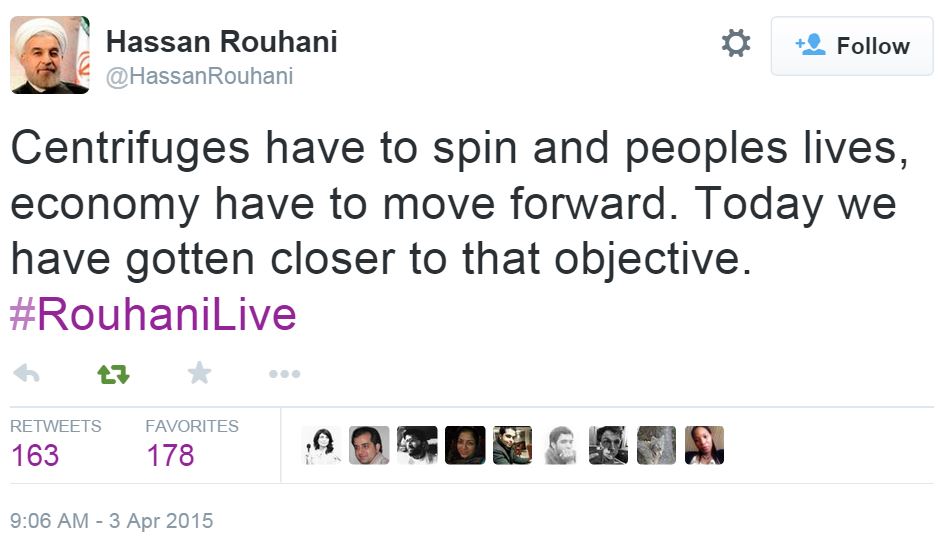
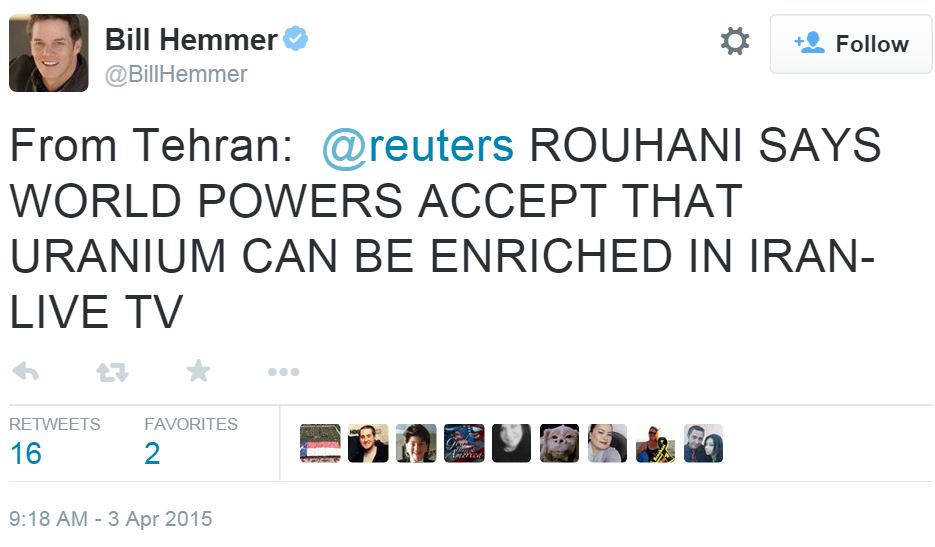
Meanwhile, the Mullah regime crowed at how they got what they wanted (see also tweets in yesterday’s post):

Twitter-Rhouani-Iran-Deal-Centrifuges-spin
Twitter-Bill-Hemmer-Rhouani-Iran-Deal-Enrichment
Twitter-Fars-News-Agency-Iran-Deal-Rouhani

Seems to me the Mullahs know something we don’t.

And Iranians took to the streets to celebrate:


There was a better deal to be had. The sanctions were hurting. Obama blinked, the Iranians didn’t.

Iran’s remarkable achievement

April 3, 2015

Iran’s remarkable achievement, Washington PostMichael Gerson, April 3, 2015

Will Iran continue to hold U.S. policy in the Middle East hostage — causing the United States to hush its reactions to Iranian aggression for fear the regime will walk out of a nuclear deal? This is precisely what American friends in the region fear. The real test — for allies and for members of Congress — will be whether Obama can accompany a final nuclear agreement with a much more aggressive resistance to Iranian ambitions in places such as Syria, Iraq and Yemen. Otherwise, Iran will simply use the wealth that comes from lifted sanctions to cause more havoc.

******************

Whatever else the Obama administration accomplished in the Iran nuclear framework, it did a good job keeping the bar of expectations low and then clearing it.

Many assumed various provisions would last 10 years or less; most are for 15 years or more. Many expected the number of operating centrifuges to exceed 6,000; the target is lower. Many expected the total amount of fissile material Iran is allowed to keep to be higher than the agreed 300 kilograms. These achievements created an initial halo of success.

But as former national security adviser Stephen Hadley emphasized to me, “things that seem too good to be true usually are.” In the days of Cold War arms-control agreements, Soviet negotiators would join in the announcement of notional goals. Later, they would claim that some elements would not fly with Moscow. The strategy was to pocket elements of consensus, then use this as the starting point for new negotiations and additional U.S. concessions.

Tehran can be expected to use every ambiguity in the agreement to its advantage as goals are converted into the language of a final deal. Disagreements are already emerging between the Obama administration and the Iranians on how and when sanctions will be lifted in exchange for compliance, with Foreign Minister Mohammad Javad Zarif essentially accusing the White House of deception.

Given the months of hard negotiations ahead, the self-congratulatory tone of President Obama’s speech announcing the agreement was extremely premature. “Depending on what we learn about critical details,” says professor Peter Feaver of Duke University, “this is not spiking in the end zone. It is spiking on the 5-yard line.”

A number of issues seem murky. What becomes of all the fissile material Iran has apparently agreed to export? What is done with the decommissioned centrifuges and infrastructure to make sure they can’t be easily reinstalled during a breakout attempt? What is the pace and ordering of sanctions relief by the United States, the European Union and the United Nations? How fully will Iran be required to account for past military dimensions of its nuclear programs?

But the largest question will not be answered by the next stage of nuclear negotiations. Will this agreement give the Iranian regime cover for what it is currently doing in the Middle East — actively spreading its influence and threatening our allies? Negotiations on the nuclear issue have taken place in isolation from the ballistic missile issue, the terrorism issue and the regional destabilization issue.

For all the praise Obama is claiming, the Iranian regime counts the most remarkable achievement. It has engaged in nuclear negotiations with the United States while actively engaged in a regional conflict against American friends and proxies. Since Obama has prioritized the nuclear negotiations — the only alternative to which, he constantly reminds us, is war — other concessions have seemed small in comparison. Opposition to Bashar al-Assad has become muted, even as he crosses every blood-red line of brutality, to avoid disrupting relations with his Iranian patron. Human rights issues within Iran have become secondary to avoid giving offense. Obama has sometimes seemed more tolerant and empathetic toward Iranian positions than those of allies and partners such as Israel.

Will Iran continue to hold U.S. policy in the Middle East hostage — causing the United States to hush its reactions to Iranian aggression for fear the regime will walk out of a nuclear deal? This is precisely what American friends in the region fear. The real test — for allies and for members of Congress — will be whether Obama can accompany a final nuclear agreement with a much more aggressive resistance to Iranian ambitions in places such as Syria, Iraq and Yemen. Otherwise, Iran will simply use the wealth that comes from lifted sanctions to cause more havoc.

If Iran is treated as a normal nation simply because of its nuclear cooperation — if it interprets a deal as a green light for its actions in the region — neither our traditional allies nor members of Congress will sustain Obama’s nuclear agreement in the long term. And the support of Congress could be dramatically helpful in surrounding a deal with snapback sanctions and the pre-authorization of military force in the event of an Iranian breach.

To secure his nuclear deal with Iran, Obama must show resistance to Iranian aggression across the range of our relationship.

Israel Should ‘Seriously Consider’ Striking Iran, Expert Says

April 3, 2015

Israel Should ‘Seriously Consider’ Striking Iran, Expert Says, Israel National News, Benny Toker and Ari Soffer, April 5, 2015

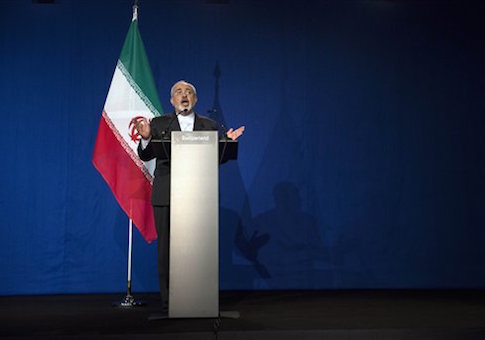
img576072Iranian FM Javad Zarif (R) at press conference announcing nuclear deal Reuters

[M]any countries – most notably Israel’s immediate neighbors – would be supportive of such a strike, and were waiting for Israel to neutralize the threat posed to them by a nuclear-capable Iranian regime.

“In practice no one wants to see a nuclear Iran; all of them are playing the gameso that Israel can pulls the chestnuts out of the fire.

******************

Israel should “seriously consider” a military strike on Iran’s nuclear facilities in the aftermath of the “framework deal” announced between Tehran and western powers Thursday, a leader defense and security expert said.

Speaking to Arutz Sheva Friday, Professor Efraim Inbar, who heads the Begin-Sadat Center for Strategic Studies, said the deal had realized Israel’s worst fears by leaving Iran’s nuclear program essentially intact.

The Islamic Republic’s nuclear program has been granted “legitimacy” by the agreement, which still allowed it to continue enriching uranium and to maintain a reactor capable of producing enriched plutonium, he said. “And that’s what worries Israel, that they (Iran) will be able within a short time frame to reach a nuclear bomb.”

“I hold the view that the only way to stop Iran in its journey to a nuclear bomb is through military means,” Inbar maintained, suggesting that “Israel needs to seriously consider striking a number of important nuclear facilities” to head off the threat.

Inbar went further, stating that Israel had made a serious mistake in not taking out Iran’s nuclear facilities until now. Now that the deal – however bad – was struck, a military strike would be far more difficult, he posited.

Nevertheless, practically-speaking Israel was left with little choice short of accepting a nuclear-armed Iran.

“As long as there was no deal it was easier for Israel to strike. They should have carried out a strike two years ago,” he said. “This is not an easy decision but it’s what needed to be done.”

Despite that fact, many countries – most notably Israel’s immediate neighbors – would be supportive of such a strike, and were waiting for Israel to neutralize the threat posed to them by a nuclear-capable Iranian regime.

“In practice no one wants to see a nuclear Iran; all of them are playing the game so that Israel can pulls the chestnuts out of the fire.

The deal, announced yesterday at a joint conference in Switzerland and widely celebrated as a “victory” in Iran, was quickly lauded by US President Barack Obama as an “historic” agreement.

“I am convinced that if this framework leads to a final comprehensive deal it will make our country, our allies and our world safer,” Obama asserted, insisting that despite criticisms the agreement would effectively cut off any options for Iran to build a nuclear bomb.

But despite Obama’s claim that there was “no daylight” between the US’s commitment to Israel’s security and the framework deal, Israeli officials heavily criticized it as an “historic mistake“.

“If an agreement is reached on the basis of this framework, it is an historic mistake which will make the world far more dangerous,” said the officials, briefing journalists on condition of anonymity.

“It is a bad framework which will lead to a bad and dangerous agreement. The framework gives international legitimacy to Iran’s nuclear program, the only aim of which is to produce a nuclear bomb,” they added.

In Congress as well – where legislators on both sides of the aisle have expressed serious concerns over the pending deal – House Speaker John Boehner branded the agreement “an alarming departure” from the president’s own declared goals. Nevertheless, legislators have given the White House a three-month reprieve on a bill to level harsher sanctions against Iran.

Israeli Prime Minister Binyamin Netanyahu is due to address the deal directly at a press conference Friday, after holding top-level talks withsecurity officials.

Benghazi, Bergdahl, and the Bomb

April 3, 2015

Benghazi, Bergdahl, and the Bomb, Washington Free Beacon, April 3, 2015

Column: President Obama’s stories haven’t held up before. How is the Iran deal any different?

ObamaAP

What the president and Secretary of State John Kerry unveiled Thursday was another fancy, another fairy-tale, another fable about what might happen in an ideal world where enemies and allies share common interests and objectives, autocratic and theocratic regimes adhere to compacts, and moral sincerity is more important than results. Best be skeptical—these so-called triumphs of Obama’s diplomacy have a way of falling to pieces like ancient parchment. And keep in mind this rule: When the president enters the Rose Garden, run for cover.

******************

President Obama strode to the lectern in the Rose Garden Thursday to announce a “historic” agreement between the United States and the Islamic Republic of Iran. The preliminary deal made in Lausanne, Switzerland, the president said, “cuts off every pathway Iran could take to develop a nuclear weapon.” I hope he’s right.

But I’m not counting on it. The president has a terrible record of initial public pronouncements on national security. He has a habit of confidently stating things that turn out not to be true. Three times in the last four years he has appeared in the Rose Garden and made assertions that were later proven to be false. He and his national security team have again and again described a world that does not correspond to reality. No reason to assume these concessions to Iran will be any different.

The U.S. consulate in Benghazi, Libya, was attacked on September 11, 2012. Four Americans were killed, including our ambassador. Obama delivered remarks on the attack in the Rose Garden the following day. “No acts of terror will ever shake the resolve of this great nation,” he said. What he didn’t say was that the killings in Benghazi specifically were a “terrorist attack” or “terrorism.” On 60 Minutes,when asked if he believed Benghazi was a “terrorist attack,” the president replied, “It’s too early to know how this came about.” On September 14, neither the president nor Secretary of State Hillary Clinton called what had happened a terrorist attack. On September 15, Obama referred to Benghazi as a “tragic attack.” On September 16, Susan Rice, then U.N. ambassador, called it a “spontaneous attack.”

By September 24, when Obama recorded a campaign interview with The View, he again refused to say Benghazi was an attack by terrorists. “We’re still doing an investigation,” he told Joy Behar. It was not until two days later that administration officials began referring to Benghazi as a terrorist attack—something the Libyan government had been saying since September 13.

The story originally put out by the White House, that Benghazi was the result of spontaneous anger at an Internet video offensive to Muslim extremists, fell apart in a matter of days. Yet the White House persisted in its false description of reality, declining to confirm what was widely accepted as a premeditated terrorist assault on a U.S. compound, and chose to ascribe responsibility for the events in question to anti-Islamic bias. The evidence continues to mount that Ansar al-Sharia, the Qaeda affiliate in lawless Libya, was behind the events of September 11, 2012, not the stupid video.

In August 2013 President Obama announced in the Rose Garden that Syrian dictator Bashar Assad had crossed the “red line” by gassing his own people. “Now, after careful deliberation, I have decided that the United States should take military action against Syrian regime targets,” the president said. Then he punted the issue to Congress. But no action against Syrian regime targets was ever taken, because the president reversed himself and accepted a Russian proposal to ship Assad’s WMD out of Syria. “This initiative has the potential to remove the threat of chemical weapons without the use of force, particularly because Russia is one of Assad’s strongest allies,” Obama said in a September 10, 2013, televised address. Almost two years later, Assad is dropping barrel bombs filled with chlorine gas on civilians. Success.

Last May, President Obama again walked purposefully to a lectern in the Rose Garden, and informed the world that he had released five Taliban commanders from Guantanamo Bay in exchange for Sergeant Bowe Bergdahl, who had been held prisoner by the Islamic militia for almost half a decade. “Right now,” the president said, “our top priority is making sure that Bowe gets the care and support that he needs and that he can be reunited with his family as soon as possible.”

Criticism of the prisoner swap was immediate, and intensified when Bergdahl’s platoon-mates said he had deserted his post. The White House, as usual, struck back against the critics and repeated its story. On June 2, Susan Rice, now national security adviser, went onThis Week with George Stephanopoulos and said Bergdahl “served the United States with honor and distinction.”

The Government Accountability Office concluded that the Obama administration’s actions were illegal. Bergdahl himself was kept isolated as the Army reviewed the circumstances of his capture by the enemy. Completed in the fall of 2014, the report by Brigadier General Kenneth Dahl still has not been released to the public.

Last week, however, the Army charged Bergdahl with desertion and misbehavior before the enemy. Has the White House reevaluated its trade? Of course not. On the contrary: Pentagon officials suggested on background that Bergdahl wasn’t a deserter, he was a whistleblower!

Three stories that collapsed under the weight of the evidence, three instances of the White House doggedly sticking to its policy line despite everything. This president’s resistance to events in the actual world of space and time is more than ideology, however. It’s also good politics: By refusing to concede the facts of the case, Obama is able to hold his base and stay on offense against his true adversaries: Republicans, conservatives, and Bibi Netanyahu.

And now we have the Iran story. Iran, the president says, will reduce its centrifuges, dilute its enriched uranium, open its nuclear sites to inspectors, and turn its fortified underground reactor into a “research” facility in exchange for sanctions relief. The only alternatives, Obama goes on, are bombing Iran or ending negotiations and re-imposing sanctions. “If, in fact, Prime Minister Netanyahu is looking for the most effective way to ensure Iran doesn’t get a nuclear weapon, this is the best option. And I believe our nuclear experts can confirm that.”

Sure they can. Though I believe other nuclear experts, such as Charles Duelfer, can also confirm that this agreement has major holes, such as the spotty effectiveness of inspections and the failure to get Iran to disclose fully the possible military dimensions of its nuclear program. And there’s always the tricky issue of sanctions relief: The United States says the process of lifting sanctions will be gradual and contingent on Iranian compliance, but Iranian foreign minister Javad Zarif says it will be immediate.

What the president and Secretary of State John Kerry unveiled Thursday was another fancy, another fairy-tale, another fable about what might happen in an ideal world where enemies and allies share common interests and objectives, autocratic and theocratic regimes adhere to compacts, and moral sincerity is more important than results. Best be skeptical—these so-called triumphs of Obama’s diplomacy have a way of falling to pieces like ancient parchment. And keep in mind this rule: When the president enters the Rose Garden, run for cover.

Iran Accuses U.S. of Lying About New Nuke Agreement

April 3, 2015

Iran Accuses U.S. of Lying About New Nuke Agreement, Washington Free Beacon, April 2, 2015

(Breaking news: Obama lied! That’s shocking. Who would’a thunk? — DM)

Switzerland Iran Nuclear TalksJavad Zarif / AP

LAUSANNE, Switzerland — Just hours after the announcement of what the United States characterized as a historic agreement with Iran over its nuclear program, the country’s leading negotiator lashed out at the Obama administration for lying about the details of a tentative framework.

Iranian Foreign Minister Javad Zarif accused the Obama administration of misleading the American people and Congress in a fact sheet it released following the culmination of negotiations with the Islamic Republic.

Zarif bragged in an earlier press conference with reporters that the United States had tentatively agreed to let it continue the enrichment of uranium, the key component in a nuclear bomb, as well as key nuclear research.

Zarif additionally said Iran would have all sanctions lifted once a final deal is signed and that the country would not be forced to shut down any of its currently operating nuclear installations.

Following a subsequent press conference by Secretary of State John Kerry—and release of a administration fact sheet on Iranian concessions—Zarif lashed out on Twitter over what he dubbed lies.

“The solutions are good for all, as they stand,” he tweeted. “There is no need to spin using ‘fact sheets’ so early on.”

Zarif went on to push back against claims by Kerry that the sanctions relief would be implemented in a phased fashion—and only after Iran verifies that it is not conducting any work on the nuclear weapons front.

Zarif, echoing previous comments, said the United States has promised an immediate termination of sanctions.

“Iran/5+1 Statement: ‘US will cease the application of ALL nuclear-related secondary economic and financial sanctions.’ Is this gradual?” he wrote on Twitter.

He then suggested a correction: “Iran/P5+1 Statement: ‘The EU will TERMINATE the implementation of ALL nuclear-related economic and financial sanctions’. How about this?”

The pushback from Iran’s chief diplomat follows a pattern of similar accusations by senior Iranian political figures after the announcement of previous agreements.

Following the signing of an interim agreement with Iran aimed at scaling back its nuclear work, Iran accused the United States of lyingabout details of the agreement.

On Thursday evening, Zarif told reporters the latest agreement allows Iran to keep operating its nuclear program.

“None of those measures” that will move to scale back Iran’s program “include closing any of our facilities,” Zarif said. “We will continue enriching; we will continue research and development.”

“Our heavy water reactor will be modernized and we will continue the Fordow facility,” Zarif said. “We will have centrifuges installed in Fordow, but not enriching.”

The move to allow Iran to keep centrifuges at Fordow, a controversial onetime military site, has elicited concern that Tehran could ramp up its nuclear work with ease.

Zarif said that once a final agreement is made, “all U.S. nuclear related secondary sanctions will be terminated,” he said. “This, I think, would be a major step forward.”

Zarif also revealed that Iran will be allowed to sell “enriched uranium” in the international market place and will be “hopefully making some money” from it.

The Tricks Obama Is Trying to Play with the Iran Announcement

April 2, 2015

The Tricks Obama Is Trying to Play with the Iran Announcement, Commentary Magazine, April 2, 2015

(When will Iran say what and to whom about Obama’s new “framework?” Will Iran cloud the results of the negotiations as cleverly as did Obama? — DM)

If you look at what happened today between the U.S. and Iran through the lens of domestic American politics, Barack Obama has made a very clever play here—because what might be called “the agreement of the framework of the possibility of a potential deal” gives him new leverage in his ongoing battle with the Senate to limit its ability to play a role in the most critical foreign-policy matter of the decade.

The “framework” codifies the Obama administration’s cave-ins but casts them as thrilling reductions in Iran’s capacities rather than what they are—a pie-in-the-sky effort to use inspections as the means by which the West can “manage” the speed with which Iran becomes a nuclear power.

Obama’s tone of triumph this afternoon was mixed with sharp reminders that the deal is actually not yet done—and that is entirely the point of this exercise from a domestic standpoint. the triumph signals his troops and apologists that the time has come for them to stand with him, praise the deal sheet and pretend it’s a deal, declare it historic, and generally act as though the world has been delivered from a dreadful confrontation by Obama and Kerry.

But since the deal is not yet done, it could still be derailed. And that is where Obama’s truly Machiavellian play here comes in: He may have found a way to put the Senate in a box and keep Democrats from melting away from him on Iran and voting not only for legislation he doesn’t want but also to override the veto he has promised.

The Senate has two provisions at the ready with which it could go ahead any time. One, called Kirk-Menendez, imposes new sanctions on Iran. Obama promised a veto of this bill should it pass, and after today, one ought to presume that it’s dead.

The other, Corker-Menendez, requires the administration to submit any deal to the Senate within 60 days of its signing. This is a key provision because, of course, what the Iranians want—and what they said today they got—was the lifting of all sanctions. The president, in his statement, vowed to lift the “nuclear” sanctions (there are others involving human rights) if the Iranians comply by the terms of the deal.

Existing sanctions legislation features waivers the president can arguably use to do that. But those sanctions were put into place specifically to make it incredibly painful for Iran to retain any nuclear-weapons capability—not as a means of acceding to Iran’s retention of a nuclear capability.

For this reason, and for the reason that the president is essentially negotiating an arms-control treaty with Iran, the Senate should approve any final deal. Obama disagrees and claims this is merely a nuclear-agreement, not a treaty, and therefore Congress has no role.

That’s a very nervy argument. It is not only disrespectful of the Senate but it misrepresents the nature of what’s being negotiated. And that’s why it’s an argument it appeared the president would lose—that senators would not only vote for Corker-Menendez but would override his veto of it.

Which is why the deal-that’s-not-yet-a-deal works in his favor. Talks are now to continue until the end of June. Obama can and will argue to Democrats that they owe it to him, to their base, and to their governing ideology to give him all the room he needs to get to June 30.

Of course, if the legislation does not pass by June 30 and Obama signs a final deal, the game is up; the Senate can’t retroactively insist in July he bring it to them for a vote.

Will there be a deal by June 30? Maybe, maybe not; maybe they’ll finish, maybe they won’t; maybe the Iranians will say they didn’t agree to this or that and blow up the whole thing; who knows. Probably the total collapse, after all this, would bring the Kirk-Menendez sanctions back to life. Which is why there will never be a total collapse—because these talks can simply go on….

Iran, U.S. allies strike agreement on nuclear deal

April 2, 2015

Iran, U.S. allies strike agreement on nuclear deal, Associated Press via Washington Times, April 2, 2015

(??????????????? — DM)

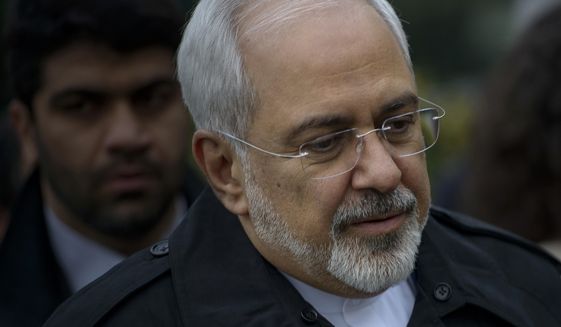
2e738e88a8f2710e720f6a7067008cce_c0-196-4500-2818_s561x327Iranian Foreign Minister Javad Zarif, walks through a courtyard at the Beau Rivage Palace Hotel during an extended round of talks, Wednesday, April 1, 2015 in Lausanne, Switzerland. Negotiations over Iran’s nuclear program appeared headed for double overtime on Wednesday.

LAUSANNE, Switzerland (AP) — Iran and and six world powers have agreed on the outlines of an understanding that would open the path to a final phase of nuclear negotiations but are in a dispute over how much to make public, officials told The Associated Press Thursday.

The officials spoke outside week-long talks that have busted through a March 31 deadline in an effort to formulate a general statement of what has been accomplished and documents setting down what the sides need to do by the end of June deadline for a deal.

Swiss officials facilitating the negotiations set a news conference for later in the day that was expected to announce the results of the talks

In the search for a comprehensive deal, the U.S. and five other countries hope to curb Iran’s nuclear technologies that it could use to make weapons. Tehran denies such ambitions but is negotiating because it wants a lifting of sanctions imposed over its nuclear program.


The Shadow of Munich Haunts the Iran Negotiations

April 2, 2015

The Shadow of Munich Haunts the Iran Negotiations, National Review Online, Victor Davis Hanson, April 2, 2015

(Hitler did tell the truth occasionally, in Mein Kampf for example. It was generally ignored until too late. “Death to America and Israel” are spouted by the Iranian Supreme Leader at every opportunity. Obama, et al, ignore it. Will Israel be Obama’s Czechoslovakia? And then what?– DM)

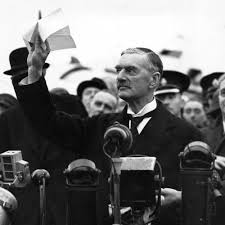
Neville Chamberlain

Our dishonor in Lausanne, as with Munich, may avoid a confrontation in the present, but our shame will guarantee a war in the near future.

*********************

Once again our leaders are needlessly appeasing a hostile state that shows them nothing but contempt.

The Western capitulation to Adolf Hitler in the 1938 Munich Agreement is cited as classic appeasement that destroyed Czechoslovakia, backfired on France and Britain, and led to World War II. All of that is true.

But there was much more that caused the Munich debacle than simple Western naiveté. The full tragedy of that ill-fated agreement should warn us on the eve of the Obama’s administration’s gullible agreement with Iran on nuclear proliferation. Fable one is the idea that most people saw right through the Munich folly. True, Europeans knew that Hitler had never once told the truth and was already murdering German citizens who were Jews, Communists, or homosexuals. But Europeans did not care all that much.

Instead, the Western world was ecstatic over the agreement. After the carnage of World War I, Europeans would do anything to avoid even a small confrontation — even if such appeasement all but ensured a far greater bloodbath than the one that began in 1914.

Another myth was that Hitler’s Wehrmacht was strong and the democracies were weak. In fact, the combined French and British militaries were far larger than Hitler’s. French Char tanks and British Spitfire fighters were as good as, or superior to, their German counterparts.

Czechoslovakia had formidable defenses and an impressive arms industry. Poland and perhaps even the Soviet Union were ready to join a coalition to stop Hitler from dissolving the Czech state.

It is also untrue that the Third Reich was united. Many of Hitler’s top generals did not want war. Yet each time Hitler successfully called the Allies’ bluff — in the Rhineland or with the annexation of Austria — the credibility of his doubters sank while his own reckless risk-taking became even more popular.

Munich was hardly a compassionate agreement. In callous fashion it immediately doomed millions of Czechs and put Poland on the target list of the Third Reich.

Munich was directly tied to the vanity of Neville Chamberlain. In the first few weeks after Munich, Chamberlain basked in adulation, posing as the humane savior of Western civilization. In contrast, loud skeptic Winston Churchill was dismissed by the media and public as an old warmonger.

Hitler failed to appreciate the magnanimity and concessions of the French and British. He later called his Munich diplomatic partners “worms.” Hitler said of the obsequious Chamberlain, “I’ll kick him downstairs and jump on his stomach in front of the photographers.”

The current negotiations with the Iranians in Lausanne, Switzerland, have all the hallmarks of the Munich negotiations.

Most Westerners accept that the Iranian government funds terrorist groups such as Hezbollah and Hamas. It has all but taken over Iraq, Lebanon, Syria, and Yemen. Yet the idea of stronger sanctions, blockades, or even force to stop Iranian efforts to get a bomb are considered scarier than Iran getting a bomb that it just possibly might not threaten to use.

The U.S. and its NATO partners are far stronger than Iran in every imaginable measure of military and economic strength. The Iranian economy is struggling, its government is corrupt, and its conventional military is obsolete. Iran’s only chance of gaining strength is to show both its own population and the world at large that stronger Western powers backed down in fear of its threats and recklessness.

Iran is not united. It is a mishmash nation in which over a third of the population is not Persian. Millions of protestors hit the streets in 2009. An Iranian journalist covering the talks defected in Switzerland — and said that U.S. officials at the talks are there mainly to speak on behalf of Iran.

By reaching an agreement with Iran, John Kerry and Barack Obama hope to salvage some sort of legacy — in the vain fashion of Chamberlain — out of a heretofore failed foreign policy.

There are more Munich parallels. The Iranian agreement will force rich Sunni nations to get their own bombs to ensure a nuclear Middle East standoff. A deal with Iran shows callous disagreed for our close ally Israel, which is serially threatened by Iran’s mullahs. The United States is distant from Iran. But our allies in the Middle East and Europe are within its missile range.

Supporters of the Obama administration deride skeptics such as Democratic senator Robert Menendez and Israeli prime minister Benjamin Netanyahu as if they were doubting old Churchills.

Finally, the Iranians, like Hitler, have only contempt for the administration that has treated them so fawningly. During the negotiations in Switzerland, the Iranians blew up a mock U.S. aircraft carrier. Their supreme leader, Ayatollah Khamenei, did his usual “death to America” shtick before adoring crowds. Our dishonor in Lausanne, as with Munich, may avoid a confrontation in the present, but our shame will guarantee a war in the near future.

Victory Against ISIS in Tikrit Will Embolden Iran

April 2, 2015

Victory Against ISIS in Tikrit Will Embolden Iran, Front Page Magazine, April 2, 2015

370x270xtikrit-450x328.png.pagespeed.ic.9xBCkeIFLH

The downside to playing on the same team as the Iranian regime, even in just this one military campaign against ISIS, is that we are helping to enable a far more dangerous power than ISIS to extend its hegemonic dominance throughout the entire region.

****************

Iraq’s defense minister Khalid al-Obeidi is claiming victory over ISIS forces in the city of Tikrit, which ISIS had captured last summer as its forces advanced across large swaths of territory in northern and western Iraq. “We have the pleasure, with all our pride, to announce the good news of a magnificent victory,” Obeidi said. The Pentagon and a spokesman for the U.S.-led coalition were a bit more cautious, noting some residual ISIS resistance. However, they too reported that significant progress had been made in wresting control of Saddam Hussein’s birthplace from ISIS’s grip.

The next strategic military objective in pushing ISIS back from the territories it controls in Iraq is to re-take Iraq’s second largest city, Mosul.

Iran supplied significant military support to the Shiite militia forces, who were a major part of the Iraqi counter-offensive on the ground. At the same time, U.S. air strikes seemed to have helped in supporting the Iraqi ground forces’ advance into Tikrit. The precise extent of any behind-the-scenes direct or indirect coordination between the U.S. and Iran is unknown at the present time. However, according to DebkaFile {March 26, 2015), “In the last two weeks of the Tikrit operation, liaison between the US and Iranian military in Iraq was routed through the office of the Iraqi Prime Minister in Baghdad.”

There is little question that without the Iranian-backed Shiite militia and substantial military support on the ground from Iran, ISIS would most likely still be in control of Tikrit today. U.S. airstrikes may have been necessary to soften ISIS’s resistance, but only ground troops with Iran’s support could dislodge them.

The downside to playing on the same team as the Iranian regime, even in just this one military campaign against ISIS, is that we are helping to enable a far more dangerous power than ISIS to extend its hegemonic dominance throughout the entire region.

As General David Petraeus, who certainly knows something about Iraq, told the Washington Post recently:

In fact, I would argue that the foremost threat to Iraq’s long-term stability and the broader regional equilibrium is not the Islamic State; rather, it is Shiite militias, many backed by — and some guided by — Iran… Longer term, Iranian-backed Shia militia could emerge as the preeminent power in the country, one that is outside the control of the government and instead answerable to Tehran.

Without downplaying ISIS’s horrific acts, its rapid-fire successes in Syria and Iraq (even with the setback in Tikrit), and its growing allegiances in Libya, Nigeria and areas further away from its home base including Afghanistan, the fact is that ISIS’s ambitions far exceed its current means for achieving them.  ISIS is proficient in using social media for recruitment, propaganda and intimidation purposes, but that can only take ISIS so far.

Iran, by contrast, has built up its military capabilities to the point that it can back up its aggressive threats in the region. And that’s even without the nuclear arms capability that President Obama seems to be willing to risk allowing Iran to achieve in order to secure his legacy with a deal.

As a result, America’s traditional Sunni allies in the region such as Saudi Arabia and other Persian Gulf states are doubting whether they can continue to count on the United States for support. And they are taking matters into their own hands, including a decision to form a multinational Arab military force to respond to Iranian aggression and other perceived threats.

As explained by Gamal Abdel Gawad Soltan, a political scientist at the American University in Cairo and quoted by the New York Times: “The U.S. is much less trusted as an ally, as an insurance policy towards the security threats facing the governments in the region, and so those governments decide to act on their own.”

These governments know their neighborhood well and see Iran as a much graver threat to regional peace and security than ISIS. Iran’s military and financial support of the Shiite Houthi rebels in taking control of major parts of Yemen was the last straw. Saudi Arabia on its own initiative decided to launch an air campaign against Houthi positions in Yemen and has not ruled out a ground attack along with the military forces of other Arab countries.

In response to the air and sea blockade of Yemen that Saudi Arabia is imposing on Yemen, Iran’s supreme leader Ayatollah Ali Khamenei decided to dispatch “two naval task forces to sail to the Red Sea,” according to DebkaFile (March 31, 2015). “The naval task forces are being sent to draw a sea shield around the Houthi forces to defend them against Saudi-Egyptian assaults. This maneuver was orchestrated by the Al Qods Brigades chief Gen. Qassem Soleimani,” DebkaFile reported.

Soleimani certainly gets around. Earlier this month he popped up in Iraq to lead the Shiite militias in their fight against ISIS. Now the man who fought on the same side as us against ISIS in Iraq is apparently coordinating Iran’s fight to hold onto the Houthis’ gains in Yemen where they forced the American and Saudi Arabian-backed president to flee.

Soleimani is “the puppet master controlling numerous Iranian surrogates in various countries,” said Jim Phillips, Middle East analyst for the Heritage Foundation. “His organization is drenched in American blood,” Phillips added. “It’s infused with an anti-American philosophy and a cooperation with him or his followers would not be on a sustainable basis. The U.S. would regret it.”

The Obama administration is now scrambling to catch up with Iran’s multi-pronged offensives, some of which are under Soleimani’s coordination. Thus, President Obama decided to support the Sunni Gulf coalition and Egypt against Iranian-backed action by the Shiite Houthi rebels to take control of Yemen.

However, the Obama administration’s reactive tactics in dealing with the crisis in Yemen are too little too late. Saudi Arabia is reportedly looking to Pakistan for help in acquiring its own nuclear arms to counter the Saudis’ well-founded suspicions that any deal negotiated by the Obama administration with Iran will not prevent Iran from becoming a nuclear armed power. And while Obama finally lifted the arms freeze he imposed against Egypt two years ago, clearing the way for the delivery of F-16 aircraft, Harpoon missiles and tanks, he also decided to end Egypt’s ability to finance purchases of American arms by drawing credits in advance based on future aid Egypt expects to receive starting in the 2018 fiscal year. Obama also wants to reduce Egypt’s flexibility in what it can purchase with the future military aid. Thus, the Egyptian government can be expected to continue on its course to find other sources for military aid and weapons including Russia, because of doubts that the U.S. will remain a reliable supplier.

The Obama administration has been willing to sacrifice the confidence of its Arab allies, not to mention the United States’ historically close alliance with Israel, in a vain effort to lure the Iranian regime into acting as a responsible party in the Middle East that can help stabilize this volatile region. Instead, Obama should listen to the expert on Iraq, General Petraeus, whose surge victory Obama undermined completely with his precipitous withdrawal of all U.S. troops from Iraq in 2011:

The current Iranian regime is not our ally in the Middle East. It is ultimately part of the problem, not the solution. The more the Iranians are seen to be dominating the region, the more it is going to inflame Sunni radicalism and fuel the rise of groups like the Islamic State…Iranian power in the Middle East is thus a double problem. It is foremost problematic because it is deeply hostile to us and our friends. But it is also dangerous because, the more it is felt, the more it sets off reactions that are also harmful to our interests — Sunni radicalism and, if we aren’t careful, the prospect of nuclear proliferation as well.

We can rejoice in the pushback of ISIS out of Tikrit. Perhaps it is a sign of more victories over ISIS to come. However, we should not delude ourselves into thinking that we have more in common with the Iranian regime in combatting ISIS in Iraq or Syria than the Iranian regime ultimately has in common with ISIS. They may be bitter enemies in the struggle over which set of fanatical jihadists should get to rule the global Islamic ummah or caliphate they both fantasize about. However, both fervently believe in the fundamental ideological goal of universal Islamic supremacy. And both are willing to sacrifice the lives of millions of people to reach that goal, no matter how long it takes them. The difference is that a nuclear-armed Iran would be much more capable of carrying out its jihadists’ apocalyptic vision than ISIS and in a much shorter period of time.