Posted tagged ‘Foreign Policy’

Iran State Media Says Final Nuclear Agreement Meets All Khamenei’s Demands

July 13, 2015

Iran State Media Says Final Nuclear Agreement Meets All Khamenei’s Demands, Algemeiner, July 12, 2015

(Please see also, Back in Tehran… Khamenei adds red lines, Rouhani tries to resign, Jaafari hints at “fait accompli” soon. — DM)

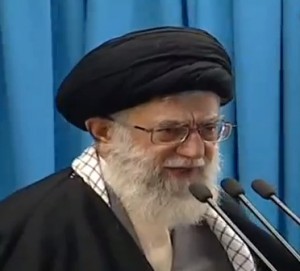
Khamanei-300x271Iranian Supreme Leader Ayatollah Ali Khamenei. Photo: Screenshot.
The final nuclear agreement between Iran and the P5+1 world powers reportedly set to be announced on Monday complies with all the “red lines” set out by Supreme Leader Ayatollah Khamenei, Iranian semi-official news agency Fars reported citing a “source privy to the talks.”

The deal, to be known as the Joint Comprehensive Plan of Action (JPOA), amounts to “a collection of multiple agreements that all fall within the red lines specified by the Iranian Supreme Leader Ayatollah Seyed Ali Khamenei,” Fars said.

Khamenei doubled down on his set of demands during a meeting with Iran’s President Rouhani in Tehran on June 23rd, Agence France-Presse reported at the time. His bottom line contradicted a number of positions previously outlined by world powers.

Among the P5+1 concessions, according to the Fars report, is the immediate lifting of sanctions following the signing of the deal and the full removal of the United Nations arms embargo.

“According to the Joint Comprehensive Plan of Action, all sanctions against Iran are terminated and Iran will no more be recognized as a sanctioned nation,” the source cited by Fars said. “The JCPA only envisages a set of temporary restrictions that will be removed after a limited and logical period of time, as stated earlier by the Iranian Supreme Leader.”

“All economic, financial and banking sanctions against Iran will be terminated for good on day one after the endorsement of the deal, again as the Iranian Supreme Leader has demanded.”

The source continued: “Iran will no more be under any arms embargo, and according to a UN Security Council resolution that will be issued on the day when the deal is signed by the seven states, all arms embargoes against Iran will be terminated, while its annex keeps some temporary restrictions on Iran for a limited period.”

“The upcoming UN Security Council resolution – that will call all the previous five resolutions against Iran null and void – will be the last resolution to be issued on Iran’s nuclear program and withdraws Iran’s nuclear dossier from under Chapter 7 of the UN Charter. This last resolution will remain valid and will be implemented for a specifically limited period of time and will then automatically end at the end of this period,” the source added, according to Fars. “This is the first time that a nation subject to Chapter 7 of the UN Charter has managed to end its case and stop being subject to this chapter through active diplomacy.”

In terms of Iran’s commitments to the international community, Fars characterized them as a “set of temporary and limited measures that will remain valid for different periods of time.”

Earlier on Sunday, the Associated Press cited unnamed diplomats who said that negotiators at the Iran nuclear talks will announce on Monday that they’ve reached a deal to limit the country’s atomic program in return for sanctions relief.

Later in the day, a source cited by Iranian media rejected the AP report.

The source added that “in case of striking a final deal, the agreement has to be approved by the Iranian parliament in the same manner that it has to be approved by the US Congress,” Fars said.

Israeli deterrence in the eye of the hurricane

July 12, 2015

Israeli deterrence in the eye of the hurricane, Jerusalem PostLouis Rene Beres, July 12, 2015

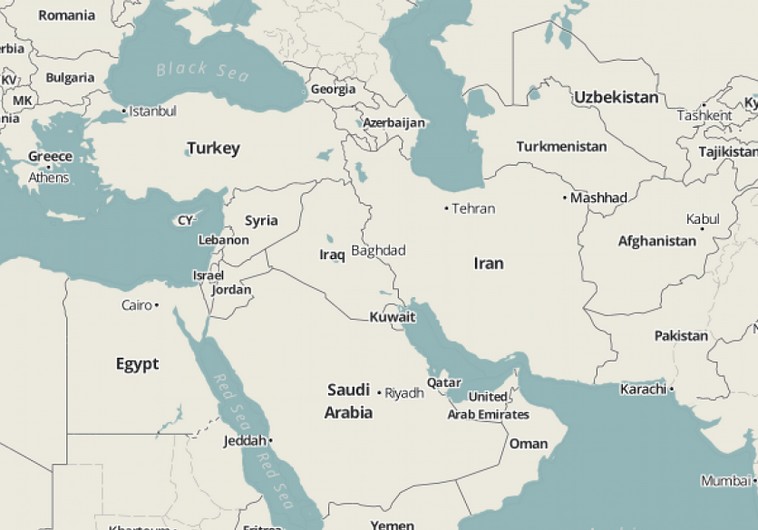
ShowImage (1)Map of Middle East. (photo credit:Courtesy)

Everything is very simple in war, but the simplest thing is difficult.”
– Carl von Clausewitz, On War

To prevent a nuclear war amid steadily growing regional chaos, especially as Iran will soon be fully nuclear (and the grateful beneficiary of US President Barack Obama’s pretend P5+1 diplomacy), Israel will need suitably complementary conventional and nuclear deterrents.

**********************

Left to themselves, especially as more “normal” hostilities dissolve into a full-blown regional chaos, Israel’s adversaries could drive the Jewish state toward an unconventional war. This fateful endangerment could be produced singly or collaboratively, by deliberate enemy intent or by the “collateral damage” of sectarian strife. Militarily, these Islamic adversaries of Israel, both Sunni and Shi’ite, could be either non-nuclear, or, in the future, nuclear.

They might also include certain wellarmed sub-state or terrorist forces. Already, Iranian-backed Hezbollah may have more usable missiles than all NATO countries combined.

To most effectively deal with such interpenetrating threats – including reasonably expected “synergies” and “force multipliers” – Israel’s leaders will first need to consider some largely-opaque factors. These include: 1) probable effects of regional chaos upon enemy rationality; 2) disruptive implications of impending Palestinian statehood; and 3) re-emergence of a corrosively Cold War-style polarity between Russia and the United States. Apropos of a “Cold War II,” there is already evidence of growing contact between Russia and Saudi Arabia, the world’s two largest oil producers.

In essence, Jerusalem must take all necessary steps to successfully manage an expectedly unprecedented level of adversarial complexity and weaponization. Israel’s leaders, in this connection, must take proper measures to ensure that any conceivable failures of its national deterrent would not spark biological or nuclear forms of regional conflict. To accomplish this indispensable goal, the IDF, inter alia, must continue to plan carefully around the core understanding that nuclear deterrence and conventional deterrence are inherently interrelated and meaningfully “seamless.”

Sometimes, in strategic matters, seeing requires distance. A nuclear war in the Middle East is not beyond possibility. This is a sensible assessment even if Israel were to remain the only nuclear weapons state in the region.

How is this possible? A bellum atomicum could come to Israel not only as a “bolt from the blue” enemy nuclear attack (either by a state or by a terrorist group), but also as the result, intended or otherwise, of certain uncontrolled military escalations.

Needed prudence in such narratives calls for additional specificity and precision. If particular Arab/Islamic enemy states were to launch conventional attacks upon Israel, Jerusalem could then respond, sooner or later, with calculated and more-or-less calibrated nuclear reprisals. Alternatively, if some of these enemy states were to launch large-scale conventional attacks, Jerusalem’s own still-conventional reprisals could then be met, perhaps even in the not-too-distant future, with enemy nuclear counterstrikes.

How should Israel prepare for such perilous contingencies? More than likely, Israel has already rejected any doctrinal plans for fielding a tactical/theater nuclear force, and for assuming any corollary nuclear war fighting postures. It would follow further from any such well-reasoned rejection that Israel should do whatever is needed to maintain a credible conventional deterrent.

By definition, such a measured threat option could then function reliably across the entire foreseeable spectrum of non-nuclear threats.

Still, any such strategy would need to include an appropriately complementary nuclear deterrent, a distinctly “last resort” option that could display a “counter-value” (counter-city) mission function. Si vis pacem, para bellum atomicum: “If you want peace, prepare for atomic war.”

A persuasive Israeli conventional deterrent, at least to the extent that it might prevent a wide range of enemy conventional attacks in the first place, could reduce Israel’s growing risk of escalatory exposure to nuclear war. In the always arcane lexicon of nuclear strategy, a complex language that more-or-less intentionally mirrors the tangled coordinates of atomic war, Israel will need to maintain firm control of “escalation dominance.” Otherwise, the Jewish state could find itself engaged in an elaborate but ultimately lethal pantomime of international bluster and bravado.

The reason for Israel’s obligation to control escalatory processes is conspicuous and unassailable. It is that Jerusalem’s main enemies possess something that Israel can plainly never have: Mass.

At some point, as nineteenth century Prussian military thinker Carl von Clausewitz asserts in On War: “Mass counts.”

Today, this is true even though Israel’s many enemies are in chaotic disarray. Now, amid what Clausewitz had famously called “friction” and the “fog of war,” it could become harder for Israel to determine real and pertinent differences between its allies, and its adversaries.

As an example, Jordan could soon become vulnerable to advancing IS forces.

Acknowledging this new vulnerability, an ironic question will come immediately to mind: Should Israel support the Jordanian monarchy in such a fight? And if so, in what specific and safe operational forms? Similarly ironic questions may need to be raised about Egypt, where the return to military dictatorship in the midst of surrounding Islamist chaos could eventually prove both fragile and transient.

Should President Abdel Fattah Sisi fail to hold things together, the ultimate victors could be not only the country’s own Muslim Brotherhood, but also, in nearby Gaza, Palestinian Hamas. Seemingly, however, Hamas is already being targeted by Islamic State, a potentially remorseless opposition suggesting, inter alia, that the principal impediment to Palestinian statehood is not really Israel, but another Sunni Arab terrorist organization. Of course, it is not entirely out of the question that IS’s Egyptian offshoot, the so-called “Sinai Province of Islamic State,” could sometime decide to cooperate with Hamas – the Islamic Resistance Movement – rather than plan to it.

To further underscore the area’s multiple and cross-cutting axes of conflict, it is now altogether possible that if an IS conquest of Sinai should spread to Gaza, President Sisi might then “invite” the IDF to strike on Egypt’s behalf. Among other concerns, Egypt plainly fears that any prolonged inter-terrorist campaign inside Gaza could lead to a literal breaking down of border fences, and an uncontrolled mass flight of Palestinians into neighboring Sinai.

Credo quia absurdum. “I believe because it is absurd.” With such peculiar facts in mind, why should Israel now sustain a conventional deterrent at all? Wouldn’t enemy states, at least those that were consistently rational, steadfastly resist launching any conventional attacks upon Israel, for fear of inciting a nuclear reprisal? Here is a plausible answer: suspecting that Israel would cross the nuclear threshold only in extraordinary circumstances, these national foes could be convinced, rightly or wrongly, that as long as their initial attacks were to remain conventional, Israel’s response would remain reciprocally non-nuclear. By simple extrapolation, this means that the only genuinely effective way for Israel to continually deter large-scale conventional war could be by maintaining visibly capable and secure conventional options.

As for Israel’s principal non-state adversaries, including Shi’ite Hezbollah and Sunni IS, their own belligerent calculations would be detached from any assessments of Israeli nuclear capacity and intent. After all, whatever attacks they might sometime decide to consider launching against the Jewish state, there could never be any decipherable nuclear response.

Nonetheless, these non-state jihadist foes are now arguably more threatening to Israel than most enemy national armies, including the regular armed forces of Israel’s most traditional enemies – Egypt, Jordan and Syria.

Some other noteworthy nuances now warrant mention. Any still-rational Arab/ Islamic enemy states considering firststrike attacks against Israel using chemical and/or biological weapons would likely take Israel’s nuclear deterrent more seriously. But a strong conventional capability would still be needed by Israel to deter or to preempt certain less destructive conventional attacks, strikes that could escalate quickly and unpredictably to assorted forms of unconventional war.

If Arab/Islamic enemy states did not perceive any Israeli sense of expanding conventional force weakness, these belligerent countries, now animated by credible expectations of an Israeli unwillingness to escalate to nonconventional weapons, could be more encouraged to attack. The net result here could be: 1) defeat of Israel in a conventional war; 2) defeat of Israel in an unconventional (chemical/biological/ nuclear) war; 3) defeat of Israel in a combined conventional/unconventional war; or 4) defeat of Arab/Islamic enemy states by Israel in an unconventional war.

For Israel, even the presumptively “successful” fourth possibility could prove too costly.

Perceptions are vitally important in all calculations of nuclear deterrence. By continuing to keep every element of its nuclear armaments and doctrine “opaque,” Israel could unwittingly contribute to the injurious impression among its regional enemies that Jerusalem’s nuclear weapons were unusable. Unconvinced of Israel’s willingness to actually employ its nuclear weapons, these enemies could then decide to accept the cost-effectiveness of striking first.

With any such acceptance, Israeli nuclear deterrence will have failed.

If enemy states should turn out to be correct in their calculations, Israel could find itself overrun, and thereby rendered subject to potentially existential harms.

If they had been incorrect, many states in the region, including even Israel, could eventually suffer the assorted consequences of multiple nuclear weapons detonations. Within the directly affected areas, thermal radiation, nuclear radiation and blast damage would then spawn uniquely high levels of death and devastation.

To prevent a nuclear war amid steadily growing regional chaos, especially as Iran will soon be fully nuclear (and the grateful beneficiary of US President Barack Obama’s pretend P5+1 diplomacy), Israel will need suitably complementary conventional and nuclear deterrents. Even now, at the eleventh hour, it will also require a set of residual but still-available preemption options. Under authoritative international law, actually exercising any such last-resort options would not necessarily represent lawlessness or “aggression.”

On the contrary, such strikes could readily meet the long-established and recognizable jurisprudential standards for “anticipatory self-defense.”

Going forward, Israeli nuclear deterrence – reinforced, of course, by ballistic missile defense – must become an increasingly central part of the Jewish state’s overall survival plan. Fulfilling this requirement should in no way suggest any corresponding violations of international law. After all, every state in world politics has an overriding obligation to survive.

International law is not a suicide pact.

Still too eager for a deal

July 12, 2015

Still too eager for a deal, Israel Hayom, Prof. Abraham Ben-Zvi, July 12,2015

(According to an article at the Washington Post, a “deal” is expected today and will be announced tomorrow. — DM)

Russia strengthening its position as an ally and a main weapons supplier to Iran worries the U.S. The 44th president is steadfast on reaching a deal, and even the current dispute won’t prevent him from achieving his dream, even at the price of laying the groundwork for an extremist regional power that would attempt to threaten its strategic environs. There is nothing left to do but hope that the U.S. Senate, which will have 60 days to scrutinize the agreement after it is signed, will meet the challenge it is faced with.

******************

The fact that the latest deadline for a final nuclear deal between Iran and the world powers is behind us, without smoke billowing over the negotiating room in Vienna, is astonishing. After all, there are no signs indicating that Washington’s eagerness for a successful end to the talks has weakened. In fact, it is the opposite. In recent months, it has become clearer that U.S. President Barack Obama has made a deal with Iran a main goal of his legacy. In his view, a deal with Iran will obfuscate all his failures in the Middle East and herald a new regional agenda, with the new partner from Tehran at its center.

Obama seems steadfast in his belief that a conciliatory, compensatory policy based on a range of trust-building economic steps, will quickly set the regime of ayatollahs on a moderate, pragmatic path. The carrot of economic investment and the cancelation of the rule of sanctions will lay the cornerstone for a strong diplomatic and strategic partnership between Washington and Tehran, central to which will be the Iranian regime’s willingness to take on a key role in containing the Islamic State group. To bring that vision to fruition, the Obama administration is charging ahead toward a final nuclear deal at almost any price, while shutting its eyes and continuing to put the agreement together, the ongoing terrorist activity and widespread subversion emanating from the Iranian capital and spreading out over the entire area.

It’s not only that no link whatsoever between nuclear weapons and conventional and semi-conventional weapons exists in the almost final version of the “Vienna Treaty,” but also that the nuclear core of the nascent deal is spotty and full of holes that will give the Iranian regime a golden opportunity to surge ahead toward a nuclear bomb a decade from now, when all oversight of the regime comes to an end.

In light of that, the fact that the official signing ceremony did not take place on July 9 as expected makes one wonder. The explanation, which is only tangentially related to the nuclear issue, does not at all indicate that the American superpower is coming to its senses at last, but is anchored in the web of U.S.-Russian relations. The last pitfall on the way to a deal is basically about Obama’s relations with Russian President Vladimir Putin, which center on the Kremlin’s ongoing military activity in the eastern Ukraine and the economic sanctions the West applied to Russia in response. Given this highly charged relationship, the White House has no interest in any step that could even slightly improve Russia’s grim economic situation. This is the connecting thread between the Russian-American axis and the current field of negotiations with Iran.

Russia, which because of the sanctions in place against it desperately needs foreign currency, wants a fast entry into the Iranian weapons market. So, together with China, it is lending its fervent support to Iran’s demands that the deal also lift the embargo against supplying it with conventional weapons, which the U.N. Security Council decreed in 2006. Especially since a deal for Russia to sell Iran S-300 surface-to-air missiles by 2007 has been frozen since 2010. Thus, Russia’s growing economic distress joins the rest of Putin’s geostrategic considerations and is creating an aggressive Russian position in favor of a quick removal of military sanctions from Iran, which in turn encourages Iranian President Hassan Rouhani and Iranian Foreign Minister Javad Zarif to dig in their heels.

Russia strengthening its position as an ally and a main weapons supplier to Iran worries the U.S. The 44th president is steadfast on reaching a deal, and even the current dispute won’t prevent him from achieving his dream, even at the price of laying the groundwork for an extremist regional power that would attempt to threaten its strategic environs. There is nothing left to do but hope that the U.S. Senate, which will have 60 days to scrutinize the agreement after it is signed, will meet the challenge it is faced with.

Back in Tehran… Khamenei adds red lines, Rouhani tries to resign, Jaafari hints at “fait accompli” soon

July 12, 2015

Back in Tehran… Khamenei adds red lines, Rouhani tries to resign, Jaafari hints at “fait accompli” soon, DEBKAfile, July 12, 2015

(To the extent accurate, this is a fascinating account of what happened on June 29th, when Rouhani returned to Tehran for “consultation.” — DM)

ROUHANI-JAFARIPresident Rouhani vs Ali Jaafari

Iran’s top leaders remain ambivalent about whether or not to sign the comprehensive nuclear accord with the six world powers in Vienna as 22 agonizing months of negotiation falter on the brink. The all-powerful supreme leader Ayatollah Ali Khamenei’s latest comment was far from helpful. Saturday, July 11, he said publicly: “The US is the true embodiment of global arrogance,” the fight against which “could not be interrupted” even after the completion of the nuclear talks. He also boasted that the Islamic Republic had “managed to charm the world” by sticking with those negotiations.

DEBKAfile’s Iranian sources report that Khamenei’s remarks reflect the struggle between the pro- and anti-nuclear deal factions at the highest level of the Iranian leadership. For now, President Barack Obama’s odds of less than 50 percent on a final accord may well describe the balance in Tehran.

On June 29, President Hassan Rouhani was planning to resign when he asked the supreme leader to receive him first. He was upset by Foreign Minister Mohamed Zavad Zarif’s recall from Vienna to Tehran for a tough briefing. Zarif had warned the president that the talks were doomed unless Iran gave some slack. The foreign minister said that the six foreign ministers were preparing to leave Vienna in protest against Iran’s intransigence.

Rouhani when he met Khamenei warned him that Iran was about to miss the main diplomatic train to its main destination: the lifting of sanctions to save the economy from certain ruin.

The supreme ruler was unconvinced: He referred the president to the conditions for a deal he had laid down on June 23 and refused to budge: Sanctions must be removed upon the signing of the final accord; international atomic agency inspectors were banned at military facilities, along with interviews with nuclear scientists; and the powers must endorse Iran’s right to continue nuclear research and build advanced centrifuges for uranium enrichment.

Rouhani hotly stressed that those conditions had become a hindrance to the deal going through and insisted that sanctions relief was imperative for hauling the economy out of crisis.

Khamenei disputed him on that point too. He retorted that the revolutionary republic had survived the eight-year Iranian-Iraqi war (1979-187) with far fewer resources and assets than it commanded at present.

For back-up, the supreme ruler asked two hardliners to join his ding-dong with the president: Defense Minister Hosseim Dehqan and Revolutionary Guards chief Mohammad Ali Jaafari.

Both told Rouhani in the stiffest terms that Tehran must not on any account bow to international pressure for giving up its nuclear program or the development of ballistic missiles.

In a broad hint to President Rouhani to pipe down, Khamenei reminisced about his long-gone predecessor Hassan Bani-Sadr (president in 1980-1981) who was not only forced out of office but had to flee Iran, and the former prime minister and presidential candidate Mir Hossein Moussavi, who has lived under house arrest for six years since leading an opposition campaign.

The supreme leader then set out his thesis that the danger of Iran coming under attack had declined to zero, since Europe was in deep economic crisis (mainly because of Greece) and because the US president had never been less inclined to go to war than he is today.

Jaaafri added his two cents by commenting that after a succession of fiascos, Obama would go to any lengths to reach a nuclear deal with Iran as the crowning achievement of his presidency.  The Revolutionary Guards chief then added obliquely: “Before long we will present the West with a fait accompli.”

He refused to elaborate on this when questioned by the president, but it was taken as a reference to some nuclear event.

Rouhani left the meeting empty-handed, but his letter of resignation stayed in his pocket.

The next day, when Zarif landed in Vienna to take his seat once more at the negotiating table, he learned about a new directive Khamenei had sent the president, ordering him to expand ballistic missile development and add another five percent to its budget – another burden on Iran’s empty coffers.

Khamenei’s office made sure this directive reached the public domain. Zarif too was armed with another impediment to a deal. Khamenei instructed him to add a fresh condition: The annulment of the sanctions imposed against Iran’s missile development and arms purchases.

Goodnight Vienna (9)

July 11, 2015

Goodnight Vienna (9), Power LineScott Johnson, July 11, 2015

Omri Ceren reports by email from Vienna:

Happy Saturday from Vienna, where we continue to slouch towards a deal.

The Iranians went into meetings this morning talking about progress and predicting breakthroughs. Kerry came out of his meetings later and tweeted “Met with @FedericaMog and @JZarif this AM. Still have difficult issues to resolve” [1]. That language was read by some journalists as evidence that the talks remain stalled. Other journalists are passing around rumors that R&D issues have been solved, that the Americans have collapsed on inspections, and that the Iranians have agreed to drop their new demand for ending the United Nations arms embargo. Could be anything.

For his part [U.S.] Energy Secretary Moniz tweeted this last night [2]:

CJkQa3TWoAErjWz
Ernest Moniz

Now back to business. We’re working hard to reach a good deal that is based on hard science.

The big unanswered question about pending Iran deal

July 11, 2015

The big unanswered question about pending Iran deal, Harretz, July 11, 2015

(Harretz includes the obligatory swipes at PM Netanyahu but then backs off, while raising an interesting question: Why does Obama continue to buckle to Iranian demands? Is it more than his need for a legacy, his affection for Islam, the likely that nobody will stop him, incompetence and/or a lack of interest? — DM)

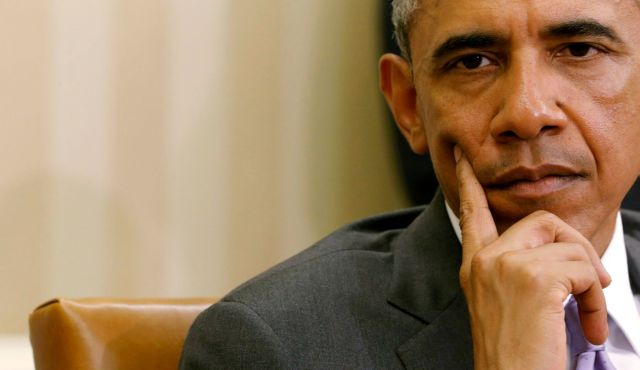
866182083President Barack Obama, July 7, 2015. What is he thinking with his Iranian strategy? Photo by Reuters

It’s hard to overstate the importance of cracking the code that has caused the administration to capitulate. It’s liable to put us, albeit not in the near-future, in a situation where all hope will be lost.

*********************

The inevitable revenge for Prime Minister Benjamin Netanyahu’s deluded flirtation with the Republicans and Congress has arrived. It’s crystal clear: Because of Netanyahu’s contrarian and irresponsible behavior, bridges with the U.S. administration were burned and Israel was ousted from the circle of influence on the pending nuclear deal with Iran. Netanyahu bears part of the responsibility for the bad deal that will be signed with Iran.

If any Israeli figures had a real impact on our inability to prevent a bad deal, however, it was Meir Dagan, Yuval Diskin and Gabi Ashkenazi – the principal opponents who leaked their objections to a military operation. They, along with the noisy chorus of America’s proxies in Israel, torpedoed the credibility of the brinkmanship strategy Netanyahu was leading. Iran, free of Israeli pressure, kept galloping toward the bomb.

True, Netanyahu’s mistakes – even in the area of Iran – are not few in number. However, anyone who assigns him responsibility, even indirect, for the heap of failings of the U.S. administration with regard to Iran discounts the American president and insults the memory and intelligence of the public.

The accusers, whatever their obligations to the United States, have exempted themselves from the need to think more deeply about the interests underlying America’s capitulation to Iranian chutzpah. For the sake of the future, it is dependent upon Israel to solve the big unknown: what motivates President Barack Obama to ease – in reality, cancel – sanctions before the Iranians prove, within a significant time frame, that they have left the path of nuclear arms, terror and fraud. Why is he providing the ayatollahs’ state with economic power – and therefore political and military power – to continue harming its allies in the region. And, finally, why doesn’t the agreement include an explicit demand for Iran to completely turn away from the path of terror?

Cracking America’s unclear, scarcely believable code of conduct is a major challenge. It is simply not logical that the American president, who bears responsibility for the fate of the world, should capitulate to the Iranians – unless he has a decisive reason – and cede effective supervision of nuclear sites.

The Iranians need American benevolence – not the other way around. So why are the Iranians able to bend the Americans, and not vice versa? In any event, the reason for their success does not lie, as many tend to think, in typical American naïveté – and certainly not in weakness or foolishness, as some say about Secretary of State John Kerry.

Israel’s point of departure needs to be – and this is the truth – that the U.S. president is acting in line with his nation’s interests, and that John Kerry is executing his policy. The latter’s behavior, as reflected in caricatures and articles criticizing him, is in accordance with the president’s directives, and not because he is a weak or shallow figure.

It’s hard to overstate the importance of cracking the code that has caused the administration to capitulate. It’s liable to put us, albeit not in the near-future, in a situation where all hope will be lost. Then, we will be forced to make it clear to the Americans: You, who pushed us into a corner, like in the words of the Book of Isaiah – “And I looked, and there was none to help; and I beheld in astonishment, and there was none to uphold” – bear responsibility. In a situation of no choice, we will act – and we will have to act – for as the verse continues, “And My fury, it upheld Me / And I trod down the peoples in Mine anger.”

Goodnight Vienna (8)

July 10, 2015

Goodnight Vienna (8), Power LineScott Johnson, July 10, 2015

Know Comment: Sham smiles all around

July 10, 2015

Know Comment: Sham smiles all around, Jerusalem PostDavid M. Weinberg, July 9, 2015

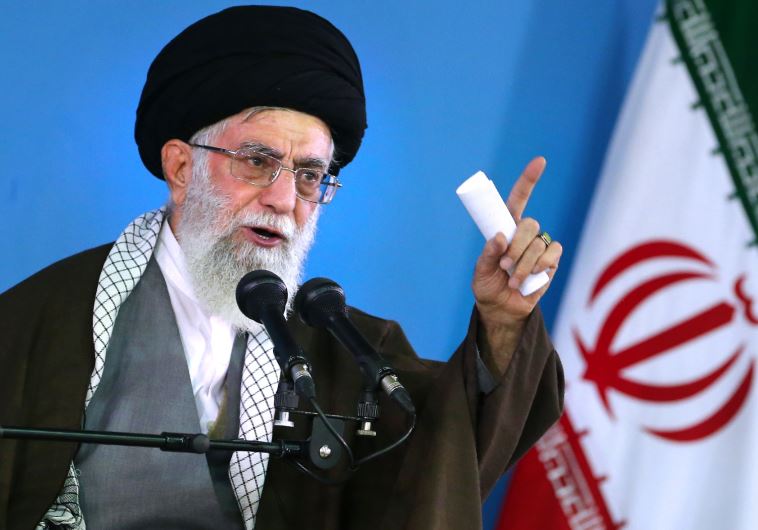
Supreme Leader 1Iran’s supreme leader, Ayatollah Ali Khamenei. (photo credit:AFP PHOTO)

Decoupling allows Obama to smile and sell sham narratives about Iran, even as Khamenei rebuffs and humiliates America. With a smile, of course.

*************************

With four deadlines come and gone, it’s probably safe to predict that there won’t be a grand package deal with Tehran this weekend, or at all. Instead, we’ll get a lot of smiles, and agreement to continue talking indefinitely, “for as long as the talks are useful,” without closure on Iran’s nuclear weapons drive.

Meanwhile, Ayatollah Khamenei’s centrifuges will continue to spin, Iran’s adventurism in the region will proceed unchecked, and President Obama won’t have to reveal to Congress the deep concessions he has already deposited in Iran’s pocket.

American analyst Michael Ledeen puts it bluntly: Khamenei doesn’t want to sign anything. He has two fixed principles: No “new relationship” with the Great Satan, and relentless pursuit of the atomic bomb. But since Obama won’t take an Iranian “no” for a definitive answer, the default American position will be a new form of “creative appeasement.”

Iran will promise to try really, really hard to be nice, and Obama will pay for this. Iran will continue to get its monthly sanctions relief payoff, while Obama will get Iranian smiles.

This will allow Obama to give another interview in which he blathers about meeting Iran’s “legitimate needs and concerns” and about his hopes that Iran will become “a very successful regional power.” After all, Obama will yet tell us, Iran “is one of the oldest and grandest civilizations in the world” – or something obsequious like that.

Who could have imagined, just a few years ago, that the president of the United States of America would wish the mullahs well in their quest for regional hegemony? What strategic thinker would have believed that the US would actively enter a de facto alliance with Shi’ite Iran (in Iraq, Syria and the Gulf) at the expense of America’s traditional Sunni allies and its ally in Israel? The metamorphosis of Iran, in pro-Obama elite opinion circles, from terrorist state into US partner is a long-brewing triumph for a certain set of pro-Iranian apologists and anti-Israel lobbyists in Washington.

Writing in The Wall Street Journal this week, Sohrab Ahmari showed how the National Iranian American Council advanced the argument that Iran deserves strategic respect, and placed its people in the Obama National Security Council.

Indeed, US think tanks played a prominent role in paving the way toward a climb-down from Obama’s declared policy of halting Iran’s nuclear drive.

Start with Thomas R. Pickering, the former under secretary of state for political affairs (and US ambassador to Russia, the UN and Israel), who showed up in Israel in 2012 as the head of “The Iran Project.” Peddling a “nuanced and sophisticated” view of Iran, he counseled an “engagement” strategy.

In a lecture at the Begin-Sadat Center for Strategic Studies, Pickering asserted that the US must end its confrontation with Iran over nuclear weapons. Sanctions, he said, were only “contributing to an increase in repression and corruption within Iran,” and were “sowing the seeds of longterm alienation between the Iranian people and the US.” What about the use of military force to crush the Iranian nuclear bomb program? Well, military force should be the very last resort taken by the US, Pickering told us, “and probably not at all.”

Next was the Center for a New American Security.

Its 2013 report, primarily authored by former Obama administration deputy assistant secretary of defense for the Middle East Colin H. Kahl, outlined “a comprehensive framework to manage and mitigate the consequences of a nuclear- armed Iran.” In other words, stopping the Iranian nuclear effort was already a passé discussion.

Then came the Atlantic Council, which called for Washington to “lessen the chances for war through reinvigorated diplomacy that offers Iran a realistic and face-saving way out of the nuclear standoff.” That’s diplomatic-speak for a containment strategy.

Then the Rand Corporation concluded that a nuclear-armed Iran would not pose a fundamental threat to the US and its regional allies. “An Iran with nuclear weapons will still be a declining power,” it said. “Iran does not have territorial ambitions and does not seek to invade, conquer, or occupy other nations.”

In his last article before dying in 2013, the leading realist theorist Ken Waltz of Columbia University even argued that Iran should get the bomb. It would create “a more durable balance of military power in the Middle East,” he wrote in the establishment journal Foreign Affairs.

The writing has been on the wall. Both Washington’s retreat from confrontation with Iran and its shift toward appeasement of Iran were there for those willing to see.

Obama has even invented a fancy term – “decoupling” – to obscure the magnitude of American collapse before Iran.

“Decoupling” means that the nuclear talks can take place in a virtual vacuum, without reference to Iranian behavior in any other field or arena – as if Iran were Iceland. There is just no coupling or link between Iran the nuclear power and Iran the aggressive adversary.

Decoupling means that Obama can be forgiven for failing to constrain Iranian terrorism. It means that Iran can get nuclear sanctions relief without having to scale back its hegemonic and subversive muckraking around the region.

The suave concept allows Obama to “decouple” the ayatollahs’ unpleasant anti-Semitic and genocidal rhetorical outbursts from Iran’s “responsible” (sic) understandings with the West on nuclear matters. It also allows Obama to ignore Iran’s human rights abuses.

Decoupling allows Obama to smile and sell sham narratives about Iran, even as Khamenei rebuffs and humiliates America. With a smile, of course.

Voices were raised at the Vienna nuclear talks Wednesday night against obdurate Iran

July 9, 2015

Voices were raised at the Vienna nuclear talks Wednesday night against obdurate Iran, DEBKAfile, July 9, 2915

Zarif_Mogherini__8.7.15Iranian foreign minister and EU executive in heated exchange

DEBKAfile’s sources agree that the rhetoric on both the American and Iranian sides is probably part and parcel of the bargaining tactics around the table in Vienna. It is therefore hard to judge whether their words are to be taken literally or maneuvers for stepping up pressure on the opposite side.

****************

European Union Foreign Executive Federica Mogherini is quoted by DEBKAfile’s intelligence sources as shouting Wednesday night, July 8, at Iran’s Foreign Minister Mohamed Javad Zarif: “If that’s where you stand it’s a pity to waste any more time!” Jarif is quoted as snapping back: “Don’t threaten us!” The US delegation led by Secretary of State John Kerry sat without moving a muscle. But Russian Foreign Minister Sergey Lavrov stepped in to cool tempers and urged everyone to go back to the matters at issue.

The shouting started amid the discussion of sanctions relief, after the second deadline for a final deal had slipped by. The Iranians stood by their demand for the immediate lifting of all sanctions – not just the penalties for its nuclear activities, but on the score of involvement in terrorism, which Iran has consistently denied.

Other sticking points between the six powers and Iran are still the UN embargo on Iranian arms sales, restrictions on ballistic missiles and the nature and powers of the mechanism for monitoring Iran’s nuclear activities.

Even before this angry exchange, President Barack Obama remarked at a closed meeting on Capital Hill Tuesday night, “The chances of a deal at this point are below 50:50.” He was quoted by the top Democrat Sen. Dick Durbin of Illinois, the Assistant Democratic Leader and a close ally of Obama’s. “I think it’s an indication that this is crunch time and that he said he’s not going to accept a weak or bad deal. He knows what’s at stake here,” said Durbin.

But Obama did not seem to be ruling out letting the negotiations run on for another few days.

At another meeting with US lawmakers Tuesday, Chairman of the Joint Chiefs of Staff Gen. Martin Dempsey spoke in particularly categorical terms against easing restrictions for Iran. “Under no circumstances should we relieve pressure on Iran relative to ballistic missile capabilities and arms trafficking,” he said.

In contrast to Obama, Iranian President Hassan Rouhani sounded upbeat Wednesday night, before setting out on a trip to Moscow. He said: “Negotiations with the P5+1 group are at a sensitive stage and the Islamic republic of Iran is preparing for [the period] post-negotiations and post-sanctions.”

DEBKAfile’s sources agree that the rhetoric on both the American and Iranian sides is probably part and parcel of the bargaining tactics around the table in Vienna. It is therefore hard to judge whether their words are to be taken literally or maneuvers for stepping up pressure on the opposite side.

Our sources deny Israeli media reports claiming that Undersecretary of State Wendy Sherman, who leads the US negotiating team, tried to call Israel’s National Security Adviser Yossie Cohen for an update on the state of the negotiations, but that he avoided taking her calls. If Sherman had really phoned Cohen, our sources say, her call would have certainly been put through to him.

The Iran Delusion: A Primer for the Perplexed

July 8, 2015

The Iran Delusion: A Primer for the Perplexed, World AffairsMichael J. Totten, Summer 2015

Totten_Iran

US foreign policy in the Middle East is focused on two things right now: containing ISIS and preventing Iran from acquiring nuclear weapons. These are both worthy goals, but if sanctions are lifted on Iran as part of a nuclear deal, whether or not it gets the bomb, Tehran will certainly have more money and resources to funnel to Hezbollah, the Assad regime, Iraq’s Shia militias, the Houthis in Yemen, and—perhaps—to Saudi Arabia’s disaffected Shia minority. The region will become even less stable than it already is. ISIS and al-Qaeda will likely grow stronger than they already are.

**************************

The chattering class has spent months bickering about whether or not the United States should sign on to a nuclear deal with Iran, and everyone from the French and the Israelis to the Saudis has weighed in with “no” votes. Hardly anyone aside from the Saudis, however, seems to recognize that the Iranian government’s ultimate goal is regional hegemony and that its nuclear weapons program is simply a means to that end.

What do these shatter zones have in common? The Iranian government backs militias and terrorist armies in all of them. As Kaplan writes, “The instability Iran will cause will not come from its implosion, but from a strong, internally coherent nation that explodes outward from a natural geographic platform to shatter the region around it.”

That’s why Iran is a problem for American foreign policy makers in the first place; and that’s why trading sanctions relief for an international weapons inspection regime will have no effect on any of it whatsoever.

Iran has been a regional power since the time of the Persian Empire, and its Islamic leaders have played an entirely pernicious role in the Middle East since they seized power from Mohammad Shah Reza Pahlavi in 1979, stormed the US Embassy in Tehran, and held 66 American diplomats hostage for 444 days.

In 1982, they went international. When the Israelis invaded Lebanon to dislodge Yasir Arafat’s Palestine Liberation Army, Iranian Revolutionary Guard Corps commanders forged a network of terrorist and guerrilla cells among their coreligionists in Lebanon’s Shia population.

Hezbollah, the poisoned fruit of these efforts, initially had no name. It was a hidden force that struck from the shadows. It left a hell of a mark, though, for an organization of anonymous nobodies when it blew up the American Embassy in Beirut and hit French and American peacekeeping troops—who were there at the invitation of the Lebanese government—with suicide truck bombers in 1983 that killed 368 people.

When Hezbollah’s leaders finally sent out a birth announcement in their 1985 Open Letter, they weren’t the least bit shy about telling the world who they worked for. “We are,” they wrote, “the Party of God (Hizb Allah), the vanguard of which was made victorious by God in Iran . . . We obey the orders of one leader, wise and just, that of our tutor and faqih [jurist] who fulfills all the necessary conditions: Ruhollah Musawi Khomeini. God save him!”

The Israelis fought a grinding counterinsurgency against Hezbollah for 18 years in southern Lebanon before withdrawing in 2000, and they fought a devastating war in 2006 along the border that killed thousands and produced more than a million refugees in both countries. Hezbollah was better armed and equipped than the Lebanese government even then, but today its missiles can reach Tel Aviv, Jerusalem, and even the Dimona nuclear power plant all the way down in the southern part of the country. 

Until September 11, 2001, no terrorist organization in the world had killed more Americans than Hezbollah. Hamas in Gaza isn’t even qualified as a batboy in the league Hezbollah plays in.

Hezbollah is more than just an anti-Western and anti-Jewish terrorist organization. It is also a ruthless sectarian Shia militia that imposes its will at gunpoint on Lebanon’s Sunnis, Christians, and Druze. It has toppled elected governments, invaded and occupied parts of Beirut, and, according to a United Nations indictment, assassinated former Lebanese Prime Minister Rafik Hariri.

Hezbollah is, for all intents and purposes, the foreign legion of Iran’s Revolutionary Guard Corps. The parts of the country it occupies—the northern Bekaa Valley, the Israeli border region, and the suburbs south of Beirut—constitute a de facto Iranian-controlled state-within-a-state inside Lebanon. 

After the United States demolished Saddam Hussein’s Sunni-dominated regime in 2003, Iran’s rulers duplicated their Lebanon strategy in Iraq by sponsoring a smorgasbord of sectarian Shia militias and death squads that waged war against the Iraqi government, the American military, Sunni civilians, and politically moderate Shias. 

Unlike Lebanon—which is more or less evenly divided between Christians, Sunnis, and Shias—Iraq has an outright Shia majority that feels a gravitational pull toward their fellow Shias in Iran and a revulsion for the Sunni minority that backed Hussein’s brutal totalitarianism and today tolerates the even more deranged occupation by the Islamic State, also known as ISIS. 

The central government, then, is firmly aligned with Tehran. Iran’s clients don’t run a Hezbollah-style state-within-a-state in Iraq. They don’t have to. Now that Hussein is out of the way, Iraq’s Shias can dominate Baghdad with the weight of sheer demographics alone. But Iran isn’t content with merely having strong diplomatic relations with its neighbor. It still sponsors sectarian Shia militias in the center and south of the country that outperform the American-trained national army. They may one day even supplant Iraq’s national army as the Iranian Revolutionary Guard Corps has more or less supplanted the Iranian national army. Iraq’s Shia militias are already the most powerful armed force outside the Kurdish autonomous region and ISIS-held territory.

When ISIS took complete control of the city of Ramadi, the capital of Anbar Province, in May of 2015, the Iraqi soldiers tasked with protecting it dropped their weapons and ran as they had earlier in Mosul, Tikrit, and Fallujah. So Iraq’s central government tasked its Iranian-backed Shia militias with taking it back. 

On the one hand, we can hardly fault Baghdad for sending in whatever competent fighting force is available when it needs to liberate a city from a psychopathic terrorist army, but the only reason ISIS gained a foothold among Iraq’s Sunnis in the first place is because the Baghdad government spent years acting like the sectarian dictatorship that it is, by treating the Sunni minority like second-class citizens, and by trumping up bogus charges against Sunni officials in the capital. When ISIS promised to protect Iraq’s Sunnis from the Iranian-backed Shia rulers in Baghdad, the narrative seemed almost plausible. So ISIS, after being vomited out of Anbar Province in 2007, was allowed to come back.

Most of Iraq’s Sunnis fear and loathe ISIS. They previously fought ISIS under its former name, al-Qaeda in Iraq. But they fear and loathe the central government and its Shiite militias even more. They’d rather be oppressed by “their own” than by “the other” if they had to choose. But they have to choose because Iran has made Iraq its second national project after Lebanon.

It doesn’t have to be this way. At least some of the tribal Sunni militias would gladly fight ISIS as they did in the past with American backing. If they did, residents of Ramadi, Fallujah, and Mosul would view them as liberators and protectors rather than potential oppressors, but Tehran and Baghdad will have none of it.

“All attempts to send arms and ammunition must be through the central government,” Adnan al-Assadi, a member of Parliament, told CNN back in May. “That is why we refused the American proposal to arm the tribes in Anbar. We want to make sure that the weapons would not end up in the wrong hands, especially ISIS.”

That may appear reasonable on the surface, but ISIS can seize weapons from Shia militias just as easily as it can seize weapons from Sunni militias. The real reason for the government’s reluctance ought to be obvious: Iraq’s Shias do not want to arm Iraq’s Sunnis. They’d rather have ISIS controlling huge swaths of the country than a genuinely popular Sunni movement with staying power that’s implacably hostile to the Iranian-backed project in Mesopotamia.

The catastrophe in Iraq is bad enough, but the Iranian handiwork in Syria is looking even more apocalyptic nowadays. ISIS wouldn’t even exist, of course, if it weren’t for the predatory regime of Bashar al-Assad, and the close alliance that has existed between Damascus and Tehran since the 1979 revolution that brought the ayatollahs to power.

Syria’s government is dominated by the Alawites, who make up just 15 percent of the population. Their religion is a heterodox blend of Christianity, Gnosticism, and Shia Islam. They aren’t Shias. They aren’t even Muslims. Their Arab Socialist Baath Party is and has always been as secular as the Communist Party was in the Soviet Union (and it was in fact a client of the Soviet Union). A marriage between an aggressively secular Alawite regime and Iran’s clerical Islamic Republic was hardly inevitable, but it’s certainly logical. The two nations had a common enemy wedged between them in Saddam Hussein’s Iraq, and both have been threatened by the region’s Sunni Arab majority since their inception. 

Hezbollah is their first child, and the three of them together make up the core of what analyst Lee Smith calls the Resistance Bloc in his book, The Strong Horse. The Party of God, as it calls itself, wouldn’t exist without Iranian money and weapons, nor would it exist without Damascus as the logistics hub that connects them. And it would have expired decades ago if Syria hadn’t conquered and effectively annexed Lebanon at the end of the Lebanese civil war in 1990.

Every armed faction in Lebanon, including Hezbollah, signed on to the Syrian-brokered Taif Agreement, which required the disarmament of every militia in the country. But the Assads governed Lebanon with the same crooked and cynical dishonesty they perfected at home, and as the occupying power they not only allowed Hezbollah to hold onto its arsenal, but also allowed Hezbollah to import rockets and even missiles from Iran.

“For Syria,” historian William Harris wrote in The New Face of Lebanon, “Hezbollah could persist as both a check on the Lebanese regime and as a means to bother Israel when convenient.”

The Party of God is now a powerful force unto itself, but it rightly views the potential downfall of the Assad regime as the beginning of its own end. The fact that Assad might be replaced by the anti-Shia genocidaires of ISIS compelled its fighters to invade Syria without an exit strategy—with the help of Iranian commanders, of course—to either prop up their co-patron or die.

Rather than going all-in, the Iranians could have cut their losses in Syria and pressured Assad into leaving the country. ISIS would be hiding under rocks right now had that happened. Hardly any Sunnis in Syria would tolerate such a deranged revolution if they had no one to revolt against. But the Resistance Bloc will only back down if it’s forced to back down. If ISIS devours Syria and Iraq as a result, then so be it.

And while the Resistance Bloc is fighting for its survival in the Levant, it’s expanding into the Arabian Peninsula.

The Shia-dominated Houthi movement took control of Yemen’s capital, Sanaa, earlier this year following the revolution that toppled former President Ali Abdullah Saleh, and its fighters are well on their way to taking the port city of Aden, in the Sunni part of the country.

The Houthis, of course, are backed by Iran.

They’re no more likely to conquer every inch of that country than Iran’s other regional proxies are to conquer every inch of anywhere else. Shias make up slightly less than half of Yemen’s population, and their natural “territory” is restricted to the northwestern region in and around the capital. Taking and holding it all is likely impossible. No government—Sunni, Shia, or otherwise—has managed to control all of Yemen for long. 

And the Saudis are doing their damnedest to make sure it stays that way. Their fighter jets have been pounding Houthi positions throughout the country since March.

Saudi Arabia is more alarmed at Iranian expansion in the region than anyone else, and for good reason. It’s the only Arab country with a substantial Shia minority that hasn’t yet been hit by Iranian-backed revolution, upheaval, or sectarian strife, although events in Yemen could quickly change that.

In the city and province of Najran, in the southwestern corner just over the Yemeni border, Shias are the largest religious group, and they’re linked by sect, tribe, and custom to the Houthis.

Not only is the border there porous and poorly defined, but that part of Saudi Arabia once belonged to Yemen. The Saudis conquered and annexed it in 1934. Najran is almost identical architecturally to the Yemeni capital, and you can walk from Najran to Yemen is a little over an hour. 

Will the Houthis be content to let Najran remain in Saudi hands now that they have Iranian guns, money, power, and wind at their back? Maybe. But the Saudis won’t bet their sovereignty on a maybe.

Roughly 15 percent of Saudi Arabia’s citizens are Shias. They’re not a large minority, but Syria’s Alawites are no larger and they’ve been ruling the entire country since 1971. And Shias make up the absolute majority in the Eastern Province, the country’s largest, where most of the oil is concentrated. 

Support among Yemen’s Sunnis for al-Qaeda in the Arabian Peninsula—the most dangerous branch of al-Qaeda on earth—is rising for purely sectarian reasons just as it has in Syria and Iraq. Iran can’t intervene anywhere in the region right now without provoking a psychotic backlash that’s as dangerous to Tehran and its interests as it is to America’s.

If Iranian adventurism spreads to Saudi Arabia, watch out. Everywhere in the entire Middle East where Sunnis and Shias live adjacent to one another will have turned into a shatter zone.

The entire world’s oil patch will have turned into a shatter zone.

US foreign policy in the Middle East is focused on two things right now: containing ISIS and preventing Iran from acquiring nuclear weapons. These are both worthy goals, but if sanctions are lifted on Iran as part of a nuclear deal, whether or not it gets the bomb, Tehran will certainly have more money and resources to funnel to Hezbollah, the Assad regime, Iraq’s Shia militias, the Houthis in Yemen, and—perhaps—to Saudi Arabia’s disaffected Shia minority. The region will become even less stable than it already is. ISIS and al-Qaeda will likely grow stronger than they already are.

We’re kidding ourselves if we think that won’t affect us. It’s not just about the oil, although until every car in the world is powered by green energy we can’t pretend the global economy won’t crash if gasoline becomes scarce. We also have security concerns in the region. What happens in the Middle East hasn’t stayed in the Middle East now for decades. 

The head-choppers of ISIS are problematic for obvious reasons. Their leader, Abu Bakr al-Baghdadi, said, “I’ll see you in New York,” to American military personnel when they (foolishly) released him from Iraq’s Camp Bucca prison in 2004. But the Iranian-led Resistance Bloc has behaved just as atrociously since 1979 and will continue to do so with or without nuclear weapons.

US involvement in Syria and Iraq is minimal now, but even the little we are doing makes little sense. We’re against ISIS in both countries, which is entirely fine and appropriate, but in Iraq we’re using air power to cover advances by Shia militias and therefore furthering Iranian interests, and in Syria we’re working against Iranian interests by undermining Assad and Hezbollah. Meanwhile, the nuclear deal Washington is negotiating with Tehran places a grand total of zero requirements on Iran’s rulers to roll back in their necklace of shatter zones.

We don’t have to choose between ISIS and Iran’s revolutionary regime. They’re both murderous Islamist powers with global ambitions, and they’re both implacably hostile to us and our interests. Resisting both simultaneously wouldn’t make our foreign policy even a whit more complicated. It would, however, make our foreign policy much more coherent.