Posted tagged ‘Elections in Israel’

Israel’s Revenge Is That “We Are Still Here”

June 7, 2015

Israel’s Revenge Is That “We Are Still Here” The Legal Insurrection, June 7, 2015

My wife and I are back, after an intense two weeks in Israel.

From the Lebanese to Gaza borders, from the Mediterranean Sea to Judea and Samaria, from the cool evenings of Jerusalem to the heat of the Negev Desert, from an apartment in the Jewish Quarter of the Old City of Jerusalem to Bedouin villages in the north and south, from university campuses to military bases, from faculty to students, from Jews to Muslims … I can’t say we saw it all, but we saw a lot.

I’ve documented most of our big events in daily posts, with the exception of our emotional meetings with the families of Edward Joffe and Leon Kanner, students killed in the 1969 Supersol supermarket bombing by Rasmea Odeh; that post is coming, but I still have new photos, documents and information I have to work through.

Here are my 5 Big Takeaways from the trip:

1. Our Revenge Is That “We Are Still Here”

Near the start of our trip, we visited Moshav Avivim straddling the Lebanese border, where we met Shimon Biton, a survivor of the 1970 bazooka attack on a school bus by the Popular Front for the Liberation of Palestine.

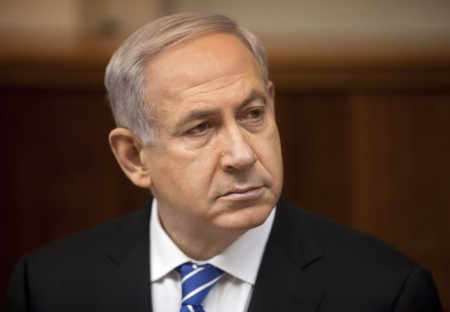
Biton, who was six and one-half years old, lost his father in the attack, and himself was shot point blank range by the terrorists when they realized he survived the bazooka attack.  Ten days before we met Biton, he was reunited for the first time in 45 years with the nurse who helped save him.  (Featured Image)

When we asked whether he ever wanted revenge, Biton told us that the revenge was that “we are still here and building for another 70 families.”

Moshav-Aviviv-Shimon-Biton-e1432683043370[Shimon Biton, Moshav Avivim, Israel]

When we related that story to numerous people we met along the rest of the trip, heads vigorously shook up and down.  It struck a chord, since almost every Israeli has a relative or friend impacted by terror.

Despite several decades of terrorism, particularly intense during the Second Intifada, and a world campaign against it, the People of Israel are still there.

The will to resist is underestimated.  Israel has a longer-term view, and a history.  It will not give in to boycotts, or Obama, or outside pressure that puts its security at risk.

2. “I don’t like Bibi, BUT….”

For whatever the reason, most of the people with whom we interacted self-identified as center-left or left.

There was no shortage of criticism of Israeli Prime Minister Benjamin Netanyahu: He’s egotistical, he doesn’t keep his tough promises, he is only interested in his own political survival, he’s a liar, his pre-election comment about Arab voting was shameful, and so on.

Yet with only a couple of exceptions, the negative comments always were followed with a big BUT.
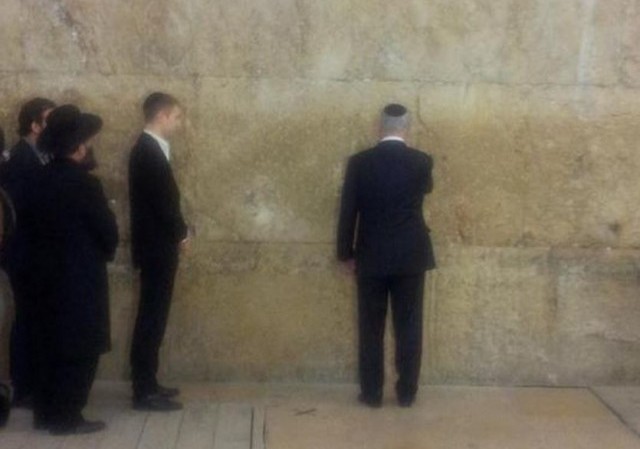
Benjamin-Netanyahu-at-Western-Wall-post-election-2015-e1426681806959[Israeli Prime Minister Benjamin Netanyahu at Western Wall after 2015 election victory.]

But he is the only Israeli politician who has the stature to handle the world pressure; but I don’t envy the position he is in with so many forces against us; but [opposition leader Yitzhak “Bougie” Herzog] Bougie is weak and no one will fear him; and so on.

These opinions pretty much were reflected in polling and the election results — Many people may not like Netanyahu, but he is the only Israeli politician capable of standing up for Israel in a hostile world.

3. I don’t like Obama, no BUTs about it

Polling in Israel shows Obama is hugely unpopular.  Our anecdotal interactions with Israelis confirmed that polling.

I  can’t recall anyone, from left to right, who had anything nice to say about Obama.  The most consistent theme was that Obama is naive and weak, and that naivitee and weakness had resulted in disaster in the Arab world as it encouraged the most aggressive Islamist elements.

They see Syria falling apart with al-Qaeda or ISIS groups likely to control large parts of the country; or if not, then Iran in control. There are no good outcomes for Israel’s Golan Heights border. Along the Lebanese border there is Hezbollah, and in Gaza Hamas and increasingly even more radical Salafist-ISIS groups.

Against this background of being surrounded by a sea of increasing threats resulting from Obama administration policy, not a single person thought the Iran nuclear deal made any sense, or trusted the Obama administration on it.

In other words, Israelis live in the real world, not the world of Obama’s delusional hope.  And they don’t appreciate Obama taking risks with their lives.

4. Are we really that popular in the United States?

The anti-Israel Boycott, Divestment and Sanctions movement was a frequent topic of conversation, almost always brought up by us as part of describing the type of coverage at Legal Insurrection.  This coincided with what I consider an irrational panic the past two weeks in the Israeli press and political discourse about BDS (more on that in a later post.)

I tried to explain that there is a complete disconnect between the BDS movement in the U.S. and the vast majority of Americans.  Gallup and Pew polling shows Israel at or near historical highs in terms of Israel’s favorability both abolutely and relative to favorability of Palestinians.  The gap between those who pick Israel over Palestinians when the question forces a choice, also is historically high.

Virtually every Israeli we met was shocked that Israel is actually so popular in the United States.  Even Israelis who have extensive American contacts and visit the U.S.

That’s not all so surprising.  Both the U.S. and Israeli media focus on the negative, though for different reasons.  The U.S. media long has had in implicit anti-Israel bias, compounded by the rise of left-leaning new media, while the Israeli media competes for readers with a “sky is falling” outlook.

(added) Israel’s enormous popularity among Americans is a strategic asset.  That strategic asset needs to be used more effectively to minimize the damage from the narrow but influential slices of the American population — radical faculty, some students, and mainstream journalists — who have explicit or implicit anti-Israel biases. The American people as a whole are the “Israeli Lobby.”

5. The Next War is Only a Matter of Time

While we were in Jerusalem, Israel underwent a national defense drill, including sirens warningof incoming rockets.

Our tour along the Gaza border, particularly near Sderot, also reflected preparation for the next round of rocket fire through reinforcing key civilian infrastructures, such as schools.

Sderot-Israel-bomb-shelter-street-e1433110130989[Sderot, Israel, street bomb shelter with “Shalom” grafitti]

There was a pervasive feeling that the calm cannot last.  And sure enough, while we were there and just after we left, rockets were fired from Gaza to Israel by Salafists suffering from a Hamas crackdown, and groups competing with Hamas for control.

That’s the logic of the region in which Israel lives: Radical groups retaliate against each other by firing rockets at … Israel.

The next war is coming.  Every Israeli knows it. It’s only a matter of time.

*  *  *  *  *

Those are my big takeaways.  I hope you enjoyed the coverage.

We will be back in Israel, hopefully next year.
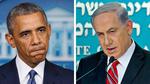
Exclusive: Obama to back Palestinian state at Security Council – payback for Israel’s right-wing cabinet

May 7, 2015

Exclusive: Obama to back Palestinian state at Security Council – payback for Israel’s right-wing cabinet, DEBKAfile, May 6, 2015

Net-0b_clash_5.15Barack Obama plans to punish Israel again

DEBKAfile reports exclusively from Washington: US President Barack Obama did not wait for Binyamin Netanyahu to finish building his new government coalition by its deadline at midnight Wednesday, May 6, before going into action to pay him back for forming a right-wing cabinet minus any moderate figure for resuming negotiations with the Palestinians.

Banking on Netanyahu’s assertion while campaigning for re-election that there would be no Palestinian state during his term in office, Obama is reported exclusively by our sources to have given the hitherto withheld green light to European governments to file a UN Security Council motion proclaiming an independent Palestinian state. Although Netanyahu left the foreign affairs portfolio in his charge and available to be filled by a suitably moderate figure as per the White House’s expectations did not satisfy the US President.

The White House is confident that, with the US voting in favor, the motion will be passed by an overwhelming majority and therefore be binding on the Israeli government.

To show the administration was in earnest, senior US officials sat down with their French counterparts in Paris last week to sketch out the general outline of this motion. According to our sources, they began addressing such questions as the area of the Palestinian state, its borders, security arrangements between Israel and the Palestinians and whether or not to set a hard-and-fast timeline for implementation, or phrase the resolution as  a general declaration of intent.

Incorporating a target date in the language would expose Israel to Security Council sanctions for non-compliance.

It was indicated by the American side in Paris that the Obama administration would prefer to give Netanyahu a lengthy though predetermined time scale to reconsider his Palestinian policy or even possibly to broaden and diversify his coalition by introducing non-aligned factions or figures into such key posts as foreign affairs.

At the same time, both American and French diplomats are already using the club they propose to hang over the Netanyahu government’s head for gains in other spheres.

French President Francois Hollande, for instance, the first foreign leader ever to attend a Gulf Council of Cooperation summit, which opened in Riyadh Tuesday to discuss Iran and the Yemen war, used the opportunity to brief Gulf Arab rulers on Washington’s turnaround on the Israeli-Palestinian issue.

And US Secretary of State John Kerry plans to present the Obama administration’s new plans for Palestinian statehood to Saudi leaders during his visit to Riyadh Wednesday and Thursday, May 6-7. Kerry will use Washington’s willingness to meet Palestinian aspirations as currency for procuring Saudi and Gulf support for a Yemen ceasefire and their acceptance of the nuclear deal shaping up with Iran.

Column One: Managing Obama’s war against Israel

March 27, 2015

Column One: Managing Obama’s war against Israel, Jerusalem Post, Caroline Glick, March 26, 2015

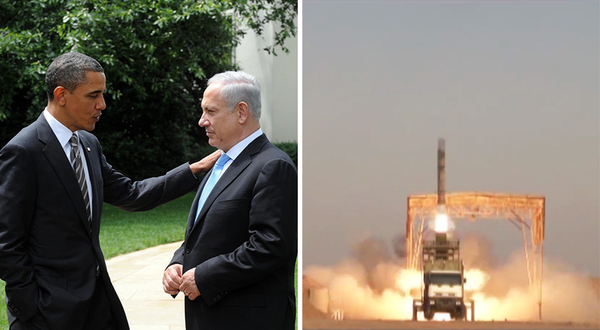
ShowImageUS President Barack Obama meets with Prime Minister Benjamin Netanyahu at the White House, October 1, 2014. (photo credit:REUTERS)

As Max Boot explained Wednesday in The Wall Street Journal, the administration’s animosity toward Israel is a function of Obama’s twin strategic aims, both evident since he entered office: realigning US policy in the Middle East toward Iran and away from its traditional allies Israel and the Sunni Arab states, and ending the US’s strategic alliance with Israel.

Obama has reached a point in his presidency where he is prepared to give full expression to his plan to end the US’s strategic alliance with Israel.

He thinks that doing so is both an end to itself and a means of succeeding in his bid to achieve a rapprochement with Iran.

*********************

On Wednesday the Jerusalem Municipality announced it is shelving plans to build 1,500 apartments in the Har Homa neighborhood. Officials gave no explanation for its sudden move. But none was needed.

Obviously the construction of apartments for Jews in Jerusalem was blocked in the hopes of appeasing US President Barack Obama.

But is there any reason to believe he can be appeased? Today the White House is issuing condemnations of Israel faster than the UN.

To determine how to handle what is happening, we need to understand the nature of what is happening.

First we need to understand that the administration’s hostility has little to do with Israel’s actions.

As Max Boot explained Wednesday in The Wall Street Journal, the administration’s animosity toward Israel is a function of Obama’s twin strategic aims, both evident since he entered office: realigning US policy in the Middle East toward Iran and away from its traditional allies Israel and the Sunni Arab states, and ending the US’s strategic alliance with Israel.

Over the past six years we have seen how Obama has consistently, but gradually, taken steps to advance these two goals. Toward Iran, he has demonstrated an unflappable determination to accommodate the terrorism supporting, nuclear proliferating, human rights repressing and empire building mullahs.

Beginning last November, as the deadline for nuclear talks between the US and its partners and Tehran approached, Obama’s attempts to accommodate Tehran escalated steeply.

Obama has thrown caution to the winds in a last-ditch effort to convince Iranian dictator Ali Khamenei to sign a deal with him. Last month the administration published a top secret report on Israel’s nuclear installations. Last week, Obama’s director of national intelligence James Clapper published an annual terrorism threat assessment that failed to mention either Iran or Hezbollah as threats.

And this week, the administration accused Israel of spying on its talks with Iran in order to tell members of Congress the details of the nuclear deal that Obama and his advisers have been trying to hide from them.

In the regional context, the administration has had nothing to say in the face of Iran’s takeover of the Bab el-Mandeb Strait and the Gulf of Aden this week. With its Houthi-proxy now in charge of the strategic waterway, and with its own control over the Straits of Hormuz, Iran is poised to exercise naval control over the two choke points of access to Arab oil.

The administration is assisting Iranian Shi’ite proxies in their battle to defeat Islamic State forces in the Iraqi city of Tikrit. It has said nothing about the Shi’ite massacres of Sunnis that come under their control.

Parallel to its endless patience for Tehran, the Obama administration has been treating Israel with bristling and ever-escalating hostility. This hostility has been manifested among other things through strategic leaks of highly classified information, implementing an arms embargo on weapons exports to Israel in time of war, ending a 40-year agreement to provide Israel with fuel in times of emergency, blaming Israel for the absence of peace, expressing tolerance and understanding for Palestinian terrorism, providing indirect support for Europe’s economic war against Israel, and providing indirect support for the BDS movement by constantly accusing Israel of ill intentions and dishonesty.

Then there is the UN. Since he first entered office, Obama has been threatening to withhold support for Israel at the UN. To date, the administration has vetoed one anti-Israel resolution at the UN Security Council and convinced the Palestinians not to submit another one for a vote.

In the months that preceded these actions, the administration exploited Israel’s vulnerability to extort massive concessions to the Palestinians.

Obama forced Benjamin Netanyahu to announce his support for Palestinian statehood in September 2009. He used the UN threat to coerce Netanyahu to agree to negotiations based on the 1949 armistice lines, to deny Jews their property rights in Jerusalem, Judea and Samaria, and to release scores of terrorist murderers from prison.

Following the nationalist camp’s victory in last week’s election, Obama brought to a head the crisis in relations he instigated. He has done so for two reasons.

First, next week is the deadline for signing a nuclear agreement with Iran. Obama views Netanyahu as the prospective deal’s most articulate and effective opponent.

As Obama sees it, Netanyahu threatens his nuclear diplomacy with Iran because he has a unique ability to communicate his concerns about the deal to US lawmakers and the American people, and mobilize them to join him in opposing Obama’s actions. The letters sent by 47 senators to the Iranian regime explaining the constitutional limitations on presidential power to conclude treaties without Senate approval, like the letter to Obama from 367 House members expressing grave and urgent concerns about the substance of the deal he seeks to conclude, are evidence of Netanyahu’s success.

The second reason Obama has gone to war against Israel is because he views the results of last week’s election as an opportunity to market his anti-Israel and pro-Iranian positions to the American public.

If Netanyahu can convince Americans to oppose Obama on Iran, Obama believes that by accusing Netanyahu of destroying chances for peace and calling him a racist, Obama will be able to win sufficient public support for his anti-Israel policies to intimidate pro-Israel Democratic lawmakers into accepting his pro-Iranian policies.

To this end, Obama has announced that the threat that he will abandon Israel at the UN has now become a certainty. There is no peace process, Obama says, because Netanyahu had the temerity to point out that there is no way for Israel to risk the transformation of Judea and Samaria into a new terror base. As a consequence, he has all but made it official that he is abandoning the peace process and joining the anti-Israel bandwagon at the UN.

Given Obama’s decision to abandon support for a negotiated peace between Israel and the Palestinians, modes of appeasement aimed at showing Israel’s good faith, such as Jewish building freezes, are no longer relevant. Scrapping plans to build apartments in Jewish neighborhoods like Har Homa will make no difference.

Obama has reached a point in his presidency where he is prepared to give full expression to his plan to end the US’s strategic alliance with Israel.

He thinks that doing so is both an end to itself and a means of succeeding in his bid to achieve a rapprochement with Iran.

Given this dismal reality, Israel needs to develop ways to minimize the damage Obama can cause.

Israel needs to oppose Obama’s policies while preserving its relations with its US supporters, including its Democratic supporters. Doing so will ensure that it is in a position to renew its alliance with the US immediately after Obama leaves office.

With regards to Iran, such a policy requires Israel to act with the US’s spurned Arab allies to check Iran’s expansionism and nuclear progress. It also requires Israel to galvanize strong opposition to Obama’s goal of replacing Israel with Iran as America’s chief ally in the Middle East and enabling it to develop nuclear weapons.

As for the Palestinians, Israel needs to view Obama’s abandonment of the peace process as an opportunity to improve our diplomatic position by resetting our relations with the Palestinians. Since 1993, Israel has been entrapped by the chimerical promise of a “two-state solution.”

By late 2000, the majority of Israelis had recognized that there is no way to achieve the two-state solution. There is no way to make peace with the PLO. But due to successive governments’ aversion to risking a crisis in relations with Washington, no one dared abandon the failed two-state strategy.

Now, with Obama himself declaring the peace process dead and replacing it with a policy of pure hostility toward Israel, Israel has nothing to gain from upholding a policy that blames it for the absence of peace.

No matter how loudly Netanyahu declares his allegiance to the establishment of a Palestinian state in Israel’s heartland, Obama will keep castigating him and Israel as the destroyer of peace.

The prevailing, 23-year-old view among our leadership posits that if we abandon the two-state model, we will lose American support, particularly liberal American support. But the truth is more complicated.

Inspired by the White House and the Israeli Left, pro-Israel Democrats now have difficulty believing Netanyahu’s statements of support for the establishment of a Palestinians state. But those who truly uphold liberal values of human rights can be convinced of the rightness of Israel’s conviction that peace is currently impossible and as a consequence, the two-state model must be put on the back burner.

We can maintain support among Republicans and Democrats alike if we present an alternative policy that makes sense in the absence of an option for the two-state model.

Such a policy is the Israeli sovereignty model. If the government adopts a policy of applying Israeli sovereignty over Judea and Samaria in whole – as I recommend in my book The Israeli Solution: A One- State Plan for Peace in the Middle East, or in part, in Area C, as Economy Minister Naftali Bennett recommends, our leaders will be able to defend their actions before the American people, including pro-Israel Democrats.

Israel must base its policy of sovereignty on two principles. First, this is a liberal policy that will ensure the civil rights of Palestinians and Israelis alike, and improve the Palestinians’ standard of living.

Second, such a policy is not necessarily a longterm or permanent “solution,” but it is a stable equilibrium for now.

Just as Israel’s decision to apply its laws to united Jerusalem and the Golan Heights in the past didn’t prevent it from conducting negotiations regarding the possible transfer of control over the areas to the Palestinians and Syrians, respectively, so an administrative decision to apply Israeli law to all or parts of Judea and Samaria will not block the path for negotiations with the Palestinians when regional and internal Palestinian conditions render them practicable.

The sovereignty policy is both liberal and strategically viable. If the government adopts it, the move will rebuild Israel’s credibility and preserve Israel’s standing on both sides of the aisle in Washington.

Never before has Israel had to deal with such an openly hostile US administration. Indeed, until 2009, the very notion that a day would come when an American president would prefer an alliance with Khamenei’s Iran to its traditional alliances with Israel and the Sunni Arab states was never even considered. But here we are.

Our current situation is unpleasant. But it isn’t the end of the world. We aren’t helpless. If we act wisely, we can stem Iran’s nuclear and regional advance. If we act boldly, we can preserve our alliance with the US while adopting a policy toward the Palestinians that for the first time in decades will advance our interests and our liberal values on the world stage.

The Myth of Netanyahu’s Racism

March 23, 2015

The Myth of Netanyahu’s Racism, Front Page Magazine, Daniel Greenfield, March 23, 2015

Benjamin Netanyahu

Israel’s cultural conflict is a complex one. It doesn’t just pit Jews against Arabs or Muslims against Jews, it pits Arab Druze against European Jewish leftists and Aramean Christians against Arab Muslims. The left prefers cheap shots to actually understanding the complexities of a country that can’t be summed up with a keffiyah and a protest sign. After their election defeat, Obama and the media have decided to reduce Israel to Netanyahu and Netanyahu to the devil. It’s the easy way out, but it fails to take account of men like Ayoub Kara or Father Naddaf, of the Likud landslide in Arab-al-Naim and of Lieberman’s wins in Arab towns and villages. The Jews and Arabs are more complex than the left would like them to be.

***********************

Netanyahu’s conservative Likud Party got its best numbers not in Jerusalem, where it only won a quarter of the vote, or Sderot, the city under siege where it still got less than half, or Maaleh Adumim, a city of some 40,000 known as a “settlement” because it is located in ’67 Israel where it also took less than half.

Its best numbers appear to have come from Arab-al-Naim, a Bedouin settlement, where it scored three-quarters of the vote.

The residents were uninterested in any of the accusations of racism being aimed at Netanyahu by the media. Instead they were interested in housing. As one resident put it, “I used to sleep in a cave with my goats. Now I ask my daughter what wallpaper she wants in her room.”

Netanyahu’s election comment about Arabs being bused in to vote has been seized on as a useful excuse to explain how the media’s poll numbers that showed Netanyahu losing align with the actual results by claiming that a rash of racist Israelis rushed to vote. But that fails to explain why the exit polls were still badly wrong. A more realistic explanation is that the media’s polling was biased against Netanyahu. But it’s easier for the media to accuse Netanyahu of racism than admit to its own biases.

When Netanyahu warned about Arabs being bused in, he obviously was not talking about his own Arab voters, but the Joint Arab List whose MKs include Ahmed Tibi, who claimed that Hamas is not a terrorist organization, Tibi’s brother-in-law, Osama Sa’adi, who represented Hamas terrorists, Haneen Zoabi, who met with Hamas officials and defended the kidnapping and murder of three Israeli teens and Jamal Zahalka, who attended a Hamas rallyand claimed that Israel would be destroyed.

Also on the list is Masud Ghanim, a Muslim Brotherhood member who called for replacing Israel with an Islamic Caliphate and stated that he supports Hezbollah.

The Joint Arab List is composed of several parties. Hadash has its roots in the Israeli Communist Party. Despite the name, it rejects Israel and its only remaining Jewish MK is Boris ‘Dov’ Khenin, the son of David Khenin the party’s co-founder and General Secretary of the Communist Youth Union. Balad was founded by Azmi Bishara who fled Israel after being investigated as an enemy spy. Balad had already been suspended for calling for war against Israel. The United Arab List emerged out of the local Muslim Brotherhood franchise and is stacked with Muslim Brotherhood members.

The Muslim Brotherhood believes that the Islamic apocalypse requires exterminating the Jews.

The Joint Arab List unites Communists with Islamists into one big political terrorist organization. The reasons why Netanyahu and Israelis would be concerned about its members picking up seats are obvious. Imagine Communists sitting in the Senate during the Cold War and Al Qaeda members sitting there now. As Arab al-Naim shows, the issue was not ethnicity; it was Islamic terrorism.

The media’s cries of racism fail to explain places like Arab-al-Naim where the Arab vote helped Netanyahu. Or the Arab-Druze town of Abu Sinan where Lieberman’s Yisrael Beiteinu (Israel Our Home) party, despite its media image as right-wing, captured almost 14 percent of the vote. But then again the “xenophobic” and “racist” party has Hamad Amar, a Druze IDF veteran, in the sixth place on its list.

In Netanyahu’s Likud Party, Druze lawmaker Ayoub Kara returned to the Knesset, Israel’s parliament. If Obama thinks that Netanyahu is far right, he hasn’t met Ayoub Kara who urged protesters, “Say ‘No!’ to Barack Hussein Obama and ‘Yes!’ to the nation of Israel.”

“Everyone understands that withdrawing from land will yield us nothing but a ‘red carpet’ at the ‘peace treaty’ signing ceremony,” he said during the campaign.

Netanyahu didn’t win Kara’s village of Isifya. The center-right Kulanu party running on a program of social development and economic reform did. The Likud barely placed, but Yisrael Beiteinu scored 10 percent of the vote.

While there is an Arab bloc, the Arab vote is also a lot more complicated than it seems.

There are Arab Christians who define themselves as Aramaic rather than Arab and minority groups such as the Druze and the Bedouin who have a different relationship with Israel than the stone-throwing Keffiyah-wearer prized by European protest tourists.

From the earliest days of the reborn state, entire clans and ethnic groups aligned for or against Israel. Thus the Al-Husayini clan, which gave the world Hitler’s Mufti and Arafat, led the campaign against Israel while the Abu Ghosh family maintained friendly relations with the Jews. Druze and Bedouin serve in the Israeli army and there is a growing movement of Arab Christians who have decided to serve as well.

Netanyahu has met with Father Gabriel Naddaf who has led the movement, and Naddaf identifies as Aramaic, rather than Arab, while encouraging other Christians to reclaim an Aramaic heritage. In Jish, the Maronite Christian center of the Aramean revival, the United Arab List won decisively, but Lieberman’s Yisrael Beiteinu scored 11 percent. 5 people even cast votes for Yachad. Shas, the party of Middle Eastern Jews, came in sixth.

The media has accused Netanyahu of offering a bigoted appeal by warning about Arab voters being bused in. It doesn’t care to dwell on the subject of which group would be most moved by such an appeal. That would reveal certain inconvenient facts about the relationships of the Israeli left.

The Israeli left remains a project of European Ashkenazi Jews. The Middle Eastern Mizrahi Jews were refugees from Muslim persecution and want a strong leadership that protects the country. The left gets a fraction of its vote from Middle Eastern Jews. Netanyahu gets half his votes from them.

The Israelis most likely to respond to anti-Muslim rhetoric are refugees from Muslim countries. The lefty activists most likely to condemn them as racist colonizers emigrated from Russia and Germany.

Meretz, Israel’s farthest left party, has an Arab MK. It has no Mizrahi MKs. Yisrael Beiteinu has a Druze and a Mizrahi MK. Israel’s right is more fundamentally diverse than its left and its stronger stand on Islamic terrorism helps it pick up support from Jewish and non-Jewish minorities.

Lieberman does better than Netanyahu among some Arab voters because he projects strength. When he talks about cutting off the heads of traitors, he’s speaking with a vocabulary that is entirely familiar in the region. Nobody in the Middle East picks the weak horse and those Arabs who support Israel prefer the bellicose Lieberman to the more moderate Netanyahu.

“Even in a hundred years’ time, the Middle East will not speak Yiddish and the answer to terror is a deterrent penalty,” Ayoub Kara said.

Those Arabs that support Israel want to see a strong country and they don’t wring their hands when conservative Israeli politicians say politically incorrect things. The Joint Arab List wants to see it gone and those who vote for them are no more likely to spare the Jewish State no matter how softly it speaks.

Israel’s cultural conflict is a complex one. It doesn’t just pit Jews against Arabs or Muslims against Jews, it pits Arab Druze against European Jewish leftists and Aramean Christians against Arab Muslims. The left prefers cheap shots to actually understanding the complexities of a country that can’t be summed up with a keffiyah and a protest sign. After their election defeat, Obama and the media have decided to reduce Israel to Netanyahu and Netanyahu to the devil. It’s the easy way out, but it fails to take account of men like Ayoub Kara or Father Naddaf, of the Likud landslide in Arab-al-Naim and of Lieberman’s wins in Arab towns and villages. The Jews and Arabs are more complex than the left would like them to be.

For Obama, Bibi’s words matter while Iran’s don’t

March 22, 2015

For Obama, Bibi’s words matter while Iran’s don’t, Times of IsraelShmuley Boteach, March 22, 2015

(Please see also, Iranians Chant “Death to America” While Negotiations Continue. — DM)

President Obama says that Bibi’s words matter when it comes to a Palestinian state. “We take him at his word when he said that it wouldn’t happen during his prime ministership,” he told The Huffington Post. The President used Netanyahu’s statement as cause for a “reassessment” of American ties with Israel.

White House spokesman Josh Earnest echoed the sentiment in last Thursday’s White House briefing that the Prime Minister’s words could bring punishment. “Words matter,” he said. There could be “consequences” for Netanyahu’s statements. “Everybody who’s in a position to speak on behalf of their government understands that that’s the case, and particularly when we’re talking about a matter as serious as this one.”

So let’s get this straight. When foreign leaders speak, it matters. What they say is consequential. Bibi’s going to have to pay for his remarks.

But I have one question. Why doesn’t any of this apply to Iran? Why, on Saturday Ayatollah Ali Khameini uttered the words “Death to America” even as John Kerry was expressing optimism the very same day that the United States would come to a nuclear accord with Iran!

Suddenly, Iran’s words don’t matter?

Taking this further, the most hair-raising aspect about the growing American rapprochement with Iran is that it has all happened while Iran has continued to repeatedly threaten the annihilation of the Jewish people. Ayatollah Khameini has called Jews dogs and tweeted as recently as this past November that “there is no cure for Israel other than annihilation.”

Now, if words matter, how can the United States continue to speak to his government while they are openly threatening a second holocaust? Why did President Obama and John Kerry not establish a repudiation of these genocidal words and threats as a precondition for any talks?

The hypocrisy is startling. And it leads to a more important point.

By now it’s clear to all that President Obama positively loathes Prime Minister Netanyahu more any other world leader. His hostility to the Prime Minister has become so pronounced that the President can no longer disguise or control it.

Am I the only one that finds it just a touch unseemly for the leader of the free world to hate the leader of the only free country in the Middle East?

The President has a good relationship with Erdogan, the tyrant of Turkey, who has destroyed his nation’s democracy and allows fighters to pass through his nation to join ISIS. President Obama traveled to Saudi Arabia to pay his personal condolences upon the passing of arch-misogynist King Abdullah of Saudi Arabia, a man who wouldn’t even allow women to drive a car. And he utters not an unkind word about Ayatollah Khameini, the world’s foremost terrorist.

But he hates Netanyahu. Go figure.

For years we Americans have heard that our President is cerebral and unflappable. That he famously remains cool under the most challenging circumstances. It turns out that this is true for every world leader except one, Benjamin Netanyahu, who makes the President’s blood boil.

Don’t we deserve to know why?

If the two leaders merely had bad personal chemistry, I could understand. They’re not the best of friends. Fine. But for Obama the hatred of Netanyahu has become positively visceral, personal, and irrepressible.

My own belief is this. President Obama is desperate for some foreign policy victories. There’s a year-and-a-half left to his Presidency and the world is on fire. From Iran to Boko Haram to ISIS to Putin to Hezbollah to Al Qaida and Hamas, bad guys are running amok under this president. American Foreign policy is a shambles.

The only ally President Obama can truly expert pressure on for a deal that would give him the lasting foreign policy legacy he needs and craves is Israel. And in the past Israeli Prime Ministers have proven so utterly malleable. American Presidents have squeezed them like lemons.

But Bibi refuses to be squeezed. He won’t play ball. He won’t withdraw from Judea and Samaria and allow “Hamastan” on his eastern border the way it is in Gaza. He won’t shut up about America’s capitulation to the Iranian mullahs that would leave them with a military-grade nuclear program. He won’t go quietly into the nuclear night while America appeases one of the most violent and vile regimes on earth.

This darned Bibi guy just won’t bend.

And our President finds the intransigence so utterly frustrating.

He prayed and hoped that someone else might win the Israeli election. And some of the President’s top political operatives went and worked for Herzog. But, huff and puff as he might, the President could not blow Bibi’s house down.

So now he’s stuck with him. A stick-necked Prime Minister, getting in the way of the President’s peace deals with Iran and the Palestinians.

And with no way of getting rid of the Israeli nuisance, all the President can do is continue to give interviews that express his dislike and frustration, not realizing that we’re reaching a point where the President is beginning to look positively un-Presidential and where is enmity is becoming unbecoming.

It’s called democracy, Mr. President. Bibi won. And it’s time for the world’s foremost democracy, the United States of America, to live with it and work with the man who has the mandate of the Israeli people, just as you have the mandate of the American people.


Marco Rubio Delivers Blistering Speech on Obama’s Assault on Israel

March 20, 2015

Marco Rubio Delivers Blistering Speech on Obama’s Assault on Israel, Washington Free Beacon via You Tube, March 19, 2015

(An extensive catalogue of Obama’s relations with Israel. — DM)

Pres Obama Dismisses Questions About Netanyahu’s Election Win – Cavuto

March 20, 2015

Pres Obama Dismisses Questions About Netanyahu’s Election Win – Cavuto, via You Tube, March 19. 2015


Israelis prepare to vote; Palestinians prepare to fight

March 17, 2015

Israelis prepare to vote; Palestinians prepare to fight, The Gatestone InstituteKhaled Abu Toameh, March 16, 2015

For some Palestinians, the election is not about removing Netanyahu from power. Rather, it is about removing Israel from the face of the earth and replacing it with an Islamist empire.

Kerry’s statement about the revival of the peace process shows that he remains oblivious to the reality in the Middle East, particularly with regards to the Palestinians.

Kerry is ignoring the fact that the Palestinians are today divided into two camps; one that wants to destroy Israel through terrorism and jihad and another that is working hard to delegitimize and isolate Israel with the hope of forcing it to its knees.

As Kerry was talking about the revival of the peace process, Hamas announced that it has completed preparations for the next confrontation with Israel.

Abbas will come to the talks with the same demands he and his predecessor have made over the past two decades, namely a full Israeli withdrawal to the pre-1967 lines. And when Israel does not accept all his demands, he will again walk out and demand international intervention to impose a solution on Israel.

Talk about the resumption of the peace process is nothing but a silly joke.

As Israeli voters head to the ballot boxes to elect their new representatives, Palestinians say they are preparing for another war with Israel.

The preparations came even as US Secretary of State John Kerry and some Israeli candidates, especially Zionist Camp leaders Isaac Herzog and Tzipi Livni, continue to talk about the need to revive the Israeli-Palestinian peace process after the election.

For some Palestinians, the election is not about removing Likud leader Binyamin Netanyahu from power. Rather, it is about removing Israel from the face of the earth and replacing it with an Islamist empire.

The next Israeli government will face a two-pronged attack on the Palestinian front — one from the Gaza Strip, where Hamas and Islamic Jihad say they have just completed preparations for the next conflict with Israel, and another from the West Bank, where the Palestinian Authority (PA) says it is determined to pursue its “diplomatic war” against Israel in the international arena.

On the eve of the election, Kerry expressed hope that Israelis will elect a government that “meets the hope for peace.”

Kerry’s statement about the revival of the peace process shows that he remains oblivious to the reality in the Middle East, particularly with regards to the Palestinians.

Kerry is ignoring the fact that the Palestinians are today divided into two camps; one that wants to destroy Israel through terrorism and jihad, and another that is working hard to delegitimize and isolate Israel in the international community with the hope of forcing it to its knees.

Hamas and Islamic Jihad continue to scoff at Kerry’s talk about the resumption of the peace process. The two groups, which control the 1.7 million Palestinians of the Gaza Strip, actually have other plans for the post-election era. Their main plans center around preparing for the next war with Israel.

983Israel’s Prime Minister Binyamin Netanyahu (left) and Hamas leader Ismail Haniyeh (right, in blue shirt).

As Kerry was talking about the revival of the peace process, Hamas’ armed wing, Izaddin al-Qassam, announced that it has completed preparations for the next confrontation with Israel.

These preparations, according to the group, include the reconstruction of Hamas military bases and training centers that were destroyed during the last war, known as Operation Protective Edge. The group says that it has not only rebuilt the destroyed sites, but has also set up new military posts, especially along the border with Israel.

Of course, when Hamas talks about “military bases,” it is also referring to the underground tunnels that it is hoping to use in the next conflict to infiltrate Israel.

Some of the bases are located only a few hundred meters away from the border with Israel, such as the Yarmouk and Palestine posts. Hamas says that the decision to build the military bases so close to the Israeli border is aimed at sending a message of defiance to Israel.

Islamic Jihad also does not seem to be impressed with the recent talk about the resumption of the peace process between Palestinians and Israelis.

Earlier this month, Islamic Jihad too unveiled its preparations for war, by inviting journalists on a tour of its tunnels inside the Gaza Strip.

“We’re on our highest level of alert to counter any attack. We’re used to the occupation breaking its ceasefires,” senior Islamic Jihad commander Abu al-Bara told Agence France Press. “It’s a war that never ends. We’re ready to go to another level against the Zionist occupation and carry out actions we’ve never done before.”

Meanwhile, the Palestinian Authority is also preparing for a confrontation with Israel, albeit one of a different nature.

The PA says it is determined to pursue its effort to seek worldwide support for imposing a solution on Israel. It is hoping to do so with the help of the United Nations, the European Union, the Obama Administration and some Arab countries.

In order to achieve its goal, the Palestinian Authority is currently waging a massive campaign in the international arena whose goal is to delegitimize, isolate and weaken Israel to a point where it would be forced to succumb and make far-reaching concessions, such as a full withdrawal to the pre-1967 lines.

PA President Mahmoud Abbas will find it almost impossible to return to the negotiating table with Israel now that he has told his people that the Palestinians’ next step is to file “war crime” charges against Israel with the International Criminal Court (ICC). Abbas’s aides have even set a date for the filing of the first anti-Israel case with the ICC: April 1.

Even if Abbas does return to the negotiating table — under heavy pressure from the Americans and Europeans — he would be doing so not in order to achieve an agreement with Israel, but to try to show the world that Israel does not want peace.

Abbas will come to the talks with the same demands he and his predecessor have made over the past two decades, namely a full Israeli withdrawal to the pre-1967 lines. When Israel does not accept all his demands, he will again walk out and demand international intervention to impose a solution on Israel. And while he would be waging his diplomatic campaign, Hamas and Islamic Jihad would resume their terror attacks against Israel from the Gaza Strip.

Under the current circumstances, where some Palestinians continue to seek the destruction of Israel and others are unable to make any concessions for peace, any talk about the resumption of the peace process is nothing but a silly joke.

Do Israelis Really Think the U.S. Will Come to Their Aid? (They Will Be in for a Shock)

March 15, 2015

Do Israelis Really Think the U.S. Will Come to Their Aid? (They Will Be in for a Shock), The Gatestone InstituteBassam Tawil, March 15, 2015

Many Israelis seem to think that if Iran does acquire nuclear weapons, if Israel could just offer up a more friendly face, the current U.S. Administration would, in a crisis, come to their help. They could not be more wrong.

Many Israelis seem to be counting on some deeply wished-for love from the current U.S. Administration. What they may not want to see is that their unrequited love for the U.S. runs far deeper than any disagreement with Israel’s current prime minister. Just ask Syria, ask Iraq, ask Yemen, ask Libya, ask Saudi Arabia, ask Kuwait, ask Egypt. The current U.S. Administration does not even send weapons; it sends meals-ready-to-eat. Israel and the rest of us in the region — as Iran has already encircled all the oil fields and is now taking over Iraq — have no more to look forward to than that.

Hard as it may be for Israelis to believe it, Israel’s survival most likely does not figure into the current U.S. Administration’s calculations at all. No matter who wins the election this week, the U.S. will grant Iran its nuclear weapons. If they end up turned on Israel, no matter who is prime minister, so be it.

No matter who wins the election this week in Israel, if and when Iran has a nuclear bomb, there is not a thing the current U.S. Administration will do to help Israel. To the current U.S. leadership, Israel is just the next Sudetenland. The Israelis will have only themselves to rely on.

There is about to be a mistake. The only country in the region of which all the other countries are envious — for opportunity, equal justice under law, freedom to speak without the 2 a.m. knock on the door — has an election this week. Its citizens are tired of war — right on schedule for its enemies’ plans to destroy it. The Israelis are meant to be tired of war; that is why it is called “a war of attrition.”

Many Israelis seem to be counting on some deeply wished-for love from the current U.S. Administration. What they may not want to see is that their unrequited love for the U.S. runs far deeper than any disagreement with Israel’s current prime minister. Just ask Syria, ask Iraq, ask Yemen, ask Libya, ask Saudi Arabia, ask the Emirates, ask Kuwait, ask Egypt. The current U.S. Administration does not even send weapons to help; it sends meals-ready-to-eat, perhaps with the occasional unserious bombing, and tells others to do any serious work themselves. Israel and the rest of us in the region — as Iran has already encircled all the oil fields and is now taking over Iraq — have no more to look forward to than that.

982Bassam Tawil writes that if and when Iran has a nuclear bomb, there is not a thing the current U.S. Administration will do to help Israel. (Image sources: Israel PM office, PressTV video screenshot)

The Israelis may be conning themselves into thinking that if they could just stay friendly with America, America will not “let Israel down” — whatever that is supposed to mean. Perhaps they think that the U.S. will not let Iran acquire a nuclear weapons capability — as the U.S. has been promising for twenty years. But the U.S. has already made clear that it will fast-track, or slow-track, Iran to nuclear weapons capability.

Or maybe it means that many Israelis think that if Iran does acquire nuclear weapons, if Israel could just offer up a more friendly face, the U.S. would, in a crisis, come to Israel’s help.

They could not be more wrong.

Sadly, the current administration in Washington has reportedly already sabotaged several efforts by Israel to address its Iran problem. The current U.S. Administration seems to care about only one thing: making just about any deal with Iran. It does not even care about America, or it would never have enabled Iran to get as far along as it is now.

From some apparent self-infatuated fantasy of “landing a big one” — luring the world’s most medieval, genocidal, terror-promoting state to be a responsible member of the “family of nations” — the current U.S. Administration will help exactly no one.

Hard as it may be for Israelis to believe, Israel’s survival most likely does not figure into the current U.S. Administration’s calculations at all. Israel was excluded from the P5+1 negotiations — they might actually have insisted on not handing Iran a nuclear weapons capability, and ruined the current U.S. Administration’s dream of turning the deadliest enemy of the “Big Satan” into its new-found friend — like the wish of turning a prostitute into a doting wife.

The Israelis, of course, will vote for whomever they wish, but if they are voting with the thought that a new Prime Minister will save their country from being turned onto roadkill by the current U.S. Administration — the world’s next Sudetenland — and that their current prime minister has been the problem, they have a nasty surprise coming. Everyone else has been lied to, misled, double-crossed, and tossed over the cliff – especially the American people themselves. The problem is not in whoever is Israel’s Prime Minister. The problem is three thousand miles away, in a leadership that cares only about following in the footsteps of Neville Chamberlain returning from Munich: waving around a dangerous, illusory, non-existent “peace in our time.” To the current U.S. leadership, Israel is just the next Sudetenland.

For its own fantasy of turning a voracious, extremist Islamic regime into the “stripper who becomes the girl next door,” the current U.S. Administration will grant Iran its nuclear weapons. If they end up turned on Israel, so be it. No matter who wins the election this week in Israel, if and when Iran has a nuclear bomb, there is not a thing the current U.S. Administration will do to help Israel. The Israelis will have only themselves to rely on.

Column One: Israel’s next 22 months

March 15, 2015

Column One: Israel’s next 22 months, Jerusalem Post, Caroline Glick, March 12, 2015

(The article is about more than the elections. The disconnect between Israel and the Obama administration seems likely to continue to worsen regardless of who wins, unless Israel falls completely into line with Obama’s views. — DM)

Given the stakes, the choice of Israeli voters next Tuesday is an easy one.

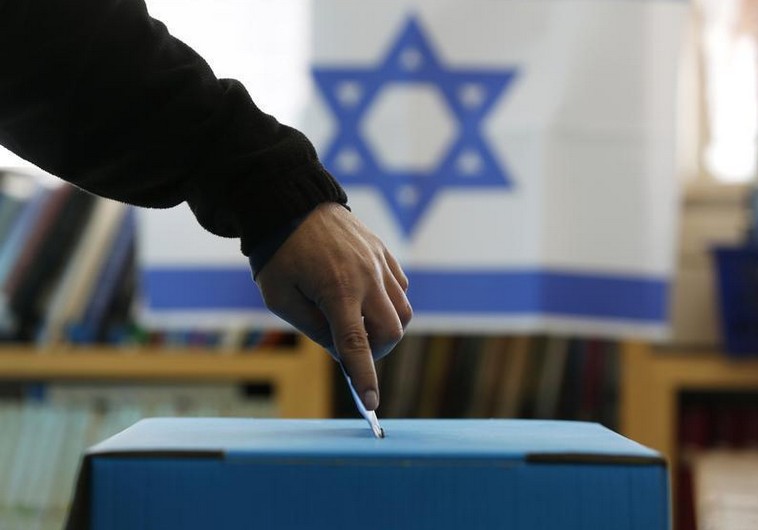
An Israeli flag is seen in the background as a man casts his ballot at a polling in a West Bank Jewish settlement, north of RamallahAn Israeli flag is seen in the background as a man casts his ballot for the parliamentary election at a polling in the West Bank settlement of Ofra. (photo credit:REUTERS)

The next 22 months until President Barack Obama leaves office promise to be the most challenging period in the history of US-Israel relations.

Now unfettered by electoral concerns, over the past week Obama exposed his ill-intentions toward Israel in two different ways.

First, the Justice Department leaked its intention to indict Democratic Sen. Robert Menendez on corruption charges. Menendez is the ranking Democratic member, and the former chairman, of the Senate Foreign Relations Committee. He is also the most outspoken Democratic critic of Obama’s policy of appeasing the Iranian regime.

As former US federal prosecutor Andrew McCarthy wrote this week at PJMedia, “It is perfectly reasonable to believe that Menendez may be guilty of corruption offenses and that his political opposition on Iran is factoring into the administration’s decision to charge him. Put it another way, if Menendez were running interference for Obama on the Iran deal, rather than trying to scupper it, I believe he would not be charged.”

The Menendez prosecution tells us that Obama wishes to leave office after having vastly diminished support for Israel among Democrats. And he will not hesitate to use strong-arm tactics against his fellow Democrats to achieve his goal.

We already experienced Obama’s efforts in this sphere in the lead-up to Prime Minister Benjamin Netanyahu’s speech before the joint houses of Congress on March 3 with his campaign to pressure Democratic lawmakers to boycott Netanyahu’s address.

Now, with his move against Menendez, Obama made clear that support for Israel – even in the form of opposition to the nuclear armament of Iran – will be personally and politically costly for Democrats.

The long-term implications of Obama’s moves to transform US support for Israel into a partisan issue cannot by wished away. It is possible that his successor as the head of the Democratic Party will hold a more sympathetic view of Israel. But it is also possible that the architecture of Democratic fund-raising and grassroots support that Obama has been building for the past six years will survive his presidency and that as a consequence, Democrats will have incentives to oppose Israel.

The reason Obama is so keen to transform Israel into a partisan issue was made clear by the second move he made last week.

Last Thursday, US National Security Adviser Susan Rice announced that the NSC’s Middle East Coordinator Phil Gordon was stepping down and being replaced by serial Israel-basher Robert Malley.

Malley, who served as an NSC junior staffer during the Clinton administration, rose to prominence in late 2000 when, following the failed Camp David peace summit in July 2000 and the outbreak of the Palestinian terror war, Malley co-authored an op-ed in The New York Times blaming Israel and then-prime minister Ehud Barak for the failure of the negotiations.

What was most remarkable at the time about Malley’s positions was that they completely contradicted Bill Clinton’s expressed views. Clinton placed the blame for the failure of the talks squarely on then-Palestinian leader Yasser Arafat’s shoulders.

Not only did Arafat reject Barak’s unprecedented offer of Palestinian statehood and sovereignty over all of Gaza, most of Judea and Samaria and parts of Jerusalem including the Temple Mount, he refused to make a counter-offer. And then two months later, he opened the Palestinian terror war.

As Jonathan Tobin explained in Commentary this week, through his writings and public statements, Malley has legitimized Palestinian rejection of Israel’s right to exist. Malley thinks it is perfectly reasonable that the Palestinians refuse to concede their demand for free immigration of millions of foreign Arabs to the Jewish state in the framework of their concocted “right of return,” even though the clear goal of that demand is to destroy Israel. As Tobin noted, Malley believes that Palestinian terrorism against Israel is “understandable if not necessarily commendable.”

During Obama’s 2008 presidential campaign, then-senator Obama listed Malley as a member of his foreign policy team. When pro-Israel groups criticized his appointment, Obama fired Malley.

But after his 2012 reelection, no longer fearing the ramifications of embracing an openly anti-Israel adviser, one who had documented contacts with Hamas terrorists and has expressed support for recognizing the terror group, Obama appointed Malley to serve as his senior adviser for Iraq-Iran-Syria and the Gulf states. Still facing the 2014 congressional elections, Obama pledged that Malley would have no involvement in issues related to Israel and the Palestinians. But then last week, he appointed him to direct the NSC’s policy in relation to the entire Middle East, including Israel.

The deeper significance of Malley’s appointment is that it demonstrates that Obama’s goal in his remaining time in office is to realign US Middle East policy away from Israel. With his Middle East policy led by a man who thinks the Palestinian goal of destroying Israel is legitimate, Obama can be expected to expand his practice of placing all the blame for the absence of peace between Israel and the Palestinians solely on Israel’s shoulders.

Malley’s appointment indicates that there is nothing Israel can do to stem the tsunami of American pressure it is about to suffer. Electing a left-wing government to replace Prime Minister Binyamin Netanyahu will make no difference.

Just as Malley was willing to blame Barak – a leader who went to Camp David as the head of a minority coalition, whose positions on territorial withdrawals were rejected by a wide majority of Israelis – for the absence of peace, so we can assume that he, and his boss, will blame Israel for the absence of peace over the next 22 months, regardless of who stands at the head of the next government.

In this vein we can expect the administration to expand the anti-Israel positions it has already taken.

The US position paper regarding Israeli-Palestinian negotiation that was leaked this past week to Yediot Aharonot made clear the direction Obama wishes to go. That document called for Israel to withdraw to the indefensible 1949 armistice lines, with minor revisions.

In the coming 22 months we can expect the US to use more and more coercive measures to force Israel to capitulate to its position.

The day the administration-sponsored talks began in July 2013, the EU announced it was barring its member nations from having ties with Israeli entities that operate beyond the 1949 armistice lines unless those operations involve assisting the Palestinians in their anti-Israel activities. The notion that the EU initiated an economic war against Israel the day the talks began without coordinating the move with the Obama administration is, of course, absurd.

We can expect the US to make expanded use of European economic warfare against Israel in the coming years, and to continue to give a backwind to the anti-Semitic BDS movement by escalating its libelous rhetoric conflating Israel with the apartheid regime in South Africa.

US-Israel intelligence and defense ties will also be on the chopping block.

While Obama and his advisers consistently boast that defense and intelligence ties between Israel and the US have grown during his presidency, over the past several years, those ties have suffered blow after blow. During the war with Hamas last summer, acting on direct orders from the White House, the Pentagon instituted a partial – unofficial – embargo on weapons to Israel.

As for intelligence ties, over the past month, the administration announced repeatedly that it is ending its intelligence sharing with Israel on Iran.

We also learned that the vice chairman of the Joint Chiefs of Staff is being fingered as the source of the leak regarding the Stuxnet computer virus that Israel and the US reportedly developed jointly to cripple Iran’s nuclear centrifuges.

In other words, since taking office, Obama has used the US’s intelligence ties with Israel to harm Israel’s national security.*

He has also used diplomacy to harm Israel. Last summer, Obama sought a diplomatic settlement of Hamas’s war with Israel that would have granted Hamas all of its war goals, including its demand for open borders and access to the international financial system.

Now of course, he is running roughshod over his bipartisan opposition, and the opposition of Israel and the Sunni Arab states, in the hopes of concluding a nuclear deal with Iran that will pave the way for the ayatollahs to develop nuclear weapons and expand their hegemonic control over the Middle East.

Amid of this, and facing 22 months of ever more hostility as Obama pursues his goal of ending the US-Israel alliance, Israelis are called on to elect a new government.

This week the consortium of former security brass that has banded together to elect a leftist government led by Isaac Herzog and Tzipi Livni accused Netanyahu of destroying Israel’s relations with the US. The implication was that a government led by Herzog and Livni will restore Israel’s ties to America.

Yet as Obama has made clear both throughout his tenure in office, and, over the past week through Malley’s appointment and Menendez’s indictment, Obama holds sole responsibility for the deterioration of our ties with our primary ally. And as his actions have also made clear, Herzog and Livni at the helm will receive no respite in US pressure. Their willingness to make concessions to the Palestinians that Netanyahu refuses to make will merely cause Obama to move the goalposts further down the field. Given his goal of abandoning the US alliance with Israel, no concession that Israel will deliver will suffice.

And so we need to ask ourselves, which leader will do a better job of limiting the danger and waiting Obama out while maintaining sufficient overall US support for Israel to rebuild the alliance after Obama has left the White House.

The answer, it seems, is self-evident.

The Left’s campaign to blame Netanyahu for Obama’s hostility will make it all but impossible for a Herzog-Livni government to withstand US pressure that they say will disappear the moment Netanyahu leaves office.

In contrast, as the US position paper leaked to Yediot indicated, Netanyahu has demonstrated great skill in parrying US pressure. He agreed to hold negotiations based on a US position that he rejected and went along with the talks for nine months until the Palestinians ended them. In so doing, he achieved a nine-month respite in open US pressure while exposing Palestinian radicalism and opposition to peaceful coexistence.

On the Iranian front, Netanyahu’s courageous speech before Congress last week energized Obama’s opponents to take action and forced Obama onto the defensive for the first time while expanding popular support for Israel.

It is clear that things will only get more difficult in the months ahead. But given the stakes, the choice of Israeli voters next Tuesday is an easy one.

_______________

* Correction: An earlier version of this article incorrectly reported that Hillary Clinton was reportedly involved in leaking sensitive information related to joint Israel-US operations to the media.