Posted tagged ‘Economy’

How does sanctions-ridden Iran find a multibillion war chest to fund 6 armies fighting in 4 Mid East wars?

April 24, 2015

How does sanctions-ridden Iran find a multibillion war chest to fund 6 armies fighting in 4 Mid East wars? DEBKAfile, April 24, 2015

(The sanctions on Iran have been of decreasing significance since the initial “framework” of 2013 went into effect. — DM)

According to figures reaching DEBKAfile in March, Iran is spending a vast fortune – up to an estimated $6-8 billion per year – to keep six armed forces fighting in four Middle East war campaigns for expanding its sphere of influence.  Month after month, Tehran forks out close to half a billion dollars – and sometimes more – to keep those conflicts on the boil. How Iran manages to keep this war chest flowing so abundantly from an economy crippled by international sanctions has never been explained.

Syria
As the Syrian war enters its fifth year, Iranian Revolutionary Guards are found to be running it from four command and control centers, our military and intelligence sources report:

1. In Damascus, the IRGC operates as a part of the Syrian General Staff, with two imported pro-Iranian militias at its independent disposal. This command center has three tasks: To oversee the Syrian general staff and monitor its operational planning; to guard President Bashar Assad’s regime and his family; defend key locations such as the military airport and Shiite shrines, and keep the highways to Lebanon open.

2.  In the Aleppo region of the north, IRGC officers were engaged in drawing up plans for a general offensive to rout rebel forces from positions they have captured in the city. Tehran attaches prime importance to a peak effort for the recapture of Aleppo, Syria’s largest city. The IRGC command has transferred large-scale Hizballah forces from Lebanon to this arena, along with Afghan and Pakistani Shiite militias. Thousands of these combatants underwent training at specialist IRGC bases. Our military sources disclose that those militias recently took so many casualties that Iranian officers decided to hold off the Aleppo offensive.

3.  In the Qalamoun Mts., which are situated athwart the Syrian-Lebanese frontier, Tehran has given high priority to flushing rebel forces, including the Nusra Front and the Islamic State, out of the pockets they have seized on the mountain slopes, so as to clear the mountain roads for the passage of Hizballah units. This offensive has also been delayed.

4.  In South Syria, Iranian officers led a large-scale month-long drive to drive rebel forces out of the area they hold between Deraa and Damascus, in order to position Iranian-led Hizballah and pro-Iranian militia forces face to face with the Israeli army on the Golan. This drive has so far been stalled.

Tehran establishes – and pays for – new Syrian army

Iranian officers have established, trained and equipped a new 70,000-strong fighting force called the Syrian National Defense Force. Its operations, including the soldiers’ wages, are financed from Tehran’s pocket.

Iran runs airlifts day by day to re-supply the Syrian army with weapons systems and ammunition, and the Syrian Air Force with bombs and ordnance for attacks against rebel forces – of late, mostly barrel bombs. Intelligence sources estimate that Iran’s expenditure in the Syrian conflict now hits $200 million per month – around $2.5 billion a year.

Iran bankrolls Hizballah from top to bottom

The 25,000-strong Lebanese Shiite Hizballah operates under the direct command of IRGC officers. All its military equipment comes from Tehran, which also draws up its annual budget. Each month, Iran transfers to Beirut $150-200 million, as well as paying for all the Lebanese militias’ expenses for maintaining an expeditionary force in Syria. Hizballah costs Tehran an approximate $2 billion per annum.

An all-Shiite “people’s national army” for Iraq, re-supplies for Yemen

Iran’s deep military intervention in Iraq includes the creation of an all-Shiite “people’s national army.” It follows the same template as the Syrian National Defense Force and consists of the same number of fighters – 70,000 troops.

Tehran has also invested in barricades to fortify Baghdad against invasion from the north and the west.

The offensive to retake the Sunni town of Tikrit from the Islamic State was led by Iranian officers, and fed constantly with high-quality weapons systems, including missiles and tanks.

All the war materiel required by the Iraqi army and Shiite militias fighting the Islamic State is airlifted to Baghdad, some directly from Iran.

There is no reliable estimate of the Islamic Republic’s current contribution to Iraq’s war budget (estimated at a quarter of a billion dollars per month) because part of the cost is carried by the Iraqi government from oil revenues.

In Yemen, until Saudi Arabia and Egypt imposed an air and sea blockade a month ago, Iran ran supplies by air and sea to the Shiite Zaydi Houthis and their Yemeni army allies whom Tehran championed, sponsored and funded directly. The deployment of US warships in the Gulf of Aden this week put a stop to this traffic. But by then, Iran had sunk an estimated half a billion dollars in a Houthi victory.

Sanctions are no bar to Iran’s ambitions

This arithmetic is testimony to Iran’s mysteriously deep pockets. The sanctions the US, Europe and the United Nations clamped down on Tehran clearly had no effect on its willingness and ability to lay out fabulous sums to promote its ambitions as Middle East top dog.
Arab world: Egypt’s dangerous stalemate

April 17, 2015

Arab world: Egypt’s dangerous stalemate, Jerusalem Post, Zvi Mazel, April 17, 2015

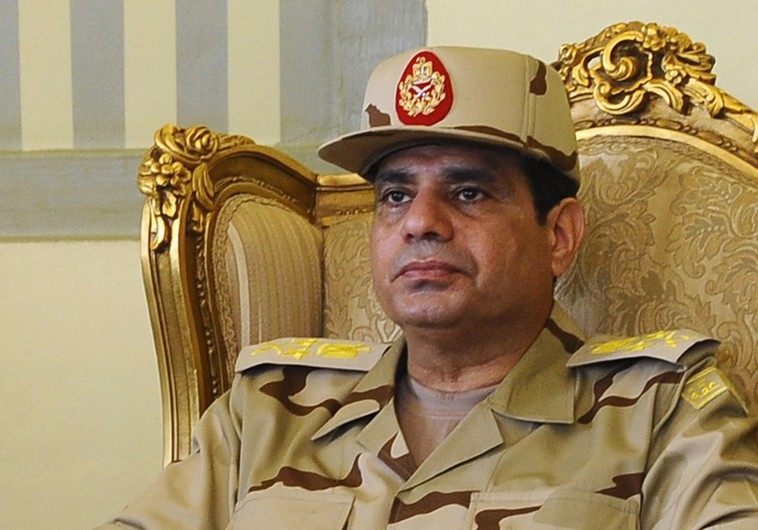
Egypt's Defense Minister Abdel Fattah al-Sisi is seen during a news conference in Cairo on the release of seven members of the Egyptian security forces kidnapped by Islamist militants in SinaiAbdul Fattah Sisi. (photo credit:REUTERS)

Vainly did the Egyptian president try to convince the US-led coalition against Islamic State to extend its activities to the whole Middle East. But US President Barack Obama is unwilling to acknowledge that there is a regional and international dimension to the movement.

*****************

Egyptian President Abdel Fattah al-Sisi is fighting for his country’s survival – and his own.

Islamic terrorism is not abating, hampering vital efforts to bring a better life to the people through a revitalized economy and political stability. Sisi knows he has to show results soon to prevent Egypt from slipping back into anarchy and chaos.

Despite the army’s all-out effort to defeat Islamist insurgency in Sinai, there is no end in sight. F-16 fighter planes and Apache helicopters have joined the campaign, security forces have killed or wounded hundreds of terrorists, destroying their haunts and their training groups – but more keep coming.

Ansar Bayt al-Maqdis gunmen, who have pledged allegiance to Islamic State, continue making daring raids against police stations and other security targets, leading to loss of life and heavy damage.

In one instance on April 14, the commander of the central police station of El-Arish was wounded in a raid; the assailants were able to escape.

For all intents and purposes the situation has reached a stalemate, though the army has managed to contain the terrorists in the northern part of the Sinai Peninsula, preventing them from extending their activities to the south and to the Suez Canal – where they could have inflicted untold damage to economic and security infrastructure, and severely undermined public morale.

However, there are still sporadic terrorist attacks in Cairo and other parts of the country.

Bombs explode, killing and maiming; power lines are blasted. A number of terrorist groups are involved, from Ansar Bayt al-Maqdis and the so-called Soldiers of Egypt to the ever-present Muslim Brotherhood; many of their members have been arrested, their leaders sentenced to death – though no one has been executed yet – but they keep on demonstrating against the regime (though in diminishing numbers).

In Yemen, Iranian-backed Houthi tribes are poised to take over the strategic Red Sea straits, threatening free passage to the Suez Canal – a reminder, if one was needed, of the fact that Islamic terrorism knows no border.

Vainly did the Egyptian president try to convince the US-led coalition against Islamic State to extend its activities to the whole Middle East. But US President Barack Obama is unwilling to acknowledge that there is a regional and international dimension to the movement.

The fact remains that Islamic State dispatches terrorists and weapons to Ansar Bayt al-Maqdis in the Sinai Peninsula from Libya, where there is an unlimited supply of both. No matter how many guerrillas are intercepted or killed by the Egyptian army, more are coming through the vast mountainous and desert region, along the 1,200-km border between the two countries.

Then there is Gaza, where terrorists can find refuge, regroup and train, and where new weapons can be tested.

Cairo is desperately trying to cut off the peninsula from the Strip. The Rafah crossing is closed most of the time, and when it opens it is under the strict supervision of Egyptian authorities. More than 2,000 contraband tunnels have been destroyed and a 1-km.-deep sanitized zone has been installed; thousands of families have been uprooted.

They have been compensated but resentment is high, and the move has prompted widespread condemnation by human rights associations.

Against this backdrop, the regime is weighing extending the zone to 5 km. and making the digging of contraband tunnels punishable by life imprisonment. A court in Cairo has forbidden Hamas activities in Egypt, and another has declared Hamas a terrorist organization; however, the central government is appealing that decision for the sake of its ongoing dialogue with Gaza’s leaders on the Palestinian issue.

The Iranian-Houthi threat has led Sisi to call for the creation of a rapid-response Arab unit, as Saudi Arabia has rallied neighboring states to form a coalition against the rebels in Yemen – who are threatening its border in the south, and were about to take control of the strategic port of Aden.

Though the creation of a united Arab unit was decided at a summit in Sharm e-Sheikh last month, implementation will not be easy. A number of states such as Lebanon and Iraq have warned they would not allow any infringement to their sovereignty; some Gulf states and Jordan have been more forthcoming, and meetings between army commanders are scheduled.

The problem is that these countries are not keen to risk their troops in a ground operation in neighboring states. Armies are the traditional bulwark of Arab regimes; a failed intervention outside their borders could cause their downfall. Nevertheless, since the West is largely indifferent to what is happening, Sisi and his Gulf allies have no choice but to unite against the common threat of Islamic terrorism, be it Sunni or Shi’ite.

On the home front, Sisi has launched a series of impressive projects – a new canal parallel to the old one to enable simultaneous crossing in both directions, thereby doubling receipts; an industrial, commercial and tourist zone between the two canals; 3,000 km of modern roads. Perhaps his most ambitious project is the creation of a new administrative capital city east of Cairo, at an estimated cost of $45 billion. Arab states have rallied to his side, pledging billions of dollars at a special economic summit last month; international groups have indicated their interest in some of the projects – a significant victory for the embattled president.

But Egypt’s endemic problems – population explosion, illiteracy leading to widespread unemployment and enduring poverty, as well as corruption on an epic scale – are not making Sisi’s task easier.

He is also calling to reform Islam by purging it of its extremist discourse, and has already instructed the Education Ministry to eliminate extremist content such as the call to jihad and attacks on other religions.

Meanwhile, the political situation is still unclear and elections are repeatedly postponed, allegedly because of ambiguities in the election law.

The fact is that the president has not been able to secure a large enough block to ensure his electoral victory, while the Muslim Brotherhood – though banned – and other Islamic parties can still muster a sizable vote.

Can Sisi win all his battles? How long will the Egyptian people wait for some much-needed economic results? Egypt is going it alone, still waiting for the West to understand that Cairo remains its best ally against the rising tide of terrorism now lapping at its shores.

Nuclear Iran’s “Spillover Effects”

April 14, 2015

Nuclear Iran’s “Spillover Effects” Gatestone InstituteVijeta Uniyal, April 13, 2015

As President Obama tries to sell the world his mysterious nuclear “framework agreement,” India’s defense establishment is just not buying it. The U.S. and Western commentators might be expecting “peace dividends” from Iran, but India cannot afford to harbor such illusions.

The Iranians have already announced that they plan to sell “enriched uranium” in the international marketplace, and will be “hopefully making some money” from it. To whom will they sell?

A nuclear Iran would be able to hold the world hostage by blocking one-third of the world’s oil supply at the Strait of Hormuz. Iranian proxies have also been trying to seize control of the Bab-el-Mandeb Strait, the maritime choke point of the Suez Canal.

The only question is whether the West would rather have an adversary such as Iran before it has nuclear weapons or after.

When the West and Iran agreed — or not, depending on whether one believes the U.S. version or Iran’s — on the parameters of a supposed nuclear “framework,” India’s foreign office hailed the agreement as a “significant step.”

India’s foreign office might have joined the international chorus welcoming the deal, but as U.S. President Barack Obama aggressively tries to sell the world his mysterious nuclear “framework,” India’s defense establishment is just not buying it.

India’s defense establishment seems to be having acute qualms about this “framework.”

One day after the P5+1’s mysterious “agreement” with Iran, India began gearing up for a more effective nuclear defense, and unveiled plans to equip the country’s capital, New Delhi, with a comprehensive missile defense shield to avert a nuclear attack.

Once in place, the shield could intercept missiles fired from a range of 5,000 km, roughly double the aerial distance between New Delhi and Tehran.

The first step would be to install the long-range “Swordfish” radars, developed with the help of Israel. They can track missiles from a range of 800 km.

India’s missile interceptor capability is expected to be functional by 2016. India also plans to set up a missile shield for its commercial capital, Mumbai.

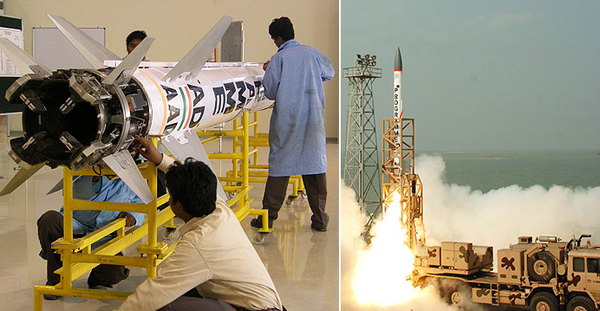
1020At left, Indian defense contractors work on an Advanced Air Defence (AAD) interceptor missile. At right, an Indian AAD missile is test-launched.

On April 4, India’s Defence Research and Development Organisation (DRDO) also reiterated the country’s ability to hit targets well beyond its adjoining region.

India has always been seriously concerned about prospect of nuclear proliferation in the Middle East. If Arab and Muslim countries decide to counter the Iranian nuclear threat with nuclear arsenal of their own, India’s hostile neighbor, Pakistan, is likely to want to play a crucial role.

India is not only vulnerable to nuclear threats from Pakistan. Both the Islamic State (ISIS) and Al-Qaeda have also openly declared hostility toward it. India has long been concerned about nuclear capabilities or materiel falling into the hands of Islamists in Pakistan. By now, it is no secret that if Iran acquires nuclear weapons capability, nuclear proliferation in the Middle East will increase exponentially. The Iranians have already announced that they plan to sell “enriched uranium” in the international marketplace and will be “hopefully making some money” from it. To whom will they sell?

President Obama and Western commentators might be expecting “peace dividends” from this “historic reconciliation” and be awaiting all sorts of positive “spillover effects” as a result of lifting sanctions — from changing Iran’s attitude towards Israel to democratizing the Iranian regime — but India cannot afford to harbor such illusions. Islamist terror has claimed more than 30,000 Indian lives in just the last two decades.

Indians are now bracing for the real spillover effects of a nuclear Iran.

Thanks to Washington’s indifference, Iran now controls four Arab capitals — Damascus, Baghdad, Beirut, and now Sana’a, while the U.S. has retreated from three: in Libya, Yemen and Iraq. If Iran can hold the Obama administration hostage without any leverage, a nuclear Iran would be able to hold the whole world hostage by blocking one-third of the world’s oil supply at the Strait of Hormuz — with impunity. Iranian proxies have also been trying to seize control of the Bab-el-Mandeb Strait, the maritime choke point of the Suez Canal.

European leaders who failed to show any resoluteness in face of Russian aggression against Ukraine, and even failed to vote against a “framework” that threatens global security, can hardly be expected to stand up to Tehran. The only question is whether the West would rather have an adversary such as Iran before it has nuclear weapons or after.

Once major European powers such as Russia, France and Germany start investing in Iranian infrastructure and entangling themselves with Iran economically, one can forget about rolling back sanctions.

Western leaders can spin the “framework” agreement all they want to cover up their abysmal diplomatic failure, but as Tehran’s centrifuges keep spinning as a result of the deal, the region turns more and more volatile.

Regardless of the diplomatic chorus and the media circus, the defense planers in New Delhi are just not buying this agreement. Other countries that care about the free world would be wise not to buy it, too.

King Abdullah II: We’re War With “Outlaws Of Islam” – Special Report

April 14, 2015

King Abdullah II: We’re War With “Outlaws Of Islam” – Special Report via You Tube, April 13, 2015

(He seems quite diplomatic, but what does he actually think? — DM)


Grand Gas Project Signifies Futility of Anti-Iran Sanctions: President

March 17, 2015

Grand Gas Project Signifies Futility of Anti-Iran Sanctions: President, Tasnim News Agency (Iranian), March 17, 2015

(Iran claims to have done quite well with sanctions, or what sanctions remained after November of 2013, despite all the money it has been spending in Iraq and Syria, not to mention terrorism elsewhere. Why, then, the demand that all sanctions be removed instanter? Will Kerry ask? Not likely.– DM)

139312261516169584940403

TEHRAN (Tasnim) – Iranian President Hassan Rouhani described the inauguration of the 12th development phase of the massive offshore South Pars gas field as a testimony to the ineffectiveness of the Western sanctions against Iran.

“The inauguration of the 12th phase illustrates that sanctions, pressures, and illegal and inhumane measures cannot push the (Iranian) nation back,” President Rouhani said in a Tuesday ceremony in the southern province of Bushehr for the official coming into service of the giant gas field’s 12th phase.The president explained that Iran’s gas production now exceeds 100 million cubic meters, stressing that such a great job has been accomplished while the country has been slapped with the cruel sanctions.Iran has also experienced economic growth and inflation reduction with the sanctions being in place, Rouhani added.

According to Oil Minister Bijan Namdar Zanganeh, the 12th phase, which has been totally designed and developed by the local experts, has cost more than $7.5 billion.

The 12th phase can produce 80 million cubic meters of gas and 120,000 barrels of gas condensates on a daily basis, bringing the country $17.5 million in revenue every day.

Zanganeh has also hailed the new phase as a helpful source of revenue while Iran is hit by “cruel economic sanctions” and the global oil price decline has diminished the country’s financial resources.

The 12th phase extends over an area of approximately 205 square kilometers along Iran-Qatar joint border. Located at a distance of 105 kilometers from the coast, the 12th phase alone contains about 5 percent of the whole gas reserves in the South Pars filed.

South Pars is part of a wider gas field that is shared with Qatar. The larger field covers an area of 9,700 square kilometers, 3,700 square kilometers of which are in Iran’s territorial waters (South Pars) in the Persian Gulf.

The Islamic ‘Ghosts on the Roof’

February 23, 2015

The Islamic ‘Ghosts on the Roof’, Front Page Magazine, February 23, 2015

lk-450x296

Chambers’ warnings were largely ignored by Western leaders whose willful blindness to the true nature of communism sealed the fate of millions behind the iron curtain in Europe, in China, Korea, Cuba, Vietnam, Cambodia, and elsewhere.

Today, perhaps the ghosts of Mehemed II and Sulieman the Magnificent are looking down and smiling as Western leaders fecklessly attempt to negotiate with the Iranian mullahs and search for “root causes” of ISIS terror and aggression. The Muse of History would understand, and her sister Melpomene, unfortunately, still has work to do.

*********************

Seventy years ago, Winston Churchill, Franklin Roosevelt, and Joseph Stalin met at Yalta to lay the foundations of the post-World War II world order. Less than one month after their historic meeting,TIME magazine on March 5, 1945, published an unsigned article entitled “Ghosts on the Roof.” The article was written by Whittaker Chambers, then TIME’s foreign news editor and formerly a member of a Washington, D.C.-based Soviet espionage ring. Chambers broke with communism in the late 1930s and in doing so remarked to his wife that they were joining the “losing side” in the great world struggle between communism and the West.

Chambers’ repeated efforts during the late 1930s and early 1940s to alert the State Department and the FBI to communist penetration of our government and the existence and activities of the espionage ring fell on deaf ears, so he used his position at TIME to attempt to warn the American public about the true nature of communism and the goals of Stalin’s Soviet Union.

The Yalta Conference, which took place during February 4-11, 1945, was immediately heralded as foreshadowing a peaceful postwar world order. Chambers, having been in the belly of the beast, knew better. He showed “Ghosts on the Roof” to T.S. Matthews, TIME’s associate executive editor, but doubted thatTIME would publish it. According to Chambers’ biographer Sam Tanenhaus, Matthews showed it toTIME’s owner Henry Luce who called it “a forceful piece of journalism” but was otherwise non-committal on publishing it. Other TIME staffers urged Matthews not to publish the piece fearing that it would poison relations between the wartime allies. With some hesitation, and characterizing it as a “political fairy tale,” Matthews decided to publish it.

Chambers’ story has the ghosts of the murdered Russian Tsar Nicholas II and his family descend on the roof of the Livadia Palace, their former estate and the site where the “big three” allied war leaders negotiated the fate of the world. Clio, the Muse of History, greets them and discusses with Nicholas and Alexandra what just occurred there. Nicholas, the Tsarina remarks, is fascinated by Stalin. “What statesmanship! What vision! What power!,” says Nicholas. “We have known nothing like this since my ancestor, Peter the Great, broke a window into Europe by overrunning the Baltic states in the 18th century. Stalin has made Russia great again.”

“It all began with the German-Russian partition of Poland,” Chambers has Alexandra say, reminding readers that the Second World War was started by Hitler and Stalin. “Stalin,” says the Tsar, “is magnificent. Greater than Rurik, greater than Peter! . . . Stalin embodies the international social revolution . . . the mighty new device of power politics which he has developed for blowing up other countries from within.” The Royal couple then lists the countries conquered by Stalin—Rumania, Bulgaria, Yugoslavia, Hungary, Poland—and those soon to be conquered because of Western appeasement. The Tsarina marvels at Stalin’s ability to persuade Churchill and Roosevelt solve the issues of Central and Eastern Europe to Stalin’s liking in a friendly fashion, remarking that “even peace may be only a tactic of struggle.”

At the end of the tale, the Muse of History foresees the consequences of Yalta as “more wars, more revolutions, greater proscriptions, bloodshed and human misery.” If you can foresee such troubles, the Tsarina asks Clio, why don’t you prevent them. The Muse of History replies that she must leave something for her sister Melpomene, the Muse of Tragedy, to do.

Readers reacted negatively to the piece. TIME’s Moscow correspondent lost his access to Kremlin officials. Chambers, some said, was zealously trying to destroy U.S.-Soviet collaboration that was so essential to world peace. TIME’s own editors noted in a subsequent issue that they did not believe that U.S.-Soviet relations were doomed to failure.

History vindicated Whittaker Chambers. His courageous efforts to reveal the truth about communism and Stalin’s intentions are not unlike the current efforts by writers—several associated with this journal—to alert the United States and the world to the true nature and goals of Islamic jihadists.

In Chambers’ time, the West was confronted by a murderous, expansionist secular totalitarian ideology whose leaders sought a communist world empire. Today, the West is confronted by a murderous, expansionist religion-based totalitarian ideology whose leaders seek a world caliphate where all must submit to Allah or be eradicated.

Chambers’ warnings were largely ignored by Western leaders whose willful blindness to the true nature of communism sealed the fate of millions behind the iron curtain in Europe, in China, Korea, Cuba, Vietnam, Cambodia, and elsewhere.

Today, perhaps the ghosts of Mehemed II and Sulieman the Magnificent are looking down and smiling as Western leaders fecklessly attempt to negotiate with the Iranian mullahs and search for “root causes” of ISIS terror and aggression. The Muse of History would understand, and her sister Melpomene, unfortunately, still has work to do.

Foreigners, Diplomats Warned to Leave Egypt or Be Targeted for Jihad

February 3, 2015

Foreigners, Diplomats Warned to Leave Egypt or Be Targeted for Jihad, Washington Free Beacon, February 3, 2015

Mideast Egypt MorsiIn this Friday, Aug. 2, 2013 file photo, Supporters of Egypt’s ousted President Mohammed Morsi hold a large Egyptian national flag as chant slogans against Egyptian Defense Minister Gen. Abdel-Fattah el-Sissi outside Rabaah al-Adawiya mosque / AP

An Islamist organization sympathetic to the Muslim Brotherhood is warning all foreigners and diplomats to flee Egypt by the end of February or face becoming “a target by the Revolutionary Punishment Movement,” according to a recent warning posted online by a Brotherhood-affiliated site and read live on television by one of its broadcast organs.

The statement issues a threat to “all foreign nationals,” “all foreign companies,” and all “embassy foreigners, diplomats, and ambassadors,” ordering them to leave Egypt by the end of the month or face violent attacks, according to an independent translation of the Arabic statement.

Foreign travelers also are warned to “cancel their trips” and told “they are not welcome to Egypt during these difficult days.”

The warning comes just a week after Brotherhood leaders and allies were hosted for a meeting at the State Department, which drew fierce criticism from the Egyptian government.

It also follows a similar statement by the Brotherhood urging its supporters to prepare for a “long, uncompromising jihad” in Egypt.

The latest threat was issued by an anti-government group identifying itself as “The Youth of the Revolution.” The statement was published late last week on a Brotherhood-affiliated Facebook page and also read on a Brotherhood-affiliated television station operating out of Turkey.

“After the successive meetings with revolutionaries in the squares, we decided with all the Revolutionary Punishment Movement the following,” the statement reads.

“All embassy foreigners, diplomats, and ambassadors, are given a deadline until Feb. 28 to leave the homeland,” it states.

“All foreign nationals, from all foreign, Arab, and African nationalities and all employees with companies working in Egypt [must] leave the country immediately,” it says. “This deadline will end on Feb. 11, 2015, and after that they will be a target by the Revolutionary Punishment Movement.”

Foreign companies “working in Egypt” are instructed to leave by Feb. 20, “withdraw their licenses in Egypt and end their work, otherwise all their projects will be targets by revolutionaries.”

The revolutionary youth group also instructs any country supporting the government of Egyptian President Abdel Fattah al-Sisi to withdraw its backing.

Like the Brotherhood, the “The Youth of the Revolution” does not recognize al-Sisi as the rightful Egyptian leader and seeks to reinstall as president ousted Brotherhood ally Mohamed Morsi.

“All countries supporting the coup and assisting it monetarily and politically must immediately cease from any support to the coup within a month from this statement otherwise all their interests in the Middle East will be exposed to severe attacks that will have dire consequences,” the group warns.

Following the Washington Free Beacon’s initial report on the meeting between the State Department and Brotherhood-aligned leaders, the Egyptian foreign minister lashed out at the Obama administration, calling its policies “incomprehensible.”

State Department spokeswoman Jennifer Psaki was forced to admit that she initially misled reporters about the meeting.

Psaki claimed that the trip was organized and funded by Georgetown University, a claim the university denied when contacted Monday by the Free Beacon.

Psaki was forced to correct the record at a briefing Monday with reporters.

“Unfortunately, I didn’t have the accurate information on one small piece. The meeting was set up by the Center for the Study of Islam and Democracy, a nonprofit. So the visit was not funded, as you know, by us or the U.S. Government, but it was also not funded by Georgetown,” Psaki said.

However, she continued to defend the decision to meet with the delegation.

When asked by a reporter, “is the building comfortable with continuing to do business with this center, this group,” Psaki responded, “Yes. Yes.”

Terrorism analyst and reporter Patrick Poole said Brotherhood offshoots such as this youth group have become increasingly violent as the Egyptian government continues its crackdown on the Brotherhood and terrorist groups.

“For a year and a half we’ve seen these Brotherhood youth cadre offshoots grow increasingly violent, whether it is the ‘Molotov Movement’, ‘Revolutionary Punishment Council’, or whatever name they operate under this month,” Poole said. “Initially it was targeting police and military personnel, then violence at the universities and civilian areas. So it’s no surprise now that they’re going after foreigners.”

Brotherhood leaders have quietly endorsed this violent rhetoric, he said.

“The Brotherhood leadership, the vast majority of which is now either in prison or in exile, has nurtured this culture,” Poole said. “They train for it and justify it in their indoctrination curriculum. And as the call for a new phase of all-out jihad published on the Brotherhood’s official website last week indicates, this latest threat of violence can be seen as a direct response to what the leadership openly called for just days before.”

Iranian Exports to Europe Jump by 63% in November

January 18, 2015

Iranian Exports to Europe Jump by 63% in November, Tasnim News Agency [Iranian], January 18, 2015

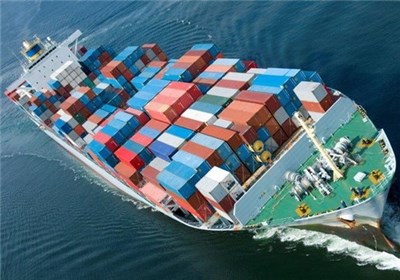
Ship

TEHRAN (Tasnim) – The value of Iran’s exports to the 28 members of the European Union (EU) in November 2014 has witnessed a 63 percent increase, compared to the same month in 2013, data released by the Eurostat showed.

The EU imports from the Islamic Republic in November 2014 reached 134 million euros, showing a 63 percent rise, compared to the same period last year, in which the figure stood at €82 million, according to the Eurostat.

Meanwhile, trade turnover between Iran and the EU member states during November 2014 also jumped by 18 percent hitting €693 million.

The figure in November 2013 had amounted to €585 million, the data indicated.

According to the report, the total value of EU exports to Iran in November 2014 amounted to €559 million, indicating an 11 percent increase compared with November 2013, in which the figure stood at €503 million.

Following the Iranian President Hassan Rouhani’s “constructive interaction” policy with the world since August 2013, a whole host of Western companies have been vying for Iran’s market, particularly after an interim nuclear deal between Tehran and six major world powers.