Posted tagged ‘Department of Defense’

Muslim world reacts to Obama’s latest speech

May 26, 2015

Muslim world reacts to Obama’s latest speech – IPhoneConservative, MEMRI TV via IPhoneConservative via You Tube, May 20, 2015

(Another update: Now the video is up at Front Page Magazine, with a caveat about Poe’s law.

Poe’s law is an internet adage which states that, without a clear indicator of the author’s intent, parodies of extremism are indistinguishable from sincere expressions of extremism.[1][2] Poe’s Law implies that parody will often be mistaken for sincere belief, and sincere beliefs for parody.[3]

– DM)

(UPDATE, May 27th: the subtitles were edited by IPhoneConservative. In a comment beneath the video, posted on May 26th, it was stated:

I must admit I find it fascinating that so many people commenting here are voicing their outrage at my editing of the subtitles in this clip from MEMRI. For those that don’t know who they are………..they are an invaluable site that documents and translates much of what goes on in Middle East media. This clip was from their site. Every day they post videos with leading Islamic figures and personalities making hideous statements about Jews and Christians. About killing gays and beating women. I wonder how many of those outraged by my use of the clip in this way are equally outraged by the real sentiments expressed on these program’s? Not enough I would guess.

– DM)

***********************

(Offensive? Yes. Well worth watching? Yes.– DM)

No army in Mid East is challenging ISIS. Iran regroups to defend S. Iraqi Shiites, Assad to save Damascus

May 25, 2015

No army in Mid East is challenging ISIS. Iran regroups to defend S. Iraqi Shiites, Assad to save Damascus, DEBKAfile, May 25, 2015

Baiji_22.5.15Iranian troops in fight to evict ISIS from Baiji refinery

Hassan Nasrallah Saturday, May 23, called his Lebanese Shiite Hizballah movement to the flag, because “we are faced with an existential crisis” from the rising belligerence of the Islamist State of Iraq and the Levant. His deputy, Sheik Naim Qssem, sounded even more desperate: “The Middle East is at the risk of partition” in a war with no end in sight, he said. “Solutions for Syria are suspended. We must now see what happens in Iraq.”

The price Iran’s Lebanese proxy has paid for fighting alongside Bashar Assad’s army for four years is cruel: some 1,000 dead and many times that number of wounded. Its leaders now understood that their sacrifice was in vain. ISIS has brought the Syrian civil war to a new dead end.

This week, a 15-year old boy was eulogized by Hizballah’s leaders for performing his “jihadist duty” in Syria.

Clearly, for their last throw in Syria, the group, having run out of adult combatants, is calling up young boys to reinforce the 7,000 fighting there.

The Syrian president Bashar Assad is in no better shape. He too has run dangerously short of fresh fighting manpower. Even his own Alawite community has let him down. Scarcely one-tenth of the 1.8 million Alawites have remained in Syria. Their birthrate is low, and those who stayed behind are hiding their young sons to keep them from being sent to the front lines.

Assad also failed to enlist the Syrian Druze minority to fight for his regime, just as Hizballah’s Nasrallah was rebuffed when he sought to mobilize the Lebanese army to their cause. This has left Hizballah and the Syrian ruler alone in the battlefield with dwindling strength against two rival foes:  ISIS and the radical Syrian opposition coalition calling itself Jaish al-Fatah – the Army of Conquest – which is spearheaded by Al Qaeda’s Nusra Front and backed to topple Assad by Saudi Arabia, Qatar and Turkey.

Nasrallah tried to paint a brave picture of full mobilization to expand the war to all parts of Syria. However, Sunday, May 24, a key adviser to Assad admitted that his regime and its allies were being forced to regroup.

Their forces were withdrawing from the effort to shift the Islamists from the land they have conquered – about three-quarters of Syrian territory – and concentrating on defending the cities, Damascus, Homs and Latakia, home to the bulk of the population, as well as the strategic Damascus highway to the coast and Beirut. Hizballah needed to build up the Lebanese border againest hostile access.

But Syrian cities, the Lebanese border and the highway are still under threat – from Syrian rebel forces.

The Iraqi army, for its part, has been virtually wiped out, along with the many billions of dollars the US spent on training and weapons. There is no longer any military force in Iraq, whether Sunni or Shiite, able to take on ISIS and loosen its grip on the central and western regions.

The Kurdish peshmerga army, to whom President Barack refused to provide armaments for combating the Islamists, has run out of steam. An new offensive would expose the two main towns of the semi-autonomous Kurdish Republic – the capital Irbil and the oil city of Kirkuk – to the depredations of the Islamist belligerents.

A quick scan of Shiite resources reveals that in the space between the Jordan River and the Euphrates and Tigris, Iran commands the only force still intact in Iraq – namely, the Iraqi, Afghan and Pakistani Shiite militias, who are trained and armed by the Revolutionary Guards.

This last remaining fighting force faces its acid test in the battle ongoing to recover Baiji, Iraq’s main oil refinery town. For the first time, Iranian troops are fighting in Iraq, not just their surrogates, but in the Baiji campaign they have made little headway in three weeks of combat. All they have managed to do is break through to the 100 Iraqi troops stranded in the town, but ISIS fighting strength is still not dislodged from the refinery.

The Obama administration can no longer pretend that the pro-Iranian Shiite militias are the panacea for the ISIS peril. Like Assad, Tehran too is being forced to regroup. It is abandoning the effort to uproot the Islamists from central and western Iraq and mustering all its Shiite military assets, such as the Badr Brigade, to defend the Shiite south – the shrine towns of Najef and Karbala, Babil (ancient Babylon) and Qadisiya – as well as planting an obstacle in the path of the Islamists to Iraq’s biggest oil fields and only port of Basra.

The Shiite militias flown in by Tehran from Pakistan and Afghanistan have demonstrated in Syria and Iraq alike that they are neither capable nor willing to jump into any battlefields.

The upshot of this cursory scan is that not a single competent army capable of launching all-out war on ISIS is to be found in the Middle East heartland – in the space between the 1,000km long Jordan and the Euphrates and Tigris to the east, or between Ramadi and the Saudi capital of Riyadh to the south.

By Sunday, May 24, this perception had seeped through to the West. US Defense Secretary Ashton Carter, remarked: “What apparently happened was that the Iraqi forces just showed no will to fight.” The former British army chief Lord Dannatt was more down to earth. Since the coalition air force campaign had failed to stop ISIS’s advance, he said “it was time to think the previously unthinkable” and send 5,000 ground troops to fight the Islamists in Syria and Iraq.

The next day, Monday, Tehran pointed the finger of blame for the latest debacles in Iraq at Washington. Al Qods Brigades chief Gen. Qassem Soleimani was quoted by the English language Revolutionary Guards mouthpiece Javan as commenting: “The US didn’t do a damn thing to stop the extremists’ advance on Ramadi.”

Ash Carter: Iraqis Need to Be The Ones Fighting Islamic State But Don’t Have The Will to Do So

May 24, 2015

Ash Carter: Iraqis Need to Be The Ones Fighting Islamic State But Don’t Have The Will to Do So, Washington Free Beacon via You Tube, May 24, 2015

(We can give them equipment and training. But how can we give them time — and training requires time as well as motivation on the part of the trainees — when the Islamic State gives them neither? — DM)

US and Hizballah coordinate spy drone flights over Qalamoun, share US combat intelligence

May 23, 2015

US and Hizballah coordinate spy drone flights over Qalamoun, share US combat intelligence, DEBKAfile, May 23, 2015

U.S._special_forces_operating_recon_drones_in_Lebanon_5.15Reconnaissance drone operated by US special forces in Lebanon

How do Obama’s repeated commitments to Israel’s security square with close US military and intelligence cooperation with an organization whose vow to destroy Israel is backed by 100,000 missiles – all pointed south?

************************

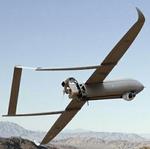
Another strange pair of bedfellows has turned up in one of the most critical Middle East battlefields: the United States is helping Hizballah, Iran’s Lebanese surrogate, in the battle for control of the strategic Qalamoun Mountains. DEBKAfile’s intelligence sources disclose that a US special operations unit, stationed at the Hamat air base on the coast of northern Lebanon, is directing unarmed Aerosonde MK 4.7 reconnaissance drone intelligence-gathering flights over the Qalamoun Mt arena, 100 km to the west.

Washington set up the base originally in line with an assurance to Beirut of military assistance for the next three years to counter any threatened invasion by extremist elements.

However, it turns out that the data the US drones pass to Lebanese army general staff in Beirut goes straight to Hizballah headquarters – and on to the Iranian officers in Syria running Bashar Assad’s war effort.

The Aerosonde MK 4.7 can stay aloft for 10 to 12 hours at a stretch at an altitude of 4.5 km. It functions day or night, equipped with an advanced laser pointer capability. It is capable of carrying ordnance but US sources say they the aircraft in Lebanon are unarmed.

Since Hizballah is also operating Ababil-3 surveillance drones of its own over Qalamoun, coordination had become necessary between the American team and the Shiite group.  The consequence is that for the first time, the US military is working directly with an internationally-designated terrorist organization – a development with earthshaking ramifications for Israel’s security. This partnership has in fact become a game-changer for the worse in terms of Israel’s security ties with the US and has caused an upheaval in its military and intelligence disposition in the region, in at least six respects:

1. To counter US-Hizballah intelligence collaboration, Israel is obliged to reshuffle the entire intelligence mechanism it maintains to protect its northern borders with Lebanon and Syria.

2.  Israel finds itself forced to monitor the progress of the US special unit’s interface with Hizballah, its avowed enemy.

3.  Israel can no longer trust American intelligence coming in from Lebanon because it is likely tainted by Hizballah sources.

4.  Hizballah is gaining firsthand insights into the operating methods of US special operations forces, which Israel’s methods strongly resemble and must therefore revamp.

5. The Hizballah terrorist group is winning much needed prestige and enhanced status in the region from its collaboration with the US.

6. Hizballah’s Ababil drones are in fact operated by the hostile Iranian Revolutionary Guards, which leaves Israel with no option but to overhaul from top to bottom the intelligence-gathering systems employed by its surveillance drones to track Iranian movements in the region.

At the Washington Adas Israel synagogue Friday, May 22, President Barack Obama wearing a kipah “forcefully” objected to suggestions that policy differences between his administration and the Israeli government signaled his lack of support for the longtime US ally.

This raises a question: How do Obama’s repeated commitments to Israel’s security square with close US military and intelligence cooperation with an organization whose vow to destroy Israel is backed by 100,000 missiles – all pointed south?

Richard Engel on Obama’s Strategy Against Islamic State: The Definition of Stupidity

May 21, 2015

Richard Engel on Obama’s Strategy Against Islamic State: The Definition of Stupidity, Washington Free Beacon via You Tube, May 21, 2015


Strategic Failures, the US and the Fall of Ramadi

May 21, 2015

Strategic Failures, the US and the Fall of Ramadi, Clarion ProjectRyan Mauro, May 21, 2015

Islamic-State-Victory-Parade-HPIslamic State fighters celebrate their take over of Ramadi with a victory ‘parade.’ (Photo: Islamic State social media)

The U.S. must correct its strategy by sidelining Iranian-backed militias and terrorists, leveraging influence with the Iraqi government and significantly increasing assistance to the Anbar tribes, Kurds, Iraqi government and to the persecuted Christian minority that is forming its own self-defense force.

Recent history has shown that the Iraqi government will choose the U.S. over Iran if compelled.

********************

The Islamic State (ISIS) has captured Ramadi, the capital of Iraq’s Anbar Province, reportedly “terrifying” Iraqi officials who now foresee a “tsunami of international terror.” It is an important achievement for the terrorist group aimed at pre-empting a potential Sunni tribal uprising.

The Sunni tribes in Anbar Province were critical to the success of the 2007 “surge” that ousted the Islamic State’s predecessor, Al-Qaeda in Iraq. The deterioration in the relationship between these tribes and the central Iraqi government was likewise critical to the terrorists’ comeback in Iraq.

The Islamic State remembered these lessons and acted quickly as the Iraqi government began training tribal fighters and the U.S. defense budget allotted $179 million to Kurdish and Sunni tribal forces. The U.S. forgot these lessons and has long rejected Sunni and Kurdish pleas for direct aid to fight the Islamic State.

The Obama Administration is now planning to change course and directly arm and train the Iraqi Sunni tribes after the fall of Ramadi. The White House previously chose to work only through the central Iraqi government that has given the Kurds and Sunnis inadequate support.

A delegation of 11 Sunni tribal leaders, including Sheikh Ahmed Abu Risha, the President of the Anbar Awakening Council, flew to the U.S. on January 18 to plead for direct assistance. Former President George W. Bush called Abu Risha and listened to his complaints for 20 minutes and offered to help. Administration officials were less willing. One tribal official said, “I wouldn’t call it the ‘cold shoulder,’ but it certainly was a cool one.”

The Obama Administration told them that it would only work through the elected central government. Its viewpoint was that working with forces outside the government’s authority undermines the Iraqi leadership and threatens the country’s unity.

That standpoint ignores what was learned after the fall of Saddam Hussein. Nothing threatens Iraq’s unity and the government’s authority more than instability. Direct U.S. aid to the Sunni tribes helped save Iraq from disintegration into sectarian enclaves ruled by terrorists and militias.

The Islamic State struck Ramadi during a sandstorm that delayed American air support. Former U.S. Central Command advisor Ali Khedery says that a Kurdish member of parliament informed him that 6,000 Iraqi Security Forces fled when faced with a mere 150 Islamic State fighters. About 500 Iraqi security personnel and civilians died in two days. The Iraqi officials spoke straight forwardly and  admitted that the current strategy is failing.

The Pentagon says it has finished training about 7,000 Iraqi Security Forces and another 3-4,000 are in the process of training, but training won’t solve the problem of collapsing Iraqi forces. The U.S. trained the Iraqis from 2003 until the withdrawal in 2011. The strategy of waiting for the Iraqi security forces to become strong enough to stabilize the country is the same strategy that failed before the surge.

Iraqi personnel flee because they don’t want to die for a lost cause or to fight for a replacement worse than the Islamic State.

The Iraqi Security Forces face a fundamental disadvantage when battling the Islamic State: They want to live and their enemies want to die. This disadvantage is further compounded by a lack of confidence. If given the choice to die fighting in a losing battle or to flee and perhaps regroup later with better chances of victory, they will choose the latter.

An Anbar official placed the blame on the Iraqi government, telling CNN, “If 10% of the government’s promises had been implemented, Ramadi would still in our hands and the Islamic State wouldn’t dare to be anywhere near the city.”

Iraqi Sunnis are faced with a terrible choice. The Iranian-backed Shiite militias are often nicknamed “Shiite ISIS” because their crimes are comparable to ISIS but are less known by the West because they aren’t broadcasted. However, the Anbar Provincial Council is officially welcoming them now out of desperation and perhaps an awareness that their opposition will be ignored anyway.

The Shiite militias should be expected to mistreat the local Sunnis the second after the Islamic State is expelled or even during the fighting. Tribal support is far from unanimous. The son of the largest tribe’s leader is in the U.S. asking for support right now and bluntly warned that sending the Shiite militias into Anbar Province “will cause a civil war.”

The New York Times has noticed the change in American attitude towards the Shiite militias. Pentagon spokesperson Col. Steve Warren said, “As long as they’re controlled by the central Iraqi government, there’s a place for them.” Yet, only two months ago, Central Command Commander General Austin said, “I will not—and I hope we will never—coordinate or cooperate with Shiite militias.”

The U.S. must correct its strategy by sidelining Iranian-backed militias and terrorists, leveraging influence with the Iraqi government and significantly increasing assistance to the Anbar tribes, Kurds, Iraqi government and to the persecuted Christian minority that is forming its own self-defense force.

Recent history has shown that the Iraqi government will choose the U.S. over Iran if compelled.

In March, the U.S. withheld support to Iraqi forces fighting the Islamic State in Tikrit because of the involvement of Iranian-backed militias and the Revolutionary Guards Corps. The Iranian proxies stalled and could move no further, displaying the value of U.S. air support. The Iraqis chose America and the Iranians were removed from the battle. U.S. aid delivered the victory that the Iranians could not.

The Iraqis had been asking for U.S. for more help including possibly advisors on the ground since October 2013. By March 2014, the Iraqis were asking for airstrikes on the Islamic State. The Islamic State blitz into Iraq began in June.

The Iraqi ambassador complained that the U.S. had denied requests for help including Apache helicopter sales, thereby putting Iraq “in an uncomfortable position in seeking support from whoever is available on the ground.” He emphasized that the “U.S. is our strategic partner of choice.”

Iran opposed the return of U.S. soldiers on the ground in Iraq as advisors. The Iranian-backed cleric Moqtada al-Sadr threatened to attack the advisors and two other Iranian-backed militias alsoforcefully opposed U.S. involvement. The Iraqi government went ahead anyway.

Even now, Iraqi Prime Minister Haider al-Abadi is in Russia and talking to China and Iran about delivering arms that the U.S. refuses to provide.

The U.S. needs to give the Iraqi government a clear choice: Iran or us.

The Iraqi government should be put on notice. If it is willing to restrain the Shiite militias and work with us to disband them, then we will provide all necessary aid. We will help negotiate with the Sunni tribes so their local forces operate within a national framework.

If the Iraqi government chooses Iran, then we will cut our aid and redirect it towards our Sunni, Kurdish and Christian partners while maintaining contact with friendly Shiites. We will not act as the air force for Iranian proxies. If necessary, we will talk about a role for the forthcoming Arab force led by Egypt to replace yours.

It is positive news that the Obama Administration is reversing its stance and will directly help the Sunni tribes, but the anti- Islamic State strategy requires an anti-Iran strategy.
Next challenge for US after Ramadi defeat: Iranian ship nears Yemeni shore

May 19, 2015

Next challenge for US after Ramadi defeat: Iranian ship nears Yemeni shore, DEBKAfile, May 19, 2015

Iran_Shahed_21.5.15Iranian aid vessel with “medical relief” personnel

DEBKAfile’s analysts strongly doubt that the USS Theodore Roosevelt carrier and strike force, which have been monitoring the Iranian flotilla’s movements, will be ordered to intervene against the Iranian ships reaching the Yemeni port.

Tehran, for its part has threatened to treat any such inspections as an act of war.

********************

Tuesday, May 19, two days after Ramadi’s fall to the Islamic State landed a major blow to Baghdad and US strategy in the region, 10,000 troops – more than half American – ended a large US-led military exercise in Jordan that was designed to practice tactics for countering ISIS. Taking part surprisingly in the two-week exercise was a heavy US nuclear-capable B-52H bomber, which flew in from the United States, crossing through Israeli air space and returning to home base when it was over.

This was the first time in the 12 years since the US invasion of Iraq that a B-52H, which can deliver nuclear weapons and bunker buster bombers, has appeared in Middle East skies for any military mission.

East of Jordan, as some 25,000 refugees from Ramadi slept in the open, the Islamist conquerors began moving on their next target, the Habbaniyah air base some 70 km west of Baghdad. Its fall would cut Baghdad off from northern and eastern Iraq and place it under siege from three directions – north, east and west.

Most Arab members have dropped out of the US-led coalition committed to fighting the Islamist terrorists in Iraq and Syria. This has left the US Air Force to bear the brunt of the aerial campaign. Its average of 19 air strikes a day is far too few to have any real effect on ISIS’s battle momentum. It certainly did not stop the long columns of black-clad Islamist fighters swarming on Ramadi from all directions in hundreds of tanks, APCs and minivans armed with heavy machine guns, and taking control of the capital of Iraq’s largest province, Anbar.

Western intelligence from the Ramadi region offered disturbing accounts of thousands of fully-armed ISIS fighters springing up apparently from nowhere to descend on the city, with no one able to see where they came from and no air action to scatter them before they entered the city.

After the Ramadi defeat, the Obama administration’s next major test in the region comes from an Iranian cargo vessel heading, accompanied by two warships, for the Yemeni Red Sea port of Hodeida and scheduled to dock Thursday, May 21. According to Tehran, the ship will unload 2,500 tons of humanitarian aid for Yemen, and the hundreds of passengers who disembark are Red Crescent medical relief workers.

The Saudi, US and Egyptian fleets have imposed a sea and air blockade on Yemen to prevent Iran provding the Yemeni Houthi rebels with fresh arms. Saudi and other regional intelligence agencies are convinced that the “paramedics” are in fact Revolutionary Guards officers and instructors in disguise, sent to strengthen the Houthi revolt.

Washington, Riyadh and Cairo have all vowed to stop the Iranian flotilla from putting into port in Yemen and said that its vessels will be forced to submit to inspections to make sure no illicit weapons are aboard and to confirm the passengers’ identities.

Tehran, for its part has threatened to treat any such inspections as an act of war.

Deputy Revolutionary Guards Commander Gen. Masoud Jazayeri put it plainly when he said: “I am distinctly stating that the patience of Iran has limits. If the Iranian aid ship is prevented from reaching Yemen then they, Saudi Arabians and United States, should expect action from us.”

DEBKAfile’s analysts strongly doubt that the USS Theodore Roosevelt carrier and strike force, which have been monitoring the Iranian flotilla’s movements, will be ordered to intervene against the Iranian ships reaching the Yemeni port. It is not a good moment for President Barack Obama to upset Tehran when he is in dire need of the Iraqi Shiite militias controlled by Iran to stand up to ISIS before its columns reach Baghdad.

Without the US, it is hard to see Saudi and Egyptian warships directly engaging an Iranian naval force and risking a major military conflagration.

Therefore, just as the B-52H came and went without action to impede ISIS’s creep closer to Baghdad, the Roosevelt is not likely to halt Iranian warships before they reach Yemen.

Documents: Feds Knew Benghazi Attack Planned in Advance

May 19, 2015

Documents: Feds Knew Benghazi Attack Planned in Advance, Washington Free Beacon, May 18, 2015

(Please see also, Arab military chiefs approve Egyptian-led intervention in Libya — DM)


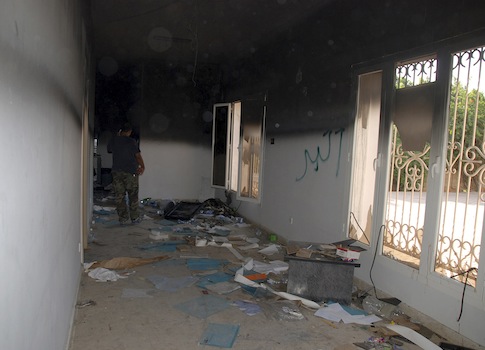
Gutted U.S. consulate in Libya / AP

Documents obtained by Judicial Watch from their May 2014 Freedom of Information Act (FOIA) lawsuits filed against the State Department and the Department of Defense revealed that the Obama administration knew about the attacks on the U.S. Consulate in Benghazi at least 10 days before the attack.

The documents also revealed that the DOD immediately reported the attacks on the consulate.

The documents included an August 2012 analysis predicting the failure of President Obama’s policy of a regime change in Syria as well as a warning about the rise of the Islamic State. The documents also included a confirmation that United States was aware of an arms shipment from Benghazi to Syria.

One of the documents from the DOD’s Defense Intelligence Agency dated September 12, 2012, the day after the attacks in Benghazi, lays out the details of the attack on the consulate and assesses that it was carefully planned by the terrorist group “Brigades of the Captive Omar Abdul Rahman.”

The group is known to have connections to the Muslim Brotherhood as well as  to al Qaeda. Rahman is serving a life sentence in prison for his role in the 1993 bombing of the World Trade Center.

The group’s goal was to “kill as many Americans as possible,” according to the documents, which were sent to Secretary of State Hillary Clinton, Defense Secretary Leon Panetta, the Joint Chiefs of Staff, and the National Security Council.

An October 2012 DOD document contained the first official document that the Obama administration knew of the shipment of weapons from the Benghazi to rebel forces in Syria.

Weapons from the former Libya military stockpiles were shipped from the port of Benghazi, Libya to the Port of Banias and the Port of Borj Islam, Syria. The weapons shipped during late-August 2012 were Sniper rifles, RPG’s, and 125 mm and 155 mm howitzers missiles.

During the immediate aftermath of, and following the uncertainty caused by, the downfall of the (Qaddafi) regime in October 2011 and up until early September of 2012, weapons from the former Libya military stockpiles located in Benghazi, Libya were shipped from the port of Benghazi, Libya to the ports of Banias and the Port of Borj Islam, Syria. The Syrian ports were chosen due to the small amount of cargo traffic transiting these two ports. The ships used to transport the weapons were medium-sized and able to hold 10 or less shipping containers of cargo.

The heavily redacted document did not reveal which weapons were sent to Syria

The DIA consistently warned of the deterioration of the situation in Iraq and warned that it creates an ideal situation for Al Qaeda to return to Mosul and Ramadi, according to an August 2012 report. During this time the U.S. was monitoring weapons flows from Libya to Syria. The agency warned of dire consequences but blocked out what most of what those consequences were.

The State Department produced a single document from a separate lawsuit that Judicial Watch had filed against the department. The document was created by Hillary Clinton’s office the morning after the attacks on the consulate in Benghazi and was sent throughout the State Department.

Neither the State Department nor Hillary Clinton have turned over any documents in regards to Benghazi or her personal email account that was used during her as well as other top aides during her time as Secretary of State.

Judicial Watch has filed multiple FOIA requests and has waited over two years for the documents that they have received.

“These documents show that the Benghazi cover-up has continued for years and is only unraveling through our independent lawsuits,” said Tom Fitton, president of Judicial Watch. “The Benghazi scandal just got a whole lot worse for Barack Obama and Hillary Clinton.”

First US ground operation in Syria kills ISIS oil chief – as Islamists advance on three new fronts

May 16, 2015

First US ground operation in Syria kills ISIS oil chief – as Islamists advance on three new fronts, DEBKAfile, May 16, 2015

USspecialforcesJoran10.6.14US Special Operations forces in Jordan.

America’s first ground operation in the five years of Syrian war was directed against the Islamic State of Iraq and the Levant – ISIS.  US sources report that Special Operations forces mounted a raid Saturday, May 16, on an ISIS convoy in the Deir a-Zour district of eastern Syria, and killed senior Islamist commander and oil and gas chief, Abu Sayyaf, when he resisted capture. His Iraqi wife, Umm Sayyaf, was taken to Iraq for interrogation by the US troops, all of whom returned safely.

Abu Sayyaf’s importance for the Islamist group cannot be overrated as the man in charge of its commandeered oil fields in Syria and Iraq. He also managed their overseas sales in a thriving black market, netting an estimated $5million a day for bankrolling the group’s wars.

Catching him alive was the preferred object of the raid. Under interrogation, he would have been a valuable source of information on the working of the group’s illicit oil and gas trade, how it was managed, the identities of its customers and routes of payment to the ISIS war chest.

DEBKAfile’s military sources report that the US raid was staged from Jordan, not Iraq. In normal circumstances, the Jordanians don’t permit US ground or air operations to be staged directly from their territory. However, a joint 10-day US-Jordanian war game, Eager Lion, was in progress in the Hashemite Kingdom. Some 10,000 troops from various countries, including the US, were practicing special operations against ISIS. And so the US unit was ready to hand a short distance from a high-value target at Deir a-Zour.

DEBKAfile adds that the operation came just two days after the Arab Gulf leaders’ summit convened by President Barack Obama ended at Camp David Thursday, May 14. The war on ISIS was a key item on their agenda.

Sources in Washington disclose that the order for the raid came directly from President Barack Obama on the advice of national security council heads in the White House. The troops landed in the middle of a hotbed of fighting between the Syrian army and ISIS. They were no doubt lifted in and out of the scene at speed by helicopter.

The Islamists are in full flight on three Syrian fronts (as well as the same number in Iraq). The group has overrun Al-Sina’a, Ar-Rusafa and Al-Omal in this district, as well as seizing Saker Island in the middle of the Euphrates River north of Deir a-Zour, from which it is shelling the largest Syrian air base in eastern Syria.

Islamist fighters are also advancing on Syria’s ancient city of Palmyra (Tadmor). This is a 2,000-old desert site with precious remains of antiquity, but also home to Bashar Assad’s infamous Tadmor prison, notorious for torture and summary executions.

ISIS targets near this ancient town are the biggest Syrian air base in central Syria and more oil fields. Most of the Iranian and Russian air transports delivering military equipment for the Syrian army and Hizballah land at this base.

The Islamists are additionally targeting Syrian military positions in eastern Homs.

President Strangelove or, how I learned to stop worrying and love the bomb

May 14, 2015

President Strangelove or, how I learned to stop worrying and love the bomb, Jerusalem Post, David Turner, May 14,2015

Concerned about Soviet intentions in the region the Truman administration entered into the U. S.-Saudi Mutual Defense Assistance Agreement (MDA) in 1951. The Agreement provided the foundation for what would emerge as an American commitment to provide a defense umbrella for the region to protect American interests in the Middle East. American assurances to states in the region seemed intact until the GW Bush Administration invasion of Iraq. Trapped in a war it completely misjudged and soon realized it could not win the administration sought an accommodation with Iran to control Shi’ite militias battling the Americans.

The Bush policy of “accommodation” with Iran became the Obama policy of “appeasement” towards the Islamic Republic. Thus began a six-year-long quest to intended to encourage that country’s recalcitrant and hegemony ambitious leaders to abandon its nuclear weapons program. With the imminent 30 June deadline for signing an Agreement quickly approaching the president invited the Gulf Cooperation Council (GCC) states headed by Saudi Arabia to Camp David promising a mutual defense agreement assuring the Arab states of American protection in the event Iran proved a threat to the region. In addition to “assurances, the Saudis insisted on a signed and “formal alliance structure with the United States guaranteeingU.S. support against potential Iranian aggression.”

In advance of the conference the White House announced that President Obama would meet with the Saudi king the day beforeCamp David. But at the last minute, [d]ispleased with Washington’s dealings with Iran, with an emerging deal over its nuclear program and with US security proposals to Gulf Arab nations,” King Salman announced he would not meet with President Obama and would not attend the Camp Davidconference. In the end only two of six Gulf nations decided to attend with heads of state.

The king’s last-minute cancellation, his turn-down of a meeting with the leader of the Free World was described as “a calculated snub for the president’s policies on Iran and the Middle East.” It was revealed that Kerry, in his meeting with the Saudis the week earlier, told the king that Obama was not prepared to finalize according to the king’s timetable any agreement that might result at Camp David.

And then there was the fact that a mutual defense agreement with the Saudis, the 1951 MDA, already existed already assuring the Saudis protection under America’s nuclear umbrella. Mistrust of American intentions and assurances by America’s “allies” built up over the previous twelve years was palpable.

Bush and the Region

“Even before the inauguration [and, of course, the pretext of 9/11], Cheney asked outgoing Secretary of Defense William Cohen to provide Bush with a briefing focused on Iraq… [Bush appointee] Defense Secretary Rumsfeld saw, “September 11, 2001, as a potential “opportunity.””

Symptomatic of hubris resulting from power minus coherent policy President Bush ignored both Arab and Israeli warnings of Foreseen Consequences certain to follow should the administration follow through with its threat to invade Iraq.

“With his latest remarks, [Saudi, later king] Prince Abdullah joined the chorus of Arab complaints about the Bush administration’s talk of taking military action to oust Saddam Hussein and put an end to his programs to develop weapons of mass destruction. At virtually every stop in the Arab world, Mr. Cheney has been told that an American military strike would destabilize the region.”

And, according to Lawrence Wilkerson, a member of the State Department’s Policy Planning Staff, “[t]he Israelis were telling usIraq is not the enemy – Iran is the enemy.” Wilkerson said that the Israeli reaction to invading Iraq in early 2002 was, “If you are going to destabilize the balance of power, do it against the main enemy.”

Bush and the Bomb

Cut off the head of the snake,” the Saudi ambassador toWashington, Adel al-Jubeir, quotes the king as saying during a meeting with General David Petraeus in April 2008.

In a speech to the Knesset in 2008 to observe Israel’s 60thanniversary Bush told the Knesset, “America stands with you in firmly opposing Iran’s nuclear weapons ambitions. Permitting the world’s leading sponsor of terror to possess the world’s deadliest weapon would be an unforgivable betrayal of future generations.” Nowhere in his speech did Bush hint at his long held view that America was not prepared to enter another Middle East war, that there never was a military option with which to threaten Iran’s nuclear weapons program. No accident then that Bush chose war-averse Robert Gates as his defense secretary; and that Gates in turn chose war-averse Admiral “Mike” Mullen as head the Joint Chiefs of Staff. The dovish defense pair would for years be the president’s PR mouthpiece warning against even the threat of force to halt Iran’s nuclear program. The Gates/Mullen oft-repeated warning of “unforeseen consequences” became, over the years a common, almost mantra-like warning against any action against Iran.

No surprise then that the openly dovish, newly-elected President Obama invited Gates to remain on as his defense department head, “a show of bipartisan continuity in a time of war that will be the first time a Pentagon chief has been carried over from a president of a different party.”

Obama and the Region

By way of destabilizing the region Obama has not yet equaled the fallout of Bush’s invasion of Iraq. If Bush gifted Iraq to Iran, set the stage for the “Arab Spring,” Obama did not come in second for lack of trying. The new president followed Bush by targeting his own tyrant, Muamar Qadafi and transformingLibya, as did Bush in Iraq, a political wreck bordering on a failed state.  Libya today is ruled al-Queda, Islamic State and other terror organizations with two governments powerless to assert control. Bordering Egypt Libya today supplies both the Sinai Salafist insurgency and the terror enclave of Gaza with weapons. And as Bush ignored Israeli and Arab warnings regarding the impact of invading Iraq, Obama chose to those same Arab-Israeli warnings regarding his intention to depose America’s principal Arab ally, Hosni Mubarak of Egypt. In a single mindless move the U.S. followed up its Iraq disaster with Egypt. And followed the collapse of Egypt’s secular regime, insult to injury Obama endorsed as “democratic government” the same Muslim Brotherhood with a decades-long terror campaign against the government; the group behind the assassination of Anwar Sadat for having sought peace with Israel: the Muslim Brotherhood whose child, al-Quaeda, had flown airliners into New York’s World Trade Center! The list of Bush and Obama Administration policy failures seems to know no limits: Iraq redo, Bahrain,Yemen and the bloodbath of Syria. Lacking capacity to learn from ideology-based failures, it continually repeats its “unintended consequences.”

Obama and the Bomb

If Bush set the pattern for accommodation then the tactic at least had some “justification” as Iran’s IRGC was funding, arming and even leading the Shi’ite insurgency against Iraq’s American invaders. Not provoking Iran might have the result of limiting American casualties. But for Obama, recipient in advance of the Nobel Peace Prize for promising regarding “world peace”; for Obama to provide Iran, a state sponsor of Islamist terrorism a world forum to show up American weakness and enhance Iranian prestige; for Obama whose commitment on entering office was to promote nuclear non-proliferation: for Obama to provide Iran all the time necessary to achieve threshold nuclear armament status and, failing to contain Iran the consequence would be a nuclear arms race in the lands of the Arab Spring… Saudi Arabia,Turkey and Egypt are already moving to parity with Iran whileJordan and several Gulf states are at varying stages of planning.   

Obama, who promised nuclear non-proliferation, has turned out to be godfather to a nuclear arms race in the least stable, most militant region of the world!