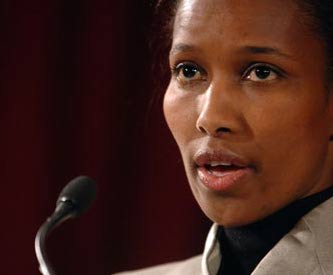
Posted tagged ‘Ayaan Hirsi Ali’

Why Islam Needs a Reformation

March 21, 2015

Why Islam Needs a Reformation, Wall Street Journal, Ayaan Hirsi Ali, March 20, 2015

(What are the chances of such a reformation over the next hundred years or so? — DM)

bn-hm855_cover_m_20150319160506A man prays during the Muslim festival of Eid al-Adha, or the Festival of Sacrifice, at Jama Masjid in New Delhi on Oct. 6, 2014. Eid al-Adha marks the end of the Hajj, the annual pilgrimage to Mecca. PHOTO: AGENCE FRANCE-PRESSE/GETTY IMAGES

“Islam’s borders are bloody,” wrote the late political scientist Samuel Huntington in 1996, “and so are its innards.” Nearly 20 years later, Huntington looks more right than ever before. According to the International Institute for Strategic Studies, at least 70% of all the fatalities in armed conflicts around the world last year were in wars involving Muslims. In 2013, there were nearly 12,000 terrorist attacks world-wide. The lion’s share were in Muslim-majority countries, and many of the others were carried out by Muslims. By far the most numerous victims of Muslim violence—including executions and lynchings not captured in these statistics—are Muslims themselves.

Not all of this violence is explicitly motivated by religion, but a great deal of it is. I believe that it is foolish to insist, as Western leaders habitually do, that the violent acts committed in the name of Islam can somehow be divorced from the religion itself. For more than a decade, my message has been simple: Islam is not a religion of peace.

When I assert this, I do not mean that Islamic belief makes all Muslims violent. This is manifestly not the case: There are many millions of peaceful Muslims in the world. What I do say is that the call to violence and the justification for it are explicitly stated in the sacred texts of Islam. Moreover, this theologically sanctioned violence is there to be activated by any number of offenses, including but not limited to apostasy, adultery, blasphemy and even something as vague as threats to family honor or to the honor of Islam itself.

It is not just al Qaeda and Islamic State that show the violent face of Islamic faith and practice. It is Pakistan, where any statement critical of the Prophet or Islam is labeled as blasphemy and punishable by death. It is Saudi Arabia, where churches and synagogues are outlawed and where beheadings are a legitimate form of punishment. It is Iran, where stoning is an acceptable punishment and homosexuals are hanged for their “crime.”

As I see it, the fundamental problem is that the majority of otherwise peaceful and law-abiding Muslims are unwilling to acknowledge, much less to repudiate, the theological warrant for intolerance and violence embedded in their own religious texts. It simply will not do for Muslims to claim that their religion has been “hijacked” by extremists. The killers of Islamic State and Nigeria’s Boko Haram cite the same religious texts that every other Muslim in the world considers sacrosanct.

Instead of letting Islam off the hook with bland clichés about the religion of peace, we in the West need to challenge and debate the very substance of Islamic thought and practice. We need to hold Islam accountable for the acts of its most violent adherents and to demand that it reform or disavow the key beliefs that are used to justify those acts.

As it turns out, the West has some experience with this sort of reformist project. It is precisely what took place in Judaism and Christianity over the centuries, as both traditions gradually consigned the violent passages of their own sacred texts to the past. Many parts of the Bible and the Talmud reflect patriarchal norms, and both also contain many stories of harsh human and divine retribution. As President Barack Obama said in remarks at the National Prayer Breakfast last month, “Remember that during the Crusades and the Inquisition, people committed terrible deeds in the name of Christ.”
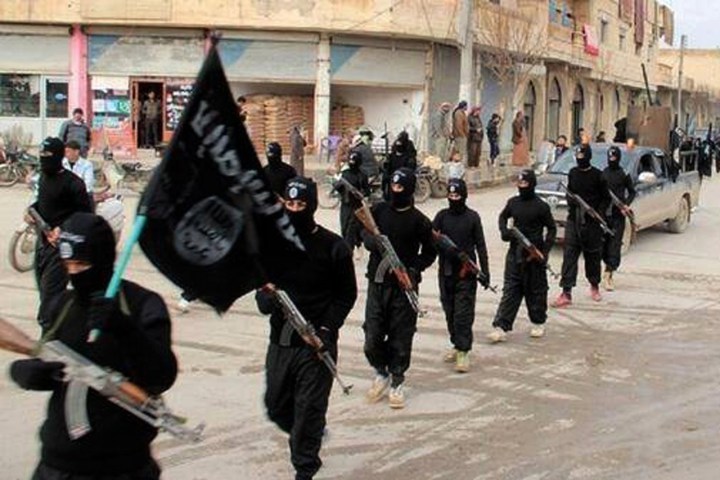
bn-hm858_cover_m_20150319160800Islamic State militants marching through Raqqa, Syria, a stronghold of the Sunni extremist group, in an undated file image posted on a militant website on Jan. 14, 2014. PHOTO: ASSOCIATED PRESS

Yet today, because their faiths went through a long, meaningful process of Reformation and Enlightenment, the vast majority of Jews and Christians have come to dismiss religious scripture that urges intolerance or violence. There are literalist fringes in both religions, but they are true fringes. Regrettably, in Islam, it is the other way around: It is those seeking religious reform who are the fringe element.

Any serious discussion of Islam must begin with its core creed, which is based on the Quran (the words said to have been revealed by the Angel Gabriel to the Prophet Muhammad) and the hadith (the accompanying works that detail Muhammad’s life and words). Despite some sectarian differences, this creed unites all Muslims. All, without exception, know by heart these words: “I bear witness that there is no God but Allah; and Muhammad is His messenger.” This is the Shahada, the Muslim profession of faith.

The Shahada might seem to be a declaration of belief no different from any other. But the reality is that the Shahada is both a religious and a political symbol.

In the early days of Islam, when Muhammad was going from door to door in Mecca trying to persuade the polytheists to abandon their idols of worship, he was inviting them to accept that there was no god but Allah and that he was Allah’s messenger.

After 10 years of trying this kind of persuasion, however, he and his small band of believers went to Medina, and from that moment, Muhammad’s mission took on a political dimension. Unbelievers were still invited to submit to Allah, but after Medina, they were attacked if they refused. If defeated, they were given the option to convert or to die. (Jews and Christians could retain their faith if they submitted to paying a special tax.)

No symbol represents the soul of Islam more than the Shahada. But today there is a contest within Islam for the ownership of that symbol. Who owns the Shahada? Is it those Muslims who want to emphasize Muhammad’s years in Mecca or those who are inspired by his conquests after Medina? On this basis, I believe that we can distinguish three different groups of Muslims.

The first group is the most problematic. These are the fundamentalists who, when they say the Shahada, mean: “We must live by the strict letter of our creed.” They envision a regime based on Shariah, Islamic religious law. They argue for an Islam largely or completely unchanged from its original seventh-century version. What is more, they take it as a requirement of their faith that they impose it on everyone else.

I shall call them Medina Muslims, in that they see the forcible imposition of Shariah as their religious duty. They aim not just to obey Muhammad’s teaching but also to emulate his warlike conduct after his move to Medina. Even if they do not themselves engage in violence, they do not hesitate to condone it.

It is Medina Muslims who call Jews and Christians “pigs and monkeys.” It is Medina Muslims who prescribe death for the crime of apostasy, death by stoning for adultery and hanging for homosexuality. It is Medina Muslims who put women in burqas and beat them if they leave their homes alone or if they are improperly veiled.
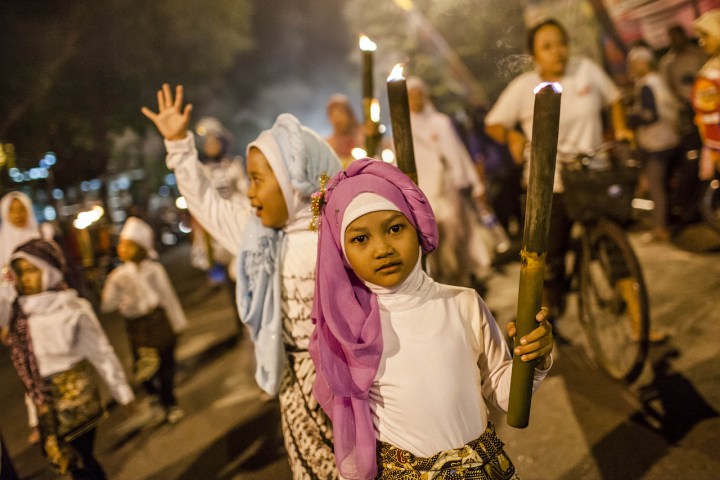
bn-hm863_cover_m_20150319161118Muslim children carry torches during a parade before Eid al-Fitr, at the end of the holy month of Ramadan, on July 27, 2014, in Yogyakarta, Indonesia. PHOTO: GETTY IMAGES

The second group—and the clear majority throughout the Muslim world—consists of Muslims who are loyal to the core creed and worship devoutly but are not inclined to practice violence. I call them Mecca Muslims. Like devout Christians or Jews who attend religious services every day and abide by religious rules in what they eat and wear, Mecca Muslims focus on religious observance. I was born in Somalia and raised as a Mecca Muslim. So were the majority of Muslims from Casablanca to Jakarta.

Yet the Mecca Muslims have a problem: Their religious beliefs exist in an uneasy tension with modernity—the complex of economic, cultural and political innovations that not only reshaped the Western world but also dramatically transformed the developing world as the West exported it. The rational, secular and individualistic values of modernity are fundamentally corrosive of traditional societies, especially hierarchies based on gender, age and inherited status.

Trapped between two worlds of belief and experience, these Muslims are engaged in a daily struggle to adhere to Islam in the context of a society that challenges their values and beliefs at every turn. Many are able to resolve this tension only by withdrawing into self-enclosed (and increasingly self-governing) enclaves. This is called cocooning, a practice whereby Muslim immigrants attempt to wall off outside influences, permitting only an Islamic education for their children and disengaging from the wider non-Muslim community.

It is my hope to engage this second group of Muslims—those closer to Mecca than to Medina—in a dialogue about the meaning and practice of their faith. I recognize that these Muslims are not likely to heed a call for doctrinal reformation from someone they regard as an apostate and infidel. But they may reconsider if I can persuade them to think of me not as an apostate but as a heretic: one of a growing number of people born into Islam who have sought to think critically about the faith we were raised in. It is with this third group—only a few of whom have left Islam altogether—that I would now identify myself.

These are the Muslim dissidents. A few of us have been forced by experience to conclude that we could not continue to be believers; yet we remain deeply engaged in the debate about Islam’s future. The majority of dissidents are reforming believers—among them clerics who have come to realize that their religion must change if its followers are not to be condemned to an interminable cycle of political violence.

How many Muslims belong to each group? Ed Husain of the Council on Foreign Relations estimates that only 3% of the world’s Muslims understand Islam in the militant terms I associate with Muhammad’s time in Medina. But out of well over 1.6 billion believers, or 23% of the globe’s population, that 48 million seems to be more than enough. (I would put the number significantly higher, based on survey data on attitudes toward Shariah in Muslim countries.)

In any case, regardless of the numbers, it is the Medina Muslims who have captured the world’s attention on the airwaves, over social media, in far too many mosques and, of course, on the battlefield.

The Medina Muslims pose a threat not just to non-Muslims. They also undermine the position of those Mecca Muslims attempting to lead a quiet life in their cultural cocoons throughout the Western world. But those under the greatest threat are the dissidents and reformers within Islam, who face ostracism and rejection, who must brave all manner of insults, who must deal with the death threats—or face death itself.

For the world at large, the only viable strategy for containing the threat posed by the Medina Muslims is to side with the dissidents and reformers and to help them to do two things: first, identify and repudiate those parts of Muhammad’s legacy that summon Muslims to intolerance and war, and second, persuade the great majority of believers—the Mecca Muslims—to accept this change.

Islam is at a crossroads. Muslims need to make a conscious decision to confront, debate and ultimately reject the violent elements within their religion. To some extent—not least because of widespread revulsion at the atrocities of Islamic State, al Qaeda and the rest—this process has already begun. But it needs leadership from the dissidents, and they in turn stand no chance without support from the West.

What needs to happen for us to defeat the extremists for good? Economic, political, judicial and military tools have been proposed and some of them deployed. But I believe that these will have little effect unless Islam itself is reformed.

Such a reformation has been called for repeatedly at least since the fall of the Ottoman Empire and the subsequent abolition of the caliphate. But I would like to specify precisely what needs to be reformed.

I have identified five precepts central to Islam that have made it resistant to historical change and adaptation. Only when the harmfulness of these ideas are recognized and they are repudiated will a true Muslim Reformation have been achieved.

Here are the five areas that require amendment:

1. Muhammad’s semi-divine status, along with the literalist reading of the Quran.
Muhammad should not be seen as infallible, let alone as a source of divine writ. He should be seen as a historical figure who united the Arab tribes in a premodern context that cannot be replicated in the 21st century. And although Islam maintains that the Quran is the literal word of Allah, it is, in historical reality, a book that was shaped by human hands. Large parts of the Quran simply reflect the tribal values of the 7th-century Arabian context from which it emerged. The Quran’s eternal spiritual values must be separated from the cultural accidents of the place and time of its birth.

2. The supremacy of life after death.
The appeal of martyrdom will fade only when Muslims assign a greater value to the rewards of this life than to those promised in the hereafter.

3. Shariah, the vast body of religious legislation.
Muslims should learn to put the dynamic, evolving laws made by human beings above those aspects of Shariah that are violent, intolerant or anachronistic.

4. The right of individual Muslims to enforce Islamic law.
There is no room in the modern world for religious police, vigilantes and politically empowered clerics.

5. The imperative to wage jihad, or holy war.
Islam must become a true religion of peace, which means rejecting the imposition of religion by the sword.

I know that this argument will make many Muslims uncomfortable. Some are bound to be offended by my proposed amendments. Others will contend that I am not qualified to discuss these complex issues of theology and law. I am also afraid—genuinely afraid—that it will make a few Muslims even more eager to silence me.

But this is not a work of theology. It is more in the nature of a public intervention in the debate about the future of Islam. The biggest obstacle to change within the Muslim world is precisely its suppression of the sort of critical thinking I am attempting here. If my proposal for reform helps to spark a serious discussion of these issues among Muslims themselves, I will consider it a success.

Let me make two things clear. I do not seek to inspire another war on terror or extremism—violence in the name of Islam cannot be ended by military means alone. Nor am I any sort of “Islamophobe.” At various times, I myself have been all three kinds of Muslim: a fundamentalist, a cocooned believer and a dissident. My journey has gone from Mecca to Medina to Manhattan.

For me, there seemed no way to reconcile my faith with the freedoms I came to the West to embrace. I left the faith, despite the threat of the death penalty prescribed by Shariah for apostates. Future generations of Muslims deserve better, safer options. Muslims should be able to welcome modernity, not be forced to wall themselves off, or live in a state of cognitive dissonance, or lash out in violent rejection.

But it is not only Muslims who would benefit from a reformation of Islam. We in the West have an enormous stake in how the struggle over Islam plays out. We cannot remain on the sidelines, as though the outcome has nothing to do with us. For if the Medina Muslims win and the hope for a Muslim Reformation dies, the rest of the world too will pay an enormous price—not only in blood spilled but also in freedom lost.

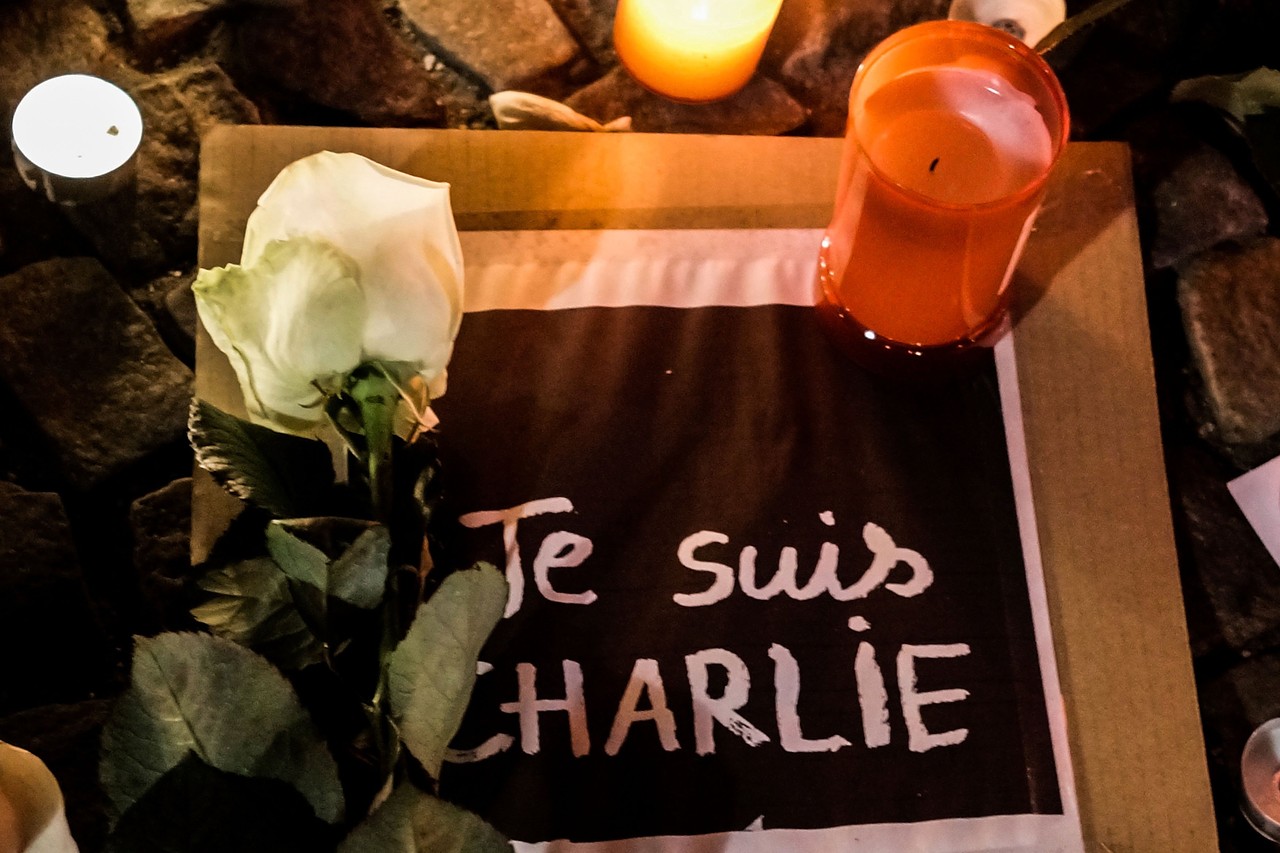
Activist Ayaan Hirsi Ali Denounces Anti-Semitism on Campuses as New Film Debuts

March 15, 2015

Activist Ayaan Hirsi Ali Denounces Anti-Semitism on Campuses as New Film Debuts, Breitbart, Dr. Susan Berry, via Counter Jihad Report, March 14, 2015

(Please see also, Column One: Israel’s next 22 months. To what extent do Obama’s relations with Israel reflect the anti-Israel views noted in the two video clips? To what extent will the anti-Israel views noted in the video clips become increasingly pervasive as our college kids get older and come to hold positions of power?– DM)

ayaan-hirsi-ali-ap

Somali-born free speech and women’s rights activist Ayaan Hirsi Ali gave the keynote address at a sold-out event in Boston Wednesday that centered on rising anti-Semitism on college campuses in North America.


Hirsi Ali’s address, and a panel featuring a rabbi and three student activists, followed the premiere of a new Jerusalem U film titled Crossing the Line 2: The New Face of Anti-Semitism on Campus, which can be viewed in its entirety online. The film demonstrates how anti-Israel activities on college and university campuses are being organized to alienate and intimidate those who support Israel, and how reasonable criticism of Israel “crosses the line” into anti-Semitism.

As a press release about the Boston event notes, Hirsi Ali said the film demonstrates how students are being “misled.” Denouncing “virulent anti-Semitism” on college campuses, she asserted, “The least we can do is boycott, divest, and sanction campuses that compromise academic freedom.”

Excerpts of Hirsi Ali’s address are as follows:

It is appalling that only seventy years from the Holocaust, crowds in Europe chant, “Hamas, Hamas, Jews to the gas.” It is even more appalling that 10,000 soldiers in Paris are needed to protect Jewish sites. That is the continent that promised never again. The men and women who were in the concentration camps, who are tattooed, some are still here. And it is happening again.

Watching Crossing the Line 2: the New Face of Anti-Semitism on Campus was like having a bucket of ice water being poured over my head. I saw the film last week. And I watched it again last night. And I couldn’t sleep. The more we pretend that this is happening somewhere far away, the more hopeless and helpless we feel. But this is not happening far away. This is happening on American campuses, British campuses, Canadian campuses. The filmmakers who made this film made it because it is important that we listen to this message while it is at a smaller stage.

I have a different acronym for BDS. They call themselves Boycott, Divestment, and Sanctions. I call them Bully, Deceive, and Sabotage. Bully, Deceive, and Sabotage the only society that is free in the Middle East. BDS. On campus, if you care about issues like justice and injustice, we really need to show it. You need to do it. Where is the BDS movement against the Islamic State? Where on campuses is the BDS movement against Saudi Arabia? The Iranian regime, who for decades have promised to wipe Israel off the map, who are developing a bomb. And there’s no BDS movement against them on campus. Why? Last year in Nigeria, 200 girls were kidnapped. They were sold into slavery. There was no BDS movement against Boko Haram.

“Anti-Israel activities on campus cause students today to feel embarrassed to be pro-Israel, or could even lead them to hold negative opinions about Israel” said Amy Holtz, president of Jerusalem U, in a statement in the press release. “Raising awareness of this growing problem is crucial. We made this film in order to give students the knowledge to differentiate between education and intimidation, debate and hate. They must be able to identify when it is ‘Crossing the Line.’”

Ayaan Hirsi Ali: Obama Must Confront the Threat of Radical Islam

February 21, 2015

Ayaan Hirsi Ali: Obama Must Confront the Threat of Radical Islam, Time, Ayaan Hirsi Ali, February 20, 2015

ISIS is recruiting young Muslims from around the globe to Jihad, and the White House apparently doesn’t understand why.

How to Answer the Paris Terror Attack

January 8, 2015

How to Answer the Paris Terror Attack, Wall Street Journal, Ayaan Hirsi Ali, January 7, 2015

If there is a lesson to be drawn from such a grisly episode, it is that what we believe about Islam truly doesn’t matter. This type of violence, jihad, is what they, the Islamists, believe.

Those responsible for the slaughter in Paris, just like the man who killed the Dutch filmmaker Theo van Gogh in 2004, are seeking to impose terror. And every time we give in to their vision of justified religious violence, we are giving them exactly what they want.

We appease the Muslim heads of government who lobby us to censor our press, our universities, our history books, our school curricula. They appeal and we oblige. We appease leaders of Muslim organizations in our societies. They ask us not to link acts of violence to the religion of Islam because they tell us that theirs is a religion of peace, and we oblige.

We have to acknowledge that today’s Islamists are driven by a political ideology, an ideology embedded in the foundational texts of Islam. We can no longer pretend that it is possible to divorce actions from the ideals that inspire them.

****************

After the horrific massacre Wednesday at the French weekly satirical magazine Charlie Hebdo, perhaps the West will finally put away its legion of useless tropes trying to deny the relationship between violence and radical Islam.

This was not an attack by a mentally deranged, lone-wolf gunman. This was not an “un-Islamic” attack by a bunch of thugs—the perpetrators could be heard shouting that they were avenging the Prophet Muhammad. Nor was it spontaneous. It was planned to inflict maximum damage, during a staff meeting, with automatic weapons and a getaway plan. It was designed to sow terror, and in that it has worked.

The West is duly terrified. But it should not be surprised.

BN-GI167_EDPHir_M_20150107184019GETTY IMAGE

If there is a lesson to be drawn from such a grisly episode, it is that what we believe about Islam truly doesn’t matter. This type of violence, jihad, is what they, the Islamists, believe.

There are numerous calls to violent jihad in the Quran. But the Quran is hardly alone. In too much of Islam, jihad is a thoroughly modern concept. The 20th-century jihad “bible,” and an animating work for many Islamist groups today, is “The Quranic Concept of War,” a book written in the mid-1970s by Pakistani Gen. S.K. Malik. He argues that because God, Allah, himself authored every word of the Quran, the rules of war contained in the Quran are of a higher caliber than the rules developed by mere mortals.

In Malik’s analysis of Quranic strategy, the human soul—and not any physical battlefield—is the center of conflict. The key to victory, taught by Allah through the military campaigns of the Prophet Muhammad, is to strike at the soul of your enemy. And the best way to strike at your enemy’s soul is through terror. Terror, Malik writes, is “the point where the means and the end meet.” Terror, he adds, “is not a means of imposing decision upon the enemy; it is the decision we wish to impose.”

Those responsible for the slaughter in Paris, just like the man who killed the Dutch filmmaker Theo van Gogh in 2004, are seeking to impose terror. And every time we give in to their vision of justified religious violence, we are giving them exactly what they want.

In Islam, it is a grave sin to visually depict or in any way slander the Prophet Muhammad. Muslims are free to believe this, but why should such a prohibition be forced on nonbelievers? In the U.S., Mormons didn’t seek to impose the death penalty on those who wrote and produced “The Book of Mormon,” a satirical Broadway sendup of their faith. Islam, with 1,400 years of history and some 1.6 billion adherents, should be able to withstand a few cartoons by a French satirical magazine. But of course deadly responses to cartoons depicting Muhammad are nothing new in the age of jihad.

Moreover, despite what the Quran may teach, not all sins can be considered equal. The West must insist that Muslims, particularly members of the Muslim diaspora, answer this question: What is more offensive to a believer—the murder, torture, enslavement and acts of war and terrorism being committed today in the name of Muhammad, or the production of drawings and films and books designed to mock the extremists and their vision of what Muhammad represents?

To answer the late Gen. Malik, our soul in the West lies in our belief in freedom of conscience and freedom of expression. The freedom to express our concerns, the freedom to worship who we want, or not to worship at all—such freedoms are the soul of our civilization. And that is precisely where the Islamists have attacked us. Again.

How we respond to this attack is of great consequence. If we take the position that we are dealing with a handful of murderous thugs with no connection to what they so vocally claim, then we are not answering them. We have to acknowledge that today’s Islamists are driven by a political ideology, an ideology embedded in the foundational texts of Islam. We can no longer pretend that it is possible to divorce actions from the ideals that inspire them.

This would be a departure for the West, which too often has responded to jihadist violence with appeasement. We appease the Muslim heads of government who lobby us to censor our press, our universities, our history books, our school curricula. They appeal and we oblige. We appease leaders of Muslim organizations in our societies. They ask us not to link acts of violence to the religion of Islam because they tell us that theirs is a religion of peace, and we oblige.

What do we get in return? Kalashnikovs in the heart of Paris. The more we oblige, the more we self-censor, the more we appease, the bolder the enemy gets.

There can only be one answer to this hideous act of jihad against the staff of Charlie Hebdo. It is the obligation of the Western media and Western leaders, religious and lay, to protect the most basic rights of freedom of expression, whether in satire on any other form. The West must not appease, it must not be silenced. We must send a united message to the terrorists: Your violence cannot destroy our soul.

Geert Wilders Was Right

December 19, 2014

Geert Wilders Was Right, Gatestone InstituteUzay Bulut, December 19,2014

“Hate Speech” was invented in the Kremlin of the USSR by political operatives who saw that it could be used effectively against anyone who did not agree with you, whom you wanted to silence.

It would seem indispensable for all people who want to defend their liberty to take a stand against criminal and violent people who aim to destroy or damage their societies. If those people are extremist Muslims, why should they be exempt? And if they are not extremist Muslims, why should they not be protected from the same threats and violence that menace us?

Ironically, however, it is not the violent Islamic teachings inspiring these crimes that are questioned, criticized — or prosecuted — as hate speech on major media outlets or among political circles. It is, instead, the victims of these teachings: among others, Ayaan Hirsi Ali, Lars Hedegaard, Susanne Winter, Elisabeth Sabaditsch-Wolff, Imran Firasat, and Geert Wilders.

What Geert Wilders does cannot be called hate speech. It is legitimate a struggle, if occasionally imperfect, to protect the liberties of all of us in the face of unending threats and attacks, most recently from Islamic extremists.

Geert Wilders is not an extremist of any kind. He is a democrat who defends Western values, the most important of which are liberty and life. We should not prosecute Wilders. We should thank him for sacrificing his life to defend us — and defend him back.

What a week. In an Australian café, a self-declared jihadi seized at least 17 hostages, two of whom were killed; and in Pakistan, 148 people, including 132 children, were massacred by the same branch of the Taliban that tried to murder Mala Yousafzai to prevent her from being educated.

Whether the terrorist in Australia acted alone or had an organization behind him is irrelevant. It did not stop him from killing two hostages. The manager of the Lindt cafe, 34-year-old Tori Johnson, and a 38-year-old lawyer and mother of three, Katrina Dawson, lost their lives.

What we have in both slaughters are individuals motivated by the same ideology, Islamism, and committing attacks against innocent civilians. More alarming is that many people apparently seem not to want to talk about the motivations, apart from mental illness, behind both attacks: Islamic ideology. Perhaps they fear being exposed to the same violence one day, or perhaps they fear jeopardizing business deals or votes. There may also be the temptation to run away from reality, in the hope that the more you deny it, the farther you are from it.

The ideology that flew planes into the World Trade Center in the U.S. and that took people hostage in Australia and that murdered over a hundred schoolchildren is one and the same. Without discussing it — what is there in or about it drives people to violence and hatred? — violent attacks, threats and intimidation are here to stay.

A wise and courageous man in Europe, Geert Wilders, has been speaking out about these truths for years — and has been made to pay a huge price for it. When the filmmaker Theo van Gogh was murdered in 2004 over his short film, Fitna [ordeal], the paper on the knife in his back promised that Wilders (and Ayaan Hirsi Ali) would be next. Wilders lives in a state-provided house with high security; for his defense of freedom, he has received countless death threats and has been called “a hate mongering racist,” “a bigot,” “an extremist” and other names intended not to flatter. He is the founder and leader of the Netherlands’ Party for Freedom (PVV), ranked number one in the polls; the creator of the film Fitna, and also author of the book, Marked for Death: Islam’s War Against the West and Me.

Wilders warned Australia. He has devoted his life to warning us all. In a February 2014 television interview, he spoke to Australians about Islamism:

“Look how in societies today where Islam is dominant and prominent, how any non-Islamic person, whether it’s a Christian or an apostate or a woman or a critical journalist, how they are treated. This is in a very bad way, often with the death penalty or imprisonment or all those kind of terrible things.”

846Geert Wilders warns Australians about the dangers posed by Islamism, multiculturalism and mass immigration, on ABC Lateline, Feb. 13, 2014.

Due to an enormous influx of people from Islamic countries in the last decades, he continued, Dutch society has changed and worsened, so that,

“unfortunately non-Western immigrants, often Muslims, are over-represented in statistics of crime, of dependency on social benefits, that we have honor killings, that we have genital mutilation, that we have streets where women with headscarves and burqas are not the exception any more. And that it’s getting worse… What I’m trying to do when I visit your beautiful country, Australia, is warn Australians that even though it might not be the case today, learn from the mistakes that we made in Europe: be vigilant and look at Islam for what it really is. Islam is not a religion of peace. Islam is a totalitarian ideology. The best example is that if any person, any Muslim wants to leave Islam, then the penalty is death. It is not even allowed to leave it.”

Wilders made clear that he was not threatening or attacking anyone for a religious or ethnic identity:

“I have nothing against the people. I have nothing against the Indonesian people or the Arab people or the Muslim people. I’m talking about the ideology. And indeed, as long as a country has a culture, a religion, an ideology where Islam is dominant, it will never be a democracy. It’s also happening in Indonesia. Look at how they treat Christians in Indonesia or how they treat Christians in any other country where Islam is dominant.”

“Why is it not possible to build a church in Saudi Arabia, where, as we in the Netherlands, have almost 500 mosques being built; why is it not possible to buy or sell a Bible in any Muslim or most of the Muslim countries, whereas we can buy a Koran here on every street corner? This is the exact example of the fact that Islam is an intolerant society.”

Wilders emphasized that there is no moderate or non-moderate Islam, but there are moderate and non-moderate Muslims:

“As a matter of fact, the majority of the Muslims living in our society are moderate people. But don’t make the mistake that even though there are moderate and radical Muslims that there is a moderate or a radical Islam. There is only one Islam, and that is a totalitarian ideology that has no room for anything but Islam. You see it once again in any country in the world where Islam is dominant.”

Wilders’s critics claim he is a bigot who hates all Muslims and wants to drive all of them out of Western countries, regardless of who they really are and what they do. Those claims are completely false.

Wilders has made it clear countless times that what he opposes is Islamic violence and totalitarianism, and that he has no problem with Muslims who are peaceful and law-abiding. The problem, he says, emerges when Muslims engage in violence or criminal acts, or try to impose their religious beliefs on non-Muslims, or attack or threaten those who do not agree with them, or try to establish the parallel legal system of sharia courts in their neighborhoods, or rape (with our without a gang) European girls, and so on.

“I believe that Muslims that are in our society today are of course equal as anybody else, as long as they adhere to our laws, to our constitution, to our values. And as long as they do not cross this red line — if they commit crimes, if they start beating up women, if they start the genital mutilation, if they start to commit other crimes and honor killings as they unfortunately do in Western Europe, many times — if they do that, I believe we should expel them, the same day if possible, from our country.”

“So to stop the immigration to our societies — because we have had more than enough Islam in our societies — and people who are here and who are behaving according to our laws and our constitutions are happy to stay, are equal to anybody else, or even want to help them with the better education, but if they cross the line of crime, start acting according to Sharia law, there will be no place for them in our free societies….”

It would seem indispensable for all people who want to defend their liberty to take a stand against criminal and violent people who aim to destroy or damage their societies. If those people are extremist Muslims, why they should be exempt? And if they are not extremist Muslims, why should they be not protected from the same threats and violence that menace us?

In September 2010, an Australian Islamic fundamentalist preacher, Feiz Mohammad, in an internet chat room incited his Muslim followers to behead Wilders.

Ironically, however, it is not the violent Islamic teachings inspiring these crimes that are questioned or criticized — or prosecuted — on major media outlets or among political circles. It is, instead, the victims of these teachings: among others, Ayaan Hirsi Ali, Lars Hedegaard, Susanne Winter, Elisabeth Sabaditsch Wolf, Imran Firasat, and Geert Wilders. They are threatened by Muslims, accused by progressives of being “extremists,” interrogated by authorities, and even sued and made to stand trial.

Wilders lives in a state-provided house, outfitted to be bulletproof, and heavily guarded by police. He is driven from his home to his parliament office in an armored police vehicle, has round-the-clock bodyguards, and wears a bulletproof vest. “I am in jail, he says, “and they are walking around free.”

The life Wilders is forced to lead stands as proof that there is something terribly wrong with the current Western stand toward Islamic terrorism and “hate speech.” “Hate speech” was invented in the Kremlin of the USSR by political operatives who saw that it could be used effectively against anyone who did not agree with you, whom you wanted to silence[1]. It is a way to try forcefully to coerce others to your religion or way of thinking, or, failing that, to make them afraid to speak and neutralize them. Islamists and jihadists use hate speech to convert impressionable people, as Adolf Hitler did, to their way of thinking, and to recruit followers and jihadists who might enjoy torturing and beheading.

What Geert Wilders does cannot be called hate speech. It is a struggle, if occasionally imperfect, to protect the liberties of all of us in the face of unending threats and attacks, most recently from Islamic extremists. Geert Wilders is not an extremist of any kind. He is a democrat who defends Western values, the most important of which are liberty and life. We should not prosecute Wilders. We should thank him for sacrificing his life to defend us — and defend him back.


[1] Flemming Rose, The Tyranny of Silence (Cato Institute, 2014. 240 pp.)

The Buckley Program Stands Up for Free Speech

September 17, 2014

The Buckley Program Stands Up for Free Speech, Front Page Magazine, September 17, 2014

(When I was a Yale undergraduate (1959-63), I was proud of its then liberal (in the old fashioned sense of the word) affirmation that voices offensive to some should not on that account be banned. Things have changed since then, so I was encouraged by the decision to allow Ayaan Hirsi Ali to speak. Based on reports, there were three hundred in the audience, she received three standing ovations, and about one hundred students who wanted to attend could not because there was insufficient room in the auditorium. Three cheers for my Alma mater! There may still be hope for her.– DM)

6a00d83451c36069e20168eb9dbef6970c

The William F. Buckley Program at Yale University lately showed bravery unusual for an academic institution. It has refused to be bullied by the Muslim Students Association and its demand that the Buckley Program rescind an invitation to Ayaan Hirsi Ali to speak on campus September 15. Hirsi Ali is the vocal Somalian critic of Islamic doctrine whose life has been endangered for condemning the theologically sanctioned oppression of women in Islamic culture. Unlike Brandeis University, which recently rescinded an honorary degree to be given to Hirsi Ali after complaints from the Council on American-Islamic Relations, the Buckley Program rejected both the MSA’s initial demand, and a follow up one that Hirsi Ali share the stage with one of her critics.

The Buckley Program is a rare instance of an academic organization staying true to the ideals of free speech, academic freedom, and the “free play of the mind on all subjects,” as Matthew Arnold defined liberal education. Most of our best universities have sacrificed these ideals on the altar of political correctness and identity politics. Anything that displeases or discomforts campus special interest groups––mainly those predicated on being the alleged victims of American oppression–– must be proscribed as “slurs” or “hateful,” even if what’s said is factually true. No matter that these groups are ideologically driven and use their power to silence critics and limit speech to their own self-serving and duplicitous views, the modus operandi of every illiberal totalitarian regime in history. The spineless university caves in to their demands, incoherently camouflaging their craven betrayal of the First Amendment and academic freedom as “tolerance” and “respect for diversity.”

In the case of Islam, however, this betrayal is particularly dangerous. For we are confronting across the world a jihadist movement that grounds its violence in traditional Islamic theology, jurisprudence, and history. Ignoring those motives and their sanction by Islamic doctrine compromises our strategy and tactics in defeating the jihadists, for we cripple ourselves in the war of ideas. Worse yet, Islamic triumphalism and chauvinism–– embodied in the Koranic verse that calls Muslims “the best of nations raised up for the benefit of men” because they “enjoin the right and forbid the wrong and believe in Allah”–– is confirmed and strengthened by the way our elite institutions like universities and the federal government quickly capitulate to special interest groups who demand that we endorse only their sanitized and often false picture of Islam. Such surrender confirms the jihadist estimation of the West as the “weak horse,” as bin Laden said, a civilization with “foundations of straw” whose wealth and military power are undermined by a collective failure of nerve and loss of morale.

This process of exploiting the moral degeneration of the West has been going on now for 25 years. It begins, as does the rise of modern jihadism, with the Ayatollah Khomeini and the Iranian Islamic revolution. The key event took place in February 1989, when Khomeini issued a fatwa, based on Koran 9.61, against Indian novelist Salman Rushdie for his novel The Satanic Verses, which was deemed “against Islam, the Prophet, and the Koran,” as Khomeini said. Across the world enraged Muslims rioted and bombed bookstores, leaving over 20 people dead. More significant in the long run was the despicable reaction of many in the West to this outrage against freedom of speech and the rule of law, perpetrated by the most important and revered political and religious leader of a major Islamic nation.

Abandoning their principles, bookstores refused to stock the novel, and publishers delayed or canceled editions. Muslims in Western countries publicly burned copies of Rushdie’s novel and encouraged his murder with impunity. Eminent British historian Hugh Trevor-Roper suggested Rushdie deserved such treatment. Thirteen British Muslim barristers filed a formal complaint against the author. In their initial reactions, Western government officials were hesitant and timorous. The U.S. embassy in Pakistan eagerly assured Muslims that “the U.S. government in no way supports or associates itself with any activity that is in any sense offensive or insulting to Islam.”

Khomeini’s fatwa and the subsequent violent reaction created what Daniel Pipes calls the “Rushdie rules,” a speech code that privileges Islam over revered Western traditions of free speech that still are operative in the case of all other religions. Muslims now will determine what counts as an “insult” or a “slur,” and their displeasure, threats, and violence will police those definitions and punish offenders. Even reporting simple facts of history or Islamic doctrine can be deemed an offense and bring down retribution on violators. Ayaan Hirsi Ali, for example, earned the wrath of Muslims in part for her contribution to Theo van Gogh’s film Submission, which projected Koranic verses regarding women on the bodies of abused women. Van Gogh, of course, was brutally murdered in the streets of Amsterdam. And this is the most important dimension of the “Rushdie rules”: violence will follow any violation of whatever some Muslims deem to be “insulting” to Islam, even facts. In effect, Western law has been trumped by the shari’a ban on blaspheming Islam, a crime punishable by death.

The result is the sorry spectacle of groveling and apology we see almost daily from our government, the entertainment industry, and worse yet, universities. Trivial slights and offenses that civilized nations leave to the market place of ideas to sort out are elevated into “slurs” and “hate speech” if some Muslim organization deems them so. A reflexive self-censorship has arisen in American society, one based on fear of violent retribution or bad publicity harmful to profits and careers.

Thus the government officially proscribes words like “jihad” or “Muslim terrorist” from its documents and training materials in order to avoid offending Muslims. Similarly the Muslim terrorist, a fixture in recent history since the PLO started highjacking airliners in the 60s, has nearly disappeared from television and movies, replaced by Russians, white supremacists, and brainwashed Americans. And when a Muslim terrorist does appear, his motivations and violence are rationalized as the understandable response to the grievous offenses against his faith and people committed by the U.S. and Israel. Islam is airbrushed from the plot, as in the recent series Tyrant, a dramatization of a fictional Arab Muslim state that somehow manages to ignore Islam as a political force. More seriously, universities disinvite speakers at the faintest hint of protest from Muslim organizations, even as they accept Gulf-state petrodollars to create “Middle East Studies” programs that frequently function as apologists and enablers of terrorist violence.

“Free men have free tongues,” as the Athenian tragedian Sophocles said. One of the pillars of political freedom is free speech. When the ability to speak freely in the public square is extended beyond an elite to a large variety of people with clashing views and ideals, speech necessarily becomes rough and uncivil. Feelings get hurt, passions are aroused, and language becomes coarse and abusive. That’s the price we pay for letting a lot of people speak their minds, and for creating a process in which truth and good ideas can emerge from all this rambunctious, divisive conversation. But when we carve out a special niche for one group, provide it with its own rules, and protect it even from statements of uncomfortable facts, then we compromise that foundational right to have our say without any retribution other than a counterargument. So three cheers for the Buckley Program. It has stood up against intimidation and defended one of our most important and precious freedoms.