Posted tagged ‘Assad’

Filling the Vacuum in Syria

May 28, 2015

Filling the Vacuum in Syria, The Gatestone InstituteYaakov Lappin, May 28,2015

  • The idea that, because Sunni and Shi’ite elements are locked in battle with one another today, they will not pose a threat to international security tomorrow, is little more than wishful thinking.
  • The increased Iranian-Hezbollah presence needs to be closely watched.
  • A policy of turning a blind eye to the Iran-led axis, including Syria’s Assad regime, appears to be doing more harm than good.

As the regime of Bashar Assad continues steadily to lose ground in Syria; and as Assad’s allies, Iran and Hezbollah, deploy in growing numbers to Syrian battlegrounds to try to stop the Assad regime’s collapse, the future of this war-torn, chaotic land looks set to be dominated by radical Sunni and Shi’ite forces.

The presence of fundamentalist Shi’ite and Sunni forces fighting a sectarian-religious war to the death is a sign of things to come for the region: when states break down, militant entities enter to seize control. The idea that, because Sunni and Shi’ite elements are locked in battle with one another today, they will not pose a threat to international security tomorrow, is little more than wishful thinking.

The increased presence of the radicals in Syria will have a direct impact on international security, even though the West seems more fixated on looking only at threats posed by the Islamic State (ISIS), and disregards the possibly greater threat posed by the Iranian-led axis. It is Iran that is at the center of the same axis, so prominent in entangling Syria.

The threat from ISIS in Syria and Iraq to the West is obvious: Its successful campaigns and expanding transnational territory is set to become an enormous base of jihadist international terrorist activity, a launching pad for overseas attacks, and the basis for a propaganda recruitment campaign.

It has already become a magnet for European Muslim volunteers. Their return to their homes as battle-hardened jihadists poses a clear danger to those states’ national security.

Yet the threat from the Iranian-led axis, highly active in Syria, is more severe. With Iran, a threshold nuclear regional power, as its sponsor, this axis plans to subvert and topple stable Sunni governments in the Middle East and attack Israel. Iran’s axis also has its sights set on eventually sabotaging the international order, to promote Iran’s “Islamic revolution.”

This is the axis upon which the Assad regime has become utterly dependent for its continued survival.

Today, the radical, caliphate-seeking Sunni organization, ISIS, controls half of Syria, while hardline Lebanese Shi’ite Hezbollah units can be found everywhere in Syria, together with their sponsors, Iran’s Islamic Revolutionary Guards Corps (IRGC) personnel, fighting together with the Assad regime’s beleaguered and worn-out military forces.

The increased Iranian-Hezbollah presence needs to be closely watched. According to international media reports, an IRGC-Hezbollah convoy in southern Syria, made up of senior operatives involved in the setting up of a base designed to launch attacks on the Golan Heights, was struck and destroyed by Israel earlier this year. The Hashemite Kingdom of Jordan too hasreason to be concerned.

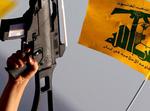
1088Lebanese Shi’ite Hezbollah fighters are deeply involved in Syria’s civil war. (Image source: Hezbollah propaganda video)

Syria has become a region into which weapons, some highly advanced, flow in ever greater numbers, allowing Hezbollah to acquire guided missiles, and allowing ISIS and the Al-Nusra Front to add to their growing stockpile of weaponry.

Other rebel organizations, some sponsored by Saudi Arabia, Turkey, and Qatar, are also wielding influence in Syria. These groups represent an effort by Sunni states to exert their own influence there.

Despite all the efforts to support it, the Assad regime suffered another recent setback when ISIS seized the ancient city Palmyra in recent days, making an ISIS advance on Damascus more feasible. To the west, near the Lebanese border, Al-Qaeda’s branch in Syria, the Al-Nursa Front, also made gains. It threatened to enter Lebanon, prompting Hezbollah to launch a counter-offensive to take back those areas.

These developments provide a blueprint for the future of Syria: A permanently divided territory, where conquests and counter-offensives continue to rage, and the scene of an ongoing humanitarian catastrophe, producing waves of millions of refugees that could destabilize Syria’s neighbors. Syria is set to remain a land controlled by warring sectarian factions, some of whom plan to spread their destructive influence far beyond Syria.

Events in Syria have shown that the notion that air power can somehow stop ISIS’s advance is a fantasy. More importantly, they have also illustrated that Washington’s policy of cooperation with Iran in a possible “grand bargain” to stabilize the region, while failing to take a firmer stance against the civilian-slaughtering Assad regime, is equally fruitless.

A policy of turning a blind eye to the Iran-led axis, including Syria’s Assad regime, appears to be doing more harm than good.

Assad pulls air force out of Deir ez-Zour, the third Syrian air base surrendered to ISIS

May 27, 2015

Assad pulls air force out of Deir ez-Zour, the third Syrian air base surrendered to ISIS, DEBKAfile, May 27, 2015

ISIS__fighting__between_Homs_and_Palmyra_27.5.15ISIS in combat between Homs and Palmyra

Just a week after losing the big Palmyra air base to the Islamic State – and with it large stocks of ammo and military equipment – Syrian military and air units Wednesday, May 27, began pulling out of the big air base at Deir ez-Zour. This was Bashar Assad’s last military stronghold in eastern Syria and the last air facility for enabling fighter-bombers to strike ISIS forces in northeastern Syria and the western Iraqi province of Anbar.

His surrender of the Deir ez-Zour base is evidence that the Syrian president has run out of fighting strength for defending both his front lines and his air bases. He is also too tied down to be able to transfer reinforcements from front to front. He is therefore pulling in the remnants of his army from across the country for the defense of the capital, Damascus.

DEBKAfile’s military sources report that the Islamic State now has in its sights the Syrian army’s biggest air facility, T4 Airbase, which is located on the fast highway linking Homs with Damascus 140 km away.

It is home base for the bulk of the air force’s fighters and bombers. In its hangars are an estimated 32 MiG-25 fighters, as well as smaller numbers of MiG-25PDS interceptors, designed for combat with the Israeli air force, MiG-25RBT bombers-cum-surveillance planes; MiG-25PU trainers, which are routinely used to strike rebel forces in crowded built-up areas, and advanced MiG-29SM fighter jets.

Stationed there too are 20 advanced Su-24M2 bombers, the strategic backbone of the Syrian air force.

T4 Airbase also holds the largest Syrian stocks of guided bombs, air-to-air and air-to-ground missiles.

In the last few hours, air crews have been frantically removing these warplanes from T4 and distributing them among smaller bases in central Syria, at the cost of their operational effectiveness.

In the space of a week, therefore, Bashar Assad has lost three of his major air bases, including Palmyra, where Iranian and Russian air freights had been landing regularly with fresh supplies of ordnance and spare parts for his army.

Our military experts say that this bonanza frees ISIS to cut off the eastern, northern and central regions from the capital, and deprive the Syrian and Hizballah units battling for control of the Qalamoun Mts of air support against rebel and Islamist forces.

If they manage to take T4 as well, the Islamists will be able to prevent US jets from taking off for strikes against them in Syria, or bombing the their forces which have seized long stretches of the fast highway from Homs to Damascus.

No army in Mid East is challenging ISIS. Iran regroups to defend S. Iraqi Shiites, Assad to save Damascus

May 25, 2015

No army in Mid East is challenging ISIS. Iran regroups to defend S. Iraqi Shiites, Assad to save Damascus, DEBKAfile, May 25, 2015

Baiji_22.5.15Iranian troops in fight to evict ISIS from Baiji refinery

Hassan Nasrallah Saturday, May 23, called his Lebanese Shiite Hizballah movement to the flag, because “we are faced with an existential crisis” from the rising belligerence of the Islamist State of Iraq and the Levant. His deputy, Sheik Naim Qssem, sounded even more desperate: “The Middle East is at the risk of partition” in a war with no end in sight, he said. “Solutions for Syria are suspended. We must now see what happens in Iraq.”

The price Iran’s Lebanese proxy has paid for fighting alongside Bashar Assad’s army for four years is cruel: some 1,000 dead and many times that number of wounded. Its leaders now understood that their sacrifice was in vain. ISIS has brought the Syrian civil war to a new dead end.

This week, a 15-year old boy was eulogized by Hizballah’s leaders for performing his “jihadist duty” in Syria.

Clearly, for their last throw in Syria, the group, having run out of adult combatants, is calling up young boys to reinforce the 7,000 fighting there.

The Syrian president Bashar Assad is in no better shape. He too has run dangerously short of fresh fighting manpower. Even his own Alawite community has let him down. Scarcely one-tenth of the 1.8 million Alawites have remained in Syria. Their birthrate is low, and those who stayed behind are hiding their young sons to keep them from being sent to the front lines.

Assad also failed to enlist the Syrian Druze minority to fight for his regime, just as Hizballah’s Nasrallah was rebuffed when he sought to mobilize the Lebanese army to their cause. This has left Hizballah and the Syrian ruler alone in the battlefield with dwindling strength against two rival foes:  ISIS and the radical Syrian opposition coalition calling itself Jaish al-Fatah – the Army of Conquest – which is spearheaded by Al Qaeda’s Nusra Front and backed to topple Assad by Saudi Arabia, Qatar and Turkey.

Nasrallah tried to paint a brave picture of full mobilization to expand the war to all parts of Syria. However, Sunday, May 24, a key adviser to Assad admitted that his regime and its allies were being forced to regroup.

Their forces were withdrawing from the effort to shift the Islamists from the land they have conquered – about three-quarters of Syrian territory – and concentrating on defending the cities, Damascus, Homs and Latakia, home to the bulk of the population, as well as the strategic Damascus highway to the coast and Beirut. Hizballah needed to build up the Lebanese border againest hostile access.

But Syrian cities, the Lebanese border and the highway are still under threat – from Syrian rebel forces.

The Iraqi army, for its part, has been virtually wiped out, along with the many billions of dollars the US spent on training and weapons. There is no longer any military force in Iraq, whether Sunni or Shiite, able to take on ISIS and loosen its grip on the central and western regions.

The Kurdish peshmerga army, to whom President Barack refused to provide armaments for combating the Islamists, has run out of steam. An new offensive would expose the two main towns of the semi-autonomous Kurdish Republic – the capital Irbil and the oil city of Kirkuk – to the depredations of the Islamist belligerents.

A quick scan of Shiite resources reveals that in the space between the Jordan River and the Euphrates and Tigris, Iran commands the only force still intact in Iraq – namely, the Iraqi, Afghan and Pakistani Shiite militias, who are trained and armed by the Revolutionary Guards.

This last remaining fighting force faces its acid test in the battle ongoing to recover Baiji, Iraq’s main oil refinery town. For the first time, Iranian troops are fighting in Iraq, not just their surrogates, but in the Baiji campaign they have made little headway in three weeks of combat. All they have managed to do is break through to the 100 Iraqi troops stranded in the town, but ISIS fighting strength is still not dislodged from the refinery.

The Obama administration can no longer pretend that the pro-Iranian Shiite militias are the panacea for the ISIS peril. Like Assad, Tehran too is being forced to regroup. It is abandoning the effort to uproot the Islamists from central and western Iraq and mustering all its Shiite military assets, such as the Badr Brigade, to defend the Shiite south – the shrine towns of Najef and Karbala, Babil (ancient Babylon) and Qadisiya – as well as planting an obstacle in the path of the Islamists to Iraq’s biggest oil fields and only port of Basra.

The Shiite militias flown in by Tehran from Pakistan and Afghanistan have demonstrated in Syria and Iraq alike that they are neither capable nor willing to jump into any battlefields.

The upshot of this cursory scan is that not a single competent army capable of launching all-out war on ISIS is to be found in the Middle East heartland – in the space between the 1,000km long Jordan and the Euphrates and Tigris to the east, or between Ramadi and the Saudi capital of Riyadh to the south.

By Sunday, May 24, this perception had seeped through to the West. US Defense Secretary Ashton Carter, remarked: “What apparently happened was that the Iraqi forces just showed no will to fight.” The former British army chief Lord Dannatt was more down to earth. Since the coalition air force campaign had failed to stop ISIS’s advance, he said “it was time to think the previously unthinkable” and send 5,000 ground troops to fight the Islamists in Syria and Iraq.

The next day, Monday, Tehran pointed the finger of blame for the latest debacles in Iraq at Washington. Al Qods Brigades chief Gen. Qassem Soleimani was quoted by the English language Revolutionary Guards mouthpiece Javan as commenting: “The US didn’t do a damn thing to stop the extremists’ advance on Ramadi.”

Qalamoun battle is do-or-die for Bashar Assad, Hassan Nasrallah and Iran’s Gen. Soleimani

May 9, 2015

Qalamoun battle is do-or-die for Bashar Assad, Hassan Nasrallah and Iran’s Gen. Soleimani, DEBKAfile, May 9, 2015

(??????????? — DM)

Qalamoun_battle_5.15Hizballah flag aloft in Qalamoun battle

President Obama has just lately adopted a plan some members of his National Security Council put forward: It is to get the Iranians moving on the nuclear deal by applying a painful prod in the form of a wedge in the Revolutionary Guards (IRGC) leadership. IRGC chief Gen. Ali Jafari is being elevated as a “moderate” and the “good guy” of the regime, while Gen. Soleimani, the Al Qods chief, who orchestrates IRGC’s external subversive operations, is fingered as the “bad guy.’

*****************

Two contenders are locked in a fateful contest to win the strategic Qalamoun Mts. on the Syrian-Lebanese border: The Syrian army and its Hizballah ally are fighting tooth and nail against the opposition Army of Conquest, which is spearheaded by Nusra Front, Al Qaeda’s Syrian branch. This battle has all of a sudden attained the proportions of a critical regional contest, which poses dire consequences for the Iran-Syrian-Hizballah alliance at large and its three prime movers, Syrian President Bashar Assad, Hizballah leader Hassan Nastrallah, and their overall commander, Iran’s Gen. Qassem Soleimani, head of the Al Qods Brigades.

With so much hanging in the balance, it is no wonder that Hizballah issued confused communiqués on the battle, until Nasrallah interceded Tuesday, May 5 to say: “We have not issued a statement, and we will not issue a statement. When we launch a (Qalamoun) operation, it will be obvious to everyone.”

The operation is, however, already in full flight. Neither Nasrallah nor anyone else can predict its outcome for sure, because a radical, unforeseen shift has taken place in the balance of strength. For the first time in nearly five years of Syrian civil war, the United States has lined up with Saudi Arabia, Turkey, Qatar and the UAE to give the Syrian opposition heavy weapons. Had they been supplied earlier, the war might have ended sooner and many of the hundreds of thousands of victims might have been saved.

Also, after a long silence, senior Obama administration spokesmen were finally willing to blast the Assad regime for his heinous war crimes.

Friday, May 8, three senior spokesmen confirmed as “strong and credible” the reports that the Syrian army had reverted to the use of chemical weapons. They were Robert Malik, US ambassador to the Hague-based Organization for the Prohibition of Chemical Weapons, US Undersecretary of State Antony Nlnken and US ambassador to the UN Samantha Power.

They were willing to “disclose” a fact – long common knowledge in the region – that the Syrian army had retained a part of its chemical stockpile. This disclosure exposed the much-acclaimed US-Russian accord concluded by Secretary of State John Kerry and Foreign Minister Sergei Lavrov at the end of 2013, forcing Assad to surrender his chemical arsenal, as a more or less dead letter.

On the heels of the US accusation, PCWU international inspectors revealed that traces of sarin and VX nerve agents were found in Syria last December and in January.

The new Obama administration’s diplomatic offensive against Assad came as the Qalamoun showdown attained momentous proportions, after two weeks of heavy Syrian military war reverses in the north. The sharp US edge was also directed at Gen. Soleimani, who is responsible for Iran’s supply of chorine-filled barrel bombs dropped by the Syrian air force on civilians in rebel-held areas.

Washington has refocused its attention on Syrian-Iranian chemical warfare out of two broader considerations:

1. Iran’s cavalier contempt for the international accords and treaties banning chemical weapons raises tough questions about Tehran’s credibility and trustworthiness for upholding the comprehensive nuclear accord currently in negotiation with the Six Powers. Can Iran be trusted to honor any commitment to allow the “intrusive inspections” of its nuclear sites, which President Barack Obama has pledged as the underpinning of any accord?

2.  President Obama has just lately adopted a plan some members of his National Security Council put forward: It is to get the Iranians moving on the nuclear deal by applying a painful prod in the form of a wedge in the Revolutionary Guards (IRGC) leadership. IRGC chief Gen. Ali Jafari is being elevated as a “moderate” and the “good guy” of the regime, while Gen. Soleimani, the Al Qods chief, who orchestrates IRGC’s external subversive operations, is fingered as the “bad guy.’

Jafary is also to receive economic incentives for accepting the nuclear accord, while denouncing Soleimani, leading light of Iran’s military interventions in Iraq, Syria and Yemen, may have the added benefit of forcing Tehran to pull in its horns in those conflicts.

Time will tell whether this tactic is effective. As matters stand in May 2015, it is hoped that undercutting Soleimani’s repute will impinge on the level of Iranian military involvement in Syria, Iraq and Yemen. A decision by Tehran to downscale its military support for the Syrian and Hizballah armed forces may undo them in the battle of Qalamoun. This defeat will seriously undermine Assad, Nasrallah and Soleimani. And so the Syrian opposition and its backers have all the more reason to push hard to win this fateful encounter.

King Abdullah II: We’re War With “Outlaws Of Islam” – Special Report

April 14, 2015

King Abdullah II: We’re War With “Outlaws Of Islam” – Special Report via You Tube, April 13, 2015

(He seems quite diplomatic, but what does he actually think? — DM)


Assad looses ISIS against Palestinians trapped in Yarmouk camp – a sinister new partnership

April 8, 2015

Assad looses ISIS against Palestinians trapped in Yarmouk camp – a sinister new partnership, DEBKAfile, April 8, 2015

Yarmouk_Palestinian_camp__Damascus_5.4.15The Yarmouk Palestinian camp in Damascus in April 2015

Obama’s rapprochement with Iran and its Middle East allies has produced an incredibly sinister new twist in the Syrian war as it enters its fifth year. The atrocity-ridden conflict finds 16,000 Palestinians trapped in horrible conditions in the Yarmouk refugee camp of Damascus and beset by two enemies: the Islamic State and the President Bashar Assad’s army.

The world has been shown three players in the vicious Yarmouk contest: The Islamic State of Iraq and the Levant, whose jihadis are slashing through the refugee camp and massacring its Palestinian inmaes, the second player, and the Syrian army, the third, which appears to be fighting to keep the Islamists from reaching central Damascus. The camp lies 8.5 km from Assad’s presidential palace.

The Islamists are usually presented as fighting to settle a score with the camp’s inmates, because the Hamas majority is aligned with Iran and Hizballah, ISIS’s deadliest foes.

But even this evil scenario is not crazy enough to cover the new patchwork of alliances revealed here by DEBKAfile’s military and intelligence sources.

Syrian troops were actually directed by Assad to open the roads to Damascus and give the Islamists a free path to their Palestinian victims. This saved ISIS the need to detach substantial strength from other fronts for its Yarmouk operation.

ISIS is winning its cheapest victory yet as a result of a secret understanding reached by the Syrian president with the Islamists’ leader Abu Bakr al-Baghdadi, which evolved from their covert partnership in the oil and gas fields of eastern Syria.

When Al Baghdadi captured 90 percent of those fields last year, Assad was short of military strength to dislodge the invaders without diluting the forces fighting on more important strategic fronts, such as Damascus, the capital, Deraa in the South and Aleppo in the north. So the Syrian ruler cold-bloodedly negotiated an understanding with the ISIS caliph on four points:

1. The Syrian army and air force would abstain from attacking ISIS positions and also refrain from any effort to recapture the fields.

2. ISIS would pump out the oil and gas and transfer these products to Damascus, which would then use its distribution facilities to sell the fuel on the black market after retaining a portion for domestic consumption.

3.  Damascus and the Islamists would share out the revenue between them. Last year, ISIS was earning $2-4 million a day, an income which went far toward bankrolling the terrorist group’s war operations.

4.  Syrian power stations would keep Islamist bases supplied with electricity.

The Syrian ruler then decided, our sources report, to build on this alliance as an opportunity for another move: The outsourcing of some of his war challenges. The plan was for Assad to control from afar the action conducted by the jihadis without having to put Syrian boots on the ground.

The Yarmouk operation was the first tryout of Assad’s battlefield ties with the Islamists.

The Syrian ruler had three goals in mind when he targeted the Palestinians:

(a) To show his closest allies Iran and Hizballah that he was not totally reliant on them for war support, but retained a free hand to fight on without them.

(b) To punish the Palestinian Hamas, which rules the Yarmouk camp, for withholding its support from his regime during the entire civil war.

Hamas needed to understand that the group’s reconciliation with Tehran and Hizballah did not count as absolution in Damascus. Assad had a separate accounting of his own with the Palestinian extremists.

(c)  Assad gained a new lease of life from Washington’s turnabout toward recognizing the legitimacy of his presidency (signaled by US Secretary of State John Kerry’s acceptance of Bashar Assad as part of any peace moves for Syria). He also exploited US acceptance of Iran’s expansionist designs in the region as a point in his favor.

The Syrian ruler decided he felt confident enough to make the Palestinians his high card in his games with Israel, Jordan and the Palestinian Authority in Ramallah. Assad wanted them all to understand that he was riding high enough to control the fate of the Palestinians: It was up to him to decide whether to save them or throw them to the wolves – which he did by letting ISIS loose against them.


The Kobani Precedent

March 25, 2015

The Kobani Precedent, [Bary] Rubin Center, March 25, 2015

(Whose side are “we” on in Iraq? Not the Kurds. Why not? Do “we” prefer an Iranian theocracy with nukes?– DM)

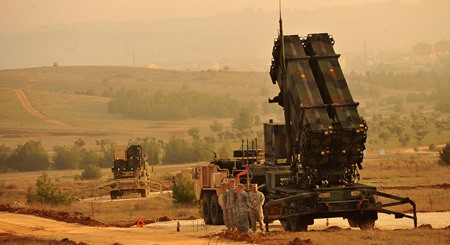
???????????????????U.S. Service members stand by a Patriot missile battery in Gaziantep, Turkey, Feb. 4, 2013, during a visit from U.S. Deputy Secretary of Defense Ashton B. Carter, not shown. U.S. and NATO Patriot missile batteries and personnel deployed to Turkey in support of NATO’s commitment to defending Turkey’s security during a period of regional instability. (DoD photo by Glenn Fawcett)

Unlike in Syria . . . in Iraq the US relates to the official government, mistakenly, as an ally.  This is leading to a potentially disastrous situation  whereby US air power is currently partnering with Iran-supported Shia militias against the Islamic State.

The most powerful of these militias have a presence in the government of Iraq. But they do not act under the orders of the elected Baghdad government, but rather in coordination with their sponsors in the Qods Force of the Iranian Revolutionary Guards Corps.

The Kurds, because of the existence among them of a secular, pro-western nationalist politics with real popular appeal, have unsurprisingly emerged as the only reliable partner.    On both the Shia and the Sunni sides, the strongest and prevailing forces are anti-western.

This reality is denied both by advocates for rapprochement with Iran, and by wishful-thinking supporters of the Syrian rebellion.  But it remains so.

*****************

Recently,  I attempted to undertake a reporting trip into the Kurdish Kobani enclave in northern Syria.  It would not have been my first visit, neither to Syria nor to Kobani.  For the first time, however, I found myself unable to enter.  Instead, I spent a frustrating but, as it turns out, instructive four days waiting in the border town of Suruc in south-east Turkey before running out of time and going home.

The episode was instructive because of what it indicated regarding the extent to which Kurdish control in the enclaves established in mid 2012 is now a fact acknowledged by all neighboring players, including the enemies of the Kurds.  This in itself has larger lessons regarding US and western policy in Syria and Iraq.

But I am getting ahead of myself.  First, let me complete the account of the episode on the border.    My intention had been to enter Kobani ‘illegally’ with the help of the Kurdish YPG and local smugglers.  This sounds more exciting than it is.    I have entered Syria in a similar way half a dozen times over the last two years, to the extent that it has become a not very pleasant but mundane procedure. This time, however, something was different.  I was placed in a local center with a number of other westerners waiting to make the trip. Then, it seemed, we were forgotten.

The westerners themselves were  an interesting bunch, whose varied presence was an indication of the curious pattern by which the Syrian Kurdish cause has entered public awareness in the west.

There was a group of European radical leftists, mainly Italians, who had come after being inspired by stories of the ‘Rojava revolution.’  A little noted element of the control by the Syrian franchise of the PKK of de facto sovereign areas of Syria has been the interest that this has generated in the circles of the western radical left.  These circles are ever on the lookout for something which allows their politics to encounter reality, in a way that does not bring immediate and obvious disaster.  As of now, ‘Rojava,’ given the leftist credentials of the PKK, is playing this role.  So the Europeans in question  wanted to ‘contribute’ to what they called the ‘revolution.’

Unfortunately, their preferred mode of support was leading to a situation of complete mutual bewilderment between themselves and the local Kurds.   Offered military training by their hosts, the radical leftists demurred.  They would not hold a gun for Rojava before they had seen it and been persuaded that it did indeed represent the peoples’ revolution that they hoped for.

Instead, they had a plan for the rebuilding of Kobani along sustainable and environmentally friendly lines, using natural materials  In addition, the health crisis and shortage of medicines in the devastated enclave led the radicals to believe that this might offer an appropriate context for popularizing various items of alternative and naturopathic medicine about which they themselves were enthusiastic.  (I’m not making any of this up).

All this had elicited the predictable reaction from the Kurds, who were trying to manage a humanitarian disaster and a determined attempt by murderous jihadis to destroy  them.  ‘Perhaps you could do the military training first and then we could talk about the other stuff?’ suggested Fawzia, the nice and helpful representative of the PYD who was responsible for us.  This led to further impassioned and theatrical responses from the Italians.

Apart from this crowd, there was a seasoned Chilean war reporter who looked on the leftists with impatience.  He was looking to get down to the frontlines south of Kobani, where the YPG was trying to cut the road from Raqqa to Aleppo at an important point close to the Euphrates.

Also, there was a polite and friendly lone American, a Baptist Christian, who had come to volunteer his services to the YPG.  That was us.

But as the days passed, it became clear that none of us appeared to be getting anywhere near Kobani any time soon.

The reasons given for the delay were plentiful, and unconvincing.  ‘It is the weather,’ Fawzia would say vaguely, ‘too much mud.’  But the presence of mud on the border in February was hardly a new development, so this couldn’t be the reason.

Finally, frustrated at the lack of information, I called a PKK friend based in Europe and asked for his help in finding out why we weren’t  moving.  He got back to me a little later.  ‘It seems the Turkish army is all over the border, more than usual. That’s the reason,’ he told me.

This was more plausible, if disappointing.  After four days on the border, I was out of time and set off back for Gaziantep and then home.  The Italians went to Diyarbakir to take part in a demonstration.  The Chilean and the American volunteer stayed and waited.

When I got back to Jerusalem, all rapidly became clear.  News reports were coming in about a large operation conducted by the Turkish army through Kobani and into Syria.  The operation involved the evacuation of the Turkish garrison at the tomb of Suleiman Shah, south of the enclave.  The American volunteer sent me a picture of the Turkish tanks on tank transporters driving though Suruc at the conclusion of the operation.

This operation was astonishing on a number of levels.

Despite stern Turkish denials, it could only have been carried out on the basis of full cooperation between the Turkish armed forces and the Kurdish fighters of the YPG in Kobani.  Obviously, any unauthorized entry of Turkish troops into the Kurdish canton would have meant an armed battle.

During the fight for Kobani last year, the Turkish government was very clearly quite content for the enclave to fall.  The Turkish army waited on the border, as the prospect of a generalized slaughter of the Kurds in Kobani came close to realization.

But of course, the slaughter didn’t happen.  In the end, the partnering of US air power with the competent and determined forces of the YPG on the ground delivered the first real defeat to the forces of the Islamic State in Syria.

This effective partnering has continued, and has now become the main military element in northern Syria in the battle against IS.

The combination of the YPG and the USAF is now nudging up to a second strategic achievement against the jihadis – namely, the cutting of the road from Tel Hamis to the town of al-Houl on the Iraqi border.   This road forms one of the main transport arteries linking the Islamic State’s conquests in Iraq to its heartland in the Syrian province of Raqqa.  If the links are cut, the prospect opens for the splitting of the Islamic State into a series of dis-connected enclaves.

The YPG-US partnership is particularly noteworthy, given that the YPG is neither more nor less than the Syrian representative of the PKK.  The latter, meanwhile, is a veteran presence on the US and EU lists of terror organizations.  Despite a faltering peace process, the PKK remains in conflict with Turkey, a member of NATO.

But the reality of the Kurdish-US alliance in northern Syria has clearly now been accepted by the Turks as an unarguable fait accompli, to the extent that they are now evidently willing to work together with the armed Syrian Kurds, where their interests require it.

It is an astonishing turnabout in the fortunes of the Kurds of Syria, who before 2011 constituted one of the region’s most brutally oppressed, and most forgotten minority populations.

This raises the question as to why this reversal of fortune has taken place.

Why is the YPG the chosen partner of the Americans in northern Syria, just as the Kurdish Pesh Merga further east is one of the preferred partners on the ground in Iraq?

The answer to this is clear, but not encouraging.  It is because in both countries, the only reliable, pro-western and militarily effective element on the ground is that of the Kurds.

Consider:  in northern Syria, other than the forces of the Islamic State, there are three other elements of real military and political import.  These are the forces of the Assad regime, the al-Qaeda affiliated Jabhat al-Nusra and the YPG.

In addition, there are a bewildering variety of disparate rebel battalions, with loyalties ranging from Salafi Islamism to Muslim Brotherhood style Islamism, to non-political opposition to the Assad regime.  Some of these groups operate independently.  Others are gathered in local alliances such as the Aleppo based Jabhat al-Shamiya (Levant Front), or the Syria-wide Islamic Front, which unites Salafi factions.

Despite the reported existence of a US staffed military operations room in Turkey, the latter two movements are either too weak, or too politically suspect (because of their Islamist nature), to form a potential partner for the US in northern Syria.

Nusra is for obvious reasons not a potential partner for the US in the fight against the Islamic State.  And the US continues to hold to its stated  goal that Bashar Assad should step down.  So the prospect of an overt alliance between the regime and the US against the Islamic State is not on the cards (despite the de facto American alliance with Assad’s  Iran-supported Shia Islamist allies in Iraq).

This leaves the Kurds, and only the Kurds, to work with.  And the un-stated alliance is sufficiently tight for it to begin to have effects also on Turkish-Kurdish relations in Syria, as seen in the Suleiman Shah operation.

But what are the broader implications of this absence of any other coherent partner on the ground?

The stark clarity of the northern Syria situation is replicated in all essentials in Iraq, though a more determined attempt by the US to deny this reality is under way in that country.

In Iraq, there is a clear and stated enemy of the US (the Islamic State), a clear and stated Kurdish ally of the west (the Kurdish Regional Government and its Pesh Merga) and an Iran-supported government which controls the capital and part of the territory of the country.

Unlike in Syria, however, in Iraq the US relates to the official government, mistakenly, as an ally.  This is leading to a potentially disastrous situation  whereby US air power is currently partnering with Iran-supported Shia militias against the Islamic State.

The most powerful of these militias have a presence in the government of Iraq. But they do not act under the orders of the elected Baghdad government, but rather in coordination with their sponsors in the Qods Force of the Iranian Revolutionary Guards Corps.

It is possible that the current partnering with Shia Islamist forces in Iraq is the result of a general US attempt now under way to achieve a historic rapprochement with Iran, as suggested by Michael Doran in a recent essay.  Or it may be that this reality has emerged as a result of poor analysis of the realities of the Levant and Iraq, resulting in a confused and flailing policy.  But either way, the result is an astonishing mess.

In northern Syria, the obvious absence of any partners other than the Kurds has produced a momentary tactical clarity.  But as the larger example of Iraq shows, this clarity is buried in a much larger strategic confusion.

This confusion, at root, derives from a failure to grasp what is taking place in Syria and in Iraq.

In both countries, the removal or weakening of powerful dictatorships has resulted in the emergence of conflict based on older, sub-state ethnic and sectarian identities.  The strength and persistence of these identities is testimony to the profound failure of the states of Syria and Iraq to develop anything resembling a sustainable national identity.  In both Syria and Iraq, the resultant conflict is essentially three-sided.  Sunni Arabs, Shia/Alawi Arabs and Kurds are fighting over the ruins of the state.

Because of the lamentable nature of Arab politics at the present time, the form that both Arab sides are taking is that of political Islam.   On the Shia side, the powerful Iranian structures dedicated to the creation and sponsorship of proxy movements are closely engaged with the clients in both countries (and in neighboring Lebanon.)

On the Sunni Arab side, a bewildering tangle of support from different regional and western states to various militias has emerged.  But two main formations may be discerned. These are the Islamic State, which has no overt state sponsor, and Jabhat al-Nusra, which has close links to Qatar.

In southern Syria, a western attempt to maintain armed forces linked to conservative and western-aligned Arab states (Jordan, Saudi Arabia) has proved somewhat more successful because of the close physical proximity of Jordan and the differing tribal and clan structures in this area when compared with the north.  Even here, however, Nusra is a powerful presence, and Islamic State itself recently appeared in the south Damascus area.

The Kurds, because of the existence among them of a secular, pro-western nationalist politics with real popular appeal, have unsurprisingly emerged as the only reliable partner.    On both the Shia and the Sunni sides, the strongest and prevailing forces are anti-western.

This reality is denied  both by advocates for rapprochement with Iran, and by wishful-thinking supporters of the Syrian rebellion.  But it remains so.  What are its implications for western policy?

Firstly, if the goal is to degrade the Islamic State, reduce it, split it, impoverish it, this can probably be achieved through the alliance of US air power and Kurdish ground forces.  But if the desire, genuinely, is to destroy the Islamic State, this can only be achieved through the employment of western boots on the ground.  This is the choice which is presented by reality.

Secondly, the desire to avoid this choice is leading to the disastrous partnering with Iraqi Shia forces loyal to Iran.  The winner from all this will be, unsurprisingly,  Iran. Neither Teheran nor its Shia militias are the moral superiors to Islamic State. The partnering with them is absurd both from a political and an ethical point of view.

Thirdly, the determination to maintain the territorial integrity of ‘Syria’ and ‘Iraq’ is one of the midwives of the current confusion.  Were it to be acknowledged that Humpty cannot be put back together again, it would then be possible to accurately ascertain which local players the west can partner with, and which it can not.

As of now, the determination to consider these areas as coherent states is leading to absurdities including the failure by the US to directly arm the pro-US Pesh Merga because the pro-Iranians in Baghdad object to this, the failure to revive relations with and directly supply Iraqi Sunni tribal elements in IS controlled areas for the same reason,  and the insistence on relating to all forces ostensibly acting on behalf of Baghdad as legitimate.

Ultimately, the mess in the former Syria and Iraq derives from a very western form of wishful thinking that is common to various sides of the debate in the west.  This is the refusal to accept that political Islam, of both Shia and Sunni varieties, has an unparalleled power of political mobilization among Arab populations in the Middle East at the present time, and that political Islam is a genuinely anti-western force, with genuinely murderous intentions.

For as long as that stark reality is denied, western policy will resemble our Italian leftist friends on the border, baffled and bewildered as they go about proposing ideas and notions utterly alien to and irrelevant to the local situation.

The reality of this situation means that the available partners for the west are minority nationalist projects  such as that of the Kurds (or the Jews,) and traditional, non-ideological conservative elites – such as the Egyptian military, the Hashemite monarchs, and in a more partial and problematic way, the Gulf monarchs.  Attempts to move beyond this limited but considerable array of potential allies will result in the strengthening of destructive, anti-western Islamist forces in the region, of either Sunni or Shia coloration.

As for the Syrian Kurds, they deserve their partnership with US air power, and the greater security it is bringing them.

The American Baptist volunteer, to conclude the story, made it across the border and is now training with the YPG.  He, at least, has a clear sense of who is who in the Middle East.  Hopefully, this sense will eventually percolate up to the policymaking community too.
Obama’s Unraveling Foreign Policy

March 20, 2015

Obama’s Unraveling Foreign Policy, Front Page Magazine, March 20, 2015

Obama-facepalm-485x350-450x325

Secretary of State John Kerry has long been an admirer of Bashar Assad. He absurdly characterized Assad as “a man who wants change” and advocated the return of Israel’s strategic Golan Heights to the Syrian dictator. Of course, had Israel heeded Kerry’s advice, ISIS, Hezbollah or Iran or perhaps all three would today be swimming in Israel’s Sea of Galilee.  In February 2009, in a sickening display of corrupt morals or lack of scruples, or perhaps both, Kerry was photographed having an intimate dinner with Assad and his wife. In 2011, the year that Assad commenced genocide against his people, he described the autocrat as a “very generous” man.

Kerry hasn’t lost a step since that time. His assessment of regional threats continues to be marred by poor judgment and delusion. On Face the Nation Kerry stated that “we have to negotiate with [Assad].” His State Department quickly backpedaled and tried to clean up the mess by issuing a nonsensical clarification but the very fact that such a statement would be uttered speaks volumes of Kerry’s abject lack of understanding. Imagine if a leader of the Allied command had issued a proclamation of willingness to negotiate with Hitler during World War II. Such a scenario of course would have been unthinkable but in the Obama White House, appeasement and vacillation rule the day.

If that wasn’t bad enough, Kerry astounded analysts when he announced that he had “great respect – great respect – for the religious importance of a fatwa.” The alleged fatwa that he was referencing was purportedly issued by Iran’s “Supreme Leader,” Ayatollah Khamenei, opposing acquisition of nuclear weapons. Kerry has now officially incorporated Islamic fatwas into US foreign policy and is relying on the edicts of a medieval mullah as a cornerstone of his ongoing talks with the Islamic Republic.

Moreover, in an effort to appease the mullahs, the Director of National Intelligence, James Clapper, recently issued a report to the Senate which removed Iran and Hezbollah from its list of terrorism threats. Iran is the world’s premier state sponsor of terrorism and employs proxy militias such as Hezbollah to foment regional instability and expand its hegemony. It has either directly or indirectly through its proxies, committed acts of terrorism on five continents. Yet the report is inexplicably devoid of such references. The only logical conclusion that one can draw is that the administration fears alienating Iran during the nuclear negotiations or alternatively, sees Iran as a positive regional force and a potential ally. Either conclusion is frighteningly surreal and demonstrates with utmost clarity how far removed from reality this administration has become.

But while coddling the mullahs, the administration has been busy at work trying to undermine the region’s only democratic leader. A number of high-level Obama campaign operatives worked relentlessly with a left-wing organization called One Voice and its left-wing Israeli affiliate V-15, to unseat Prime Minister Benjamin Netanyahu. One Voice was also the recipient of a State Department grant of $350,000. Though One Voice and the State Department denied that any money was channeled into the campaign, a US Senate panel has commenced an investigation into possible links between the State Department and efforts to meddle in an overseas election campaign of a long-time ally.

Clearly, One Voice is nervous. Shortly after lawmakers began questioning One Voice’s use of State Department funds, the nonprofit organization filed for a new IRS status that would enable it to engage in political activism. Its current status precludes such activity. It would indeed be interesting to see how quickly the IRS moves to grant One Voice’s application given the way the government agency dragged its heels on 501c3 exemptions for groups perceived to be right-wing or pro-Israel. My guess is that the IRS will move rather quickly on this one.

Despite Obama’s best efforts to publicly disparage Netanyahu – who among us can forget “chickensh*tgate” – and the State Department’s covert meddling campaign, Netanyahu secured a clear and decisive victory over his left-wing rivals. Israeli voters, who overwhelmingly distrust Obama, did not take kindly to Obama’s interference and the voting outcome reflected that.

Irrespective of Obama’s personal animus toward Israel’s democratically elected leader, the Israeli-US alliance transcends personality differences and endures because of shared moral values and strategic interests. That used to be the conventional wisdom before Obama’s ascendancy but the president has done all that is within his power to translate his loathing for Netanyahu to wrecking relations with the Jewish State. During Operation Protective Edge, while Hamas was hurling rockets at Israeli civilian population centers, Obama held up shipments of Hellfire missiles to Israel. His Secretary of State in the meantime, was busy adopting the talking points of Israel’s sworn enemies trying to force the Israelis to accept a ceasefire arrangement – unanimously rejected by the Israeli cabinet – that made no mention of Israel’s security concerns.

But the Mideast is not the only place where Obama has fouled things up. In 1994 the United States (along with Great Britain and the Russian Federation) signed a security agreement with Ukraine whereby the signatories would guarantee Ukraine’s territorial sovereignty and Ukraine would in exchange, relinquish its arsenal of nuclear weapons, relics of the Cold War.

The Budapest Memorandum on Security Assurances, as the memorandum of understanding came to be known, proved to be as worthless as the paper it was written on. Russia’s land grab in Crimea as well as its territorial infringements in eastern Ukraine and Obama’s feckless response to this naked aggression has caused great harm to American credibility. The United States still refuses to supply the poorly equipped Ukrainian army with weapons sorely needed to combat a Russian-backed insurgency.

The lack of seriousness in which the administration regards the dire situation in eastern Ukraine was amply demonstrated by National Security Advisor Susan Rice. Appearing on the Charlie Rose show, Rice was asked about military setbacks experienced by Ukrainian forces in the recent fighting. Her response? Uncontrollable laughter as though she was some vapid, giggling high school teen. It was an embarrassing display, even for an Obama official.

We are currently witnessing the unraveling of a pusillanimous American foreign policy marked by vacillation, indecision and naiveté where dictators are coddled and allies are undermined; where sound decisions based on geo-political dictates are substituted by fatwas and other bizarre religious edicts and where discussion on serious foreign policy issues is addressed with laughter and giggles. The Obama administration has substantially undermined the credibility of the United States among friends and enemies alike. The next administration, Democrat or Republican, will be forced to pick up the shattered pieces of a broken, dysfunctional and directionless foreign policy, the sad but natural result of eight years of Obama.

Iran-Syria-North Korea Nuclear Nexus

January 28, 2015

Iran-Syria-North Korea Nuclear Nexus, Front Page Magazine, January 28, 2015

Hassan

As Iranian and American chief diplomats continue to meet to find ways to speed up nuclear negotiations and strike a final nuclear deal that would lead to the removal of all international sanctions on the ruling clerics, the Obama administration persists in ignoring the recent revelations about the Islamic Republic and its covert operations in the region.

A new Western intelligence assessment points to efforts by the Syrian government to renew its operations in an underground and clandestine nuclear facility near Qusair, close to the border of Lebanon, in order to produce nuclear weapons. Citing the Western intelligence assessment, the German weekly Der Spiegel pointed out that the reconstruction of the nuclear facility is being conducted with the assistance of the Islamic Republic, North Korea, and Hezbollah.

The intelligence report indicates that dialogue between Ibrahim Othman, head of the Syrian Atomic Energy Commission of Iranian, and North Korean and Hezbollah affiliates were “intercepted.” In addition, according Abu Muhammad al-Bitar, the Free Syrian Army has also noticed the “unprecedented” presence of Iranian and Hezbollah security members in the town of Qusair on the suburbs of Homs.

If Iran is engaged in such operations assisting Syrian President Bashar al Assad, it is breaching the protocols of the Non-Proliferation Treaty (NPT), as well as posing a great threat to security in the region.

If, even before obtaining nuclear weapons, the ruling clerics of Iran are assisting their allies to become nuclear states, how can we trust the Islamic Republic in nuclear negotiations and how can one rely on their claim that they are not seeking to build a nuclear bomb?

Iran-Syria and North Korean-Syria military and nuclear cooperation has been going on for a long time. When it comes to the issues of ballistic missiles, Syria has previously cooperated with both Iran and North Korea.

Syria possess approximately 50 tons of uranium which could be adequate enough to create 5 nuclear bombs. For developing nuclear weapons either highly enriched uranium or an adequate amount of plutonium is required.

Some might make the argument that Syria developed the uranium by itself without the assistance of other countries or other non-state actors. Nevertheless, technically, pragmatically and realistically speaking, Syria does not possess the capability of developing an estimated 50 tons of natural uranium. This suggests that the role of other states and non-state actors have definitely played a significant role. Some of the only allies that the Syrian government has still kept are Iran, North Korea and Hezbollah.

It is crucial to point out that, without a doubt, becoming a nuclear state for the Syrian and Iranian government would be a formidable tool in to suppress opposition, maintain power, and deter foreign intervention in case of crimes against humanity.

There are two major nuclear site in Syria. The first one is the Al Kibar reactor in the northeast of the city of Deir Ezzour and the second one is Marj Sultan in the outskirt of Damascus where the fuel is reportedly stored.

News with respects to the Syrian government renewing its nuclear program were previously reported in 2013. There had been reports that some activities were being carried out at an alleged Syrian nuclear facility close to an eastern suburbs of Damascus, Marj Sultan.

The International Atomic Energy Agency (IAEA) reported previously that Damascus was building a nuclear reactor in Deir Ezzour. Reportedly tons of enriched uranium in Damascus are being protected by Iran’s Revolutionary Guard Corps and Hezbollah.

According to Der Spiegel, “Syria’s dictator has not given up his dream of an atomic weapon and has apparently built a new nuclear facility at a secret location…..It is an extremely unsettling piece of news.”

In addition to the aforementioned concerns about the undeclared Syrian nuclear site and nuclear proliferation, one of the crucial issues is that the nuclear material might fall in the hands of multiple other players and Islamist groups. In other words, if these nuclear sites are seized by some radical groups or Al Qaeda-linked affiliates, they might be capable of utilizing the highly enriched uranium and produce nuclear weapons.

Iran’s other indisputable and multi-layered activities and engagements in Syria — including the military, financial, intelligence, and advisory assistance to the Syrian government which have further radicalized and militarized the ongoing Syrian war — persist. In addition, the recent intelligence report and satellite images of secretly renewing nuclear activities with the assistance of the Iranian and North Korean governments poses a grave threat to stability and security in the region. Unfortunately, despite the seriousness of this issue, the Obama administration continues to ignore these issues and persists on trusting the Islamic Republic in the nuclear negotiations.

Exclusive: Obama Cuts Funds for the Syrian Rebels He Claims to Support

January 27, 2015

Exclusive: Obama Cuts Funds for the Syrian Rebels He Claims to Support, Daily Beast, January 27, 2015

1422366030311.cachedFadi al-Halabi/AFP/Getty

LOST CAUSE?

Even the favored secular militias groomed to fight ISIS have seen their funding cut in half.

GAZIANTEP, Turkey — In the past several months many of the Syrian rebel groups previously favored by the CIA have had their money and supplies cut off or substantially reduced, even as President Obama touted the strategic importance of American support for the rebels in his State of the Union address.

The once-favored fighters are operating under a pall of confusion. In some cases, they were not even informed that money would stop flowing. In others, aid was reduced due to poor battlefield performance, compounding already miserable morale on the ground.

From afar, the U.S.-approved and partially American-armed Syrian “opposition” seems to be a single large, if rather amorphous, organization. But in fact it’s a collection of “brigades” of varying sizes and potentially shifting loyalties which have grown up around local leaders, or, if you will, local warlords. And while Washington talks about the Syrian “opposition” in general terms, the critical question for the fighters in the field and those supporting them is, “opposition to whom?” To Syrian President Assad? To the so-called Islamic State, widely known as ISIS or ISIL? To the al Qaeda affiliate, Jabhat al Nusra?

That lack of clarity is crippling the whole effort, not least because of profound suspicions among rebel groups that Washington is ready to cut some sort of deal with Assad in the short or medium term if, indeed, it has not done so already. For Washington, the concern is that the forces it supports are ineffectual, or corrupt, or will defect to ISIS or Nusra—or all of the above.

Republican lawmakers in D.C. are at their boiling point over the Obama administration’s anti-ISIS strategy, whether it is a failure to establish a no-fly zone in Syria, or unreliability with the issue of aid, or the Pentagon’s promised train and equip plan for the Syrian rebels.

“This strategy makes Pickett’s Charge appear well thought out,” said Sen. Lindsey Graham of South Carolina, referring to the poorly-planned and futile Confederate assault at Gettysburg. “We’re about to train people for certain death.”

In late October, al Qaeda’s Jabhat al Nusra routed American-backed militias in the northwest Syrian province of Idlib.

As a direct result, four of the 16 U.S.-approved brigades operating in the northern part of the country had their funding cut off and have been dropped from the list of “ratified” militias, say a State Department official and opposition sources. Since December, the remaining 12 brigades in the region have seen shortfalls or cuts in promised American assistance.

Syrian rebel sources who spoke on condition of anonymity say the 7thDivision, which is affiliated with the Syria Revolutionaries Front and aligned to the Free Syrian Army, has not received salaries from the CIA in months, although the State Department has maintained food shipments to the unit.

The secular Harakat al-Hazm, the most favored of the U.S.-backed brigades and one of the very few to be supplied with TOW anti-tank missiles, has seen a severe cutback in the monthly subsidy for its nearly 4,000 fighters. It is now receiving roughly 50 percent of the salaries it was receiving before. Weapon shipments arrived recently but commanders are nervous about whether future ones will come through. And the Farouq Brigade, a militia formed originally by moderate Islamist fighters based in the city of Homs, is getting no money for salaries at the moment.

CIA officials tell rebel commanders that unspecified “other funders” have ordered the cuts, or that Langley just doesn’t have the resources any longer. “What are the fighters meant to do?” complains one rebel commander. “They have families to feed.” Another says, “The idea that they don’t have the money is insulting. I don’t believe this—it is a political decision.”

Syrian rebel groups and their Washington, D.C. allies argue that CIA funding cuts —explained and unexplained—create relative advantages for extremist groups like al Nusra and ISIS, even as the president heralds the rebels as America’s on-the-ground-partners in the campaign to defeat the self-proclaimed Islamic State.

“It’s not just that the administration is failing to deliver on committed resources, it’s that they aren’t even communicating with formerly affiliated battalions regarding the cutoff,” says Evan Barrett, a political advisor to the Coalition for a Democratic Syria, a Syrian-American opposition umbrella group. “This puts our former allies in an incredibly vulnerable position, and ensures that groups like al Nusra will be able to take advantage of their sudden vulnerability in the field.”

The Obama administration says publicly that its support of moderate rebel brigades is not waning: the State Department continues to dispense non-lethal aid, the Pentagon supplies weapons, and the CIA pays salaries to brigades affiliated with the umbrella organization known as the Free Syrian Army. A CIA spokesman declined to comment for this story.

Privately, U.S. officials concede there have been funding changes. But American intelligence sources insist this is not a reflection of any shift in CIA strategy. They talk about “individual case-by-case shut offs” that are the consequences of brigades collapsing or failing to perform. And these sources dispute suggestions there’s an overall decrease in CIA subsidies, saying they are not giving up on the Syrian rebels—even though the Syrian rebels in the north of the country in the vicinity of the Turkish border increasingly believe this to be true. (Those in the south, near the Jordanian border and Damascus, may fare better.)

A State Department official told The Daily Beast that “the CIA has more money now than before and the State Department pie has not shrunk,” but confirms there has been some cutting off and cutting down. The official cited the “poor performance” of rebel brigades in Idlib last October as a primary reason.

When they were up against al Nusra, this official said, “they didn’t fight hard enough.” Several moderate brigades failed to come to the assistance of the Syria Revolutionaries Front, in particular, because they disapproved of its leader, who has been widely accused of corruption. The ease with which al Nusra was able to pull off its offensive angered U.S. officials—as did American-supplied equipment falling into jihadist hands.

That anger was compounded when the members of some U.S.-backed rebel groups actually defected to al Nusra during the offensive. One senior U.S. official admitted that some brigades have been “getting too close for our liking to al Nusra or other extremists.”

On Christmas Day armed groups formed an alliance for the defense of besieged rebel-held areas in Aleppo, where Assad had launched a major offensive to encircle them. Al-Jabha al-Shamiyya (Shamiyya Front), as the operational alliance is called, includes not only hardline Salafist factions from the groups known as the Islamic Front but more moderate brigades like the Muslim-Brotherhood-linked Mujahideen Army and Harakat Nour al-Din al-Zenki, which also has received TOW anti-tank missiles from Washington in the past.

Although al Nusra was not invited to join formally, it coordinates with the Shamiyya Front via the so-called Aleppo Operations Room, a joint headquarters for armed factions. It’s an arrangement that Washington does not like at all.

Aleppo-based rebels say they have no choice but to work with al Nusra and the Islamic-Front-aligned factions that are among the strongest armed groups in the war-torn city. Without them Assad’s forces would overwhelm the rebels.

“What do the Americans expect us to do?” asks a commander in the operations room. “Al Nusra is popular here. It is a perilous time for us—Assad is pushing hard.”

Syrian rebel sources who spoke on condition of anonymity say the 7th Division, which is affiliated with the Syria Revolutionaries Front and aligned to the Free Syrian Army, has not received salaries from the CIA in months, although the State Department has maintained food shipments to the unit.

The secular Harakat al-Hazm, the most favored of the U.S.-backed brigades and one of the very few to be supplied with TOW anti-tank missiles, has seen a severe cutback in the monthly subsidy for its nearly 4,000 fighters. It is now receiving roughly 50 percent of the salaries it was receiving before. Weapon shipments arrived recently but commanders are nervous about whether future ones will come through. And the Farouq Brigade, a militia formed originally by moderate Islamist fighters based in the city of Homs, is getting no money for salaries at the moment.

CIA officials tell rebel commanders that unspecified “other funders” have ordered the cuts, or that Langley just doesn’t have the resources any longer. “What are the fighters meant to do?” complains one rebel commander. “They have families to feed.” Another says, “The idea that they don’t have the money is insulting. I don’t believe this—it is a political decision.

For the Syrian rebels, uncertainties over funding changes by the CIA add doubt to already high skepticism over American policy toward the war in Syria. That skyrocketed when the Obama administration failed to enforce in 2013 its “red line” against Assad’s alleged use of chemical weapons, and the skepticism has merely grown since.

On the ground, the combatants say they suffer from the Obama administration’s inconsistency and argue that all too often they are being left out to dry, like some Syrian version of the Bay of Pigs, but much, much bloodier.

In the coffee shops of the Turkish border town Gaziantep last week, Syrians gathered on the safer side of the frontier listened incredulously as State Department spokesperson Jen Psaki insisted, “We maintain our belief that al Assad has lost all legitimacy and must go.” It was the first such inflexible anti-Assad statement for weeks from a senior U.S. official.

But that wasn’t what they’d heard from President Obama in his State of the Union address a few days before. Gone was the rhetoric of 2013 when he said he had “no doubt that the Assad regime will soon discover that the forces of change cannot be reversed, and that human dignity cannot be denied.” Instead, last Tuesday Obama spoke about the administration’s so-called train-and-equip plan to build a force that will target ISIS, and he made vague noises about helping Syria’s moderate opposition.

Those moderates are precisely the men and women on the ground who feel that bit by bit they are being abandoned.

Already, nearly four months after Secretary of State John Kerry announced the plan to train and equip Free Syrian Army units, Kurdish Peshmerga, and Iraqi Shia militiamen as anti-ISIS forces, the project appears to be facing major hurdles.

U.S. Senators emerged grim-faced last week from a classified briefing on the train-and-equip mission, with some of them predicting disaster from a Pentagon program that will train too few fighters and too slowly to make a difference.

At its best, Republican senators argue, it’s not going to work. At its worst, it will lead to the mass slaughter of the trained rebels.

“This strategy makes Pickett’s Charge appear well thought out,” said Sen. Lindsey Graham of South Carolina, referring to the brave but futile Confederate assault at Gettysburg. “We’re about to train people for certain death.”

The number of recruits required for a “strategic change in momentum is years away,” said Graham. “The concept of training an army that will be subject to slaughter by two enemies, not one, is militarily unsound,” and “if the first recruits you train get wiped out, it’s going to make it hard to recruit.”

Sen. Jeanne Shaheen, a Democrat who emerged from the same classified briefing, was tight-lipped: “I think we have a lot to do, and a lot of questions to answer.”

In Syria, few rebel fighters want to join a force focused only on ISIS. They argue that Assad is responsible for considerably more deaths among them and their extended families than ISIS, which is able to draw defectors from their ranks because it pays much higher salaries to its fighters and because it is able to exploit distrust of American intentions towards the Syrian revolution.

U.S. officials now acknowledge difficulties recruiting from insurgent ranks, conceding it is a serious challenge finding enough recruits willing to put off fighting the Assad regime.

So American officials recruiting for the train and equip mission are now hoping to fish in the pool of rebel fighters from eastern Syria who disbanded, quit the war and fled to Turkey when ISIS established control of the cities of Raqqa and Deir ez-Zor. The U.S. officials say the anti-ISIS force in Syria will have to be smaller than envisaged initially, but they are hoping early victories on the ground will convince more people to enlist.