Posted tagged ‘Assad’

Putin Plays Mideast Chess as Obama Looks On

October 1, 2015

Putin Plays Mideast Chess as Obama Looks On, American ThinkerJonathan F. Keiler, October 1, 2015

(Unfortunately, Obama was “in the game” which led to the nuke “deal” with Iran. There, he was not incompetent; he got what he sought. — DM)

Obama has made a lot of foreign policy mistakes in office, but his capitulation on the Iranian nuclear talks followed by Russia’s move into Syria is impossible to explain away as anything but a stupendous strategic fiasco.  Incompetence is too nice a word.  Obama was never even in the game.

*********************

It is sometimes said that in negotiations with foreigners, American leaders play checkers, while their wilier opponents play chess.   There is perhaps some truth to this, as American leaders sometimes chase short-term political results, a consequence of democratic governance and constantly changing leadership.  By contrast, despotic Persians are credited with inventing chess, and in modern times autocratic Russians have been its master, and so it is tempting to say of President Obama’s dealings with those two countries that the analogy holds.

But that is way too charitable.  As Vladimir Putin skillfully reasserts Russian power and influence in the Middle East with Islamic Persian Iran as a willing partner, a more apt analogy might be that while the Russians and Iranians move their chessmen, isolating and threatening opposing pieces, Obama is not even at the table, but rather childishly looking on, as he pushes diplomatic dirt around the Middle East sandbox.

For over 150 years, a primary objective of Western diplomatic and military strategy was to keep the Russians out of the Middle East and Southwest Asia.  In the 1850s, the British and French went to war in Crimea to protect the Ottomans from Russian predation and to preserve the balance of power.  Later, the so-called “Great Game” centered on similar British efforts to frustrate Russian domination of Iran and Afghanistan.  A century later, the United States took up the task, offsetting Russian influence in newly socialist Arab dictatorships by backing Israel and more traditional Arab monarchies in the Middle East, while openly and successfully opposing the Soviet incursion into Afghanistan.

Today, one can’t even say there remains any Western strategy regarding Russia.  Western Europe has mostly forfeited its military and political influence overseas to support decadent welfare states, even as it is being progressively and deliberately overwhelmed by millions of Islamist migrants.  Under Obama, who supports and admires Europe’s demise, the United States has increasingly joined in the decline.  The laughable Libyan campaign, “fought” by Europeans while the U.S. led from behind, set an example of pursuing a feckless, feel-good military campaign without regard for consequences or traditional strategic concerns.  Obama’s encouragement of the so-called Arab Spring and its Islamist provocateurs almost lost Egypt and did lose Syria, with catastrophic humanitarian and geopolitical results.

Putin is taking advantage of American weakness and inaction.  A half-century of successful American effort to keep the Russians out of the Middle East has been forfeit in a few months of breathtaking American diplomatic and military incompetence.  Obama’s capitulation in the Iran deal effectively completed the groundwork for the Russian move, Putin having carefully monitored America’s year-long and ineffectual air campaign against ISIS.  Putin now claims that Russia’s push into Syria is to redeem the campaign against ISIS with Russian troops fighting with Syria and Hezb’allah.  Embarrassed by Putin at the U.N., Obama gave up any pretense of strength, effectively welcoming the Russian “intervention” against ISIS.  Unexplained is why a large percentage of Russian anti-ISIS forces are heavily equipped with anti-aircraft weapons, something that even a flaccid NATO command cannot ignore, inasmuch as ISIS have an air force.  Those weapons are useful only against NATO or Israeli aircraft.

So lost was Obama before his meeting with Putin at the U.N. that his stated strategy for dealing with the Russian strongman was to ask him what he was doing.  From the stiff and awkward body language of the president following the meeting (a painful handshake and awkward smile) it is clear that Putin told Obama at least some of the story, whether Obama liked it or not.  Most particularly, his client Bashar Assad will remain in power with Russian backing, regardless of Obama’s view on the matter.  But likely Obama had known what he was in for, and just going through the motions.  The day before, Secretary of State of State John Kerry responded to a question about how long the U.S. could tolerate the survival of Assad, saying, “… it doesn’t have to be on day one or month one or whatever.”  Right, dude, whatever.  Between Obama and Kerry, it is now fair to assume that our much muddled and irresolute Syrian policy is “whatever,” which means we just don’t care.  We take our toys and go home.

If Obama was hoping, as he and his supporters implied, that the Iranian deal would produce a more moderate, cooperative Iran, Putin and the mullahs are doing all they can to demonstrate how wrong he was.  If he was hoping that “international pressure” and the conflict in Ukraine would moderate Putin’s aggressive strategies, he was wrong again.  And if he thinks that by quitting, he has left Putin an unwinnable game, the Russian leader aims to prove him wrong again.  And since Obama is almost always wrong when it comes to foreign policy, it’s a fool’s errand to bet against Putin.

In chess, before going for the opponent’s king, typical strategy calls for supporting one’s important pieces, while threatening and isolating opposing pieces.  The Russians and Iranians are now going about this with a vengeance, without the United States or the West making any noticeably effective counter-moves.  Russia is backing and protecting Assad and has closely allied itself with a newly empowered (thanks largely to Obama) Iran.  Meanwhile, traditional American allies in the region, Israel, Egypt, and the Arab monarchies are indeed increasingly threatened and isolated.  The stage is being set for a Russo-Iranian endgame that could prove disastrous to America’s traditional allies and the West in general.

Some of Obama’s liberal supporters dismiss such analysis as over the top, and insist that Putin’s moves have more to do with domestic politics than a long-term Middle Eastern power play.  They point out Putin’s problems at home, and the relative weakness of the Russian military.  However, relative Russian weakness means little when moving into a power vacuum created by Obama’s flight from international responsibilities and, to a large extent, reality.  And besides, this has been the basic way liberals have sought to excuse Obama whenever he is pushed around by a foreign leader (which is almost always).  Putin’s got problems, so he invades Ukraine, threatens the Baltic States, and moves into Syria.  The Chinese have problems, so they push naval vessels into American waters and fortify disputed Western Pacific archipelagos.  Korea’s got problems, Iran’s got problems, and none of their aggressive actions has anything to do with the dilettante in the White House.  It’s all about solving problems at home with international temper tantrums.

Obama has made a lot of foreign policy mistakes in office, but his capitulation on the Iranian nuclear talks followed by Russia’s move into Syria is impossible to explain away as anything but a stupendous strategic fiasco.  Incompetence is too nice a word.  Obama was never even in the game.


First US-Russian air clash builds up as Moscow orders US planes to exit Syrian air space

September 30, 2015

First US-Russian air clash builds up as Moscow orders US planes to exit Syrian air space, DEBKAfile, September 30, 2015

SU-25-30.9.15Russian warplanes head to Syria

A day after the White House said that “clarity” on Russian intentions in Syria had been achieved at the Obama-Putin summit in New York, the Russian President Vladimir Putin notched up the military tensions around Syria Wednesday, Sept. 30. A senior US official said that Russian diplomats had sent an official demarche ordering US planes to quit Syria, adding that Russian fighter jets were now flying over Syrian territory. US military sources told Fox News that US planes would not comply with the Russian demand. “There is nothing to indicate that we are changing operations over Syria,” a senior defense official said.

Earlier, Putin sought from the Russian upper house, the Federation Council, authorization for the use of military force abroad. He did not specify the country or region, but the only part of the world where Russia is currently building up its ground, air and naval forces outside the country is Syria.

A short time after the request, the Federation Council announced that it had unanimously authorized the use of Russian military force in Syria. The last time Putin sought this authorization was in early 2014 when he decided to annex the Crimean Peninsula from Ukraine. His action now contradicts his assertion to CBS on Sept. 28: “Russia will not participate in any troop operations in the territory of Syria or in any other states. Well, at least we don’t plan on it right now.”

DEBKAfile’s military sources report that Russian preparations for military action in Syria are clearly not limited to that country. They are being run by a joint coordination forward command and war room established a few days ago by Russia, Iran, Iraq and Syria in Baghdad. It is designed as the counterpart of the US Central Command-Forward-Jordan war room established north of Amman for joint US-Saudi-Qatari-Israeli-Jordanian and UAE operations in support of Syrian rebel operations against the Assad regime.

Two rival power war rooms are therefore poised at opposite ends of the Syrian arena – one representing a US-led alliance for operations against Assad, and the other a Russian-led group which is revving up to fight on his behalf.

Conspicuous in the swiftly evolving Syrian situation is the detailed advance planning which went into the Russian military buildup and partnerships, and the slow perception of what was going on, on the part of the United States and Israel.

Tuesday, US Defense Secretary Ashton Carter instructed his staff to establish a communication channel with the Kremlin to ensure the safety of US and Russian military operations and “avoid conflict in the air” between the two militaries. The Russian defense ministry shot back with a provocative stipulation that coordination with the US must go through Baghdad, an attempt to force Washington to accept that the two war rooms would henceforth communicate on equal terms.

Israel’s Defense Minister Moshe Ya’alon denied Tuesday night that Israel was coordinating its operations with the Russian army, stressing that Israel reserves the IDF’s right to freedom of action over Syria and would continue to prevent arms supplies reaching terrorist organizations such as Hizballah.

Meanwhile, six advanced Russian SU-34 strike fighter jets landed at Latakia’s Al-Assad international airport, after flying to their destination through Iraqi airspace.

The Russian military buildup is assuming far greater proportions than either imagined, far outpacing US or Israeli efforts at coordination.

Russia and Iran, the UN’s darlings

September 29, 2015

Russia and Iran, the UN’s darlings, Israel Hayom, Boaz Bismuth, September 29, 2015

The situation in the Middle East is very complicated these days, particularly when it comes to the ongoing strife in Syria. On Monday, Russian President Vladimir Putin and Iranian President Hassan Rouhani both gave speeches at the U.N. General Assembly in New York that in normal times could have been dismissed as amusing. But in the era of Islamic State, everyone is suddenly trying to appear to be righteous, including Putin and Rouhani.

Putin, for example, believes that Syria’s future must include Bashar Assad, the tyrant who is responsible for the deaths of 250,000 of his own people. As Putin said, “Only Assad is fighting against Islamic State.” Meanwhile, Rouhani declared, “No country should use terrorism to interfere in another country’s affairs.” Let us remember that these were addresses delivered to the world, rather than jokes uttered on a satire program. What a farce.

The sad reality that exists in the Middle East these days is what allowed these two leaders to make such “comical” statements. The growth of Islamic State and the failure of the U.S.-led coalition against it have given Russia and Iran a great opportunity to bolster their international status.

For the Russians, this is a chance to erase memories of their actions in Ukraine and the Crimean Peninsula. For the Iranians, this provides an opening to deflect attention away from 35 years of exporting terrorism around the globe. Russia and Iran are both fortunate that Islamic State exists.

Putin met with U.S. President Barack Obama on Monday to tell him that the purpose of Russia’s increased military presence in Syria was to fight Islamic State. He also told Obama that the rebuilding of Syria would require the rebuilding of the Assad regime.

Obama was right on Monday when, in his own address to the U.N. General Assembly, he said that Assad must have no political future in Syria. Unfortunately, there are two small things that contradict Obama’s view of the situation. First, the pre-civil war Syria no longer exists. And second, all reconstruction proposals for Syria include a transition period during which a role for Assad would be necessary. And who knows how many years this transition would take?

Obama may not want Assad in power, but in reality, an Assad regime backed by Russia and Iran is what there is in Syria. Since Obama reiterated on Monday that the U.S. cannot solve global problems by itself, perhaps he should have added how wonderful it is to have Russia and Iran to help him. This is the woeful state of our world today.

Obama’s General Assembly address was his second-last before he leaves the White House in January 2017. In Monday’s speech, he tried to outline what his legacy will be. One must give Obama credit for adhering to his outlook, even after all of the mishaps he has been personally responsible for.

Russia and Iran were the big winners in New York on Monday. Putin, who was ostracized after Russia’s annexation of Crimea last year, is now the world’s great hope in the fight against Islamic State. And Iran is already talking about a “new world order,” thanks to the nuclear deal it signed with world powers in July.

And what does this all mean for Israel? “The Zionist regime is the root of all terrorism,” Rouhani said in his speech on Monday. How hopeful!

What is the solution for all this? Who knows? Perhaps we will get the answer at the U.N. General Assembly in 2016.

Putin to Obama: Kiss my…

September 29, 2015

Putin to Obama: Kiss my… , Power LineScott Johnson, September 29, 2015

It’s a sort of PUTIN TO OBAMA moment. Cameron Joseph’s cover story is here. Like everyone else in world politics — everyone outside the White House, that is — Putin has Obama’s number.

NYDN

At the U.N., Obama refuses to see the chaotic world he has made,

September 29, 2015

At the U.N., Obama refuses to see the chaotic world he has made, BreitbartJohn Hayward, September 28, 2015

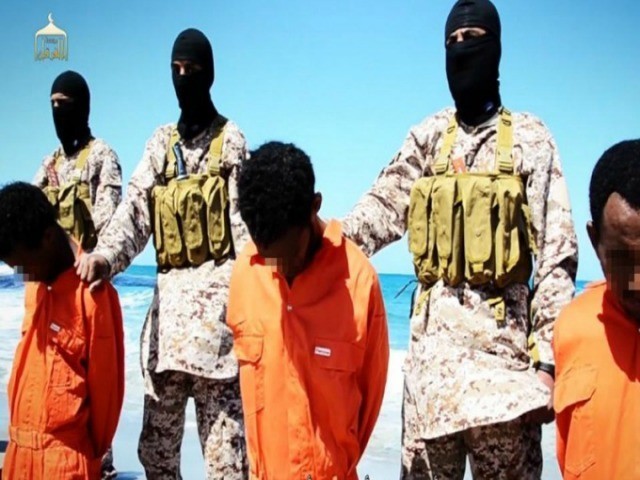
ISIS-beheading-Christians-Libya-ap-640x480

President Obama’s address to the U.N. General Assembly on Monday morning was a rambling journey through a fantasy world where his foreign policy hasn’t been an unmitigated disaster.

Perhaps the most bizarre moment came when he tried to tout his Libyan adventure as a success.

There was plenty of tough-guy posturing that intimidated absolutely no one.  The Russian and Iranian delegations were especially good at looking bored and unimpressed when he called upon them to do this-or-that because The World supposedly demanded it. Obama hasn’t figured out he’s the only leader at the U.N. eager to sacrifice his nation’s interests to please The World.

Obama made the weird decision to vaguely threaten Russia over its invasion of Ukraine by claiming that The World would not stand idly by and allow it… when that’s exactly what The World, and especially First Citizen of the World Barack Obama, has been doing.  He essentially pleaded with Iran to stop supporting terrorist proxies and pursuing its aggressive regional ambitions, and focus on their economy instead.  (Of course, in Obama’s vigorous imagination, the U.S. has been enjoying an economic boom under his stewardship, instead of an endless grinding non-recovery and limp, sporadic growth, after Obama’s spending doubled the national debt in a single presidency.)

It was bad enough that the President talked about American troops coming home from Iraq and Afghanistan as the triumphant conclusion of an effective policy, rather than the hideous blunder that allowed ISIS to create a terror state, al-Qaeda to rise from the ashes, and the Taliban to begin planning its return to power.  At the same moment Obama was speaking, the Taliban was conducting a major offensive in Afghanistan, on par with the importance of ISIS taking Mosul in Iraq.  Obama’s pitifully small “New Syrian Force” of U.S.-backed rebels just handed a good deal of its American equipment over to al-Qaeda, and no one really knows what became of the unit itself.  Their predecessors were destroyed by al-Qaeda’s Nusra Front in Syria, with less than half a dozen survivors still on the field.

When Obama boasted of the Libyan operation as the successful removal of a tyrant, jaws must have hit the floor around the room.  Libya is an unholy disaster, a wasteland of warlords fighting to keep ISIS off their turf.  It’s a key gateway for the incredible migratory tide blasting out of Africa and the Middle East and now surging across Europe.  And yet, Obama portrays it as [a] laudable example of tyrant removal… while modestly admitting that “our coalition could have, and should have, done more to fill a vacuum left behind.”

Of course he blamed everyone else in the “coalition” for the disaster in Libya. He’s Barack Obama.  The day may come when he takes responsibility for something, but today is not that day, and tomorrow isn’t looking good either.

The scary thing about Obama is that he believes so completely in the power of his own rhetoric.

He thinks he can reshape reality with his words.  When he scolds the Iranians for their “Death to America!” rhetoric by saying bloodthirsty chants don’t create jobs, he’s asking Iran to live up to the silly talking points he foisted off on the American people to cover the Iranian nuclear deal.  He’s commanding Iran to act like the enlightened, responsible nation-state he gambled the future of Israel, America, and much of the Western world on.

The Iranians, on the other hand, see no reason to knock off the “Death to America!” chants, disband their theocracy, and begin spending their days arguing about stimulus bills.  Belligerence has gotten them everything so far.  They’ve been rewarded for it… by Barack Obama.  They’ve got $150 billion in sanctions relief coming their way.  They can afford to send a few guys to sit in the U.N. General Assembly with pissy expressions on their faces while Obama rambles on about how geo-political crime does not pay.  They know for a fact it pays, quite handsomely.  The Iranians are already using their Obama loot to reinforce terror proxies like Hamas and Hezbollah, and secure Bashar Assad in power.

Ah, yes, Bashar Assad… the dictator Obama still blathers on about removing from power, even as his own diplomatic apparatus gets used to the idea Assad is not going anywhere.  The only really good part of Obama’s speech was when he spent five seconds glaring at the Syrian ambassador before launching into his denunciation of barrel bombs and chemical weapons.  But you know what?  That Syrian ambassador gets paid enough to take a few seconds of hairy eyeball from the ineffectual American president.  The Russians are smoothly replacing American influence across the Middle East, in partnership with Iran.  The new order is taking shape.  Obama isn’t going to reverse that process by telling aggressive, bare-knuckle conquerors they should be ashamed of themselves.

The other dangerous thing about this delusional President is his belief in the “judgment of history.”

He’s constantly hitting on the idea that all of the world’s villains are on the wrong side of history, and will find themselves buried in the sands of time any day now.  It’s a dodge, a way of Obama evading responsibility.  Bashar Assad is going to remerge from the Wrong Side of History in pretty good shape.  ISIS is very comfortable there, as is Iran.  Qaddafi didn’t assume room temperature because History caught up with him. Vladimir Putin has a lovely view of Crimea from the wrong side of history.  The history of Europe is being reshaped by the tramping of a million “refugee” feet.

In every example, Obama clings to the idea that he can change the world by talking and scoring debate points, while his adversaries seize territory and control the course of events.  It’s not as though Obama has some deep-seated reluctance to use deadly force – there have been a lot of deaths by drone strike since he won that Nobel Peace Prize.  What Obama lacks is commitment.  His foreign policy is all about gestures and distractions.  He cooks up half-baked plans that will blow up a terrorist here and there, so he can’t be accused of doing “nothing,” but he won’t do anything that could cost him political capital at home.  Even Libya was half-hearted and calculated for minimum risk, which is why the place went to an even deeper Hell after Qaddafi was overthrown.

Obama talks as if he’s taken action against numerous crises, but all he ever did was talk about them.  The men of action are stacking up bodies, and raising flags over conquered cities, while this President is writing speeches and trying to win applause from editorial boards.  The men of action know that Obama’s promises all have expiration dates, his vows of action always have escape clauses, and no matter how he loves to boast that he heads up the most powerful military the world has ever seen, he’s done everything he can to make it weaker.

President Obama is still clinging to a romantic vision of the “Arab Spring” as a flourishing of democracy, despite all evidence to the contrary.  He’s giving the same foreign policy speeches he gave in 2009 because he can’t bear to live in the world he made.  He talks about filling vacuums and voids… but those voids are already filled, by hard characters with plans to make the most of the extraordinary opportunity Barack Obama afforded them.

(Video of Obama’s UN address — DM):


Clearing my spindle, Syria edition

September 26, 2015

Clearing my spindle, Syria edition, Power LineScott Johnson, September 26, 2015

The withdrawal of the United States from Iraq and points elsewhere around the Middle East has created a vacuum that has been filled by forces hostile to the United States. Syria is representative. ISIS has moved into Syria from Iraq. Iran and Hezbollah have both moved into Syria to defend the Assad regime from ISIS.

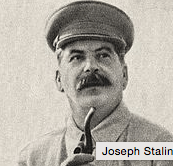
Stalin

The Obama administration has taken a sort of Stalinist tack. Obama has concentrated on building socialism in one country (i.e,, the United States) rather than protecting the national interests of the United States abroad in a difficult foreign theater, especially insofar as doing so might complicate Obama’s dreams of an entente with Iran.

Last week brought a new round of Syria related stories. At the Weekly Standard, Lee Smith noted “Obama’s Syria doctrine.” Obama disclaims responsibility even for his own pathetically failed approach:

In the wake of last week’s embarrassing revelation that only four or five U.S.-trained rebels are currently engaged in fighting the Islamic State, the White House was scrambling to deflect blame. It wasn’t Obama’s fault, said White House press secretary Josh Earnest. The president never wanted to back the rebels in the first place. His hand was forced by administration figures and Republican lawmakers who wanted to aid the rebels. It’s time, said Earnest for “our critics to fess up in this regard as well. They were wrong.”

Enter Russia. Barbara Starr & Ross Levitt report for CNN: Russian fighter jets enter Syria with transponders off”

Lucas Tomlinson & Jennifer Griffin report for FOX News “Russians, Syrians and Iranians setting up military cooperation cell in Baghdad”. Tomlinson and Griffin note:

Russian, Syrian and Iranian military commanders have set up a coordination cell in Baghdad in recent days to try to begin working with Iranian-backed Shia militias fighting the Islamic State, Fox News has learned.

Western intelligence sources say the coordination cell includes low-level Russian generals. U.S. officials say it is not clear whether the Iraqi government is involved at the moment.

Describing the arrival of Russian military personnel in Baghdad, one senior U.S. official said, “They are popping up everywhere.”

The Wall Street Journal published two important stories last week. Dion Nissenbaum & Carol Lee report: “Russians expand military presence in Syria, satellite photos show.” Jay Solomon & Sam Dagher report: “Russia, Iran seen coordinating seen coordinating of Assad regime in Syria.”

And Prime Minister Netanyahu flew to Moscow with two members of the IDF General Staff to meet with Putin about Russia’s moves in Syria. “In Moscow,” the Times of Israel reported, “presence of generals sends a message of military urgency.” President Obama, however, is taking the long view. A couple of weeks ago Obama declared Russia’s Syrian adventure to be “doomed to failure.” Obama’s judgment represents a striking case of projection.

Like it or not, Putin’s is the ‘only game in town’

September 26, 2015

Like it or not, Putin’s is the ‘only game in town’ Gulf News, Mustapha Karkouti, September 26, 2015

(Nature abhors a vacuum and Obama created one in the Middle East. Please see also, A Chinese aircraft carrier docks at Tartus to support Russian-Iranian military buildup. — DM)

With a nearly total absence of any significant US-led coalition presence in Syria, apart from slow-effective air strikes, Moscow seems to be the only dominant player in that region. As the Kremlin clearly stated, Putin’s intention is to prevent a repetition of Libya’s 2011 scenario and avoid the total collapse of Bashar Al Assad’s authority, similar to what happened following Muammar Gaddafi’s overthrow after the badly-planned intervention by Nato. Putin is simply, but clearly, saying to the West: Where you failed in Libya, I’ll do better in Syria.

[W]hatever Putin’s plans are in the long run, his mission in the country is largely seen by the majority of Syrians as a sinister effort to save Al Assad and help him consolidate his authority in Syria.

**********************

It is very rare that a Russian head of state holds top strategic talks with an Israeli prime minister in the Russian capital. This happened just recently when Vladimir Putin met Benjamin Netanyahu to discuss Syria’s latest developments. The two chiefs are not known to have had close and friendly personal relations, but they displayed those sitting side by side in the Kremlin last week. The arrival in Moscow last Monday of Netanyahu accompanied by his chief of staff and head of military intelligence, is by all means unprecedented.

The visit is significant as it is a part of tripartite diplomatic activities that involve discussions with the US as well. The American Defence Secretary Ashton Carter has recently had a long and “useful” discussion with his Russian counterpart over Syria. With the current congestion of military activities in the sky above the region by the Israelis and Americans and the rapidly increasing presence of Russian forces and hardware, there is obviously a need to liaise to avoid any unpredicted conflict, i.e. shooting down one another’s planes by mistake. But both the US and Israel’s main concern goes far beyond the technicalities. They aim mostly at finding out what exactly the Kremlin’s long term purpose in Syria is and how far Moscow is capable of effectively controlling the direction of the tragic game currently being played in this sad country.

Sitting next to Netanyahu, Putin reassuringly explained what he was trying to achieve by stating that Moscow’s main goal was “to protect the Syrian state”, or more accurately, what’s left of it. The Russian president seemed fully aware of Netanyahu’s main concern of the Iran-supported potential attacks by Hezbollah and the Syrian army across the occupied Golan Heights, when he told his visitor that neither Damascus nor the Iranian-financed Lebanese militia was “in any state to open a second front”. In others words, Putin reassured Netanyahu that Moscow was fully engaged with Tehran and Damascus on that front.

Saving Al Assad

With a nearly total absence of any significant US-led coalition presence in Syria, apart from slow-effective air strikes, Moscow seems to be the only dominant player in that region. As the Kremlin clearly stated, Putin’s intention is to prevent a repetition of Libya’s 2011 scenario and avoid the total collapse of Bashar Al Assad’s authority, similar to what happened following Muammar Gaddafi’s overthrow after the badly-planned intervention by Nato. Putin is simply, but clearly, saying to the West: Where you failed in Libya, I’ll do better in Syria.

The timing of Moscow’s build-up along the Syrian coastal area couldn’t be more perfect, particularly with western policy on the country in a state of limbo. Surely, moving dozens of combat aircraft and hundreds of troops to the aid of the encircled Syrian president must have been given the green light a while ago. This is precisely how Putin sees the situation. Under the nose of the Americans and the world community, Russian personnel and Special Forces have re-emerged in large numbers at an old air base of theirs near Al Assad’s stronghold of Latakia. Russia has always had, through the former Soviet Union, significant military presence in Syria during the long years of the Cold War and beyond.

However, whatever Putin’s plans are in the long run, his mission in the country is largely seen by the majority of Syrians as a sinister effort to save Al Assad and help him consolidate his authority in Syria.

After all, Al Assad is the man largely accused of killing thousands of Syrians during the almost five-year war in the country. It has become absolutely clear that all players in the region, including US, Israel, Turkey and Iran are adjusting to the new reality as a result of the speed and scale of Russian’s deployment. It is commonly known now that Israel was made aware of Moscow’s deployment before it began, while Iran had been informed of the move as early as the first week of August. In fact, shipments from Black Sea ports to the Syrian port of Tartous began to pass through the Bosphorus as from August 20.

The Russians had moved by last Tuesday into the coastal stretch between Latakia and Tartous 28 combat jets (12 Su24 bombers, 12 Su25 ground attack aircraft and 4 Su-30 multi-role fighters), two types of drones and 20 multi-purpose helicopters. Almost the equivalent of Al Assad’s entire air power. Pentagon officials have confirmed these deployments and said Russian drones are now fully operating where offensive air attacks could be expected very soon.

Turkey on its part, is willing to dip its hands in ‘Syria’s Cake’ as a highly Turkish informed source told me few days ago, and send troops into the country, provided it gets the green light to set up its ‘no-fly zone’ along Syria’s northern borders. In fact, discussion between Ankara and several European capitals, including Berlin, over the issue has been going on for sometimes as many European leaders consider the no-fly zone option is urgently needed method to help controlling the flow of refugees into European Union countries.

However, with Iran well entrenched behind Al Assad at an annual cost of $6-$10 billion (Dh22-36.7 billion), it is also a decisive regional power of huge influence in shaping events in shrinking Syria and beyond. Additionally, there is newcomer into the killing fields of Syria as China has just officially revealed that it is sending personnel and advisers to assess the situation. And with almost total US absence in the Levant, Russia would militarily and politically remain the most significant power to shore up Al Assad’s regime as long as it is possible.


Russian troops already engaged in battle against ISIS around Homs

September 17, 2015

Russian troops already engaged in battle against ISIS around Homs, DEBKAfile, September 17, 21015

Russia_Putin267

Contrary to the impression conveyed by Moscow that Russian troops in Syria are not engaged in combat and that none of the sophisticated arms deliveries were destined to the Syrian army, new developments belie both these claims. 

DEBKAfile’s military and intelligence sources report that on Wednesday, September 16, Russian R-166-0.5 (ultra) high-frequency signals (HF/VHF) vehicles were spotted on Highway 4, which links Homs and Aleppo. These vehicles, called “mobile war rooms” by the IDF and Western armies, were accompanied by BTR-82 troop carriers transporting Russian marines. The R-166-0.5 enables communication with forces located on battlefields as far as 1,000 kilometers away using high frequency and ultra-high frequency signals.

The communication systems are resistant to electromagnetic jamming so Russian forces operating deep inside Syria can report to their commanders at the main Russian base in Latakia or receive orders, intelligence data and even video from drones or planes.

Another feature is a cylinder on the side of the vehicle containing a folded antenna that can be raised to a height of 15 meters.

The R-166-0.5 is an integral part of Russia’s battlefield operations, so it would not be deployed unless long-distance troop movements were underway. The appearance of those vehicles in the Syrian theater provides a clear signal of Moscow’s intentions.

Our sources point out that during the past few days, fighters from the Islamic State in Iraq and the Levant (ISIS) succeeded in cutting off part of the highway between Homs and Aleppo for several hours. It marked a very dangerous development for the Syrian army and regime, because a permanent cutoff of Highway 4 would tighten the siege on Aleppo and possibly pave the way for the conquest of the second-largest city in Syria.

The movements by the armored vehicles show that the Russian troops are preparing to head into battle in order to prevent such a scenario.

Moscow has denied supplying new, sophisticated weapons to the Syrian army. However, a Syrian military source revealed Thursday, Sept. 17, that the Syrian military has recently started using new types of air and ground weapons supplied by Russia, underlining growing Russian support to Damascus that is alarming the United States and Israel. “New weapons – and new types of weapons – are being delivered,” said the source which described them as “highly accurate and effective.”  The army had started using them in recent weeks having been trained in their use in Syria in recent months. “We can say they are all types of weapons – be it air or ground,” he said.

DEBKAfile’s military sources reveal that the Russian shipments for the Syrian army include MI-28 MIL assault helicopters (NATO-coded Havoc), an all-weather aircraft, which can also serve as an anti-tank weapon against the mostly US-made tanks fielded by ISIS and Al Qaeda’s Nusra Front Syrian arm.

Our military and intelligence sources point out that Moscow has given itself room to maneuver in terms of its declared goals, telling Washington and Jerusalem during the past few days that its troops will defend their own interests if there is a need to do so. Thus, Russia aims to use its forces in any way that it deems fit.

DEBKAfile’s sources in Washington report an ongoing debate within the Obama administration regarding whether to accept the proposal that was raised during the telephone conversations this week between Russian Foreign Minister Sergei Lavrov and US Secretary of State John Kerry.

Moscow proposed military-to-military talks on ways to prevent a confrontation between its troops in Syria and those of the US-led coalition, saying that the talks would provide a complete and clear understanding of Moscow’s intentions.

Unlike Kerry, who is in favor of taking the Russians up on their proposal, some circles in the administration feel that such talks would ultimately give Russia the green light for its military involvement and that Moscow is in the process of grabbing control of running all military operations in Syria, including those by other countries and groups.

Last week, Gen. Qassem Soleimani, commander of Iran’s al-Quds brigades, visited Moscow for the second time since April.  DEBKAfile’s sources in Moscow point out that this time, unlike his previous visit, Soleimani met with Russia’s National Security Adviser Nikolai Patrushev and a number of generals directly connected to the buildup in Syria, but not with President Vladimir Putin.

The developments in Syria will also take center stage when Israeli Prime Minister Benyamin Netanyahu meets with Putin in Moscow on September 21.

Putin’s offer to shield & develop Israel’s gas fields predated Russia’s military buildup in Syria

September 13, 2015

Putin’s offer to shield & develop Israel’s gas fields predated Russia’s military buildup in Syria, DEBKAfile, September 13, 2015

(Nice little gas field you have there. It would be a shame if something happened to it. — DM)


Leviathan480

More than a fortnight ago, Russian President Vladimir put a proposition to Israel for Moscow to undertake responsibility for guarding Israel’s Mediterranean gas fields, along with the offer of a Russian investment of $7-10 billion for developing Leviathan, the largest well, and building a pipeline to Turkey for exporting the gas to Europe, DEBKAfile reports. The offer was made to Prime Minister Binyamin Netanyahu in confidential phone conversations and through quiet envoys.

At the time, Putin did not share with Netanyahu his plans for an imminent buildup of marines, air force units, warships and missiles in Syria, although the plan had been worked out in detail with Tehran in late July. The Russian ruler put it this way: Leviathan abuts on the fringes of Lebanon’s economic water zone and is therefore vulnerable to potential sabotage by Iran, Syria or Hizballah, whether by commando or rocket attack.

A multibillion Russian investment in the field would make it a Russian project which neither Syria nor Hizballah would dare attack, even though it belongs to Israel.

But now the situation has assumed a different face. Russian forces are streaming to Latakia, and Moscow has declared the area from Tartous, Syria up to Cyprus closed to shipping and air traffic from Sept. 15 to Oct. 7 in view of a “military exercise including test firings of guided missiles” from Russian warships.

When he offered a shield for Israeli gas fields in late August, The Russian ruler knew that implementation would rest with Russian military forces on the spot, rather than Iranian and Syrian reluctance to harm Russian interests.

Then, on Aug. 30, Netanyahu discussed the new Russian proposition with Italian Prime Minister Matteo Renzi when they met in Florence, in the context of the former Italian Prime Minister Silvio Berlusconi’s involvement in Middle Eastern and European energy business and his close ties with Putin.

Berlusconi and Netanyahu are also good friends.

The Israeli prime minister never explicitly confirmed to Putin that he would consider the Russian transaction.

He hesitated because he sensed that a deal with Moscow for gas projects would be unacceptable to Washington and Noble Energy of Texas, which holds a 39.66 percent share in the consortium controlling Leviathan, as well as stakes in the smaller Tanin and Tamar gas wells.

Meanwhile, two Israeli ministers, Moshe Kahlon, finance, and Arye Deri, economy, consistently obstructed the final government go-ahead for gas production, tactics which also held Netanyahu back from his reply to Putin.

But when the fresh influx of Russian troops and hardware to Syria became known (first revealed by DEBKAfile on Sept.1), Netanyahu began to appreciate that, not only had Israel’s military and strategic situation with regard to Syria and the eastern Mediterranean been stood on its head, so too had foreign investment prospects for development projects in Israeli gas.

Israel’s strategic landscape had in fact changed radically in four respects:

1.  Its government can no longer accept as a working hypothesis (which never, incidentally, held up) the short term expectancy of the Assad regime. The injection of Russian military might, combined with the Iranian Revolutionary Guards forces, have given Assad a substantial lease of life.

The Israel Defense Forces must therefore revamp its posture on the Syrian front, and reassess its sponsorship of the select rebel groups which are holding the line in southern Syria against hostile Iranian or Hizballah cross-border attacks on northern Israel.

The changing attitude was suggested in views heard in the last couple of days from top Israeli security officials, who now say that leaving Assad in office might be the better option, after all.

2.  The new Russian ground, air and sea buildup taking shape in Syria provides a shield not just for the Assad regime but also Hizballah. This too calls for changes in Israel’s military posture.

3.  The Russian military presence in Syria seriously inhibits Israel’s flexibility for launching military action against Iranian or Hizballah targets when needed.

4. Three aspects of the new situation stand out prominently:

a)  The Russian air force and navy are the strongest foreign military force in the eastern Mediterranean. The US deplloys [sic] nothing comparable.

b)  Israel’s military strength is substantial but no one is looking for a military clash with the Russians, although this did occur four decades ago, when Israel was fighting for its life against Russian-backed Arab invasions.

c)  In view of the prevalence of the Russian military presence in the eastern Mediterranean, it is hard to see any foreign investor coming forward to sink billions of dollars in Israeli gas.

d)  Although Russia called Saturday, Sept. 12, for “military-to-military cooperation with the United States” to avert “unintended incidents” amid its naval “exercises” off the coast of Syria, the tone of the call was cynical. It is more than likely that Moscow may revert to the original Putin offer of a Russian defense shield for Israeli gas fields. But with such strong Russian cards in place in Syria, he may well stiffen his terms for this deal.

Russian submarine with 20 ICBMs and 200 nuclear warheads is sailing to Syria

September 7, 2015

Russian submarine with 20 ICBMs and 200 nuclear warheads is sailing to Syria, DEBKAfile, September 7, 2015

Dmitriy_Donskoy_BDmitri Donskoy TK-208 submarine heads for Syria

The world’s largest submarine, the Dmitri Donskoy (TK-208), Nato-coded Typhoon, has set sail for the Mediterranean and is destined for the Syrian coast, DEBKAfilereports exclusively from its military and intelligence sources. Aboard the sub are 20 Bulava (NATO-code SS-N-30) intercontinental ballistic missiles with an estimated up to 200 nuclear warheads. Each missile, with a reported range of 10,000km, carries 6-10 MIRV nuclear warheads.

The Russian sub set sail from its North Sea base on Sept. 4, escorted by two anti-sub warfare ships. Their arrival at destination in 10 days time will top up the new Russian military deployment in Syria.

President Vladimir Putin’s introduction of a nuclear force opposite Syrian shores builds up what first looked like an operation to fortify Assad’s regime in Damascus into a military expedition capable of an air and sea confrontation with US forces in the Middle East.

US Secretary of State John Kerry suggested as much Saturday, Sept. 5, when he expressed concern over reports of Russia’s “increasing military build-up in Syria” in a phone call to Russian Foreign Minister Sergey Lavrov. The State Department reported: “The Secretary made clear that if such reports were accurate, these actions could further escalate the conflict, lead to greater loss of innocent life, increase refugee flows and risk confrontation with the anti-ISIL coalition operation in Syria.”

Kerry was referring to potential Russian interference with US-led coalition air strikes against the Islamic State in Syria.

DEBKAfile’s sources in Washington and Moscow report that the dispatch of a nuclear sub to Syrian waters is taken as a strong message that the Kremlin will not let the US impede its military intervention in the Syrian conflict and will go to extreme lengths to keep the way open for the flow of Russian troops to the war-torn country.

This situation has gone a long way beyond Obama administration intentions when US-Russian talks were initially held for US forces posted in Turkey and Iraq, together with the Russian troops arriving in Syria, to launch a combined effort against the Islamic State. Those talks came to naught.

In its coming issue out Friday, Sept. 11, DEBKA Weekly 678 will reveal for the first time how Putin intends to array the Russian forces he is consigning to Syria, their operational planning, their military coordination with Iran and, above all, how the new Russian intervention in Syria may impact US Middle East policy and Israel.