Posted tagged ‘Arab nations’

How Iran Saved Obama’s “Blame America” Foreign Policy

April 29, 2015

How Iran Saved Obama’s “Blame America” Foreign Policy, Front Page Magazine, April 28, 2015

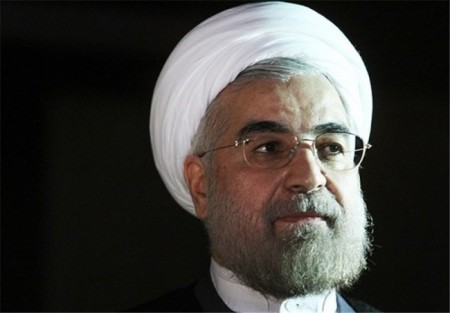
rouh-450x313

Obama’s public rejection of every ally, from Israel to Egypt to Saudi Arabia, has finally created the Post-American Middle East that his “Blame America” doctrine sought. The Post-American Middle East is a hive of terrorist groups and a region of nuclear arms races where murderous despots with vast armies dream of resurrecting the Ottoman Empire, the Persian Empire and the Abbasid Caliphate.

*********************

Obama’s Middle East policy was doomed to fail because it was based on the myth that everything wrong with the region was America’s fault.

Senator Obama had argued that Iraq would fix itself once we pulled out. Without America, the Iraqis would create a “political solution”. Instead the Shiites used the withdrawal to take over the government and Al Qaeda rebounded to dominate the Sunnis. After years of denying what was going on, he was forced back into Iraq after genocide and beheadings filled every television screen.

From the White House, he deployed the “Iraq Solution” across the Middle East by withdrawing support from American allies and backing terrorist groups like the Muslim Brotherhood. The chaos tore apart the region and turned over entire cities and countries to terrorists.

Egypt went through multiple coups. Street violence in Tunisia wrecked the country and supplied thousands of fighters to ISIS. His regime change war in Libya led to terrorist takeovers of its capital. Al Qaeda nearly took over Mali. Houthi Jihadists backed by Iran took over Yemen’s capital. The Saudis are bombing Yemen. The Egyptians are bombing Libya. The French are still fighting in Mali.

Iran and Al Qaeda have divided up Iraq, Syria and Yemen between themselves.

Withdrawing American power and influence didn’t work because we were never the problem. American soldiers weren’t causing the Sunnis and Shiites to fight each other. They were the only thing preventing it. American power and influence across the Middle East wasn’t holding back freedom and human rights, it was the only thing keeping a modicum of freedom alive in places like Egypt and Tunisia that quickly fell to Islamist rule in the Arab Spring, resulting in street violence, torture, terrorism and military coups.

The left had been fundamentally wrong about the cause of the problems in the Middle East. Obama trashed the region by following its wrongheaded doctrines.

Once the “Blame America” foreign policy has been implemented and the region went to hell, he had no idea what to do next. Intervening in Libya made sense according to the “Blame America” doctrine because Gaddafi had recently cut a deal with the United States and was obstructing the Jihadists who were implementing the local version of the Arab Spring in coordination with the Muslim Brotherhood.

But intervening in Syria didn’t. Assad wasn’t an American ally. Therefore the “Blame America” doctrine said that he should be left alone. But he was obstructing the Arab Spring. Overthrowing him would let the Muslim Brotherhood claim another country, but would alienate Iran and spoil any reconciliation.

Unable to make a final decision, Obama veered back and forth between Iran and the Muslim Brotherhood. Some days he seemed on the verge of bombing Syria and other days he was against even providing the promised weapons to the Sunni rebels. Even his supporters accused him of having no plan.

Syria’s real red line was the one that it had drawn through his foreign policy. Instead of making the Middle East better, his withdrawals had made it worse. And the beneficiaries of his foreign policy, especially the Muslim Brotherhood, were clamoring for more American military intervention.

Even Iraq’s Shiite government, backed by Iran, wanted American intervention.

Obama’s foreign policy had created a new set of untrustworthy client states which had to be kept alive by American intervention. The great joke of his foreign policy was that his new terrorist states acted just like the old dictators they were supposed to replace. They wanted American weapons and soldiers. Their own people hated them and hated America by extension. The climax of the Arab Spring came with crowds in Tahrir Square denouncing Obama and the Muslim Brotherhood for acting as his client state.

The “Blame America” foreign policy had led to even more blame of America. The new “democratic” Islamist governments that he helped bring to power to appease the Arab Street and atone for the sins of supporting the old secular-ish dictators backfired by making the Arab Street hate us more than ever.

Iran saved Obama’s foreign policy. Just as he was stumbling around Syria and weeping at being stuck back in Iraq, the agents of the Iran Lobby suggested that the whole mess could be put back together again. Iran and the US would fight on the same side against ISIS in Syria and Iraq. And this cooperation could be used to hammer out a nuclear accord that would retroactively justify Obama’s Nobel Prize.

The only problem was that everyone else in the region was completely against the idea.

The Iran Lobby threw Obama’s failed foreign policy a lifeline and he grabbed it. The bombing of Syria was off. Assad turned over some WMDs, but went on using others. The US began acting as the air force for Iran’s Shiite militias in Iraq while the Kurds and the Sunni Sheikhs of the Awakening were shut out.

When the Houthis took over Yemen, Obama shrugged. When the Saudis began bombing Yemen, they didn’t tell him because they were afraid the news would leak to Iran. And the administration covertly began pressuring them to stop, confirming that it now took its marching orders from Tehran, not Riyadh.

Obama ignored the vocal opposition, particularly from Israel’s Netanyahu, because the Iran deal was the only thing holding his foreign policy together. It made it seem as if he knew what he was doing. Take away the Iran deal and there was no longer a strategy, just a series of incoherent panicked responses.

That is why he continues to cling to the Iran deal. Without it, the Emperor’s foreign policy is naked.

The Iran deal salvaged the “Blame America” foreign policy by reorienting it away from the Muslim Brotherhood to deal with our great enemy in the region. By acceding to Iran’s nuclear program, Obama could finally fix everything by atoning for America’s biggest foreign policy sin in the region.

Despite his Muslim family background, Obama never understood the Middle East. Instead he looked at the region through a left-wing lens and saw only America’s crimes.

The Sunnis and Shiites, the Arabs, Kurds, Persians and Turkmen, weren’t fighting because of America. They were fighting over differences in religion, ethnicity and clan. The left has always thought that the way to fix the Middle East was to withdraw American influence. Instead doing that destabilized the region and created a power vacuum that Russia and Iran have been more than happy to fill.

Obama’s final foreign policy act was to fall directly into Iran and Al Qaeda’s trap.

Iran and the various Al Qaeda groups had effectively split parts of the region among themselves. By embracing Iran, Obama alienated the Sunni Middle East and shoved entire populations into Al Qaeda’s waiting embrace. He completed the polarizing process that he began with the Arab Spring by selling out the moderates to the extremists and waiting for everyone in the region to love America again.

But the Muslim Brotherhood lost out to its edgier Al Qaeda children. Egypt and the Saudis are scrambling to hold together some sort of Sunni center without the United States and against its wishes. Obama’s alignment with Iran, his rejection of Egypt’s new government and his failure to back the Saudis in Yemen has sent the message that the only legitimate alternative to Al Qaeda is Iran.

That’s not an alternative that most Sunnis can accept. Many would rather stand with Al Qaeda than Iran.

Obama’s public rejection of every ally, from Israel to Egypt to Saudi Arabia, has finally created the Post-American Middle East that his “Blame America” doctrine sought. The Post-American Middle East is a hive of terrorist groups and a region of nuclear arms races where murderous despots with vast armies dream of resurrecting the Ottoman Empire, the Persian Empire and the Abbasid Caliphate.

While genocide goes on, sex slaves are raped under the rule of a Caliph and black flags are unfurled and nuclear weapons are developed to fulfill apocalyptic Islamic prophecies, Obama smiles for the camera and waits for his second Nobel Prize.

It had been America’s fault all along. Now that Iran and Al Qaeda are in charge, everything will be okay.

Raid on Iran

April 28, 2015

Raid on Iran, Jerusalem PostHarry Moskoff, April 28, 2015

The only question now is:  when could an attack on Iran be carried out? At this point, Israel can’t afford NOT to make a strike, as the policy of the current nuclear negotiations with Iran has changed from prevention, to containment.  Indeed, all have come to agree that if the military option isn’t utilized by either the US or Israel, a nuclear Iran is simply a fait accompli.

If a preventative strike on Iran’s nuclear facilities is going to happen, it must be both before the P5+1 negotiating deadline of June 30th, and before the Russian S-300 anti-aircraft missiles are delivered and setup on Iranian soil. Indeed, if and when that eventuality comes into play, Israel may be forced to destroy that weapons convoy on route to Iran. I’m pretty sure this threat has already been issued.

**********************

As a rule, I don’t usually get involved in war scenarios, but after seeing the Israeli Air Force (IAF) jets put on their brilliant display this week for Israel Independence Day, I was inspired.  I was thinking: what if they just continued flying southwest? There’s an important point that I want to make here.

Sooner rather than later, Israel will be forced to make that raid. You know the one. It’s the BIG one. It will make the 1981 precision strike on Iraqi’s Osirak reactor, otherwise known as Operation Raid on the Sun, look like a walk in the park. Back then (just like now), when some argued that the attack would alienate both the United States and Europe, Ariel Sharon allegedly quipped “If I have a choice of being popular and dead or unpopular and alive, I choose being alive and unpopular.” Prime Minister Begin ultimately agreed and the rest of the cabinet fell in behind him. The only question now is:  when could an attack on Iran be carried out? At this point, Israel can’t afford NOT to make a strike, as the policy of the current nuclear negotiations with Iran has changed from prevention, to containment.  Indeed, all have come to agree that if the military option isn’t utilized by either the US or Israel, a nuclear Iran is simply a fait accompli.

If a preventative strike on Iran’s nuclear facilities is going to happen, it must be both before the P5+1 negotiating deadline of June 30th, and before the Russian S-300 anti-aircraft missiles are delivered and setup on Iranian soil. Indeed, if and when that eventuality comes into play, Israel may be forced to destroy that weapons convoy on route to Iran. I’m pretty sure this threat has already been issued. Effectively, we’re looking at a window of opportunity of a little over 2 months to initiate an attack that could take many hours, if not days to carry out, with hundreds or even thousands of missile strikes per day.  Simply put, if there is no attack now, Israel must prepare for the day after – a new, grim reality in the Middle East.

However, here’s an interesting point. If the arms shipment isn’t destroyed, there may be another answer to the S-300. Israel’s Defense Ministry sent a Letter of Request to Congress in 2003 asking for authorization to purchase “up to” 75 brand new, top of the line jet fighters that have significant new counter-missile capabilities. In 2010, it signed a deal with the US-based Lockheed-Martin aeronautical company for 19 F-35As, with the first few aircraft set to arrive in late 2016. The total cost of that deal was $2.75 billion, a spokesman for Lockheed-Martin said, out of which $475 million was for non-recurrent costs for the incorporation of upgraded Israeli technology. It’s interesting to note that the approximate cost of the aircrafts was (a staggering) $120 million. Each! These are stealth fighters with highly advanced radar, which will see its targets before it is seen.  Armed with the intelligence of where the surface to air missile systems are located, the IAF will then take the necessary measures to first avoid the S-300 systems, then destroy them.  What other choice is there – finding the Ark of the Covenant and using that, as in biblical times? True, the planes are insanely expensive, but obviously quite necessary!

On April 15 at Yad Vashem, and echoing his recent, now-famous address to Congress, PM Netanyahu said: “Even if we are forced to stand alone against Iran, we will not fear…”  Well folks, I dare say that we have reached that point.  Everyone knows by now that where the negotiations are concerned, the US no longer considers use of force in the cards, and quite the contrary, President Obama has indicated that even sanctions have become negotiable. People here in Israel feel that the State Dept. may even act AGAINST Israel if it unilaterally attempts a pre-emptive attack.  Besides the obvious existential threat to Israel, one of the other problems is that Iran seeks to “dominate the region” (Netanyahu’s words), and impose a Khomeini-style revolution in the Middle East.  We now see clearly that they are doing just that in places like Yemen, Syria, Lebanon, and even here in Gaza. Whether Israel sees a right-wing government emerge in the coming weeks, or even a broad-based coalition with the Left, all agree at the end of the day that it’s just a matter of time before Iran breaches their side of an already bad deal, and action will need to be taken, whether backed by the US or not.

What most Israeli’s don’t realize is that once a breach in the agreement is discovered (publicly), there is simply no way the US will neutralize Iranian capabilities with a military strike.  Obama won’t do it, and the reason why he won’t do it is because he is not prepared to cast and label Iran as an Enemy of the State. To him, those days are over and it doesn’t lie in synch with his doctrine. In fact, the US President apparently vetoed a potential Israeli attack on Iran’s nuclear facilities back in 2012. Is it so hard to see why? Back door negotiations were going on even then between the US and Iran, as Hillary Clinton recently admitted herself.  It is crystal clear that the White House CAN forcibly bring the Iranian nuclear program to a halt, it simply chooses not to do so. Will this change after, let’s say – an Iranian nuclear test?  Perhaps, but unlikely.

As such, practically speaking, can Israel attack Iran with any real success? Is it worth it? The following are some salient points to consider.

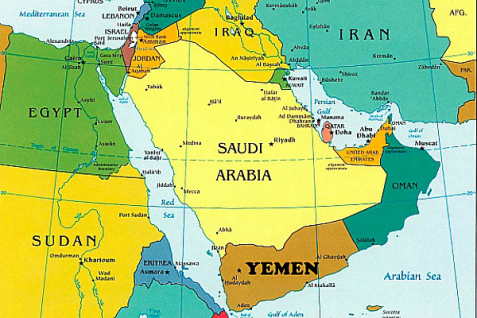
We know that Saudi Arabia has already given tacit permission for Israel to use its airspace to reach the Iranian military targets because as a Sunni Muslim state, they are considered as ‘infidels’ to Iran, who are Shiite Muslims. In fact, they have more to worry about than Israel does, and as a result of the framework agreement that was signed in Vienna, they are demanding the same rights to nuclear capabilities that Iran is apparently going to get. Credible sources state that Pakistan is now prepared to ship a nuclear package to the Saudis. As for Iran, it already has the ballistic missile capability that could hit Saudi Arabia with a warhead at the push of a button. And they know it. So does Jordan.

The truth is that Israel has sufficient nuclear and conventional power to destroy the Islamic Republic in one day in the event of any war. In this case though, we’re talking about a surprise attack (more or less). As mentioned above, Israel is believed to have a fully prepared plan to launch a strike, which by necessity, would likely involve some 80 planes, and perhaps up to several hundred aircraft according to some military experts. In reality, this has been in the planning for over 10 years. Israel possesses the advanced midair refueling capabilities required for carrying out sorties over multiple Iranian targets situated between 1,500 and 2,000 km away from home. Possible targets could include uranium-enrichment sites at Natanz and Qom, the uranium-conversion plant at Isfahan, and a heavy water reactor in Arak suspected of being used to pursue a plutonium-based nuclear arms program, as well as additional facilities. The mission would require the use of powerful, penetrating warheads, otherwise known as bunker-buster bombs, as well as possible repeated strikes to ensure success. According to a Newsweek article from September of last year, the US Congress signed and transferred 55 such bombs to Israel. Further, the attack would likely be coordinated with the assistance of Israeli intelligence satellites that could provide real time detailed images from the battle arena, as well as Airborne Warning and Control (AWAC) aircraft. It could also involve the use of a fleet of giant Heron 2 drones, which are the size of 737 commercial airliners. The UAVs form the first line of defense against an expected Iranian counterstrike, involving the launch of long-range Shihab 3 missiles, or worse.   These drones can reportedly reach Iran and hover over missile launch sites. Israel’s Arrow missile defense shield would undoubtedly also come into play to intercept missiles heading into Israeli airspace.

In terms of other forms of weaponeering capabilities, Israel maintains (at least) two elite special forces units dedicated to assisting with air strikes, one dedicated to laser target designation (Sayeret Shaldag/Unit 5101) and one to real time bomb damage assessment (Unit 5707).  These units are extremely well-trained and could potentially be infiltrated to the target zone prior to attack.  While it would be both difficult and risky to deploy these units inside Iran, they would be very useful in aiding the strike package, particularly in bad weather.

Obviously, such a strike would touch off conflict with Iran’s proxy in southern Lebanon, Hezbollah, which is armed with thousands of rockets, as well as Hamas in Gaza, and possibly with Syria. The resulting chain of events could easily lead to a major regional war and long-term instability, so much so that some senior Israeli defense figures have reportedly been rejecting the idea of attacking Iran for years.  Assuming that a military strike is issued in the near future, Israel cannot hope to destroy Iran’s entire nuclear infrastructure, as facilities are distributed across the country and there are simply too many sites to plan to attack them all.  To have a reasonable chance of success, both in the mission and in the ultimate goal of rendering Iran’s nuclear program impotent, the target set must be narrowed to concentrate on the critical nodes in Iran’s nuclear infrastructure, which seems to be growing by the day!

The main focus of an imminent strike must be to target the Natanz facility first.  Natanz is by far both the most difficult and most important target to destroy.  The main enrichment facility apparently has two large (25,000-32,000 m2) halls located 8 to 23m underground and protected by multiple layers of concrete.  The combination of large size and target hardening mean that only a very robust strike could hope to destroy or at least render unusable the centrifuges within.  In order to ensure penetration of a target with these high levels of hardening, one technique is to use the bunker busters targeted on the same aimpoint but separated slightly in release time to ‘burrow’ into the target. What happens essentially, is that one bomb hits the crater made by the previous weapon, a technique contemplated by the U.S. Air Force in the first Gulf War.  This takes advantage of the extremely high accuracy of bombs in combination with a penetrating warhead.  The IAF appears to have purchased these with this technique in mind. In fact, Gen. Eitan Ben-Eliyahu, former commander of the IAF (and a participant in the Osirak strike), commented on this method of attacking hardened facilities in Jane’s Defense Weekly: “Even if one bomb would not suffice to penetrate, we could guide other bombs directly to the hole created by the previous ones and eventually destroy any target.”

Has the point been made yet? This is just the tip of the proverbial iceberg on Israel’s military capability, and there is no doubt that the IAF can pull off an attack and get the job done. And let’s not forget about our Dolphins (nuclear subs) in the Gulf.  The factor that complicates matters so much is that, unlike in 1981 where the mission was so secret that the pilots themselves only learned of their target the day before, the US government must be notified before an attack of this magnitude.

On that note, the Obama administration has been exerting great pressure in the back halls for some time now in order to convince (even by means of veiled threats to withhold their veto power in the UN), their Israeli counterparts to refrain from issuing an attack order on Iran.  The only problem is that if Israel chooses again to wait it out and not attack, the world is bound to lie in dread of a new, powerful Iranian nuclear regime – to shake under their threat, similar to the way the world was just 70 years ago regarding the appeasement of Germany. Saudi Arabia will then look to the US for advice, and to provide an umbrella defense mechanism. Needless to say, a third world war might just emerge (heaven forbid).  This scenario is actually already depicted in the Zohar, the Midrash and other traditional Jewish texts in reference to the future world war of ‘Gog and Magog.’  Let’s pray it doesn’t come to that! In our lifetimes, or our offspring.

What bothers me the most right now though, is that even as the West is negotiating with a fanatical, expansionist Islamic regime in those posh Viennese boardrooms, the people on Tehran’s streets are chanting: “Death to the US; death to Israel” (in that order). The recent military parade echoed the same rhetoric.  HELLO…… isn’t someone paying attention over there? This is the reason why Israel shouldn’t just flex its military muscles for display to the Mullahs. It must attack. And it must attack now. This is precisely what the IDF was created for! Ben Gurion knew it. Menachem Begin knew it, and now Netanyahu knows it too. At this juncture in time, Iran cannot be trusted, and we know this to be an undeniable and unfortunately, well proven fact. Especially since, as of last week, the world discovered that Iran’s intent to destroy Israel is “non-negotiable.”  I believe that the citizens living in Israel (like myself) should, and will, accept the inevitable consequences that come with protecting our beautiful country.

A raid on Iran? My point here is:  The best defense is a good offense.

China Warns Of Rising Nuclear Threat From North Korea – Lou Dobbs

April 24, 2015

China Warns Of Rising Nuclear Threat From North Korea – Lou Dobbs, Fox News via You Tube, April 23, 2015

(The first four minutes is about the mess in Yemen and the last four minutes is about the North Korean nuclear threat. — DM)


Empowering Iran

April 24, 2015

Empowering Iran, Weekly Standard, Lee Smith, May 4, 2015 (print date)

Obama’s foreign policy legacy will be to have tied America’s fortunes to an imperial and nuclear Iran governed by an ambitious and ruthless anti-American regime.

*****************

Last week, the Obama administration urged Saudi Arabia to halt its air campaign against the Iranian-backed Houthi rebels who have wrested control of the Yemeni capital Sanaa. The White House’s professed concern was that Riyadh’s Operation Decisive Storm was killing too many civilians. Unfortunately, that’s hardly surprising since Iranian proxies, like Hezbollah and Hamas, typically stash their missiles and rockets in civilian areas. Presumably, the Houthis have read from the same playbook. The effect of the administration’s diplomatic efforts, then, was to protect Iranian arms in Yemen. And this, in turn, the administration no doubt believes, protects Obama’s nuclear agreement with Iran.

Houthi rallyHouthis rally against Saudi Arabia, April 1. Newscom

In public, Obama is eager to show that the United States still stands by its traditional allies, like Riyadh. But behind the scenes, it’s clear that the White House’s real priority is partnering with Iran. Sure, the White House dispatched an aircraft carrier to the Arabian Sea, but this was not to stop Iran from shipping arms to the Houthis. As Obama himself explained, America’s blue-water Navy was present to ensure freedom of navigation in the Persian Gulf. The notion that the White House really intended to interdict Iranian arms shipments beggars belief. For more than four years Obama has done nothing to stop Bashar al-Assad from killing nearly a quarter of a million people in Syria, lest he endanger his nuclear agreement with Iran. With a deal so close, Obama is certainly not going to risk what he sees as the capstone of his foreign policy legacy by disarming Iranian allies in Yemen.

The problem is that by protecting his nuclear agreement with Iran, the president has protected and empowered the Islamic Republic. Tehran may boast of controlling four Arab capitals, but the reality is that its regional position is a house of cards. Pull out one of those Arab capitals, or the nuclear program, and Iran’s burgeoning empire quickly collapses. It’s Obama who is propping it up.

It’s interesting to imagine how these last six years might have gone for the Islamic Republic had the White House not been so determined to have a nuclear deal. Perhaps the Tehran regime would have been toppled when the Green Movement took to the streets in June 2009 to protest a fraudulent election if the American government had decided to back the opposition early, openly, and resourcefully. Perhaps another administration would at least have seen that uprising as an opportunity to gain leverage over the Iranian regime. Not Obama. He wanted a nuclear deal with the existing regime.

Another White House might have backed the Syrian rebels in order to bring down Assad. Indeed, a good portion of Obama’s cabinet counseled as much. To topple Tehran’s key Arab ally would have been the biggest strategic setback to Iran in 20 years, said Gen. James Mattis. Obama chose to leave Assad alone, and even ignored his own red line against the use of chemical weapons. Instead of the airstrikes he threatened on Syrian regime targets, Obama made a deal to ostensibly remove the chemical weapons that Assad is still employing.

As Assad’s position became weaker, Hezbollah entered the Syrian war to prop him up. The Iranian-backed militia was stretched thin between Syria and Lebanon, but the Obama administration helped the terrorist organization cover its flank by sharing intelligence to keep Sunni car bombs out of Hezbollah strongholds in Beirut. Another administration might have understood this as an opportunity to weaken Iran’s position in Damascus and Beirut, but not Obama. He had his eyes on the prize.

In sum, over the last six years, almost all of Iran’s advances in the region, including its move into Iraq to fill the vacuum in Baghdad after the American withdrawal from that country, has taken place with either the overt or tacit assistance of Obama. The White House brags about it. Israel might have attacked Iranian nuclear facilities, as one administration official told the press, but we deterred Prime Minister Benjamin Netanyahu from striking. If the Iranians strut with confidence these days, that’s because they understand who has their back.

The nuclear deal, as the president has explained, means that within a little more than a decade, Iran’s breakout time will be down to zero—which is a nice way of saying the clerical regime will have the bomb. The likely result is that the agreement will ensure Iran’s regional position long after Obama’s presidency is around to safeguard it. It will strengthen the hand of the hardliners. It is not Rouhani or Zarif or other so-called moderates who hold the nuclear file, but Khamenei and the Revolutionary Guard Corps. And in the future, American policymakers will have a vital interest in ensuring there are no internal regime fights over who controls the bomb.

In other words, Obama’s foreign policy legacy will be to have tied America’s fortunes to an imperial and nuclear Iran governed by an ambitious and ruthless anti-American regime.

Fleet of Iranian ships heading to Yemen turns around after being tracked by US warships

April 23, 2015

Fleet of Iranian ships heading to Yemen turns around after being tracked by US warships, Fox News, April 23, 2015

(But see Iranian Warships Arrive in Yemen Port. ?????????????? — DM)

A nine-ship Iranian convoy believed to be laden with weapons bound for rebels in Yemen turned around Thursday after being followed by U.S. warships stationed in the area to prevent arms shipments, multiple sources in the Pentagon told Fox News.

The sources said the nine-ship convoy is south of Salalah, Oman, and now headed northeast in the Arabian Sea in the direction of home. The ships, which include seven freighters and two frigates, had sailed southwest along the coast of Yemen heading in the direction of Aden and the entrance to the Red Sea. They appeared to drop anchor in the north Arabian Sea, after the USS Theodore Roosevelt, the USS Normandy and a half-dozen other American ships arrived in the Arabian Sea on Monday, and U.S. officials said that they could intercept the convoy.

The USS Theodore Roosevelt, a 100,000-ton nuclear-powered aircraft carrier known as the “Big Stick” and her escort, the USS Normandy, a guided missile cruiser, have been shadowing the convoy for the past few days, the sources said.

Fighter jets taking off from the carrier have been relaying the convoy’s location to the U.S. Navy’s higher command since the start of the week.

The Iranian Navy ships are characterized as “smaller than destroyers,” a Pentagon official with knowledge of the convoy said Tuesday. Asked what type of weapons the freighters are carrying, one Pentagon official said, “they are bigger than small arms.”

The reversal was welcomed by Pentagon officials, but they expressed caution saying, “this isn’t over yet,” and insisted Roosevelt will maintain observation on the convoy.

Iran backs the Houthi rebels, who chased the Yemeni president from Sanaa and are fighting for control of the Gulf nation. Warships from Saudi Arabia and Egypt, who back Yemeni President Abd Rabbuh Mansur Hadi, are positioned to the southwest of the convoy, forming a blockade of the Gulf of Aden and the port city of Aden.

Western governments and Sunni Arab countries say the Houthis get their arms from Iran. Tehran and the rebels deny that, although Iran has provided political and humanitarian support to the Shiite group.

The U.S. also has been providing logistical and intelligence support to the Saudi-led coalition launching airstrikes against the Houthis. That air campaign is now in its fourth week, and the U.S. also has begun refueling coalition aircraft involved in the conflict.

The campaign meant to halt the rebel power grab and help return to office Hadi, a close U.S. ally who fled Yemen.

The defiant Shiite rebels pressed their offensive in the country’s south on Thursday, apparently ignoring an overture from Saudi Arabia earlier this week, while the kingdom’s warplanes continued to target their positions, officials said.

The rebels’ prized goal — the port city of Aden — remained an elusive one, in part thanks to the Saudi-led airstrikes.

Meanwhile, Pakistan’s top leaders, including Prime Minister Nawaz Sharif and army chief Gen. Raheel Sharif, arrived Thursday in Saudi Arabia to push for negotiations in the Yemen conflict. The two are to meet with King Salman to discuss the crisis, according to Pakisitan’s Foreign Office spokeswoman Tasnim Aslam.

Both predominantly Sunni majority countries, Saudi Arabia and Pakistan are close allies, and Islamabad has supported the Saudi-led coalition, though it declined to send troops, warplanes and warships to join it.

The kingdom and Gulf Arab allies launched the airstrikes March 26, trying to crush the Houthis and allied military units loyal to ousted President Ali Abdullah Saleh.

The Saudis believe the rebels are tools for Iran to take control of Yemen.

Loud explosions shook the cities of Taiz and Ibb in western Yemen on Thursday, as well as Aden when coalition warplanes bombed the rebels and their allies, witnesses said.

Residents also said the Houthis and Saleh’s forces were attacking the city of Dhale, one of the southern gateways to Aden, with random shelling.

All Yemeni officials and witnesses spoke to The Associated Press on condition of anonymity because they were not authorized to talk to the media or feared for their safety amid the fighting.

Iranian Warships Arrive in Yemen Port

April 23, 2015

Iranian Warships Arrive in Yemen Port, The Jewish PressHana Levi Julian, April 23, 2015

YemenKSA.jpgSaudi Arabia airstrikes were aimed at Iranian-backed Houthi rebels who seized positions in neighboring Yemen. Iran is believed to be arming the rebels. Photo Credit: KSA

Iranian warships arrived Thursday in the southern Yemen port of Aden despite the presence of several U.S. warships in the area as well. It is believed the Iranian vessels are carrying weapons to re-arm the Shiite Houthi rebels who have seized control over the port city and the nation’s capital, Sa’ana.

Saudi Arabian Ambassador to the United States, Adel al-Jubeir, said Wednesday that his nation’s air force had achieved its objectives and has concluded its bombing campaign.

“We destroyed the air force, we destroyed their ballistic missiles as far as we know; we destroyed their command and control; we destroyed much, if not most of their heavy equipment and we made it very difficult for them to move from a strategic perspective,” al-Jubeir said. He added that Saudi forces had “eliminated the threat they posed to the Kingdom of Saudi Arabia” but . said that in the long run, there is “no military solution” to the conflict.

According to the World Health Organization, 1,080 people have been killed in the past month in Yemen, and 4,352 others have been wounded.

Coalition warplanes picked up where Saudi Arabian air force pilots left off and continued on Thursday to pound Houthi rebels in southern Yemen. The international forces targeted rebel positions in Aden and the central city of Taiz, according to Voice of America.

A severe humanitarian crisis has been created in the war-torn region, according to VOA, but the Shi’ite rebels still remain. Yemen President Abd Rabbu Mansour Hadi has fled for his life to Saudi Arabia.

Although Iran claimed that it welcomes an end to “killing innocent and defenseless civilians” and seeks a political resolution to the conflict, its warships laden with arms for the rebels– as usual – tell a different story.

U.S. Warships On Watch – Leading From Behind – Lt Col Ralph Peters – Willis Report

April 22, 2015

U.S. Warships On Watch – Leading From Behind – Lt Col Ralph Peters – Willis Report, Fox News via You Tube, April 21, 2015

(It’s from yesterday and the situation remains fluid. Still, it’s worth watching. — DM)


Arab states snub Obama’s D.C. summit as Iran Mocks Obama

April 21, 2015

Arab states snub Obama’s D.C. summit as Iran Mocks Obama, BreitbartJoel B. Pollak, April 21, 2015

ap_saud-bin-faisal-bin-abdulaziz-al-saud_ap-photo-640x422The Associated Press

As the U.S.S. Theodore Roosevelt heads to Yemen to confront a convoy of Iranian ships, including destroyers, it is worth asking why President Barack Obama is still talking to the Iranian regime about its nuclear program. The Iranians, who used the Houthi militia to knock over the American-aligned Yemeni government, clearly has no fear that Obama will suspend negotiations. If anything, Iranian tactics are winning more concessions.

When you strike a deal with an enemy who continues to attack you, that is not called “peace,” but “surrender.”

It is a wonder Obama is even bothering to send an aircraft carrier to the region at all. His hand has been forced by two factors: first, that Saudi Arabia has gone to war in Yemen without bothering to ask for American approval; second, Yemen is key to Obama’s drone policy against Al Qaeda, his only modest military success.

America has lost more than an ally in Yemen or a foothold in Iraq. It has lost the opportunity to defend hundreds of thousands of innocent lives from being murdered by Iran’s Syrian ally, which is using chemical weapons against civilians. It has lost the opportunity to demilitarize Lebanon—an achievement then-Sen. Joe Biden foolishly claimed in his debate with Sarah Palin in 2008. It may even have lost the chance to stop a nuclear Iran.

Iranian foreign minister Javad Zarif made clear in his New York Times op-ed this week that the regime sees a nuclear deal as the key to regional domination. He offered—no, demanded—American cooperation on ISIS and other issues, not as a possible outcome of a deal but as a condition for a deal.

Yet the White House refuses to make its own regional demands—such as recognition of Israel, or an end to Iran’s global terrorism.

Israel has made clear that the Iran deal is an existential threat, and even that has not moved Obama to reconsider. The Arab nations are not waiting to be double-crossed, and are making their own plans, which likely include Saudi Arabia obtaining nuclear warheads from Pakistan.

In an attempt to save face, Obama has invited the Arab nations to a May 13 summit at the White House—long after final negotiations with Iran have begun

Already, some Arab states have indicated that they will not be attending (Oman), or will only send junior delegations (Saudi Arabia, United Arab Emirates). Amir Taheri of theNew York Post quotes  one Arab official: “He is going to give a Churchillian speech. But we know that you can’t be Chamberlain one day and Churchill the next.”

Meanwhile, Israel quietly signals that it is not going to wait for a Churchill to arrive in the Oval Office.

Arab world: Egypt’s dangerous stalemate

April 17, 2015

Arab world: Egypt’s dangerous stalemate, Jerusalem Post, Zvi Mazel, April 17, 2015

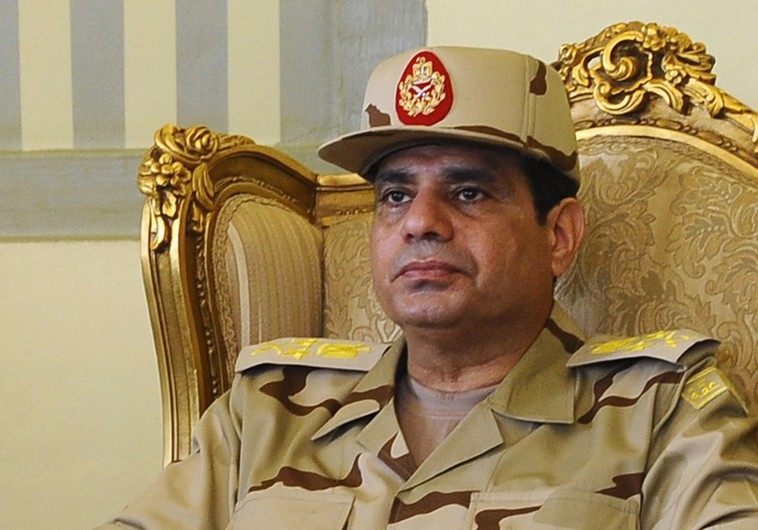
Egypt's Defense Minister Abdel Fattah al-Sisi is seen during a news conference in Cairo on the release of seven members of the Egyptian security forces kidnapped by Islamist militants in SinaiAbdul Fattah Sisi. (photo credit:REUTERS)

Vainly did the Egyptian president try to convince the US-led coalition against Islamic State to extend its activities to the whole Middle East. But US President Barack Obama is unwilling to acknowledge that there is a regional and international dimension to the movement.

*****************

Egyptian President Abdel Fattah al-Sisi is fighting for his country’s survival – and his own.

Islamic terrorism is not abating, hampering vital efforts to bring a better life to the people through a revitalized economy and political stability. Sisi knows he has to show results soon to prevent Egypt from slipping back into anarchy and chaos.

Despite the army’s all-out effort to defeat Islamist insurgency in Sinai, there is no end in sight. F-16 fighter planes and Apache helicopters have joined the campaign, security forces have killed or wounded hundreds of terrorists, destroying their haunts and their training groups – but more keep coming.

Ansar Bayt al-Maqdis gunmen, who have pledged allegiance to Islamic State, continue making daring raids against police stations and other security targets, leading to loss of life and heavy damage.

In one instance on April 14, the commander of the central police station of El-Arish was wounded in a raid; the assailants were able to escape.

For all intents and purposes the situation has reached a stalemate, though the army has managed to contain the terrorists in the northern part of the Sinai Peninsula, preventing them from extending their activities to the south and to the Suez Canal – where they could have inflicted untold damage to economic and security infrastructure, and severely undermined public morale.

However, there are still sporadic terrorist attacks in Cairo and other parts of the country.

Bombs explode, killing and maiming; power lines are blasted. A number of terrorist groups are involved, from Ansar Bayt al-Maqdis and the so-called Soldiers of Egypt to the ever-present Muslim Brotherhood; many of their members have been arrested, their leaders sentenced to death – though no one has been executed yet – but they keep on demonstrating against the regime (though in diminishing numbers).

In Yemen, Iranian-backed Houthi tribes are poised to take over the strategic Red Sea straits, threatening free passage to the Suez Canal – a reminder, if one was needed, of the fact that Islamic terrorism knows no border.

Vainly did the Egyptian president try to convince the US-led coalition against Islamic State to extend its activities to the whole Middle East. But US President Barack Obama is unwilling to acknowledge that there is a regional and international dimension to the movement.

The fact remains that Islamic State dispatches terrorists and weapons to Ansar Bayt al-Maqdis in the Sinai Peninsula from Libya, where there is an unlimited supply of both. No matter how many guerrillas are intercepted or killed by the Egyptian army, more are coming through the vast mountainous and desert region, along the 1,200-km border between the two countries.

Then there is Gaza, where terrorists can find refuge, regroup and train, and where new weapons can be tested.

Cairo is desperately trying to cut off the peninsula from the Strip. The Rafah crossing is closed most of the time, and when it opens it is under the strict supervision of Egyptian authorities. More than 2,000 contraband tunnels have been destroyed and a 1-km.-deep sanitized zone has been installed; thousands of families have been uprooted.

They have been compensated but resentment is high, and the move has prompted widespread condemnation by human rights associations.

Against this backdrop, the regime is weighing extending the zone to 5 km. and making the digging of contraband tunnels punishable by life imprisonment. A court in Cairo has forbidden Hamas activities in Egypt, and another has declared Hamas a terrorist organization; however, the central government is appealing that decision for the sake of its ongoing dialogue with Gaza’s leaders on the Palestinian issue.

The Iranian-Houthi threat has led Sisi to call for the creation of a rapid-response Arab unit, as Saudi Arabia has rallied neighboring states to form a coalition against the rebels in Yemen – who are threatening its border in the south, and were about to take control of the strategic port of Aden.

Though the creation of a united Arab unit was decided at a summit in Sharm e-Sheikh last month, implementation will not be easy. A number of states such as Lebanon and Iraq have warned they would not allow any infringement to their sovereignty; some Gulf states and Jordan have been more forthcoming, and meetings between army commanders are scheduled.

The problem is that these countries are not keen to risk their troops in a ground operation in neighboring states. Armies are the traditional bulwark of Arab regimes; a failed intervention outside their borders could cause their downfall. Nevertheless, since the West is largely indifferent to what is happening, Sisi and his Gulf allies have no choice but to unite against the common threat of Islamic terrorism, be it Sunni or Shi’ite.

On the home front, Sisi has launched a series of impressive projects – a new canal parallel to the old one to enable simultaneous crossing in both directions, thereby doubling receipts; an industrial, commercial and tourist zone between the two canals; 3,000 km of modern roads. Perhaps his most ambitious project is the creation of a new administrative capital city east of Cairo, at an estimated cost of $45 billion. Arab states have rallied to his side, pledging billions of dollars at a special economic summit last month; international groups have indicated their interest in some of the projects – a significant victory for the embattled president.

But Egypt’s endemic problems – population explosion, illiteracy leading to widespread unemployment and enduring poverty, as well as corruption on an epic scale – are not making Sisi’s task easier.

He is also calling to reform Islam by purging it of its extremist discourse, and has already instructed the Education Ministry to eliminate extremist content such as the call to jihad and attacks on other religions.

Meanwhile, the political situation is still unclear and elections are repeatedly postponed, allegedly because of ambiguities in the election law.

The fact is that the president has not been able to secure a large enough block to ensure his electoral victory, while the Muslim Brotherhood – though banned – and other Islamic parties can still muster a sizable vote.

Can Sisi win all his battles? How long will the Egyptian people wait for some much-needed economic results? Egypt is going it alone, still waiting for the West to understand that Cairo remains its best ally against the rising tide of terrorism now lapping at its shores.

King Abdullah II: We’re War With “Outlaws Of Islam” – Special Report

April 14, 2015

King Abdullah II: We’re War With “Outlaws Of Islam” – Special Report via You Tube, April 13, 2015

(He seems quite diplomatic, but what does he actually think? — DM)