Saudi-Israeli Diplomatic Relations in the Works? Latest Developments Indicate Possibility

Posted July 3, 2017 by Joseph Wouk
Categories: Uncategorized

Source: Saudi-Israeli Diplomatic Relations in the Works? Latest Developments Indicate Possibility – Breaking Israel News


By July 3, 2017 , 1:30 pm

“And take heed that ye be not slack herein; why should damage grow to the hurt of the kings?’” Ezra 4:22 (The Israel Bible™)
By Sean Savage/JNS.org

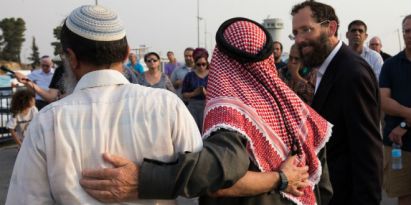
Building off the last few years of rumors and reports regarding clandestine relations between Israel and Saudi Arabia, mainly motivated by their shared concerns over Iran’s nuclear program and destabilizing regional activities, two recent developments highlight a potential route for Israel to firm up support within the Arab world.

Egyptian President Abdel Fattah El-Sisi ratified a treaty to hand over two strategic islands in the Red Sea to Saudi Arabia. Meanwhile, Saudi Arabia’s King Salman promoted his 31-year-old son, Mohammed bin Salman, to crown prince, making him next in line to be king.

The deal to hand over the islands of Tiran and Sanafir was reached in 2016 after a visit to Egypt by King Salman. The uninhabited islands that sit on the southern entry to the Gulf of Aqaba were originally given to Egypt in 1950 by Saudi Arabia, in order to protect them from Israel. Later, the islands played an important role in setting off the 1967 Six-Day War when Egypt closed the Straits of Tiran to Israeli ships, preventing Israeli access to the Red Sea and Indian Ocean.

Crown Prince of Saudi Arabia Mohammed bin Salman. (Kremlin)

United Nations peacekeepers maintain a presence on Tiran Island as part of the 1979 Israel-Egypt peace treaty. Under the treaty’s terms, Israel gave its approval for the Egyptian-Saudi agreement as long as the Saudis maintained the treaty’s clauses pertaining to Israeli shipping through the Straits of Tiran.

According to Joshua Teitelbaum, a senior research associate at the Begin-Sadat Center for Strategic Studies and a professor of Middle Eastern Studies at Israel’s Bar-Ilan University, it is not of utmost importance to Israel who controls the Tiran and Sanafir islands as long as the Jewish state has unimpeded shipping access.

Instead, Teitelbaum argued, the constructive cooperation between Egypt and Saudi Arabia is more crucial for Israel as it relates to the Arab alliance to counter radical Islam and the Iranian threat.

“Israel wishes to keep that camp strong,” Teitelbaum told JNS.org. “If Egypt and Saudi Arabia can get together, whether on confronting Iran or Qatar, or even the exchanges of these two islands, then that is beneficial for Israel. This firms up the Saudi-Egyptian relationship.”

Mohammed bin Salman’s rise to crown prince signals a new direction in Saudi Arabia, and may have implications for Israeli-Saudi ties and the Israeli-Palestinian peace process.

Saudi Arabia is dealing with low oil prices, its rivalry with Iran, a dispute with Qatar, and civil wars in Yemen and Syria. In his former role as defense minister, Prince Salman sought to boost ties with the U.S. as well as to overhaul and diversify the Saudi economy, which is heavily dependent on oil.

In a rare public comment on Saudi Arabia by an Israeli official, Communications Minister Ayoub Kara said the appointment of the new crown prince “means more economic cooperation in the Middle East, and not just regarding oil.”

“The strengthening of relations with the Trump administration is the beginning of a new and optimistic time between Saudi Arabia and regional states, including Israel and the Jewish people,” Kara said, adding, “This crown prince is really one of the architects of this post-Arab Spring Saudi policy that has pushed for…an anti-Iran and anti-radical Islam policy, which includes targeting Hamas….Israel will be pleased to cooperate with the new crown prince.”

Prince Salman has already been tied to rumors that he has met with Israeli officials as part of efforts to establish closer economic and security relations.

“In terms of the general trend of things, the Saudi prince is the guy who has been running Saudi foreign policy for the past two years,” Teitelbaum said. “During that period, there’s been an increasingly closer relation between Israel and Saudi Arabia. That’s going to likely continue.”

Israel and Saudi Arabia are discussing allowing Israeli businesses to operate in the Arab Gulf as well as letting Israel’s El Al airline to fly over Saudi airspace, the London Times recently reported, citing Arab and American sources. Prince Salman has been in talks with Jared Kushner, President Donald Trump’s son-in-law and senior adviser, about improving Saudi ties with Israel as a step towards Israeli-Palestinian peace, the report added.

Despite the Saudi-Egyptian cooperation and reports of Prince Salman’s interest in ties with Israel, Teitelbaum cautioned against expectations for official diplomatic ties between Israel and Saudi Arabia.

“There is a limit on the relationship, with most of the relations being clandestine,” he said. “The Saudis don’t really have a motivation to make these relations overt because they get what they need from Israel—intelligence, security, technology—without open diplomatic relations.”

In May, The Wall Street Journal reported that Gulf states such as Saudi Arabia would take steps to normalize relations with Israel if Prime Minister Benjamin Netanyahu makes gestures for the Palestinians, such as freezing settlement construction or easing trade restrictions in Gaza.

“In order to bring Israeli-Saudi relations out into the open, the Saudis would really need to see major progress on the Israeli-Palestinian track. And that is really tough,” Teitelbaum said, adding that “we are a long way from full diplomatic relations.”
 

Greek coast guard opens fire on Turkish-flagged cargo vessel in Aegean Sea

Posted July 3, 2017 by Peter Hofman
Categories: Uncategorized

Source: Greek coast guard opens fire on Turkish-flagged cargo vessel in Aegean Sea – report — RT News

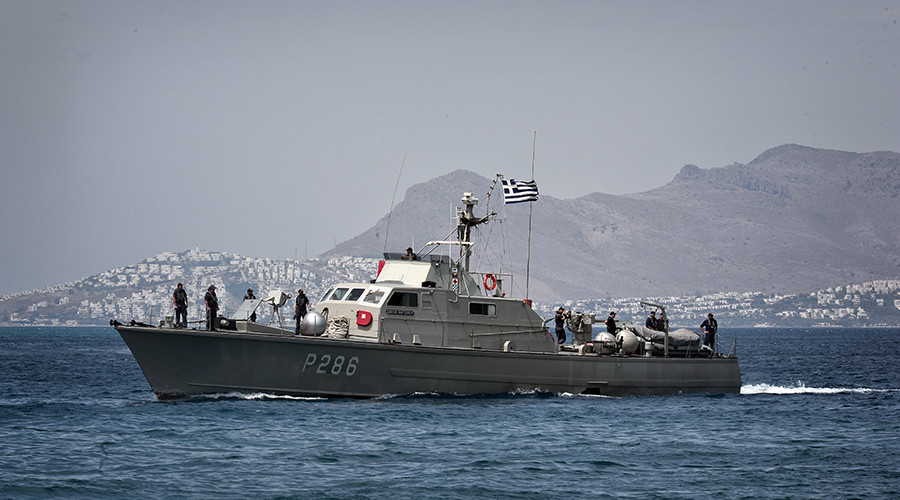
A Greek coast guard vessel returns after patrol to the port of Kos island , August 14, 2015 © Louisa Gouliamaki / AFP

A cargo vessel sailing under the Turkish flag has come under fire from Greek coast guard boats in the Aegean Sea, Turkey’s NTV broadcaster reported.

The vessel, named ‘ACT,’ reportedly picked up cargo in the Turkish port of Iskenderun and was moving in the direction of the Izmit Bay of the Sea of Marmara.

While in the Aegean Sea, the Turkish ship was approached by Greek coast guard vessels, which demanded that it enter a port on the Greek island of Rhodes for cargo inspection.

Read more

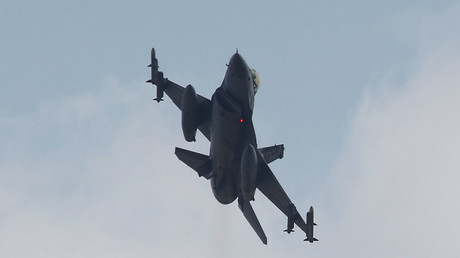
A Turkish F-16 fighter jet © Murad Sezer

The Turkish captain allegedly ignored the call, which led to the Greek coast guards opening fire on the freighter.

The crew of the ‘ACT’ said they discovered 16 bullet holes in the ship’s hull following the incident.

There were no reports of injuries or fatalities on board, and the freighter continued on its route.

Two vessels of the Turkish coast guard reportedly arrived at the scene of the incident shortly afterwards.

The freighter’s captain, Sami Kalkavan, told CNN Turk that the Greek coast guard approached his ship when it was passing Rhodes and demanded that it enter the port on the island.

“We did not accept this. They wanted to check (the ship), and we didn’t accept that. They said they would fire if we didn’t stop, they did what they said. Now there are 16 holes in the ship,” he said.

According to the captain, the damage done to the ship hasn’t affected its buoyancy and there’s no danger of water getting in.

Kalkavan didn’t specify what cargo his ship was carrying and why he didn’t want it to be inspected.

An official for the Greek shipping ministry confirmed to Reuters that the coast guard attempted to inspect the ship, which refused to cooperate and later moved back to Turkish waters, but he didn’t mention any shots being fired.

Relations between Turkey and Greece have been strained for decades, as the neighbors fought over Cyprus in 1974 and stood on the brink of another conflict over an uninhabited isle in the Aegean Sea in 1996.

Greece says it registers thousands of violations of its airspace by Turkish military jets every year, as well as frequent incursions by Turkish research vessels into its territorial waters.

Athens also refused to hand over to Ankara the eight officers who are accused in Turkey of participating in the attempted coup last summer.

The recent referendum to expand the powers of Turkish president Recep Tayyip Erdogan also added fuel to the fire, with the Greek military saying it was “ready to answer any provocation… because that is how we defend peace.”

US aircraft carrier off Israel’s coast symbol of freedom, Benjamin Netanyahu says

Posted July 3, 2017 by Joseph Wouk
Categories: Uncategorized

Source: US aircraft carrier off Israel’s coast symbol of freedom, Benjamin Netanyahu says – Israel News – Jerusalem Post

yAnna Ahronheim
July 3, 2017 17:29
Netanyahu visits floating US war machine leading fight against ISIS.
USS George H.W. Bush israel

The USS George H.W. Bush docked near northern Israel’s Haifa Port, July 3, 2017. (photo credit:MARC ISRAEL SELLEM/THE JERUSALEM POST)

It leads the United States’ war against ISIS and with 75 aircraft on its deck has the ability to carry out numerous combat sorties a day. On Monday, Prime Minister Benjamin Netanyahu visited the USS George H. W. Bush docked opposite the Haifa Port and became the first sitting head of state to visit America’s largest and most lethal floating war machine.

The docking of the ship on Saturday marked the first time an aircraft carrier visited Israel in 17 years.

“The visit of the USS George H.W. Bush speaks to the enduring commitment to our shared interests and a commitment to fight against our common enemies,” Commanding Officer Capt. Will Pennington told reporters during a visit to the ship. According to a statement by the US European Command, the ship’s visit is meant  “to enhance US-Israel relations as the two nations reaffirm their continued commitment to the collective security of the European and Middle East Regions.”

According to Pennington, the crew is constantly engaged in cooperation with Israel, including sharing intelligence.

“There is a tremendous network of shared intelligence. As you are aware the airspace in the region is very, very, busy with lots of different actors so the need to deconflict that and make sure that everyone understands their missions is very important,” he said.

Visiting the ship with US Ambassador to Israel David Friedman, Netanyahu recalled his visit to another aircraft carrier 20 years ago.

David Friedman aboard the USS George H.W. Bush (Marc Israel Sellem)

David Friedman aboard the USS George H.W. Bush (Marc Israel Sellem)

“So much has changed since the first time I visited…our ties have gotten stronger and deeper,” he said. “It is a floating island of America. It is a symbol of freedom and strength and victory.”

The USS George H.W. Bush was in the region to participate in the fight against ISIS, carrying out its last operational mission on June 30.  With 20-25 sorties per day, aircraft aboard the ship have carried out 1,600 sorties over both Syria and Iraq, striking targets in Mosul and in the vicinity of Raqqa on missions that can last seven to nine hours.

The targets which are directed by the coalition ground commander, are sometimes known prior to take-off and pilots have sometimes also received targets while in the air.

According to Carrier Air Wing 8 Captain James A. McCall, one of the real-time targets was the Syrian jet that was downed on June 18 in southern Raqqa province by one of the jets stationed on the aircraft carrier.

“The jet came within visual distance” McCall said, stating that US jets “warned the Syrian aircraft that they were approaching coalition friendlies. They (the Syrian regime jet) ignored the warning and even dropped bombs on the friendlies,” he said referring to the Syrian Democratic Force who are supported by the coalition.

Towards the end of its seven-month deployment, the USS George H.W. Bush arrived in Haifa after a 40 day voyage from Dubai.

While the ship will not be taking part in any joint exercises with the Israeli Navy, Israel provided security as it pulled into the Haifa Bay allowing the ship’s strike group to continue to other missions and port calls.

A helicopter lands on the USS George H.W. Bush docked in northern Israel's Haifa Port, July 3, 2017 (Marc Israel Sellem)

A helicopter lands on the USS George H.W. Bush docked in northern Israel’s Haifa Port, July 3, 2017 (Marc Israel Sellem)

“We are very tightly linked with our colleagues and partners and allies from the IDF and have been for very many years,” Pennington said.

Speaking at a ceremony aboard the carrier, Admiral Michelle J. Howard, commander of the US Naval Forces Europe-Africa, stated that the visit marks “a special moment” between Israel and the United States which “has had long standing military to military engagements with Israel.”

“In this visit to Israel, the ship’s might is a metaphor for the strength of the bonds between our countries. I’d like to thank the Israeli people for hosting us and for taking care of our Sailors,” she added.

Intelligence Minister Israel Katz, who visited the ship on Sunday stated that it was “a timely show of American power projection and deterrence capability.”

“Its support for the countries fighting Islamic extremism and terror and Iran is very important, especially now when Iran is working to create facts on the ground in Syria, including a port on the Mediterranean, and Hezbollah continues to build its arsenal with more advanced and precise missiles.”


Syria declares truce before Trump-Putin talks

Posted July 3, 2017 by danmillerinpanama
Categories: Assad, Iran - Syria war, Iran and Russia, Israel borders, Jordanian borders, Khamenei, Soleimani, Syria ceasefire, Syria safe zones, Syria war, Syrian military, Syrian rebels, Trump and Putin, Trump and Syria

Tags: , , , , , , , , , , , , ,

Syria declares truce before Trump-Putin talks, DEBKAfile, July 3, 2017

The picture beginning to unfold is that Washington and Moscow are making an effort to put in place the outline of a plan for deconfliction zones, in time for the first Trump-Putin encounter that is scheduled for later this week on the sidelines of the G20 summit in Hamburg.

However, the two presidents may find pushing hard against them are Iran’s Ayatollah Ali Khamenei, President Assad and Al Qods chief Gen. Qassem Soleimani, commander of Iran’s Syrian and Iraqi fronts. This trio is in full momentum of an offensive to seize this prized, bitterly-contested border region of Syria, and convinced that the tide of this offensive is rolling in their favor.

**********************************

The Syrian army Monday July 3 suddenly declared a ceasefire in the fierce fighting with rebel forces in the southern districts on the Israeli and Jordanian borders.

This was just one of three unexpected events occurring in this embattled part of Syria in the last 24 hours:

1. The ceasefire Damascus said would be in force up until Wednesday, July 6 covers all the active battlefronts in the South: Daraa just 1 km from the Jordanian border: Quneitra – from which Syrian military mortars flew across into the Golan all last week; and Suwaydeh which lies east of Daraa.

Oddly enough, the ceasefire was not announced until Monday afternoon, although it went into effect Sunday midnight without notice.  According to our sources, the Russians most likely had to twist President Bashar Assad’s arm to overcome his refusal to order his army to stop fighting. And then too he would only accept a four-day pause before resuming combat.

2.  The announcement coincided with a meeting of Russian, Turkish and Iranian diplomats in the Kazakh capital of Astana to discuss the carving out of four de-escalation zones in Syria, one of which is southern Syria, where the ceasefire went into force.

3. DEBKAfile’s military and intelligence sources reveal that this step is the first visible sign of an initial understanding reached by American and Russian officers in secret talks Saturday, July 1, in Amman. They discussed the ceasefire in the South for paving the way for establishing a demilitarized zone in eastern Syria.

According to our sources, their understanding covered a 128km strip running from Tabqa in the north up to Karama in the Euphrates River valley. It is not yet clear whether the Syrian army and the pro-Iranian Iraqi and Hizballah forces fighting there will agree to halt their advance on the Syrian-Iraqi border, in compliance with the Russian-US understanding.

The picture beginning to unfold is that Washington and Moscow are making an effort to put in place the outline of a plan for deconfliction zones, in time for the first Trump-Putin encounter that is scheduled for later this week on the sidelines of the G20 summit in Hamburg.

However, the two presidents may find pushing hard against them are Iran’s Ayatollah Ali Khamenei, President Assad and Al Qods chief Gen. Qassem Soleimani, commander of Iran’s Syrian and Iraqi fronts. This trio is in full momentum of an offensive to seize this prized, bitterly-contested border region of Syria, and convinced that the tide of this offensive is rolling in their favor.

PM Netanyahu Visits USS George H. W. Bush – YouTube

Posted July 3, 2017 by Joseph Wouk
Categories: Uncategorized


Islamic Relief Fails a Whitewash

Posted July 3, 2017 by danmillerinpanama
Categories: Hamas funding, Hamas' supporters, Islamic Relief, Islamist moral values, Islamist objectives, Islamist organizations, Islamists and the media, Islamists in Canada

Tags: , , , , , , ,

Islamic Relief Fails a Whitewash, Gatestone Institute, Samuel Westrop, July 3, 2017

(Please see also, What Hamas Wants. — DM)

Even if the Canadian branch of Islamic Relief claims not to have directly funded these Hamas groups, its own accounts reveal grants of millions of dollars to its parent organization, Islamic Relief Worldwide, which oversees the movement of money to a number of Hamas fronts.

Islamic Relief branches also receive money from several terror-linked Middle Eastern charities, including those established by Sheikh al Zindani, whom the US government has designated a “Global Terrorist.”

Islamic Relief did not much care for the exposé. Reyhana Patel, a senior figure at its Canadian branch, first persuaded the Post to bowdlerize the article by removing some of the sourced material and adding sentences in defense of Islamic Relief.

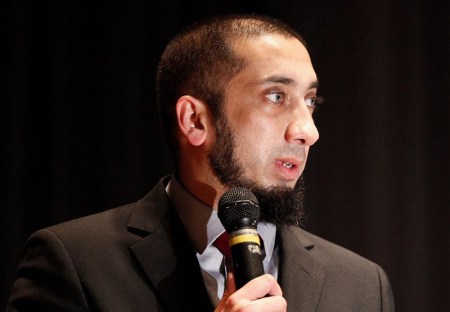
On May 20, a Muslim cleric, Nouman Ali Khan spoke at a fundraising event in Toronto for Islamic Relief, one of the largest Muslim charities in the world.

Khan preaches that prostitutes and pornographic actors are “filth” and that “you have to punish them … They’re not killed; they’re whipped. And they’re whipped a hundred times.” Khan has also declared that God gives men “license” to beat unfaithful wives, and that Muslim women are committing a “crime” if they object to the religious text that he says permits this abuse.

Muslim cleric Nouman Ali Khan says that God gives men “license” to beat unfaithful wives, and that Muslim women are committing a “crime” if they object to the religious text that he says permits this abuse. (Image source: Rossi101/Wikimedia Commons)

Before the event took place, this author had written about Khan and Islamic Relief in the National Post, with the help of colleagues at the Middle East Forum.

Islamic Relief did not much care for the exposé. Reyhana Patel, a senior figure at its Canadian branch, first persuaded the Post to bowdlerize the article by removing some of the sourced material and adding sentences in defense of Islamic Relief.

Patel then published in the Post a response that denounced our research as “false… one-sided and unsubstantiated.”

Really? In a rather major failing, she failed even to address Nouman Ali Khan’s presence at the Islamic Relief event.

Instead, she boasted of her own humanitarian goodness and attacked the Middle East Forum (MEF) as an “anti-Muslim think tank” that “uses some of its resources to paint a negative picture of Islam and Muslims.” MEF has always, in fact, argued the very opposite. It believes that if radical Islam is the problem, then moderate Islam is the solution. This very maxim can be found in dozens of articles on its website. MEF supports a number of moderate Muslim groups working to challenge extremism, and encourages others to do the same.

It is old habit of Islamists to accuse anti-Islamist activists of being anti-Muslim, because it allows them misleadingly to conflate Islam and Islamism. That obfuscation severely inhibits the work of moderate Muslims trying to free their faith from the grip of these extremists.

Patel’s only reference to the charges of Middle East Forum, in fact, appears to be a deliberate misquote. She writes that MEF “labelled Islamic Relief Canada a ‘terrorist organization which regularly gives platforms to preachers who incite hatred against women, Jews, homosexuals and Muslim minorities.'” Islamic Relief does indeed regularly give platforms to such preachers — Nouman Ali Khan is just one example in the weekly pattern of this charity and its branches across the world.

But MEF did not claim that Islamic Relief was a “terrorist organization.” I wrote that it was “financially linked with a number of terrorist groups.” Islamic Relief branches have, for example, indeed given money to several groups in Gaza linked to the designated terrorist group Hamas. These include the Al Falah Benevolent Society, which the Meir Amit Intelligence and Terrorism Information Centre describes as one of “Hamas’s charitable societies.” And even if the Canadian branch of Islamic Relief claims not to have directly funded these Hamas groups, its own accounts reveal grants of millions of dollars to its parent organization, Islamic Relief Worldwide, which oversees the movement of money to a number of Hamas fronts.

Islamic Relief branches also receives money from several terror-linked Middle Eastern charities, including those established by Sheikh al Zindani, whom the US government has designated a “Global Terrorist.”

Although MEF believes that Islamic Relief is financially linked to terror, no one wrote that the charity itself is a terrorist organization. Others, however, are less circumspect. In 2014, the United Arab Emirates designated Islamic Relief as a terrorist organization. And in 2016, the banking giant HSBC shut down Islamic Relief’s bank accounts in the United Kingdom “amid concerns that cash for aid could end up with terrorist groups abroad.”

Perhaps Reyhana Patel hoped that by smearing the Middle East Forum, and telling her readers about her love of “diversity … tolerance and inclusion,” she could sell Islamic Relief as a force for good. The charity’s regular promotion of hate preachers and financial links to terrorist groups, however, says otherwise.

And is Patel herself really so dedicated to supporting peace and tolerance? Her social media posts and a short-lived career as a journalist suggest not. Patel has a history, it seems, of attacking organizations that oppose religious extremism. In 2014, Patel wrote an article condemning Student Rights, a British organization that works to expose homophobia, racism and other forms of extremism on campus. Without seriously addressing the group’s research, Patel described the organization as “sensationalist and misleading.” Sound familiar?

Patel has also defended gender-segregation imposed by Muslim student groups at Britain’s public universities, and then complained that Muslim women who oppose this misogynistic behavior “seem to want to discredit and deamonise [sic] me.”

Further, Patel has expressed praise for Malia Bouattia, a prominent student activist in Britain whose anti-Semitism was the subject of national media coverage. In 2011, Bouattia condemned a university with a large Jewish population as a “Zionist outpost.” In 2014, she opposed a motion at a student conference that condemned ISIS on the grounds that such condemnation was “Islamophobic.” That same year, a British parliamentary report concluded that Bouattia was guilty of “outright racism.”

If this is the company Reyhana Patel keeps, then perhaps Nouman Ali Khan’s extremism is a perfect fit for Islamic Relief Canada.

Islamic Relief was designated a terrorist organization by a pious Muslim country. Western banks have closed its accounts over terrorism concerns, and, just last month, Britain’s Charity Commission starting investigating the charity for hosting a preacher who justifies killing homosexuals.

The Islamic Relief franchise is a charitable front for extremism in the West. That it has managed to build a favorable reputation is testament to the careful doublespeak of its officials. Such duplicity should not be tolerated.

Samuel Westrop is the Director of Islamist Watch, a project of the Middle East Forum.

The Media is the Greatest Enemy of a Free Press

Posted July 3, 2017 by danmillerinpanama
Categories: "Fact checkers", "Journalists", "Mainstream media", Freedom of speech, Freedom of the press, Media and Trump, Press briefings, Trump and media

Tags: , , , , , , ,

The Media is the Greatest Enemy of a Free Press, Front Page Magazine, Daniel Greenfield, July 3, 2017

Americans, from the government to the streets, must make it clear that there is no fourth branch of government. Only when the media cartel has been broken, can a free press rise once again.

********************************

The media finally found its hero.

The hero was Brian Karem, the sweaty, surly and unshaven correspondent for Playboy, who whined that Sarah Huckabee-Sanders, the Deputy White House Press Secretary, was “bullying” the abused media.

Vox dubbed Karem “heroic” for defending “CNN’s honor.” The media’s “honor” has fallen so low that it needs defending by the red light district. If the media’s honor gets any lower, its honor will need an assist from the Mafia, Mexican drug cartels, NAMBLA and the Toxic Waste Association of America.

Karem claimed to be inspired by the tantrums of CNN’s Jim Acosta. CNN was particularly upset by the White House denying the network the precious video that it needs to show off its latest Trump attacks.

Off-camera briefings are a good start. Off-media briefings would be even better.

Under the illiterate headline, “We Stood Up to the Administration Today Because Free Press is Crucial,” Karem wrote at Playboy, “The administration supports the First Amendment – just not the people who practice it.”

And the only people entitled to practice the First Amendment, according to the media, own the media. They don’t need to know basic grammar. They don’t need to have their facts right. They just need to be part of huge media conglomerates with left-wing politics whose mission is attacking conservatives.

What got Karem’s goat (and the goats of the rest of the media herd) was that Sanders had given the first question to Breitbart. And conservative sites are not entitled to the protections of the First Amendment.

A free press is crucial. And when the White House fights for a free press by diversifying the press corps, it’s upholding the spirit of a free press that the media cartel is fighting to kill.

The entire “Fake News” outcry that Karem and the rest of his “honorable” colleagues in the media are whining about began with a media plot to censor conservative sites on social media for “Fake News.”

Why does the media believe that Playboy, but not Breitbart or the Daily Caller, have a right to be heard?

“I don’t like the entire institution of the press and free speech being castigated,” Brian Karem wheedled. “The foundation of a free republic is a free press.”

The media has reached rock bottom when a porn magazine’s correspondent starts claiming to be foundation of a free republic.

And when the media enthusiastically agrees.

The foundation of a free republic is free people. Free people have the right to say what they please. They can do it on social media, at a political protest or in the pages of a newspaper. Freedom doesn’t begin and end with the media cartel. Even though the media cartel would like nothing better.

“We can’t take the bullying anymore. It’s undermining the fourth estate, it’s undermining the first amendment,” the Playboy correspondent whined elsewhere.

America isn’t supposed to have a Fourth Estate. That’s France. But that’s what the media is. It’s not a free press. It’s a cartel that leverages control over what was once the free press. Few conservatives are allowed into its ranks. Its partisan mission is to support the left and oppose the right.

The First Amendment gives the media the freedom to do it. Not the institutional authority.

It’s the media that has zero respect for the First Amendment. Its contempt for the religious freedoms of the First Amendment is notorious. But its hostility for the free press is a more recent innovation.

The media has viciously fought the White House’s effort to diversify the press corps by bringing in conservative media. Karem’s tantrum was an outgrowth of that larger battle. Its push for “fact checks” is a cynical effort to embed censorship of conservative media outlets into Facebook and Google News. The media is the greatest enemy of a free press. And it should be treated that way.

It’s an unelected and illegitimate fourth branch of government backed by a handful of powerful interests that insists on setting the national agenda, determining who gets elected and impeaching them if the voters disagree. That is the coup that the fourth branch is busy trying to pull on President Trump.

And the media insists on determining who gets to belong to it. Playboy, yes. Breitbart, DailyCaller and Front Page Magazine, no. Playboy is a heroic defender of the media’s “honor.” Conservative sites must be censored so all that the media deems “Fake News” doesn’t undermine its political agenda.

But the media doesn’t get to decide who can belong to a free press. And what news is fake.

President Trump, Sarah Sanders Huckabee and others have called out the media as “Fake News.” And that outrages the media cartel because it challenges its institutional authority.

The media’s institutional authority shouldn’t just be challenged, it must be broken.

A free press is open to everyone. The media is a closed cartel. A free press has a diversity of opinions. The media has only one. A free press is a dialogue. The media silences dissent, from individuals to conservative outlets. A free press does not attempt to usurp democracy. That is the entire purpose of the media cartel. It manufactures an artificial consensus through mass communications propaganda.

The internet has made the media irrelevant. It also killed the very last of its ethics and journalistic integrity. All that remains are a network of partisan left-wing sites trailed by dead tree paper and dead cable outlets integrated into one heaving mess that connects CNN to ESPN to Playboy to Teen Vogue.

The media cartel is a network of money and power. This illegitimate network intersects with other institutional left-wing networks in the non-profit sector, the political sector, the academic sector and many others. Each network is a thread in a spider web that is choking the life out of this nation. And at the center sit the radical spiders that pull all the strings.

The obscene efforts of the media cartel to wrap itself in the tattered shrouds of the First Amendment are as disgusting as a man who murdered his parents begging the court to have mercy on an orphan.

The media is waging a ruthless campaign to censor its opponents under the guise of “Fake News”. Yet it plays the victim when it is criticized (rather than censored) for the dishonest lies of its partisan agenda.

It has made war on the Constitution. It rejects some parts of the Bill of Rights entirely. It is now engaged in a gargantuan effort to reverse the results of a national election. And when it is called out for its abuses of power, it contends that to criticize it is to undermine the foundation of a free republic.

How can you possibly have a free republic without CNN, MSNBC and the Washington Post? But a better question might be, how can you have a free republic when a leftist media cartel is running it?

The government should not privilege a media cartel or confuse its arrogance with authority.

Off-camera briefings should become off-media briefings. Media outlets that want to act like campus crybullies should be booted. Dot coms that clamor for Net Neutrality but then use media “fact checks” to censor conservative competitors should be called out for their partisan hypocrisy.

The White House’s battle against the media cartel is the best defense of the First Amendment.

Americans, from the government to the streets, must make it clear that there is no fourth branch of government. Only when the media cartel has been broken, can a free press rise once again.

Ignatius: Fighters in Syria Cheer Mention of Trump’s Name

Posted July 3, 2017 by danmillerinpanama
Categories: Syria war, Syrian rebels, Trump and US Military, U.S. Military

Tags: , , ,

Ignatius: Fighters in Syria Cheer Mention of Trump’s Name, Washington Free Beacon, July 3, 2017


Washington Post columnist David Ignatius said Monday that during his travels in Syria, rebel fighters there cheered any mention of President Donald Trump’s name.

Appearing on MSNBC’s “Morning Joe,” Ignatius prefaced his comments by warning that he would say something “sympathetic to Trump.” It was only the second airing of the show since Trump touched off a firestorm with his tweets mocking Joe Scarborough and Mika Brzezinski.

“As I traveled across Syria meeting with Syrian fighters who were trying to take down the regime of Bashar al-Assad, every time the name President Trump was mentioned, there were cheers from the audience,” he said in a clip flagged by Legal Insurrection.

One Syrian Kurdish commander, Ignatius said, colorfully remarked Trump had the equivalent of what would be called “cajones” in Spanish. Ignatius said Trump’s looser approach allowed commanders on the ground to more expeditiously carry out operations.

“More seriously, the big attacks that have taken place around Raqqa, one in particular, a surprise landing by helicopter, I was told, by the top U.S. commanders, would not have taken place if it hadn’t been for President Trump’s decision to delegate military authorities down to the level of command,” Ignatius said. “Under Obama, that would have taken a couple weeks of White House meetings, and they still wouldn’t have made up their mind.”

In March, the U.S. airlifted hundreds of fighters in an attack to help cut off Raqqa, the Islamic State’s proclaimed capital. The New York Times reported this was a result of Trump’s delegating approach.

Trump ordered a retaliatory strike against Syria in April after Assad’s regime killed more than 80 people in a chemical attack. Last week, the White House publicly threatened him with a “heavy price” if he carried out another attack.

U.S. Ambassador to the United Nations Nikki Haley said Trump’s warning to the Syrian regime to not deploy a chemical weapons attack saved “many innocent men, women and children.”

Palestinians: Mohammad Dahlan, the New Mayor of the Gaza Strip?

Posted July 3, 2017 by danmillerinpanama
Categories: Abbas, Gaza, Hamas, Hamas' supporters, Mohammed Dahlan, Palestinian Authority

Tags: , , , , ,

Palestinians: Mohammad Dahlan, the New Mayor of the Gaza Strip? Gatestone Institute, Khaled Abu Toameh, July 3, 2017

(Please see also, What Hamas Wants. — DM)

This new reality could buy quiet in the short term. In the long term, however, Hamas is likely to emerge as stronger and more prepared for the next war with Israel.

***********************************

Dahlan will be functioning under the watchful eye of Hamas, which will remain the real de facto and unchallenged ruler of the Gaza Strip. Hamas is willing to allow Dahlan to return to the Palestinian political scene through the Gaza Strip window. But he will be on a very short leash.

Dahlan’s presence in the Gaza Strip will not deter Hamas from continuing with its preparations for another war with Israel.

Dahlan will find himself playing the role of fundraiser for the Palestinians in the Gaza Strip while Hamas hides behind his formidable political shoulders.

Mohammed Dahlan is an aspiring Palestinian with huge political ambitions. Specifically, he hopes to succeed Mahmoud Abbas as president of the Palestinian Authority (PA). Knowing this, Abbas expelled him from the ruling Fatah faction in 2011. Since then, Dahlan has been living in the United Arab Emirates.

Hamas, the Islamist movement that has controlled the Gaza Strip for the past decade, used to consider Dahlan one of its fiercest enemies.

As commander of the notorious Preventive Security Service (PSS) in the Gaza Strip in the 1990s, Dahlan was personally responsible for the PA’s security crackdown on Hamas. On his instructions, hundreds of Hamas activists were routinely targeted and detained.

The enmity was mutual; Dahlan too considered Hamas a major threat to him and the PA regime in the Gaza Strip.

Dahlan’s contempt for Hamas knew no limits. On his orders, Hamas founder and spiritual leader Ahmed Yassin was placed under house arrest.

Two other senior Hamas officials, Mahmoud Zahar and Abdel Aziz Rantisi, were repeatedly detained and tortured by Dahlan’s agents. At one point, Dahlan ordered his interrogators to shave the two men’s beards as a way of humiliating them.

During and after its violent takeover of the Gaza Strip in 2007, Hamas targeted Dahlan’s PSS and loyalists. Some were killed or incarcerated, while many others were forced to flee the Gaza Strip to Egypt and the West Bank. For many years, Dahlan was at the top of Hamas’s most wanted fugitives. No longer.

Erstwhile enemies, Dahlan and Hamas today have a common foe: Mahmoud Abbas. They seem about to join forces to repay him for the humiliation they have suffered at his hands.

Dahlan has long sought revenge for Abbas’s decision to expel him from Fatah and prosecute him on charges of murder and embezzlement. Dahlan will never forgive Abbas for dispatching security officers to raid his Ramallah residence and confiscate documents and other equipment. On that day, Dahlan slunk out of Ramallah.

Dahlan found refuge in the United Arab Emirates, a wealthy Gulf country whose rulers seem very fond of him. He receives millions of dollars from his Gulf hosts. Until today, Abbas regards Dahlan, who was once an intimate associate, as his main enemy.

Exile has been good for Dahlan. Thanks to the United Arab Emirates and Egypt, Dahlan has amassed enough power and money to become a major player in the Palestinian arena.

In the past few years, he has succeeded in building bases of power in the West Bank and Gaza Strip, largely with the cash that he has been providing to his loyalists and others.

More importantly, Dahlan has succeeded in building a personal relationship with Egyptian President Abdel Fattah el-Sisi, who also seems rather partial to him. While this relationship has alienated Abbas, Hamas sees it as an opportunity to rid itself of its increased isolation in the Gaza Strip.

Hamas’s predicament has been exacerbated by the continued Egyptian blockade on the Gaza Strip, specifically the closure of the Rafah border crossing, and a series of punitive measures taken by Abbas in recent weeks.

These measures, which are being described by Hamas as a “declaration of war” on the Gaza Strip, include refusing to pay for electricity that Israel supplies to the Gaza Strip, halting the shipment of medicine from the West Bank, denying permits to patients to leave the Gaza Strip for medical treatment, and cutting off salaries to thousands of PA and Hamas civil servants and former security prisoners (who had served time in Israeli prisons).

Dahlan is desperate to make a comeback to the Palestinian political scene. He is fed up with exile, far from his friends in the West Bank and Gaza Strip. He is also aware that the 82-year-old Abbas may be nearing his end, especially in light of rumors concerning his failing health.

Mohammed Dahlan addresses a political rally on January 7, 2007 in Gaza City. (Photo by Abid Katib/Getty Images)

Dahlan also sees Hamas’s desperation now that its main patron, Qatar, is facing massive pressure from Saudi Arabia and other Arab countries to cease funding the Islamist movement and its mother group, Muslim Brotherhood.

Hamas wants to hold on to power in the Gaza Strip at any cost, even if that means swallowing the poison pill of aligning itself with someone like Dahlan.

Hamas has no intention of changing its ideology or engaging in any peace process with Israel. It will not recognize Israel’s right to exist or abandon the “armed struggle” to liberate all of Palestine, “from the Mediterranean Sea to the Jordan River.” The name of the game, as far as Hamas is considered, is survival.

Hamas fears that the continued Egyptian blockade and Abbas’s draconian measures may undermine its rule over the Gaza Strip.

Even worse, Hamas fears that the pressure and sanctions could trigger a Palestinian “intifada” in the Gaza Strip. Hamas knows full well that the electricity crisis and lack of medicine is destined to explode in its face.

Hamas believes it has now found a way out of the crisis.

Ironically, yesterday’s number one enemy, Dahlan, could prove to be the savior — the very Dahlan who imprisoned and tortured and killed many Hamas members and leaders. The same Dahlan who, as a security commander in the Gaza Strip, was responsible for security coordination with the “Zionist enemy.” The Dahlan who is one of the main byproducts and symbols of the Oslo Accords, which Hamas continues to reject to this day.

Last month, Hamas leaders traveled to Cairo for talks with Egyptian intelligence officials and representatives of Dahlan, on ways of ending the “humanitarian crisis” in the Gaza Strip. It was the first meeting of its kind between Dahlan’s men and Hamas leaders.

Mahmoud Zahar, a senior Hamas official, disclosed that the two sides reached “understandings” over a number of issues, including the reopening of the Rafah crossing between Egypt and Gaza, and allowing entry of medicine and fuel for the power plants in the Gaza Strip.

Hamas also reached an agreement with the Egyptians to build a security buffer zone along the border between the Gaza Strip and Egypt, to stop the smuggling of weapons and the infiltration of terrorists. This week, Hamas bulldozers were already seen breaking ground along the border.

The unexpected rapprochement between Dahlan and Hamas has already resulted in the return of some of Dahlan’s loyalists to the Gaza Strip. Now, everyone is waiting to see if and when Dahlan himself will be permitted to return to his home in the Gaza Strip.

Sources in the Gaza Strip believe that the countdown for Dahlan’s return has begun. The sources also believe that he may be entrusted with serving as “prime minister” of a new government, while Hamas remains in charge of overall security in the Gaza Strip.

In fact, Hamas already has its own “administrative committee” that functions as a government.

Dahlan’s role will be to help break the blockade on the Gaza Strip, attract Arab and Western funds, and improve living conditions and the economy.

Dahlan, in short, may be on his way to become Mayor of the Gaza Strip.

Already this week, there were signs that Dahlan may have already succeeded in convincing Hamas that he is indeed the long-awaited savior: Egyptians began dispatching trucks loaded with fuel to the Gaza Strip to help solve the electricity crisis. Moreover, the Egyptian authorities have expressed readiness to reopen the Rafah terminal.

The “understandings” reached between Dahlan and Hamas may help alleviate the suffering of the Palestinians in the Gaza Strip and pave the way for improving the economy. However, the biggest winner will be Hamas, which is not being required to make any meaningful concessions other than allowing Dahlan and his loyalists back into the Gaza Strip.

Dahlan will be functioning under the watchful eye of Hamas, which will remain the real de facto and unchallenged ruler of the Gaza Strip. Hamas is willing to allow Dahlan to return to the Palestinian political scene through the Gaza Strip window. But he will be on a very short leash.

Dahlan’s presence in the Gaza Strip will not deter Hamas from continuing with its preparations for another war with Israel.

Hamas is not going to stop digging tunnels along the border with Israel for fear of Dahlan. He will likely enjoy extensive civilian powers, but security matters will remain in the hands of Hamas and its military wing, Ezaddin al-Qassam.

Dahlan will find himself playing the role of fundraiser for the Palestinians in the Gaza Strip while Hamas hides behind his formidable political shoulders.

This new reality could buy quiet in the short term. In the long term, however, Hamas is likely to emerge as stronger and more prepared for the next war with Israel.

For Dahlan and Hamas, it’s win-win. No wonder, then, that Abbas and his friends in the West Bank are angry and anxious.

The unholy alliance between Dahlan and Hamas, in their view, is nothing less than an attempt to establish a separate Palestinian state in the Gaza Strip.

The international audience might wish to take note: it is now official — the division between the West Bank and Gaza Strip marks the end of the so-called two-state solution. On the Palestinian street, it appears that the Palestinians are closer than ever to achieving two separate entities of their own — one that is run by Abbas’s Palestinian Authority and another controlled by Hamas and Dahlan.

Khaled Abu Toameh, an award-winning journalist and television presence, is based in Jerusalem.

What Hamas Wants

Posted July 3, 2017 by danmillerinpanama
Categories: Hamas "moderation", Israeli security, Media and Hamas, Peace in our time

Tags: , , ,

What Hamas Wants, Front Page Magazine, Herbert London, July 3, 2017

As is evident, there cannot be a negotiated settlement in the Middle East unless you are considering an Israel engaged in preemptive surrender. In the mind of Hamas, a peace treaty similar to the one negotiated between Israel and Egypt would be a form of high treason. Hamas regards itself as the spearhead in the struggle against world Zionism and will not concede an inch of this designation.

***********************************

Illusions in the Middle East die hard. However, with the publication of Hamas’ new political document, there shouldn’t be any doubt about the motives of this Muslim Brotherhood organization. The western press continues to assert that Hamas is “moderating” its views, but the document itself offers a different picture.

The main points of the new political document are:

  1. Reliance on Islam as the sole source of authority;
  2. Denial of the Jewish right to self-determination in the Land of Israel;
  3. Conferral of a sacred Islamic character on all of Palestine;
  4. An armed struggle to liberate Palestine is legitimate and must continue.

In the last year, Hamas has altered the wording in many of its public statements to seem accommodating. Presumably naiveté in the West has given it leverage at the U.N. and as a legitimate political actor on the world stage. In fact, the modification in language is an exercise in “taqiyyah” (deception in the cause of Allah). Impression, not substance, is what counts for Hamas officials.

The real goal is to gain control of the PLO, thereby securing legitimate rule over all the Palestinian territories and using that influence on international bodies. To subvert Israel’s power, Hamas deploys diplomatic and propaganda techniques. Hence it is often difficult to distinguish between lies, fabrications and exaggerated claims coming from the leadership.

With the publication of the new political document, Hamas is hoist by its own petard. There is no question it will not recognize the Jewish state. Moreover, any claim about Israel that relies on historical antecedents is deemed inaccurate. For Hamas, Israel is an historic blindspot. Fortunately, there are those in the Trump White House who understand the futility of the Hamas stance.

Should one engage in a serious investigation of Hamas, it will become obvious that the goals have remained unaltered, the purpose of the organization intact and tactics unchanged. There is a good reason to suspect that will be the case decades ahead, for if Hamas had modified its position it could not attract volunteers to its cause.

Netanyahu slammed Hamas as the metamorphosis of an ideology that emerged in 1928. He claims that it does little more than proselytize for radical ideas. Whether Netanyahu is right, is less relevant than how Hamas describes itself. Here the Netanyahu claims and the Hamas document converge. If the land of Palestine is consecrated for future Moslem generations until Judgment Day, every individual sharing the faith has an obligation – as part of his religious duty – to fight for this territory free of Jews. A good Muslim is he who loudly proclaims, “Hail to Jihad!” and struggles continuously for the achievement of liberation.

As is evident, there cannot be a negotiated settlement in the Middle East unless you are considering an Israel engaged in preemptive surrender. In the mind of Hamas, a peace treaty similar to the one negotiated between Israel and Egypt would be a form of high treason. Hamas regards itself as the spearhead in the struggle against world Zionism and will not concede an inch of this designation.

So let’s get over the pollyannish view peace can be negotiated. It will not be negotiated as long as one side at the negotiating table wants to kill those across from them. That is the reality, however difficult it is to accept.

Herbert London in President of the London Center for Policy Research.