Just to relax in these times.
The story about another Little country ( Holland ) who had to fight to survive against all odds .
And how this country, the first republic in the world lost his republic .
Enjoy !
Just to relax in these times.
The story about another Little country ( Holland ) who had to fight to survive against all odds .
And how this country, the first republic in the world lost his republic .
Enjoy !
Source: A declaration of independence – Israel Hayom
U.S. President Donald Trump’s withdrawal from the Iran nuclear deal proves that he is unwilling to remain in thrall to either Obama-era policy or international conventions • He is willing to be generous, but only if America’s enemies concede defeat.
|
U.S. President Donald Trump shows a signed presidential memorandum after delivering a statement on the Iran nuclear deal on Tuesday
| Photo: AP
|
“Today’s action sends a critical message. The United States no longer makes empty threats,” U.S. President Donald Trump said this week as he announced his decision to withdraw from the 2015 Iranian nuclear deal.
In the chaos-ridden Middle East, it’s hard to imagine a more critical moment than this.
“If the [Iranian] regime continues its nuclear aspirations, it will have bigger problems than it has ever had before,” Trump added.
Trump did not specify what sanctions he would apply, how stringently they would be enforced and lead to a boycott of anyone who trades with Iran, such as Europe or China, and what exactly Iran has done that he considers a violation of the agreement, but none of this is important to the president. His withdrawal from the Paris climate accords and the Trans-Pacific Partnership trade agreement weren’t explained in depth, either. Trump, like former President Ronald Reagan, knows that American voters like to get excited about ideas, and one idea in particular – that America is a beacon of hope, optimism and success for the world.
Just like Reagan managed to change U.S. relations with the Soviets in one fell swoop when he announced the fantastical Star Wars program, and dubbed the Soviet Union the “Evil Empire,” Trump is appealing to the hearts of American voters and playing on their romanticism. It’s a gamble, but it’s better to gamble with a deal that only delays the inevitable and ensures that Iran will, eventually, become a nuclear power.
Anyone who reads between the lines of Trump’s dramatic speech (which coincidentally or not he gave on the anniversary of the defeat of Nazi Germany) understands that the decision to pull out of the deal wasn’t a difficult one for Trump. In effect, it was the only possible decision. The deal, as he said in his speech, is simply not achieving its goal of stopping Iran’s nuclear program. For Trump, a businessman and real estate developer, the deal was equivalent to buying an empty lot to keep empty. What’s the point?
Trump would probably have left the deal in place if the ayatollah regime were conducting itself appropriately, like North Korean leader Kim Jong Un has been doing since the start of 2018 – if, for example, the Iranians were to announce that they were pulling their Shiite militias out of Syria and Yemen, opening their military facilities to inspection as a gesture of good will, and promise to demolish the secret nuclear enrichment facility in Fordo, or if the regime allowed the Iranian people to take their fate into their own hands and allow women to go out in public without the chador (veil). Kim announced steps in this spirit last week, resulting in U.S. relations with the isolated dictator warming to the point of near-friendship, including joint Korean delegations to the Olympic Games, visits by senior American and South Korean officials to Pyongyang, a summit meeting between the leaders of North and South Korea, and soon, a historic summit between Kim and Trump.
Trump, as everyone but the Iranians understands, thinks that the medium is no less important than the message. This is where Tehran made its strategic misstep – thinking that French President Emmanuel Macron, German Chancellor Angela Merkel, or British Prime Minister Theresa May could influence the president. As Trump himself made clear, beside the deal’s concrete flaws, it made the U.S. a laughingstock because of various clauses that effectively made Washington a passive partner in the terrorism enterprise known as Iran and opened the door for immense sums of money to start flowing into Iran’s coffers.
The way Trump sees it, the nuclear deal is a worthless option that, once it expires in 10-15 years, will leave Iran much stronger than it is now, and the U.S. without leverage on a regime that is on the cusp of developing nuclear weapons. What is the point of holding on to an option like that if we can dump it now? In other words, if we can minimize the damage and use a tool that has proven itself: pressuring and isolating the Iranian regime.
It appears that the final straw that kept the U.S. from remaining part of the deal was the humiliation Trump felt. “At the point when the United States had maximum leverage, this disastrous deal gave this regime – and it’s a regime of great terror — many billions of dollars, some of it in actual cash — a great embarrassment to me as a citizen and to all citizens of the United States.”
It’s not every day that an American president admits to the world that the U.S. is withdrawing from a deal that it helped achieve, and agreement that even its opponents call “historic” (even if it’s a historic mistake) and which the U.N. Security Council has imbued with the power of law.
Identifying with the enemy
But Trump, being Trump, made his dramatic announcement a beginning, rather than an end. He left an opening for a North Korea-style rapprochement between Iran and the U.S. Shortly after he announced that the U.S. would be restoring sanctions against Iran at the “highest level,” he extended a suspicious hand to Tehran, saying that the door was open to negotiate a real deal, one that would put Iran in its place and restore America’s status as a superpower that no one wants to mess with. Not only that, Trump even said that “Iran’s leaders will naturally say that they refuse to negotiate a new deal. They refuse, and that’s fine. I’d probably say the same thing if I was in their position.”
When was the last time you heard an American president say he identified with an enemy of the U.S. in the very moments he was throwing down the gauntlet? As he proved throughout his campaign for president, Trump knows how to attack without mercy, but as soon as he is victorious, he is willing to sit down and talk.
This contradiction is the essence of the Trump presidency. He will not forgo his principles, but he is willing to open his heart to anyone who respects America’s status in the world and abides by its rules.
“But the fact is, they are going to want to make a new and lasting deal, one that benefits all of Iran and the Iranian people,” he said in an uncharacteristic moment of frankness.
Not signed, not final
Many in America are asking about Trump’s plan B for the post-nuclear agreement era. Analysts in mainstream journalism are wondering why he rushed to pull out of the deal and supposedly give the Iranians an excuse to kick out the nuclear inspectors. But they don’t understand the deal itself: It is not a signed document, just a series of general understandings between Iran and the West that was adopted by the U.N. Security Council. However, not even a Security Council resolution can force one country or another to stick to the deal.
A decision by the U.S. not to fulfill its part vis-a-vis Iran, will – for now – have only a limited effect. The agreements between aircraft manufacturer Boeing and Iran will probably be frozen; certain U.S. manufacturers will encounter problems sending their goods to Iran; but there has been very little trade between the two countries over the past 40 years anyway, so Iran won’t throw the baby out with the bathwater over this development.
What about inspectors? In contrast to what is widely believed, the deal itself does not directly address the matter of inspectors, which are arranged between the International Atomic Energy Agency and Iran, and the Islamic Republic won’t want to go back on them right away. One problematic report from the IAEA will bring Washington a giant step closer to a military attack on suspicious facilities. Not only that, Trump will be very happy to exploit a situation in which Iran expels inspectors or tries to fool them, and will use it as proof that the deal is dead. Besides that, in an election year, any move that gives him more international prestige as president will help the Republicans keep hold of Congress.
But Trump’s decision to withdraw from the deal is first and foremost a declaration of independence – from the days of the Obama administration, from international conventions. Trump made it clear that anyone who makes deals with the U.S. needs to know that the deals are with the American people itself, which could at any time elect a president from the other party. This is a very important message ahead of Trump’s upcoming summit with Kim; the North Korean leader should know that Trump won’t strike any deal that won’t survive U.S. politics.
And here is something no one in the Obama administration wanted to discuss: Iran’s rogue behavior. Trump made it clear that the Iranian nuclear issue is not an isolated one and is directly linked to Iranian terrorist and missile activity in the region.
In his speech this week, the president effectively declared the Trump Doctrine: Only countries willing to make real, lasting concessions will be able to make deals with America, and then only if they are willing to turn over a new leaf. The moment they accept these principles, America will be generous and forgiving.
“Great things can happen for Iran. And great things can happen for the peace and stability that we all want in the Middle East,” Trump said, aiming his words not only at Tehran, but also the entire world.
Sounds like Trump won’t be physically present at the opening (although his daughter will).
http://www.middleeasteye.net/news/trump-address-jerusalem-embassy-opening-video-716095125
US President Donald Trump will address around 800 US and Israeli dignitaries at the ceremonial opening of the American embassy in Jerusalem by video on Monday, the US ambassador said.
“People have been working literally around the clock in getting ready for our opening dedication ceremony on Monday. We’ll be ready,” said David Friedman.
“The president, from my side of things, will be addressing the audience by video,” he said.
It was not immediately clear from Friedman’s comment, on a call with reporters, whether Trump would speak via a live videolink or a pre-recorded address.
Trump announced in December that the US would move its embassy to Jerusalem and recognise the city as the capital of Israel.
In Israel the decision was warmly welcomed but it caused dismay amongst Palestinians and in many world capitals.
Only Romania, Paraguay and Guatemala have announced similar moves since Trump’s decision.
The Israeli army said it would almost double the number of troops surrounding the Gaza Strip and in the occupied West Bank to tackle Palestinian protests against the US embassy opening.
Three additional infantry brigades will be deployed next week, two around the Gaza Strip and one in the West Bank, army spokesman Jonathan Conricus told reporters on Saturday.
more at the full article here
http://www.middleeasteye.net/news/trump-address-jerusalem-embassy-opening-video-716095125
Source: Iran just overplayed its hand in Syria – Middle East – Jerusalem Post
The problem for Tehran is that it cannot risk a major conflict with Israel.

Iran’s drive to retaliate against Israel has led it to badly underestimate Jerusalem’s resolve and resulted in unprecedented destruction wrought on its infrastructure in Syria.
On May 10 the Israeli Air Force carried out precision strikes against dozens of targets in Syria, including those of the Islamic Revolutionary Guard Corps Quds Force. Israel was responding to a barrage of twenty missiles Israel says the IRGC fired towards the Golan Heights. Iran gambled in Syria and now shows that its growing regional influence actually acts as a restraint against its ability to carry out attacks.
Since clashes in February in which Iranian personnel were killed at a base in Syria during an Israeli raid, Tehran has vowed to retaliate. In April, further Israeli raids which targeted Iranian missiles and personnel upped Tehran’s need to do something to respond.
However, the IRGC was cautious because it has other interests in Syria, Lebanon and Iraq that it doesn’t want to jeopardize.
As Iran’s power has grown in the region in recent years – in part due to Iranian-backed militias playing a key role in the war against Islamic State in Iraq, and due to Iran’s long-term relationship with the Bashar Assad regime in Damascus and Hezbollah in Lebanon – Tehran is in a bind about confronting Israel.
The more Iranian power grows and its allies, such as Hezbollah, seek to engage in governing institutions, the more an Israel-Iran conflict imperils these carefully managed gains. Iran is too powerful now to risk a large-scale confrontation with Israel. Jerusalem has used this to its advantage, striking targets of opportunity, such as missiles, convoys and other threats that Iran has been unable to hide in Syria. This shadow war, in which Israel has dominated, has involved more than 100 air strikes in five years and increased as US President Donald Trump got closer to cancelling the JCPOA.
One of the central concerns when Trump announced Washington was leaving the Iran deal was that it could lead to a new phase of conflict in the Middle East. On May 8 former Secretary of State John Kerry wrote that Trump’s announcement “puts Israel at greater risk, empowers Iran’s hardliners and reduces our global leverage to address Tehran’s misbehavior.”
In Iraq, the Iranian-backed Popular Mobilization Units, a group of mostly Shi’ite militias, have been integrated as an official force into the Iraqi Security Forces. Hadi al-Amiri, who worked with the IRGC in the 1980s when he was in exile in Iran, is now leading a list called “Fateh” in Iraq. He hopes that his Shi’ite group, the Badr Organization, which helped fight ISIS over several years, will play an even greater role after the country’s recent elections. Like with Hezbollah in Lebanon, the Iranian model in Iraq is a combination of armed militia and political clout, with religious sectarian overtones.
Iran wants to construct a network of organizations like Badr and Hezbollah, together with the Assad regime, to cement its influence. Israel sees this as a fundamental threat. “The Iranian octopus is trying to strangle us and break our spirit,” Israel’s Education Minister Naftali Bennett warned in April. IRGC commander Hossein Salami claimed that Tehran’s “hands are on the trigger and missiles are ready.”
The problem for Tehran is that it cannot risk a major conflict with Israel or risk losing all the work it has put into propping up the Syrian regime. Since 2011, when protests broke out against Assad, Tehran has been one of the regime’s main backers. Up to 80,000 volunteers have been trained by Iran in Syria, some of them brought from as far away as Afghanistan and Pakistan. This has been a massive financial investment at a time when Iran is just recovering from the sanctions relief of the nuclear deal and its currency is trading at all time lows. The more Iran builds and invests in Syria, the more it stands to lose. It found that out in the first hours of May 10 when Israel attacked numerous Iranian targets, carrying out its largest operations in recent history. This was in response to the firing of 20 missiles at Israel by Iranian forces in Syria. Reports indicate that “nearly all of Iran’s military infrastructure” in Syria was hit, totaling between thirty and fifty sites. Tehran badly miscalculated and realizes that it must think carefully about using Syria as a base of operations against Israel.
Besides overplaying its hand, a major flaw in Iran’s thinking has been not taking into account the Russian role in Syria. Russia has been working with Iran and Turkey to de-escalate the conflict in Syria, both through talks in Astana and also trilateral talks in November 2017 and April 2018. In addition Russia helped broker a ceasefire in southern Syria with Jordan and the US in July 2017 and Russia has held frequent meetings with Israeli Prime Minister Netanyahu to discuss the Syrian situation.
Iran’s rocket fire at Israel risks destabilizing Syria just when the regime has some breathing room after seven years of civil war and Russia opposes anything that might imperil the Assad regime. This leaves Iran with less options. In Syria it risks Iran’s relationship with Russia. Threatening Israel through proxies in Lebanon risks Hezbollah’s hard-won status in the government, most recently acquired again through elections in which Hezbollah allies performed well. Iraq is too far away to really threaten Israel, except by sending Iraqi Shi’ite militias to Syria. In addition, Hamas has been badly weakened in Gaza. Having overplayed its hand Tehran must now consider that conflict with Israel and with other countries, such as Saudi Arabia, are not in its interest. If it wants to keep its influence it will de-escalate the rising tensions near the Golan.
Source: Homepage | Christians United for Israel
As the largest pro-Israel grassroots organization in the United States, Christians United for Israel is also the only Christian organization devoted to transforming millions of pro-Israel Christians into an educated, empowered, and effective force for Israel.
Source: Trump’s chaotic style is starting to make sense
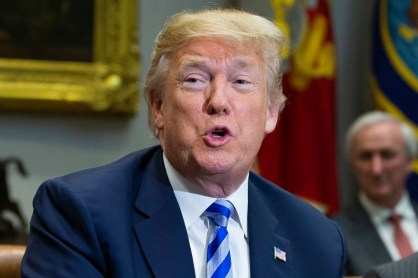
From its start, the Trump administration has been plagued by charges of “chaos.” From the revolving door of senior staffers — including two secretaries of state, three national security advisers and two chiefs of staff — to the president’s brash and sometimes boorish personal style, to his politically incorrect taunt-tweeting, Donald Trump has refused to conform to his political opponents’ conventional notions of what constitutes an effective White House operation.
And yet, the economy is humming, hosts of regulations have been rolled back, the unemployment rate is down, job openings are soaring, taxes have been cut and black joblessness is at an all-time low. Prototypes for the wall along the Mexican border are being tested, raids by ICE are rounding up dangerous illegal aliens and the “travel ban” against several Muslim nations was argued last month before the Supreme Court, where the president’s authority over immigration will be upheld.
In foreign affairs, the two Koreas are talking to each other, with a summit between Trump and North Korean dictator Kim Jong-un slated for June in Singapore, the ISIS “caliphate” has been effectively destroyed and just last week Trump yanked the carpets out from under the Iranian mullahs and canceled the nuclear deal negotiated — but never submitted to the Senate for ratification — by the Obama administration.
In short, this has been the most effective administration since FDR’s first term. And it’s being accomplished in the teeth of the so-called “resistance,” which includes the overt hostility of nearly all the mainstream media, the embedded civil service, the Democrats, the never-Trump Republicans, rogue elements of the intelligence and investigative agencies and Robert Mueller’s investigation into charges of “collusion” with the Russians.
Some “chaos.”
The truth is, as much as they hate Trump’s policies, the president’s enemies hate the man even more. Donald Trump offends the establishment on a personal, visceral level. His opponents are the same folks who idolized Adlai Stevenson and thought Ike was just a dolt who somehow won World War II. Who worshipped John F. Kennedy (but were repelled by LBJ), hated Nixon, thought Reagan was an amiable dunce and erected shrines to Obama. They are the Ivy Leaguers, the credentialists, the Georgetown establishment for whom there is only one right way to conduct a presidency, and that is the Harvard-Democratic-groupthink way.
What Trump understands, however, is what many great leaders have understood: that “chaos,” not consensus, is the way ideas are tried and tested. That if someone or something isn’t working, scrap it and try something else. Results are what count, not consistency: Trump’s ability to morph from saber-rattling lunatic to charming glad-hander infuriates them because they see it as phony.
Trump’s very unpredictability doesn’t just frighten the Beltway bonzes and chin-pullers, it also terrifies his opponents
So what? That doesn’t mean it isn’t also effective. Just ask Emmanuel Macron of France, who couldn’t be less like Trump and yet has developed a curious personal rapport with the brash American boss, akin to that of a puppy around its master. Watch for France to start edging away from the Iran deal as well.
Further, a fleet of yes-men and sycophants isolates and insulates a chief executive from unforeseen consequences. JFK’s best and brightest drove the nation into the sloughs of Vietnam. Nixon’s henchmen concealed from him the political gravity of Watergate until it was too late. Obama was so cocksure of his own moral rectitude, he hardly bothered with constitutional niceties.
Finally, Trump’s very unpredictability doesn’t just frighten the Beltway bonzes and chin-pullers, it also terrifies his opponents. While North Korea’s Kim remains hard to read, he’s also no longer firing missiles over Japan. The Saudis, following the strong American horse, have made their antipathy for the Iranian regime clear and are threatening to acquire their own nukes should Tehran overtly resume its nuke development. Having survived domestic uprisings in 2009 and 2017 by the restive Iranian young people, the graybeard mullahs won’t be so lucky a third time.
True, the fall elections are shaping up as a big test, but Trump has already eliminated some of the thorns in his side, including House Speaker Paul Ryan and Senate gadflies Bob Corker and Jeff Flake, who have announced their retirements. Should the GOP hang on to the House, a Trump-friendly speaker will move the legislative agenda forward.
The big geopolitical test will be a resurgent China, whose new strongman-for-life Xi Jinping will prove a far more formidable adversary than a fading Russia’s Vladimir Putin. Look for Trump to resume his carrot-and-stick handling of Xi: flowers and chocolates one minute, gunboats in the South China Sea the next. The trick is to keep the Chinese guessing and thus proceeding with caution in order to keep the peace.
If that’s chaos, then let us have more if it.
Michael Walsh is an author and contributor to PJ Media and American Greatness. His latest book,“The Fiery Angel,” will be published on May 29.
Source: Paris knifeman kills one in suspected terror attack | The Times of Israel
French police shoot dead assailant; IS claims responsibility; Macron: ”France once again pays the price of blood’
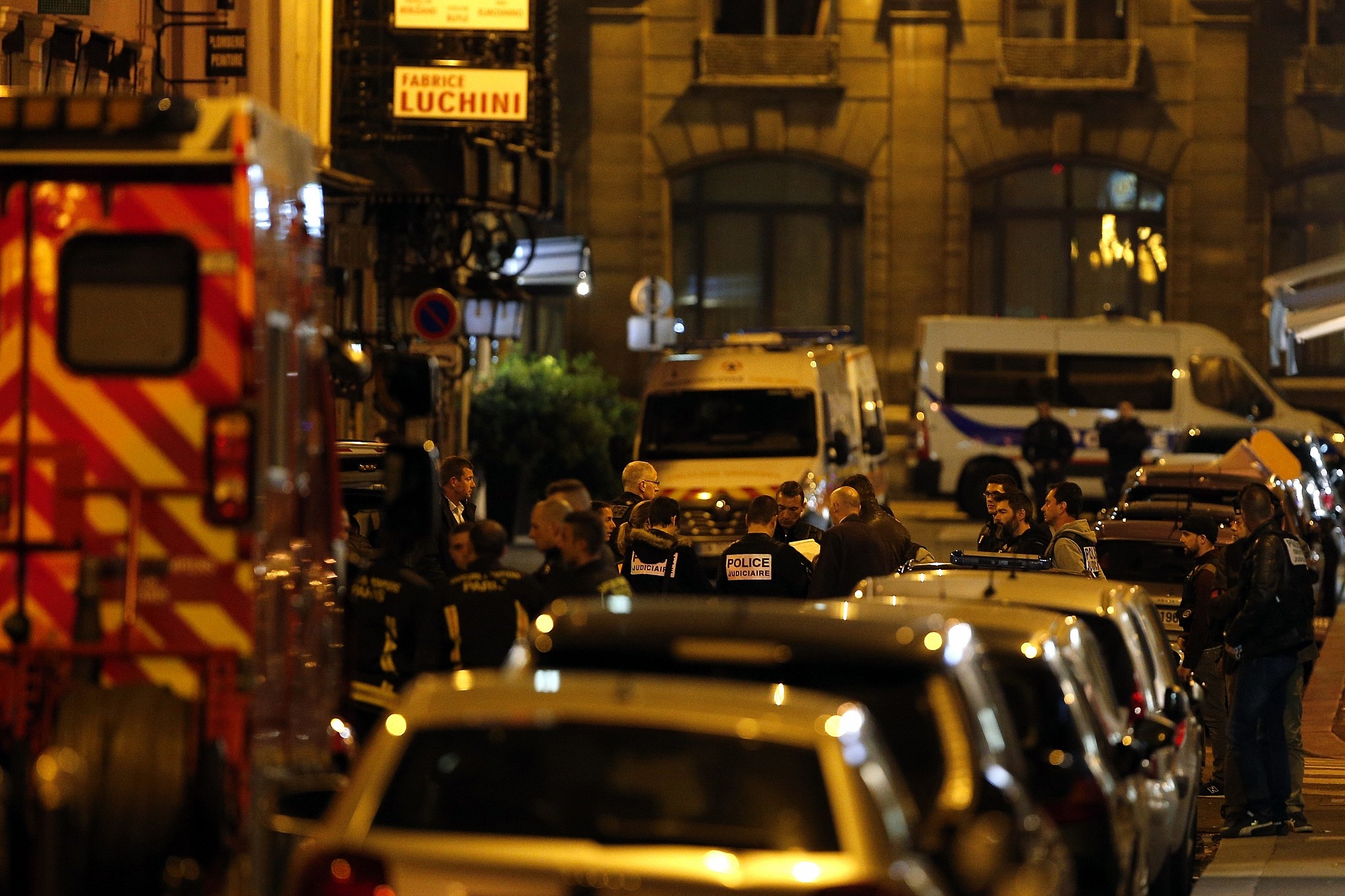
PARIS, France — A knifeman shouting “Allahu akbar” killed one person and injured several more before being shot dead by police in central Paris late Saturday.
Police said the attacker’s motives were still unknown and prosecutors launched a terror probe. The Islamic State terror group claimed responsibility for the attack, according to the SITE monitoring group.
“The executor of the stabbing operation in the city of Paris is a soldier of the Islamic State and the operation was carried out in response to the calls to target the coalition states,” a “security source” told IS’s official Amaq news agency, according to SITE.
The attack took place near the city’s main opera house in an area full of bars, restaurants and theatres which were brimming on a weekend night.
French President Emmanuel Macron said: “France once again pays the price of blood.”

The man attacked five people with a knife, one of whom died, police said. Two were in serious condition and all the victims were hospitalized.
A police source told AFP one officer tried to restrain the attacker with a taser but when that failed a colleague shot the man dead.
Interior Minister Gerard Collomb hailed in a tweet the “sang-froid and reaction of the police who neutralized the attacker.”
Prime Minister Edouard Philippe, who visited police in the district where the attack took place, added: “France is determined not to give in to threats that the attackers hope will grind her (the country) down.”
The attack took place on Rue Monsigny in the 2nd arrondissement, an area that lies between the main opera house and the Louvre museum, two major tourist attractions. A large area was cordoned off where police, fire and rescue vehicles converged.
Shocked tourists and residents looked on from behind the security perimeter.
“I was on the cafe terrace, I heard three, four shots, it happened very fast,” said 47-year-old Gloria.
“The bartenders told us to come inside very quickly. Then I went out to see what was going on, and then I saw a man on the ground,” she added.
Another witness, who gave her first name Maxine, said panic spread as word got out that an attack was taking place.
“We saw someone coming out of a building who said he saw the assailant slaughter someone, so people took refuge in the bar,” she said.
France has suffered a series of major Islamist attacks including the massacre at the satirical newspaper Charlie Hebdo, the November 2015 attacks that killed 130 in Paris, and the 2016 Bastille Day truck attack in Nice that killed more than 80.
There have also been a string of less deadly but frequent attacks by lone wolf jihadists wielding knives or guns. Most of the attacks have either been claimed by the Islamic State group or been carried out in their name.
A state of emergency put in place just after the 2015 Paris attacks was lifted in October when Macron’s centrist government passed a new law boosting the powers of security forces.
French far-right leader Marine Le Pen called for greater security measures after Saturday’s attack.
“The French people will no longer be content with talk, they expect action,” she said.
Thousands of French troops remain on the streets under an anti-terror operation known as Sentinelle, patroling transport hubs, tourist hotspots and other sensitive sites.
Source: The real target of the T-4 attack: the 3rd Khordad system
The 3d Khordad is one of four variants of the Raad aerial defense system, equipped with Taer-2B missiles and a phased array radar.
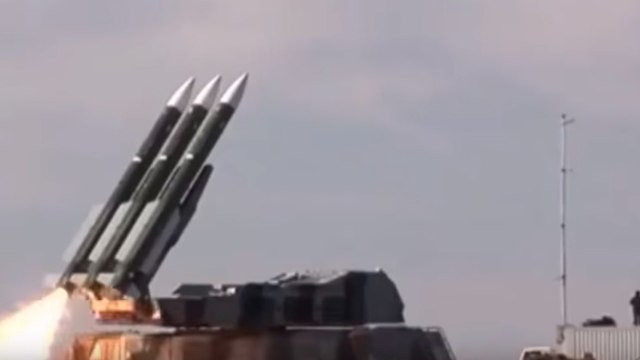
Once the system was unloaded off of an Iranian transport plane on the Syrian T-4 base, it was destroyed before even being unpacked.
The 3rd Khordad system, developed and manufactured by the Islamic Revolutionary Guard Corps (IRGC)’s military industries, was seemingly a copy of the aforementioned Russian S-300—a system capable of intercepting not only planes but also missiles, rockets, cruise missiles and drones deep within Israeli territory.
Israel could not independently verify the new system’s efficacy, but Iran’s own publications spoke volumes. It was first publicized in 2014 by Supreme Leader Ayatollah Ali Khamenei.

Iranians believed it was a tie-breaking system. Another matter attesting to its importance was the fact that senior IRGC officials stood by as it was being unpacked. Its destruction, and the subsequent deaths of Iranian officers, most likely led commander of the IRGC’s elite Quds Force unit Qasem Soleimani to the decision to exact vengeance on Israel.
The aerial defense system seems to have been brought to the region by the Iranians after a different failure of theirs—the Israeli interception of an explosive drone in early February.
The drone was sent out, in fact, as an operational test for a device created using reverse engineering—imitating an American stealth drone that was downed in Iranian territory.
After that interception, Israel destroyed the control trailer in the T-4 base from which the drone was launched. This, in turn, made the Iranians realize their dire need of an aerial defense system of their own to protect them from both the aircraft and missiles Israel was using to bombard their Syria installations.
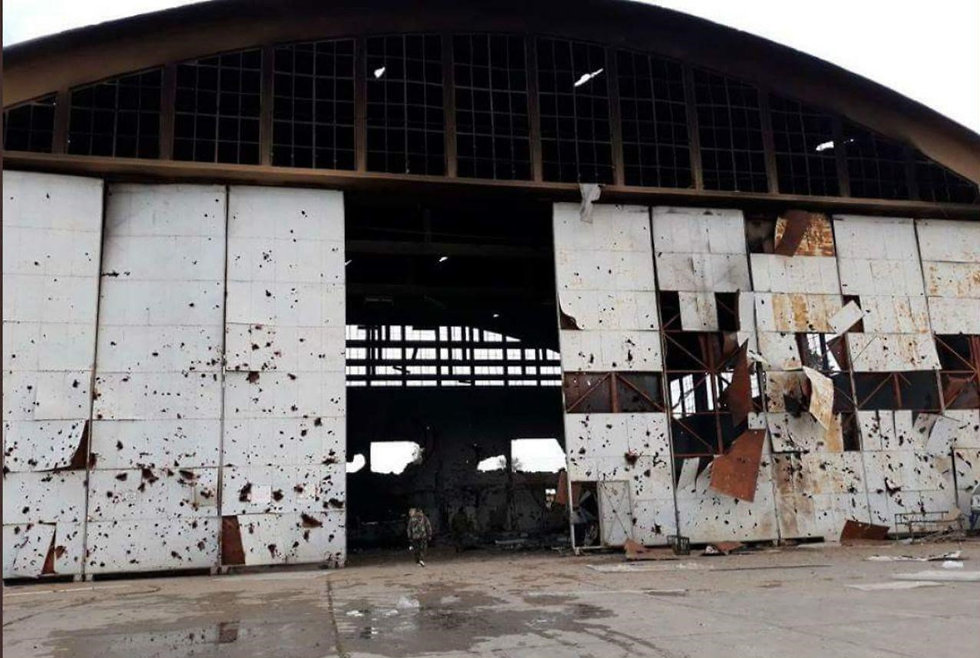
Israel thus decided to take the 3rd Khordad system off the table before the Iranians ever had a chance of testing it, just as they failed in their stealth drone test earlier this year.
According to an Iranian publication from 2014, the system was developed over the course of 18 months and could track any aerial target at a range of up to 50 kilometers.
It could also monitor and intercept fighter jets, they claimed, as well as bombers and cruise missiles at an altitude of up to 25 kilometers. IRGC said the system was comparable to the Russian S-300, and added its effective range will be increased to 100km and then to 200km.
It was not the only weapons system destroyed recently, however, going back to before Iran’s shooting at the Israeli border and Israel’s harsh response.
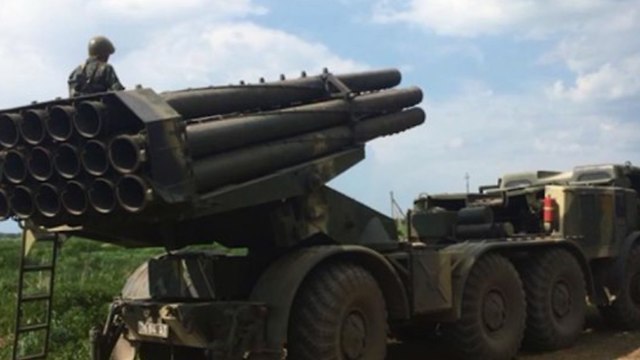
The Uragan system—a launch vessels bearing 16 especially massive Katyusha missiles with a 220 millimeter diameter—was targeted Monday night. That system had a range of 40km with a warhead of 70 to 100 kilograms.
A similar system was destroyed in Syria’s Al-Kiswah the following night, along with its launcher and missiles. That particular system was the one Soleimani planned to use to avenge the destruction of the Khordad system’s destruction, making the Israeli strike preemptory.
Another launch vehicle was destroyed Wednesday evening, but only after firing either a Fajr of Grad rocket at IDF bases near the border.

by Jim Hoft May 12, 2018 Gateway Pundit
{This could be interesting. – LS}
This was despite former Secretary of State John Kerry working against the Trump administration to salvage the weak deal with the Iranian regime.
Of course, the Iranian regime is very upset with President Trump’s decision.
Now this…
Iran’s Foreign Ministry Spokesman Hossein Jaberi Ansari warned Western officials this week that if they do not put pressure on the Trump administration the Iranian regime will leak the names of all Western officials who were bribed to pass the weak deal.
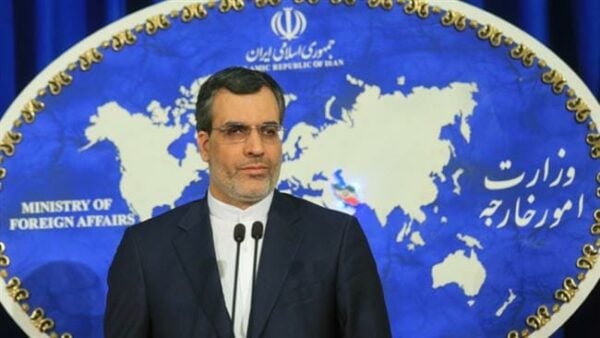
Iran’s Foreign Ministry Spokesman Hossein Jaberi Ansari (Press TV)
Source: IDF destroys terror tunnel in latest air strike – Arab-Israeli Conflict – Jerusalem Post
The tunnel was the ninth to be destroyed by the IDF in a year.
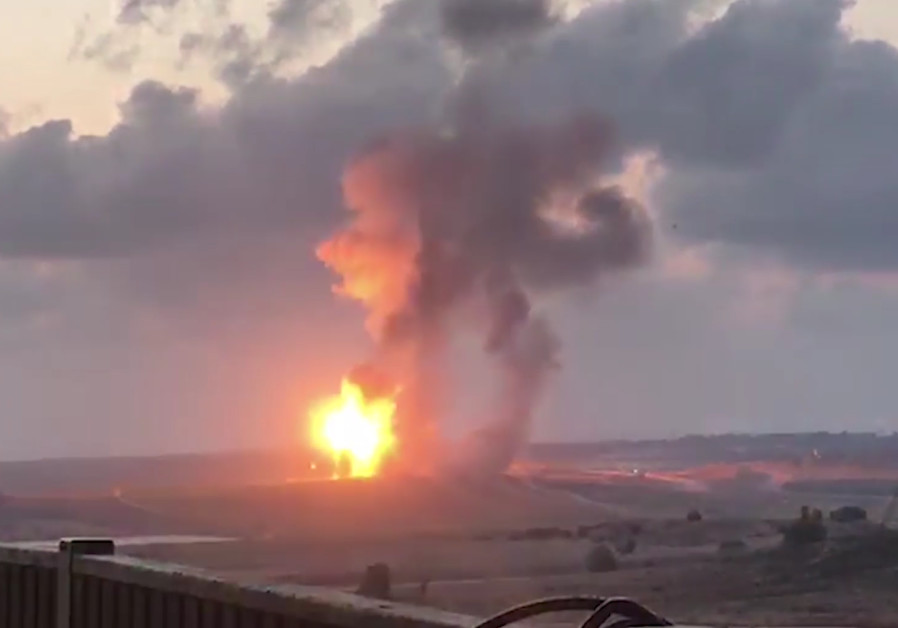
The tunnel had originated in Beit Hanoun and stretched over a kilometer, just meters away from Israeli territory.
“The tunnel was aimed at Israeli communities adjacent to the security fence and near the Erez humanitarian crossing,” the IDF said in a statement.
Defense Minister Avigdor Liberman posted on Twitter that Israel would not buy Hamas’ “bluff” and has said that the militant group has continued to build terror tunnels for years.
According to the army, the tunnel under the Erez crossing – which is designed for humanitarian use – was connected to the terror tunnel that was dug under the Kerem Shalom crossing that was neutralized by the IDF this past January.
“The terror tunnels prove the Hamas terrorist organization’s cynicism towards the residents of the Gaza Strip,” the IDF said.
“The Hamas terror organization continues to invest its resources in constructing terror tunnels and sabotaging humanitarian efforts offered by Israel and other countries for the people of Gaza instead of investing in the Gaza Strip and its peoples’ welfare,” it added.
Israel’s military has been investing extensive effort in locating cross-border tunnels from Gaza and has been building a ground-breaking underground barrier across the entire border with the Hamas-run enclave. Construction of the barrier is expected to cost over 3 billion shekels and be completed within two years.
The underground barrier is made from bentonite and is combined with large iron cages with water-resistant pipes and a system of advanced sensor and monitoring devices to detect tunnels. On top of the underground barrier a 6 m. high above-ground fence will be built to prevent anyone from crossing above ground.
While this tunnel was destroyed by airstrikes, the other tunnels were destroyed by flooding them with material which prevents Hamas from ever using it again.
Over the last six weeks, protests on the Gaza border have seen dozens of Palestinians attempting to destroy or cross the fence into Israel. The IDF has claimed that many of those participating in such activities are involved with or operatives of Hamas.
The IDF has warned Palestinian civilians against approaching the security fence during events planned for May 14th and 15th – Nakba Day – saying that the army will “continue operating with determination in the face of terror both above and below the ground,” in order to prevent harm to come to Israeli civilians or for Israeli sovereignty to be jeopardized.
Shoshana Kranish contributed to this report.




 anneinpt
 artaxes
 danmillerinpanama
 davidking1530
 Peter Hofman
 Joseph Wouk
 Peter
Peter Louisiana Steve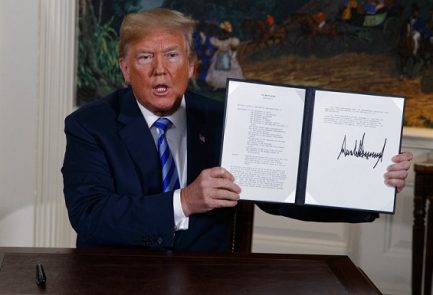
 WarSclerotic
Recent Comments