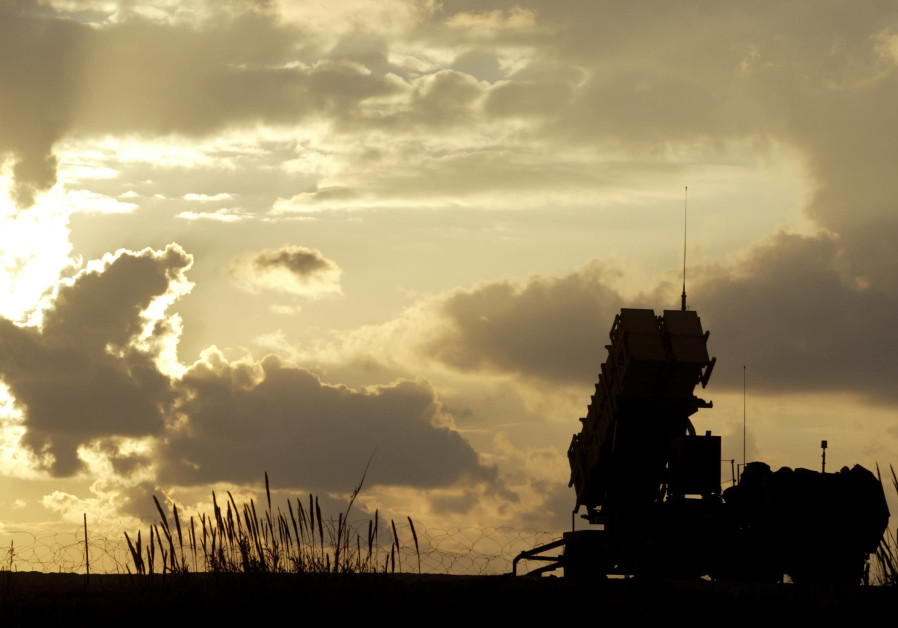
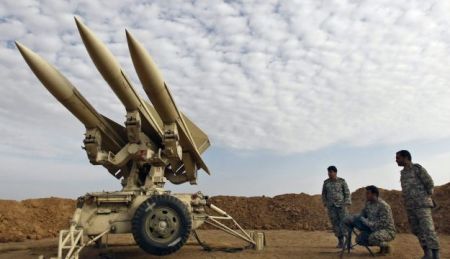
A Patriot anti-missile system deployed in a joint U.S. and Israeli military outpost in Jaffa, south of Tel Aviv is silhouetted against the setting sun. (photo credit: NIR ELIAS / REUTERS)
The IDF confirmed firing a Patriot missile towards an unmanned aerial vehicle approaching Israel’s Golan Heights from Syria on Sunday.
“Air defense systems as well as detection systems identified the threat in advance and before it crossed into the country,” read a statement released by the IDF’s Spokesperson’s Unit adding that the military “will not allow for a violation of Israel’s aerial sovereignty and will act against any attempt to harm its citizens.”
According to the IDF, the UAV was not hit and retreated from the border area following the missile launch.
The drone was in engaged in ongoing operations by the Syrian army, a commander in the regional alliance supporting President Bashar Assad said.
The interception comes amid a large-scale offensive in the southwestern Syrian province of Dara’a aimed at recapturing the strategic areas bordering Jordan and the Golan Heights from rebels.
Over the weekend the Syrian army, backed by Russian airpower and Shiite militias, pounded the rebel-held areas causing thousands of civilians to flee to other opposition held areas along the Israeli and Jordanian borders.
The border with Syria has been tense since the war erupted in 2011, and Israel has stepped out strikes against Iranian military targets in the war-torn country as well as against Hezbollah weapons convoys in Syrian territory.
Israeli officials have repeatedly voiced their concern about the entrenchment of Iran and its proxies such as Hezbollah entrenching themselves in Syria and in February an armed Iranian drone sent to to carry out a sabotage attack was downed by an Apache attack helicopter after it infiltrated into northern Israel after taking off from the T-4 airbase deep in the Syrian province of Homs
Following the infiltration Israeli jets took off to strike the launch site of the drone as well as the drone control vehicle that guided the drone into Israeli territory and were met by massive Syrian anti-aircraft fire. Over 20 missiles were launched toward the Israelis jets from SA-5 and SA-17 batteries. Shrapnel from the Syrian anti-aircraft fire hit one Israeli F-16i causing it to crash in the lower Galilee. Both pilots evacuated from the jet.
Israel has used Patriot missile batteries stationed in the north of the country to intercept drones infiltrating into Israeli airspace from Syria.
In September an Iranian-built unmanned aerial vehicle that breached the “Bravo line” that marks the Syrian demilitarized zone, firing one Patriot anti-ballistic missile stationed near the northern city of Safed.
The previous year a Patriot missile intercepted a UAV that was believed to have been gathering intelligence for the Syrian regime. The system was also used in July 2016, when two Patriot missiles were fired at a suspicious drone that crossed into Israeli airspace from Syria. Both missed their targets and the unmanned aircraft returned to Syria.
Israel’s air defenses also include the Iron Dome, designed to shoot down short-range rockets and the Arrow system which intercepts ballistic missiles outside of the Earth’s atmosphere and the David’s Sling missile defense system is designed to intercept tactical ballistic missiles, medium- to long-range rockets, as well as cruise missiles fired at ranges between 40 to 300km.
This is no surprise. Both the BDS movement and “Palestinian” jihad groups share the same Jew-hatred. BDS is the 21st-century version of Kristallnacht. Remember that the Nazis began their actions against the Jews by holding boycotts of Jewish businesses in Germany. BDS leads directly into the genocidal rhetoric of the “Palestinians.”
“Major BDS groups have ties to Palestinian terrorist organizations, ministry says,” by Ariel Kahana, JNS, June 20, 2018 (thanks to Mark):
The Strategic Affairs Ministry on Tuesday named 42 major anti-Israel organizations as having clear ties to Palestinian terrorist groups.
According to the ministry’s data, these groups – part of a network of 300 boycott, divestment and sanctions organizations operating worldwide – have traceable ties to Hamas and the Popular Front for the Liberation of Palestine, and receive their orders directly from the Palestinian Authority.
This network is directed by the BDS National Committee, which is headed by the co-founder of the global BDS movement Omar Barghouti, who holds permanent Israeli residency status and lives in the northern city of Acre.
The Strategic Affairs Ministry, tasked by the Diplomatic-Security Cabinet with heading Israel’s efforts to counter the BDS movement and its efforts to delegitimize Israel, has spent the past two years mapping what it calls the “network of hatred.”
The ministry’s data shows that not only do Hamas and the PLFP support BDS activists in theory, their operatives take an active part in BDS initiatives.
The report names, for example, the Al-Haq human rights organization, Defense for Children International – Palestine, and the Al-Dameer Association for Human Rights as being headed by former PFLP operatives.
Al-Haq is chaired by Shawan Jabarin, of Ramallah, who served 13 years in an Israeli prison for being a member of the PLFP’s military wing. Jabarin is a leading figure in the BDS movement’s lawfare campaign against Israel, especially its attempts to pursue legal action against Israeli officials in the International Criminal Court in The Hague.
Other examples include groups such as the Palestinian Return Center, which the ministry says promotes Hamas interests in Europe; and members of the U.K.-based Palestine Solidarity Campaign and Friends of Al-Aqsa group, which the ministry says have neem with Hamas leader Ismail Haniyeh, participated in the 2010 Navi Marmara flotilla that sought to breach the maritime blockade on the Gaza Strip, and have recently held a demonstration outside the British Prime Minister’s Office in support of Hamas so-called “March of Return” or Gaza border riot campaign.
Speaking at the biennial GC4I conference in Jerusalem Wednesday, attended by the directors of over 150 pro-Israeli groups, as well as Jewish community heads and activists from around the world dedicated to fighting the BDS movement, Strategic Affairs Minister Gilad Erdan said much of the anti-Israel group’s momentum is fuel by the Palestinian Authority.
Ramallah is a longtime proponent of anti-Israel boycotts and the National Palestinian Council has officially endorsed the BDS movement during its annual meeting in May.
”We have seen the attempts led by senior Palestinian Authority officials to suspend Israel from FIFA and to promote various ’blacklists‘ at the U.N. Human Rights Council. These campaigns have all been widely promoted by the network of hatred exposed by the Strategic Affairs Ministry,” he said….
Supporters of Turkish President Tayyip Erdogan attend his election rally in Istanbul, Turkey, June 23, 2018. (photo credit: ALKIS KONSTANTINIDIS / REUTERS)
Fifty-six million registered voters in Turkey will head to the polls on Sunday in an election with far-reaching ramifications. The elections will transform Turkey into a presidential system, concentrating power in the hands of whoever wins. It will also have consequences for the Middle East and for Ankara’s relations with Russia, Iran and the West.
The election is being called the “great transformation” to “determine the future” that will create a “new era,” according to Turkish media headlines. Justice and Development Party (AKP) leader Recep Tayyip Erdogan has been the leading figure in Turkey since his AKP came in first in 2002. In many ways, the election Sunday is a referendum on a decade and a half of his rule and his party’s dominance.
Erdogan was prime minister from 2003 to 2014 and has been president since 2014. He has systematically sought to concentrate power in his hands with the decision to turn Turkey into a presidential system and abolish the office of the prime minister. He accomplished that task through a 2017 referendum in which 51% voted to give more powers to the president, hitherto a weaker position. The referendum provides the president more power over the judiciary and the appointment of judges and allows the president to be a member of a political party, whereas previously the presidency was ostensibly apolitical.
Erdogan is also accused of eroding other aspects of Turkey’s democracy. Since a 2016 coup attempt, the country has been in a state of emergency. “Authorities have used emergency powers to all but silence independent media in Turkey,” Human Rights Watch claimed.
After the coup attempt, Turkey arrested thousands and fired tens of thousands of workers, accusing them of being members of the Fethullah Terrorist Organization (FETO), a shadowy organization run by a cleric in the US that Ankara alleges masterminded the coup. Teachers, professors, soldiers and police have been accused of various roles in the coup.
In addition, Turkey’s ruling party has passed a number of laws and made widespread changes to society over the last decade, seeking to bring more religious overtones into society. These include major changes to the educational curriculum, and an increase in the use of Islamic law. New laws in 2013 sought to restrict sales of alcohol, the harshest in 89 years of the country’s history as a secular republic.
The presidential election would not change all these laws immediately, but an upset would mark a historic break after a decade and a half in which Turkey has trended toward a more authoritarian and religious country.
The opposition
Eight political parties are running and there are six presidential candidates. The parties participating include the AKP, the Republican People’s Party (CHP), the People’s Democratic Party (HDP), the Good Party (IYI) and the Nationalist Movement (MHP). The CHP has put forward Muharrem Ince, while the HPD is running Selhattin Demirtas, a Kurdish politician who is campaigning from prison. Meral Aksener of the newly formed IYI – a former interior minister in the 1990s – is the most prominent woman in the elections.
The opposition parties, particularly the CHP, see this election as the last chance to chart a new course for Turkey. In April, 15 members of the CHP in parliament switched to become part of Aksener’s new party so Aksener could run in the elections. The election law required that candidates had 20 members of parliament in order to field a presidential candidate. “Our friends will not go down in history as MPs who left their party, they will go down as heroes who saved the democracy following their responsibility to their party,” Bulent Tezcan, a CHP spokesman, said in April.
One problem for the opposition is that it has been divided in its response to the AKP over the years. The AKP and MHP are running together in this election, while four opposition parties also formed an alliance. This alliance includes the CHP, IYI and two smaller parties: the Democratic Party and the Felicity Party. Another issue facing for the opposition is that while the CHP is a center-left party representing the old secular tradition in Turkey, while the Felicity Party is a conservative Islamic party.
Aksener also comes from a right-leaning nationalist tradition. So the opposition combines most of the spectrum of Turkish politics. The one thing it does not include is the mostly Kurdish leftist HDP, whose candidate Demirtas is currently in prison. Despite the HDP’s Kurdish roots, many Kurds have historically also voted for Erdogan’s AKP; the Kurdish vote in this election may once again help Erdogan secure just enough to win the election. Kurdish votes, for instance, were vital to him winning the 2017 referendum.
Over the last decade, the AKP has usually performed well in the conservative center of the country, while the more secular western districts vote for the CHP, and the HDP takes many Kurdish votes in the east. If this election plays out like ones in the past, the opposition might win more parliamentary seats but Erdogan will win the presidency.
Foreign policy and minorities
Turkey has become deeply involved in the conflict in Syria in the last few years. In August 2016, along with Syrian rebel allies, it took over a corridor from the Euphrates River to the border town of Kilis. It sent more soldiers into Syria near Idlib in 2017, and in January 2018 moved into the Kurdish area of Afrin, establishing a dozen observation points in Syria with regular patrols. In June, it also began patrols in Manbij, an area controlled by the US-backed Syrian Democratic Forces.
Turkey has accused the US of backing “terrorists” in Syria by working with the Kurdish People’s Protection Units (YPG). Since 2015, Turkey has been fighting the Kurdistan Workers Party (PKK). Ankara accuses the PKK and YPG of being the same entity. Under Erdogan, Turkey has also increased operations in Iraq, where it maintains several military outposts. The AKP has threatened to send the Turkish Army to Iraq’s Sinjar and Qandil regions to root out the PKK presence there.
In the lead-up to the poll, Turkey’s foreign minister called for a joint effort with Iran against the PKK. In addition, Turkish media has reported new arrests of ISIS terrorists, PKK members and FETO conspirators on the eve of the election. The reports make it seem as if Turkey is under siege by various terrorist groups and feeds a feeling of being under siege from foreign threats, in general.
During the campaign, both the CHP and AKP have campaigned for votes of the Alevi minority. The AKP prime minister promised to legalize their places of worship after the elections. Erdogan has also claimed that his government has helped Kurds, improving standards of living and ending “denial policies and policies of rejection,” a reference to the pre-1991 policies in which Kurds were portrayed as “mountain Turks” and their existence denied.
Syrian refugees
There are 3.5 million Syrian refugees in Turkey and their presence has become controversial. After the refugee crisis in 2015, the European Union began paying Turkey to host the refugees. Both the opposition and the AKP have talked about returning them to Syria. Turkey is now looking to build a university in Al-Bab in Syria, an area it controls, and Erdogan says that 200,000 refugees have returned to “liberated areas” in Syria. In a speech at Gaziantep, he promised to “make all Syrian lands safe” after the election.
Muhammad Ruzgar, a Syrian commentator, says that for many Syrians in Turkey, Erdogan has been a guarantor of their ability to stay in the country. “If Erdogan does not win, the Syrian situation will get worse.” He says thousands of Syrians have received Turkish citizenship and that if the opposition wins, Syrian refugees will face pressure and harassment and the opposition will cut support to the Syrian rebels in Syria.
Does Turkey’s election matter to Israel?
Israel-Turkish relations have been on a roller-coaster ride since Erdogan and his AKP came to power in 2002. At Davos in 2009, Erdogan publicly excoriated then-president Shimon Peres over Israel’s Gaza conflict. Then there was the MV Mavi Marmara, and most recently Ankara’s outrage over the US Embassy move to Jerusalem.
Israel has not been a major issue in the current political campaign. The opposition Republican People’s Party was harshly critical of Israel, condemning the “massacre” in Gaza on May 14 and advocating tearing up an agreement signed by Israel and Turkey. It is unclear if the Turkish election will have ramifications for the difficult relationship. Economic relations between Ankara and Jerusalem are good and have been increasing steadily in recent years, although strategic military-to-military cooperation has been downgraded in the last decade.
Rhetoric is frequently hostile against Israel in Turkey. For instance, the appearance of Israeli flags during the Kurdistan referendum in Iraq in September 2017 caused anger in Ankara.
In addition, Turkey’s current government has been meeting more often with Iran. Would the opposition reduce relations with Iran? Not necessarily. Erdogan has sought to position himself as an Islamic leader on the Jerusalem issue, hosting Muslim leaders from around the world and expressing outrage at Israel’s Jerusalem policies.
The AKP also has had amicable relations with Hamas. The opposition parties are more secular, but they also champion the Palestinian cause. In the end, Israel-Turkish relations will not return to the period when they were closest, in the 1990s. The historic election, which is very important for Turkey and the region, will not change that. The likely effect is that an Erdogan victory will encourage his tough regional stance on Israel’s actions, whereas an opposition victory will cause Turkey to become more inwardly focused.
After the breakdown of Russian-Israel talks, the Russian Air Force on Saturday night, June 23, bombed Syrian rebel targets in support of Assad’s southwest offensive. This was contrary to Russian promises to Israel.
The Russian bombers taking off from the Hmeimim air base in Latakia, launched 25-30 sorties over the small town of Busr al-Harir in Daraa province bordering on Jordan, one of the locations which fell to the Syrian army last week. In their talks with Israel, the Russians said that while giving Assad the nod to go for Daraa and Quneitra opposite Israel’s Golan border, they would withhold air support.
Their bombardment also ignored stern American warnings: Last week, the State Department warned Assad and his Russian allies of “serious repercussions” for violating the de-escalations arrangement reached last year between Presidents Donald Trump and Vladimir Putin. Then, on Saturday, US Ambassador to the UN Nikki Haley condemned the Syria attack on the southern Syrian borders with Israel and Jordan as “unambiguously violating” that arrangement. “Russia will ultimately bear responsibility for any for escalations in Syria,” Haley said.
At the same time, on Sunday, social media reported that the US through its embassy in Amman had sent this message to all Southern Front (rebel) leaders: Make your own decision, but “you should not base your decision on the assumption or expectation of military intervention by us.”
There is no official confirmation from Washington of this message. DEBKAfile: If the Trump administration has indeed backed away from supporting the southern front rebel leaders against Syrian army, Russian-backed attack, this may be interpreted as signifying President Donald Trump’s decision not to allow the contest over southwest Syria and Jordanian and Israel borderlands stand in the way of an early summit with Russian President Vladimir Putin.
Israel would then be left to cope on its own with fending off the drive of the Syrian army and its allies, Hizballah and the pro-Iranian Shiite forces, up to its borders. In this eventuality, the IDF has two options:
Non-intervention like the US and acceptance of a Syrian military presence along its northern border.
Intervention by air and ground-to-ground missile strikes against Syrian military and allied targets to halt their advance. There is no sign of the Israeli government or military chiefs gearing up for such an operation.
But meanwhile, a Syrian refugee problem is building up on its Golan border. Some 12,000 refugees are reported to have fled their homes since the Syrian army captured small towns and villages in the Daraa province. Thousands are gathering on the Israeli border and setting up tents.
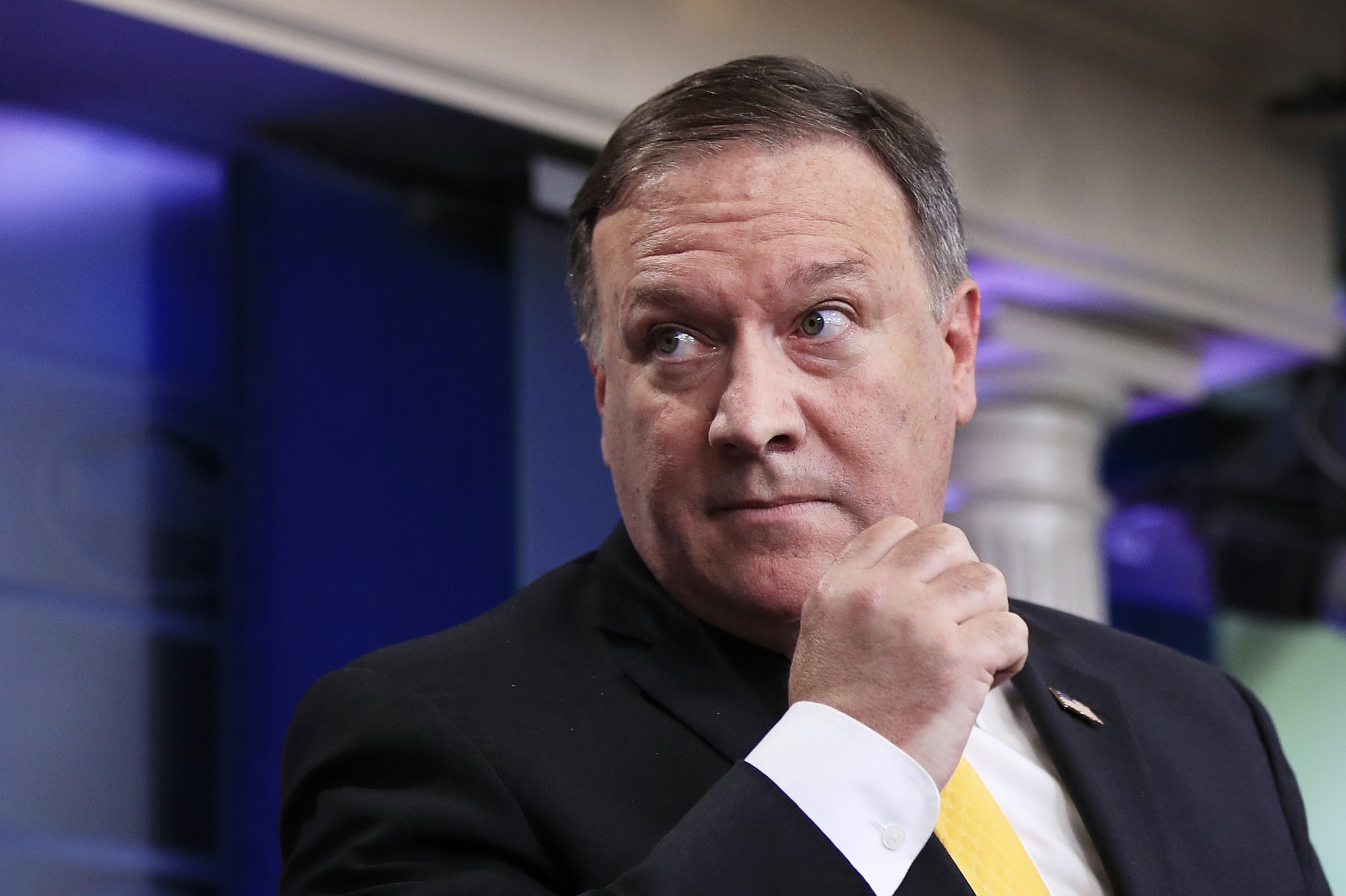
US Secretary of State Mike Pompeo talks to reporters about North Korea during the daily press briefing in the Brady press briefing room at the White House, in Washington, June 7, 2018. (AP Photo/Manuel Balce Ceneta)
US Secretary of State Mike Pompeo said he hoped the US would never have to take military action against Iran, but warned that should Tehran pursue the acquisition of nuclear weapons, it would stand to face the “wrath of the entire world.”
Speaking during an interview with MSNBC broadcast on Saturday, Pompeo said that no matter the fate of the 2015 Iranian nuclear deal — which the US pulled out of last month, angering Tehran and America’s European allies and signatories to the agreement — it would not be in Iran’s interest to develop nuclear arms.
“I hope they understand that if they begin to ramp up their nuclear program, the wrath of the entire world will fall upon them,” he said, during the wide-ranging interview which focused heavily on Washington’s recent outreach to North Korea, and ongoing talks on Pyongyang’s denuclearization.
“When I say wrath, don’t confuse that with military action. When I say wrath, I mean the moral opprobrium and economic power that fell upon them. That’s what I’m speaking to. I’m not talking to military action here. I truly hope that that’s never the case. It’s not in anyone’s best interests for that,” he added.
Pompeo said that US President Donald Trump has been “very clear” on Iran. “Iran will not get a nuclear weapon nor start its weapons program on this President’s watch,” he said, according to a transcript of the interviewmade available by the US State Department.
Trump’s announcement on May 8 that Washington was withdrawing from the Iran nuclear deal was a fulfillment of a campaign promise made by the then-candidate to scrap the deal. The US president had often blasted the controversial agreement forged under his predecessor, President Barack Obama, casting it as “defective” and unable to rein in Iranian behavior or halt the Islamic Republic’s quest to develop nuclear weapons. Trump said the 2015 agreement, which included Germany, France, Russia, China, and Britain, was a “horrible one-sided deal that should never ever have been made.”
European allies Germany, France, and Britain had urged Trump to remain part of the deal and said they would stick by the agreement regardless.
In his Saturday interview, Pompeo rebuffed the suggestion that America had “separated from our allies on this issue of Iran,” and suggested that although allies may have disagreed with Washington’s move to withdraw from the accord, they understand the wider threat posed by Iran
“When I talk to my Arab friends, the Israelis, all of those in the region, they are right alongside us. And even when I speak to the Europeans, with whom we have a difference about the JCPOA [the Joint Comprehensive Plan of Action, as the deal is formally called] they too understand the threat that Iran presents, whether it’s malign activity with [Lebanese terror group] Hezbollah or in Yemen or in Syria or in Iraq, or its missile program that is launching missiles into airports that Westerners travel through,” he said.
“There is a unified understanding of Iran’s malevolent behavior, and it will be an incredibly united world should Iran choose to head down a nuclear weapons path,” he added.
While the fate of the JCPOA is not yet clear as Iran has said it will remain in the deal but could resume nuclear activity if need be, Pompeo said that “if they began to move towards a weapons program, this would be something the entire world would find unacceptable, and we’d end up down a path that I don’t think this is the best interest of Iran, other actors in the Middle East, or indeed the world.”
( Merklel has already ruined Europe with her open immigration policies, I am completely unmoved by her “crocodile tears” about Iran. – JW )
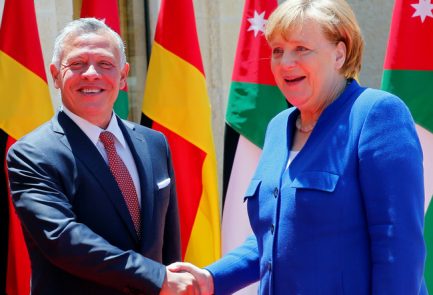
We see Iran’s activities with regard to Israel’s security and with regard to Jordan’s border,” German chancellor says after meeting Jordan’s King Abdullah • “Iran’s aggressive tendencies must not only be discussed, but rather we need solutions urgently.”
Reuters and Israel Hayom Staff
Jordan’s King Abdullah and German Chancellor Angela Merkel in Amman
|Photo: Reuters
European countries share concerns over Iran’s ballistic missile program and want solutions to its “aggressive tendencies” in the Middle East, German Chancellor Angela Merkel said on Thursday.
“Iran’s aggressive tendencies must not only be discussed, but rather we need solutions urgently,” Merkel said after meeting with Jordan’s King Abdullah in Amman.
She announced 384 million euros ($445 million) of aid to Jordan this year.
Germany has remained party to the 2015 Iran nuclear deal, which lifted sanctions on Iran in exchange for it curbing its nuclear program, after U.S. President Donald Trump withdrew from it in May.
Merkel said on Thursday that while European countries want to maintain the accord, they share concerns over Iran’s ballistic missile program, its presence in Syria, and its role in the war in Yemen.
Iran is a major military supporter of Syrian President Bashar Assad, sending some of its own forces to Syria and backing Shiite militias from Lebanon and Iraq who are fighting there.
Gulf and Western countries accuse Iran of arming the Houthi rebel group in Yemen, an allegation it denies.
Merkel also voiced support for Jordan’s concerns about Iranian activity in southwestern Syria near the Jordanian and Israeli borders, where Syria is ramping up military action.
“You live not just with the Syria conflict, but also we see Iran’s activities with regard to Israel’s security and with regard to Jordan’s border,” she said.
Earlier this month, after meeting Prime Minister Benjamin Netanyahu, Merkel said Iran’s regional influence was “worrying, especially for Israel’s security.”
King Abdullah, who met Netanyahu on Monday and Trump’s son-in-law and regional envoy Jared Kushner on Tuesday, said there could be no peace in the Middle East without a Palestinian state with Jerusalem as its capital.
The United States is preparing a new peace plan, which has not yet been made public, but has already angered Palestinians by recognizing Jerusalem as the capital of Israel.
Abdullah this month appointed a new prime minister after the country’s biggest protests in years over taxes and price increases pushed by the International Monetary Fund.
Merkel said reforms should be balanced and “not hit the wrong people.”
In addition to the aid for Jordan, Germany is also providing it with a $100 million credit line to help it cope with the requirements of the IMF reforms, Merkel said.
( Haaretz is a heavy leftist newspaper. Like most of the MSM they can’t stop gnashing their teeth at every success either Trump or Netanyahu achieve. They have to work real hard with pretzel-like logic in this article to show that Trump is actually BAD for Israel. Pathetic… – JW )
Netanyahu always tells us Trump has Israel’s back on Iran. But the president won’t confront tyrants, intent as he is on unraveling America’s commitments abroad. If Tehran races to nuclear capability, Israel will pay the price – alone
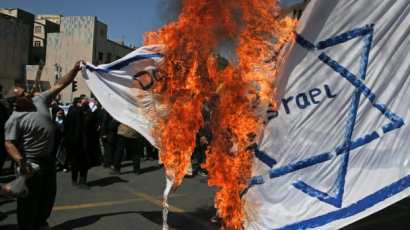
Iranian protesters burn a representation of the Israeli flag in their annual anti-Israeli Al-Quds, Jerusalem, Day rally in Tehran, Iran. June 8, 2018Vahid Salemi/AP
As U.S. President Donald Trump’s behavior becomes increasingly erratic and grotesque, untethered to decency or truth, his right-wing supporters in Israel and the American Jewish community are getting a little nervous.
At times, the president of the United States seems, in the words of Andrew Sullivan, to be simply “bonkers.” The latest round of Trump outrages, involving the incarceration of infants and toddlers, has left even his most hard-core backers wondering if the president’s megalomania has obliterated his grasp of reality.
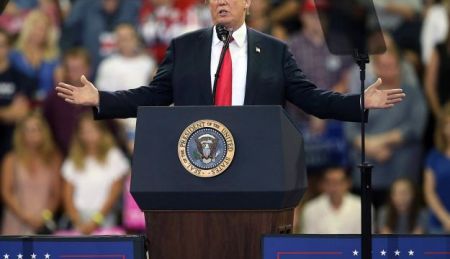
U.S. President Donald Trump speaks at a campaign rally, Wednesday, June 20, 2018, in Duluth, Minn. Jim Mone/AP
Nonetheless, right-wing Jews in Israel and America, led by Prime Minister Benjamin Netanyahu, seem prepared to overlook Mr. Trump’s deficiencies. Yes, they acknowledge off the record, the president is crude and crass. Yes, he engages in regular ridicule of “others” – Muslims, Mexicans, Arabs, Europeans, Hispanics, and especially, immigrants. Yes, he has unleashed popular passions that threaten liberty and give comfort to bigots and anti-Semites.
But never mind, because Trump is a friend of Israel. He has put the Palestinians in their place. He moved the American embassy from Tel Aviv to Jerusalem. And above all, he pulled America out of the hated Iran deal, removing the threat that this deal posed to Israel’s very existence.
For those who are perplexed by Jewish attitudes toward Trump, Iran is the key to the puzzle. How can Israel, and so many Jews, stand behind a fanatic bully like Trump? The answer is that, in some respects, it is precisely due to his unrestrained temperament.
Nehemia Shtrasler made this argument in Haaretz. Both America and Israel, he wrote, are threatened by evil terrorist regimes like Iran and North Korea. And President Trump recognized what his predecessor U.S. President Barack Obama could not see: that a language of threats and force is the only way to contend with the tyrants in our dangerous world.
Why did Kim Jong Un promise to “denuclearize”? According to Shtrasler, because the American president imposed sanctions and threatened to annihilate Kim’s country, causing him to change his strategy. And the same threatening, tough-guy approach will soon work with Iran, which is already feeling the pressure of newly-imposed American sanctions.
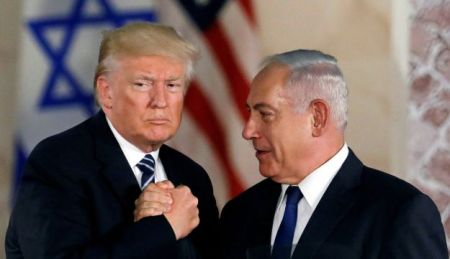
U.S. President Donald Trump and Israeli Prime Minister Benjamin Netanyahu shake hands after Trump’s address at the Israel Museum in Jerusalem May 23, 2017.RONEN ZVULUN/REUTERS
And so, the thinking goes, Trump may be an imperfect, inexperienced, shoot-from-the-hip president. But as Netanyahu is always reminding us, this president has Israel’s back. And in scrapping the nuclear agreement with Iran, we are told, he has saved the Jewish state.
The problem with this argument is that it is wrong.
To Nehemia Shtrasler and Trump supporters everywhere, I suggest that they consider the following: Trump is a betrayer. In his non-stop efforts to promote himself and his very narrow view of American interests, he has betrayed virtually every country friendly to America and every alliance of which America is a part. He has betrayed NATO and the European Union. He has betrayed Britain and Canada. He has betrayed Japan and South Korea.
And Israel and the Jewish people are not exempt. When it comes to Iran, they too will be betrayed.
Let us look at the facts.
Shtrasler sees in Trump’s actions a principled toughness against America’s enemies. But Trump has few real principles other than self-advancement and political survival. And while it is true that the Iran nuclear agreement is deeply flawed, Trump’s campaign promise to withdraw from it was not rooted in commitment to Israel’s welfare. In fact, Israel played virtually no role in Trump’s political life prior to the election.
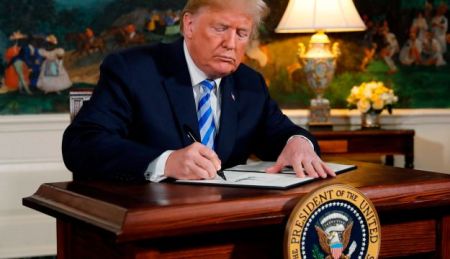
U.S. President Donald Trump signs a proclamation declaring his intention to withdraw from the Iran nuclear deal, May 8, 2018.\ JONATHAN ERNST/ REUTERS
Trump opposed the deal for a variety of reasons: He loves being a foreign policy maverick, the deal was identified with Obama, and it was unpopular with Evangelical Christian leaders. And since most Americans didn’t much care about it, abandoning it was relatively risk free.
But this rationale hardly means that the president has a plan for what to do now, or that Israel will end up better off than it was before. In fact, the opposite is almost certainly true.
Trump and administration officials claim that American sanctions at a time of economic uncertainty in Iran will force the Iranians back to the negotiating table to make a “better deal.” Such a scenario is not impossible.
But another alternative, more likely in many ways, is that rigorously enforced sanctions will push the Iranians to renounce the agreement themselves and resume nuclear enrichment activity. As Amos Yadlin and Ari Heistein point out in The Atlantic, Iran will choose negotiations over bomb building only if there is “the credible threat of a military strike.”
And while many in Israel and the Jewish community do not want to admit it, such a threat simply does not exist.
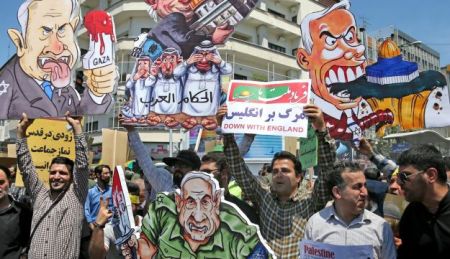
Iranian protesters hold up caricatures of leaders of Israel during the annual anti-Israeli Al-Quds, Jerusalem, Day rally in Tehran, Iran, Friday, June 8, 2018Ebrahim Noroozi/AP
President Trump loves to talk tough. He loves to shock and disrupt, and to bully and brag. But bullies, as we know, are not strong; they are weak. When confrontations come, they back away. And to the extent that Trump’s foreign policy has a direction at all, it is to withdraw from overseas commitments and to extricate America from engagement abroad.
Stephen Sestanovich argues correctly, also in The Atlantic, that Trump is not a simple isolationist. He has too big an ego for that. He is not opposed to a measure of activism if the cost is small and if he can make himself appear strong, decisive, and, for example, a terrorist fighter. Nonetheless, while Trump does not have a consistent foreign policy, certain sentiments and instincts dominate his world view – and always have. And the most important of these is resistance to significant American military involvement.
What all this means is that if Iran returns to nuclear enrichment, America will not act militarily. Trump’s view is that trade wars are one thing, but fighting wars are costly, messy, and unpopular. Foreign conflicts are to be avoided, period. And to his own deep reservations must be added his Putin obsession. Russian Prime Minister Vladimir Putin, we should remember, values his relationship with Iran and its leaders. That Trump would bomb Iran against Putin’s wishes is unthinkable.
Obviously, no one wants America to go to war. And it would be far better to resolve America’s problems with Iran in peaceful ways. But the point is that Trump pulled out of the Iran deal without having a Plan B, or for that matter, even a Plan A. And if Iran decides to race to nuclear capability, a real possibility, the country that will be most threatened is Israel.
Trump, in other words, is not a confronter of tyrants. He is an appeaser of tyrants, intent on unraveling America’s commitments abroad. And Israel is likely to pay the price.
Iranian military prepare missiles to be launched. Iran claims its air defenses can challenge potential Israeli air strikes. Nov. 13, 2012AP
Yadlin and Heistein recognize this possibility, and their proposal is that Israel should be prepared to act alone, with an American “green light.” But as they note, it would be essential for Israel to conduct a surgical strike and then find a way to avoid further escalation.
The problem, of course, is that it is not at all clear that a surgical strike would be sufficient to knock out Iran’s nuclear capacity; most American experts think it would not. And following an Israeli attack on Iran, escalation of the conflict is not only possible but likely.
Bottom line? If the result of President Trump’s actions is that Iran does not make a deal but opts to obtain the bomb, Israel will be exposed as it has never been before. Netanyahu’s fawning over Trump will have been for naught. Israel will have been betrayed.
Netanyahu has always expected that he will be remembered by history for his role in dealing with Iran. He will be. But that role may be different than the one he anticipated.
Eric H. Yoffie, a rabbi, writer and teacher in Westfield, New Jersey, is a former president of the Union for Reform Judaism. Twitter: @EricYoffie
The proliferating anti-Israel activism, driven by the rise to power of the political far-left, is establishing Spain as the EU member state most hostile towards the Jewish state.
A Madrid-based organization, Action and Communication on the Middle East (ACOM), which is fighting the anti-Israel BDS movement in Spain, said that Valencia’s motion was anti-Semitic and an incitement to hatred.
“The BDS movement in Spain acquired its current virulence with the emergence of Podemos, a ‘Chavist’ far-left party financed by Venezuela and Iran…. As Podemos gained control of the municipal governments in the main Spanish cities, the anti-Israel movement had access to multiple economic, human and organizational resources…. Podemos has driven over 90 such declarations in Spain in jurisdictions covering a population of over eight million people” — Ángel Más, president, ACOM.
Valencia, the third-largest city in Spain, has approved a motion to boycott Israel and slander it by declaring the city an “Israeli apartheid-free zone.” The move comes days after Navarra, one of Spain’s 17 autonomous communities, announced a similar measure. In all, more than 50 Spanish cities and regions have passed motions condemning Israel. The proliferating anti-Israel activism, driven by the rise to power of the political far-left, is establishing Spain as the EU member state most hostile towards the Jewish state.
The Valencian measure, introduced by the far-left party València en Comú, was approved during a plenary session of the city council on May 31. The motion, which commits the city to refrain from engaging in business contacts or cultural events with Israeli authorities or companies, aims at establishing Valencia as “a global reference for solidarity with the Palestinians.”
The city of Valencia, Spain has approved a motion to boycott Israel and slander it by declaring the city an “Israeli apartheid-free zone.” (Image source: Ben Bender/Wikimedia Commons)
The motion, which libelously describes Israel as an “apartheid regime,” accuses the Jewish state of “colonialism,” “racism,” “ethnic cleansing,” “tyranny,” and “genocide.”
The measure, which claims to reflect the “dignity, solidarity and justness” of the Valencian people, was introduced by Neus Fábregas Santana, a city councilor whose Twitter feed reveals an obsession with demonizing and delegitimizing Israel.
Santana works closely with a group called BDS País Valencia, the local branch of a worldwide movement trying to delegitimize Israel, the only democracy in the Middle East.
BDS País Valencia is currently promoting a Spanish documentary about the Gaza Strip called “Gas the Arabs,” a title that alleges, falsely, that the Jews in Israel are doing to the Arabs today what the Nazis in Germany did to the Jews during the Second World War.
An activist with BDS País Valencia, Mireia Biosca, said the motion in Valencia had three objectives:
“The first is the dismantling of the apartheid wall and the return to the borders of 1967. The second is the end of apartheid both in Palestine and in Israel, and the third is the right of return.”
Biosca also said BDS País Valencia would work to prevent the Eurovision song contest from being held in Israel in 2019:
“There is a very clear line: first to ensure that states do not participate in the festival, and obviously a campaign to prevent the festival from being in Jerusalem. For me it is equally boycottable if it is decided that Eurovision will be held in Tel Aviv….”
A Madrid-based organization, Action and Communication on the Middle East (ACOM), which is fighting the anti-Israel BDS movement in Spain, said that Valencia’s motion was anti-Semitic and an incitement to hatred. It said it was studying whether to take legal action against the City Council of Valencia for violating the Spanish Constitution and promoting discrimination based on religion, ethnicity or national origin:
“The declaration is full of lies, manipulations and libels, whilst it calls for the city to formally adhere to the BDS movement and declare itself ‘free of Israeli apartheid’ (a known euphemism in Spain for Judenrein [free of Jews], where any perceived sympathizer of the Jewish State is demanded to publicly denounce the policies of the only democracy in the Middle East in order to be admitted to social, political, economic or civic activities in the municipality) ….
“We informed the local press of the illegality of the BDS campaign, detailing dozens of judicial cases won by ACOM in the Spanish Courts that proved the unconstitutionality of exclusionary measures.”
ACOM has filed more than twenty lawsuits against provincial and town councils which have enacted boycotts of Israel.
Much of the BDS activity in Spain is being promoted by Podemos (translated in English as “We Can”), a neo-Communist party founded in March 2014 to protest the economic austerity measures put into place after the European debt crisis. Podemos received more than 20% of the vote in the national election held on December 20, 2015 and is now the third-largest party in Parliament.
Podemos head Pablo Iglesias and his deputy, Íñigo Errejón, served as advisors to the late Venezuelan President Hugo Chávez, and have been accused of receiving more than €7 million ($8 million) from Chávez to fund their political activities in Spain. Podemos has also been accused of receiving funding from the Islamic Republic of Iran.
Iglesias has a long history of anti-Semitism: he has downplayed the Holocaust, describing it as “a bureaucratic and administrative decision”; compared the Gaza Strip to the Warsaw ghetto; and described Spanish police who apprehend illegal immigrants as being the same as SS guards.
Iglesias hosts a television program, “Fort Apache,” which is broadcast on HispanTV, a Spanish-language cable television network owned by the Iranian government. He has been accused of using his show to repeat anti-Semitic conspiracy theories and tropes.
In a June 7 interview on RTVE, a leading state-owned television and radio broadcast network, Iglesias, said that Israel was an “illegal” country: “We need to act more firmly against an illegal state like Israel. Israel’s actions are illegal. The apartheid policies of Israel are illegal.”
València en Comú, the political party which sponsored the BDS motion in Valencia, is a local offshoot of Podemos. The motion was approved with support from Compromís, a coalition of Communist and left-wing nationalist parties, as well as the Spanish Socialist Party (PSOE), which recently took over the central government in Madrid.
BDS motions have also been approved in: Abrera, Alcoi, Alhaurín de la Torre, Artés, Badalona, Barberà del Vallès, Barcelona, Benlloch, Campillos, Casares (Malaga), Castrillón, Castro del Río, Catarroja, Concentaina, Córdoba, Corvera, El Prat, Gijón, Gran Canaria, La Roda Llangreu, Los Corrales, Madrid, Mairena del Aljarafe, Molins de Rei, Montoro, Muro, Navalafuente, Navarra, Oleiros, Olesa de Montserrat, Onda, Pamplona, Petrer, Ripollet, Rivas-Vaciamadrid, Sabiñánigo, San Fernando, San Roque, Sant Adrià del Besòs, Sant Cebriá de Vallalta, Sant Celoni, Santa Eulària (Ibiza), Sant Boi de Llobregat, Sant Feliu de Llobregat, Sant Pere de Ruidebitlles, Santiago de Compostela, Sant Quirze del Vallès, Seville, Telde, Terrassa, Trebujena, Velvez-Málaga, Viladamat, Viloria del Henar, Xeraco and Zaragoza, among others.
ACOM President Ángel Más explained the dynamics behind the rise of the BDS movement in Spain:
“The BDS is a global phenomenon that is born from the modern anti-Semites’ acceptance of the improbability of defeating Israel through military confrontation or terrorist attacks. The objective is the same: the annihilation of the Jewish homeland, ‘from the river to the sea.’ But now, BDS tries to push the international community to condemn Israel as a pariah state and ostracize all those that support her: Zionists. Jews.
“The delegitimizers, as old-time bigots, mask their thuggery, presenting themselves as victims and hiding their true intentions. They appeal to public feelings against oppression or abuse and the sympathy for underdogs and suffering minorities.
“The BDS movement in Spain acquired its current virulence with the emergence of Podemos, a ‘Chavist’ far-left party financed by Venezuela and Iran. Podemos won 25% of the votes in Spain’s 2015 local elections. Before those elections, BDS was a marginal confederation of small groups focusing on academic and cultural boycotts of Israel. The core group that formed Podemos had been active in the BDS initiatives for years, and hostility against Israel was a top priority in their political agenda.
“As Podemos gained control of the municipal governments in the main Spanish cities, including Madrid, Barcelona, Zaragoza and Cadiz, the anti-Israel movement had access to multiple economic, human and organizational resources. When those far-left groups occupied public institutions, they didn’t distinguish between their own sectarian agenda and the government’s agenda.
“Local administrations (provincial and municipal) formally joined the BDS movement and declared their territories ‘free of Israeli apartheid.’ In effect, Judenrein. Stickers were distributed to be exhibited in shops and offices, public companies were instructed not to work with Israeli firms or individuals and Spanish citizens suspected of being associated or sympathetic to the Jewish state were demanded to repudiate it publicly in order not to be excluded from social, political, economic and civic life.
“Podemos has driven over 90 such declarations in Spain in jurisdictions covering a population of over eight million people. Its plan was to create an oil spill of hatred reaching the majority of Spain in 18 months. This was an existential threat, and we had to act….
“No local boycott is too small to go unchallenged. BDS groups carefully manipulate the information reaching political decision makers, spend massive resources on media campaigns and are masters at social media intoxication. In general, pro-Israel groups are lagging behind in the application of analysis and action in those fields.”
Posted June 23, 2018 by Peter Hofman Categories: Uncategorized
As American peace team holds talks in Israel and is boycotted by Abbas, his aide Saeb Erekat claims US wants to separate West Bank from Gaza, ‘terminate’ UNRWA
PLO Secretary General Saeb Erekat in his Ramallah office, November 23, 2015. (AFP/Abbas Momani)
Top Palestinian negotiator Saeb Erekat on Saturday accused the US peace team of working to topple the Palestinian Authority, as the American envoys wrapped up a visit to the region aimed to push the Trump administration’s peace plan and enlist humanitarian aid for the Gaza Strip.
US President Donald Trump’s senior adviser and son-in-law Jared Kushner, along with Jason Greenblatt, met with Prime Minister Benjamin Netanyahu Friday following meetings earlier in the week with the leaders of Jordan, Saudi Arabia, Qatar, and Egypt. They are expected to meet again with Netanyahu Saturday evening before returning to the US.
Mahmoud Abbas’s Palestinian Authority is refusing to meet with the team, having boycotted the Trump administration since December.
Erekat claimed that, during the meeting with Kushner and Greenblatt, Netanyahu said he was prepared to help address the humanitarian situation in Gaza with the tax revenues Israel collects on behalf of the PA.
“The goal behind this is to sustain the coup [by which Hamas seized Gaza from Abbas in 2007] and keep Gaza separated from the West Bank on the way to creating a mini-state in Gaza while bringing down the Palestinian Authority in the West Bank,” Erekat told Voice of Palestine radio, according to the PA’s official Wafa news agency.
Prime Minister Benjamin Netanyahu (2nd from right) meets at his Jerusalem office with the ambassador to the US, Ron Dermer (right); White House adviser Jared Kushner (center); US Ambassador David Friedman (second left); and special envoy Jason Greenblatt, on June 22, 2018. (Haim Zach/GPO)
Erekat alleged the US is working to remove Abbas and overthrow the PA, pointing to an article by Greenblatt earlier this month calling for Erekat’s ouster. Greenblatt accused Erekat of exacerbating the conflict and impeding progress toward peace after the latter attacked Washington over its peacemaking role.
“In order to target the leadership, the US administration starts by creating a state of destabilization and confusion in the West Bank and at the same time works on undercutting international consensus on rejecting the so-called deal of the century and American conspiracies and support for the Palestinian cause,” Erekat said.
He also said Kushner and Greenblatt are seeking the “termination” of the UN’s Palestinian refugee agency, in the wake of their alleged belief Jerusalem is no longer an issue after Trump recognized the city as Israel’s capital.
“They want to terminate the role of UNRWA by proposing direct aid to the countries hosting the Palestinian refugees and sideline the UN agency,” Erekat said. “On top of this, they are planning financial aid to the Gaza Strip worth one billion dollars for projects, also separate from UNRWA and under the title of solving a humanitarian crisis.”
He added: “All this is actually aimed at liquidating the issue of the Palestinian refugees.”
The US earlier this year cut some $250 billion to the budget of the United Nations Relief and Works Agency for Palestine Refugees, or UNRWA.
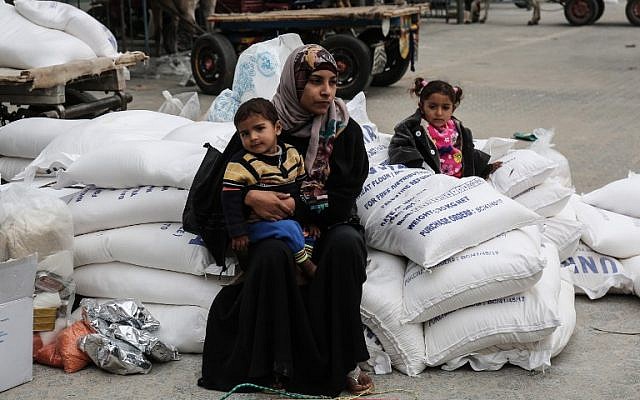
A Palestinian woman sits with a child after receiving food supplies from the United Nations’ offices at the United Nations’ offices in the Khan Younis refugee camp in the southern Gaza Strip, February 11, 2018. (AFP/Said Khatib
Israel has often criticized UNRWA, accusing it of sheltering terrorists and allowing Palestinians to remain refugees even after settling in a new city or country for many generations, thus complicating a possible resolution to the Israeli-Palestinian conflict.
It also accuses UNRWA of helping to perpetuate the Palestinian narrative of Israel’s illegitimacy by uniquely granting refugee status to the descendants of refugees, even when they are born in other countries and have citizenship there, conditions that do not apply to the refugees cared for by the UN’s main refugee agency, UNHCR, which cares for all other refugees worldwide. The population of Palestinian refugees thus grows each year, even as other refugee populations in the world shrink with each passing generation.
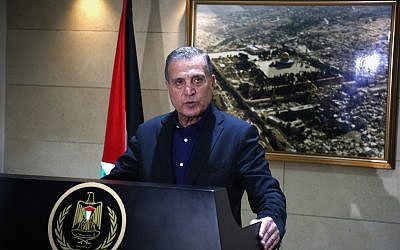
Separately, Abbas’ spokesman said Saturday that the alleged efforts by the US to undercut the PA would not bear fruit.
Nabil Abu Rudeineh, spokesman of PA President Mahmoud Abbas. (Flash90)
“The American delegation should abandon the illusion that creating false facts and falsifying history are going to help it sell those illusions,” Wafa quoted Nabil Abu Rudeineh as saying.
“The right address for achieving a just and lasting peace that cannot be bypassed, neither regionally nor internationally, is the Palestinian decision-maker represented by President Mahmoud Abbas and the Palestinian leadership supported by the legitimate international community and the Arabs, who made this clear to the American delegation,” Abu Rudeineh added.
He also said the US should “stop pursuing imaginary political alternatives and projects aimed at splitting the Palestinian homeland to prevent the establishment of our Palestinian state.”
Kushner and Greenblatt did not meet with any Palestinian officials on their Middle East trip, with the PA boycotting the Trump administration since the Jerusalem recognition.
The decision greatly angered Palestinians, who claim East Jerusalem as the capital of their future state, though Trump stressed he was not taking a stance on the city’s borders, which he said must be agreed upon by the sides.
As Turks prepare to head to the polls Sunday in a snap election called by incumbent President Recep Tayyip Erdogan, Foreign Policyhas published what is essentially a summary blueprint outlining the ways Erdogan could steal the election, noting “Sunday’s vote is one he can’t afford to lose.”
As we previously commented, though the man who has dominated the nation’s politics for almost two decades is not expected to lose, a consensus is emerging that the vote should be regarded as a referendum on his person and leadership.
And now, a visible surge in popularity for the rival secularist Republican People’s Party (CHP) candidate has pundits declaringthe opposition actually has a chance.
AKP President Recep Tayyip Erdogan and Republican People’s Party (CHP) challenger Muharrem Ince. Image via Hurriyet
Erdogan has often boasted that he has never lost an election and, as recent polls indicate, he is unlikely to lose this time either (but likely by a thin margin). Since 2002, he and his AKP (Justice and Development Party) have won five parliamentary elections, three local elections, three referendums and one presidential election.
The president moved elections that weren’t supposed to be held until 2019 forward by more than a year in hopes of smashing an unprepared opposition, but there’s yet a possibility this could backfire.
Ironically, the move could blow up in Erdogan’s face as he called for the early elections at a moment when the economy appeared strong, but which in the interim began tanking — giving all but die-hard AKP supporters reason for serious pause as the opposition’s message becomes louder.
His legacy has already been established as ushering in Turkey’s transformation from a parliamentary to a presidential system, giving a disproportionate share of power to the president, and should he win he’ll assume even greater executive powers after last year’s referendum which narrowly approved major constitutional changes related to the presidency.
But Erdogan’s main opposition candidate, Muharrem Ince, is this week drawing immense crowds according to a variety of reports, and gaining support from a cross-section of Turks increasingly fed up with Erdogan’s power-grabbing.
Ince, a former high school physics teacher widely seen has having much more charisma, has mirrored Erdogan’s firebrand and combative rhetoric while taking direct aim at the Islamic conservative Justice and Development Party (AKP) leader’s enabling corruption and nepotism, and his further overseeing an economy in tailspin with the lira having lost nearly 20% of its value since the year began, inflation at 12%, and interest rates at 18%.
Muharrem Ince’s simple yet pointed appeal goes something like this: “Erdogan is tired, he has no joy and he is arrogant,” he told hundreds of thousands of supporters at an Izmir rally on Wednesday. CNN noted the rally presented“what looked like the largest crowd in the elections period yet.”
Muharrem Ince’s Wednesday rally in Izmir as shown on Turkish television. Crowd size estimates ranged from 250,000 up to millions, depending on who was commenting.
Sunday’s election is being widely described the most important in recent Turkish political history — a crossing the Rubicon moment for Erdogan as he stands to inherit an unprecedented and likely irreversible level of sweeping executive authority.
The current Council of Ministers, all members of parliament, will cease to exist and the president will appoint advisors and deputies to run the country. Parliament, especially if it remains in the hands of Erdogan’s Justice and Development Party (AKP), will be nothing but a rubber stamp. Erdogan over the years has amassed an enormous amount of power by molding state institutions to his liking and by eliminating anyone from his entourage who can even minimally challenge him. Every single member of the party owes his or her position directly to Erdogan. This patronage system permeates all levels of the bureaucracy, which has lost its independence.
So again, on June 24 losing is not an option for Erdogan.
1) He’s already engineered electoral law for less oversight of ballots:
He has engineered several changes to the electoral law, two of which could be game-changers. The first is the elimination of the requirement that all ballots be stamped by officials. This practice will open up the system to abuse in obvious ways — it was precisely such a last-minute change that allowed the government to claim victory in 2017 during the constitutional referendum.
2) Erdogan’s own party cronies will manage and appoint officials for Sunday’s election process:
Erdogan’s second change to the electoral law concerns the ballot box overseers: Whereas in the past political parties nominated candidates who were chosen by a draw, under the new rules overseers are to be chosen among local officials whose jobs are ultimately determined by the government and the state.
3) Switching ballot locations especially in Kurdish areas:
Suppressing the Kurdish vote is critical for the government… one can expect more shenanigans in Kurdish-majority areas, because Erdogan needs to push the Peoples’ Democratic Party below the 10 percent threshold to ensure that his party wins a majority of seats in parliament.
4) Erdogan now essentially owns the judicial system, the military, and media – all of which will be leveraged:
The Supreme Electoral Council, the judicial system, and the military — until recently Erdogan’s most dedicated nemesis — are all now under Erdogan’s control. The military was completely denuded of its higher ranks following the July 2016 failed coup attempt…
…The national press, meanwhile, is completely dominated by Erdogan’s acolytes. The results are unsurprising: In the last two weeks of May, a study demonstrated that the president and his party received far more coverage on three government-owned television stations, including a Kurdish-language one.
5) No detail has been left untouched, but last minute “shenanigans” will ensure victory if it’s close:
Erdogan, the consummate politician, is not leaving anything about this election to chance; no detail has been too small to escape his attention.
…Still, it is quite doubtful that he will allow anything but a total victory for himself — one should expect a great deal of shenanigans on the part of the ruling party in the final run-up to the June 24 vote.


 The city of Valencia, Spain has approved a motion to boycott Israel and slander it by declaring the city an “Israeli apartheid-free zone.” (Image source: Ben Bender/Wikimedia Commons)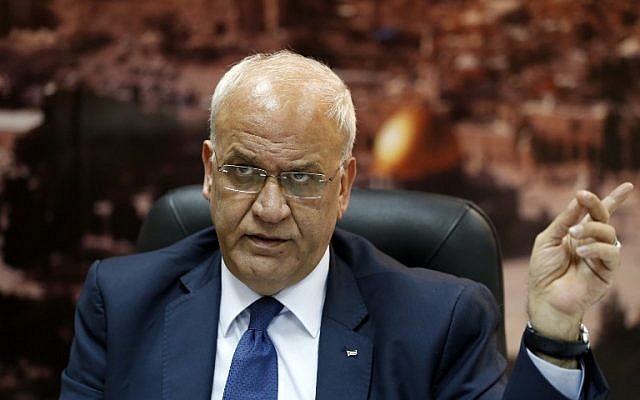







 anneinpt
 artaxes
 danmillerinpanama
 davidking1530
 Peter Hofman
 Joseph Wouk
 Peter
Peter Louisiana Steve

Recent Comments