Israel’s two fronts explode: IDF officer hurt in Gaza. Russia praises IDF strike on ISIS letting Syria, Hizballah reach Kinneret 

Posted July 26, 2018 by Joseph Wouk
Categories: Uncategorized

Source: Israel’s two fronts explode: IDF officer hurt in Gaza. Russia praises IDF strike on ISIS letting Syria, Hizballah reach Kinneret – DEBKAfile

The surreal effect of the latest happenings on Israel’s Gaza and northern fronts is caused by at least six cooks stirring two volatile broths, of which the IDF is the least pro-active. 

Because the IDF was not alert to a new threat after Sgt. Aviv Levy was killed by a sniper last Friday, a second officer, a 21-year old field commander of the same Givati Brigade , was injured on Wednesday, July 25, in the same Kissufim sector, by a Hamas sniper bullet,

The soldiers were drawn by a gang of unruly children at the border force and when they approached to send them home. The sniper lurking in the background targeted the officer. The IDF reacted with an assorted array of jets, drones, tanks and artillery against 7 Hamas positions.

Also activated were communications with Gen. Abbas Kemal, director of Egyptian intelligence, in a bid to hold off the inevitable Hamas rocket assault. The familiar ritual then evolved: Hamas launched 9 rockets and mortar rounds against the next-door Israeli communities and Hof Ashkelon, one was intercepted by Iron Dome – and the latest of umpteen similar rounds was over, the point being that the initiative for the next round remained squarely n the hands of the Palestinian terrorist group,

Hamas’ strategists had meanwhile calculated that snipers constituted an inexpensive weapon in terms of cost to pocket and life, much like balloon bombs and kites; only three of its operatives were killed this time round, and Israeli strikes were still targeting empty Hamas compounds.

The Palestinian terrorists found that they can keep large parts of the southern Israeli population under siege long-term by these primitive tactics at little cost to themselves, while also picking off at leisure IDF officers by luring them to the border fence.

The equation on the northern front is complicated by the number of cooks and wildly fluctuating equations. The IDF’s air defense system evidently needs more work, as was illustrated by its non-response to the landing of two ground-to-ground Grad rockets in the Sea of Galilee on Wednesday, July 25, at peak holiday season.

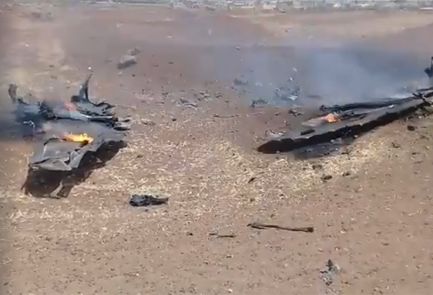
They were fired from the Syrian-Israeli-Jordanian border intersection 8 km away. Sirens were triggered over the lake and the Golan only after one of the rockets exploded in the water near the eastern shore. By a miracle, no one was hurt. IDF air defense missile systems missed them two days after two missiles of Israel’s innovative David’s Sling failed to connect with Syrian SS-21 surface missiles flying from eastern Syria towards the Golan.  Still, the next day, Patriot batteries were effective in shooting down a Syrian Sukhoi-24 two kilometers inside Israel, after downing a Syrian drone.

The Grads which dropped into the Kinneret were fired by the Khalid Ibn Walid branch of ISIS, which is being hammered by Syrian and pro-Iranian allied forces in a pocket they have held for years near the Yarmuk inside the border intersection just across from Israel.

This ruse was staged to lure the IDF into pinning the blame on, and attacking, the Syrian army, and so drawing off the counter-ISIS assault. The ruse did not work. The IDF identified ISIS as the source of the rocket fire and struck back, after refraining for years to attacking them. For this, the IDF drew praise from an unexpected source.

The Russian defense ministry said that a strike on Israeli territory on Wednesday was made from Daesh positions and that the response from Israel had hit terrorists’ missile launchers in Quneitra. The ministry expressed gratitude to the Israeli Defense Forces for the counterattack. “Russian armed forces’ command in Syria used the existing communication channels to thank the IDF leadership for killing terrorists and stopping a massive provocation,” the ministry said in a statement.

However, DEBKAfile’s military sources point to the surreal consequence for Israel of the IDF’s counter-ISIS operation. It enabled Syrian, Hizballah and other pro-Iranian forces to capture the terrorist enclave and reach a point close to the Sea of Galilee. What’s wrong with that equation?
Trump peace plan said to include major economic scheme for Palestinians

Posted July 26, 2018 by Joseph Wouk
Categories: Uncategorized

Source: Trump peace plan said to include major economic scheme for Palestinians | The Times of Israel

White House official says plan will include most detailed proposals yet, strategy for rolling it out still being developed

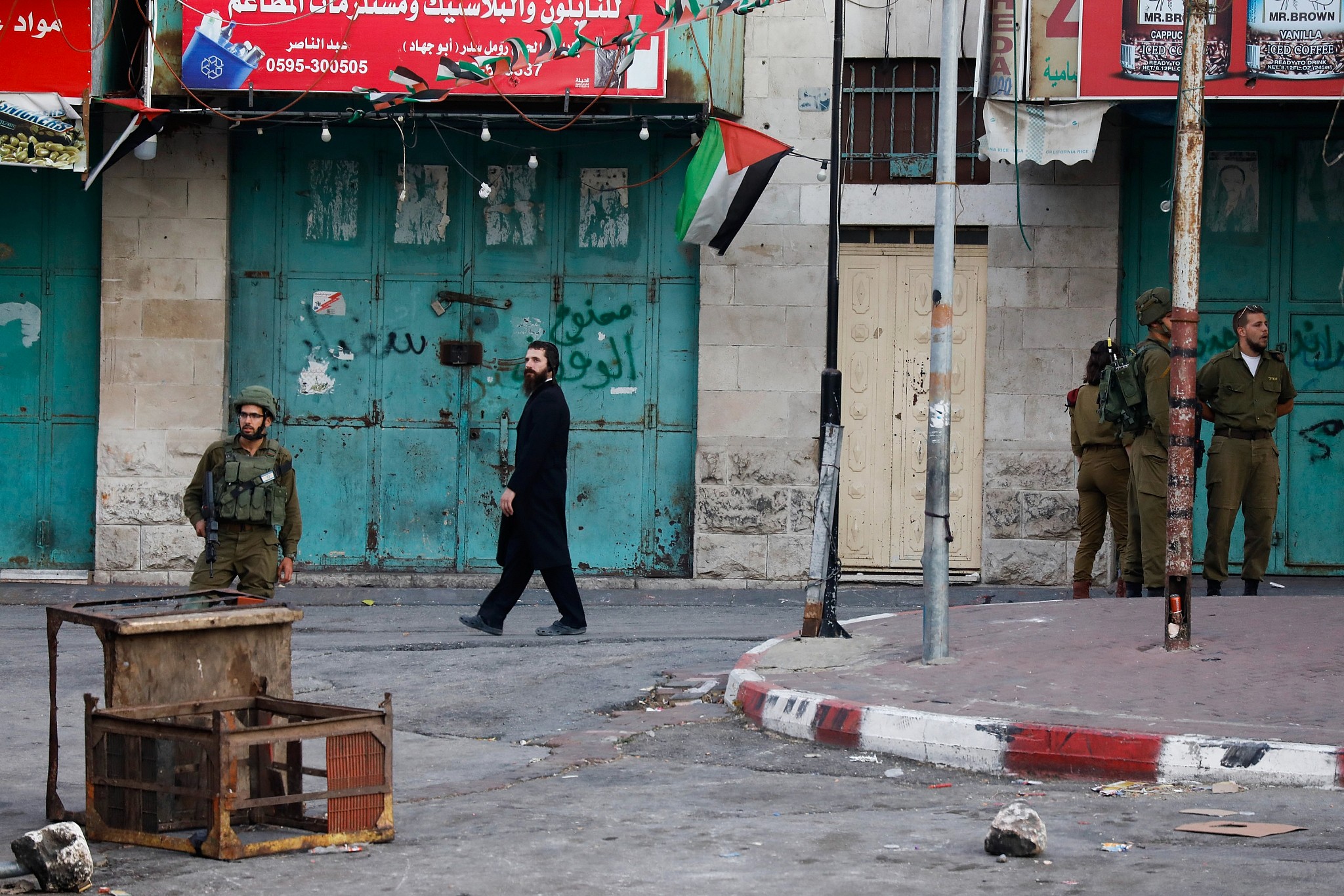
Soldiers guard as an ultra-Orthodox man walks by in the West Bank city of Hebron on July 22, 2018. (Wisam Hashlamoun/Flash90)

Soldiers guard as an ultra-Orthodox man walks by in the West Bank city of Hebron on July 22, 2018. (Wisam Hashlamoun/Flash90)

A long-awaited US plan for an Israeli-Palestinian peace deal will include the most-detailed proposals ever offered to the parties, a White House official said Wednesday.

The official, who spoke on condition of anonymity, said the plan would include a major economic component, according to Reuters.

The White House has yet to announce a schedule for releasing the plan, and the official said a strategy for rolling it out was still being developed.

Expectations that the White House would begin pushing the plan ramped up last month when top White House aide Jared Kushner and senior negotiator Jason Greenblatt toured the region, apparently to drum up support for the scheme in Israel and among Arab allies.

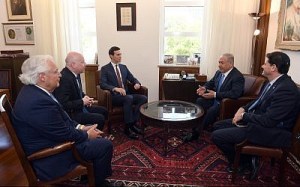
Prime Minister Benjamin Netanyahu (2nd from right) meets at his Jerusalem office with the ambassador to the US, Ron Dermer (right); White House adviser Jared Kushner (center); US Ambassador David Friedman (second left); and special envoy Jason Greenblatt, on June 22, 2018. (Haim Zach/GPO)

US President Donald Trump has long promised to try and reach the so-called “deal of the century” to end the long-simmering Israeli-Palestinian conflict, but his efforts have derailed since his decision to transfer the US embassy to Jerusalem.

The Palestinian Authority has castigated the move, declared the US no longer an honest broker in negotiations, and rejected any plan the White House may come out with, with PA President Mahmoud Abbas calling it the “slap of the century,” earlier this year.

The Palestinians have refused to meet with the US to discuss peace overtures since December, when Trump announced the move and declared he would recognize Jerusalem as the capital of Israel.

Palestinian Authority President Mahmoud Abbas in the West Bank city of Ramallah, June 27, 2018. (Alaa Badarneh/Pool Photo via AP)

Abbas, who did not meet with Kushner or Greenblatt, also protested last month after signals emerged that the plan may seek to deal with the West Bank and Gaza as two separate entities.

Israeli reports earlier this month indicated the plan had been put on hold with tensions between Israel and Gaza on the rise. A shaky calm on the volatile border since Saturday had managed to push both sides from the brink of war, but the quiet was broken Wednesday after an Israeli officer was shot by a Gazan sniper and Israel responded with strikes on Hamas positions, killing three members of the terror group.

The administration official said experts were working on finishing up the main parts of the proposal and the economic package and did not offer any details on what the proposals might contain.

Previous US plans have included proposals and maps dealing with potential land swaps, security guarantees and other issues, but have left out thornier issues like Jerusalem and the Palestinian demand for refugees and their descendants to return to pre-1967 Israel.

This Sunday, June 24, 2018 file photo offers a view of the plenum hall of what was to be a Palestinian parliament in Abu Dis in the West Bank. (AP Photo/Dusan Vranic, File)

It’s not clear if the US plan will address those sticking points. Trump has said in the past that his decision to recognize Jerusalem as Israel’s capital took the issue “off the table.” Some reports have indicated the US may offer Jerusalem suburb Abu Dis as a capital instead of East Jerusalem, which the Palestinians demand be the seat of their future state.

It’s unclear what type of economic package may be on the table, but the comment comes a week after an op-ed in the Washington Post from Kushner, Greenblatt and US Ambassador to Israel David Friedman called on Gaza’s Hamas rulers to end their support for terror in exchange for lavish US aid.

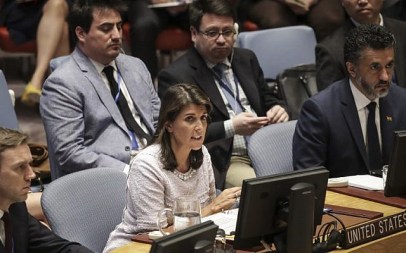
On Tuesday, US envoy Nikki Haley told the UN Security Council that the US continued to be one of the biggest financial supporters of the Palestinians, far outstripping Muslim countries which are more vocal supporters of the Palestinian cause.

US Ambassador to the United Nations Nikki Haley speaks during a United Nations Security Council meeting at UN Headquarters, July 24, 2018 in New York City. (Drew Angerer/Getty Images/AFP)

The US has frozen millions in aid to the UN’s refugee agency for the Palestinians, and has cut funding for the PA over Abbas’s refusal to enter negotiations and Ramallah’s payments to terror convicts and their families.

She threatened that the largess could be cut further if the PA continued to castigate Washington.

“We are not fools. If we extend a hand in friendship and generosity, we do not expect our hand to be bitten,” she said.

Moscow thanks IDF for destroying Islamic State rocket launcher in Syria

Posted July 26, 2018 by Joseph Wouk
Categories: Uncategorized

Source: Moscow thanks IDF for destroying Islamic State rocket launcher in Syria | The Times of Israel

Israeli divers searching Sea of Galilee for two of the rockets that were fired into Israel, apparently by stray fire from IS fighters battling Assad’s forces

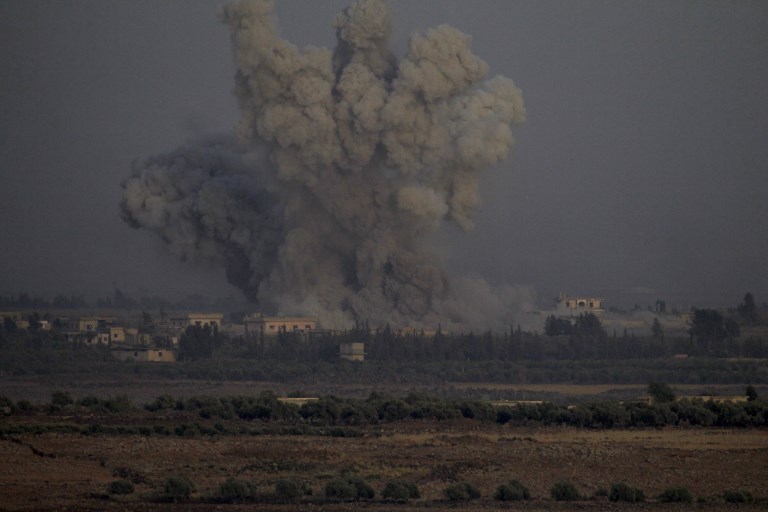
A picture taken on July 25, 2018, from the Tal Saki hill in the Golan Heights shows smoke rising above buildings across the border in Syria during airstrikes backing a Syrian-government-led offensive in the southern province of Quneitra. (AFP / JALAA MAREY)

A picture taken on July 25, 2018, from the Tal Saki hill in the Golan Heights shows smoke rising above buildings across the border in Syria during airstrikes backing a Syrian-government-led offensive in the southern province of Quneitra. (AFP / JALAA MAREY)

The Russian Defense Ministry said it had thanked the Israeli army for destroying an Islamic State missile launcher which fired two rockets at Israel that landed in the Sea of Galilee.

According to the Russian ministry, the IDF strike Wednesday apparently also killed a number of IS fighters.

On Thursday, Israeli police sappers and naval divers were carrying out searches in the sea to try and find and identify the two projectiles. Beaches on the eastern shore of the lake were closed to bathers.

“Russian armed forces’ command in Syria used the existing communication channels to thank the IDF leadership for killing terrorists and stopping a massive provocation,” the ministry said in a statement later Wednesday reported by Sputnik news which provided an English translation.

“A precision strike by jets and IDF artillery operatively destroyed Daesh terrorists and their rocket launchers,” the ministry said, referring to the terror group by its Arabic acronym.

The ministry said that by firing the missiles IS was “seeking to provoke Israel’s strike on positions of the Syrian government army,” the Tass news agency reported.

Israel has in the past hit Syrian military positions after their stray fire landed in Israeli territory.

Russia, along with Iran, is providing military assistance to Syrian President Bashar Assad is his bid to quash a civil war which has raged for over seven years.

Israeli aircraft targeted a position in southern Syria on Wednesday evening in response to apparently errant fire from the fighting that triggered sirens throughout the Golan Heights hours prior.

The Israeli Defense Force said it targeted the rocket launcher that fired the two projectiles toward Israel, though it did not identify the party responsible.

Hours earlier the Emek Hayarden Regional Council said two projectiles landed in the Sea of Galilee in the north of the country, without causing any injuries or damage.

Israelis enjoy the beaches of the Sea of Galilee, northern Israel, on April 1, 2018. (Hadas Parush/Flash90)

The projectiles were believed to have been fired from the southern part of the Syrian Golan Heights, where the Syrian regime has been completing its campaign against the last rebel villages remaining in the area.

Incoming rocket sirens blared across the Israeli Golan Heights, sending residents of the area scrambling to bomb shelters.

The military said the system was triggered after it identified projectiles launched in the direction of Israel. No missile defense systems were fired, however. The IDF was investigating why the defense systems were not activated.

The projectile fire came a day after the Israeli Air Force shot down a Syrian fighter jet that traveled two kilometers into Israeli airspace.

In light of the heavy Russian presence in Syria, Israel in September 2015 set up a mechanism with Moscow — involving work groups led by the deputy chiefs of both militaries — to avoid conflicts and potentially fatal misunderstandings.

However, senior air force official have stressed that this system is limited: Israel does not inform the Russians before conducting airstrikes in Syria, nor does Russia let the Israelis in on its plans.

Israel has acknowledged carrying out several aerial raids on Iranian targets in Syria, and is suspected of carrying out several more aimed at preventing Iranian military entrenchment in the country or the supply of advanced weapons to Iran’s proxy, the Hezbollah terror organization in Lebanon.

Jerusalem and Moscow are reportedly working on arrangements for southern Syria and the border area after the regime regains control of the region.

Hamas puts forces on alert, threatens revenge after IDF kills three fighters

Posted July 26, 2018 by Joseph Wouk
Categories: Uncategorized

Source: Hamas puts forces on alert, threatens revenge after IDF kills three fighters | The Times of Israel

‘Israel will pay in blood for its latest crimes,’ terror group says after overnight exchange of fire sparked by a Hamas sniper attack that wounded an IDF soldier

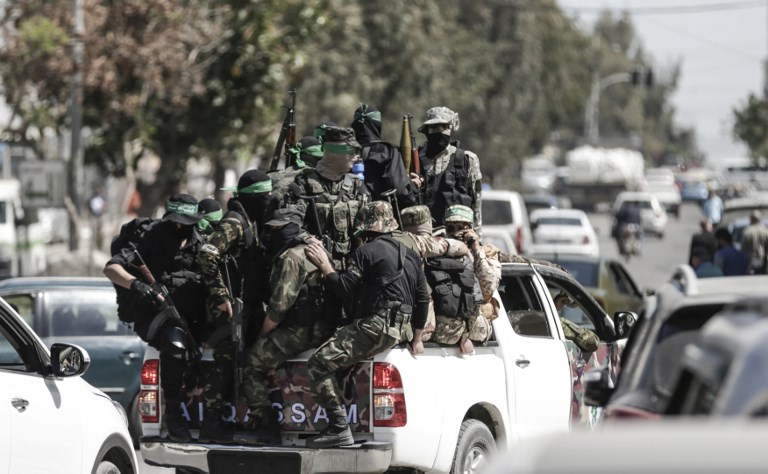
Hamas fighters take part in a military maneuver in Gaza City on March 25, 2018. (AFP Photo/Mahmud Hams)

Hamas fighters take part in a military maneuver in Gaza City on March 25, 2018. (AFP Photo/Mahmud Hams)

Hamas’s military wing, the Izz ad-Din al-Qassam Brigades, announced Thursday morning their forces were going on high alert, deploying at the highest readiness level in expectation of a possible full-blown war with Israel.

The announcement follows Wednesday night’s sniper fire from Gaza that moderately wounded an IDF officer near Kissufim, followed by retaliatory strikes by IDF tanks and planes that targeted multiple Hamas installations and left three members of the terror group dead.

The Hamas-run health ministry in Gaza said three Palestinians were killed in the Israeli strikes. It named them as 28-year-old Ahmad al-Basous, 29-year-old Abada Farawna and 27-year-old Muhammed al-Ara’er.

Hamas’ military wing, the Izz ad-Din al-Qassam Brigades, later said the three were its members.

“Israel will pay in blood for its latest crimes,” the group said in a Thursday morning statement.

Following the exchange of fire, nine rockets were launched early Thursday from Gaza toward Israeli towns, eight landing in uninhabited areas and one getting shot down by the Iron Dome system. There were no reports of injuries or damage.

Rocket sirens rang out in the Eshkol region just after 5:30 a.m., sending residents of three communities in the area scrambling into bomb shelters.

Earlier, sirens had sounded in the Hof Ashkelon, Shaar Hanegev and Sdot Hanegev areas at about 11:30 p.m. and just after midnight.

The IDF responded to the rocket fire, firing tank shells at seven Hamas posts along the border.

Late Wednesday, Defense Minister Avigdor Liberman convened a meeting at army headquarters in Tel Aviv with IDF Chief of Staff Lt. Gen. Gadi Eisenkot, Shin Bet head Nadav Argaman and National Security Adviser Meir Ben-Shabbat to discuss the rising tensions.

Prime Minister Benjamin Netanyahu was updated by the group by telephone, according to Army Radio.

Prime Minister Benjamin Netanyahu, Defense Minister Avigdor Liberman and IDF Chief of Staff Gadi Eisenkot seen during an emergency meeting at the Ministry of Defense in Tel Aviv, on July 20, 2018, following widespread Israeli strikes on Hamas targets across Gaza after a Palestinian sniper killed an Israeli soldier. (Ministry of Defense/Ariel Hermoni)

The outburst of violence came after several days of calm following intense Israeli airstrikes in the Strip over the weekend in retaliation for the shooting death of an IDF soldier on the border Friday. On Tuesday, UN mediator Nickolay Mladenov said the sides were “minutes from war” before a tacit ceasefire was reached.

The soldier injured by sniper fire from southern Gaza on Wednesday was rushed to Soroka hospital in Beersheba, where he underwent surgery for gunshot wounds to the chest and abdomen, according to a hospital spokesperson. His condition was initially described as serious, but improved after the surgery. He is currently said to be in moderate condition.

According to the IDF, the sniper fire came as a group of IDF soldiers arrived at a part of the fence that saw a group of 20 minors rioting on the other side. The minors were used as a decoy by the sniper to fire on the soldiers.

An undated photo of Sgt. Aviv Levi of the IDF’s Givati Brigade, who was killed by sniper fire from Gaza on July 20, 2018. (Courtesy)

Some Hebrew media reports cited initial army assessments that the sniper was not acting on behalf of Hamas, the terror group that rules Gaza. Military sources told Army Radio late Wednesday, however, that Hamas had encouraged the demonstration by young Gazans at the fence, drawing an IDF patrol, and then its snipers opened fire on the soldiers. The sources said the same sequence played out on Sunday, when IDF soldier Aviv Levi was shot dead by a Gaza sniper at the border.

Israel making ‘great strides’ to Gaza operation, minister says 

Posted July 26, 2018 by Joseph Wouk
Categories: Uncategorized

Source: Israel making ‘great strides’ to Gaza operation, minister says – Arab-Israeli Conflict – Jerusalem Post

“It is clear that after four years of quiet since Operation Protective Edge residents are back in an unacceptable situation.”

BY JERUSALEM POST STAFF
 JULY 26, 2018 08:52
idf gaza

Israel is making “great strides” toward a broad military operation against Hamas in the Gaza Strip , Minister of Public Security and Strategic Affairs Gilad Erdan asserted Thursday,  following an escalation of violence with Gaza overnight.

Erdan, speaking to Kan radio (Israel’s public broadcaster), added that a possible military operation would extract a price from Hamas at least as great as 2014’s Operation Protective Edge, “if not more than that.”

“We are being dragged into a wider operation with Hamas. We are approaching with great strides— because of Hamas—  a situation in which the IDF will have to embark on a wide-scale operation,” said Erdan.”

Rocket sirens were heard multiple times in areas bordering the Gaza Strip overnight and early Thursday, as the IDF confirmed nine projectiles were fired at Israel from the Gaza Strip. The IDF said at least two were intercepted by Iron Dome batteries and the remainder fell in open areas, causing neither damages nor injuries.

The escalation of violence began late Wednesday when a Hamas sniper shot and injured IDF officer, who was evacuated to a nearby hospital. The IDF responded with a number of airstrikes in Gaza, killing three militants there. During the course of the night, Prime Minister Benjamin Netanyahu held a phone consultation with Defense Minister Avigdor Liberman, IDF Chief of Staff Gadi Eizenkot and the head of the national security council to discuss developments in Gaza and the north.

“It is clear that after four years of quiet since Operation Protective Edge residents are back in an unacceptable situation; there are rocket sirens at night and children in shelters,” Erdan said. ” If Hamas does not understand [this] from [Israel’s] waves of attack, we will have to return to a broad military operation that will exact a price, at least as much as Operation Protective Edge if not more than that.”

The army underlined a point that it will not accept any breaches of Israeli security on Wednesday.

“The IDF will act against any attempt to harm the sovereignty of the State of Israel and the security of its residents,” the IDF said in a statement released Wednesday night.


Erdan also touched on the rocket fire near the Sea of Galilee and said that Israel would not tolerate spillovers from the Syrian Civil War and would not accept any Iranian presence in the Syria.

Erdan stressed Israel would respond to every incident on its borders, saying, “We must deal with chaos on our northern border.”

“When the Syrians are fighting against each other, there can be spillover. We must always respond, our policy does not change whether it is a fighter jet or a rocket.

The minister also rejected a recent proposal that Iranian forces in Syria be removed 100 kilometers from the border, noting the ministers agreed that no presence in Syria would be accepted. “No illegitimate Iranian force [is allowed] on Syrian soil,” he said, “certainly from the moment it is clear the regime is regaining control there is no reason for Iran to be there.”If it is to promote its radical Islamic revolution, there is consensus in the government not to allow an Iranian presence in Syria, period.”

U.S. Pastor Moved to House Arrest in Turkey. Pompeo Says It’s ‘Not Enough.’

Posted July 25, 2018 by Louisiana Steve
Categories: Christians, Christians and Islamism, Islam and Christians, Islamic attacks on Christians, Islamic persecution of Christians, Islamic war on Christians, Islamist persecution of Christians, Islamists and Christians

Tags:

By The New York Times July 25, 2018

Source Link:
U.S. Pastor Moved to House Arrest in Turkey. Pompeo Says It’s ‘Not Enough.’

{I’m reminded of ‘Daniel in the Den of Lions.’ – LS}

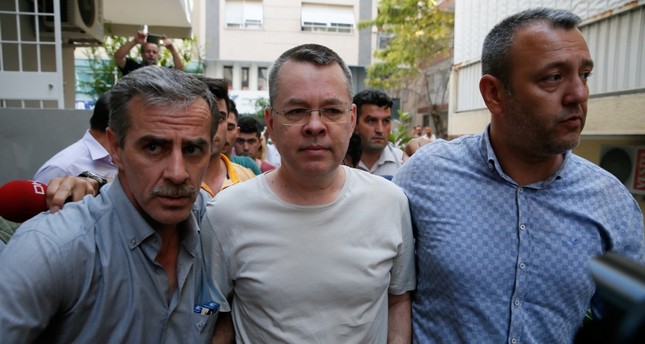
An American pastor held on espionage charges in Turkey, the focus of an intensive campaign by top United States officials seeking his freedom, was moved from jail to house arrest on Wednesday because of health concerns.

Andrew Brunson, a 50-year-old evangelical pastor from North Carolina, has been held for more than a year and a half in a case that has aggravated already tense relations between Turkey and the United States, longtime allies. He is one of 20 Americans who were charged after a failed coup against President Recep Tayyip Erdogan in 2016.

President Trump spoke to Mr. Erdogan by phone about the case, and posted a message on Twitter last week urging the Turkish leader to “do something” to free the pastor.

On Wednesday, Secretary of State Mike Pompeo also took to Twitter to say that while the United States welcomed the “long overdue news that Pastor Brunson has been moved from prison to house arrest,” the measure was “not enough.”

“We have seen no credible evidence against Mr. Brunson, and call on Turkish authorities to resolve his case immediately in a transparent and fair manner,” Mr. Pompeo wrote.

Just last week, a court in Turkey’s western Izmir Province upheld an earlier decision to place Mr. Brunson in jail while he awaited the continuation of a trial on charges of terrorism and espionage. His lawyer appealed the decision, citing unspecified concerns over Mr. Brunson’s health, according to the semiofficial Anadolu news agency.

On Wednesday, the same court ordered Mr. Brunson released into house arrest until his trial resumes in October. The court ordered him to wear an electronic bracelet at all times and barred him from traveling outside the country.

Footage of a car carrying Mr. Brunson, accompanied by a police escort, was shown live on television as the pastor was moved from a prison in Izmir to his home. He was later seen entering his home.

Mr. Brunson could face 35 years in prison if found guilty of having links to two groups Turkey considers terrorist organizations: a movement led by the American-based cleric Fethullah Gulen — whom Turkey accuses of initiating the 2016 coup attempt — and the Kurdistan Workers’ Party.

Mr. Brunson, who has done missionary work in Turkey for 23 years, worked with his wife at a small Protestant church in the city of Izmir, on the country’s Aegean coast. He has denied any links to terrorist organizations, and says he eschews politics in his work.

The American Center for Law and Justice, an organization representing Mr. Brunson’s family, said in a statement on Wednesday that it looked forward to his ultimate return to the United States. It applauded Mr. Trump for pursuing his release.

“This is a critical first step that we believe will result in the freedom of Pastor Brunson so he can return to the United States and be reunited with his family,” Jay Sekulow, the group’s chief counsel, said in a statement.

Officials advocating for Mr. Brunson’s release believe that resolving his case could signal an improvement in relations between the countries. The Turkish authorities have suggested handing Mr. Brunson over to the United States in exchange for Mr. Gulen’s extradition to Turkey to face charges in the coup attempt. The Americans have rejected requests to extradite Mr. Gulen.

The United States Senate last month temporarily blocked the sale of F-35 fighter jets to Turkey because of Mr. Brunson’s imprisonment and Turkey’s purchase of a Russian air defense system.

A pro-government columnist, Abdulkadir Selvi, said in a televised comment that the dispute over Mr. Brunson had “reached a point that it was poisoning the relationship between the United States and Turkey.” Of the pastor’s move to house arrest, he said, “This is a step.”

Mr. Selvi said that now it was the United States’ turn to take “a step” to improve the relationship, alluding to Mr. Gulen.

Congress blocks F-35s to Turkey, as Ankara turns toward tyranny

Posted July 25, 2018 by Louisiana Steve
Categories: Iran and Turkey, Russia - Turkey, U.S. and Turkey

Tags:


Yichuan Cao/NurPhoto | Getty Images

by Jordan Schachtel · July 25, 2018 Conservative Review

Source Link:
Congress blocks F-35s to Turkey, as Ankara turns toward tyranny

{The payback is starting and it’s going to be a bitch. – LS}

A bipartisan measure in Congress has succeeded in temporarily blocking the latest generation of U.S. fighter jets from getting into the hands of the Erdogan regime in Turkey.

On Tuesday, the amendment to the National Defense Authorization Act (NDAA) delayed the delivery of the F-35 joint strike fighter to Turkey. The amendment requires that the Pentagon reassess Turkey’s efforts to purchase an advanced S-400 missile system from Russia.

Legislators also felt that Turkey should not receive the F-35s given the ongoing detention of U.S. Pastor Andrew Brunson and other unnamed Americans. Turkey is believed to be holding the pastor as a bargaining chip in hopes of securing the extradition of U.S.-based cleric Fethullah Gulen.

Ankara does not appear to be concerned about the transfer of the F-35s. In comments to Turkey’s state-run media, President Recep Tayyip Erdogan remained confident that the F-35s would be delivered on schedule.

Turkey continues to be a thorn in the side of the NATO alliance. The regime in Ankara has repeatedly cozied up to American adversaries in Russia and Iran. Inside Turkey, human rights travesties unfold on a daily basis. An April 2017 referendum gave Erdogan amazing powers, stripping away much of Turkey’s secular, constitutional system of checks and balances.  Erdogan has leveraged an alleged coup against his government to garner even more power. He has ordered the indefinite imprisonment of tens of thousands of academics, religious minorities, activists, journalists, students, and anyone else whom he perceives as a challenge to his rule.

Moreover, some of the regime’s highest-ranking officials have been accused of supporting jihadi terrorist groups in the Middle East. Recently, Erdogan’s son-in-law (who is now Turkey’s finance minister) was connected to energy deals with the Islamic State terrorist organization. Turkey openly supports the Muslim Brotherhood and its terrorist affiliate Hamas.

Erdogan is also stirring up trouble with close American allies. This week, he claimed that Israel was the “most fascist, racist state” in the world, accusing Prime Minister Benjamin Netanyahu of following in the footsteps of Nazi leader Adolf Hitler.

Despite all of these concerns, Defense Secretary James Mattis has insisted that Turkey should still receive the Lockheed Martin F-35s. He has warned that blocking the sale could trigger a “supply chain disruption.” Turkey aspires to have a fleet of about 100 F-35s.

Turkey vows to keep buying Iranian oil: ‘We will not obey’

Posted July 25, 2018 by Louisiana Steve
Categories: Iran and Turkey, Turkey and NATO, U.S. - Turkey relationship

Tags:

by Joel Gehrke | July 24, 2018 Washington Examiner

Source Link: Turkey vows to keep buying Iranian oil: ‘We will not obey’

{One day, Turkey will need a favor from DJT. Let’s see how that works out. – LS}

Turkey plans to keep purchasing Iranian oil in defiance of American sanctions on the rogue regime, according to the NATO ally’s top diplomat.

“We buy oil from Iran and we purchase it in proper conditions,” Turkish Foreign Minister Mevlut Cavusoglu said Tuesday. “What is the other option?”

Cavusoglu’s comments raise the specter of yet another clash between the U.S. and Turkey, which is also in the final stages of an arms deal with Russia that could trigger American sanctions. Turkish officials, in both cases, have dismissed the U.S.’ threat of sanctions to constrain the choices of other countries.

“While we are explaining why we will not obey these sanctions, we have also expressed that we do not find these U.S. sanctions appropriate,” Cavusoglu said Tuesday.

The Trump administration hopes to isolate Iran and deprive the regime of access to international sources of revenue that might be used to finance a nuclear weapons program or regional aggression by the Iranian Revolutionary Guards Corps and the regime’s terrorist proxies.

“Any time sanctions are put in place, countries have to give up economic activity,” Secretary of State Mike Pompeo said in May. “So the Americans have given up economic activity now for an awfully long time, and I’ll concede there are American companies who would love to do business with the Islamic Republic of Iran … But everyone is going to have to participate in this. Every country is going to have to understand that we cannot continue to create wealth for Qasem Soleimani.”

Turkey has pledged to consummate an agreement to purchase Russian S-400 anti-aircraft defenses, despite strong pushback from NATO allies and U.S. sanctions on the Russian defense industry.

But as Cavosoglu takes a hard line on the oil sanctions, Tupras, Turkey’s biggest oil importer, is cutting back on deals with Iran without eliminating the sales entirely.

“During the sanctions scheme of 2011 by the U.S., Tupras was able to purchase three to four cargoes of Iranian crude a month,” a source told Hurriyet Daily News. “I believe they would want to be able to stick to that this time as well instead of completely stopping. This crude needs to be bought by someone as otherwise it will send the price shooting up, which nobody wants.”

That reduction might render Turkey eligible for a rare waiver from the sanctions. “We are prepared to work with countries that are reducing their imports on a case-by-case basis,” Brian Hook, the State Department director of policy planning, told reporters in early July. “But as with our other sanctions, we are not looking to grant waivers or licenses.”

Still, Cavusoglu’s rhetoric is emblematic of the disagreements that have hampered U.S.-Turkey cooperation in the region of late.

“We need [Turkey’s] behavior to reflect the objectives of NATO, and that’s what we’re diligently working to do: to get them to rejoin NATO, in a way, with their actions, consistent with what we’re trying to achieve in NATO,” Pompeo said during a May congressional hearing. “And not take actions that undermine its efforts.”

Israel’s message to Syria: No more ‘small violations’ 

Posted July 25, 2018 by Joseph Wouk
Categories: Uncategorized

Source: Israel’s message to Syria: No more ‘small violations’ – Israel Hayom

Candidly Speaking: A balance sheet on President Trump 

Posted July 25, 2018 by Joseph Wouk
Categories: Uncategorized

Source: Candidly Speaking: A balance sheet on President Trump – Opinion – Jerusalem Post

He has – by and large – neutralized the disastrous impact of his predecessor, Barack Obama, who in his prime objective to achieve peace, discarded some of America’s long-standing allies.

BY ISI LEIBLER
 JULY 24, 2018 21:50
Candidly Speaking: A balance sheet on President Trump

US President Donald Trump’s meeting with Russian leader Vladimir Putin served to increase the paranoia about him to an all-time high. He was accused of “failing America,” acting “shamefully” and “disgracefully,” and even committing “high crimes and misdemeanors.” Former CIA chief John Brennan went so far as to call his performance “treasonous.”
Trump certainly blundered when commenting on the similarity in behavior of the current Russian and American intelligence sources. This followed his outbursts during an earlier meeting with the Europeans in relation to NATO. Even Republican supporters rubbed their eyes in incredulity at some of his remarks to Putin. Yet, even following this barrage of criticism, Trump announced last week that he had invited Putin to Washington.
Nobody can deny that Trump behaves like a buffoon and has a penchant for vulgarity. He shoots from the hip, says what he thinks, often contradicts himself and incessantly posts juvenile tweets. He has made many errors and impulsively introduced regulations with total disregard for details, such as the restrictions on immigration, thus creating considerable chaos that could have been averted.
On the other hand, he has – by and large – neutralized the disastrous impact of his predecessor, Barack Obama, who in his prime objective to achieve peace, discarded some of America’s long-standing allies, groveled to the Iranian terrorist state, and in the process, diminished America’s global influence.
Trump started his presidency with a call for “America First” that enraged his opponents who linked it to pre-World War ll fascism.
A REVIEW of the facts will help evaluate his overall performance.
• The economy
Trump has introduced a series of economic measures – decried by his opponents – but the outcomes of which have been significant positive indicators in the economy and a sharp upturn in the stock market.
• Immigration
In his determination not to follow the disastrous example in Europe, he imposed strict limitations on immigration, refusing to permit the country to be flooded by Islamic migrants. Although introduced clumsily, Trump’s immigration policy will historically be recognized as a wise decision.
• China
After demanding a more balanced trade relationship with China and warning against ongoing theft of American technology, he stunned the world by imposing tariffs on $200 billion worth of Chinese government-subsidized goods that were undercutting US products. He threatened to extend this to vehicles. The Chinese responded by imposing tariffs on American goods, accusing Trump of starting a trade war and breaching the terms of the World Trade Organization. Time will tell, but many believe that Trump will be vindicated and that China will compromise on a fairer export policy and that America’s disastrous negative trade balance will be reversed.
• Europe and NATO
Trump shocked the Europeans and horrified their leaders by questioning the value of NATO and its members’ dependence on American largesse. He warned that the US would go it alone and no longer pour US taxpayer money into subsidizing the Europeans unless they shouldered the burden of their defense, raising their military spending from 2% to 4% of gross domestic product. He noted that Germany, the most powerful European nation, currently spends a mere 1.25% of its GDP on defense.
This created an upheaval. But the bottom line is that they will deliver, and Trump will be vindicated.
• Iran
Trump has clearly intensified the war against terrorism. He has broken with the Iranians and is in the process of imposing powerful sanctions, which could lead to the collapse of the regime.
• North Korea
Trump personally initiated direct top-level negotiations with the North Korean leader Kim Jong Un in an attempt to persuade him to denuclearize. Although the outcome is far from assured, these negotiations are themselves an unprecedented achievement.
• Russia
Putin’s Russian Federation is an authoritarian state but a far cry from the totalitarian Soviet Union. Whether there is any truth in the allegations that Russia meddled in the US elections, few genuinely believe such actions altered the outcome.
Despite their major differences, in particular in their attitudes toward Iran, both Putin and Trump pledged to cooperate and work jointly to combat terrorism.
Trump was bitterly castigated in the US for adopting this approach with the Russians. But if he succeeds in easing tensions, avoiding a new Cold War and increasing cooperation even to a limited degree, this too will be recognized as a significant positive achievement.
• Israel
As far as most Israelis are concerned, Trump’s election has proved to be God’s gift to them. Trump is the first American president to formally announce the alliance of the US with Israel and assure the Israelis that the United States will back them if they were embroiled in conflict.
He brought an end to Obama’s biased policy of moral equivalence between Israel’s defensive measures and Palestinian terrorism, and has refused to maintain the façade that Palestinian Authority President Mahmoud Abbas is a moderate man of peace. He also drastically cut back US aid to the Palestinians.
He has made it very clear that the US will not tolerate the Palestinian diversion of millions of aid dollars to reward terrorists and provide pensions to their families.
The administration placed full blame on Hamas for the Gaza escalation of terrorism, accusing them of “pushing Israel to engage in increasingly significant acts of defense.”
Trump’s UN representative, Nikki Haley, aggressively defends Israel and condemns its biased critics. The US also withdrew from the United Nations Human Rights Council, an organization dominated by tyrants and rogue states, which the Trump administration accused of hypocrisy and bias against Israel.
Despite howls of global protest and unlike his predecessors, Trump has fulfilled his electoral promise to move the US Embassy from Tel Aviv to Israel’s capital, Jerusalem.
In another unprecedented turn of events, following their recent meeting, Trump and Putin issued an astonishing joint press statement in which they explicitly proclaimed their commitment to “work together to ensure the security of Israel.” Trump said, “I think that working with Israel is a great thing, and creating safety for Israel is something that both President Putin and I would like to see very much.”
TO SUM UP, Trump is clearly calling the shots and rearranging the existing global order.
From an Israeli viewpoint, Trump has – to date – been like manna from heaven. That does not mean we endorse all his actions, and we continue to squirm at his cruder outbursts.
But despite the great schism in American politics since his election, Trump has gone a long way toward reversing the damage inflicted by Obama. He is disliked by most global leaders, but he is feared and has demonstrated his ability to deal positively with many international issues that have, until now, been ignored. His supporters can only hope that despite his erratic temperament, he stays the course.
While the Democrats are likely to win seats in the upcoming Congressional elections, there is a strong chance Trump will be reelected in 2020, especially if the current radicalization of the Democratic candidates is not reversed.
The writer’s website is wordfromjerusalem.com. He may be contacted at ileibler@leibler.com.