Secrets of War Season 2, Ep 13: Shadows of the Six Day War
Source: Russian, Syrian jets pound Idlib province to root out ‘terrorists’ – Israel Hayom
Offensive on last rebel stronghold in Syria launched a day after a summit including Turkey, Iran and Russia fails to agree on a cease-fire that would forestall the onslaught • Dozen of airstrikes hit villages in Idlib • Multiple casualties reported.
|
Smoke blowing from buildings hit by reported Russian airstrike in Muhambal, Idlib
| Photo: AFP
|
Russian and Syrian warplanes pounded towns in Syria’s opposition-held Idlib province on Saturday, a day after a summit of the presidents of Turkey, Iran and Russia failed to agree on a cease-fire that would forestall a Russian-backed offensive.
Idlib is Syria’s last major stronghold of active opposition to the rule of President Bashar Assad.
At least a dozen airstrikes hit a string of villages and towns in southern Idlib and the town of Latamneh and Kafr Zeita in northern Hama where rebels are still in control, witnesses and rescuers said.
Syrian helicopters dropped so-called barrel bombs – containers filled with explosive material – on homes on the outskirts of the city of Khan Sheikhoun in southern Idlib, two residents said.
The Syrian army denies using barrel bombs. However, United Nations investigators have extensively documented their use by the army.
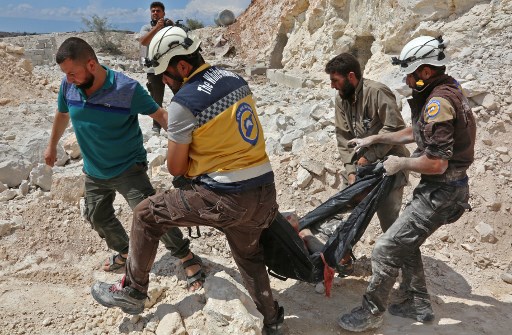
The Western-sponsored Syrian Civil Defense rescue service known as the White Helmets said they pulled four bodies, including a child, from the rubble of a building bombed by Russian planes in the village of Abdeen, near Khan Sheikhoun.
Russia says it avoids civilians and only targets radical al-Qaida inspired groups but opposition sources and residents say most of the casualties in the last few days were civilians.
The opposition accuses Russia and its allies of striking at hospitals and civil defense centers to paralyze life and force rebels to surrender in a repeat of earlier, large-scale military offensives.
Hundreds of civilians were killed in Russian-backed bombing campaigns on the former besieged rebel stronghold of Ghouta near the capital Damascus this year and a recent offensive in southern Syria displaced tens of thousands.
A hospital in the town of Hass was put out of service after it was bombed, a rescue worker said.
Idlib’s two main rebel coalitions, the mainstream nationalist National Liberation Front, and a jihadi grouping known as Hayat Tahrir al-Sham, spearhead by a former al-Qaida offshoot, say they were putting aside ideological differences to face a common threat.
Rebels say the battle could be decisive and a defeat may bring the end of their over seven-year, armed rebellion against Assad.
“There are coordination and cooperation with all the fighting factions to defend our people,” Emad al-Din Mojahed, spokesman for Hayat Tahrir al-Sham, said.
Friday’s summit had focused on a looming military operation in Idlib.
Turkish President Tayyip Erdogan pushed for a cease-fire during the summit but Russian President Vladimir Putin said a truce would be pointless as it would not involve Islamist militant groups Assad and his allies deem as terrorists.
Tehran and Moscow have helped Assad turn the course of the war against an array of opponents ranging from Western-backed rebels to Islamist militants, while Turkey is a leading opposition supporter and has troops in the country.
The United Nations fears a full-scale offensive could cause a humanitarian catastrophe involving tens of thousands of civilians.
The White House said this week that U.S. President Donald Trump had warned that such attacks would be “a reckless escalation of an already tragic conflict” and “risk the lives of hundreds of thousands of people.”
A U.S. State Department official said Washington was aware of reports of Russian and Syrian airstrikes in Idlib in spite of warnings from the United States, the U.N. and others, and was closely monitoring the situation. “Russia claims that it is targeting terrorists, but observers reported that only civilian casualties resulted from the strikes,” the official said.
“This demonstrates that only a precise counterterrorism campaign can be effective. Indiscriminate regime and Russian military offensives will only continue to lead to humanitarian catastrophe,” he added.
The State Department official said the United States was continuing to engage the Russian government and military at senior levels “to make clear that such escalation must be avoided.” The White House has warned that the United States and its allies would respond “swiftly and vigorously” if government forces used chemical weapons in the widely expected offensive.
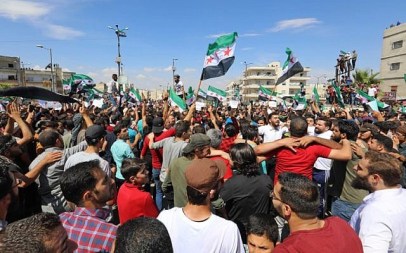
Tens of thousands of Syrians living in rebel-held towns in Idlib took to the streets on Friday to protest the impending campaign vowing they would never accept Assad’s rule and would resist any offensive to retake opposition areas.
Source: Rouhani: US asks Iran for new talks ‘every day’ | The Times of Israel
Iranian president says Tehran in an ‘economic, psychological and propaganda war’ after Trump keeps open possibility of meeting at UN

Iranian President Hassan Rouhani on Saturday said the United States sends Iran requests “every day” to hold negotiations.
Following his decision to withdraw from the deal meant to limit Iran’s nuclear program and reimpose sanctions, US President Donald Trump in July offered to hold unconditional talks with Tehran, an offer rejected by Iranian leaders.
“From one side they try to pressure the people of Iran, on another side they send us messages every day through various methods that we should come and negotiate together,” Rouhani said in a speech shown on state television, according to Reuters.
The US says “we should negotiate here, we should negotiate there,” Rouhani added. “We want to resolve the issues… should we see your message… or should we see your brutish actions?”
Echoing comments made Thursday by Iranian Supreme Leader Ayatollah Ali Khamenei, Rouhani also said Iran is in an “economic, psychological and propaganda war” against the US and Israel.
Trump in May announced the US would leave the 2015 agreement between Iran and world powers, charging it did not do enough to curb Iran’s nuclear development. He also assailed the accord for not addressing Iranian support for armed groups in the region or the country’s ballistic missile program.
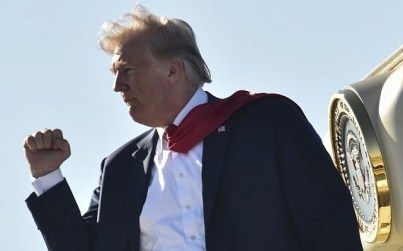
Despite his frequently hawkish rhetoric toward Iran, Trump has kept open the possibility of talks and on Wednesday said it was possible he could meet Rouhani at the UN General Assembly later this month.
“We’ll see what happens with Iran. Whether they want to talk or not, that’s up to them, not up to me,” Trump told reporters in the Oval Office.
“Iran is a much different place than when I took over the presidency,” he added, describing the country as “in turmoil.”
“When I took office it was just a question of how long until they took over the entire Middle East. Now they are just worrying about their own survival as a country.”
Trump is due to lead a September 26 meeting of heads of state of the UN Security Council, with the goal of ramping up pressure on Tehran over its alleged violations of council resolutions.
With the United States now holding the presidency of the Security Council, UN Ambassador Nikki Haley on Tuesday said the aim was to put further pressure on Tehran.
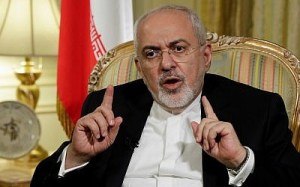
But Iran’s foreign minister, Mohammad Javad Zarif, on Wednesday hit out at the US plan.
“There’s only one UNSC resolution on Iran… @realDonaldTrump is violating it & bullying others to do same,” Zarif wrote on Twitter.
Washington has sought to build up international pressure on Iran after reimposing tough, unilateral sanctions on August 7 and setting a November 5 deadline for halting Iran’s oil exports.
Iran’s economy has been battered as countries wrap up trade ties in fear of violating the US sanctions, which Washington said would be strictly imposed.
The regime also refrained from carrying out nuclear tests to mark the day, as has happened in each of the last two years.
PYONGYANG- With no long-range missiles on display, North Korea staged a military parade on Sunday focused on peace and economic development, filled with colored balloons and flowers to mark the 70th anniversary of the country’s founding.
A sea of spectators watched the parade as tens of thousands goose-stepping soldiers and columns of tanks drove past a review stand where North Korean leader Kim Jong Un took the salute.
Unlike in previous years, there were no inter-continental missiles on display. And there were no nuclear tests to mark the day, as has happened in each of the last two years.
North Korea routinely uses major holidays to showcase its military capabilities and the latest developments in missile technology.
But that has been dropped this year, underlining Kim’s stated aim for denuclearising the Korean peninsula and his recent meetings with South Korean President Moon Jae-in and summits with U.S. President Donald Trump and Chinese President Xi Jinping.
The theme for the celebrations this year was unifying the Korean peninsula, divided since the 1950-53 Korean War. Floats on unification passed by a throng of North Koreans waving unified Korea flags.
“All Koreans should join forces to accomplish unification in our generation. Unification is the only way Koreans can survive,” said an editorial in North Korea’s party newspaper Rodong Sinmun.
Kim and Moon will meet in Pyongyang on Sept. 18-20 for the third time this year and discuss “practical measures” towards denuclearisation, officials in Seoul have said.
Kim was seen laughing and holding hands up with a Chinese special envoy as he oversaw the festivities at Pyongyang’s main Kim Il Sung square on a clear autumn day. Kim waved to the crowd before leaving but did not make any public remarks.
North Korea has invited a large group of foreign journalists to cover a military parade and other events to mark the 70th anniversary of its founding.
That includes iconic mass games that Pyongyang is organizing for the first time in five years, a huge, nationalist pageant performed by up to 100,000 people in one of the world’s largest stadiums.
Earlier on Sunday, Kim visited the mausoleum where his grandfather, the country’s founder, and his father lie in state, according to state media.A concert on Saturday night attended by the titular head of state, Kim Yong Nam, and foreign delegations featured little in the way of martial messaging or images, with only a few shadowy American bombers shown briefly in footage of the 1950-1953 Korean War.
Source: While Iran’s leaders and allies confer on Idlib, Shiite Iraq implodes in their faces – DEBKAfile

Iraq was to have emerged as the vital link in Iran’s coveted post-war land bridge to the Mediterranean via Syria and Lebanon. However, this week, the Islamic Republic of Iran was slapped by a historical irony, a backlash from its own Shiite coreligionists in Iraq, which threatens to snatch that goal away just as it comes within Tehran’s grasp.
During five days of violent protests and clashes with security forces, in which at least 11 people were killed, Shiites who dominate Iraq’s second city, the southern port of Basra, stormed and set fire to the Iranian consulate, blaming Tehran for the corruption rife in the country and the breakdown of basic services. Crowds on the streets chanted slogans against Iranian influence on Iraqi politics, ransacking and torching official buildings. Pro- and anti-Shiite militias were fighting each other on the streets. The violence reached the capital on Friday, when the fortified Green Zone, seat of government and foreign embassies, came under attack – first by Katyusha rockets then by mortars. The streets were cleared on Friday night by a nocturnal curfew. Moments after it was lifted Saturday morning, protesters came out to shell Basra’s international airport. Overnight they had seized control of Umm Qasr, Iraq’s oil export port.
If Iranian and Russian leaders had hoped to get the Idlib operation quickly out of the way and so ring the curtain down on the Syrian civil war, they were suddenly set back by the real prospect of a civil war breaking out in Iraq. Tehran was caught unawares by this development, which is all the more calamitous given the country’s disastrous economic crisis: Shop shelves in Tehran and other cities are empty, and even baby diapers are hard to find. The national currency continues the slide sparked in May by President Donald Trump’s exit from the Iran nuclear deal. The rial has plunged 140pc in value.
Putin too is confronted with a grave setback to his plans. He had gambled on the Idlib operation bringing the Syrian war to an end and, by solidifying Iran’s grip on Syria, opening the door for Russia to set up bases in Iraq. Iraq’s descent into internal anti-Iran Shiite violence may oblige Moscow to revamp the basic premise of his policy, i.e. partnership with the Shiite Muslim camp against the US- Israeli alignment with the Sunni Muslim bloc. The fate of the Idlib operation pales in significance compared with the pivotal turnabout in the region’s balance of power generated in less than a week by fiery Iraqi Shiite protests.
For this setback, Tehran has only itself to blame. In early July, when temperatures in Iraq were hitting 48 degrees Celsius, an unnamed Iranian official decided to turn off the current to Basra because the Baghdad government had stopped paying electricity bills. With their water taps running dry and air conditioning switched off, the citizens of Shiite Basra surged onto the streets to vent their ire against Tehran. It appeared that Iranian intelligence sources fell down on the job of assessing the mood current in the Shiite majority in Iraq.
However, DEBKAfile’s sources report that non-payment of electric bills was merely a pretext. Tehran had decided to stir up trouble in Iraq as a muscle-flexing lesson for President Trump and a demonstration of Iran’s ability to sow mayhem in various parts of the Middle East, if he goes through with the sanctions he proposes to impose on Iranian oil sales on Nov. 4. But the Iranian policy-maker responsible for sparking unrest in Shiite Iraq failed to appreciate its boomerang effect against Tehran rather than America.
The masses out on the streets in the Shiite towns of Iraq are protesting against the corruption deeply entrenched in Iraq’s ruling circles, including the government, the army and the forces of law and order, for which they hold strong Iranian political and military influence in Baghdad responsible. The violence was immediately directed against the pro-Iran militias and their political organs, while images of Ayatollah Khamenei were burned and banners carried the legend: “In the name of religion, the thieves are robbing us.”
Although Iraq’s general election took place in May, the various parties, none of which gained a majority, have failed to form a coalition, leaving the former prime minister Haydar Abadi at the head of a caretaker government. The machinations in Baghdad of Iran’s foremost regional wire-puller and strategist, Al-Qods chief Gen. Qassem Soleimani, are a key factor in the chaotic situation in Iraq. His efforts to install an Iranian puppet, Iraqi militia chief Hadi al-Amiri, as prime minister has deadlocked coalition negotiations, since it is opposed mainly by the Shiite cleric Muqtada Sadr whose bloc came out first in the election. The unrest in Iraq, though sparked by Tehran, threatens to veer out of its control in the absence of a government in Baghdad. to seize the reins.
Leo Tolstoy, What is the Jew? printed in Jewish World periodical, 1908:
“What is the Jew?…
What kind of unique creature is this whom all the rulers of all the nations of the world have disgraced and crushed and expelled and destroyed; persecuted, burned and drowned, and who, despite their anger and their fury, continues to live and to flourish.
What is this Jew whom they have never succeeded in enticing with all the enticements in the world, whose oppressors and persecutors only suggested that he deny (and disown) his religion and cast aside the faithfulness of his ancestors?!
“The Jew – is the symbol of eternity. … He is the one who for so long had guarded the prophetic message and transmitted it to all mankind. A people such as this can never disappear.
“The Jew is eternal. He is the embodiment of eternity.”
H/T Linda Rivera
Source: Erdogan and Putin clash over Idlib ceasefire | The Times of Israel
Open disagreement highlights differences between leaders as they meet in Iran to discuss the fate of Syria’s last major rebel bastion
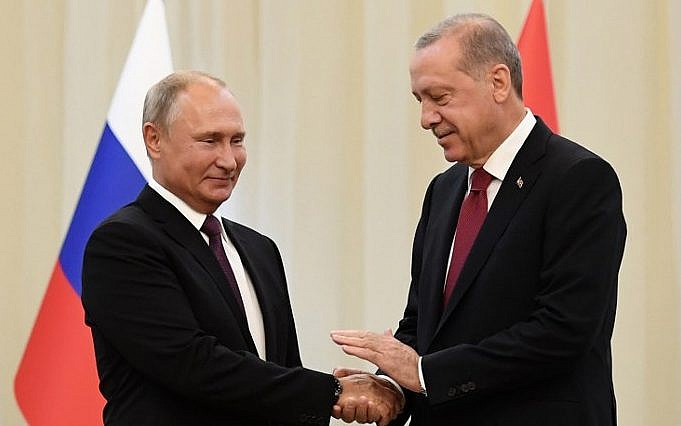
TEHRAN — Russian President Vladimir Putin and his Turkish counterpart Recep Tayyip Erdogan Friday openly disagreed about a “ceasefire” in Syria’s Idlib province, highlighting their differences despite a close cooperation.
The rare scenes captured on camera came as Putin, Erdogan and Iranian President Hassan Rouhani met in Tehran for a three-way summit to discuss the fate of the country’s last major rebel bastion of Idlib.
Russia and Iran are key allies of President Bashar Assad’s regime. Turkey however backs opposition fighters seeking the ouster of the Syrian leader, and has argued against a large-scale offensive against the rebels fearing it could trigger a mass exodus towards its borders.
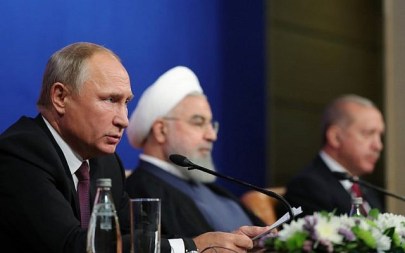
An unusual public exchange of words between Erdogan and Putin during the summit in the Iranian capital was carried live, as the Turkish leader pushed for a mention of a ceasefire in a joint statement.
“In the third point of the joint statement it’s clearly stated – we have considered the situation in the Idlib de-escalation zone and have decided to seek a path to regulate the situation there,” Putin said.
Idlib is one of the so-called “de-escalation” zones set up as a result of talks by Russia, Turkey and Iran last year as Damascus regained control of more of the country.
But Erdogan retorted: “Yes, the third point is wonderful, we take the diplomatic point. But there is no mention of ‘truce’. It would be good if we could have this phrase. It would strengthen the point… it would strengthen and calm this process.”
To which Putin replied: “The fact is there are no representatives of the armed opposition at our table,” citing the al-Nusra front and the so-called Islamic State extremist group. He also noted that the Syrian army was absent from the talks.
Idlib is dominated by jihadists of the Hayat Tahrir al-Sham (HTS) alliance, but in the past years has taken in tens of thousands of rebels and civilians evacuated from other areas recaptured by the regime.

“I believe the Turkish president is right overall. It would be good. But we cannot say for them — any more than we can say for the al-Nusra front or IS — that they will stop shooting or stop using armed drones,” Putin noted.
But as Russian airplanes pounded rebel positions in the Syrian province, Erdogan insisted: “If we can ensure a ceasefire here, this will be one of the most important steps of the summit, it will seriously put civilians at ease.”
“Any attack launched or to be launched on Idlib will result in a disaster, massacre and a very big humanitarian tragedy.”
He said it must be possible to find a reasonable way to ensure everyone’s concerns are dealt with.
“We can try to pull the elements which Russia finds disturbing to areas where they will be unable to attack the Aleppo and the Hmeimim regions,” he suggested.
Hmeimim is home to Russia’s main military base in northwestern province of Latakia.
On Friday morning, Russian air raids pounded rebel positions in the southwest of Idlib killing five people, the Syrian Observatory for Human Rights said.
Among them were positions of the jihadist Hayat Tahrir al-Sham (HTS) alliance, as well as of the hardline Ahrar al-Sham group, the Britain-based monitor said.
Hundreds of civilians have already begun to flee Idlib ahead of what could be the last — and bloodiest — major battle of the devastating conflict.
Source: US drawing up plans should Syrian regime carry out chemical attack on Idlib | The Times of Israel
Chairman of the Joint Chiefs of Staff Joseph Dunford says he and President Donald Trump have ‘routine dialogue’ about possible consequences if Assad uses chemical weapons
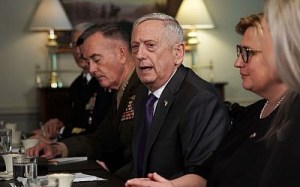
The United States’ top military official said Saturday that he and President Donald Trump have “routine dialogue” about possible military consequences if the Syrian regime uses chemical weapons during its upcoming assault on Idlib.
Chairman of the Joint Chiefs of Staff Joseph Dunford told reporters in New Delhi that no final decision had been made as yet, Reuters reported.
“But we are in a dialogue, a routine dialogue, with the president to make sure he knows where we are with regard to planning in the event that chemical weapons are used,” said Dunford.
Reuters reports he later added: “He expects us to have military options and we have provided updates to him on the development of those military options.”
The United States warned Syria Tuesday it will respond “swiftly and appropriately” if it uses chemical weapons against its people.
“Let us be clear, it remains our firm stance that if President Bashar Assad chooses to again use chemical weapons, the United States and its allies will respond swiftly and appropriately,” White House press secretary Sarah Huckabee Sanders said in a statement.
The White House was “closely monitoring the situation in Idlib province, Syria, where millions of innocent civilians are under threat of an imminent Assad regime attack, backed by Russia and Iran,” Sanders said.
“President Donald J. Trump has warned that such an attack would be a reckless escalation of an already tragic conflict and would risk the lives of hundreds of thousands of people,” she added.
Earlier Tuesday, the Kremlin criticized Trump for warning against an expected Syrian government offensive on the opposition’s last stronghold.
Trump on Monday sent a tweet warning the Syrian government and its allies against a “reckless attack” on the rebel-held Idlib province.
Russia says jihadists in Idlib target its own facilities in Syria and pose a terrorist threat.
Some three million people live in the northwest region, which came under renewed air strikes and bombings earlier this week.
The United Nations has said the assault poses the threat of a humanitarian disaster. The Syrian peace envoy Staffan de Mistura on Friday proposed a plan for al-Qaeda-linked fighters in Idlib to pull back from civilian areas to avert a bloodbath in the rebel-held province.
Source: Iran using Beirut airport to smuggle arms! – Blitz
Yaakov Lappin
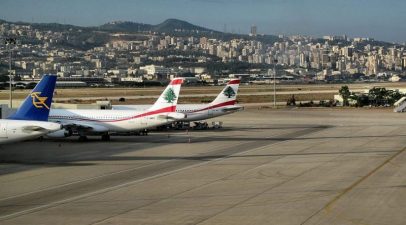
A recent report by Fox News stated that Iran has begun using civilian flights to Beirut international airport for the trafficking of weapons to Hezbollah. This report, which may well have been leaked to Fox by an intelligence service, points to a highly dangerous development. It is one that, if continued, holds the potential of placing the 12-year-old period of calm place between Israel and Hezbollahin jeopardy.
While Iranian arms-smuggling across the region is nothing new, Tehran’s efforts have traditionally focused on moving the arms by land vehicles into Lebanon from Syria.
Iranian weapons factories churn out powerful missiles and rockets before the Islamic Republican Guards Corps (IRGC) usually flies them to Syria.
From Syrian airports, it disperses the weapons by ground transport to Hezbollah depots and launch sites across Lebanese villages, towns and cities. This is how Hezbollah’s arsenal of projectiles—estimated at around 150,000—has grown to be larger than that of most NATO armies. This arsenal is deliberately planted in the midst of civilian areas and pointed at Israel.
Many of the projectiles are hidden in civilian buildings that house Lebanese families.
Other times, the weapons are produced in Assad regime factories in Syria and smuggled to Lebanon along the Iranian-run trafficking network.
On many such occasions, Israel, which monitors these activities very closely—and has developed an entire doctrine to interrupting the enemy’s force build-up process—has chosen to intervene.
Israel reportedly disrupted these weapons-smuggling runs in many instances through airstrikes across Syria.
Nevertheless, some of the weapons got through.
Once again, Iran is playing with fire
Hezbollah’s arsenal is currently made up mostly of short-range rockets, which have a range of 45 kilometers, but it also includes thousands of medium-range rockets that can go well past that distance, and several hundred long-range projectiles that place almost the whole of Israel in Hezbollah’s sights.
It also probably has dozens of ballistic missiles and hundreds of drones.
To be sure, Israel has been busy building up its own force. Israel’s airstrike capabilities have grown to unprecedented levels, and the ground forces today are better prepared than ever before to seize Hezbollah’s turf and destroy its fighting force, if called upon to do so.
Yet allowing an enemy as powerful as Hezbollah to build up its force even more, without placing limitations, would mean sitting back and watching an intolerable threat develop to Israeli cities and critical strategic sites.
This would boost Hezbollah’s confidence—emboldening it to take risks and thereby increasing the chances of war.
An active Israeli defense campaign, by contrast, not only placed limitations on this arms race, but also indicated to the Iranian-Hezbollah axis how penetrated they had become by Israeli intelligence.
This, in turn, strengthened Jerusalem’s deterrence and decreased the chances of conflict. An enemy that feels it is being watched constantly feels less confident to attack.
Thus, over the past six years, Israel has relied on the highest quality intelligence and precision airpower to consistently disrupt the Iranian-Hezbollah force build-up.
This campaign grew sizably in 2017, when Iran began trying to install its own military bases and arms factories in Syria.
The IDF confirmed in recent days that it struck some 200 targets in Syriaover the past year-and-a-half alone, in response to the Iranian takeover program. This confrontation came to a head in May this year, when Iranian forces fired a volley of rockets at the Golan Heights from truck-mounted launchers. Israel’s crushing response saw more than 50 Iranian targets in Syria destroyed.
It represented the first direct exchange of fire between Israeli and Iranian forces in Syria.
The Iranians, sustaining a painful blow, then decided to step back and look for a new strategy. They remained committed to keeping the arms flow to Lebanon and Syria going, but looked for new ways to go about it.
The Fox News report on the use of Beirut airport appears to be part of a new Iranian effort to move weapons around.
The Iranians might be banking on the assumption that Israel would not act to intercept arms inside Lebanon itself for fear of setting off a war with Hezbollah. This is a dangerous assumption to make.
The Iranian assumption could be based on an informal understanding that seems to have been in place between Israel and Hezbollah, according to which, Israeli airstrikes in Syria are one thing, something Hezbollah has learned to “live with.” Strikes in Lebanon, however, are quite another thing; they are a violation of Hezbollah’s own red line.
This arrangement seems to have come into place since April 2014, when Israel reportedly struck a Hezbollah weapons convoy on the Syrian-Lebanese border and the Lebanese terror organization responded by setting off bombs near an IDF convoy in Har Dov. Hezbollah’s response was essentially a message to Israel, saying, think twice before hitting targets in Lebanon.
As long as Israel was able to enforce its red lines in Syria, the arrangement seemed to have held up. But if Iran is now indeed trafficking rockets and missiles into Beirut’s airport through civilian flights, the calm that has been in place in Lebanon could be facing new risks.
If the Iranian-Hezbollah axis ignores the warnings, Israel may decide to act—and Hezbollah’s response remains unknown.
Once again, Iran is playing with fire
Despite its fundamentalist rhetoric, it seems unlikely that Hezbollah, for its part, would be interested in a new war with Israel now. It’s just beginning to think about the end of the Syrian conflict—a war in which it lost 1,800 armed members and suffered thousands of injuries.
Hezbollah is just beginning to consider bringing its forces home to Lebanon and beefing up its southern Lebanese front with Israel.
Southern Lebanon is already filled to the brim with Hezbollah units that spend day and night keeping up war readiness, maintaining equipment and arms, and thinking about ways to attack Israeli civilians and soldiers.
But Hezbollah’s leadership is well aware of Israel’s overwhelming firepower, and its ability to seize Lebanon militarily and deal an unprecedented blow to it.
It is this knowledge that helps keep the Lebanese-Israeli border quiet—at least, for the moment. Iran’s risky new moves place a new shadow over that calm.




 anneinpt
 artaxes
 danmillerinpanama
 davidking1530
 Peter Hofman
 Joseph Wouk
 Peter
Peter Louisiana Steve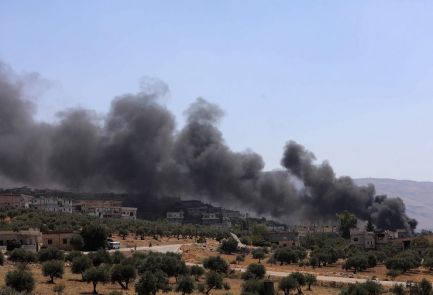


Recent Comments