The current U.S. administration is the most hostile that the Islamic republic has faced in its four decades, President Hassan Rouhani says • U.S. State Department official reiterates it seeks change in Iran’s regional, global conduct, not its regime.
Reuters and Israel Hayom Staff
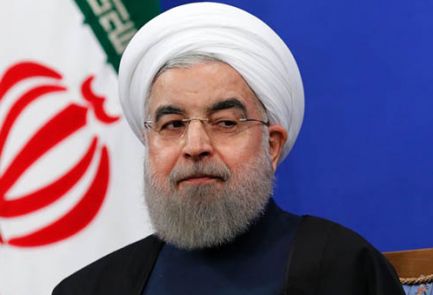
Iranian President Hassan Rouhani
|Photo: Reuters
The United States is seeking “regime change” in Iran, President Hassan Rouhani said on Sunday, adding that the current U.S. administration is the most hostile that the Islamic republic has faced in its four decades.
Tensions have increased between Iran and America after U.S. President Donald Trump withdrew from a multilateral agreement on Iran’s nuclear program in May, saying it was flawed because it did not include curbs on Iran’s ballistic missiles program or its support for proxies in Syria, Yemen, Lebanon and Iraq.
“In the past 40 years there has not been a more spiteful team than the current U.S. government team toward Iran, Iranians and the Islamic Republic,” Rouhani said in a speech broadcast on state TV.
“There was a time when there was one person who had enmity. The rest were moderate. Now, the worst have gathered around each other,” he added in a speech marking the beginning of the academic year at Tehran University.
In Washington, a U.S. State Department spokesman reiterated that the U.S. wants a change in Iran’s regional and global behavior but “is not seeking regime change.”
He said President Donald Trump has voiced a willingness to enter into talks with Iran and wants a deal that also covers its missile program, support for terrorism and “malign regional behavior.”
“Our hope is that ultimately the regime will make meaningful changes in its behavior,” he added.
Rouhani accused the Americans of using psychological and economic warfare and questioning the legitimacy of the Islamic republic.
“Reducing the legitimacy of the system is their final goal. When they say getting rid of, regime change in their own words, how does regime change happen? Through reducing legitimacy, otherwise, a regime doesn’t change,” he said.
He used the English phrase “regime change” to emphasize his point.
Washington reintroduced steps against Iran’s currency trade, metals and auto sectors in August.
With U.S. curbs on Iran’s oil exports set to come into force next month, some Iranians fear their country is entering an economic slump that may prove worse than the period from 2012 to 2015, when it last faced major sanctions.
Iranian Vice President Eshaq Jahangiri played down the impact of the planned restrictions. Iran has been able to find new partners to buy its oil even though some countries have stopped purchases, Jahangiri said on Sunday, according to local media.
“America will certainly not be able to reduce Iran’s oil exports to zero,” he said.
“America thinks Saudi Arabia can replace this oil. But right now Iran’s oil has reached more than $80 [per barrel] and with half the previous exports we will have the same income as before,” he said.
Lebanese media reports claim Israeli aircraft bombed an intelligence facility northeast of Tyre • No Israeli source corroborates report • If true, this would be the first Israeli strike in the sector since the Sept. 17 downing of a Russian aircraft.
Shlomi Diaz
A previous Israeli airstrike in Lebanon
|Screenshot: Twitter
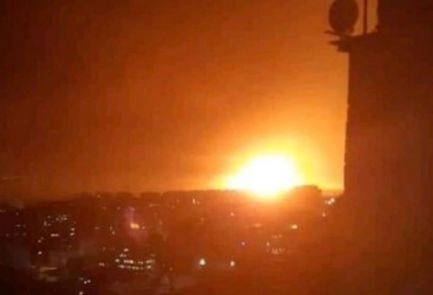
An unmanned Israeli aircraft reportedly targeted an intelligence facility in Lebanon overnight Sunday, Lebanese media reported.
According to the reports, the aircraft bombed a facility located between the villages of Zrariyeh and Hallousiyeh, northeast of Tyre.
Eyewitnesses reported hearing explosions and seeing several fighter jets in the area’s skies.
There was no immediate corroboration for the report from any Israeli source.
If true, this would mark the first time Israel has raided targets over its northern borders since Sept. 18, when Syrian missiles shot down a Russian reconnaissance plane over Syria while fending off an Israeli airstrike.
Over the weekend, Hezbollah leader Hassan Nasrallah warned his followers that any response to allegations would be giving the enemy “free information” and declared that his organization would not comment on the Israeli claims.
”Our policy is to maintain ambiguity,” Nasrallah said.
Lara Alqasem, denied entry to Israel over her support of boycotts against the Jewish state, appeals to Supreme Court after a lower court upholds her expulsion order • “Every country has the right to decide who enters its borders,” PM Netanyahu says.
News Agencies and Israel Hayom Staff
U.S. student Lara Alqasem in court
|Photo: Reuters
Israel’s Supreme Court on Sunday agreed to hear the appeal of an American graduate student who is fighting an expulsion order over her involvement in the boycott movement against Israel.
Lara Alqasem has been held in detention since arriving in the country on Oct. 2 with a valid student visa. She will be allowed to remain in the country pending the Supreme Court appeal, scheduled to take place on Wednesday, her lawyer Leora Bechor said.
Alqasem, 22, turned to the high court after a lower court rejected her appeal to remain in Israel.
“She’s really committed to this,” Bechor said. “She got accepted to the university and organized her life around studying in Israel. She feels the court is wrong, the government is misinterpreting the law, and she’ll keep fighting.”
Israel argues the Florida native, a former boycott activist at the University of Florida, continues to promote the boycott movement against Israel. She has argued that she is no longer active.
Asked about the case on Sunday, he said it was now in the hands of the court. “They’ll decide whether they handle it or not,” he told a gathering of foreign Christian journalists. “If they handle it, we’ll see how it will develop.”
Alqasem had been registered to pursue a master’s degree in human rights at Israel’s Hebrew University. The first day of classes was Sunday.
Speaking to visiting journalists from Christian media, PM Netanyahu says appointing an envoy to the Christian world is “a great idea” • Netanyahu also vows to examine lifting restrictions preventing millions of Indonesian Christians from visiting Israel.
Ariel Kahana, Associated Press and Israel Hayom Staff
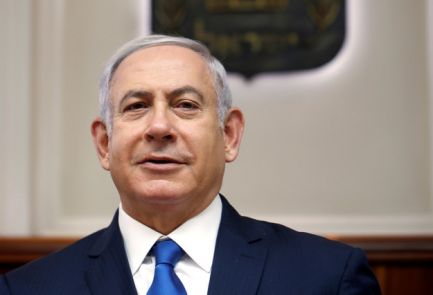
Prime Minister Benjamin Netanyahu
|Archives: Reuters
Prime Minister Benjamin Netanyahu revealed Sunday that Israel has foiled at least 40 would-be Islamic State terrorist attacks in Western countries over the last three years.
Netanyahu spoke Sunday at a meeting in Jerusalem of visiting journalists from Christian media, where he was warmly received by reporters.
The prime minister said he favors appointing an Israeli envoy to the Christian world, a sign of the country’s efforts to foster close ties with its Christian allies.
He welcomed the idea suggested by one journalist to appoint such an emissary as “a great idea.”
The summit reflects the deepening ties between Israel and the evangelical Christian world. Israel has come to rely on widespread evangelical support in recent years, a move that has raised concerns among some Jews in Israel and abroad.
“A great alliance with the evangelicals is something we do not apologize for,” Netanyahu said. “We have no better friends in the world.”
Netanyahu also promised to examine lifting restrictions preventing millions of Indonesian Christians from visiting Israel.
Given the rising tensions on the Israel-Gaza Strip border, it is time we ask Prime Minister Benjamin Netanyahu and Defense Minister Avigdor Lieberman – how many times can you threaten Hamas? How many times can you say “Somebody stop me” before your credibility, as well as the military’s ability to effectively generate deterrence, will be completely eroded?
The Palestinians have marked significant propaganda achievements over the past seven months. Islamic Jihad has declared that its operatives will not allow any normalcy for the border-adjacent Israeli communities, and Hamas’ weekly border riots and arson terrorism campaign have severely undermined Israeli sovereignty on the southern frontier.
Israel may be willing to tolerate some things to avoid an unnecessary military conflict, but the fact that Palestinian terrorism dictates the daily routine of Israelis living near the border cannot be one of them.
Moreover, it seems Hamas has schooled Israel in the art of deceptive diplomacy. For months, Egypt and U.N. Middle East envoy Nickolay Mladenov have been trying to broker a cease-fire between Israel and the Islamist terrorist group, only to see Hamas leaders go back and forth.
Now, when Israel seems determined to take action, Hamas leader Ismail Haniyeh suddenly declares that progress has been achieved in the indirect talks. As a result, Egyptian intelligence chief Abbas Kamel plans to visit Israel and Gaza this week, so is this the right time to launch a military campaign in the coastal enclave?
Israel, it seems, has been made dizzy by the number of factors it must take into consideration. These include Palestinian Authority President Mahmoud Abbas, the humanitarian situation in Gaza, Iran’s regional ambitions, the “deal of the century” the United States is working on and for which Hamas’ leaders seem willing to sacrifice the masses hurling themselves at the security fence weekly and last, but not least, the looming Israeli elections.
The correct course of action would probably be to relinquish the futile attempts to understand the Palestinian mindset. A cease-fire deal may be brewing on the horizon, but it does not seem like a viable option at this time, especially when any mention of a truce always seeks to tie Israel’s hands.
Sometimes you have to go with your gut and experience has shown that the Israeli reaction must significantly exceed what appears necessary. Statements like Netanyahu made on Sunday, saying “If Hamas has any sense, it will cease its fire and its violence right now,” are a commitment. If we have passed the point of no return, then surely we have reached the point of “When you have to shoot, shoot. Don’t talk.”
It will be 30 days on Wednesday, Oct. 17 since the last Israeli air strike was conducted against Iranian targets in Syria, and the shooting down by Syria of the Russian IL 20 spy plane. Russian-Israeli relations remain cool and seem unlikely to go back to their old friendly nature.
President Vladimir Putin is taking his time about fixing a date to meet with Prime Minister Binyamin Netanyahu, although both said it should happen soon. Indeed, when Netanyahu suggested on Oct. 8 that he expected Putin’s understanding for the importance of Israeli sovereignty on the Golan, he was quickly slapped down. Russian Foreign Minister Sergei Lavrov commented two days later that this would be a direct violation of UN Security Council resolutions.
On Oct. 9. Netanyahu emphasized the legitimacy of continued Israel bombardments of Iranian targets in Syria to visiting Russian deputy prime minister Maxim Akimov. Nevertheless, Israeli warplanes stayed on the ground. Likewise, American aerial activity in Syria remained silent
During this month, the Russian army deployed three battalion sets of S-300 air defense systems in Syria for Syrian and Iranian officers and troops. They are being trained to operate the batteries. Moscow has augmented the S-300 shield with missiles geared to stop low-flying aircraft and deployed them around Syrian towns and essential facilities. On top of these two lines of defense, Russia has arrayed in Syria advanced electronic warfare systems for countering air attacks by Israel or the US forces based in eastern Syria along the Iraqi border.
The introduction of EW is the most worrying aspect of the new Russian military build-up in Syria, DEBKAfile’s military sources stress. Although Israel’s EW capabilities are highly advanced, still Russia’s operational capabilities in this branch of combat are an unknown factor in the West and could cause surprises. No one can tell for sure what they can do until Israeli and US jets take to Syrian skies.
Just as troubling are the mounting stocks of Iranian weapons pouring into Syria during the month of Israel’s inaction. It had been hoped that Moscow would swing a reciprocal deal with Tehran to halt its arms consignments to Syria for Hizballah in return for the suspension of Israeli air strikes. The Iranians refused to hear of any such deal when it was broached by Moscow in September. In the event, they have stepped up their shipments of war materiel to Damascus as never before. Western and Middle East intelligence sources estimate that the 30-day hiatus in Israeli attacks gave Tehran the chance to replenish its own and Hizballah’s weapons arsenals and bring them level to where they stood 200 Israeli air strikes ago..
This is what Hizballah’s leader Hassan Nasrallah was talking about on Friday, Oct. 13, when he said: “Netanyahu’s psychological warfare over the missiles was a farce. Our silence over our weapons is deliberate and purposeful. Our policy is based on ‘constructive silence’ and we do not give ‘free information’ to the enemy.”
There is still no word from Jerusalem on when operations over Syria are to resume.
Recently, Israeli Prime Minister Benjamin Netanyahu announced that the Lebanese militia Hezbollah has been building factories in the heart of Beirut for the purpose of converting rockets into missiles with pinpoint accuracy, striking targets with centimeter precision.
Waving photos of the sites during his speech at the United Nations General Assembly, Netanyahu blasted Hezbollah for “deliberately” using citizens in Beirut as human shields. Hinting that Israel will soon bomb the factories, Netanyahu warned Hezbollah that “Israel knows what you are doing, Israel knows where you are doing it, and Israel will not let you get away with it.”
The factories are in the neighborhood of Uza’i, close to Beirut’s Rafic Hariri International Airport. One site is located inside a stadium belonging to a Hezbollah-supporting soccer team. Further, missile conversion factories are in the middle of a residential neighborhood and close to civilian residential buildings, while another is at a dock only 500 meters from the airport’s landing strip.
Hezbollah’s decision to transfer its factories for turning rockets into precision missiles marks another stage in the multi-year cat-and-mouse game the Iranian proxy has played with Israel. The group and its Iranian patrons have been attempting relentlessly to transfer advanced “game-changing” weapons to Lebanon that will shift the strategic advantage that Israel currently holds.
The Iranian-backed Hezbollah is a sworn enemy of Israel and fought a bloody 34-day war with the Jewish State in 2006 that saw both countries suffer massive bombardments. Ever since the cessation of hostilities, both Israel and Hezbollah see the next round of warfare as a matter of when, not if, and have taken steps to prepare themselves accordingly. For Hezbollah, that meant embarking on a massive buildup that focuses on two main areas: Air defense systems and ground-to-ground missiles.
During the 2006 war, Israeli aircraft pounded Lebanon relentlessly, bombing critical infrastructure and laying waste to large swaths of the country. Israel’s air force grants the Jewish state a major absolute advantage, as Hezbollah does not have any air capabilities other than its drone program. In the wake of the destruction, Hezbollah views neutralizing the superiority Israel’s air force enjoys as critical to the group’s military effort.
Since 2010, Hezbollah and Iran have attempted to take advantage of the chaos caused by the Syrian civil war to smuggle advanced air defense systems that can shoot down Israeli plans. Almost all attempts to transfer the missiles into Lebanon have ended in the shipments being bombed by Israeli warplanes as part of its policy not to allow Hezbollah to obtain advanced weapons. While Hezbollah has managed to obtain some medium-range anti-air missiles that are capable of downing Israeli drones, helicopters, and low-flying fighter jets, Western intelligence does not think it has managed to get its hands on anti-aircraft missiles that can neutralize Israel’s fleet of fighters.
After being repeatedly stymied by Israel air strikes, Iran and Hezbollah shifted to a strategy of building up its missile arsenal. At the onset of 2006’s Second Lebanon War, Hezbollah possessed 12,000 rockets. Twelve years later, the number ballooned to between 130,000 and 150,000 short-, medium- and long-range missiles, more than most NATO nations. Hezbollah views these missiles as a central pillar of its deterrence with Israel, as the massive arsenal has the ability to lay waste to Israel’s home front and kill thousands of civilians. With a total area smaller than the State of New Jersey and with 70 percent of it’s population crowded into its center region, Israel has to think twice about embarking on a military operation with Hezbollah that would cause it billions of dollars of damage.
However, while Hezbollah’s missile arsenal is a formidable threat to the Jewish State, it is not seen as a weapon that can change the balance of warfare with Israel. Other than crippling Israeli air force bases, the rockets are unable to stop advancing Israeli military forces and cannot neutralize the Israel Defense Forces (IDF).
In addition, the vast majority of Hezbollah’s missile stockpile are made up of inaccurate Katyusha, Grad, and Scud missiles. Besides the Fateh-110 missile, which is accurate up to a kilometer, these rockets can cause considerable harm to tiny Israel’s infrastructure but would not change the balance of power between the two nations. Because of this, Iran’s focus from 2010 until 2016 was on smuggling missiles with pinpoint accuracy to Hezbollah. The vast majority of these weapons shipments were summarily destroyed in Israeli airstrikes in Syria and Sudan. While Israel does not claim responsibility for the airstrikes, senior officials periodically shed light on the effort to prevent Iranian shipments.
In August 2017, former Israeli Air Force Commander Amir Eshel revealed that Israel attacked convoys bringing arms to Hezbollah more than 100 times in the previous five years. The number of Israel attacks have also been steadily rising. Recently, Israel’s Intelligence Minister Yisrael Katz said that “in the name of military sources, so I can quote it too – that in the last two years Israel has taken military action more than 200 times within Syria itself.”
Iran has since shifted tactics and is now trying to produce missiles within Lebanon itself. Iran believes that the large volume of munitions it can manufacture, and shorter supply lines will make it harder for Israel to thwart. In March, an Iranian general told the Kuwaiti Al-Jarida daily news that Iran had established multiple facilities for making rockets in Lebanon. The general added that the factories were tens of meters below ground and were fortified with multiple defense mechanisms to defend against an Israeli attack. Israel has responded by attacking the rocket sites and assassinating top personnel involved with the rocket project, including the killing of Syrian rocket scientist Dr. Aziz Asbar in a car bomb back in August .
Hezbollah’s decision to shift its sites for rocket production and conversion to Beirut from rural areas in northern Lebanon can be understood as a way to deter an Israeli aerial bombardment. Like Hamas in Gaza, which hides its missiles in highly residential areas, Hezbollah expects that Israel will refrain from carrying out an airstrike that will kill dozens of civilians.
This shift in tactics, culminating in a decision to place the rocket production sites near Rafic Hariri International Airport, can also be understood in similar light, for the international community would never forgive Israel for bombing a major international transit hub. As of now, Hezbollah’s bet that Israel would not bomb missile sites located in the heart of a residential neighborhood seems to have paid off, as Israel has chosen to deal with the threat via diplomatic means and not military action.
Other than Prime Minister Netanyahu’s speech at the United Nations, Israel has attempted to whip up Lebanese public sentiment against Hezbollah. As part of these efforts, IDF spokesperson Brigadier General Ronen Manelis contributed an op-ed to the Lebanese press in January, warning that Hezbollah’s newfound ability for missile manufacturing would eventually lead to all-out war that would leave scores of Lebanese dead.
“Through the actions and inaction of the Lebanese authorities, Lebanon is turning into one big missile factory while much of the international community looks the other way,” wrote Manelis. “It’s no longer about transfers of arms, money or advice. De facto, Iran has opened a new branch, the Lebanon branch — Iran is here…Iran and Hezbollah are currently trying to build a precision missile factory.”
Should Israel choose not to bomb the Beirut missile sites, Hezbollah can be expected to expand its effort to hide sensitive military infrastructure in the heart of major cities. The odds of this policy continuing are growing increasingly likely, as recent tensions with Russia suggest that Israel’s policy of choosing diplomacy over bombings will continue.
After Israel bombed an Iranian weapons shipment in the Syrian port city of Latakia in early September, the resulting Syrian anti-aircraft fire downed a Russian Ilyushin IL-20 turboprop reconnaissance aircraft, killing all 15 troops aboard. As part of the resulting diplomatic fallout, Russia announced that it would sell Syria the S-300 anti-aircraft system, which is considered one of the best air defense systems in the world; accurate up to 150 kilometers and with detection capabilities stretching to 300 kilometers, it is capable of taking out enemy aircraft, ballistic missiles, and UAVs, and is considered by military experts to be second only to the United States’ Patriot batteries. Ever since it first announced the sale, Russia had come under heavy international pressure not to deliver the S-300 to Iran and Putin had frozen the deal in 2010.
Despite assurances by former Israeli Air Force Commander Amir Eshel, who in 2017 said that the S-300 was a “significant but not insurmountable challenge,” analysts say that its delivery will put an end to the Israeli Air Force’s heyday in the Syria skies. In fact, the Israeli security establishment fears the anti-missile defense system to such an extent that Prime Minister Netanyahu made a secret trip to Moscow in both 2009 and 2013 to meet with Putin in an attempt to scuttle its transfer to Iran. In addition, the system added a new wrinkle in a potential Israeli strike, as Israel now has to take into account Russian reaction. A key component to an air assault is taking out the opposing side’s missile defense, yet Russia has made it abundantly clear that it will not tolerate an Israeli military action against the expensive S-300 system.
For example, following an Israeli air strike in Syria in April 2018, Russia announced that it would arm President Bashar al-Assad’s regime with the S-300 and warned that should Israel attempt to destroy the anti-aircraft batteries it would be “catastrophic for all sides.”
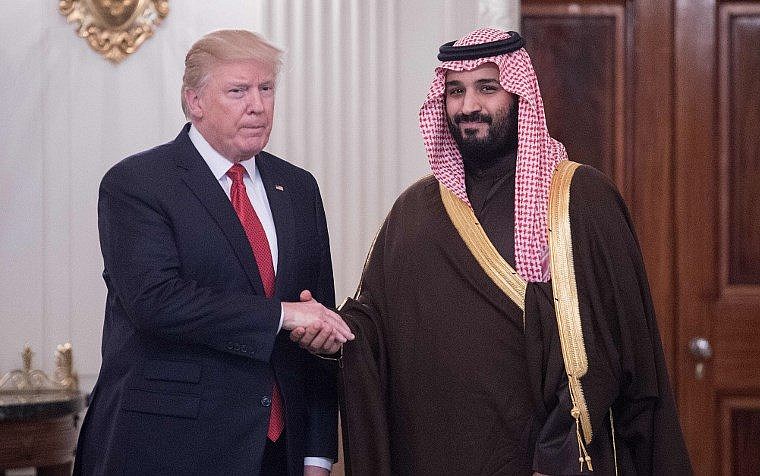
This photo taken on March 14, 2017 shows US President Donald Trump and Saudi Deputy Crown Prince and Defense Minister Mohammed bin Salman shaking hands in the State Dining Room before lunch at the White House in Washington, DC. (AFP PHOTO / NICHOLAS KAMM)
WASHINGTON — US President Donald Trump has said Saudi Arabia could be behind the disappearance of missing journalist Jamal Khashoggi and warned Washington would inflict “severe punishment” if he was murdered.
The Saudi critic has not been seen since he walked into the kingdom’s consulate in Istanbul on October 2, with Turkish officials accusing Riyadh of murdering him inside the diplomatic mission.
“We’re going to get to the bottom of it and there will be severe punishment,” Trump told CBS’s “60 Minutes” program, according to an excerpt of an interview that was released on Saturday.
“As of this moment, they deny it and they deny it vehemently. Could it be them? Yes,” Trump said in the interview, which was conducted on Thursday, when asked if Khashoggi was murdered by Saudi Arabia.
In this photo from February 1, 2015, Saudi journalist Jamal Khashoggi speaks at a press conference in Manama, Bahrain. (AP Photo/Hasan Jamali, File)
The network said it will air the interview in full on Sunday evening.
Trump added the matter was especially important “because this man was a reporter.”
This image taken from CCTV video obtained by the Turkish newspaper Hurriyet claims to show Saudi journalist Jamal Khashoggi entering the Saudi consulate in Istanbul, October 2, 2018. (CCTV/ Hurriyet via AP)
But when asked what options Trump would consider, the president said he was not keen to limit arms sales to the kingdom — a position he has previously voiced.
“Well, it depends on what the sanction is,” he said.
“I’ll give you an example — they are ordering military equipment. Everybody in the world wanted that order. Russia wanted it, China wanted it, we wanted it. We got it, and we got all of it, every bit of it.
He added: “I’ll tell you what I don’t want to do. Boeing, Lockheed, Raytheon, I don’t want to hurt jobs. I don’t want to lose an order like that. And you know what, there are other ways of punishing, to use a word that’s a pretty harsh word, but it’s true.”
Ismail Haniyeh says ‘blood of martyrs brings us closer to victory over Zionist enemy,’ vows ongoing fight until ‘siege on Jerusalem, Al-Aqsa and all lands of Palestine is lifted’
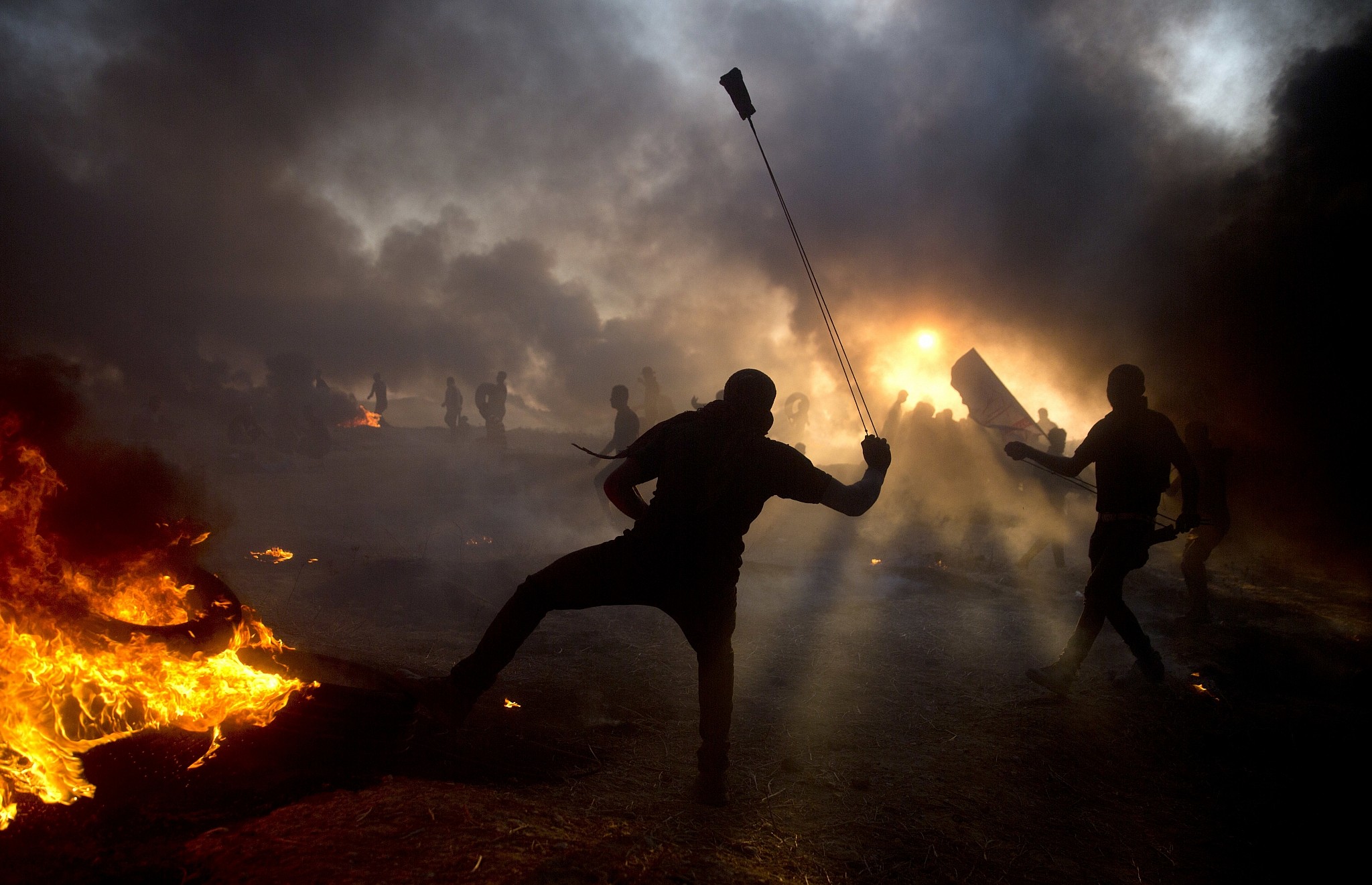
Black smoke from burning tires covers the sky as Palestinian protesters hurl stones toward Israeli troops during a protest at the Gaza Strip’s border with Israel, Oct. 12, 2018. (AP Photo/Khalil Hamra)
Hamas leader Ismail Haniyeh said Saturday that the violence at the Gaza border will continue until the “siege on Jerusalem, Al-Aqsa and all the lands of Palestine is lifted.”
“The strength of will and the determination of our people in the March of Return will lead to victory over the crimes of the occupation,” he said during funerals for those killed in the previous day’s border riots. “The blood of the martyrs brings us closer to victory over the Zionist enemy.”
Israel on Friday halted the transfer of fuel to Gaza in response to heavy rioting and attacks at the border fence. Haniyeh said “our marches are not for diesel fuel and dollars, but a natural right of our people.”
Seven Palestinians were reported killed in intense clashes with Israeli security forces along the Gaza border Friday afternoon, according to the Hamas-run health ministry. Gaza media outlets said at least 150 protesters were injured.
Hamas terror group leader Ismail Haniyeh delivers a speech on the first day of the Muslim Eid al-Adha holiday in Gaza City, the Gaza Strip, August 21, 2018. (Anas BABA/AFP)
He slammed Hamas for its actions in Gaza, saying it was “using the blood of civilians to provoke international attention.”
Meanwhile, 10 fires broke out in southern Israel that were sparked by incendiary balloons launched over the border from Gaza as part of the ongoing protests. Heavy smoke from burning tires at the Kerem Shalom crossing in the northern Strip prompted authorities in Israel to order residents of the adjacent kibbutz to stay indoors as firefighters set up large fans to clear the smoke.
In response to the violence Defense Minister Avigdor Liberman ordered a halt to the transfer of fuel into the Gaza Strip, only days after Israel began allowing fuel to be pumped into the Strip to allow increased power for residents.
“Israel will not tolerate a situation in which fuel is allowed into Gaza while terror and violence is used against IDF soldiers and citizens,” a statement from his office said.
A tanker delivers fuel at the Gaza power plant in Nuseirat, in the central Gaza Strip October 9, 2018. (AFP/Said Khatib)
In recent days Qatari-bought fuel had begun entering the Strip to allow operation of its only power station, in a bid to alleviate conditions in the blockaded Palestinian enclave.
Israel facilitated the delivery over the objections of the Palestinian Authority, hoping it would help ease months of protests and clashes.
A Qatari official told the Reuters news agency that the $60 million fuel donation came “at the request of donor states in the United Nations, to prevent an escalation of the existing humanitarian disaster.”
For months residents of the strip have been receiving only four hours of electricity a day on average. Jamie McGoldrick, the UN’s resident humanitarian coordinator, told the Reuters news agency the delivery will add a few more hours of electricity to Gaza’s 2 million residents.
Hamas seized control of Gaza from Abbas’s Palestinian Authority in a 2007 near civil war and multiple reconciliation attempts aimed at restoring the PA to power in Gaza have failed.
Abbas says that making deals with Hamas amounts to recognizing their control over Gaza in place of the PA and has sought to block the fuel deliveries. He has reportedly threatened to cut off funds to Gaza in response to the fuel transfers.
Israel fears further deterioration in Gaza could lead to another round of war on the southern border.
Both Israel and Egypt enforce restrictions on the movement of people and goods into and out of Gaza. Israel says the blockade is necessary to keep Hamas and other terror groups in the Strip from arming or building military infrastructure.
US student Lara Alqasem sits for a hearing at the Tel Aviv District Court on October 11, 2018 (Jack Guez/AFP)
A US student refused entry to Israel and held at the airport for almost two weeks over her alleged support for anti-Israel boycott efforts on Sunday requested permission to appeal to the Supreme Court, hours before her expected deportation from the country.
Lara Alqasem’s request came two days after the Tel Aviv District Court upheld an entry ban, saying the state was acting legitimately to protect itself in preventing her from entering Israel.
In its ruling Friday, judge Erez Yekuel said that “any self-respecting state defends its own interests and those of its citizens, and has the right to fight against the actions of a boycott… as well as any attacks on its image.”
She is slated to be deported at 5 p.m. (Israel time), but that will be postponed if her request is approved, the Haaretz daily reported.
The Hebrew University is expected to join the appeal if the Supreme Court grants Alqasem permission to take her case to Israel’s highest court, according to the report.
Alqasem’s case has been one of the most resonant and controversial since a 2017 Israeli law banned entry to supporters of the Boycott, Divestment and Sanctions (BDS) movement, which advocates a boycott of Israel over its treatment of Palestinians.
Alqasem, from the Fort Lauderdale, Florida, suburb of Southwest Ranches, is a former president of the University of Florida chapter of Students for Justice in Palestine. The group is associated with the Boycott, Divestment and Sanctions (BDS) movement against Israel.
Yekuel cited contradictions in Alqasem’s testimony, noted that she had wiped her social media history, and found that the state had the right to bar someone who sought to harm the country’s economy and image.
The 22-year-old American, who has Palestinian grandparents, landed at Ben Gurion Airport on October 2 with a valid student visa; she was registered to study in a human rights one-year program at Jerusalem’s Hebrew University.
But she was barred from entering the country and ordered deported, based on allegations that she was an activist in the boycott movement. She has been held at an immigration facility at the airport while she sought to fight the entry ban. Israel said she could leave at any time but would have to denounce the boycott movement if she wished to be reconsidered for admission.
The Hebrew University, which had supported her appeal, condemned Friday’s decision.
“Alqasem decided to study and live in Israel against the principles of the boycott and even stated her opposition to BDS,” the university said. “We are convinced this decision does not help our struggle, and even harms academic efforts in Israel to draw students and researchers from overseas.”
The court ruling came a day after Israel’s strategic affairs minister said he had rejected a letter sent to him by Alqasem’s lawyers promising she wouldn’t participate in boycott activities during her stay in Israel.
Gilad Erdan told Channel 10 that the letter failed to comply with criteria he had detailed.
Public Security Minister Gilad Erdan speaks during a press conference in Tel Aviv, on September 13, 2018. (Roy Alima/Flash90)
“The text doesn’t comply with what I said,” Erdan said. “It didn’t say she renounces what she did in the past or that she promises not to do so in the future. It said, more or less, that during the period of her studies in Israel she won’t be involved in boycott activities.”
Erdan alleged that the letter’s text “reveals the fact that she backs the ideology of the boycott and isolation of the State of Israel.”
Israel enacted the law last year banning entry for any foreigner who “knowingly issues a public call for boycotting Israel.”
BDS supporters say that in urging businesses, artists and universities to sever ties with Israel, they are using nonviolent means to resist unjust policies toward Palestinians. Israel says the movement is anti-Semitic and masks its motives to delegitimize or destroy the Jewish state.
American Lara Alqasem, center, sits in a courtroom prior to a hearing at the district court in Tel Aviv, Israel, October 11, 2018. (AP Photo/Sebastian Scheiner)
In her appeal, Alqasem has argued that she never actively participated in boycott campaigns, and promised the court that she would not promote them in the future. “We’re talking about someone who simply wants to study in Israel, who is not boycotting anything,” said her lawyer. “She’s not even part of the student organization anymore.”
Her lawyers said in court she had not been involved with SJP for more than a year and a half. The government countered that she had been involved with the group earlier this year.
When asked for evidence of her involvement, the state’s lawyers said she had marked on Facebook that she was “attending” two SJP events, but that the page had subsequently been deleted and they did not have a screenshot. Alqasem’s lawyers ridiculed this evidence, saying that clicking the “attending” button on Facebook did not actually mean she had attended the events.
Alqasem’s family said Israel was exaggerating her involvement in SJP, saying she only belonged to the campus group for a semester. In an interview from Florida, her mother, Karen Alqasem, said, “She may have been critical of some of Israel’s policies in the past but she respects Israeli society and culture. To her, this isn’t a contradiction.”












 anneinpt
 artaxes
 danmillerinpanama
 davidking1530
 Peter Hofman
 Joseph Wouk
 Peter
Peter Louisiana Steve

Recent Comments