Secret no more: Israels outreach to Gulf Arab states

Posted November 1, 2018 by Joseph Wouk
Categories: Uncategorized

Source: Secret no more: Israels outreach to Gulf Arab states

Oman is the only Arab country in the Gulf that could host Netanyahu without fear of destabilizing backlash, thanks to its longstanding policy of non-interference. The prime minister’s visit to the sultanate opened the door to additional cooperation between the Jewish state and moderate Arab nations, with the main unifying issue being Iran.
It was a scene unthinkable just weeks ago: an Israeli Cabinet minister, tears of joy filling her eyes, proudly singing her country’s national anthem at a sports event in the heart of the Arab world.
The spectacle of Miri Regev singing “HaTikva,” which describes the Jewish yearning for a homeland in Zion, was just one in a series of taboo-busting public appearances by Israeli officials in Gulf Arab states that have thrust the once-secret back channels of outreach into public view.Prime Minister Benjamin Netanyahu has for years boasted about warming ties with key Arab states that have no diplomatic relations with Israel. But those ties—still largely unpopular among the Arab public—were rarely visible.

That changed on Friday, when Netanyahu made an unannounced visit to Oman, where he met longtime ruler Sultan Qaboos bin Said. It marked the first visit by an Israeli leader in more than 20 years to the tiny Gulf state, a US ally that has in the past facilitated negotiations between the United States and Iran.
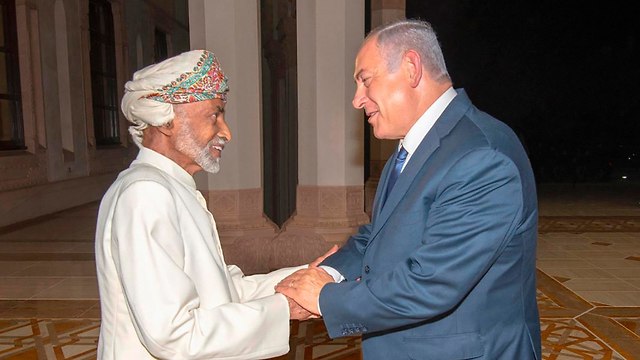
Netanyahu meets with Sultan Qaboos in Oman (Photo: AP)

Netanyahu meets with Sultan Qaboos in Oman (Photo: AP)

“These were important talks, both for the state of Israel and very important talks for Israel’s security,” Netanyahu told his Cabinet on Sunday. “There will be more.”

As he spoke, Regev was in the United Arab Emirates with an Israeli delegation at a judo tournament—the scene of her happy tears after Israeli judoka Sagi Muki won the gold medal—and Netanyahu’s communications minister was headed to the UAE for a security conference.
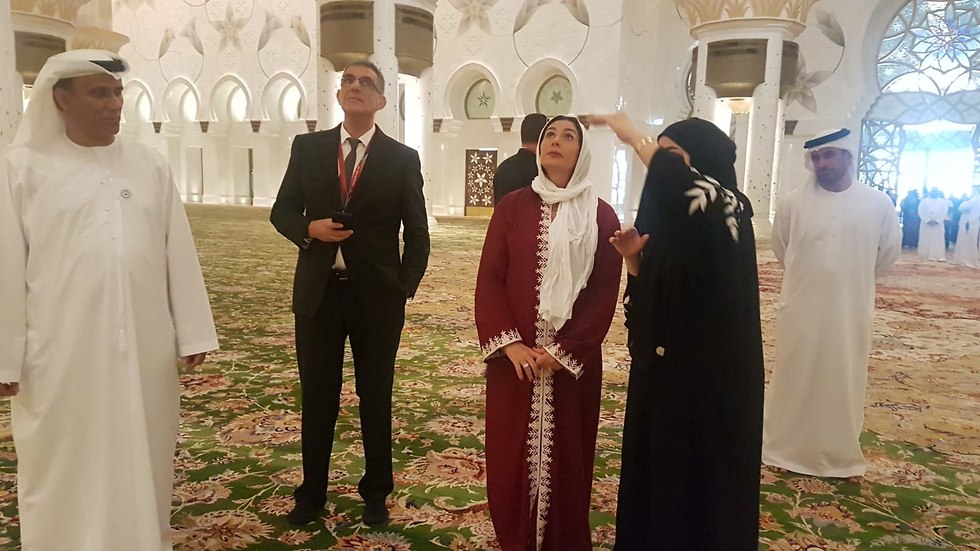
Regev visits the Sheikh Zayed Mosque (Photo: Chen Kedem Maktubi)

Regev visits the Sheikh Zayed Mosque (Photo: Chen Kedem Maktubi)

Transportation Minister Yisrael Katz, is scheduled to head to Oman next week for a transportation conference, where he plans on presenting his plan for a rail link between Gulf Arab countries and Israel.The driving force in these visits seems to be a shared concern over Iran. Israel and many of the Gulf Arab states consider Iran a destabilizing force, meddling in conflicts and supporting rivals across the region. Oman, which borders Saudi Arabia and lies at the mouth of the Persian Gulf, has often played the role of regional mediator.
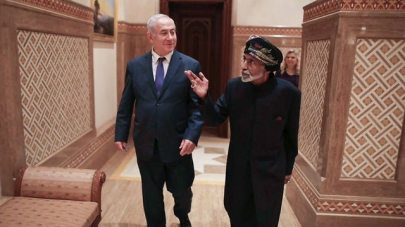
Netanyahu meets with Sultan Qaboos in Oman (Photo: AP)

Netanyahu meets with Sultan Qaboos in Oman (Photo: AP)

It also provides an opportunity for these Arab countries to curry favor in Washington. President Donald Trump has promised to present a plan for the “Deal of the Century” for Mideast peace, and Saudi Arabia’s dependability as an influential conduit has been thrown into question amid the fallout from the killing of Saudi journalist Jamal Khashoggi in the kingdom’s Istanbul consulate.Regev’s emotional appearance Sunday at the gold medal ceremony in Abu Dhabi was unprecedented and especially remarkable, given her political leanings. At home, she is an outspoken nationalist popular with hard-liners.

In Abu Dhabi, Regev also toured the grand Sheikh Zayed Mosque. Wearing a loosely wrapped headscarf and the traditional floor-length gown known as an abaya, she was warmly welcomed by local officials.

While the visits by Netanyahu and his Likud Party ministers are a huge public relations boost for him domestically, they do not immediately signal an Arab embrace of Israel.

The Palestinian-Israeli conflict remains an emotional issue with the Arab public, and relations will likely remain limited without a peace agreement.

Israeli forces have killed over 160 Palestinians during months of Hamas-led protests in the Gaza Strip against an Israeli blockade and a deepening humanitarian crisis. The peace process has been frozen for years, and Palestinian President Mahmoud Abbas cut ties with Washington after the White House recognized Jerusalem as Israel’s capital last year and moved its embassy to the city.

The Palestinians fear that Trump is trying to rally support from Saudi Arabia and other Gulf states in order to pressure the Palestinians into accepting a peace plan that falls far short of their demands.In Muscat, Netanyahu’s meeting appeared aimed at dealing with the Palestinian-Israeli conflict and his close ties with the Trump administration. With Netanyahu’s urging, the US this year pulled out of the Iran nuclear deal, which Oman had supported.

After the visit, Oman’s Foreign Minister Yousef bin Alawi suggested the meeting was merely a strategic attempt at dealing with some of the Middle East’s most pressing issues. In an interview with Al-Jazeera, he said Netanyahu had initiated the meeting to present his views on Mideast issues to Sultan Qaboos.

“What Sultan Qaboos is doing now is nothing short of an intervention,” said Sigurd Neubauer, a Washington-based expert on Oman. “Oman is interjecting itself into the Israeli-Palestinian peace process for one obvious reason, and that is (because) the Arab states are so divided.”
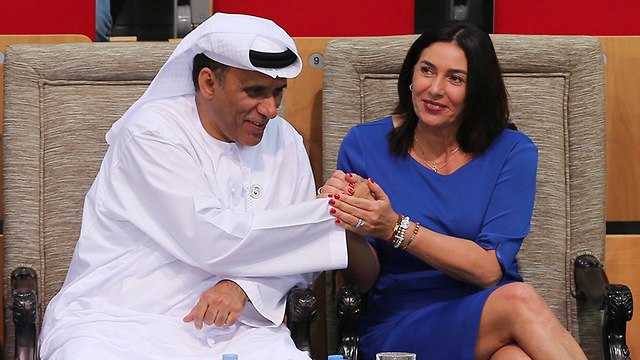
Regev with the president of the UAE's UAE Wrestling Judo & Kickboxing Federation (Photo: AP)

Regev with the president of the UAE’s UAE Wrestling Judo & Kickboxing Federation(Photo: AP)

Oman is also the only Arab country in the Gulf that could have hosted Netanyahu without fear of destabilizing backlash, Neubauer said.

That’s because Sultan Qaboos, in power since 1970, has direct lines of communication with a range of players in the region, thanks to his longstanding policy of non-interference. Oman has brokered the release of Western hostages in Yemen and provided a back door for communications between Washington and Tehran under the Obama administration. It is a member of the Saudi-led Gulf Cooperation Council, but it did not join the kingdom in its boycott of Qatar or the war in Yemen.

Even statements by the Palestinian Fatah Party and Iran fell short of directly condemning Oman after Netanyahu’s visit, instead criticizing Israel’s attempts to normalize relations with Arab states before a peace deal is reached.

For Oman, hosting Netanyahu sent a message to the Trump administration that Muscat is a valuable regional player.

“The currency is American currency,” Yoel Guzansky, a senior researcher at Israel’s Institute for National Security Studies, said. “Oman can show that it’s a go-between, a conduit not just between Israel and the Palestinians, but more ambitiously between Iran and Israel.”


Report: Egyptian negotiators present Hamas, Palestinian Authority reconciliation agreement

Posted November 1, 2018 by Joseph Wouk
Categories: Uncategorized

Source: Report: Egyptian negotiators present Hamas, Palestinian Authority reconciliation agreement – Arab-Israeli Conflict – Jerusalem Post

The reconciliation proposal follows months of Egyptian efforts to end the rift between the two Palestinian groups.

BY JERUSALEM POST STAFF
 NOVEMBER 1, 2018 11:37
TODAY HAMAS is well-prepared in Gaza and it is hard to believe that there is a sector, certainly in

The proposed agreement would be enacted in stages. The PA would first take responsibility for civil services and the government ministries in the Gaza Strip, that are now under Hamas control.

In its second phase the PA would be in control of the police and the border crossings. If all went well for three years, Hamas’ military wing Al-Din al-Qassam would be placed under PA control as well.

Separately, elections would be held for a new Palestinian parliament and a new constitution would be drawn up, according to Army Radio.

The plan was designed by Egyptian General Ahmad Abd al-Khaliq, who has made four trips to Gaza and the West Bank in the past two weeks to secure agreements for the plan. He has also met with senior Israelis in the Defense Ministry.

The Egyptian plan includes detailed timetables and formulas for each stage. Hamas is prepared to consider the plan but is waiting for a response  from PA President Mahmoud Abbas.

Abbas in the past has rejected any plan that did not immediately place the security services under his control. He fears that any plan that maintains a separate security force for Hamas makes it more likely that the West Bank and Gaza could become two separate entities rather than one unified state, according to Army Radio.

The Palestinian News and Information Agency, WAFA, said that Abbas is expected to meet Egyptian President Abdel-Fattah al-Sisi in Sharm el-Sheikh on Friday. It’s Abbas’ first meeting with Sisi in Egypt in ten months.

Egypt has been instrumental in mediating intra-Palestinian reconciliation.

The reconciliation of Fatah and Hamas is considered to be a necessary step for any final peace plan between Israeli and the Palestinians. The two Palestinian factions have been bitter rivals ever since Hamas ousted Fatah from Gaza in a bloody coup in 2007.

Past reconciliations plans have never been fully implemented. Egypt and the United Nations have worked intently on a new reconciliation effort.

Simultaneously they have worked to restore calm and end the violence between Israel and Hamas in the Gaza Strip.


Russia warns of ‘provocation’ in Syria, hints at Israeli ‘hot heads’ 

Posted November 1, 2018 by Joseph Wouk
Categories: Uncategorized

Source: Russia warns of ‘provocation’ in Syria, hints at Israeli ‘hot heads’ – Israel News – Jerusalem Post

Defense Ministry briefing warns against provocations in south and north Syria and condemns US role in eastern Syria

BY SETH J. FRANTZMAN
 NOVEMBER 1, 2018 12:36
A Syrian rebel fires at forces loyal to Bashar Assad in Idlib, Syria

The Russian Defense Ministry held a long briefing about the situation in Syria on Wednesday, warning against “provocations.” Major General Igor Konashenkov, spokesman for the ministry, warned against “hot heads” provoking Syria and intimated that the S-300 had been deployed to defend against such action. Although Israel wasn’t mentioned, the reference to the S-300 clearly is pointed at Jerusalem.

The statement, also tweeted by the Russian embassy in Israel, appears to reference the downing of a Russian IL-20 aircraft in Syria in September during an Israeli airstrike, an incident that led to a brief crises with Moscow.

The wide-ranging Defense Ministry presentation focused on the situation in northern and eastern Syria. Russia claimed that Syrian rebel groups in Idlib may be preparing a “false flag” chemical weapons attack. In mid-September Russia and Turkey signed a deal that prevented a battle in Idlib and called for extremists to withdraw from a demilitarized zone in the northern province that has been held by Syrian rebels for five years.

Turkey is a key backer of some of the rebel groups and has sought to prevent a massive flight of refugees from Idlib. Moscow now says that the “Turkistan Islamic Party,” a rebel group, is preparing a “false flag” attack. Russia says that the Idlib agreement has gone well so far.

Then the ministry turned its attention to southwest Syria on the Golan border. It said that “Russian soldiers are monitoring the situation at six observation posts along the line of separation.” It was in this context that Moscow noted that the S-300 had been deployed to Syria. “In order to increase the level of security of the Russian military personnel, aviation flights and the protection of objects in Syria.”

The spokesman then warned that “Russian advisors are preparing Syrian military personnel for combat work on these modern air defense systems. We believe it is advisable for ‘hot heads’ to adequately assess the current situation in the region and refrain from provocative actions on the territory of Syria.”

The statement appears directed at Israel but Moscow did not mention Israel in the briefing. Instead the Defense Ministry said that the US was being irresponsible and “illegally occupying a vast Syrian region” and causing a “disastrous humanitarian situation.” Russia was concerned the US was training armed units in Syria and claimed that these included “militants” and these “gangs” were threatening Syrian civilians.

In Raqqa, liberated from Islamic State a year ago by the US-backed Syrian Democratic Forces, Russia warned that the city was at a disaster. “n this city, as in other areas controlled by the coalition, anarchy, famine and devastation flourish which, of course, is a breeding ground for the restoration of the activities of terrorists.”

The statements by Russia show that it is focusing now on three files in Syria, one of which is the situation in southwest Syria and particularly involving the S-300 systems that were sent to Syrian in the wake of the downing of the IL-20. The statement also reveals that the Syrian crews are still training to use the advanced version of the S-300 that Russia sent.

The downing of the IL-20, which Russia blamed on Israel’s actions, was due to Syrian air defense crews targeting the wrong aircraft with their S-200. The training of these crews is supposed to prevent that, but it is also supposed to be a message to Israel about further air strikes. According to a statement in September 2018 Israel carried out 200 air strikes in Syria in the last year and a half, mostly against Iranian targets.

A statement last year indicated Jerusalem had carried out 100 airstrikes between 2012 and 2017. Israel says Iran is building bases in Syria and transferring weapons to Hezbollah, including precision guidance for Hezbollah’s massive arsenal of missiles. Jerusalem has continually warned Iran to leave Syria, demanded its forces be kept away from the Golan border and warned about Iranian support for Hezbollah.

Amid the tensions and as the S-300 crews are trained, Russia hopes cool heads will prevail in Jerusalem and not create a new incident in Syria.


TV report: Israel silent as Iran hit by computer virus more violent than Stuxnet

Posted November 1, 2018 by Joseph Wouk
Categories: Uncategorized

Source: TV report: Israel silent as Iran hit by computer virus more violent than Stuxnet | The Times of Israel

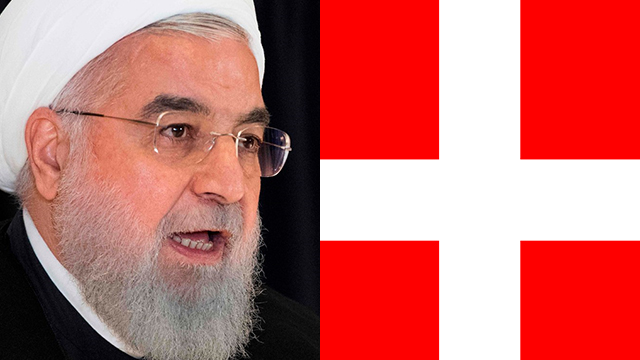
Tehran strategic networks attacked, Hadashot TV says, hours after Israel revealed it tipped off Denmark about Iran murder plot, and days after Rouhani’s phone was found bugged

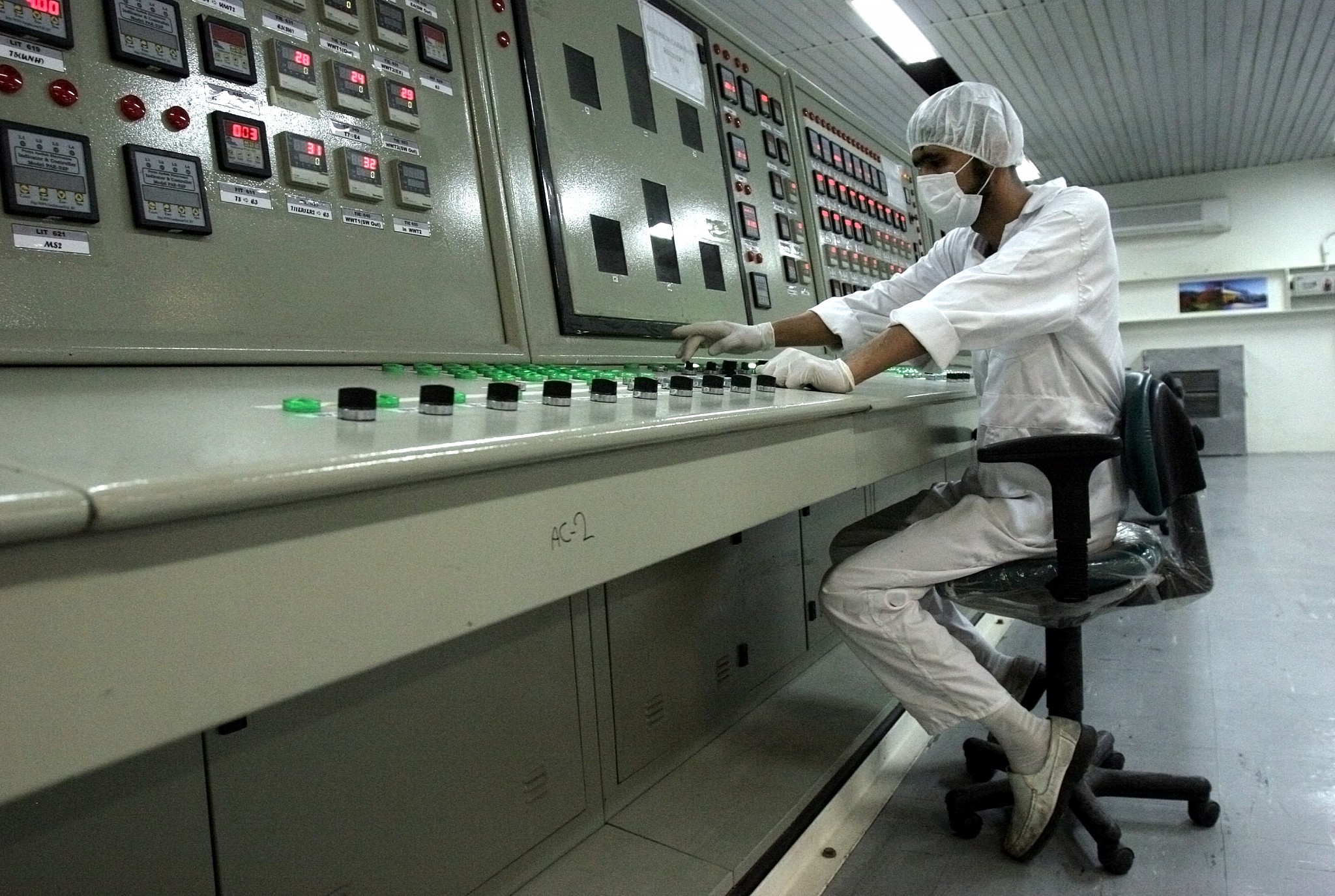
In this Feb. 3, 2007 file photo, an Iranian technician works at the Uranium Conversion Facility just outside the city of Isfahan 255 miles (410 kilometers) south of the capital Tehran, Iran. (AP Photo/Vahid Salemi, File)

In this Feb. 3, 2007 file photo, an Iranian technician works at the Uranium Conversion Facility just outside the city of Isfahan 255 miles (410 kilometers) south of the capital Tehran, Iran. (AP Photo/Vahid Salemi, File)

Iranian infrastructure and strategic networks have come under attack in the last few days by a computer virus similar to Stuxnet but “more violent, more advanced and more sophisticated,” and Israeli officials are refusing to discuss what role, if any, they may have had in the operation, an Israeli TV report said Wednesday.

The report came hours after Israel said its Mossad intelligence agency had thwarted an Iranian murder plot in Denmark, and two days after Iran acknowledged that President Hassan Rouhani’s mobile phone had been bugged. It also follows a string of Israeli intelligence coups against Iran, including the extraction from Tehran in January by the Mossad of the contents of a vast archive documenting Iran’s nuclear weapons program, and the detailing by Prime Minister Benjamin Netanyahu at the UN in September of other alleged Iranian nuclear and missile assets inside Iran, in Syria and in Lebanon.

“Remember Stuxnet, the virus that penetrated the computers of the Iranian nuclear industry?” the report on Israel’s Hadashot news asked. Iran “has admitted in the past few days that it is again facing a similar attack, from a more violent, more advanced and more sophisticated virus than before, that has hit infrastructure and strategic networks.”

The Iranians, the TV report went on, are “not admitting, of course, how much damage has been caused.”

On Sunday, Gholamreza Jalali, the head of Iran’s civil defense agency, said Tehran had neutralized a new version of Stuxnet, Reuters reported.“Recently we discovered a new generation of Stuxnet which consisted of several parts … and was trying to enter our systems,” Jalali said.

The Stuxnet virus was uncovered some eight years ago, and was widely reported to have been developed together by US and Israeli intelligence. It penetrated Iran’s rogue nuclear program, taking control and sabotaging parts of its enrichment processes by speeding up its centrifuges.

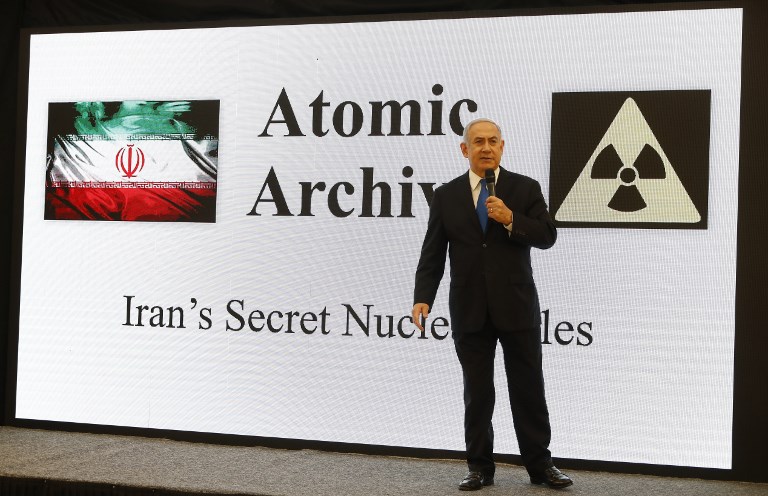
Prime Minister Benjamin Netanyahu delivers a speech on an archive brought out of Iran by the Mossad that documents Iran’s nuclear program, at the Defense Ministry in Tel Aviv on April 30, 2018. (AFP/Jack Guez)

Netanyahu is adamant that the Iranian regime remains determined to attain a nuclear weapons arsenal, and has bitterly opposed the P5+1 powers’ 2015 deal with Iran. US President Donald Trump, with whom Netanyahu is closely allied, withdrew from the accord in May.

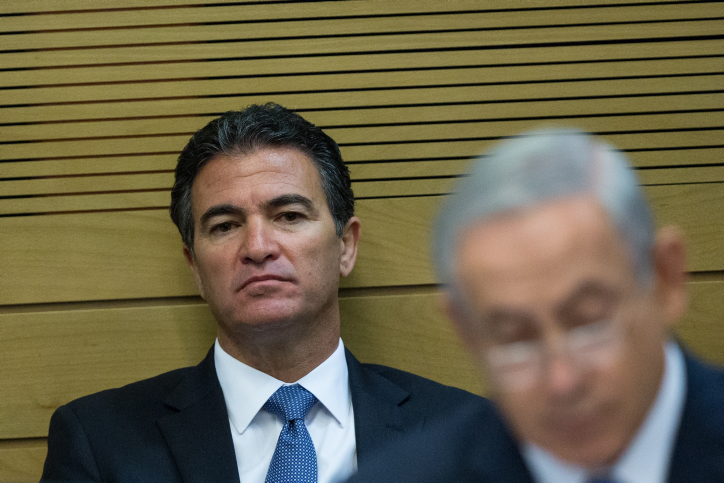
Yossi Cohen, the head of the Mossad, is seen in a committee meeting at the Israeli parliament on December 8, 2015. (Yonatan Sindel/Flash90)

Referring to Stuxnet, Wednesday’s TV report noted that “in the past, the US and Israel have been alleged to have worked together on operations.” Trying to establish whether Israel had any role in the latest cyberattack, the TV report said: “We’ve tried to clarify here. They’re refusing to comment.”

The TV report noted that “behind the scenes lately, the Mossad,” under its director Yossi Cohen, has been “fighting a real shadow war.”

Without attributing responsibility to the Mossad, the report mentioned the tapping of Rouhani’s phone, noting that the Iranians “had to switch it for an encrypted model because they understand that someone has been listening to him for days and weeks.”

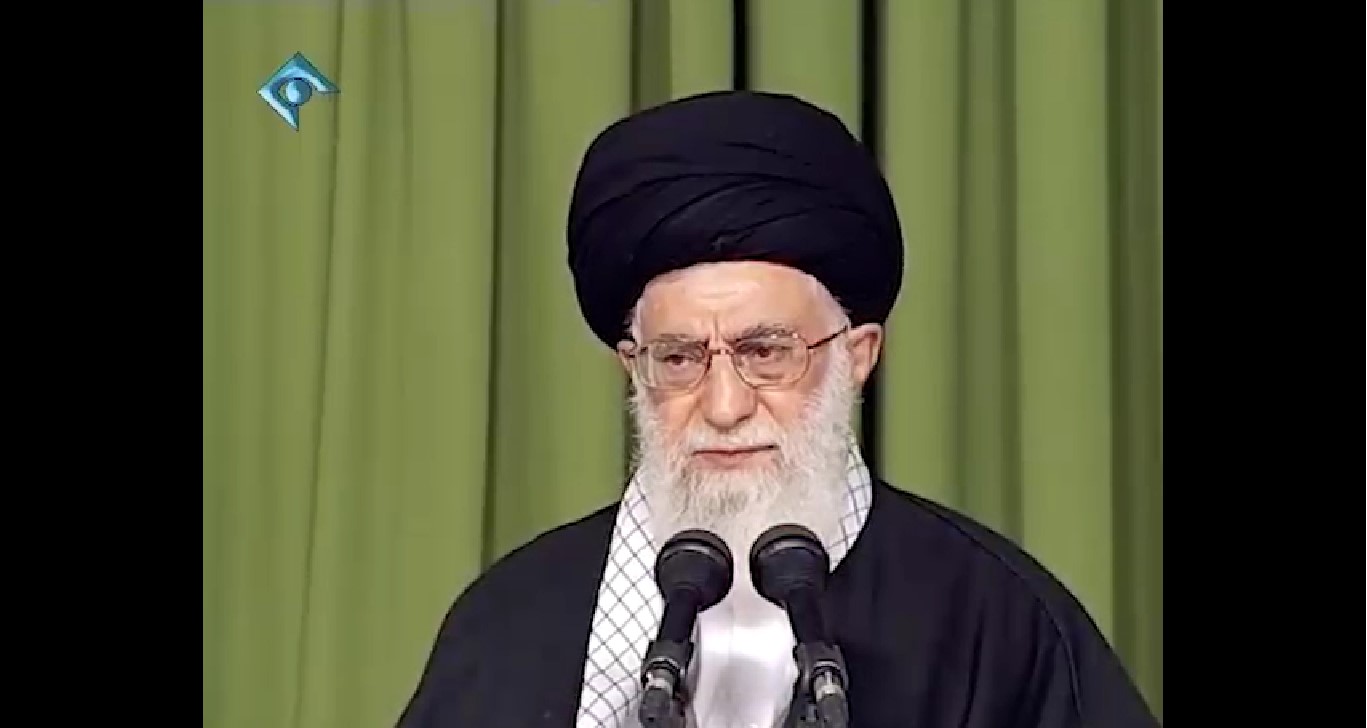
Ayatollah Ali Khamenei. (Screen capture: Khamenei.ir)

On Sunday, Iran’s Supreme Leader Ayatollah Ali Khamenei urged intensified efforts to counter enemy “infiltration,” Reuters said.

In a speech to officials in charge of cyber defense, Khamenei said: “In the face of the enemy’s complex practices, our civil defense should… confront infiltration through scientific, accurate, and up-to-date… action,” the report said, quoting Iranian state TV.

Earlier Wednesday, Israeli officials said the Mossad provided its Danish counterpart with information concerning an alleged plot by Tehran to assassinate three Iranian opposition figures living in the Scandinavian country. According to the officials, the Mossad gave Denmark information about a plot to kill three Iranians suspected of belonging to the anti-regime Arab Struggle Movement for the Liberation of Ahvaz.

The intelligence reportedly provided by the Mossad prompted the arrest of a Norwegian national of Iranian origin earlier this month. Denmark on Tuesday recalled its ambassador to Iran over the incident.

“What Iran hides, Israel will find,” Netanyahu declared in his September UN speech.

Agencies contributed to this report.


Mossad-provided intel helped Denmark foil Iranian plot

Posted October 31, 2018 by Joseph Wouk
Categories: Uncategorized

Source: Mossad-provided intel helped Denmark foil Iranian plot

Israeli diplomat confirms Mossad helped stop attempted assassination of the leader of the Danish branch of Iranian opposition group blamed by Tehran for attack on military parade in Khuzestan in which 25 Iranians were killed.
The Mossad provided Denmark and Sweden with the intelligence used to thwart a plot by the Iranian government intelligence service to assassinate an Iranian Arab opposition figure on Danish soil, an Israeli diplomatic official confirmed Wednesday.
The official said that due to increased efforts to foil attacks on Jewish and Israeli institutions, the Israeli spy agency collects a lot of information, including intelligence about plots that don’t necessarily target Israel or Jews.It is believed the Israeli-provided information allowed the Danes to stop the assassins, who had explosives in their possession, early on.

 (Photo: AFP , shutterstock)

(Photo: AFP , shutterstock)

According to Danish intelligence chief Finn Borch Andersen, the attack was meant to target the leader of the Danish branch of the Arab Struggle Movement for the Liberation of Ahvaz (ASMLA)—an opposition organization that Tehran blames for a September 22 shooting attack on a military parade in Khuzestan in which 25 Iranians were killed, many of them Revolutionary Guards troops.

After the attack in Khuzestan, Iran summoned the envoys of the Netherlands, Denmark and Britain and accused the three countries of harboring Iranian opposition groups.

On September 28, Danish police shut two major bridges to traffic and halted ferry services from Denmark to Sweden and Germany in a nationwide police operation to prevent a possible attack.

A few days earlier, the Norwegian suspect had been observed photographing and watching the Danish home of the ASMLA leader, police said.

On October 21, a Norwegian citizen of Iranian background was arrested in Sweden in connection with the plot and extradited to neighboring Denmark, Swedish security police said.

The suspect has denied wrongdoing and is being held in pre-trial custody until November 8. The Iranian government also denied any connection with the alleged plot.

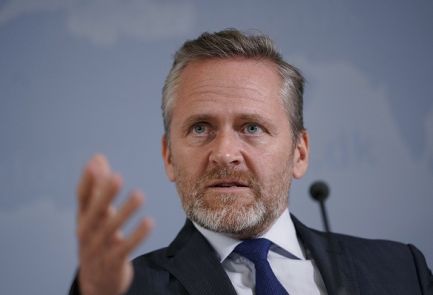
On Wednesday, Iran expressed a “strong protest” to Danish ambassador to Tehran Danny Annan over what it described as the Danish officials’ “hasty, political” and “uncalculated actions” in the case.

This is the second time in the past few months that Iran has been accused of trying to harm exiled Iranian opposition activists on European soil. In June, France foiled an attempted Iranian attack on an Iranian opposition conference in Paris. That attempt was also thwarted with the help of the Israeli Mossad.

“The Mossad’s efforts have led to thwarting Iranian terrorism in France, Belgium, Austria, Germany and now Sweden and Denmark,” an Israeli official said.


South Korean construction giant cancels $521 million deal with Iran 

Posted October 31, 2018 by Joseph Wouk
Categories: Uncategorized

Source: South Korean construction giant cancels $521 million deal with Iran – Israel Hayom


Iran: US sanctions to have ‘severe consequences’ for global order 

Posted October 31, 2018 by Joseph Wouk
Categories: Uncategorized

Source: Iran: US sanctions to have ‘severe consequences’ for global order – Israel Hayom


Denmark says it foiled Iranian assassination attempt on its soil 

Posted October 31, 2018 by Joseph Wouk
Categories: Uncategorized

Source: Denmark says it foiled Iranian assassination attempt on its soil – Israel Hayom


Trumps pay tribute at synagogue where 11 were fatally shot

Posted October 31, 2018 by Joseph Wouk
Categories: Uncategorized

Source: Trumps pay tribute at synagogue where 11 were fatally shot

President Trump visits the scene of the deadliest anti-Semitic attack in US history in Pittsburgh, where he lights candles for each victim, amid demonstrations against his visit; Ivanka Trump along with husband Jared Kushner, who are both Jewish, accompanied the American leader.
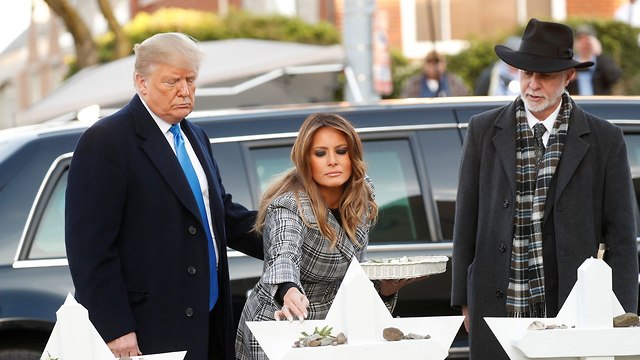
President Donald Trump and first lady Melania Trump paid homage Tuesday to each of the 11 people slain in the worst instance of anti-Semitic violence in American history. As the Trumps placed their tributes outside the Tree of Life synagogue, protesters nearby shouted that the president was not welcome.
The emotional, dissonant scene reflected the increasingly divided nation that Trump leads, one gripped by a week of political violence and hate and hurtling toward contentious midterm elections that could alter the path of a presidency.

On their arrival in Pittsburgh, the Trumps entered the vestibule of the synagogue, where they lit candles for each victim before stepping outside. Shouts of “Words matter!” and “Trump, go home!” could be heard from demonstrators gathered not far from where a gunman had opened fire on Saturday.

 (Photo: Reuters)

(Photo: Reuters)

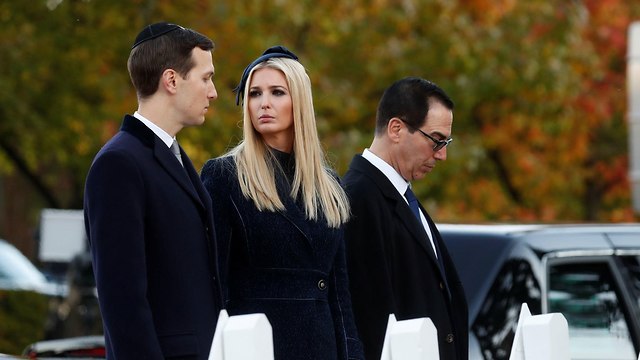
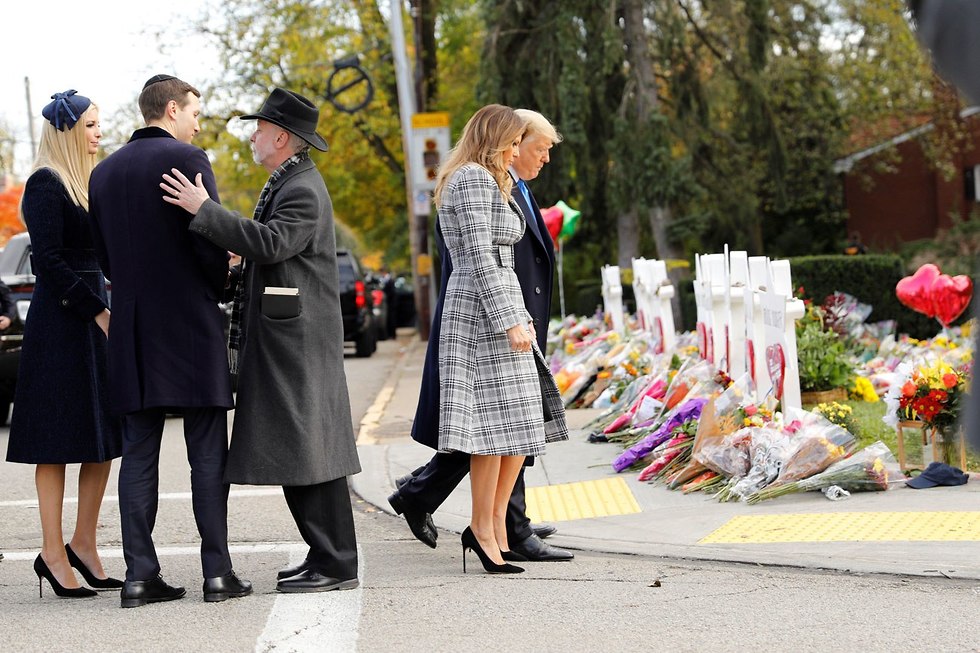
Rabbi Jeffrey Myers, who had been conducting services when the shots rang out, gestured at the white Star of David posted for each victim. At each, the president placed a stone, a Jewish burial tradition, while the first lady added a flower. They were trailed by first daughter Ivanka Trump and her husband, Jared Kushner, who are Jewish.

Near the synagogue, flowers, candles and chalk drawings filled the corner, including a small rock painted with the number “6,000,011,” adding the victims this week to the estimated number of Jews killed in the Holocaust.The Trumps later spent more than an hour at the University of Pittsburgh Medical Center, where some of the victims are recovering. The couple’s motorcade passed several hundred protesters on the street and a sign that said “It’s your fault.” Inside, Trump visited with wounded police officers and spent an hour with the widow of victim Dr. Richard Gottfried, according to White House press secretary Sarah Huckabee Sanders.Trump stepped into the role of national consoler, a title he wears uncomfortably, with his visit to the Squirrel Hill neighborhood. More at home waging partisan warfare than assuaging America’s grief, Trump has shied away from public displays of unity in the wake of other tragedies.

Sanders said Trump did not speak publicly Tuesday to denounce anti-Semitism because he has spoken about it before.

“He wanted today to be about showing respect for the families and the friends of the victims as well as for Jewish Americans,” Sanders said.

Questions have long swirled about the president’s credibility as a unifier. Since his 2016 Republican campaign for the White House, Trump has at times been slow to denounce white nationalists, neo-Nazis and other hate-filled individuals and groups that found common cause with his nationalistic political rhetoric.

 (Photo: Reuters)

(Photo: Reuters)

Trump traveled to the historic hub of the city’s Jewish community as the first funerals were held for the victims, who range in age from 54 to 97. The dead include a set of brothers, a husband and wife, professors, dentists and a physician.

Hundreds of protesters assembled to show their displeasure with Trump’s presence, some carrying signs that said “Hate has No Home in Squirrel Hill” and “Trump Loves Nazis.”

Squirrel Hill resident Paul Carberry said Trump should not have visited until the dead were buried.

“He didn’t pull the trigger, but his verbiage and actions don’t help,” Carberry said.

But Shayna Marcus, a nurse who rushed to the synagogue on Saturday to help with the wounded, said she felt that the president was taking an unfair portion of the blame.

“I don’t think focusing on Trump is the answer—or on politics,” said Marcus, whose four yarmulke-wearing boys carried signs in support of the president.

White House counselor Kellyanne Conway, back in Washington, told reporters: “If people are there to protest, that’s their right. For the president, it was not a moment for politics.”

 (Photo: Reuters)

(Photo: Reuters)

When Air Force One touched down at the airport outside Pittsburgh, the Trumps were not greeted by the usual phalanx of local officials that typically welcomes a visiting president, a reflection of controversy surrounding the visit.

Pittsburgh Mayor Bill Peduto, a Democrat, told reporters before the visit was announced that the White House ought to consult with the families of the victims about their preferences and asked that the president not come during a funeral. Neither he nor Democratic Gov. Tom Wolf appeared with Trump.

Beth Melena, campaign spokeswoman for Wolf, said the governor based his decision to stay away on input from the victims’ families, who told him they did not want the president to be there on the day their loved ones were being buried.

As Trump’s motorcade wound through downtown Pittsburgh, some onlookers saluted the president with upraised middle fingers and others with downturned thumbs.

The White House had invited the top four congressional leaders to join Trump in Pennsylvania, but none accompanied him.

A spokesman for Republican Senate Majority Leader Mitch McConnell said he already had events in his home state of Kentucky, pushing back on the suggestion that he declined. Republican House Speaker Paul Ryan’s office said he could not attend on short notice. Democratic Senate Minority Leader Chuck Schumer and Democratic House Minority Leader Nancy Pelosi also opted not to participate.


US Mid East forces brace for trouble from Iran over impending oil sanctions – DEBKAfile

Posted October 31, 2018 by Joseph Wouk
Categories: Uncategorized

Source: US Mid East forces brace for trouble from Iran over impending oil sanctions – DEBKAfile

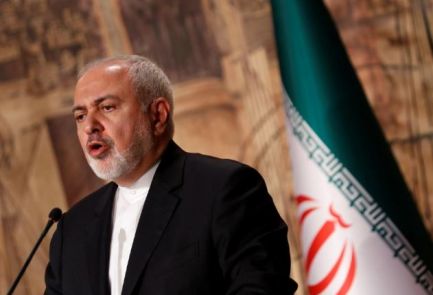
The threat of a forceful Iranian response to the US embargo on its oil sales, which goes into effect on Nov. 5 ,was contained in Iranian Foreign Minister Mohammed Javad Zarif’s remark on Tuesday, Oct. 30: “Unfortunately, a law-breaking country seeks to punish a country that abides by the law… This method will have severe consequences for the world order.” 

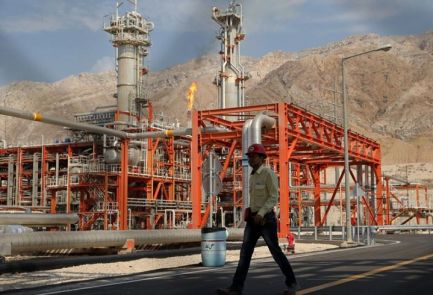
The threat of “consequences to the world order” may be translated into such options as Iranian disruption of world oil supplies, a substantial military attack on US or Arab Middle East targets, on Israel – or all of these actions in successive stages.

Iran has concentrated in Iraq and along its Gulf coast large numbers of Saeghe stealth drones (modeled on the advanced US RQ-170 Sentinel captured by Tehran in 2011). Al Qods Brigades forces operating in Syria have also been armed with these sophisticated drones. UAVs of different types were given to the Iraqi Shiite militias serving Tehran at home and in Syria as well as the Lebanese Hizballah.

The Saege drones have taken over the tasks of the exploding speedboats formerly used by Revolutionary Guards as primary weapons against Western and Arab oil tanker shipping in the Persian Gulf. The Iranian drone attack on ISIS concentrations in eastern Syria on Oct. 1 appeared to many Western and Middle East military experts to have been a kind of dress rehearsal for the use of this UAV for deadly air strikes on US, Israeli or Arab targets.

Then, 11 of these stealth drones were launched from Iran and flew across the entire width of Iraq to reach their targets, without being intercepted or even sighted by US, Israeli or Jordanian forces. The Saeghes hit Syrian base with miniature, precision-guided Sadid-345 glide bombs.

Then, this Revolutionary Guards weapon made its debut performance in real combat conditions and returned safely to base. Al Qods chief Maj. Gen. Qassem Soleimani has been placed in charge of all forthcoming Iran’s military preparations.