Israel said to warn Beirut it will strike Hezbollah rocket factories 

Posted November 2, 2018 by Joseph Wouk
Categories: Uncategorized

Source: Israel said to warn Beirut it will strike Hezbollah rocket factories | The Times of Israel

Jerusalem giving Lebanon a chance to take own steps against alleged sites where Iran is converting projectiles into guided missiles, according to Israeli report

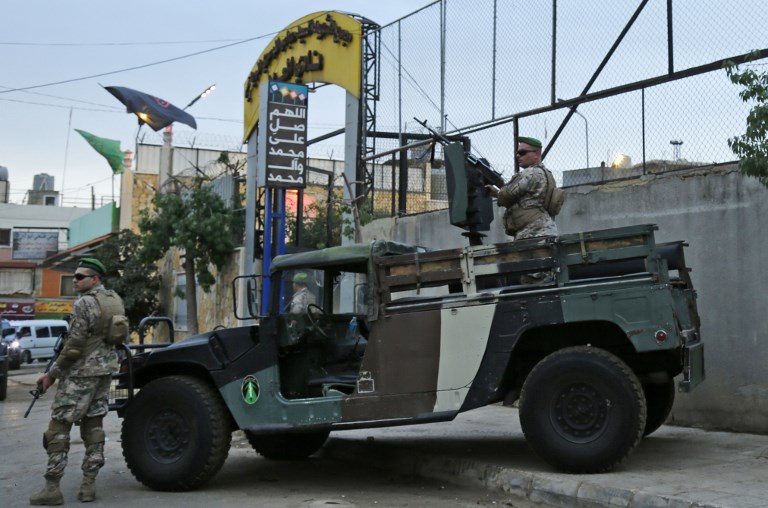
Lebanese security forces guard the entrance of Al-Ahed stadium in Beirut's southern suburbs during a tour organized by the Lebanese foreign minister for ambassadors on October 1, 2018 of alleged missile sites around the Lebanese capital in a bid to disprove Israeli accusations that the Hezbollah movement has secret missile facilities there. (AFP PHOTO / ANWAR AMRO)

Lebanese security forces guard the entrance of Al-Ahed stadium in Beirut’s southern suburbs during a tour organized by the Lebanese foreign minister for ambassadors on October 1, 2018 of alleged missile sites around the Lebanese capital in a bid to disprove Israeli accusations that the Hezbollah movement has secret missile facilities there. (AFP PHOTO / ANWAR AMRO)

Israel has reportedly sent a message to the Lebanese government via Paris demanding that it act against the Hezbollah terror group’s rocket factories in the country, saying if Lebanon refused to do so, Israel could take military action.

The message was delivered by Israel’s deputy national security adviser Eitan Ben-David to Orléan la-Chevalier, a top adviser to French President Emmanuel Macron, during the latter’s visit in Jerusalem on Monday, according to Israel’s Channel 10 news.

“The Lebanese government must be careful when it comes to Hezbollah’s rocket factories. If the issue isn’t dealt with through diplomatic means by the Lebanese government, Israel will act on its own,” the message read, according to the report, which cited unnamed “Western diplomatic sources.”

Ben-David asked that la-Chevalier deliver the message to Lebanese Prime Minister Saad Hariri.

France has close longstanding ties with Lebanon, and is considered close to Hariri.

The Prime Minister’s Office declined to comment Thursday on the report.

Ben-David said Israel would be patient, and was willing to wait to see if Lebanon took steps against the factories, but said it would not allow their construction to continue undisturbed.

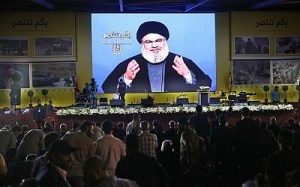
Hezbollah leader Hassan Nasrallah delivers a broadcast speech through a giant screen, during a rally marking the 12th anniversary of the 2006 Israel-Hezbollah war, in Beirut, Lebanon, on August 14, 2018. (AP Photo/Hussein Malla)

Largely funded by Iran, Hezbollah remains popular in Lebanon, where it has transformed into a potent political force allied with President Michel Aoun. Many politicians have balked at calls to force Hezbollah to disarm.

Aoun recently denied a claim by Prime Minister Benjamin Netanyahu that Iran was upgrading Hezbollah missiles at secret facilities inside Beirut, taking journalists and diplomats on tours of some of the alleged sites several days later.

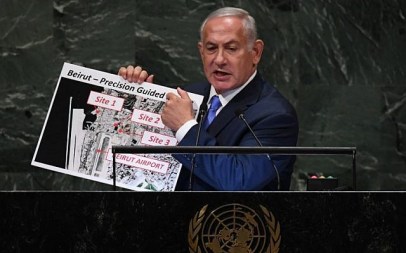
Netanyahu had revealed the sites during a speech at the United Nations General Assembly in a bid to spur international action.  He claimed the technology would allow the missiles to hit within 10 meters (32 feet) of its target.

Prime Minister Benjamin Netanyahu addresses the General Assembly at the United Nations in New York September 27, 2018, and holds up a placard detailing alleged Hezbollah missile sites in Beirut. (AFP / TIMOTHY A. CLARY)

Last month, Fox News reported that Iran had delivered advanced GPS components to Hezbollah which will allow the terrorist group to make previously unguided rockets into precision guided-missiles.

Israel has warned repeatedly about the threat of Hezbollah precision-guided missiles, and has carried out numerous airstrikes inside Syria to keep advanced weapons from being transferred to the terror group.

Reports that Iran was constructing underground missile conversion factories in Lebanon first emerged in March 2017.

Lebanon “is becoming a factory for precision-guided missiles that threaten Israel. These missiles pose a grave threat to Israel, and we will cannot accept this threat,” Netanyahu said in January.

Israel and Hezbollah fought a war in July 2006 that saw thousands of missiles rain on northern Israel.

Since then, the terror group is thought to have expanded its arsenal to over 100,000 rockets, with the ability to strike almost anywhere in the country, though only a small number are thought to have precision guided capabilities.

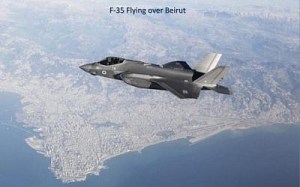
A photograph of an Israeli F-35 stealth fighter jet flying over the Lebanese capital of Beirut, which was apparently leaked to Israel’s Hadashot news. (Screen capture)

The Israeli Air Force has largely abstained from conducting raids inside Lebanon itself, though it has indicated that it was prepared to do so.

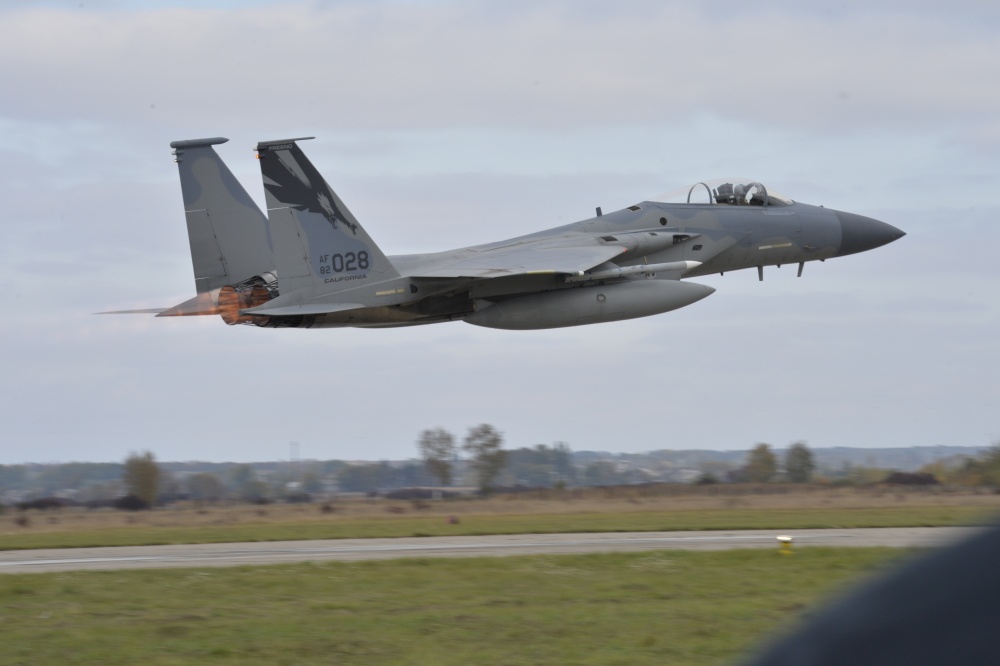
Earlier this year, air force chief Amiram Norkin showed visiting generals a picture of an Israeli F-35 stealth fighter flying near Beirut, in what was seen as a direct message to Hezbollah.

In May, Netanyahu said Israel was “operating against the transfer of deadly weapons from Syria to Lebanon or their manufacture in Lebanon.”


PM: Iran ‘most potent force of militant Islam’; threatens Israel, Europe alike

Posted November 2, 2018 by Joseph Wouk
Categories: Uncategorized

Source: PM: Iran ‘most potent force of militant Islam’; threatens Israel, Europe alike | The Times of Israel

In Bulgaria for international forum, Netanyahu says West must ‘stand together’ in countering threat to its civilization

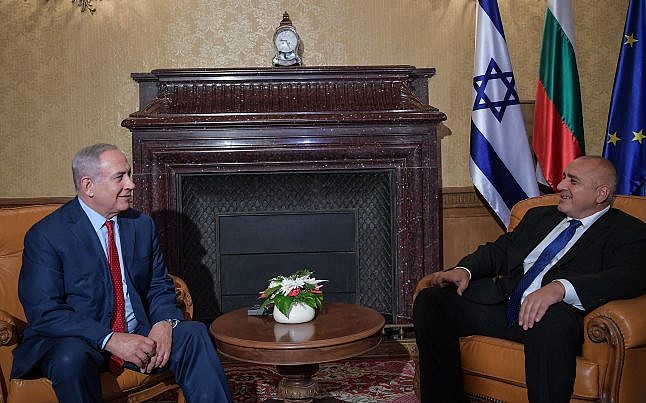
Prime Minister Benjamin Netanyahu meets with Bulgarian Prime Minister Boyko Borissov in Varna, Bulgaria, on November 1, 2018 (Amos Ben Gershom/GPO)

Prime Minister Benjamin Netanyahu meets with Bulgarian Prime Minister Boyko Borissov in Varna, Bulgaria, on November 1, 2018 (Amos Ben Gershom/GPO)

Prime Minister Benjamin Netanyahu on Thursday night called Iran the “most potent force of militant Islam” in the world and warned Europe of possible Iranian attacks on its soil.

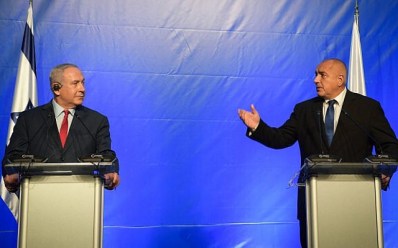
Speaking to reporters after talks with his Bulgarian counterpart, Boyko Borissov, Netanyahu said radical Islam is a threat to the world, and that Israel has recently revealed a number of Iranian plots to carry out attacks on European soil.

He said Israel and Europe “stand together” in the face of such attacks.

Israeli officials said Wednesday that the Mossad intelligence service had provided its Danish counterpart with information concerning an alleged Iranian plot to assassinate opposition activists in its territory.

“We are part of the same civilization, a civilization that values liberty, peace and progress, and today this civilization is under attack, most notably by the forces of militant Islam. Militant Islam attacks all of us. It attacks Arabs. It attacks Europeans. It attacks Israelis. It attacks everyone,” he said.

Netanyahu arrived in Bulgaria’s Black Sea city of Varna for Friday’s meeting of the Craiova Forum, which includes the prime ministers of Bulgaria, Greece and Romania, as well as the president of Serbia.

Ahead of his trip, Netanyahu said he wants to strengthen ties with these countries and “change the hostile and hypocritical approach of the European Union” toward Israel.

Prime Minister Benjamin Netanyahu meets with Bulgarian Prime Minister Boyko Borissov in Varna, Bulgaria, on November 1, 2018. (Amos Ben Gershom/GPO)

The premier said he would discuss with Bulgaria’s prime minister cooperation on military matters, trade, cyber-security, health and science.

“Israel is an innovation nation and it can help the people of Bulgaria and the other countries here by cooperating in ways that will help us and will help you in every field,” he said.

Netanyahu said the purpose of the visit was to strengthen Israel’s relationship with Balkan nations, but also to promote his agenda with the European bloc, which he has long chastised for what he claims is an anti-Israel bias.

Netanyahu didn’t specify which of the EU’s policies he takes issue with, but he has previously been at loggerheads with the bloc over the Israeli-Palestinian peace process and the Iran nuclear deal. Members of the coalition and some in the opposition also often claim that the union treats the Jewish state unfairly and often stands on the wrong side of history.

Brussels’ adamant opposition to settlement expansion and to Israel’s demolition of Palestinian structures, as well as European funding of leftist nonprofits, have angered right-wing Israelis for years.

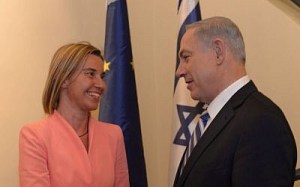
Prime Minister Benjamin Netanyahu meets with the European Union’s foreign policy chief, Federica Mogherini, in Jerusalem, on May 20, 2015. (Amos Ben Gershom/GPO)

Israel’s ties with the 28-member state union significantly worsened after the EU’s November 2015 decision to label settlement products. In its initial anger, Israel suspended contacts with the EU, but soon reinstated them. There were other signs of a detente, for example when a senior official in Brussels said in late 2016 that the union was willing to reconvene the EU-Israel Association Council, a bilateral forum on ministerial level, after a five-year hiatus.

But relations quickly went south again. In July 2017, Netanyahu was overheard, during a visit to Budapest, calling the EU “crazy” for insisting on linking the advancement of bilateral ties to progress in the peace process.

Tensions were exacerbated after US President Donald Trump’s December 6, 2017, recognition of Jerusalem as Israel’s capital, a move the union vehemently opposed.

Brussels also assumed the role of chief defender of the Iranian nuclear deal after Trump announced the US’s withdrawal from the landmark pact on March 8. Brussels not only condemned the president’s move but also vowed to protect European companies from reimposed sanctions.

Israeli attacks on the union have since increased in frequency and intensity. Ministers openly accuse the EU of funding anti-Israel boycottsand even organizations with terrorist links.


We have sinned 

Posted November 2, 2018 by Joseph Wouk
Categories: Uncategorized

Source: We have sinned – Israel Hayom


IDF bracing for Gaza tension 

Posted November 2, 2018 by Joseph Wouk
Categories: Uncategorized

Source: IDF bracing for Gaza tension – Arab-Israeli Conflict – Jerusalem Post

Hamas said it will lower but not stop violence to give Egyptian mediation a chance.

BY HERB KEINON, TOVAH LAZAROFF
 NOVEMBER 2, 2018 00:57
IDF bracing for Gaza tension

The IDF is bracing yet again for more Friday violence along the Gaza border fence, even amid reports of progress in Egypt- and UN-mediated efforts to restore quiet to area.

Hamas and Islamic Jihad leaders met in Gaza and reportedly decided to lower the level of violence, though not stop the weekly protests at the fence.

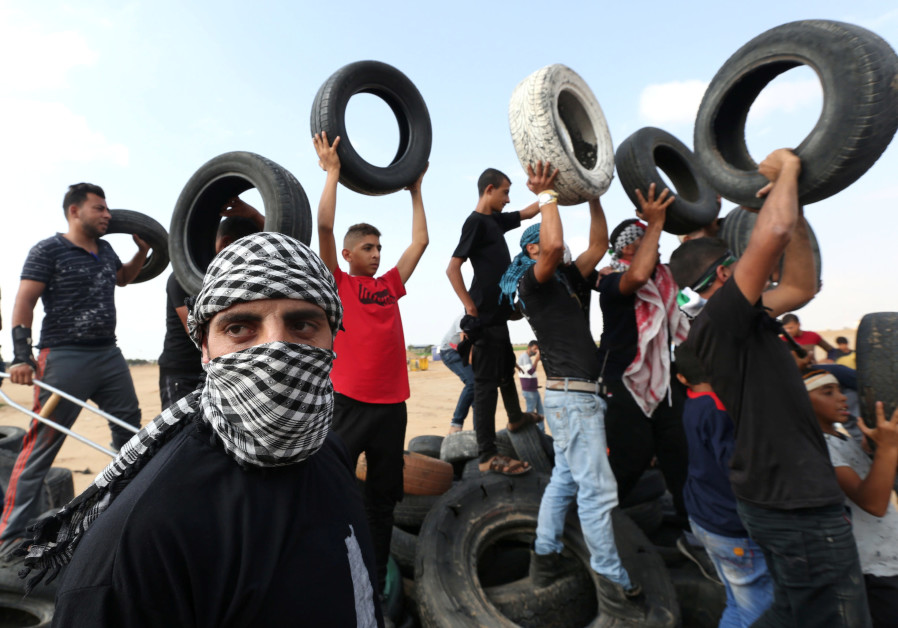
Following a meeting that included Hamas leaders Ismail Haniyeh and Yahya Sinwar, the various Palestinian factions – including Hamas, Islamic Jihad and the Popular Front – issued a statement saying that the “March of Return,” which began on March 30, will continue but without violence along the fence and incendiary balloons, and that protests are to be held at a distance of 500 meters from the barrier.

The groups issued a statement saying that the “March of Return” will continue until they reach their goal of “removing the blockade.”

The statement also expressed appreciation to “Egyptian, Qatari and UN efforts to ease the blockade and remove it.”

An Egyptian intelligence team – which has been at the center of effort to restore calm to pre-March levels – was in Gaza on Thursday. Palestinian Authority President Mahmoud Abbas is scheduled to meet Egyptian President Abdel Fattah al-Sisi in Sharm el-Sheikh on Friday. His decision to cut off funding to Gaza has, according to Israel, fueled tensions in the Strip.

The apparent decision to tamp down the violence follows Israel’s agreement to allow Qatari-funded fuel to enter the Gaza Strip, to allow funds from the emirate to pay Hamas salaries and to extend fishing rights along the Gaza coast.

Earlier this week, a senior diplomatic official made clear that Israel would work with various international actors – including Qatar – to prevent a humanitarian crisis in Gaza and try to restore quiet to the area without having to embark on a major military offensive.

The official also said that last week the sides were on the cusp of an agreement, but they had dissolved with Friday’s violence at the fence and Islamic Jihad – acting on orders from Syria – firing a barrage of nearly 40 rockets at Israel.

The Palestinian factions’ apparent decision to tamp down the violence, at least until Sunday, is designed to let Egypt and the United Nations to continue their efforts to restore the situation to what it was prior to the start of the “March of Return.”

Both Egypt and the UN hope to create a long-term understanding, or even a cease-fire, that would ease the humanitarian situation for the two million people living in Gaza and prevent further outbreaks of violence between the IDF and Hamas.

Egyptian negotiators have also proposed a three-year agreement to reconcile the rival factions of Hamas in the Gaza Strip and the Fatah-led Palestinian Authority in the West Bank, according to an Army Radio report.

The proposed agreement would be enacted in stages. The PA would first take responsibility for civil services and the government ministries in the Gaza Strip that are now under Hamas control.

In its second phase, the PA would be in control of the police and the border crossings. If all went well for three years, Hamas’s military wing Izzadin al-Qassam would be placed under PA control as well.

Separately, elections would be held for a new Palestinian parliament and a new constitution would be drawn up, according to Army Radio.

The plan was designed by Egypt’s Gen. Ahmad Abd al-Khaliq, who has made four trips to Gaza and the West Bank in the past two weeks to secure agreements for the plan. He has also met with senior Israeli Defense Ministry officials.

The Egyptian plan includes detailed timetables and formulas for each stage. Hamas is prepared to consider the plan but is waiting for a response from Abbas.

Abbas in the past has rejected any plan that did not immediately place the security services under his control. He fears that any plan that maintains a separate security force for Hamas makes it more likely that the West Bank and Gaza could become two separate entities rather than one unified state, according to Army Radio.


Iranians at the Gates

Posted November 2, 2018 by Joseph Wouk
Categories: Uncategorized

Source: Iranians at the Gates – Middle East – Jerusalem Post

Tehran’s recent anti-Israel activity may, somewhat counter-intuitively, be a sign of distress ahead of new American sanctions and as a regional alliance against it coalesces

BY CHARLES BYBELEZER/THE MEDIA LINE
 NOVEMBER 2, 2018 13:23
Iranians at the Gates

In fact, while the Israeli government ultimately holds Hamas responsible for all violence emanating from the territory it controls, the Israel Defense Forces nevertheless explicitly blamed the latter wholly owned Iranian subsidiary for launching the missiles, alleging that “orders and incentives were given from Damascus with a clear involvement of the Revolutionary Guards al-Quds force.” Late Saturday morning IJ unilaterally declared a cease- fire, a message conveyed to Jerusalem via Egyptian intermediaries already attempting to forge a long-term truce between Israel and Gaza’s rulers in order to avert a fourth major conflict in the past decade.

Accordingly, many analysts have attributed IJ’s aggressiveness to a desire on the part of Tehran—a master at fomenting and then harnessing instability to its geopolitical advantage—to torpedo these efforts. Notably, the move follows the transfer by Russia to the Assad regime of the advanced S-300 defense system, which has partially curbed Israel’s freedom of action to target Iranian military infrastructure in Syria. This all comes on the backdrop of reports that the Islamic Republic delivered sophisticated GPS components to Hezbollah that will enable it to transform inaccurate projectiles into precision-guided missiles, thereby increasing their threat to the Jewish state.

During a September speech to the United Nations General Assembly, Prime Minister Binyamin Netanyahu sounded the alarm over Hizbullah, revealing satellite imagery of three sites in Beirut where Iran’s underling allegedly has built underground manufacturing facilities to produce missiles capable of hitting within a few meters of practically anywhere in Israel. Last week, the IDF accused the Shiite terrorist group of operating a fake environmental NGO in order to illegally maintain a presence in the buffer zone separating Lebanon and Israel. Finally, Israeli media claimed Hizbullah is working to construct forward- operating bases in the Syrian Golan Heights just a few kilometers from the border with Israel, a development that, if true, casts serious doubt over Moscow’s purported guarantee to prevent the militarization of the frontier.

Taken together, these circumstances suggest that Iran has become sufficiently emboldened to increase its proxy war against Israel. That said, while there are obvious acute concerns for Jerusalem, some observers are construing Tehran’s lashing out as evidence of the mullahs’ desperation amid civil unrest at home; ahead of the re-imposition of American sanctions on their country’s crucial oil sector; and as the United States-led alliance to counter the regime takes shape.

“As far as recent events go, the Iranians are like a cat in a corner and will try with whatever means they have in order to secure their continuity. They are facing daily mini-uprisings and they are very, very concerned,” Dr. Alireza Nourizadeh, Director of the London-based Center for Iranian and Arab Studies, explained to The Media Line.

“The upcoming measures in November are a nightmare for the Iranians as they are not 100 percent sure what President Trump will put on the table and how far he will go. Will there be a total ban on Iran’s oil exports, including [to such countries as] India, Japan and others? Everything is unclear and there are differences between the teams of President Hassan Rouhani and Supreme Leader Ayatollah Khamenei.

“In terms of what to watch for,” Dr. Nourizadeh imparted, “the Iranians are blocking the formation of [Lebanese Prime Minister] Saad Hariri’s cabinet, but if he is able to form one next week this could be a sign of compromise on [Riyadh’s part]. Also, Oman’s Sultan Qaboos [who in the past has acted as a conduit to the Iranian regime] hosted Prime Minister Netanyahu which also could be the start of a small rapprochement. Otherwise, I fear there will be very dark days to come.” As regards Jerusalem, specifically, the government seems intent on leveraging its burgeoning diplomatic ties with the Sunni-Arab world in order to stymie Iran’s hegemonic ambitions.

This would, by extension, at least for the time being reduce the probability of a conflagration along any one of three Israeli borders where the Islamic Republic has allied fighters stationed at the gates.

Indeed, Prime Minister Netanyahu on Friday made a public visit to Oman—the first by an Israeli leader to the Sunni Gulf nation in over two decades—after which Muscat called for the Jewish state’s regional integration irrespective of the amount of progress made towards achieving a peace deal with the Palestinians. Concurrently, Miri Regev became the first Israeli minister to pay an official visit to the United Arab Emirates, where an Israeli delegation is being permitted (as opposed to last year) to compete under its own flag in an international judo event. This, as U.S. President Donald Trump appears committed in the wake of the grisly murder of journalist Jamal Khashoggi to maintaining strong bilateral relations with Saudi Arabia, which along with Israel is a centerpiece of the White House’s foreign policy goal of rolling back Iran’s expansionism and potential nuclearization.

“The most important problem for Israel is [not Islamic Jihad in Gaza] but Iran’s military intervention in Syria,” Dr. Col. (ret.) Ephraim Kam, a Senior Research Fellow at the Tel Aviv- based Institute for National Security Studies, stressed to The Media Line. “Previously, the Israeli army had the advantage as its capabilities are superior to those of Iran, but this could change with the S-300 system [in Syrian hands]. The big question is how this will impact on the IDF’s [maneuverability] and everyone is waiting and see.” That the Israeli military did not react to IJ’s attacks this weekend by targeting Iranian assets in Syria, coupled with the IDF’s reported lack of activity in that country since the downing last month by Syrian forces of a Russian reconnaissance plane, which the Kremlin nonetheless blamed on Jerusalem, is perhaps a telling indication of the emergence of a new, restrictive dynamic.

“With respect to Oman,” Dr. Kam continued, “Iran was almost certainly discussed but [Muscat] likely cannot help Israel much. On the other hand, The Trump administration’s approach is a big problem for the Iranians. He has backed out of the nuclear agreement, re- imposed financial penalties and has supported Israel [unequivocally] in its confrontations with the Islamic Republic. The regime does not understand the American leader and lacks an answer to his [unpredictability]. Accordingly, there is a chance Iran will be deterred moving forward.” To paraphrase Orwell, then, Tehran’s strong maneuvering against Israel—including in Syria, Lebanon and, most recently, in the Gaza Strip—may, in reality, be a short-term manifestation of a rising fear of its prospective weakening.


Brazil to move embassy to Jerusalem, Brazilian President Bolsonaro says

Posted November 2, 2018 by Joseph Wouk
Categories: Uncategorized

Source: Brazil to move embassy to Jerusalem, Brazilian President Bolsonaro says – International news – Jerusalem Post

( The “Trump of S. America” Makes his first move… Not bad ! – JW )

“Israel is a sovereign state and we shall duly respect that,” Bolsonaro writes.

BY HERB KEINON
 NOVEMBER 1, 2018 22:28

Jair Bolsonaro, Brazil's president-elect, on October 28, 2018

“As previously stated during our campaign, we intend to transfer the Brazilian Embassy from Tel-Aviv to Jerusalem. Israel is a sovereign state and we shall duly respect that,” he wrote.

Bolsonaro is a populist, ultra-conservative, Evangelical Christian whose victory Sunday signified a stunning shift in the direction of Brazil which has been ruled for the last 15 years by the far-left Workers Party. It also represents a tectonic shift in the country’s relationship with Israel.

In an interview Thursday with Israel Hayom, Bolsonaro repeated his pledge to move the embassy,

“Israel is a sovereign state. If you decide on your capital city, we will act in accordance. When I was asked during the campaign if I’ll do it [relocate the embassy] when I was president, I said yes, and that you’re the ones who decide on the capital of Israel, not other people,” he said.

He also said during the campaign that he would close the Palestinian Embassy in Brasilia. Asked about this in the interview, he said: “As for the Palestinian Embassy, it was built too close to the presidential palace … No embassy can be so close to the presidential palace, so we intend to move it. There’s no other way, in my opinion. Other than that, Palestine first needs to be a state to have the right to an embassy.”

Bolsonaro also said that Israel can now “count on having our vote in the UN. I know that often the vote is almost symbolic, but it helps to define the position a country intends to take. Rest assured that you can depend on our vote in the UN on almost all the issues having to do with Israel.”

In the past, Brazil was among those countries that almost always voted against Israel in international forums.

Prime Minister Benjamin Netanyahu phoned Bolsonaro shortly after his election victory to congratulate him, and said that he intends on attending his inauguration on January 1.

If Brazil does indeed go ahead with the embassy move, it will join the United States and Guatemala, who took similar steps. Paraguay also moved its embassy, but then quickly changed its mind following a change of presidents there and moved its embassy back to Tel Aviv.

Knesset Speaker Yuli Edelstein issued an immediate response, saying that Bolsonaro “is a great friend of the Jewish people and the State of Israel. Thank you very much Brazil!”

“I congratulate my friend the incoming President of Brazil, Jair Bolsonaro, for his intention to move the Brazilian Embassy to Jerusalem,” Netanyahu said in a statement issued from Bulgaria, where he is visiting, “This is a historic, just and moving step.”


Israel takes part in US-led exercise in Ukraine against S-300s, hooks up with US-Kiev ties – DEBKAfile

Posted November 2, 2018 by Joseph Wouk
Categories: Uncategorized

Source: Israel takes part in US-led exercise in Ukraine against S-300s, hooks up with US-Kiev ties – DEBKAfile

At a high point in the interplay of US-Russian rivalries between Syria and Ukraine, Israeli jets were discovered taking part in a Western air drill in Ukraine. On Thursday, Nov. 1, too, Moscow slapped down on Ukraine its most extensive sanctions ever against any country, a short time after sources in Jerusalem announced that Ukraine President Petro Poroshenko would soon come for a visit.
These steps are building up for the forthcoming summit between Presidents Donald Trump and Vladimir Putin in Paris on Nov. 11. The sanctions decree was therefore tactfully signed by Russian Prime Minister Dmitry Medvedev. He ordered a freeze on the Russian assets of 322 Ukrainian politicians and officials and 68 businesses, in response to similar Ukrainian measures against Russians. They targeted President Petro Poroshenko’s son Olexiy, who manages the family businesses, presidential contender Yulia Tymoshenko, a highly influential voice in Ukraine politics and economy, the head of Ukraine’s SBU security service Vasil Hrytsak, Interior Minister Arsen Avakov, and billionaire tycoon Victor Pinchuk.

The Ukraine president last visited Israel three yeas ago, shortly after Russia expanded its military involvement in Syria. Relations cooled off thereafter, during a period of warm interaction between Prime Minister Binyamin Netanyahu and President Putin. Those friendly relations melted away under Moscow’s anger over the downing of the Russian spy plane off the Syrian coast on Sept. 17. It was vented in the flooding of Syria with advanced Russian S-300 air defense missiles.

Since Moscow had clearly determined to  curb Israel’s air operations against Iranian targets in Syria and Putin snubbed all the prime minister’s overtures for a meeting to discuss the crisis, Netanyahu decided to change horses and revived his former ties with Kiev.

This week the Israeli air force was reported to be taking part in a US-led Clear Sky exercise in Ukraine that included practice maneuvers against Russian S-300 and S-400 air defense missiles.


As US sanctions loom, Iranian leader anticipates difficult months ahead 

Posted November 1, 2018 by Joseph Wouk
Categories: Uncategorized

Source: As US sanctions loom, Iranian leader anticipates difficult months ahead – Israel Hayom


Member of Hamas military wing killed in ‘accidental explosion’

Posted November 1, 2018 by Joseph Wouk
Categories: Uncategorized

Source: Member of Hamas military wing killed in ‘accidental explosion’ | The Times of Israel

Blast occurs at site belonging to an unnamed armed group in the Gaza Strip, Hamas-linked news site reports

Members of the Hamas terror group's military wing attend the funeral of six of its fighters at a cemetery in the  Deir al-Balah refugee camp in the central Gaza Strip on May 6, 2018. (Rahim Khatib/Flash90)

Members of the Hamas terror group’s military wing attend the funeral of six of its fighters at a cemetery in the Deir al-Balah refugee camp in the central Gaza Strip on May 6, 2018. (Rahim Khatib/Flash90)

A member of the Izz ad-Din al-Qassam Brigades, Hamas’s military wing, was killed on Thursday in an “accidental explosion” in the northern Gaza Strip, the terror group said.

Daoud Jneid of Jabalia in northern Gaza “was martyred in an accidental explosion,” the Qassam Brigades said in a statement on its official website.

The Hamas-run Health Ministry said Jneid was 37. The Qassam Brigades said he was 39.

The explosion took place at a site that belongs to an armed group in Gaza, the Hamas-linked Palestinian Information Center reported, citing local sources.

المركز الفلسطيني للإعلام

@PalinfoAr

الشهيد المجاهد داوود جنيد 39 عاما من جباليا والذي استشهد نتيجة انفجار عرضي أثناء رباطه صباح اليوم

The report did not say to which armed group the site belongs.

“He passed away on the path of struggle and resistance and in the field of honor and might,” the Qassam Brigades statement added.

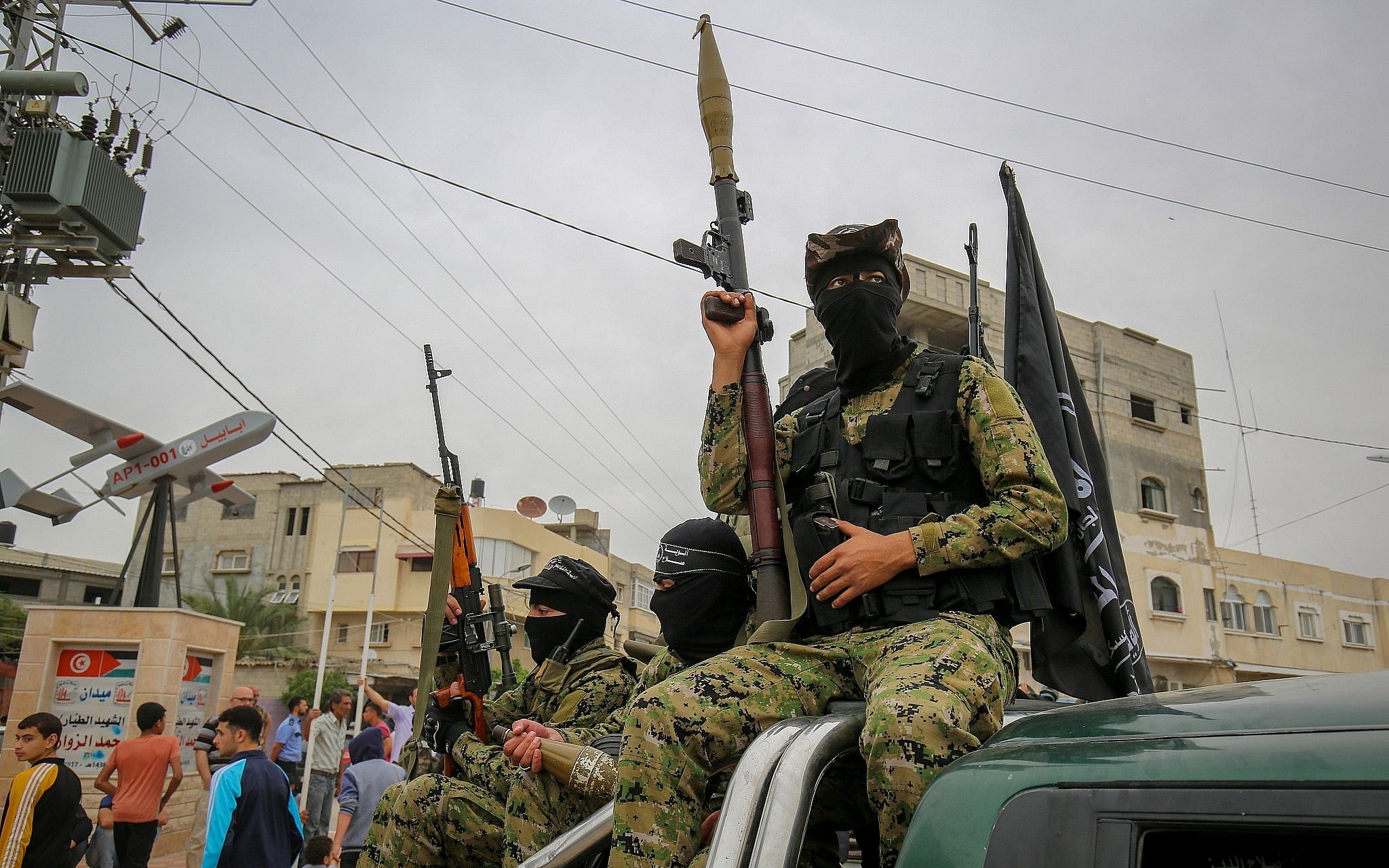
Hamas’s military wing frequently fires rockets at southern Israel and encourages and praises violent attacks against Israelis in the West Bank and Jerusalem.

In early September, 42-year-old Abdel Rahim Abbas, another member of Hamas’s military wing, was killed in an “accidental explosion,” the Qassam Brigades said in a statement at the time.


Giant leap for Israel-Gulf ties can’t shatter the Palestinian glass ceiling

Posted November 1, 2018 by Joseph Wouk
Categories: Uncategorized

Source: Giant leap for Israel-Gulf ties can’t shatter the Palestinian glass ceiling | The Times of Israel

Do Netanyahu’s visit in Oman and ‘Hatikva’ playing in Abu Dhabi show that normalization with the Arab world is not tied to progress in the peace process? Not so fast, analysts warn

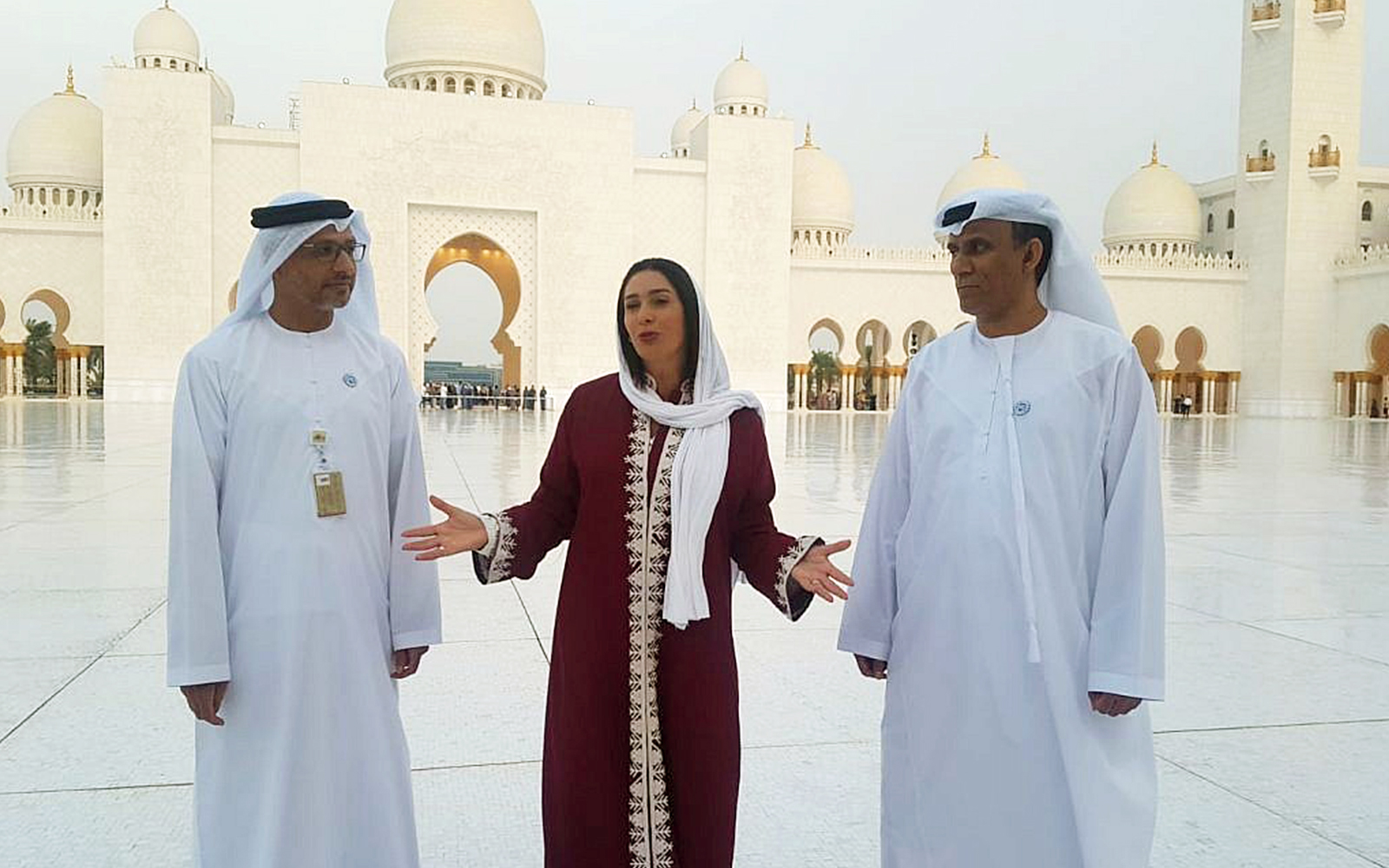
Miri Regev, center, visiting the Sheikh Zayed Grand Mosque in Abu Dhabi with UAE officials on October 29, 2018. (Courtesy Chen Kedem Maktoubi)

Israel’s ties with the Arab world took a giant leap forward in recent days, with a series of dramatic — even historic — events that seemed to indicate that some of the Jewish state’s neighbors are at long last accepting it as a legitimate member of the family of nations.

Oman, Bahrain and the United Arab Emirates made important gestures toward Israel over the last few days, despite the fact that Israel’s relations with its closest neighbors, the Palestinians, remain dismal.

A peace agreement is as elusive as ever, yet today it can no longer be denied that some Sunni Arab states are slowly but surely opening up to Israel. This seemingly disproves the hypothesis, advanced by some, that no normalization with the Muslim world can take place in the absence of significant progress in the Israeli-Palestinian conflict.

Yet, despite the abundance of good news in Israel-Gulf relations, the peace process is still a glass ceiling that must be shattered before full normalization can take place, several analysts warned this week.

On Friday, Prime Minister Benjamin Netanyahu was warmly welcomed in Muscat by Omani Sultan Qaboos bin Said, becoming the first Israeli official to publicly visit the country in more than two decades.

“These were important talks — both for the State of Israel and very important talks for Israel’s security,” Netanyahu said Sunday, vowing that there “there will be more” visits to Arab countries.
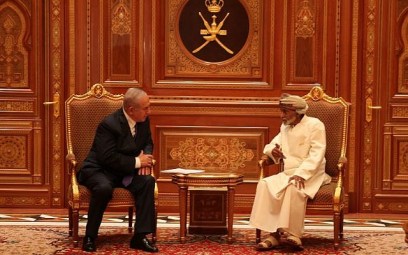
Prime Minister Benjamin Netanyahu (L) talks with Sultan Qaboos bin Said in Oman on October 26, 2018 (Courtesy)

The significance of the Qaboos-Netanyahu meeting was not lost on anyone dealing with Middle East affairs.

“We welcome the warming ties & growing cooperation between our regional friends,” US peace envoy Jason Greenblatt tweeted on Friday. “This is a helpful step for our peace efforts and essential to create an atmosphere of stability, security and prosperity between Israelis, Palestinians their neighbors.”

Even some of Netanyahu’s toughest critics acknowledged that the Oman trip was a major achievement.

“Relations with the Arab world are of strategic importance for the State of Israel. We are a natural part of the Middle East and the countries of the region need to understand that we are here to stay,” opposition MK Yair Lapid told The Times of Israel. “I welcome the prime minister’s visit to Oman and the willingness of the sultan to publicize this visit.”

Netanyahu’s eight-hour meeting with Qaboos, during which the Israeli leader and his wife, Sara, were treated to a lavish dinner and a performance of traditional Omani music, would have been enough to cast doubts on the theory that the Arab states will not publicly warm to Israel as long as their Palestinian brethren remain stateless.

But it was just the beginning.

On Saturday, after Netanyahu’s trip to Muscat had been celebrated on the front pages of several Omani newspapers, the country’s foreign minister, Yussef bin Alawi bin Abdullah, suggested at a conference in Bahrain that the time had come for Israel to be treated like any other state in the region. Remarkably, his colleagues from Manama and Riyadh did not disagree, even expressing tacit support for Oman’s efforts to help advance the peace process.

Alawi’s comments garnered praise from Greenblatt, who called it an “encouraging sign and step forward in creating an atmosphere favorable for peace.”

Jason D. Greenblatt

@jdgreenblatt45

On Sunday, about 500 kilometers east of Muscat, Israeli judoka Sagi Muki defeated Belgian competitor Matthias Casse to take first place in the under-81 kilogram category at the Abu Dhabi Grand Slam.

Culture and Sports Minister Miri Regev had tears streaming down her face as she listened to Hatikva, the Israeli national anthem, being played for the first time on the Arabian Peninsula.

Just last year, Tal Flicker, who won a gold medal at the same venue, was not allowed to display the Israeli flag. And after his victory in the under-66 kilograms category, the International Judo Federation’s (IJF) anthem was played instead of Hatikva.

Israel’s national symbols being honored on UAE soil transcended the world of sports, said IJF president Marius Vizer, calling it “a crucial moment in the world.”

Netanyahu, too, attributed great importance to Muki’s achievement, telling the fresh gold medalist that he was “also contributing to Israel’s diplomatic effort in the Arab world.”

On Monday, Regev was accompanied by Emirati officials to the Sheikh Zayed Grand Mosque, the third-largest Muslim house of worship in the world, and a site regularly shown to world leaders visiting the country.

The first-ever official state visit to the mosque by an Israeli minister was something veteran analysts said they never imagined could happen in their lifetime.
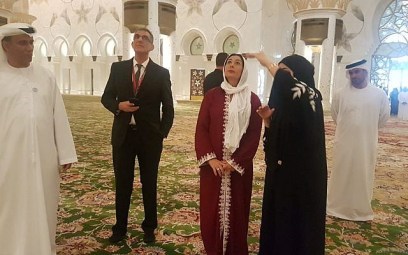
Miri Regev, center, visiting the Sheikh Zayed Grand Mosque in Abu Dhabi with UAE officials on October 29, 2018. (Courtesy Chen Kedem Maktoubi)

Two other Israeli ministers visited or are going to visit the Gulf in an official capacity: Communications Minister Ayoub Kara on Tuesday addressed the International Telecommunication Union’s Plenipotentiary Conference in Dubai, and Transportation Minister Israel Katz was invitedto the World Congress of the International Road Transport Union in Muscat, where he will promote his “Tracks for Regional Peace” initiative aiming to establish a trade route connecting Europe with Israel and the Persian Gulf.

Greenblatt, the US envoy, on Wednesday hailed Oman, Bahrain and the UAE for their “statements and/or gestures signaling warmer ties with Israel.”

Jason D. Greenblatt

@jdgreenblatt45

Some of those events — though not all — are truly extraordinary, many analysts agreed, pointing to the common enmity toward Iran that brings Israel and the Arab world together.

“Oman can be a means for communicating with the Iranians, a role Oman can play like few others,” said Dennis Ross, a former US diplomat and top Middle East adviser to several US presidents. “As for the other Sunni leaders, Israel is seen as reliable in terms of its opposition to Iran and is seen as not just talking but doing.”

But those Arab states are still unlikely to translate their admiration for Israel into a radically different public relationship with the Jewish state in the near future, Ross cautioned.

“They don’t see the need, and there is some risk because of the Palestinian issue,” he explained. “But the more even private relationships become the norm, the more they will prepare the ground for limited public moves taking place.”

Rabbi Marc Schneier, an interfaith activist who regularly travels to the region and has good relations with the ruling families of Saudi Arabia, Qatar, Bahrain and other Gulf states, said he was recently told by a top official in the Gulf that the one issue that unites the entire Arabian Peninsula “is their feeling that they need to establish relations with Israel.”

“It is the only issue that transcends all our disagreements,” Schneier quoted the official as saying.

“You get the sense that everyone is trying to out-Israel the other,” the rabbi-activist said. “We’re living in remarkable times.”
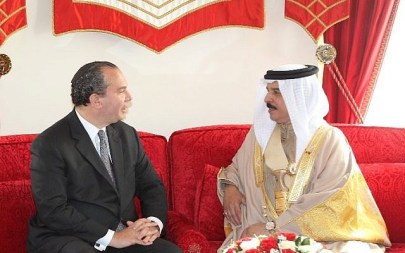
Rabbi Marc Schneier (right) and Bahrain King Hamad bin Isa Al Khalifa (courtesy)

And yet, there needs to be “some kind of tangible movement, some demonstrable efforts” to solve the Israeli-Palestinian conflict before the Gulf states will agree to establish formal relations with Israel, he added.

UAE caved to pressure from the International Judo Federation

Netanyahu’s warm reception in Muscat, and the absence of an outcry throughout the Arab world, was by far the biggest breakthrough of the last few days. As moving as it was for many Israelis was to see Hatikva played in Abu Dhabi, the Emiratis did not do it out of a sudden desire to honor Israel’s national anthem.

Rather, it followed a threat by the International Judo Federation, which had suspended the 2018 Grand Slam until the Emirati authorities committed in writing to providing equal rights to all countries.

The International Judo Federation flag flies for Israeli gold medalist Tal Flicker because Israel’s national symbols were banned at the 2017 Abu Dhabi Grand Slam. (Screen capture: YouTube)

The fact that ministers Kara and Katz are going to Gulf states is also not entirely surprising.

They are attending international conferences, the organizers of which are obligated to host representatives of every member state. The participation of Israeli officials in summits across the Arab world has been fairly standard for the last few years.

But why did Oman take the extraordinary step of hosting the leader of the Jewish state?

Qaboos, the Arab world’s longest serving monarch, has consistently supported Arab-Israeli peace efforts, said Sigurd Neubauer, a Middle East analyst based in Washington.

“When Egypt made peace with Israel in 1979, Oman was the only Gulf country not to boycott Egypt,” he said. Similarly, in the early 1990s Qaboos invited then-prime minister Yitzhak Rabin to Oman to demonstrate support for the Israeli-Jordanian peace treaty he was negotiating with King Hussein.

Oman has also quietly but actively supported Israeli-Palestinian peacemaking since the Oslo Accords by backing the Middle East Desalination Research Center, a Muscat-based organization that brings together scientists from Israel, the Palestinian territories, Jordan, Qatar and elsewhere to discuss water cooperation, according to Neubauer.
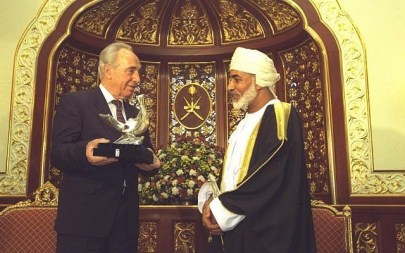
Then-prime minister Shimon Peres presents a sculpture of the dove of peace to Omani Sultan Qaboos bin Said El Said in the palace in Salala, April 1, 1996. (Avi Ohayun/GPO)

The contacts between Netanyahu’s office and the authorities in Muscat began about a year and a half ago, a senior official told reporters this week. That the meeting took place now is likely linked to the US administration’s forthcoming peace plan, several analysts said.

“Because Oman is trusted by both Israel and Palestine, it is uniquely positioned at this moment in time to support President Trump’s peace efforts, as the [rest of the] Arab world is facing increasing turmoil,” Neubauer said.

“Oman is perhaps the only Arab country where Netanyahu would be warmly welcomed and where his visit would not trigger any domestic backlash, nor would it contribute to the deepening the existing regional divisions among the Gulf states amid the crisis over Qatar,” he added.

This visit should be the beginning of normalization, not the end. But for the gulf states, it’s likely the end.

Yoel Guzansky, a senior fellow at Tel Aviv University’s Institute for National Security Studies, agreed that the invitation to Netanyahu was mostly a gesture toward Washington.

“He didn’t do it for us. He did it for the American president, who says he will soon present us with the deal of the century,” said Guzansky, who wrote his doctorate on Omani foreign policy.

At the same time, the friendly welcome Qaboos extended to Netanyahu by no means disproves the theory that full normalization is impossible so long as the Palestinian problem remains unsolved, he stressed.

“The Palestinians are still the glass ceiling for Arab-Israel normalization. And this glass ceiling is being eroded, but it is still there,” he said. The increasingly positive attitude by Oman, UAE, Bahrain and others can best be explained with the desire to remain on Trump’s good side, he posited.

“I think the administration asked the Gulf states, especially the smaller ones, to make gestures toward Israel, including confidence-building toward Israel,” Guzansky surmised.
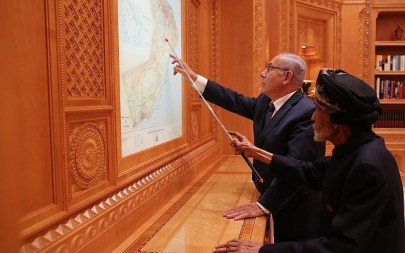
Prime Minister Benjamin Netanyahu with Sultan Qaboos bin Said in Oman on October 26, 2018 (Courtesy)

Netanyahu deserves credit for a great achievement, but ultimately his short trip to Muscat amounts to little more than “a show,” he went on.

“We didn’t break the barrier, and with all due respect to the prime minister’s visit to Oman, we have to see what comes next. Can this gesture be filled with substance? This visit should be the beginning of normalization, not the end,” Guzansky said.

“But for the Gulf states, it’s likely the end. This is the most they can do for now.”