US report: Iran provoking and threatening the US in Syria and Iraq

Posted November 7, 2018 by Joseph Wouk
Categories: Uncategorized

Source: US report: Iran provoking and threatening the US in Syria and Iraq – Middle East – Jerusalem Post

Defense Department Inspector General presents sobering report on Iran’s influence and unclear US policy to confront Iran’s role in Iraq and Syria.
BY SETH J. FRANTZMAN
 NOVEMBER 7, 2018 12:59
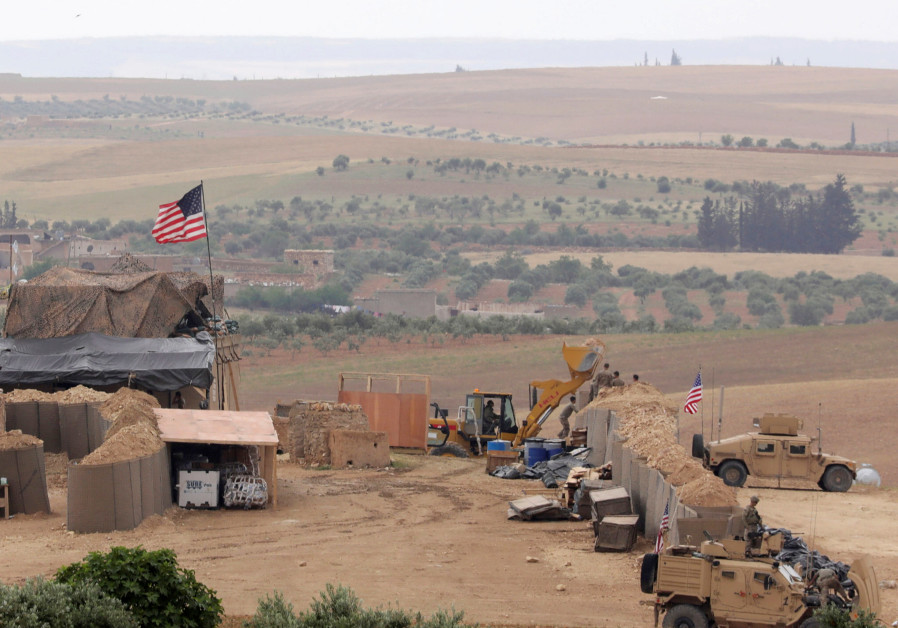
U.S. forces set up a new base in Manbij, Syria May 8, 2018. Picture Taken May 8, 2018

Iranian forces in Syria may present a threat to the US and in Iraq the Iranian threat is increasing, according to a new report from the US Department of Defense. The Lead Inspector General report on Operation Inherent Resolve was released on Tuesday and reviews the US role fighting Islamic State in Syria and Iraq.

However the quarterly report, which covers operations from July to September of this year, notes that Iran is increasingly a threat to the US and examines how Washington is now changing its posture in Syria as the mission changes.

In the last several months US officials have said that American troops would remain in Syria as long as Iranian troops were also present in the country. The US is now seeking to “leverage” its influence in Syria to remove Iran.

This is a major mission change from a conflict that began in 2014 to confront ISIS. The US base at Tanf, located in southern Syria near where the Jordanian and Iraqi borders meet, is also the subject of the report’s review. It notes that “while Iranian-backed miliitas may present a threat to the US and Coalition forces in Syria, neither Iran nor Iranian-backed militias had hindered counter-ISIS operations.”  The garrison at Tanf restricts the movement of the Iranians.

The Defense Department appears concerned that the mission in Syria is now becoming open-ended. “These policy goals include removing Iran and Iranian proxies from the country, influencing the outcome of the Syrian civil war now in its 8th year and stabilizing areas of northeast Syria liberated from ISIS.”

How to manage all these policies, some of which may be contradictory? Robert Karem, then the Assistant Secretary of Defense for International Security Affairs said the US will “desegregate” these objectives. Confronting Iran is now called an “ancillary” and “residual” benefit of the anti-ISIS war. “These officials raise questions about when the US troop presence will end,” the report notes.

In Iraq the US is also facing an increasing Iranian threat. US forces returned to Iraq in 2014 to confront ISIS and now run an extensive training program with the Coalition of 70 countries that are fighting ISIS. ISIS has “lost all territory in Iraq,” according to the Defense Department. But with US forces still in Iraq, the presence of Iranian-backed forces is a concern.

The report argues that he Popular Mobilization Forces of Shi’ite militias backed by Iran are continuing to act independently of the Iraqi army and this “increases Iran’s influence in Iraq.” The Iranian “proxies” also are increasing their “threatening posture toward US personnel.”

This includes 100-150 Iranian Revolutionary Guard Corps – Quds Force members. The Report blames them for two attacks that targeted US facilities in the last months. “Mortar attacks that targeted the Green Zone and landed near the US Embassy in Baghdad and rocket attacks that targeted the Basra airport, near the US Consulate General.” The US closed its Basra consulate in response.

Iran appears to be running a state within a state in Iraq. The US says that not only is Iran providing significant direct support to armed groups, but they are sending “missiles and rockets that are transported through border crossing points.” In addition Iran gathers combat intelligence, provides training, munitions and “Iranian military hardware such as drone surveillance operations.”

The Iranian-backed militias engage in “running illegal checkpoints, smuggling, drug and oil trafficking, bribery, and extortion.” Iranian-backed groups were accused of preventing Christians who had fled ISIS from returning to homes in Nineveh. “If left unchecked, Iranian-sponsored harassment of US forces could increase and Iranian influence operations could increase as they vie for influence in the new Iraqi government.”

How will the US confront this Iranian threat? Washington is committed to helping the Iraqi government defend itself, but with Iran’s role growing and political parties in Iraq, as well as militias, aligned with Iran, how does the US make sure that support for the government does not end up in Iran’s hands.

The report says the US is committed to countering “malign Iranian influence” but without a policy from Washington directing it how to do this, the report seems to leave a large question mark over what comes next.
 

Poll: 40% of British Jews considering leaving UK ‎over anti-Semitism 

Posted November 7, 2018 by Joseph Wouk
Categories: Uncategorized

Source: Poll: 40% of British Jews considering leaving UK ‎over anti-Semitism – Israel Hayom


Iran stiffens anti-US stance after Trump imposes ‘toughest ever’ sanctions 

Posted November 7, 2018 by Joseph Wouk
Categories: Uncategorized

Source: Iran stiffens anti-US stance after Trump imposes ‘toughest ever’ sanctions – Israel Hayom


Brazil: We won’t yield to Arab pressure, embassy will move to Jerusalem 

Posted November 7, 2018 by Joseph Wouk
Categories: Uncategorized

Source: Brazil: We won’t yield to Arab pressure, embassy will move to Jerusalem – Israel Hayom


Off Topic:  EXPLOSIVE 🔴 THE BEST TRUMP RALLY I’VE EVER SEEN ! 

Posted November 6, 2018 by Joseph Wouk
Categories: Uncategorized


Rush Limbaugh, Lee Greenwood, Sean Hannity, Judge Jeanine Speak at Trump Missouri Rally. The final rally before the midterms.


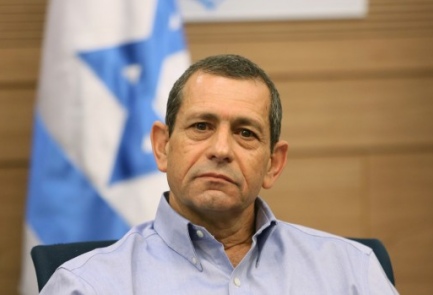
Security agency chief warns of deceptive calm: We foiled 480 major terror attacks this year 

Posted November 6, 2018 by Joseph Wouk
Categories: Uncategorized

Source: Security agency chief warns of deceptive calm: We foiled 480 major terror attacks this year – Israel Hayom


Off Topic:  Moment of truth for Trump 

Posted November 6, 2018 by Joseph Wouk
Categories: Uncategorized

Source: Moment of truth for Trump – Israel Hayom


EU struggles to find host for new Iran trade mechanism – Israel Hayom

Posted November 6, 2018 by Joseph Wouk
Categories: Uncategorized

Source: EU struggles to find host for new Iran trade mechanism – Israel Hayom


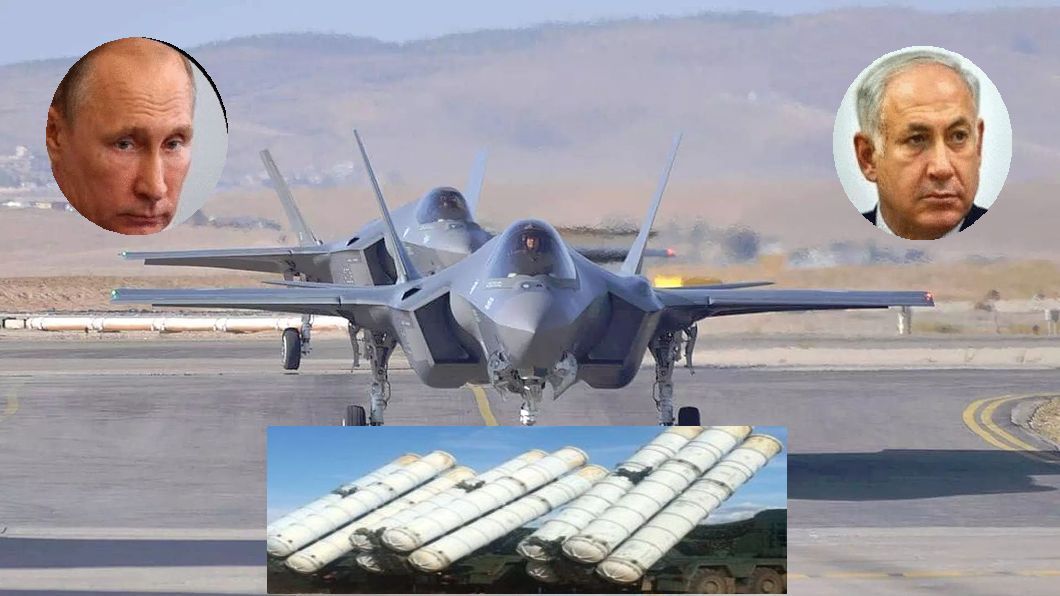
Israeli Minister Elkin: Syrian S-300s will be attacked if Israeli military or commercial planes hit – DEBKAfile

Posted November 6, 2018 by Joseph Wouk
Categories: Uncategorized

Source: Israeli Minister Elkin: Syrian S-300s will be attacked if Israeli military or commercial planes hit – DEBKAfile

Israel warned publicly for the first time that its air force would strike Syria’s S-300 air defense weapons supplied by Russia and Russian personnel could be in jeopardy. On Monday, Nov. 6, Ze’ev Elkin, minister for Jerusalem affairs and the environment said that Israel will attack Syria’s new Russian S-300 air defense systems if they are used against Israeli jets, Addressing Russian media in a rare briefing, Elkin, who is co-chair of the Russia-Israel Intergovernmental Commission, criticized Moscow, saying: “We consider the very fact of shipping S-300 to Syria a big mistake. The Syrian military are not always capable of correctly using the hardware transferred to them. In case of improper operation, civilian aircrafts may be harmed,” he said.

The minister, a member of Israel’s security cabinet, made these remarks after a month during which Israel refrained from air strikes over Syria and Russia had begun installing the first S-300s with Syrian operational teams.

“The Syrians, if they ever want to, might use [these systems] to down an Israeli military or commercial plane over Israeli territory,” Elkin said: “Considering the mess that is going on in the Syrian Army, shipping S-300s might lead to destabilization of the situation.” Pointing again at Moscow, the Israeli minister went on to say: “By shipping these kinds of weapons to Syrians, Russia bears partial responsibility for their use,” Elkin went on to warn: “Usually, Israel reacts to attacks on its territory and its aircraft not through international demarches, but with practical actions. Actions would undoubtedly take place, should [an attack] occur, against the launchers used to attack Israeli territory or Israeli planes.”

“I hope greatly that there would be no Russian military specialists [at S-300 sites],” he continued. “Israel has for all these years been doing everything it can to make sure Russian military personnel are not harmed. The Iranians have repeatedly used the Russian military as a living shield and conducted arms relocation operations under the cover of the Russian military presence.”

Elkin claimed that, according to Israeli intelligence, the Iranian military has attempted to use Russian military bases for arms shipment operations. “We have good enough intelligence regarding Iranian actions, and we know how to warn our Russian colleagues about such attempts in time.”

A response from Moscow will no doubt be coming for the first direct criticism by an Israeli minister of Russian actions in Syria.


Trump Admin Permits Iran to Continue Nuclear Work at Secretive Military Sites

Posted November 6, 2018 by Peter Hofman
Categories: Uncategorized

Concessions to Europe complicate administration’s Iran sanctions rollout

BY:

Trump Admin Permits Iran to Continue Nuclear Work at Secretive Military Sites

The Trump administration has allowed European countries to continue cooperating with Iran’s nuclear activities at a contested, secretive facility where Iran had wanted to make weapons-grade uranium, one of many loopholes in the recently announced sanctions reimposition that Iran hawks have criticized as being too weak.

Iran is being given a pass from the administration to continue nuclear projects at the Arak, Bushehr, and Fordow facilities, all contested sites that have been at the center of Tehran’s secretive nuclear enrichment work in the past.

The decision is part of a package of concessions granted by the Trump administration to Iran and European allies as a bevy of new U.S. sanctions go back into effect. In addition to permitting continued nuclear projects, the administration has walked back its vow to cut Iran’s oil exports to zero and fully disconnect Tehran from the international banking system.

These concessions, first reported last week by the Washington Free Beacon and subsequently confirmed by numerous publications, have riled Iran hawks on Capitol Hill and elsewhere who have long fought to close all existing loopholes in U.S. sanctions.

The State Department on Monday confirmed the Free Beacon‘s reporting, issuing a statement admitting to granting waivers for nuclear projects in Iran.

“We are specifically permitting nonproliferation projects at Arak, Bushehr, and Fordow to continue under the strictest scrutiny to ensure transparency and maintain constraints on Iran,” the administration announced.

“Permitting these specific activities to continue is an interim measure that preserves oversight of Iran’s civil nuclear program,” according to the statement, which has sparked fierce pushback from Iran hawks. “It enables the United States and our partners to reduce the proliferation risks at Arak, maintain safe oversight of operations at Bushehr, limit Iran’s stockpile of enriched uranium, and prevent the regime from reconstituting sites such as Fordow for proliferation-sensitive purposes.”

“This oversight enhances our ability to constrain Iran’s program and keep pressure on the regime while we pursue a new, stronger deal,” the administration maintained, hinting at efforts to preserve the landmark nuclear deal that Trump abandoned in frustration over what he described as glaring loopholes that have empowered Iran’s global terror operations.

While the administration will not consent to Iran undertaking new nuclear activities, it has conceded permission for European allies to continue projects already underway in the country.

“We are not issuing waivers for any new civil nuclear projects,” according to the administration. “We are only permitting the continuation for a temporary period of certain ongoing projects that impede Iran’s ability to reconstitute its weapons program and that lock in the nuclear status quo until we can secure a stronger deal that fully and firmly addresses all of our concerns.”

Advocates of a hardline approach to Iran in Congress say they are not being fooled by the administration’s rhetoric, which has historically been tough but is not being backed up with action.

“It’s not maximum pressure if Iran gets to keep selling oil, gets to keep accessing the global financial system, and—now—gets to keep working on its nuclear program with help from Europe, Russia, and China,” said one senior Republican congressional official.

“The administration is even letting Iran continue working with partners at Fordow, a bunker built into the side of a mountain which even Obama used to say needed to be closed,” the source said. “The policy announced today will lock in the nuclear deal under Trump’s watch.”

Added a second GOP congressional official working on the matter: “The pro-Obama deep state and Tillerson holdovers in Foggy Bottom strike back.”

David Albright, a veteran nuclear expert who runs the Institute for Science and International Security, told the Free Beacon the waiver issued for the contested Fordow nuclear facility is “hard to swallow.”

“It was grouped with the Arak reactor and a nuclear safety center, and hard to separate off,” Albright explained. “Those two provide concrete benefits, namely a reactor no longer able to make much plutonium and less fear that Bushehr, or for that matter the little Tehran Research Reactor, will melt down and spread dangerous radiation throughout the region.”

“Fordow employs centrifuge experts in a non-uranium enrichment process, which is good, but the whole process is quickly reversible,” Albright warned. “Those experts could be rapidly reassigned to work on advanced centrifuges to enrich uranium and Fordow could be restarted to enrich uranium.”

With Fordow continuing its operations, the issue is likely to “complicate, but not unravel future negotiations aimed at ending enrichment in Iran, which appears to be the Trump administration’s goal,” Albright said. “It is justified since Iran has no civil need to enrich uranium. Given its immense cost, and the ability to buy enriched uranium for civil purposes internationally at far less cost, any increase in domestic Iranian enriched uranium production should be viewed as military activity.”

Moreover, if “Iran violates the nuclear limits or refuses IAEA [International Atomic Energy Agency] inspections, then the E3 [in Europe] will have a responsibility to snap back sanctions under the JCPOA,” Albright added. “In anticipation of that possibility, the United States should continue to publicly make clear that it will not allow Iran to acquire nuclear weapons.”

Organizations that have supported the Trump administration’s moves on Iran also have expressed caution with the new concessions, another sign of mounting frustration among those who expected the White House to get tough with Tehran.

“The implementation of a maximum pressure, full economic blockade on Iran is the only way to force the regime to change its malignant behavior,” United Against Nuclear Iran (UANI) Chairman Sen. Joe Lieberman and CEO Amb. Mark Wallace said in a statement. “This campaign should include action by SWIFT to disconnect Iranian banks and no repeat of these oil waivers after 180 days. Anything else will continue allowing the world’s leading state sponsor of terrorism to fund its global terror campaign.”