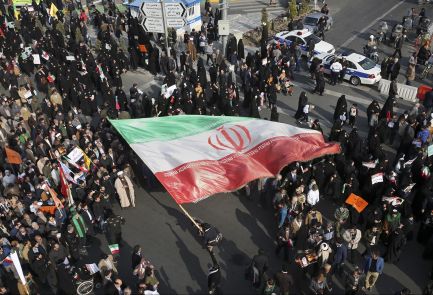
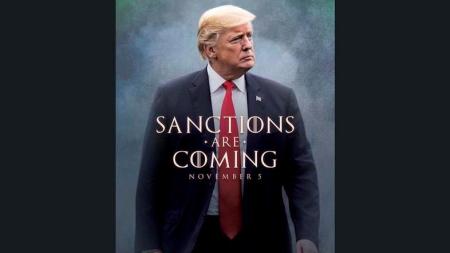
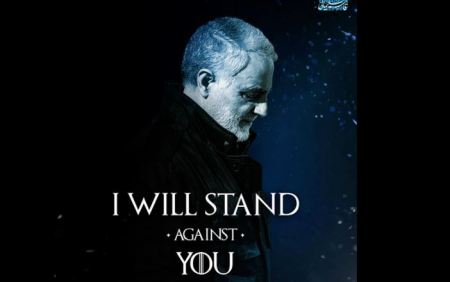
Iranian regime will be held accountable ‎ 

Posted November 9, 2018 by Joseph Wouk
Categories: Uncategorized

Source: Iranian regime will be held accountable ‎ – Israel Hayom


Envoy: US aims to end Iran oil exports without triggering spike in prices

Posted November 8, 2018 by Joseph Wouk
Categories: Uncategorized

Source: Envoy: US aims to end Iran oil exports without triggering spike in prices – Israel Hayom


Abbas agrees to Egypt-mediated ‘calm’ between Israel and Hamas — report

Posted November 8, 2018 by Joseph Wouk
Categories: Uncategorized

Source: Abbas agrees to Egypt-mediated ‘calm’ between Israel and Hamas — report | The Times of Israel

Sissi convinces PA chief to accept temporary truce, which will lead to internal reconciliation and only then to a long-term ceasefire with Israel, Arab paper reports

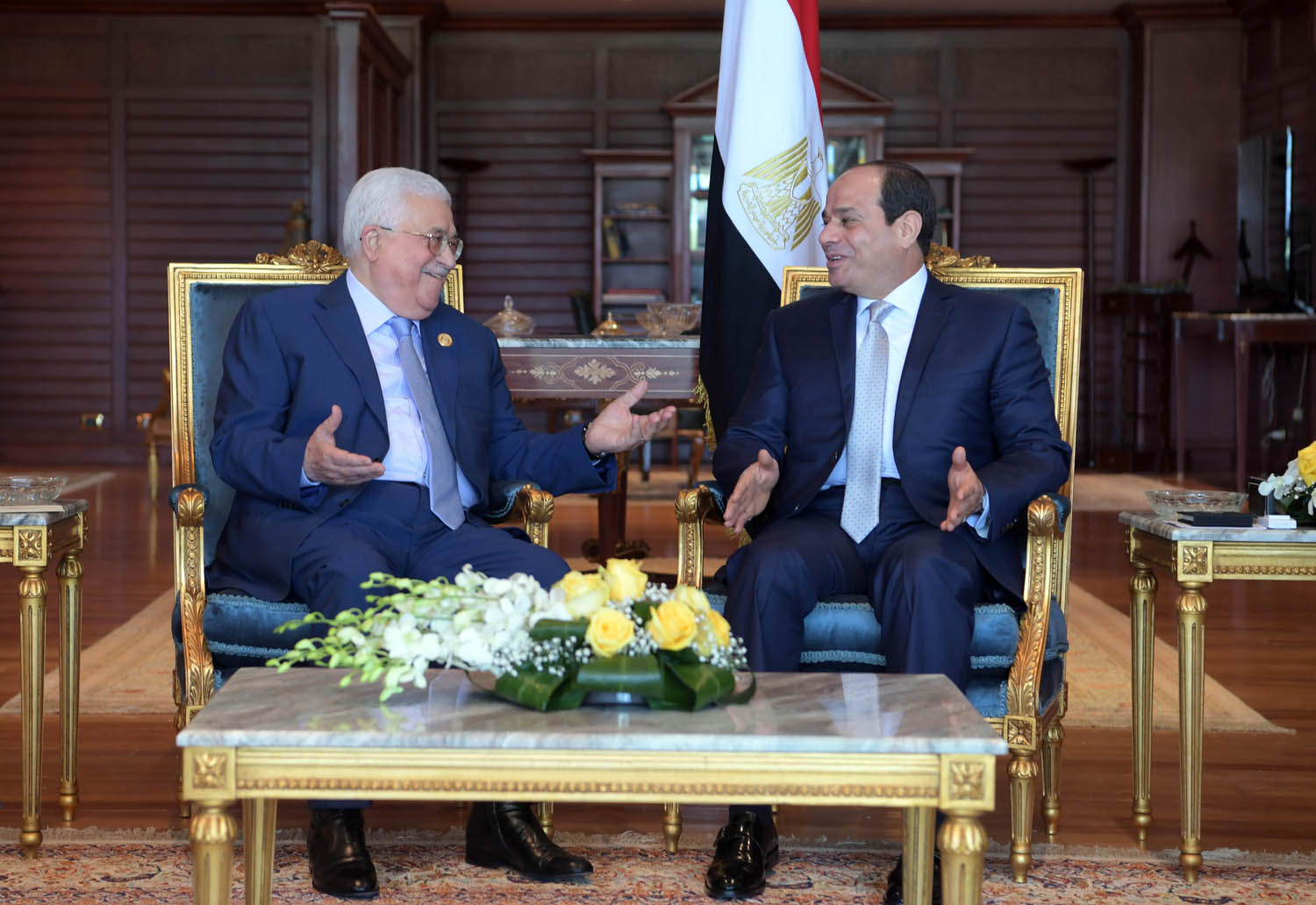
Palestinian Authority President Mahmoud Abbas and Egyptian President Abdel Fattah el-Sissi meeting in Sharm al-Sheikh on November 3, 2018. (Credit: Wafa)

Palestinian Authority President Mahmoud Abbas and Egyptian President Abdel Fattah el-Sissi meeting in Sharm al-Sheikh on November 3, 2018. (Credit: Wafa)

President Abdel Fattah el-Sissi has received Palestinian Authority President Mahmoud Abbas’s approval for efforts to achieve an initial “period of calm” between Israel and Hamas in the Gaza Strip, the London-based Arabic paper Al-Hayat newspaper reported Thursday.

The first period of such a calm would last two to three weeks, followed by a longer six-month period.

The paper said Sissi told Abbas that after calm is achieved, Egypt will move forward on efforts to reach reconciliation between Hamas and the Palestinian Authority’s Fatah movement and bring the two territories back under unified rule.

Egypt would then work to reach a long-term ceasefire between Israel and Gaza’s armed groups, the report said. It cited “reliable” Palestinian sources.

Sissi reportedly told Abbas a deal would be “an opportunity for the people of Gaza to breathe,” a suggestion the PA chief agreed to.

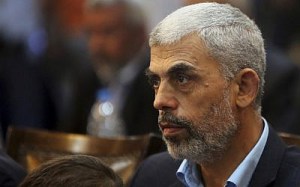
In this photo from May 1, 2017, Yehiyeh Sinwar, the leader of Hamas in the Gaza Strip, attends a news conference in Gaza City. (AP Photo/Adel Hana, File)

The paper added that Israel had agreed to transfer $90 million (likely from Qatar) over a six-month period to pay Hamas-employed government workers in the Strip, under UN monitoring. It was also said to agree, as part of the initial calm, to increase exports from Gaza including vegetables, furniture, clothing and other goods.

Arabic media reports have said that if achieved, a ceasefire would include at least a partial lifting of Israel’s restrictions on the movement of goods and people into and out of Gaza.

Israel holds that its restrictions on movement serve security purposes including preventing the entry of weapons into the Strip.

Hamas, an Islamist terror group that seeks to destroy Israel, has controlled Gaza since it ousted the Fatah-dominated PA in 2007 from the coastal enclave. The two Palestinian factions have remained deeply divided ever since. Israel holds Hamas responsible for all attacks emanating from Gaza.

Ramallah-based PA officials have previously insisted a Fatah-Hamas reconciliation should precede any possible ceasefire. They have also contended that the Palestine Liberation Organization, which Abbas chairs, is the sole party with the legitimacy to negotiate a ceasefire with Israel.

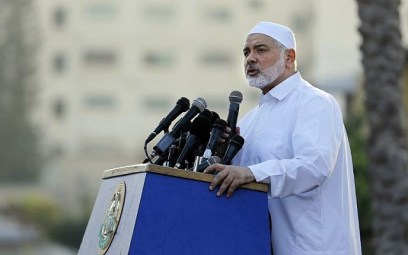
Hamas terror group leader Ismail Haniyeh delivers a speech on the first day of the Muslim Eid al-Adha holiday in Gaza City, the Gaza Strip, August 21, 2018.
(Anas BABA/AFP)

Over the past several years both Fatah and Hamas have signed a number of agreements, including an Egyptian-brokered deal in October 2017, to bring Gaza under one government and advance reconciliation efforts, but the rival parties have failed to implement them.

In August, an unnamed senior Fatah official told Israel’s Channel 10 that Abbas had declared that “over my dead body, there will be a ceasefire between Israel and Hamas.”

The same month al-Sheikh told Palestinian Authority television: “It is not possible to talk about a ceasefire before we achieve reconciliation.”

According to a report by Lebanon’s Al-Akhbar newspaper on Saturday, the emerging ceasefire agreement aimed at calming months of violence on the Israel-Gaza border will last for three years and see a significant easing of the blockade on the Hamas-controlled territory. According to the report, the deal being brokered by Egypt stipulates a gradual stop to the ongoing, Hamas-orchestrated violent border protests and maritime flotillas over the next two months. In addition, Hamas will be obligated to punish Gazans caught engaging in violent demonstrations along the border with Israel.

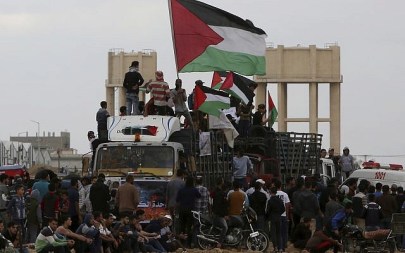
Illustrative: Protesters wave Palestinian flags while riding a truck full with tires near the fence of the Gaza Strip border with Israel during a protest east of Gaza City, Friday, October 26, 2018. (AP/Adel Hana)

In return, Egypt will permanently open its Rafah border crossing and lift 70 percent of its blockade on the Hamas-controlled territory, the report said, citing officials familiar with the emerging agreement. Al-Akhbar said the deal would require Israel to grant 5,000 work permits for Gazans, and expand the Strip’s fishing zone from nine to 14 nautical miles.

At a later stage after the deal is implemented, Al-Akhbar, said Egypt would work to advance a prisoner exchange deal between Israel and Hamas.

Border protests, which have included many violent acts, have taken place weekly since March 30. Their organizers have said the protests aim to achieve the return of Palestinian refugees and their descendants to lands which are now part of Israel, and pressure the Jewish state to lift its restrictions on the movement of people and goods into and out of the coastal enclave.

But last Friday’s border rallies were largely peaceful. Deputy Hamas chief in Gaza Khalil al-Hayya Hayya said the protests were scaled down to give the ceasefire efforts a chance, according to the Associated Press.

Syrian Army claims S-300 air defenses keeping Israel at bay

Posted November 8, 2018 by Joseph Wouk
Categories: Uncategorized

Source: Syrian Army claims S-300 air defenses keeping Israel at bay | The Times of Israel

Military official says advanced Russian-supplied anti-aircraft batteries haven’t made it impossible for IDF to strike Iranian targets, but have ‘minimized’ chances of success

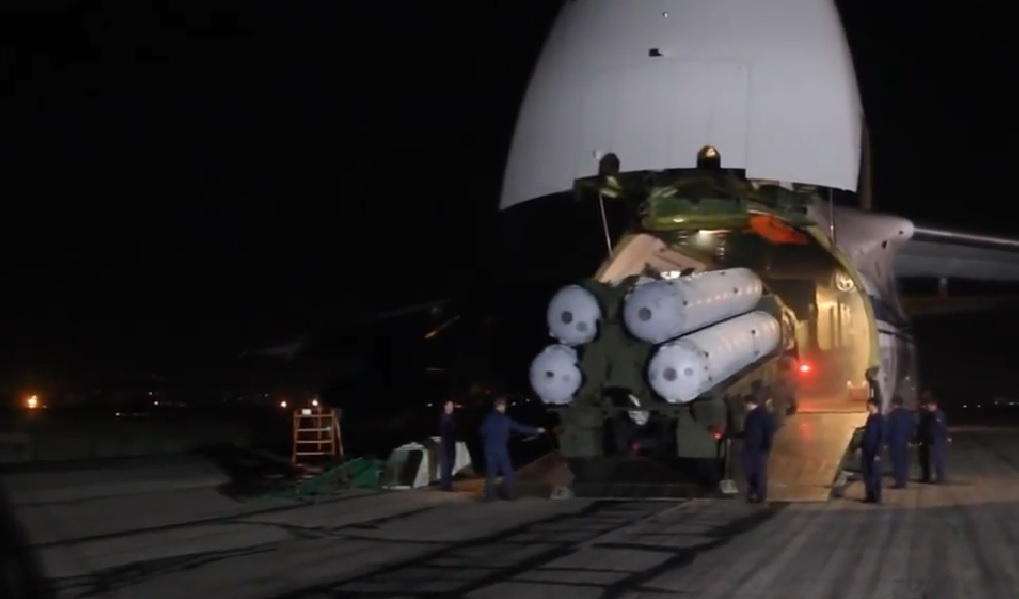
Screen capture from video showing the delivery of Russian S-300 air defense missiles to Syria. (YouTube)

Screen capture from video showing the delivery of Russian S-300 air defense missiles to Syria. (YouTube)

The Syrian military on Thursday said the S-300 air defense systems it received from Russia were largely stopping Israel from successfully conducting strikes against targets in the country.

“There is no concept of zero probability in military strategy. We cannot say that this probability has been reduced to zero,” Brig. Gen. Hasan Ahmad Hasan, head of the Syrian Army’s political bureau, told the Kremlin-backed Sputnik news site.

“I cannot say that in the end there will not be such a probability; however, the probability of this aggression achieving its goals has been minimized,” he said.

Russia delivered the advanced S-300 anti-aircraft batteries to Syria last month following the downing of a Russian military plane by Syrian air defenses during an Israeli strike on Iranian targets in Syria the month before.

In addition to four interceptor missile launchers, Moscow also provided Syria with new radars, targeting systems and command centers.

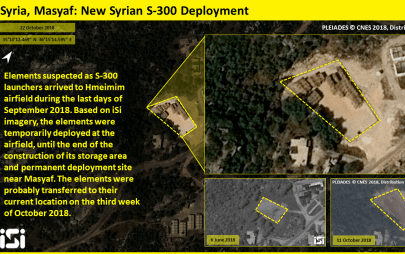
Satellite photos released by ImageSat International on October 24, 2018, which are said to show a site near the northwestern Syrian city of Masyaf where Russian-made S-300 air defense systems were deployed. (ImageSat International)

Syria’s long-time ally Russia blamed Israel for the downing of the plane and the deaths of the 15 Russian servicemen on board — a charge rejected by Jerusalem. Jerusalem has also rebuffed a Russian claim that Israeli fighter jets hid behind the Russian reconnaissance aircraft following their attack.

Prime Minister Benjamin Netanyahu last month told Russia that Israel must continue to hit hostile targets in Syria to prevent Iran from establishing a military presence across the border.

While there has been a noticeable drop in reported Israeli raids following the September 17 incident, a senior Israeli official last month said the Jewish state has in fact continued attacking targets in Syria.

On Wednesday, the incoming United States envoy for Syria said he hoped to see Russia maintain a “permissive approach” to Israeli airstrikes on Iranian assets in Syria.

Israel has carried out hundreds of airstrikes in neighboring Syria against Iran-linked targets in recent years and has accused Tehran — which like Moscow supports the Syrian regime in the seven-year civil war — of seeking to entrench itself militarily in the country.

“In the past Russia has been permissive in consultation with the Israelis about Israeli strikes against Iranian targets inside Syria,” US envoy James Jeffrey said.

“We certainly hope that that permissive approach will continue,” he told journalists in a conference call.

Agencies contributed to this report.


US urges Russia to allow resumed Israeli air strikes in Syria – DEBKAfile

Posted November 8, 2018 by Joseph Wouk
Categories: Uncategorized

Source: US urges Russia to allow resumed Israeli air strikes in Syria – DEBKAfile

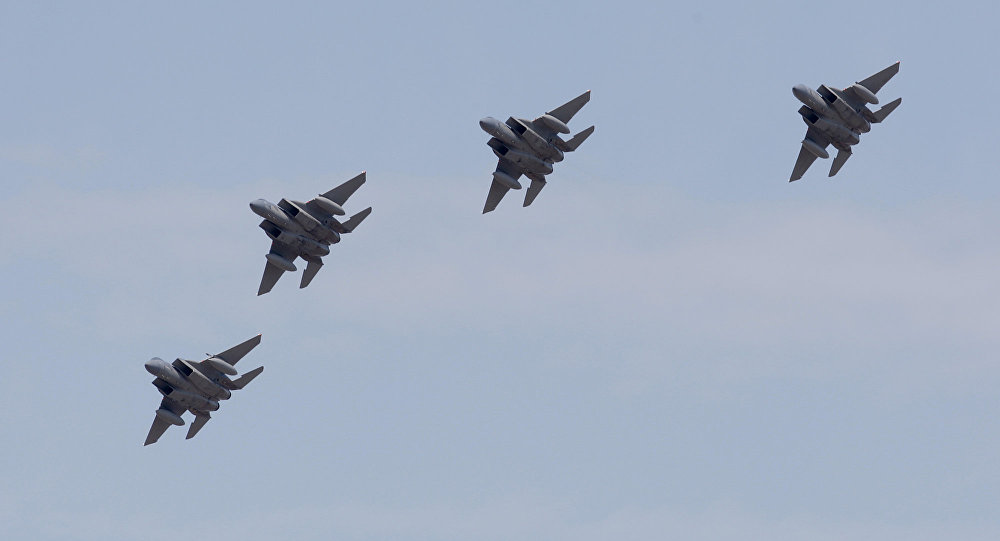
Special US envoy for Syria, James Jeffrey, said on Wednesday, Nov. 7, “We certainly hope Russia’s permissive approach will continue” for Israeli air strikes in Syria against Iranian targets, despite its supply of S-300 air defense systems to the Syrian government.

He noted that Russia has been permissive about the flights in the past – in consultation with the Israelis. The American diplomat spoke after meeting Prime Minister Binyamin Netanyahu in Jerusalem on Monday, Nov. 5. However, DEBKAfile’s military sources have seen no sign of Moscow relenting. Quite the reverse; Moscow indicated this week that should Israeli jets enter Syrian airspace to attack Iranian targets, the S-300 would shoot them down.

According to our sources, Ambassador Jeffrey’s talks with Netanyahu, attended also by high-ranking IDF officers, encompassed the situation in Syria, including the possibility of a military clash between Russia and Israel. This clash is envisaged to take place shortly after President Donald Trump sits down with President Vladimir Putin in Paris next Sunday, Nov.11 – or even while it is taking place.

The prime minister shared with the US ambassador intelligence showing Syrian operating teams installing the S-300 batteries in recent days and getting into position to fire at Israeli aircraft – not just military planes, and not just over Syria, but also  commercial flights flying over Israel.

This was the data which the Israeli minister Ze’ev Elkin also disclosed on Monday in a rare briefing to Russian correspondents. He appended a warning: If its aircraft were struck in this way, Israel would not be satisfied with demarches, but take action against the S-300 batteries, even if they were manned by Russian personnel.

Two days later, the Kremlin shot back by clarifying that President Putin had no intention of meeting Prime Minister Netanyahu in Paris next Sunday. The Russian-Israeli dispute is not going away any time soon, but deepening,


Terror plot accusations undermine Iran-Europe engagement at worst possible time

Posted November 7, 2018 by Joseph Wouk
Categories: Uncategorized

Source: Terror plot accusations undermine Iran-Europe engagement at worst possible time

 Ritzau Scanpix/Claus Bech via REUTERS
Denmark’s arrest of a Norwegian national of Iranian descent on suspicion of helping prepare assassinations of Iranian Arab separatists has put the administration of President Hassan Rouhani under pressure at a time when it is reeling from US sanctions both at home and abroad.
Of note, the Trump administration has over the past year urged Europe to adopt a tougher position on Iran, referring to Iranian “terrorism” on European soil.

Danish Security and Intelligence Service (PET) chief Finn Borch Andersen on Oct. 30 announced that the Norwegian national had engaged in intelligence collection to target the exiled leader of the Arab Struggle Movement for the Liberation of Ahvaz (ASMLA), pointing the finger at “an Iranian intelligence agency.”

ASMLA is an Arab Iranian separatist group that has been linked to violence in Iran’s southwestern province of Khuzestan. Most recently, a spokesman for the Denmark-based group claimed responsibility for a Sept. 23 attack on a military parade in the provincial capital of Ahvaz that left over two dozen Iranians dead. In response, Iran summoned the British, Dutch and Danish envoys and called on Denmark and the Netherlands to extradite Iranian nationals on their soil who Iranian officials claimed were responsible for the attack. After the Iranian protestations, the Denmark-based group withdrew its claim of responsibility. Of note, Israeli media later reported that the Jewish state’s Mossad spy agency had assisted Denmark’s PET with thwarting the alleged assassination attempt.

Iran has vehemently denied any connection to the alleged plot, calling it the result of a “Mossad program to kill the JCPOA [Joint Comprehensive Plan of Action].” Al-Monitor has learned from Iranian sources that while a call for the extradition of the Iranian Arab separatists was made, no formal extradition request was issued.

The Denmark plot comes in the wake of a separate alleged Iranian bomb scheme in France in June, targeting the annual gathering of the France-based Iranian opposition group Mujahedeen-e-Khalq in a Paris suburb. French officials said the attack was foiled; as a result, a Belgian-Iranian couple was arrested and an Iranian diplomat posted in Austria was detained while on a trip to Germany. Iran has also firmly rejected any involvement in the French bomb plot, calling it a “false flag ploy” designed to sabotage Iran’s engagement with Europe to uphold the nuclear deal. Reports later confirmed that Israel’s Mossad spy agency alerted European authorities to the plot.

The alleged Iranian terror plots have raised multiple questions. The perhaps most important dimension is their timing, which is directly linked to the matter of who would stand to benefit from them the most. Here, the picture remains murky.

The Denmark plot was unveiled to the media Oct. 30. However, the arrest of the Norwegian suspect — which took place in Sweden — occurred Oct. 21. Moreover, Iranian Foreign Minister Mohammad Javad Zarif claimed in a Nov. 1 tweet that Israel’s Mossad spy agency had assisted in foiling the alleged plot on Oct. 29, the day before the PET chief’s press conference. Zarif also said the European Union had planned an Oct. 29 announcement on the long-awaited Special Purpose Vehicle (SPV) to sideline US sanctions.

Reports in recent weeks had indicated that the EU was planning to make the SPV announcement prior to the Nov. 5 reimposition of US nuclear-related sanctions, even though the implementation of the EU program would take months. To date, there has been no such announcement.

With reference to the bomb plot in France, Iran has pointed out that European authorities announced it to the media on the day of the arrival of President Hassan Rouhani in Austria for a state visit. Of note, the Austrian presidency in March 2016 announced that the Iranian president had canceled a scheduled visit at that time for “security reasons.” It is still unclear what those “security reasons” were.

It is also important to mention that on Oct. 2, almost three months after the alleged Paris plot, a French diplomatic source told news media, “Behind all this was a long, meticulous and detailed investigation by our [intelligence] services that enabled us to reach the conclusion, without any doubt, that responsibility fell on the Iranian intelligence ministry.” The source added that Saeid Hashemi Moghaddam, the Iranian deputy intelligence minister and the director general of intelligence, had ordered the attack and that the Austria-based Iranian diplomat had tried to implement it.

However, on Oct. 12, French President Emmanuel Macron walked back that claim, saying, “As you know, Iran is sometimes divided into different factions and tensions, and so I can’t say today whether the order came from the top or from this [security] service or that division.” A senior French official separately told media that the plot was likely to have been hatched by hard-liners bent on undermining Rouhani.

While the idea of rogue operatives in Tehran engaging in terror plots to torpedo the engagement between Iran and the European Union does not appear far-fetched, the Islamic Republic’s handling of the nuclear dossier in past years — as well as the alleged entity involved in at least one of the plots — cast doubt on the “rogue operative” thesis.

While the head of the Intelligence Ministry is generally seen as an appointee of Supreme Leader Ayatollah Ali Khamenei, the intelligence minister broadly answers to the president, not the supreme leader. This has particularly been the case under Rouhani.

Indeed, under Mahmoud Alavi, the Intelligence Ministry has repeatedly and publicly clashed with the parallel Intelligence Organization of the Islamic Revolutionary Guards Corps (IRGC), which does not answer to Rouhani. Most notably, the two spy agencies have clashed over some of the IRGC Intelligence Organization’s detention of Iranian dual nationals. Here, the case of Abdulrasoul Dorri-Esfehani — a member of the Iranian nuclear negotiating team — particularly stands out. While the judiciary and the IRGC Intelligence Organization have referred to him as a “spy,” the Intelligence Ministry has remarkably publicly disputed such claims.

Thus, the idea that a deputy of Alavi ordered a plot to undermine Rouhani is difficult to conceive. If anything, the most likely “rogue” actor engaged in alleged terror plots in Europe would be the IRGC’s Intelligence Organization. However, the latter assumption is also a problematic.

Iran has since 2013 exercised considerable discipline on matters related to the nuclear file. While factional sniping has been unrelenting with highly venomous hard-liner rhetoric and allegations aimed at both Rouhani and Zarif, in recent years there have been no “rogue” actions by the security services that could have been used to undermine dialogue with world powers, and Europe in particular.

For instance, the Nov. 19, 2013, bombing of the Iranian Embassy in Lebanon by Sunni jihadis, which left 23 people dead — including the Iranian cultural attache — came five days before the announcement of the interim Joint Plan of Action in Switzerland after unprecedented talks between Iran, the United States and five other world powers. Iran immediately blamed Israel. Yet there were no retaliatory attacks. Similarly, on Feb. 19, 2014, Sunni jihadis targeted the Iranian cultural center in Beirut, killing four people. The next day, Iran and six world powers announced in Austria that they had agreed on the framework of what would later become the Joint Comprehensive Plan of Action (JCPOA). In that instance, there does not seem to have been any “rogue” responses either.

Perhaps most notably, in the aftermath of the Denmark plot, Iranian hard-liners have sought to hold Europe to its engagement with Iran rather than call for an end to it on account of European accusations against the Islamic Republic or indeed the harboring of figures accused of involvement in terror attacks in Iran. For instance, the hard-line Kayhan daily — whose editor is appointed by Khamenei — called the Denmark plot “Europe’s plan to escape from fulfilling commitments [under the JCPOA].”

The murky nature of these alleged plots appear to be well understood by both the French and Danish governments, who can be assumed to neither have any motivation to implicate Iran in false flag operations nor to give the Islamic Republic a free pass on terrorism — and especially on European soil. Indeed, in the case of Denmark, the authorities have, while calling for EU sanctions to be imposed, refrained from even expelling the Iranian ambassador. As such, to prevent any damage to its engagement with Europe, Iran ought to explain itself with evidence that it is not involved in the plots if that is indeed the case. Conversely, France and Denmark should make clear to Tehran what groups such as the Mujahedeen-e-Khalq and ASMLA are doing on European soil that could promote violence within Iran. Most of all, there is a need for both sides to compartmentalize their issues so as to avoid a situation in which a nuclear crisis is added to the plate.

Mohammad Ali Shabani is Al-Monitor’s Iran Pulse Editor and a doctoral researcher at SOAS, University of London, where he focuses on Iranian foreign policy. His work has appeared in outlets such as the New York Times, National Interest and BBC World News. He has also offered commentary on CNN and Al Jazeera English among other leading channels. On Twitter: @mashabani


Danes arrest 3 Iranian opposition activists accused of praising terror attack

Posted November 7, 2018 by Joseph Wouk
Categories: Uncategorized

Source: Danes arrest 3 Iranian opposition activists accused of praising terror attack | The Times of Israel

Police say members of Iranian-Arab group expressed support for deadly September assault in Ahvaz, Iran

Illustrative: Danish policemen stand guard in front of the city court in Copenhagen, Denmark, on March 10, 2016. (AFP/SCANPIX DENMARK/Emil Hougaard)

Illustrative: Danish policemen stand guard in front of the city court in Copenhagen, Denmark, on March 10, 2016. (AFP/SCANPIX DENMARK/Emil Hougaard)

COPENHAGEN, Denmark (AP) — Three members of an Iranian opposition group were arrested Wednesday on suspicion of having praised those behind a September 22 terror attack in Iran that killed at least 25 people.

Police spokesman Bjoerke Kierkegaard said that would violate Danish laws and they could face fines or up to two years in prison.

Kierkegaard said all three are members of the Arab Struggle Movement for the Liberation of Ahwaz that Tehran has blamed for the deadly attack in the Iranian city of Ahvaz. However, ASMLA has condemned the violence and says it was not involved.

The men were held on preliminary charges — a step short of formal charges.

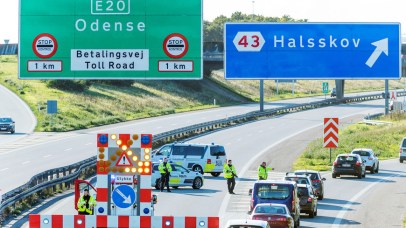
Denmark’s intelligence agency has said that a police operation on September 28 that briefly cut off Copenhagen from the rest of Denmark stemmed from an alleged Iranian plot to kill an ASMLA activist. The person was not named.

Iran has strongly denied the allegation, calling it an Israeli conspiracy that sought to harm Tehran’s relations with the European Union,

A series of raids were also made in Denmark Wednesday, Kierkegaard said, adding that the ASMLA remains under police protection out of fears they still may be targeted.


Democratic midterms win: Good for Iran, bad for Israel?

Posted November 7, 2018 by Joseph Wouk
Categories: Uncategorized

Source: Democratic midterms win: Good for Iran, bad for Israel?

Op-ed: If the Democrats regain control of at least one house of Congress, they would make it harder for Trump to govern and could block further moves he wishes to take against Tehran. For Israel, a Democratic victory could undermine the Trump administration’s pressure on the Islamic Republic and pro-Israeli moves.
There’s a strong link between the new US sanctions on Iran that went into effect on Monday and the midterm elections taking place the next day. The new and harsh sanctions the Trump administration is imposing on the Iranian oil and gas industry are meant to further exacerbate the economic crisis in the Islamic Republic and consequently increase the public pressure on the leadership in Tehran.Unlike the sanctions that preceded the 2015 nuclear agreement, which were imposed by all world powers—including Russia and China—this time the US stands alone. Moreover, the European Union and the other world powers are making every effort to torpedo the American sanctions. The export of oil and gas is Iran’s main source of foreign income, and the loss of even a part of it could be critical, especially in the midst of the economic crisis Tehran is experiencing, which is only getting worse.

US President Trump at campaign rally in Florida (Photo: Reuters)

US President Trump at campaign rally in Florida (Photo: Reuters)

The US is hoping the yoke of the sanctions will pose a threat to the ayatollahs regime, intensify the mass protests against the government, or at the very least lead to negotiations over a new nuclear agreement, which will do away with the flaws of the existing deal (that the US has already pulled out of). The new agreement, Washington hopes, will address issues that were left out of the original one, including the testing of long-range missiles that can carry nuclear payloads and Iran’s aggression across the Middle East.

The Iranians are very worried by the destructive ramifications of the new sanctions. They therefore hope for a Republican loss in the midterm elections, working under the assumption that if the Democrats manage to regain control of at least one house of Congress, Trump would have a hard time governing and would have to invest a lot more efforts into passing budgets, laws and decisions. If the Democrats gain control of the House of Representatives, the regime in Tehran hopes, they may launch a process to impeach the president, which could, at the very least, hurt his chances to be elected for a second term in 2020.

Former US President Obama with Senate candidates in Nevada (Photo: EPA)

Former US President Obama with Senate candidates in Nevada (Photo: EPA)
In any case, the Iranian leadership believes that if the Democrats win the midterm elections, they would limit new possible initiatives Trump might wish to take against the Islamic Republic, and so Tehran would only have to hold on for two years against the sanctions. After that, a Democrat might get elected to the White House and completely change the American attitude towards Iran, returning it to what it was in the Obama era. If the Republicans win and maintain control over both houses of Congress—consequently bolstering Trump ahead of the 2020 presidential elections—Iran would have to turn to other options.

A Democratic win could also harm US-Israel ties. Trump is the most pro-Israeli American president since Ronald Reagan. The Democratic Party, meanwhile, is moving towards the radical left, which will affect the midterms as well. Israel support among Democrats has plummeted over the past decade, which is evident in public opinion polls, the party’s platform, and the positions of some of its veteran representatives as well as of those who might join them in the coming election.

The fight between Israel and Iran will move to Washington with the midterm elections. Just as Iran hopes for a Democratic victory, Israel wishes for a Republican win, which will allow Trump to continue his pressure on Iran and his pro-Israel moves. And so, the midterm elections’ results could have a significant impact on Israel’s security and welfare.

Eytan Gilboa is an expert on the US, the Director of the Center for International Communication and a senior research associate at the BESA Center for Strategic Studies at Bar-Ilan University.


How a Democratic U.S. House could alter Iran, other foreign policy issues 

Posted November 7, 2018 by Joseph Wouk
Categories: Uncategorized

Source: How a Democratic U.S. House could alter Iran, other foreign policy issues – American Politics – Jerusalem Post

Now that they have taken control of the 435-member House of Representatives for the first time since 2011, Democrats will decide what legislation is considered in the chamber.

BY REUTERS
 NOVEMBER 7, 2018 08:10
WASHINGTON – Democrats will use their new majority in the US House of Representatives to reverse what they see as a hands-off approach by Republicans toward President Donald Trump’s foreign policy, such as revising the stand on Iran, and push for tougher dealings with Russia, Saudi Arabia and North Korea.

Representative Eliot Engel, the Democrat in line to head the House Foreign Affairs Committee, said they may also push for congressional authorization for the use of military force in places like Iraq and Syria. But on some hot-button areas, like China and Iran, he acknowledged there was little they could do to change the status quo.

Now that they have taken control of the 435-member House of Representatives for the first time since 2011, Democrats will decide what legislation is considered in the chamber and have a bigger role in setting spending policy and writing legislation.

“I don’t think we should challenge something just because it’s put forth by the administration, but I do think we have an obligation to review policies and do oversight,” Engel told Reuters in a telephone interview.

Since they must still work with a Republican-controlled Senate to pass any bills, the Democratic majority’s greatest influence will be oversight, the ability to call hearings and, if necessary, subpoena witnesses, as they lead committees like Foreign Affairs as well as Armed Services and Intelligence.

CAN DEMOCRATS REVIVE THE IRAN NUCLEAR DEAL?

Democrats were infuriated by Trump’s withdrawal from the international nuclear deal with Iran that Democratic President Barack Obama’s administration reached in 2015. But there is little they can do to change the policy as long as Republicans occupy the White House.

Lawmakers also are wary of seeming too friendly to Iran, especially given hostility to Tehran by the government of Israel. While Israeli Prime Minister Benjamin Netanyahu has worked increasingly closely with US Republicans, strong ties to Israel remain a top priority for both parties.

Engel was among Democrats who opposed the Iran deal, but he said Trump should work more closely with important allies, like the members of the European Union, on that and other issues. “I think what we should do is try to repair the damage with our alliances that has been done,” he said.

HOW DO THE DEMOCRATS SEE RUSSIA?

Democrats plan Russia-related investigations, such as a probe of possible business ties and conflicts of interest between Trump and Russia.

From a policy perspective, a Democratic-led House would push to punish Russia for interference in US elections and activities including its aggression in Ukraine and involvement in the Syrian civil war.

The House would push for more sanctions, including measures targeting new Russian sovereign debt. It would also try to pressure Trump to enact all of the sanctions in a sweeping bill he reluctantly signed into law in August 2017.

Members of Congress have also vowed to push harder, using subpoena power if necessary, to obtain information about Trump’s summit last summer with Russian President Vladimir Putin. The White House has released few details about the meeting.

“It’s ludicrous that there could be such a high-level meeting between the two leaders and Congress should be in the dark about it,” Engel said.

He said the issue of Russia’s interference in the 2016 election “hasn’t been at all resolved.”

WILL KHASHOGGI’S KILLING INFLUENCE SAUDI TIES?

The furor over the death of journalist Jamal Khashoggi at the Saudi consulate in Istanbul has added to lawmakers’ frustration with Saudi Arabia over the war in Yemen and human rights.

A Democratic-led House would vote on legislation to block arms deals with Riyadh, make it difficult to win congressional approval of a nuclear energy deal and consider a measure to stop US aircraft refueling and other support for the campaign in Yemen.

While Engel still views Saudi Arabia as a counterweight to Iran’s influence in the Middle East, he said Washington must demand more from Riyadh. “If the Saudis want our support, then they have to address some of the things that concern us,” he said.

DON’T DEMOCRATS WANT PEACE WITH NORTH KOREA?

Democrats say they are determined to obtain more information about meetings by Trump and Secretary of State Mike Pompeo with North Korean Leader Kim Jong Un, worried that Trump is so eager to make a “great deal” that he will give Kim too much.

Engel and other Democrats plan to call administration officials to testify in public, and behind closed doors, about the status of talks. But they also will walk a fine line, because they do not want to be seen as interfering with diplomacy and efforts to prevent a nuclear war.

“I think it’s good to have some kind of a dialog with them. But we shouldn’t be deluded in thinking that they’re going to have any major changes,” Engel said.

CAN DEMOCRATS CHANGE CHINA POLICY?

Democratic House control is not expected to yield significant changes in China policy. Democrats will hold more hearings and demand more briefings, but criticism of Beijing has so far crossed party lines and that is not expected to change.

Prominent Democrats, such as Representative Adam Schiff, who is in line to chair the House Intelligence Committee, have joined Republicans backing measures to clamp down on China, like legislation treating ZTE Corp and Huawei Technologies Co Ltd technology and phones as major cyber security threats.

But Engel and others acknowledged the need for China as a partner, particularly in dealing with North Korea. “I think we need to be careful not to lash out,” Engel said.

Like Republicans, Democrats are divided on Trump’s trade war with China. Some party members see free trade as a generator of jobs, while others back tariffs to protect workers in industries such as steel and manufacturing.


Report: Iranians with fake Israeli passports detained in Bulgaria 

Posted November 7, 2018 by Joseph Wouk
Categories: Uncategorized

Source: Report: Iranians with fake Israeli passports detained in Bulgaria – Middle East – Jerusalem Post

It is unclear, how they traveled through Turkey and why they sought to enter Bulgaria posing as Israelis.

BY SETH J. FRANTZMAN, JULIANE HELMHOLD
 NOVEMBER 7, 2018 10:22
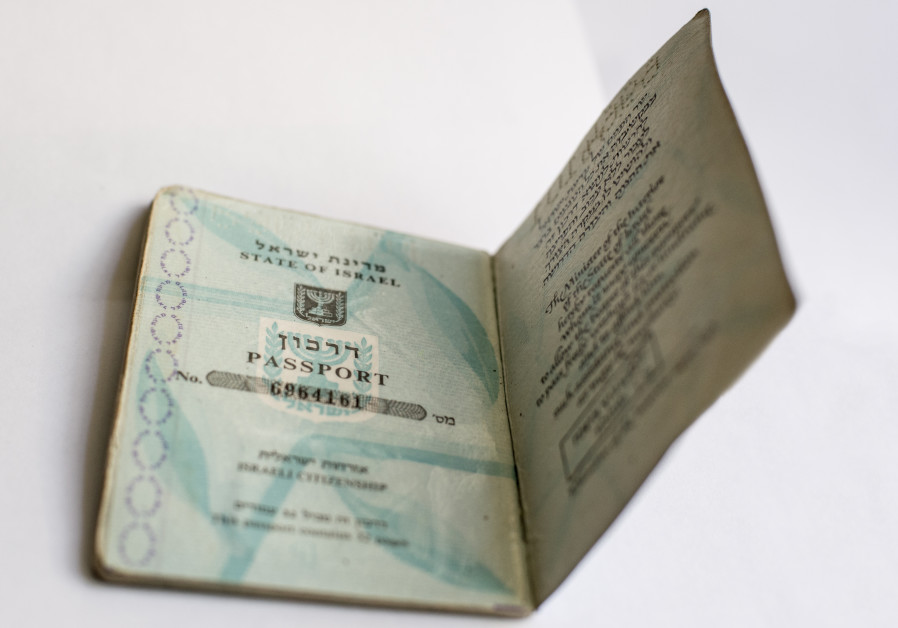
An Israeli passport

Three Iranians traveling with fake Israeli passports were detained in Bulgaria over the weekend, The Sofia Globe reported.

The men were detained at the Bulgarian border as they attempted to enter the Kapitan Andreevo crossing from Turkey – a major transit point for entering Europe, the report said.

It is unclear though, how they managed to travel through Turkey without being detected.

The three men, aged 21, 28 and 32 arrived on October 31 and carried Israeli passports that had been “falsified,” the Interior Ministry told the Bulgarian media. They were detained by border police and then taken to a detention center in Lyubimets, in the southeast portion of the country where “fast-track proceedings” – a way to quickly deport the individuals – were initiated.

This is not the first time Iranian citizens have been caught using fake Israeli passports.

In July, an Iranian national, Esmaeil Kazem Hosseinitaghi, 42, was arrested at Dehli’s Indira Gandhi International Airport, traveling using a fake Israeli passport, and was then returned to Kathmandu, his immediate point of departure, The Himalayan Times reported.

According to the report, Hosseinitaghi procured the passport in Turkey and was planning to travel to Europe.

“It is easier to enter Europe with an Israeli passport. I used to keep one passport in my pocket and show another passport to the airport immigration officials,” the Iranian national told immigration officials. “I faced security threats in my home country and therefore wanted to flee to Europe for my safety. I wanted to settle in Europe with my family,” Hosseinitaghi said.

In early 2016, an Iranian couple was caught in an airport in India traveling with both Iranian and fake Israeli passports. They were arrested at Chennai Airport before they could board a British Airways flight, The New Indian Express reported. The travelers arrived in Chennai on a domestic flight from Goa, where the passports were forged, and were questioned by Indian intelligence agencies.

According to the report, the woman had been living in Pune for the last ten years, while the man was working in Goa. After getting married, they planned to settle in the US and forged Israeli passports as a means to enter the country.

There have also been numerous reports of Iranians trying to enter Europe with fake passports of other nationalities. In April, an Iranian couple was arrested in Bangalore, India, trying to board a plane to Malaga, Spain, using fake Spanish passports. In February, an Iranian man was blocked from boarding a flight to the UK when it was discovered that his Danish passport was a fake. The same week, an Iranian woman was arrested en route to Britain using a fake UK passport. In November 2017, another Iranian woman was stopped at Bangkok airport, attempting to fly to the UK on a fake British passport.

In addition to individual cases of passport fraud, Reuters reported in June that numerous Iranians had bought passports from the Comoros Islands, a small nation between Mozambique and Madagascar. They included senior executives of companies working in shipping, oil and gas, and foreign currency and precious metals – all sectors that have been targeted by the international sanctions against Iran.

Diplomats and security sources in the Comoros and the West expressed their concern that some Iranians acquired the passports in order to protect their interests, as sanctions crimped Iran’s ability to conduct international business. Comoros passports offer visa-free travel in parts of the Middle and Far East and can be used by Iranians to open accounts in foreign banks and register companies abroad.

International sanctions against Iran were eased following a deal struck in 2015, which aimed at preventing Iran developing nuclear weapon capability. In May, US President Donald Trump pulled the US out of the agreement, saying it was “defective” and a “horrible, one-sided deal.”

Since then, the US Treasury has imposed fresh sanctions against people it links to Iran’s Revolutionary Guards, the nation’s missile program, some Iranian airlines and money transfer services.

The most recent round of sanctions, which was implemented on Monday, is part of a wider effort by Trump to force Iran to further limit its nuclear work and halt its missile program. It is also designed to end its support for its proxy forces in Yemen, Syria, Lebanon, as well as in other parts of the Middle East.

The sanctions cover 50 Iranian banks and subsidiaries, more than 200 persons and vessels in its shipping sector, and targets Tehran’s national airline, Iran Air, and more than 65 of its aircraft. The sanctions were coined by US Secretary of State Mike Pompeo as the “toughest sanctions ever put in place on the Islamic Republic of Iran.”

Reuters contributed to this report.