–
–
PM said leadership is doing the right, not easy thing.
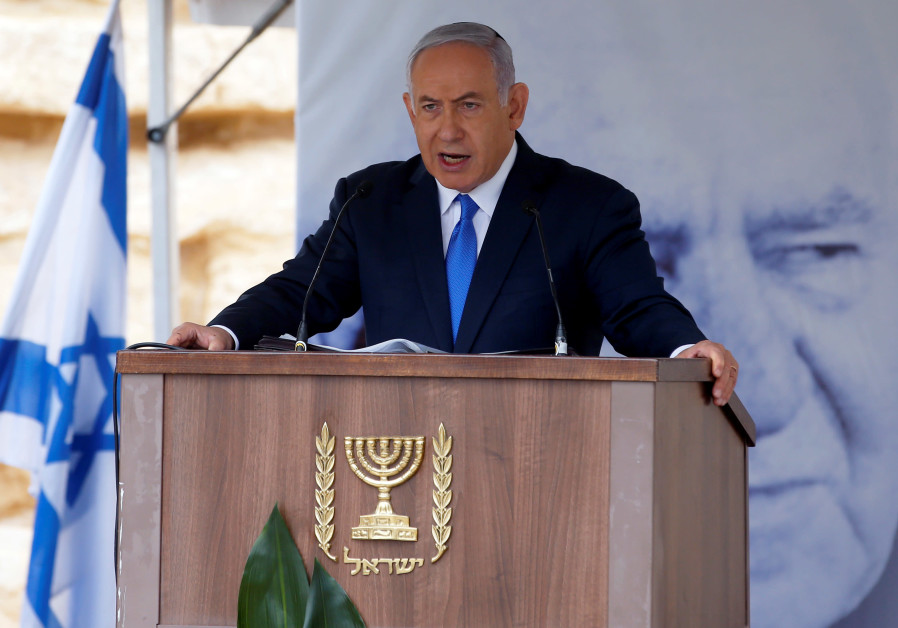
Hamas “begged” for a cease-fire, and “they know very well why,” Prime Minister Benjamin Netanyahu said Wednesday morning, in his first public statements since the government agreed to a cease-fire in the South that went into effect on Tuesday evening.
Speaking at Midreshet Ben-Gurion in Sde Boker at the annual memorial for David and Paula Ben-Gurion, Netanyahu said that he cannot detail Israel plans for the future regarding the situation in Gaza. But, he said, “we will set the conditions and the right time for Israel, and for the security of our residents.”
Netanyahu, who has come under criticism from the Right and from some residents of the South who wanted to see a much more aggressive Israeli response to the Hamas terror from Gaza, drew parallels with the first prime minister.
“Ben-Gurion made decisions sometimes opposed to the popular public opinion,” he said. “In time of crisis, at a time of fateful decision regarding security, the public can not be a partner to considerations that must be hidden from the enemy.”
“At these times leadership is not doing the easy thing, but the right thing, even if it is hard,” he said. “Leadership is standing up to criticism when you know things that are secret and difficult.”
Turning to the residents of the South, some of whom took to the streets in protest on Tuesday evening when the cease-fire went into effect, Netanyahu said that he hears them and loves them.
“Your words penetrate, but together with the head of the security branches I see the wider picture, and I cannot share that with the public,” he said.
Source: Life in south slowly returns to normal after two days of rockets from Gaza | The Times of Israel
As a reported ceasefire appears to take hold, IDF Home Front Command says schools, businesses to reopen Wednesday in communities near Gaza
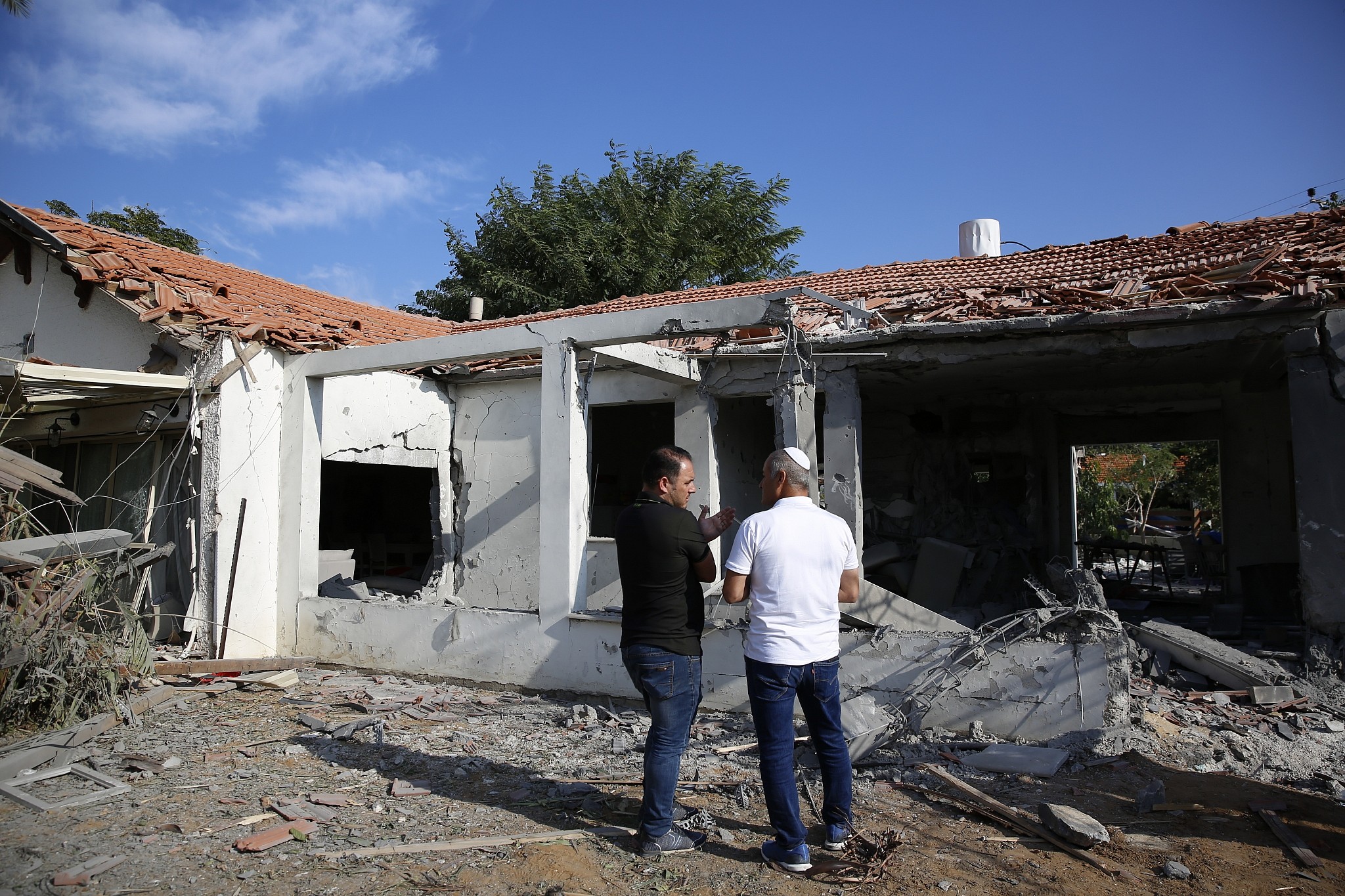
Life in Israeli communities and towns near Gaza slowly returned to normal on Wednesday after a quiet night signaled that a tentative reported ceasefire was holding following two days of intense rocket attacks from the Hamas-ruled Strip.
Schools, higher education institutes and businesses were to reopen and farmers could again work their fields, many of them adjacent to Gaza. Train services south of Ashkelon also resumed.
There were no reports of rocket fire into Israel, or of Israeli strikes on Gaza, since Tuesday afternoon, when the reported ceasefire went into effect. Palestinians said the truce was brokered by Egypt.
Israel had still not confirmed the existence of a cease-fire, but the IDF Home Front Command on Tuesday night removed all restrictions on residents of southern Israel declaring a “return to normalcy.”
Nevertheless, the IDF still had reinforcements in place surrounding Gaza.
The UN Security Council met late Tuesday in New York, but no decisions were taken, with the Palestinian blaming the US for blocking any condemnation of Israel.
Kuwait, which represents Arab countries at the council, and Bolivia requested the meeting following the worst flareup in Gaza since the 2014 war between Hamas and Israel.
Addressing reporters after the 50-minute meeting, Palestinian Ambassador Riyad Mansour said the council was “paralyzed” and had “failed to shoulder its responsibility” to take action to end the violence.
“There is one country that is not allowing discussion at the council,” Mansour told reporters, in a reference to the United States, which has steadfastly supported Israel under US President Donald Trump.
There was no statement from the council on the crisis. Such statements are agreed by consensus by all 15 council members.
The calm was not welcomed by all, with many in Israel demanding that the government do more to end the rocket threat from Hamas.
In a statement to residents, the head of the Eshkol regional council Gadi Yarkoni said: “We’ve had a difficult two days. Two days which are a continuation of life in the shadow of terrorism and a pendulum swinging between emergency and normalcy for eight months straight.”
He said he expected Israeli leaders and the army to “give us true peace and true calm” which would allow the communities to thrive.
“We cannot accept the continued hopeless reality of life under the threat of terrorism that includes fires, balloons and rockets.”
Earlier hundreds of people demonstrated at the entrance to the town of Sderot over Israel’s reported agreement for a ceasefire with Gaza’s Hamas terrorist rulers, after a 25-hour period that saw over 460 rockets fired at Israeli communities near the Palestinian enclave.
Protesters blocked roads and burning tires, with some chanting, “Bibi go home,” using a nickname for Prime Minister Benjamin Netanyahu. Confrontations were reported between protesters and policemen.
According to Hadashot TV news, some southern residents planned further demonstrations and road blockages in Tel Aviv on Wednesday to protest the truce.
He said the government had failed the south by “neglecting” the issue of Gaza since the 2014 war. “This is not the time for another fragile truce,” he said. “This is the time for a true diplomatic initiative in Gaza, that will lean on the recommendations of the security establishment.”
Hamas and other Gaza terror groups said Tuesday they had accepted an Egyptian-mediated ceasefire with Israel. Terms of the deal were not immediately known, and there was no immediate comment from Israel. But a senior Israeli diplomatic official appeared to confirm the reported armistice.
“Israel maintains its right to act. Requests from Hamas for a ceasefire came through four different mediators. Israel responded that the events on the ground will decide [if a ceasefire will go into effect],” the official said, on condition of anonymity.
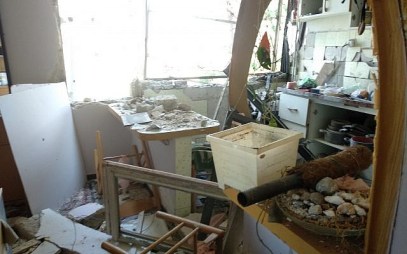
According to the military, over 460 rockets and mortar shells were fired at southern Israel over the course of 25 hours on Monday and Tuesday. The Iron Dome missile defense system intercepted over 100 of them. Most of the rest landed in open fields, but dozens landed inside Israeli cities and towns, killing one person, injuring dozens more, and causing significant property damage.
In response to the rocket and mortar attacks, the Israeli military said it targeted approximately 160 sites in the Gaza Strip connected to the Hamas and Palestinian Islamic Jihad terror groups, including four facilities that the army designated as “key strategic assets.”
Source: Can Gaza ceasefire free Israeli Air Force to tackle Hizballah missile upgrade plants? – DEBKAfile
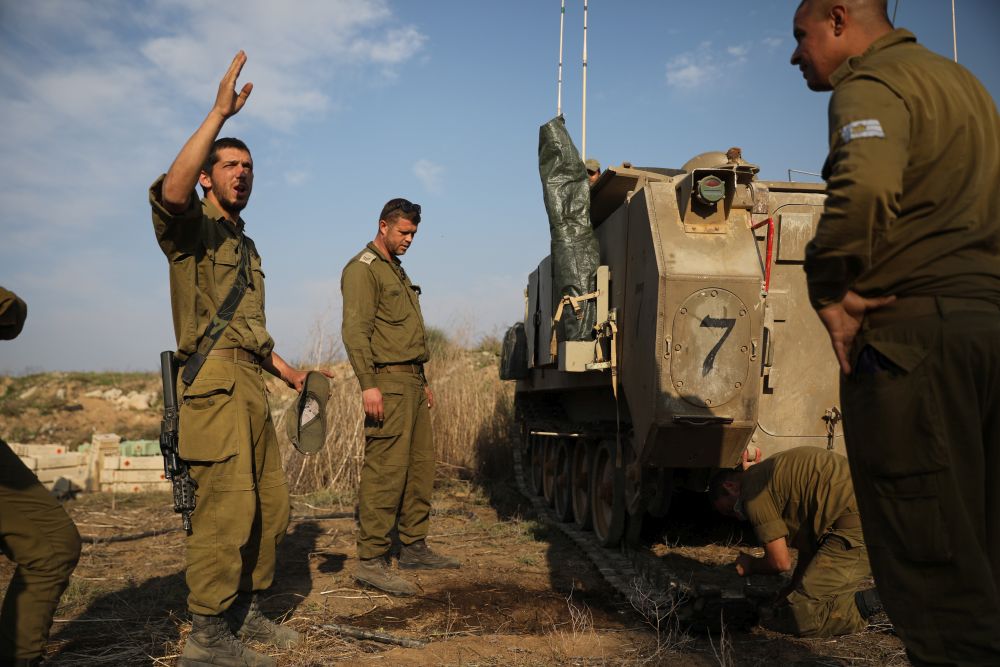
It is obvious from the Israeli security cabinet’s vague statement at the end of a 7-hour meeting on Tuesday, Nov. 13, that the ministers don’t believe the sudden ceasefire declared by Hamas in victory speeches will hold. “IDF attacks on Gaza will continue as required,” said the cabinet statement, as though this needed saying after a 460-missile Palestinian barrage on southern Israel, two deaths, 100 injured, substantial damage and major disruptions from yet another horrendous onslaught from the Gaza Strip.
According to various local sources, the cabinet quietly instructed the IDF not to be drawn into a major operation in the Palestinian enclave for the time being, but to stand ready for coming events – i.e., the next Palestinian rocket cycle that is due in in two days, two weeks or some time in the future. The revival of this bane is a truism which every military expert – and most of all the battered population of southern Israel – take for granted.
This time, the Israeli Air Force was required to strike 160 Hamas and Islamic Jihad targets with no noticeable impact on the Palestinian organizations’ belligerence. What will be required of the IDF in the next round? The same old ineffective operations against Hamas? Or maybe another round of cabinet meetings for inconclusive decisions?
At Tuesday’s session, four ministers objected to the cabinet’s decisions as formulated by the prime minister Binyamin Netanyahu: They were Defense Minister Avigdor Lieberman, Education Minister Naftali Bennett, Justice Minister Ayelet Shaked and Minister for Jerusalem affairs, Ze’ev Elkin.
Verbal acrobatics can no longer disguise the fact that Netanyahu sought to turn the clock back to “normal,” as though an entire population could forget the fear, the burning homes and explosions of the last 36 hours – the “normal” being weekly mob assaults on Israeli troops on the Gaza border and the continuing flow of Qatari dollars into Hamas’ coffers, in return for fake “calm.”
Amid Israel’s crumbling deterrence against Palestinian terrorists, the prime minister was motivated in his decision on Tuesday by two considerations that were not brought to the public notice:
Source: UN nuclear watchdog says Iran complying with 2015 deal limits – Israel Hayom
“Nothing indicates that Iran’s cooperation or … attitude has changed” since U.S. imposed more sanctions Nov. 5, IAEA official says • Agency says it has visited all relevant sites and Iran is within limits of heavy water, low-enriched uranium stockpiles.
|
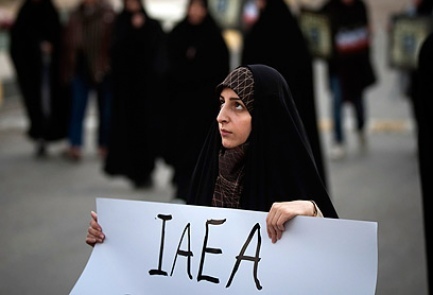
Iranian protesters “greet” IAEA inspectors
| Archives: Reuters
|
The U.N.’s nuclear watchdog said Monday that Iran is abiding by the deal reached in 2015 with major powers that aimed at preventing Tehran from building atomic weapons in exchange for economic incentives.
In a confidential quarterly report distributed to member states and reviewed by The Associated Press, the International Atomic Energy Agency said Iran has been abiding with key limitations set in the so-called Joint Comprehensive Plan of Action, or JCPOA.
The issue has grown more complicated since the U.S. withdrew unilaterally in May from the deal and then re-imposed sanctions. Iran’s economy has been struggling ever since, and its currency has plummeted in value.
The other signatories to the deal – Germany, Britain, France, Russia and China – are continuing to try and make it work.
In the report, the Vienna-based IAEA said the agency had access to all sites in Iran that it needed to visit and that inspectors confirmed Iran has kept within limits of heavy water and low-enriched uranium stockpiles.
“Timely and proactive cooperation by Iran in providing such access facilitates implementation of the additional protocol and enhances confidence,” the report stated, referring to the procedure detailing safeguards and tools for verification.
In its last quarterly report in August, the agency also concluded Iran had stayed within key limitations set by the JCPOA.
A senior diplomat, who was speaking on condition of anonymity because he wasn’t officially allowed to discuss the report, said that “there’s nothing that indicates that Iran’s cooperation or Iran’s attitude has changed since November 5.”
On that date, the U.S. re-imposed further oil and banking sanctions on Iran that where lifted under the 2015 deal but granted waivers to eight countries, including Japan and Turkey, to continue buying Iranian petroleum products without penalty for another six months.
The latest batch of U.S. sanctions severely impacts Iran’s oil industry, the major source of the country’s foreign revenue.
Tehran worries OPEC and non-OPEC countries such as Russia will increase their production to fill the gap in response.
Source: Israel must reclaim the initiative – Israel Hayom
Hamas and Islamic Jihad realize that Israeli leaders want quiet at almost any cost and are averse to anything that could spark an uncontrollable conflagration. This has all but destroyed the foundations of Israeli deterrence.
|
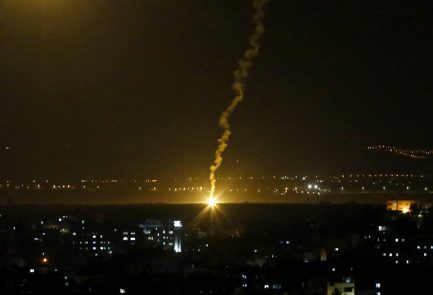
Flares fired by Israeli forces light up the night sky in Gaza City, Monday
|Photo: AP
|
Hamas restrained itself for almost 24 hours after soldiers from an elite IDF unit infiltrated Gaza, and only then did it begin raining rockets on Israel and even fired an anti-tank missile that badly wounded a civilian.
That temporary restraint was exploited partly to bury the seven people killed in the firefight with the Israeli commandos, among them Hamas’ Khan Yunis battalion commander, but mainly for consultations and deliberations with Islamic Jihad over the nature and scope of the response to the Israeli operation.
According to Palestinian officials, the opinions in this Gaza “cabinet” were split.
Some believed the response should be limited, saying that the Israeli operation had failed, the Israeli troops had been forced to retreat, and Israel had sustained a heavy, painful blow with the death of Lt. Col. M. The terrorist organizations took pains to tell the public in Gaza that thanks to their “operational alertness” they were able to “chase off and defeat” the elite force of Israeli soldiers. They thought a “symbolic” punitive response would suffice.
However, others said the response to the Israeli action should be harsh and painful, even at the cost of an escalation and nullifying cease-fire efforts. More than the pain over the seven deaths, they fretted over the embarrassment and not knowing the purpose and objective of the Israeli infiltration. It is safe to say Hamas is still fumbling in the dark trying to understand the Israeli operation, which is for the best. The group’s leaders understood immediately that it was not an assassination or abduction mission, and on Monday evening the Palestinians were already making baseless claims that the “infiltration was carried out on the basis of ‘intelligence information’ as to the whereabouts of the Israeli civilians” being held in Gaza. One Palestinian official claimed that the mission’s objective was obviously “far bigger” than assassinating someone in Hamas’ military wing.
Under these circumstances, in which Israel “allows itself” to infiltrate Gaza despite and during mediation efforts, Hamas and Islamic Jihad leaders chose to fire a Kornet anti-tank missile at a bus and bombarded civilian communities with hundreds of short- and medium-range rockets to deter Israel from similar actions.
This shooting, however, came with a warning that the scope and duration of the current skirmish depends on the Israeli response. In other words: If Israel settles for a short and restrained response, without too many casualties on the Palestinian side, the incident can be contained and the diplomatic avenue will still be in play. But if Israel expands its bombings in Gaza, the armed organizations will increase their rocket range. In short: Hamas and Islamic Jihad not only want to dictate the rules of the game and when the shooting starts and stops, they also want to control the height of the flames.
Israel cannot come to terms with such a situation.
Hamas: ‘Israel wanted an agreement at all costs’
There is virtually no doubt that the massive rocket barrage at Israel on Monday night is about more than the recent chain of events.
To a large extent, it is also the result of the realization within Hamas and Islamic Jihad that Israeli leaders want to secure an arrangement and quiet at almost any cost and are averse to anything that could spark an uncontrollable conflagration.
This conclusion is the byproduct of declarations made by senior Israelis and the decision to allow cash and fuel to enter Gaza.
This understanding essentially demolished the foundations of Israeli deterrence against Hamas, which were intact for nearly four years. If Israel needs a cease-fire so badly, it is also possible to rain down hundreds of rockets on it without worrying that the cease-fire efforts (which Hamas also badly wants and needs) will collapse.
This equation has to be changed. We must continue to allow humanitarian aid into Gaza, and in the same breath signal to the terrorist organizations that Israel is not afraid of an escalation, even at the cost of terminating cease-fire efforts. There is no need to conquer the Gaza Strip – there are other ways to achieve the goal and restore deterrence.
Source: In the Middle East, you win with fear – Israel Hayom
Prof. Efraim Inbar
The past six months have brought us violent demonstrations along the Gaza Strip border, cross-border infiltrations, rocket fire and incendiary kites and balloons. This means that a so-called “agreement” or truce is not a viable option.
We cannot trust Hamas to keep the calm. Only when Hamas is afraid of IDF retaliation, which has yet to come, will calm prevail. Israelis tend to overlook the fact that in the Middle East, it is fear, above everything else, that governs how people act.
Unfortunately, from time to time, we must give our enemies a violent reminder, lest they continue terrorizing us. The very fact that Hamas continues its actions unabated shows a lack of deterrence, without which no truce is worth the paper it is signed on. Expecting Hamas to honor agreements with the Jewish state it wants to annihilate is inexcusably naive. Extortion that leads to an “agreement” is a prelude to more extortion.
The assumption that boosting the quality of life for Gazans will reduce Hamas’ violence and hatred is fundamentally flawed. There is no place on this planet where there is a direct correlation between quality of life and terrorism. This holds true in the Palestinian case as well.
Recent polls show that Gazans are actually less hostile toward Israel than are their brethren in Judea and Samaria, where the quality of life is better. Perhaps the suffering in Gaza has taught them that prolonged conflict with Israel comes with great pain. While it is true that it takes time to change the behavior of large groups of people, what ultimately makes a population embark on a new political path is the degree to which it suffers. Germans suffered immensely during the two world wars and have since shed their violent past. Egypt also realized that a peace deal with Israel trumps more violence.
The goal of war is to inflict pain on the other side, to make it change its behavior. There is no point in giving Hamas candy while it fights against us. The exact opposite is true: It should be forced to pay a heavy price for its aggressive behavior. This is the message Israel should be sending Hamas, the Palestinian Authority and other enemies. To survive in the Middle East, Israel has to make it clear that it will inflict unimaginable pain on anyone who attacks it.
Israel is naturally reluctant to re-occupy the Gaza Strip. It would also serve no purpose to try to engineer its political system. Israel would not benefit from bringing the hostile Palestinian Authority back to the Gaza Strip. Likewise, it is understandable why Israel does not want to be dragged into a protracted military campaign when its eyes are trained on the most important threat: Iran. That said, the IDF can ratchet up the pressure by several notches without conquering the Gaza Strip, in order to send Hamas the message that more conflict will result in more pain.
Despite the events of this week, Israel must continue with its incursions into the Gaza Strip and even widen their scope. We must prove that we are not afraid of using ground forces to punish those who want us dead. The fear of casualties, however important, should not come at the expense of Israeli deterrence, which is essential for establishing long-term calm on the border and preventing future fatalities.
Only a crushing and devastating blow to Hamas will pave the way for a truce that would not be a victory for the terrorists. Such a truce would survive much longer than a half-baked truce that survives only several months until another extortion scheme.
Professor Efraim Inbar is president of the Jerusalem Institute for Strategic Studies, jiss.org.il.
Source: IDF readies for heavier Gaza conflict as massive missile barrage persists | The Times of Israel
Military moves more troops to border as policymakers said to give go-ahead for intensified strikes against Hamas, which vows to target a million Israelis
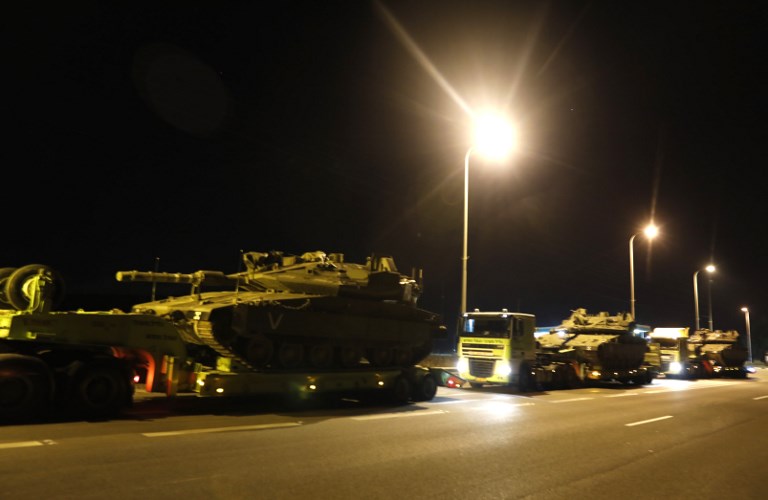
The Israeli military deployed additional troops and tanks to the Gaza Strip border on Monday following the largest barrage of rockets and mortar shells fired at Israel from the coastal enclave in a single day.
The army was reportedly given a green light from policymakers to pummel terror groups in the Strip if they continued with the barrages, as the terror organizations in the Strip vowed to do.
“The resistance factions’ joint command center is holding a serious conversation about expanding its range of fire. Ashkelon is just the beginning. Approximately one million Zionists will be within the range of our missiles if the Zionist enemy’s decision is to continue its aggression,” said Abu Obeida, a spokesperson for Hamas’s military wing.
According to the Israel Defense Forces, over 300 rockets and mortar shells were fired at southern Israel from the Gaza Strip as of 10 p.m. Monday — a number that was expected to rise as barrages continued throughout the night.
The attacks began shortly after 4:30 p.m., when terrorists fired a Kornet anti-tank guided missile at an Israeli bus near the border, seriously injuring an IDF soldier who was on board at the time. Dozens of other soldiers had previously been on the bus, parked near the Black Arrow memorial near Kibbutz Kfar Azza, and exited moments before the missile struck.
The IDF said dozens of incoming projectiles from Gaza were shot down by the Iron Dome air defense system. Most of the rest landed in open fields outside Israeli communities, but a number struck homes and buildings in cities and towns across the south.
A home and an apartment building were hit in the city of Ashkelon. In the rocket attack on the apartment building, shortly after midnight Monday, seven people were injured, including a woman in her 60s who was found unconscious and seriously wounded.
She was found unresponsive in one of the apartments, suffering from injuries throughout her body caused by shrapnel from the rocket, medics said.
A 40-year-old man was also moderately wounded by shrapnel; two women in their 20s were lightly injured by glass shards; and two men in their 40s and a women in her 90s were treated for smoke inhalation after a fire broke out at the scene, according to the Magen David Adom ambulance service.
Strikes on buildings in Netivot and Sderot caused significant damage and minor injuries to the occupants, and sparked fires in the surrounding area.
In Netivot, Hadashot TV news showed how a single piece of shrapnel from a rocket pierced the outer wall of one home, flew across the bedroom splintering a baby bed, passed through that wall into the kitchen, through the fridge, and finally smashed into the oven. The family had evacuated the home when rocket alarms sounded and were unhurt.
At least 22 other Israelis were injured in attacks from the Gaza Strip, either by shrapnel caused by rockets and mortar shells or in accidents while running to bomb shelters for cover, medical officials said.
Dozens of people also received treatment after they suffered panic attacks brought on by the rocket and mortar strikes.
In response to the attacks, the Israeli military launched a series of strikes against dozens of targets inside the Gaza Strip, including a number of multi-story buildings and houses belonging to senior Hamas officials deep inside populated areas in the Strip — a move the IDF typically foregoes in favor of attacks on facilities on the outskirts of cities in order to avoid potential collateral damage.
The army also said it targeted three attack tunnels operated by Hamas and the Palestinian Islamic Jihad, the two largest terror groups in the Strip.
Three Palestinians — each identified by terror groups as a member — were killed in the army’s initial strikes and three others were reportedly injured, but no casualties were reported in the IDF’s latest round of strikes inside Gazan cities.
In one case, the IDF bombed the headquarters of the Hamas-affiliated Al-Aqsa television station in Gaza City in the central Gaza Strip, which it said was “used by [Hamas] for military activities, including sending messages to terrorist operatives in the West Bank, calls for terror attacks and instructions on how to commit them.”
A former hotel in Gaza City used by Hamas as an internal security office was also hit in an Israeli strike, AFP journalists reported.
“This is an attack on a central government property for Hamas, which was conducted as part of additional attacks that the IDF carried out and as a response to the terror attack that the Hamas terror group is leading against Israeli citizens,” the army said.
The military also said the outlet broadcasts “incitement against the State of Israel and its citizens.”
“The IDF is determined to fulfill its mission of defending Israeli citizens, and is prepared and ready for a variety of scenarios, as necessary,” the army says.
On Monday evening, large numbers of tanks and other military vehicles were seen being moved down to the Gaza border on the backs of large trucks. Earlier in the day, before the barrages began, the army also ordered extra infantry battalions to the region.
Additional Iron Dome air defense batteries were also deployed in southern Israel on Monday morning.
The Israeli military threatened Hamas in the evening in response to the hours-long barrage, saying the terror group would “feel the power of the IDF’s response in the coming hours.”
“The Hamas terror group is responsible for everything that occurs in and emanates from the Gaza Strip, and it will bear the consequences of the terrorist activities conducted against Israeli citizens,” the military said in a statement.
“In addition, a number of rocket-launching cells were attacked,” the IDF said in a statement. “The IDF is continuing at this time to attack terror cites throughout the Strip.”
The military released footage of some of its attacks, which appeared to show strikes on Palestinian rocket-launching teams, military facilities and other sites in the coastal enclave.
The Hamas-run Gaza health ministry identified the three Palestinians killed by Israeli strikes as Muhammed al-Tatri, 27, Muhammed Oudeh, 22, and Hamad al-Nahal, 23. The military wing of the Popular Front for the Liberation of Palestine terror group claimed al-Tatri and Oudeh as its members. The Palestinian Islamic Jihad said al-Nahal was one of its fighters.
The barrages from Gaza came less than a day after an IDF special operations officer was killed in an operation gone awry that also killed seven Palestinian gunmen in the Strip. Following Sunday night’s incident, the Gaza-ruling terror group Hamas said “the blood of our righteous martyrs will not be wasted.”
The renewed clashes dashed hopes that Israel and Hamas would uphold a precarious ceasefire agreement recently brokered by Egypt and the United Nations and supported by Qatar.
Egyptian and UN officials scrambled on Monday evening to bring the two sides back to the negotiating table.
In light of the barrage from the Gaza Strip, the Israeli military ordered residents of communities near the Gaza Strip to remain inside bomb shelters until further notice. That included residents of the towns of Netivot and Ofakim, which are not typically as affected by Gaza rockets as communities closer to the border.
Residents of the cities of Beersheba, Ashkelon and Ashdod were told to stay within close proximity of bomb shelters and protected spaces.
The military also preemptively canceled school for Tuesday in the Gaza border region and in the central Negev and Lachish regions, including in Israel’s fourth largest city Beersheba.
In addition, businesses were ordered closed in the Gaza region, along with government offices, unless they are considered essential, the army said. No large gatherings were allowed in southern Israel on Monday night and Tuesday, it said.
In the central Negev and Lachish regions, which are farther from the Strip, businesses are only ordered shut if they do not have a bomb shelter nearby. Government services there were also scaled back.
In these regions, located dozens of kilometers from Gaza, only groups smaller than 300 would be allowed to gather on Tuesday, the army said.
Agencies contributed to this report.
Source: IDF reinforces troops in the south – Arab-Israeli Conflict – Jerusalem Post
“The IDF is determined to fulfill its mission of defending Israeli citizens, and is prepared and ready for a variety of scenarios, as necessary,” the army said in a statement.

The IDF has reinforced it’s Armored Corps and infantry to the Gaza Strip vicinity to beef up troops and prevent possible infiltrations into Israel border communities as close to 400 rockets were fired from the coastal enclave.
According to reports “operational decision were made” and the IDF was given the green light Monday night to continue striking targets in the Gaza Strip.
In a statement the military said it has struck over 150 Hamas and Islamic Jihad targets across the Strip, including an attack tunnel and four military compounds in Gaza City, Beit Hanun, Jabaliya and Khan Yunis, as well as a Hamas launch site in Khan Yunis.
The IDF also confirmed destroying the al-Aqsa TV station affiliated with Hamas in Gaza City as well as the former al-Amal hotel that the IDF said Hamas used as an internal security office.
“The IDF is determined to fulfill its mission of defending Israeli citizens, and is prepared and ready for a variety of scenarios, as necessary,” the army said in a statement.
Israel’s security cabinet was scheduled to meet at 9 A.M. on Tuesday.
A 40 year-old man from the West Bank city of Hebron was killed late Monday night in Ashkelon after an apartment building sustained a direct hit by a rocket fired from Gaza. Two other women in the same building at the time of the impact were found by rescue services in critical condition.
He was the first casualty in the latest escalation between Israel and Hamas.
Magen David Adom rescue services said that 53 Israelis had been injured, including two in critical condition from shrapnel (an IDF soldier and a 60 year old woman), one moderately injured, 23 injured lightly from glass shrapnel, blast injuries, smoke inhalation and from running to protected areas and 27 people suffering from shock
The rocket barrages came after a deadly IDF raid in the southern Gazan city of Khan Yunis on Sunday night killed an elite IDF officer with the rank of Lt.-Col and seven Hamas militants, including the battalion commander of Khan Yunis.
The barrage began around 4.30 in the after after a Cornet anti-tank missile was fired towards a bus at the Black Arrow Memorial Site in the Sha’ar HaNegev region. A 19 year-old soldier was transferred to Soroka hospital in Beersheba in critical condition after he was hit standing near the bus.
Hamas released a video of the attack late Monday night, where the soldier was clearly seen next to the bus before it was hit and completely destroyed.
 Anna Ahronheim
✔@AAhronheim
Another building in #Ashkelon sustains direct hit after more incoming rocket sirens activated in southern #Israel. At least 400 rockets fired from #GazaStrip tonight
Anna Ahronheim✔@AAhronheim
#Hamas releases video of Kornet anti-tank missile hitting bus critically injuring an #IDF soldier earlier today. He is seen clearly standing next to the bus when it was hit pic.twitter.com/VG9UrDmNxQ
Hamas spokesperson Abu Obeida warned Tuesday morning that the rocket range would expand to include the cities of Beersheba and Ashdod if Israel would continue striking.
“The resistance factions’ joint command center is holding a serious conversation about expanding its range of fire. Ashkelon is just the beginning. Approximately one million Zionists will be within the range of our missiles if the Zionist enemy’s decision is to continue its aggression,” he said.
Islamic Jihad spokesman Daoud Shehab echoed Hamas’s message, saying that the groups wanted “the occupation and its supporters know that the lives of our sons come with a price.”
According to reports senior Egyptian intelligence officials are trying to broker a ceasefire to the latest escalation which has put a damper on hopes that Israel and Hamas were close to agreeing to a long-term ceasefire mediated by Egypt and the United Nations.
Source: Terror groups threaten to expand attacks to Beersheba, Ashdod and beyond | The Times of Israel
Threats comes as intense fighting around Gaza enters its second day, with strikes on Ashdod and Sderot, retaliatory IAF raids in the Strip
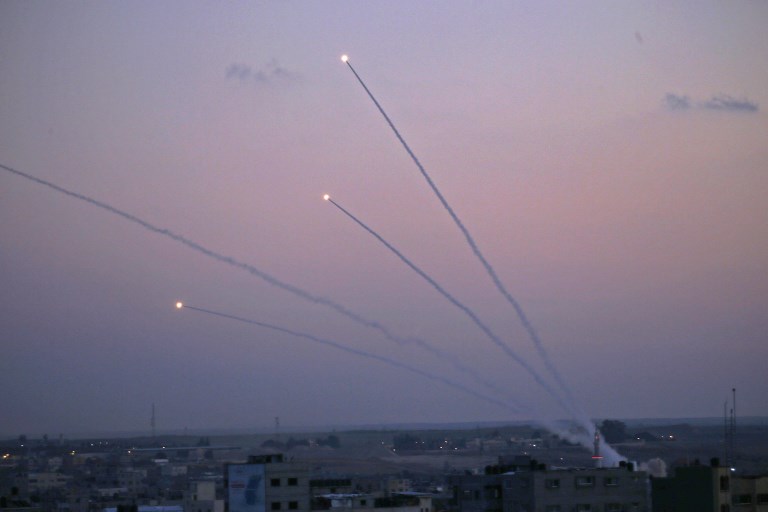
The Hamas terror group said Tuesday that if Israel continues its airstrikes campaign in the Gaza Strip, it will expand the range of its rocket attacks to include the major southern cities of Ashdod and Beersheba, which together are home to nearly half a million Israelis.
Rocket attacks on Beersheba, located some 40 kilometers (25 miles) from the Strip, are rare and considered a major escalation. Ashdod lies 20 kilometers (12.5 miles) from Gaza.
The threat from Hamas’s military wing, the Izz ad-Din al-Qassam Brigades, came as intense fighting between Israel and Gaza entered its second day, with rocket launches reported at the coastal city of Ashkelon and towns closer to the Gaza border, including Sderot.
“Occupied Ashkelon has entered the range of fire in response to the bombardment of civilian buildings in Gaza,” Qassam Brigades spokesman Abu Obeida wrote on Twitter. “Ashdod and Beersheva are the next targets if the enemy continues to bombard civilian buildings.”
Israel’s top-level security cabinet was scheduled to meet Tuesday morning to discuss the situation in Gaza.
In Ashkelon, which took several barrages late Monday and early Tuesday, one person was killed when an apartment building was hit around midnight. Eight others were wounded in the strike, including two women with life-threatening injuries, according to emergency services.
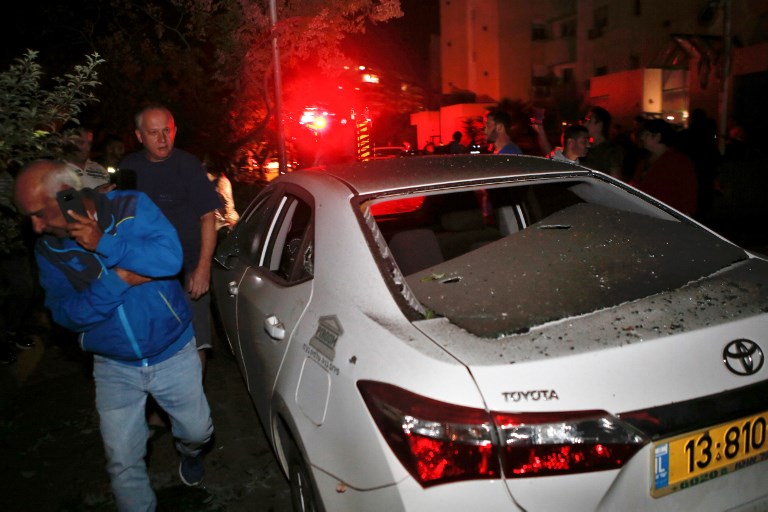
The terror group, the de facto ruler in Gaza, added that the overnight barrage fired at Ashkelon was in response to Israeli strikes on civilian buildings in Gaza. The city is just 12 kilometers from Gaza.
The IDF said Tuesday that it had hit 150 targets across Gaza since the day before, including sites belonging to Hamas and Islamic Jihad. Among the targets hit were weapons warehouses, a naval vessel used by Hamas and a building used as the administration of Hamas’s internal security service overnight, as well as three tunnels.
A spokesman for Palestinian Islamic Jihad, another terror group in Gaza that fired some of the rockets at Israel, threatened attacks even beyond Beersheba and deeper into Israel.
“What happened yesterday evening and until this moment is part of the traditional response that Israel expects,” the group said. “In the coming hours the enemy will receive what it doesn’t expect. Continued aggression of this kind will lead the resistance to expand its response so that the settlers beyond the cities of Beersheba and Ashdod will have to remain next to shelters.”
IDF spokesman Brigadier General Ronen Manelis responded to the threats in a tweet Tuesday morning, mocking the Hamas and Islamic Jihad leadership for hiding in bunkers while Gaza’s residents suffer the consequences of their actions.
“I am hearing a list of tweets and announcements coming from bunkers in the Strip,” he wrote. “I suggest that they start to think about a tweet that explains to the residents of Gaza what disaster they are leading them into. Israel’s residents are resolute, the IDF is determined, and cowards’ tweets don’t impress us.”
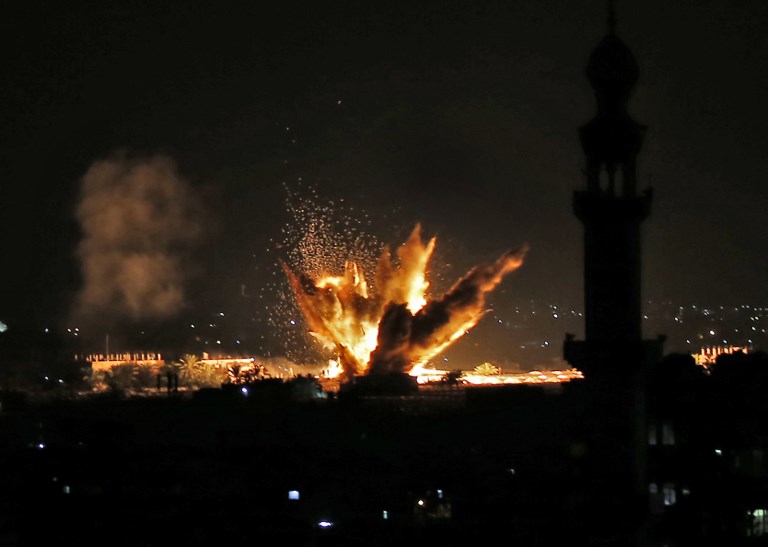
The Israel Defense Forces said that, including the fresh barrage Tuesday, more than 400 rockets and mortar rounds had been shot at Israel since Monday, including 70 rockets fired at Israeli towns since midnight, in what was being called the largest-ever barrage on southern Israel.
The IDF said dozens of those had been knocked down by the Iron Dome anti-missile system overnight, and “about 100” had been intercepted since the rocket volleys began Monday afternoon.
While most of the rockets shot at Israel that were not intercepted by Iron Dome landed in open areas, several scored hits on homes and other buildings.
The rocket attacks began shortly after 4:30 p.m., when terrorists fired a Kornet anti-tank guided missile at an Israeli bus near the border, seriously injuring an IDF soldier who was on board at the time. Dozens of other soldiers had previously been on the bus, parked near the Black Arrow memorial near Kibbutz Kfar Azza, and exited moments before the missile struck.
In Gaza, there were reports of continuing Israeli airstrikes overnight, after a day that saw dozens of attacks across the Strip, including in populated areas.
The Hamas-run health ministry said four people were killed, three of whom were identified as members of terror groups.




 anneinpt
 artaxes
 danmillerinpanama
 davidking1530
 Peter Hofman
 Joseph Wouk
 Peter
Peter Louisiana Steve


Recent Comments