–
–
If Tehran pulls out of the 2015 deal, it could have a weapon in a matter of months.

Iranian President Hassan Rouhani speaks at a press conference in New York on Sept. 26. (Jim Watson/ AFP}
By Michael Hirsh | November 13, 2018, 6:02 PM Foreign Policy News
Source Link: Iran Was Closer to a Nuclear Bomb Than Intelligence Agencies Thought
{First, ‘breakout’ was 10 years away, then 2 years, then 6 months. Now it begins again. Honestly, if you still think Iran has no nukes then I have this great bridge in Brooklyn I’d like to sell you. – LS}
A secret Iranian archive seized by Israeli agents earlier this year indicates that Tehran’s nuclear program was more advanced than Western intelligence agencies and the International Atomic Energy Agency had thought, according to a prominent nuclear expert who examined the documents.
That conclusion in turn suggests that if Iran pulls out of the 2015 multilateral nuclear deal that U.S. President Donald Trump has already abandoned, it has the know-how to build a bomb fairly swiftly, perhaps in a matter of months, said David Albright, a physicist who runs the nonprofit Institute for Science and International Security in Washington, D.C.
Iran would still need to produce weapons-grade uranium. If it restarts its centrifuges, it could have enough in about seven to 12 months, added Albright, who is preparing reports on the archive.
Before the 2015 multilateral nuclear deal mainly negotiated by U.S. Secretary of State John Kerry and Iranian Foreign Minister Mohammad Javad Zarif, that would have taken only two months, but under the accord Iran was required to ship about 97 percent of its nuclear fuel out of the country and dismantle most its centrifuges.
Experts say the revelation that Iran had more advanced capabilities to make nuclear weapons themselves—as opposed to its ability to produce weapons-grade fuel, the main focus of the nuclear pact—is a surprising and troubling finding in the new intelligence.
“The archive is littered with new stuff about the Iranian nuclear weapons program,” Albright told Foreign Policy. “It’s unbelievable how much is in there.” One of his key conclusions from studying the documents was that the Iranians “were further along than Western intelligence agencies realized.”
The archive, which is well over 100,000 pages long, covers the period from 1999 to 2003, a decade before negotiations on a nuclear deal began. But the trove of documents demonstrates that Washington and the IAEA were constantly underestimating how close Tehran was to a bomb.
“The U.S. was issuing statements that it would take a year at least, perhaps two years, to build a deliverable weapon. The information in the archive makes it clear they could have done it a lot quicker,” said Albright. He added that the French government, which was then saying Iran could achieve a weapon in three months, was much closer in its estimates.
Analysts were still sifting through the archive, said Albright, who is also known for tracking North Korea’s nuclear program and for investigating Iraq’s weapons of mass destruction programs going back to the 1990s. “I don’t think even the Israelis have gone through it all,” he said. “Every day when they go through it they see something new.”
Mossad agents seized the archive in a daring nighttime raid on a warehouse in Tehran at the end of January. In late April, Israeli Prime Minister Benjamin Netanyahu revealed some of the content in a speech that was panned as a melodramatic attempt to prod Trump into leaving the Joint Comprehensive Plan of Action, the formal name for the Iran nuclear deal. “These files conclusively prove that Iran is brazenly lying when it said it never had a nuclear weapons program,” Netanyahu said.
Source: Italian deputy FM: European attitudes toward Israel are improving dramatically – Israel Hayom
Italy mulls opening a permanent mission in Jerusalem in light of EU’s ban on member-states relocating their embassies to the city, Italy’s Deputy Foreign Minister Guglielmo Picchi says • We cannot allow “liberal” groups to harm Israeli democracy, he adds.
|
Jerusalem Center for Public Affairs President Dore Gold with Italy’s Deputy Foreign Minister Guglielmo Picchi
|
Italy is considering opening a permanent mission in Jerusalem in light of the European Union’s refusal to allow its member-states to relocate their embassies in Israel to the city.
According to Italian officials, the mission would focus on cultural issues in an effort to bolster bilateral ties.
Italian Deputy Foreign Minister Guglielmo Picchi, who also serves as one of the heads of the right-wing Northern League party, concluded his official visit to Israel on Wednesday with a visit to the Jerusalem Center for Public Affairs, at the invitation of its president Dr. Dore Gold and researcher and former Italian parliamentarian Fiamma Nirenstein.
Picchi’s visit in Israel was aimed at laying the groundwork for a visit by Italian Interior Minister and Northern League head Matteo Salvini.
In an interview with Israel Hayom, Picchi said Europe’s understanding of Israel and its positions had undergone significant change as of late. He said the coming elections for the European Parliament, set for May 2019, could also impact the European Commission’s approach toward Israel should the new right-wing parties gain in strength.
“The European Union is a very complex body with various sensitivities on the part of its member-states. Italy’s job is to ensure there is no bias in the union against Israel, ensure open dialogue and candor with Israel and try and prevent the adoption of negative resolutions on Israel,” he said.
“My boss, Matteo Salvini, said this a few times publicly. … He wants to be Israel’s guard dog and prevent Europe’s stance on Israel from having negative consequences.
Q: Is it easier today to defend Israel’s position in the European Union than it has been in the past?
“The atmosphere has changed dramatically. There is a different approach to Israel. Israel is a free country in the Middle East. We must protect this freedom by all the means at our disposal. We cannot allow ‘liberal’ groups and entities to harm Israeli democracy. Today there is a much more positive approach to Israel.”
Q: Will the EU be willing to invest the aid funds it currently invests in UNRWA toward resolving the status of Palestinians in refugee camps and making them citizens of their countries of residence?
“Italy will push very hard to enable these things.”
Q: Does that include the issue of recognition of Jerusalem as Israel’s capital?
“It is not the concern of other countries to decide what Israel’s capital will be. The Italian government is not yet in a position to adopt such a stance.”
Source: ‘I wish I could reveal’ actions to combat Gaza terror, PM says amid criticism – Israel Hayom
“Sometimes being a leader means withstanding criticism when you know classified and sensitive things,” PM Netanyahu says • “The public often can’t be involved in deciding considerations, as they must be concealed from the enemy at all costs,” he says.
|
Prime Minister Benjamin Netanyahu at Kibbutz Sde Boker, Wednesday
|Photo: Dudu Grunshpan
|
“Sometimes being a leader means fielding criticism when you know classified and sensitive things,” Prime Minister Benjamin Netanyahu said Wednesday amid political upheaval following the resignation of Defense Minister Avigdor Lieberman.
Netanyahu was speaking at an official state memorial ceremony marking the 45th anniversary of the death of Israel’s first Prime Minister David Ben-Gurion.
Amid criticism against his government for agreeing to a cease-fire with Hamas after communities in southern Israel were pounded by Hamas’ rockets and shells, Netanyahu remarked: “I hear the voices of Israeli citizens and the residents of the Gaza area communities. They are dear to me, and their words touch my heart.”
The ceremony was held at Kibbutz Sde Boker, Ben-Gurion’s home and burial place. In attendance were President Reuven Rivlin, IDF Chief of Staff Lt. Gen. Gadi Eizenkot and other generals, as well as outgoing Police Commissioner Roni Alsheikh.
“I hear what is being said,” the prime minister continued, “and I can’t share [the information] with the public. I wish I could tell citizens everything I know.”
He added: “Leadership means not doing what’s easy, but rather doing what’s right and what must be done, even if it’s difficult. When it comes to Israel’s security, there’s more than meets the eye. Our enemies begged for a cease-fire and they know why. I can’t detail our plans for the future; we will determine what’s right for the security of Israel and its citizens.”
Netanyahu evoked Ben-Gurion, saying the Jewish state’s first prime minister also made unpopular, yet necessary decisions for the survival of the state.
“At critical times, Ben-Gurion made fateful decisions, sometimes running counter to broad public opinion. In time, these decisions proved to be correct,” he said.
“At times of calm, a leader needs to be attentive to the public’s sentiments. We have a smart public here. But at times of crisis, when making critical security decisions, the public often can’t be involved in the deciding considerations, as they must be concealed from the enemy at all costs,” Netanyahu added.
Rivlin also spoke at the event, saying, “I traveled [to southern Israel] to see with my own eyes the soldiers and residents in the Israeli communities outside Gaza. I won’t offer them strength, because they are already as strong as they come.”
The president also recalled a recent meeting with relatives of Lt. Col. M, the senior IDF officer who died heroically when his commando team was unexpectedly detected during a clandestine operation in Gaza on Sunday.
“Their faith in the State of Israel, their affinity and devotion needs to serve as a compass and model to all of us,” he said.
Source: Pentagon Wants More Money for Lasers To Defend Against Missiles, Drone Swarms – Defense One
Directed-energy weapons are with a factor of two or three to being militarily useful, the Pentagon’s top scientist said.
The U.S. military will request more money to develop lasers, microwave beams, and other directed-energy defenses to fight off missiles and drone swarms, the Pentagon’s top weapons engineer said Tuesday. “You’re going to see, in upcoming budgets for missile defense, a renewed emphasis on laser scaling [meaning scaling up the power of lasers] across several technologies,” Michael Griffin, defense undersecretary for research and engineering, said at an event hosted by the Center for Strategic International Studies.
Griffin, a former NASA administrator, has previously floated the idea of firing neutral particle beams from satellites to disable enemy missiles shortly after launch.
On Tuesday, he went into more detail about how quickly laser technology was advancing.
“In units of ones or twos, we can roll out tens of kilowatts. That is within a factor of two or three of being useful on a battlefield, airplane or ship” — for example, to take out enemy drone swarms, he said. “In my opinion, we are no more than a few years away from having laser weapons of military utility.”
A space-based weapon that could take out boost-phase missiles would have to be much more powerful, in the megawatt class, he said.
Breakthroughs in solid-state, so-called combined fiber lasersmean such lasers are “not right around the corner, but that’s not utterly out of reach, either,” he said. He also offered that he was a poor prognosticator, unless he was predicting something “bad.”
One big question remains: whether anti-missile satellites will make it into the Missile Defense Review, the Trump administration’s plan for next-generation missiles and missile defense.
“It will be shared when the administration is ready to share it,” said Griffin in response to a question about it.
Source: Iran’s mullahs turn to cyberwar, misinformation to avert looming overthrow
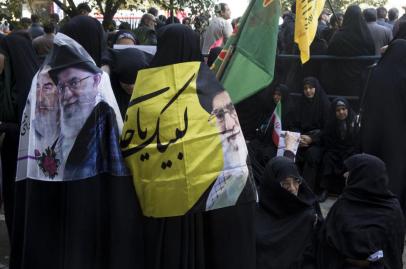
According to I-HRM, there were at least 22 executions in October, including a woman who was only 17 at the time of her alleged crime. They also report arbitrary murders, deaths in custody, inhuman treatment, cruel punishments, appalling prison conditions and the continued persecution of religious minorities.
Last month, the U.S. State Department published a 48-page report titled “Outlaw Regime: A Chronicle of Iran’s Destructive Activities.” In a foreword, Secretary of State Mike Pompeo explained why President Donald Trump had decided to withdraw from the nuclear deal and reimpose sanctions that had been lifted by former President Barack Obama, calling it: “a failed strategic bet that fell short of protecting the American people or our allies from the potential of an Iranian nuclear weapon.”
In explosive comments, Pompeo said: “The Islamic Republic of Iran is not a normal state. Normal states do not attack embassies and military installations in peacetime; fuel terrorist proxies and militias; serve as a sanctuary for terrorists; call for the destruction of Israel and threaten other countries; aid brutal dictators such as Syria’s Bashar al-Assad; proliferate missile technology to dangerous proxies; conduct covert assassinations in other countries; and hold hostage citizens of foreign nations. Normal states do not support terrorism within their armed forces, as Iran has done with the Islamic Revolutionary Guard Corps and its Quds Force. Normal states do not abuse the international financial system and use commercial industry to fund and support terrorism. Normal states do not squander their own natural resources. Normal states do not violently suppress legitimate protests, jail their own citizens or those of other countries on specious crimes, engage in torture, and impose severe restrictions on basic freedoms.”
With a collapsing economy, massive unemployment and a growing recognition among the young and well-educated Iranian population that Iran’s vast oil resources have been systematically misused to enrich the mullahs and to finance proxy wars across the Middle East, the nationwide protests are moving relentlessly toward a new revolution and the inevitable overthrow of the clerical fascist regime. Desperate to cling to power, the mullahs have ramped up repression and turned to the exploitation of cyberwarfare to spread propaganda, influence events, shape foreign perceptions and counter perceived threats. The U.S. State Department says: “The Islamic Republic has developed its cyber capabilities with the intent to surveil and sabotage its adversaries, undermining international norms and threatening international stability.”
A key target for the clerical regime’s cyber-spies is the main democratic opposition movement, the People’s Mojahedin of Iran (PMOI or MEK) and the National Council of Resistance of Iran. In particular, the regime has instigated a determined campaign to strike out at an enclave of over 3,000 PMOI activists based in Tirana, Albania, deploying cyberattacks to spread misinformation, fake news and blatant fabrications, labeling the MEK as a terrorist organization and claiming that its presence is a danger to Albania, Europe and the Middle East. It also utilizes vast resources to procure the willing service of gullible Western journalists. While the Iranian regime’s attempts to smear the MEK have no credibility, what is worrying is that these allegations often become the basis for future terrorist and criminal acts against the opposition. The Iranian Ministry of Intelligence likes to use the Western media to denigrate the MEK in such a way that any subsequent terror attacks or assassinations targeting them receive little public sympathy.
In September, Twitter closed 770 accounts run by the Iranian regime, declaring them false accounts for government propaganda and for disseminating fake news and lies. At the same time, Facebook, Instagram and Google closed similar accounts related to the regime. On Oct. 17, Twitter published content associated with these 770 accounts, amounting to 1,122,936 tweets, along with embedded photos and videos. Among these tweets were hundreds that had been disseminated widely by Iran’s MOIS in the days before the NCRI/PMOI annual “Free Iran” rally in Paris in June, which always attracts a crowd of some 100,000 ex-patriot Iranians opposed to the mullahs’ regime. Some examples labeled MEK a “terrorist cult” and condemned the French government for hosting a “dangerous sect”.
The tactic of using social media to soften public opinion and sow seeds of doubt about the NCRI/PMOI as a prelude to a terrorist attack was highlighted when on June 1 German police arrested Assadollah Assadi, a diplomat from the Iranian Embassy in Vienna, and charged him with terrorist offenses. On the same day, Belgian police arrested an Iranian couple from Antwerp after 500 gm of high explosives and a detonator were found in their car. They admitted Assadi had given them the bomb and instructed them to detonate it at the Iranian democratic opposition rally being held in Villepinte, near Paris that weekend, attended by hundreds of political leaders, including Rudy Giulliani and Newt Gingrich.
Despite such outrages, there are still appeasers in Western political circles who are prepared to close their eyes to the Islamic Republic of Iran’s human rights abuse, aggressive military expansionism, sponsorship of terrorism and cyberwarfare. They believe that “constructive dialogue” with one of the world’s most evil regimes is preferable to taking a firm line and demanding that Iran behaves like, in the words of Pompeo, “a normal state.” The political appeasers have their willing media cohorts, who naively lap up every shred of misinformation about the Iranian opposition and every iota of propaganda about the regime. These “useful idiots” crop up repeatedly in newspapers, radio and television in the EU and America, echoing their predecessors who trod a similar dishonorable path during the rise of the Nazis and the oppression of the Soviet Union.
Struan Stevenson, coordinator of Campaign for Iran Change, was a member of the European Parliament representing Scotland (1999-2014), president of the Parliament’s Delegation for Relations with Iraq (2009-14) and chairman of Friends of a Free Iran Intergroup (2004-14). He is an international lecturer on the Middle East and president of the European Iraqi Freedom Association.
Source: U.S. Envoy Says Iran Spends $1 Billion A Year to ‘Support Terrorism,’ Compares It to Doctor Evil
The U.S.’s lead counterterrorism envoy has accused Iran of spending $1 billion a year on supporting groups considered terrorist organizations by the U.S.
Nathan A. Sales, the State Department’s ambassador-at-large and coordinator for counterterrorism, targeted Iran in a blistering lecture given on Tuesday to the Washington Institute for Near East Policy, a think tank founded by the former deputy research director for the American Israel Public Affairs Committee. He accused Tehran of propping up various militias across the region, including the Lebanese Shiite Muslim Hezbollah movement, the Palestinian Sunni Muslim group Hamas and the Zaidi Shiite Muslim Ansar Allah militia, also known as the Houthis.
“Let me give you some numbers. This may sound hard to believe, but Iran provides Hizballah alone some $700 million a year. It gives another $100 million to various Palestinian terrorist groups. When you throw in the money provided to other terrorists, the total comes close to one billion dollars,” Sales said.
“Let’s pause to consider that, because it bears repeating: The Iranian regime spends nearly a billion dollars a year just to support terrorism. I’d be tempted to make a Dr. Evil reference if the stakes weren’t so high,” he added, referring to the antagonist of the Austin Powers film series.
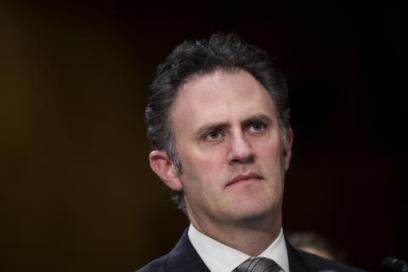
Sales went on to refer to Iran as “an extraordinary compendium of evil,” pointing to its alleged role in a deadly Bulgaria bombing that targeted Israeli citizens in 2012, as well as an attempted bombing in France and assassination plot in Denmark this year, among other instances of “terrorist plotting around the world.”
President Donald Trump and his administration have cited Iran’s suspected support for militant groups abroad and its development of ballistic missile technology as grounds for leaving the nuclear deal signed in 2015 by the U.S., Iran and other world powers. Since quitting the deal, the White House has reinstated heavy sanctions on doing business with Iran, though it has exempted eight countries—China, Greece, India, Italy, Japan, South Korea, Taiwan and Turkey—from energy sanctions for six months.
Iran has, in turn, accused the U.S. of attempting to destabilize its revolutionary Shiite Muslim government and of damaging the security situation of the region through Washington’s overlapping interventions. Both the U.S. and Iran have contributed heavily to the fight against the Islamic State militant group (ISIS) in Iraq and Syria, but have argued against each other’s long-term presence there and in other nations.
Fellow nuclear accord signatories China, France, Germany, Russia and the United Kingdom have sought to keep the deal alive through extensive negotiations with Iran and the potential establishment of a payment system independent of the U.S. dollar, but have faced pressure from Washington. The International Court of Justice has also called on the Trump administration to remove certain sanctions restricting humanitarian assistance, which Secretary of State Mike Pompeo has promised would not be affected despite telling BBC Persian that Iran’s “leadership has to make a decision that they want their people to eat.”
A number of Iranians living in the capital Tehran have expressed to Newsweek concern about how U.S. sanctions affected their lives.
 Javad Zarif
✔@JZarif
#WeWontForget @SecPompeo openly threatening to starve Iranians—a crime against humanity—in a desperate attempt to impose US whims on Iran. Like his predecessors, he’ll also learn that—in spite of US efforts—Iran will not just survive but advance w/out sacrificing its sovereignty.
 Secretary Pompeo
✔@SecPompeo
Shame on #FakeNewsweek for helping @JZarif spread lies. The truth is: the U.S. does not, and never did, sanction food and medicine. They are exempt from sanctions, as are financial transactions related to humanitarian needs.

Javad Zarif✔@JZarif
.@SecPompeo has audacity to threaten crimes against humanity targeting ordinary Iranians; then attacks media for reporting his own words. He should either own what he says, or disown what US does. Can’t have it both ways.
Washington has expanded its Middle East military missions to counter Iranian presence, though the Pentagon has stated that countering ISIS officially remains the goal of operations in Iraq and Syria. Iran said it would continue to support what government-sponsored interventions in Iraq and Syria.
Challenging Trump’s namesake nationalist ideology, Zarif told Iranian broadcaster Dolat in an interview Tuesday that “the America-first approach, in fact, has created a backlash in the international community.” Later that day, White House national security adviser John Bolton suggested during a Tuesday summit in Singapore that the U.S. could continue laying sanctions on Iran and “As the British say, ‘squeeze them until the pips squeak.'”
State Department also announced reward for the capture of two senior Hezbollah leaders.
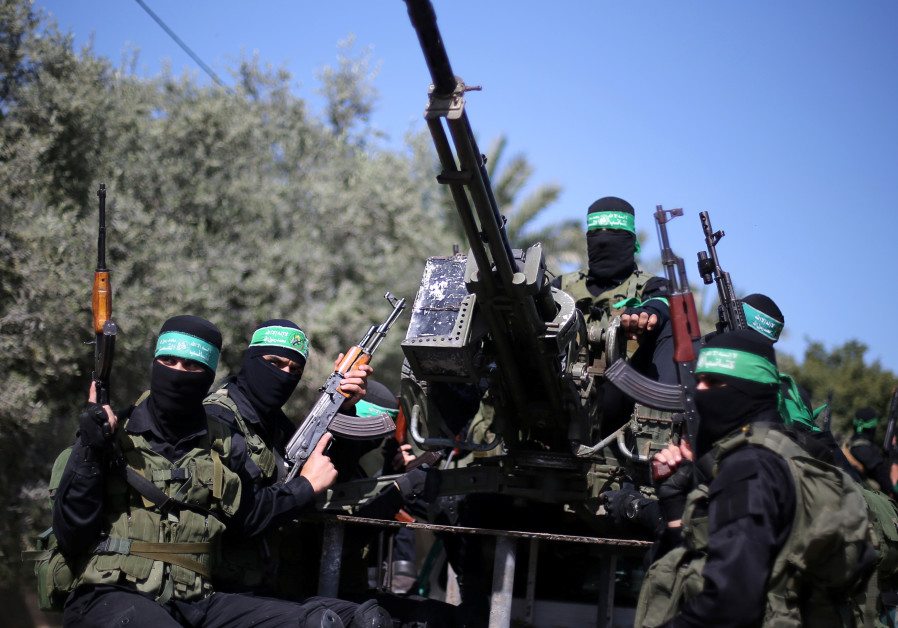
Source: Lieberman steps down as defense minister – DEBKAfile

Avigdor Lieberman resigned as Israel’s defense minister on Wednesday, Nov. 14 after being isolated by the prime minister and army chiefs on government Gaza policy. He called for new elections, meaning that his Yisrael Beitenu party is quitting the government coalition.
Speculation that Avigdor Lieberman was about to resign as defense minister was rife on Wednesday, Nov. 14, after he was isolated by the prime minister and army chiefs on Gaza policy. The rumor gained momentum after Lieberman scheduled a news conference for 1 pm Wednesday, Nov. 14, the day after he and three other ministers objected to the security cabinet’s decision to accept a ceasefire with Hamas, after nearly 500 rockets were fired into Israel in 24 hours. Lieberman advocated intensified punishment for the Palestinian terrorist organizations led by Hamas and Islamic Jihad and objected to giving them a breather.
His situation worsened upon discovering that Netanyahu and the army chiefs had already decided that Israel could not afford to take on Hamas and the pressing threat from the North at the same time, and therefore Israel must accept Egyptian and UN efforts for a ceasefire. While cabinet ministers were discussing the Gaza issue, Netanyahu was running a parallel diplomatic track with international and Arab contacts outside the room. That is why the critical cabinet session ended with a vague communique: “IDF attacks on Gaza will continue as required.”
The defense minister and his other cabinet members had the sense that the prime minister had cast them in the role of film extras while pursuing the real action, totally at odds with his views, somewhere else. He had moreover cut the defense minister off from the military chiefs over whom he had charge.
Lieberman is the third defense minister to opt out of a government led by Netanyahu. His predecessors, Ehud Barak and Moshe Ya’alon, have become the prime minister’s bitterest critics. Netanyahu will need to appoint a new defense minister without delay, given the urgent security challenges confronting the country. Education Minister Naftali Bennett is pushing for the job. Rather than a cabinet shakeup, he may call a snap general election and meanwhile appoint a temporary stand-in as minister of defense.
Source: Defense Minister Liberman resigns, says Israel ‘capitulated to terror’ in Gaza | The Times of Israel
Yisrael Beytenu leader slams ‘drastically inadequate’ response to massive rocket fire on south, calls for elections as soon as possible; Netanyahu to take over defense portfolio
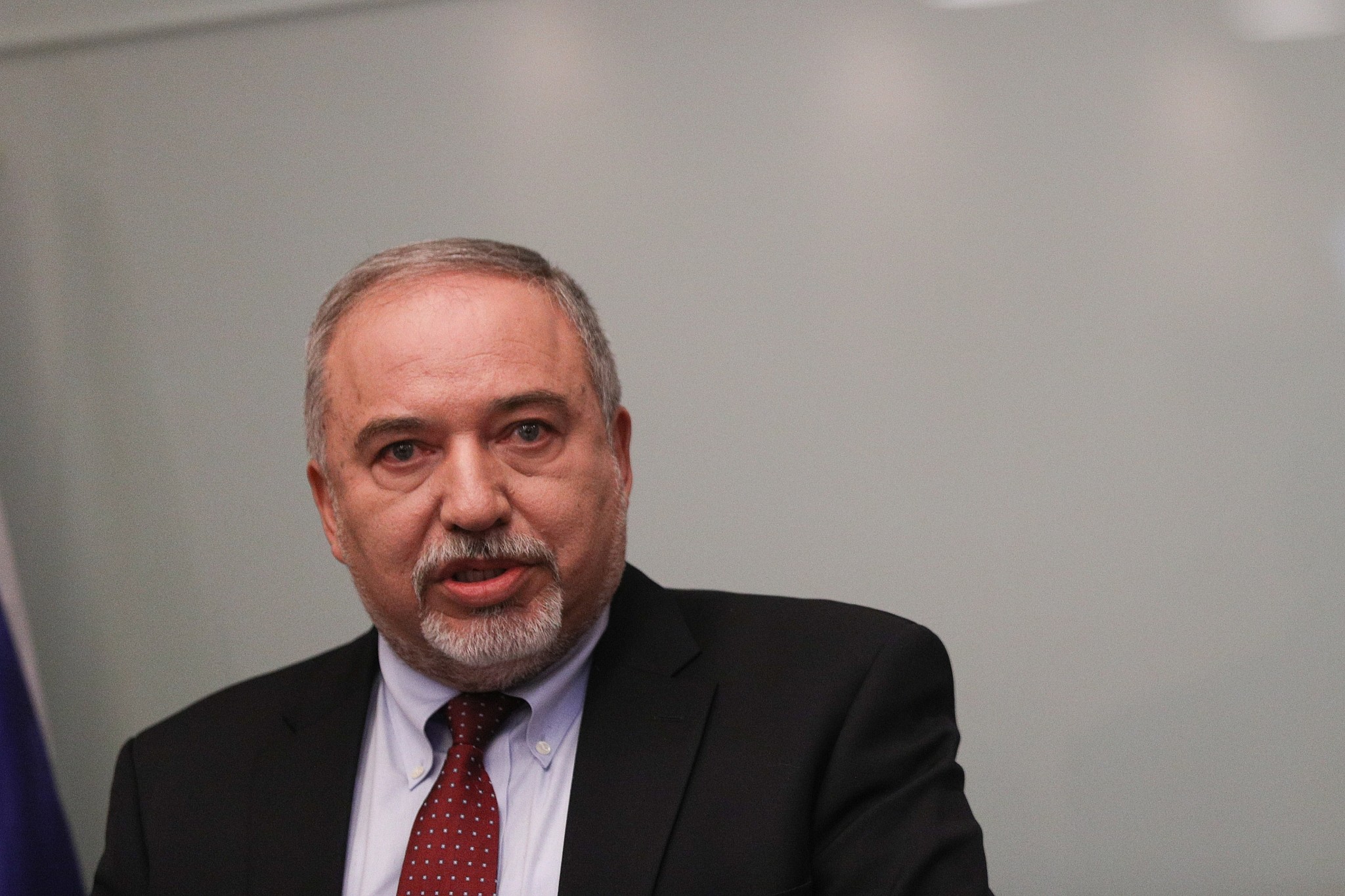
Yisrael Beytenu chairman Avigdor Liberman announced Wednesday that he would be resigning as defense minister and called for the government to be dismantled and for new elections to be set.
“I am here to announce my resignation from the government,” he said at a hastily organized press conference at the Knesset after a Yisrael Beytenu party meeting, during which he told MKs of his decision.
Liberman said his decision came in light of the ceasefire reportedly agreed on Tuesday between Israel and Palestinian terror groups in Gaza following an unprecedentedly fierce two-day barrage of over 400 rockets fired by Hamas and other terror groups toward Israel.
A day earlier, Liberman and other ministers severely criticized Prime Minister Benjamin Netanyahu over the decision.
“What happened yesterday, the ceasefire, together with the deal with Hamas, is a capitulation to terror. There is no other way of explaining it,” he told reporters on Wednesday.
“What we are doing right now is buying quiet for a heavy price with no long-term plan to reduce violence toward us,” he said of the deal, which wasn’t officially confirmed by Israeli officials. He also slammed the military’s response to the rocket fire. “To put it lightly, our response was drastically lacking to the 500 rockets fired at us,” he said.
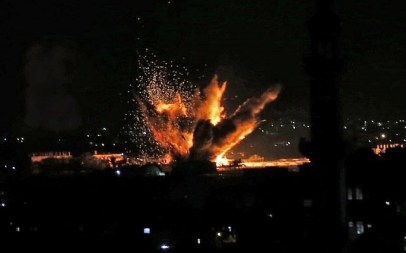
Liberman also directly criticized Netanyahu, saying he “fundamentally disagreed with him” on a number of key issues, including the government’s allowing $15 million to be transferred in cash from the Qatari government to Hamas on Friday.
“I opposed it. The prime minister needed to write an executive order for it to go above my head,” Liberman claimed, saying that the money went first to the families of Hamas members killed on the Gaza border in clashes with the IDF and then to funding for rockets to fire at Israel.
He said that he made his decision because “I could not remain [in office] and still be able to look residents of the south in the eyes.”
Liberman concluded his prepared statement by calling for elections to be held “at the soonest possible date.” During a subsequent question-and-answer session he predicted that right-wing voters would “see through the other parties’ hypocrisy” and reward his Yisrael Beytenu party with 20 Knesset seats.
A Likud source said in response that there was “no need to go to elections at this time of sensitive security,” despite the coalition losing five seats with Yisrael Beytenu’s expected exit.
Without Yisrael Beytenu, the coalition would hold a paper-thin majority in the 120-seat Knesset. New elections must be held by within the coming 12 months.
“The government can complete its term,” the Likud source said in a statement. “In any case, in the meantime, the defense portfolio will go to Prime Minister Netanyahu.”
The Jewish Home party, however, is expected to demand the position of defense minister for its leader, Education Minister Naftali Bennett.
Liberman has clashed frequently with Bennett, whose religious-nationalist party will compete with Liberman’s secular right-wing Yisrael Beytenu over the votes of many hawkish Israelis in the upcoming Knesset elections.
The two men have traded barbs repeatedly in recent weeks, with Bennett accusing Liberman of being soft on Gaza and Liberman replying in kind, while also asserting that policy decisions regarding the ongoing violence emanating from the Strip were made by the ministers in the high-level security cabinet rather than his office.
Earlier Wednesday, Netanyahu defended his decision to accept a ceasefire with terror groups in Gaza after the worst escalation in violence in the Strip since 2014.
“In times of emergency, when making decisions crucial to security, the public can’t always be privy to the considerations that must be hidden from the enemy,” he said at a ceremony in honor of Israel’s first prime minister David Ben-Gurion.
“Our enemies begged for a ceasefire and they knew very well why,” he added.
The deal has provoked criticism from within Netanyahu’s government as well as from Israelis who live near the Gaza Strip and want further action against Hamas, the terror group that rules the enclave.
Sources close to the defense minister told Haaretz that he was “incensed” by a briefing in which Netanyahu appeared to indicate that Liberman supported the reported ceasefire.
The security cabinet reportedly agreed to the ceasefire with Hamas on Tuesday afternoon, in a decision that several cabinet ministers later said they opposed. The decision was slammed by some opposition leaders, who called it a capitulation to terror after a deadly two-day conflagration that saw over 400 rockets and mortar shells fired at southern Israel.
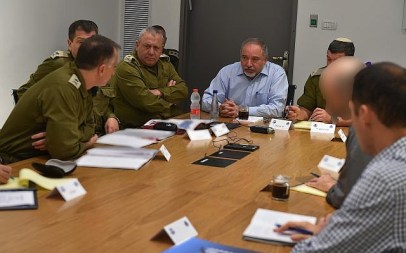
Channel 10 reported that at least four senior ministers who attended the cabinet meeting opposed the decision, which was made by Netanyahu without a vote. But Housing Minister Yoav Gallant, who was at the meeting, said the ministers all accepted the decision.
The ceasefire was hailed by Hamas as a victory ostensibly imposed on Israel on Hamas’s terms. Rocket fire at Israel came to a halt on Tuesday afternoon, after two days of incessant attacks.
Liberman, Justice Minister Ayelet Shaked, Environmental Protection Minister Ze’ev Elkin, and Education Minister Naftali Bennett proposed an alternative response, but it was rejected by the other ministers at the meeting, according to Channel 10.
An unnamed minister who attended the seven-hour meeting Tuesday told the outlet that no vote had been held to determine the next steps. A source with direct knowledge of the discussions confirmed to The Times of Israel that no vote took place.
The source said there were several disagreements between cabinet members, some of which were the focus of debate for “a number of hours.” The source would not, however, comment on the content of the disagreements.
At the conclusion of the meeting, the security cabinet merely released a statement that read: “The security cabinet discussed the events in the south. The cabinet received briefings from the IDF and defense officials on the [IDF] strikes and widespread operations against terror targets in Gaza. The cabinet instructed the IDF to continue its strikes as needed.”

According to the military, over 460 rockets and mortar shells were fired at southern Israel over the course of 25 hours on Monday and Tuesday. The Iron Dome missile defense system intercepted over 100 of them. Most of the rest landed in open fields, but dozens landed inside Israeli cities and towns, killing one person, injuring dozens more, and causing significant property damage.
In response to the rocket and mortar attacks, the Israeli military said it targeted approximately 160 sites in the Gaza Strip connected to the Hamas and Palestinian Islamic Jihad terror groups, including four facilities that the army designated as “key strategic assets.”
As news of a ceasefire broke, Liberman’s office put out a statement saying that any claim that he had backed ending Israel’s offensive was “fake news. The defense minister’s position is consistent and has not changed.”
Similarly, Bennett’s office said any reports that he had supported a halt to strikes were “an absolute lie” and that the minister had “presented his resolute position to the cabinet that he has expressed in recent months and his plan for Gaza.”
Times of Israel staff contributed to this report.




 anneinpt
 artaxes
 danmillerinpanama
 davidking1530
 Peter Hofman
 Joseph Wouk
 Peter
Peter Louisiana Steve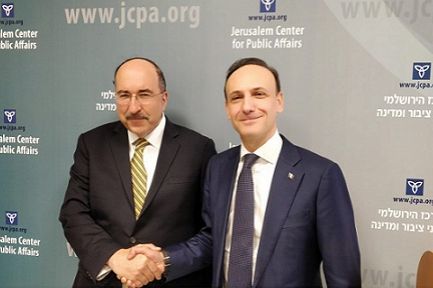


Recent Comments