Off Topic:  French Jewish cemetery desecrated with swastikas

Posted December 15, 2018 by Joseph Wouk
Categories: Uncategorized

Source: French Jewish cemetery desecrated with swastikas | Idaho Statesman

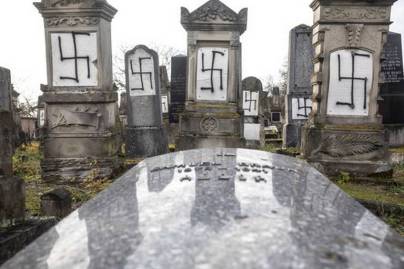
Jewish tombstones are seen desecrated with swastikas in the Herrlisheim Jewish cemetery, north of Strasbourg, eastern France, Thursday, Dec. 13, 2018. Dozens of tombs were defaced were discovered Tuesday.
Jewish tombstones are seen desecrated with swastikas in the Herrlisheim Jewish cemetery, north of Strasbourg, eastern France, Thursday, Dec. 13, 2018. Dozens of tombs were defaced were discovered Tuesday.JEAN-FRANCOIS BADIAS AP PHOTO


Lebanese wary as Israel destroys Hezbollah border tunnels

Posted December 15, 2018 by Joseph Wouk
Categories: Uncategorized

Source: Lebanese wary as Israel destroys Hezbollah border tunnels | The Times of Israel

One resident says fortification work on frontier means Israel must be ‘scared’; another believes the Jewish state is attempting to change the border and ‘occupy’ Lebanese villages

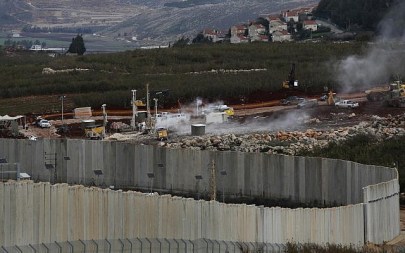
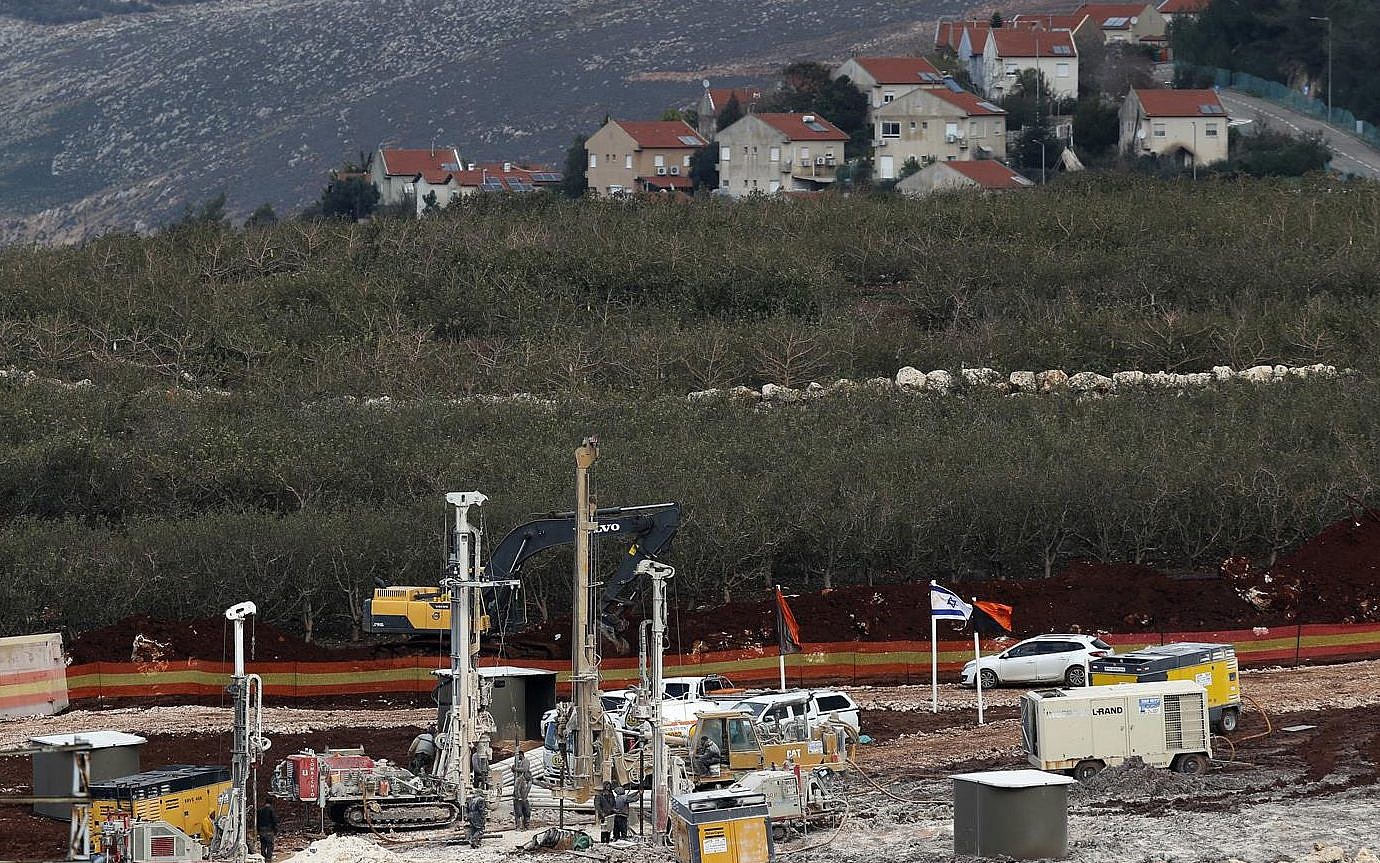
In this Thursday, Dec. 13, 2018 photo, Israeli military equipment works on the Lebanese-Israeli border in front of the Israeli town of Metula, background, near the southern village of Kafr Kila, Lebanon (AP Photo/Hussein Malla)

In this Thursday, Dec. 13, 2018 photo, Israeli military equipment works on the Lebanese-Israeli border in front of the Israeli town of Metula, background, near the southern village of Kafr Kila, Lebanon (AP Photo/Hussein Malla)

MAYS AL-JABAL, Lebanon — As Israeli excavators dug into the rocky hills along the frontier with a Lebanese village, a crowd of young Lebanese men gathered to watch.

The mood was light as the crowd observed what Israel says is a military operation — dubbed “Northern Shield” — aimed at destroying attack tunnels built by Hezbollah. The young men posed for selfies, with the Israeli crew in the background, as they burned fires and brewed tea to keep warm.

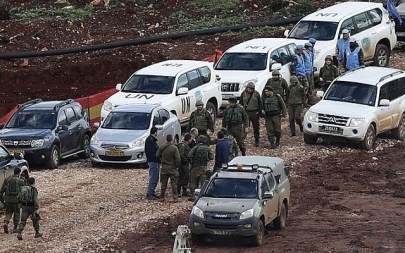
But Lebanese soldiers were visibly on high alert, deploying to new camouflaged posts behind sandbags and inside abandoned homes. About two dozen UN peacekeepers stood in a long line, just ahead of the blue line demarcating the frontier between the two countries technically still at war.

The scene highlights the palpable anxiety that any misstep could lead to a conflagration between Israel and Lebanon that no one seems to want.

Underscoring such jitters, shadowy figures appearing across the misty hills of the border village of Mays al-Jabal last weekend sparked concern, and Israeli soldiers fired in the air to warn the men to stay away. Israel later said it fired at Hezbollah members who came to the site to dismantle sensors installed to detect tunnels. Lebanon said it was a Lebanese military intelligence patrol.

Israel’s tunnel search comes at a time when the civil war in neighboring Syria seems to be winding down. Hezbollah had sent hundreds of troops to Syria in 2013 to fight alongside the forces of Syrian President Bashar Assad. With Assad’s forces emerging victorious, attention now seems to be returning to the tense Israel-Lebanon border.

In this Thursday, December 13, 2018 photo, Israeli soldiers and UN peacekeepers gather at the site where the Israeli army works on the Lebanese-Israeli border in the southern village of Kafr Kila, Lebanon (AP Photo/Hussein Malla)

Israel said its troops have discovered at least three tunnels dug below the frontier and called on the international community to impose new sanctions on Hezbollah.

The Israeli military said it believes the tunnels were meant to be used by Hezbollah as a surprise component of an opening salvo in a future war, alongside the mass infiltration of operatives above ground and the launching of rockets, missiles and mortar shells at northern Israel.

The terror group, which fought a bruising but inconclusive war with Israel in 2006, has not commented on the Israeli operation or statements.

Lebanese Prime Minister Saad Hariri said Thursday that neither Israel nor Lebanon wanted to go to war, but noted that Israel violates Lebanese airspace and international waters on a regular basis.

He said the Lebanese army “will deal with this issue” after receiving a full report from the UN peacekeeping force, but did not elaborate.

The peacekeeping force, known as UNIFIL, has confirmed the presence of tunnels and said it is working with both sides to address the situation in line with UN Security Council resolutions.

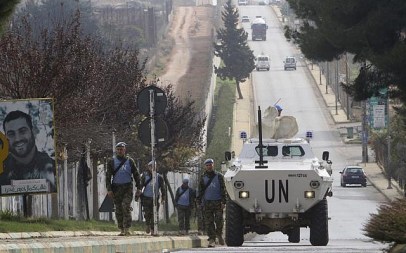
Serbian UN peacekeepers patrol the Lebanese side of the Lebanon-Israel border in the southern village of Kfar Kila, Tuesday, December 4, 2018 (AP Photo/Mohammed Zaatari)

In southern Lebanon on Thursday, Lebanese army soldiers observed the frontier in Mays al-Jabal, taking photos of their Israeli counterparts operating only a few meters (yards) away. At times, the Lebanese soldiers asked the young men to move back, away from the frontier.

Lebanese homes and farms are nestled at the bottom of the hill where the operations run from daybreak until sundown. No civilian Israeli homes are visible from that tense border.

Ali Jaber, a 21-year-old resident of Mays al-Jabal, said he believes that Hezbollah is more popular after the Syria war, and that this is the reason Israel is now turning to it. “But whoever puts up a shield and is hiding and making fortifications must be scared,” he said.

Hussein Melhem, a 19-year old electrician from the village, came to watch. His cheeks ruddy on a cold but clear day, he covered his head with a tight hood. He alleged that Israel was trying to change the border.

“If they could occupy all of this, they would,” he said, in an apparent reference to Israel’s 18-year military occupation of southern Lebanon which ended in 2000. “But the resistance will prevent them.”

In this Thursday, December 13, 2018 photo, Israeli military equipment works on the Lebanese-Israeli border, next to a wall that was built by Israel, in the southern village of Kafr Kila, Lebanon (AP Photo/Hussein Malla)

The 2006 war was sparked when Hezbollah attacked an IDF patrol in July, killing five soldiers and abducting the bodies of two.

As a seven-year-old in 2006, Melhem and his family left Mays al-Jabal when Israel invaded. His village was badly damaged but has since largely recovered and he said he found their home intact.

It is hard to forget about war in the villages and towns along the frontier. Pictures of Hezbollah fighters who died in the 2006 war, as well as the one raging in neighboring Syria, known locally as the “Sacred Defense,” are everywhere. Posts on town squares boast of defeating Israel or urge the locals to “know their enemy.”

During the Syrian civil war, Israel has frequently carried out airstrikes in Syria against Iranian-allied forces, particularly Hezbollah. Israel says it aims to prevent sophisticated weaponry from reaching Hezbollah, which it considers its most pressing security concern.

In Lebanon, Israeli Prime Minister Benjamin Netanyahu’s warnings have raised suspicions that he is also using the tunnel operation as a diplomatic pressure card.

Netanyahu has called for more sanctions against Hezbollah. In a visit to the frontier earlier this week, he warned that if Hezbollah tries to disrupt the search for tunnels, “it will be hit in a way it cannot even imagine.”

In Israel, some newspaper commentators have been critical of the UN peacekeeping force, whose mandate Israel and the United States have unsuccessfully attempted to expand to include “intervention and deterrence.”


Mashaal calls for guerrilla warfare to ‘liberate West Bank’ and ‘all Palestine’ 

Posted December 15, 2018 by Joseph Wouk
Categories: Uncategorized

Source: Mashaal calls for guerrilla warfare to ‘liberate West Bank’ and ‘all Palestine’ | The Times of Israel

Former Hamas chief says ‘resistance’ is ‘pinnacle of life’ and defines Palestinians: ‘I resist, therefore I am’

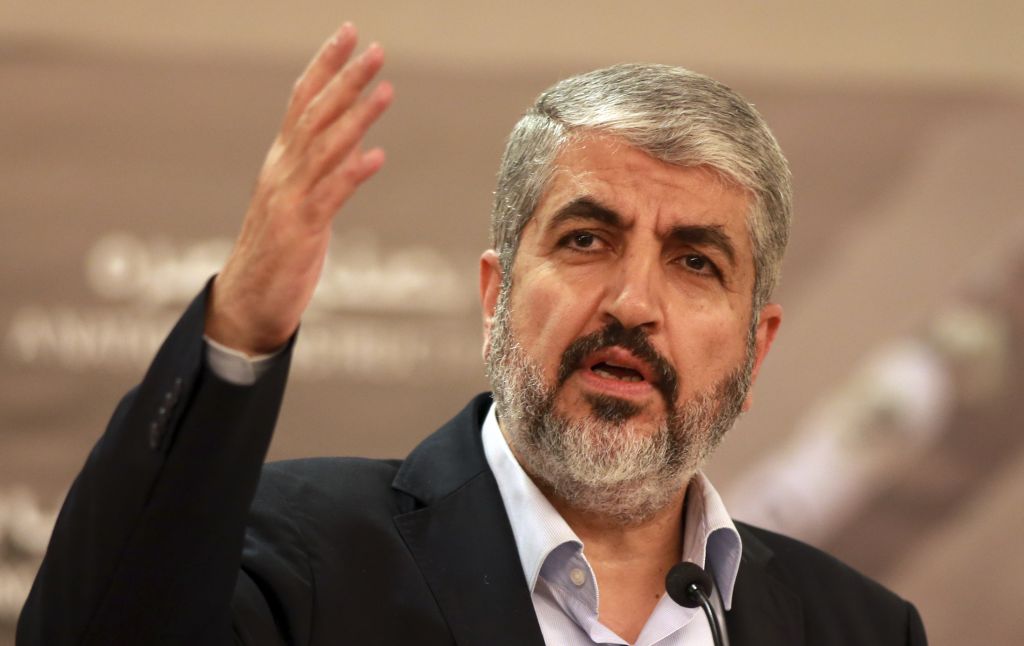
Khaled Mashaal speaks in Doha, Qatar, August 28, 2014. (AP/Osama Faisal)

Khaled Mashaal speaks in Doha, Qatar, August 28, 2014. (AP/Osama Faisal)

The former leader of the Hamas terror group has called on West Bank Palestinians to prepare for “guerrilla warfare” in the West Bank and ongoing “resistance” to force Israel to retreat from the territory.

Khaled Mashaal said this would be a step on the way to its retreat from “all of Palestine.”

Speaking on the Al-Jazeera TV network on December 2, Mashaal, in a play on René Descartes’ famous philosophical proposition, said: “The Palestinians say ‘I resist, therefore I am.’”

In comments translated by the Middle East Media Research Institute, Mashaal said that according to the Quran, “Jihad, resistance, and self-defense [are] the essence of life.

“The abandonment of Jihad leads to humiliation and death. Hence, resistance is the pinnacle of life. A person who lives under occupation, and who does not resist, is in fact dead.”

Mashaal, who headed Hamas’s political bureau between 1996 and 2017, claimed there was no alternative way to “liberate” the Palestinian nation.

“When did Israel withdraw from southern Lebanon? It wasn’t a result of negotiations — not in Madrid and not in Washington. It retreated as a result of resistance. When did it retreat from Gaza? After the [Second] Intifada in 2000 and the heroic resistance. Today we are being called and preparing to force Israel to retreat from Jerusalem and from the West Bank. Allah willing, this is on the way to its retreat from all of Palestine,” he said.

Embedded video

MEMRI

@MEMRIReports

He called on the West Bank’s Fatah to join Hamas in popular resistance against Israel, saying it should take an example from the people of the Gaza Strip.

“The West Bank spans over 5,600 square kilometers, and has mountains and valleys. I’m from there, I know the landscape. It has everything necessary for guerilla warfare. Why are we not preparing for that?”

A Fatah spokesman on Thursday called on Palestinians to ignore calls for a new armed uprising against Israel in the West Bank, urging them to instead step up peaceful protests against the Jewish state’s military rule.

“We need to be smart…and not listen to the talk of the demagogues about the necessity of going to an armed confrontation,” Fatah spokesman Osama Qawasma told Palestine TV, the official Palestinian Authority television channel, Thursday night. “My words are candid. We must escalate popular resistance in the Palestinian lands.”

Hamas has for years called on Palestinians to stir up a confrontation with Israel in the West Bank.

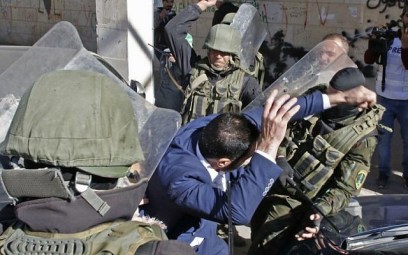
On Friday the Palestinian Authority police cracked down on a Hamas protest in the southern West Bank city of Hebron, beating demonstrators with batons and throwing stun grenades.

Some 50 Hamas activists confronted Palestinian forces after Muslim prayers on Friday, as the terror group marked the 31st anniversary of its establishment.

Palestinian security forces beat a Hamas supporter as they try to disperse a rally marking the 31st anniversary of the founding of the terror group in Hebron on December 14, 2018. (Hazem Bader/AFP)

Hamas condemned the PA for suppressing the demonstrations. Hamas spokesman Fawzi Barhoum said in a statement on the Hamas website that the “barbaric behavior” was proof the PA “denigrated the blood of the martyrs.”

The Palestinian Authority, led by president Mahmoud Abbas and his Fatah party, cooperates closely with Israeli security, while Hamas has fought three wars with the Jewish state since 2008.

Hamas cells continue operate in the West Bank despite PA and Israeli efforts to arrest them. The protests come amid a surge of terror attacks in the West Bank, some of them claimed by Hamas.

Two Israeli soldiers were killed Thursday and two other Israelis injured when a man opened fire at a bus stop at a settlement in the West Bank, before fleeing.

Hamas has claimed two other recent shooting attacks in the West Bank but has so far not taken responsibility for Thursday’s attack, near the settlement of Givat Assaf.

The Israeli military says it believes a Hamas cell conducted a drive-by shooting attack near the settlement of Ofra Sunday, in which seven people were wounded. One victim’s baby was delivered prematurely in an emergency operation, but died on Wednesday afternoon.

Agencies and Adam Rasgon contributed to this report.


Australia recognizes West Jerusalem as Israel’s capital

Posted December 15, 2018 by Joseph Wouk
Categories: Uncategorized

Source: Australia recognizes West Jerusalem as Israel’s capital | The Times of Israel

Prime Minister Scott Morrison says embassy won’t move from Tel Aviv until peace is achieved, but country will establish a defense and trade office in Jerusalem

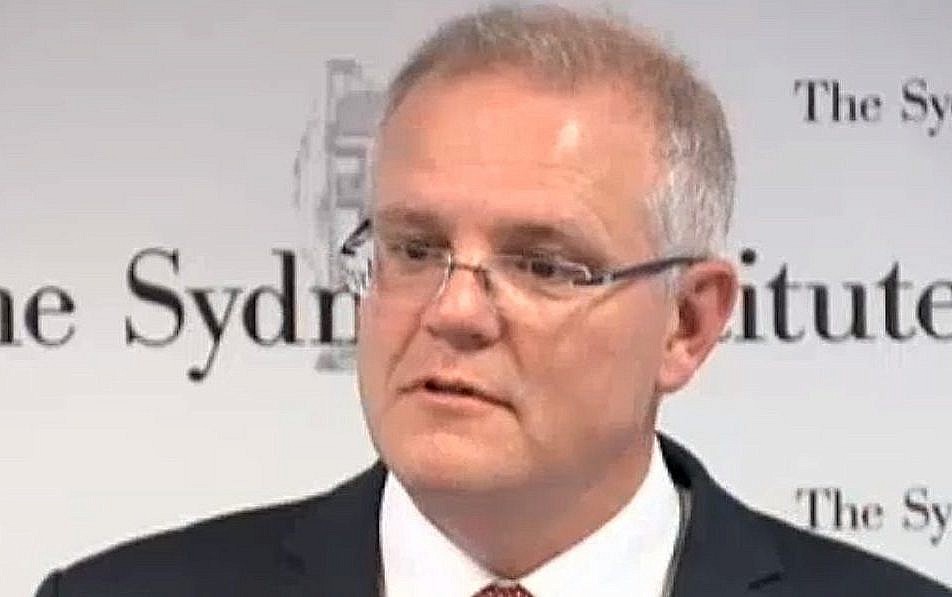
Australian Prime Minister Scott Morrison declares West Jerusalem to be Israel’s capital, Sydney, December 15, 2018. (Screen grab via ABC News)

Australia on Saturday officially recognized West Jerusalem as Israel’s capital, Prime Minister Scott Morrison said, but a contentious embassy shift from Tel Aviv will not occur until a peace settlement is achieved.

“The Australian government has decided that Australia now recognizes West Jerusalem, as the seat of the Knesset and many of the institutions of government, is the capital of Israel,” he said.

He said the decision respects both a commitment to a two-state solution and longstanding respect for relevant UN Security Council resolutions.

Morrison also committed to recognizing the aspirations for a future state of Palestine with East Jerusalem as its capital when the city’s status is determined in a peace deal.

While the embassy move is delayed, Morrison said his government will establish a defense and trade office in Jerusalem and will also start looking for an appropriate site for the embassy.

“We look forward to moving our embassy to West Jerusalem when practical, in support of and after final status of determination,” he said, adding that work on a new site for the embassy was under way.

The prime minister said it was in Australia’s interests to support “liberal democracy” in the Middle East and took aim at the United Nations he said was a place where Israel is “bullied.”

Australia had on Friday warned citizens to take care while traveling in neighboring Muslim-majority Indonesia ahead of the expected announcement by Morrison.

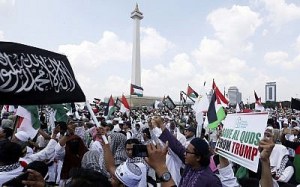
Protesters wave Palestinian flags during a rally against the US plan to move its embassy in Israel from Tel Aviv to Jerusalem, at Monas, the national monument, in Jakarta, Indonesia, May 11, 2018. (AP Photo/Achmad Ibrahim)

While Australia’s then-foreign minister Julie Bishop said in June that “the Australian government will not be moving our embassy to Jerusalem,” Morrison said in October that he was “open-minded” regarding following the American example.

But Morrison’s statement was seen by many Australians as a political stunt. Critics called it a cynical attempt to win votes in a by-election in October for a Sydney seat with a high Jewish population.

Opposition leader Bill Shorten said Saturday that the decision to recognize West Jerusalem as Israel’s capital but not move the embassy there was a “humiliating backdown” from the October by-election campaign.

“What I’m worried is that Mr. Morrison put his political interest ahead of our national interest,” Shorten told reporters.

Both Israel and the Palestinians claim Jerusalem as their capital. Israel captured Arab East Jerusalem in the 1967 Six Day War and later annexed it in a move never recognized by the international community. It sees the entire city as its capital.

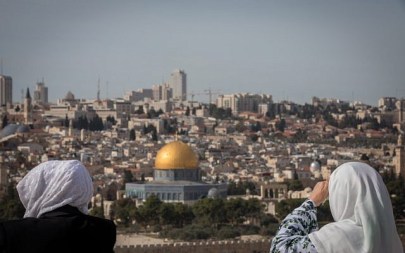
Tourists look at the view of the Dome of the Rock and the Temple Mount from the lookout of the Mount of Olives overlooking the Old city of Jerusalem, on November 28, 2018. (Yonatan Sindel/Flash90)

For decades the international community maintained that the city’s status should be negotiated between Israel and the Palestinians. Critics say declaring Jerusalem the capital of either inflames tensions and prejudges the outcome of final status peace talks.

Morrison’s mid-October announcement that he was “open-minded” to following the United States in recognizing Jerusalem as the Israeli capital, drew criticism at home. Australia’s spy agency warned the move could provoke further violent unrest in Israel, while opposition lawmakers accused the prime minister of cynically pandering to Jewish voters ahead of a crucial by-election.

The US Embassy in Jerusalem sits on a traffic circle recently named for US President Donald Trump. The compound is in the middle of Arnona, a quiet residential neighborhood in the city’s south. (Ben Sales/JTA)

Senior Palestinian official Saeb Erekat also harshly criticized the planned move, and called on Arab and Muslim countries to sever all diplomatic ties with Australia if it changed its policy on Jerusalem. In a tweet Tuesday morning Erekat said that various Arab and Muslim summits have adopted resolutions committing to ending diplomatic ties with any country that recognizes Jerusalem as belonging to Israel.

Recognizing Jerusalem is expected to help the embattled Australian PM — who faces the prospect of an election drubbing next year — with Jewish and conservative Christian voters and win him friends in the White House.

His supporters argue Israel has the right to choose its own capital and peace talks are dead in the water, so there is no peace to prejudge.

But the move still risks heightening unrest, not least in Australia’s immediate neighbor and the world’s most populous Muslim nation.

Indonesia’s government, facing domestic pressure at home, had reacted angrily earlier this year, when Morrison floated the idea of both recognizing Jerusalem and moving the Australian embassy there.

The issue has put the conclusion of a bilateral trade agreement on hold.


Whoever attacks Israel will ‘pay with his life’ – TV7 Israel News 14.12.18 

Posted December 15, 2018 by Joseph Wouk
Categories: Uncategorized


Israel’s challenges from its northern frontier- Jerusalem Studio 382

Posted December 15, 2018 by Joseph Wouk
Categories: Uncategorized


Thousands attend funerals of soldiers killed in West Bank attack

Posted December 14, 2018 by Joseph Wouk
Categories: Uncategorized

Source: Thousands attend funerals of soldiers killed in West Bank attack | The Times of Israel

Yosef Cohen eulogized by stepfather as a ‘great, holy, pure child’; Yovel Mor Yosef hailed for giving up basketball dreams to serve in religious combat unit

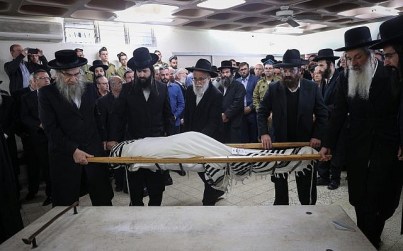
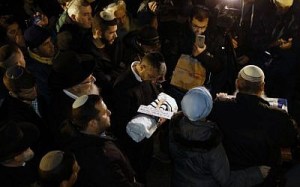
Friends and relatives of Sgt. Yosef Cohen mourn during his funeral in Jerusalem on December 14, 2018, a day after he was killed in a West Bank terror shooting. (Ahmad Gharabli/AFP)

The two Israeli soldiers killed in Thursday’s terror shooting in the central West Bank were buried on Friday, solemnly and fondly remembered by their families, friends and commanders.

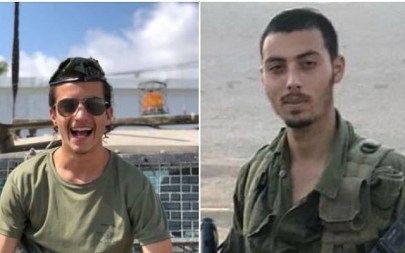
Sgt. Yosef Cohen and Staff Sgt. Yovel Mor Yosef were members of the Kfir Brigade’s Netzah Yehuda infantry battalion, a unit for ultra-Orthodox soldiers.

Mor Yosef and Cohen were posthumously promoted from the ranks of sergeant and corporal, respectively, after a Palestinian shot them dead in the attack outside the Givat Assaf outpost. A third soldier was critically injured in the shooting, and a civilian woman was seriously wounded although her condition was improving Friday.

Cohen’s funeral began at the Shamgar funeral home in Jerusalem, where hundreds of people mourned the 19-year-old resident of Beit Shemesh, including Deputy Defense Minister Eli Ben Dahan (Jewish Home), MKs Moti Yogev (Jewish Home) and Oren Hazan (Likud), and Jerusalem Mayor Moshe Lion.

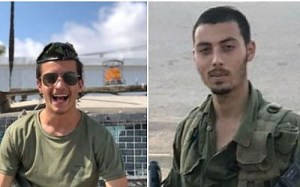
A photo composite shows Sgt. Yosef Cohen (L) and Staff. Sgt Yovel Mor Yosef of the Israel Defense Forces’ Kfir Brigade. The two were killed on December 13, 2018, in a terrorist shooting attack outside the Givat Assaf settlement outpost in the central West Bank. (Israel Defense Forces)

“Yosef, sweet child, righteous child, I never believed we would come to this moment,” Cohen’s stepfather, Rabbi Eliyahu Merav, said in his tearful eulogy. “For years I raised you, you great, holy, pure child… full of love, giving and soul.”

Cohen’s father, Eitan, had died when he was young, and his mother — who like other women didn’t speak at the funeral in accordance with ultra-Orthodox custom — married Merav.

“Dear Eitan, are you happy with your dear child, now? Are you dancing with him up there?” Merav addressed Cohen’s late father.

Cohen was buried at a section of the Mount of Olives cemetery for Bratslav Hasidim.

Friends and family members mourn during the funeral of IDF soldier Yosef Cohen, killed in a West Bank shooting terror attack, at the Shamgar funeral home in Jerusalem on December 14, 2018. (Yonatan Sindel/Flash90)

Mor Yosef’s funeral was held at the military cemetery in his home town of Ashkelon in the south.

Some 2,000 people came to pay their respects to the 20-year-old, who was supposed to return home Thursday morning but volunteered to remain with his unit to give other soldiers time off.

The commander of the Kfir Brigade, Col. Zion Ratzon, said he had learned of Mor Yosef’s love of basketball from his friends and commanders. “As a teenager you were a basketball player, you gave up that dream to have a meaningful service as a combat fighter in the Israel Defense Forces,” he said.

“Your friends told me about a special person, who viewed helping the other as a top priority,” Ratzon added. “You were a modest and quiet person, with a good heart. Loved by all your friends. Your premature departure has left a huge gap in our hearts, a gap that we can never mend.”

“Yovel, our dear soldier, you fell in the defense of our country, our families, your friends,” said Mor Yosef’s cousin, Uri Slav. “Your extensive knowledge of Torah and musical tunes always surprised me.

“I will miss the conversations with you, the laughs, the talks about NBA,” he added. “You were the pillar of the family with your great help in the family. In family events, I saw all the kids looking at you with adoration, including my daughter. You were always with a big smile. You will be forever missed by all of us. Rest in peace, I love you.”

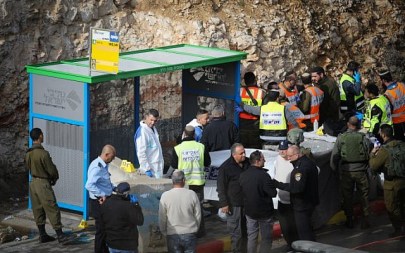
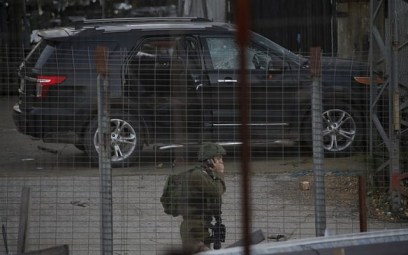
Israeli soldiers, medical officials and police inspect the scene of a terrorist shooting attack near Givat Assaf, in the central West Bank, on December 13, 2018. (Hadas Parush/Flash90)

Thursday’s shooting came after a number of recent terror attacks, including a drive-by shooting Sunday outside the Ofra settlement in which seven Israelis were injured. Among the wounded was a pregnant woman whose baby was delivered by an emergency C-section but died on Wednesday.

Also Thursday, Border Police shot and killed a Palestinian in Jerusalem’s Old City who stabbed two officers, lightly wounding them.

The army said another Palestinian tried to ram his car into soldiers outside Ramallah, though defense officials told Channel 10 news it appeared not to have been an attack. The Palestinian driver was shot dead by Israeli troops.

On Friday, a Palestinian assailant assaulted a soldier at an army post outside the Beit El settlement in the central West Bank, stabbing him and bashing him with a rock in the head before fleeing, prompting a manhunt. The 21-year-old soldier was taken to Jerusalem’s Hadassah Hospital Ein Kerem in serious condition.

The serviceman was unconscious and hooked up to a ventilator. Doctors said he was in life-threatening condition.

The West Bank has seen an increase in the number of attacks on Israeli civilians and soldiers in recent weeks, after months of relative calm in the area, raising concerns of a potential renewed outbreak of regular, serious violence in the region.

The military blamed the increase in attacks both on the Hamas terror groups’ ongoing efforts, the “copycat” phenomenon and a number of significant dates coming up this week, notably the anniversary of the Hamas’ founding.

Alexander Fulbright, Judah Ari Gross and Adam Rasgon contributed to the report.


Iran expert: Deterring Iran in Syria key, but still far from attack 

Posted December 14, 2018 by Joseph Wouk
Categories: Uncategorized

Source: Iran expert: Deterring Iran in Syria key, but still far from attack – Middle East – Jerusalem Post

INSS Arms Control Director Emily Landau said that clandestine and cyber operations in the Islamic Republic itself were other ways to try to alter Iranian behavior.

BY YONAH JEREMY BOB
 DECEMBER 14, 2018 03:41
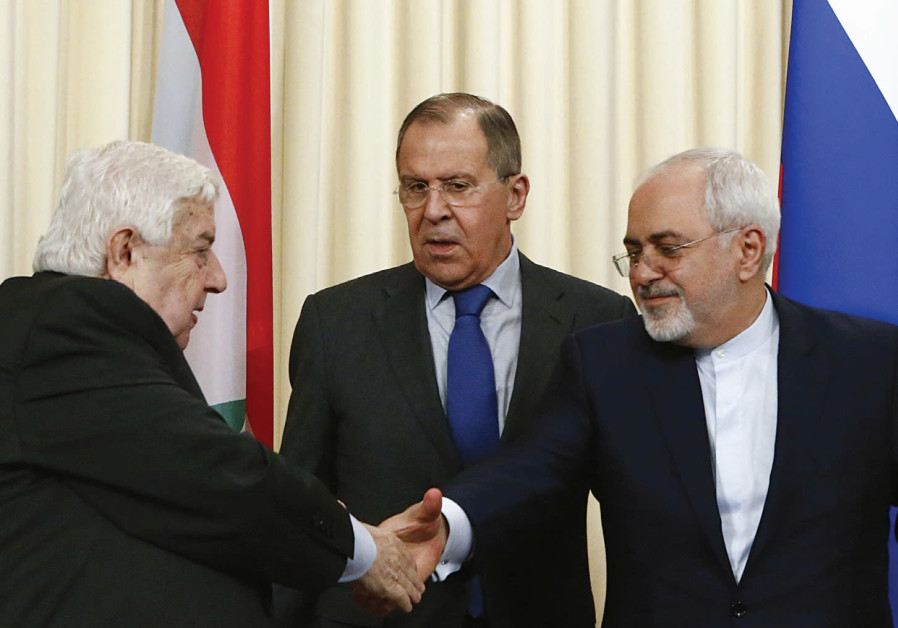
FOREIGN MINISTERS Sergei Lavrov (C) of Russia, Walid al-Muallem (L) of Syria and Mohammad Javad Zari

An Iran expert told The Jerusalem Post that deterring Iran with military force in Syria should continue, but not to expect open attacks on Iranian soil despite public statements on the issue by Prime Minister Benjamin Netanyahu on Wednesday.

INSS Arms Control Director Emily Landau also told the Post on Thursday that clandestine and cyber operations in the Islamic Republic itself were other ways to try to alter Iranian behavior.

In response to a question at a press conference with foreign media on Wednesday about whether he would engage Iran inside its territory, Netanyahu said he would not rule out acting militarily inside Iran’s borders if necessary for Israeli security.

“I’m not ruling out doing anything we need to defend ourselves. For the moment, Israel is the only military in the world that is directly engaging Iranian forces. We are doing that in Syria and pulling them back,” he said.

Landau said that the prime minister’s “statements are far from precise and in response to a question: Will Israel do what it needs to do to ensure its survival?”

“According to foreign sources, Israel has already acted within Iran,” she said in noting targeted killings of Iranian nuclear scientists mostly during the era of then-Mossad director Meir Dagan 2002-2011 and “when the Israeli Mossad took action in January [2018] and took out [Iran’s] nuclear files.”

Regarding clandestine actions against the Islamic Republic within its territory, she said that the Mossad’s appropriation of Iran’s nuclear files had been more effective than the assassinations of nuclear scientists.

She said a less noticed positive aspect of the operation to obtain Iran’s nuclear files was that it also rattled Iran about what Israel was capable of doing deep in Iranian territory, without it even knowing, if a conflict did escalate.

Moreover, she said that there could be Israeli cyber operations “going on all of the time where we are not necessarily aware of – that is a direct Israeli involvement in Iran that can be effective.”

Under Dagan, Israel and the US reportedly infected a range of systems relating to Iran’s nuclear program with a virus called Stuxnet which caused the program massive damage.

However, she said, “If you are talking about actual military attacks in Iran, I don’t see that on the horizon. Probably Israel will continue to take action [against Iranian interests] in Syria as it has been doing.”

Despite that conclusion, Landau did note that the prime minister’s statement could reflect concern that, “Iran is moving military power closer to Israel’s border…threatens Israel with destruction and has the advantage of no retaliation [by Israel] in Iran. This creates an equation that is not an equal equation, because attacks only take place in Syria even if Iranian assets are targeted.”

But again, she said she would not attribute to the prime minister’s statement an intent to fundamentally shift that unequal paradigm as much as frustration with it.

Given that hundreds of air strikes have not stopped Iran from continuing to try to build a presence in Syria, could Landau see it making sense for Israel to undertake some tailored attacks on small and unimportant Iranian military targets far from its power centers as a way of messaging to Tehran that the price in Syria could escalate?

She responded, “It would be viewed as a serious escalation… with unpredictable consequences… and I don’t think Israel is in that place… Even though that might be ‘unfair’ as to the equation Iran has created. But it created this unequal unbalanced equation a long time ago through its proxies Hezbollah and Hamas and Israel has been living with it for a long time.”

To move the warfare to Iran would also create logistical issues,” she added.

In any event, she found it unlikely since even in the 2010-2012 period when there was a debate about if Israel might need to undertake a tailored attack against only Iran’s nuclear facilities to prevent a nuclear threat – which she called a much more serious threat – the government still held its fire.

Landau was also not interested in defining an escalation point by Iran in Syria against Israel which might justify an Israeli retaliation against Iran itself.

However, when repeatedly pressed she said that possibly such a retaliation might make sense if Israel was already in an actual war with Hezbollah and Iran became more directly involved in some way.


The bad and good about the U.N. vote on Hamas 

Posted December 14, 2018 by Joseph Wouk
Categories: Uncategorized

Source: The bad and good about the U.N. vote on Hamas – Arab-Israeli Conflict – Jerusalem Post

Netanyahu came out and spoke once again about how Israel’s ties with the world are booming.

BY HERB KEINON
 DECEMBER 13, 2018 18:41
The bad and good about the U.N. vote on Hamas

Israel’s flourishing relationship with the world is a topic Prime Minister Benjamin Netanyahu loves to talk about, and a presentation he gives over and over and over at conferences, to groups, and with visiting dignitaries.

He did it again on Wednesday evening, at the annual end-of-the-year reception the Government Press Organization holds in his presence for foreign journalists, held this year at the Shalva National Center in Jerusalem.

After Bat-El Papua gave an inspirational presentation on growing up as a person of short stature, after Miri Mesika sang four songs, and a band from Shalva – an organization dedicated to the care and inclusion of persons with disabilities – lifted the spirits with a rendition of “Hallelujah,” Netanyahu came out and spoke once again about how Israel’s ties with the world are booming.

Accompanied by one slide of the Middle East showing Iran and Islamic State’s penetration, another map showing countries with which Israel has signed agreements, and a third with a graph highlighting the percentage of global cybersecurity investment in Israel, Netanyahu discussed how the world’s thirst for security and technology has led country after country to Israel’s door.

Netanyahu said he has traveled to Africa three times in two years, Japan has increased its investment in Israel enormously, and numerous Middle East countries – the cherry on top – all want cooperation with the Jewish state.

And it’s all true. But what he left out is that some of those countries that benefit so heavily from Israel’s security intelligence, arms and technology still are unable to cast their votes for Israel in key votes in international forums.

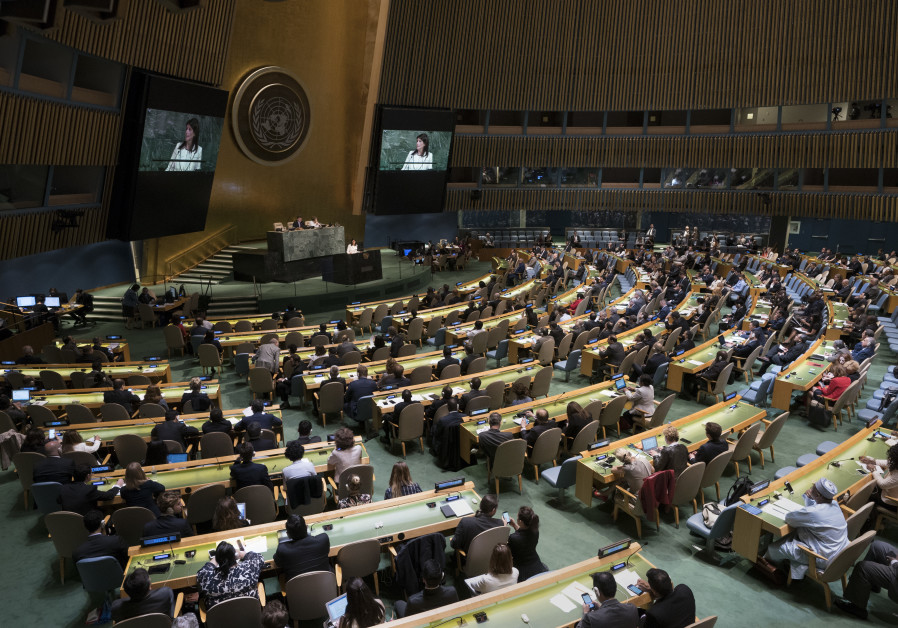
TAKE, FOR example, last week’s vote at the UN on an American-sponsored anti-Hamas resolution. Although mustering a huge majority – 87-57 – the resolution fell nine votes short of the two-thirds majority the Palestinians and their allies made sure was needed for it to be adopted by the UN General Assembly. The two-thirds majority was needed because of a procedural motion Bolivia sprung on the body minutes before it was to vote on the anti-Hamas measure.

That motion passed by only three votes – 75-72 – meaning that had two countries flipped their votes, or if four countries that abstained had voted against the measure, there would have been no reason for a two-thirds majority, and the anti-Hamas resolution would have passed.

And here’s where things get dicey for Netanyahu’s narrative about the flourishing of ties. Among those that voted for the two-thirds majority were countries on which Netanyahu has expended a great deal of time and energy, countries such as Argentina and Brazil, Ethiopia, Japan and Guatemala.

Richard Schifter, a former US diplomat who served in a number of roles in the UN, said that some of those votes could be explained. For instance, he said that Guatemalan President Jimmy Morales explained afterward that his country’s vote was simply improperly cast.

Schifter, the founder of the American Jewish International Relations Institute – a group established to monitor, track and combat anti-Israel voting patterns at the UN – said a number of ambassadors had received direction from their capitals to vote for the Hamas measure, but were not given instructions on how to vote on the motion for a two-thirds majority, since that came up at the last minute.

He said this explains Brazil’s vote. That country’s President-elect Jair Bolsonaro has said he is going to upgrade and improve his country’s relations with Israel, and Brasilia instructed its ambassador to vote for the anti-Hamas measure. But when the two-thirds procedure vote was sprung, Schifter said, the Brazilian ambassador had no instructions, and decided on his own “to adhere to the old line.”

THERE ARE are a number of ways to look at the UN vote. On the one hand it could be seen as yet another loss for Israel and the US in the world body, since in the final analysis the resolution was not adopted.

Following the Sunday evening terrorist attack at Ofra, US Ambassador David Friedman stressed that the UN failed to pass the resolution. “Hamas calls the shooters “heroic” – yes, the same #Hamas that the @UN could not resolve to condemn last week,” he posted on Twitter.

On the other hand, the vote could also be seen as a victory, since for the first time a majority of countries voted against the Palestinians on their “home court” in the UN, something that has always seemed unthinkable.

Granted, the measure did not get the two-thirds majority of those that cast nay or yea votes to become a bona fide resolution, but 87 counties voted for it, and only 57 – or about 30% of the UN member states – opposed. That sends a message.

Interestingly, Israel took a fairly low profile on the vote after it was over. Netanyahu praised the 87 countries who voted for it, as did Ambassador to the UN Danny Danon. But that was about it. For instance, Netanyahu didn’t mention it in his presentation before the journalists on Israel’s flourishing ties with the world.

Moreover, no Foreign Ministry official would speak on record afterward to dissect the vote.

There are likely two reasons for this: firstly, Foreign Ministry officials very rarely want to single out specific countries on the record, worried that this could have negative diplomatic ramifications down the road.

And secondly, the ministry doesn’t want to give UN General Assembly resolutions more significance or weight than they deserve.

Because if Israel trumpets the success it had in a GA resolution against Hamas, how will it then be able to say that the hundreds of resolutions passed against it by that same body are meaningless. So better off to ignore it altogether.

In Schifter’s mind, much of the credit for getting 87 countries to condemn Hamas goes to the US.

“This has to do with the very active campaign under the leadership of [US Ambassador] Nikki Haley,” he said.

“The whole thing was her idea – she was troubled that Hamas was getting away with murder, literally, at the UN, and she really picked that issue to see if she could get something done.”

One of the keys to doing this, he said, was ensuring that the 28 European Union countries – including countries in Europe very difficult for Israel, such as Ireland, Sweden, Portugal, Spain, Luxembourg and Malta – voted for the text, something that came about because the text was negotiated with them.

The French, according to one source, were “hostile” to the resolution at the beginning, unless some changes were made. But once those changes were inserted, the consensus was guaranteed.

Though this consensus is significant, the source added, “we should not be under the illusion that this is a significant change in the government positions” of some of those EU countries toward Israel.

A LOOK AT at how countries voted on this anti-Hamas measure, compared to how the world voted nine years earlier on a resolution accepting the Goldstone Report which slammed Israel much, much harder than Hamas after Operation Cast Lead, shows how things have shifted in the UN in less than a decade.

As opposed to Thursday’s measure, which passed 87 to 57, with 33 abstentions and 16 countries not voting, the resolution accepting the Goldstone Report in November 2009 passed by 114 to 18, with 44 abstentions and 16 countries not voting.

A look at the five regional groups shows that the biggest shift came in the Group of Latin America and Caribbean Countries, where of the 33 countries, 26 – or 79% – changed their votes in a positive direction toward Israel. This region has been one of the main areas of Netanyahu’s diplomatic outreach.

Fully 14 of these countries – including Brazil, Argentina, Chile and Mexico – went from voting against Israel to voting for it. Another three countries – such as Colombia – which abstained last time, voted with Israel last week.

Another group that showed a considerable improvement was the 29-member Western European and Others Group, where 76% of the countries moved in Israel’s direction – largely because of the EU decision to vote as one for it. Eighteen countries that abstained in 2009 voted for Israel this time, and four countries – Ireland, Portugal, Switzerland and Malta – that voted against Israel in 2009 flipped their votes this time.

In the Eastern European Group some 60% of the countries voted more favorably for Israel than in the past, again largely because of the EU consensus on the matter. The negative exception was Russia, which in 2009 abstained on the Goldstone measure, but voted against the anti-Hamas resolution. One diplomatic source said this could be related to the incident involving the downing of the Russian spy plane in Syria in September.

In Africa, 17 of the continent’s 44 non-Arab League states shifted their voting for the better. All 22 Arab League states – including the Persian Gulf countries now warming toward Israel – voted against condemning Hamas. One senior Israeli diplomatic official said Israel had hoped at least one of them would simply not vote, something that would have sent a message.

Seven African countries – Rwanda, South Sudan, Eritrea, Malawi, Liberia, Lesotho and Cape Verde – supported the resolution, while 10 abstained and another 10 did not vote. Among those that abstained, however, there are a number of disappointments, especially Ethiopia, Kenya and Uganda. And perhaps the biggest negative surprise was Togo, a country that was set to host an African-Israel summit last year, until it was canceled at the last minute, and whose foreign minister is considered very close to Israel. Togo did not show up for last week’s vote.

The region with the smallest percentage of positive movement was the Asian-Pacific Group, where only one-third of the countries shifted their votes in Israel’s direction. But among those were two that stand out – Singapore, which moved from voting against Israel to voting for it, and Mongolia, which moved from voting against to abstaining.

The Asia-Pacific Group includes three countries that in 2017 were the biggest markets for Israeli arms: India, Azerbaijan and Vietnam. While India abstained – a continued reflection of a change in the way India has moved from reflexively voting against Israel for decades to now abstaining or even voting in favor – Azerbaijan and Vietnam voted against.

Their votes, according to one source, illustrate the complexity of relationships, and how voting patterns are just one part of a much bigger picture.

Regarding Azerbaijan, which is a strategic Muslim-majority country that has close ties with Israel, the source said Baku was telling Jerusalem, “‘We are going to work with you 99% on intelligence cooperation and defense deals, but give us this 1% because we still have a street we have to deal with, a neighborhood we live in, and organizations – such as the Non-Aligned Movement and the Organization of Islamic Cooperation – that we belong to.”

The same argument is true of Vietnam. There, the source said, defense deals are booming, trade reached over $1 billion in 2016, so a number of boxes have been checked. But the voting pattern is one box that is still empty.

“Our expectations need to be in check,” he said “Change is glacial, and won’t happen at the speed we like.”

Still, as any interpretation of last week’s vote showed, change is taking place – maybe not with everyone or as much as might be expected, but it is happening.
 

Israel continues manhunt, braces for violence as Hamas calls for ‘day of rage’

Posted December 14, 2018 by Joseph Wouk
Categories: Uncategorized

Source: Israel continues manhunt, braces for violence as Hamas calls for ‘day of rage’ | The Times of Israel

Army arrests 40 Palestinians in West Bank raids overnight during searches for terrorists behind Thursday’s deadly shooting, seeks to prevent ‘copycat’ attacks

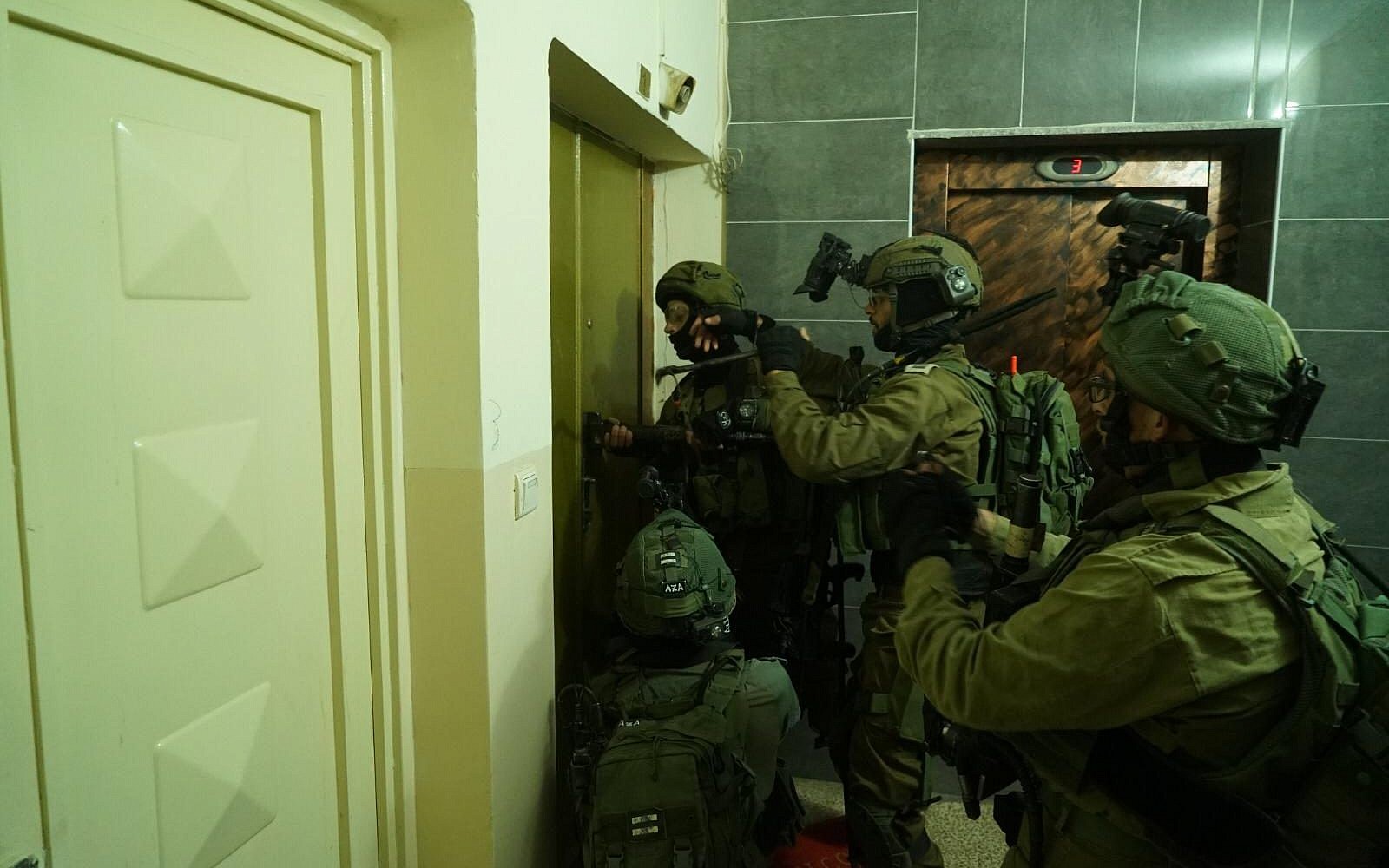
Israeli soldiers carry out searches for terror suspects in the West Bank on December 14, 2018. (Israel Defense Forces)

As Israel continued its manhunt Friday for the gunmen who killed two soldiers in the central West Bank, security forces readied for possible further violence as the Palestinian terror group Hamas called for a “day of rage” to mark the anniversary of its founding.

On Thursday, a Palestinian opened fire at a bus stop outside the Givat Assaf settlement outpost in the West Bank and killed Sgt. Yovel Mor Yosef, 20, and Cpl. Yosef Cohen, 19, while another soldier and civilian were wounded.

Troops searched for the terrorists overnight in the Palestinian city of Ramallah, the Israel Defense Forces said.

Soldiers arrested 40 Palestinians throughout the West Bank suspected of involvement in terror and rioting, 37 of whom the IDF said were known Hamas operatives.

“The IDF will continue to act to thwart terrorism and maintain security in the area,” the army said in a statement.

Israeli soldiers carry out searches for terror suspects in the West Bank on December 14, 2018. (Israel Defense Forces)

A senior Israel Defense Forces commander indicated the same Hamas terror cell was responsible for Thursday’s attack in addition to a shooting that wounded seven Israelis outside the Ofra settlement on Sunday night that led to the death of a baby boy who was delivered prematurely after his mother was critically hurt in the attack.

IDF Central Command chief Maj. Gen. Nadav Padan vowed the military would hunt down the terrorists, some of whom remain on the run.

The Kan public broadcaster reported that an IDF soldier’s rifle was snatched by the Palestinian gunmen during Thursday’s shooting attack.

A photo composite shows Sgt. Yosef Cohen (L) and Staff. Sgt Yoval Mor Yosef of the Israel Defense Forces’ Kfir Brigade. The two were killed on December 13, 2018, in a terrorist shooting attack outside the Givat Assaf settlement outpost in the central West Bank. (Israel Defense Forces)

Following the latest attack, Prime Minister Benjamin Netanyahu — who also serves as defense minister — beefed up troop levels across the West Bank, ordered detentions of Hamas activists and called for demolishing the homes of attackers within 48 hours.

Netanyahu has said he would “settle accounts” with the attackers, while Palestinian Authority President Mahmoud Abbas held Israel responsible for what he said was a violent environment.

Netanyahu also said he would legalize thousands of existing West Bank settlement homes whose status was in question, and ordered his attorney general to make arrangements for construction of 82 news homes in Ofra, the scene of one of this week’s attacks.

“Our guiding principle is that whoever attacks us and whoever tries to attack us will pay with his life,” Netanyahu said at a military ceremony.

In the wake of Thursday’s shooting, Israel set up checkpoints on the outskirts of the West Bank city of Ramallah, searching cars and checking the IDs of drivers entering the Palestinians’ typically quiet center of government and commerce. Some Israeli-controlled roads were completely blocked to Palestinian traffic.

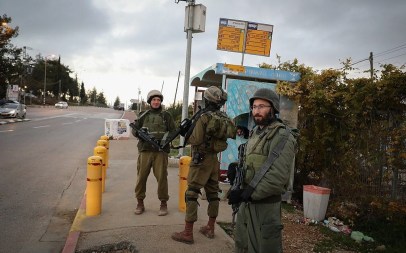
Israeli soldiers stand guard at a West Bank junction, following a terror attack earlier in the day where two Israeli soldiers were shot dead by Palestinian terrorists, December 13, 2018. (Gershon Elinson/Flash90)

Lt. Col. Jonathan Conricus, an Israeli military spokesman, said the measures were aimed at preventing “copycat” attacks. “We know that when there is one attack there may be others,” he said.

Inside Ramallah, streets were empty and shops were shuttered as the Palestinians called a general strike to protest Israel’s actions, including the killing of two wanted terrorists.

Abbas condemned the violence, criticizing both the terrorist attacks and the Israeli response, accusing Israel of creating a climate conducive to violence and alleging it was inciting against him.

“This atmosphere created by the frequent Israeli raids of the cities, and the incitement against the president and the absence of the peace hopes, led to this series of violence that both peoples are paying the price for,” he said in a statement.

Relatives of Amichai and Shira Ish-Ran attend the funeral of their baby, who was born prematurely after his mother was wounded in a terror attack outside the West Bank settlement of Ofra, at Mount of Olives ceremony in Jerusalem on December 12, 2018. (AFP)

Late Wednesday, Israel killed Salih Barghouti, one of the suspects in Sunday’s Ofra shooting.

Then overnight its forces killed Ashraf Na’alowa, wanted for killing two Israelis in a terror attack at the Barkan Industrial Zone in October.

Both men were said to have been armed.

In Jerusalem’s Old City, meanwhile, Israeli police killed a Palestinian assailant who stabbed two officers.

Late Thursday, the army said it shot and killed a Palestinian motorist in what it called an attempted car-ramming attack. Palestinians challenged the account, saying the motorist was a wealthy 60-year-old factory owner who had no incentive to carry out such an attack and had apparently panicked when he saw the soldiers.

An Israeli soldier stands next to the car of a Palestinian man who was killed in what the military said was a car-ramming attack near the West Bank city of Ramallah on December 13, 2018. (Abbas Momani/AFP)

Israeli officials accuse Hamas of being behind the recent shootings. Hamas, which controls the Gaza Strip, said that Barghouti and Naalweh both were members, but stopped short of claiming responsibility for their attacks.

There has been an increase in the number of attacks on Israeli civilians and soldiers in recent weeks, after months of relative calm in the area, raising concerns of a potential renewed outbreak of regular, serious violence in the region.

The military blamed the increase in attacks both on terror groups’ ongoing efforts, the “copycat” phenomenon and a number of significant dates coming up this week, notably the anniversary of Hamas’s founding.

The latest attacks also come amid the backdrop of months-long clashes along the Gaza border, which Israel has accused Hamas of using to carry out attacks on troops and attempt to breach the security fence. Hamas, an Islamist terror group, seeks to destroy Israel.