Iran’s Revolutionary Guard launches drill near Strait of Hormuz 

Posted December 22, 2018 by Joseph Wouk
Categories: Uncategorized

Source: Iran’s Revolutionary Guard launches drill near Strait of Hormuz | The Times of Israel

Paramilitary force answerable to Supreme Leader Khamenei begins annual combat helicopter and drone exercise day after US Navy carrier enters Persian Gulf

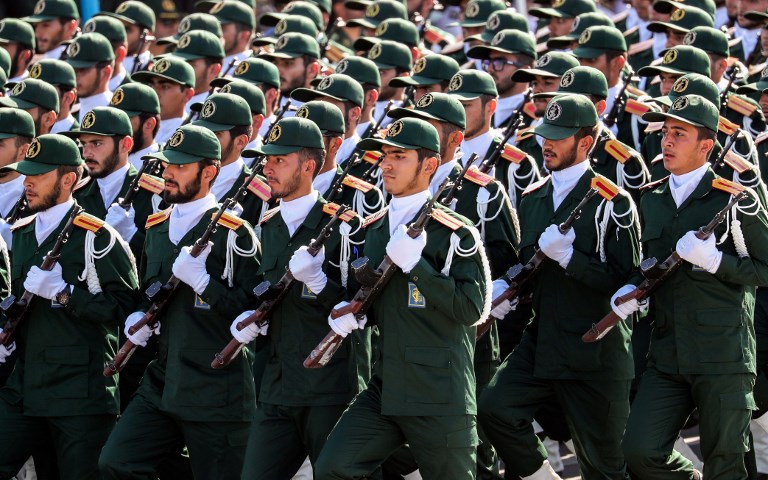
Members of Iran's Revolutionary Guard Corps (IRGC) march during the annual military parade marking the anniversary of the outbreak of the devastating 1980-1988 war with Saddam Hussein's Iraq, in the capital Tehran on September 22, 2018. (AFP/STR)

Members of Iran’s Revolutionary Guard Corps (IRGC) march during the annual military parade marking the anniversary of the outbreak of the devastating 1980-1988 war with Saddam Hussein’s Iraq, in the capital Tehran on September 22, 2018. (AFP/STR)

Iranian state TV reported that Iran’s Revolutionary Guard ground force launched a drill Saturday near the strategic Strait of Hormuz, the passageway for nearly a third of all oil traded by sea.

The report said the guard’s forces will use combat helicopters and drones around Qeshm Island at the mouth of the waterway.

The annual war game, dubbed “The Great Prophet,” came a day after the USS John C. Stennis, a US aircraft carrier, sailed into the Persian Gulf on Friday.

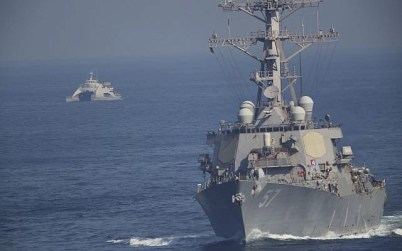
Throughout the carrier’s trip Friday, some 30 Iranian Revolution Guard vessels trailed the Stennis and its strike group. One small vessel launched what appeared to be a commercial-grade drone to film the American ships.

Embedded video

Tasnim News Agency

@Tasnimnews_EN

Photographers and videographers on the Iranian boats could clearly be seen also filming the Stennis while journalists on board the aircraft carrier filmed them.

The USS Mitscher, part of a strike group led by the USS John C. Stennis aircraft carrier, sails as an Iranian Revolutionary Guard vessel shadows it on December 21, 2018. (AP Photo/Jon Gambrell)

The strait at its narrowest point is 33 kilometers (21 miles) wide, in the waters between Iran and Oman.

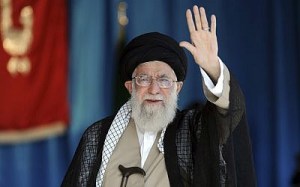
Supreme Leader Ayatollah Ali Khamenei waves to thousands of members of the Basij paramilitary organization in their gathering at the Azadi stadium in Tehran, Iran, on October 4, 2018. (Office of the Iranian Supreme Leader via AP)

Despite being so narrow and within the territorial waters of those two nations, the strait is viewed as an international transit route. American forces routinely travel through the area, despite sometimes tense encounters with the Revolutionary Guard, a paramilitary force answerable only to Supreme Leader Ayatollah Ali Khamenei.

Tensions have been high since US President Donald Trump’s May withdrawal from Iran’s nuclear deal, which saw sanctions lifted for Tehran limiting its uranium enrichment.

Iranian President Hassan Rouhani, a relative moderate within the country’s Shiite theocracy whose major achievement was the deal, has repeatedly warned any attempt to stop Iran’s export of crude oil could see it close off the strait.


Mattis said to cancel trip to Israel following resignation

Posted December 22, 2018 by Joseph Wouk
Categories: Uncategorized

Source: Mattis said to cancel trip to Israel following resignation | The Times of Israel

TV report says US defense secretary was set to hold talks with in Israel next week on Iran and Syria; senior Israeli officials said to harshly criticize Syria pullout decision

US Secretary of Defense Jim Mattis at a press conference with Prime Minister Benjamin Netanyahu (unseen) at the latter's office in Jerusalem on April 21, 2017. (Marc Israel Sellem/Pool/Flash90)

US Secretary of Defense Jim Mattis at a press conference with Prime Minister Benjamin Netanyahu (unseen) at the latter’s office in Jerusalem on April 21, 2017. (Marc Israel Sellem/Pool/Flash90)

US Defense Secretary James Mattis has cancelled a trip to Israel planned for next week after submitting his resignation in the wake of President Donald Trump’s decision to pull US forces out of Syria, Israeli television reported Friday.

Mattis’s talks in Israel had been set to focus on Iran and Syria, according to Channel 10 news.

The former marine general’s decision to resign came after Trump’s sudden announcement Wednesday that he would withdraw all American troops from Syria, saying they had completed their task of defeating the Islamic State jihadist group. That claim has been largely rejected by defense analysts and officials from around the world.

Trump’s declaration was met with profound concern in Israel, with the US presence in Syria seen as a barrier to Iran’s military efforts there.

A senior Israeli official quoted by Channel 10 said Mattis had informed Israeli leaders Trump might pull out American soldiers from Syria. It was not specified when Mattis reportedly said this.

Channel 10 news reported Wednesday that Netanyahu tried in vain to persuade Trump to change his mind, and that there was tremendous “disappointment” in Jerusalem over the pullout, which is regarded as a victory for Russia, Iran and Hezbollah.

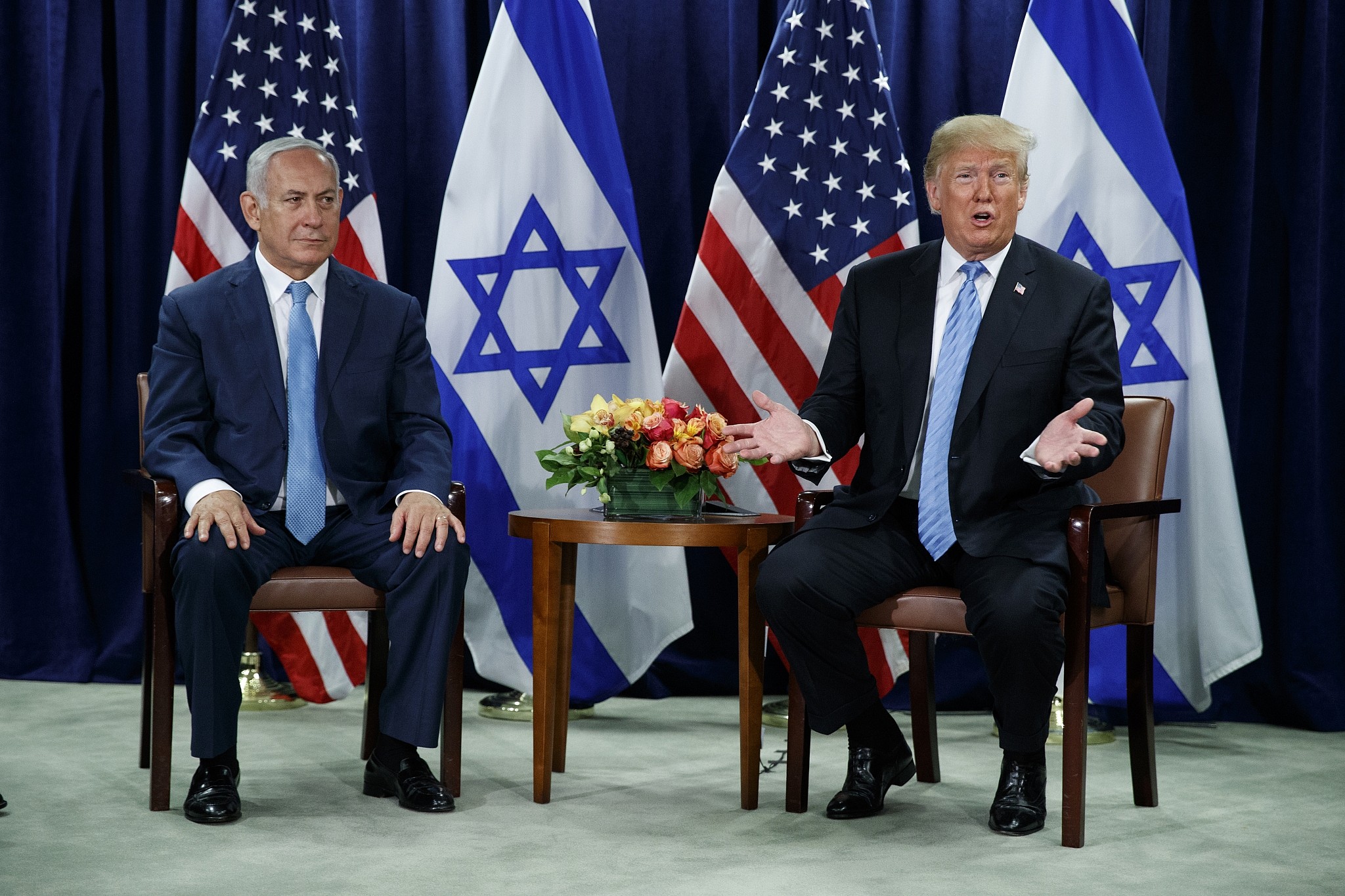
US President Donald Trump (right) and Prime Minister Benjamin Netanyahu meet at the United Nations General Assembly at UN Headquarters, on September 26, 2018. (AP Photo/Evan Vucci)

The TV report described the US move as “a slap in the face” for Israel, noting that the US presence in Syria was “the only bargaining chip” in Israel’s efforts to persuade Russia to prevent Iran deepening its entrenchment in Syria.

Though top Israeli government officials have publicly refrained from criticizing the move, Channel 10 quoted a senior diplomatic official on Friday harshly criticizing Trump’s decision.

“Trump threw us under the wheels of the semi-truck of the Russian army, the one that transfers weapons to Syria and Hezbollah,” the unnamed official said.

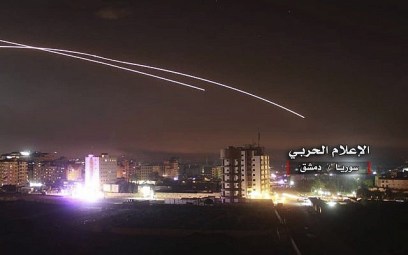
Illustrative: Missiles rise into the sky as Israeli missiles hit air defense position and other military bases, in Damascus, Syria, May 10, 2018. (Syrian Central Military Media, via AP)

Israel has repeatedly warned in recent years over Iran’s efforts to establish a military presence in Syria, where it is fighting alongside Russia and its Lebanese proxy Hezbollah on behalf of Syrian President Bashar Assad.

For Israel, the pullout leaves it without a staunch ally in the fight against Iran in Syria and also potentially opens the door for the Islamic Republic to create a so-called “land bridge” from Iran, through Iraq and Syria, into Lebanon and the Mediterranean Sea.

Until now, American troops have been stationed in northeastern Syria, along the Iraqi border, blocking such a corridor, through which Iran could more easily distribute advanced weapons and technology throughout the region, especially to its Lebanese client the Hezbollah terrorist army.

Netanyahu spoke with Trump about the drawdown from Syria on Thursday, after which his office said they discussed “ways to continue cooperation between Israel and the United States against Iranian aggression.”

In recent years Israel has carried out hundreds of airstrikes against targets linked to Iran, whose leaders have called for the destruction of the Jewish state.

Mattis went to the White House Thursday to resign after failing to persuade the president in a tense Oval Office meeting to change his decision on withdrawing troops from Syria, according to two people with knowledge of the conversation but not authorized to discuss it publicly.

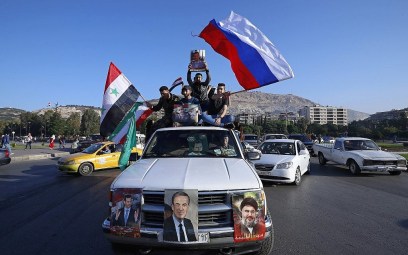
Syrian government supporters wave Syrian, Iranian and Russian flags as they chant slogans against US President Trump during demonstrations following a wave of US, British and French military strikes to punish President Bashar Assad for suspected chemical attack against civilians, in Damascus, Syria, April 14, 2018. (AP Photo/Hassan Ammar)

Though Trump has in the past said he intended to pull American troops out of Syria, Wednesday’s announcement caught many State Department and Department of Defense officials off guard.

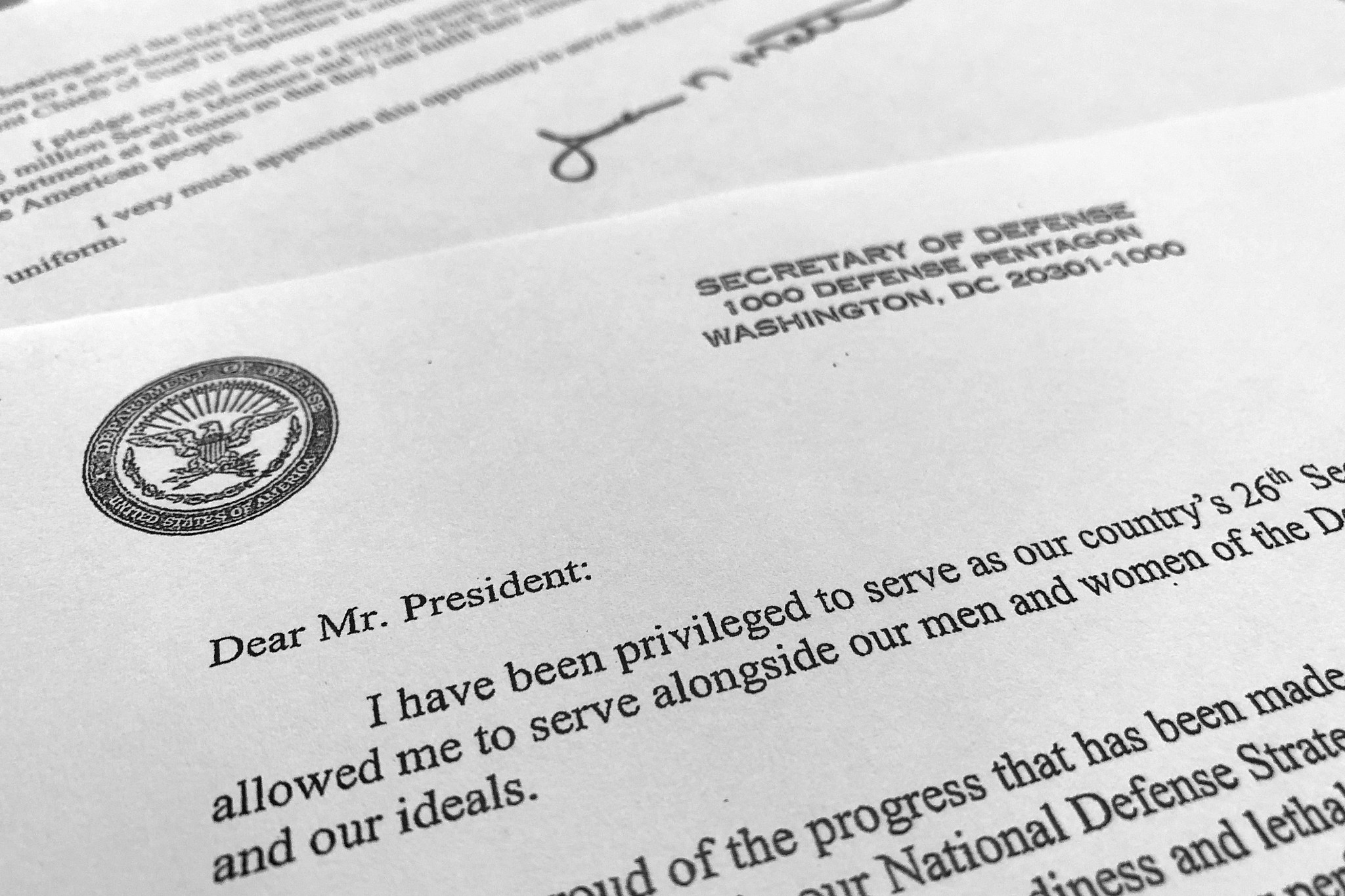
Part of Defense Secretary Jim Mattis’ resignation letter to President Donald Trump is photographed in Washington, Thursday, Dec. 20, 2018. Mattis is stepping down from his post, Trump announced, after the retired Marine general clashed with the president over a troop drawdown in Syria and Trump’s go-it-alone stance in world affairs. (AP Photo/Jon Elswick)

Many details of the plan to remove the approximately 2,000 US troops from Syria remain unclear, notably the exact timeline.

The Associated Press contributed to this report.


PM said to have rejected Russian promise to boot Iran from Syria for US pullout 

Posted December 22, 2018 by Joseph Wouk
Categories: Uncategorized

Source: PM said to have rejected Russian promise to boot Iran from Syria for US pullout | The Times of Israel

Report says Netanyahu rebuffed September offer as it would have also included halt to reimposition of American nuclear sanctions on Tehran

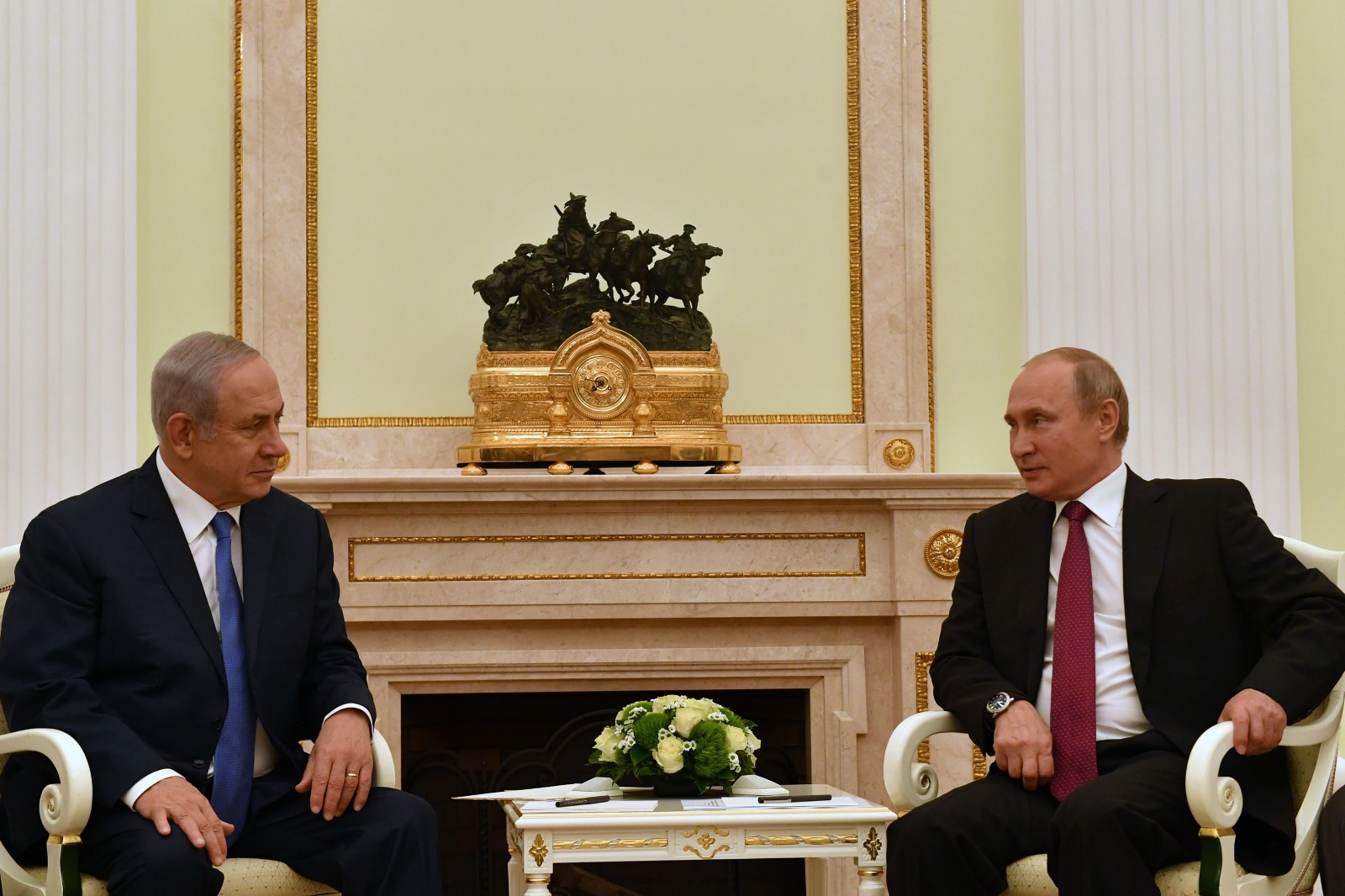
Prime Minister Benjamin Netanyahu, left, meets with Russian President Vladimir Putin in Moscow, July 11, 2018. (Israel Foreign Ministry)

Prime Minister Benjamin Netanyahu reportedly rejected a Russian proposal three months ago that would have committed Moscow to expelling Iran and its proxy forces from Syria in exchange for a withdrawal of US troops from that country.

The offer was part of a pitch Russian Security Council Secretary Nikolai Patrushev gave to his Israeli counterpart Meir Ben-Shabbat in September, and was aimed at fostering better ties between the United States and Russia through a deal on Iran and Syria, the Axios news site reportedThursday.

The proposal was however rebuffed by Netanyahu as it would have also included suspending US sanctions on Iran that took effect last month as part of US President Donald Trump’s withdrawal from the international accord meant to limit the Iranian nuclear program, the report said, quoting unnamed Israeli officials..

“For Netanyahu, stopping the Iranian nuclear program was above everything else, and this is why he refused to show any flexibility on the issue of US sanctions,” one of the officials was quoted saying.

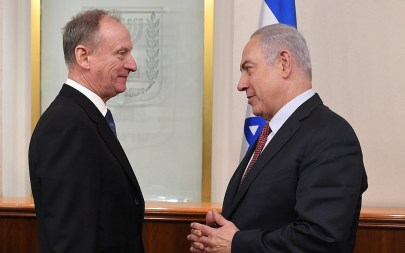
Russian Federation Security Council Secretary Nikolai Patrushev, left, meets with Prime Minister Benjamin Netanyahu in the Prime Minister’s Office in Jerusalem, February 1, 2018. (Kobi Gideon/GPO)

The report came just a day after Trump abruptly announced the withdrawal of all US troops from Syria, asserting they had accomplished their mission of defeating the Islamic State jihadist group.

The announcement sparked concerns among Israeli and US lawmakers, who saw the American presence as also helping curb Iran’s military efforts in Syria, where alongside Russia and its proxies such as Lebanon’s Hezbollah it is fighting on behalf of Syrian President Bashar Assad’s regime.

Another official quoted by Axios said if Israel had not rejected the offer, the US pullout could have also been accompanied by the withdrawal of Iranian forces from Syria.

The report said Patrushev presented the proposal to Ben-Shabbat in Moscow on September 13, just days before ties between Jerusalem and Moscow were sent into a tailspin after 15 Russian servicemen aboard a military aircraft were killed by Syrian air defenses during Israeli airstrikes in Syria.

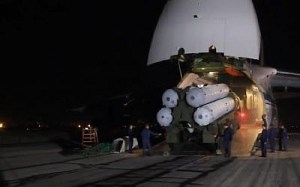
Screen capture from video showing the delivery of Russian S-300 air defense missiles to Syria. (YouTube)

Russia has blamed the Israeli military over that incident — a charge rejected by Israel — and later sent advanced S-300 air defense systems to Syria.

The deployment of the S-300s was protested by the US and Israel, which could complicate ongoing Israeli efforts to prevent Iran deepening its military presence in Syria and to thwart the transfer of weapons in Syria to Hezbollah.

Israel has carried out hundreds of airstrikes in recent years against targets linked to Iran, whose leaders have called for the destruction of the Jewish state.

Netanyahu spoke with Trump on Thursday about the US military drawdown in Syria, with his office saying they discussed “ways to continue cooperation between Israel and the United States against Iranian aggression.”

Earlier Thursday, Netanyahu said Israel would increase its activity in Syria to counter Iran’s influence and proxy militias.

Though Trump has in the past said he intended to pull American troops out of Syria, Wednesday’s announcement caught many State Department and Department of Defense officials off guard.

Many details of the plan to remove the approximately 2,000 US troops from Syria remain unclear, notably the exact timeline.

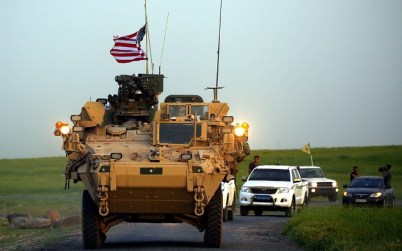
US forces, accompanied by Kurdish People’s Protection Units (YPG) fighters, drive their armored vehicles near the northern Syrian village of Darbasiyah, on the border with Turkey, April 28, 2017. (Delil Souleiman/AFP)

For Israel, the pullout leaves it without a staunch ally in the fight against Iran in Syria and potentially opens the door for the Islamic Republic to create a so-called “land bridge” from Iran, through Iraq and Syria, into Lebanon and the Mediterranean Sea.

Until now, American troops have been stationed in northeastern Syria, along the Iraqi border, blocking such a corridor, through which Iran could more easily distribute advanced weapons and technology throughout the region, especially to its Lebanese client the Hezbollah terrorist army.


US pullout strengthens Iran ‘land bridge’ to the Mediterranean

Posted December 22, 2018 by Joseph Wouk
Categories: Uncategorized

Source: US pullout strengthens Iran ‘land bridge’ to the Mediterranean | The Times of Israel

Critics say Trump has just gifted Tehran a decades-old strategic goal of a presence across Iraq, Syria and Lebanon, which Israel has vowed to oppose

This file photo provided on Friday October 20, 2017 by the government-controlled Syrian Central Military Media shows Iran's army chief of staff Maj. Gen. Mohammad Bagheri, left, looks into binoculars as he visits and other senior officers from the Iranian military on a front line in the northern province of Aleppo, Syria. (Syrian Central Military Media, via AP)

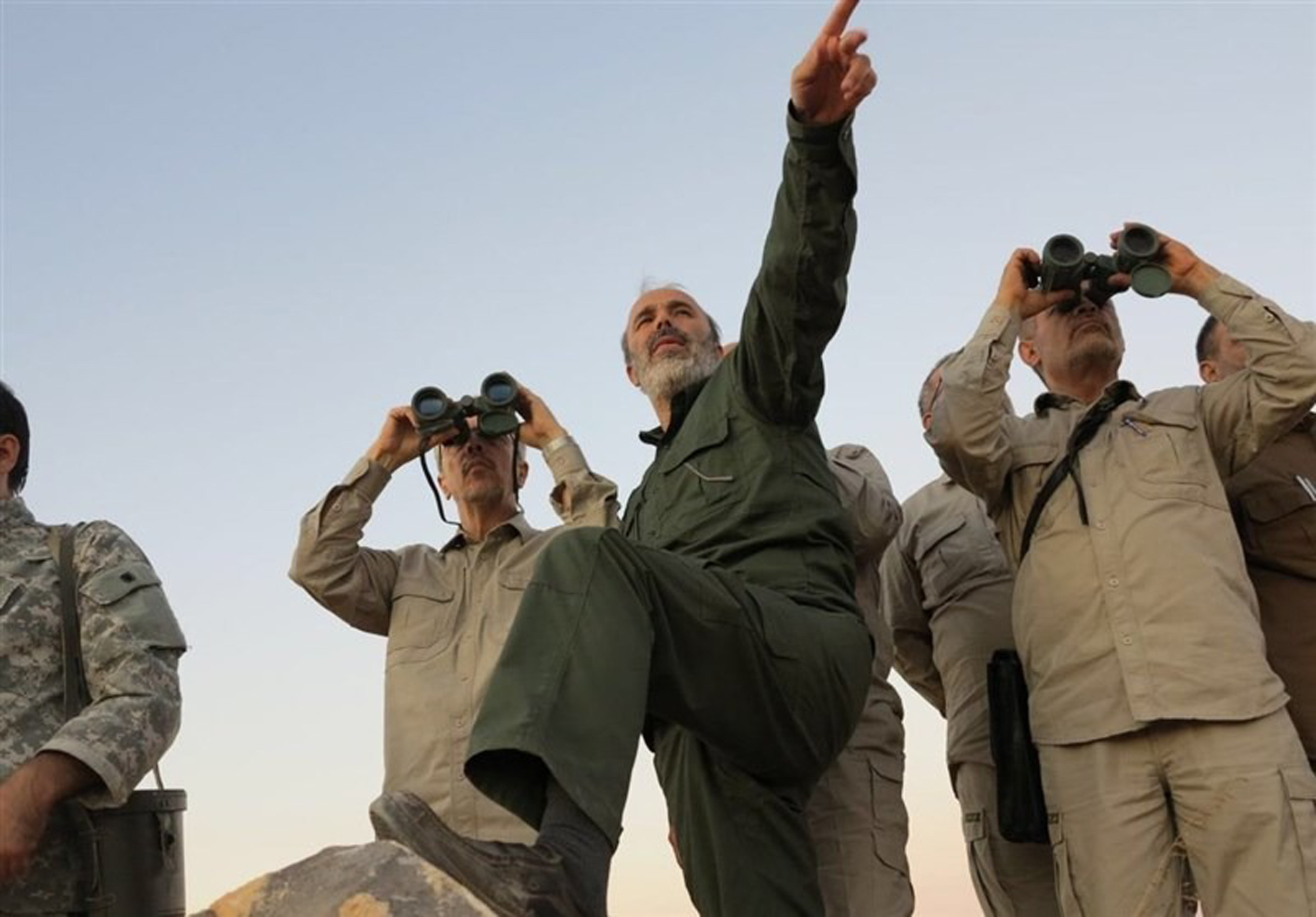
This file photo provided on Friday October 20, 2017 by the government-controlled Syrian Central Military Media shows Iran’s army chief of staff Maj. Gen. Mohammad Bagheri, left, looks into binoculars as he visits and other senior officers from the Iranian military on a front line in the northern province of Aleppo, Syria. (Syrian Central Military Media, via AP)

BEIRUT (AFP) — US President Donald Trump’s decision to withdraw US troops from Syria risks shattering a cornerstone of Washington’s Middle East policy by allowing Iran to consolidate a “land bridge” to the Mediterranean.

The much-bandied about scenario that sees Iran redrawing the regional map by entrenching a land corridor across Iraq, Syria and Lebanon is becoming a reality, analysts say.

Critics of Trump’s decision argue that for all his fiercely anti-Iranian stance, he has just gifted Tehran a decades-old strategic goal.

Trump made the shock announcement on Wednesday, saying that the troop deployment in Syria was no longer needed because the Islamic State (IS) group had been defeated.

Many in his own camp challenged that assessment and warned that such a move would abandon the ground to the United States’ main regional foe.

The top Republican and Democrat on the House Armed Services Committee even issued a rare joint statement warning against “a strategic error” that would empower “malign actors such as Russia and Iran.”

Iran has thousands of regular forces deployed across Syria in support of the regime, as well as thousands of militiamen it supports from various countries.

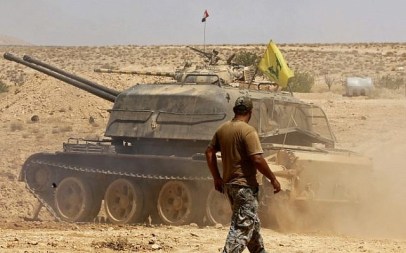
Illustrative image of a tank flying the Hezbollah terror group’s flag seen in the Qara area in Syria’s Qalamoun region on August 28, 2017 (AFP Photo/Louai Beshara)

“It is clearly a strategic victory for Tehran,” said Middle East analyst Julien Theron. “It will allow it to remove the Western buffer between Syria and Iraq.”

The United States currently has around 2,000 forces deployed in Syria in two areas along the Iraqi border that did not fully block Iranian movement but kept it in check.

Threat to Israel

One is in support of Kurdish-led forces spearheading the ongoing battle against IS jihadists east of the Euphrates River in northeastern Syria. The other is further south at the Al-Tanaf desert base, where Damascus and its allies have repeatedly said US troops had no reason to be.

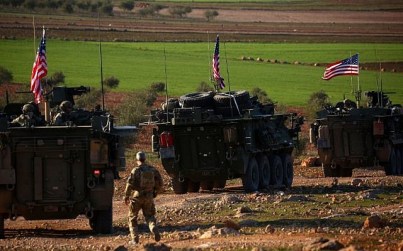
US forces armored vehicles drive near the village of Yalanli, on the western outskirts of the northern Syrian city of Manbij, on March 5, 2017. (Delil Souleiman/AFP)

US troops in Iraq and in Syria keep some level of pressure on the “Iranian land bridge,” stretching from Iran to the Mediterranean.

Syria’s government, which has recently been reclaiming control over vast swathes of territory it lost when the war broke out in 2011, is aligned with Tehran.

The government in Iraq, a regional Sunni bastion until Saddam Hussein’s fall in 2003, is Shiite-dominated and militia groups loyal to Iran play an important security role across much of the country.

One of the reasons for the White House to oppose a “land bridge” is preventing Iran from expanding its military footprint, including to positions in Syria and Lebanon near the border with US ally Israel.

“The White House should understand that a key element of its Iran policy is at stake here,” the Washington Institute said in a policy paper.

“Namely, the effort to keep Tehran from entrenching itself in Syria, establishing a land bridge to Lebanon, and directly threatening Israel,” it said.

Significant chunks of Lebanon are controlled by Hezbollah, a Shiite terror group with very close ties to Iran and a powerful military branch.

 ‘Really messy’

Hezbollah was created at Tehran’s initiative as an anti-Israeli proxy, a few years after the 1979 Islamic revolution in Iran.

Bassam Abu Abdallah, who heads the Damascus Centre for Strategic Research and is close to the government of Syrian President Bashar al-Assad, said however that the impact of the US withdrawal was being exaggerated.

US national security adviser John Bolton had previously said that US troops would remain in Syria as long as Iranian forces remained deployed there.

Abu Abdallah argued that, similarly, Iranian troops would be less needed once US forces leave.

“There is no doubt that this withdrawal will lead in the long term to a scaling down of the Iranian military presence,” he said.

“But for now the conditions are not yet there for an easing of the military deployment,” he added.

Aaron Lund, an analyst at the Century Foundation, said however that it was too early to say who would fill the security vacuum left behind by the Americans.

“I think we’ll have to wait and see what happens, how quickly and completely the United States withdraws and who fills the void,” he said.

“It could get really messy,” Lund said.


Iran says US troops’ presence in Syria is ‘a primary source of regional tension’ 

Posted December 22, 2018 by Joseph Wouk
Categories: Uncategorized

Source: Iran says US troops’ presence in Syria is ‘a primary source of regional tension’ | The Times of Israel

In first official reaction to Trump’s announcement of a military recall, Tehran says it was ‘wrong and illogical’ from the start for American soldiers to be there

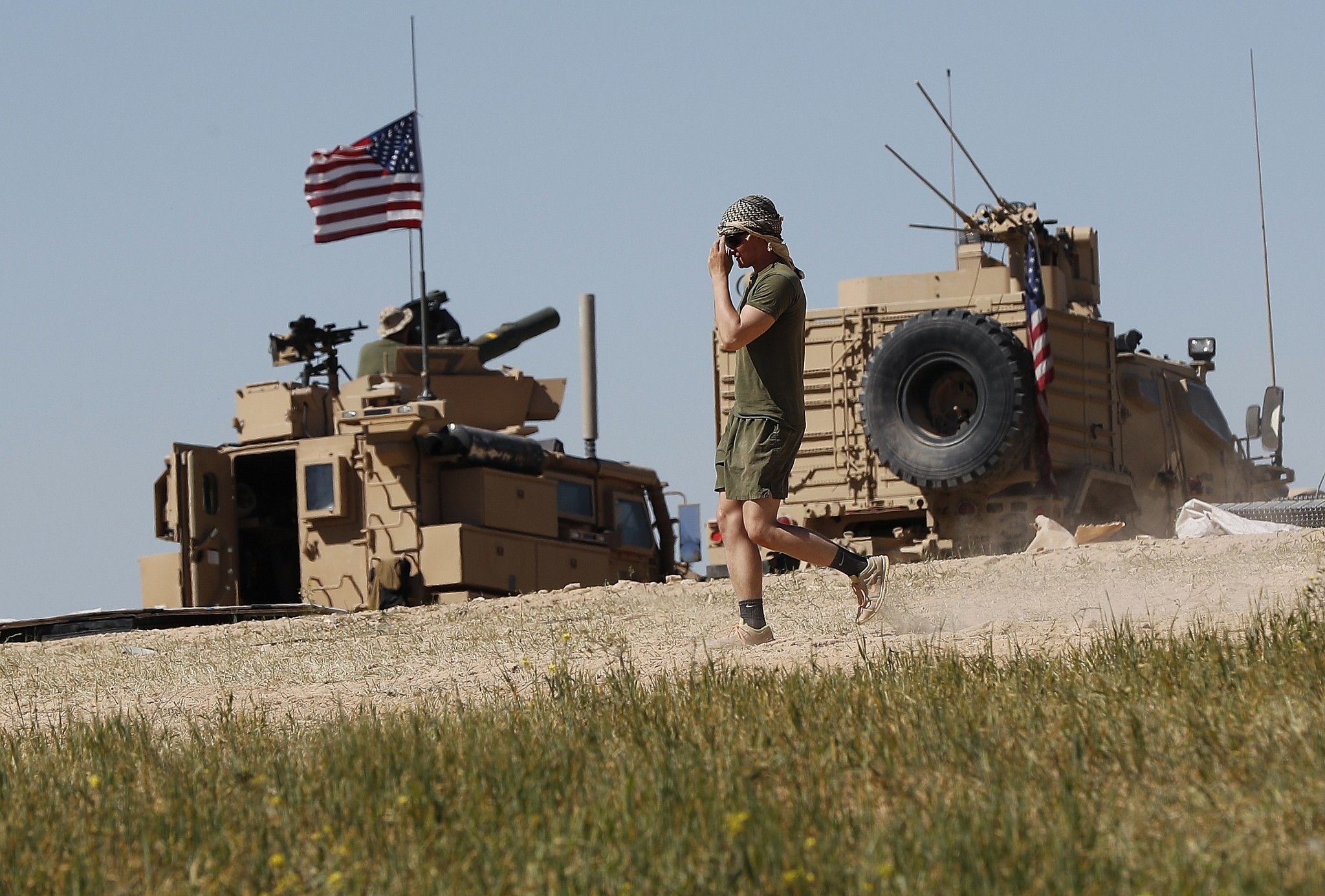
A US soldier walks on a newly installed position, near the tense front line between the US-backed Syrian Manbij Military Council and the Turkish-backed fighters, in Manbij, north Syria, April 4, 2018. (AP/Hussein Malla)

A US soldier walks on a newly installed position, near the tense front line between the US-backed Syrian Manbij Military Council and the Turkish-backed fighters, in Manbij, north Syria, April 4, 2018. (AP/Hussein Malla)

Iran said Saturday the US presence in Syria had been “wrong and illogical” from the start and was a major cause of tension in the Middle East, in its first official reaction to US President Donald Trump’s decision to withdraw troops.

“The presence of American forces was from the very start, in principle, a wrong and illogical move and a primary cause of instability and insecurity in the region,” said foreign ministry spokesman Bahram Ghasemi on his Telegram channel.

On Wednesday, the White House shocked the world — and its own defense and foreign policy officials — by declaring that the US had fulfilled its mission in Syria of defeating the Islamic State terror group and was therefore planning to remove its troops from the country. Defense analysts and officials from around the world largely rejected the claim that IS had been defeated, citing the terror group’s thousands of fighters still operating inside Syria despite its territorial losses.

Israel’s Channel 10 news reported that Prime Minister Benjamin Netanyahu tried in vain to persuade Trump to change his mind, and that there was tremendous “disappointment” in Jerusalem over the pullout, which is regarded as a victory for Russia, Iran and Hezbollah.

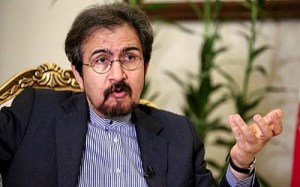
Bahram Ghasemi, Iran’s foreign ministry spokesman, gives an interview with AFP in the capital Tehran on October 2, 2018. (AFP Photo/Atta Kenare)

The TV report described the US move as “a slap in the face” for Israel, noting that the US presence in Syria was “the only bargaining chip” in Israel’s efforts to persuade Russia to prevent Iran deepening its entrenchment in Syria.

In April, two US officials told The Associated Press that a phone call at the time between Trump and Netanyahu grew tense over Israeli objections to US plans to leave Syria within six months.

Though Trump has in the past said he intended to pull American troops out of Syria, Wednesday’s announcement caught many State Department and Department of Defense officials off guard.

Many details of the plan to remove the approximately 2,000 US troops from Syria remain unclear, notably the exact timeline.

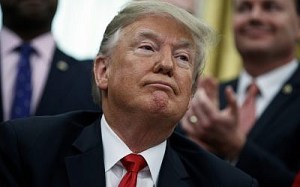
President Donald Trump speaks during a signing ceremony for criminal justice reform legislation in the Oval Office of the White House, Friday, December 21, 2018, in Washington. (AP Photo/Evan Vucci)

For Israel, the pullout leaves it without a staunch ally in the fight against Iran in Syria and potentially opens the door for the Islamic Republic to create a so-called “land bridge” from Iran, through Iraq and Syria, into Lebanon and the Mediterranean Sea.

Until now, American troops have been stationed in northeastern Syria, along the Iraqi border, blocking such a corridor, through which Iran could more easily distribute advanced weapons and technology throughout the region, especially to its Lebanese client the Hezbollah terrorist army.

Israel has repeatedly vowed to prevent Iran establishing a permanent presence in Syria and Lebanon and has carried out hundreds of airstrikes in recent years against Iran-backed forces and attempts to smuggle advanced weapons to Hezbollah.

Agencies contributed to this report.


Israel to escalate efforts against Iran on all fronts – TV7 Israel News 21 12 18

Posted December 22, 2018 by Joseph Wouk
Categories: Uncategorized


(2) U.S. military to withdraw from Syria, despite Israeli objection – TV7 Israel News 20.12.18 

Posted December 21, 2018 by Joseph Wouk
Categories: Uncategorized

Trump on Syria: ‘Does the US want to be the policeman of the Middle East? 

Posted December 21, 2018 by Joseph Wouk
Categories: Uncategorized

Source: Trump on Syria: ‘Does the US want to be the policeman of the Middle East? – Middle East – Jerusalem Post

“Getting out of Syria was no surprise. I’ve been campaigning on it for years.”

BY TOVAH LAZAROFF
 DECEMBER 20, 2018 14:41
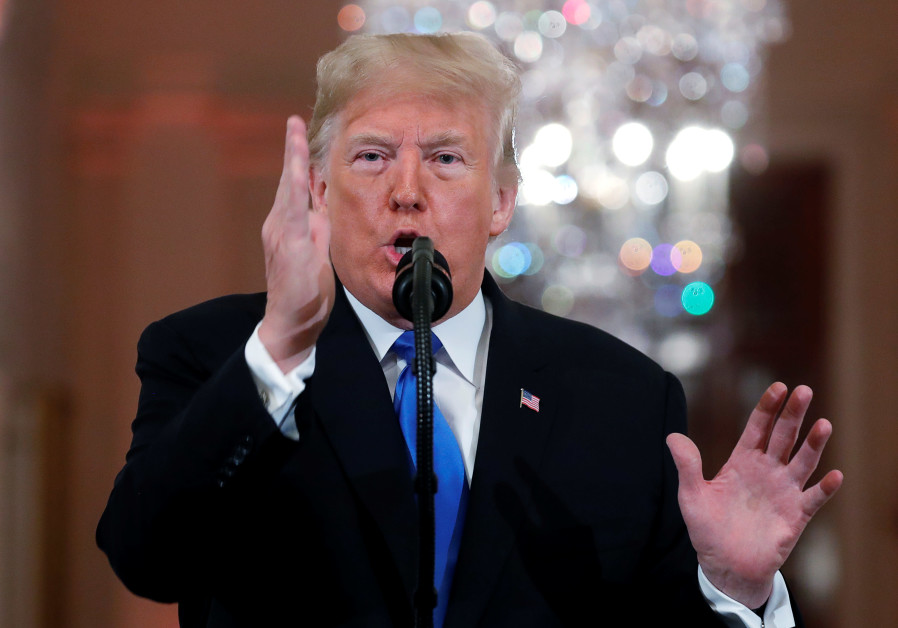
U.S. President Donald Trump addresses a news conference following Tuesday's midterm congressional el

Is it America’s responsibility to police the Middle East, US President Donald Trump asked as he defended his decision to begin pulling US troops out of Syria early Thursday morning.

“Does the USA want to be the Policeman of the Middle East, getting NOTHING but spending precious lives and trillions of dollars protecting others who, in almost all cases, do not appreciate what we are doing? Do we want to be there forever? Time for others to finally fight,” he asked.

Donald J. Trump

@realDonaldTrump

Does the USA want to be the Policeman of the Middle East, getting NOTHING but spending precious lives and trillions of dollars protecting others who, in almost all cases, do not appreciate what we are doing? Do we want to be there forever? Time for others to finally fight…..

“Getting out of Syria was no surprise. I’ve been campaigning on it for years, and six months ago, when I very publicly wanted to do it, I agreed to stay longer. Russia, Iran, Syria & others are the local enemy of ISIS. We were doing there work. Time to come home & rebuild,” Trump said.

Donald J. Trump

@realDonaldTrump

Getting out of Syria was no surprise. I’ve been campaigning on it for years, and six months ago, when I very publicly wanted to do it, I agreed to stay longer. Russia, Iran, Syria & others are the local enemy of ISIS. We were doing there work. Time to come home & rebuild.

“Russia, Iran, Syria & many others are not happy about the U.S. leaving, despite what the Fake News says, because now they will have to fight ISIS and others, who they hate, without us,: Trump said.

“I am building by far the most powerful military in the world. ISIS hits us they are doomed!,” he said.

Trump’s announcement on Wednesday upended a central pillar of American policy in the Middle East and stunned U.S. lawmakers and allies, who challenged the president’s claim of victory.

The Syrian Democratic Forces (SDF), supported by roughly 2,000 U.S. troops, are in the final stages of a campaign to recapture areas seized by Islamic State militants.

But they face the threat of a military incursion by Turkey, which considers the Kurdish YPG fighters who spearhead the force to be a terrorist group, and possible advances by Syrian forces – backed by Russia and Iran – committed to restoring President Bashar al-Assad’s control over the whole country.

After three years of fighting alongside U.S. forces, the SDF said the battle against Islamic State had reached a decisive phase that required more support, not a precipitate U.S. withdrawal.

Western allies including France, Britain and Germany also described Trump’s assertion of victory as premature.

Officials said France will keep its troops in northern Syria for now because Islamic State militants have not been wiped out and pose a threat to French interests.

“For now, of course we are staying in Syria because the fight against Islamic State is essential,” Europe Minister Nathalie Loiseau said.

France has about 1,100 troops in Iraq and Syria providing logistics, training and heavy artillery support as well as fighter jets. In Syria it has dozens of special forces, military advisers and some foreign office personnel.

A British junior defense minister said on Wednesday he strongly disagreed with Trump. “(Islamic State) has morphed into other forms of extremism and the threat is very much alive,” Tobias Ellwood said in a tweet.

Neighboring Turkey, which has threatened an imminent military incursion targeting the U.S.-allied Kurdish YPG fighters in northern Syria, has not commented directly on Trump’s decision, although an end to the U.S.-Kurdish partnership will be welcomed in Ankara.

Kurdish militants east of the Euphrates in Syria “will be buried in their ditches when the time comes”, state-owned Anadolu news agency reported Defense Minister Hulusi Akar as saying.

Amos Yadlin, Executive Director of Tel Aviv University’s Institute for National Security Studies (INSS) wrote on Twitter,  that the US withdrawal was most likely part of a “drive to decrease US presence and casualties, the US people’s fatigue from the nation’s long wars, but perhaps mainly what looks like a “grand deal” with Turkey.”

“Trump’s decision embolden its rivals which are committed to the region on the long term: Russia, Iran, Assad and ISIS.

“Such abrupt US turns, seen by many as betraying its Kurdish partners in the war on ISIS, undermines the US’ reputation and credibility,” Yadlin wrote on twitter.

Reuters contributed to this report.


Trump on Syria: ‘Does the US want to be the policeman of the Middle East?

Posted December 21, 2018 by Joseph Wouk
Categories: Uncategorized

Source: Trump on Syria: ‘Does the US want to be the policeman of the Middle East? – Middle East – Jerusalem Post

“Getting out of Syria was no surprise. I’ve been campaigning on it for years.”

BY TOVAH LAZAROFF
 DECEMBER 20, 2018 14:41
U.S. President Donald Trump addresses a news conference following Tuesday's midterm congressional el

Is it America’s responsibility to police the Middle East, US President Donald Trump asked as he defended his decision to begin pulling US troops out of Syria early Thursday morning.

“Does the USA want to be the Policeman of the Middle East, getting NOTHING but spending precious lives and trillions of dollars protecting others who, in almost all cases, do not appreciate what we are doing? Do we want to be there forever? Time for others to finally fight,” he asked.

Donald J. Trump

@realDonaldTrump

Does the USA want to be the Policeman of the Middle East, getting NOTHING but spending precious lives and trillions of dollars protecting others who, in almost all cases, do not appreciate what we are doing? Do we want to be there forever? Time for others to finally fight…..

“Getting out of Syria was no surprise. I’ve been campaigning on it for years, and six months ago, when I very publicly wanted to do it, I agreed to stay longer. Russia, Iran, Syria & others are the local enemy of ISIS. We were doing there work. Time to come home & rebuild,” Trump said.

Donald J. Trump

@realDonaldTrump

Getting out of Syria was no surprise. I’ve been campaigning on it for years, and six months ago, when I very publicly wanted to do it, I agreed to stay longer. Russia, Iran, Syria & others are the local enemy of ISIS. We were doing there work. Time to come home & rebuild.

“Russia, Iran, Syria & many others are not happy about the U.S. leaving, despite what the Fake News says, because now they will have to fight ISIS and others, who they hate, without us,: Trump said.

“I am building by far the most powerful military in the world. ISIS hits us they are doomed!,” he said.

Trump’s announcement on Wednesday upended a central pillar of American policy in the Middle East and stunned U.S. lawmakers and allies, who challenged the president’s claim of victory.

The Syrian Democratic Forces (SDF), supported by roughly 2,000 U.S. troops, are in the final stages of a campaign to recapture areas seized by Islamic State militants.

But they face the threat of a military incursion by Turkey, which considers the Kurdish YPG fighters who spearhead the force to be a terrorist group, and possible advances by Syrian forces – backed by Russia and Iran – committed to restoring President Bashar al-Assad’s control over the whole country.

After three years of fighting alongside U.S. forces, the SDF said the battle against Islamic State had reached a decisive phase that required more support, not a precipitate U.S. withdrawal.

Western allies including France, Britain and Germany also described Trump’s assertion of victory as premature.

Officials said France will keep its troops in northern Syria for now because Islamic State militants have not been wiped out and pose a threat to French interests.

“For now, of course we are staying in Syria because the fight against Islamic State is essential,” Europe Minister Nathalie Loiseau said.

France has about 1,100 troops in Iraq and Syria providing logistics, training and heavy artillery support as well as fighter jets. In Syria it has dozens of special forces, military advisers and some foreign office personnel.

A British junior defense minister said on Wednesday he strongly disagreed with Trump. “(Islamic State) has morphed into other forms of extremism and the threat is very much alive,” Tobias Ellwood said in a tweet.

Neighboring Turkey, which has threatened an imminent military incursion targeting the U.S.-allied Kurdish YPG fighters in northern Syria, has not commented directly on Trump’s decision, although an end to the U.S.-Kurdish partnership will be welcomed in Ankara.

Kurdish militants east of the Euphrates in Syria “will be buried in their ditches when the time comes”, state-owned Anadolu news agency reported Defense Minister Hulusi Akar as saying.

Amos Yadlin, Executive Director of Tel Aviv University’s Institute for National Security Studies (INSS) wrote on Twitter,  that the US withdrawal was most likely part of a “drive to decrease US presence and casualties, the US people’s fatigue from the nation’s long wars, but perhaps mainly what looks like a “grand deal” with Turkey.”

“Trump’s decision embolden its rivals which are committed to the region on the long term: Russia, Iran, Assad and ISIS.

“Such abrupt US turns, seen by many as betraying its Kurdish partners in the war on ISIS, undermines the US’ reputation and credibility,” Yadlin wrote on twitter.

Reuters contributed to this report.


U.S. air campaign against Islamic State in Syria likely to end 

Posted December 21, 2018 by Joseph Wouk
Categories: Uncategorized

Source: U.S. air campaign against Islamic State in Syria likely to end – Middle East – Jerusalem Post

US Defense Secretary Jim Mattis, who had opposed Trump’s decision on Syria, abruptly announced on Thursday he was resigning after meeting with the president.

BY REUTERS
 DECEMBER 21, 2018 03:27
U.S. air campaign against Islamic State in Syria likely to end

The United States will likely end its air campaign against Islamic State in Syria when it pulls out troops, US officials said on Thursday, as President Donald Trump defended the planned withdrawal against criticism from allies abroad and at home.

US Defense Secretary Jim Mattis, who had opposed Trump’s decision on Syria, abruptly announced on Thursday he was resigning after meeting with the president. In a candid letter to Trump, the retired Marine general emphasized the importance of “showing respect” to allies.

NATO allies France and Germany said Washington’s change of course on Syria risks damaging the fight against Islamic State, the militant group that had seized swathes of Iraq and Syria but has now been squeezed to a sliver of Syrian territory.

Several of Trump’s fellow Republicans in Congress, joined by opposition Democrats, urged the president to reverse course, saying the withdrawal would strengthen the hand of Russia and Iran in Syria and enable a resurgence of Islamic State.

Trump, however, gave no sign of changing his mind and lashed out at Senator Lindsey Graham, a Republican who is sometimes an ally of the president but who has said a withdrawal would have “devastating consequences” for the United States.

“So hard to believe that Lindsey Graham would be against saving soldier lives & billions of $$$,” Trump tweeted. “Why are we fighting for our enemy, Syria, by staying & killing ISIS for them, Russia, Iran & other locals? Time to focus on our Country & bring our youth back home where they belong!”

Trump’s troop announcement on Wednesday upended a pillar of American policy in the Middle East and caused consternation in domestic and foreign critics who argued it would make it harder to find a diplomatic solution to Syria’s seven-year civil war.

It also appeared to add momentum to Trump’s long-stated goal of extricating the United States from its 17-year war in Afghanistan. US officials told Reuters on Thursday that the administration is planning to significantly draw down thousands of the 14,000 troops now in Afghanistan, where Mattis has argued for a strong US military presence.

France, a leading member of the US-led coalition against Islamic State, said it would keep its troops in northern Syria for now and contested Trump’s assertion that the group has been defeated in the country.

“Islamic State has not been wiped from the map nor have its roots. The last pockets of this terrorist organization must be defeated militarily once and for all,” French Defence Minister Florence Parly said on Twitter.

France has about 1,100 troops in Iraq and Syria providing logistics, training and heavy artillery support as well as fighter jets. In Syria it has dozens of special forces, military advisers and some foreign office personnel.

Trump, however, tweeted that he was fulfilling a promise to leave Syria made during his presidential campaign and arguing that the United States was doing the work of other countries and it was “time for others to finally fight.”

Four US officials, who spoke to Reuters on condition of anonymity, said the troop withdrawal is expected to mean an end to the US air campaign against Islamic State in Syria. The US-led air war has been vital to crushing the militants there and in neighboring Iraq, with more than 100,000 bombs and missiles fired at targets in the two countries since 2015.

Still, one US official said a final decision on the air campaign had not been made and did not rule out some kind of support for partners and allies.

The United States told the UN Security Council it was committed to the “permanent destruction” of Islamic State in Syria and would keep pushing for the withdrawal of Iranian-backed forces in the country.

The roughly 2,000 US troops in Syria, many of them special forces, were ostensibly helping to combat Islamic State but were also seen as a possible bulwark against Syrian President Bashar al-Assad, who has retaken much of the country from his foes in the civil war, with military help from Iran and Russia.

The Kurdish-led Syrian Democratic Forces (SDF), which have been fighting Islamic State with US support for three years, said the withdrawal of troops would let the militants regroup at a critical stage and leave Syrians stuck between “the claws of hostile parties” fighting for territory in the civil war.

The SDF are in the final stages of a campaign to recapture areas seized by the militants.

But they face the threat of a military incursion by Turkey, which considers the Kurdish YPG fighters who spearhead the force to be a terrorist group, and Syrian forces committed to restoring Assad’s control over the whole country.

The SDF said the battle against Islamic State had reached a decisive phase that required more support, not a precipitate US withdrawal.

Islamic State declared a caliphate in 2014 after seizing parts of Syria and Iraq. The hardline group established its de facto capital in the Syrian city of Raqqa, using it as a base to plot attacks in Europe.

According to US estimates, the group oversaw about 100,000 square kms (39,000 square miles) of territory, with about 8 million people under its control and estimated revenues of nearly $1 billion a year.

A senior US official last week said the group was down to its last 1 percent of the territory it once held. It has no remaining territory in Iraq, although militants have resumed insurgent attacks since the group’s defeat there last year.

Russian President Vladimir Putin said he largely agreed with Trump that the group had been defeated in Syria but added there was a risk it could recover.

He also questioned what Trump’s announcement meant in practical terms, saying there was no sign yet of a withdrawal of US forces, whose presence in Syria Moscow calls illegitimate.

Israel will escalate its fight against Iranian-aligned forces in Syria after the withdrawal of US troops, Prime Minister Benjamin Netanyahu said.

While Turkey has not commented directly on Trump’s decision, an end to the US-Kurdish partnership will please Ankara.

Kurdish militants east of the Euphrates in Syria “will be buried in their ditches when the time comes,” state-owned Anadolu news agency reported Defence Minister Hulusi Akar as saying.

Turkey has intervened to sweep YPG and Islamic State fighters from parts of northern Syria that lie west of the Euphrates over the past two years. It has not gone east of the river, partly to avoid direct confrontation with US forces.