Posted March 31, 2021 by Joseph Wouk Categories: Uncategorized
Biden administration officials quoted saying indirect communication, political disputes and Iran’s upcoming election have hindered progress, as Tehran demands full sanction removal
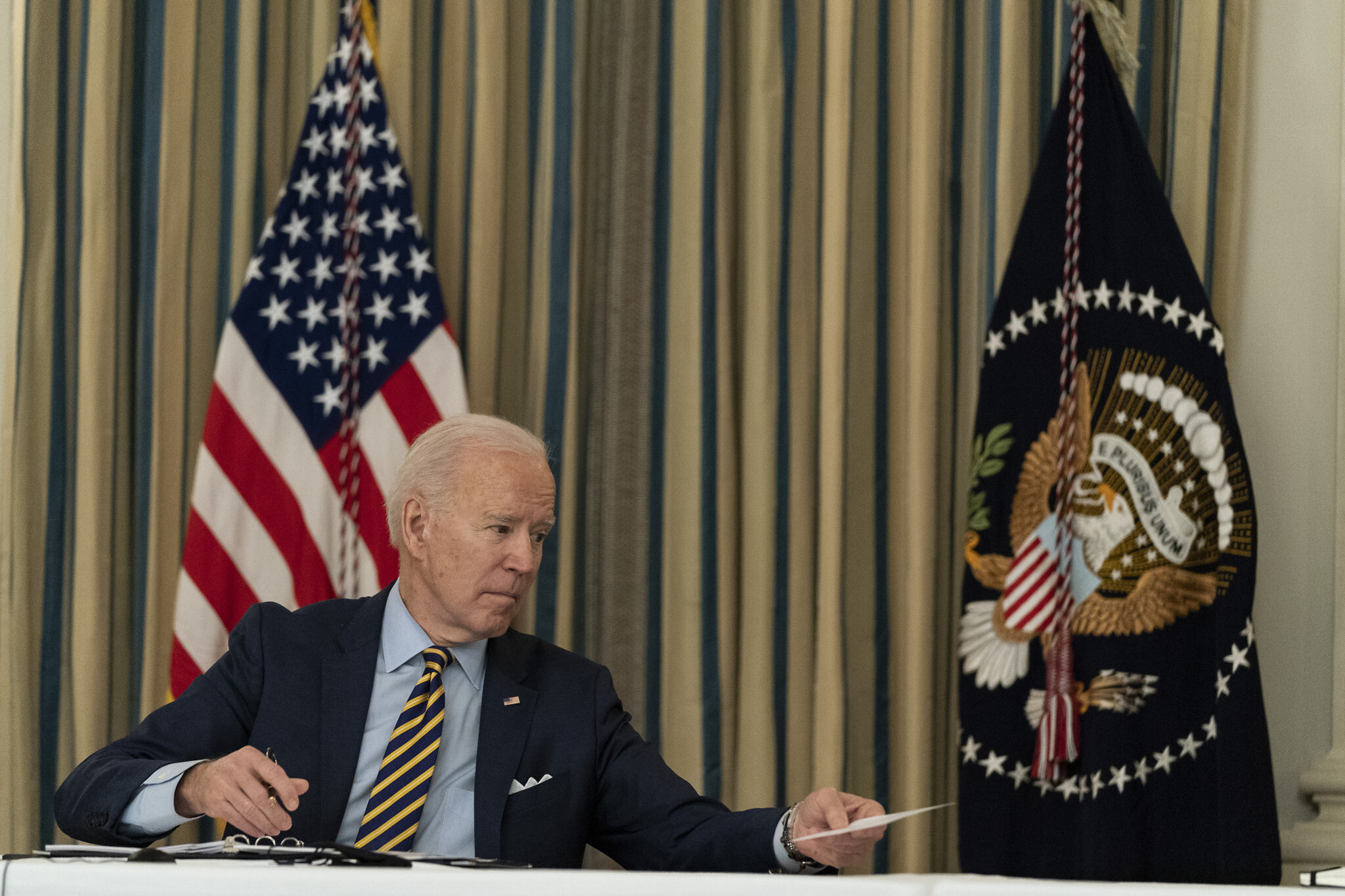
US President Joe Biden passes a note to Secretary of State Antony Blinken, during a virtual meeting with Indian Prime Minister Narendra Modi, Australian Prime Minister Scott Morrison and Japanese Prime Minister Yoshihide Suga, from the State Dining Room of the White House, March 12, 2021, in Washington. (AP Photo/Alex Brandon)
US officials believe Iran may be willing to discuss a broad road map to revive the 2015 nuclear deal, according to a report Wednesday.
US President Joe Biden has placed resumption of the nuclear deal high on his list of foreign policy priorities, but so far all of his proposals have been rejected. Most recently, the US floated a step-by-step approach back to compliance, which Tehran has turned down.
An unnamed US official told the Reuters news agency: “What we had heard was that they were interested first in a series of initial steps, and so we were exchanging ideas on a series of initial steps.”
“It sounds from what we are hearing publicly now, and through other means, that they may be … not interested in [discussing] initial steps but in a road map for return to full compliance,” the US official said.
Supreme Leader Ayatollah Ali Khamenei addresses the nation in a televised speech in Tehran, Iran, Jan. 8, 2021 (Office of the Iranian Supreme Leader via AP)
“If that’s what Iran wants to talk about, we are happy to talk about it,” he added.
However, it is unclear whether Iran is indeed willing to craft a road map back to the deal, the report said.
Last week, Iran’s supreme leader reiterated the Islamic Republic’s “definite policy” that Washington must lift all sanctions before Tehran returns to its commitments under deal.
The US and Iran have not communicated directly, instead relying on intermediaries such as Britain, France, China, or Russia.
In June 1981, as Israel was about to begin the holiday of Shavuot, Prime Minister Menachem Begin informed the media he had just ordered one of the most audacious operations in modern military history: the destruction, by Israel’s Air Force, of the Osirak nuclear reactor outside Baghdad. The mission had seemed impossible, as it required flying a total of 2,000 miles—and Israel did not have the ability to refuel. It was assumed that not all the pilots would make it back alive. When all returned safely, Begin ebulliently announced it to the world, insisting that only if Israel publicly claimed responsibility would the attack serve as a future deterrent to Israel’s enemies.
There was only one problem. The notion that a prime minister mere weeks away from an election might have ordered such an attack was so unthinkable that the media refused to believe it. In his biography of Begin, Avi Shilon describes how his subject waited in vain for the Israeli Broadcast Agency to bring the news to the public:
The news editors at the IBA did not believe what they had heard. Uri Porat, the new communications adviser to the prime minister, phoned to find out what was holding up the announcement, but since his voice was unfamiliar to the news editors, they were convinced that it was a hoax. Finally, journalist Immanuel Halperin, Begin’s nephew, decided to call his uncle, and thus in an intimate conversation between Begin family members, the announcement that would cause a furor throughout the world came to light. But it was broadcast, of all places, in a news flash on Radio 3—the IBA’s pop music station—at 3:30 p.m., and Begin had to wait yet another half hour to hear it in an official IBA newscast.
Only in Israel: an earth-shattering event announced on a pop station and ignored elsewhere until confirmed by an impeccable source in the leader’s mishpocha.
The year 2021 marks the 40th anniversary of the “Begin Doctrine,” according to which no enemy of Israel will be allowed to acquire nuclear weapons, and that Israel will act, on its own if necessary, to ensure this remained the case.
Four decades along, it is easy to forget how unexpected the attack was and how outraged much of the world was by it. In Israel, Begin’s electoral opponent, Shimon Peres, had sent him a letter pleading to hold off, but he only convinced the prime minister to act. Shilon describes how Begin told a cabinet member, “For all I know, a month from now, Shimon Peres will be sitting in this room. From his letter it’s clear to you that he certainly wouldn’t carry out this operation, and I’m not willing to leave the stage knowing that I left this problem hovering over our children.”
The international media largely denounced the attack as state-sponsored terror, and even world leaders sympathetic to Israel came down hard. Margaret Thatcher spoke of “a grave breach to international law,” and the Reagan administration ordered Jeane Kirkpatrick (to her dismay) to support an anti-Israel resolution at the UN.
The controversy and surprise show just how this operation, which kept a nuclear weapon out of the hands of Saddam Hussein, was a testament to the unique worldview of one man. Menachem Begin was a modern Zionist, but unlike some of Israel’s other founders, he always felt the personal presence of those murdered in the Holocaust, especially of his father and mother. Again and again, Begin made clear, in the months before the attack, that the fate of his family was very much on his mind. “This morning,” he told the cabinet during an Osirak planning meeting, “when I saw Jewish children playing outside, I decided: ‘No, never again.’” In a meeting with American Jews in May 1981, Begin was asked what he thought the lesson of the Holocaust was. He replied:
First, if an enemy of our people says he seeks to destroy us, believe him. Don’t doubt him for a moment. Don’t make light of it. Do all in your power to deny him the means of carrying out his satanic intent. Second, when a Jew anywhere is threatened, or under attack, do all in your power to come to his aid. Never pause to wonder what the world will think or say. The world will never pity slaughtered Jews. The world may not necessarily like the fighting Jew, but the world will have to take account of him.
These Americans had no idea what Begin was planning when he said these words. He was indeed the fighting Jew, and the world certainly did not like him. Time magazine helpfully informed its readership that the name Begin “rhymes with Fagin,” and American Jewry in 1981 was told repeatedly that they must choose “between Reagan and Begin.” But Begin did not “pause to wonder what the world would say,” and the world did indeed “have to take account of him.”
At the same time, the “fighting Jew” who acted to neutralize the Iraqi threat also was a Jew of profound faith. Yehudah Avner, Begin’s speechwriter, reported that as the planes took off, Begin said to himself “Hashemyishmoraleihem,” may God protect them. And when he was informed that the strike was successful, he instinctively exclaimed two words that Jews have said every day for centuries, but that no other Israeli prime minster would have instinctively uttered: BarukhHashem, thank God. A month later he met with the American Jewish leader Max Fisher and reflected further on the religious meaning of the moment: “Am I a believer—do I believe in ElokeiYisrael, the God of Israel? The answer is a categorical yes. How else to account for our success in accomplishing the virtually impossible? Every conceivable type of enemy weaponry was arraigned against our pilots….Yet not a single one touched us. Only by the grace of God could we have succeeded in that mission.”
Was the assault on Osirak a strategic achievement, or was it a miracle? For the prime minister, it was both. On Yom Kippur 1973, Israel had been caught napping; on Shavuot 1981, Begin announced to the world that Israel would not be caught asleep at the wheel again. And he believed that if Israel avoided somnolence, then its people would also have the right to pray to the God Who, according to the Psalms, is the protector of Israel that neither slumbers nor sleeps. No other Israeli leader so seamlessly merged the Zionist present and the Diasporic past, simultaneously making manifest Jewish independence and humble faith.
Since 1981, Israel has acted several times to prevent its enemies from acquiring nuclear weapons, and it is much stronger—both militarily and diplomatically—than it was in Begin’s day. This is a wonderful thing. But what is missed is the man—a leader who joined strong action with communion to the past, a Jew who could order an ingenious operation and then pray to God for its success.
When Peres accused Begin of ordering the operation for electoral reasons, Begin had a ready reply. “Jews!” he bellowed to the crowd at a rally. “You have known me for 40 years!” He had more to say, but that was enough. Forty years after he said those words, the legacy of Begin’s operation lives on, and many operations like it have followed. But as we remember the “fighting Jew,” we must wonder whether we will ever see a man like him again.
Israel is willing to take action to prevent Iran obtaining nuclear weapons, Israeli Defense Minister Benny Gantz said this week. His statement framed part of a full-court press of Israel warning of Iran’s regional threats as Tehran continues to enrich uranium. Prime Minister Benjamin Netanyahu has long warned of Iran’s pursuit of nuclear weapons, but the transition to a new administration in Washington has been exploited by Iran to increase its enrichment and threats. A senior Israeli defense official laid out to me this week how seriously Israel views the threat. Tehran should listen.
Israel has acted in the past to prevent Iraq and Syria from obtaining nuclear capabilities. Netanyahu warned in a 2012 speech to the United Nations that a red line must be drawn on Iran’s nuclear enrichment program. Now Iran’s Ayatollah Khamenei says Iran could increase the levels of enrichment to 60 percent. This is a nuclear numbers game that Iran uses like a game of chicken with the U.S., hoping the Biden administration will blink and jump right back into an Iran Deal 2.0.
For Israel, it’s essential that the U.S. understand Jerusalem’s views. Israel doesn’t want a nuclear arms race in the region. Iran is an existential threat and no matter who wins Israel’s elections next month, Israel will not accept a threat that violates its declared red lines. At the same time, Israel wants the U.S. and its Western allies to know that they can count on Israel to confront Iran’s proxies and various entrenchments throughout the region. In January 2019, former Israel Defense Forces Chief of General Staff Gadi Eizenkot revealed that Israel had carried out more than 1,000 airstrikes on Iranian targets in Syria. Since then, Israel has continued what it calls the “campaign between the wars” to stop Iran’s entrenchment in Syria and transfer of weapons to Hezbollah in Lebanon.
There is no substitute for U.S. power and influence in the Middle East, the senior Israeli defense official told Newsweek this week. This unshakable bond with the U.S. is essential, as is bipartisan support for Israel in Congress. Part of this support for Israel also anchors the Jewish state in the region via new U.S.-brokered peace deals with the United Arab Emirates and Bahrain, and it is linked to U.S. support for other important partners, such as Egypt, Saudi Arabia and Jordan. While the Biden administration has been critical of Egyptian and Saudi human rights abuses, as Secretary of State Antony Blinken recently indicated in a call with his Egyptian counterpart, Israel hopes this criticism will go hand-in-hand with continued U.S. support.
The threats are too grave for the U.S. and European allies, such as France and Germany, to take their eyes off the threat. Iran’s nuclear program is connected to its broader destabilizing policies, from fueling the Houthi rebels in Yemen and arming them with ballistic missile and drone technology, to moving rockets to Iraq that threaten U.S. troops and Israel. Iran today is one of the leading countries in the world for ballistic missile technology.
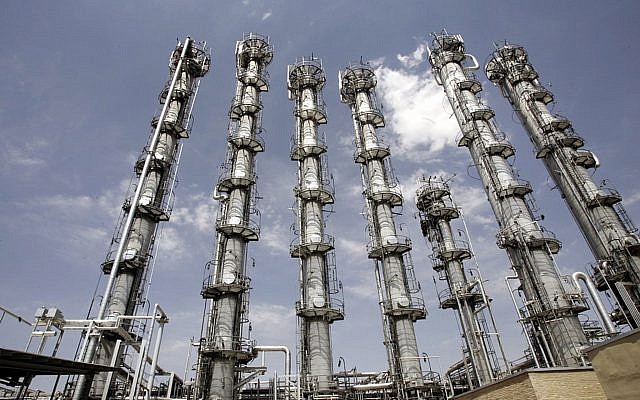
The strategic paradigm for Israel today is multilayered. It wants to increase its ability to deter Iran, for instance, through acquisition of more F-35s and other aircraft from the U.S., along with its own development of new air defense capabilities. It also wants Iran to end its long-running entrenchment in Syria. An American commitment to Syria, or even a U.S. deal with Russia on Syria, might reduce Iran’s freedom of maneuver there. Any new Iranian nuclear deal must prevent future enrichment and not merely enable Iran to continue enrichment after a certain time period, as the 2015 deal did. Iran was supposed to keep stockpiles of enrichment at 3.67 percent. Instead, it has installed advanced centrifuges at Natanz and Fordow.
Iran thinks that it can use this nuclear blackmail to get the U.S. and the West to do what it wants. But Israel is messaging to Washington and others how seriously it takes the Iranian threat. Iran is becoming reckless, with recent rocket attacks on U.S. troops in Iraq, and is encouraging attacks on Saudi Arabia. In Lebanon, Hezbollah even fired a missile at an Israeli drone this month.
In mid-February, days after Hezbollah fired the missile at an Israeli drone, and the day before Netanyahu and President Joe Biden first spoke by phone, Israel launched a surprise air force drill in which it simulated striking up to 3,000 targets a day. A week later, Netanyahu and Gantz warned Iran that Israel was serious about preventing a nuclear Iran. Tehran should listen.
Posted March 29, 2021 by Joseph Wouk Categories: Uncategorized
Beijing to invest $400 billion in Iran in exchange for oil, report says; agreement will strengthen military ties and may undermine US leverage in Middle East
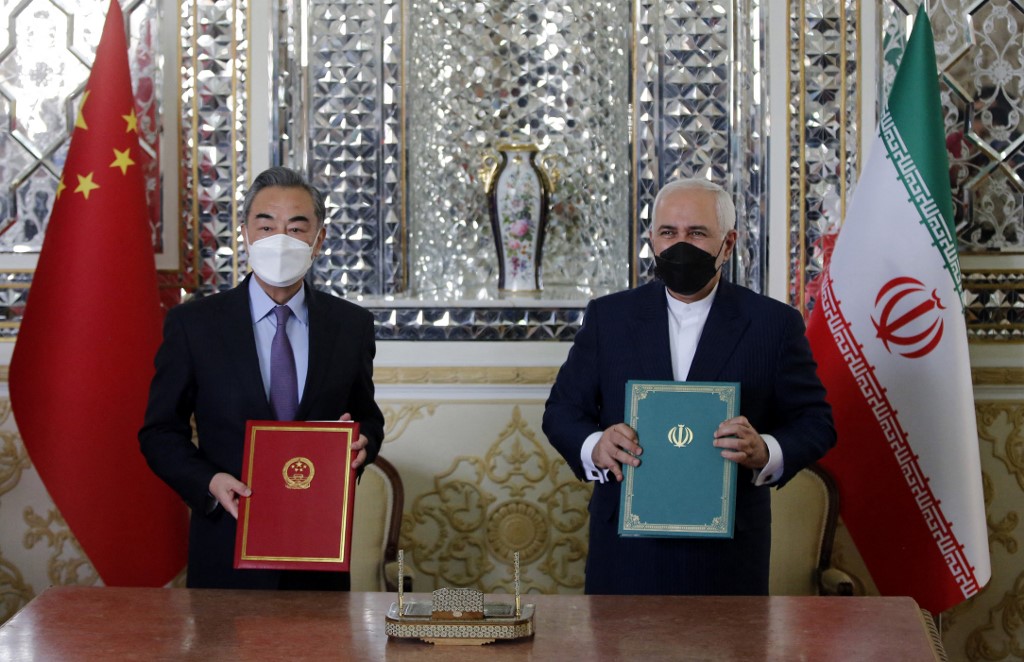
Iranian Foreign Minister Mohammad Javad Zarif (R) and his Chinese counterpart Wang Yi, pose for a picture after signing an agreement in the capital Tehran, on March 27, 2021. Iran and China signed what state television called a “25-year strategic cooperation pact” on today as the US rivals move closer together. (AFP)
TEHRAN — Iran and China on Saturday signed a 25-year strategic cooperation agreement addressing economic issues amid crippling US sanctions on Tehran, according to Iranian state media.
The agreement, dubbed the Comprehensive Strategic Partnership, covers a variety of economic activity from oil and mining to promoting industrial activity in Iran, as well as transportation and agricultural collaborations, according to the report.
No additional details of the agreement were revealed as Iran’s Foreign Minister Mohammad Javad Zarif and Chinese counterpart Wang Yi took part in a ceremony marking the event.
The New York Times reported that China will invest some $400 billion in Iran in exchange for oil as part of the deal. The two countries will also step up military cooperation with joint training, research and intelligence sharing, the report said.
China is Iran’s leading trade partner and was one of the biggest buyers of Iranian oil before then US president Donald Trump reimposed sweeping unilateral sanctions in 2018 after abandoning a multilateral nuclear agreement with Tehran.
The deal signed Saturday could undermine US leverage over Iran ahead of expected negotiations and lessen American influence in the Middle East. Ongoing US sanctions against Iran could hamper its trade with China despite Saturday’s agreement, however.
The Times report said Iran was prepared to host direct talks between Israel and the Palestinians, further suggesting that US influence in the region could be waning.Chinese President Xi Jinping, left, and his Iranian counterpart Hassan Rouhani prepare to shake hands at the conclusion of their joint press conference at the Saadabad Palace in Tehran, Iran, January 23, 2016. (Ebrahim Noroozi/AP)
“We believe this document can be very effective in deepening” Iran-China relations, Iran’s foreign ministry spokesman Saeed Khatibzadeh said, recalling that the pact had first been proposed during a visit to Tehran by Chinese President Xi Jinping in January 2016.
Xi and his Iranian counterpart Hassan Rouhani agreed then to establish a roadmap for “reciprocal investments in the fields of transport, ports, energy, industry and services.”
“Iran’s government and people are striving, as they always have, to broaden relations with trustworthy, independent countries like China,” supreme leader Ayatollah Ali Khamenei said at the time, describing the proposed cooperation agreement as “correct and reasonable.”
Xi has championed the Belt and Road Initiative, a plan to fund infrastructure projects and increase China’s sway overseas.
The deal with China marked the first time Iran has signed such a lengthy agreement with a major world power. In 2001, Iran and Russia signed a 10-year cooperation agreement, mainly in the nuclear field, that was lengthened to 20 years through two five-year extensions.
Before the ceremony Saturday, Yi met Rouhani and the special Iranian envoy in charge of the deal, Ali Larijani.
The deal also supports tourism and cultural exchanges and comes on the 50th anniversary of the establishment of diplomatic relations between China and Iran. The two countries have had warm relations and both took part in a joint naval exercise in 2019 with Russia in the northern Indian Ocean.
Reportedly, Iran and China have done some $20 billion in trade annually in recent years. That’s down from nearly $52 billion in 2014, however, because of a decline in oil prices and US sanctions imposed in 2018 after Trump pulled the US unilaterally out of Iran’s nuclear deal with world powers.Iranian Foreign Minister Mohammad Javad Zarif, left, meets with his Chinese counterpart Wang Yi, right, in the capital Tehran, on March 27, 2021. Iran and China signed what state television called a ’25-year strategic cooperation pact,’ as the US rivals move closer together. (AFP)
Iran has since pulled away from restrictions imposed under the deal under those sanctions in order to put pressure on the other signatories — Germany, France, Britain, Russia and China — to provide new economic incentives to offset US sanctions. Iran is also believed to be maneuvering for leverage ahead of expected negotiations with the Biden administration.
The nuclear accord gave Iran relief from international sanctions in return for limits on its nuclear program, but after Trump took the US out of the deal Iran walked back its own commitments, including by enriching uranium past the accord’s limits and barring UN inspections of its nuclear facilities. A number of other world powers remain committed to the deal.
US President Joe Biden wants to negotiate tougher conditions for an agreement with Iran, including by limiting its missile production and destabilizing activities in the region. Iran has ruled out such talks and demands the US lift sanctions before it returns to compliance, putting the two sides at a stalemate.
A US official said Saturday that it doesn’t matter “who goes first” to return to compliance with the deal, suggesting Washington was softening its position in the standoff with Tehran.
Israeli officials, including Prime Minister Benjamin Netanyahu, have voiced opposition to the Biden administration’s desire to rejoin the deal, putting Jerusalem and Washington at odds on the issue. Some leading Israeli officials in recent months have warned of military action to halt Iran’s nuclear program.
Nonetheless, Israeli and US officials agreed to set up a joint team for sharing intelligence about Iran’s nuclear program during recent strategic talks, according to a report last week.
Israel is pursuing four more peace deals with countries in the region and elsewhere, Prime Minister Benjamin Netanyahu said on Tuesday.
“I brought four peace agreements, and there are another four on the way,” Netanyahu said. “I talked about one of them yesterday.” He added that one such regional leader spoke with him by phone Monday night. The prime minister did not dispel rumors of other peace agreements in the works with nations such as Niger, Mauritania, and Indonesia.
The longtime Israeli leader also touted the four other agreements he forged last year with Muslim-majority countries in the Middle East and Africa—Bahrain, United Arab Emirates, Morocco, and Sudan—which thawed decades of cold relations.
Israel is inching toward normalizing relations with Saudi Arabia, a key partner in the coalition against Iran due to its size, wealth, and military force. Netanyahu met with Saudi Arabian crown prince Mohammed bin Salman in November. Under the Trump administration, senior officials hinted at prospects of budding relations between Riyadh and Jerusalem in the wake of the historic Abraham Accords signed in August 2020.
Normalization with gulf countries has already borne significant fruit for Israel. Tourism and trade continues to grow apace between Israel and the UAE, with some even remarking that they feel safer wearing traditional Jewish clothing in Dubai than in France now.
The Trump administration furthered such agreements between Israel and regional partners as a senior broker by strongly backing Israel and pressuring Iran. The realignment in the Middle East was appraised by former secretary of state Henry Kissinger as “brilliant.” He emphasized that the Biden administration must build on the progress made in peaceful regional ties by continuing Trump-era policies in the region.
It is unclear, however, the extent to which the Biden administration will pursue additional peace. Both President Biden and Secretary of State Antony Blinken assure Iran that they have interest in pursuing renewed nuclear talks, and several senior level appointments throughout the administration’s foreign policy regime marked themselves as leading critics of the Trump administration’s policies toward Iran and Israel.
But Israeli officials tell Insider the statement from the environmental minister directly blaming Iran released Wednesday was premature as the military and intelligence services have yet to make a final determination on both Iranian culpability and the appropriate level of response to what would be the most brazen act of environmental terrorism in recent history.
“That statement should have never been made,” a former Israeli intelligence official, who still consults for the government and therefore cannot be named, told Insider. “The IDF and Mossad are responsible for investigating attacks on the Israeli homeland, determining the responsibility and suggesting a course of action to respond. That process is underway and it is not the portfolio of the environmental minister to start wars with Iran.”
For the past two weeks, tons of crude oil have washed ashore on Israel and Lebanon’s beaches destroying wildlife and causing ecological damage that could take years to restore, according to environmental experts. But after the minister directly accused Iran of a complex operation to drop the oil offshore, the issue took on a new dimension as fears in Washington ands Europe rose over the possibility of an Israeli response.
When pressed on whether Israeli military and intelligence services suspect an Iranian operation as described by the minister – who said a Libya-flagged ship sailed from Iran to Israel and dumped the oil offshore before stopping in Syria and returning to Iran – the former official conceded that was the case.
“Well yes, it does look that way but there’s a process for gathering all the intelligence and evidence and synthesizing into useful information that can help decision-making,” said the official. “It’s being treated as a direct attack on Israel by a foreign enemy, the most potentially serious since 2006 [attack by Hezbollah to kidnap two Israeli soldiers]. The [prime minister’s office] was already undergoing determination about the attack by Iran on [the ship]. Strike options were already being considered on that alone.”
With that attack firmly blamed on Iran, there is growing concern that Israeli intelligence will make the same determination as the environmental ministry – that the oil spill is an Iranian operation. Israel could use the double provocations as a reason to strike Iran just as Europe and the United States hope to re-start nuclear talks with Iran in exchange for a reopening of economic trade and more peaceful relations.
“Iran is very good at managing escalation, but if both incidents were their work this represents a gamble because both operations have made the Israelis substantially angrier than normal provocations,” said a European diplomat in the region, who refused to be named because of extreme sensitivity.
“Iran must know that Israel is looking for a good reason to escalate things themselves because of fears that Biden will ignore them in cutting a new deal on the nuclear program,” said the diplomat. “And while I normally welcome nations not rushing to conclusions, I suspect I’d prefer if [Israel Prime Minister Binyamin Netanyahu] would go on television shouting and waving pictures of dead sea turtles. Until he gives that performance there’s a concern it means the planners are working on a substantial response, which would be a problem for those of use who want a nuclear deal.”
“Everyone knows Bibi wants to slow down any resumption of talks on the nukes and is looking for an excuse to force some action that can’t be undone,” said the official. “But obviously there are hardliners in Tehran who agree and keep offering him excuses. It’s hard to preach patience when Iran is acting in this aggressive manner.”
A view of the heavy-water production plant in the central Iranian town of Arak, August 26, 2006. (AP/ ISNA, Arash Khamoushi)
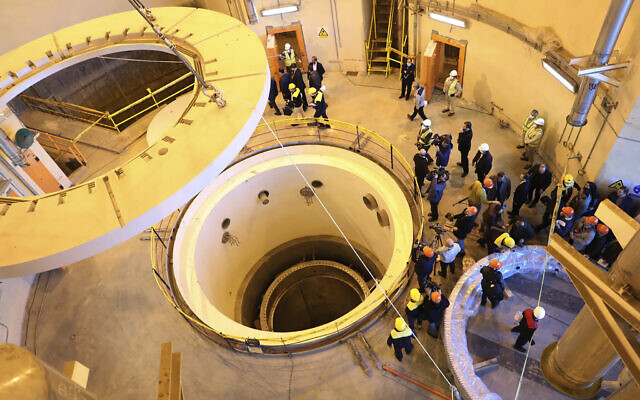
Iran will “cold test” its revamped Arak nuclear reactor as a prelude to its full inauguration later in the year, the country’s Atomic Energy Organization said on Friday, according to a Reuters report.
Cold testing of reactors usually includes the initial startup of fluid systems and support systems. The nuclear agency spokesperson Behrouz Kamalvandi said it will take place sometime early in the Iranian new year, which begins Sunday, the report said.
While Iran had agreed to shut down the reactor at the Arak facility under the 2015 deal, Tehran says it has been working on redesigning it for medical and agricultural use.
The plant was permitted to make some of the heavy water used to help cool reactors, producing plutonium as a byproduct that can potentially be used in nuclear weapons.
Spokesman of the Atomic Energy Organization of Iran Behrouz Kamalvandi speaks in a press briefing in Tehran, Iran, July 7, 2019. (Ebrahim Noroozi/AP)
The announcement of the tests came a day after French President Emmanuel Macron, standing alongside President Reuven Rivlin, urged Iran to stop aggravating the already grave crisis over its nuclear program by multiplying violations of the 2015 deal with world powers.
Iran has repeatedly taken steps to violate the agreement and turn up the heat on the US, including by enriching uranium past the accord’s limits and barring UN inspections of its nuclear facilities.
Former US president Donald Trump withdrew from the deal in 2018 and put punishing sanctions on Iran. US President Joe Biden and his administration have repeatedly said they will return to the agreement if Tehran first returns to compliance.
Iran has insisted the US remove sanctions before it returns to the deal’s terms, putting the two sides at a stalemate.
Technicians work at the Arak heavy water reactor’s secondary circuit, as officials and media visit the site, near Arak, 150 miles (250 kilometers) southwest of the capital Tehran, Iran, December 23, 2019. (Atomic Energy Organization of Iran via AP)
Israeli officials, including Prime Minister Benjamin Netanyahu, have already begun voicing opposition to the Biden administration’s desire to rejoin the deal, putting Jerusalem and Washington at odds on the issue. Some leading Israeli officials in recent months have warned of military action to halt Iran’s nuclear program.
In addition, Iran has for months threatened retaliation against Israel over the killing of its chief military nuclear scientist, Mohsen Fakhrizadeh, in an operation Tehran has blamed on the Mossad, Israel’s spy agency. An attempted bombing near the Israeli embassy in India last month, as well as the recent mine attack on an Israeli cargo ship in the Gulf of Oman, have both been attributed to Iran by Israel.
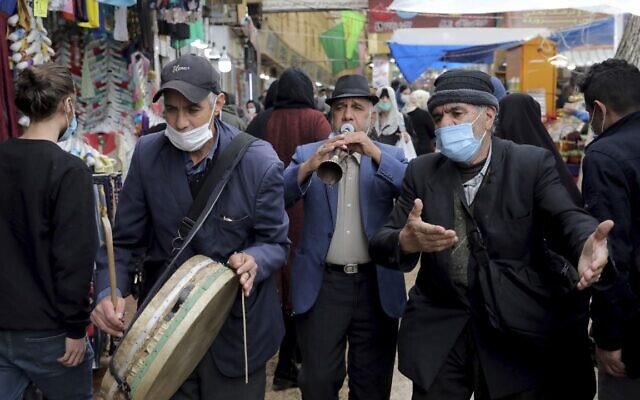
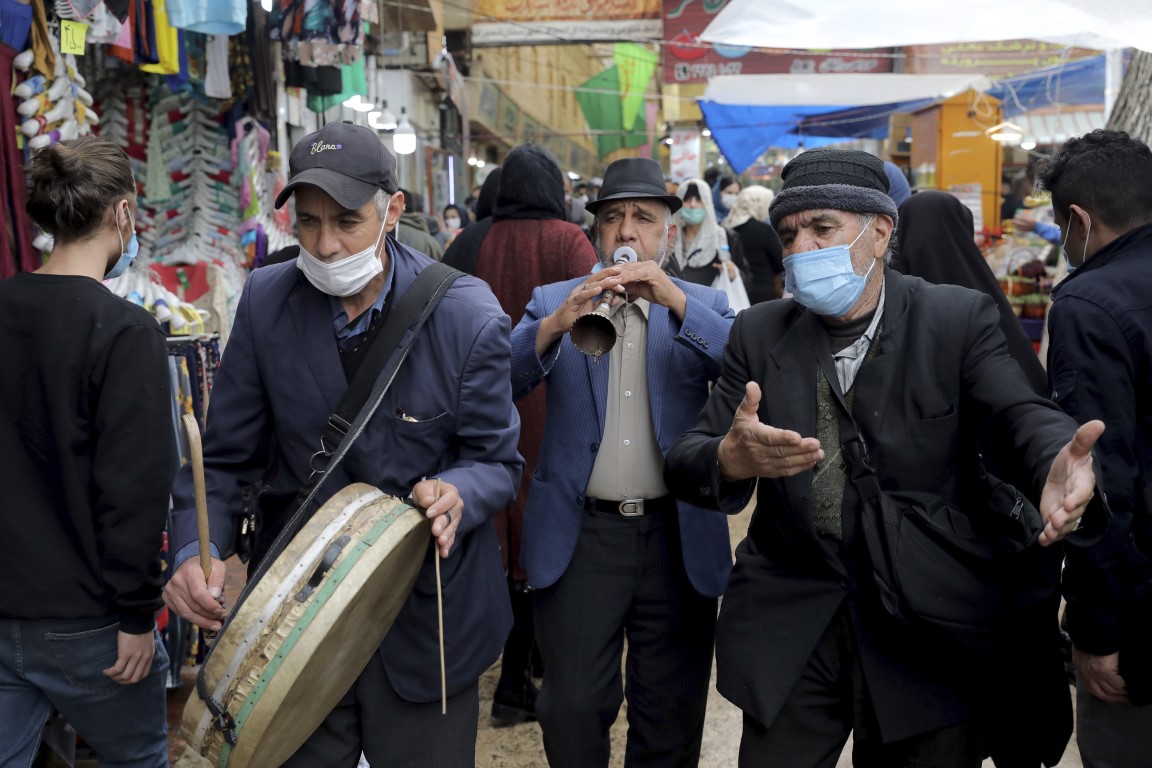
Performers play folklore music welcoming Persian New Year, or Nowruz, meaning ‘New Day,’ in northern Tajrish Square, Tehran, Iran, Wednesday, March 17, 2021. (AP Photo/Ebrahim Noroozi)
TEHRAN, Iran (AP) — The Persian New Year, Nowruz, begins on the first day of spring and celebrates all things new. But as families across Iran hurried to greet the fresh start — eating copious crisp herbs, scrubbing their homes and buying new clothes — it was clear just how little the country had changed.
A year into the coronavirus pandemic that has devastated Iran, killing over 61,500 people — the highest death toll in the Middle East — the nation is far from out of the woods. And although Iranians had welcomed the election of President Joe Biden with a profound sigh of relief after the Trump administration’s economic pressure campaign, the sanctions that have throttled the country for three years remain in place.
“I was counting down the seconds to see the end of this year,” said Hashem Sanjar, a 33-year-old food delivery worker with a bachelor’s degree in accounting. “But I worry about next year.”
Once again, Nowruz, a joyous two-week celebration rooted in gatherings — at homes, in parks and squares — will be stifled by the pandemic. Gone from Tehran’s streets are the performers dressed as “Hajji Firuz,” the ancient folk figure who dances, sings and bangs tambourines to ring in the holiday. Gone too are the usual piles of old furniture, which families can no longer afford to throw out for the new year.
A nightly curfew in the capital forbids residents from venturing out after 9 p.m. Health officials are pleading with the public to stay home. And the government has banned travel to cities hardest-hit by the virus.
Mask-clad shoppers look at items in a shop ahead of the Persian New Year, or Nowruz, in northern Tajrish traditional bazaar, in Tehran, Iran, Wednesday, March 17, 2021. (AP Photo/Ebrahim Noroozi)
Still, authorities will allow families to travel to the Caspian Sea and other vacation spots with lower infection rates, a bid to boost Iran’s slumping retail sales. Before the pandemic, domestic travel revenue accounted for an estimated $1.2 billion over the holiday. Police warned of heavy traffic from Tehran to the northern coast as residents hit the road.
Last year as Nowruz approached, the country of 83 million had become a global epicenter of the coronavirus. The virus coursed across Iran as heads of shrines called on pilgrims to keep coming and authorities dismissed alarm over rising deaths. Desperate to salvage its ailing economy, the government resisted a nationwide lockdown, further spreading the disease.
Now, the pain of the pandemic runs too deep to deny. The virus has touched all aspects of daily life, infecting some 1.78 million people, overwhelming hospitals, filling vast cemeteries and pummeling an economy already reeling from US sanctions.
Iran’s economy shrank 5 percent last year, according to the International Monetary Fund. Over 1 million people lost their jobs in 2020, reported the Interior Ministry. Inflation has soared to nearly 50% compared to 10% in 2018, before then-President Donald Trump withdrew from Tehran’s nuclear accord with world powers and re-imposed sanctions. The prices of basic goods, including Nowruz staples like spiced nuts and clothes, have doubled or tripled.
A vendor waits for customers ahead of the Persian New Year, or Nowruz, at Tajrish traditional bazaar in northern Tehran, Iran, Wednesday, March 17, 2021. (AP Photo/Ebrahim Noroozi)
Casual laborers bear the brunt of the fallout. The poverty rate has surged to 55%. The government’s $40 stipends for poor families have failed to plug the gap.
Payman Fadavi, a 48-year-old electronics shop owner in a Tehran mall, said he faces financial ruin.
“The virus led to economic problems for the whole world, but in Iran it is worse, we are experiencing sanctions along with coronavirus,” he said, adding the pandemic forced him to fire most of his staff. “I think I have to close the store soon.”
Rasul Hamdi, a 38-year-old cleaner, struggles because clients “wouldn’t let me come and clean their homes out of fear of the virus.” The outbreak has altered his life in other ways, as people around him fell ill. Now, all his next-door neighbors are gone — a whole family dead from COVID-19.
Amid the misery, and despite the chilling rain, signs of life were returning to Tehran ahead of the holiday.
Mask-clad commuters leave a metro station at Tehran’s Grand Bazaar, ahead of the Persian New Year, or Nowruz, in Iran, Monday, March 15, 2021. (AP Photo/Vahid Salemi)
Through pandemics, wars and disasters, the ancient Zoroastrian festival of Nowruz, or “New Day” in Farsi, has been celebrated continuously for over 3,000 years, predating the region’s Muslim conquest. Some 300 million people in Iran and beyond gather around tables replete with ancient symbols of renewal, prosperity and luck: green wheat sprouts, apples, gold coins and oranges or goldfish in bowls of water.
This week, throngs of mask-clad shoppers packed the metro and jockeyed to buy last-minute gifts and sweets at Tehran’s storied Grand Bazaar. In the northern Tajrish Square, vendors hawked candles and flowers, calling out wishes for a joyous new year. Even as the infection rates have dropped from peaks reached last fall, the crowded scenes pointed to pandemic fatigue and public intransigence rather than national recovery, especially as Iran’s vaccine rollout lags.
Still waiting for big shipments from COVAX, the global initiative to provide doses to low- and middle-income countries, Iran so far has inoculated only several thousand health care and front-line workers. Around a hundred people continue to die of COVID-19 each day, according to government statistics. Daily infection counts have hovered at around 8,000 since the discovery of a fast-spreading variant earlier this year.
Customers buy flowers to celebrate the Persian New Year, or Nowruz, in northern Tajrish Square, Tehran, Iran, Wednesday, March 17, 2021. (AP Photo/Ebrahim Noroozi)
Many in Iran find the seasonal symbols on their Nowruz tables in increasingly short supply. Hopes for a rapid return to the nuclear deal are dimming as the Biden administration, grappling with congressional opposition, a litany of higher priorities and pressure to wring more concessions from Iran, refuses to lift sanctions. The US insists that Iran come back into compliance with the nuclear accord first.
As Iran’s frustration deepens, the country is hurtling toward a different sort of renewal — a presidential election in mid-June. Disappointment with continued sanctions under relative moderate President Hassan Rouhani could play a critical role in the vote, said Behnam Maleki, a Tehran-based economist. Rouhani, who is term-limited from running again, faces strong opposition from hard-liners, narrowing the window for a diplomatic breakthrough with the US.
But on Saturday at 1:07 p.m., the exact moment of the spring equinox, Iranian families will pay little heed to their country’s mounting crises. Over hearty meals, they will embrace and kiss, hoping for better times.
Posted March 20, 2021 by davidking1530 Categories: Uncategorized
Find this hard to believe it will happen.
But hope it does. Biden and Kerry would be really pissed.
Ha ha ha.
The Algemeiner 25 February 2021.
Jerusalem is currently in talks with the kingdoms of Saudi Arabia, Bahrain, and the United Arab Emirates on establishing a four-nation defense alliance, according to an exclusive i24News report.
While Jerusalem does not have official diplomatic relations with Riyadh, foreign media report that the two countries have long-standing clandestine ties.
The reported defense alliance talks likely come in response to the “growing Iranian threat” in the region, specifically regarding its budding nuclear program along with its expanding influence in the Middle East with countries like Syria and Iraq.
In 1962, President John F. Kennedy observed that “The great enemy of the truth is very often not the lie, but the myth—persistent, persuasive and unrealistic.” When it comes to Iran’s nuclear weapons program there is no shortage of either lies or myths. And regrettably, in the West, there is no shortage of those who are willing to disseminate them.
Among the most persistent myths is that of the so-called Iranian nuclear fatwa.
In recent reports, mainstream news outlets like AP have claimed that a “fatwa, or religious edict” by Iran’s “Supreme Leader Ayatollah Ali Khamenei states that nuclear weapons are forbidden.” A Washington Postdispatch uncritically quoted Mahmoud Alavi, the regime’s intelligence minister, who asserted: “Our nuclear program is peaceful, and the fatwa by the Supreme Leader has forbidden nuclear weapons.” However, Alavi, warned, “if they push Iran in that direction, then it wouldn’t be Iran’s fault but those who pushed it.”
Iran’s spy chief is doing more than threatening the United States and those who seek to prevent the regime’s development of illegal nuclear weapons. Alavi is also engaged in a longstanding, and recently renewed, disinformation campaign.
As the Middle East Media Research Institute (MEMRI) noted in an April 6, 2015 report: “such a fatwa has never been issued, and to his day no one has been able to show it.” Indeed, in a November 27, 2013 column, the Washington Post’s own Fact Checker warned, “U.S. officials should be careful about saying the fatwa prohibits the development of nuclear weapons, as that is not especially clear anymore.”
What is clear, however, is that Tehran has long used claims of a nuclear fatwa as part of its propaganda campaign.
Indeed, the regime has been doing so for years.
In May 2012, shortly before he became president, Hassan Rouhani asserted that the fatwa was issued in 2004 in a November 5 Friday sermon at Tehran University. That sermon, he claimed, was a fatwa against nuclear weapons.
Western press and policymakers alike bought into Rouhani’s fabrication. In September 24, 2013, remarks before the UN General Assembly, then-President Barack Obama said, “The Supreme Leader has developed a fatwa against the development of nuclear weapons.” Both Hillary Clinton and John Kerry also echoed Obama’s remarks.
But as MEMRI noted in its translation of that 2004 sermon, Iran’s Supreme Leader did not say that possessing, storing, or using nuclear weapons was “prohibited (haram).” Rather, he just said that it was “problematic.”
No written evidence of an actual fatwa has been brought forth, only conflicting claims. Indeed, the fatwa has been variously dated as having been issued in the 1990s or in 2003, 2004, 2005, 2007, or 2012—all during moments in which there was intense international focus about Iran’s nuclear program.
In April 2010, Khamenei wrote a letter to the Tehran International Conference on Disarmament and Non-Proliferation referring to nuclear weapons as prohibited. But this is not a fatwa. A 2014 analysis by Bahman Aghai Diba, an Iranian international law expert, noted that the “regime’s failure to publish the actual text of the fatwa, coupled with its reliance on a letter by Khamenei to a conference in Tehran, constitute a breach of Shi’ite custom, according to which a published fatwa consists of a question posed to a senior ayatollah together with his reply.”
Since 2004, Iran has published hundreds of newly issued fatwas online. They run the gamut from political to religious and cultural issues, addressing subjects as varied as dancing to taking medicine that contains alcohol. No fatwa against nuclear weapons has surfaced.
And if a fatwa were to surface, it is worth noting that it would only be as good as the regime’s word. As Shiite theologian Mehdi Khalaji and Michael Eisenstadt of the Washington Institute for Near East Policy noted, religious edicts in the Islamic Republic are “grounded not in Islamic law but rather in the regime’s doctrine of expediency, as interpreted by the Supreme Leader . . . if the Islamic Republic’s leaders believe that developing, stockpiling, or using nuclear weapons is in its interests, then religious considerations will not constrain these actions.”
Although there isn’t any evidence of an Iranian nuclear fatwa, there is growing evidence of Iran’s nuclear activity.
On April 30, 2018, Israel revealed that its intelligence operatives had managed to remove thousands of documents from Tehran, subsequently authenticated by the United States, which showed that Iran had not only lied about its nuclear program, but was engaged in hiding it during negotiations with the United States and others. As the Committee for Accuracy in Middle East Reporting and Analysis highlighted in a Nov. 8, 2018 op-ed, the documents disproved a 2007 National Intelligence Estimate (NIE) which claimed that Iran had ceased work on its program.
That 2007 NIE, like the mythical fatwa, has long been bandied about by those who view the Islamic Republic as a good-faith actor. But facts—not fantasy—suggest otherwise.
Sean Durns is a Senior Research Analyst for CAMERA, the 65,000-member, Boston-based Committee for Accuracy in Middle East Reporting and Analysis.

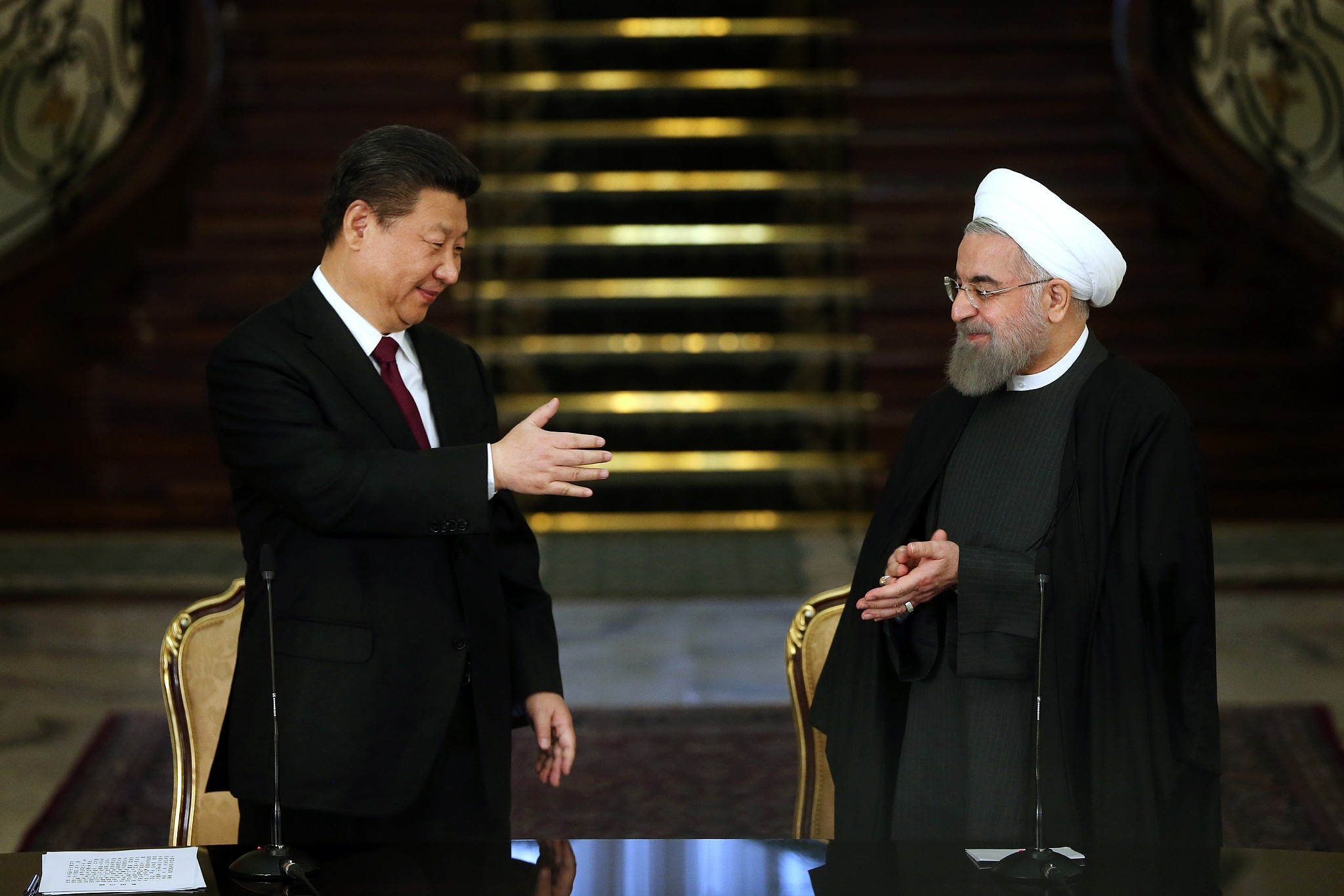 Chinese President Xi Jinping, left, and his Iranian counterpart Hassan Rouhani prepare to shake hands at the conclusion of their joint press conference at the Saadabad Palace in Tehran, Iran, January 23, 2016. (Ebrahim Noroozi/AP)
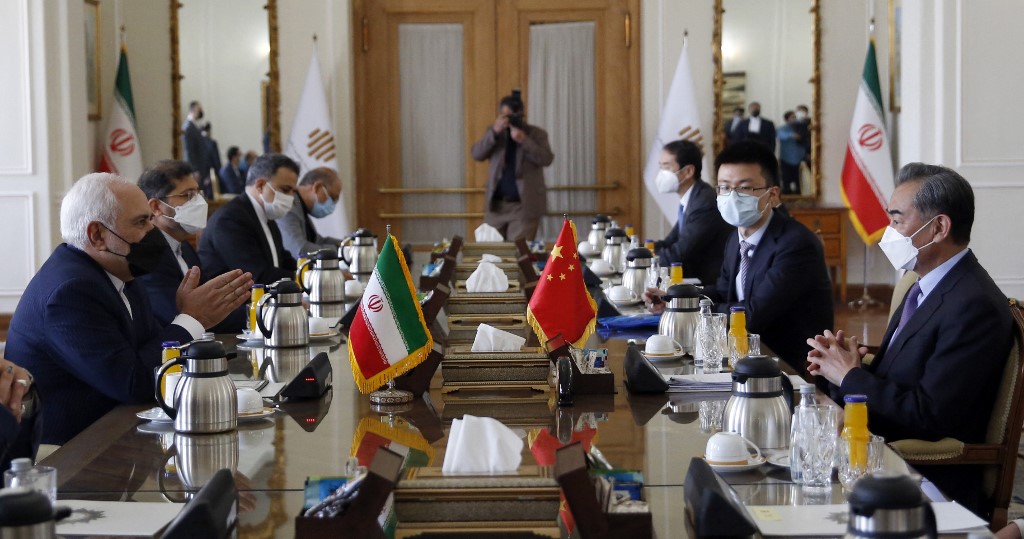 Iranian Foreign Minister Mohammad Javad Zarif, left, meets with his Chinese counterpart Wang Yi, right, in the capital Tehran, on March 27, 2021. Iran and China signed what state television called a ’25-year strategic cooperation pact,’ as the US rivals move closer together. (AFP)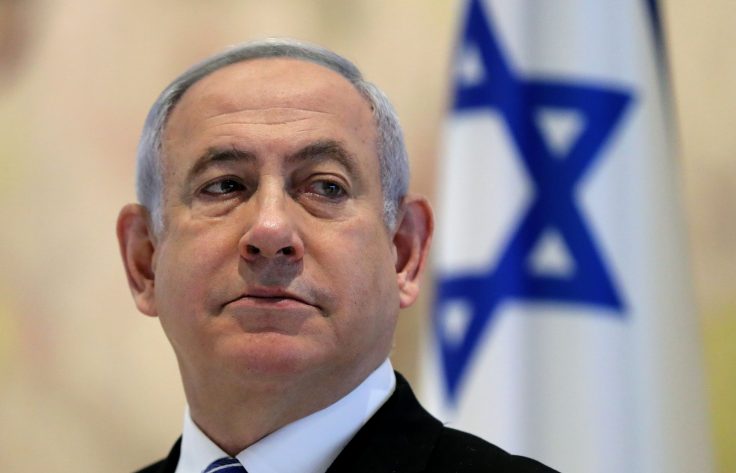


 A vendor waits for customers ahead of the Persian New Year, or Nowruz, at Tajrish traditional bazaar in northern Tehran, Iran, Wednesday, March 17, 2021. (AP Photo/Ebrahim Noroozi)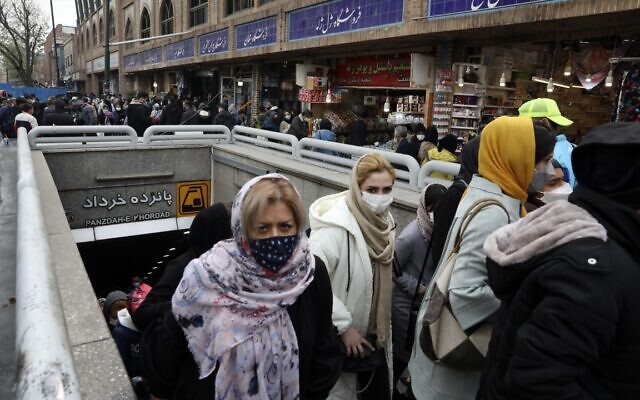





 anneinpt
 artaxes
 danmillerinpanama
 davidking1530
 Peter Hofman
 Joseph Wouk
 Peter
Peter Louisiana Steve
 WarSclerotic

Recent Comments