US: Upcoming Middle East conference not aimed at demonizing Iran 

Posted January 23, 2019 by Joseph Wouk
Categories: Uncategorized

Source: US: Upcoming Middle East conference not aimed at demonizing Iran | The Times of Israel

Deputy envoy to UN says Poland gathering will address cross-border Hezbollah tunnels, ‘unacceptably provocative’ firing of rocket from Syria at Israel

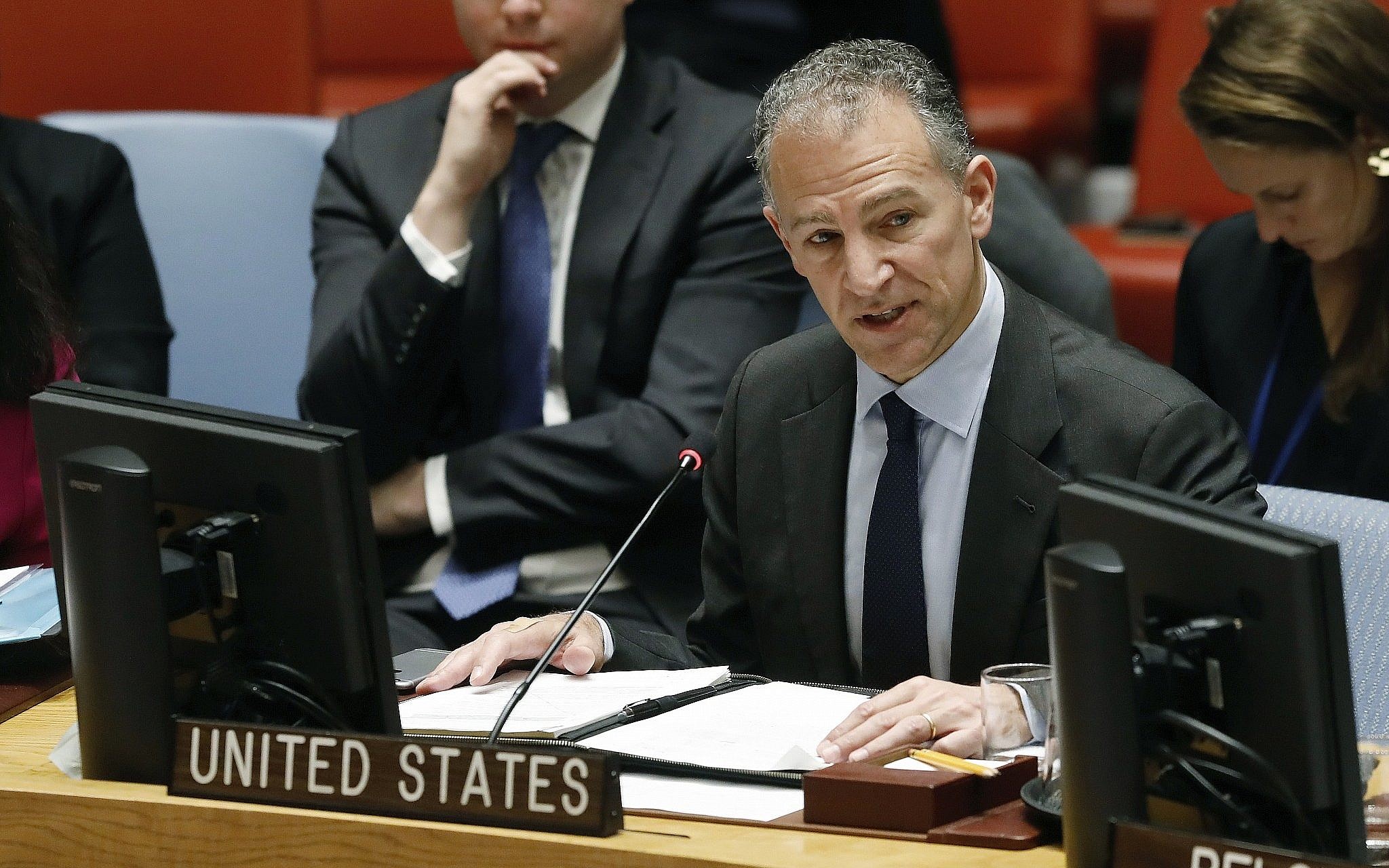
Acting Permanent Representative of the United States Jonathan Cohen addresses the United Nations Security Council, at UN headquarters, on January 22, 2019. (AP Photo/Richard Drew)

UNITED NATIONS (AP) — The United States said Tuesday an international conference next month to promote peace and stability in the Middle East is not aimed at demonizing Iran, which has denounced the gathering as America’s anti-Iran “circus.”

US deputy ambassador Jonathan Cohen told the Security Council that the conference in Warsaw on February 13-14 sponsored by the United States and Poland is also not aimed at discussing the merits of the 2015 Iran nuclear deal known as the JCPOA, which US President Donald Trump withdrew from in 2018.

He called the ministerial meeting a brainstorming session to “develop the outline of a stronger security architecture” in the Mideast with sessions on the humanitarian crises in Syria and Yemen, missile development, extremism and cybersecurity.

Cohen’s comments followed complaints from Iran directed at Poland for co-hosting the conference and a tweet by Iran’s Foreign Minister Mohammad Javad Zarif denouncing it as a US anti-Iran “circus.” Poland’s foreign minister Jacek Czaputowicz said in remarks published Monday that Iran wasn’t invited and Russia would not attend.

Russian Ambassador to the United Nations Vassily Nebenzia speaks during a Security Council meeting on Iran’s compliance with the 2015 nuclear agreement, on December 12, 2018, at UN headquarters. (AP Photo/Mary Altaffer)

Russia’s UN Ambassador Vassily Nebenzia told the Security Council later that Moscow would like to believe the conference isn’t just aimed at one country. He then asked: “Why has that conference not invited Iran, which is one of the most significant and large countries in the region?”

“Attempts to create some kind of military alliances in the region, holding different conferences and focusing on having a simplified unilateral approach to the region that is clearly linked just to Iran, is counterproductive,” he said, “and just pushes further away the prospects of finding a genuine security architecture for the region.”

Nebenzia also asked how it’s possible to have “a genuine architecture without solving the Palestinian issue.” He reiterated Russia’s offer to host talks between the Israeli and Palestinian leaders, stressing that this is the only way to solve so-called final status issues and achieve a two-state solution.

Looking ahead to the Warsaw conference, Cohen said there will be “a dynamic discussion and collaborative thinking with the goal of contributing to a more peaceful, stable and prosperous Middle East.” He added that this would be “a more productive approach” than the Security Council’s monthly Mideast meetings focusing on the Israeli-Palestinian conflict.

“It’s also important to state clearly what this ministerial (conference) is not: It is not a forum to re-litigate the merits of the JCPOA. While we’ve made our concerns with the JCPOA clear, we respect other states’ decisions to support it,” the US envoy said. “It is also not a venue to demonize or attack Iran.”

Cohen said Secretary of State Mike Pompeo “has outlined a clear strategy to reach a new comprehensive deal with Iran built on the shared global understanding that Iran must cease its destabilizing activities.”

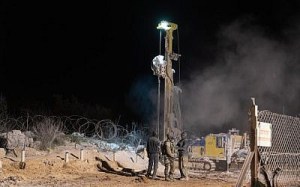
In this photo provided by the IDF on December 26, 2018, Israeli soldiers are seen at the scene of a tunnel dug across the border from Lebanon. (IDF Spokesperson)

But he said the conference will acknowledge the need for action against Iran’s missile program, Iranian proxy Hezbollah’s tunnels from Lebanon into Israel, and the “unacceptably provocative act by the Iranian and Syrian regimes” in launching a rocket from Syria at Israel over the weekend.

Cohen said these activities, among others, are “drivers of instability in the Middle East, but the scope of the discussion will be much broader than any one country or set of issues.”

“As a testament to this, countries from around the world have been invited to participate,” he said.

Pompeo, who recently completed a Mideast tour bringing the Trump administration’s anti-Iran message to the region, said Sunday in Qatar that he hoped the Warsaw conference will allow the world to see “the enormous coalition that is prepared to assist in creating stability and peace here in the Middle East.”

“We’ll work on many issues including how it is we can get the Islamic Republic of Iran to behave more like a normal nation,” Pompeo said.


Israeli jets strike northern Gaza targets following border flare-ups 

Posted January 23, 2019 by Joseph Wouk
Categories: Uncategorized

Source: Israeli jets strike northern Gaza targets following border flare-ups | The Times of Israel

Raids hit Hamas sites after two shooting attacks on Israeli troops earlier in the day, including one in which bullet struck officer’s helmet

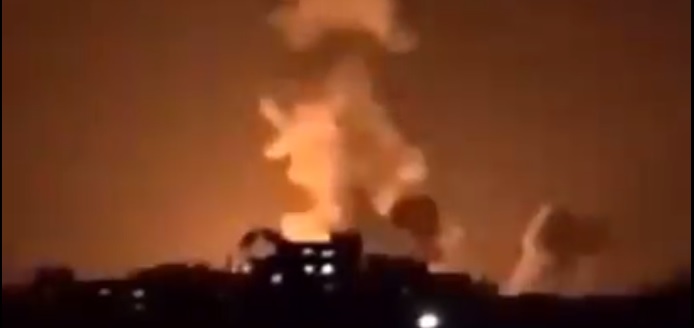
An explosion in the northern Gaza Strip from Israeli airstrikes lights up the night sky on January 22, 2019. (Screen capture: Facebook)

An explosion in the northern Gaza Strip from Israeli airstrikes lights up the night sky on January 22, 2019. (Screen capture: Facebook)


The airstrikes came amid a significant increase in violence along the Gaza border Tuesday.

Earlier in the day, shots were fired at Israeli troops stationed along the security fence across from the northern Strip. In response, an IDF tank destroyed a nearby observation post belonging to the Gaza-ruling Hamas terror group.

The helmet of an IDF officer that was hiy by a sniper bullet during a riot along the Gaza border on January 22, 2019. (Courtesy)

On Tuesday afternoon, during a small riot next to the border, another sniper opened fire at a group of soldiers positioned along the border, hitting a Paratroopers Brigade company commander in his helmet, causing light injuries.

Then an IDF tank fired on a Hamas observation post. In that case, however, three Hamas members who had just left the structure were hit by the blast, killing one of them and wounding the other two.

The injured IDF officer was taken to Beerhsheba’s Soroka Medical Center for treatment. A cut on his head was bandaged, and he was released hours later, the hospital said.

In addition to the airstrikes, Israel also halted a previously approved $15 million transfer to the Gaza-ruling Hamas terrorist group from Qatar because of the violence.

“Following the recent incidents in the Gaza Strip, and with consultation with security officials, Prime Minister Benjamin Netanyahu decided not to allow the transfer of Qatari money to the Gaza Strip tomorrow,” an Israeli diplomatic official said, speaking on condition of anonymity.

A Hamas official told The Times of Israel that “Netanyahu’s decision to prevent their entry is a crime that will push Gaza toward an explosion.”

Qatar had been preparing to transfer $15 million in payouts to Hamas civil servants in the Gaza Strip. This was the third such installment for the terror group to be approved by the Israeli government, in what officials see as a pressure-release valve intended to calm unrest and ease a potential humanitarian crisis in the beleaguered Strip.

The transfer of the funds to Hamas, which calls for the destruction of the Jewish state, is widely unpopular in Israel. The announcement by the diplomatic official was a rare admission by the government that it had indeed approved the payments.

The funds were expected to be transferred on Wednesday, after they were initially stalled by Israel last week in response to another flare up in cross-border violence, Qatar’s envoy to the Hamas-ruled Gaza Strip, Mohammed al-Emadi, told the Reuters news service.

Since March, Palestinians have been holding regular protests on the border. Israel has accused Gaza’s Hamas rulers of using the demonstrations as a cover for attacks on troops and attempts to breach the security fence.

Israel has demanded an end to the violent demonstrations along the border in any ceasefire agreement.

Adam Rasgon contributed to this report.


Comments: Comments Off on Israeli jets strike northern Gaza targets following border flare-ups 

Syria’s UN envoy threatens retaliatory attack on Ben Gurion Airport

Posted January 23, 2019 by Joseph Wouk
Categories: Uncategorized

Source: Syria’s UN envoy threatens retaliatory attack on Ben Gurion Airport | The Times of Israel

Threats come after Israeli air force strikes on storehouses and radar systems at Damascus airport, which reportedly killed 21, including 12 Iranians

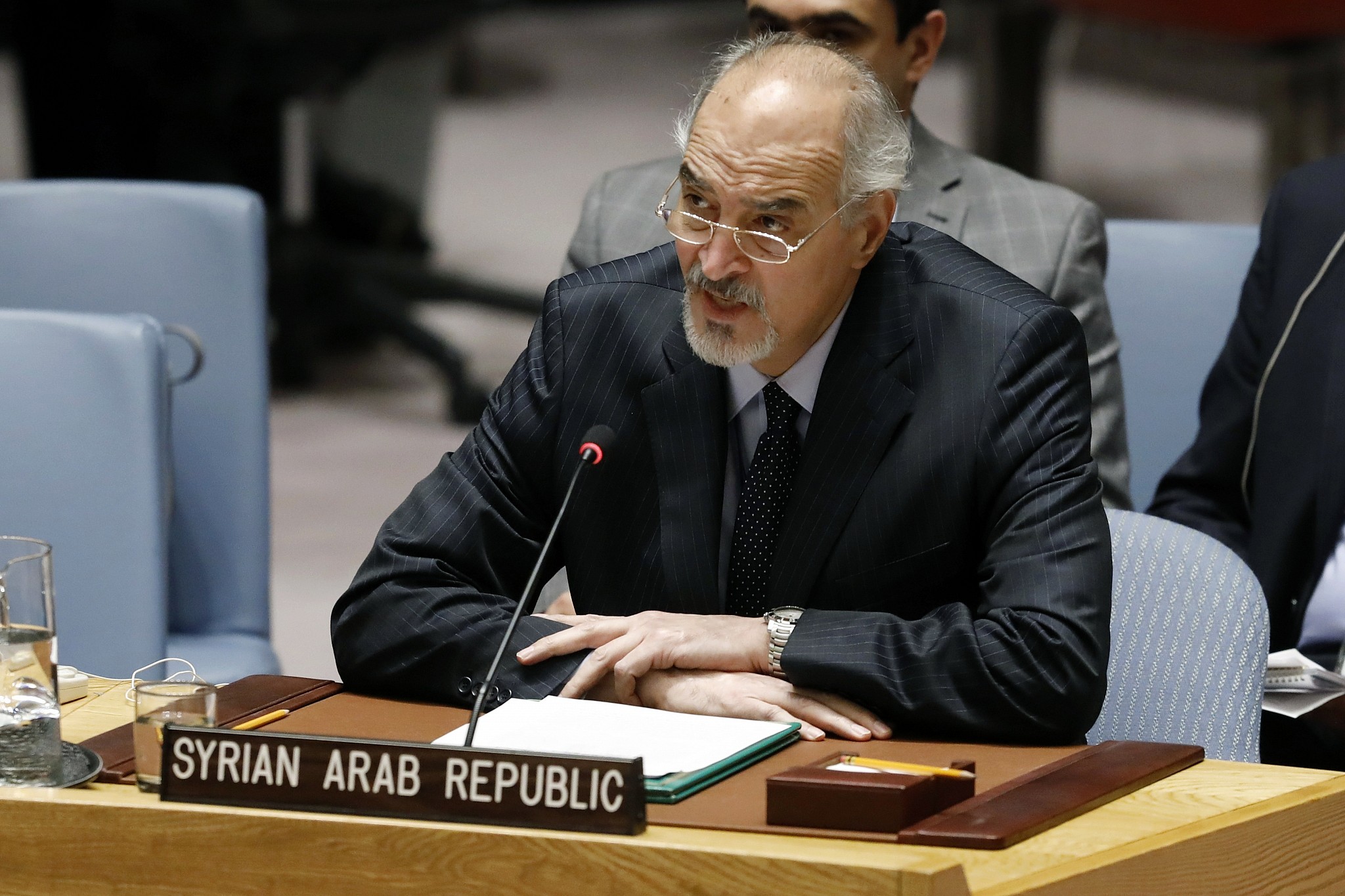
Syria's UN Ambassador Bashar Jaafari addresses the United Nations Security Council, at UN headquarters, Tuesday, Jan. 22, 2019. (AP Photo/Richard Drew)

Syria’s UN Ambassador Bashar Jaafari addresses the United Nations Security Council, at UN headquarters, Tuesday, Jan. 22, 2019. (AP Photo/Richard Drew)

Syria’s envoy to the United Nations warned Tuesday that if the world body did not halt Israeli strikes on his country, Syria would retaliate with an attack on Ben Gurion International Airport outside Tel Aviv.

Speaking at the UN Security Council after a series of IAF airstrikes on Sunday and Monday — most of them launched after an Iranian missile fired from Syria was intercepted over the Israeli Golan Heights on Sunday afternoon — Bashar Jaafari said Israel was only able to act freely in Syria because it had the backing of the US, UK and France in the Security Council.

Syrian state media Sana quoted Jaafari as saying that if the UN Security Council didn’t adopt measures stop Israel, “Syria would practice its legitimate right of self-defense and respond to the Israeli aggression on Damascus International Airport in the same way on Tel Aviv airport.”

“Isn’t it time now for the UN Security Council to stop the Israeli repeated aggressions on the Syrian Arab republic territories?” Jaafari said.

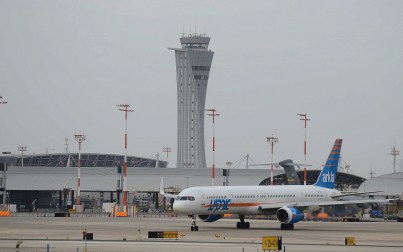
A view of Ben Gurion International Airport near Lod on May 8, 2018. (Tomer Neuberg/Flash90)

While Israel has repeatedly hit targets inside Syria in recent years to try to stop the transfer of arms to Hezbollah and the entrenchment of Iranian forces, Syria has rarely responded.

It’s unclear if Syria has the ability to strike at Ben Gurion Airport; any attempt to do so would be viewed by Israel as a major escalation.

On Sunday, Israel reportedly conducted a rare daylight missile attack on Iranian targets in Syria. In response, Iran fired a surface-to-surface missile at the northern Golan Heights, which was intercepted by the Iron Dome missile defense system over the Mount Hermon ski resort, according to the Israel Defense Forces.

Hours later, in the predawn hours of Monday morning, the Israel Air Force launched retaliatory strikes on Iranian targets near Damascus and on the Syrian air defense batteries that fired upon the attacking Israeli fighter jets, the army said.

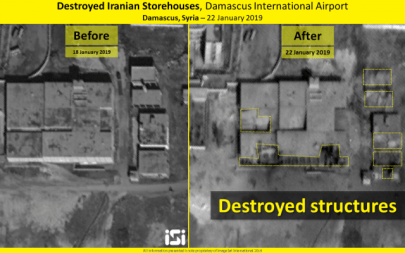
Satellite images released by an Israeli firm on Tuesday appeared to show extensive damage at Damascus International Airport.

The photographs published by ImageSat indicated storehouses and radar systems at the Syrian airport were destroyed in the strikes.

Embedded video

ImageSat Intl.@ImageSatIntl

Before, during and after: (SA-22) strike in , , 20 January 2018.

Twenty-one people were killed in the Israeli raids in Syria early on Monday, 12 of them Iranian fighters, a Britain-based Syrian war monitor said earlier on Tuesday.

The Syrian Observatory for Human Rights initially reported the death toll from the Israeli strikes to be 11. But on Tuesday, the war monitor said the number had risen to 21, making it one of the deadliest attacks by Israel in Syria.

According to SOHR, 12 of those killed were members of Iran’s Islamic Revolutionary Guard Corps; six were Syrian military fighters; and the other three were other non-Syrian nationals.

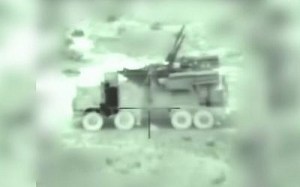
A Syrian mobile anti-aircraft battery vehicle as seen through the targeting camera of an incoming Israeli missile, in footage released by the IDF of its early morning strikes in Syria on January 21, 2019. (IDF)

The IDF said Monday that Iranian troops in Syria launched their missile at the Golan in a “premeditated” attack aimed at deterring Israel from conducting airstrikes against the Islamic Republic’s troops and proxies in Syria.

Israeli troops on Monday were put on high alert in the north.

Military spokesperson Jonathan Conricus said the three response sorties destroyed a number of Iranian intelligence sites, training bases and weapons caches connected to the Quds Force, the expeditionary arm of Iran’s Islamic Revolutionary Guard Corps.

Satellite images purporting to show damage to Damascus International Airport in January 20 raids by Israel, released by ImageSat International, on January 22, 2019 (ImageSat International)

According to Conricus, one of the targets of the raids was “the main storage hub for Quds Force.”

On Monday morning, the IDF also released video footage of its airstrikes on Syrian air defenses, including on social media.

Embedded video

צבא ההגנה לישראל

@idfonline

תיעוד מתוך תקיפת חלק מסוללות ההגנה האווירית הסוריות לאחר שביצעו ירי הלילה:

According to Conricus, the Iranian retaliatory strike aimed at the northern Golan was “not a spur-of-the-moment” response, but had been planned months in advance, based on intelligence collected by the IDF.

“We understand that the Iranians are trying to change the context and deter us from our policy and our strategy of fighting Iranian troops in Syria,” Conricus said. “They thought they could change the rules of engagement. Our response was a rather clear one, with a message to Iran and Syria that our policies have not changed.”


Comments: Be the first to comment

Between exoatmospheric Arrow 3 and two perilous warfronts down below – DEBKAfile

Posted January 23, 2019 by Joseph Wouk
Categories: Uncategorized

Source: Between exoatmospheric Arrow 3 and two perilous warfronts down below – DEBKAfile

The Israeli-US Arrow 3’s successful interception of a mock ballistic missile flying outside the earth’s atmosphere coincided on Tuesday, Jan. 22, with a sniper bullet from Gaza denting an IDF’s officer’s helmet.

Tension shot up on Israel’s combustible southern border at the same moment as Dome anti-rocket batteries were being rushed north, the day after an Iranian Fatteh-110 missile was aimed from Syria at the Hermon ski slopes north of the Golan.

Nonetheless, the Arrow 3 test was the cause for celebration. Harel Locker, Chairman of Israel’s Aerospace Industries, commented: “We are capable of defending ourselves against many bad things that our enemies are throwing at the state of Israel and preparing our next ground-breaking, border-breaking and atmosphere-breaking products.” Prime Minister Binyamin Netanyahu was more prosaic: “We have extremely powerful defensive and offensive capabilities, among the most advanced in the world, for reaching our enemies and settling accounts with them.”

That morning, in the south, gunfire from the northern Gaza Strip was directed at an IDF engineering truck. Israeli tanks shelled a Hamas position. In the afternoon, a Hamas sniper shot an IDF officer. He was injured but saved from worse by his helmet. The IDF spokesman, whose communiques are often less than accurate, claimed he was struck by a rock. Meanwhile, five Palestinians broke through the Gaza fence to infiltrate Israel, and, once again, the tanks went into action against another Hamas position in central Gaza.This time, the Palestinians suffered casualties, one dead and several injured.

This time, too, the prime minister reacted to Hamas’ violation of the ceasefire deal it undertook in return for Qatari funding, by holding back the third $15m installment of Qatari cash due in January. Information was received that the outbreak of Gaza violence was instigated this time by Hamas’ partner-in-error, Iran’s Palestinian pawn, the Islamic Jihad, on orders from Tehran that were relayed through Hizballah in Beirut.

Iran had put another of its proxies in play. Instead of directly retaliating for the massive Israeli air and cruise missile strikes against Al Qods targets in Syria early Monday morning Jan. 21, Tehran decided to use its pawn in Gaza to punish Israel.

This concatenation of events highlights the complexity of Israel’s military quandary. Iran has managed to pull a tight noose around Israel’s neck from three directions, Syria, Lebanon and Gaza and is building a fourth in Iraq. All of these fronts are bristling with ground-to-ground missiles, a small number of which are precision-guided, although most are not outfitted with exact targeting devices. By now, some of those precise missiles have reached the Gaza Strip, as well as Syria and Lebanon.

 Israel’s arsenal of air defense weapons is formidable. But they can’t seal Israel’s air space and territory hermetically or nullify the strategic advantage Iran has achieved by the power to inflame three of its borders.

On the one hand, Iran’s military capabilities in Syria are diluted by their distance from home base, but, on the other, they are near Israel, on its very doorstep. The missile aimed at the Golan on Monday laid bare the presence of mobile surface missiles manned by Iranian officers and teams and deployed south of Al-Kiswah, opposite the IDF’s Golan positions. It was indeed shot down in time by Israel’s Iron Dome air defense system. However, those Al Qods launchers are not positioned outside the atmosphere, but just 25km from the Israeli border.


Comments: 1 Comment

Turkey and the Kurds in Syria – Jerusalem Studio 390 

Posted January 23, 2019 by Joseph Wouk
Categories: Uncategorized


Comments: Be the first to comment

True or False? – Netanyahu talks to the Iranian people

Posted January 22, 2019 by Joseph Wouk
Categories: Uncategorized


Comments: 1 Comment

Why is the ISRAELI ARMY so POWERFUL? – VisualPolitik EN

Posted January 22, 2019 by Joseph Wouk
Categories: Uncategorized

Apropos of Kavan’s comment below:

Source: Defense site: Iran has a stronger military than Israel – Arab-Israeli Conflict – Jerusalem Post GlobalFirePower …

This ranking seems to be an oversimplification of a complicated subject that relies heavily on the statistics of military inventory and quantification, without thorough assessment of hidden factors. Those naval vessels and aircraft are merely numbers. The majority of the vessels are fast boats, and the remaining are ailing frigates. Aircraft belong to Vietnam war era. Moreover, training, effectiveness, operational readiness, people’s support for the military, unity of command, technological resources, type of government, national power, military alliance, and many other factors don’t seem to have been taken into account. Military is not a warehouse.
IDF is undoubtedly the strongest military in the region and one of the strongest in the world.


Comments: 1 Comment

ניסוי מערכת “חץ” 3 – The test of the Arrow 3

Posted January 22, 2019 by Joseph Wouk
Categories: Uncategorized


Comments: Be the first to comment

INSS: Israel could face three-front war in 2019

Posted January 22, 2019 by Joseph Wouk
Categories: Uncategorized

Source: INSS: Israel could face three-front war in 2019

Institute for National Security Studies says the volatile situation along the northern border as well as in the Gaza Strip could lead Israel to war against Iran, Hezbollah and the Palestinians at the same time.

“The main three fronts are: Syria, Lebanon and the Gaza Strip, and they are very volatile. Despite the continued mutual deterrence between the sides, there is a potential for a military escalation, which could eventually lead to an all-out three-front war … Israel is ought to be prepared for this scenario,” said the assessment, which was submitted to President Reuven Rivlin last week.
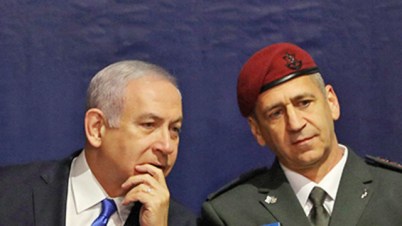
Prime Minister Netanyahu and IDF Chief of Staff Kochavi (Photo: Reuters)

Prime Minister Netanyahu and IDF Chief of Staff Kochavi (Photo: Reuters)

The First Northern War

One scenario for a three-front war involves the IDF facing all military forces along Israel’s northern border: Iran, Hezbollah, and the regime of Syrian President Bashar Assad. The possible “northern border war” is the gravest threat Israel faces in the coming year, according to the INSS.

Israel has repeatedly taken vigorous military action against the Iranian arms depots in Syria. The Islamic Republic, however, has declared it doesn’t intend to leave the war-battered country in the foreseeable future. Furthermore, Israel’s freedom of operations in Syria has diminished since Russia began to arm the Syrian regime after Assad’s forces all but reclaimed all the territory occupied by the Islamic State and various rebel groups.
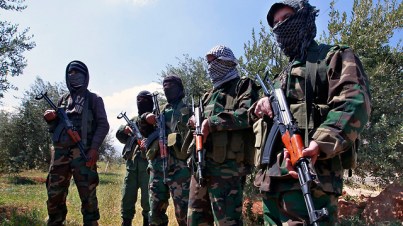
Hezbollah fighters on the Syria-Lebanon border (Photo: AP)

Hezbollah fighters on the Syria-Lebanon border (Photo: AP)

Due to Assad’s successes in Syria, Iran has decided to divert its attention to Iraq and Lebanon. Although Iranian support for its proxy Hezbollah has never ceased, recently more effort has been directed into assisting the terror group in converting its arsenal of unguided projectiles into precision-guided missiles, improving Hezbollah’s air defense capability and supplying the Shi’ite organization with long-range anti-ship missiles. Israel’s ability to thwart Iranian military projects in Lebanon is much more limited than in Syria, where a volatile political and security situation allowed the Israeli military to operate in a consequence-free environment.

The INSS researchers believe that to continue foiling Iran’s efforts to establish long-term military presence in Syria, as well as the Islamic Republic’s attempts to further enrich Hezbollah’s weapons arsenal, Israel would have to formulate a new course of action. The methods used by the IDF until now, which involve mostly aerial attacks on arms depots, no longer justify the risk of a possible military flare-up.

“Iran’s military projects in Lebanon and Iraq, as well as Russia’s restrictions on Israeli activity in Syria, will necessitate either an update to Israel’s modus operandi or formulating a new approach that would allow to Israel to eliminate the threat effectively while avoiding an all-out military confrontation,” said the assessment.

Conflict in the south

The potential for yet another Israel-Hamas flare-up is also extremely high in 2019. Although there are many factors that contribute to this assumption, the three main reasons are: the deteriorating socio-economic situation in the Strip; sanctions imposed on Hamas in Gaza by Palestinian President Mahmoud Abbas; and the erosion of Israel’s deterrence, which was achieved in the 2014 Operation Protective Edge.
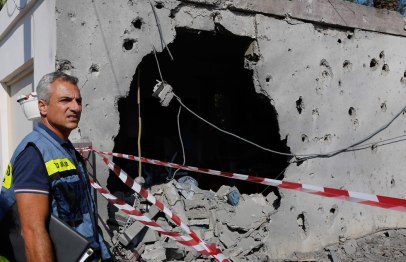
Home in Ashkelon that suffered a direct hit from a rocket fired from Gaza (Photo: AFP)

Home in Ashkelon that suffered a direct hit from a rocket fired from Gaza (Photo: AFP)

Unless Israel is planning a preemptive strike on Hezbollah’s factories to produce precision-guided missiles, which would ensure a military confrontation, the IDF should divert all its efforts to rebuilding the deterrence against Hamas by inflicting significant blows on the terror group’s military wing. Although Gaza poses an immediate threat, it is less grave in scale than the northern front.

Deteriorating situation in the West Bank

The Trump administration is due to release its “deal of the century” peace plan to end the Israeli-Palestinian conflict. The chances of the plan’s success, however, are slim. The Palestinian Authority has already rejected the proposal, and the best case scenario is that Israel would win the “blame game,” putting the onus of the failure of the latest American peace effort on the Palestinians.

Palestinians clashing with Israeli security forces in Ramallah (Photo: AFP)

Palestinians clashing with Israeli security forces in Ramallah (Photo: AFP)

But Israel would still have to bear the consequences of such a failure, which would undoubtedly lead to further instability and unrest in the West Bank. In the long term, there is the danger of a binational state forming in the absence of a two-state solution, which would threaten Israel’s identity as the nation-state of the Jewish people.

The Iran nuclear program

There are two low-probability extreme scenarios concerning the Iranian nuclear program that could come to pass in the coming year. The first is Iran acquiring an atomic bomb in the North Korean model in an effort to negotiate from a position of power. The second scenario is the toppling of the ayatollahs regime, which by all indications is stable and capable of suppressing any public unrest.

US-Israel relations

US support for Israel is stable, but Israel must prepare itself for unexpected decisions President Donald Trump might make. For instance, his announcement to withdraw the American forces from Syria does not significantly harm Israel’s security in the short term, but it strengthens its enemies and makes it easier for them to establish their long-term military presence in Syria.

Prime Minister Netanyahu meets with US President Trump (Photo: AFP)

Prime Minister Netanyahu meets with US President Trump (Photo: AFP)

INSS recommendations

According to the INSS, Israel should reach clear understandings with the United States regarding the Iranian nuclear program, which will include intelligence cooperation, defining a clear red line in case Iran violates the nuclear agreement and certainly in case Tehran tries to acquire a nuclear bomb, and preparing a joint political and military plan to stop Iran in case that red line is crossed.

In light of Trump’s withdrawal from the nuclear deal signed between the Islamic Republic and world powers, and the possibility Iran might resume its nuclear activities, Israel should make the necessary preparations for a military strike on Iranian nuclear facilities. Israel should also make it clear to the Trump administration that if the nuclear deal is ever renegotiated, the US must ensure the compromises it would entail will not hurt Israel’s interests.

US President Trump (Photo: Reuters)

US President Trump (Photo: Reuters)

In the meantime, Israel can continue basing its campaign to prevent Iran from establishing military presence in Syria on intelligence superiority and varied and precise strike capabilities. While it’s preferable the campaign against Iran’s military entrenchment remains confined to Syrian territory, Israel must be prepared for the possibility it could expand to Lebanon or even directly to Iran.

The rehabilitation of the Syrian army has already begun, which might lead the Assad regime to becoming more assertive against IAF activity in the area. The IDF must make every effort to avoid a clash with the Russian forces stationed in Syria to prevent another international crisis, similar to the one that occurred following the downing of a Russian intelligence plane by Syrian aerial defense forces who were trying to stop an IAF attack.

Israel must continue systematically preventing the transfer of quality weapons to Hezbollah in Lebanon, as long as the strategic conditions allow it. In addition, Israel must prepare to take action against Hezbollah’s accurate weapons facilities in Lebanon. Since such an attack would most certainly lead to a prolonged military confrontation with the Shiite terror group, Israel must also prepare the home front for a large-scale war in the north.

No political arrangement with Hamas

The Israeli-Palestinian conflict has been and continues to be a fundamental obstacle to Israel normalizing ties with its neighbors in the region. The Trump administration’s problematic relations with the Palestinians will make it difficult for any peace initiative to succeed. Nevertheless, the US and the pragmatic Sunni Arab world expect Israel to make the first move to convey its good intentions.

The Hamas government in Gaza is not a suitable partner for a diplomatic move, and so Israel must prepare for another war in the Strip. Any political arrangement with Hamas—a terrorist organization that doesn’t recognize Israel’s right to exist—weakens the moderate Palestinian camp and bolsters those who claim that Israel only understands force. However, it appears Hamas’s military options are limited, seeing as Israel has developed capabilities against its rockets arsenal and its border-crossing terror tunnels.

Relations with China and Russia

It’s important to maintain close ties, especially mutually beneficial economic ties, with Beijing and Moscow, but it shouldn’t be done at the expense of Israel’s only truly reliable ally: the United States. It is particularly important to strengthen risk management with regards to Chinese investment in essential infrastructures in Israel, while having open dialogue with the US, which is very sensitive to China acquiring the latest technology.

With Russia, Israel must reestablish the incident-prevention and coordination mechanisms in Syria, and urge the Russians to reduce their support for Iran.

Relationship with American Jewry

American Jewry is a key component when it comes to US contribution to Israel’s security. Israel needs to take proactive action to strengthen ties with various Jewish communities in the US, especially young Reform and Conservative Jews. There is also need for active dialogue with various sectors of American society who strongly oppose the Trump administration, but don’t hold anti-Israeli views, alongside renewed cooperation and dialogue with the Democratic Party. This can be done without compromising relations with the Trump administration and with the broad constituency of Republicans and Evangelical Christians who support Israel.
 

Comments: Be the first to comment

IDF comically responds to Iranian attack from Syria in Twitter post 

Posted January 22, 2019 by Joseph Wouk
Categories: Uncategorized

Source: IDF comically responds to Iranian attack from Syria in Twitter post – Arab-Israeli Conflict – Jerusalem Post

This is not the first time an official Israeli office has made a comic Twitter post.

BY TAMAR BEERI
 JANUARY 22, 2019 10:00
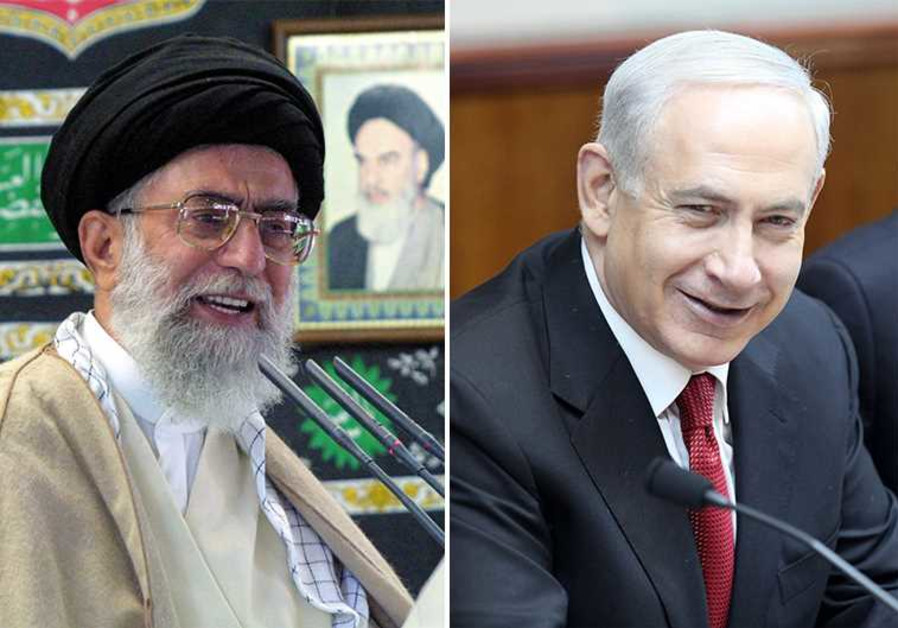
Netanyahu and Khamenei

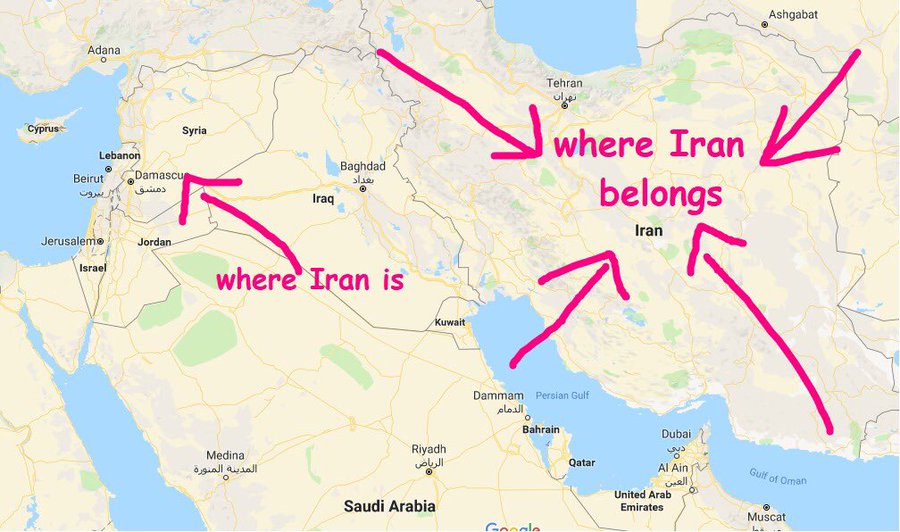
The IDF posted a comic photo on their official Twitter page on Monday afternoon depicting a map of the Middle East, explaining “where Iran belongs” in contrast to where they are, referring to the Iranian settlement in Damascus from which a missile was fired at Israel earlier in the week.

The firing of the missile yesterday – a launch that could have killed civilians – was fired by Iranians out of Damascus within an area that we were promised that there would be no Iranians,” IDF spokesman Brig.-Gen. Ronen Manelis told reporters on Monday.

The IDF, in response, released a post on their Twitter page on Monday afternoon with a map pointing out in the playful font Comic Sans where Iran is in contrast to where it should be.

Israel Defense Forces

@IDF

This is not the first time official Israeli agencies have been trolls online.

In June 2018, Iranian Supreme Leader Ayatollah Ali Khamenei wrote on Twitter that Israel “is a malignant cancerous tumor in the West Asian region that has to be removed and eradicated.”

The Israeli embassy in the US responded with a GIF image of the famous movie Mean Girls in which one character asks, “Why are you so obsessed with me?”

Khamenei.ir@khamenei_ir

Embassy of Israel

@IsraelinUSA

pic.twitter.com/1dRRE7Nv1s

Embedded video

Anna Ahronheim contributed to this report.


Comments: Be the first to comment