Source: IDF orders schools shut from Gaza to Tel Aviv for 1st time since ’14 | The Times of Israel
50 rockets fired at Israel from Gaza, 20 of them shot down; army says it’s prepared for several days of fighting after assassinating a senior Islamic Jihad commander in the Strip
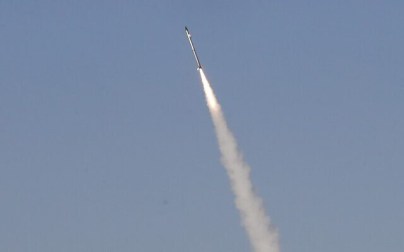
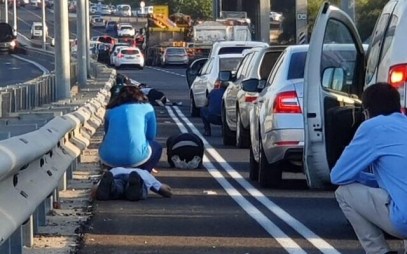
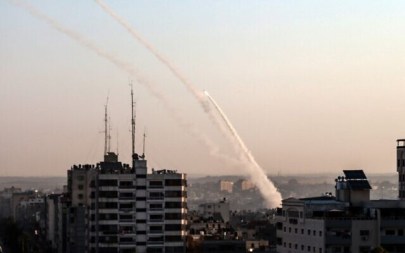
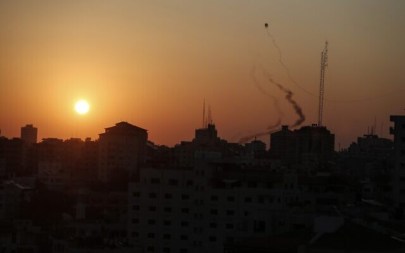
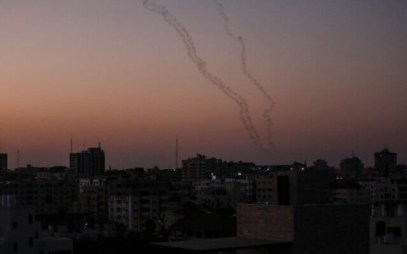
“We are prepared for several days of battle with an aerial defense shield, including in the center of the country,” IDF spokesperson Hidai Zilberman told reporters Tuesday morning.
Approximately 50 rockets and mortar shells were fired from the Gaza Strip at central and southern Israel on Tuesday as of 9:10 a.m., according to the IDF. Soldiers operating the Iron Dome missile defense system shot down 20 of those incoming projectiles, the military said.
The IDF Home Front Command ordered all schools and non-essential businesses closed in the following areas: the Gaza periphery; the Lachish region; the western Negev; the central Negev; and the Shfela region. The IDF also forbade gatherings of more than 100 people.
Schools were also closed in the Dan region, including Tel Aviv, and in the Yarkon region. Businesses were temporarily ordered shut there as well, but were allowed to reopen on Tuesday morning, providing there was a bomb shelter nearby, the military said. In the Dan and Yarkon regions, the IDF forbade all public gatherings of more than 300 people.
It was the first time that the IDF ordered a closure of schools and businesses in the Tel Aviv metropolitan area since the 2014 Gaza war, known in Israel as Operation Protective Edge.
Rocket attacks began shortly after the killing of Abu al-Ata early Tuesday morning, most of them focused on Israeli towns and cities surrounding the northern Gaza Strip. Shortly after 7 a.m., rocket sirens sounded in the Tel Aviv suburbs of Rishon Lezion and Holon. An hour later, sirens blared in the southern neighborhoods of Tel Aviv and in the nearby suburbs of Bat Yam and Holon.
As of 10 a.m. Tuesday, one person was lightly injured by shrapnel from rocket fire and six were brought to the hospital with injuries sustained while running to bomb shelters or with panic attacks.
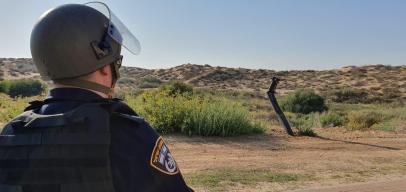
Several rockets struck the town of Sderot, northeast of the Gaza Strip, causing no injuries. One also hit the city of Ashdod, causing no injuries but damaging a car, police said.
Hospitals and other emergency services were put on high alert in light of the ongoing rocket attacks.
The Ben Gurion International Airport was not affected by the closures. “Ben Gurion Airport is working as usual with no changes to the flight schedule,” a spokesman for the Israeli Airports Authority said.
“We are ready for various scenarios, both offensive and defensive. We are not interested in escalating the situation,” IDF spokesman Jonathan Conricus said Tuesday.
He said the IDF has sent messages to Hamas, through unidentified third parties, urging the terror group to not take part in this round of fighting.
“We are monitoring [Hamas’s] activities and will conduct ourselves accordingly,” he said.
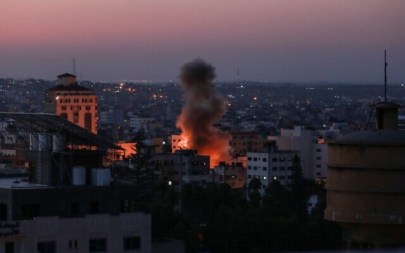
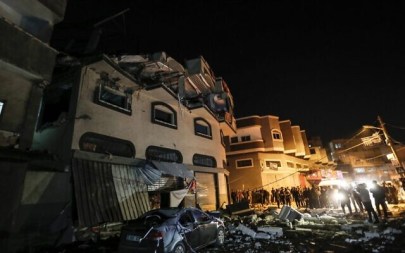
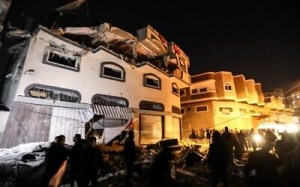
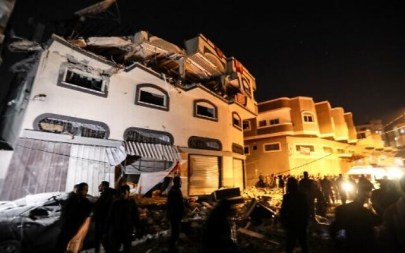
At approximately 4 a.m. Tuesday, Israeli Air Force jets fired precision ammunition at a building in the Shejaiya area of Gaza City where Abu al-Ata was staying, killing him, in a joint operation by the IDF and Shin Bet security service. A woman was also killed and two other people were injured in the strike, according to the Hamas-run Gaza health ministry.
According to the IDF, Abu al-Ata was planning to carry out rocket attacks and other terrorist activities against Israel and was also directly responsible for several cases of rocket fire over the past six months.
“We know that he was behind most and almost all of the PIJ’s attacks against Israel going back to the 25 of August, including before Memorial Day,” Conricus said, referring to several cases of rocket strikes.
The military said it had sent a number of warnings to Abu al-Ata — through unidentified mediators — to call off his operations, but they went unheeded.
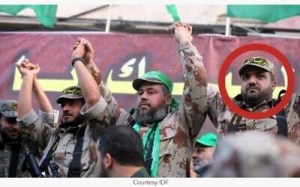
“We tried to send a message to Abu al-Ata and the Palestinian Islamic Jihad that we are aware of his actions and to persuade him to stop these attacks. Obviously, these warnings were not successful,” said IDF spokesman Jonathan Conricus.
Conricus said the assassination did not signify “a return to previous policies of what has been termed in the media ‘targeted killings.’”
“We conducted the attack because there were no other choice,” he said.
The timing of the IAF strike — in the midst of heated political debate as prime minister-designate Benny Gantz works to form a coalition — drew immediate criticism from opponents of Prime Minister Benjamin Netanyahu who questioned the need to conduct a targeted assassination at this time.
Conricus said the IDF asked for permission from Netanyahu, who serves as both prime and defense minister, as well as the security cabinet to carry out the assassination operation a week ago and was waiting for the right time to act.
“Over the last week, we have been waiting for the opportune moment to conduct the surgical strike,” he said.
The army spokesman said the military saw its chance on Tuesday morning when Abu al-Ata was relatively isolated and the risk to civilians was less.
“The missiles were fired from fighter jets with the intention of not bringing down the entire building, but just the floor where he was located,” Conricus said.
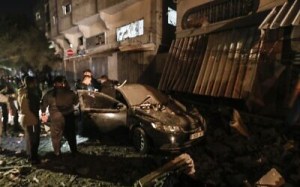
He said he was aware of the reports of additional casualties in the strike, but could not comment on the matter.
Conricus said the military did not believe that Abu al-Ata was acting on the orders of Iran, which backs the PIJ, but was “more a local terrorist who acted unchecked.”
Israeli military officials hinted at having Abu al-Ata on their kill list in recent weeks, leaking his name and picture to the media in what was widely seen as a tacit threat.
The targeted killing of a Palestinian leader in Gaza is a rare event.
In May, during the most serious flareup in recent years, when Palestinian terrorists fired more than 700 rockets into Israel, the IAF killed Hamed Hamdan al-Khodari, who it said was responsible for funneling money from Iran to Gaza terror groups.
Israel and Gaza have engaged in several sporadic rounds of violence over the last two years as the sides attempted to reach a long-term ceasefire.
Source: Sirens wail in Tel Aviv, suburbs as Israel bombarded by dozens of Gaza rockets | The Times of Israel
No reports of serious injuries or damage from barrages fired from Strip in retaliation for Israel’s killing of Islamic Jihad commander
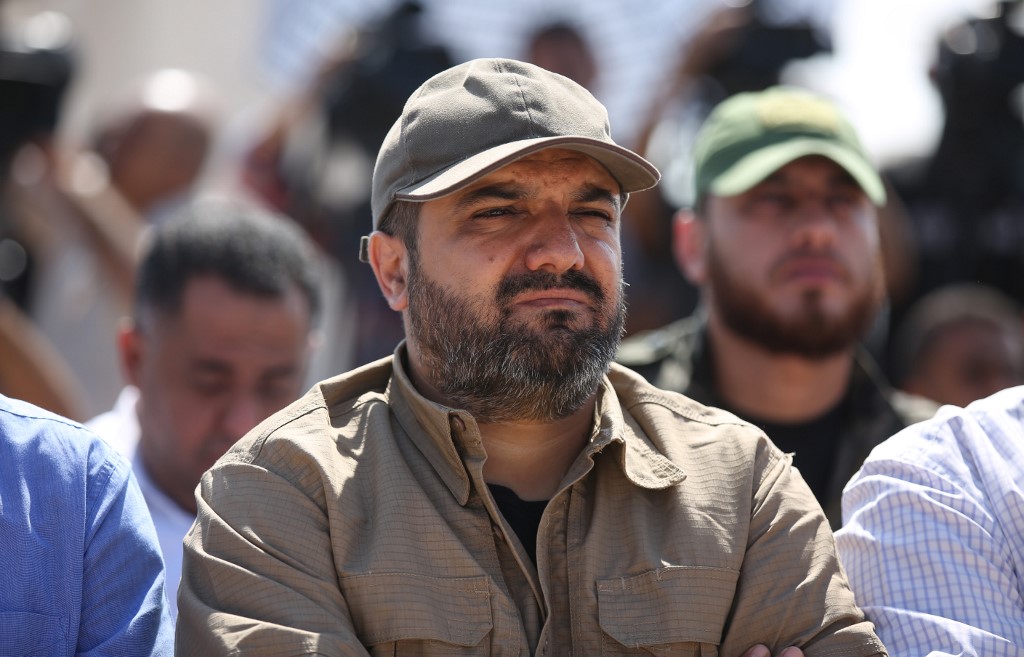
Dozens of rockets were fired from the Gaza Strip at central and southern Israel on Tuesday morning, triggering sirens in the city of Tel Aviv and its suburbs, following an IDF operation that killed powerful Islamic Jihad terror commander Baha abu al-Ata earlier in the day.
Rocket sirens wailed repeatedly starting at 6 a.m. in towns near the Gaza border. An hour later, alarms were triggered in the Tel Aviv suburbs of Rishon Lezion and Holon, as well as in the cities of Gedera and Ashdod, according to the Israeli military.
At approximately 8 a.m., rocket sirens sounded in Tel Aviv itself and in the nearby suburbs of Holon and Bat Yam.
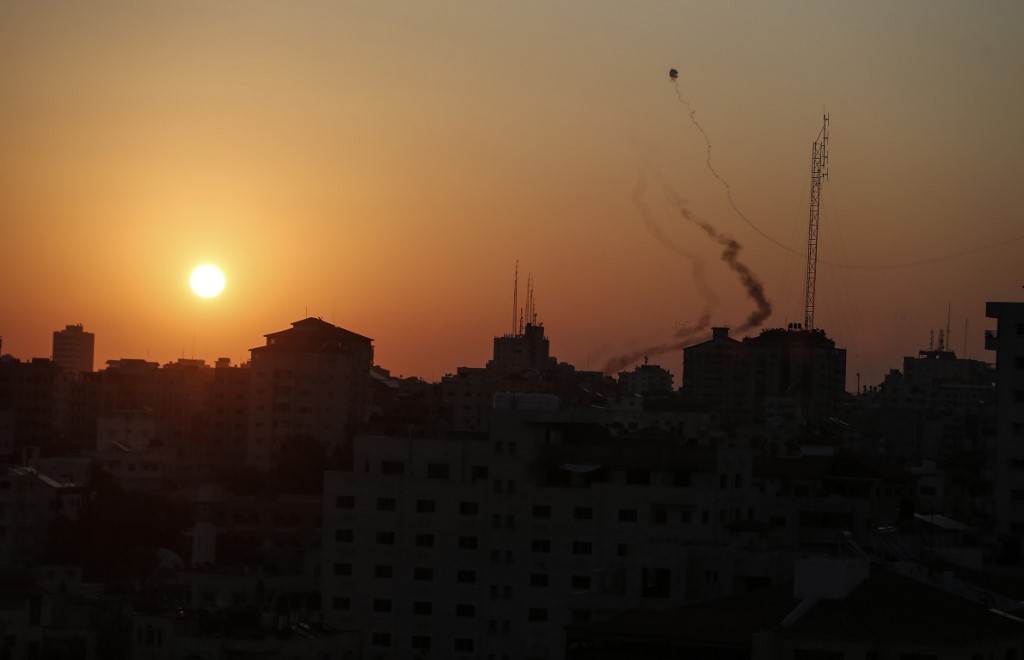
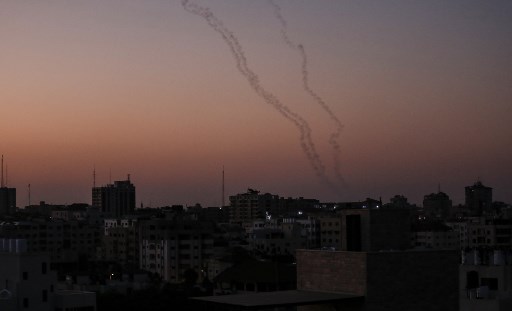
The Iron Dome missile defense system was activated in response to that attack. A video from the scene showed the distinctive puff of smoke caused by the detonation of an Iron Dome Tamir interceptor missile over Tel Aviv.
It was not immediately clear if the missile successfully shot down an incoming rocket, or if the missile self-detonated after Iron Dome operators saw that the rocket was heading toward an unpopulated area.
The IDF Home Front Command ordered all schools and non-essential businesses closed in the following areas: the Gaza periphery; the Lachish region; the western Negev; the central Negev; the Shfela region; the Dan region, including Tel Aviv; and the Yarkon region.
In the Dan and Yarkon regions, the military forbade all public gatherings of more than 300 people. In the other affected regions, the IDF forbade gatherings of more than 100 people.
As of 8 a.m. Tuesday, there were no immediate reports of injuries or damage directly caused by the rockets in Israel. The Magen David Adom ambulance service said medics had treated three people for light wounds caused by falls while running to bomb shelters.
A 93-year-old man in the city of Ashkelon, a 24-year-old woman in the city of Gedera and an 18-year-old woman in Ashdod all sustained light injuries while rushing to bomb shelters, MDA said.
In addition, three people were taken to the hospital after they suffered panic attacks caused by the rocket attacks, the ambulance service said.
Several other incoming rockets were intercepted by the Iron Dome air defense system.
The IDF urged residents of southern and central Israel to stay close to bomb shelters.
According to the army, Abu al-Ata, the head of Islamic Jihad’s northern Gaza branch, was responsible for several instances of rocket fire on Israel in the past six months and was planning to carry out more.
Source: Tel Aviv targeted; school, work off after Israel kills Islamic Jihad commander | The Times of Israel
Iron Dome intercepts rockets fired into Israel from Gaza after IAF targets Baha Abu al-Ata, accused of being behind recent barrages of rockets
Source: IDF preparing for several days of battle after killing of Islamic Jihad chief | The Times of Israel
The Times of Israel is liveblogging the events of November 12 as the nation girds for a major escalation in violence following the assassination of top Islamic Jihad commander Baha abu al-Ata.
The IDF says it expects terror groups in the Gaza Strip to retaliate for the assassination of Palestinian Islamic Jihad senior leader Baha abu al-Ata with rocket attacks throughout the country over the coming days.
“We are prepared for several days of battle, with an aerial defense shield, including in the center of the country,” the IDF spokesman says.
— Judah Ari Gross
Prime Minister Benjamin Netanyahu say the decision to kill a senior Islamic Jihad officer was taken Sunday by the cabinet.
“Senior Islamic Jihad commander Baha Abu al-Ata was targeted overnight in Gaza. He was responsible for many terrorist attacks and the firing of rockets at Israel in recent months and had intended to carry out imminent attacks,” Netanyahu’s office tweets.
“The IDF action was recommended by the IDF Chief-of-Staff and ISA Director and was approved by the Prime Minister and Defense Minister after it had been presented to – and approved by – the Security Cabinet.”
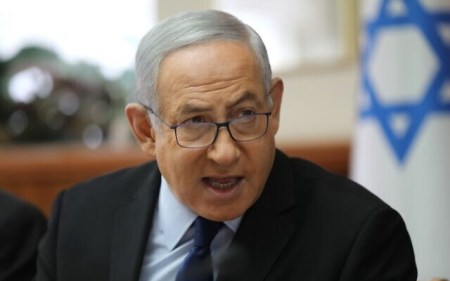
The security cabinet was set to meet Tuesday morning to discuss the escalation in southern Israel and the Gaza Strip after the IAF kills a senior Islamic Jihad leader and the terror group responded with rockets fired at Israel.
The meeting set for 09.00 a.m. comes the same day as Naftali Bennett is set to take over as Defense Minister.
Israel Radio says that senior Israeli officials have been barred form talking to the media.
IDF spokesperson Brig. Gen. Hidai Zilberman says the killing of a senior Islamic Jihad commander does not represent a return the the policy of targeted killings that saw Israel kill dozens of terror leaders in the last decade.
Zilberman said air force targeted Baha Abu al-Ata because he was “a ticking bomb” and was planning imminent attacks against Israel.
Israeli blames for the recent salvo of rockets fired into Israel.
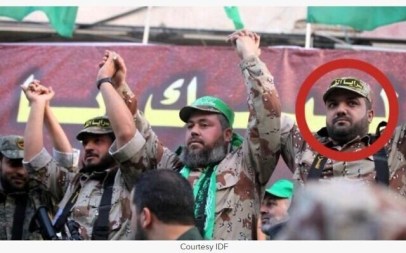
Senior military officials says they managed to target the specific room where Baha Abu al-Ata, a senior Islamic Jihad leader was sleeping, and did not destroy the entire building, Israel radio reports.
Palestinians say that Al-ata and his wife were killed in the strike on the building in the Shejaiya area of Gaza City.
The official tells Israel Radio that they had specific information on his location and managed to avoid casualties to bystanders.
The official says this was a one-time operation to get al-Ata, who was responsible for firing dozens of rockets at Israel in recent weeks, and not a return to Israel’s policy of targeted killings.
The Iron Dome anti-missile system intercepted several rockets over southern Israel early Tuesday, media reports said.
Israel radio said that several rockets were intercepted over the southern city of Ashdod.
There was no immediate confirmation from the IDF, but warning sirens wailed in several cities in the south, including Ashdod and Ashkelon
The IDF urged residents of southern Israel to stay close to bomb shelters on Tuesday as the region went on high alert after Israel killed a senior Islamic Jiahd commander.
School was canceled in cities and communities near the Gaza Strip and the railways cancelled routes in southern Israel.
All public events in the area were ordered cancelled.
Rocket warning sounded in Israeli communities near the Gaza Strip early Tuesday after Israel killed a senior Islamic Jihad commander in Gaza.
The IDF said sirens went off in Ashdod and in the Gadera region in southern Israel. The IDF was investigating.
Source: Israeli forces kill Islamic Jihad’s Abu Al-Atta in Gaza strike – DEBKAfile

Islamic Jihad, in its own statement, confirmed Al-Atta’s death and threatened retaliation against Israel. Rocket alerts in Ashdod, Gedera, Lachish and towns adjoining Gaza. Schoolchildren ordered to stay home in southern Israel including Ashdod and Beersheba as well as the Tel Aviv region. Roads are blocked and the military reinforcements are streaming to the Gaza Area. First rockets have reached Gedera and Kibbutz Givat Brenner. Population as far north as Greater Tel Aviv advised to stay home in sheltered areas through Tuesday until further notice.
“Our inevitable retaliation will rock the Zionist entity,” the Islamic Jihad statement threatened.
A mysterious explosion was reported early Tuesday on the outskirts of Damascus. A building associated with another Iranian proxy, Hizballah, was reportedly targeted.
The IDF reinforced its troops and prepared for multiple possible situations. Shelters in Ashkelon were opened and school was canceled as a “severe security event.” Ashdod is in a state of emergency.
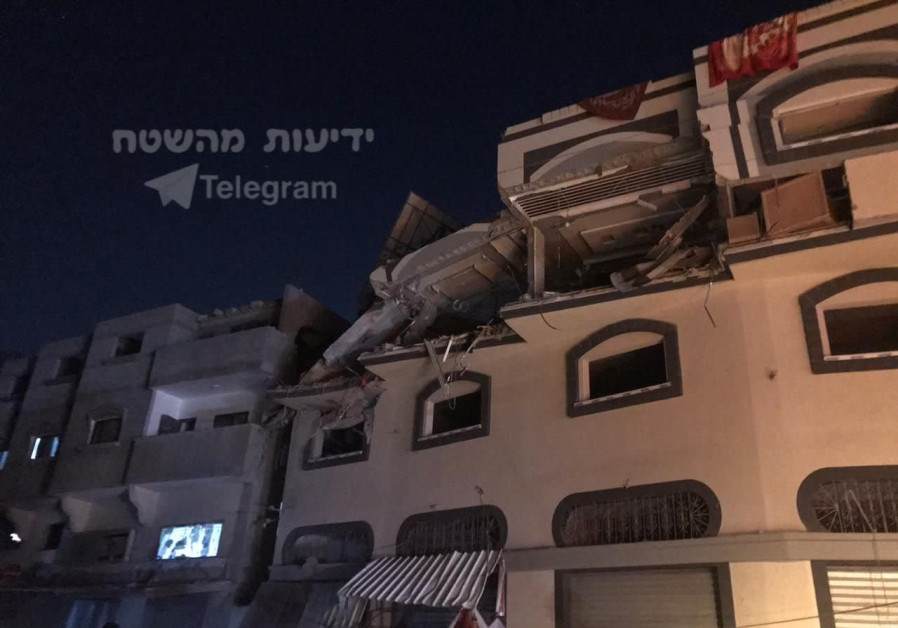
The Prime Minister’s Office confirmed that Israel was responsible for the aerial attack against Al-Ata, who it described as a “senior Islamic Jihad commander” who master-minded “numerous terrorist attacks and rocket attacks against the State of Israel in recent months and who intended to immediately carry out further attacks.”
The PIJ confirmed that Abu Al-Ata was killed, as well. The group said that one missile hit Abu al-Ata’s house, killing him and his wife instantly. Two of his children were seriously injured and rushed to hospital, it added.
The Hamas-controlled Ministry of Health confirmed that two Palestinians were killed in the attack early Tuesday.
Islamic Jihad Secretary-General Ziad al Nakhaleh, based in Lebanon, said in response to the assassination that Prime Minister Benjamin Netanyahu has “crossed all red lines.”
“We are going to war,” Nakhalaeh said.
The PIJ’s Al-Quds Brigade declared that the terrorist group was on the highest level of alert after the assassination.
The Hamas terrorist movement warned as well that the assassination “will not go unpunished.”
Islamic Jihad’s military wing, Al-Quds Brigades, said in a statement that Abu al-Ata, commander of the northern Gaza Strip, was “martyred while performing heroic jihad (holy war) to thwart conspiracies and defend the land.”
The group vowed to continue in the footsteps of its slain commander in order to “complete the process of liberation of the entire beloved Palestine. Our response will inevitably shock the Zionist entity.”
 وكالة سوا الإخبارية@palsawa
( شهود عيان : مكان الانفجار في وحدة سكنية شرق مدينة غزة، وسيارات الطوارئ وصلت المكان ) ؛ ولا معلومات رسمية حتى اللحظة حول طبيعة هذا الحدث.
وكالة سوا الإخبارية@palsawaصورة للمنزل الذي وقع فيه الانفجار شرق غزة الآن.
Smoke was seen rising from the scene before 5 a.m.
According to the Palestinian Al Quds newspaper’s Twitter, terrorist groups in the Gaza Strip attempted to fire a barrage of rockets into Israel after the attack. No sirens have been heard in Israel yet.
The operation was conducted jointly by the IDF and the Shin Bet and was carried out because Abu Al-Ata was preparing to attempt multiple terrorist attacks against Israeli civilians and IDF soldiers, including preparations for sniper and kidnapping attacks, drone launches, and preparations for rocket fire at various ranges.
The attack on the building he was in was conducted on exact intelligence information as a preventative measure to remove a real threat from the PIJ.
The IDF reinforced its troops and prepared for multiple possible situations Tuesday morning. Shelters in Ashkelon were opened and school was canceled, as the situation has been deemed a “severe security event.”
Ashdod declared a state of emergency and the city said it is opening public shelters.
Train service was temporarily canceled between Ashkelon and Beersheba and at the Sderot, Netivot and Ofakim stations.
The Homefront Command released directives for the communities surrounding the Gaza Strip and the Dan and Shfela region of central Israel. No studies will be held in communities surrounding the Gaza Strip or in Lahish and the central Negev. In central Israel, studies will only take place in secure buildings.
Gatherings in areas surrounding the Gaza Strip may only include up to 100 people in closed places. In Lahish and the central Negev, gatherings may include up to 300 people and in central Israel they may include up to 1,000 people in open areas and are without restrictions in closed areas.
Non-vital work will not take place in areas surrounding the Gaza Strip. Roads near the border fence will be closed.
“[Abu Al-Ata] and his activities were a time bomb that violated the understandings and undermined security, and the State of Israel therefore carried out an activity to remove this threat and prevent continued attempts to undermine stability and security,” wrote the Coordinator of Government Activities in the Territories on Twitter.
The head of Palestinian Islamic Jihad’s (PIJ) Al-Quds Brigades in Gaza, Baha Abu al-Ata was considered one of the top terrorists in the blockaded coastal enclave. While Hamas is the ruling party in the Gaza Strip, the group has in recent years been losing control over the street. And the vacuum is being filled by Ata, Tehran’s main man in Gaza.
Ata was been involved in planning attacks against Israel, manufacturing arms and upgrading long-range rocket launching capabilities. The second largest group in the Gaza Strip after Hamas, PIJ has been assessed by military intelligence as a factor increasing the risk of an escalation in the blockaded coastal enclave, since it is not under the direct control of Hamas but acts independently for its own interests.
Source: Netanyahu: Europe ‘must stop stalling,’ confront Iran over its nuclear program | The Times of Israel
PM accuses Islamic Republic of lying about alleged atomic facility in Tehran; Gantz calls resumption of work at Fordo a ‘wake-up call for the world’
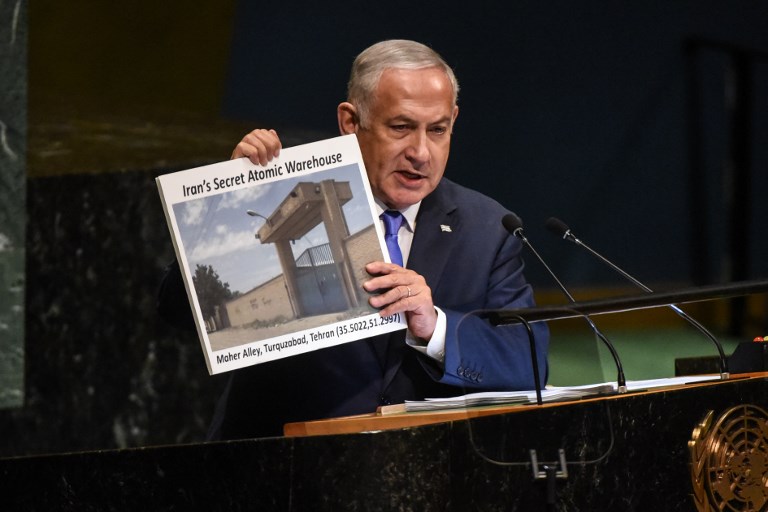
Prime Minister Benjamin Netanyahu charged Thursday that Iran “continues to lie” about its nuclear program and called on Europe to “stop stalling” and confront the Islamic Republic, as the UN atomic agency reportedly discussed a site in Tehran alleged by Israel to be a secret atomic warehouse.
Netanyahu’s comments also came as Iran resumed uranium enrichment at the Fordo facility in violation of the 2015 international accord limiting its nuclear work.
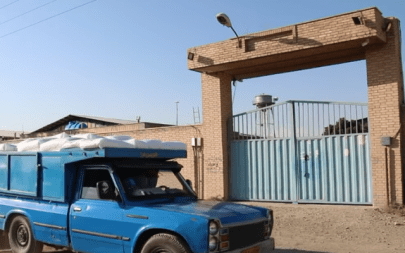
“A year ago, speaking at the UN, I exposed Iran’s secret nuclear warehouse in Turquzabad. This morning, a special board meeting of the [International Atomic Energy Agency] published its findings on Iran’s activities in the no-longer secret facility. The IAEA now confirms that Iran lied. And that Iran continues to lie,” Netanyahu said in an English-language statement.
The premier was referring to a site in Iran that he flagged during his speech to the UN General Assembly last year. According to Bloomberg, the IAEA’s top inspector has accused Iran of evading attempts to gather information on uranium production at the warehouse, where particles were found earlier this year.
“The IAEA has confirmed that Iran has been violating the Non-Proliferation Treaty,” Netanyahu said. “Iran continues to hide its secret nuclear weapons program.”
He appealed to the world to adopt a more forceful posture toward Iran.
“It’s time for the nations of the world to resist Iran’s aggression and terror. It’s time to snap back sanctions. It’s time to pressure Iran until it changes its ways,” he said. “Iran must stop attacking the nations of the Middle East. Iran must stop threatening to destroy Israel. Europe must stop stalling. It must act against Iranian aggression now.”
Netanyahu released a similar statement in Hebrew, in which he also reiterated that Israel “won’t allow Iran to develop nuclear weapons, under any circumstances.”
An unnamed Israeli intelligence official was quoted Thursday by the Kan public broadcaster as saying Iran could break out to a nuclear weapon in under a year.
Iran has not provided an explanation for why uranium was found at the site to the IAEA, which is investigating the facility in the Iranian capital, Reuters reported in September.
In a speech last year at the UN General Assembly, Netanyahu revealed the existence of the warehouse in Tehran, which he said held “massive amounts” of equipment and material that were part of a clandestine Iranian nuclear program.
Netanyahu called on the IAEA to inspect the facility and, in July, Israeli television reported that soil samples from the warehouse turned up “traces of radioactive material,” without specifying the type.
Citing two unnamed diplomats, Reuters reported that the material found at the site was determined to be uranium. One of the diplomats, however, said the uranium was not enriched enough to be used for a nuclear bomb.
The report said it was difficult to determine the origin of the uranium since Iran has not provided answers. It noted it was unclear whether the traces came from material at the site before or after the 2015 international deal was signed to limit Tehran’s nuclear program.
US President Donald Trump pulled out of the nuclear accord last year and reimposed stringent sanctions on Iran. Tehran has subsequently taken a number of steps to roll back its commitment to the accord over what it says is a failure by the deal’s remaining signatories to provide economic relief from the sanctions.
Meanwhile, Iran’s announcement that it would resume enrichment at the Fordo plant drew a chorus of concern from the remaining parties to the troubled agreement and the US called for “serious steps” to be taken, warning that Tehran was “positioning itself to have the option of a rapid nuclear breakout.”
Blue and White party chief Benny Gantz, who is tasked with forming Israel’s next government, called on the international community to tighten sanctions on Iran over the renewed work at Fordo.
The development “is another wake-up call for the world — we must increase pressure and tighten sanctions,” Gantz tweeted. “Iran poses a threat to world peace. Iran poses a threat to stability in the Middle East. Iran poses a threat to Israel.
“There is no such thing as politics when it comes to the Iranian threat — here, we are one, committed to preventing Iran from acquiring nuclear weapons,” he added.
 בני גנץ – Benny Gantz
✔@gantzbe
The exposure of renewed activity at the Fordo reactor is yet another wake-up call to the world – we must increase pressure and tighten sanctions. Iran poses a threat to world peace. Iran poses a threat to stability in the Middle East.
In September, the Wall Street Journal reported that Iran was obstructing the investigation into the Tehran site identified by Netanyahu. Unidentified diplomats told the newspaper Iran was refusing to provide answers to questions posed by the IAEA, in what was apparently the first instance of Tehran failing to cooperate with inspectors.
The diplomats told the newspaper that the uranium traces were likely remains from Iran’s past experimentation in nuclear weapons development. Iran has denied ever seeking nuclear weapons, though Israeli and Western intelligence strongly dispute those assertions. The diplomats said the material’s existence at the site was unlikely to indicate new work on weapons development, but would be a breach of Iran’s commitment to non-proliferation.
Iran has denied that the site was a nuclear facility or served any secretive purpose. In an initial response to Netanyahu’s UN speech, Iranian state media claimed the warehouse was a recycling facility for scrap metal.
Agencies contributed to this report.




 anneinpt
 artaxes
 danmillerinpanama
 davidking1530
 Peter Hofman
 Joseph Wouk
 Peter
Peter Louisiana Steve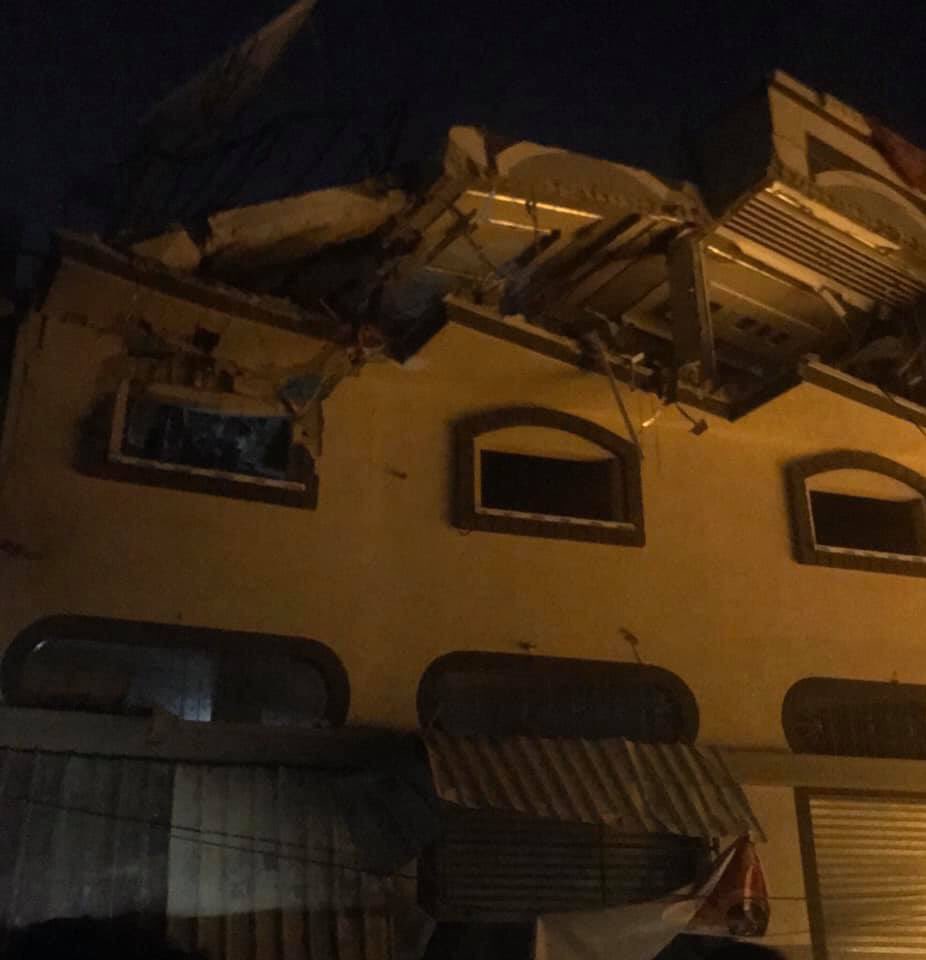


Recent Comments