Archive for the ‘Turkey and human rights’ category

CAIR, Awad Continue Aggressively Shilling for Turkey

September 10, 2016

CAIR, Awad Continue Aggressively Shilling for Turkey, Investigative Project on Terrorism, September 9, 2016

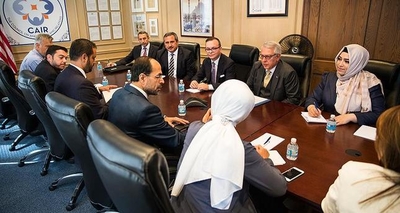
1822Parliamentarians from Turkey’s AK Party meet with CAIR officials earlier this week.

Awad was interviewed by Turkey’s Andolu news agency after this week’s meeting, which he called important in expressing “the support of the Muslim community for democracy and the rule of law in Turkey,” an IPT translation of his remarks shows.

**********************

A delegation from Turkey’s parliament came to Washington this week to make the case for extraditing Fethullah Gülen, an opposition figure living in self-imposed exile in Pennsylvania.

The Turkish government alleges Gülen was behind July’s failed coup attempt and President Tayyip Recep Erdoğan describes his extradition as a “priority.” Gülen denies any role in the coup and U.S. officials have said the Turkish evidence presented so far is not persuasive.

According to a Turkish press account, the delegation’s second meeting was with the Council on American-Islamic Relations (CAIR) and its executive director, Nihad Awad.

CAIR is a tax-exempt charity which presents itself as an American Civil Liberties Union devoted to protecting American Muslims from discrimination in housing, employment and other civil rights.

The visit from the Justice and Development Party (AKP) delegation, however, shows CAIR’s significant emphasis on influencing American foreign policy. CAIR is not a registered lobbying organization and isn’t registered as a foreign agent. Federal law requires registration by people or groups “before performing any activities for the foreign principal.”

CAIR routinely inserts itself into political debates on behalf of foreign entities, including a full campaign aimed at criticizing Israel during the 2009 and 2014 Gaza wars while staying silent about Hamas. Its Detroit director told a rally that being “defenders of the Palestinian struggle” was part of CAIR’s mission.

Awad was interviewed by Turkey’s Andolu news agency after this week’s meeting, which he called important in expressing “the support of the Muslim community for democracy and the rule of law in Turkey,” an IPT translation of his remarks shows.

“We believe in the need for more Turkish visitors and delegations to come to the United States to talk about their experiences and explain their views,” Awad said, “because there is a view against them and a pathological fear of Turkey here. The Turkish government must be aware of the need to employ more efforts to explain what is happening (in) Turkey to American public opinion.”

There’s something pathological at play here, but it isn’t some imaginary fear of Turkey. This is CAIR, an Islamist group created as part of a Muslim Brotherhood network in America, officially rushing to the aid of Turkey’s Islamist and increasingly authoritarian government, a government that itself has been increasingly aligned with the Muslim Brotherhood and Hamas.

In his comments, Awad publicly acknowledges what he advised an official Turkish government delegation in private to get the desired political outcome.

We previously reported on the immediate support American-Islamists organized for Erdoğan’s AKP immediately after the failed coup. While Erdoğan’s dedicated followers inside CAIR may be comfortable with his crackdown on dissent, a recent New York Times editorial hints many U.S. policy leaders are not.

They believe “that Mr. Erdogan’s roundup of coup plotters looks like an attempt to silence any opposition, that Turkey has behaved outrageously in failing to stop conspiracy theories depicting the United States as a co-conspirator in the coup attempt, that Turkey has produced little evidence to warrant Mr. Gulen’s extradition and that Mr. Erdogan’s autocratic behavior is making him an unreliable ally.”

He has proven unreliable in the fight against ISIS, too. He failed to stop the flow of foreign fighters using Turkey as a way-station to join ISIS and places his fight against pro-Western Kurds above the global threat posed by ISIS.

Erdoğan’s post-coup attempt arrest record, along with a media crackdown and allegations of torture, speak for themselves, if that’s what Awad thinks is part of the “pathological fear of Turkey.”

What it has to do with CAIR’s charitable mission is much murkier.

Obama is the Real Turkey in This Scenario

September 6, 2016

Obama is the Real Turkey in This Scenario, Algemeiner, Ruthie Blum, September 6,2016

turkey-turkey

It is typical of Obama to condemn the victims of such a travesty. But to describe the failed coup as a re-affirmation of the Turkish people’s “commitment to democracy and the strength and resilience of democratic institutions inside of Turkey” borders on willful lunacy and blindness.

***********************

US President Barack Obama met with Turkish President Recep Tayyip Erdogan on Sunday at the G-20 summit in China.

Though the purpose of the two-day gathering was for representatives of governments and central banks to discuss policy issues pertaining to international financial stability, the tete-a-tete between Obama and Erdogan on the sidelines of the forum was not about money. It was, rather, a meeting of the minds on a subject close to the hearts of both NATO allies.

With his Cheshire-cat grin and dead eyes, Obama patted his Turkish counterpart on the back and congratulated him on a job well done. Erdogan had not only survived an attempt to oust him, but had quashed it like a true tyrant. Obama could only look on in awe and envy.

Following their little chat, the two leaders addressed the press at the JW Marriott Hotel in Hangzhou.

“By taking to the streets to resist the coup attempt, the Turkish people once again affirmed their commitment to democracy and the strength and resilience of democratic institutions inside of Turkey,” Obama said. “I indicated at the time the unequivocal condemnation of these actions and spoke personally to President Erdogan to offer any support that we might be able to provide in both ending the attempted coup, but also in investigating and bringing perpetrators of these illegal actions to justice.”

One form this help is going to take, Obama hinted, is the possible extradition to Turkey of controversial cleric Fethullah Gulen, whom Erdogan claims orchestrated the failed coup from his home of self-exile in Pennsylvania.

Obama also extended his “deepest condolences” to Turkey’s victims of terrorism, and said that he and his pal “Tayyip” had consented “to continue pursuing a peaceful political transition in Syria.”

Erdogan also made a statement, calling the president of the United States “Barack,” before launching into one of his usual self-serving rants. Typical of a violent Islamist appropriating the moral high ground, the Turkish president agreed that fighting terrorism is of utmost importance. But the “terrorists” to whom he mainly referred were Gulen and the Kurds. Groups like the Muslim Brotherhood and Hamas — which live by the sword, the rifle and the suicide-bomb are just fine, as far as he is concerned.

Obama did not bat an eyelash, however, indicating that the foreign policy of his nearly eight-year administration is firmly intact. And it still involves being on the wrong side of every conflict, while presenting the bad guys in a favorable light. Turkey is but one of many examples.

Let’s start with the failed coup. Erdogan’s paranoia about Gulen is likely unfounded. If any conspiracy theory is in order, it is that Erdogan himself planned the whole thing, in order to strengthen and legitimize his already suffocating stranglehold on the country.

For years prior to the botched attempt, the Turkish president was gradually purging his society of dissent. No institution was exempt from his wrath, with members of the press and academia being placed under a particularly high-powered microscope. Arresting journalists for daring to publish pieces that exposed his behavior was commonplace well before July 15, the date of the coup. But the practice paled in comparison to what has been taking place across Turkey in the weeks since then. Tens of thousands of citizens whom Erdogan deems a threat to his reign of terror have been fired from their jobs, thrown into prison or both. These include people from the military, the police, the judiciary, the political echelon, the media and the universities.

It is typical of Obama to condemn the victims of such a travesty. But to describe the failed coup as a re-affirmation of the Turkish people’s “commitment to democracy and the strength and resilience of democratic institutions inside of Turkey” borders on willful lunacy and blindness. As was the case with the foiled Green Revolution in Iran, when the newly instated administration in Washington watched from afar as the regime in Tehran gunned down protesters trying to extricate themselves from the mullahs dictating their every move, the White House once again simply watched from afar, and let the forces of evil wreak their havoc uninterrupted.

We now fully grasp what Obama was up to in 2009 — a total capitulation to the world’s greatest state sponsor of terrorism, culminating in last year’s signing of the nuclear deal with the ayatollahs. What he has in store for Turkey during his remaining lame-duck tenure in office remains to be seen. But it won’t be good.

This he made clear in his declaration of cooperation with Erdogan on the Syrian front. Referring to a joint “pursuit of a peaceful political transition” in the war-torn country not only made a mockery of the millions of dead and maimed citizens whose plight barely elicits a yawn any more, but served as a signal to Erdogan that he can proceed with the slaughter of America’s Kurdish allies as he sees fit. You know, all in the name of fighting the Islamic State group, the only bogeyman on which there is wide consensus.

Erdogan’s cross-border attack, code-named Operation Euphrates Shield, was launched on Aug. 24 and is still going on. This “peaceful political transition” is being carried out by Turkish planes, tanks and artillery. But Tayyip’s friend Barack — the real turkey in this tale of woe — forgot to mention it.

Turkey: Child Rape Widespread, Media Blackout

September 3, 2016

Turkey: Child Rape Widespread, Media Blackout, Gatestone Institute, Robert Jones, September 3, 2016

♦ The journalist who reported the rape for the newspaper Birgun, said that that he and the newspaper received countless death threats on social media for reporting the case.

♦ Turkey’s constitutional court in July annulled a criminal code provision punishing all sexual acts involving children under the age of 15 as “sexual abuse”, giving a six-month period for parliament to draw up a new law.

♦ The facts on the ground indicate that the sexual abuse of children in Turkey is extremely widespread and the Turkish state authorities are not acting responsibly.

♦ When Syrian babies and other children, as well as women, are being raped and treated horribly in Turkey, and their abusers go free; when journalists covering these abuses are threatened; when publication bans are imposed on the crimes committed against Syrians, and when criminals are given “good conduct abatement” by courts, Turkey seems to be one of the last countries on earth to have the moral right to demand visa-free travel in Europe or anywhere else.

Turkey has once again threatened to tear up a controversial migrant deal and send hundreds of thousands of asylum-seekers to Europe if its citizens are not granted visa-free travel to the European Union within months.

Mevlut Cavusoglu, the Turkish foreign minister, demanded the EU drop visa requirements for Turkish citizens by October.

Meanwhile, Syrian children are being raped and abused inside and outside of refugee camps in Turkey.

Nine-Month-Old Syrian Baby Raped; Media Blackout Imposed

A 9-month-old Syrian baby was raped in the Islahiye district of Gaziantep on August 19. The baby is the child of a Syrian family who fled the war in Syria, according to the newspaper Birgun. The family, agricultural day-laborers in Gaziantep, had set up a tent in the field where they work.

On the day of the rape, the parents left their baby with an 18-year-old man before leaving to work a field 100 meters away.

When the parents returned, they saw the young man, a Turkish citizen who works as a shepherd, walking away from the tent. The mother noticed that her baby girl had been raped and took her to a local hospital, where the attack was confirmed.

The governor’s office of Antep announced that the young man had been arrested and brought to court.

Huseyin Simsek, the journalist who covered the incident for the newspaper Birgun, said that that he and the newspaper received countless death threats on social media for reporting the rape.

Simsek tweeted:

“Today, a 9-month-old baby was raped in Antep. There is a medical report. I am being sworn at, informed on, and threatened with death.

“The incident is real. The doctors say the baby is 7 or 9-months-old. We will keep on writing.”

Some Twitter users called the reporter “a PKK terrorist”, “a FETO [Gulenist] terrorist”, “a traitor” and “a son of a bitch”, among others. Other users referred to Birgun as “toilet paper” and called for destroying the newspaper building.

When Samil Tayyar, an Justice and Development Party (AKP) MP from Gaziantep, confirmed the rape on his Twitter account, another Twitter user responded:

“Dear MP, such news should not be used. We are shooting ourselves in the foot. We are giving material to the enemy. Be responsible, please.”

He was apparently referring to the recent criticism by Sweden that Ankara was legalizing sex with children.

Turkey’s constitutional court, in July, annulled a criminal code provision punishing all sexual acts involving children under the age of 15 as “sexual abuse”, giving a six-month period for parliament to draw up a new law.

Swedish Foreign Minister Margot Wallström tweeted on her official account that the “Turkish decision to allow sex with children under 15 must be reversed. Children need more protection, not less, against violence, sex abuse.”

Turkish Deputy Prime Minister Mehmet Simsek tweeted back: “You are clearly misinformed. There is no such stupid thing in Turkey. Please get your facts right.”

Turkey summoned Sweden’s ambassador and displayed a billboard in Istanbul’s main airport that warned travelers against visiting Sweden.

“Travel warning!” stated a large advertisement on display in the departure section of Ataturk Airport’s international terminal. “Do you know that Sweden has the highest rape rate worldwide?”

1835An electronic billboard in Istanbul’s Ataturk Airport last month displayed: “Travel warning! Do you know that Sweden has the highest rape rate worldwide?” It was posted in retaliation for a critical tweet by Swedish Foreign Minister Margot Wallström that read: “Turkish decision to allow sex with children under 15 must be reversed. Children need more protection, not less, against violence, sex abuse.” (Image source: Reuters video screenshot)

Turkish Foreign Minister Mevlut Cavusoglu also said that Wallström had failed to act “responsibly”.

However, the facts on the ground indicate that the sexual abuse of children in Turkey is extremely widespread and it is the Turkish state authorities that are not acting responsibly.

The Islahiye Penal Court of Peace in Gaziantep has issued a media blackout on the rape of the Syrian baby.

“Until the investigation is finalized, all kinds of news, interviews, critiques, and similar publications regarding the investigation file have been banned in the written, visual and social media as well as on the internet,” the ruling said in part.

30 Syrian Boys Raped at Nizip Camp

The daily, Birgun, also reported in May that 30 Syrian boys between the ages of 8 and 12 had been raped at a refugee camp in the Nizip district of Gaziantep.

The assaults took place, over a period of three months, in the restrooms of the camp, which is run by the Prime Ministry’s Disaster and Emergency Management Authority (AFAD).

The camp was visited by German Chancellor Angela Merkel, Turkey’s then Prime Minister Ahmet Davutoglu, and several Turkish ministers, as well as the mayor of the city on April 23, celebrated as “Children’s Day” in Turkey. The leaders praised the camp, which houses 14,000 Syrians.

A cleaning worker at the camp paid the children for a few Turkish liras to sexually abuse them. The man confessed his crimes and claimed that “it was the children who motivated him to abuse them.”

Eight families of abused children lodged complaints about the attacks. Erk Acarer wrote in Birgun:

“It is understood that some of the families have not lodged complaints against E.E., who sexually abused the children, because they are afraid, since they are asylum seekers in Turkey. That is why they do not want to confront the situation.”

AFAD, the state institution that runs the camp, confirmed the rapes:

“AFAD has taken precautions to prevent the repetition of the incident. Psychological support services have been given to those affected by the incident from the beginning.”

Syrian Children Sexually Abused at Islahiye Camp

Shortly after the scandal at the Nizip camp, it was reported that five Syrian children staying at the Islahiye refugee camp in Gaziantep, and also run by AFAD, were sexually abused by an 87-year-old Syrian national, Ahmed H., multiple times. Again, the authorities of the camp were not “able” to protect the children, whose ages ranged from 4 to 8.

Two of the abused children were his own grandchildren; one was his niece and the other, his nephew. Ahmed H. — apparently before the eyes of everyone — made the children sit on his lap while he sexually abused them.

The crimes were revealed on November 20, 2015, when a person informed local gendarmerie officials of “an elderly man sexually abusing a 2-or 3-year old girl while sitting on his chair in front of the camp.”

The children then told the authorities about the abuse they had been exposed to. The abuse was also proven by surveillance cameras.

On May 3, Ahmed H. was acquitted for the sexual abuse of his grandchildren on grounds that “[t]here was not enough persuasive evidence” for a conviction.

As for his trial for abusing the other victims, he was given “good conduct abatement” by the court due to “his positive behavior during the trial process.”

“The Syrians Staying Outside of the Camps are… Unprotected.”

“The asylum seekers staying at refugee camps are 10 percent of all asylum seekers,” said Mahmut Togrul, an MP from the People’s Democratic Party (HDP) for the city of Gaziantep.

“The Syrians staying outside of the camps are going through a real drama. People are staying in the streets unprotected. We tried to tell the authorities, but unfortunately no one does their duty in Turkey and they do not deal with fundamental problems”

“Since the AKP has become preoccupied with its own troubles, Syrians have been left to their fate… We are faced with a vile situation. They admit their Syrian policy has been wrong. If they had not carried out that policy, so many people would not be so devastated now. It is not enough to say, ‘We have done wrong’. They have to solve the problems caused by this wrong policy. The AKP that has left people idle and uncontrolled has to take responsibility of these people.”

“Where Are the 3 Billion Euros?”

In the meantime, Turkish President Recep Tayyip Erdogan gave a speech at the Bestepe National Congress and Culture Center on August 24, saying:

“What did they [the Europeans] say?: ‘We will give the refugees who come to these camps three billion Euros of aid’. Where is it? This year is almost over. Where is it? Not here.”

Reporters and eyewitnesses, however, have revealed that Turkey has allowed jihadists travel in and out of Turkey and has even provided funds, logistics and arms for extremist groups, including the Islamic State (ISIS) and the Al Nusra Front.

The Turkish government — along with others in the region — has turned Syria into a true nightmare, apparently to expand Sunni Turkish influence over Syria and other countries, and to stop Kurds from establishing a free homeland in northern Syria.

Since the war broke out in Syria in 2011, jihadist terror groups have terrorized millions of people, particularly Alawites, Christians and Kurds, and caused millions of people to flee their country. In despair, many Syrians arrived in Turkey and still live under the “temporary protection” of the Turkish government.

If the Turkish government had not facilitated the rise of jihadist terrorism in the region, however, much of this would not have happened.

Turkey now not only leaves Syrian asylum seekers uncared for and unprotected, but is also blackmailing the EU over the Syrians, whose pain and devastation the Turkish authorities are largely responsible for.

Given the increasingly violent crackdown on the Turkish media and pressures against free speech in the country, it is highly probable that the child sexual abuse cases reported in Gaziantep are just the tip of the iceberg.

When Syrian babies and other children, as well as women, are being raped and treated horribly in Turkey, and their abusers go free; when journalists covering these abuses are threatened; when publication bans are imposed on the crimes committed against Syrians, and when criminals are given “good conduct abatement” by courts, Turkey seems to be one of the last countries on earth to have the moral right to demand visa-free travel in Europe or anywhere else.

Turkey, Europe’s Little Problem

August 11, 2016

Turkey, Europe’s Little Problem, Gatestone InstituteBurak Bekdil, August 11, 2016

♦ Europe is giving signals, albeit slowly, that it may be waking up from the “Turkey-the-bridge” dream. Germany’s Foreign Minister Frank-Walter Steinmaier said that his country’s relations with Turkey have grown so bad the two countries have virtually “no basis” for talks.

♦ “Italy should be attending to the mafia, not my son,” said Turkish President Recep Tayyip Erdogan. Typically, he does not understand the existence of independent judiciary in a European country. He thinks, as in an Arab sheikdom, prosecutors are liable to drop charges on orders from the prime minister.

♦ “We know that the democratic standards are clearly not sufficient to justify [Turkey’s] accession [to the European Union].” — Austrian Chancellor Christian Kern.

Nations do not have the luxury, as people often do, of choosing their neighbors. Turkey, under the 14-year rule of Recep Tayyip Erdogan’s Islamist governments, and neighboring both Europe and the Middle East, was once praised as a “bridge” between Western and Islamic civilizations. Its accession into the European Union (EU) was encouraged by most EU and American leaders. Nearly three decades after its official bid to join the European club, Turkey is not yet European but has become one of Europe’s problems.

Europe’s “Turkish problem” is not only about the fact that in a fortnight a bomb attack wrecked a terminal of the country’s biggest airport and a coup attempt killed nearly 250 people; nor is it about who rules the country. It is about the undeniable democratic deficit both in governance and popular culture.

In only the past couple of weeks, Turkey was in the headlines with jaw-dropping news. In Istanbul, a secretary at a daily newspaper was attacked by a group of people who accused her of “wearing revealing clothes and supporting the July 15 failed coup.” She was six months pregnant.

Also in Istanbul, a Syrian gay refugee was murdered: he had been beheaded and mutilated. One social worker helping LGBT groups said: “Police are doing nothing because he is Syrian and because he is gay.”

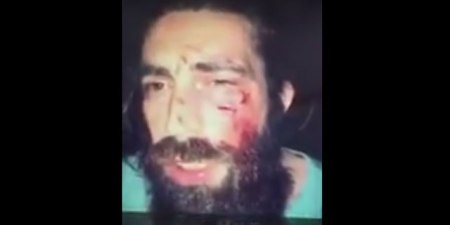
Turkey is dangerous not only for gays and refugees. A French tourist was left bloodied and beaten by Turkish nationalists after he refused to hold a Turkish flag. Grisly footage shows the gang, encouraged by Erdogan to patrol the streets on “democracy watch,” telling the man “You will be punched if you don’t hold the flag.” The tourist is alone and does not appear to speak Turkish.

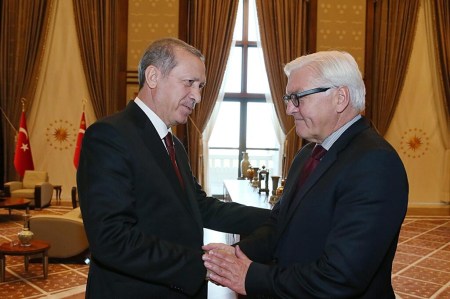
Meanwhile Europe is giving signals, albeit slowly, that it may be waking up from the “Turkey-the-bridge” dream. Germany’s Foreign Minister Frank-Walter Steinmaier said that his country’s relations with Turkey have grown so bad the two countries have virtually “no basis” for talks. He said that Germany has serious concerns about mass arrests carried out by Turkish officials. According to Steinmaier, Turkey and Germany are like “emissaries from two different planets.” Steinmaier is right. He is also not the only European statesman who sees Turkey as alien.

1777Germany’s Foreign Minister Frank-Walter Steinmaier (right) said that his country’s relations with Turkey under Recep Tayyip Erdogan have grown so bad the two countries have virtually “no basis” for talks.

Erdogan recently threatened Italy that its bilateral relations with Turkey could deteriorate if Italian prosecutors investigating Erdogan’s son, Bilal, for money laundering, proceeded with their probe. “Italy should be attending to the mafia, not my son,” Erdogan said. Typically, he does not understand the existence of independent judiciary in a European country. He thinks, as in an Arab sheikdom, prosecutors are liable to drop charges on orders from the prime minister.

Italy’s prime minister, Matteo Renzi, answered Erdogan in language Erdogan will probably will not understand: “Italy has an independent legal system and judges answer to the Italian constitution and not the Turkish president.”

In unusual European realism, Austrian Chancellor Christian Kern said that he would start a discussion among European heads of government to end EU membership talks with Turkey. He rightly called the accession talks “diplomatic fiction.” Kern said: “We know that the democratic standards are clearly not sufficient to justify [Turkey’s] accession.”

Even Turkish Cypriots on the divided island fear that Erdogan’s Islamization campaign may target their tiny statelet. On August 3, about 1,500 people from 80 groups spanning the political spectrum took to the streets in Nicosia to protest against “Turkey’s attempt to mold their secular culture into one that’s more in tune with Islamic norms.”

All of that inevitably makes Turkey an alien candidate waiting at Europe’s gates to join the club. According to a European survey, Turkey is the least-wanted potential EU member — even less wanted than Russia. Opposition to Turkish membership ranges from 54% (Norway) to 81% (Germany).

Celal Yaliniz, a little-known Turkish philosopher, likened Turks in the 1950s to “members of a ship’s crew who are running toward the west as their ship travelled east.” The Turks were not alone. Erdogan’s “liberal” Western supporters have been no different.

Turkey: The State and the Systematic Use of Mob Violence

August 7, 2016

Turkey: The State and the Systematic Use of Mob Violence, Clarion Project, William Reed, August 7, 2016

Turkey-Mob-Beating-Mustafa-Turan-Caliskan-HPTurkish victim of a mob attack Mustafa Turan Caliskan (Photo: Video screenshot)

Following the July 15 failed coup in Turkey, pro-Erdogan mobs across the country have attempted lynching not only against surrendering soldiers who took place in the coup attempt, but also against civilians just walking down the streets who they decide are anti-government.

The latest victims were in Ankara and Istanbul.


Ankara: Turks beat fellow Turk for “not holding Turkish flag”

In Ankara, a young was beaten on the night of July 30 by three assailants for not holding a Turkish flag. A video (see below) of the assault has gone viral.

The initial reports and social media accounts that shared the video said the victim was a French tourist. But the Turkish newspaper Birgun discovered that the victim, Mustafa Turan Caliskan, was an ethnic Turk from Yozgat, a central Anatolian city in Turkey.

In the video, the attackers are heard laughing and saying, “We gave you a Turkish flag but you did not accept it. If you do not accept the Turkish flag, you will be punched. You have to be a man. If we give this to you, you have to hold it.”

The attackers kept interrogating Caliskan, all the while filming the attack. “Did you betray the Turkish flag?” asked one of the perpetrators. “Do you really love Turkey after this moment? Say you love Turkey! You have to love the flag, bastard!”

“We have turned the guy into wreckage in 10 seconds,” proclaimed another assailant joyfully. “Now go home, fuck off!” shouted another to the victim.  “Say you are Turkish! You are Turkish, right?”

The video was then proudly uploaded by one of the perpetrators .

Caliskan, 29, said that the incident occurred after he approached some men in a car to ask to use their lighter. Instead of responding, they attacked him.

“I got the first punch as I leaned towards the car. I partly lost my consciousness after being punched, so I could not speak while being filmed on the camera. That is why the viewers must have thought I was not Turkish,” he said.

Warning: Garphic Images

https://www.youtube.com/watch?v=p-O5XYxBMsw

Caliskan said that his life has been very difficult since the incident.  “I do not want to go outside because I feel everybody is looking at me.” He filed a complaint about the attackers at a police station.

“I collapsed after the first punch in my eye,” said Caliskan. “There was no dialogue between us except for me asking for their lighter to light my cigarette. Then they filmed me. I do not remember what was spoken in the video. But I remember thinking that I could be murdered. I remembered Ali Ismail Korkmaz.”

Ali Ismail Korkmaz, a 19-year-old Alevi university student, was one of the many victims of mob and police violence in Turkey. He was savagely beaten on June 2, 2013 in the city of Eskisehir during the Gezi Protests.

In a statement to authorities before he died, Korkmaz described the attack: “Five or six people came up to me, they beat me with clubs on my head, back, shoulder and legs. I fell to the ground….Yesterday I didn’t have difficulty in speaking, but today I can’t remember. One of my teeth is loose because of the incident. My head hurts, I have difficulty speaking. I don’t know who beat me or why. They were wearing civilian clothes. I want to make a complaint.”

Korkmaz was admitted to a hospital after making his statement, but soon fell into a coma. He died on July 10, 2013.


Istanbul: Pregnant woman attacked for ‘wearing revealing clothes, supporting coup’

Hazal Olmez, who works as a secretary at the Turkish left-wing dailyEvrensel, was attacked by a group of people who accused her of “wearing revealing clothes and supporting the July 15 failed coup attempt” on August 2 in Istanbul.

Olmez, who is six and a half months pregnant, said two of the attackers were burqa-wearing women.

“Why are you wearing revealing clothes? You are a coup supporter and a Gulenist,” the group reportedly yelled at Olmez, while calling for people nearby to join them in beating her.

“You won’t get dressed this way anymore, you will get dressed the way we want you to and you will obey us,” one of the three attackers said.

Olmez reported, “They called for others to attack me. They wanted to lynch me there.”

The group continued to beat Olmez after she fell to the ground, as other people standing nearby watched the incident and did not offer any help, according to the report.


‘Turkey’s Lynching Regime’

Political violence, lynching – even pogroms — are not new or a rare phenomenon in Turkey. The victims have mostly been minorities.

“In Turkey’s near history,” writes columnist Fehim Tastekin, “mobs targeted mainly Armenians, Syriacs, Jews, Greeks, Alevis and Kurds.

“As Tanil Bora, author of the book Turkey’s Lynching Regime, puts it, “When it comes to Alevis and Kurds, this has always been a ‘free shot’ area. The ‘lynching’ of leftists has always been permissible. Police and ‘sensitive citizens’ act on the basis of this knowledge.”

“Despite hundreds of mob violence attempts,” added Tastekin, “the security forces have detained only a handful of people, only to release them after questioning. And almost always, they have found a reason to investigate the victims.”

Violence – be it political or not – is widespread in many parts of the world. What matters in the cases of violence, however, is the reaction of the state institutions and how they handle justice.

If the state protects the victims and punishes the perpetrators, and tries to take precautions to reduce the attacks, the violence could be blamed on just the criminals or “extremists” and interpreted as “isolated incidents” that take place outside of the control of the state.

But in Turkey, most attacks are state-sponsored and intentionally target minorities – such as the 1955 anti-Greek pogrom in Istanbul in which the Turkish government unleashed Turkish mobs on the Greek community.

According to the researcher Speros Vryonis Jr., “[The attacks] resulted in the ultimate destruction of Turkey’s oldest historical community, about 100,000 Greek Orthodox Christians who were the heirs of Byzantium.”

Due to such systematic attacks, the minorities in Turkey have mostly been exterminated and dissidents are silenced. Many victims have been murdered. If they are “lucky,” they manage to flee the country. If they have to stay, they most probably live the rest of their lives with fear of violence.

Meanwhile, extremists continue taking the law into their hands, looking for new victims in the streets to punish – for wearing “revealing” clothes, for not “holding the Turkish flag,” for speaking Kurdish or any other non-Turkish language, for being non-Muslim or not Islamic enough, for doing anything the extremists consider “unacceptablem” or for doing nothing at all.

These mobs know that they will never be held accountable no matter what they do and the state institutions will always be on their side and not of the victims.

The Turkish state apparently uses the mobs to shape the society as it wishes. Through these attacks, minorities and dissidents who dare think differently are ordered to “know their place” or just leave.

And so far, this policy seems to have worked well. Only 0.2 % of the remaining population  of Turkey is non-Muslim (Christians and Jews) and there is not a strong political opposition in the country to challenge the anti-democratic government policies.

Turkey, a European Union applicant, has totally turned EU standards and any other civilized code of conduct upside down.

Turkey’s Tradition of Murdering Christians

July 31, 2016

Turkey’s Tradition of Murdering Christians, Gatestone InstituteRobert Jones, July 31, 2016

(Please see also, Turkey’s Erdogan to US General: ‘Know Your Place’, which deals in large part with the U.S. relationship with Turkey. Turkey is “our” NATO ally and its membership in the European Union is still under consideration. — DM)

♦ Turkey’s countless agreements with Western organizations do not seem to have reduced the hatred for Christians there.

♦ In Turkey, it is “ordinary people” who murder or attack Christians, then the judiciary or political system somehow find a way of enabling the perpetrators to get away with the crimes. Most of these crimes are not covered by the international media and Turkey is never held responsible.

♦ While Muslims are pretty much free to practice their religion and express their views on other religions anywhere in the world, Christians and other non-Muslims can be killed in Turkey and other Muslim-majority countries just for attempting peacefully to practice their religion or openly express their views.

♦ “Multiculturalism,” which is passionately defended by many liberals in the West, could have worked wonders in multi-ethnic and multi-religious places such as Anatolia. But unfortunately, Islamic ideology allows only one culture, one religion, and one way of thinking under their rule: Islam. Ironically, this is the central fact these liberals do not want to see.

On 26 July, the northern French town of Saint-Étienne-du-Rouvray witnessed a horrific Islamist attack: Two Islamic State (ISIS) terrorists killed an 85-year-old priest, Jacques Hamel, in his church during Mass. Two nuns and two churchgoers were taken hostage.

The terrorists, who had pledged allegiance to ISIS and, shouting “Allahu Akbar”, slit the throat of the priest and captured the bloody episode on video, according to a nun who escaped the assault.

Such Islamist attacks might be new to EU member countries but not to Turkey. For decades, so many innocent, defenseless Christians in Turkey have been slaughtered by Muslim assailants.

Christians in Turkey are still attacked, murdered or threatened daily; the assailants usually get away with their crimes.

In Malatya, in 2007, during the Zirve Bible Publishing House massacre, three Christian employees were attacked, severely tortured, then had their hands and feet tied and their throats cut by five Muslims on April 18, 2007.

Nine years have passed, but there still has been no justice for the families of the three men who were murdered so savagely.

First, the five suspects who were still in detention were released from their high-security prison by a Turkish court, which ruled that their detention exceeded newly-adopted legal limits.

The trial is still ongoing. The prosecutor claims that the act “was not a terrorist act because the perpetrators did not have a hierarchic bond, their act was not continuous and the knives they used in the massacre did not technically suffice to make the act be regarded as a terrorist act.”

If the court accepts this legal opinion of the prosecutor, it could pave the way for an acquittal. However, given the many “mysterious” rulings of the Turkish judiciary system to acquit criminals, these killers could also be acquitted by a “surprise” ruling any time.

Ironically, Turkey’s President Recep Tayyip Erdogan said in March that it is necessary to redefine terrorism to include those who support such acts, adding that they could be journalists, lawmakers or activists. There was no difference, he said, between “a terrorist holding a gun or a bomb and those who use their position and pen to serve the aims” of terrorists.

In a country where state authorities are outspokenly so “sensitive” about “terrorism” and “people holding guns,” why are the murderers of Christians not in jail, and why is the prosecutor trying to portray the murders of Christians as “non-terroristic acts”?

Sadly, the three Christians in Malatya were neither the first nor the last Christians to be murdered in Turkey.

On February 5, 2006, Father Andrea Santoro, a 61-year-old Roman Catholic priest, was murdered in the Santa Maria Church in the province of Trabzon. He was shot while kneeling in prayer at his church. Witnesses heard the 16-year-old murderer shout “Allahu Akbar” (“Allah is the Greatest”) during the murder.

After the murder, a 74-year-old priest, Father Pierre François René Brunissen, from Samsun, led the next church service in Santoro’s church, which boasted barely a dozen members. Because no one volunteered to replace Santoro, Father Pierre was instructed to travel from Samsun to Trabzon each month to care for the city’s small congregation.

“This is a terrible incident,” Father Pierre said. “It is a sin to kill a person. After all of these incidents, I am worried about my life here.”

In July, 2006, he was stabbed and wounded by a Muslim in Samsun. The perpetrator, 53, said that he stabbed the priest to oppose “his missionary activities.”[1]

The attacks against the Christian culture in Anatolia continue in modern times — even after Turkey joined the Council of Europe in 1949 and NATO in 1952.

Turkey’s countless agreements with Western organizations do not seem to have reduced the hatred for Christians there. In March, 2007, as the Christian community of Mersin was preparing for the Easter, a young Muslim man with a kebab knife entered the church and attacked the priests, Roberto Ferrari and Henry Leylek.

Mersin, in southern Turkey, is home to Tarsus, the birthplace of Saint Paul, and to several churches dating from the earliest Christian era.

As the Christian roots of Anatolia weakened, so did its bonds with Western civilization. “The attack against the priest is an indicator that Ankara is not ready for Europe,” a Roman Catholic Cardinal and theologian, Walter Kasper, told the Italian newspaper, Corriere della Sera. “There is some amount of tolerance but there is not real freedom. Turkey has to change many things. This change is not about laws. A change of mentality is needed. But you cannot change mentality in one day.”

Bishop Luigi Padovese, Apostolic Vicar of Anatolia, said: “We do not feel safe. I am very worried. Fanaticism is developing in some groups. Some people want to poison the atmosphere and catholic priests are targeted. Anti-missionary films are broadcast on TV channels.”

At a commemorative ceremony for Father Santoro in February, Bishop Padovese said:

“Today, we are asking the question we asked four years ago: Why? We are also asking the same question for all other victims so unjustly murdered even though they were innocent. Why? What was it that they tried to destroy by murdering Father Andrea? Just a person or what that person represented? The aim of shooting Father Andrea was definitely to shoot a Catholic cleric. His being a Father became the reason of his martyrdom.

“The message of Christ on the cross is clear. ‘Father, forgive them, for they do not know what they do.’ Had they known, they would not have done that. It is wrong to extinguish a life to uphold an idea. It is wrong to think that a person who disagrees with us is at fault and should be destroyed. This is the fundamentalism that crumbles a society. For it wrecks coexistence. This fundamentalism — regardless of what religion or political view it belongs to — might win a few battles but it is doomed to lose the war. This is what history teaches us. I hope that this city and this country will turn into a place where people can live as brothers and sisters and unite for the common good for all. Is the Allah of all of us not the same?”

No, unfortunately, the Allah of all of us is not the same.

Just four months later, in June, 2010, it was Padovese’s turn to be murdered. This time the murderer was the Bishop’s own driver for the previous four years. The driver first stabbed the bishop, then cut his throat, while shouting “Allahu Akbar” during the attack.

At the trial, the driver said that the bishop was “Masih ad-Dajjal” (“the false messiah”), then twice in the courtroom he loudly recited the adhan (Islamic call to worship).

1737 (1)Father Andrea Santoro (left), a 61-year-old Roman Catholic priest, and 63-year-old Bishop Luigi Padovese (right), Apostolic Vicar of Anatolia, were two Christian priests murdered in Turkey in recent years.

In the territory where Christians once thrived, even converting to Christianity now creates serious problems.

“New Christians coming from Muslim families are often isolated and ostracized,” writes Carnes. “Turgay Ucal, a pastor of an independent church in Istanbul, who converted from Islam to Christianity said: “Buddhism is okay, but not Christianity. There was a history.”

And this history includes how indigenous Christians in Anatolia have been slaughtered by Muslims. [2]

The total population of Turkey is about 80 million; believers of non-Muslim faiths — mostly Christians and Jews — comprise 0.2%. Nevertheless, anti-Christian sentiment is still prevalent in much of the Turkish society. [3]

There seems to be a pattern: Murders of Christians are committed stealthily in Turkey: It is “ordinary people” who murder or attack Christians, then the judiciary or political system somehow finds a way of enabling the murderers or attackers to get away with what they have done. Sadly, most of these crimes are not covered by the international media, and Turkey is never held responsible.

Turkey, however, signed a Customs Union agreement with the European Union in 1995 and was officially recognized as a candidate for full membership in 1999. Negotiations for the accession of Turkey to the EU are still ongoing.

How come a nation that has murdered or attacked so many Christians throughout history, and which has not even apologized for these crimes, is considered even a suitable candidate for EU membership? Because of the threat of blackmail to flood Europe with Muslims? Turkey will flood Europe with them anyway. There is even a name for it: Hijrah, spreading Islam (jihad) by emigration. Exactly as Muslims have done inside Turkey.

And what kind of a culture and civilization have many Muslims built for the most part in the lands that they have conquered? When one observes the historical and current situation in Muslim-majority countries, what one mostly sees are murders, attacks and hatred: Hatred of non-Muslims, hatred of women, hatred of free thought and an extremely deep hatred of everything that is not Islamic. Many Muslims that have moved to the West have been trying to import political Islam to the free world, as well.

Muslim regimes including Turkey have not achieved civilized democratization that would enable all of their citizens — Muslims and non-Muslims — to live free and safe lives.

While Muslims are pretty much free to practice their religion and express their views on other religions or on atheism anywhere in the world, Christians and other non-Muslims can be killed in Turkey and other Muslim-majority countries just for attempting peacefully to practice their religion or openly express their views.

“Multiculturalism,” which is passionately defended by many liberals in the West, could have worked wonders in multi-ethnic and multi-religious places such as Anatolia. But unfortunately, Islamic ideology allows only one culture, one religion, and one way of thinking under their rule: Islam. Ironically, this is the central fact these liberals do not want to see.

Much of the history of Islam shows that the nature of Islamic ideology is to invade or infiltrate, and then to dominate non-Muslims.

In general, Muslims have never shown the slightest interest in peaceful coexistence with non-Muslims. Even if most Muslims are not jihadis, most do not speak out against jihadist attacks. Many thus appear quietly to support jihadis. That there are also peaceful Muslim individuals who respect other faiths does not change this tragic fact.

That is why non-Muslims in the West have every right to fear one day being exposed to the same treatment at the hands of Muslims. The fear non-Muslims have of Islamic attacks is, based on recent evidence, both rational and justified.

Given how unspeakably non-Muslims are treated in majority Muslim countries, including Turkey, who can blame them for being concerned about the possible Islamization of their own free societies?

Why does Turkey, which seems to hate its own Christians, want to have visa-free access to Christian Europe, anyway?

____________________________


[1] Christianity has a long history in Samsun – as in all other Anatolian towns. As Amisos, in Greek, it was one of the centers of the ancient Greek Pontos region, and helped spread the Christian influence in the region.

“After 1914 the Greek and Armenian populations were to dwindle considerably due to the organized death marches and other methods used by the Turks during the Greek and Armenian Genocides,” according to “Pontos World.”

Decades later, attacks against Christians are still commonplace. In December 2007, another Catholic priest, Adriano Franchini, 65, of Izmir was also stabbed and wounded during the Sunday church service by a 19-year-old Muslim.

Izmir, or Smyrna, was an ecclesiastical territory of the Ecumenical Patriarchate of Constantinople, and one of the Seven Churches of Asia mentioned by Apostle John in the Book of Revelation.

During the Ottoman era, Smyrna hosted one of the largest populations of Greeks and Armenians. Today, there is only a tiny Christian minority in the city. The devastation of the Greek culture in the city peaked during what is commonly known as the “Catastrophe of Smyrna.” The Turkish army destroyed the city in 1922, after the Great Fire of Smyrna. Turkish soldiers murdered many non-Muslim civilians, including dozens of priests and bishops, and forced countless Greek men to join labor battalions. Most Greeks fled their homes in the city to seek shelter in Greece and other states.

“The Great Fire of Smyrna,” wrote the author Ioanna Zikakou, “was the peak of the Asia Minor Catastrophe, bringing an end to the 3,000-year Greek presence on Anatolia’s Aegean shore and shifting the population ratio between Muslims and non-Muslims.”

According to the journalist Tony Carnes:

“Few nations have as rich a Christian history as Turkey. This is where Paul founded some of the earliest churches, including the church at Ephesus. Seven churches in this region were addressed in the Book of Revelation. Those in the early monastic movement found the caves of Cappadocia a near-perfect place to live out lives of prayer.

“But Christianity came under Islamic rule in Turkey in 1453 and steadily declined for centuries; the last 100 years have been the worst. In 1900, the Christian population was 22 percent. Now most experts estimate that there are fewer than 200,000 Christians nationwide, comprising less than 0.3 percent of the population.”

Today, in Islamized Anatolia, the members of the diminutive Christian minority are daily exposed to verbal or physical attacks. Kamil Kiroglu was born and raised in Turkey as a Muslim. At the age of 24, he became a Christian and served in the Turkish Church until 2009. After he became Christian, he was rejected by his family.

On January 8, 2006, Kiroglu was beaten unconscious by five young Muslim men.

“The attack followed church services,” writes the scholar John L. Allen Jr. in his book, The Global War on Christians. “Kiroglu later reported that one of the young men, wielding a knife, had shouted, ‘Deny Jesus or I will kill you now!’ Another reportedly shouted, ‘We do not want Christians in this country!’ As the attackers left, they told a friend of Kiroglu’s that they had left a gift for him. It turned out to be a three-foot-long curved knife, left behind as a further warning against Christian activity.”

“Turkey may be an officially secular state, but sociologically it’s an Islamic society. In general, the greatest threat facing Christians comes not from religiously zealous forms of Islam but from ultranationalists who see Christians as agents of the West, often accusing them of being in league with Kurdish separatists.”

In 2009, Bartholomew I of Constantinople, the Orthodox Christian Church’s Patriarch, said in aninterview with CBS that Turkey’s Christians were second-class citizens and that he felt “crucified” at the hands of Turkish state authorities.

[2] “The annihilation of the non-Turk/non-Muslim peoples from Anatolia started on April 24, 1915, with the arrest of 250 Armenian intellectuals in Istanbul,” wrote the columnist Raffi Bedrosyan.

“Within a few months, 1.5 million Armenians had been wiped out from their historic homeland of 4,000 years in what is now eastern Turkey, as well as from the northern, southern, central, and western parts of Turkey. About 250,000 Assyrians were also massacred in southeastern Turkey during the same period. Then, it was the Pontic Greeks’ turn to be eliminated from northern Turkey on the Black Sea coast, sporadically from 1916 onward.”

Orhan Picaklar, the pastor of the Samsun Agape Church, was kidnapped and threatened by Muslim locals in 2007. He said that people also tried to kidnap his 11-year-old son from his school. His church has been stoned countless times. Ahmet Guvener, the pastor of the Diyarbakir Protestant Church, said he received so many threats that he was awaiting death: “I will give a letter of attorney to a friend of mine. If I die, I want him to take care of my children.”

[3] See the yearly reports of the Association of Protestant Churches about rights abuses against Christians in Turkey.
Turkey’s Erdogan to US General: ‘Know Your Place’

July 31, 2016

Turkey’s Erdogan to US General: ‘Know Your Place’, Clarion Project, William Reed, July 31, 2016

Turkey-Erdogan-Gulen-IP_0Turkish President Recept Tayyip Erdogan (left) shown with his nemesis Fethullah Gulen, who he accuses of being behind the coup. (Photo: © Reuters)

The U.S. still maintains the false view that Turkey is absolutely necessary for the U.S. because Turkey provides an access to a land base to the Middle East.

They refuse to believe that the U.S. or the West can be just as effective without Turkey. The old anti Soviet fears are still there, and it seems that the U.S. will not budge from the opinion that the U.S. should support Turkey, no matter what Turkey does.

***********************

U.S. Central Command Commander General Joseph Votel said on July 28 that a number of the U.S. military’s closest allies in the Turkish military have been placed in jail following the July 15 attempted coup.

“We’ve certainly had relationships with a lot of Turkish leaders, military leaders in particular,” General Votel said at the Aspen Security Forum meeting in Colorado. “I’m concerned about what the impact is on those relationships as we continue.”

Director of National Intelligence James Clapper also echoed General Votel’s statements.

The failed coup and the government’s backlash have “affected all segments of the national security apparatus in Turkey,” Clapper stated. “Many of our interlocutors have been purged or arrested.”

Referring to the U.S.’s Middle East strategy, Clapper added, “There’s no question that this is going to set back and make more difficult.”

On July 29, in a public statement in Ankara caught on video, Turkish President Tayyip Erdogan lashed out against Votel’s comments. “A human is supposed to feel embarrassed a little bit. How dare you make this decision?” he railed. “Who are you? First, you will know your place. You will know yourself. When you – in the name of democracy – need to thank this state that has repelled this coup attempt in my country, on the contrary, you side with coup plotters. After all, the coup plotter [Fethullah Gulen] is in your country. You are feeding the coup plotter in your country. This is obvious.”

Erdogan continued, “You can never convince my nation. My nation knows who is involved in this trick now. They very well know [through] such statements who is behind this act and who the mastermind is. You reveal yourselves with these statements. You expose yourselves. Turkey will not fall for these games.”


Turkey Crackdown after Failed Coup

Amnesty International has issued some statistics on the situation following the failed coup in Turkey:

  • 131 media outlets and publishing houses have been shut down including 3 news agencies, 16 TV channels, 23 radio stations, 45 newspapers, 15 journals and 29 publishing houses.
  • At least 89 arrest warrants were issued for journalists. More than 40 have been detained.
  • At least 260 people were killed and more than 2,000 injured amid the failed coup attempt in Istanbul and Ankara, according to government accounts.
  • More than 15,000 people have been detained since the failed coup.
  • More than 45,000 people have been suspended or removed from their jobs, including police, judges and prosecutors, and others.
  • More than 1,000 private schools and educational institutions have been closed and 138,000 school children will have to be transferred to state schools.
  • Turkish police in Ankara and Istanbul have reportedly been holding detainees in stress positions for 48 hours. Detainees have been denied food, water and medical treatment, and been verbally abused and threatened. Some have been subjected to severe beatings and torture, including rape.
  • No independent human rights monitors have been provided with access to detention facilities in Turkey after its National Human Rights Institution was abolished in April 2016.

In addition:

  • Turkey has also cancelled the passports of 50,000 people the Islamist government suspects of being dissidents.
  • 63 teenage boys aged 14-17 who attended a top military high school have been arrested and prevented from being in touch with their parents. A lawyer for the boys said that they were duped into coming to school the night of the coup after being promised they would be meeting famous soccer players. They were then given camouflage uniforms and guns with empty magazines.


“Traitors’ Cemetery”

A “Traitors’ Cemetery” has recently been created in Istanbul to hold the bodies of coup plotters who died in the failed coup attempt.

Government officials have branded people allegedly involved in the attempted coup as “traitors” and “terrorists” undeserving of a proper burial. Turkey’s state-funded Directorate of Religious Affairs (Diyanet) also issued a directive denying funeral prayers and services for them.

Istanbul Mayor Kadir Topbas said: “May every passer-by curse them and let them not rest in their tombs.”


U.S.-Turkey Relations

The U.S. still maintains the false view that Turkey is absolutely necessary for the U.S. because Turkey provides an access to a land base to the Middle East.

They refuse to believe that the U.S. or the West can be just as effective without Turkey. The old anti Soviet fears are still there, and it seems that the U.S. will not budge from the opinion that the U.S. should support Turkey, no matter what Turkey does.

To many who hold this view, Turkish crimes are not important or relevant to the geopolitical considerations of the U.S. and its military goals.

Even Turkey’s documented facilitation of the Islamic State fighters through its territory or the rising dictatorship of  Erdogan have not change the Western considerations of support.

It seems that Turkey can slaughter its Kurds en-masse (which they have) or Turkey-supported terror groups can massacre Alevis and Christians in Iraq and Syria daily with no reaction from the U.S.

Turkey has seen that it has suffered no consequences for its invasion and occupation of Cyprus for decades.

With blessings from the West, Turkey has been able to devastate the Hellenic and Armenian cultural heritage of Anatolia, systematically attack and destroy historic churches and other Christian sites, ban the Alevi faith and the Kurdish language and oppress all non-Turkish cultures in a tyrannical manner.

Turkey is still allowed to deny, whitewash and even take pride in the 1915 Armenian genocide.

Tragically, it seems that what Western powers are mostly interested is to keep their monetary and other interests in Turkey for as long as it lasts.

And while that happens, the thousands of victims of Turkey’s brutality will lie in their graves or prison cells and be damned.


Turkey: Good News, Bad News

July 28, 2016

Turkey: Good News, Bad News, Gatestone InstituteBurak Bekdil, July 28, 2016

♦ Turkish prosecutors are investigating people who allege on social media that the coup attempt was in fact a hoax.

♦ In a massive purge, the government sacked more than 60,000 civil servants from the military, judiciary, police, schools and academia, including 1,577 faculty deans who were suspended. More than 10,000 people have been arrested and there are serious allegations of torture.

♦ Witnesses told Amnesty International that captured military officers were raped by police, hundreds of soldiers were beaten, some detainees were denied food and water and access to lawyers for days. Turkish authorities also arrested 62 children and accused them of treason.

♦ The good news is that the coup attempt failed and Turkey is not a third world dictatorship run by an unpredictable military general who loves to crush dissent. The bad news is that Turkey is run by an unpredictable, elected president who loves to crush dissent.

In 1853, John Russell quoted Tsar Nicholas I of Russia as saying that the Ottoman Empire was “a sick man — a very sick man,” in reference to the ailing empire’s fall into a state of decrepitude. Some 163 years after that, the modern Turkish state follows in the Ottoman steps.

Turkey, under President Recep Tayyip Erdogan’s rule, was staggering between a hybrid democracy and bitter authoritarianism. After the failed putsch of July 15, it is being dragged into worse darkness. The silly attempt gives Erdogan what he wanted: a pretext to go after every dissident Turk. A witch-hunt is badly shattering the democratic foundations of the country.

Taking advantage of the putsch attempt, the Turkish government declared a state of emergency that will run for a period of three months, with an option to extend it for another quarter of a year. Erdogan, declaring the state of emergency, promised to “clean out the cancer viruses like metastasis” in the body called Turkey. With the move for a state of emergency, Turkey also suspended the European Convention on Human Rights, citing Article 15 of the Convention, which stipulates:

“In time of war or other public emergencies threatening the life of the nation, any High Contracting Party may take measures derogating from its obligations under this Convention to the extent strictly required by the exigencies of the situation, provided that such measures are not inconsistent with its other obligations under international law.”

Before July 15, civil liberties in Turkey were de facto in the deep freeze. Now they are de jure in the deep freeze.

On July 27, the Turkish military purged 1,684 officers, including 149 generals, on suspicion that they had links with Fethullah Gulen, a U.S.-based Muslim cleric who once was Erdogan’s staunchest political ally but is now his biggest nemesis and the suspected mastermind of the coup attempt. On the same day, the government closed down three news agencies, 16 television stations, 23 radio stations, 45 newspapers, 15 magazines and 29 publishers on the same charges. Two days before those actions, warrants were issued for 42 journalists, as a part of an investigation against members of the “Fethullah [Gulen] terrorist organization.”

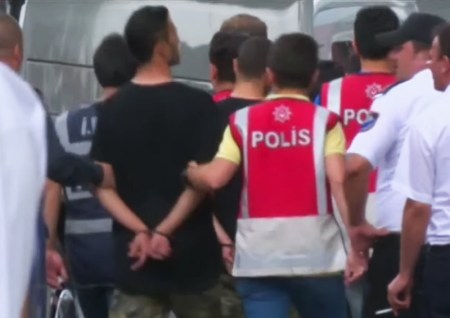
1726Turkish police escort dozens of handcuffed soldiers, who are accused of participating in the failed July 15 coup d’état. (Image source: Reuters video screenshot)

Under the state of emergency, it is dangerous in Turkey even to question whether July 15 was a fake coup orchestrated or tolerated by Erdogan for longer-term political gains. Turkish prosecutors are investigating people who allege on social media that the coup attempt was in fact a hoax. Justice Minister Bekir Bozdag said that: “Anyone who suggests the coup attempt was staged ‘likely had a role’ in the insurrection.” But there is more.

In a massive purge, the government sacked more than 60,000 civil servants from the military, judiciary, police, schools and academia, including 1,577 faculty deans who were suspended. More than 10,000 people have been arrested, and there are serious allegations of torture. Witnesses told Amnesty International that captured military officers were raped by police, hundreds of soldiers were beaten, and some detainees were denied food, water and access to lawyers for days. Turkish authorities also arrested 62 children and accused them of treason. The youngsters, aged 14 to 17, were from Kuleli Military School in Istanbul. The students have reportedly been thrown in jail and are not allowed to speak to their parents.

The witch-hunt is not in the governmental sector only. Several Turkish companies have fired hundreds of personnel suspected of having links with Gulen. Turkish Airlines, Turkey’s national airline, fired 211 employees, including a vice-general manager and a number of cabin crew members.

Sadly, Turks had to choose between two unpleasant options: military dictatorship and elected dictatorship. The good news is that the coup attempt failed and Turkey is not a third-world dictatorship run by an unpredictable military general who loves to crush dissent. The bad news is that Turkey is run by an unpredictable, elected president who loves to crush dissent.

Turkey: Systematic Torture, Rape of Political Prisoners

July 24, 2016

Turkey: Systematic Torture, Rape of Political Prisoners, Clarion Project, William Reed, July 24, 2016

torture

Will the diplomats in Brussels who advocate and push for the membership of Turkey in the EU please speak out in defense of political prisoners raped and tortured in Turkish police stations and jails?

Will the United States, which supports and finances Turkey, also turn a blind eye to these abuses?

**********************

Following the failed July 15th coup d’état in Turkey, the world witnessed how thousands of Turks dealt with their own Turkish soldiers who put down their arms and surrendered. Pro-government Turks beat, tortured and lynched their own soldiers in the streets – before the eyes of the entire world.

But torturing is nothing new in Turkey. It is an old political tradition. Kurdish political prisoners have for decades been exposed to appalling sexual and physical torture in Turkish jails and police stations.

The day before the coup, human rights organizations in Turkey announced in a press conference that many Kurds who have been recently arrested and jailed in the city of Sanliurfa, or Urfa, have been tortured and raped while in detention. [i]

Atilla Yazar, the head of the Urfa branch of the Human Rights Association (IHD), said that they have received complaints of torture from Urfa since 2015. “The detainees are first taken to the anti-terror branch (TEM) of the Urfa police directorate,” said Yazar. “Then they are taken to a cave. They say that they have been tortured heavily. Five of them are women. And they are still in prison now.”

Eren Keskin, the vice-president of the Human Rights Association (IHD), said, “A long time ago, Tayyip Erdogan, who was then prime minister, said that ‘There would be zero tolerance to torture.’ But I think there is boundless tolerance to torture.”

“The stories we heard from the detainees were horrible,” Keskin continued.

“I have been working in the field of torture for the last 20 years. But I did not hear some of those torture methods even in the 1990s, when torture and rapes were very commonplace.

“We see that torture is a state policy and it is systematic. It is not just Turkish soldiers or police officers who are involved, [but also] the prosecutors who do not question them, the doctors who do no not give them medical reports about torture, and the forensic medicine institute all carry this [torture] out together.”

Keskin explained, “Most of the people we talked to were civilian politicians who are members of the legal Democratic Peoples’ Party (DBP).  A detainee called Mazlum Dagtekin said that there is a cave of torture filled with tools of torture in the town of Ceylanpinar. He said that they [the police] torture people under the control and supervision of the prosecutor. First, they blindfold them. Then they put a sack on their heads. And they blindfold them again on those sacks. Stripping detainees naked is one of their primary methods.

“Mazlum also said: ‘They put my head in a well. They raped me. They stripped me naked. They inserted a nightstick in my anus. They made me sit on an armchair. They tied my feet with construction wires. They shackled my hands to the armchair. They hit my stomach and chest cavity with nightsticks and punches. Later they tied my hands with a wire and made me swing into a well. They urinated on me. One of the police officers took out his penis and told me to lick it. While all of these things were done to me, the prosecutor was there.’

“At night, they took Mazlum outside. They tied his feet and put a gun to his head. Then they gave him the gun and told him to kill himself. Mazlum told us that at that moment he wanted to die so much that he pulled the trigger without thinking about it at all, but the gun was empty. To bring a person to a point where he wants nothing else but to die is the worst of all tortures.

“Five women that we spoke to were exposed to heavy sexual torture,” added Keskin. “All of them were frisked bare-naked. They touched their bodies. They applied methods of torture that I cannot verbalize here. The women do not want us to express these things. For women who are exposed to sexual torture express what they have experienced with much difficulty. Due to the certain understanding of honor that is exposed on us, they are ashamed, scared and timid. We understand them. But we will write what they have told us in our report and present it to the United Nations.

“This is what all the detainees were told. ‘We are a special team. We came here from Ankara for you. We will commit all kinds of torture to make you speak.’”

Keskin also said that they were planning to file a complaint to the Turkish medical association about the doctors involved in rights violations. “When prisoners are brought to the hospital by the Turkish police, the doctors stick their heads in the vehicle and ask ‘Is there anybody hurt in here?’ The police say, ‘No,’ Then the doctors sign a report which states that there was nobody hurt in the vehicle. This is a clear violation.

“The doctors turn a blind eye to torture or they are forced to. For example, Inci Korkmaz, one of the victims we spoke to, had felt faint. They suspected that she was having a heart attack and took her to hospital. The doctor first told the police ‘not to take her back like that.’ But when the police insisted, the doctor gave her an injection and [let the police take] her back. This is against the Hippocratic Oath.

“The Urfa anti-terror branch is a place where people are openly exposed to sexual torture. We need to make a call to the states that Turkey has signed international treaties with since Turkey is openly violating these treaties,” Keskin said.

Currently in Turkey, the minister of justice has given an order forbidding political prisoners from talking to their lawyers. In addition to the numerous Kurdish political prisoners being tortured and grossly abused by the Turkish authorities, there are now thousands who have been arrested in the wake of the failed coup.

They now have nobody to speak for them.

Will the diplomats in Brussels who advocate and push for the membership of Turkey in the EU please speak out in defense of political prisoners raped and tortured in Turkish police stations and jails?

Will the United States, which supports and finances Turkey, also turn a blind eye to these abuses?

Obama administration mum as Turkey’s post-coup crackdown expands

July 23, 2016

Obama administration mum as Turkey’s post-coup crackdown expands, Fox News, Christiana Licata, July 23, 2016

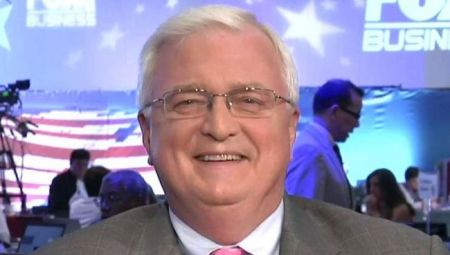
Turkey festersVan Hipp: Turkey had been festering, but Obama admin asleep

The Obama administration’s relative silence on Turkey’s alarming crackdown following last week’s failed coup attempt is tantamount to a green light for President Recep Tayyip Erdogan to continue his assault on democracy in the NATO nation, experts said.

Questioned about Erdogan’s ongoing roundup of some 50,000 academics, judges, teachers, soldiers and civil servants, and the declaration Wednesday of a state of emergency, a State Department official earlier this week meekly warned against “overreach.”

“I cannot overstate the sense of the Turkish government and the Turkish people right now that they truly felt and truly feel under threat,” State Department spokesman Mark Toner told an Associated Press reporter at a department briefing. “We support completely the efforts to bring the perpetrators of the coup to justice. We just also caution against any kind of overreach that goes beyond that.”

But when pressed, Toner declined to characterize the arrest, firing or suspension of the tens of thousands of Turkish government workers as “overreach.”

Erdogan’s government, which blames U.S.-based cleric Fethullah Gulen for inciting the coup attempt, in which more than 200 people were killed and members of the military briefly commandeered tanks, aircraft and communications channels, has reacted with a vengeance.

The state of emergency gives Erdogan and his cabinet new powers to implement laws without parliamentary approval. It also allows Ankara to censor media broadcasts, search citizens, impose curfews and restrict gatherings both public and private.

Erdogan has simultaneously demanded the U.S. hand over Gulen, a onetime Erdogan ally who lives in a Pennsylvania mountain compound and runs a profitable chain of Islamic charter schools. Secretary of State John Kerry has said the department is considering the request, but it remains unclear what evidence Erdogan’s administration has provided.

Former U.S. Ambassador to the United Nations John Bolton said the crackdown shows Erdogan is taking advantage of the failed coup to further strengthen his grip on power. The strongman, who has ruled Turkey as either president or prime minister since 2001, has been steadily stripping the long proudly secular nation of its constitutional freedoms and increasingly adopted Islamist rhetoric.

“When he was mayor of Istanbul 20 years ago, he said democracy is like a street car — you ride it to the stop you want and then you get off,” Bolton said of Erdogan. “This will enable him to pursue his objective of Islamisizing the Turkish government and overturning the secular constitution. That’s what’s underway. I don’t think there’s much question about it.”

Bolton said that the Obama administration appears to have done “very little” to pressure Turkey to ease up on its people, either publicly or behind the scenes. That gives Erdogan all the encouragement he needs, Bolton said.

“The situation will continue to deteriorate as Erdogan arrests more people and puts them in jail,” he said.

The European Union has more aggressively sought to rein in the crackdown, with two EU officials warning Thursday that Turkey’s declaration of a state of emergency had led to “unacceptable decisions on the education system, judiciary and the media.”

“We call on Turkish authorities to respect under any circumstances the rule of law, human rights and fundamental freedoms, including the right of all individuals concerned to a fair trial,” EU high representative Federica Mogherini and commissioner Johannes Hahn said in a statement.

Ahmet Yayla, who was chairman of the sociology department at Harran University and a former police chief in Turkey, said many of those being rounded up in Turkey include the Muslim nation’s bulwark against terrorism.  Police, soldiers and judges deemed disloyal to Erdogan have been detained, leaving a diminished human infrastructure to deal with security threats, he said.

“Those are the people who were fighting against terrorism in Turkey,” said Yayla, who fled to the U.S.  eight months ago when ISIS threatened his life for interrogating terrorist defectors.

Yayla said Erdogan’s dangerous dance with ISIS – tacitly supporting the terror group and allowing foreign fighters to pass through Turkey on their way to the terrorist army’s caliphate – could combine with the post-coup unrest to threaten the nation’s stability.

“In the near future, Turkey will face a lot of danger coming from terrorism because the newly appointed officers in the military and police are not going to be able to fight or deal with terrorism threats that exist in the country, especially by Erdogan’s allowing the terrorists inside the country,” he said.