Archive for the ‘Syria’ category

Why Israel Should Keep the Golan Heights

April 27, 2016

Why Israel Should Keep the Golan Heights, American ThinkerSteve Postal, April 27, 2016

On Sunday, April 17, Israeli Prime Minister Benjamin Netanyahu (“Bibi”) convened a cabinet meeting on the Golan Heights stating that the “time has come for the international community to finally recognize that the Golan Heights will remain under Israel’s sovereignty permanently.” He spoke these words from Ma’aleh Gamla, next to the ruins of the historic Gamla, a Judean city to which the Romans laid siege in 67 CE during the Great Revolt (also known as the First Jewish/Roman War) (66-73 CE). In this battle, Roman soldiers slaughtered 4,000 Jews, while another 5,000 perished having “thrown themselves down” a ravine to their deaths in either an attempt to flee or in a mass suicide (Josephus, The Wars of the Jews, 4:1:9:80).

Bibi’s statements at Gamla followed reports that the United States and Russia were working on a draft peace resolution to the Syrian Civil War that would label the entire Golan Heights as Syrian territory. On April 19, U.S. State Department John Kirby stated “The US position on the issue is unchanged…Those territories are not part of Israel and the status of those territories should be determined through negotiations.” The Organization of Islamic Cooperation (OIC), the Arab League, Syria, and Germany rejected Netanyahu’s comments.

Despite most of the world seemingly poised to throw Israel under the bus over this issue, Israel should continue to assert its sovereignty over the Golan. Israel has a stronger claim to the Golan than Syria does, the Golan is of essential strategic value to Israel and the free world, and given increased threats and development of the land, that value has only appreciated.

Israel has a Stronger Claim to the Golan than Syria

Israel gained control of two-thirds of the Golan Heights following Syria’s defeat in the 1967 Six-Day War. (Israel later applied Israeli law to these territories in a de-facto annexation in 1981.) Syria gained independence in 1945. Before that, the Golan was part of the French Empire (1923-1945), jointly administered between the British and French Empires (1917-1923) and part of the (Turkish) Ottoman Empire for approximately 400 years preceding 1917. So, Syria had control of the Israeli-administered part of the Golan for 22 years (1945-1967), while Israel has had it for 49 years (1967 to the present). Israel has a stronger claim to the Israeli-controlled part of the Golan, given that it has been Israeli longer than it has been Syrian.

The Great Strategic Value of the Golan…

Enemies of Israel, both past and present, have used the high elevation of the Golan Heights against her. The ancient, pre-Arab Assyrian Empire literally looked down on ancient northern kingdom of Israel from the Heights. Assyria’s conquest of Israel in 722 BCE was launched from the Golan.

Fast-forward almost 2,700 years, and the Golan served similar aims for Israel’s enemies. Prior to the 1967 Six-Day War, modern Syria, like ancient Assyria, held the high ground over Israel from the Heights. (See cross-section and topographical maps on page 6 and 18, here). This topography enabled Syria to shell Israeli towns with ease, and sponsor Fatah fedayeen attacks from the Golan. Since gaining parity in elevation with the Syrians following the Six-Day War, the Syria/Israel border has been largely quiet. Given the many other conflicts in the Middle East, some of which I list here, that is a good thing for the world as well as Israel.

…Has Only Appreciated Given Current Threats

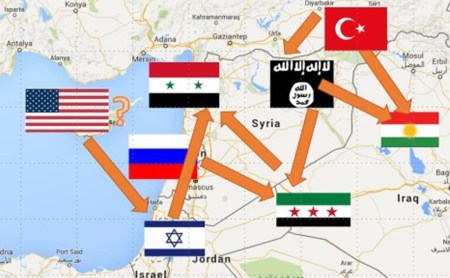
Israel’s (and the free world’s) enemies have grown stronger, and closer in proximity to Israel since the outbreak of the Syrian Civil War. Therefore, giving up the Golan would be foolish, and would most likely result in it being controlled by forces hostile to Israel and the West. The Islamic State and other jihadist groups, in addition to forces aligned with Syrian government (including Hizb’allah and the Iranian Revolutionary Guards (IRG)) are all vying for territory adjacent to the Israeli-controlled Golan Heights (see map). On April 22, the Islamic State captured the Salam al Jawlan Dam, approximately 17 miles away from Gamla. This victory puts the Islamic State closer to Israel than Tijuana, Mexico is to San Diego, California.

Hizb’allah has increased its presence in Syria in the past few years. During the Syrian Civil War, Israel killed Hizb’allah commanders/arch-terrorists Imad Mughniyeh in Quneitra (a town in the Syrian-controlled part of the Golan) and Samir Kuntar right outside of Damascus, in addition to six Hizb’allah fighters in Quneitra. A January 2016 article estimated that Hizb’allah has 8,000 troops in Syria. Hizb’allah is reportedly building a fortified base in Syria housing long-range missiles to use to attack Israel in a future war. Syria has also supplied Hizb’allah with tanks to create an armored division. Despite anti-smuggling efforts by Israel, Hizb’allah currently has between 100,000 to 130,000 rockets total (dispersed in Lebanon and Syria) that are more guided and precise, in addition to up to 12 Yakhont anti-ship cruise missiles with which to strike Israel. Hizb’allah is also preparing to invade Israel in a future war. If Israel relinquishes the Golan, there is a greater risk that Israel would be fighting Hizb’allah in both Lebanon and the Heights. On the other hand, Israel’s retention of its share of the Heights would serve as a strategic advantage in a future war.

Iran has also expanded its presence in Syria, not only through its proxy Hizb’allah. In January 2015, Israel reportedly killed an Iranian Revolutionary Guards (IRG) general on the Syrian side of the Golan, while in October 2015 the Islamic State killed a senior IRG commander in Aleppo. In October 2015, the Wall Street Journal estimated that approximately 20,000 foreign Shiite fighters were fighting in Syria, backed by Iran and Hizb’allah. These include Afghanis. Since the onset of the Syrian Civil War, Iran is increasingly encouraging its citizens, including those of Afghani origin, to buy property in Syria in strategic places, including Homs and Damascus. Just as Iran transferred populations to settle Lebanon in the 1980s during the creation of Hizb’allah, it is now aiding its people in settling Syria. Rather than seeing Iran as a stabilizing force in the region in the fight against the Islamic State, most Israelis, including Israeli Defense Minister Moshe Ya’alon, and Americans alike see Iran as an increasingly destabilizing force. Israel and the world need the Golan to balance against growing Iranian hegemony.

Water Remains a Vital Concern

Giving the Golan to Syria would once again place Israel’s enemies in a position to threaten its water supply via border skirmishes and diversion of water, as Syria did in the 1950s and during the War over Water (1964-1967). Israel relies on Lake Kinneret/the Sea of Galilee as the source of a significant amount of its water, and of its National Water Carrier.

The Golan is now an Integral Part of the Israeli Economy

Israel has developed the Golan to be a vital part of its economy that produces goods and services for both Israel and the world, including several wineries, a brewery, a mineral water distribution company, and a ski resort on Mt. Hermon. It also contains vast lands for agriculture, meat, and dairy production. Israelis and world travelers travel to the Golan for tourism, and about 20,000 Israelis live there. The Golan is also thought to contain a great amount of oil and natural gas deposits. Once tapped into, these resources could make Israel more energy self-sufficient, as well as provide the West with reliable sources of energy. It doesn’t make sense that Israel would uproot all of this only to hand the land over to its sworn enemies.

Israel is the Protector of the Golan’s Rich Archaeological Sites

The Golan also contains several archeological sites greatly cherished by the free world. Many of these sites date back to Antiquity and are painstakingly excavated and safeguarded by Israel, including: Gamla, Hippos/Sussita, Katzrin Ancient Village, the ruins of the Byzantine Christian monastery at Kursi, Nimrod Fortress, Um el-Kanatir, and the ancient Stonehenge-like monument Gilgal Refaim. If these sites were no longer protected by Israel, they could find themselves in the hands of a jihadist group like the Islamic State, which destroyed world-renowned archeological sites like the Temple of Ba’al, Jonah’s Tomb, and the ancient ruins of Nimrud and Nineveh.

To Whom Would Israel Give the Golan Back?

On a practical level, it is difficult for Israel to return the Golan to Syria because Syria effectively no longer exists. It is unlikely that the world powers will succeed in reconstructing Syria as it was before the civil war. The Islamic State controls about half of the country in the east, and pockets in the west. The Kurds control most of the north. The Syrian government doesn’t even control all that remains, with opposition forces (including jihadist groups) and Druze maintaining autonomous regions in the west.

Since the Syrian government does not control all of Syria, it cannot guarantee that other groups won’t use the Golan against Israel. But asking the Syrian government to guarantee such a thing, even if Syria were intact, is ridiculous. Syria is Israel’s historic archenemy, and has supported and harbored jihadist groups such as Fatah, Hamas, Hizb’allah, and the Iranian Revolutionary Guards (IRG).

Conclusion

Several Israeli politicians have opposed the prospect of increased Iranian and Hizb’allah presence in Syria following a future peace deal, and believe that these two pose a greater threat given their capabilities than the Islamic State. But purging Iran and Hizb’allah from Syria in a peace deal is a pipe dream given Syria’s alliances with Iran and Hizb’allah, Russia’s alliance with Iran, and the United States’ détente with Iran. Unless the goal of a Syrian peace deal is to open up yet another jihadist front against Israel, any final deal should preserve the right of Israel to retain its two-thirds of the Golan Heights. Enshrining this right in international law would strengthen the security of Israel and the free world. Continued Israeli sovereignty in the Golan is of great strategic value to Israel and the West, especially in these troubled times.
 

Top Senate Democrat chides Netanyahu over ‘untimely’ Golan remarks

April 22, 2016

Top Senate Democrat chides Netanyahu over ‘untimely’ Golan remarks, Jerusalem Post, April 22, 2016

(So Netanyahu should remain silent when Obama and Putin propose to give Golan to Israel’s long time enemy, Syria? — DM)

Sen. Ben Cardin, the top Democrat on the Senate Foreign Affairs Committee, counseled Israel to focus more on peace with the Palestinians.

Sen. Ben Cardin, the top Democrat on the Senate Foreign Affairs Committee, said declaring Israeli ownership of the Golan Heights was not “timely” while Syria was mired in civil war.

He counseled Israel to focus more on peace with the Palestinians.

“Syria is in a state of war, the whole area is in flux,” Cardin, D-Md., said Thursday when he was asked about Prime Minister Benjamin Netanyahu’s declaration this week that “the Golan Heights will forever remain in Israel’s hands.”

“I don’t think it’s timely to figure out what’s happening in the north when there is an active war in Syria,” Cardin said of Netanyahu.

“Ultimately you’re going to need to have some type of recognition factor and you don’t have a government you can negotiate with and talk with in Syria,” said Cardin, who was meeting foreign policy reporters during a break from Senate votes.

The Obama administration this week reiterated longstanding US policy that the strategic plateau captured by Israel in the 1967 Six-Day War was not part of Israel, and that its fate should be determined through negotiations.

“I would love to see a peace process and deal with the West Bank and Gaza,” he said. “And that to me is the most important chapter for Israel right now, is to advance the peace process toward a two-state solution for the Palestinians and Israelis. That to me is the most urgent need.”

Cardin is close to pro-Israel groups and has made clear in the past that he believes it is wrong to place the burden on Israel to renew talks, saying that the Palestinians must end incitement and return to talks with Israel suspended in 2014.

He was one of just four Senate Democrats who voted last year against the Iran nuclear deal, which Netanyahu vehemently opposed, and the senator was in the region just weeks ago, and met with Netanyahu.

Cardin also said he favors renewing the Iran Sanctions Act, due to expire this year, although Obama administration officials fear its renewal would rankle Iran and undercut the sanctions relief for nuclear rollback deal.

Cardin said there was broad agreement in Congress that the act needs renewing in order to keep in place sanctions that would be revived if Iran violates the deal. Obama administration officials say the president has the discretion to kick in sanctions should he need to.

The senator said he also hopes to pass new sanctions against Iran for testing ballistic missiles, a violation of UN Security Council resolutions. Current Republican proposals to renew the Iran Sanctions Act or to sanction Iran for its missile testing seem aimed at undercutting the Iran deal, Cardin said, a path he opposes even though he voted against the deal.

Syrian official answers Netanyahu: We will use all available means to recapture the Golan

April 17, 2016

Syrian official answers Netanyahu: We will use all available means to recapture the Golan, Jerusalem PostMaayan Groisman, April 17, 2016

(Please see also, Netanyahu to battle Obama, Putin over the Golan. — DM)

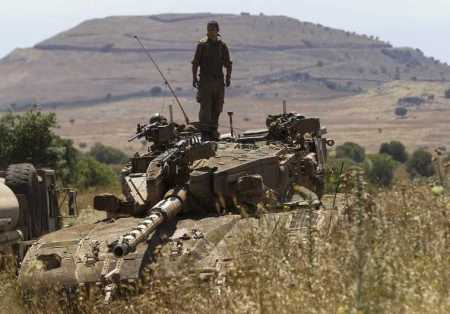
ShowImage (24)An IDF soldier stands atop a tank near Alonei Habashan on the Golan Heights, close to the ceasefire line between Israel and Syria. (photo credit:REUTERS)

In a first reaction to Prime Minister Benjamin Netanyahu’s declaration that “Israel will never leave the Golan Heights,” Syrian Foreign Minister Faisal al-Miqdad said Sunday that Syria is prepared to use every possible means to recapture the area, including military means.

“The Syrian Golan is an occupied Arab land according to the UN Security Council’s resolutions, and the presence of the United Nations Disengagement Observer Forces proves this,” Miqad said in an interview with the Lebanon-based TV channel al-Mayadeen.

“We have never renounced the resistance and we are ready to recapture the Golan in all possible ways, including military ways. Israel wants to provoke us, but we will never surrender,” Miqdad added.

Regarding Syria’s cooperation with Russia, he stated that “the daily communication between the Syrian leadership and the Russian leadership continues. We believe that the Russian policy leans on the international law and on UN Security Council resolutions.

“Neither Russian President Vladimir Putin nor any other president in the world would have accepted the indecent Israeli logic regarding the Golan,” Miqdad argued.

At the opening of a special cabinet meeting held for the first time ever on the Golan Heights on Sunday, PM Netanyahu declared: “The time has come after 40 years for the international community to finally recognize that the Golan Heights will remain forever under Israeli sovereignty.”

Saudi Arabia Ambassador Explains that There Is Nothing Hypocritical In Demanding Elections For Syria Since Saudi Citizens Are Content Not To Have Full Democratic Rights

March 28, 2016

Saudi Arabia Ambassador Explains that There Is Nothing Hypocritical In Demanding Elections For Syria Since Saudi Citizens Are Content Not To Have Full Democratic Rights, Jonathan Turley’s Blog, Jonathan Turley, March 28, 2016

Saudi democracy

Saudi Arabia UN Ambassador Abdallah al-Mouallimi has finally resolved the rather glaring inconsistency of the Kingdom demanding elections in Syria while denying full elections to Saudi Arabians. The reason is simple according to Al-Mouallimi: Saudi citizens are the happiest in the world and would not want a democratic choice.

Al-Mouallimi insists that it is entirely unnecessary to given Saudi citizens democratic rights because they are happier “than almost any other country in the world.” Well, perhaps not those religious minorities who are denied a place to worship or those women who must get permission from younger brothers or husbands to travel (and cannot drive) or those girls denied basic opportunities and educational advancement. Then there are those political dissidents who are arrested for questioning the system or the royal family.

In an interview for Al Jazeera by British journalist Mehdi Hasan, Al-Mouallimi insisted that “Elections are not the panacea for everything. Just because there are elections in Syria doesn’t mean there have to be elections in Saudi.”

He added “The key question is: Is the population content and happy and satisfied with the form of government they have and I would like to claim if you went to Saudi Arabia and conducted a survey… you will find a high degree of support for the system.”

This happiness is based on a “mutual acceptance,” which of course does not apply to those political opponents arrested for criticizing the government. Putting aside all those who disagree with the government, Al-Mouallimi explained “I can tell you that mutual acceptance is much higher in Saudi Arabia than almost any other country in the world.”

Political parties remain banned in the Kingdom and questioning the monarchy is illegal.

Source: Independent

The Inside Track From Israel’s Gaza Border Defenders

January 21, 2016

The Inside Track From Israel’s Gaza Border Defenders, Investigative Project on Terrorism, Paul Alster, January 21, 2016

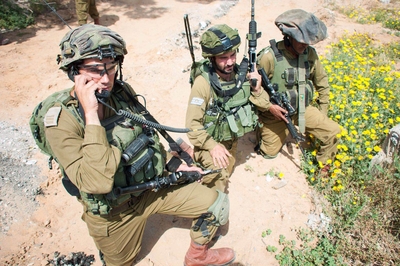
1339Photos courtesy of IDF Spokesperson.

Like it or not, the Iran nuclear deal is done. In much of the Middle East, defense officials in many states believe that a sizeable proportion of the soon-to-be released $100 billion Iranian windfall will be directed toward funding proxy armies of the Islamic Republic, for whom the Jewish state remains the prime target. Israel’s focus is now, more than ever, on defense and surveillance.

In the north, Hizballah, Iran’s proxy Lebanese army, remains a massive threat to regional stability, siding with Syria’s disgraced President Bashar Assad and his saviors from Russia. In Gaza, it is no secret that a previous rift between Iran and Hamas has been smoothed over to further mutual objectives and that another, and possibly more brutal round of hostilities between Israel and Hamas may not be far away.

“The sanctions relief and the nuclear deal with Iran represent a strategic shift that the IDF will have to tackle over the next decade,” Israel Defense Forces (IDF) Chief of Staff Gadi Eizenkot said Monday in a speech at the INSS conference in Tel Aviv. “We also see [Iran’s] attempt to influence Arab Israelis and those in the Gaza Strip, and the estimation is that as Iran’s economic situation improves, over the next one-to-two years, it will divert considerably more resources into opposing Israel, via the Iranian military industry.”

Last week, the Investigative Project on Terrorism (IPT) saw first-hand the situation on Israel’s south-western border, meeting with a senior IDF source who cannot be identified for security reasons. Close to the Kerem Shalom border crossing, where Israel oversees the transfer of many hundreds of tons of goods and supplies every day into Gaza,  we scrambled up a sizeable sand dune that offered a panoramic view of the situation on the ground toward the closed Rafah crossing from Egypt into Gaza.

“We hear the explosions and the fighting [against the Islamists] on the Egyptian side. The Egyptian army is taking it seriously,” the senior IDF source explained as we looked across the triangular border junction and heard distant noises, apparently explosions. “We hear this every day. Terrorists continue to try to cross from Egypt into Gaza.”

Minutes later, a text message announced that the Keren Shalom crossing suddenly had been closed. It turned out that the Egyptian army reportedly engaged and killed 13 jihadists  just a couple of miles away. Two days earlier, an attempt to breach the Israel-Gaza border fence and plant an IED resulted in an Israeli airstrike reportedly eliminating a member of the Al Aqsa Martyrs Brigade.

Meanwhile, Hamas continues to test fire rockets into the sea, and in recent months other Islamic militants in Gaza sporadically lob rockets toward Israel. On the other side of the border triangle, Egypt is doing its best to keep a lid on ISIS and other Islamist forces in the Sinai Peninsula.

It’s clear that relations between the Israeli and Egyptian militaries are good, a dangerous common enemy helping to focus minds. Under President Abdel Fattah el-Sisi, Egypt (despite a lack of support from the United States), has taken the fight to the terror organizations, often at a significant cost in Egyptian military lives. The horrific October downing of the Russian passenger jet out of Sharm el-Sheikh brought the scale of the task facing Egypt into focus. Israel remains alert for the jihadists turning their attention and firepower from Sinai, but for now believes that Gazan-based terror poses its most immediate threat.

“It’s been quite quiet with Hamas [since the 2014 Protective Edge war], but they don’t keep quiet for long,” the IDF source said. “We’re not looking for a fight – we have an interest that there will be quiet here – but if we have to deal with Hamas, this time we’ll deal with them properly.”

Many Israelis were dismayed when Israel unilaterally pulled out of Gaza in 2014 without a ceasefire, some criticism coming notably from members of the left-wing opposition and media for allowing Hamas off the hook when many believed it was in utter disarray. Now, despite ongoing attempts to stem the flow of weapons, reports suggest Hamas is rebuilding fast and may have some surprises in store for Israel if there’s another round of fighting.

“Look, we’re quite certain they are still building tunnels,” the official said, planting his heel in the sand and showing how easy it is to dig. “And yes, I’m sure they have new weapons – anti-tank, anti-aircraft etc. Like us, they will want to be better next time, but we understand more. The reality is different. We’re learning all the time what is going in Gaza. The army is always preparing for the war to come and [Hamas] won’t meet the same thing as in [Protective Edge].”

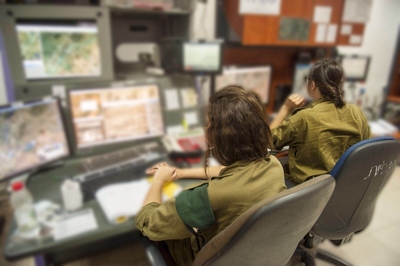
While Israeli soldiers and advanced technology such as its Guardium unmanned patrol vehicles are the first line of defense – the IDF indicated last year that the development of underground tunnel detection systems is also a priority project – the eyes of the military are actually in special units of female soldiers, known as the tazpitanyot. They monitor all movements, looking for suspicious activity, known terror operatives, and attempts to breach the border.

1340 (2)

They work in a series of non-descript trailers and shipping containers belying the fact that inside are massed banks of video screens and radar images, and the ability to combine pictures filmed from aerial blimps with other cameras – both day and night vision. This arrangement allows operatives to zoom in and see Gazans as far as a mile from the border fence.

When anything, or anyone suspicious pops up, there are pictures of ‘Wanted’ terror suspects close to the screens.  They instruct the on-the-ground forces to investigate. Never averting their gaze from the screen during a four-hour shift, each soldier has been trained to identify every landmark, tree, or rock within her specific area of surveillance. “If there’s even a single branch missing from a tree, they’ll spot it” the women’s commanding officer said. They also have remote control of the machine guns sited on border watch towers.

No security system is 100 percent foolproof, and during the first two weeks of the last round of fighting, four terror tunnels emerged on the Israeli side, only being detected at the last moment.  In two cases, the IDF fought gun-battles leaving  at least 10 terrorists and six Israeli soldiers dead. Hamas had hoped to kill civilians before luring Israeli soldiers back through the tunnels then kidnapping them or causing mass casualties.

Methods and practices of surveillance are being continually reviewed, but no-one in the Israeli military doubts the tatzpitanyot’s crucial front-line role in its border security, both north and south.

Has the gunman who brought ISIS terror to Tel Aviv fled to Syria?

January 2, 2016

Has the gunman who brought ISIS terror to Tel Aviv fled to Syria?, DEBKAfile, January 2, 2016

TelAviv_Terror480

Saturday night Jan. 2, Israeli police and security services knew everything about the gunman who Friday sprayed automatic bullets on passersby on Tel Aviv’s favorite recreation street, killing two people and injuring eight – except where to find him. They gave his name as Nashat Melhem, 29, from the Israeli Arab village of Ar’arah in the eastern Wadi Ara district.

He was actually filmed in the act of shooting into a milling street crowd outside a Dizengoff café, before getting clean away. The clips were sported by all the media. The Shin Bet internal security service obtained a court gag order for controlling the release of information about the investigation and the related probe into the murder of an Israeli Arab taxi driver, Amin Shaaban, aged 42, an hour before after the Dizengoff shooting. His body was found outside the beachside Mandarin hotel in North Tel Aviv.

This led to the inference that Melhem’s murder spree was planned with accomplices and that they or Melhem murdered the cab driver to cover their escape route – possibly to the Palestinian territories by a car parked near the hotel, or even by sea aboard a boat waiting off the nearby beach.

Judging from the information and images released, DEBKAfile’s analysts have reached the following conclusions:

1. Melhem was not a random killer, but a terrorist who planned his attack in detail including his escape..

2. This was no solo operation. This type of modus operandi requires accomplices.

3. Their identities and whereabouts are as deeply mystifying as his.

4.  His family’s attempts to depict the gunman as disturbed and unstable don’t detract from the stark fact that he was responsible for the first undoubted Islamic State terror attack on the most popular high street in Israel, trendy Dizengoff. Like the jihadist killers in Tunis, France and San Bernardino, California, Melhem did not wait for direct orders from Abu Bakr al-Baghdadi to kill Jews: He was inspired by al-Baghdadi’s ideology.

5. The Tel Aviv attack had all the hallmarks of the outrages the Islamic State perpetrated in France in recent years – e.g., the 2012 murder by Mohammed Merah of four Jews in Toulouse; the atrocity of Yassin Salhi who displayed his boss’s severed head on the fence of an American gas factory (and this week took is own life in a French prison); and the Nov. 13 massacre of 130 victims in Paris.

French intelligence and security services had all these perpetrators on their watch lists at some time before they committed their acts of terror, but found their hands tied for apprehending the killers in time to stop them.

6. Israeli security and intelligence services appear to be in a similar situation to their French counterparts.  They too knew enough about Nashat Melhem to appreciate that he needed holding in check, but did nothing about it.

7. For his escape, Melhem or his backers may have studied the tricks of the notorious female terrorist Hayat Boumeddiene, who helped plan the deadly attacks at the Charlie Hebdo Paris office and the kosher market before escaping to Syria via Turkey and announcing she had reached her destination with the Islamic State forces.

8. Israeli authorities come up against the first almost certain ISIS attack in Tel Aviv, while yet unable to figure out how to extinguish the wave of Palestinian terror, which has surged since September – with daily stabbings, motor, shooting and other attacks – but dates back in fact to June 2014, when Hamas terrorists murdered the three Israeli teens, Gil-ad Shaar, Naftali Frenkel and Eyal Yifrah, after snatching them at the Gush Etzion intersection.

9. The panicky response to the Tel Aviv shooting was evidence of bewilderment. Instead of a disciplined pursuit of the killer, a disorderly pack of hundreds of security officers with drawn guns raced through Dizengoff, Raines and Spinoza streets with their weapons drawn, followed by crowds of photographers and onlookers.

It took much too long for authority to take charge, and meanwhile the shooter made good his escape.

Picture Tells Arab Journalist the Story on Israeli Prisoner Treatment

December 24, 2015

Picture Tells Arab Journalist the Story on Israeli Prisoner Treatment, Investigative Project on Terrorism, December 24, 2015

This week’s air strike in Syria which killed a notorious Hizballah terrorist generated the usual cries of “death to Israel” and promises of retribution.

Samir Kuntar was one of the most hated terrorists in Israeli history, a man who killed a 4-year-old girl by smashing her head with a rifle butt. He served nearly 30 years in an Israeli prison before being released in a 2008 exchange in which Israel received the remains of two slain soldiers. Kuntar received a hero’s welcome in Lebanon.

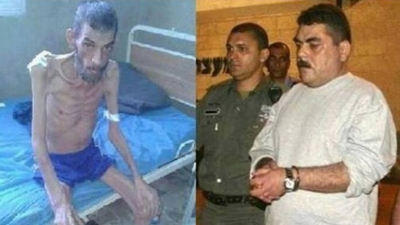
1321

A Syrian journalist took a different tact this week in remembering Kuntar’s release. Faisal al-Qassem was struck by Kuntar’s robust condition in pictures from the release, and placed one next to a picture of a Syrian prisoner.

“Samir Kuntar left an Israeli prison with a beer belly and a doctorate,” al-Qassem wrote in a Facebook post flagged Wednesday by the Times of Israel. “At the other extreme, this is how Syrians leave [dictator Bashar] Assad’s prisons.”

He has a point. Kuntar doesn’t look like a man who missed many meals in Israeli custody, while the emaciated Syrian invokes memories of those who survived Nazi concentration camps.

Many of Qassem’s 8.7 million followers seemed to agree, with more than 100,000 hitting “like.”

“We are taught that Israeli prisons are the worst in the world but in fact we know that the Israelis are more merciful than all of the Arabs,” wrote one Facebook user in Arabic. “Some say that the Zionists are our biggest enemy, dogs and murderers. But Muslims kill more Muslims that the Zionists,” read another.

A lot of Arabic-language media dispense rabidly anti-Israel views and promote anti-Semitic conspiracy theories. It is refreshing to see Qassem’s recognition of reality and the strong support it generated.

Russian S-400 missiles turn most of Syria into no-fly zone, halt US air strikes

November 28, 2015

Russian S-400 missiles turn most of Syria into no-fly zone, halt US air strikes, DEBKAfile, November 28, 2015

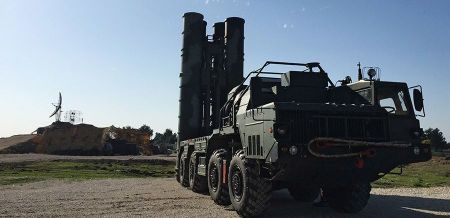
2746772 11/26/2015 An S-400 air defence missile system is deployed for a combat duty at the Hmeymim airbase to provide security of the Russian air group's flights in Syria. Dmitriy Vinogradov/Sputnik

2746772 11/26/2015 An S-400 air defence missile system is deployed for a combat duty at the Hmeymim airbase to provide security of the Russian air group’s flights in Syria. Dmitriy Vinogradov/Sputnik

S-400_range_map_25.11.15

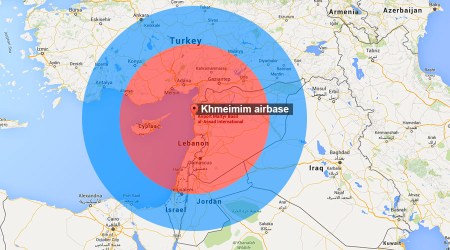
The deployment of the highly advanced Russian S-400 anti-air missiles at the Khmeimin base, Russia’s military enclave in Syria near Latakia, combined with Russia electronic jamming and other electronic warfare equipment, has effectively transformed most of Syria into a no-fly zone under Russian control.

Moscow deployed the missiles last Wednesday, Nov. 25, the day after Turkish warplanes downed a Russian Su-24. Since then, the US and Turkey have suspended their air strikes over Syria, including bombardments of Islamic State targets. The attacks on ISIS in Iraq continue without interruption. Turkey is now extra-careful to avoid flights anywhere near the Syrian border.

Both the US and Turkey are obviously wary of risking their planes being shot down by the S-400, so long as Russian-Turkish tensions run high over the Su-24 incident.

Friday, a US-led coalition spokesperson denied that the absence of anti-IS coalition air strikes had anything to do with the S-400 deployment in Syria. He said “The fluctuation or absence of strikes in Syria reflects the ebb and flow of battle.”

However, DEBKAfile’s military sources confirm that neither the US, Turkey or Israel have any real experience in contending with the Russian S-400, which uses multiple missile variants to shoot down stealth aircraft, UAVs, cruise missiles and sub-strategic ballistic missiles. Its operational range for aerodynamic targets is about 250 km and for ballistic targets 60 km. The S-400 can engage up to 36 targets simultaneously.

Thei range covers at least three-quarters of Syrian territory, a huge part of Turkey, all of Lebanon, Cyprus and half of Israel.

Since the downing of their warplane, the Russians have put in place additionally new electronic warfare multifunctional systems both airborne and on the ground to disrupt Turkish flights and forces, Lt. Gen. Evgeny Buzhinksy revealed Friday. Turkey has countered by installing the KORAL electronic jamming system along its southern border with Syria.

An electronic battlefield has spread over northern Syria and southern Turkey, with the Russian and Turks endeavoring to jam each other’s radar and disrupt their missiles. In this, the Russians have the advantage.

With the Americans, Russians and Turks locked in a contest over Syria, and the Israeli Air Force’s freedom of action restricted by objective conditions, some comments made at week’s end by Israeli military and security officials sounded beside the point.

Thursday, Nov. 26, a senior Air Force officer remarked that Israel is being careful to avoid friction with Russia, despite that country’s expanding military presence in Syria. “Russia is now a central player and can’t be ignored. But we each go our own way, according to our own interests,” the officer noted.

“Our policy is not to attack or down any Russian plane. Russia is not our enemy.”

The officer said that Israeli and Russian officers maintain telephone contact. “We don’t notify or ask for anything; we just do our jobs,” he said.

According to DEBKAfile’s military sources, this is not a true picture. Israel does get in touch with the Russians when their planes get too close to Israeli aircraft. There was no need to state that Israeli won’t shoot down Russian planes, as though this was self-evident, because in the current volatile situation, circumstances may change in a trice. Is it in Israel’s interest to fly into air space loaded with electronic warfare waves? But what if Russian warplanes come over the Golan as part of a blitz to destroy Syrian rebels in southern Syria, some of which are backed by Israel?

No, the Islamic State Will Not Be Defeated — and if It Is, We Still Lose

November 25, 2015

No, the Islamic State Will Not Be Defeated — and if It Is, We Still Lose, BreitbartBen Shapiro, November 24, 2015

GettyImages-497044984-640x480

Barack Obama has now created an unwinnable war.

While all of the 2016 candidates declare their strategies for victory against ISIS, President Obama’s leading from behind has now entered the Middle East and the West into a free-for-all that cannot end any way but poorly.

The best way to understand the situation in Syria is to look at the situation and motivation of the various players. All of them have varying agendas; all of them have different preferred outcomes. Few of them are on anything approaching the same page. And Barack Obama’s failure of leadership means that there is no global power around which to center.

ISIS. ISIS has gained tremendous strength since Barack Obama’s entry to power and pullout from Iraq. They currently control northern Syria, bordering Turkey, as well as large portions of northern Iraq. Their goal: to consolidate their territorial stranglehold, and to demonstrate to their followers that they, and not other competing terrorist groups like Al Qaeda, represent the new Islamic wave. They have little interest in toppling Syrian dictator Bashar Assad for the moment. They do serve as a regional counterweight to the increasingly powerful Iranians – increasingly powerful because of President Obama’s big nuclear deal, as well as his complete abdication of responsibility in Iraq.

Iran. Iran wants to maximize its regional power. The rise of ISIS has allowed it to masquerade as a benevolent force in Iraq and Syria, even as it supports Assad’s now-routine use of chemical weapons against his adversaries, including the remnants of the Free Syrian Army (FSA). Iran has already expanded its horizons beyond Iraq and Syria and Lebanon; now it wants to make moves into heretofore non-friendly regions like Afghanistan. Their goal in Syria: keep Bashar Assad in power. Their goal in Iraq: pushing ISIS out of any resource-rich territories, but not finishing ISIS off, because that would then get rid of the global villain against which they fight.

Assad. The growth of ISIS has allowed Assad to play the wronged victim. While the FSA could provide a possible replacement for him, ISIS can’t credibly do so on the international stage. Assad knows that, and thus has little interest in completely ousting them. His main interest is in continuing to devastate the remaining FSA while pretending to fight ISIS.

Egypt/Saudi Arabia/Jordan. As you can see, ISIS, Iran, and Assad all have one shared interest: the continued existence of ISIS. The same is not true with regard to Egypt, Saudi Arabia, and Jordan, all of whom fear the rise of radical Sunni terrorist groups in their home countries. They are stuck between a rock and a hard place, however, because openly destroying ISIS on behalf of Alaouite Assad, they embolden the Shia, their enemies. Egypt, Saudi Arabia, and Jordan would all join an anti-ISIS coalition in the same way they did against Saddam Hussein in 1991, but just like Hussein in 1991, they won’t do it if there are no Sunni alternatives available. Tunisia, Saudi Arabia, and Jordan are the top three sources of foreign fighters for ISIS.

Turkey. The Turks have several goals: to stop the Syrian exodus across their borders, to prevent the rise of the Iranians, and to stop the rise of the Kurds. None of these goals involves the destruction of ISIS. Turkey is Sunni; so is ISIS. ISIS provides a regional counterweight against Iran, so long as it remains viable. It also keeps the Kurds occupied in northern Iraq, preventing any threat of Kurdish consolidation across the Iraq-Turkey border. They will accept Syrian refugees so long as those other two goals remain primary – and they’ll certainly do it if they can ship a hefty portion of those refugees into Europe and off their hands.

Russia. Russia wants to consolidate its power in the Middle East. It has done so by wooing all the players to fight against one another. Russia’s involvement in the Middle East now looks a good deal like American involvement circa the Iran-Iraq War: they’re playing both sides. Russia is building nuclear reactors in Egypt, Jordan, Turkey and Iran. They’re Bashar Assad’s air force against both the FSA and ISIS. Russia’s Vladimir Putin doesn’t have a problem with destroying ISIS so long as doing so achieves his other goal: putting everyone else in his debt. He has a secondary goal he thought he could chiefly pursue in Eastern Europe, and attempted with Ukraine: he wants to split apart the North Atlantic Treaty Organization, which he rightly sees as a counterbalance to check Russian aggression. Thanks to today’s Turkish attack on a Russian plane, and thanks to the West’s hands-off policy with regard to the conflict, Putin could theoretically use his war against ISIS as cover to bombard Turkish military targets, daring the West to get involved against him. Were he to do so, he’d set the precedent that NATO is no longer functional. Two birds, one war.

Israel. Israel’s position is the same it has always been: Israel is surrounded by radical Islamic enemies on every side. Whether Iranian-backed Hezbollah or Sunni Hamas and ISIS, Israel is the focus of hate for all of these groups. Ironically, the rise of Iran has unified Israel with its neighbors in Jordan, Egypt, and Saudi Arabia. All three of those countries, however, can’t stand firmly against ISIS.

All of which means that the only country capable of filling the vacuum would be the United States. Just as in 1991, a major Sunni power is on the move against American interests – but unlike in 1991, no viable option existed for leaving the current regime in power. And the US’ insistence upon the help of ground allies is far too vague. Who should those allies be, occupying ISIS-free ISISland?

The Kurds have no interest in a Syrian incursion. Turkish troops movements into ISIS-land will prompt Iranian intervention. Iranian intervention into ISIS-land would prompt higher levels of support for Sunni resistance. ISIS-land without ISIS is like Iraq without Saddam Hussein: in the absence of solidifying force, chaos breaks out. From that chaos, the most organized force takes power. Russia hopes that should it destroy ISIS, Assad will simply retain power; that may be the simplest solution, although it certainly will not end the war within the country. There are no good answers.

Barack Obama’s dithering for years led to this. Had he lent his support in any strong way to one side, a solution might be possible. Now, it’s not.

Satire | US Not Sure Who It’s Fighting In Middle East, Bombs Israel ‘Just To Be Sure’

November 19, 2015

US Not Sure Who It’s Fighting In Middle East, Bombs Israel ‘Just To Be Sure’ Duffel Blog, November 19, 2015

US bombs IsraelUS officials are confident they understand the situation on the ground in Syria. (Duffel Blog photo.)

WASHINGTON, D.C. — Pentagon spokesperson Col. Steve Warren announced US aircraft participating in Operation Inherent Resolve, the code name for the campaign against the Islamic State of Iraq and al-Sham (ISIS), struck targets in Tel Aviv today.

When asked why US warplanes would attack a long-standing ally, Warren explained, “Look, guys, this all makes perfect sense,” pointing to a nebulous PowerPoint slide.

“This was all supposed to be a campaign to topple Bashar al-Asad in Syria, starting with the Arab Spring in 2011. Which, in turn, allowed us to get back at Iran and Russia, both of whom support Syria,” said Warren. “So the CIA considered arming the rebels in Syria, which kind of backfired, and now we have ISIS, a group we thought we had already defeated back when they were al-Qaeda in Iraq.”

Secretary of Defense Ashton Carter further explained, “Sure, we were a little worried when ISIS started running around the Middle East, chopping everyone’s heads off. But fortunately, Iran came to our rescue. Well, in Iraq, that is. We’re still fighting Iran in Yemen.”

Chairman of the Joint Chiefs General Joe Dunford stressed the contributions of America’s coalition partners.

Dunford explained how the US tried to empower allies among the Gulf States to take on ISIS, “which in turn sort of helps us get back at Iran.”

“Unfortunately, most of those states also covertly support ISIS, even though they’re nominally our long-standing allies. Whoops,” said Dunford.

“That’s not to say we don’t have some powerful allies in the region, though,” Dunford explained. “The Kurds have proven to be our greatest allies there, and the Turks are one of our longest-standing NATO allies. Unfortunately, they spend more time fighting each other than ISIS. That old saying, ‘nothing brings people together like a common enemy’ is completely useless here.”

Dunford concluded, “So, you see, ISIS is supported by Arabs, who are opposed by Iranians, who are both opposed and allied with the US, who is sort of allied with Turkey and the Kurds, who are opposed to each other. Since the enemy of my friend is now my enemy, it made sense for the US to bomb Israel, Iran’s bitter adversary.”

Events grew even more complicated in the wake of the deadly terrorist attacks in Paris last Friday. The attacks were reportedly the work of ISIS, who also claimed credit for the bombing of a Russian airliner earlier this month.

“France and Russia have formed an alliance, though in doing so, they automatically caused Germany, Austria-Hungary, and the Ottoman Empire to declare war in return,” said Pentagon Press Secretary Peter Cook. “And, let’s face it, this whole thing really is the fault of the Ottomans when you think about it.”

The briefing then shifted to issues surrounding Afghanistan and Pakistan.

“There, the situation is much more simple,” Cook continued.  “The US is fighting the Taliban by providing billions of dollars in military aid to Pakistan, which is supporting the Taliban. Basically, it’s like that scene in The Empire Strikes Back where Luke Skywalker thinks he’s fighting Darth Vader, only to find his own face in Darth Vader’s helmet. That’s pretty much what we’ve gotten ourselves into.”