Archive for the ‘Syria’ category

Lebanese Columnist Warns: Any Hizbullah Aggression Against Israel Will Be Disastrous For Lebanon More Than Anyone Else

April 3, 2017

Lebanese Columnist Warns: Any Hizbullah Aggression Against Israel Will Be Disastrous For Lebanon More Than Anyone Else, MEMRI, April 3, 2017

In an article titled “Does Hizbullah Threaten Israel or Us” in the  English-language Saudi daily Arab News, Lebanese columnist Diana Moukalled commented on the recent escalation in Hizbullah Secretary-General Hassan Nasrallah’s threats against Israel, including his threat to target Israel’s nuclear reactor in Dimona.[1] She assessed that this escalation in Nasrallah’s rhetoric is an attempt to make up for Hizbullah’s military losses in Syria and to garner popular support in light of the decline in Hizbullah’s and Iran’s global standing. She also noted that his threat to target the reactor is irresponsible because thousands of Palestinian and Israeli civilians live near it. Noting that Iran often uses Lebanon as an arena for its “adventures,” she warned that the current political climate might prompt Iran and Hizbullah to renew their aggression against Israel – which would be catastrophic for Lebanon, even more so than in previous confrontations.

The following are excerpts from her article:[2]

Diana Moukalled (image: twitter.com/dianamoukalled)

“Israel has reacted to recent statements by Hezbollah leader Hassan Nasrallah with a mixture of mockery and cynicism, as he said Hezbollah was ready to bomb the Dimona nuclear reactor or ammonia tanks. Israeli websites reported military discussions indicating that Israel believes Hezbollah is facing a dilemma over aid and funds due to the fighting in Syria.

“In the past, Israel dealt more seriously and carefully with Hezbollah threats and movements, but this has seemingly changed. I am in no way praising Israel, an occupying racist state, or minimizing its danger as an aggressor. Rather, this is an attempt to understand the whirlwind of rhetoric recently launched by Nasrallah, which affects Lebanese, Palestinians and others living mere kilometers from the Dimona reactor.

“Everyone, primarily Hezbollah, knows that the results of any war or military action against Israel will be catastrophic. Nasrallah may have learned this lesson, since the southern front with Israel has been calm since the end of the last war 11 years ago.

“As such, escalating rhetoric to target nuclear reactors — near to which thousands of Palestinian and Israeli civilians live, and would be harmed by substantial radioactive fallout — is at the very least irresponsible and no more than a popular mobilization attempt.

“But these empty slogans seem more necessary today than ever, as Nasrallah’s words seem to be an attempt to rebuild a combat position against Israel and make up for Hezbollah’s losses in Syria. This approach seems logical given the view that rapid political developments and the international consensus around Syria will lead to Hezbollah’s exit from the country. This would result in an Iranian response wherever it can do so.

“In a realistic characterization of current politics, now is not the time to make decisions, but to make a show of force and assemble cards to be presented while waiting for a clearer understanding of US regional policy. Continued escalation against Iran and its influence in Syria may lead to Tehran and Hezbollah reverting to a policy of confrontation, including against Israel. Where better than Lebanon as a gateway for new Iranian adventures?

“But the situation is not as it was during the 2006 war, as Israel says its response will be massive against Hezbollah and Lebanon if Hezbollah takes military action against it. This threat includes Israel’s preparedness to target all Lebanese territory. Lebanese President Michel Aoun’s comments that Hezbollah’s weapons complement the role of the army serve as a pretext for Israel to target the army as well.

“The appropriate conditions to target Hezbollah will come soon, but Israel is in no rush for military action as it is monitoring Hezbollah’s financial, moral and military depletion in Syria, amid Arab hostility toward Hezbollah, compared with support in 2006, due to its regional role at Iran’s behest. Any threat posed by Hezbollah will affect Lebanese before anyone else, and more severely than in previous wars and crises.”

____________________________

[1] In a February 16, 2017 address aired on Al-Mayadeen TV, Nasrallah called on Israel “not just to move the ammonia facility out of Haifa, but to dismantle the nuclear plant in Dimona,” saying: “They know what will become of them and of their [Zionist] entity if missiles hit that plant.” See MEMRI TV Clip No. 5896, “Hizbullah Secretary-General Nasrallah Threatens Missile Attack on Israeli Ammonia Facilities and Dimona Nuclear Plant,” February 16, 2017.

[2] Arab News (Saudi Arabia), February 26, 2017.

​The next war: Hizballah tunnels, pocket drones

February 27, 2017

The next war: Hizballah tunnels, pocket drones, DEBKAfile, February 27, 2017

(Until January 20th, Israel had to deal with the anti-Israel Obama administration. Had Israel killed Hamas rather than allowing it to live and recover, U.S. policy toward Israel would have been even worse. Remember the complaints about Israel’s “disproportionate” response to Hamas rockets? With a pro-Israel president in Washingon, it seems reasonable to hope that the “no-winners, no-losers doctrine” military doctrine will quickly atrophy and die. — DM)

threatshamashizballah480eng

After years of denial, the IDF is now ready to admit that Hizballah has built two kinds of tunnel running from Lebanon under the border into Israel. One type is meant as a pathway for Hizballah Radwan Force commandos to infiltrate northern Israel and seize Galilee villages, in an area up to the Mediterranean town of Nahariya. The other type will be crammed with hundreds of kilos of explosives for remote detonation.

For Israel, this no-winners, no-losers doctrine has saved the radical Palestinian Hamas from ever having to hoist a white flag. It caused the IDF’s two successful anti-terror Gaza wars of Dec.2008-Jan. 2009 and July-Aug. 2006 to be stopped halfway through. The troops were left to cool their heels until the government decided how to proceed. In both conflicts, the troops were ordered to stop fighting in mid-operation and pull back behind the border. Although the second operation managed to halt Hamas’ long rocket barrage from the Gaza Strip and allow Israelis living within range normal lives, Hamas was left in belligerent mode.

***************************

Leaks from the State Comptroller’s report, due out Tuesday, Feb. 28, have sparked a storm of recriminations among the politicians and generals who led the IDF’s 2014 operation, which ended nearly a decade of constant Palestinian rocket fire on southern Israel. The argument centers on how the security cabinet headed by Prime Minister Binyamin Netanyahu and the military, led then by defense minister Moshe Yaa’lon and former Chief of Staff Lt. Gen. Benny Gantz, prepared for and grappled with the threat of terror tunnels. A cabinet member, the hawkish education minister, Naftali Bennett, accuses them of falling down on the job.  They charge him with going after political capital.

DEBKAfile’s military sources take exception to the furious focus on a past war – the post mortem  of any conflict will always pick at faults – when the new menaces staring Israel in the face should be at the forefront of the national discourse.

Some of the most striking examples are noted here:

1. President Bashar Assad has just informed Iran that he is willing to place Syrian territory at the disposal of the Revolutionary Guards and Hizballah for shooting missiles into Israel.

Israel’s policy of non-intervention in Syria’s six-year civil war has therefore become a boomerang. Hizballah has been allowed to relocate a second strategic missile arsenal to the Qalamoun Mountains in Syria, after procuring advanced weapons systems from Iran, and gaining combat skills on the Syrian battlefield. The Shiite terrorist group has learned out to fight alongside a regular big-power military force, such as the Russian army.

It is therefore not surprising to hear Hizballah leader Hassan Nasrallah bragging confidently about his ability to vanquish Israel.

So what is Israel doing to counter this peril? Not much. From time to time, the IDF mounts an air strike against a weapons arsenal or missile depot in Syria. That has as much effect on the military threat building up in Syria as the tit-for-tat air strikes against Hamas in the Gaza Strip.

How was Hizballah allowed to attain a capability for shooting thousands of rockets a day at Israeli cities from two countries? Why were the air strikes staged over Syria not directed against Hizballah’s rocket depots in Lebanon?

Many words have been poured out over the Hamas tunnels from the Gaza Strip., but what about Hizballah’s tunnels from Lebanon? After years of denial, the IDF is now ready to admit that Hizballah has built two kinds of tunnel running from Lebanon under the border into Israel. One type is meant as a pathway for Hizballah Radwan Force commandos to infiltrate northern Israel and seize Galilee villages, in an area up to the Mediterranean town of Nahariya. The other type will be crammed with hundreds of kilos of explosives for remote detonation.

How are Israel’s army strategists addressing this threat?

One answer came a few days ago from Maj. Gen Yoel Strick, commander of the home command, who is about to step into his new appointment as OC Northern Command.

He recently disclosed a plan to evacuate entire locations which are potentially on the front line of a conflict with Hizballah. He is aware of the shock effect on the country, which abides by the national ethos of never retreating before an enemy. But he also argues that the only way the IDF can effectively fight Hizballah invaders and eject them from Israeli soil is to keep civilians out of the way of the battle.

4. On Thursday, Feb. 23, an Israel Air Force fighter knocked down a miniature unmanned flying object over the Mediterranean coast of the Gaza Strip. It is already obvious that drones of one type or another, including the cheap and easily available quadcopter pocket drone, will serve the enemy in any future war, in large numbers.

When scores of pocket drones loaded with explosives are lofted, some may be shot down by Israeli warplanes and air defense systems, but some will escape and drop on target, because they are too small to be detected by the radar of air defense systems like Iron Dome and blown out of the sky.

Nevertheless, Israel can address these dangers, provided its generals embrace a major change of strategy, or doctrine. It is incumbent on the IDF to discard the doctrine which holds that modern wars can never end in a straight victory or defeat. This preconception has ruled the thinking of Israeli generals in the 11 years since the 2006 Lebanon war, although it is alien to the Middle East conflict environment.

Take, for example, the Syrian civil war. The Russian, Syrian, Iranian and Hizballah’s armies have clearly won that war and preserved a victorious Assad in power.

In Yemen, too, the Saudi army and its Gulf allies are fighting to win the war against the Houthi rebels but falling short of victory, notwithstanding their superior Western armaments.

In 2014, the Islamic State beat the Iraqi army and captured vast swathes of Iraq and Syria. The jihadists are still holding onto most of this territory – even against US-backed military efforts three years later. They will do so until they are vanquished on the battlefield.

For Israel, this no-winners, no-losers doctrine has saved the radical Palestinian Hamas from ever having to hoist a white flag. It caused the IDF’s two successful anti-terror Gaza wars of Dec.2008-Jan. 2009 and July-Aug. 2006 to be stopped halfway through. The troops were left to cool their heels until the government decided how to proceed. In both conflicts, the troops were ordered to stop fighting in mid-operation and pull back behind the border. Although the second operation managed to halt Hamas’ long rocket barrage from the Gaza Strip and allow Israelis living within range normal lives, Hamas was left in belligerent mode.

Because of this doctrine, Hizballah, like Hamas, feels free to build up its arsenal ready for the next war. Iran’s Lebanese proxy watches the IDF withholding action for containing its buildup. Certain that Israeli generals won’t be fighting for victory, Hizballah and Hamas have always felt they were in no danger of being wiped out.

Hamas, therefore, chose the tactic of inflicting maximum damage and casualties on Israel, without fear of major reprisals. Hence, in the early 2000s, the Palestinian terrorists ruling Gaza began shooting primitive Qassam rockets at Israeli civilian locations, moving on over the years to more advanced missiles, followed by terror tunnels and are now building an air force of exploding pocket drones.

If State Comptroller Joseph Shapiro had addressed those present and future threats when he exposed the mishandling of the tunnels of 2014, his report would have served an important security and national purpose. But since he confined himself to determining who said what to whom – and why – his report is just a platform for political bickering.

Pro-Kremlin Pravda.ru: ‘ Iran Is Becoming A Major Problem, First And Foremost For Russia’s Interests’

February 13, 2017

Pro-Kremlin Pravda.ru: ‘ Iran Is Becoming A Major Problem, First And Foremost For Russia’s Interests’, MEMRI

On January 22, 2017, the Russian media outlet Pravda.ru published an analysis on Russia-Iran relations. According to the article’s author, Dmitri Nersesov, Iran is becoming a problem for Russian interests. Nersesov also added that Iran wants Russia to choose between Iran and Washington. “Iran wants Russia to recognize that Teheran holds the key to the regulation of the Syrian crisis. Should Russia decide that the real strategy is built on the cooperation between Moscow and Washington, rather than Moscow and Teheran; the Islamic Republic will be extremely disappointed,” Nersesov wrote.

Below are excerpts from Pravda.ru’s article:[1]

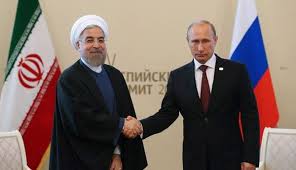
putrou(Source: Islam.ru)

‘Observers Testify That Iranian Internal Propaganda Blames Russia For The Rise Of Iranian Military Losses In Syria’

“After the strange story of the Russian ACF [Air-Cosmos Force – in 2015, the Military Air Force and the Cosmos Defense were united] usage of the Iranian Hamadan military airbase, it became absolutely clear that Tehran cannot be fully trusted.[2] Events of the last several days only strengthen that feeling. Russian-Iranian contradictions appear not only in the vicinity of Syria, but also start influence the Russian-U.S. relations. And that is very serious…

“The point is that Moscow intended the Astana negotiations to become the initial platform for establishing a practical dialogue with the new American administration. That is what the Russian Minister of Foreign Affairs Sergey Lavrov sought to convey at his press-conference. Lavrov said: ‘We consider it right to invite the representatives of the UN and the new U.S. administration to this meeting. We expect that new American administration can accept this invitation and will be represented by its experts of any possible level’… The fact that inviting the Americans was coordinated with Ankara must not be ignored.

“What about Tehran?

“The following was stated there: ‘We did not invite them, we are against their presence’. These words by the Iranian Foreign Minister Javad Zarif are cited by the news agencies. Thus Iran had publicly rejected its allies’ initiative… It seems like that this position of the Iranian leadership does not specifically relate to Syria’s problems. Zarif’s words are a message to Moscow and Washington. We shall try to decipher it.

“The Iranians want Moscow to clearly understand that they intend to control as strictly as possible the implementation of its strategy in Syria, and in the long term– in the Middle East generally. Tehran is able to create problems in fulfilling the combat tasks (by blocking access to the Hamadan airbase), in reaching ceasefire and humanitarian pauses (frequently the pro-Iran Shi’ite units have frustrated these initiatives), and renewing Russia-U.S. contacts on Syria.

“Simultaneously, Tehran’s demarche seemingly forces Moscow to make a choice: between us [Iran], or Ankara define your choice Russians! You can definitely negotiate with the Turks the ceasefire between the Syrian [factions], you can even conduct joint airstrikes against terrorists, but without us, the Iranians, you will not attain any practical goals. Take into account that today Turkey is weak, and it will stay like this indefinitely. And Iran is only getting stronger, as the sanctions against it had been removed, and you will compete with Western corporations for the right to participate in strengthening Iran!

“The Iranians present Moscow with a similar choice regarding the relations with Washington: will Iran or remain Russia’s leading partner in Syria and in the region generally or [will it be] Washington? If Moscow does not fully and decisively acknowledge that the keys to managing the Middle East are in Tehran, and only the intimate team work with Iran makes possible to promote the Russian interests here; if Moscow will ‘suddenly’ decide that the ‘real strategy’ is built not along the Tehran-Moscow axis, but along the Moscow-Washington one – the Islamic Republic will be very disappointed. And will find – definitely find! – the means to punish the ‘arrogant Russians’.

“In this context one should note that during the recent funeral of Hashemi Rafsanjani…was accompanied by the chanting of anti-Russian slogans. Observers testify that Iranian internal propaganda blames Russia precisely for the rise of Iranian military losses in Syria. This should not come as a surprise, because the Russian ACF were kicked out of the Hamadan [military airbase] for ‘ungentlemanly behavior’ and ‘arrogance’. Iran quite willingly believes that any foreigner only thinks about showing them his ‘arrogance’, and they do not forgive this sin. All the more so when it is Russia – the ‘small Satan’ for those who inherited Imam Khomeini’s set of values…

‘It Depends On The U.S. When Iran Will Become A Full-Fledged Nuclear Power’

“Washington? What message did Tehran send to the new president Trump?

“The main thesis is the same: Iran is the leading player in the regional arena, it has the capacity to exert a critical influence on Russia’s position and actions even with regards to Russian-American contacts. In a language resembling Trump’s, it sounds something like this: Tehran is the blocking shareholder in Syria and in the Middle East. Draw your conclusions, Mr. President!

“To talk this way with great powers, Iran must hold strong trump cards. It has them. The main one is the notorious ‘nuclear program’ and the famous deal about it.

“What is the heart of the matter? Ten years of struggle (since Bush-junior) against Iran getting the nuclear missiles brought Iran to the threshold of owning such a weapon. It has the carriers. The warheads which it ostensibly does not have (yet?) can be almost surely made within 15 years, when the limitations imposed as part of the ‘deal’ expire.

“That ‘deal’ was Obama’s favorite baby, his fundamental foreign policy achievement (by his own admission). This achievement means that now it depends on the U.S. when Iran will become a full-fledged nuclear power. For Tehran, just after signing the ‘deal’ (the full text of which no one has seen) had promptly warned everybody: any act which the Iranians will consider to be its violation will mean the abnegation of agreements, and then the Islamic Republic of Iran  will consider itself free to implement its nuclear program.

“Of all the ‘deal’ participants (the U.S., Russia, China, France, Britain, Germany, Iran), only the U.S. is interested and capable of provoking Iran to such a step, for even under Obama, Washington did not lift all the sanctions imposed on Iran. And Trump even claims the intent to renege on Iran’s nuclear program agreement. And if he will really do it, Tehran will have carte blanche to continue the work the result of which may become (with intolerably high probability) the appearance of her nuclear weapon.

“In view of this logic, Iran’s message to Trump is: ‘Mr. President! Upon your first signal, we shall do what your predecessors had steadily led us to! To build our blocking shares into controlling ones we need only a nuclear truncheon. When we get it depends on your decision’.

“Against this background, it is desirable to note a significant detail: several weeks ago, Iran announced the beginning of a program for building a nuclear navy. This means its transformation in the near future into an ocean power capable of ‘force projection’ in the Persian Gulf, in the Indian Ocean, and in the Red and Mediterranean Seas.

“It appears that all this suffices to understand: Iran is becoming a major problem, first and foremost for Russia’s interests. Surely, much can be explained by the upcoming May presidential elections in the Islamic Republic of Iran. Nevertheless, it would be useful to find a way of making Tehran politicians understand that their behavior is becoming too provocative.

“Perhaps the launch of cruise missiles from the Caspian flotilla bears repetition?”

___________________________

[1] Pravda.ru, January 22, 2017.

[2] See MEMRI Special Dispatch No. 6577, Russian Strategic Bombers Deployed To Iran; Russian Senator Says Nuclear Weapons, Heavy Bombers Will Not Be Permanently Deployed In Syria, August 16, 2016.

See MEMRI Special Dispatch No. 6589, Russia This Week – August 22-29, 2016, August 28, 2016.

See MEMRI Special Dispatch No. 6582, Russia This Week – August 15 – 22, 2016, August 21, 2016.

The Significance, Ramifications, And Messages Of Hizbullah’s Show Of Military Force In Al-Qusayr, Syria

January 4, 2017

The Significance, Ramifications, And Messages Of Hizbullah’s Show Of Military Force In Al-Qusayr, Syria, MRMRI, Yael Yehoshua*, January 3, 2016

On November 13, 2016, Hizbullah marked its annual Martyr Day by holding its first military parade in a Syrian town, Al-Qusayr, which Hizbullah took over in 2013 following a long and bloody battle with rebel forces, and which has since become the main symbol of the organization’s involvement in the Syria war alongside the Assad regime. The parade featured hundreds of fighters in military uniforms, tanks, U.S.-made M113 armored personnel carriers, cannon, machine guns, and an armored regiment. Also marching was the Al-Radwan division, comprising some 10,000 fighters from Hizbullah’s “intervention forces” and “special forces” fighting in Syria, which constitute the spearhead of the organization in the country.[1]

By holding this parade at this time and at this location, Hizbullah was informing its rivals, locally and in the region – that is, political players in Lebanon, the Syrian rebels and their Arab supporters, and the West and Israel – that it is now a powerful cross-border military force that can control areas outside Lebanon’s borders. The parade did indeed cause a tremendous stir among Hizbullah supporters, as well as among the organization’s opponents.

This paper will review the significance and ramifications of the parade in Al-Qusayr and the messages that it sent.
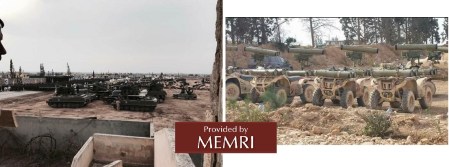
1295aPhotos from the parade. Arabipress.org, November 13, 2016; Addiyar.com, November 14, 2016
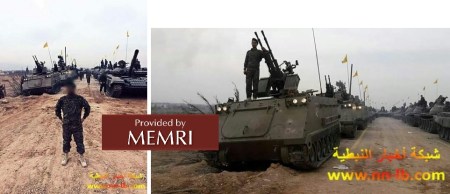
1295bPhotos from the parade. Nn-lb.com, November 13, 2016

Hizbullah Underlines Its Presence On Syrian Soil

Hizbullah’s holding the parade on Syrian soil, particularly in Al-Qusayr, is a symbolic yet highly significant act showing the organization’s control of part of Syrian territory. Al-Qusayr is the jewel in the crown of Hizbullah’s  military involvement in Syria and is seared into the memories of the Syrian rebels as an arena in which they were defeated by Hizbullah in 2013 after a bitter battle that lasted weeks and involved many losses on both sides. Moreover, Al-Qusayr is also Hizbullah’s gateway into Syria. After capturing it from the rebels, Hizbullah emptied it of its residents and turned it into a center for its headquarters and into a staging area for its fighters arriving from Lebanon, from which they leave for other battle fronts in Syria.

Also, holding the parade on Syrian soil as opposed to Lebanese soil is a blatant attempt by Hizbullah to highlight its presence in Syria and signal that this presence has become a known, established and certain fact. It may also reflect Hizbullah’s view of Al-Qusayr and its surroundings as its own military territory, and not as Syrian territory – with no consideration whatsoever for Syria’s sovereignty or for Lebanon’s position on this. [2] Hizbullah deputy secretary general Na’im Qassem hinted at this when he said, several days after the parade: “We are in Syria, and we do not need to give any explanation or justification for this. We stand alongside the Syrian army and the Syrian state.”[3]

Qassem’s statements were backed up by statements by Lebanese Army Gen. (ret.) Amin Hatit, who is close to Hizbullah: “Hizbullah’s presence in Syria is something basic… As far as we are concerned, there is no difference between Al-Qusayr and South [Lebanon].”[4]

By holding it on its Martyr Day, Hizbullah also intended the parade to convey a message to the Shi’ite public in Lebanon, which supports Hizbullah and is the source of its political power and its fighters, that despite its losses Hizbullah has remained strong. For Lebanese Shi’ites, many of whom have been killed and wounded in the past four years of Hizbullah’s fighting in Syria, and particularly in the ongoing battle for Aleppo, the parade was meant to boost morale and signal that the losses had not been in vain but had only further strengthened the organization and made it possible for it to become a regional power.

Hizbullah’s Transition From A Resistance Force To A Quasi-Regular Army

Hizbullah’s demonstration of its military strength by parading hundreds of its soldiers with tanks, cannon, machine guns, and so on also reflected its wish to send the message that it was now a well-trained and well-armed force, with new units, resembling an experienced regular army, and was no longer a resistance militia waging guerilla warfare against Israel.

This upgrade of its military and deterrence capabilities is the result of its military experience in Syria fighting the anti-regime rebels. In this context, Lebanese daily newspapers quoted Na’im Qassem making statements about Hizbullah’s military capability. The Lebanese Al-Mudun daily quoted Qassem as saying: “Hizbullah has added expertise, fighting capability, and military capabilities. This force is becoming more powerful and more developed, into something greater than resistance and less than a regular army.”[5] The Al-Safir daily quoted him as saying: “Now we have a trained army and the resistance is no longer based on methods of guerilla warfare. We are better armed and better trained, and we have advanced professional knowledge.”[6] It should be noted that an official Hizbullah communique denied that Qassem had called Hizbullah an army.[7]

It appears that Hizbullah’s show of strength at this time was because of achievements in the field by both it and its camp, the resistance axis. These achievements included the strengthening of Hizbullah, the Syrian army, and the militias that have been operating alongside the Syrian army since the beginning of Russia’s military involvement in Syria over a year ago along with the upsurge in the political status of Syrian President Bashar Al-Assad in the Arab world and in the West, and the bolstering of Iran’s regional and international status because of its increased military presence in Iraq and Syria and in the wake of the nuclear agreement and the election of the Hizbullah ally Michel Aoun to the Lebanese presidency.


Hizbullah As A Cross-Border Regional Force

Alongside the messages it sent locally, the parade was aimed at letting the region know that Hizbullah is a cross-border military force that is not bound by any particular territory and does not recognize the Syria-Lebanon border, or other borders between Middle East states, set by the Sykes-Picot agreement.

Hizbullah and its sponsor, Iran, which itself is striving to spread its Islamic Revolution and “Rule of the Jurisprudent” doctrine, do not consider geographic borders to be significant, and are deepening their penetration of many countries in the region. This approach is expressed by the military involvement of Iran and its agents in Syria, Iraq, and Yemen, and by Hizbullah’s complete military control of part of Syrian soil, including the Al-Qusayr region.

The military parade sent a message not only to the rebels in Syria, but also to their sponsors in the Arab and Muslim world – Saudi Arabia, Qatar, and Turkey – underlining that the resistance axis in Syria has the upper hand, and that Hizbullah will not hesitate to show its power anywhere it needs to in order to subjugate its opponents. On this matter, Lebanese Army Gen. (ret.) Amin Hatit said: “Had Hizbullah wanted to send a message to Lebanon, it would have held the demonstration there, not in Syria, and what it did in Al-Qusayr is a message to the region.”[8]

In an interview with the Iranian website Tasnim, which is close to Iran’s Islamic Revolutionary Guard Corps (IRGC), Qassem said: “If we want to look [at this] realistically, we see that Hizbullah has become a regional power. The way in which Hizbullah is confronting both the Zionist enemy and the takfiriyyoun [i.e. the Salafi-jihadi organizations]… shows that the organization is a regional power, and the changes in the region are proof of that.”[9]

Also, Nasser Qandil, editor of the pro-Syria Lebanese daily Al-Bina and an Assad associate, wrote in a November 16, 2016 article titled “Hizbullah – The New Middle East Army” that the organization is a cross-border force and that the borders between countries mean nothing to it. He stated that Hizbullah has become the “Middle East Army” because of its military capabilities and because it is a military force that crosses borders, and that it has achieved this by virtue of the popular organizations in the region that assist it, which comprise approximately a million fighters spread across the Middle East. These forces share its wars and its positions, and see Hizbullah secretary-general Hassan Nasrallah as a leader “with special status and as a source of authority for the wars in the Middle East.” He added that in actuality Hizbullah “has torn up Sykes-Picot” by transforming the areas of Syria that border Lebanon’s east and northeast into a “direct and vital continuation of the resistance.”

In this context, Qandil added that as Israel’s military strength and Saudi Arabia’s economic and political strength were waning, and as Al-Qaeda was failing, and as the U.S. was more preoccupied with domestic affairs and Russia was concerned about neutralizing other regional forces such as Turkey, “Hizbullah and the network of its allies is developing, becoming like a soft-[power] state that lives in the bosom of several countries. [Hizbullah] is not a rival [to the states on whose soil it exists], but complements them, living and developing at their consent as a deterrent force and as added strategic value. Thus, this force is becoming the most important fact emerging with the beginning of the 21st century… and no force in existence can threaten the growth of this new army of the Middle East that is deployed from Lebanon to Afghanistan, and from Aleppo to Bab Al-Mandeb.”[10]


Hizbullah As An Independent Force Operating Outside Lebanese Laws And Institutions

The Al-Qusayr military parade has great significance also vis-à-vis Lebanon. Hizbullah’s control in the Al-Qusayr region erases the Lebanon-Syria border and creates a single large, contiguous swath of territory from Syria to the northern Beqa’a, one of its strongholds in Lebanon, without the Lebanese government’s agreement and under harsh criticism from various political elements in that country.[11]

By holding the parade, Hizbullah has again proven, to Lebanon and to the entire world, that it is not subject to Lebanon’s laws and institutions, but that it operates according to its own interests and the interests of Iran and the resistance axis. As far as it is concerned, its presence in Syria depends solely on it, not on any decision by the Lebanese state. On this, Qassem said: “We stand alongside the Syrian army and the Syrian state, and without our intervention in Syria, the terrorists would enter every place in Lebanon. The issue of our involvement in Syria is no longer under discussion by Lebanese circles.”[12]

This message was discordant to Hizbullah’s opponents within Lebanon, who expressed harsh criticism of the Al-Qusayr parade. Ashraf Rifi, justice minister in Lebanon’s interim government, a bitter enemy of Hizbullah, said that this parade sends a message threatening Lebanon’s sovereignty. He tweeted: “Hizbullah has blatantly shown its military strength in occupied Syria… What will ‘the strong president’ [Michel Aoun] say about the armed militia that has become an army that is participating in the occupation of Syria, and dividing and killing its people?” He added that “Lebanon is in danger” and called on all the forces opposing the Iranian sponsorship of Lebanon to act together “to save Lebanon that Hizbullah has exploited with shari’a backing and has turned into a platform in service of Iran’s plans.”[13]

Other criticism came from Ali Al-Husseini, in his column in the Lebanese daily Al-Mustaqbal, associated with the March 14 Forces: “It is odd that this parade was held at the same time as preparations were being carried out by the Lebanese army for [Lebanon’s November 22] Independence Day… The message to Lebanon is that Hizbullah is an independent force that is not subjugate to the laws of the Lebanese state and does not want [Lebanon] to be independent… Hizbullah has established itself as an occupier and has declared Al-Qusayr and other regions [in Syria] to be under its control and its aegis from now on, and declared that negotiation on them in the future will be only with [Hizbullah] and according to its conditions.”[14]


Hizbullah As A Deterrent Force In Lebanon’s Internal Politics

Hizbullah’s parade, which also came several weeks after its ally Michel Aoun was elected Lebanon’s president,[15] and at the height of consultations for the establishment of a new government headed by Sa’ad Al-Hariri, head of the Al-Mustaqbal stream, was also a way of flexing its muscles at various forces in Lebanon’s political arena, particularly at President Aoun and his party which are still considered Hizbullah allies. This show of strength was aimed at reiterating that the organization had military power and that it would not agree to any changes to the political balance of power that were not in its favor, and would also not allow its weapons to be touched.

While Aoun’s election was considered a victory for Hizbullah and for the March 8 Forces that it heads, there is, according to reports in the Lebanese media, great apprehension in Hizbullah and in the March 8 Forces that Aoun will end his sweeping support for the resistance, and will moderate his stance, compromise, and lean more towards the center than he has in the past, and will show neutrality towards both the March 14 Forces and the March 8 Forces.

The cooperation between Aoun (who represents the majority of Christians in the country after forming an alliance with the Christian Lebanese Forces party led by Samir Geagea) and Al-Hariri (who represents the majority of Sunnis) – cooperation which led to Aoun’s election and to the appointment of Al-Hariri to establish the next government – is also of concern to the Shi’ite Hizbullah. Its main fear stems from the possibility of shifts in the political power balance in the country, because Aoun’s alliance with Hizbullah foe Geagea has created a powerful, cohesive Christian group that has shared out the government portfolios among its members, at the expense of the other Christian parties who belong to the March 8 Forces – and Aoun is likely to prioritize this powerful Christian group over his alliance with Hizbullah and his support for the resistance.

These apprehensions also increased following visits by Saudi and Qatari emissaries to Aoun, following which the latter promised that Saudi Arabia will be the first stop on his visits to Arab countries, and in light of his statement, as part of his wish to establish Lebanon as an independent actor, that Lebanon under his leadership would “adopt an independent policy and will not be subjugated to anyone.”[16]


Hizbullah As An Anti-Israel Deterrent Force From Both Lebanese And Syrian Territory

Hizbullah also used the parade to convey a message about its position on a war against Israel. In light of its military involvement in Syria fighting the rebels alongside the Assad regime, Hizbullah was accused by elements in and out of Lebanon of abandoning the path of resistance against Israel, and of having become an accessory to the Iranian plan to eliminate the Sunni presence in Syria. In response, with the parade, Hizbullah sought to clarify that establishing its might in Syria was part of the plan of the resistance that serves its war against Israel and intensifies its anti-Israel deterrence. On this topic, Na’im Qassem said that upgrading Hizbullah’s capabilities and transforming it into a real military force “is sufficient to deter the Israeli enemy.”[17]

That the parade was an attempt by Hizbullah to demonstrate its strength to Israel was also expressed by the fact that the main element marching in it was from the Al Radwan division, revealed here for the first time. According to a Lebanese source,[18] this division was thought up by the late Hizbullah chief of staff ‘Imad Mughniyeh, who was assassinated in 2008, and comprises some 10,000 fighters trained at Hizbullah bases specifically built for this purpose in Al-Qusayr. The division was initially established to invade Israel’s Galilee during the next conflict there, but is right now fighting the rebels in Syria and gaining combat experience, and Hizbullah considers it its spearhead in Syria. Having fighters from this division marching in the parade is a message to Israel that the Al-Radwan division, which it considers a deterring force against Israel, is complete and ready for action against it at a moment’s notice.

‘Abdallah Kamah wrote on the Lebanese website Alhadathnews.net: “At a time when the warriors of the Al-Radwan [division] are fighting and gaining combat experience in Syria, they see the Galilee as their strategic goal. In order to achieve this goal, we must prepare for a war [with Israel], which ‘Imad Mughniyeh had said ‘would be different from those that came before it.’ This difference opens the door to adopt new [combat] methods, because this campaign will not be the same as in the past, when it was conducted according to a scenario where the enemy invades and the resistance ambushes and charges, or fires rockets from groves and using mobile, manually-operated, ground-based launchers. Moreover, the next war, as Hizbullah showed yesterday, will be more offensive than defensive, and will include armored vehicles entering the occupied Upper Galilee.”[19] It should be mentioned in this context that in a February 2011 speech marking the third anniversary of Mughniyeh’s assassination, Hizbullah Secretary-General Hassan Nasrallah threatened Israel, and warned that in the next conflict he would order his men to take over the Galilee.[20]

Moreover, by holding the parade on Syrian soil, Hizbullah challenged Israel’s opposition to the establishment of Hizbullah forces in Syria, specifically in the Golan Heights. Increasing its presence in the Syrian Golan is part of the organization’s plan to expand the arena of conflict with Israel from southern Lebanon to the Golan Heights, and transform them into a single front that transcends political borders. Back in January 2016, Nasrallah stated that Hizbullah will no longer recognize either the rules of combat with Israel or the separation between the South Lebanon and Golan Heights fronts.[21] In May 2016, Ibrahim Al-Amin, head of the board of directors of the Lebanese daily Al-Akhbar, which is close to Hizbullah, stated that the organization had established a resistance infrastructure in the Syrian Golan Heights with the help of local residents.[22]

In an article published a few days after the parade, the political editor of the Lebanese daily Al-Safir implied that that one of the reasons Hizbullah is establishing itself in Syria is to open an additional front against Israel in the Golan Heights: “The weapons displayed by Hizbullah [at the parade] are weapons that [regular] armies have, and this is a clear message to Israel that the arena for every future campaign will absolutely not be limited to certain Lebanese borders and to a local population that either does or does not support [the resistance], but will rather be an arena that is more energetic, deeper, and broader – strategically, geographically, and militarily.”[23]

*Yael Yehoshua is Vice President for Research and Director of MEMRI Israel


[1] For more on the military parade, see MEMRI Special Dispatch No. 6677, Special Dispatch No. 6677, Hizbullah Military Parade In Syrian Town Of Al-Qusayr: Tanks, Cannon, And Machine Guns, November 14, 2016. It should be noted that the Lebanese army denied claims that the M113 APCs and other military equipment in the parade belonged to it. Al-Nahar (Lebanon), November 15, 2016.

[2] Al-Mudun (Lebanon), November 16, 2016.

[3] Al-Safir (Lebanon), November 16, 2016.

[4] Al-Nahar (Lebanon), November 14, 2016.

[5] Al-Mudun (Lebanon), November 16, 2016.

[6] Al-Safir (Lebanon), November 16, 2016.

[7] Alahednews.com, November 16, 2016.

[8] Al-Nahar (Lebanon), November 14, 2016.

[9] Tasnim (Iran), November 22, 2016.

[10] Al-Bina (Lebanon), November 16, 2016.

[11] For more on Lebanese criticism of Hizbullah’s involvement in the fighting in Syria, see MEMRI Inquiry & Analysis No. 980, Lebanon Openly Enters Fighting In Syria, June 13, 2013; Special Dispatch No. 6383, Lebanese Writer: Hizbullah Is No Longer A Resistance Organization, But An Occupier And Target For Resistance, April 12, 2016; Inquiry & Analysis No. 1147, Lebanese Elements Furious Over Hizbullah’s Activity In Golan, Shebaa Farms, Critical Of Nasrallah’s Statements About Uniting Lebanese, Syrian Resistance Fronts, March 11, 2016.

[12] Al-Safir (Lebanon), November 16, 2016.

[13] Twitter.com/Ashraf_Rifi, November 14, 2016.

[14] Al-Mustaqbal (Lebanon), November 15, 2016.

[15] See MEMRI Inquiry & Analysis No. 1276, Al-Hariri’s Choice Of Hizbullah Ally Aoun For Lebanese Presidency Is Another March 14 Forces Concession To Pro-Iran Axis, October 28, 2016.

[16] Al-Safir (Lebanon), November 12, 2016; Al-Akhbar (Lebanon), November 26, 2016.

[17] Al-Mudun (Lebanon), November 16, 2016.

[18] For example, Alhadathnews.net, November 15, 2016.

[19] Alhadathnews.net, November 15, 2016.

[20] Al-Akhbar (Lebanon), February 17, 2011. See MEMRI Special Dispatch No. 6051, The Emergence Of ‘Galilee Force’ – Palestinian Forces Fighting Alongside Syrian Regime, May 20, 2015.

[21] For Lebanese criticism of Nasrallah’s statement, see MEMRI Special Dispatch No. 5994, Lebanese Elements Furious Over Hizbullah’s Activity In Golan, Shebaa Farms; Slam Nasrallah’s Statements About Uniting Lebanese, Syrian Resistance Fronts, March 10, 2015; For more on Hizbullah and Iranian IRGC activity in the Syrian Golan on the Israeli border, see MEMRI Inquiry & Analysis No. 1138, Following Killing Of Hizbullah Operative Jihad Mughniyah, New Information Comes To Light Regarding Hizbullah, Iranian Activity In Syrian Golan On Israeli Border, January 28, 2015; MEMRI Daily Brief No. 1146, From The Mediterranean to the Golan, Iran Builds Active Front And Direct Military Presence On Israel’s Border To Deter Israel And Further Ideology Of Eliminating The Zionist Regime, February 16, 2015.

[22] For more on Hizbullah’s activity in the Golan, see MEMRI Special Dispatch No. 6039, Board Chairman Of Pro-Hizbullah Lebanese Daily: Hizbullah Has Established Resistance Infrastructure In Syrian Golan In Cooperation With Locals, April 30, 2015.

[23] Al-Safir (Lebanon), November 16, 2016.

Secret Israel-Jordanian-Syrian border talks begin

November 21, 2016

Secret Israel-Jordanian-Syrian border talks begin, DEBKAfile, November 21, 2016

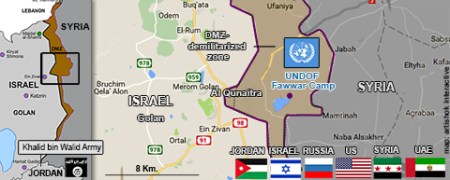
fawwar-camp480

Israel, Jordan and Syria have embarked on secret discussions for the stabilization of their borders in southern Syria by restoring the status quo ante that reigned on the Golan prior to the outbreak of the Syrian civil war in 2011.

This is reported exclusively by DEBKAfile from intelligence, Washington and Moscow sources.

The incoming Trump administration in Washington and Russian President Vladimir Putin are in the picture; so is the United Arab Emirates ruler, Sheikh Mohamed Bin Zayed Al Nahyan.

Although still at a preliminary stage, the talks have produced their first tangible result: A vanguard of the United Nations Disengagement Observer Force (UNDOF) has arrived on the Syrian side of the Golan. It has taken up position at its former Fawwar Camp base 4km east of Quneitra, which it evacuated during the Syrian fighting. The main body of the force, around 1,000 UN soldiers and 70 observers, is expected soon, to take up the task of reconstituting the former demilitarized zone that separated Israel and Syria under the 1974 armistice agreement.

This DMZ runs 80km along the Hermon range up to the Lebanese border in the north and down to the Israel-Syrian-Jordanian triangle in southern Syria up to the Jordanian border. In the 25km long Golan strip, between half a kilometer and 10 deep, the IDF and Syrian army were originally limited as to the number of soldiers and types of weaponry they are allowed to maintain. The strip will revert to Syrian civil administration under UNDOF control, and the Israeli-Syrian border crossing point will be reopened in the Quneitra area under the joint supervision of UN, Israeli and Syrian officers.

The military arrangements are still in discussion and changes may be introduced to this format.

The main obstacle to the return of pre-Syrian war conditions to this sensitive border region is the presence of radical Syrian rebel forces in southern Syria, mainly the Khalid bin Walid Army, whose leaders have sworn allegiance to Islamic State commander Abu Bakr al-Baghdadi.

These forces will face the option of accepting the authority of the Syrian army or fighting a win-or-die battle.

Israel has an additional, compelling interest in restoring the disengagement zone with Syria in that it leaves no room for the grab for a military presence opposite Israeli Golan and Galilee that was made in recent months by Iran and its Lebanese proxy, Hizballah, for the purpose of opening a new front for terrorist attacks against Israel – as DEBKAfile was first to reveal. .

An indirect clue to the secret diplomatic talks ongoing came from the Syrian ruler Bashar Assad in an interview he gave on Nov. 16 to a Portuguese radio station, when he said: “If –if – he [Trump] fights the terrorists, it is clear that we will be a natural ally, together with the Russians, Iranians and many other countries who want to defeat the terrorists.”

The parties with varying degrees of involvement in the restoration of the UN-controlled DMZ on the Golan border are, therefore, the incoming Trump administration, Moscow, Damascus, Amman, Abu Dhabi and Jerusalem. Russia, Jordan and the Emirates have gained relevance for the first time as a result of changes in the strategic balance engendered by the Syrian war.

The Trump Administration and the Kurds — A Conversation with Sherkoh Abbas

November 17, 2016

The Trump Administration and the Kurds — A Conversation with Sherkoh Abbas, Front Page MagazineJoseph Puder, November 16, 2016

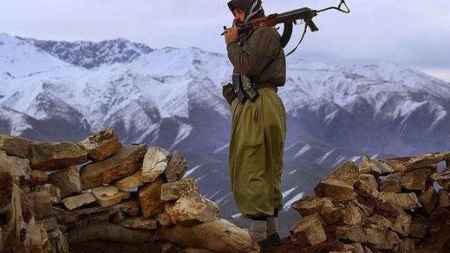
kurdishfighters

Kurdish Peshmerga forces fighting the Islamic State (IS) in both Iraq and Syria have exhibited courage, determination, and a unique pro-American attitude in the Arabic speaking world.  In Syria, however, the Kurdish forces combating the Islamic State bravely and successfully are being attacked by the Turkish army as ordered by President ErdoganHuman rights activist Dilovan Mirkhan told ARA News (November 13, 2016) that “The Turkish army stationed on the borderline with Syria, bombed residential buildings in the Mosako town in Afrin, adding that the bombardment led to massive destruction in the area.” Mirkhan reported that “Dead bodies of eight civilian victims were collected subsequent to the attack, and many others remained stranded under the rubble.”

It should be unacceptable for the incoming Trump administration to allow Turkey’s dictatorial president Erdogan to attack the very forces (the Kurds) who are liberating portions of Syria from the IS. Moreover, it is also high time for the U.N. and the U.S. to recognize the Kurdish people’s right to self-determination.  The U.N. has held endless sessions in support of Palestinian rights and requests for statehood. The Kurds, numbering tens-of-millions, deserve much more from the international community.  There are 22 Arab states but no Kurdish state.  Given the critical role the Kurds are playing in liberating Iraq and Syria from the barbarism of the IS, the time has come to reward the Kurds with a state of their own.

Kurds have been oppressed by Saddam Hussein in Iraq and gassed in Halabja. Hafez Assad, the dictator of Syria expelled hundreds of thousands of Kurds from the Al-Hasakeh region, with similar numbers becoming stateless.  The Islamic Republic of Iran has equally oppressed its largely Sunni-Muslim Kurds. It has denied political and cultural rights to its Kurdish citizens.  Turkey, where the Kurds count for almost 20% of the population, is currently bombing the Kurds at the Kurdish-majority region of southeastern Turkey, and in Syria.

This reporter asked Sherkoh Abbas, President of the Kurdish National Assembly of Syria (KNA-S), to respond to the current situation in Syria.

Joseph Puder (JP): With Donald Trump becoming the new occupant of the White House, and Republicans controlling both houses of Congress, what would you like the new administration to do in Syria?

Sherkoh Abbas (SA): I hope to see the Trump administration abandon the outdated policy of maintaining the unjust legacy of the colonial Sykes-Picot agreement. Similarly, Trump should reverse the previous U.S. administration’s investment in cozying up to ruthless Middle East regimes at the expense of its existing allies.  Instead, the new administration should support its natural allies such as the Kurds in the Middle East and the Amazigh people (Berbers) in North Africa.

Supporting an independent Kurdistan would help finish the Islamic State in Iraq and Syria, and reduce Iran’s influence in the region, particularly in Iraq and Syria.  Working with the Kurds would also sever the Shiite Crescent.  Moreover, open support for the Kurds would check Recep Tayyip Erdogan and his ambitious Neo-Ottoman Empire.

The U.S. under the Trump presidency, should provide full and direct support to the Kurds on all levels, including the delivery of arms, unlike the Obama administration.  Arms to the Kurds should bypass Baghdad, and go directly to the Kurds.

During the primaries, Trump expressed support for the Kurds.  We will call on him to do just that.  The Kurds share the same values with the U.S. and they are eager to work with America.

JP: What do you expect from the Trump administration with regards to an independent Kurdish state in Syria?

SA: Syrian Kurds are currently fighting on behalf of humanity in their struggle with the Islamic State.  As quid-pro-quo, the Kurds would like U.S. help in creating a federal system in Syria to start with, and ultimately supporting outright Kurdish independence in Syria. Israel, Russia, and some European nations are promoting a federal state for the failed states of Iraq and Syria.

JP: Are the leaders of the People’s Protection Units (YPG) ready for an independent Kurdish state in Syria?

SA: The YPG needs to distance itself from the Assad regime as well as the Kurdistan Workers Party (PKK), and work with all the Kurds, including over 5,000 Syrian Peshmerga forces currently fighting to take Mosul.  It must become inclusive instead of a dictatorial regime.  The YPG does not enjoy the overwhelming support of the Syrian Kurds.  The majority of Syrian Kurds want democracy and independence.

The YPG is vacillating between its work with the U.S., Russia, and the Assad regime.  The YPG has to face the Free Syrian Army (FSA) and IS, as well as other terror groups. The Arab Gulf states, particularly Qatar, is supporting the FSA, which is ideologically close to the Muslim Brotherhood.  Turkey, a NATO-member, is too close to the IS and al-Qaeda, and their agenda is to get rid of the Assad regime and the Kurds.

JP: What influence can you and the Kurdistan National Assembly of Syria (KNA-S) exert on the powers that be in your home town of al-Qamishli and Kurdish Syria?

SA: Most of the Syrian Kurds are loyal to Kurdish tribal and civic leaders, and have strong alliances with Iraqi Kurdistan Regional Government (KRG). The YPG opposes such relationships, and thus is not a consensus organization.  The Kurdistan National Assembly of Syria (KNA-S) is aligned with tribal and civic leaders and the KRG in Iraq.  We could deliver the “Kurdish street,” and additional soldiers to finish IS.

This year KNA-S has assembled a wide-ranging delegation of Syrian Kurds, including YPG officials, to come to Washington for talks with U.S. administration officials.  Unfortunately, the State Department did not furnish visas to the delegates from Syria to enter the U.S.  Hopefully, the Trump administration will invite the KNA-S to re-assemble the same delegation for talks in Washington.

JP: Given Erdogan’s dictatorial behavior toward the opposition in Turkey, and especially toward the Kurds in Southeastern Turkey, what would you advise the incoming President Donald Trump to do with regards to Erdogan and Turkey?

SA: Turkey ruled by Erdogan is a lost case, and it is not a friend of the U.S.  Turkey’s intimate relationship with radical Islamic groups requires explanation.  Erdogan’s regime has its eyes focused on Aleppo in Syria and Mosul in Iraq, ostensibly to prevent the formation of an independent and contiguous Kurdistan, comprised of Iraqi and Syrian Kurdistan.

The Trump administration should prevent the Turkish army forces from entering Syrian territory under the guise of fighting IS.  The reality is that Turkey is only interested in fighting the Kurds, and preventing the creation of an independent Kurdish state, or an autonomous Kurdish region in northeastern Syria.

In Debate, Hillary Dodges Blame for Libya, What Obama Called His “Greatest Mistake”

September 27, 2016

In Debate, Hillary Dodges Blame for Libya, What Obama Called His “Greatest Mistake”, Counter Jihad, September 27, 2016

16live1

The first Presidential debate revealed a Democratic candidate who believes she has all the answers even though her failed performance as Secretary of State led directly to the formation of the Islamic State (ISIS), aided the rise of Iran, and furthered much of the chaos in the Middle East.  She cannot learn anything while she believes she already knows everything.  Electing her promises more of the same, and ‘the same’ has been a disaster.

The Republican challenger, meanwhile, has much still to learn about the security structure he would command as President.  Clinton’s strongest moment against him on foreign policy came as she chided him for appearing to suggest that America would not honor its mutual defense treaties with Japan or South Korea.  Nothing is more important to the world than the reliability of America’s word.  Clinton should know that:  it was her former boss, President Obama, who personally kicked off the refugee crisis bedeviling Europe by failing to enforce his red line against Syria’s use of chemical weapons against its own people. His failure to keep his word on a security agreement gave the Syrian regime free rein to wage war on its own population, putting millions on the road to Europe.

Trump’s strongest moment against Clinton came when he accused her of bad judgment in the formation of ISIS.  She attempted to respond by saying that George W. Bush had negotiated the withdrawal from Iraq, and that “the only way that American troops could have stayed in Iraq is to get an agreement from the then-Iraqi government that would have protected our troops, and the Iraqi government would not give that.”

That’s all true, but whose job was it to obtain such an agreement?  That was her job.  She was the one who was supposed to obtain that agreement, and she failed utterly.  As our earlier coverage states:

It was her job to negotiate an arrangement with the Iraqi government that would do two things:  allow a stabilizing US military presence to remain in Iraq, and allow the US Department of State the freedom of movement it would need to step up as guarantors of the peace.  The peace, you see, had been purchased not only by the US military’s victory on the battlefields, but also by its patient negotiation with militants formerly aligned with al Qaeda in Iraq.  These tribes, mostly but not exclusively Sunni, had rejected the terrorism of al Qaeda in Iraq in return for promises of fair treatment from the Iraqi central government.  This included jobs, assistance for communities recovering from the war, and many other things that the government promised to provide in return for the support of these former enemies.  The United States helped to negotiate all these agreements, and promised to see that they would be kept faithfully.

Instead, the Secretary of State failed to produce either a new Status of Forces agreement that would permit US troops to remain in Iraq, or an agreement that would allow State Department personnel to move about the country safely to observe whether agreements were being kept.  In the wake of the precipitous withdrawal of US forces, Prime Minister Maliki moved to arrest Sunni leaders in government, and broke all his promises to the tribes.

The result was that the western part of Iraq once again became fertile ground for an Islamist insurgency.

Clinton was similarly unreflective when she argued that Trump had supported “the actions we took in Libya,” without pausing for a moment to acknowledge what a destabilizing mistake it was.  Effecting regime change with no capacity to control the outcome is what allowed radical groups, including ISIS, to expand into the vacuum.  That one is also her fault personally, as she pushed President Obama to take this action.  Her own President says that he considers ataking her advice on Libya to be his “worst mistake.”  Yet again, she has learned nothing, and does not seem to be aware that there is even anything to learn.

A similar failure to understand the lessons of the recent past occurred in their exchange on NATO.  Trump is right to be critical of the institution’s continuing relevance, but he is criticizing it on the wrong grounds.  That the other nations do not pay their way is true, but it is not the problem with NATO.  That it does not focus on terrorism is partly true, but it does not render the organization obsolete because a resurgent Russia remains a security challenge for western Europe.

Nevertheless, Clinton’s smug response is un-reflective and wrong.

You know, NATO as a military alliance has something called Article 5, and basically it says this: An attack on one is an attack on all. And you know the only time it’s ever been invoked? After 9/11, when the 28 nations of NATO said that they would go to Afghanistan with us to fight terrorism, something that they still are doing by our side.

What Clinton fails to mention here is that, like all of NATO’s decisions, invoking Article 5 must be done unanimously.  The reason to question NATO’s continued relevance is that the Turkish drift into Islamist politics makes it unlikely that a unanimous vote could still be reached.  Turkey has also shown signs recently of falling into Russia’s orbit.  If Turkey becomes a Russian ally in the way that China is, NATO may be rendered obsolete simply because it can never take a decision.  If Turkey becomes a Russian satellite, NATO will indeed have been rendered obsolete.  In either case, NATO’s continued relevance turns on figuring out how to swing Turkey away from Islamist thought and Russian influence, eliminating the unanimity requirement on NATO actions, or else developing a mechanism to expel the Turks from the alliance.   None of that exists, and since Turkey would have to agree to any of those changes, none of it is likely to come to exist.

Finally, on Iran, Clinton is wedded to a policy that Trump rightly describes as a disaster.

You look at the Middle East, it’s a total mess. Under your direction, to a large extent.

But you look at the Middle East, you started the Iran deal, that’s another beauty where you have a country that was ready to fall, I mean, they were doing so badly. They were choking on the sanctions. And now they’re going to be actually probably a major power at some point pretty soon, the way they’re going.

The horror show in Syria is linked to the Iran deal, as Obama decided to let Syria fester in order to pursue Iran’s approval of his deal.  Clinton’s role in this deal is something she herself has celebrated, so she cannot walk away from it.  Since then, Iran has developed new ballistic missiles that make sense only as a delivery mechanism for nuclear payloads.  It has bought advanced anti-aircraft missiles, and installed them around one of the nuclear sites allegedly to be made harmless by this wonderful “deal.”  Why is it hardening this site against air strikes if it intends to live by the deal?  Why develop a delivery mechanism for weapons you don’t intend to build?

Clinton cannot even ask these questions, because she is wedded to her failures.

Dangerous Weakness in Iraq and Syria

September 23, 2016

Dangerous Weakness in Iraq and Syria, Counter Jihad, September 22, 2016

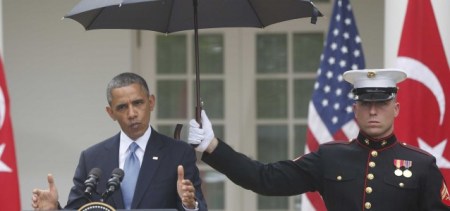
umbrellaman

US Secretary of State John F. Kerry “urges” Russia and Syria to ground their military aircraft after the destruction of a humanitarian aid convoy. Meanwhile, in the eastern part of that same theater, American and Iraq forces came under a sulfur mustard (commonly known as “mustard gas”) attack from the Islamic State (ISIS).

This is not the first use of sulfur mustard by ISIS and their predecessors.  They used them in IEDs against American forces during the Iraq War, and against Kurdish forces as late as last year.  Nevertheless, they clearly do not fear to use them against Americans at this time.  Whatever message we are conveying to ISIS, it does not include a proper respect for violating the laws of war when dealing with our soldiers.

Likewise, the Russians are not going to ground their aircraft just because we ask them to do.  In fact, the Russians are sending their only active aircraft carrier to join the war in Syria.  Defying an empty “urging” by our Secretary of State is just another way for Russia to show that they, and not we, are in control of the conflict.

Syrian jets, meanwhile, came close to bringing American forces under aerial attack for the first time since World War II.  Only good fortune kept American soldiers from being killed by Syrian bombs.  Fighters had to be scrambled to prevent additional sorties by the Syrian bombers.

In addition to Russia, Syria, and ISIS, Iran’s challenges against US Navy forces are up 50% from last year.  The Iranians are violating international law on a regular and consistent basis in challenging American fleet ships over access to international waters.

According to U.S. officials, the incidents all involved the IRGC, which operates a navy in parallel to Iran’s regular naval force, and whose leaders answer directly to Iranian Supreme Leader Ayatollah Ali Khamenei, Defense News reported.

Ten American sailors and their two boats were seized by IRGC naval forces in January of this year in violation of international law.

Subsequent to the sailors’ release, Iran portrayed their capture as a victory against the U.S., releasing the sailors after claiming that Washington apologized for the incident. Khamenei proclaimed that the naval forces who captured the sailors did “God’s deed” and issued medals to the commanders involved, while the IRGC announced plans to build a statue to commemorate the seizure.

In May, the deputy commander of the IRGC threatened to close the strategic Straits of Hormuz to the U.S. and its allies if they “threaten us,” adding: “Americans cannot make safe any part of the world.”

The U.S. Navy reported last month that in 2015, there were close to 300 encounters or “interactions” between American and Iranian naval vessels in the Persian Gulf. While most of the encounters were not considered to be harassment, the behavior of the Iranian navy was found to be less disciplined than that of other navies.

Weakness is provocative in a military conflict.  Refusing to embrace strong measures that would control these aggressive moves is exactly how American servicemen get killed.  Across the Middle East, our President’s predilection for weakness is putting American lives in grave [danger.]

What’s the Plan for Winning the War?

August 25, 2016

What’s the Plan for Winning the War?, Counter Jihad, August 25, 2016

Who is even thinking about how to win the war?  Will the legacy of the Obama administration be a shattered NATO, a Turkey drawn into Russia’s orbit, an Iranian hegemony over the northern Middle East, and a resurgent Russia?  It certainly looks to be shaping up that way.  Russia is playing chess while the US is playing whack-a-mole.  The absence of a coherent governing strategy is glaring.

**********************

Michael Ledeen makes a clever observation:

Everyone’s talking about “ransom,” but it’s virtually impossible to find anyone who’s trying to figure out how to win the world war we’re facing.  The two keystones of the enemy alliance are Iran and Russia, and the Obama administration, as always, has no will to resist their sorties, whether the Russians’ menacing moves against Ukraine, or the Iranians’ moves against us.

The moves are on the chessboard, sometimes kinetic and sometimes psychological warfare.  Like a chess game, we are in the early stages in which maneuver establishes the array of forces that will govern the rest of the game.  Russia’s deployment of air and naval forces to Syria stole a march on the Obama administration.  Its swaying of Turkey, which last year was downing Russian aircraft, is stealing another.  Its deployment of bombers and advanced strike aircraft to Iran is another.  That last appears to be in a state of renegotiation, as Ledeen notes, but that too is probably for show.  The Iranians have too much to gain in terms of security for their nuclear program, at least until they’ve had time to build their own air force.

Iran is making strategic moves as well.  Ledeen notes the “Shi’ite Freedom Army,” a kind of Iranian Foreign Legion that intends to field five divisions of between twenty and twenty-five thousand men each.  Overall command will belong to Quds Force commander Qassem Suliemani, currently a major figure in the assault on Mosul, having recovered from his injury in Syria commanding Iranian-backed militia in the war there.  The fact of his freedom of movement is itself a Russian-Iranian demonstration that they will not be governed by international law:  Suliemani is under international travel bans for his assassination plot against world diplomats, but was received in Moscow and now travels freely throughout the northern Middle East.

Turkey, meanwhile, has been effectively cut off by Iran’s and Russia’s success in the opening game of this global chess match.  As late as the Ottoman Empire, the Turks looked south through Iran and Iraq to power bases as far away as Arabia.  Now the Ayatollahs are going to control a crescent of territory from Afghanistan’s borders to the Levant, leaving the Turks locked out.  One might have expected the Turks to respond by doubling their sense of connection to Europe and NATO.  Instead, the purge following the alleged coup attempt is cementing an Islamist control that leaves the Turks looking toward a world from which they are largely separated by the power of this new Russian-Iranian alliance.  The Turks seem to be drifting toward joining that alliance because being a part of that alliance will preserve their ties to the Islamic world.

For now, the Obama administration seems blind to the fact that these moves are closing off America’s position in the Middle East.  This is not a new policy.  Eli Lake reports that the Obama administration told the CIA to sever its ties to Iranian opposition groups in order to avoid giving aid to the Green revolution.  Their negotiation of last year’s disastrous “Iran deal” has led to Iran testing new ballistic missiles and receiving major arms shipments from Russia.  Yet while all these moves keep being made around them, the Obama administration proceeds as if this were still just an attempt to crush the Islamic State (ISIS).  The commander of the XVIIIth Airborne Corps has been given a task that amounts to helping the Iranians win.  Our incoherent policy has left us on both sides in Syria.  Our only real ally in the conflict, the Kurds, stand abandoned by America.

Who is even thinking about how to win the war?  Will the legacy of the Obama administration be a shattered NATO, a Turkey drawn into Russia’s orbit, an Iranian hegemony over the northern Middle East, and a resurgent Russia?  It certainly looks to be shaping up that way.  Russia is playing chess while the US is playing whack-a-mole.  The absence of a coherent governing strategy is glaring.

Israel’s let-down: Putin-Erdogan hook-up with Iran

August 9, 2016

Israel’s let-down: Putin-Erdogan hook-up with Iran, DEBKAfile, August 9, 2016

2 (1)

The talks between Presidents Vladimir Putin and Reccep Erdogen in St. Petersburg scheduled for Tuesday, Aug. 9, are causing trepidation among Israel’s policy-makers and military leaders. Their summit takes place on the sidelines of the G-20 summit, concluding nine months of hostility between the two capitals that was sparked by Turkish jets shooting down a Russian SU-24 warplane over the Syrian border on Nov. 24, 2015.

The feud was put to rest on July 17 – two days after Erdogan suppressed the attempted military coup against his rule. The Turkish ruler decided there and then to exploit the episode to expand his strength and use it not only for a massive settling of accounts with his critics, but also as a springboard for parlaying his reconciliation with Moscow for a strategic pact with Russia.

Israel, the worry is that while turning his back on the United States and NATO, Eerdogan will go all the way to bond with Russia to which Iran is also attached as a partner. Indeed, Erdogan has scheduled a trip to Tehran and a meeting with President Hassan Rouhani a few days after his talks with Putin.

The Turkish president’s latest moves look like spawning another new Middle East bloc that would consist of Turkey, Russia, Iran, Iraq, Syria and indirectly the Lebanese Hizballah terrorist group.

This prospect would upend Israel’s key policies for Turkey and Syria.

The Israeli détente with Ankara in recent months hinged on Turkey’s continuing to maintain its close military and intelligence ties with the United States and its integration in an anti-Iran Sunni alliance in partnership with Saudi Arabia, Egypt, the United Arab Emirates and Jordan.

But the Putin-Erdogan meeting Tuesday threatens to throw American, Israeli and moderate Arab rulers’ plans to the four winds. Turkey appears to have opted to line up with a Russian-Shiite front led by Tehran in preference to an anti-Iran Sunni alliance.

Therefore, the expanded military and intelligence cooperation which the Israeli-Turkish rapprochement was to have heralded will be low key at best for two reasons:

1. Israel will beware of sharing its military technology with Turkey lest it find its way to Iran. During the talks with Ankara for patching up their quarrel Israel was constantly on the lookout for indications that Turkey was prepared to break off its ties with Iran.

2. For the sake of keeping Iran and Hizballah away from its borders, Israel entered into arrangements with Russia, some of them never published, at the start of Moscow’s military intervention in Syria last September. Those arrangements included coordination of their air force operations over Syria.

Now, Israel finds itself suddenly up against a Russian-Turkish partnership aimed at strengthening Iranian domination of Syria – the exact reverse of the Netanyahu government’s objective in resolving its dispute with Ankara and forging deals with Moscow.