Archive for the ‘Syria war’ category

To gratify Tehran and Moscow, new US-Turkish anti-ISIS war campaign in Syria skirts Assad’s forces

July 26, 2015

To gratify Tehran and Moscow, new US-Turkish anti-ISIS war campaign in Syria skirts Assad’s forces, DEBKAfile, July 25, 2015

Tanks_face_IS_at_Syria_25.7.15

Not exactly by chance, the security zone bisects Kurdish territory and holds back Kurdish forces in their assaults on ISIS.

DEBKAfile’s military sources report that a glance at the map betrays an all-out US-Turkish effort not put up backs in Tehran by interfering with Syrian, Hizballah and pro-Iranian militia operations in critical northern Syrian war zones such as Aleppo or give the Syrian rebels a helping hand in the Idlib province.

*********************

After the second successive night of Turkish cross-border bombing attacks on the Islamic State in northern Syria, Ankara and Washington agreed Saturday, July 25, to name the “security zone” covered by a “partial no fly zone” they had declared in northern Syria the “Islamic State free zone.” Click HERE for full-size map!

This name represents a significant US-Turkish concession to Iran of immunity for its allies, Syrian President Bashar Assad and Hizballah, in order to gain Tehran’s cooperation in the campaign Turkey launched against ISIS Friday. Integral to the deal is also a promise to abstain from using the campaign to grant anti-Assad rebel groups any advantages.

This immunity did not extend to the Kurdish Workers Movement (PKK), which were targeted in the course of Turkish air and ground action in and over the new “security zone.” Those warplanes also flew missions Friday night over the PKK bases and logistical facilities in the Qandil Mountains of northern Iraq. The PKK responded Saturday with an announcement that their armistice with Ankara was over. Turkey may consequently expect a recurrence of Kurdish terrorist violence in its cities,DEBKAfile notes.

High-placed sources in Ankara disclosed details of the US-Turkish deal with Iran. US warplanes will have the use of Turkish air bases, and not just the big Incirlik facility, for staging air strikes against ISIS, so long as Syrian targets are avoided. Washington agreed to Ankara using its air and ground operations against ISIS in Syria to drive into the new “security zone” and push toward the east to continue those attacks – eve if they run up against Kurdish forces which are also fighting ISIS.

The security zone’s area covered by a no-fly zone is 90 km wide and 40km deep, running between Mere, a small town 25  km north o Aleppo in the west, to the northwestern town of Jarabulus, which is situated on the west bank of the Euphrates.

Not exactly by chance, the security zone bisects Kurdish territory and holds back Kurdish forces in their assaults on ISIS.

DEBKAfile’s military sources report that a glance at the map betrays an all-out US-Turkish effort not put up backs in Tehran by interfering with Syrian, Hizballah and pro-Iranian militia operations in critical northern Syrian war zones such as Aleppo or give the Syrian rebels a helping hand in the Idlib province.

The combined US-Turkish action moreover greatly supports the Assad-Hizballah war against ISIS gains in Syria and enhances Iranian and Russian influence in Damascus.

US Secretary of Defense Ashton Carter, in Irbil Friday, July 24, assured leaders of the semiautonomous Kurdish Republic of Iraq. “We are trying to build a force through the territory of Iraq, and someday in Syria, that can do what the peshmerga have achieved.”

At the same time, in Syria, the Kurds and their national aspirations look like losing out dramatically in the fallout from the complex US-Turkish partnership for beating ISIS back.

Jordan launches war on ISIS in Iraq, Turkish warplanes hit ISIS in Syria. US, Israel involved in both ops

July 24, 2015

Jordan launches war on ISIS in Iraq, Turkish warplanes hit ISIS in Syria. US, Israel involved in both ops, DEBKAfile, July 24, 2015

ISIS_24.7.15F-16 warplane in action against ISIS

The Middle East woke up Friday, July 24, to two new full-fledged wars launched by Jordan and Turkey for cutting down the Islamic State of Iraq and the Levant as is forces advanced on their borders. The United States and Israel are involved in both campaigns. Jordanian armored, commando and air forces are already operating deep inside Iraq, while Friday morning, Turkey conducted its first cross-border air strike against ISIS targets in Syria. Clashes between Turkish troops and Islamic fighters erupted at several points along the border. Both governments also conducted mass arrests of suspected Islamists. The Jordanian police picked up ISIS adherents, while 5,000 Turkish police detained 250 Islamist and outlawed Kurdish PKK suspects in Istanbul, Ankara, Izmir and Saniurta. Jordan Friday shut down its only border crossing with Iraq.

Earlier this week, Turkey permitted US warplanes to us the Incirlik air base in the south for bombing missions against ISIS, and Israel handed over to Jordan 16 Cobra combat helicopters and assured Jordan of air force cover for its anti-ISIS operation.

Read more about this new chapter in the war on ISIS in the DEBKAfile report of Thursday, July 23.

In the first publicized Israeli military hardware transaction with an Arab nation, Israel has handed over “around 16 Cobra” combat helicopters in support of Jordan’s war on the Islamic State. This was confirmed Thursday, July 23, by a US official close to the transfer. It was also the first time US-Jordanian-Israeli military cooperation in the struggle against ISIS was publicly disclosed.

“These choppers are for border security,” said the unnamed US official.DEBKAfile’s military and counter-terror sources disclose that the Cobras are needed for a large-scale Jordanian aerial-commando operation launched in the western Iraqi province of Anbar, which borders on the Hashemite Kingdom. This operation is designed to carve out a security belt tens of kilometers deep inside Iraq as a barrier against Islamic State’s encroachment.

Amman approached Washington for combat helicopters to back the operation and was told that the US is short of these items and would turn Israel to pitch in. The US first provided mechanical overhauls for the aircraft before they were incorporated free of charge in Jordan’s existing Cobra fleet.

The transfer was announced while US Defense Secretary Ashton Carter was touring the Middle East. He arrived in Amman Tuesday, July 21,after talks in Israel, and visited Baghdad unannounced Thursday, July 23 for an update on the war on ISIS

The mounting Islamist threat to Jordan is coming now from two directions – the Iraqi province of Anbar and  Syria. ISIS forces have grabbed positions in southern Syria near the intersection of the Jordanian, Iraqi and Syrian borders. They have also moved up to the eastern Syrian town of Abu Kamal on the Iraqi border and, since mid-May, have gradually detached small groups from the captured central Syrian town of Palmyra and quietly built up positions in the south near Jabal Druze.

This buildup has been tracked by US, Jordanian and Israeli surveillance.

The Islamist domestic threat to the Hashemite Kingdom is no less acute. Jihadist sleeper cells have been planted in Jordan ready to strike strategic targets for a reign of terror to coincide with the onset of external Islamic State attacks staged from Iraq and Syria.

Our military sources report that US-Israeli-Jordanian cooperation is channeled through the US Central Command Forward-Jordan from its headquarters north of Amman. It is staffed by US, British, Jordanian, Saudi and Israeli officers working together to defeat ISIS.

US-Israeli-Egyptian mobile sensor-fence projects to block further ISIS Mid East expansion

July 10, 2015

US-Israeli-Egyptian mobile sensor-fence projects to block further ISIS Mid East expansion, DEBKAfile, July 10, 2015

mobile_surveillance_sensor_towers7.15A US mobile surveillance sensor tower

US counter-terror experts are overseeing a lightning operation for setting up mobile sensor towers and electronic fences in Tunisia, Egypt, Jordan and Israel in a desperate bid to seal their borders off against the fast-moving impetus of the Islamic State of Iraq and the Levant – ISIS, or at least slow it down. This reign of terror is spreading out from Iraq and Syria and creeping into southern Jordan, the Israeli Negev, and Egyptian Sinai, then on to Libya and over to Tunisia and Algeria, covering a distance of 4,000 km.

When President Abdel-Fatteh El-Sisi saw his army had not repelled the ISIS Sinai affiliate’s offensive in North Sinai as it went into its second week – controlling only the main highway from El Arish to Cairo via Bardawil Lake – he turned to Washington with an urgent request to ship over mobile surveillance sensor towers and American crews to operate them. His plan is to string them across the Sinai Peninsula and along Egypt’s borders with Libya and Sudan in a last-chance bid to block the constant influx of reinforcements and weapons to ISIS fighters reaching Sinai from Libya, through the Egyptian borde,r and from Iraq, through southern Jordan and the Israeli Negev.

The State Department acceded to the Egyptian request and has submitted the application worth $100 million for congressional approval.

The application states: “This procurement is intended for Egyptian Border Guard Forces, which currently lack any remote detection capability along unpatrolled areas of Egypt’s borders.” Libya, Sudan and Sinai are specified. The application goes on to explain: “The system would provide an early warning capability to allow for faster response times to mitigate threats to the border guards and the civilian population.”

DEBKAfile’s counter-terror and intelligence sources disclose that Egypt already has one set of American mobile sensor towers. They were installed on the 193 km long banks of the Suez Canal more than a year ago and have kept ISIS terrorists from reaching those banks and firing missiles at passing ships to block the waterway, like the RPG attack of Sept. 5, 2013.

The sensor towers have proved effective so long as the various terrorist groups, such as ISIS, were deterred from directly attacking American facilities by tactical considerations of their own, such as a preference for those systems rather than a large-scale army forces to police the Suez zone, which would physically impede the convoys carrying men and arms from Libya into Egypt.

The drivers of these convoys stop over at Suez and Port Suez to rest up before carrying on with the long drive to their destinations in Sinai. Scattering the mobile sensor towers in areas unpatrolled by Egyptian troops would expose the American operators to ISIS attacks and abductions. So while solving one problem, they may well generate another. In any case they won’t make the ISIS threat go away.

Whereas Egypt asked for mobile sensors, Tunisia is to have a new, permanent fence with electronic warning stations along its route. Our counter-terror experts point out that, however effective this system is, it can’t promise Tunisia hermetic protection against terrorist encroachment.

ISIS has at least two ways of getting around the fence barrier:

1. Landing by sea. The gunman who massacred 39 tourists on the Soussa beach on June 26 landed from the Mediterranean by speedboat.

2. Circumventing the fence through the meeting point of the Tunisian-Libyan-Algerian borders. That point will not be enclosed. Tunisia may be reached through western Algeria where the border is wide open.

The second electronic fence the United States is providing will run down 30 km of the border between Israel and Jordan from Timna to Eilat. It is a joint project, which has become necessary to curb ISIS movements from southern Jordan through the Israeli Negev and onto Egyptian Sinai and the Gaza Strip.

The Iran Delusion: A Primer for the Perplexed

July 8, 2015

The Iran Delusion: A Primer for the Perplexed, World AffairsMichael J. Totten, Summer 2015

Totten_Iran

US foreign policy in the Middle East is focused on two things right now: containing ISIS and preventing Iran from acquiring nuclear weapons. These are both worthy goals, but if sanctions are lifted on Iran as part of a nuclear deal, whether or not it gets the bomb, Tehran will certainly have more money and resources to funnel to Hezbollah, the Assad regime, Iraq’s Shia militias, the Houthis in Yemen, and—perhaps—to Saudi Arabia’s disaffected Shia minority. The region will become even less stable than it already is. ISIS and al-Qaeda will likely grow stronger than they already are.

**************************

The chattering class has spent months bickering about whether or not the United States should sign on to a nuclear deal with Iran, and everyone from the French and the Israelis to the Saudis has weighed in with “no” votes. Hardly anyone aside from the Saudis, however, seems to recognize that the Iranian government’s ultimate goal is regional hegemony and that its nuclear weapons program is simply a means to that end.

What do these shatter zones have in common? The Iranian government backs militias and terrorist armies in all of them. As Kaplan writes, “The instability Iran will cause will not come from its implosion, but from a strong, internally coherent nation that explodes outward from a natural geographic platform to shatter the region around it.”

That’s why Iran is a problem for American foreign policy makers in the first place; and that’s why trading sanctions relief for an international weapons inspection regime will have no effect on any of it whatsoever.

Iran has been a regional power since the time of the Persian Empire, and its Islamic leaders have played an entirely pernicious role in the Middle East since they seized power from Mohammad Shah Reza Pahlavi in 1979, stormed the US Embassy in Tehran, and held 66 American diplomats hostage for 444 days.

In 1982, they went international. When the Israelis invaded Lebanon to dislodge Yasir Arafat’s Palestine Liberation Army, Iranian Revolutionary Guard Corps commanders forged a network of terrorist and guerrilla cells among their coreligionists in Lebanon’s Shia population.

Hezbollah, the poisoned fruit of these efforts, initially had no name. It was a hidden force that struck from the shadows. It left a hell of a mark, though, for an organization of anonymous nobodies when it blew up the American Embassy in Beirut and hit French and American peacekeeping troops—who were there at the invitation of the Lebanese government—with suicide truck bombers in 1983 that killed 368 people.

When Hezbollah’s leaders finally sent out a birth announcement in their 1985 Open Letter, they weren’t the least bit shy about telling the world who they worked for. “We are,” they wrote, “the Party of God (Hizb Allah), the vanguard of which was made victorious by God in Iran . . . We obey the orders of one leader, wise and just, that of our tutor and faqih [jurist] who fulfills all the necessary conditions: Ruhollah Musawi Khomeini. God save him!”

The Israelis fought a grinding counterinsurgency against Hezbollah for 18 years in southern Lebanon before withdrawing in 2000, and they fought a devastating war in 2006 along the border that killed thousands and produced more than a million refugees in both countries. Hezbollah was better armed and equipped than the Lebanese government even then, but today its missiles can reach Tel Aviv, Jerusalem, and even the Dimona nuclear power plant all the way down in the southern part of the country. 

Until September 11, 2001, no terrorist organization in the world had killed more Americans than Hezbollah. Hamas in Gaza isn’t even qualified as a batboy in the league Hezbollah plays in.

Hezbollah is more than just an anti-Western and anti-Jewish terrorist organization. It is also a ruthless sectarian Shia militia that imposes its will at gunpoint on Lebanon’s Sunnis, Christians, and Druze. It has toppled elected governments, invaded and occupied parts of Beirut, and, according to a United Nations indictment, assassinated former Lebanese Prime Minister Rafik Hariri.

Hezbollah is, for all intents and purposes, the foreign legion of Iran’s Revolutionary Guard Corps. The parts of the country it occupies—the northern Bekaa Valley, the Israeli border region, and the suburbs south of Beirut—constitute a de facto Iranian-controlled state-within-a-state inside Lebanon. 

After the United States demolished Saddam Hussein’s Sunni-dominated regime in 2003, Iran’s rulers duplicated their Lebanon strategy in Iraq by sponsoring a smorgasbord of sectarian Shia militias and death squads that waged war against the Iraqi government, the American military, Sunni civilians, and politically moderate Shias. 

Unlike Lebanon—which is more or less evenly divided between Christians, Sunnis, and Shias—Iraq has an outright Shia majority that feels a gravitational pull toward their fellow Shias in Iran and a revulsion for the Sunni minority that backed Hussein’s brutal totalitarianism and today tolerates the even more deranged occupation by the Islamic State, also known as ISIS. 

The central government, then, is firmly aligned with Tehran. Iran’s clients don’t run a Hezbollah-style state-within-a-state in Iraq. They don’t have to. Now that Hussein is out of the way, Iraq’s Shias can dominate Baghdad with the weight of sheer demographics alone. But Iran isn’t content with merely having strong diplomatic relations with its neighbor. It still sponsors sectarian Shia militias in the center and south of the country that outperform the American-trained national army. They may one day even supplant Iraq’s national army as the Iranian Revolutionary Guard Corps has more or less supplanted the Iranian national army. Iraq’s Shia militias are already the most powerful armed force outside the Kurdish autonomous region and ISIS-held territory.

When ISIS took complete control of the city of Ramadi, the capital of Anbar Province, in May of 2015, the Iraqi soldiers tasked with protecting it dropped their weapons and ran as they had earlier in Mosul, Tikrit, and Fallujah. So Iraq’s central government tasked its Iranian-backed Shia militias with taking it back. 

On the one hand, we can hardly fault Baghdad for sending in whatever competent fighting force is available when it needs to liberate a city from a psychopathic terrorist army, but the only reason ISIS gained a foothold among Iraq’s Sunnis in the first place is because the Baghdad government spent years acting like the sectarian dictatorship that it is, by treating the Sunni minority like second-class citizens, and by trumping up bogus charges against Sunni officials in the capital. When ISIS promised to protect Iraq’s Sunnis from the Iranian-backed Shia rulers in Baghdad, the narrative seemed almost plausible. So ISIS, after being vomited out of Anbar Province in 2007, was allowed to come back.

Most of Iraq’s Sunnis fear and loathe ISIS. They previously fought ISIS under its former name, al-Qaeda in Iraq. But they fear and loathe the central government and its Shiite militias even more. They’d rather be oppressed by “their own” than by “the other” if they had to choose. But they have to choose because Iran has made Iraq its second national project after Lebanon.

It doesn’t have to be this way. At least some of the tribal Sunni militias would gladly fight ISIS as they did in the past with American backing. If they did, residents of Ramadi, Fallujah, and Mosul would view them as liberators and protectors rather than potential oppressors, but Tehran and Baghdad will have none of it.

“All attempts to send arms and ammunition must be through the central government,” Adnan al-Assadi, a member of Parliament, told CNN back in May. “That is why we refused the American proposal to arm the tribes in Anbar. We want to make sure that the weapons would not end up in the wrong hands, especially ISIS.”

That may appear reasonable on the surface, but ISIS can seize weapons from Shia militias just as easily as it can seize weapons from Sunni militias. The real reason for the government’s reluctance ought to be obvious: Iraq’s Shias do not want to arm Iraq’s Sunnis. They’d rather have ISIS controlling huge swaths of the country than a genuinely popular Sunni movement with staying power that’s implacably hostile to the Iranian-backed project in Mesopotamia.

The catastrophe in Iraq is bad enough, but the Iranian handiwork in Syria is looking even more apocalyptic nowadays. ISIS wouldn’t even exist, of course, if it weren’t for the predatory regime of Bashar al-Assad, and the close alliance that has existed between Damascus and Tehran since the 1979 revolution that brought the ayatollahs to power.

Syria’s government is dominated by the Alawites, who make up just 15 percent of the population. Their religion is a heterodox blend of Christianity, Gnosticism, and Shia Islam. They aren’t Shias. They aren’t even Muslims. Their Arab Socialist Baath Party is and has always been as secular as the Communist Party was in the Soviet Union (and it was in fact a client of the Soviet Union). A marriage between an aggressively secular Alawite regime and Iran’s clerical Islamic Republic was hardly inevitable, but it’s certainly logical. The two nations had a common enemy wedged between them in Saddam Hussein’s Iraq, and both have been threatened by the region’s Sunni Arab majority since their inception. 

Hezbollah is their first child, and the three of them together make up the core of what analyst Lee Smith calls the Resistance Bloc in his book, The Strong Horse. The Party of God, as it calls itself, wouldn’t exist without Iranian money and weapons, nor would it exist without Damascus as the logistics hub that connects them. And it would have expired decades ago if Syria hadn’t conquered and effectively annexed Lebanon at the end of the Lebanese civil war in 1990.

Every armed faction in Lebanon, including Hezbollah, signed on to the Syrian-brokered Taif Agreement, which required the disarmament of every militia in the country. But the Assads governed Lebanon with the same crooked and cynical dishonesty they perfected at home, and as the occupying power they not only allowed Hezbollah to hold onto its arsenal, but also allowed Hezbollah to import rockets and even missiles from Iran.

“For Syria,” historian William Harris wrote in The New Face of Lebanon, “Hezbollah could persist as both a check on the Lebanese regime and as a means to bother Israel when convenient.”

The Party of God is now a powerful force unto itself, but it rightly views the potential downfall of the Assad regime as the beginning of its own end. The fact that Assad might be replaced by the anti-Shia genocidaires of ISIS compelled its fighters to invade Syria without an exit strategy—with the help of Iranian commanders, of course—to either prop up their co-patron or die.

Rather than going all-in, the Iranians could have cut their losses in Syria and pressured Assad into leaving the country. ISIS would be hiding under rocks right now had that happened. Hardly any Sunnis in Syria would tolerate such a deranged revolution if they had no one to revolt against. But the Resistance Bloc will only back down if it’s forced to back down. If ISIS devours Syria and Iraq as a result, then so be it.

And while the Resistance Bloc is fighting for its survival in the Levant, it’s expanding into the Arabian Peninsula.

The Shia-dominated Houthi movement took control of Yemen’s capital, Sanaa, earlier this year following the revolution that toppled former President Ali Abdullah Saleh, and its fighters are well on their way to taking the port city of Aden, in the Sunni part of the country.

The Houthis, of course, are backed by Iran.

They’re no more likely to conquer every inch of that country than Iran’s other regional proxies are to conquer every inch of anywhere else. Shias make up slightly less than half of Yemen’s population, and their natural “territory” is restricted to the northwestern region in and around the capital. Taking and holding it all is likely impossible. No government—Sunni, Shia, or otherwise—has managed to control all of Yemen for long. 

And the Saudis are doing their damnedest to make sure it stays that way. Their fighter jets have been pounding Houthi positions throughout the country since March.

Saudi Arabia is more alarmed at Iranian expansion in the region than anyone else, and for good reason. It’s the only Arab country with a substantial Shia minority that hasn’t yet been hit by Iranian-backed revolution, upheaval, or sectarian strife, although events in Yemen could quickly change that.

In the city and province of Najran, in the southwestern corner just over the Yemeni border, Shias are the largest religious group, and they’re linked by sect, tribe, and custom to the Houthis.

Not only is the border there porous and poorly defined, but that part of Saudi Arabia once belonged to Yemen. The Saudis conquered and annexed it in 1934. Najran is almost identical architecturally to the Yemeni capital, and you can walk from Najran to Yemen is a little over an hour. 

Will the Houthis be content to let Najran remain in Saudi hands now that they have Iranian guns, money, power, and wind at their back? Maybe. But the Saudis won’t bet their sovereignty on a maybe.

Roughly 15 percent of Saudi Arabia’s citizens are Shias. They’re not a large minority, but Syria’s Alawites are no larger and they’ve been ruling the entire country since 1971. And Shias make up the absolute majority in the Eastern Province, the country’s largest, where most of the oil is concentrated. 

Support among Yemen’s Sunnis for al-Qaeda in the Arabian Peninsula—the most dangerous branch of al-Qaeda on earth—is rising for purely sectarian reasons just as it has in Syria and Iraq. Iran can’t intervene anywhere in the region right now without provoking a psychotic backlash that’s as dangerous to Tehran and its interests as it is to America’s.

If Iranian adventurism spreads to Saudi Arabia, watch out. Everywhere in the entire Middle East where Sunnis and Shias live adjacent to one another will have turned into a shatter zone.

The entire world’s oil patch will have turned into a shatter zone.

US foreign policy in the Middle East is focused on two things right now: containing ISIS and preventing Iran from acquiring nuclear weapons. These are both worthy goals, but if sanctions are lifted on Iran as part of a nuclear deal, whether or not it gets the bomb, Tehran will certainly have more money and resources to funnel to Hezbollah, the Assad regime, Iraq’s Shia militias, the Houthis in Yemen, and—perhaps—to Saudi Arabia’s disaffected Shia minority. The region will become even less stable than it already is. ISIS and al-Qaeda will likely grow stronger than they already are.

We’re kidding ourselves if we think that won’t affect us. It’s not just about the oil, although until every car in the world is powered by green energy we can’t pretend the global economy won’t crash if gasoline becomes scarce. We also have security concerns in the region. What happens in the Middle East hasn’t stayed in the Middle East now for decades. 

The head-choppers of ISIS are problematic for obvious reasons. Their leader, Abu Bakr al-Baghdadi, said, “I’ll see you in New York,” to American military personnel when they (foolishly) released him from Iraq’s Camp Bucca prison in 2004. But the Iranian-led Resistance Bloc has behaved just as atrociously since 1979 and will continue to do so with or without nuclear weapons.

US involvement in Syria and Iraq is minimal now, but even the little we are doing makes little sense. We’re against ISIS in both countries, which is entirely fine and appropriate, but in Iraq we’re using air power to cover advances by Shia militias and therefore furthering Iranian interests, and in Syria we’re working against Iranian interests by undermining Assad and Hezbollah. Meanwhile, the nuclear deal Washington is negotiating with Tehran places a grand total of zero requirements on Iran’s rulers to roll back in their necklace of shatter zones.

We don’t have to choose between ISIS and Iran’s revolutionary regime. They’re both murderous Islamist powers with global ambitions, and they’re both implacably hostile to us and our interests. Resisting both simultaneously wouldn’t make our foreign policy even a whit more complicated. It would, however, make our foreign policy much more coherent.

America’s latest failure in Syria

July 8, 2015

America’s latest failure in Syria, Washington Post, The Editorial Board, July 7, 2015

(Another mild WP Editorial Board Op Ed critical of Obama’s foreign policies (please see also, The U.S. response to Iran’s cheating is a worrying omen.) This WaPo editorial does not suggest any linkage between Obama’s opposition to attacks on the Iran-supported Syrian regime and his efforts to get a nuke “deal” with Iran.– DM)

IN MAY 2014, President Obama promised a new U.S. effort to train and equip moderate Syrian rebel forces. The next month, the administration asked Congress for $500 million to fund the effort, with the aim of deploying 5,000 U.S.-backed fighters a year for three years. Numerous analysts quickly pointed out two big flaws in the plan: The new force was too small to make a significant difference on Syria’s multi-sided battlefield, and the administration was hamstringing it by insisting that it target only the Islamic State and not the regime of Syrian President Bashar al-Assad. As so often in his handling of Syria, Mr. Obama dismissed proposals for a more robust approach.

Now, once again, the president is reaping the consequences of his half-measures. On Tuesday, Defense Secretary Ashton B. Carter reported the pitiful result of the training program: After a year, he told the Senate Armed Services Committee, just 60 Syrians were enlisted. Meanwhile, Gen. Martin Dempsey, chairman of the Joint Chiefs of Staff, testified that Israel and Jordan “very much believe [in] the possibility” that the Assad regime could soon collapse, touching off “a foot race” of al-Qaeda and Islamic State forces “converging on Damascus.”

Since the United States has failed to train or support a moderate Syrian force capable of countering the extremists, it has no ready way to prevent that disaster. “I won’t sit here today and tell you that I have the answer to that,” Gen. Dempsey told the committee.

The latest U.S. failure in Syria is particularly striking because, as Mr. Obama emphasized in an appearance Monday at the Pentagon, the foundation of his policy in Iraq and Syria is to train local forces that the United States can support. The president conceded that “this aspect of our strategy was moving too slowly”; in fact, it has failed in both countries. According to Mr. Carter, the 3,500 U.S. personnel deployed in Iraq since last year had trained just 8,800 Iraqi army and Kurdish militia soldiers. Just 1,300 Sunni tribesmen have been recruited, though Mr. Carter said such Sunni forces were essential to retaking cities captured by the Islamic State.

Administration officials have a penchant for blaming Iraqi and Syrian Sunnis for lacking the “will” to fight, without considering why that might be. A couple of the principal reasons are the product of Mr. Obama’s policies. Sunni leaders don’t trust the United States to defend them against the Iranian-backed Shiite militias that operate in concert with the Iraqi government. They wonder why the White House still refuses to deploy Special Operations forces advisers or tactical air controllers to the front lines with Iraqi units, even though, as Gen. Dempsey testified, that “would make them more capable.”

Syrian Sunni fighters want to join a force that will take on the Assad regime as well as the Islamic State, but the Obama administration won’t even commit to defending the fighters it is training if they are subjected to the regime’s signature “barrel bomb” attacks. “That decision will be faced when we introduce fighters into the field,” Mr. Carter told the Senate panel. Unless Mr. Obama is prepared to make a more decisive commitment to training and defending U.S.-allied forces, there won’t be many of them.

Khamenei sacks Qassem Soleimani from command of the Syrian war

June 24, 2015

Khamenei sacks Qassem Soleimani from command of the Syrian war, DEBKAfile, June 14, 2015

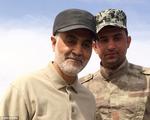
Qassem_Suleimani_Tal_Ksaiba_in_Salahuddin_6.15Gen . Qassem Soleimani on the Iraqi warfront

Uproar in Iran’s Revolutionary Guards Corps: Ayatollah Ali Khamenei has relieved Gen. Qassem Soleimani, the  Al Qods Brigades chief and supreme commander of Iranian Middle East forces, of his Syria command after a series of war debacles. He was left in charge of Iran’s military and intelligence operations in Iraq, Yemen and Lebanon. This is revealed by DEBKAfile’s exclusive Iranian and intelligence sources.

Since Soleimani last visited Damascus on June 2, in the aftershock of the historic town of Palmyra’s fall to the Islamic State, the situation of President Bashar Assad and his army has gone from bad to worse.

The Iranian general’s bravado in stating then that “In the next few days the world will be pleasantly surprised from what we (the IRGC) working with Syrian military commanders are preparing,” turned out to be empty rhetoric. The thousands of Iranian troops needed to rescue the Assad regime from more routs never materialized. Since then, the Syrian forces have been driven out of more places. Hizballah is not only stymied in its attempts to dislodge Syrian rebel advances in the strategic Qalamoun Mountains, it has failed to prevent the war spilling over into Lebanon. There is strong evidence that the high Iranian command in charge of the Syrian and Lebanese arenas are stuck.

These reverses have occurred, our military sources report, owing to Tehran’s failure to foresee five developments:

1.  The launching of a combined effort by the US, Saudi Arabia, Qatar and the UAE – among the wealthiest nations in the world – in support of rebel groups fighting Bashar Assad. Their massive injections of military assistance, weapons and financial resources have thrown Iran’s limitation into bold relief.

2.  The ineptitude of the Shiite militias mustered by Soleimani in Iraq, Pakistan and Afghanistan to fight Iran’s wars in Syria and Iraq. None of those imported troops met the combat standards required in those arenas and become liabilities rather than assets.

3.  Those shortcomings forced Tehran to admit that it had come up short of military manpower to deploy in four ongoing warfronts: Syria, Yemen, Lebanon and Iraq.  Soleimani took flak for the over-ambitious plans he authored which pulled Iran into military commitments that overtaxed its resources and did not take into account the messy political and military consequences which followed.  Above all, he miscalculated the numbers of fighting strength needed on the ground for winning battles in those wars.

4. In the final reckoning, Iran finds has been drained of the strategic reserves that should have been set aside for the contingency of a potential  ISIS encroachment of its territory.

Israeli and Syrian Druze join forces – complicating Israel’s military position vis-à-vis southern Syria

June 23, 2015

Israeli and Syrian Druze join forces – complicating Israel’s military position vis-à-vis southern Syria, DEBKAfile, June 23, 2015

Druze_celebrations_21.6.15Druze celebrate ambulance attacks

Even if Druze tempers are temporarily calmed over the fate of their Syrian brethren, the fallout from the Syrian civil war has already spilled over into Israel from an unexpected quarter. For nearly five years, Israel carefully kept its hands off the conflict raging on its northern border, restricting itself to responding ad hoc to dangers and building a quiet aid mechanism for selected Syrian rebels. But in recent months, Israel has re-channeled its military intervention into areas close to its border.

The way this involvement is disavowed by Israeli officials is seriously detrimental to the government’s military credibility.

When IDF spokesman Brig. Motti Almoz reiterated past statemants that the military does not identify or assort by organization the injured Syrian rebels reaching the Israeli Golan border for treatment, he found that the Druze serving in Israel’s armed forces and those living in Golan villages knew better. Israeli Druze and Golan villagers – many loyal to Bashar Assad – were so incensed by this and past evasions that they came together for violent action – hence the attacks Monday, June 22, on two IDF ambulances ferrying injured Syrian rebel fighters to hospital.

After the first ambulance was attacked, the second should have been much better secured. It turned out that the military police escorting it were not up to fighting a raging Druze lynch mob outside Majdal Shams on the Golan. The Syrians were badly beaten up and one died later.

Israeli and Golan Druze have found a common cause, in itself a destabilizing factor, in the conviction that Israel is aiding the Syrian Al Qaeda arm, the Nusra Front, although some of the information from South Syria is disinformation slanted by hostile elements for stirring up trouble for Israel.

The thousand-year old secretive sect is treated as heretic by jihadis, including the Nusra Front. When a rebel alliance neared Jabal Druze in Syria, Nusra leaders promised not to harm the Druze provided that they “retreat from their religious mistakes.” They then forced several hundred Druze to convert to Sunni Islam and desecrated their shrines.

Nusra Front is therefore a red flag for the Druze bull

This is just one more complicating factor in considering the ill-defined, fractious rebel alliance fighting in South Syria across from the Israeli Golan.

Israeli protestations that it doesn’t support Al Qaeda-linked rebels may hold true one day, while the next day, that same group may break up and join a jihadi faction. Some of them are constantly on the move in and out of Al Qaeda.

Saudi Arabia ran up against this phenomenon in recent weeks when it bought and armed 3,000 Nusra Front fighters on condition that they leave their group and join up under an umbrella anti-Assad rebel front called the Southern Front, or the Southern Army of Conquest.

The Saudi step relieved Israel of charges of supporting jihadi movements. But it was no means let off the hook as far as the Druze were concerned, because of the notoriously volatile nature of the rebel movement.

Most of Nusra’s commanders did indeed repudiate their allegiance to Al Qaeda to win Saudi backing, but they soon switched back after Nusra in the north spearheaded major rebel victories. Clearly, victorious groups hold a fatal attraction for the hundreds of hazy rebel factions

The Druze demand for Israel to abandon the Nusra Front is tantamount to its repudiating the Syrian rebel cause at large. For the IDF this is a non-option: Ditching its under-the-radar links with certain Syrian rebel groups is the recipe for ending the relative calm on its Golan border with Syria. And withdrawing from its cooperation with the US-Saudi-Jordanian backed rebel force would endanger their effort to capture southern Syria, in the same way as comparable forces attained control of most of the north.

At the same time, the Israeli government must persuade its up-in-arms Druze citizens that IDF actions in South Syria will not bring harm to their Syrian brethren. This is an uphill task that may not prevent further Druze violence.

Is Obama Supporting a Shiite ISIS?

June 12, 2015

Is Obama Supporting a Shiite ISIS?, Front Page Magazine, Daniel Greenfield, June 12, 2015

Asaib-ahl-alhaq_logo-450x300Asaib Ahl al-Haq logo.

Obama had campaigned vocally against the Kyl-Lieberman Amendment which designated Iran’s Revolutionary Guard, the hidden force behind Asaib Ahl al-Haq and much of the Shiite terrorist infrastructure, a terrorist organization. He had accused its sponsors of “foolish saber rattling.”

While we focused on ISIS, its Shiite counterparts were building their own Islamic State by burrowing from within to hollow out the Iraqi institutions that we had put into place. ISIS is a tool that Iran is using to force international approval of its takeover of Iraq and its own nuclear program.

Like ISIS, its Shiite counterparts envision an apocalyptic struggle in which the other branch of Islam will be destroyed, along with all non-Muslims, leading to regional and global supremacy. Iraq is only one of the battlefields on which this war is being fought and Obama’s inept mix of appeasement and regime change, abandoning allied governments while aiding enemy terrorists has helped make it possible.

*********************

Staff Sgt. Ahmed Altaie was the last American soldier to come home from Iraq. His body was turned over by Asaib Ahl al-Haq or The League of the Righteous; a Shiite terrorist group funded and trained by Iran.

Altaie had been kidnapped, held for ransom and then killed.

It was not Asaib Ahl al-Haq’s only kidnapping and murder of an American soldier. A year after Altaie’s kidnapping, its terrorists disguised themselves as Americans and abducted five of our soldiers in Karbala. The soldiers were murdered by their Shiite captors after sustained pursuit by American forces made them realize that they wouldn’t be able to escape with their hostages.

Asaib Ahl al-Haq’s obsession with American hostages was a typically Iranian fixation. Iran’s leaders see the roots of their international influence in the Iran hostage crisis. Its terrorist groups in Lebanon had abducted and horrifically tortured Colonel William R. Higgins and William Francis Buckley.

Higgins had been skinned alive.

Most Americans have never heard of Asaib Ahl al-Haq, sometimes referred to as the Khazali Network after its leader, even though it has claimed credit for over 6,000 attacks on Americans. Its deadliest attacks came when the Democrats and their media allies were desperately scrambling to stop Bush from taking out Iran’s nuclear program. Asaib Ahl al-Haq’s ties to Iran were so blatant that the media could not allow it to receive the kind of coverage that Al Qaeda did for fear that it might hurt Iran.

Obama had campaigned vocally against the Kyl-Lieberman Amendment which designated Iran’s Revolutionary Guard, the hidden force behind Asaib Ahl al-Haq and much of the Shiite terrorist infrastructure, a terrorist organization. He had accused its sponsors of “foolish saber rattling”.

Nancy Pelosi joined the Democratic Party’s pro-Iranian turn, rejected a vote on the amendment and sneered that if the kidnapping and murder of American soldiers was “a problem to us and our troops in Iraq, they should deal with it in Iraq.” Earlier that year, she had visited Syria’s Assad to stand with him against President Bush even while Assad was aiding the terrorists massacring American soldiers.

Once Obama took power, coverage of the war was scaled down so that Americans wouldn’t realize that the rising power of ISIS and Asaib Ahl al-Haq were already making a mockery of his withdrawal plans.

But Asaib Ahl al-Haq was not merely an anti-American terrorist group; it was an arm of the Shiite theocracy. As a Shiite counterpart to what would become ISIS, it had most of the same Islamic goals.

While Obama was patting himself on the back for the end of the Iraq War and gay rights, Asaib Ahl al-Haq was throwing those men and women it suspected of being gay from the tops of buildings.

When buildings weren’t available, it beat them to death with concrete blocks or beheaded them.

Its other targets included shelters for battered women, which the Islamist group deemed brothels, men who had long hair or dressed in dark clothing. And even while its Brigades of Wrath were perpetrating these atrocities, Obama and the Shiite Iraqi government embraced the murderous terrorist group.

Qais al-Khazali, the leader of Asaib Ahl al-Haq, and his brother Laith al-Khazali along with a hundred other members of the terror group were freed during Obama’s first year in office. (But to provide equal aid and comfort to the other side, Obama also freed the future Caliph of ISIS in that same year.)

“We let a very dangerous man go, a man whose hands are stained with US and Iraqi blood. We are going to pay for this in the future,” an unnamed American officer was quoted as saying. “This was a deal signed and sealed in British and American blood.”

“We freed all of their leaders and operatives; they executed their hostages and sent them back in body bags.”

The releases were part of Obama’s grand strategy of reconciliation for Iraq. The miserable reality behind the upbeat language was that Obama was handing over Iraq to ISIS, Iran and its Shiite militias.

Last year, Maliki had made Asaib Ahl al-Haq and other Shiite terror groups into the Sons of Iraq that were to protect and defend Baghdad. Asaib Ahl al-Haq and its leader were now the Iraqi security forces. The Shiite death squads were in charge even while they continued carrying out ISIS-style massacres.

Obama belatedly decided to respond to ISIS, but his war strategy depends on Asaib Ahl al-Haq.

Officially his strategy is to provide training and air support for the Iraqi military. But the Iraqi military’s Shiite officers conduct panicked retreats in the face of ISIS attacks while abandoning cities and equipment. The goal of these retreats is to make Asaib Ahl al-Haq and other Shiite militias into the only alternative to ISIS for the United States. Even though he pays lip service to Sunni and Kurdish resistance to ISIS, Obama shows that he has accepted Iran’s terms by refusing to arm and support them.

While we focused on ISIS, its Shiite counterparts were building their own Islamic State by burrowing from within to hollow out the Iraqi institutions that we had put into place. ISIS is a tool that Iran is using to force international approval of its takeover of Iraq and its own nuclear program.

An Iraqi official last year was quoted as saying that Asaib Ahl al-Haq’s men give orders to the police and military. “Before they were just around, now they are high-ranking officers in the military.”

Some defense experts wonder if the Iraqi military even exists. The bulk of the forces in Tikrit were Shiite Jihadists and they are armed with American weapons that they receive from the Iraqi government. Asaib Ahl al-Haq boss Qais al-Khazali claims that soldiers and Shiite militia members both wear Iraqi military uniforms.

The capture of Tikrit became an opportunity for the Shiite terrorist groups and Qasem Soleimani, their Iranian terror boss, to boast about their victory and loot and terrorize the local Sunni residents.

Obama’s official plan to arm and train the Iraqi military and security forces is a dead end because like the mythical moderate Syrian rebels, they are fronts for moving money and weapons to Jihadists. We are arming ghost armies and funding fake political institutions and the money and weapons end up going to bands of Islamic terrorists, militias and guerrillas that are actually calling the shots.

By aiding Shiite militias in Iraq and Sunni militias in Syria, we’re backing both sides of an Islamic civil war.

Obama turned over Iraq to the Shiites and then backed the Muslim Brotherhood’s efforts to force the Shiites out of power in Syria. The Sunni-Shiite civil wars tearing the region apart were caused by those two decisions. His solution to the wars is to continue backing the same forces responsible for them.

Despite assorted denials, Obama’s real ISIS strategy is to have Iran do the fighting for him in Iraq.

But Obama is backing one ISIS against another ISIS. Why is a Shiite Islamic state that kidnaps and kills Americans, throws gays off buildings and massacres women better than a Sunni Islamic state that does the same things? Not only is the Obama strategy morally dubious, but it’s also proven to be ineffective.

The rise of ISIS has helped Iran tighten its hold on Shiite areas in Iraq and Syria. Iran does not need to beat ISIS. Its interests are best served by maintaining a stalemate in which ISIS consolidates Sunni areas while Iran consolidates Shiite areas. The more Obama aids Iran and its terrorist forces as a counterweight to ISIS, the more Iran sees keeping ISIS around as being vital to its larger strategy.

By aiding Iran, Obama is really aiding ISIS.

Despite depending on our air support, Asaib Ahl al-Haq and its leaders are threatening to attack American planes and soldiers making it clear that they view the fight against ISIS and for Assad as part of a larger struggle for achieving Iran’s apocalyptic Shiite ambitions for the region and the world.

Iran’s Supreme Leader, Ayatollah Ali Khamenei recently gave a speech in which he warned that, “We must prepare the country’s conditions, the region’s conditions, and, Allah willing, the world’s conditions for the reappearance [of Imam Mahdi] will spread justice.”

Like ISIS, its Shiite counterparts envision an apocalyptic struggle in which the other branch of Islam will be destroyed, along with all non-Muslims, leading to regional and global supremacy. Iraq is only one of the battlefields on which this war is being fought and Obama’s inept mix of appeasement and regime change, abandoning allied governments while aiding enemy terrorists has helped make it possible.

Israel’s Druze dilemma: To arm imperiled Syrian Druze community or open door to a flood of refugees

June 11, 2015

Israel’s Druze dilemma: To arm imperiled Syrian Druze community or open door to a flood of refugees, DEBKAfile, June 11, 2015

Druze_MilitiaSyrian Druze militiaman

Israel has a unique, historic commitment to its Druze citizens and so the dangers besetting more than half a million of their Syrian brethren on Jabal Druze, 88 km from its border, and 38 km from Jordan, confronts the Netanyahu government with a grave dilemma. Israeli Druze leaders are pressing the government to provide Jabal Druze towns and villages with weapons for their defense against the enemies closing in on them: The Syrian-Hizballah army; the Syrian opposition coalition including the Nusra Front – now in control of large parts of southern Syria; and the Islamic State of Iraq and the Levant – ISIS, which has sent a small force up to the eastern approaches to the mountain.

At a reception for the visiting Chairman of the Joint US Chiefs of Staff, Gen. Martin Dempsey Wednesday, June 10, President Reuven Rivlin said: What is going on just now is intimidation and threat to the very existence of half a million Druze on the Druze Mount, which is very close to the Israeli border.”

Officials in the Pentagon denied that this issue had come up in Gen. Dempsey’s talks during his farewell visit to Israel this week, although Syria had been discussed. One official remarked: “It’s the Druze who are asking everyone to arm them. The Druze in Israel have been raising it with Israel with the US, with Jordan – everyone.”

DEBKAfile’s military sources note that this dilemma is the hardest Israel has faced since the Syrian conflict began more than four years ago. Sending arms to the Syrian Druze would mean abandoning the consistent policy of abstaining from direct involvement in that war. It would moreover entail setting up new machinery for establishing, training and arming a Druze army of 20,000 to 30,000 fighting men.

But by withholding support, Israel would make itself responsible for whatever befalls the beleaguered Syrian Druze community, including possibly mass executions by Islamic extremists for their unique faith.

Also taken into account is the proposal Tehran, Damascus and Hizballah put before the Druzes this week: to build them an army and provide it with weapons, against a pledge never to raise arms against Syrian President Bashar Assad or his troops.

No other strings were tied to the offer. The Druze army would not be given any tasks other than to defend Jabal Druze and its hundreds of small towns and villages.

Druze acceptance of Tehran’s proposition would have the effect of strengthening Iran’s hold on Damascus and weakening the Syrian opposition forces fighting in the south, with no guarantees about where this equation would end up in terms of new threats to Israeli security.

Prime Minister Binyamin Netanyahu, Defense Minister Moshe Ya’alon and IDF Chief of Staff, Lt. Gen. Gady Eisenkott, are being intensely lobbied by the leaders of Israel’s Druze community, some of them high-ranking officers in IDF and Border Police units, to come to the aid of their distressed Syrian brethren. They hold up their valuable contribution to the Jewish state’s national security as deserving of Israel’s reciprocation to step up when their community is in peril.

No one is saying this, but the awareness is there that the many Druzes serving in Israeli combat units may decide to simply cross the Golan border and take up arms in defense of Jabal Druze.

The Syria community’s plight is complicated by the sharp internal division among its leaders: One group urges taking up the Iranian offer; a second would rather join forces with the Syrian rebels; and a third, wants to stick to their long-held neutrality in the Syrian arena.

The Lebanese Druze leader Walid Jumblatt, once accepted as such by the entire community, urges Jabal Druze inhabitants to throw in their lot with the rebel groups fighting to topple Assad.

Some Druze sources claim that Israel has promised admission to any fleeing Druze reaching the Golan border fence, an assurance also offered by Jordan. This is not confirmed by any official in either government.

However, it is hard to see how Israel can bar its border if thousands of Druze refugees were to stand at the fence and demand shelter – any more than Jordan could. This may still happen – even if Jerusalem and Amman were to decide to supply the Syrian Druzes with weapons.

Shoshana Bryen: The Kurds: A Guide for U.S. Policymakers

June 7, 2015

Shoshana Bryen: The Kurds: A Guide for U.S. Policymakerssecurefreedom via You Tube, June 5, 2015

Shoshana Bryen, Senior Director, Jewish Policy Center; Former Senior Director for Security Policy, Jewish Institute for National Security Affairs (JINSA):