Archive for the ‘Supreme Leader’ category

Hero of the Middle East: The Israeli Messenger

March 18, 2015

Hero of the Middle East: The Israeli Messenger, The Gatestone InstituteBassam Tawil, March 18, 2015

In its evident, inexplicable eagerness to sign just about any deal with Iran to allow it nuclear weapons capability, the U.S. State Department has removed Iran and its proxy, Hezbollah — two of the world most undisguised promoters of terror — from its Foreign Terrorist Organizations List.

Iran’s President, Hassan Rouhani, has even openly admitted that Iran’s diplomacy with the U.S. is an active “jihad.” How much plainer does a message have to get?

The Islamists have nothing but contempt for Europe’s weakness.

The West needs to paralyze Iran, rather than appease it.

A series of significant defeats to Islamist organizations will counter the effects of their efforts to entice young people to join them, especially ISIS.

In these terrible times, critical for the future of our region, Netanyahu spoke to the representatives of the American people, despite the objections of many Israelis and Americans. He was willing to accept personal, political and diplomatic setbacks in order to look after his people’s security.

We are all also hoping that that the government of Israel will focus even more on bringing the Arabs of Israel into the Israeli fold. Otherwise a “fifth column” could form and harden that will drive them into the open and waiting arms of Hamas and other terrorist groups.

Arab-Israeli politicians might also focus more on helping such an effort, rather than, as many Arab politicians do, lash out and blame others for what is wrong — a lazy, destructive substitute for actually helping improve the lives of their people.

Ever since Israel’s Prime Minister, Benjamin Netanyahu, came back from his recent visit to the United States, it has repeatedly been shown that he was right to stand before Congress and issue his warnings. Tehran’s Ayatollahs have not only held a naval exercise in the Strait of Hormuz, where they targeted a simulated a U.S. Navy aircraft carrier, they also displayed new missiles that could paralyze all the shipping in the Gulf.

Iran has already surrounded the oilfields of the Middle East, and is openly increasing its efforts to bring down the “Big Satan,” the United States. Iran’s President, Hassan Rouhani, has even openly admitted that Iran’s diplomacy with the U.S. is an active “jihad.” How much plainer does a message have to get?

Iran has not only taken over Yemen, Lebanon and Syria It is also in the process of taking over — presumably with the help of its negotiations with the U.S. — Bahrain, Iraq, Libya and parts of South America, especially Venezuela, with its vast reserves of uranium, and Bolivia, now with a suspected nuclear installation.

In its evident, inexplicable eagerness to sign just about any deal with Iran to allow it to achieve nuclear capability, the U.S. State Department has removed Iran and its proxy, Hezbollah — two of the world’s most undisguised promoters of terror — from its Foreign Terrorist Organizations List, presumably at Iran’s request.

After Republican Senators sent a letter to Iran warning that any agreement with the U.S. would have to be endorsed by Congress, the Iranians used it to claim that the United States is so weak it is about to fall apart. The king of Saudi Arabia said that if the U.S. did not halt Iran’s nuclear program, Saudi Arabia would begin enriching its own uranium, to acquire a nuclear potential equal to that of Iran.

Ashraf Ramelah, president of the Christian human rights organization Voice of the Copts, asked House Speaker John Boehner to invite Egyptian President Abdel Fattah el-Sisi to address Congress, to warn America of the mistake it clearly intends to make. The members of the Arab League met in Riyadh to warn America of the approaching disaster.

U.S. Secretary of State John Kerry recently hinted that the agreement with Iran was not particularly urgent, and claimed that should the talks fail, the United States had alternatives.

Apparently with the sole objective of embarrassing Netanyahu, no one in the U.S. administration was willing to admit that he was right, or that unfortunately there were many American individuals and organizations actively intervening in the Israeli elections, with the goal of toppling Netanyahu. The U.S. Administration clearly wanted to replace him with Yitzhak Herzog, who is weak — another link in the chain of American foreign policy failures, from Allende and the Shah of Iran to Mubarak, all victims of the political and diplomatic elite’s ignorance and lack of political common sense.

The lesson President Obama has not yet learned from his experience with Arabs is that anyone who deliberately ignores or applauds when his own fanatic Muslim nationals (or guests) kill “infidels” will eventually be repaid with the killing of his own non-extremist Muslims. That is exactly what is going to happen in Iran, Turkey, Qatar, Lebanon and other countries that support terrorism.

The Western world should be wary, and not be tempted into breathing a sigh of relief because the Muslim Brotherhood condemned the burning of the Jordanian pilot. The Muslim Brotherhood, which consistently preaches the murder of innocents of every stripe, is currently trying to cover its tracks regarding murder carried out in the name of Islam through the taqiyya, which permits Muslims to lie to “protect” Islam — in this case against the global wave of outrage against Islamist terrorism. Perhaps they condemn the burning alive of the pilot because, according to Islam, only Allah can burn someone to death. But behind their pious declarations they are overjoyed by his death, and continue inciting their followers to murder more of those they have designated as “infidels,” while every day designating still more.

That Hamas and ISIS identify with one another, collaborate and have almost identical goals was made clear recently by the arrests Hamas operatives in the Palestinian Authority on the grounds that they vandalized the memorial set up in Ramallah for the murdered Jordanian pilot.

In their misguided, fumbling experiments, EU officials, along with the Arab League foreign ministers, are forming a united front to fight Islamist terrorism, while including the very countries known consistently to support it. These include Turkey, which mainly supports ISIS, and Qatar, which supports the Islamist terrorist organizations in the Sinai Peninsula and the Gaza Strip.

Despite the fact that the Muslim Brotherhood and the other Islamist terrorist organizations thrive in Arab states — although in some they have been outlawed — the West, especially the Obama Administration, doggedly refuses to outlaw them and insists they are peace-loving religious organizations. For some intriguing reason, the leaders of the Western world find it impossible to see the relationship between the Muslim Brotherhood and the Islamist terrorist organizations it fosters.

Obama’s behavior underlies the conspiracy theory, common in the Middle East, that he is a Muslim Brotherhood mole.

The U.S. Administration refuses to recognize the dangerous game Turkey is playing by ignoring the West’s sanctions on Iran. Despite the fact that Turkey is a member of NATO, it has, in fact, upgraded and improved its trade agreements with Iran.

The European Union, in its cowardice and folly, has removed Hamas, the Muslim Brotherhood’s Palestinian branch, from its list of designated terrorist organizations. Europe refuses to change its stance, even though barely a week ago, Egypt designated the entire Hamas movement a terrorist organization. Hamas supports ISIS in the Sinai Peninsula and within Egypt itself, as they attack government, security and civilian targets.

The Islamists have nothing but contempt for Europe’s weakness, and in the meantime, ISIS’s wave of success in Iraq and Syria, and its brand as “powerful,” encourage young, impressionable Muslims to join its ranks.

In the meantime, in the wake of rising Islamist sentiment in the Muslim communities of Europe and the U.S., imams and Islamist activists have been falling over themselves to reassure the public. They have opened mosques to casual visitors, in an effort to allay their fears and downplay the threat, as if a Westerner on a guided tour could possibly understand the degree of propaganda and incitement churned out behind closed doors, in classrooms and libraries.

* * *

The wages America pays Iran, in return for questionable aid it may or may not receive in the fight against ISIS, only serve to strengthen the Ayatollahs and their collaborators — Russia, Syria and Hezbollah — and ease the sanctions against Iran to make it stronger, enabling further expansion. And that is before Iran achieves nuclear weapons capability. What about after?

The saga will likely end with an agreement ending the sanctions on Iran, permitting it to build its nuclear bomb “for peaceful purposes,” while in the meantime Iran will have taken over Yemen, completed its new line of “defensive” missiles, of the sort that will be able to reach Europe and be loaded onto submarines.

The soon-to-be-signed agreement between Iran and the United States not only abandons the Sunni Arab states and Israel to their fates; it also paves the way for an inevitable nuclear arms race involving Sunni states, carried out in the vain hope that they will be able to contain the Shi’ites before they launch a nuclear Armageddon on the Middle East.

There is also the rumored approaching death of Iran’s Supreme Leader Ali Khamenei. Thus, any agreement signed with the Iranians won’t be worth the paper it is printed on, because no one knows who will replace him and if his replacement will agree to honor any commitments signed by the previous regime.

Instead of strengthening moderate Sunni states such as Egypt and the Gulf States, both of which are exploring an innovative, moderate, contemporary Islam, America has chosen to support the Muslim Brotherhood, which has fooled it into thinking it is not doing its utmost to weaken those moderate states.

The U.S. is driving a wedge into the unity of the Sunni Arab world and weakening its efforts to counter Iran.

To misrepresent the agreement with Iran, the Obama Administration enlisted European countries to create a smokescreen and media white noise, labeling Israel’s failure to reach a peace agreement with the Palestinians as the only important issue problem the Middle East.

They are using Europe to turn Israel into a leper, as if it is Israel’s bound duty to accept American dictates because of its dependence on the American veto in the UN. Obama’s National Security Advisor, Susan Rice, instead of focusing on the catastrophically serious Iranian threat, recently made the hostile statement that Israel must now resolve the Palestinian issue.

The efforts Israeli Prime Minister Benyamin Netanyahu has made to convince Congress not to support the agreement with Iran were brutally attacked by the White House, which is apparently only open to hearing opinions that agree with it.

968Israel’s Prime Minister Benjamin Netanyahu speaks before the U.S. Congress, March 4, 2015. (Image source: C-SPAN video screenshot)

Despite reservations regarding Netanyahu’s hard line in Israel’s negotiations with Palestinians, many of us in the Middle East are of the opinion that he is another real hero of the Middle East.

Many people here are also hoping that as the Arab Israeli vote was the third largest bloc in the yesterday’s election, perhaps now the government of Israel will focus more on bringing the Arabs of Israel even closer and more comfortably into the Israeli fold. Otherwise, there is the serious possibility that a “fifth column” could form and harden, one that will drive the Arab Israelis into the open and waiting arms of Hamas and other terrorist groups.

We also hope that the Arab Israeli politicians will focus more on such an effort, rather than, as many Arab politicians do, lashing out and blaming others for what is wrong — a lazy, destructive substitute for actually helping improve the lives of their people.

In these terrible times, critical for the future of our region, Netanyahu spoke to the representatives of the American people, despite the objections of many Israelis and Americans. He was willing to accept personal, political and diplomatic setbacks in order look after his people’s security.

Throughout history, prophets have often been without honor in their own countries, and have been rejected by the very people who should pay attention to them. There is, it seems, in every culture, a deep and real wish to kill the messenger.

The West would do well to understand that anyone really interested in fighting terrorism needs to outlaw the Muslim Brotherhood movement — all its branches, wherever they are. Even more, it needs to paralyze Iran, rather than appease it.

The West’s dark, contradictory dealings with Turkey, Qatar, Iran and other shadowy regimes serve the growth of Islamist terrorist organizations. They destroy the chance for any success against radical Islam.

The fight against Islamist organizations needs to be creative, deliberate and continuous, to keep them from gaining even one victory either on the ground or in their propaganda campaigns. The Muslim public must not view them as attractive, or see joining them a sign of success. A series of significant defeats to Islamist organizations will counter the effects of their efforts to entice young people to join them, especially ISIS.

It is sad that in the face of the coming catastrophe, Western leaders — either blind, naïve or malevolent — are going to make a deal and appease Iran, just as a deal was made to appease Hitler in 1938.

Israel said to seek additional $300 million from US for missile defense

February 28, 2015

Israel said to seek additional $300 million from US for missile defense
By Times of Israel staff February 28, 2015, 11:59 am


(By repeatedly bypassing Congress, the White House has marginalized itself. Serves them right. – LS)

Israeli officials have reportedly asked the US Congress to add more than $300 million for the country’s missile defense programs in the fiscal year beginning October 1. The extra funds would be added to the $158 million proposed by the Pentagon in US President Barack Obama’s budget request and would be earmarked for production of the joint defense systems David’s Sling and Arrow III.

According to a report in Bloomberg Friday, Israel turned directly to Congress, bypassing the White House and the Pentagon this time given the current spat between Prime Minister Benjamin Netanyahu’s government and the Obama administration over Netanyahu’s upcoming speech to congressional lawmakers on March 3 where he seeks to prevent what he considers a bad nuclear deal with Iran currently being negotiated by the US-led P5+1 world powers.

The head of Israel’s missile defense organization, Yair Ramati, “visited lawmakers and aides to the congressional defense committees on February 2 and 3 to outline the case for more money and thank them for past assistance,” persons familiar with the talks told Bloomberg.

According to the report, Ramati, during his visit to Capitol Hill “distributed one-page sheets naming US contractors that would benefit from production funds for each of the missile defense systems,” including Chicago-based Boeing Co.; Waltham, Massachusetts-based Raytheon Co.; Arlington, Virginia-based Orbital ATK Inc.; and Falls Church, Virginia-based Northrop Grumman Corp.

Ramati’s $317 million proposal included a request for $250 million to start production for David’s Sling, a system designed to intercept medium- to long-range missiles, and some $35 million for Arrow III, an anti-ballistic missile system.

The US provides funds for Israel’s missile weapons systems separately from the annual $3.1 billion in military financing it gives Jerusalem to purchase weapons from the US.

In 2014, Congress increased US funding for Israel’s Iron Dome missile defense system to $351 million for the fiscal year 2015 from $235 million the previous year.

The Iron Dome missile defense system successfully intercepted hundreds of Hamas rockets during last summer’s war in Gaza. After the 2014 conflict, funding was bolstered by another $225 million to assist Israel in replenishing its Iron Dome missile stockpile.

Additionally, there was US funding for joint development of anti-missile systems Arrow III and David’s Sling.

In 2014 alone, according to the Congressional Research Service, the Arrow and Arrow II mid-altitude ballistic missile defense system projects — researched and jointly developed by Boeing and Israel Aerospace Industries — received $44.3 million, while $74.7 million went to aid research and development of the new Arrow III high-altitude anti-ballistic system. David’s Sling, was budgeted for $149.7 million.

In December 2014, Obama signed a bill deepening US-Israeli cooperation and said the legislation reinforces “critical defense and security programs.”

The US-Israel Strategic Partnership Act increases the value of emergency US weaponry kept in Israel by $200 million, to a total of $1.8 billion. It also offers a verbal guarantee of Israel maintaining a qualitative military edge over its neighbors.

Special Report: How Iran’s military chiefs operate in Iraq

February 25, 2015

Special Report: How Iran’s military chiefs operate in Iraq, Reuters, February 24, 2015

File photo of a tank belonging to the Shi'ite Badr Brigade militia taking position in front of a gas station in Suleiman Beg, northern IraqA tank belonging to the Shi’ite Badr Brigade militia takes position in front of a gas station in Suleiman Beg, northern Iraq in this September 9, 2014 file photo. CREDIT: REUTERS/AHMED JADALLAH/FILES

The face stares out from multiple billboards in central Baghdad, a grey-haired general casting a watchful eye across the Iraqi capital. This military commander is not Iraqi, though. He’s Iranian.

*********************

(Reuters) – The face stares out from multiple billboards in central Baghdad, a grey-haired general casting a watchful eye across the Iraqi capital. This military commander is not Iraqi, though. He’s Iranian.

The posters are a recent arrival, reflecting the influence Iran now wields in Baghdad.

Iraq is a mainly Arab country. Its citizens, Shi’ite and Sunni Muslims alike, have long mistrusted Iran, the Persian nation to the east. But as Baghdad struggles to fight the Sunni extremist group Islamic State, many Shi’ite Iraqis now look to Iran, a Shi’ite theocracy, as their main ally.

In particular, Iraqi Shi’ites have grown to trust the powerful Iranian-backed militias that have taken charge since the Iraqi army deserted en masse last summer. Dozens of paramilitary groups have united under a secretive branch of the Iraqi government called the Popular Mobilisation Committee, or Hashid Shaabi. Created by Prime Minister Haider al-Abadi’s predecessor Nuri al-Maliki, the official body now takes the lead role in many of Iraq’s security operations. From its position at the nexus between Tehran, the Iraqi government, and the militias, it is increasingly influential in determining the country’s future.

Until now, little has been known about the body. But in a series of interviews with Reuters, key Iraqi figures inside Hashid Shaabi have detailed the ways the paramilitary groups, Baghdad and Iran collaborate, and the role Iranian advisers play both inside the group and on the frontlines.

Those who spoke to Reuters include two senior figures in the Badr Organisation, perhaps the single most powerful Shi’ite paramilitary group, and the commander of a relatively new militia called Saraya al-Khorasani.

In all, Hashid Shaabi oversees and coordinates several dozen factions. The insiders say most of the groups followed a call to arms by Iraq’s leading Shi’ite cleric Grand Ayatollah Ali al-Sistani. But they also cite the religious guidance of Ayatollah Ali Khamenei, the supreme leader of Iran, as a key factor in their decision to fight and – as they see it – defend Iraq.

Hadi al-Amiri, the leader of the Badr Organisation, told Reuters: “The majority of us believe that … Khamenei has all the qualifications as an Islamic leader. He is the leader not only for Iranians but the Islamic nation. I believe so and I take pride in it.”

He insisted there was no conflict between his role as an Iraqi political and military leader and his fealty to Khamenei.

“Khamenei would place the interests of the Iraqi people above all else,” Amiri said.

FROM BATTLEFIELD TO HOSPITAL

Hashid Shaabi is headed by Jamal Jaafar Mohammed, better known by his nom de guerre Abu Mahdi al-Mohandis, a former Badr commander who once plotted against Saddam Hussein and whom American officials have accused of bombing the U.S. embassy in Kuwait in 1983.

Iraqi officials say Mohandis is the right-hand man of Qassem Soleimani, head of the Quds Force, part of Iran’s Revolutionary Guard. Mohandis is praised by some militia fighters as “the commander of all troops” whose “word is like a sword above all groups.”

The body he heads helps coordinate everything from logistics to military operations against Islamic State. Its members say Mohandis’ close friendships with both Soleimani and Amiri helps anchor the collaboration.

The men have known each other for more than 20 years, according to Muen al-Kadhimi, a Badr Organisation leader in western Baghdad. “If we look at this history,” Kadhimi said, “it helped significantly in organizing the Hashid Shaabi and creating a force that achieved a victory that 250,000 (Iraqi) soldiers and 600,000 interior ministry police failed to do.”

Kadhimi said the main leadership team usually consulted for three to four weeks before major military campaigns. “We look at the battle from all directions, from first determining the field … how to distribute assignments within the Hashid Shaabi battalions, consult battalion commanders and the logistics,” he said.

Soleimani, he said, “participates in the operation command center from the start of the battle to the end, and the last thing (he) does is visit the battle’s wounded in the hospital.”

Iraqi and Kurdish officials put the number of Iranian advisers in Iraq between 100 and several hundred – fewer than the nearly 3,000 American officers training Iraqi forces. In many ways, though, the Iranians are a far more influential force.

Iraqi officials say Tehran’s involvement is driven by its belief that Islamic State is an immediate danger to Shi’ite religious shrines not just in Iraq but also in Iran. Shrines in both nations, but especially in Iraq, rank among the sect’s most sacred.

The Iranians, the Iraqi officials say, helped organize the Shi’ite volunteers and militia forces after Grand Ayatollah Sistani called on Iraqis to defend their country days after Islamic State seized control of the northern city of Mosul last June.

Prime Minister Abadi has said Iran has provided Iraqi forces and militia volunteers with weapons and ammunition from the first days of the war with Islamic State.

They have also provided troops. Several Kurdish officials said that when Islamic State fighters pushed close to the Iraq-Iran border in late summer, Iran dispatched artillery units to Iraq to fight them. Farid Asarsad, a senior official from the semi-autonomous Iraqi region of Kurdistan, said Iranian troops often work with Iraqi forces. In northern Iraq, Kurdish peshmerga soldiers “dealt with the technical issues like identifying targets in battle, but the launching of rockets and artillery – the Iranians were the ones who did that.”

Kadhimi, the senior Badr official, said Iranian advisers in Iraq have helped with everything from tactics to providing paramilitary groups with drone and signals capabilities, including electronic surveillance and radio communications.

“The U.S. stayed all these years with the Iraqi army and never taught them to use drones or how to operate a very sophisticated communication network, or how to intercept the enemy’s communication,” he said. “The Hashid Shaabi, with the help of (Iranian) advisers, now knows how to operate and manufacture drones.”

A MAGICAL FIGHTER

One of the Shi’ite militia groups that best shows Iran’s influence in Iraq is Saraya al-Khorasani. It was formed in 2013 in response to Khamenei’s call to fight Sunni jihadists, initially in Syria and later Iraq.

The group is responsible for the Baghdad billboards that feature Iranian General Hamid Taghavi, a member of the Iranian Revolutionary Guard. Known to militia members as Abu Mariam, Taghavi was killed in northern Iraq in December. He has become a hero for many of Iraq’s Shi’ite fighters.

Taghavi “was an expert at guerrilla war,” said Ali al-Yasiri, the commander of Saraya al-Khorasani. “People looked at him as magical.”

In a video posted online by the Khorasani group soon after Taghavi’s death, the Iranian general squats on the battlefield, giving orders as bullets snap overhead. Around him, young Iraqi fighters with AK-47s press themselves tightly against the ground. The general wears rumpled fatigues and has a calm, grandfatherly demeanor. Later in the video, he rallies his fighters, encouraging them to run forward to attack positions.

Within two days of Mosul’s fall on June 10 last year, Taghavi, a member of Iran’s minority Arab population, traveled to Iraq with members of Iran’s regular military and the Revolutionary Guard. Soon, he was helping map out a way to outflank Islamic State outside Balad, 50 miles (80 km) north of Baghdad.

Taghavi’s time with Saraya al-Khorasani proved a boon for the group. Its numbers swelled from 1,500 to 3,000. It now boasts artillery, heavy machine guns, and 23 military Humvees, many of them captured from Islamic State.

“Of course, they are good,” Yasiri said with a grin. “They are American made.”

In November, Taghavi was back in Iraq for a Shi’ite militia offensive near the Iranian border. Yasiri said Taghavi formulated a plan to “encircle and besiege” Islamic State in the towns of Jalawala and Saadiya. After success with that, he began to plot the next battle. Yasiri urged him to be more cautious, but Taghavi was killed by a sniper in December.

At Taghavi’s funeral, the head of Iran’s Supreme National Security Council, Ali Shamkhani, eulogized the slain commander. He was, said Shamkhani, one of those Iranians in Iraq”defending Samarra and giving their blood so we don’t have to give our blood in Tehran.” Both Soleimani and the Badr Organisation’s Amiri were among the mourners.

A NEW IRAQI SOUL

Saraya al-Khorasani’s headquarters sit in eastern Baghdad, inside an exclusive government complex that houses ministers and members of parliament. Giant pictures of Taghavi and other slain al-Khorasani fighters hang from the exterior walls of the group’s villa.

Commander Yasiri walks with a cane after he was wounded in his left leg during a battle in eastern Diyala in November. On his desk sits a small framed drawing of Iran’s Khamenei.

He describes Saraya al-Khorasani, along with Badr and several other groups, as “the soul” of Iraq’s Hashid Shaabi committee.

Not everyone agrees. A senior Shi’ite official in the Iraqi government took a more critical view, saying Saraya al-Khorasani and the other militias were tools of Tehran. “They are an Iranian-made group that was established by Taghavi. Because of their close ties with Iranians for weapons and ammunition, they are so effective,” the official said.

Asarsad, the senior Kurdish official, predicts Iraq’s Shi’ite militias will evolve into a permanent force that resembles the Iranian Revolutionary Guard. That sectarian force, he believes, will one day operate in tandem with Iraq’s regular military.

“There will be two armies in Iraq,” he said.

That could have big implications for the country’s future. Human rights groups have accused the Shi’ite militias of displacing and killing Sunnis in areas they liberate — a charge the paramilitary commanders vigorously deny. The militias blame any excesses on locals and accuse Sunni politicians of spreading rumors to sully the name of Hashid Shaabi.

The senior Shi’ite official critical of Saraya al-Khorasani said the militia groups, which have the freedom to operate without directly consulting the army or the prime minister, could yet undermine Iraq’s stability. The official described Badr as by far the most powerful force in the country, even stronger than Prime Minister Abadi.

Amiri, the Badr leader, rejected such claims. He said he presents his military plans directly to Abadi for approval.

His deputy Kadhimi was in no doubt, though, that the Hashid Shaabi was more powerful than the Iraqi military.

“A Hashid Shaabi (soldier) sees his commander … or Haji Hadi Amiri or Haji Mohandis or even Haji Qassem Soleimani in the battle, eating with them, sitting with them on the ground, joking with them. This is why they are ready to fight,” said Kadhimi. “This is why it is an invincible force.”

Why is Obama fixated on Iran?

February 20, 2015

Why is Obama fixated on Iran? Israel Hayom, David M. Weinberg, February 20, 2015

America is ready to legitimize a seismic shift in the global balance of power through a grand civilizational bargain with the ayatollahs of Iran.

It is ardor for Islam and sympathy for Islamic ambitions of global leadership, not just distaste for American overreach, that apparently fuels Obama’s secretive dash toward a deal with Iran.

******************

Why does U.S. President Barack Obama so desperately want a deal with Iran? Why is he so fixated on a grand bargain with the Islamic republic, the world’s biggest killer of Americans? What explains the president’s passion to embrace the radical mullahs of Tehran, despite the fact that all America’s traditional allies in the region are calling for him to check Iran’s advances? Why the deferential approach that seeks Iran’s partnership, instead of its isolation?

The question becomes even sharper when you consider the fact that Iran is patently not seeking integration in the Middle East or reconciliation with the West, but rather obviously domination of the region and apocalyptic victory over the West.

After all, you don’t have to be an expert to discern the expansionist and threatening Iranian strategy. Tehran is seeking to create a land corridor under its domination from the Persian Gulf through Iraq and Syria to the Mediterranean. The only missing link in this land bridge of Shiite supremacy is Anbar province in western Iraq, now under Islamic State control. Now you understand why Iranian troops are leading the fight against ISIS in this zone.

What is harder to understand are American airstrikes against ISIS in Anbar, which seem to be tailored to match the movements of Iranian ground advances. The clear U.S.-Iranian military coordination in this theater of operations gives lie to Washington’s denials that it has already entered into a tacit alliance with Iran.

While the defeat of ISIS is a rational American policy goal, acquiescence to Iranian ascendancy in ISIS’s stead is not. Nor is American acceptance of the Iranian takeover of Yemen, through its Zaydi/Houthi Shiite allies — which gives Iran choke-off control of the vital Bab el-Mandeb waterway at the opening the Red Sea. Obama’s Washington hasn’t even whimpered in protest or concern about this.

We also have no indication that in its current negotiations with Tehran the administration has tackled Iranian adventurism in Syria and Lebanon, and along Israel’s northern and southern borders. Just the opposite: The administration says that the talks with Iran have been narrowly focused on centrifuges and uranium stockpile limits. Iran’s regional subversion (plus its long-range missile capabilities and its human rights record, etc.) has not been on the agenda.

I don’t believe for a second that Obama truly thinks he can bring about substantial moderation of Iranian diplomatic and military behavior; that by giving Supreme Leader Ayatollah Ali Khamenei the comprehensive sanctions relief and renewed international legitimacy that Iran seeks, the Islamic republic will stop being the expansionist and aggressive Islamic republic it is.

That’s just not believable. Iran has consistently cast its quest for regional power as a movement of “Islamic resistance” against the U.S. and its sidekick, Israel. There is no basis for the assumption that moving to a less polarized relationship with Iran will accelerate a transition toward a more democratic, less theocratic, and less expansionist regime within Iran. On the contrary: A nuclear deal that lifts sanctions without addressing Iran’s regional ambitions would have the effect of greatly strengthening Iran’s hand.

And indeed, an Iranian Islamic empire is emerging in vast swaths of territory, from Shiraz to Sanaa and from Tabriz to Tripoli, right under Obama’s nose.

So again, what could possibly explain Obama’s relentless pursuit of strategic partnership with Iran — a partnership that is so perceptibly detrimental and dangerous to the West and to Israel and other long-standing American allies in the region?

A spate of recent articles by American analysts (Anthony Cordesman, Bill Kristol, Colin Dueck, Eli Lake, Elliott Abrams, Eric Edelman, Jonathan Tobin, Josef Joffe, Michael Doran, Michael Ledeen, Raymond Ibrahim, Victor Davis Hanson, Walter Russell Mead) have sought to plumb the depths of Obama’s fervor for rapprochement with Iran.

They mostly conclude that the roots of Obama’s approach rest in the fairly widespread, basically liberal, and quintessentially leftist convictions that America has for decades been sinful and diplomatically domineering, and must atone for its arrogance through retrenchment and accommodation. Obama shares the progressive aversion to the use of American power. Hence his chronic need to apologize for it.

Thus, U.S. Cold War culpability — in Iraq, Iran, Afghanistan, Africa, South America and Cuba — is a burden on America that must be addressed by shrinking America’s global footprint, and allowing indigenous, revolutionary movements to legitimately emerge and stabilize.

As such, the rules of nuclear non-proliferation are an unfair Western construct and need not apply to Iran. China is an authentic power with vast continental rights. And Israel is an abnormality, a Western outpost of capitalism and privilege where it has never really belonged, an irritant that should be treated like any other country as much as politically possible — no more.

In short, Obama believes that he will be leaving the world a better place by cutting America down to size.

To me, this is an insufficient explanation of Obama’s symptoms. Nor does it help to call Obama messianic and self-absorbed — as in George Will’s delicious quip this week that “If narcissism were oil, this president would be Saudi Arabia.”

None of this explains the depth of commitment to a deal with Iran that Obama has evinced since his first day in office (and perhaps, even before taking office, as Michael Doran has sought to show in Mosaic magazine). Nor does it explain the administration’s commitment to keeping everybody in the dark about the extent of its apparent pact with Iran.

It seems to me that Obama’s fervor for Iran lies somewhere much more fundamental: In a deep-seated ideological belief that Islam has a rightful leadership place in the world.

Consider the fact that Obama’s inaugural address abroad was “A New Beginning,” delivered in Cairo in 2009 — a contrite appeal to the Muslim world for forgiveness and for partnership. Go back and listen to Obama wax eloquent about “hearing the call of the azaan” as a young man in Indonesia, and about the historical achievements of Islamic civilization in algebra and architecture. This is Obama speaking from the recesses of his soul.

Consider Obama’s refusal to acknowledge the Manichean and irreconcilable nature of the challenge posed to the West by radical Islam; his refusal to even mutter the words “Islamic extremism” or “jihadism”; and his absolute unwillingness to connect terrorism to Islam or even admit that Islamic terrorists deliberately target Jews (like those Jews in Paris’ Hyper Cacher grocery).

The terms radical Islam and Islamic terrorist aren’t in Obama’s lexicon because deep down Obama doesn’t believe that Western (or Judeo-Christian) civilization is any better than Islamic civilization.

No better, perhaps, than even the Islamic State group. Speaking to the National Prayer breakfast in Washington on February 5, Obama said: “Before we get on our high horse and think this [ISIS beheadings, sex slavery, crucifixion, roasting of humans, etc.] is unique to some other place, remember that during the Crusades and the Inquisition, people committed terrible deeds in the name of Christ.”

This is tantamount to saying that the West is rooted in immorality, and that it is time for other, no less moral, and possibly more moral, powers to emerge — specifically, Islamic powers. It is equivalent to saying that the denouement of America and rise of an Islamic superpower will elevate world politics to a better sphere.

It is like saying — actually this is exactly what Obama is saying! — that America is ready to legitimize a seismic shift in the global balance of power through a grand civilizational bargain with the ayatollahs of Iran.

It is ardor for Islam and sympathy for Islamic ambitions of global leadership, not just distaste for American overreach, that apparently fuels Obama’s secretive dash toward a deal with Iran.

Iran-Syria-North Korea Nuclear Nexus

January 28, 2015

Iran-Syria-North Korea Nuclear Nexus, Front Page Magazine, January 28, 2015

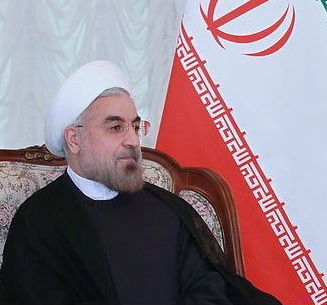
Hassan

As Iranian and American chief diplomats continue to meet to find ways to speed up nuclear negotiations and strike a final nuclear deal that would lead to the removal of all international sanctions on the ruling clerics, the Obama administration persists in ignoring the recent revelations about the Islamic Republic and its covert operations in the region.

A new Western intelligence assessment points to efforts by the Syrian government to renew its operations in an underground and clandestine nuclear facility near Qusair, close to the border of Lebanon, in order to produce nuclear weapons. Citing the Western intelligence assessment, the German weekly Der Spiegel pointed out that the reconstruction of the nuclear facility is being conducted with the assistance of the Islamic Republic, North Korea, and Hezbollah.

The intelligence report indicates that dialogue between Ibrahim Othman, head of the Syrian Atomic Energy Commission of Iranian, and North Korean and Hezbollah affiliates were “intercepted.” In addition, according Abu Muhammad al-Bitar, the Free Syrian Army has also noticed the “unprecedented” presence of Iranian and Hezbollah security members in the town of Qusair on the suburbs of Homs.

If Iran is engaged in such operations assisting Syrian President Bashar al Assad, it is breaching the protocols of the Non-Proliferation Treaty (NPT), as well as posing a great threat to security in the region.

If, even before obtaining nuclear weapons, the ruling clerics of Iran are assisting their allies to become nuclear states, how can we trust the Islamic Republic in nuclear negotiations and how can one rely on their claim that they are not seeking to build a nuclear bomb?

Iran-Syria and North Korean-Syria military and nuclear cooperation has been going on for a long time. When it comes to the issues of ballistic missiles, Syria has previously cooperated with both Iran and North Korea.

Syria possess approximately 50 tons of uranium which could be adequate enough to create 5 nuclear bombs. For developing nuclear weapons either highly enriched uranium or an adequate amount of plutonium is required.

Some might make the argument that Syria developed the uranium by itself without the assistance of other countries or other non-state actors. Nevertheless, technically, pragmatically and realistically speaking, Syria does not possess the capability of developing an estimated 50 tons of natural uranium. This suggests that the role of other states and non-state actors have definitely played a significant role. Some of the only allies that the Syrian government has still kept are Iran, North Korea and Hezbollah.

It is crucial to point out that, without a doubt, becoming a nuclear state for the Syrian and Iranian government would be a formidable tool in to suppress opposition, maintain power, and deter foreign intervention in case of crimes against humanity.

There are two major nuclear site in Syria. The first one is the Al Kibar reactor in the northeast of the city of Deir Ezzour and the second one is Marj Sultan in the outskirt of Damascus where the fuel is reportedly stored.

News with respects to the Syrian government renewing its nuclear program were previously reported in 2013. There had been reports that some activities were being carried out at an alleged Syrian nuclear facility close to an eastern suburbs of Damascus, Marj Sultan.

The International Atomic Energy Agency (IAEA) reported previously that Damascus was building a nuclear reactor in Deir Ezzour. Reportedly tons of enriched uranium in Damascus are being protected by Iran’s Revolutionary Guard Corps and Hezbollah.

According to Der Spiegel, “Syria’s dictator has not given up his dream of an atomic weapon and has apparently built a new nuclear facility at a secret location…..It is an extremely unsettling piece of news.”

In addition to the aforementioned concerns about the undeclared Syrian nuclear site and nuclear proliferation, one of the crucial issues is that the nuclear material might fall in the hands of multiple other players and Islamist groups. In other words, if these nuclear sites are seized by some radical groups or Al Qaeda-linked affiliates, they might be capable of utilizing the highly enriched uranium and produce nuclear weapons.

Iran’s other indisputable and multi-layered activities and engagements in Syria — including the military, financial, intelligence, and advisory assistance to the Syrian government which have further radicalized and militarized the ongoing Syrian war — persist. In addition, the recent intelligence report and satellite images of secretly renewing nuclear activities with the assistance of the Iranian and North Korean governments poses a grave threat to stability and security in the region. Unfortunately, despite the seriousness of this issue, the Obama administration continues to ignore these issues and persists on trusting the Islamic Republic in the nuclear negotiations.

Argentine Prosecutor Death in Iran Terror Case Gets Curiouser

January 23, 2015

Argentine Prosecutor Death in Iran Terror Case Gets Curiouser, Legal Insurrection, January 23, 2015

He documented enough of his charges that Interpol issued “red notices” for seven high-ranking Iranian officials, including Ali Akbar Rafsanjani and Ali Velayati, who were Iran’s president and foreign minister respectively at the time of the AMIA bombing. (Interpol does not have the power to arrest, so a “red notice” is as close as it comes to issuing an arrest warrant) Rafsanjani, despite being implicated in an act of terrorism in another nation is often referred to as a “moderate” nowadays. He is also considered to be a mentor to Iran’s current president, also often referred to as a “moderate,” Hassan Rouhani.

Alberto Nisman’s work exposed the danger that Iran poses to world security. Iran continues to violate international law with impunity and unfortunately there are too few Nisman’s daring to challenge Iran’s brazen misbehavior. His death will make the task of reining in Iran’s ambitions that much more difficult.

****************

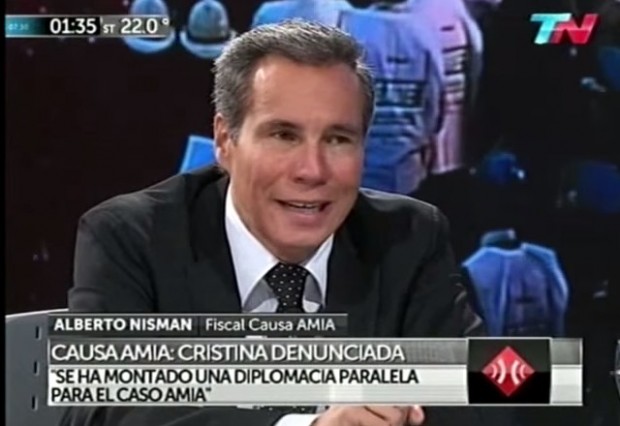
2015-01-23_074410_Nisman-620x426

Sunday night Argentinian prosecutor Alberto Nisman was found shot to death in his apartment. Nisman had been scheduled the following day to present his criminal complaint against Argentinian President  Cristina Fernández de Kirchner before a closed session of Argentina’s congress.

The initial claim (one made by Kirchner herself on her Facebook page) that Nisman committed suicide hardly seemed credible at the time. How many people would kill themselves before the high point of their careers? Nisman had spent ten years investigating the 1994 AMIA Jewish center bombing in Buenos Aires and now he was about to charge the president and other officials of his country with conspiring to cover up the Iranian involvement in that attack. (Now Kirchner says he was killed but “suggests that Nisman was murdered on the instructions of his foreign masters in order to create a scandal damaging to her and to her government.”)

Subsequent revelations during the week have made the claim of suicide even less credible now. At Business Insider, Armin Rosen recounted some of those revelations.

The lack of an exit wound suggested the fatal shot was fired at a further distance than Nisman could have managed had the wound been self-inflicted. His last WhatsApp was a photo of stacks of documentation related to the next day’s testimony and Nisman had apparently given his maid a grocery list for the following week. A 10-person government security detail was reportedly pulled off of his apartment the night of his assassination. Most damningly, there was no gunpowder residue found on Nisman’s hands, physical evidence that he didn’t discharge a firearm prior to his death.

Fausta has more, including some gleaned from the Spanish press. Notably despite earlier claims that Nisman’s apartment was locked from the inside, there are reports that there were two other ways into his apartment that were not locked. Fausta is also right that Nisman’s murder is all about Iran. (Rosen also wrote, “no matter who’s responsible for Nisman’s death, the Iranian regime benefits.”)

Nisman’s work on the AMIA case was invaluable in documenting Iran’s efforts to build a terror infrastructure in South America. Matt Levitt, an expert on Hezbollah, who recently published a book about the Iran-backed terror organization, wrote this week, “As I was writing my book, trying to navigate the convoluted details of the AMIA bombing and other Hezbollah plots, Nisman was an invaluable resource.”

Nisman’s work wasn’t just academic though. He documented enough of his charges that Interpol issued “red notices” for seven high-ranking Iranian officials, including Ali Akbar Rafsanjani and Ali Velayati, who were Iran’s president and foreign minister respectively at the time of the AMIA bombing. (Interpol does not have the power to arrest, so a “red notice” is as close as it comes to issuing an arrest warrant) Rafsanjani, despite being implicated in an act of terrorism in another nation is often referred to as a “moderate” nowadays. He is also considered to be a mentor to Iran’s current president, also often referred to as a “moderate,” Hassan Rouhani.

The AMIA bombing was not the only time Iran’s leadership was implicated in an attack on foreign soil. In addition to Rafsanjani and Velayati, a red notice was issued for Ali Fallahian for the AMIA bombing. Rafsanjani, Velayati and Fallahian were all implicated in another terror attack on foreign soil.

A German prosecutor “without naming them … implicated Supreme Leader Ayatollah Khamenei, President Akbar Hashemi Rafsanjani, Foreign Minister Ali Akbar Velayati and Intelligence Minister Ali Fallahian” in the 1992 massacre at the Mykonos restaurant in Berlin.

Iran’s revolutionary government is lawless. The Iranian actors in these foreign terror attackes weren’t rogue operators but members of the country’s political elite. It’s something to keep in mind when the Obama administration insists that it will make a nuclear agreement with Iran that will make everyone safer and more secure.

Even assuming the P5+1 nations can come to an agreement with Iran (an agreement is hardly a foregone conclusion, Iran would probably be very happy with a series of temporary agreements that free up billions and don’t force it to dismantle any element of their nuclear program), what grounds are there to trust Iran to keep its commitments?

Remember that the crisis with Iran over its nuclear program stems from Iran’s violations of the Nuclear Non-Proliferation Treaty that it signed. Six UN Security Council resolutions – three of them unanimous – were passed imposing sanctions on Iran for its violations. Iran isn’t looking to come into compliance but to be granted absolution for its violations.

Alberto Nisman’s work exposed the danger that Iran poses to world security. Iran continues to violate international law with impunity and unfortunately there are too few Nisman’s daring to challenge Iran’s brazen misbehavior. His death will make the task of reining in Iran’s ambitions that much more difficult.

Russian Defense Minister in Iran for Arms Pact Talks

January 20, 2015

Russian Defense Minister in Iran for Arms Pact Talks, Washington Free Beacon, January 20, 2015

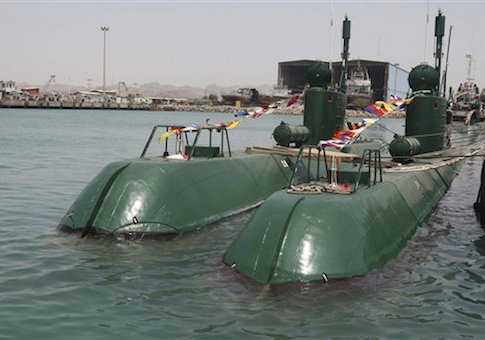
Mideast Iran Nuclear TalksIran’s Ghadir submarines / AP

Iran and Russia have been strengthening their military ties for quite some time. Moscow is largely responsible for Iran’s nuclear infrastructure and has provided the Islamic Republic with much of its missile arsenal.

“So long as we have an administration that’s not inclined to do anything in response, they’re going to keep it up. They’re going to speed ahead.”

***********************

Russian Defense Minister Sergei Shoigu is in Iran for high-level talks with Supreme Leader Ali Khamenei about boosting Tehran’s supply of submarines, torpedoes, and sea-based cruise missiles, according to Russian media reports and sources familiar with details of the talks.

Shoigu, whose trip is being kept quiet with few details being released publicly, landed in Tehran on Monday to talk with Iranian leaders about “increasing defense cooperation and arms trade with the Islamic republic,” the Moscow Times reported.

The talks will focus on Iran’s desire to purchase from Russia a slew of advanced military hardware that would significantly boost Tehran’s sea power, particularly in the Gulf of Oman, according to one source familiar with the substance of the talks.

The arms deal talks also come a day after Iranian military leaders claimed that they have the ability to sink U.S. aircraft carriers.

Iran and Russia have been strengthening their military ties for quite some time. Moscow is largely responsible for Iran’s nuclear infrastructure and has provided the Islamic Republic with much of its missile arsenal.

The latest talks are a sign that both countries aim to maintain the relationship, particularly as Russia helps Iran build several new nuclear reactors in the southern portion of the country.

“Iran gets a lot of military advice and missile equipment from the Russians,” said Michael Ledeen, an Iran expert and former consultant to the National Security Council (NSC), State Department, and Defense Department.

However, “the bulk of that stuff nowadays seems to have to do with sea power, and it’s delivered across the Caspian Sea,” said Ledeen, who has been in contact with Iranian sources familiar with the latest negotiations with Russia.

Iran is seeking to fortify its military edge in the Gulf of Oman and could employ Russian-made missiles as a deterrent to the United States and other nations present there.

In meetings with Khamenei and other Iranian leaders, Russia’s Shoigu is likely to discuss arming Tehran with new submarines, torpedoes, cruise missiles, and sea-to-sea arms, according to Ledeen, a freedom scholar for the Foundation for Defense of Democracies.

“Those are the things the Russians and Iranians will be talking about, and it’s obviously a very important meeting because [Shoigu] is scheduled to see Khamenei himself,” Ledeen said.

These talks are “very important” to both Moscow and Tehran as they seek to bolster their alliance.

“After all,” said Ledeen, “the Iranian nuclear program is basically a Russian program: Russian reactors, Russian equipment. They’re the ones who make it all possible. So Iranian military power is heavily dependent on Russia technology, Russian advisers, and Russian counsel.”

Iranian President Hassan Rouhani announced last week that Iran has begun construction on two new nuclear reactors with Russia’s assistance.

Following the announcement, the U.S. State Department told the Washington Free Beacon that Iran is permitted to pursue these nuclear reactors under the terms of an interim nuclear deal meant to curb Iran’s contested program.

The State Department’s revelation elicited harsh criticism on Capitol Hill and from other proponents of a tougher U.S. stance against Iran’s nuclear program.

Meanwhile, Iranian naval commander Ali Fadavi, a member of Iran’s Revolutionary Guard Corps (IRGC), bragged that Tehran has the ability to sink U.S. aircraft carriers.

“The U.S. military officials have admitted in their remarks that they have spent $13 [billion] for building aircraft carriers, but the IRCG can sink it with its speed boats,” Fadavi claimed.

Ledeen said these comments speak directly to Iran’s desire to boost their power in the sea.

“Their long term objective is to destroy us, and they say that all the time,” he said. “So long as we have an administration that’s not inclined to do anything in response, they’re going to keep it up. They’re going to speed ahead.”

Satire: How Obama briefly shut down North Korea’s internet

December 23, 2014

How Obama briefly shut down North Korea’s internet, Dan Miller’s Blog, December 23, 2014

Obama’s confidential adviser on all matters Islamic, Mohamed Allah-dork, is disgusted with Obama’s recent attack on North Korea’s internet because the methods He used were contrary to true Islamic doctrine. Concerned that his silence might be viewed as agreement with Obama’s methods, Allah-dork decided to divulge what really happened and how.

Mohamed Allah-dork

Mohamed Allah-dork

Great technological sophistication was needed to take down North Korea’s internet. Therefore, experts who had created the ObamaScare website, together with experts from the Federal Communications Commission (FCC), managed the project. Together, they provided an elegant solution which, unlike the ObamaScare website, worked perfectly (if only briefly) on the second attempt.

First, all of the glitches thus far identified in the ObamaScare website were recycled and combined in one enormous package. Next, FCC experts working diligently to degrade the U.S. internet devised a set of protocols to accomplish the same for North Korea. ObamaScare website experts then translated the FCC protocols into binary code and placed it in a massive glitch package for transmission by the National Security Agency (NSA) to all computers and internet hubs in North Korea.

Initially, the outages were limited, sporadic and hence disappointing. NSA had been unaware of the substantial time differences between Washington and North Korea and therefore made their transmissions during periods of highest internet usage in the Washington, D.C. area (during the day and early evening hours). When it was discovered that North Korea does not operate on Eastern Standard Time, NSA repeated the transmissions during periods of lowest D.C. area internet usage (late at night). That required overtime pay, but the necessary funds were easily diverted from the Department of Defense. The cyber attack worked beautifully until it failed.

According to Mohamed Allah-dork, the technology that Obama used to take down North Korea’s internet was un-Islamic for at least two reasons. First: no modern technology, including computers and the internet, is mentioned in the Holy Koran and all are therefore prohibited. Second: such technology — unlike tried and true Islamic methods — does not kill apostates and other infidels efficiently. Indeed, the first (but not, of course, the second) was the basis for the unwritten fatwa issued by Iran’s Supreme Leader declaring nuclear weapons un-Islamic. Iran does not even use modern technology to execute its domestic enemies.

Iran hangings by crane

Obama Clinton and Muslim Brotherhood

Allah-dork had explained to Obama that the Islamic Republic of Iran would never develop nuclear weapons due to the Supreme Leader’s fatwa and its basis in proper Koranic interpretation. Obama agreed, and that continues to be the foundation of His superb leadership of the P5+1 negotiations with Iran which, as all true Islamic scholars know, desires only Islamic peace and tranquility for all.

North Korea’s internet has recovered from Obama’s efforts. Although not previously reported, it is due to Allah’s displeasure with Obama’s deviation from true Islamic doctrine. Despite His universally understood transparency and candor, Obama will never admit the truth of Allah-dork’s revelations because He is embarrassed about the un-Islamic methods He used and their ultimate failure due to Allah’s displeasure. Hence, it is my civic duty to relay here what really happened and why.

The very highest credibility should be assigned to Allah-dork’s revelations because, as is well known, truth telling and the enlightenment it brings are among the greatest and most treasured of all Islamic values. Truth telling is no less important than slaughtering all who are unwilling to submit to the proper version of Islam, the religion of true (Islamic) peace everlasting.

Implications of Iranian Cheating at Arak

December 10, 2014

Implications of Iranian Cheating at Arak, Commentary Magazine, December 10, 2014

[T]he State Department never conducts lessons-learned exercises to determine why previous episodes of diplomacy have failed.

Kerry is like a gambler who has lost everything, but figures if only he is given one more round at the craps table, he can win big. American national security, however, is nothing with which to gamble. Especially when a gambler is desperate, the house will always win. In this case, however, the house is not Washington, but rather Tehran.

**********

As Jonathan Tobin notes, Colum Lynch’s Foreign Policy bombshell report about Iran’s covert efforts to buy equipment for its Arak plant, a facility which could produce plutonium for a nuclear bomb, raises questions about the logic of the Obama administration, and the recent comments by both Vice President Joe Biden and Secretary of State John Kerry with regard to the wisdom of extending nuclear talks with Iran.

If Lynch’s report is true—and it appears very much to be so—then there are two possibilities as to what happened vis-à-vis American diplomacy. The first is that Iranian diplomats were always insincere in pursuit of a nuclear resolution, and lied outright to Kerry, Undersecretary Wendy Sherman, Clinton, Biden-aide Jake Sullivan, and other officials who have championed the drive for nuclear talks with the current Iranian administration. That possibility is troubling enough, but the second scenario is as troubling, and that is that Iranian diplomats were perfectly sincere, but that the regime simply couldn’t care less what its diplomats said and pursued its own goals irrespective of any commitments they made.

A key theme of my recent book exploring the history of U.S. diplomacy with rogue regimes (of which Iran is the marquee example) is that the State Department never conducts lessons-learned exercises to determine why previous episodes of diplomacy have failed. One example they might consider is the pre-Iraq War negotiations with Iran: Immediately prior to the U.S.-led invasion of Iraq, National Security Council official Zalmay Khalilzad along with Ambassador Ryan Crocker met with Mohammad Javad Zarif, Iran’s UN ambassador (and its current foreign minister) in secret talks in Geneva. Almost simultaneously, British Foreign Secretary Jack Straw met with Iranian Foreign Minister Kamal Kharrazi. Both talks solicited the same Iranian pledge: Iranian officials would not interfere with coalition forces in Iraq, and Iran would not insert its own personnel or militias into Iraq.

In hindsight, the Iranians there, too, lied. Soon after Saddam’s fall, the Islamic Revolutionary Guard Corps (IRGC) infiltrated 2,000 fighters, militiamen, and Qods Force personnel into Iraq replete with radio transmitters, money, pamphlets, and supplies. The source for that statement? Iranian journalists. Those most enthusiastic for rapprochement, however, are now placing their hopes in the same Mr. Zarif, the man who a decade ago either lied shamelessly or bluffed about the power he did have to control the behavior of the IRGC and influence the supreme leader. Then again, there is a reason why, before he became vice president, Joe Biden was Tehran’s favorite senator.

Kerry is like a gambler who has lost everything, but figures if only he is given one more round at the craps table, he can win big. American national security, however, is nothing with which to gamble. Especially when a gambler is desperate, the house will always win. In this case, however, the house is not Washington, but rather Tehran.

A Victory For the Ruling Clerics

December 8, 2014

A Victory For the Ruling Clerics, Front Page Magazine, December 8, 2014

(The Iran Scam continues to plod along and along as Iran gets what it demands. — DM)

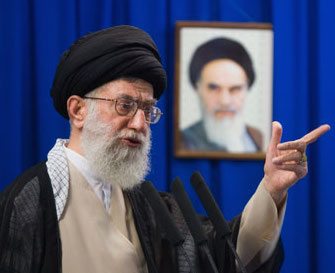
Irans-supreme-leader-Ayat-007

The nuclear extension definitely lacks any clear key terms upon which prospective nuclear talks would be anchored or that give any idea how a final nuclear deal could be reached.

But what is clear is that the Islamic Republic, particularly the Supreme Leader Ayatollah Ali Khamenei and senior cadre of Iran’s Revolutionary Guard Corps (IRGC), have gained considerable amount of geopolitical, geostrategic and economic advantages from this offer by the Obama administration. The Supreme Leader’s strategies to buy time, regain full recovery in the economy, pursue his regional hegemonic and ideological ambitions,  and reinitiate his government’s nuclear program have been fulfilled.

[T]he extension of nuclear talks offered to the Islamic Republic is not going to alter Iran’s stand on its nuclear program.

The extension not only will not alter the Islamic Republic’s position on its nuclear program, but will give the ruling clerics the opportunity to be further empowered, making them more determined to pursue their regional hegemonic ambitions.

******************

While the Obama administration formerly stated that extending the nuclear talks is out of equation, nevertheless, President Obama and Secretary of State John Kerry raised the option of an extension a day before the November 24th deadline. Iran’s foreign minister, Javad Zarif, definitely welcomed the idea.

After over a year of negotiations, which have traveled across the globe from Vienna, to Oman, and to New York, the negotiators (the Islamic Republic and the P5+1: China, France, Germany, Russia, the United Kingdom, and the United States) planned to extend the nuclear talks for another seven months in order to finalize the preliminary deal reached last year in Geneva. Accordingly, the nuclear negotiations will continue through the end of June.

The obscure objectives are to achieve a “headline” agreement by March 1st and seal the complete technical details of the headline agreement by July 1st. Details and nuances of the nuclear talks, with regards to agreements and gaps, have yet to be released, but some diplomats stated the repeatedly-heard phrase that “progress has been made.”

The nuclear extension definitely lacks any clear key terms upon which prospective nuclear talks would be anchored or that give any idea how a final nuclear deal could be reached.

But what is clear is that the Islamic Republic, particularly the Supreme Leader Ayatollah Ali Khamenei and senior cadre of Iran’s Revolutionary Guard Corps (IRGC), have gained considerable amount of geopolitical, geostrategic and economic advantages from this offer by the Obama administration. The Supreme Leader’s strategies to buy time, regain full recovery in the economy, pursue his regional hegemonic and ideological ambitions,  and reinitiate his government’s nuclear program have been fulfilled.

Based on the extension offered by the Obama administration, the Islamic Republic will continue receiving $700 million per month in frozen assets during the extended seven month period. Secondly, Iran will further consolidate its economy through increased sales in oil, particularly to Asian countries, heighten business deals with some Western companies, regain the value of its currency, and enjoy the removed sanctions on some of its industries. As a result, Iran will attempt to address the economic challenges which were threatening the hold on power of the ruling politicians.

From the economic perspective, the $700 million in sanctions relief will boost Iran’s economy as it is an equivalence of approximately 350,000 more oil barrels a day, based on the current market price.

The Islamic Republic exports roughly one million barrels of crude oil in a day. The sanctions relief would be equivalent to a 30 percent increase in oil sale.  In the next few months, Tehran will attempt to push for additional sanctions relief as well as ratchet up its economic deals, such export of gas and other goods, to some European and Eastern countries including France, Germany, Russia, Japan, and China.

Some European countries’ exports to Iran have already ratcheted up due to the prospects of the nuclear negotiations. Tehran Times, the Islamic Republic’s state newspaper, stated that Germany was Iran’s leading trade partner “The European country (Germany) exported €207 million of goods to Iran in June 2014, an 88 percent rise compared to June 2013.” Nevertheless, Tehran needs the complete lifting of economic sanctions in order to gain the optimal potentials of its economy and gain full recovery.

Third, the extension of the nuclear negotiations will ensure to the Iranian leaders that the international community, specifically the West, will not make efforts in further isolating Iran and pressuring it economically or politically.

In addition, the extension of nuclear talks offered to the Islamic Republic is not going to alter Iran’s stand on its nuclear program. Iran will continue holding the position that their demands for the following issues to be met: maintaining a specific number (tens of thousands of) fast-spinning centrifuge machines, Tehran should have the capacity to produce nuclear fuel in the future, and maintain specific level of enriching uranium. In the next few months, the Islamic Republic is not going to give up its capacity to produce plutonium which can be utilized for weapons at its heavy water reactor in the city of Arak. Iran is less likely to provide more evidence proving that it did not carry out secret tests on the development of atomic weapons in Parchin or other military complexes. The head of the International Atomic Energy Agency recently pointed out that the Islamic Republic continues to deny the IAEA access to sensitive military site which are suspected to be used for nuclear activities.

Finally, the Islamic Republic’s antagonistic stance towards the United States and the West will remain the same as well. This week, while Khamenei officially granted his blessing to Rouhani to continue with the game of nuclear negotiations, he also called the West “arrogant.” Earlier, he published a “9-step plan” to eliminate Israel. After the extension of the nuclear talks, President Rouhani pointed out on state television that “I promise the Iranian nation that those centrifuges will never stop working.” The extension not only will not alter the Islamic Republic’s position on its nuclear program, but will give the ruling clerics the opportunity to be further empowered, making them more determined to pursue their regional hegemonic ambitions.