Archive for the ‘Saudi Arabia’ category

On achievements and ideas

May 29, 2015

On achievements and ideas, Israel Hayom, Maj. Gen. (ret.) Yaakov Amidror, May 29, 2015

Lately it looks as though the Islamic State group has managed to rack up highly significant geographic achievements. These coups will lead to the group controlling the enormous expanse of territory west of Baghdad to the Syrian border beyond Palmyra by establishing rule in the north and east of the crumbling Syrian state.

The occupation of Ramadi, one end of an arch that bridges between the Iraqi capital and Palmyra in the heart of northern Syria, serves as a base for future gambits of even greater importance. We shouldn’t wonder if the group needs a little time to “digest” the new areas it has conquered, to take care of any local population that might resist, if any such remains, and to settle its rule on the rest of the residents and prepare for retaliatory attacks by the Syrian and Iraqi armies and their auxiliary militia forces.

It appears that in Iraq and Syria — but more importantly, in the U.S. — it is understood that the counterattack stage could turn out to be critical. If the group overcomes these strikes, it is hard to imagine what might stop it in the future, barring full-scale involvement by the U.S. military that would include heavy ground forces.

After the counter-strikes, the moment the organization feels secure in its new area, and we cannot know how long that will take, it will face the standard dilemma presented by such situations: What next? By nature, a group like this cannot refrain from action for long. It needs constant movement; it is thirsty for new gains and fears the “stagnation” that could affect it after a period of calm. The group is still in its dynamic stage, continuing to rise. It has four options for action, and no one knows which one its leaders will choose. It is possible that they themselves have not made up their minds and are still not ready to decide, at least until the results of any possible counterattack become clear.

Islamic State’s next “natural” effort could be toward Baghdad, to strengthen its rule of everything west of the Iraqi capital. The goal would be to strike a fatal blow to the Shiite government’s operational ability in the Sunni regions the group has taken thus far, and maybe even to bring down the present Iraqi regime.

Such a move would doubtless put pressure on the ruling Shiites and their Iranian allies, because when an organization like this approaches areas with a dense Shiite population, as well as the cities most holy to Shiites, the latter envision a mass slaughter. So there is no question that a move like that, if successful, would force the Iranians to make some tough decisions, mainly about whether to opt for direct military intervention.

The group has another option in Iraq: to the north, beyond Kurdistan. If it managed to take control of the areas where the Kurds are currently extracting oil, it would enjoy maximal success, running nearly an entire country and putting heavy pressure on Turkey. That looks tempting, because the West hasn’t taken care to adequately arm the Kurds, the only ones so far who have fought the group successfully.

It is also possible that after its great success in Iraq, the group will prefer to entrench its rule over northern Syria — in other words, seize control of Aleppo and Homs. That would be an ambitious plan given the size of the geographic area, but it appears any resistance there would be weaker than it would be in a metropolis like Baghdad or from the fierce Kurds. If Islamic State took Aleppo and Homs, it would improve its chances of eventually taking action against the Kurds, particularly their Syrian wing.

In Syria, the main ones opposing the group would be President Bashar Assad’s exhausted army. In that area, other Sunni groups from what is known as the army of insurgents might join Islamic State, granting it legitimacy in the eyes of the locals. A move like that could lead to a dramatic change in Assad’s position and force Hezbollah to spread its forces even thinner. A loss of Hezbollah’s strategic homefront and the presence of its Sunni haters breathing down the neck of the Alawite minority, on the coast of Latakia, means a threat to a region that is vital to Hezbollah and to the Iranians’ position in Syria, and eventually in Lebanon. The Iranians and Hezbollah would do almost anything to protect these, because any threat to them is an existential one. If the Islamic State group acquires control of Alawite or Shiite areas, it will exterminate everyone there. This is a life or death struggle. That’s clear to everyone.

The ambitious option

And there is a fourth option, which for now seems less appealing and therefore less likely, although not impossible. It’s possible that to avoid clashing with Shiite strength around Baghdad or with Alawite and Hezbollah desperation en route to Damascus, the group will turn its attention to Amman.

All the residents of Jordan are Sunni, and some of them could begin to identify with a serious, successful Sunni group that purports to act on behalf of Sunnis, who are in distress because of the Shiite dynamic in the Middle East. The group could asses that it would be easier for it to operate against Jordan, and if it does so successfully it would have more convenient access to Saudi Arabia — the crown jewel of the Muslim world.

Saudi Arabia is the target that anyone who talks about an “Islamic caliphate” dreams of, because it is home to Mecca and Medina, the two holiest cities for any Muslim. In acting against Jordan, the group could combine a military maneuver with an attempt to influence the kingdom from inside by exploiting the social and economic problems in Jordan that have worsened because of the mass influx of refugees from Syria.

Today, the chances of the organization succeeding in Jordan appear very slim. The Jordanian army, unlike the armies of Iraq and Syria, is both serious and professional and among many Jordanians, the king is popular as well as legitimate. Jordan is no easy prey, and it would certainly have the help of everyone for whom the kingdom’s stability is important.

In any case, it is obvious that the American intervention thus far has not brought the U.S. any closer to the goal defined by President Barack Obama of “destroying the organization.” The opposite — it has grown stronger and expanded its area of control since the U.S. declared war on it. The last chance the U.S. has to continue its current policy, avoiding the deployment of massive American ground forces, is conditional upon its ability to give the Iraqi army the assistance it needs in the attack it is promising to execute, and possibly on helping the Syrian army indirectly.

The Americans will take a look at themselves after these battles, when it becomes clearer whether the group’s recent successes are the regular ups and downs seen in conflicts like these, or whether they have altered its standing, and Islamic State will now take advantage of the momentum to move on more ambitious targets.

Seeking to Spark Sectarian War, ISIS Bombs Saudi Arabia

May 26, 2015

Seeking to Spark Sectarian War, ISIS Bombs Saudi Arabia, The Clarion Project, Ryan Mauro, May 25, 2015

Saudi-Arabia-ISIS-Mosque-Bombing-IPA family member of a slain victim mourns after arriving at the shiite Imam Ali mosque, the site of a suicide bomb attack, in the village of al-Qadeeh in the eastern province of Gatif, Saudi Arabia where an ISIS suicide bomber blew himself during Friday prayers. Twenty people were killed and more than 50 were wounded.

The Islamic State (ISIS) suicide bombing in Saudi Arabia on May 23 is significant in that it’s the group’s first claimed suicide bombing in the country, but it’s also a strategic move to spark sectarian upheaval in the Shiite-majority province that holds 90% of royal family’s oil reserves.

The Islamic State is trying to spark a cycle of sectarian violence that will destabilize Saudi Arabia and heighten the Royal Family’s tension with Iran. The terror group thrives in environments where Shiitesfeel they need Iranian protection and where Sunnis feel threatened by real or imagined Iranian influence. The Saudi Eastern Province has the added benefit of endangering the Royal Family’s most critical resource.

The bombing’s objective is to spur Islamic State supporters in Saudi Arabia into action against the Shiites and the royal family. AnOctober 2014 poll found that 5% of the Saudi population of 29 million has a positive opinion of the Islamic State (2% very positive and 3% somewhat positive).

The Saudi population includes about 8.5 million foreign residents, and it is unclear if they are included in the poll. This means that the Islamic State has a pool of somewhere between 1 million and 1.45 million supporters in Saudi Arabia that could be inspired to act.

The prospects for the Islamic State are much brighter if an atmosphere of sectarian warfare is instigated; a scenario that can be easily envisioned.

The sensitivity of the Saudi royal family to the bombing’s impact on sectarianism was evident in the immediate booking of the grand mufti on state television to condemn the attack on “sons of the homeland.” The language was deliberately chosen to assure the Shiite minority that the Saudi government cares about their well-being and to distance itself from any Salafists who may cheer the bombing.

The New York Times reported on how Saudis were declining to donate blood in the wake of the Islamic State bombing, deriding them as infidels and one saying that a Shiite “does not deserve even my spit.” Although there are Saudi Sunnis who stand up for Shiites —like one prominent human rights activist who is a leader in the Shammar tribe — their rarity is apparent in the very fact that their activism makes news headlines.

The Saudi government may deploy Salafist-dominated security forces to the Eastern Province to prevent attacks and to stop the Shiites from holding large demonstrations of grief that could easily turn political and demand better treatment.

The Eastern Province is known for its protests against the Saudi government and subsequent arrests of activists and clerics demanding an end to discrimination and democratic reform. The leader of the Municipal Council in Qatif, where the bombing took place, has already blamed the Saudi government for promoting anti-Shiite sentiment.

Through the bombing, the Islamic State has created a catch-22: Any move by the Saudi government to enhance security in the province risks inflaming the passions of the Shiites, resulting in clashes and oppression that further the cycle.

The popularity of Sunni terrorist groups known for oppressing Shiites is a strong indication of how quickly sectarian fervor could sweep across Saudi Arabia, particularly if there are mass Shiite protests and Iran rallies to their side.

The aforementioned poll found that 52% of Saudis support Hamas and 33% support the Muslim Brotherhood. A November 2014 poll by Zogby showed that Saudi Arabia is the only Middle Eastern besides Turkey where a majority (53%) feel that the Muslim Brotherhood played a positive role in Egypt and Tunisia.

A frightening 15% of Saudis most favor Al-Qaeda’s branch in Syria, Jabhat al-Nusra, among all the forces fighting the Syrian regime. About 9% support the Islamic Front, a Saudi-backed Salafist group and 3% preferred the Islamic State.

The Iranian regime and its radical Shiite proxies like Hezbollah and the Houthis are looking for an opportunity to strike back at the Saudis for their military intervention in Yemen and ongoing support for Syrian rebels. There is no better opportunity than upheaval in the Eastern Province, especially at this time when Iran’s economy is suffering from low oil prices.

The objective of the bombing in Qatif is to make Saudi Arabia an extension of the Shiite-Sunni battlefield seen in Iraq, Syria and Yemen. And the Islamic State isn’t crazy for thinking it could happen.

Relying on the U.S. for security is a mistake

May 21, 2015

Relying on the U.S. for security is a mistake, Al Arabiya News, Khalaf Ahmad Al Habtoor, May 21, 2015

(Al Arabiya is based in the United Arab Emirates and is majority-owned by Saudi broadcaster Middle East Broadcasting Center.– DM)

Obama says Iran’s newfound wealth will be used to improve lives rather than end up in the treasure chests of Hezbollah, the Shiite Yemeni Houthis, or other troublemakers under the Iranian wing. Sorry, but to me that smacks of naivety at best, snake oil at worst.

According to a Daily Telegraph investigation, Iran’s Supreme Leader controls “a financial empire” estimated to be worth $95 billion, more than even the grandiose Shah had managed to accumulate. That alone should tell Mr Obama that Iran has no intention of prioritising the needs of its people over its regional mischief makers.

****************

At a passing glance, President Barack Obama’s meetings with the leaders of the Arab Gulf States have borne fruit in terms of furthering mutual respect and as a building block to closer cooperation. But when one digs beneath the flimflam and the verbal pledges – with the exception of a joint missile defense system and a promise that deliveries of U.S. weapons would be fast-tracked – the recent Camp David Summit delivered few tangible benefits.

Indeed, more than a few commentators have described the meeting as a U.S.-hosted arms bazaar, one that will fill the coffers of American weapons manufacturers with billions of dollars. Plus the P5+1 – Iranian nuclear deal is set to enrich and empower Tehran once economic sanctions are lifted.

Obama says Iran’s newfound wealth will be used to improve lives rather than end up in the treasure chests of Hezbollah, the Shiite Yemeni Houthis, or other troublemakers under the Iranian wing. Sorry, but to me that smacks of naivety at best, snake oil at worst.

According to a Daily Telegraph investigation, Iran’s Supreme Leader controls “a financial empire” estimated to be worth $95 billion, more than even the grandiose Shah had managed to accumulate. That alone should tell Mr Obama that Iran has no intention of prioritising the needs of its people over its regional mischief makers.

Eradicating terrorism

The question is whether the leaders of the GCC countries should rightly feel secure from Iranian aggression now that the U.S. President has promised to come to their defense, militarily if deemed necessary. Naturally, that assessment would be made by the White House, not by the threatened states.

Without a signed and sealed security pact and in light of Obama’s track record of hesitancy in ending regional conflicts or eradicating terrorism, I don’t think so. Are we seriously to believe that the U.S. would declare war on Iran were we to be menaced?

Obama’s rhetoric speaks otherwise when he told the New York Times that internal threats to Gulf States are “bigger than Iran” and, at Camp David, he warned his guests not to “marginalise” Tehran. And even if Obama’s undertaking was rock solid, his term expires in just over 18 months. What happens then?

In any case, while there is nothing wrong with cementing better relations with the U.S., we must not on any account rely on its protection or that of any other world power. Yemen proves that we are able and willing to protect ourselves and our allies and when the proposed Joint Arab Force comes into play, our capabilities will be strengthened. We have no need of guardians or bosses in foreign capitals. We have strong, well equipped armies and air forces. We are not helpless, underage youths pleading to be defended, as characterised by sectors of the media.

Merely a public relations exercise

I would urge GCC heads of state to put Camp David under a microscope to ascertain whether it was a genuine attempt on Obama’s behalf to induce closer ties or merely a public relations exercise to bring Gulf States on board a bad deal rewarding Iran for its hostility, regional interference and its backing of terrorists.

In my opinion, trusting the Obama administration to rein in Iran would be a huge mistake. U.S. engagement with Iran was exactly the legacy Obama was after even before he moved into the Oval Office. And to that end he surrounded himself with pro-Iranian officials, such as Vice President Joe Biden, Secretary of State John Kerry and Deputy Secretary-of-State Bill Burns, who have all been championing détente with Iran for many years.

Obama’s personal adviser and family friend, Valerie Jarrett grew up in Iran, speaks Farsi, and was a main player along with Bill Burns in U.S.-Iranian secret talks to pave the way for official negotiations. The President’s National Security Council Director for Iran, Sahar Nowrouzzadeh is a former employee of the National-Iranian American Council, a pro-Iranian lobbying organisation.

The President’s own behaviour with regards to America’s long-time sworn enemy was suspect since the beginning. He has been sending the Iranians video Nawrus (New Year) messages and letters to Iran’s Supreme Leader. This year, Obama actually celebrated the Persian New Year at home with his wife and daughters.

Just as strange was Obama’s silence concerning Iran’s crackdown on street protests following elections. And if he condemns Tehran for its human rights abuses and lack of civil liberties, he must be whispering. Because all we hear from him is condemnation of predominately Sunni Arab states on those issues.

“The greatest supporter and plotter of terrorism”

Stranger still, while Obama comes across as the ayatollahs’ new best friend, just days ago, the Ayatollah Khamenei attacked the U.S. as “the greatest supporter and plotter of terrorism” and accuses Washington of pursuing its own interests making the region insecure, while branding America as the enemy of both Shiite and Sunni Muslims. Far from committing to stay out of Arab affairs, Khamenei stressed that his country would continue supporting “the oppressed people of Yemen, Bahrain and Palestine in every way possible.”

Are we really going to place our trust in America’s Commander-in-Chief when he claims backing the Free Syrian Army against the Syrian regime partnered with Iran and Hezbollah, even as his Air Force provides air cover to Iran’s Quds Force and pro-Iranian Shiite militias in Iraq’s Anbar province? This rabble with blood-stained hands – officially known as Popular Mobilisation Forces (Al-Shaabi) – has been deployed by Prime Minister Haider Al-Abadi and is directed by the commander of Iran’s Quds Force Qassem Soleimani. What is worse is that Iran is poised to send in ground troops as soon as it receives the go ahead from the government.

And what does Mr Obama say about the shocking news revealed by the Times and other papers to the effect that the government in Baghdad is turning away tens of thousands of desperate Sunni refugees fleeing the city of Ramadi, recaptured by ISIS? Nothing much as far as I can tell! Iraq families with nowhere to go are being treated worse than foreign foes, barred entrance into their own capital city unless they happen to have a local “guarantor.” This is a plan to reduce the Sunni population by sending them into the fray to die; there is no other explanation.

In reality, Saudi Arabia’s towns bordering northern Yemen are under direct threat from Houthis, while Iran, close to being literally under the Iranian boot, constitutes a grave threat to Gulf States. Does the Obama administration plan to wait until the horse has bolted before acting? The Iranian plot to dominate the region is taking shape before our eyes. We are being surrounded. Yet the U.S. president asks us to play nice with the plotters.

Qualitative military edge

The bottom line is we did not get what we asked for. Obama’s commitment to intervene in Syria to stop the regime’s killing spree was off the table along with a joint defense pact on the lines of those the U.S. has with Israel, Japan and South Korea. Moreover, he has turned down the Saudi request to purchase state-of-the-art F-35 Joint Strike Fighters to maintain Israel’s qualitative military edge over its neighbors.

And we certainly did not get what we need. Most importantly, any final agreement with Iran should be negotiated with the participation of Gulf states and co-signed by our leaders. Such agreement should not be limited to nuclear issues, but should be conditional upon Tehran’s commitment to quit meddling in the affairs of Arab countries, notably Syria, Lebanon, Iraq, Yemen and Bahrain whether directly (in the case of Iraq and Syria) or via its armed proxies (Lebanon and Yemen).

We should not trust any other countries but our own. We must not await instructions from the White House on how to pursue our own interests, as it is well-known that U.S. friendship is not proffered without strings. We must proceed with our mission to free Yemen of Houthi rabble, continue with our efforts to destroy ISIS and lend every support to that sector of the Syrian opposition fighting for a democratic, inclusive state – as opposed to terrorist groups that seek to drag Syria back to the Middle Ages.

Lastly, we should insist upon the stringent terms outlined above. And if those terms are not put in writing, the GCC should work to weaken the Iranian regime once and for all, beginning with material support for the oppressed Ahwazi Arab citizens of Iranian-occupied Arabistan – a region Iran now calls Khuzestan, which supplies the country with most of its oil and gas.

I fear that Camp David was a well-timed bluff and its weapons bounty no more than candies to sweeten the pill. I trust and believe that our leaders understand the score and will maintain independent strategies to counteract threats to our very existence. We cannot gamble with tomorrow on the words of one man, even if that man is the U.S. president.

Our region has been burned many times before. If the past is a good predictor of the future, we should recognise that ultimately we must become the masters of our own destiny, which is far too precious to be handed to the safekeeping of fair-weather friends.

Arab military chiefs approve Egyptian-led intervention in Libya

May 19, 2015

Arab military chiefs approve Egyptian-led intervention in Libya, DEBKAfile, May 19, 2015

(Obama will be displeased. — DM)

Arab military chiefs held an unpublicized meeting in Cairo Monday to confirm coordinated plans for Egyptian-led regional intervention into the eastern Libya region of Cyrenaica to drive out the armed extremists, who have kept the country locked in chaos since Muammar Qaddafi’s ouster, and install a stable government in the region;s capital of Benghazi. The meeting was attended by the chiefs of staff of Egypt, Jordan, Saudi Arabia, UAE, Kuwait, Bahrain, Sudan and the Libyan Tobruk government. Talks are ongoing with France and Libya to take part in the operation. Both have a direct interest in putting a stop to the ungoverned flow of African refugee migrants to Europe through Libya, which is being used by Islamic State terrorists to infiltrate Europe. France will be asked for logistic support and special forces for the Libyan operation and Italy to provide naval support. Egyptian President Abdel-Fatteh El-Sisi is seeking  early military action cut down the fast-expanding ISIS threat to his country, the region and southern Europe.

Ramadi’s fall opens ISIS road to Baghdad. Jordan warns US air strikes won’t stop the terrorists’ advance

May 18, 2015

Ramadi’s fall opens ISIS road to Baghdad. Jordan warns US air strikes won’t stop the terrorists’ advance, DEBKAfile, May 18, 2015


Jordan’s King Abdullah has warned the Obama administration in an urgent message that US air strikes alone won’t stop the Islamic State’s advances in Iraq and Syria and, what is more, they leave his kingdom next door exposed to the Islamist peril. ISIS would at present have no difficulty in invading southern Jordan, where the army is thin on the ground, and seizing local towns and villages whose inhabitants are already sympathetic to the extremist group. The bulk of the Jordanian army is concentrated in the north on the Syrian border. Even a limited Islamist incursion in the south would also pose a threat to northern Saudi Arabia, the king pointed out.

Abdullah offered the view that the US Delta Special Forces operation in eastern Syria Saturday was designed less to be an effective assault on ISIS’s core strength and more as a pallliative to minimize the Islamist peril facing Saudi Arabia, Jordan and the Gulf emirates.

DEBKAfile’s Washington sources report that US officials refused to heed Abdullah’s warning and tried to play it down, in the same way as Secretary John Kerry tried Monday, May 18, to de-emphasize to the ISIS conquest of Ramadi, the capital of Iraq’s largest province.

At a news conference in Seoul, Kerry dismissed the Islamists’ feat as a “target of opportunity” and expressed confidence that, in the coming days, the loss “can be reversed.”

The Secretary of State’s words were unlikely to scare the Islamists, who had caused more than 500 deaths in the battle for the town and witnessed panicky Iraqi soldiers fleeing Ramadi in Humvees and tanks.

Baghdad, only 110 km southeast of Ramadi, has more reason to be frightened, in the absence of any sizeable Iraqi military strength in the area for standing in the enemy’s path to the capital.

The Baghdad government tried announcing that substantial military reinforcements had been ordered to set out and halt the Islamists’ advance. This was just whistling in the dark. In the last two days, the remnants of the Iraqi army have gone to pieces – just like in the early days of the ISIS offensive, when the troops fled Mosul and Falujah. They are running away from any possible engagement with the Islamist enemy.

The Baghdad-sourced reports that Shiite paramilitaries were preparing to deploy to Iraq’s western province of Anbar after Islamic State militants overran Ramadi were likewise no more than an attempt to boost morale. Sending armed Shiites into the Ramadi area of Anbar would make no sense, because its overwhelmingly Sunni population would line up behind fellow-Sunni Islamist State conquerors rather than help the Shiite militias to fight them.

Iran’s Defense Minister Hossein Dehghan, who arrived precipitately in Baghdad Monday, shortly after Ramadi’s fall, faces this difficulty. Our military sources expect him to focus on a desperate effort to deploy Shiite militias as an obstacle in ISIS’s path to Baghdad, now that the road is clear of defenders all the way from Ramadi.

In Amman, King Abdullah Sunday made a clean sweep of senior security officials, firing the Minister of Interior, the head of internal security (Muhabarat) and a number of high police officers. They were accused officially of using excessive violence to disperse demonstrations in the southern town of Maan.

The real reason for their dismissal, DEBKAfile’s counter-terror sources disclose, is the decline of these officials’ authority in the Maan district,  in the face of the rising influence of extremist groups identified with Al Qaeda and ISIS, in particular.

Saudi Rapist in Colorado Says Sex Offender Program is Against His Religion

May 17, 2015

Saudi Rapist in Colorado Says Sex Offender Program is Against His Religion, Front Page Magazine, Daniel Greenfield, May 17, 2015

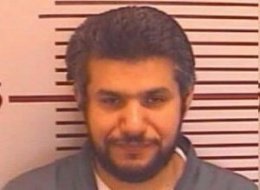
Homaidan-al-Turki

Rape however isn’t against his religion.

Homaidan al-Turki’s entire defense strategy from the beginning was Islam. The member of a prominent Saudi family claimed that the prosecution was Islamophobic.

“We are Muslim. We are different. The state has criminalized these basic Muslim behaviors. Attacking traditional Muslim behaviors is a focal point of the prosecution.”

He had a point, because the behavior he was charged with was commonplace back in Saudi Arabia.

The victim slept on a mattress on the basement floor, was paid less than $2 a day, and Al-Turki eventually intimidated her into sex acts that culminated in her rape in late 2004, according to prosecutors.

Once in prison, the Saudis tried to get him transferred/released back home, but public outrage stopped that at least temporarily.

Now we’re apparently back to Al-Turki’s insistence that he shouldn’t have to undergo sex offender treatment.

Al-Turki told prison officials in 2013 that the sex offender treatment programme “conflicts with [his] Islamic faith”, according to a letter by the then executive director of the Colorado Department of Corrections, Tom Clements.

His lawyers told the court in the same year that the program: “would require [him] to look at photos that included women in bathing suits or undergarments as part of the evaluation process”, AP reported.

That would be the Abel Screening which is supposed to test for assorted deviancies. Undergoing it would be an important prerequisite to parole or transferring Al-Turki to a Saudi prison/resort.

Al-Turki’s people have rejected it because it would mean admitting that he did something wrong, also the group would be run by a woman and there are the photos of men, women and children in swimsuits.

Obviously Saudi mores and Islamic law say that Homaidan Al-Turki did nothing wrong. ISIS’ rapes and sex slaves show us how that works, but Saudi Arabia runs a low key version of the same thing.

The entire premise of the program is incompatible with Islam. It’s Islamophobic since it rejects the Islamic idea that Muslim men can rape non-Muslim women within the context of a hostile environment, especially in a non-Muslim country.

So we just have to decide between Saudi ISIS law and American law. It’s that simple.

Obama’s Not-So-Ironclad Guarantee

May 15, 2015

Obama’s Not-So-Ironclad Guarantee, Commentary Magazine, May 15, 2015

Now that the nuclear deal makes an Iranian bomb only a matter of when rather than if, the Gulf nations were hoping for more than just a carefully worded expression of American indifference.

***********

This was supposed to be the week when President Obama put on a show of his desire to reaffirm America’s support for its Arab allies. Saudi Arabia and the other Gulf states have spent the last year in the unusual position of agreeing more with Israel than the United States, as Obama pushes for détente with Iran. Like the Israelis, the Arabs are pondering their future in a region dominated by an Iranian nuclear threshold state that appears to be the lynchpin of the president’s foreign policy legacy. So to demonstrate his good will, Obama invited these nations to a summit at which he would convince them they had nothing to fear. But with the U.S. putting nothing on the table of substance that would allay those concerns about the weak nuclear deal being negotiated with Iran, the Saudi king and other leaders snubbed the event, turning it into a fiasco even before it began. But it turned out King Salman didn’t miss much. Though Obama offered what he called an “ironclad guarantee’ of America’s support for the Arabs, it was phrased in the kind of ambiguous language that rendered it meaningless. The meeting and especially the statement epitomized an Obama administration foreign policy that puts a premium on appeasing foes and alienating friends.

The wording of the president’s “guarantee” is a marvel of lawyerly ambiguity that any connoisseur of diplomatic doubletalk must appreciate:

In the event of such aggression or the threat of such aggression, the United States stands ready to work with our GCC partners to determine urgently what action may be appropriate, using the means at our collective disposal, including the potential use of military force, for the defense of our GCC partners.

Let’s unpack this carefully so we’re clear about what the United States isn’t promising its Arab allies. As even Obama’s cheerleaders at the New York Times noted, this “carefully worded pledge that was far less robust than the mutual defense treaty the Gulf nations had sought.” In the event of aggression, the U.S. isn’t going to spring into action to defend them. Instead it will “work” with them to “determine” what they might do. That falls quite a bit short of a hard promise of collective action, let alone the drawing of a line in the sand across which the Iranians may not cross. In other words, if something bad happens, Obama will talk with the threatened parties but he won’t say what he will do in advance or if he will do anything at all. If that is an “ironclad guarantee,” I’d hate to see what a less binding promise might sound like.

To understate the matter, this is not the sort of pledge that will deter an Iran that is emboldened by its diplomatic victory in the negotiations that let them their nuclear infrastructure and continuing working toward a bomb. Iran’s push for regional hegemony has also been boosted by the triumph of their Syrian ally Bashar Assad with the help of Tehran’s Hezbollah terrorist auxiliaries. With the Iran-backed Houthi rebels threatening to take over Yemen and Iran also resuming its alliance with Hamas in Gaza, the axis of Iranian allies has Arab states understandably worried about their future. Now that the nuclear deal makes an Iranian bomb only a matter of when rather than if, the Gulf nations were hoping for more than just a carefully worded expression of American indifference.

That’s why the statement at the end of the summit made no mention of America’s chief worry about the Gulf states: the possibility that the Saudis will, either acting alone or in concert with their neighbors, seek to match Iran’s nuclear potential. As critics of the Iran deal foretold, far from saving the Middle East from an Iranian bomb, it has set off an arms race that has will make the world a fare more dangerous place.

This omission will likely make the Iranians even more reluctant to give in to U.S. demands about sanctions, Tehran’s military research and the disposition of its stockpile of enriched uranium in the final stages of the nuclear talks. A better guarantee for the Arabs might have convinced the Islamist state that the president really meant business about strengthening the deal. In its absence, they have no reason to think Obama won’t fold as he has at every other stage of the negotiations.

Under the circumstances, it’s little wonder that Bahrain’s King Hamad preferred to go to a horse show London rather than confer with Obama. Just as Israel has learned that the United States is more interested in a new Iran-centric policy than it backing its traditional allies, so, too, must the Arabs come to grips with a new reality in which their Iranian foe is no longer restrained by the United States.

In Advance Of Obama-GCC Camp David Summit, Saudi Press Warns: Iran’s Interference In Region Poses Greater Danger Than Iranian Nuclear Bomb

May 13, 2015

In Advance Of Obama-GCC Camp David Summit, Saudi Press Warns: Iran’s Interference In Region Poses Greater Danger Than Iranian Nuclear Bomb, MEMRI, May 12, 2015

(The linked Saudi press articles suggest that Obama’s efforts to reassure Saudi and other regional powers about Iran will not succeed. — DM)

May 14, 2015 is the date set for the summit at Camp David between U.S. President Barack Obama and heads of state of the member countries of the Gulf Cooperation Council (GCC) – Saudi Arabia, Qatar, Kuwait, Bahrain, UAE, and Oman. A meeting at the White House with President Obama and the conferees is planned for the preceding day, May 13.

The objective of the Camp David summit, as announced several weeks ago, is to reassure the GCC countries about the nuclear agreement slated to be signed with Iran next month, as well as to discuss tighter U.S.-Gulf security cooperation.[1]In advance of the summit, the GCC held several preparatory meetings at various diplomatic levels, including: an April 20 meeting of GCC foreign ministers; a May 4 summit of GCC heads of state which was attended also by French President François Hollande; a May 7 meeting in Riyadh of Saudi Foreign Minister ‘Adel Al-Jubeir and his U.S. counterpart Secretary of State John Kerry; and a May 8 meeting in Paris of all the GCC foreign ministers and Kerry.

However, on May 9, Saudi Arabia announced that Saudi King Salman would not be at the Camp David summit as planned, and that Crown Prince Mohammed bin Nayef and Deputy Crown Prince Mohammed bin Salman would be participating in his stead. Saudi Foreign Minister ‘Adel Al-Jubeir explained that the monarch would not attend because he had to stay home to ensure peace and security in Yemen and to oversee the arrival of humanitarian assistance to the Yemeni people.[2]

Later, it was reported that the Bahraini king, the UAE president, and the Sultan of Oman would also not be attending the summit, sending representatives instead. As of this writing, the Emirs of Kuwait and Qatar are the only GCC heads of state who are planning to attend.

The downgrade of the level of representation at the summit appears to constitute a message to the U.S. that Saudi Arabia and the other GCC member countries were not pleased with the preliminary talks with Secretary of State Kerry, and also that they were disappointed at what the summit would achieve. According to a May 2, 2015 New York Times report, the Saudis had even then hinted that they would downgrade their representation if they felt that the summit was not going to produce results that conformed to their expectations.[3]

In fact, Arab press reports that preceded the announcement of downgraded representation pointed to what the GCC countries were demanding from the U.S., as well as to dissatisfaction on their part. At the May 4 summit of GCC heads of state with Hollande, Saudi King Salman called on the international community, especially the P5+1 that is negotiating with Iran, to “set stricter rules that guarantee the region’s security and prevent it from plunging into an arms race.” The king also stipulated that any final agreement with Iran must include unambiguous security guarantees.[4] Additionally, on May 7, UAE Ambassador to the U.S. Yousef Al Otaiba announced that the GCC would demand from the U.S. guarantees in writing that the latter would defend it from Iran.[5] Likewise, on May 9, the London-based Saudi daily Al-Hayat reported that even at the May 8 meeting with Kerry, the GCC foreign ministers had demanded U.S. guarantees that their countries would havemilitary superiority over Iran.[6]

Elaph.com also reported, on May 9, that the Gulf heads of state, headed by the Saudi monarch, would not settle for aid, military contracts, and defense systems provided by the U.S., but that they were seeking “clear, honest, and practical clarification, by means of absolutely firm, long-term resolutions, that Iran would be prevented from actualizing its expansionist aspirations in the region and from developing nuclear weapons…” Elaph also reported that “the Gulf leaders are headed for confrontation with the American president, and they want answers and explanations about his positions on these burning issues…”[7]

On May 12, three days after the Saudis announced that King Salman would not be attending the summit, it was reported that President Obama and King Salman had spoken by phone about the preparations for the summit, and had discussed the agenda of the meetings that would take place during it.[8] Both the White House, in an announcement, and Saudi Foreign Minister ‘Adel Al-Jubeir, at a press conference, emphasized the continuing Saudi-U.S. partnership. According to the White House announcement, Obama and Salman had, in their phone conversation, “reviewed the agenda for the upcoming meetings” and had “agreed on the necessity of working closely, along with other GCC member states, to build a collective capacity to address more effectively the range of threats facing the region and to resolve regional conflicts.” The two also discussed “the importance of a comprehensive agreement between the P5+1 and Iran that verifiably ensures the exclusively peaceful nature of Iran’s nuclear program” and “emphasized the strength of the two countries’ partnership, based on their shared interest and commitment to the stability and prosperity of the region, and agreed to continue… close consultations on a wide range of issues.”[9] Also, at a Washington press conference, the Saudi foreign minister stressed that King Salman’s “absence from the summit is not in any way connected to any disagreement between the two countries,” adding, “We have no doubts about the U.S.’s commitment to Saudi and Gulf security. The U.S. will present the Gulf countries with a new level of cooperation that will meet the needs on the ground.”[10]

At the same time, the Saudi press published numerous articles, including op-eds and editorials, fiercely attacking the Obama administration’s Middle East policy, stating that it had repeatedly disappointed the Arab countries, in its positions on Syria, Iraq, Bahrain, Yemen, and Iran. The articles accused the Obama administration of reinforcing Iran’s power in the region – so much so that it was now threatening GCC interests – and claimed that it was not the Iranian nuclear bomb but Iran’s imperialism in the region and Iran’s interference in the affairs of the Arab countries that was the “real bomb threatening [the Arab countries’] security,” and called on the U.S. to curb these. These articles focused on the demands that the GCC countries would be presenting to Obama at the summit, including that he change his policy towards Iran and “restore the regional balance,” while at the same time he would undertake unprecedented security military cooperation with the GCC. The articles emphasized that “the Gulf countries no longer believe the U.S.’s promises and guarantees,” and that they would now demand guarantees in writing. Some of the articles even warned that U.S.-GCC relations were now at a point of a grave, even critical crisis of confidence, and that the Camp David summit was a chance for the U.S. to prevent the collapse of its alliance with the GCC. If this alliance did fall apart, they said, U.S. interests in the region would suffer, and the smoldering regional conflict would erupt into a conflagration.

Below are translated excerpts from some of the articles:
23277

‘Al-Sharq Al-Awsat’ Editor: The Dissolution Of The U.S.-Gulf Alliance Will Harm U.S. Interests In The Region

Salman Al-Dosari, editor of the London-based Saudi daily Al-Sharq Al-Awsat, argued that the mutual trust between the US and the Gulf states had eroded to an extent that jeopardizes the alliance between them: “The upcoming Camp David summit may be the most important Gulf-U.S. meeting to take place in 50 years, [because] the U.S.-Gulf alliance is going through a phase of tension and a crisis of confidence… Washington is aware of this and it is no secret. Who knows, perhaps the summit will be an opportunity to put the train of this historic alliance back on the track from which it slipped in recent years. The summit will be an opportunity for the American administration to shift from talk to action, and quell the doubts in the region regarding its credibility, that has been put to the test  [by a series of events,] starting with the Syrian crisis, continuing with [America’s]feeble position on the events in Bahrain, Egypt and Iraq, and culminating in the nebulous and secret agreement that is expected to be signed with Iran…

“All [U.S.] institutions are aware of the negative repercussions for American interests that will ensue if the alliance with the Gulf States is dissolved. Naturally, the two parties do not have to be [perfectly] coordinated in their policies. However, it is unreasonable for U.S. policy to threaten the interests of the Gulf States, and later we [are bound to] discover that U.S. interests in the region have been harmed as well. This proves that Washington’s policy in the region is completely misguided…

“President Obama undoubtedly has a clear plan that will translate American talk into action, as reflected in statements by a senior American official last Thursday, published in Al-Sharq Al-Awsat, regarding ‘unprecedented military cooperation’ that will be revealed at the Camp David summit. It is also important that the U.S. give [the Gulf States] its assurances in writing… Only by such actions can the U.S. restore the cordiality to its relations with the Gulf States and truly demonstrate that the final nuclear agreement expected to be signed [with Iran] will not include ambiguous meanings and unclear details.

“The US wants to kill two birds with one stone, [namely achieve] excellent relations with the Gulf States and with Iran simultaneously. This equation is unacceptable, not because the Gulf States hate [Iran], but because the Iranian regime is predicated on hostility to its neighbors in the Arabian Gulf, and its entire policy is geared towards intervening in their internal affairs. This is the entire story, honorable President Barack Obama.”[11]

Al-Hayat Editor: U.S. Hesitation At Camp David Will Cause The Regional Conflict To Erupt

Ghassan Charbel, editor-in-chief of the London-based Saudi daily Al-Hayat, wrote: “The U.S. is not interested in playing the role of the Middle East’s policeman. It does not wish to squander additional billions [of dollars] and blood. However, it certainly cannot wash its hands of the fate of this region of the world – not just  because [it seeks to preserve] the security of oil and of Israel, but also for the sake of the security of the U.S. and the West. Experience teaches us that Middle East diseases are contagious, and that the terrorism that is taking root there threatens the safety of New York, Washington, Paris, Berlin, and so on.

“It would be no exaggeration to say that the U.S.-Gulf summit at Camp David creates an unusual encounter that will leave its mark on the fate of the Middle East for years or [even] decades to come. The summit demands more than just dispersing [messages of] reconciliation and calm [to alleviate Gulf fears]. The situation is too grave to be treated with painkillers and hopes. The framework of a new regional order must be outlined; [such an order] must restore the necessary balance and provide safety valves to stop the chain of collapses, coups, and infiltrations [of foreign elements]. It is clear that the Iranian specter will be at the summit, bearing two bombs [that is, both nuclear bomb and the bomb represented by the regional role that Iran is seeking]…

“The problem that the GCC countries have with Iran does not end with Iran’s nuclear program. The GCC countries maintain that Iran’s current interference… is the real bomb threatening the security of the GCC countries, and [also] threatening the stability and status of the Arabs in the region. Therefore, what the Gulf is demanding at Camp David is measures to curb Iran’s involvement in the region, in addition to curbing its nuclear ambitions…

“It appears, therefore, that the Camp David summit must clarify the American position vis-à-vis the two Iranian ‘bombs’ – the first being the nuclear program, and the second being the regional role [that Iran covets]. The GCC is against the view that an agreement concerning the first bomb is a character reference providing it with what it needs in order to protect and expand the second bomb. This goes beyond the issue of missile defense [to be provided by the U.S. to] the Gulf countries, and beyond providing it with a deterrent arsenal, and has to do with the U.S.’s perception regarding its own interests in the next stage, how committed it is to its allies, and how serious it is in thwarting Iran’s takeover of the region – as well as how [willing] it is to give [the Gulf countries] unequivocal [security] guarantees.

“It is impossible to establish a suitable regional order without first restoring balance to the region. The bomb of [the regional]role [for which Iran strives] contradicts the required balance, and the American hesitation to deal with it [i.e. with Iran] decisively and seriously will diminish the importance of the summit and increase the Gulf countries’ apprehensions about Obama’s ‘Iran policy.’ American hesitation will also cause the regional conflict to erupt, especially the Syrian link [in the chain]… That is, if the Camp David summit does not address these two bombs, it will add fuel to the alarming Middle East conflagration.”[12]

‘All-Hayat’ Columnist: We No Longer Believe Obama’s Promises; Saudi Arabia Has Alternatives To The U.S. – Such As China And France

George Sama’an, a columnist for the London-based Saudi daily Al-Hayat, wrote about the U.S. president’s dilemma, under the headline “Obama Stuck Between Losing Saudi Arabia and Stopping Iran’s Expansion”: “Iran. There is no other issue butIran on the agenda of the U.S.-Gulf summit set for this week in Washington and Camp David. The [Iranian] nuclear program has worried, and continues to worry, the members of the GCC. In their meetings in Paris with U.S. Secretary of State John Kerry, the GCC foreign ministers did not focus on technical clarifications related to the program nor on those related to the mechanism of economic sanctions. What they fear is the day after the anticipated agreement between Iran and the five superpowers and Germany.

“Like many who oppose the approach of the American dialogue [with Iran], they fear Iran’s getting its hands on the region. [Iran] could gain from the lifting of the siege and of the sanctions on its frozen assets by continuing its regional expansionist program. Despite its [economic] distress, Iran has accelerated this expansionism, with brazen persistence. Its strategy relies on two main elements: the advanced, developed, and extensive arsenal of missiles in its possession, which are conventional weapons that are not subject to an international ban such as nuclear energy, and on continuing its expansion using its Shi’ite forces and militias in several Arab countries…

“The Gulf states are among the countries that no longer believe the promises and guarantees that the U.S. is providing these days. Obama has not kept any of the promises he made to the residents of the region since his speeches in Egypt and Turkey… The American indifference regarding the events in Iraq, for instance, left that country in Iran’s hands, and this scenario has been repeated in all the countries of the Levant [i.e. Syria and Lebanon]. The Obama administration has made no serious attempts to arrive at an arrangement [to resolve] the Syria crisis, leaving that country in [the hands of] Tehran and Moscow… [Obama] also kept out of the events in Yemen prior to [Operation] Decisive Storm…

“[The U.S.’s] partners did not have the sense that it wanted to end Iran’s lack of restraint and expansionism in the region, even if it led to damage to several Arab countries and their national unity. It [i.e. the U.S.] also did not do enough to address the conventional missile industry, at which Iran excels, possibly as a temporary substitute for the banned nuclear bomb…

“Today, the strategic arena is no longer solely in the hands of the U.S. and Iran. Arabs have a say and a policy [in them,]following Saudi Arabia’s establishment of the new coalition… No matter how far overboard the U.S. goes in relying on its future relations with Iran and on [Iran’s] role in the stability of the region, it can no longer ignore the positions of the residents of the Gulf, headed by Saudi Arabia – which has proven itself as the central player with regard to energy… Operation Decisive Storm has increased the Saudis’ ability to correct the imbalance in the power balance with Iran…

“In light of the changes in the regional and strategic arenas, it is not enough for President Obama to provide guarantees or attempt to calm the situation, to make do with talk about ABM [systems] for the Gulf as he did five years ago, or to focus on the war on terror. What [he] must do [now] is take an active role in a policy that will restore the balance among the region’s major powers, and reexamine his policy in Iraq, Syria, Yemen, and Lebanon. Will he do this, and grow closer to the U.S.’s traditional partners instead of pushing them away?

“The Arab coalition will not stop. Many elements that could replace the U.S., from China to France, should be considered. [Likewise,] the Gulf states might possibly decide to initiate an arms race, for which they have the suitable economic capacities.”[13]

In the same vein, Saudi columnist Muhammad Aal Al-Sheikh wrote, in the Saudi Al-Jazirah daily: “Last Tuesday in Riyadh, a GCC consultation summit was held, led by King Salman; during it, the countries stressed the unity, adherence, and solidarity amongst them… At this summit, the participation of French President Hollande, as a guest of honor, stood out. It constituted a clear and highly significant message to the American president, Obama, who has been chasing down the Persian ayatollahs to get them to sign a final agreement regarding the peacefulness of the Iranian nuclear facilities and to remove the sanctions from them.

“The message [sent by Hollande’s presence] said clearly to Obama, prior to the summit with the Gulf heads of state at Camp David: ‘Gulf residents, there are other options. You are not alone in the arena. France is an independent decision-maker, as Francophones tend to be. France is a world power, a permanent member of the U.N. Security Council with a veto, and a major and advanced manufacturer of developed weaponry. And, some of the armament agreements and military deals of the Gulf countries are going to be [signed] with it.’

“This is an extremely clear message, and the [U.S.] Republican Party will necessarily use it against the Democrats, particularly in the upcoming presidential election campaign between the two parties.”[14]

Endnotes:

[1] Alarabiya.net April 3, 2015, April 6, 2015.

[2] Alarabiya.net, May 10, 2015.

[3] Nytimes.com, May 2, 2015.

[4] Arabnews.com, May 5, 2015.

[5] Al-Riyadh (Saudi Arabia), May 7, 2015.

[6] Al-Hayat (London), May 9, 2015.

[7] Elaph.com, May 9, 2015.

[8] Alarabiya.net; Al-Quds Al-Arabi (London), May 12, 2015.

[9] Al-Quds Al-Arabi (London), May 12, 2015; Whitehouse.gov/the-press-office/2015/05/11/readout-president-s-call-king-salman-bin-abdulaziz-al-saud-saudi-arabia. May 11, 2015.

[10] Telegraph (London) May 12, 2015; Usatoday.com, May 11, 2015; Al-Sharq Al-Awsat (London) May 12, 2015.

[11] Al-Sharq Al-Awsat (London), May 11, 2015.

[12] Al-Hayat (London), May 11, 2015.

[13] Al-Hayat (London), May 11, 2015.

[14] Al-Jazirah (Saudi Arabia) May 10, 2015.

Why the Snub? Saudis Know Obama’s Replaced Them With Iran

May 11, 2015

Why the Snub? Saudis Know Obama’s Replaced Them With Iran, Commentary Magazine, May 11, 2015

Will Obama get the message and change course? That’s even less likely than him embracing Netanyahu. An administration that came into office determined to create more daylight between itself and Israel has now embarked on a policy designed to alienate all of America’s traditional allies in order to appease a vicious Islamist foe. Anyone who thinks this will turn out well simply isn’t paying attention to the same events that have left the Saudis and other U.S. allies thinking they are more or less being left on their own.

**********************

If the Obama administration thought it’s half-hearted efforts to make up with Saudi Arabia and other Arab states outraged by its Iran policies, it’s got another thing coming. On Sunday, the Saudis told the White House that King Salman would not be attending meetings there or at Camp David this week. Later, Bahrain said its King Hamad would skip the same meeting. The snubs are as pointed as President Obama’s recent signals that he has no intention of meeting with Israeli Prime Minister Benjamin Netanyahu anytime soon. But while the president has little interest in patching things up with America’s sole democratic ally in the Middle East, he was quite interested in making nice with the Saudi monarch. But the Saudis and Bahrain, like the Israelis, are deeply concerned by the U.S. effort to create a new détente with Iran. It’s not just that Salman apparently has better things to do than to schmooze with Obama. The president may have thought he could essentially replace the Saudis with Iran as the lynchpin of a new Middle East strategic vision without paying a price. But the Saudis understandably want no part of this. The result will be a region made even more dangerous by the Arabs, as well as the Israelis, coming to the realization that they can’t rely on Washington.

The conceit of Obama’s strategy rests on more than a weak deal that he hopes will be enough to postpone the question of an Iranian bomb even as it essentially anoints Tehran as a threshold nuclear power. Rather it is predicated on the notion that once Iran is allowed to, in the president’s phrase, “get right with the world” and reintegrated into the global economy, it can be counted on to keep peace in a region from which Obama wants to withdraw.

That’s why the administration has tacitly allied itself with Iran in the struggle against ISIS in Iraq and, bowed to Tehran’s desire to leave its ally Bashar Assad in power in Syria even as they sought to restrain the Islamist regime’s Houthi friends in their effort to take over Yemen. But given Iran’s desire for regional hegemony, it’s reliance on terrorist allies like Hezbollah and Hamas as well as Assad’s criminal regime, the notion that it is a force for stability is as much a delusion as the idea that it is giving up its quest for nuclear weapons.

Just as important, the Obama foreign policy team was convinced that it could afford to ignore the Saudis’ concerns about their intended entente with Iran with as much impunity as it did those of Israel. As one expert quoted in the New York Times said, the Saudis have no alternative to the U.S. as a superpower ally. But it has not failed to escape their attention that “there’s a growing perception at the White House that the U.S. and Saudi Arabia are friends but not allies, while the U.S. and Iran are allies but not friends.”

Under the circumstances, the Saudis are now prepared to show the president the extent of their disdain. But it may not stop at that.

The Saudis, like the Israelis, know that America’s promises about both the nuclear deal and the future of the region are not worth much. The Iranians have been granted two paths to a bomb by the United States. One is by cheating via the easily evaded restrictions in the nuclear pact with little fear of sanctions being snapped back. The other is by patiently waiting for it to expire while continuing their nuclear research with little interference from a West that will be far more interested in trade than anything else.

That leaves the Saudis thinking they may need to procure their own nuclear option and to flex their muscles, as they have been doing in Yemen. It also sets up the region for what may be an ongoing series of confrontations between Iranian allies and the Saudis and their friends, a recipe for disaster.

Will Obama get the message and change course? That’s even less likely than him embracing Netanyahu. An administration that came into office determined to create more daylight between itself and Israel has now embarked on a policy designed to alienate all of America’s traditional allies in order to appease a vicious Islamist foe. Anyone who thinks this will turn out well simply isn’t paying attention to the same events that have left the Saudis and other U.S. allies thinking they are more or less being left on their own.

Saudi Islamist Preacher: The Jews Poison Muslim Hearts and Minds with WhatsApp, Twitter, Facebook

May 10, 2015

Saudi Islamist Preacher: The Jews Poison Muslim Hearts and Minds with WhatsApp, Twitter, Facebook, MEMIR, May 10, 2015