Archive for the ‘Russia’ category

Dangerous Weakness in Iraq and Syria

September 23, 2016

Dangerous Weakness in Iraq and Syria, Counter Jihad, September 22, 2016

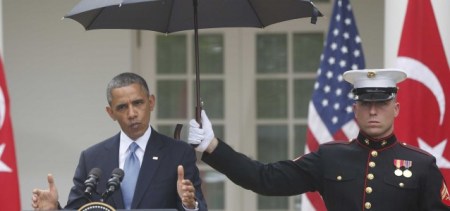
umbrellaman

US Secretary of State John F. Kerry “urges” Russia and Syria to ground their military aircraft after the destruction of a humanitarian aid convoy. Meanwhile, in the eastern part of that same theater, American and Iraq forces came under a sulfur mustard (commonly known as “mustard gas”) attack from the Islamic State (ISIS).

This is not the first use of sulfur mustard by ISIS and their predecessors.  They used them in IEDs against American forces during the Iraq War, and against Kurdish forces as late as last year.  Nevertheless, they clearly do not fear to use them against Americans at this time.  Whatever message we are conveying to ISIS, it does not include a proper respect for violating the laws of war when dealing with our soldiers.

Likewise, the Russians are not going to ground their aircraft just because we ask them to do.  In fact, the Russians are sending their only active aircraft carrier to join the war in Syria.  Defying an empty “urging” by our Secretary of State is just another way for Russia to show that they, and not we, are in control of the conflict.

Syrian jets, meanwhile, came close to bringing American forces under aerial attack for the first time since World War II.  Only good fortune kept American soldiers from being killed by Syrian bombs.  Fighters had to be scrambled to prevent additional sorties by the Syrian bombers.

In addition to Russia, Syria, and ISIS, Iran’s challenges against US Navy forces are up 50% from last year.  The Iranians are violating international law on a regular and consistent basis in challenging American fleet ships over access to international waters.

According to U.S. officials, the incidents all involved the IRGC, which operates a navy in parallel to Iran’s regular naval force, and whose leaders answer directly to Iranian Supreme Leader Ayatollah Ali Khamenei, Defense News reported.

Ten American sailors and their two boats were seized by IRGC naval forces in January of this year in violation of international law.

Subsequent to the sailors’ release, Iran portrayed their capture as a victory against the U.S., releasing the sailors after claiming that Washington apologized for the incident. Khamenei proclaimed that the naval forces who captured the sailors did “God’s deed” and issued medals to the commanders involved, while the IRGC announced plans to build a statue to commemorate the seizure.

In May, the deputy commander of the IRGC threatened to close the strategic Straits of Hormuz to the U.S. and its allies if they “threaten us,” adding: “Americans cannot make safe any part of the world.”

The U.S. Navy reported last month that in 2015, there were close to 300 encounters or “interactions” between American and Iranian naval vessels in the Persian Gulf. While most of the encounters were not considered to be harassment, the behavior of the Iranian navy was found to be less disciplined than that of other navies.

Weakness is provocative in a military conflict.  Refusing to embrace strong measures that would control these aggressive moves is exactly how American servicemen get killed.  Across the Middle East, our President’s predilection for weakness is putting American lives in grave [danger.]

Canny Trump already negotiating with Russia

September 9, 2016

Canny Trump already negotiating with Russia, Washington Times

As a former military officer, I learned decades ago that when taking command of new unit, an officer has to be a strict disciplinarian. Rules have to be enforced and your subordinates need to respect and understand you are a determined person who takes your oath of office seriously. In reality, these first few months are a negotiation with your troops. First impressions count, they set the stage for your entire command.

Anyone who has followed this 2016 election cycle should know that Donald Trump is always negotiating. When the GOP nominee was talking about preventing Muslims from coming into the country “until we can figure out what is going on,” he was laying out a hard-line negotiating position that could be softened down the road if need be.

When he talks of deporting 12 million illegal immigrants, he is doing the same thing. Now amid hints of possibly softening that stand, he is seen as moderating and appeals to a larger swath of the electorate. I believe Mr. Trump will do the right thing for America when it comes to immigration, but the point is a negotiator starts negotiating long before the media spotlight highlights the actual bargaining begins.

I think Mr. Trump is doing the same thing with Russian President Vladimir Putin. He is laying the groundwork for what he believes will be future success dealing with Moscow. Mr. Trump has spent time in Russia. He has done business with Russians. He understands how they think. He understands they respect strength, not weakness. He understands they also want to be respected. Mr. Trump’s comments complimenting Mr. Putin as a strong leader “in a different system” are stroking the Russian president’s ego at a time when it will do the most good. The liberal media have freaked out because Mr. Trump refuses to follow the Obama administration line on Russia, but all he is doing is speaking nicely while carrying a big stick.

Mr. Putin has spent a lot of energy recasting the United States as Russia’s No. 1 enemy. Think about it — now that Mr. Trump is very popular among the Russian population, which for the most part yearns for peace just as Americans do, it will be more difficult for the Kremlin to cast America as an existential threat to the Motherland when Mr. Trump is in the White House.

Russians have a 1,000-year-old paranoia regarding the West. They have a deep need to be respected and a desire for prestige. Mr. Trump is playing to those psychological needs. He’s not being naively gushing like George W. Bush, or incompetently appeasing the Russians as Hillary Clinton and President Obama have repeatedly done. He is not narcissistically demeaning Russia is a third-rate power that doesn’t make anything, as our president has insinuated. He’s not making fun of Mr. Putin’s slouch. He is treating the Russian president as a leader worthy of respect, while at the same time looking out for the best interests of the United States.

Mr. Trump has not said he will surrender Western principles or values in the face of future Russian aggression. On the contrary, he wants to rebuild the U.S. military “so that no one will dare mess with us.” That has to give the Kremlin and the oligarchs pause. In the long run, rebuilding our hard and soft power at home will do more to enhance our national security than making promises we can’t or won’t keep. Our government owes $20 trillion, for heaven’s sake.

Mr. Trump’s comments on NATO members paying their fair share for defense are also spot on. The truth is that we do not have an alliance if all the other countries rely on the American nuclear umbrella while attacking our companies for monopolistic practices and tax violations in their own courts. Oh, the hypocrisy!

Russia belongs at the geopolitical table as a great power. Its history demands that. Mr. Trump is certainly aware of this and, by publicly acknowledging the fact, has cleverly already put down the opening marker in his negotiations with Mr. Putin. Mr. Trump’s not being what Lenin once called a “useful idiot” for Russia. He’s simply working the art of the deal.

Syrian Kurds clash with Turkish forces

August 26, 2016

Syrian Kurds clash with Turkish forces, DEBKAfile, August 26, 2016

(Please see also, Biden Gushes to Erdoğan That American People ‘Stand in Awe’ of Turkish ‘Courage’ — DM)

Tanks_invading_Syria_B_24.8.16

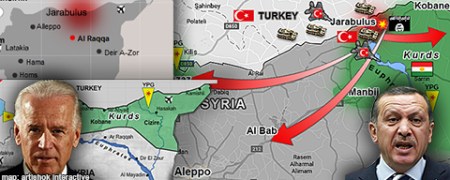
Just a few days ago, the Americans were speaking highly of Kurds as the sharpest sword in the coalition’s arsenal for vanquishing the jihadists. Since Biden’s deal with Erdogan on Wednesday, Washington can forget about the Syrian Kurdish PYG or the Iraqi Kurdish Pershmerga as spearheads of the campaigns to liberate Raqqa in Syria and Mosul in Iraq for ISIS.

*****************************

Syrian Kurdish militia commanders are flouting the ultimatum US Vice President Joe Biden handed them Wednesday, Aug. 24 to retreat to east of the Euphrates or else forfeit US support.  Instead, DEBKAfile’s military sources report, they decided to stand their ground and fight it out with the Turkish army.

The first clash occurred Thursday overnight, when Kurdish forces from Manbij attacked the positions taken by Turkish tanks in Jarablus, hours after Islamic State forces were put to flight from this border town.

The battles continued into Friday morning, Aug. 26.

The US ultimatum to the Kurds was the outcome of understandings US Vice President Joe Biden reached with Turkey’s President Tayyip Erdogan in Ankara on Wednesday, hours after the Turkish army crossed into northern Syria.

“Syrian Kurdish forces will lose US support if they don’t retreat to east bank of Euphrates,” the US vice president stated at a news conference.

Yet Thursday night, Turkish officials made an effort to counteract the impression that their military intervention in Syria was coordinated with the United States. They announce that Russian chief of staff Gen. Valery Gerasimov would be arriving in Ankara Friday for talks with his Turkish counterpart, Gen. Hulusi Akar.

The US commander of American troops in Iraq and Syria, Lt. Gen. Stephen Townsend, had meanwhile instructed all US Special Operations personnel to withdraw from Syrian-Kurdish YPG militia units, and return to the N. Syrian Rmeilan airfield near Hassaka. This is reported from DEBKAfile military and intelligence sources.

The US general also stopped artillery ammo supplies to the Kurdish militia and the transfer of field intelligence from the fighting in areas newly occupied by the Turkish army.

These measures were temporary, the US officers informed Salih Muslim, Syrian Kurdish Democratic Union Party (PYD) leader, and would be lifted after his YPG militia was instructed to pull back from northern Syria and head east of the Euphrates.

Only last week, the Syrian Kurdish militia was riding high, covered in praise for its feat in capturing Manbij with the assistance of US Special Forces.

Their comedown after the US decided to jump aboard the Turkish invasion would be complete, if they complied with the Biden ultimatum. They would forfeit all their hard-won gains from years of combat against the Islamic State, and have to forget their dream of a Kurdish state linking their enclaves along the 900km Syrian-Turkish border.

A stream of information and misinformation is meanwhile muddying the waters as the Kurds in Syria and Iraq absorb the shock of the American turn against them.

The Ministry of Foreign Affairs in Ankara said Thursday that US Secretary of State John Kerry had informed the Turkish Foreign Minister Mevlut Cavusoglu that the US-backed Syrian Kurdish militias had begun their retreat to the eastern bank of the Euphrates River.


ManbijKoteret480

US sources qualified this claim, confirming only that a ‘main element’ of the Kurds has retreated, but not the entire force. The Kurds were evidently in no hurry to take any marching orders either from Turkey or the United States.

A short Kurdish statement claimed that their forces had indeed withdrawn to the eastern bank of the Euphrates River, but DEBKAfile’s military sources military sources say that a large body of Kurdish fighters is still in place west of the river. Indeed our sources found Kurdish PYG officers adamant in their determination to stay put and take on the Turkish army.

After the Turkish invasion Wednesday, Kurdish leader Salih Muslim declared, “Turkey will be defeated in Syria along with the Islamic State.”

Kurdish units also took up positions on the roads leading to the US base at Rmeilan, ready enforce a blockade. A Kurdish food convoy due at the base Thursday did not arrive.

In Iraq, there is word of a Kurdish Peshmerga mutiny against US instructors at the bases where they are training for the offensive to recapture Mosul from the ISIS.

However, the events of this week around northern Syria have dealt a major setback to the US-led war on ISIS.

Just a few days ago, the Americans were speaking highly of Kurds as the sharpest sword in the coalition’s arsenal for vanquishing the jihadists. Since Biden’s deal with Erdogan on Wednesday, Washington can forget about the Syrian Kurdish PYG or the Iraqi Kurdish Pershmerga as spearheads of the campaigns to liberate Raqqa in Syria and Mosul in Iraq for ISIS.

What’s the Plan for Winning the War?

August 25, 2016

What’s the Plan for Winning the War?, Counter Jihad, August 25, 2016

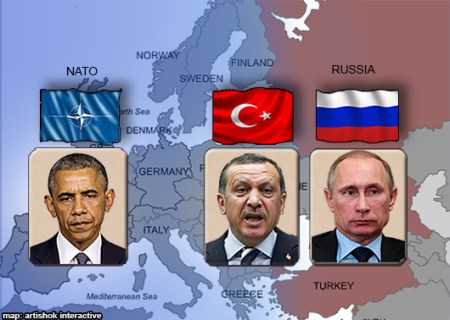
Who is even thinking about how to win the war?  Will the legacy of the Obama administration be a shattered NATO, a Turkey drawn into Russia’s orbit, an Iranian hegemony over the northern Middle East, and a resurgent Russia?  It certainly looks to be shaping up that way.  Russia is playing chess while the US is playing whack-a-mole.  The absence of a coherent governing strategy is glaring.

**********************

Michael Ledeen makes a clever observation:

Everyone’s talking about “ransom,” but it’s virtually impossible to find anyone who’s trying to figure out how to win the world war we’re facing.  The two keystones of the enemy alliance are Iran and Russia, and the Obama administration, as always, has no will to resist their sorties, whether the Russians’ menacing moves against Ukraine, or the Iranians’ moves against us.

The moves are on the chessboard, sometimes kinetic and sometimes psychological warfare.  Like a chess game, we are in the early stages in which maneuver establishes the array of forces that will govern the rest of the game.  Russia’s deployment of air and naval forces to Syria stole a march on the Obama administration.  Its swaying of Turkey, which last year was downing Russian aircraft, is stealing another.  Its deployment of bombers and advanced strike aircraft to Iran is another.  That last appears to be in a state of renegotiation, as Ledeen notes, but that too is probably for show.  The Iranians have too much to gain in terms of security for their nuclear program, at least until they’ve had time to build their own air force.

Iran is making strategic moves as well.  Ledeen notes the “Shi’ite Freedom Army,” a kind of Iranian Foreign Legion that intends to field five divisions of between twenty and twenty-five thousand men each.  Overall command will belong to Quds Force commander Qassem Suliemani, currently a major figure in the assault on Mosul, having recovered from his injury in Syria commanding Iranian-backed militia in the war there.  The fact of his freedom of movement is itself a Russian-Iranian demonstration that they will not be governed by international law:  Suliemani is under international travel bans for his assassination plot against world diplomats, but was received in Moscow and now travels freely throughout the northern Middle East.

Turkey, meanwhile, has been effectively cut off by Iran’s and Russia’s success in the opening game of this global chess match.  As late as the Ottoman Empire, the Turks looked south through Iran and Iraq to power bases as far away as Arabia.  Now the Ayatollahs are going to control a crescent of territory from Afghanistan’s borders to the Levant, leaving the Turks locked out.  One might have expected the Turks to respond by doubling their sense of connection to Europe and NATO.  Instead, the purge following the alleged coup attempt is cementing an Islamist control that leaves the Turks looking toward a world from which they are largely separated by the power of this new Russian-Iranian alliance.  The Turks seem to be drifting toward joining that alliance because being a part of that alliance will preserve their ties to the Islamic world.

For now, the Obama administration seems blind to the fact that these moves are closing off America’s position in the Middle East.  This is not a new policy.  Eli Lake reports that the Obama administration told the CIA to sever its ties to Iranian opposition groups in order to avoid giving aid to the Green revolution.  Their negotiation of last year’s disastrous “Iran deal” has led to Iran testing new ballistic missiles and receiving major arms shipments from Russia.  Yet while all these moves keep being made around them, the Obama administration proceeds as if this were still just an attempt to crush the Islamic State (ISIS).  The commander of the XVIIIth Airborne Corps has been given a task that amounts to helping the Iranians win.  Our incoherent policy has left us on both sides in Syria.  Our only real ally in the conflict, the Kurds, stand abandoned by America.

Who is even thinking about how to win the war?  Will the legacy of the Obama administration be a shattered NATO, a Turkey drawn into Russia’s orbit, an Iranian hegemony over the northern Middle East, and a resurgent Russia?  It certainly looks to be shaping up that way.  Russia is playing chess while the US is playing whack-a-mole.  The absence of a coherent governing strategy is glaring.

Anti-Israel Double Standards Enable Assad’s Brutality

August 23, 2016

Anti-Israel Double Standards Enable Assad’s Brutality, Investigative Project on Terrorism,  Noah Beck,August 23, 2016
1789

Syria’s civil war claimed 470,000 lives since it started in March 2011, the Syrian Centre for Policy Research announced in February. That’s an average of about 262 deaths per day and 7,860 per month. The carnage has continued unabated, so, applying the same death rate nearly 200 days after the February estimate, the death toll is over 520,000.

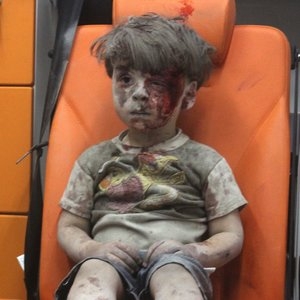
Such numbers are staggering, even by Middle East standards. However, the violence has become so routine that it only occasionally captures global attention, usually when a particularly poignant moment of human suffering is documented. The most recent example is Omran Daqneesh, a 5-year old Syrian boy who was filmed shell-shocked, bloody, and covered in dust after the airstrike bombing of his Aleppo apartment block.

The tragic image of Omran caused outrage around the world, as did the image of Aylan Kurdi, the drowned Syrian boy whose body washed up last September on a beach in Turkey. Yet Omran’s plight demonstrates that, nearly a year after the last child victim of Syrian horrors captured global sympathy, nothing has changed.

If anything, the violence in this multi-party proxy war seems to be getting worse. Since Aylan Kurdi’s drowning, Russia began blitz-bombing Syria in support of the Assad regime. The Syrian Observatory for Human Rights (SOHR) estimates that nine months of Russian airstrikes have killed 3,089 civilians – a toll that is greater, by some estimates, than the number of civilians killed by ISIS. By contrast, Syrian civilian deaths caused by U.S. airstrikes are probably in the hundreds (over roughly twice as much time, since U.S. airstrikes began in the summer of 2015).

But Syrian airstrikes are responsible for the bulk of civilian deaths in Syria. The Assad regime killed 109,347 civilians between March 2011 and July 2014 (88 percent of the total casualties at the time), according to estimates by the Syrian Network for Human Rights. That works out to about 91 civilian deaths per day. More recently, the SOHR documented 9,307 civilian deaths from 35,775 regime airstrikes over a 20-month period running from November 2014 through June 2016. Thus, roughly one innocent Syrian was killed every hour, during the 20 months that the SOHR documented civilian casualties caused by Russian and Syrian airstrikes.

Compare those figures to the number of innocent Palestinians killed by Israel from 2011 to 2014. According to Human Rights Watch (HRW), which has been accused of anti-Israel bias, 37 Palestinians were killed in 2011, 103 in 2012, 15 in 2013 and 1,500in 2014 – the year when Hamas fired rockets at Israel from highly populated Gazan areas. That’s a four-year total of 1,655. During roughly the same four-year period, the number of Syrian civilian deaths was about 76 times greater than the HRW total of Palestinian civilian casualties.

Yet the European Union singles out Israel for conflict-related consumer labels without any similar attempt to warn European consumers about goods or services whose consumption in any way helps the economies of countries responsible for the Syrian bloodshed, including Syria, Russia, and Iran. Human rights lawyer Arsen Ostrovsky has highlighted how none of those countries is targeted by those advocating a boycott of Israel out of a purported concern for human rights. Even more absurd, most of the results produced by a Google search for “academic boycott of Syria” or “academic boycott of Iran” concern academic boycotts of Israel. That asymmetry precisely captures the problem.

In addition to supporting the Assad regime in Syria and contributing to the violence there, Iran executes people for everything from drug offenses to being gay.

Indeed, the global outcry over Syrian suffering is embarrassingly weak when compared to reactions to Israel’s far less bloody conflict with the Palestinians. Imagine if Omran Daqneesh had been a Palestinian boy hurt by an Israeli airstrike on Gaza. College campus protests, the media, NGOs, and world bodies around the planet would be positively on fire. Israeli embassies would be attacked, French synagogues would be firebombed (eight were attacked in just one week during Israel’s 2014 war with Gaza), Jews around the world would be attacked, and condemnations would pour in from the EU, the United Nations, and the Obama administration. UN resolutions and emergency sessions would condemn the incident. International investigations would be demanded. Global blame would deluge Israel, regardless of whether Hamas, a terrorist organization, actually started the fighting or used human shields to maximize civilian deaths. Israel would be obsessively demonized despite any risky and unprecedented measures the Israeli military might have taken to minimize civilian casualties.

Moreover, when an occasional Syrian victim captures global attention, the protests are generally for some vague demand for “peace” in Syria, rather than blaming and demanding the punishment of Syria, Iran, and Russia, even though those regimes are clearly responsible for the slaughter. The starkly different reactions to Israel and Syria are even more shocking when it comes to the United Nations.

From its 2006 inception through August 2015, 62 United Nations Human Rights Council resolutions condemned Israel, compared to just 17 for Syria, five for Iran, and zero for Russia, according to the watchdog group UN Watch. The lopsided focus on Israel is equally appalling at the UN General Assembly, as UN Watch has highlighted. In each of the last four years, as the Syrian bloodbath claimed hundreds of thousands of lives, there were at least five times as many resolutions condemning Israel as those rebuking the rest of the world:

2012: 22 against Israel, 4 for the rest of the world

2013: 22 against Israel, 4 for the rest of the world

2014: 20 against Israel, 3 for the rest of the world

2015: 20 against Israel, 3 for the rest of the world

A corollary of the anti-Israel bias ensures that no Israeli victim will ever enjoy the kind of global sympathy expressed for Omran Daqneesh or Aylan Kurdi. When a Palestinian man enters the bedroom of a 13-year old girl and stabs her to death in her sleep,Obama says nothing even though she was a U.S. citizen and the world hardly notices. By contrast, imagine if the Israeli father of Hallel Yaffa Ariel had decided to take revenge by entering a nearby Palestinian home to stab a 13-year old Palestinian girl to death in her sleep. The global anger would be deafening.

Why do Israeli lives matter so much less? And why do student activists, the UN, the EU, the media, and the rest of the world focus so much more on alleged Palestinian civilian deaths than on Syrian civilian deaths? Doing so is woefully unjust to Syrians. It is also deeply unfair to Israel, which has endured terrorist attacks on its people throughout its existence as a state. It is the one country that, according to Col. Richard Kemp, former commander of British forces in Afghanistan, has done more to protect civilians during war than any other in the history of war.

The global obsession with condemning Israel not only defames a beleaguered democracy doing its best, it also enables the truly evil actors like the Assad regime and Hamas, by giving them a pass on some of the world’s worst crimes.
Krauthammer’s Take: Putin Ready to Move, “Sees Weakness in the White House”

August 13, 2016

Krauthammer’s Take: Putin Ready to Move, “Sees Weakness in the White House”, Fox News via YouTube, August 13, 2016

(Please see also, Europe’s armies are dysfunctional. –DM)

https://www.youtube.com/watch?v=3YhMv8qc8Ro

Israel’s let-down: Putin-Erdogan hook-up with Iran

August 9, 2016

Israel’s let-down: Putin-Erdogan hook-up with Iran, DEBKAfile, August 9, 2016

2 (1)

The talks between Presidents Vladimir Putin and Reccep Erdogen in St. Petersburg scheduled for Tuesday, Aug. 9, are causing trepidation among Israel’s policy-makers and military leaders. Their summit takes place on the sidelines of the G-20 summit, concluding nine months of hostility between the two capitals that was sparked by Turkish jets shooting down a Russian SU-24 warplane over the Syrian border on Nov. 24, 2015.

The feud was put to rest on July 17 – two days after Erdogan suppressed the attempted military coup against his rule. The Turkish ruler decided there and then to exploit the episode to expand his strength and use it not only for a massive settling of accounts with his critics, but also as a springboard for parlaying his reconciliation with Moscow for a strategic pact with Russia.

Israel, the worry is that while turning his back on the United States and NATO, Eerdogan will go all the way to bond with Russia to which Iran is also attached as a partner. Indeed, Erdogan has scheduled a trip to Tehran and a meeting with President Hassan Rouhani a few days after his talks with Putin.

The Turkish president’s latest moves look like spawning another new Middle East bloc that would consist of Turkey, Russia, Iran, Iraq, Syria and indirectly the Lebanese Hizballah terrorist group.

This prospect would upend Israel’s key policies for Turkey and Syria.

The Israeli détente with Ankara in recent months hinged on Turkey’s continuing to maintain its close military and intelligence ties with the United States and its integration in an anti-Iran Sunni alliance in partnership with Saudi Arabia, Egypt, the United Arab Emirates and Jordan.

But the Putin-Erdogan meeting Tuesday threatens to throw American, Israeli and moderate Arab rulers’ plans to the four winds. Turkey appears to have opted to line up with a Russian-Shiite front led by Tehran in preference to an anti-Iran Sunni alliance.

Therefore, the expanded military and intelligence cooperation which the Israeli-Turkish rapprochement was to have heralded will be low key at best for two reasons:

1. Israel will beware of sharing its military technology with Turkey lest it find its way to Iran. During the talks with Ankara for patching up their quarrel Israel was constantly on the lookout for indications that Turkey was prepared to break off its ties with Iran.

2. For the sake of keeping Iran and Hizballah away from its borders, Israel entered into arrangements with Russia, some of them never published, at the start of Moscow’s military intervention in Syria last September. Those arrangements included coordination of their air force operations over Syria.

Now, Israel finds itself suddenly up against a Russian-Turkish partnership aimed at strengthening Iranian domination of Syria – the exact reverse of the Netanyahu government’s objective in resolving its dispute with Ankara and forging deals with Moscow.

Coup-Weary Turkey: Directionless and Insecure

August 8, 2016

Coup-Weary Turkey: Directionless and Insecure, Gatestone InstituteBurak Bekdil, August 8, 2016

♦ The more Ankara feels distant to Washington, the more it will want to feel closer to Moscow.

♦ As Western leaders call on President Erdogan to respect civil liberties and democracy, Erdogan insists he will consider reinstating the death penalty: “The people have the opinion that these terrorists [coup-plotters] should be killed. Why should I keep them and feed them in prisons for years to come?”

Turkey once boasted of having NATO’s second biggest army, equipped with state-of-the-art weapons systems. That powerful army now lacks command: After the failed coup of July 15, more than 8,500 officers and soldiers, including 157 of the 358 generals and admirals in the Turkish military’s ranks, were discharged. The top commanders who were purged had made up 44% of the entire command structure. Prime Minister Binali Yildirim said that the military’s shipyards and weapons factories will be transferred to civilian authority; military high schools and war academies have been shut; military hospitals will be transferred to health ministry; and the gendarmerie, a key force in anti-terror operations, and the coast guard will be tied to the interior ministry.

Those changes leave behind an army in deep morale shock, with political divisions and polarization. Its ranks are suffering not just trauma but also humiliation. The Turks are lucky their country was not attacked by an enemy (and they are plentiful) at a time like this. Conventional war, however, is not the only threat to Turkey’s security. The Turkish army’s worst decline in modern history came at a time when it was fighting an asymmetrical war against Kurdish insurgents inside and outside of Turkey and, as part of a U.S.-led international campaign, the Islamic State (ISIS) in neighboring Syria.

The attempted coup not only quickly discredited the Turkish military but also left the country once again directionless in foreign policy. President Recep Tayyip Erdogan has been slamming his NATO ally, the United States, almost daily. His government big guns have been implying an American hand behind the failed coup by a faction of officers they claim are linked to a U.S.-based Muslim cleric, Fethullah Gulen, once Erdogan’s best political ally. “The putschist [Gulen] is already in your country, you are looking after him. This is a known fact,” Erdogan said, addressing Washington. “You can never deceive my people. My people know who is involved in this plot, and who is the mastermind.”

The White House immediately denied Erdogan’s claim. Deputy Press Secretary Eric Schultz said the U.S. was one of the first countries to condemn the failed coup, and noted that a successful one would have put American troops serving in Turkey at risk. “It is entirely false. There is no evidence of that at all,” Schultz said. “We feel that talk and speculation along those lines is not particularly constructive.” The failed coup has become a Turkish-American dispute — with a military dimension, too.

Erdogan also criticized U.S. General Joseph Votel, who voiced concerns over “the long-term impact” of the coup on the Pentagon’s relations with the Turkish military. According to Erdogan, Votel’s remarks were evidence that the U.S. military was siding with the coup plotters. The Pentagon’s press secretary, Peter Cook, flatly denied that claim: “Any suggestion anyone in the department supported the coup in any way would be absurd.”

Erdogan probably wants to play the tough guy and is slamming Washington day after day not just to look pretty to millions of anti-American Turks but also to pressure Washington in Turkey’s quest to extradite Gulen, presently the biggest snag between the two allies.

But there is another dimension to Erdogan’s ire: He wants to mend fences with Moscow.

Turkey’s relations with Russia were frozen after Nov. 24, when Turkey, citing a brief violation of its airspace along Turkey’s border with Syria, shot down a Russian military aircraft. Russia’s President Vladimir Putting ordered punishing economic sanctions, imposed a travel ban on Russian tourists visiting Turkey and suspended all government-to-government relations. Unable to ignore the damage, a repentant Erdogan conveyed regrets to Putin; the regrets were accepted and the two leaders are scheduled to meet on August 9, when the Turks hope that relations with Russia will be entirely normalized.

Normalization, unfortunately, will not come at the price of Turkish “regrets” alone. For full normalization, Turkey will have to digest the Russian-Iranian-Syrian line in Syria’s civil war — a pact which Turkey has loudly detested ever since civil war erupted in Syria in 2011. This will be another foreign policy failure for Erdogan and an embarrassing U-turn. But the more Ankara feels distant to Washington, the more it will want to feel closer to Moscow.

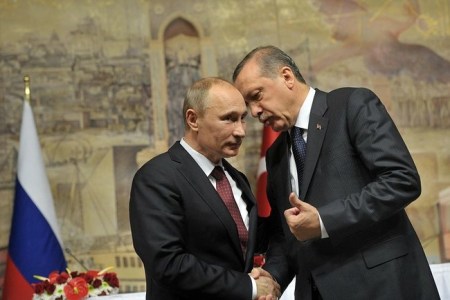
1375Turkish President Recep Tayyip Erdogan is attempting to repair badly damaged relations with Russia, even as he slams his NATO ally, the United States, almost daily, and accuses the U.S. military of supporting the coup attempt against him. Pictured: Russian President Vladimir Putin (left) with Erdogan (then Prime Minister), meeting in Istanbul on December 3, 2012. (Image source: kremlin.ru)

Meanwhile, after the coup attempt, Turkey’s troubled relations with the European Union turned even more troubled. European Commission head Jean-Claude Juncker said that the EU’s deal with Turkey on halting the flow of migrants toward the bloc may collapse. “The risk is big. The success so far of the pact is fragile. President Erdogan has already hinted several times that he wants to scrap it,” Juncker said. It is not just the migrant deal that may entirely suspend Turkey as a candidate country for the EU.

As Western leaders call on Erdogan to respect civil liberties and democracy, Erdogan insists he will consider reinstating the death penalty. “The people have the opinion that these terrorists [coup-plotters] should be killed,” Erdogan said in interview with CNN. “Why should I keep them and feed them in prisons for years to come? That’s what the people say … as the president, I will approve any decision to come out of the parliament.”

Such a move would kill Turkey’s accession process entirely. Federica Mogherini, EU’s foreign policy chief, warned that if Turkey reintroduces the death penalty, it will not be joining the European Union. “Let me be very clear on one thing,” she said; “… No country can become an EU member state if it introduces [the] death penalty.”

The attempted coup not only destabilized NATO’s second largest army and exposed it to the risk of serious operational vulnerabilities; it also left Turkey at risk of engaging in potentially dangerous liaisons with playmates of different kind — Russia and Iran & Co. — at least for now.

Right Angle: Spin Cycle

August 4, 2016

Right Angle: Spin Cycle, Bill Whittle Channel via YouTube, August 4, 2016

Blurb beneath the video:

DNC email leaks a problem? It must have been the Russians! Trump benefits! TRUMP MUST BE A RUSSIAN SPY!!

Right Angle: Trumpskygate!

August 3, 2016

Right Angle: Trumpskygate! Bill Whittle Channel via YouTube, August 2, 2016