Archive for the ‘Russia’ category

The day after the deal

August 9, 2015

The day after the deal, Israel Hayom, Prof. Eyal Zisser, August 9, 2015

(Please see also, Russia and US woo Saudis to help save Assad – albeit putting Israel and Jordan in danger from S. Syria.– DM)

[Soleimani] wanted Russia and Iran to agree on the division of the Middle East in a way that would serve their clients in the region (among them, Assad) and check their joint enemies (the Islamic State). After figuring that out, they probably moved on to the next topic: how to marginalize America in the region. As a means to both ends, Russia will continue to serve as Assad’s protector (despite his many crimes), all the while providing Iran with international backing. But above all it will send arms to Iran, to the Syrian regime, and if needed, to Hezbollah.

***********************

Over the weekend it transpired that Maj. Gen. Ghasem Soleimani, the commander of Iran’s Quds Force, had visited Moscow two weeks ago and met with President Vladimir Putin. The Quds Force, in case you forgot, is in charge of the Iranian Revolutionary Guards’ clandestine operations (including terrorism). The Quds Force is responsible for providing aid to Hezbollah and Hamas as well as to Syrian President Bashar Assad and the Houthi rebels in Yemen. In light of his direct involvement in terrorism, the international community imposed sanctions on Soleimani, including travel restrictions.

Only last week, at a hearing on Capitol Hill, U.S. Secretary of State John Kerry vowed that the U.S. will make sure the sanctions on Soleimani would stay in effect and that the Obama administration would counter Iran’s efforts to destabilize the Middle East. But no one takes Kerry seriously anymore. While Kerry continues to engage Iran’s unimportant Foreign Minister Mohammad Javad Zarif, the real wheeling and dealing is actually in Moscow.

Soleimani did not go to Moscow because he had tickets to the Bolshoi. Rather, he arrived because he wanted to discuss “the day after the nuclear deal” with Putin. Namely, he wanted Russia and Iran to agree on the division of the Middle East in a way that would serve their clients in the region (among them, Assad) and check their joint enemies (the Islamic State). After figuring that out, they probably moved on to the next topic: how to marginalize America in the region. As a means to both ends, Russia will continue to serve as Assad’s protector (despite his many crimes), all the while providing Iran with international backing. But above all it will send arms to Iran, to the Syrian regime, and if needed, to Hezbollah.

The Russians, unlike the Iranians, don’t consider Israel to be an enemy state. But as a famous Russian official once said: “When you chop wood, chips fly.” Israel has become the latest chip — the collateral damage. Soleimani’s visit is just the tip of iceberg. It shed light on the not-so-secret deals that are being negotiated in the wake of the “Vienna nuclear agreement.” Europe, as usual, is focused on profit and its corporate executives are already traveling in droves to Tehran to ink deals. There are also political deals Iran wants to secure, which are as important for Tehran. Their price, however, will be measured in blood rather than in euros or dollars.

No one in the Middle East, it seems, is keen on parsing each and every provision in the nuclear deal. Nor is there an attempt to see whether, in the grand scheme of things, it is will have been a worthwhile endeavor some 10 or 15 years from now, when its key elements expire. In this region, what counts is the way this agreement is perceived here and now — and what really matters to people is the way it is portrayed in the media. Under that criteria, Iran is the victor and America is the vanquished, because it caved to Iran. The deal, according to how the media has portrayed it, is a crushing political blow to Israel and the moderate Arab states, led by Saudi Arabia.

This knockout victory will likely produce a new Iranian-American partnership. At the very least, the two nations will mend fences. This will alienate many of Washington’s clients, who will have to look elsewhere for a more reliable ally. Egypt and the Saudis have already realized this and turned to Russia for aid and arms, figuring it would be more trustworthy than the “staff of this broken reed” (Isaiah 36:6).

Saudi Arabia is reportedly sending feelers to see if there is a deal to be had with Russia and Iran. Under the terms of the proposed deal, Saudi Arabia would withhold aid to the Syrian rebels if Iran ends its rogue presence in the state. Such a deal would secure Assad a victory over the insurgents, or a least ensure his regime survives.

The ongoing developments have caused panic, but not over the rising clout of Iran and Russia. The White House, it seems, is fretting over the possibility that Congress may vote against the Iran deal and further tarnish Obama’s image.

Russia and US woo Saudis to help save Assad – albeit putting Israel and Jordan in danger from S. Syria

August 9, 2015

Russia and US woo Saudis to help save Assad – albeit putting Israel and Jordan in danger from S. Syria, DEBKAfile, August 9, 2015

Lavrov_Kerry_and_al-Jubeir-_Doha_3.8.15Lavrov, Kerry, Al-Jubeir at Doha

[N]either Israel nor Jordan has been co-opted to this big power initiative, as though they are not concerned. However, both have a big stake in Saudi Arabia’s next decisions. If Riyadh is won over by US-Russian blandishments and goes back on its decision to boycott Assad, the Saudi-Israeli-Jordanian effort to support Syrian rebel control of southern Syria will fall apart. This will open up both countries to new perils on their  northern borders.

************************

Building on the nuclear accord signed in Vienna last month, the Obama administration has been in close communion with Moscow and Tehran on regional moves to save the Assad regime, as the key to their next regional policies, including a united front against the Islamic State.. Saudi Arabia and its Gulf partners are being assiduously wooed to join the new alignment being set up for this purpose. The live wire in getting them all together is Omani Foreign Minister Khalid bin Mohamed Al-Attiyah, the secret broker who brought Iran and the United States to the negotiating table for a nuclear accord. This was first reported in the last DEBKA Weekly.

Wednesday, Aug. 7, Obama threw out his first hint on this development: “The window has opened a crack for us to get a political resolution in Syria, partly because both Russia and Iran, I think, recognize that the trend lines are not good for Assad,” he said. “Neither of those patrons are particularly sentimental; they don’t seem concerned about the humanitarian disaster that’s been wrought by Assad and this conflict over the last several years, but they are concerned about the potential collapse of the Syrian state. And that means, I think, the prospect of more serious discussions than we’ve had in the past.”

The US president then affirmed more strongly in a CNN interview Sunday, Aug. 9:  “Is there the possibility that having begun conversations around this narrow issue [the nuclear accord with Iran] that you start getting some broader discussions about Syria, for example, and the ability of all the parties involved to try to arrive at a political transition that keeps the country intact and does not further fuel the growth of ISIL and other terrorist organizations? I think that’s possible,” Obama said. “But I don’t think it happens immediately.”

The administration and its prospective partners are united by the will to destroy ISIS – in its Syrian stronghold, for starters – but are divided on much else, DEBKA file reports. And so the process is moving forward in careful steps.

Their initial focus is on Syria, the bloody battleground which in less than five years has left at least 300,000 dead and more than 10 million people homeless.

The plan the group started out with in the last ten days was a swap as simple as it was ruthless: Saudi Arabia and the United Arab Emirates would slow their assistance to Syrian rebel groups, against whom President Bashar Assad’s army and allies would hold their fire; Iran, for its part, was to start withdrawing its support from the Yemeni Houthis insurgents.

The informal truce in Syria would be the stage for the Assad regime and rebel groups to start discussing a new government with room for opposition parties. The Islamists of the Islamic State and Al Qaeda’s Nusra Front would not be invited.

In Yemen, Tehran would cut back on the arms and intelligence which have enabled the Houthi insurgents to stand up to the combined forces of Saudi Arabia, the UAE and Egypt. The pro-Western Yemeni President Abd Rabo Mansour Hadi would be restored to his palace in Sanaa and invite the insurgent leader, Abdu Malik Al-Houthi, to discuss his partnership in a new government.

This deal was tantamount to a joint US-Russian guarantee of Bashar Assad survival in power in return for a Tehran-Riyadh compact for Hadi’s reinstatement in Sanaa.

These arrangements were debated back and forth in exchanges, some semi-secret, among the leading actors for most of July. The visit to Riyadh of the Syrian intelligence chief Maj. Gen. Ali Mamlouk was set up by Moscow as a major push forward.

The plan was for the entire enterprise to be brought out in the open and sealed in Doha, Qatar, Tuesday, Aug. 3 at a conference attended by US Secretary of State John Kerry, Russian Foreign Minister Sergey Lavrov, Saudi Foreign Minister Adel Al-Jubeir and other top Gulf diplomats.

Iranian Foreign Minister Mohammed Javad Zarif was not there. But he put a strong oar into the proceedings by calling in at Muscat, Oman the day before the conference and subsequently on Friday Aug. 7. Assad also kept his hand in by sending his foreign minister Walid Moallem to Tehran and Muscat last week.

But then, at Doha, just as the package was ready to unveil, the Saudi foreign minister pulled away and blew it up with two provisions: a) Riyadh would not countenance Bashar Assad being allowed to stay in office, and: b) Saudi Arabia would not do business with any representative of the Assad regime.

This put a large spoke in the main wheel of the initiative and also scuttled some of the secondary plans depending on it.

But by then, a lot was happening in the Yemeni and Syrian war arenas:

1. Saudi and UAE armored forces had landed in Aden and were closing in on the Yemeni capital, Sanaa. The Houthi rebels, trained and armed by Iran, were forced to retreat without negotiations on their future role in government.

2. Syrian rebel leaders, sensing the approaching betrayal, sent a secret delegation to Tehran to discuss terms for opening negotiations with Assad. They too were left at sea about the deals in play among Washington, Moscow, Tehran and Riyadh over their future.

Saturday, Aug.8, the Russians, egged on by the Americans, set about winning Riyadh into the fold, Foreign Minister Al-Jubeir was invited to pay a visit to Moscow Tuesday, Aug. 11, for talks about the Syrian conflict and the war on the Islamic State.

Refusing to accept that the new initiative had been grounded in Doha, Moscow presented the visit as continuing the ongoing dialogue on the issues raised at that encounter.

DEBKAfile’s military and intelligence sources note that neither Israel nor Jordan has been co-opted to this big power initiative, as though they are not concerned. However, both have a big stake in Saudi Arabia’s next decisions. If Riyadh is won over by US-Russian blandishments and goes back on its decision to boycott Assad, the Saudi-Israeli-Jordanian effort to support Syrian rebel control of southern Syria will fall apart. This will open up both countries to new perils on their  northern borders.

Iran confirms trip by Quds Force Commander to Moscow to discuss arms shipments

August 8, 2015

Iran confirms trip by Quds Force Commander to Moscow to discuss arms shipments, Fox News, , August 8, 2015

Iranian officials confirmed Friday that General Qassem Soleimani, the heavily sanctioned Revolutionary Guard Quds Force commander, traveled to Russia last month and was conducting weapons deals, including discussion of the S-300 missile system, according to Reuters.

The U.S. ambassador to the United Nations, Samantha Power, said Friday the U.S. is very concerned about the development.

“Qassem Soleimani is subject to a UN travel ban and this travel ban requires all states to prohibit Qassem Soleimani from traveling to their nation and the only exception to that is if the Iran sanctions committee grants an exemption,” she said at UN headquarters in New York.

The White House did not specifically blame the Russians for hosting the Iranian general.

“I can’t confirm these specific reports but it is an indication of our ongoing concerns with Iran and their behavior,” White House press secretary Josh Earnest told reporters Friday at the daily press briefing.

Mike Rogers, former chairman of the United States House Permanent Select Committee on Intelligence, weighed in late Friday afternoon.

 “We should not underestimate what this means to our national security,” he said. “A leading general in Iran just told the world that the United States of America is irrelevant and Russia welcomed him with open arms. Not only do Russia and Iran not fear us, they do not respect us. And that, is dangerous.”

According to two separate Western intelligence sources, Soleimani arrived in Moscow on Iran Air flight 5130 from Tehran on July 24, ten days after the nuclear agreement between Iran and six world powers was announced that included a provision to lift the arms embargo on Iran.

Five days later, Secretary of State John Kerry testified about the Iran nuclear deal before the Senate Armed Services Committee, assuring Congress pressure would remain on Iran’s shadowy general.

“Under the United States’ initiative, Qassem Soleimani will never be relieved of any sanctions,” Kerry told the Senate Armed Services Committee.

In Moscow, Soleimani met with President Vladimir Putin and Russia’s defense minister.

In June, Russia announced it would send S-300 anti-aircraft missiles to Iran by next year, according to a top Kremlin official.

Soleimani was photographed in Iraq recently on the front lines with Iranian-backed Shia militias battling ISIS, also in defiance of the travel ban.

Soleimani is blamed for the deaths of 500 Americans in Iraq. He also is suspected of orchestrating the failed assassination attempt on the Saudi Arabian ambassador to the United States at a popular Georgetown restaurant in Washington.

Soleimani’s Moscow visit elicited a reference during the Republican debate Thursday night.

“He’s directly responsible for the murder of over 500 American servicemen in Iraq and part of this Iranian deal was lifting international sanctions on Gen. Soleimani — the day Gen. Soleimani flew back from Moscow to Iran was the day we believe Russia used cyber warfare against the joint chiefs,” said Sen. Ted Cruz, R-Texas.

Iran’s acknowledgement of Soleimani’s visit to Moscow indicates a possible split in Iran’s leadership: those loyal to the military are unconcerned about blazingly defying sanctions even before the nuclear deal is sealed.

Iran orders from China 150 J-10 fighter jets that incorporate Israeli technology

July 30, 2015

Iran orders from China 150 J-10 fighter jets that incorporate Israeli technology, DEBKAfile, July 30, 2015

J-10Chinese Chengdu J-10 for Iranian air force

The scale of Iran’s multibillion acquisitions from China and Russia – 550 warplanes in all so far – indicates that Tehran’s top spending priority upon receipt of the funds released by the removal of sanctions, is to be a spanking new air force.

**********************

Iran is about to conclude a transaction with China for the purchase of the Chengdu J-10 multirole jet fighter, known in the West as the Vigorous Dragon, according to an exclusive report from DEBKAfile’s military and intelligence sources. Beijing has agreed to sell Tehran 150 of these sophisticated jets.

While the Chinese J-10 is comparable to the US F-16, our sources report that it is virtually a replica of the Lavi, the super-fighter developed by Israel’s aerospace industry in the second half of the 80s. Israel sold China the technology, after Washington insisted on Its discontinuing the Lavi’s production. The US also objected to the sale of the Lavi’s avionics, claiming that it contained some American components.

The Chinese plane comes in two versions – the multirole single-seat J-10A and the two-seat J-10B, which serves for training, ground assaults and electronic warfare.

Iran has additionally weighing the purchase in Moscow of 250 highly-advanced Sukhoi-Su-30MK1 twinjet multirole air superiority fighters, known in the West as Flanker-H.

On Wednesday, July 29, an Indian Air Force Su-30MK1 took part for the first time in a British air maneuver, Rainbow, where it dueled with the European Typhoon fighter.

The sophisticated Flanker has been found to have a major shortcoming. To carry eight tons of ordnance, it must use both of its AL-31FP engines, and the transition from one to two – and the reverse – often causes engine failure.

The Indian Air Force has reported three such malfunctions in a month, as well another shortcoming: The time needed for making the aircraft serviceable is too long. As a result, only half of the Indian fleet can be airborne at one time.

In a confrontation, the Iranian Air Force may find that, because of these drawbacks, the Chinese Su-30MK1 is outmatched by its American and European counterparts in the service of the Israeli, Saudi and UAE air forces.

On July 22, DEBKAfile revealed that Moscow and Tehran had concluded a giant transaction for the acquisition of a fleet of 100 IL78 MK1 (Midas) in-flight refueling planes for extending the range of its warplanes up to 7,300 km and able to refuel 6-8 planes at once.

DEBKAfile: The scale of Iran’s multibillion acquisitions from China and Russia – 550 warplanes in all so far – indicates that Tehran’s top spending priority upon receipt of the funds released by the removal of sanctions, is to be a spanking new air force.

Iran buys 100 Russian refueling aircraft for its air force to reach any point in the Mid East

July 22, 2015

Iran buys 100 Russian refueling aircraft for its air force to reach any point in the Mid East, DEBKAfile, July 22, 2015

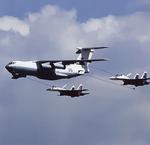
IL78_MKI-IRAN_B_7.2015Russian IL78 MKI tanker aircraft sold to Iran

The Secretary of State can expect some really hard questions during his trip on exactly how the Vienna accord makes the region safer, when Iran’s first act after signing is to arm itself with a fleet of Russian in-flight fuel tankers to expand and strengthen its range and power for aerial aggression.

*********************

In defiance of the international arms embargo, Iran last week placed an order with Moscow for a huge fleet of 100 Russian IL78 MKI tanker aircraft (NATO: Midas) for refueling its air force in mid-flight, thereby extending its range to 7,300 km. This is reported exclusively by DEBKAfile from its military and intelligence sources. The transaction runs contrary to the terms of the nuclear accord the six world powers and Iran signed in Vienna earlier this month.

These tanker planes can simultaneously refuel six to eight warplanes. Their acquisition brings Israel, 1.200km away – as well the rest of the Middle East – within easy range of Iranian aerial bombardment. It also puts Iran’s air force ahead of Israel’s in terms of the quantity and range of its refueling capacity.

Whereas opponents of the Vienna deal have warned that Tehran will spend the billions of dollars released by sanctions relief as a bonanza for fueling its campaigns of terror in the region, it turns out that Iran’s first post-accord purchase is a heavy investment in the rearmament and upgrade of its armed forces’ aggressive capabilities.

The Israeli air force is familiar with the Russian airborne tanker from its use by the Indian air force with which Israel has close ties of cooperation. Its military engineers have also upgraded the Russian fuel tankers in service with the Uzbekistan air force.

Tuesday, July 21, DEBKAfile uncovered some of the tactics and escape clauses Iran has had built into its nuclear accord with the world powers for circumventing its provisions and commitments. The purchase of Russian refueling craft is a concrete example of this kind of evasion. Because the accord confirms the arms embargo in force until 2020, both Moscow and Tehran can maintain that the Russian aircraft industry will not be able to produce 100 new planes before the five years are up, and so the transaction is not a violation.

The huge Iranian-Russian military transaction therefore stands as the first palpable test of the Vienna accord, depending on whether US President Barack Obama or his Secretary of State John Kerry decides to make an issue of it. If they just let it go, it will set a precedent for the arms embargo clause of the nuclear accord to start unraveling.

Also Tuesday, Kerry gave an interview to the Al Arabia TV to prepare the way for his mission to the Gulf region on Aug. 3, which is to ease its rulers’ extreme unease over the ramifications of the nuclear accord. He asserted strongly to the interviewer: “I am not going to go through in great detail all the ways in which this agreement, in fact, makes the Gulf States and the region safer.”

The Secretary of State can expect some really hard questions during his trip on exactly how the Vienna accord makes the region safer, when Iran’s first act after signing is to arm itself with a fleet of Russian in-flight fuel tankers to expand and strengthen its range and power for aerial aggression.

Still too eager for a deal

July 12, 2015

Still too eager for a deal, Israel Hayom, Prof. Abraham Ben-Zvi, July 12,2015

(According to an article at the Washington Post, a “deal” is expected today and will be announced tomorrow. — DM)

Russia strengthening its position as an ally and a main weapons supplier to Iran worries the U.S. The 44th president is steadfast on reaching a deal, and even the current dispute won’t prevent him from achieving his dream, even at the price of laying the groundwork for an extremist regional power that would attempt to threaten its strategic environs. There is nothing left to do but hope that the U.S. Senate, which will have 60 days to scrutinize the agreement after it is signed, will meet the challenge it is faced with.

******************

The fact that the latest deadline for a final nuclear deal between Iran and the world powers is behind us, without smoke billowing over the negotiating room in Vienna, is astonishing. After all, there are no signs indicating that Washington’s eagerness for a successful end to the talks has weakened. In fact, it is the opposite. In recent months, it has become clearer that U.S. President Barack Obama has made a deal with Iran a main goal of his legacy. In his view, a deal with Iran will obfuscate all his failures in the Middle East and herald a new regional agenda, with the new partner from Tehran at its center.

Obama seems steadfast in his belief that a conciliatory, compensatory policy based on a range of trust-building economic steps, will quickly set the regime of ayatollahs on a moderate, pragmatic path. The carrot of economic investment and the cancelation of the rule of sanctions will lay the cornerstone for a strong diplomatic and strategic partnership between Washington and Tehran, central to which will be the Iranian regime’s willingness to take on a key role in containing the Islamic State group. To bring that vision to fruition, the Obama administration is charging ahead toward a final nuclear deal at almost any price, while shutting its eyes and continuing to put the agreement together, the ongoing terrorist activity and widespread subversion emanating from the Iranian capital and spreading out over the entire area.

It’s not only that no link whatsoever between nuclear weapons and conventional and semi-conventional weapons exists in the almost final version of the “Vienna Treaty,” but also that the nuclear core of the nascent deal is spotty and full of holes that will give the Iranian regime a golden opportunity to surge ahead toward a nuclear bomb a decade from now, when all oversight of the regime comes to an end.

In light of that, the fact that the official signing ceremony did not take place on July 9 as expected makes one wonder. The explanation, which is only tangentially related to the nuclear issue, does not at all indicate that the American superpower is coming to its senses at last, but is anchored in the web of U.S.-Russian relations. The last pitfall on the way to a deal is basically about Obama’s relations with Russian President Vladimir Putin, which center on the Kremlin’s ongoing military activity in the eastern Ukraine and the economic sanctions the West applied to Russia in response. Given this highly charged relationship, the White House has no interest in any step that could even slightly improve Russia’s grim economic situation. This is the connecting thread between the Russian-American axis and the current field of negotiations with Iran.

Russia, which because of the sanctions in place against it desperately needs foreign currency, wants a fast entry into the Iranian weapons market. So, together with China, it is lending its fervent support to Iran’s demands that the deal also lift the embargo against supplying it with conventional weapons, which the U.N. Security Council decreed in 2006. Especially since a deal for Russia to sell Iran S-300 surface-to-air missiles by 2007 has been frozen since 2010. Thus, Russia’s growing economic distress joins the rest of Putin’s geostrategic considerations and is creating an aggressive Russian position in favor of a quick removal of military sanctions from Iran, which in turn encourages Iranian President Hassan Rouhani and Iranian Foreign Minister Javad Zarif to dig in their heels.

Russia strengthening its position as an ally and a main weapons supplier to Iran worries the U.S. The 44th president is steadfast on reaching a deal, and even the current dispute won’t prevent him from achieving his dream, even at the price of laying the groundwork for an extremist regional power that would attempt to threaten its strategic environs. There is nothing left to do but hope that the U.S. Senate, which will have 60 days to scrutinize the agreement after it is signed, will meet the challenge it is faced with.

In Russia, Country Leaves You.

July 6, 2015

Jews Are Fleeing Russia Because Of Putin

By Roman Super and Claire Bigg July 03, 2015 Via Radio Free Europe


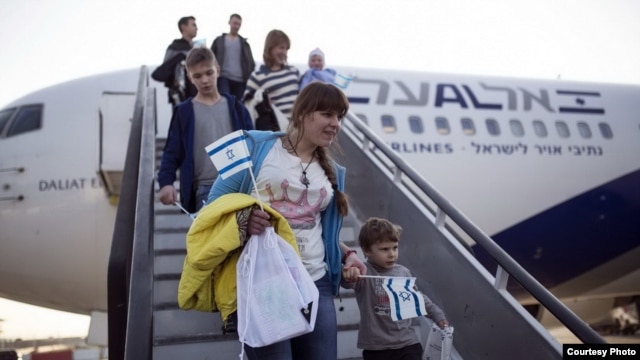
Nearly 5,000 Russians migrated to Israel in 2014 [Source: Courtesy Photo]

(Still, a lot of folks wonder why Israel builds all those settlements. – LS)

Just a year ago, Russian journalist Vladimir Yakovlev was one of Moscow’s most influential media figures.

Today, he lives a quiet life in Tel Aviv and has swapped his Russian passport for an Israeli one.

Yakovlev, the founder of the respected Kommersant publishing house and the Snob magazine, belongs to a new wave of disillusioned Russian Jews deserting their country for the relative stability of Israel.

“The big problem with Russia, and the main reason why I left, is the fact that our value system was destroyed,” he says. “Life in Russia has turned into Russian roulette. Every morning you turn the roulette wheel, you never know what is going to happen to you.”

Spooked by Russia’s actions in Ukraine and by the increasingly stringent punishments for anyone deemed critical of the Kremlin, Russians of Jewish descent have been fleeing in droves over the past 18 months.

Surge From Eastern Europe

According to Israeli authorities, as many as 4,685 Russian citizens relocated to Israel in 2014 — more than double than in any of the previous 16 years.

And the trend seems to be accelerating.

The nongovernmental Jewish Agency for Israel has released figures showing a 40-percent surge in immigration to the country between January and March of this year, compared to the same period in 2014.

The study suggests that while the majority of immigrants still come from Western Europe, Russians and Ukrainians are responsible for this increase. The number of Jews migrating from Western Europe has remained largely the same.

Yakovlev, however, doesn’t consider himself a simple immigrant. He is, in his own words, a refugee.

“People usually emigrate due to domestic circumstances,” he says. “People are now leaving because they are scared to stay where they would like to live. They are running from Russia.”

Zeyev Khanin, an official at Israel’s Immigrant Absorption Ministry, says the average Russian immigrant has changed dramatically since the last mass exodus of Jews from Russia ebbed in the late 1990s.

He says newcomers from Russia are significantly younger, more educated, and, as a rule, hail from Moscow or St. Petersburg.

“The average education level is on the rise and the number of people with degrees in humanities has increased massively,” he tells RFE/RL. “Today’s repatriates are mostly the creative intelligentsia.”

Mikhail Kaluzhsky was among the 4,685 Russians who moved to Israel last year.

A journalist and playwright from Moscow, he is typical of the new wave of Russian immigrants described by Khanin.

Kaluzhsky says his decision to leave Russia is “directly linked to politics.”

In January 2014, he traveled to Ukraine to witness the Maidan pro-democracy protests that toppled Russia-friendly President Viktor Yanukovych.

He says the unwavering determination of Maidan protesters left a deep impression on him, together with an uncomfortable realization that Russian antigovernment activists lag far behind their Ukrainian counterparts.

“I understood that our protests were worthless,” he says. “After the Bolotnaya protests [in Moscow in 2012] in our country, demonstrators went to the restaurant. Activists on Maidan did not go anywhere, they stayed until victory.”

Then, Kaluzhsky lost his job with the Sakharov human rights organization as a result of Russia’s new “foreign agent” law.

The controversial law, signed by Russian President Vladimir Putin in 2012, forces NGOs that receive foreign funding and are deemed to carry out political activities to register as “foreign agents.”

“The center’s financial situation deteriorated as soon as talk about foreign agents started in Russia,” says Kaluzhsky. “Western foundations said they could no longer fund initiatives that may be shut down tomorrow.”

In fall 2014, the Sakharov Center was forced to scrap its theater projects, to which Kaluzhsky had actively contributed.

Crimea Seizure

Russia’s annexation of Crimea from Ukraine was the last straw.

“After Crimea, our family decided to distance itself from all of this, most of all from the government,” he says.​

The Kaluzhskys now live in the outskirts of Tel Aviv. Their son attends a local Jewish pre-school and already speaks good Hebrew.

They have sold all their belonging in Russia and do not plan to return.

Vladimir Yakovlev, too, sees his future in Israel.

He and his wife have settled in downtown Tel Aviv, in a bright flat with a balcony full of flowers.

Most of their friends are other Russian intellectuals, and many of these friendships date back from their life in Moscow.

Yakovlev says Israel offers the best of both worlds — a sunny, friendly climate and the same circle of liberal, educated Muscovites that surrounded him in Russia.

“My group of friends here is almost the same as I had in Moscow,” he says. “We live in the same house as friends from Moscow, and I keep meeting people in the streets whom I regularly spent time with in Moscow.”

“No one,” he adds, “should be forced to spend their life dealing with this Russian nonsense.”

Poking the Bear

June 26, 2015

Pentagon accuses Russia of ‘playing with fire’ over nuclear threats towards Nato

By Doug Bolton Friday 26 June 2015 Via The Independent


The US Deputy Secretary of Defence said that Russia’s attempts to intimidate Nato countries had not worked. [Photo Credit: Unknown]

(‘Violent statements and threats cannot provide a solution to the problem. They can only exacerbate feeling and make a clash of forces inevitable.’ – LS)

A senior Pentagon official has warned that Russia is “playing with fire” by suggesting it would threaten the use of nuclear weapons in international disputes, and added that Russia is attempting an intimidation campaign against Nato.

Robert Work, the US Deputy Secretary of Defence, told a House Armed Services subcommittee that Russia was trying to control the escalation of tensions by invoking the threat of nuclear weapons.

He said: “Anyone who thinks they can control escalation through the use of nuclear weapons is literally playing with fire.”

“Escalation is escalation, and nuclear use would be the ultimate escalation.”

The Kremlin has not made any direct nuclear threats, and Work did not specify and particular comments. However, numerous references to Russia’s nuclear arsenal in the last few months by Russian officials have increased tensions between East and West.

In April, leaked notes from a meeting between US officials and Russian generals revealed that Russia mentioned “a spectrum of responses from nuclear to non-military” if Nato moved more forces into the Baltic states.

In a documentary about the annexation of Crimea aired on Russian TV, President Vladimir Putin was asked by the interviewer if he was prepared to put Russia’s nuclear forces on alert. He said: “We were ready to do it.”

In March, the Russian ambassador to Denmark warned that “Danish warships would be targets for Russia’s nuclear weapons” if the country joined Nato’s missile defence programme.

Threats and posturing aside, Russia has taken steps to beef up its nuclear arsenal – speaking at a military expo earlier this month, Putin announced the development of 40 new intercontinental ballistic missiles, that would be able to overcome “even the most technically advanced anti-missile defence systems”.

A Topol-M intercontinental ballistic missile, capable of delivering multiple nuclear weapons, is paraded through Moscow’s Red Square in the 2009 Victory Day parade The new missiles are not themselves nuclear weapons, but are nuclear-capable, as they will allow Russia to more easily deliver their stockpile of around 3,000 warheads.

In his speech, Work was defiant in the face of the Russian nuclear arsenal.

He said: “Senior Russian officials continue to make irresponsible statements regarding its nuclear forces, and we assess that they are doing it to intimidate our allies and us.”

“These have failed. If anything, they have really strengthened the Nato alliance solidarity.”

Nato has accused Russia of ‘sabre rattling’ in recent months, but the alliance have themselves been increasing their military presence in Eastern Europe.

Read more: Britain remains vital to the success of Nato
Russia begins huge air force drill as Nato exercises begin
Russia warns Sweden not to join Nato

On Tuesday, Nato announced that heavy weapons would be deployed across Europe in an effort to stand up to Russia.

Tanks, artillery, fighting vehicles and thousands of soldiers will be stationed in Estonia, Lithuania, Latvia, Bulgaria, Romania and Poland, in a show of military strength.

US Defence Secretary Ashton Carter told the press: “While we do not seek a cold, let alone a hot war with Russia, we will defend our allies.”

Earlier this month, a large Nato military exercise took place in the Baltic Sea, with forces from across the alliance practicing amphibious landings and naval maneouvres.

Nato tests its high-readiness attack forces in Western Poland during a recent exercise Some of these exercises took place just a couple of hundred miles from Russia’s naval base in Kaliningrad.

As part of the larger exercise, Exercise Noble Jump took place in Poland from 9 June, in a test of Nato’s high readiness task force, that is designed to respond to urgent situations.

And yesterday, The Guardian reported that sources and Nato claimed that the alliance was preparing to discuss its own strategy on using nuclear weapons at a meeting in Brussels.

Up for discussion were Russia’s threats – with Nato ministers asking whether they should be taken seriously, or whether they are simply rhetoric.

As tensions increase, tit-for-tat exchanges of military force look set to continue.


The Iran scam worsens — Part II, North Korea – China connection

June 17, 2015

The Iran scam worsens — Part II, North Korea – China connection, Dan Miller’s Blog, June 17, 2015

(The views expressed in this article are mine and do not necessarily reflect those of Warsclerotic or its other editors. — DM)

It is likely that the P5+1 nuke “deal” with Iran will be approved soon. Military and other nuke sites which Iran has not “disclosed” will not be inspected. Nor will Iran’s nuke ties with North Korea — which P5+1 member China seems to be helping, Iran’s massive support for terrorism and abysmal human rights record be considered because they are also deemed unnecessary for “deal” approval. Sanctions against Iran are moribund and will not be revived regardless of whether there is a “deal.” However, a bronze bust of Obama may soon be displayed prominently in Supreme Leader Khamenei’s office and one of Khamenei may soon be displayed proudly in Dear Leader Obama’s office.

Iran fenced in

Part II — The North Korea – China connection

The North – Korea connection is a “natural,” and its basis should be obvious: Iran has been receiving funds through sanctions relief and will get substantially more when the P5+1 “deal” is made. North Korea needs money, not to help its starving and depressed masses, but to keep the Kim regime in power and for its favorites to continue their opulent lifestyles.

As I have written here, here and elsewhere, North Korea has been making substantial progress on nuclear weapons and means to deliver them, which it shares with Iran. Now, China appears to be intimately involved in their transfers of nuclear and missile technology as well as equipment.

As noted in an April 15, 2015 article titled Obama Hid North Korea Rocket Component Transfer to Iran,

US intelligence officials revealed that during the ongoing Iran nuclear negotiations, North Korea has provided several shipments of advanced missile components to the Islamic regime in violation of UN sanctions – and the US hid the violations from the UN. [Emphasis added.]

The officials, who spoke to the Washington Free Beacon on Wednesday on condition of anonymity, said more than two shipments of missile parts since last September have been monitored by the US going from North Korea to Iran.[Emphasis added.]

One official detailed that the components included large diameter engines, which could be used to build a long-range missile system, potentially capable of bearing a nuclear warhead. [Emphasis added.]

The information is particularly damaging given that Admiral Bill Gortney, Commander of North American Aerospace Defense Command (NORAD) and US Northern Command (USNORTHCOM), admitted this month that the Pentagon fears that North Korea and possibly Iran can target the US with a nuclear EMP strike.

Critics have pointed out that the nuclear framework deal reached with Iran earlier this month completely avoids this question of Iran’s intercontinental ballistic missile (ICBM) program, which would allow it to conduct nuclear strikes. [Emphasis added.]

US President Barack Obama was given details of the shipments in his daily intelligence briefings, but the officials say the information was hidden from the UN by the White House so that it would not take action on the sanctions violations. [Emphasis added.]

On June 17th, Secretary Kerry stated, just before leaving to participate in P5+1 negotiations, that the

“US and its negotiating partners are not fixated on the issue of so-called possible military dimensions [of the Iranian nuclear program] because they already have a complete picture of Iran’s past activities.”

This comment was a compendium of contradictions and untruths.

Sure, John. A June 17th article at Power Line on the same subject is titled Kerry’s absolute idiocy.

Here are the highlights from a March 29, 2015 article at The Daily Beast titled Does Iran Have Secret Nukes in North Korea?

As can be seen from the North Korean base housing Tehran’s weapons specialists, Iran is only one part of a nuclear weapons effort spanning the Asian continent. North Korea, now the world’s proliferation superstar, is a participant. China, once the mastermind, may still be a co-conspirator. Inspections inside the borders of Iran, therefore, will not give the international community the assurance it needs. [Emphasis added.]

Inspections? We don’t need and won’t get no stinkin inspections since His Omniscience Kerry knows everything and is not troubled by it.

The cross-border nuclear trade is substantial enough to be called a “program.” Larry Niksch of the Center for Strategic and International Studies in Washington, D.C., estimates that the North’s proceeds from this trade with Iran are “between $1.5 billion and $2.0 billion annually.” A portion of this amount is related to missiles and miscellaneous items, the rest derived from building Tehran’s nuclear capabilities.

Iran has bought a lot with its money. Mohsen Fakhrizadeh, thought to be Tehran’s chief nuclear scientist, was almost certainly in North Korea at Punggye-ri in February 2013 to witness Pyongyang’s third atomic test. Reports put Iranian technicians on hand at the site for the first two detonations as well.

. . . .

The North Koreans have also sold Iran material for bomb cores, perhaps even weapons-grade uranium. The Telegraph reported that in 2002 a barrel of North Korean uranium cracked open and contaminated the tarmac of the new Tehran airport.

The relationship between the two regimes has been long-lasting. Hundreds of North Koreans have worked at about 10 nuclear and missile facilities in Iran. There were so many nuclear and missile scientists, specialists, and technicians that they took over their own coastal resort there, according to Henry Sokolski,  the proliferation maven, writing in 2003.

As noted in a January 31, 2014 Daily Beast article titled Iran and North Korea: The Nuclear ‘Axis of Resistance,’

Last September, at the same time Iran was secretly meeting with U.S. officials to set up the current nuclear talks, North Korea leaders visited Tehran and signed a science and technology agreement that is widely seen as a public sign the two countries are ramping up their nuclear cooperation.

“Iran declared Sept. 1, 2012 North Korea was part of their ‘Axis of Resistance,’ which only includes Iran, Syria, and Hezbollah. They’ve announced to the world they are essentially allies with North Korea,” said David Asher, the State Department’s coordinator for North Korea from 2001 to 2005. [Emphasis added.]

On February 13, 2013, DEBKAfile reported that North Korea —  Iran nuclear connection is substantial.

There is full awareness in Washington and Jerusalem that the North Korean nuclear test conducted Tuesday, Feb. 12, brings Iran that much closer to conducting a test of its own. A completed bomb or warhead are not necessary for an underground nuclear test; a device which an aircraft or missile can carry is enough. [Emphasis added.]

Mahmoud Ahmadinejad’s boast this week that Iran will soon place a satellite in orbit at an altitude of 36,000 kilometers – and Tehran’s claim on Feb. 4 to have sent a monkey into space – highlight Iran’s role in the division of labor Pyongyang and Tehran have achieved in years of collaboration: the former focusing on a nuclear armament and the latter on long-range missile technology to deliver it. [Emphasis added.]

Their advances are pooled. Pyongyang maintains a permanent mission of nuclear and missile scientists in Tehran, whereas Iranian experts are in regular attendance at North Korea’s nuclear and missile tests.[Emphasis added.]

Since the detonation of the “miniature atomic bomb” reported by Pyongyang Tuesday – which US President Barack Obama called “a threat to US National security”- Iran must be presumed to have acquired the same “miniature atomic bomb” capabilities – or even assisted in the detonation. [Emphasis added.]

On the same day, an article at Fox News observed,

In an exclusive interview with Fox News, Ambassador Thomas Graham, Jr, who has advised five U.S. presidents as a world renowned authority on arms control and nuclear non-proliferation, noted “If the assessments are correct as to his (Fakhrizadeh’s) role in the Iranian nuclear program, if China knowingly permitted him transfer from Iran across China to witness the North Korea test … then it would appear that China or at least some element in China are cooperating with nuclear programs in North Korea and Iran.” [Emphasis added.]

The Feb. 11 test has been described by experts as a miniaturized atomic bomb test of a relatively small yield of 6-7 kilotons, mounted on a Nodong missile.

. . . .

Ambassador Graham added: “The objective of this test has said to be the development of a compact highly explosive nuclear warhead mated with a North Korean missile. Iranian missiles were developed from North Korean prototypes. It could appear that North Korea is building nuclear weapons for transfer to Iran.” [Emphasis added.]

A June 11, 2015 Gatestone Institute article titled North Korea’s Serious New Nuclear Missile Threat, noted that North Korea already has upwards of twenty nukes and that

if North Korea’s technical advances are substantive, its missiles, armed with small nuclear weapons, might soon be able to reach the continental United States — not just Hawaii and Alaska. Further, if such missile threats were to come from submarines near the U.S., North Korea would be able to launch a surprise nuclear-armed missile attack on an American city. In this view, time is not on the side of the U.S. Submarine-launched missiles come without a “return address” to indicate what country or terrorist organization fired the missile.

The implications for American security do not stop there. As North Korea is Iran’s primary missile-development partner, whatever North Korea can do with its missiles and nuclear warheads, Iran will presumably be able to do as well. One can assume the arrangement is reciprocal.

Although attempts have been made to debunk recent photoshopped images of North Korea firing of a missile from a submerged platform, the immediately linked Gatestone article offers substantial reasons to think that it was indeed fired and that it is troubling.

The linked Gatestone article continues, despite hopes that China may force or talk North Korea into halting its missile development program and sharing with Iran, such hopes are

painfully at odds with China’s established and documented track record in supporting and carrying out nuclear proliferation with such collapsed or rogue states as Iran, Syria, Pakistan, North Korea and Libya, as detailed by the 2009 book The Nuclear Express, by Tom C. Reed (former Secretary of the Air Force under President Gerald Ford and Special Assistant to the President of National Security Affairs during the Ronald Reagan administration) and Daniel Stillman (former Director of the Lawrence Livermore National Laboratory).(Emphasis added.]

Far from being a potential partner in seeking a non-nuclear Korean peninsula, China, say the authors, has been and is actually actively pushing the spread of nuclear weapons to rogue states, as a means of asserting Chinese hegemony, complicating American security policy and undermining American influence. [Emphasis added.]

The problem is not that China has little influence with North Korea, as China’s leadership repeatedly claims. The problem is that China has no interest in pushing North Korea away from its nuclear weapons path because the North Korean nuclear program serves China’s geostrategic purposes. [Emphasis added.]

As Reed and Stillman write, “China has been using North Korea as the re-transfer point for the sale of nuclear and missile technology to Iran, Syria, Pakistan, Libya and Yemen”. They explain, “Chinese and North Korean military officers were in close communication prior to North Korea’s missile tests of 1998 and 2006.″ [Emphasis added.]

Thus, if China takes action to curtail North Korea’s nuclear program, China will likely be under pressure from the United States and its allies to take similar action against Iran and vice versa. China, however, seems to want to curry favor with Iran because of its vast oil and gas supplies, as well as to use North Korea to sell and transfer nuclear technology to both North Korea and Iran, as well as other states such as Pakistan. As Reed again explains, “China has catered to the nuclear ambitions of the Iranian ayatollahs in a blatant attempt to secure an ongoing supply of oil.” [Emphasis added.]

What about Russia which, like China, is a P5+1 member? Russia announced in late May of this year that it would build an Iranian nuclear reactor for “peaceful” generation of electricity. It announced in April that it would provide accurate, long range S-300 missiles to Iran.

Iranian news sources are reporting that negotiations with Russia to buy the S-300 surface-to-air missile systems were “successful.”

Western officials say delivery of the system would essentially eliminate the military option to stop Iran from obtaining nuclear weapons.

During a press conference Monday, Iran’s Deputy Foreign Minister for Arab and African Affairs Hossein Amir-Abdollahian said that the missiles will be delivered as soon as possible.

On September 23, 2014, the Iranian FARS News Agency announced that Iran was completing its own version of the S-330 missile.

Last month, senior Iranian military officials announced that their home-grown version of the Russian S-300 missile defense system, called Bavar (Belief)-373, has already been put into test-run operation and has once shot at a target successfully.

Commander of Khatam ol-Anbia Air Defense Base Brigadier General Farzad Esmayeeli told the Iranian state-run TV that “Bavar-373 has fired a first successful shot”.

Might Russia have given Iran the plans needed to build its own version of the Russian missile? Why not?

Conclusions

We have to guess far more than we actually know about the North Korea – China – Iran nuclear connection. That is unfortunate. It is absurd that the P5+1 joint plan of action and the White House summary focus on Iran’s uranium enrichment to the exclusion of its militarization of nukes. Since nuke militarization, among other substantial matters, is deemed irrelevant to whether there is a “deal,” so is the connection with North Korea, China and possibly Russia.

Obama wants a “deal” with Iran, regardless of what it may say or — more importantly — what it may not say.

NK and Iran

Russia said abandoning Assad as Syria regime collapses further

May 31, 2015

Russia said abandoning Assad as Syria regime collapses further, YNet News, Roi Kais, May 31, 2015

The report also quoted Syrian opposition sources as saying that Hezbollah and Iranian military experts have left Assad’s war room in Damascus, along with Russian experts.

*********************

Asharq Al-Awsat says Moscow has pulled military experts from Assad’s war room in Damascus, evacuated non-essential personnel and stopped declaring there is no alternative to Assad.

Russia is pulling away from its relationship with embattled Syrian President Bashar Assad and withdrawing key personnel from Damascus, the London-based Arabic newspaper Asharq Al-Awsat reported Sunday, citing senior Gulf and Western officials.

“The Kremlin has begun to turn away from the regime,” the newspaper said.

The report also quoted Syrian opposition sources as saying that Hezbollah and Iranian military experts have left Assad’s war room in Damascus, along with Russian experts.

There have been increasing signs in recent days that the Assad regime is disintegrating, four years into the civil war that has engulfed Syria. Last week, the Syrian president lost control of another province, which comes on the heels of previous reports that Islamic State already controls more than 50% of the country.

According to the same Gulf and Western sources, the change in the Russian position takes place against the backdrop of negotiations between the Gulf states and Moscow, a Russian response to economic sanctions imposed on it due to the war in Ukraine.

Syrian opposition sources told Asharq that Russia has evacuated 100 of its senior officials and their families from Syria via the airport in Latakia. They said that those leaving include experts who worked in the war room in Damascus, along with the Iranian experts and Hezbollah officials. According to the report, they have not been replaced.

Putin and AssadPutin and Assad. Allies no more. (Photos: EPA and AFP)

On Thursday, Russia confirmed that an Ilyushin II-76 aircraft took 66 Syrian nationals from Latakia to Moscow airport, as well as a number of citizens from other countries, and at the same time delivered humanitarian aid to the war-torn country. Russia has remained silent on removal of the military experts.

According to Asharq al-Awsat, Russia has in the last three months also cut down the number of employees at its embassy in Damascus, leaving only essential staff. Opposition forces have also claimed that Russia has not been abiding by the maintenance contracts with Syria for the Sukhoi aircraft, leading to a rare visit to Tehran last month by Syrian Defense Minister Fahd Jassem al-Freij, who was forced to ask Iran to intervene with Russia on this matter.

The newspaper, which is notably supportive of the Saudi regime, also quoted an apparently surprising response by the head of the Russian delegation at a meeting last month, when asked by the Western Europe security chiefs for Moscow’s perspective on Syria’s future.

“What matters to Russia is maintaining its strategic interests and ensuring the future of the minorities, the unity of Syria and the struggle against extremists,” the delegation chief said. Western diplomatic sources at the meeting said the unprecedented statement brings to an ends years of the Russian official line that there is no alternative to Assad.

602610501001095640360noThe rebels draw closer to Latakia (Photo: Reuters)

At the same time, there have been growing Arab media reports of a more serious dialogue than ever before between Russia and the United States on an agreement regarding the crisis in Syria. The Lebanese newspaper Al-Nahar quoted diplomatic sources in Geneva on Sunday as saying that the two sides are seeking an arrangement that will take into account the interests of regional and international parties, in particular Turkey, Iran and the Gulf states.

On Thursday, senior diplomatic sources told Al-Hayat that there has been a noticeable change in the Russian position toward Syria that Moscow is for the first time willing to discuss with the Americans the exact details of a transition period for the country, and even raise the names of individual military and political officials to oversee it.

Another sign of Assad’s difficulties comes from the Turkish news agency Anatolia, which cited opposition sources as saying that after four years of war, the regime controls less than 8% percent of the country’s oil and gas fields, while Islamic State controls more than 80% percent.