Archive for the ‘Parchin’ category

Iran Already Sanitizing Nuclear Site, Intel Warns

August 5, 2015

Iran Already Sanitizing Nuclear Site, Intel Warns, Bloomberg View&  August 5, 2015

The U.S. intelligence community has informed Congress of evidence that Iran was sanitizing its suspected nuclear military site at Parchin, in broad daylight, days after agreeing to a nuclear deal with world powers.

For senior lawmakers in both parties, the evidence calls into question Iran’s intention to fully account for the possible military dimensions of its current and past nuclear development. The International Atomic Energy Agency and Iran have a side agreement meant to resolve past suspicions about the Parchin site, and lawmakers’ concerns about it has already become a flashpoint because they do not have access to its text.

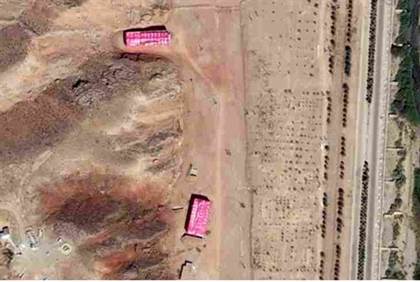
Intelligence officials and lawmakers who have seen the new evidence, which is still classified, told us that satellite imagery picked up by U.S. government assets in mid- and late July showed that Iran had moved bulldozers and other heavy machinery to the Parchin site and that the U.S. intelligence community concluded with high confidence that the Iranian government was working to clean up the site ahead of planned inspections by the IAEA.

The intelligence community shared its findings with lawmakers and some Congressional staff late last week, four people who have seen the evidence told us. The Office of the Director of National Intelligence briefed lawmakers about the evidence Monday, three U.S. senators said.

“I am familiar with it,” Senate Intelligence Committee Chairman Richard Burr told us Tuesday. “I think it’s up to the administration to draw their conclusions. Hopefully this is something they will speak on, since it is in many ways verified by commercial imagery. And their actions seem to be against the grain of the agreement.”

Burr said Iran’s activities at Parchin complicate the work of the IAEA inspectors who are set to examine the site in the coming months. IAEA’s director general, Yukiya Amano, was in Washington on Wednesday to brief lawmakers behind closed doors about the side agreements.

“They are certainly not going to see the site that existed. Whether that’s a site that can be determined what it did, only the technical experts can do that,” Burr said. “I think it’s a huge concern.”

A senior intelligence official, when asked about the satellite imagery, told us the IAEA was also familiar with what he called “sanitization efforts” since the deal was reached in Vienna, but that the U.S. government and its allies had confidence that the IAEA had the technical means to detect past nuclear work anyway.

Another administration official explained that this was in part because any trace amounts of enriched uranium could not be fully removed between now and Oct. 15, the deadline for Iran to grant access and answer remaining questions from the IAEA about Parchin.

Senate Foreign Relations Committee Chairman Bob Corker told us Tuesday that while Iran’s activity at Parchin last month isn’t technically a violation of the agreement it signed with the U.S. and other powers, it does call into question Iran’s intention to be forthright about the possible military dimensions of its nuclear program.

“The intel briefing was troubling to me … some of the things that are happening, especially happening in such a blatant way,” he said. “Iran is going to know that we know.” He added the new information gave him “a lot of concerns” about Iran coming clean on military dimensions of its nuclear work.

According to the overall nuclear agreement, sanctions relief for Iran can come only after the IAEA and Iran resolve their outstanding concerns about possible military dimensions of past and current work. But the agreement does not specify how the issue must be resolved, only that it be resolved to the IAEA’s satisfaction.

Several senior lawmakers, including Democrats, are concerned that Iran will be able to collect its own soil samples at Parchin with only limited supervision, a practice several lawmakers have compared to giving suspected drug users the benefit of the doubt to submit specimens unsupervised. Iran’s sanitization of the site further complicates that verification.

Democratic Senator Chris Coons, a member of the Foreign Relations Committee, told us Tuesday that this area is part of why he is undecided on supporting the Iran deal.

“I have concerns about the vigorous efforts by Iran to sanitize Parchin,” he said. “I’ve gotten some reassurance about how difficult it is for them to effectively conceal what we know to have been their illicit nuclear weapons developments there.”

Coons said he was most concerned about the integrity of the IAEA inspection process going forward and not as concerned about figuring out what happened in the site in the past: “We know what the Iranians did at Parchin.”

David Albright, the president of the Institute for Science and International Security, obtained a commercially available image of the Parchin site taken by satellites on July 26 that shows renewed activity at the Parchin site. He told us there are two new large vehicles, alterations ongoing to roofs of two of the buildings and new structures near two of the buildings.

“You have to worry that this could be an attempt by Iran to defeat the sampling, that it’s Iran’s last-ditch effort to eradicate evidence there,” he said. “The day is coming when they are going to have to let the IAEA into Parchin, so they may be desperate to finish sanitizing the site.”

The facility, outside of Tehran, first came to the attention of the international community in 2004 when news reports surfaced that it was being used to test explosives for a nuclear warhead.

A 2007 U.S. National Intelligence Assessment concluded that Iran halted this kind of work in 2003. Between 2005 and today, Iran has allowed IAEA inspectors access to Parchin — a vast complex with dozens of buildings — on only five occasions. In 2012, Abright’s group reported on satellite imagery that it said showed efforts to clean up evidence of an explosives testing chamber there.

Representative Ed Royce, the Republican chairman of the House Foreign Affairs Committee, said that Amano had told him in recent conversations that the IAEA had “thousands of pages of documentations on tests to weaponize a nuclear device.” Royce added, “For a long time, they have been altering sites.”

The IAEA has documented this as well. The agency’s report from May 29 this year said there was  satellite imagery of vehicles, equipment and “probable construction materials” at Parchin. The report said, “The activities that have taken place at this location since February 2012 are likely to have undermined the Agency’s ability to conduct effective verification.”

Secretary of State John Kerry has said that the U.S. government has “absolute knowledge” about what Iran has done in the past. Ahead of the vote on the agreement next month, many lawmakers don’t share Kerry’s confidence. Iran would seem to have its doubts as well, since it’s still trying to cover its tracks.

Obama negotiator says she didn’t see final Iran ‘side deals’

August 5, 2015

Obama negotiator says she didn’t see final Iran ‘side deals,’ The Hill, Kristina Wong, August 5, 2015

(Were the secret agreements on which Kerry, et al, were “fully briefed” and hence know “exactly” what they say also “rough drafts?” Unlike Ms. Sherman, Kerry testified that he had not seen the secret agreement(s).– DM)

shermanwendy_052715gettyGetty Images

[L]ater in the hearing, she walked back her comments about not seeing the final arrangements. 

“I was shown documents that I believed to be the final documents, but whether there were any further discussions…” she added before being cut off by another question by Sen. Pat Toomey (R-Pa.). Later, she said responded, “I have” when asked whether she saw the final versions of the deals.

****************

The only Obama administration official to view confidential “side deals” between Iran and the International Atomic Energy Agency (IAEA) admitted Wednesday she and her team have only seen rough drafts.

“I didn’t see the final documents. I saw the provisional documents, as did my experts,” said Wendy Sherman, a lead U.S. negotiator for the deal, at a Senate Banking Committee hearing.  

Sherman, undersecretary of State for political affairs, said she was only allowed to see the confidential deals “in the middle of the negotiation” when the IAEA “wanted to go over with some of our experts the technical details.” 

She maintained the deals — which focus on with Iran’s prior work on a bomb and access to Iran’s Parchin military site — are still confidential and can’t be submitted to Congress.

Sherman said the U.S. did not protest to the confidentiality of the agreements, despite the Iran Nuclear Agreement Review Act demanding all related agreements, because the administration wanted the IAEA to respect the confidentiality of their agreements with the U.S.

“We want to protect U.S. confidentiality … this is a safeguards protocol. The IAEA protects our confidential understandings … between the United States and the IAEA,” she said.

However, later in the hearing, she walked back her comments about not seeing the final arrangements.

“I was shown documents that I believed to be the final documents, but whether there were any further discussions…” she added before being cut off by another question by Sen. Pat Toomey (R-Pa.). Later, she said responded, “I have” when asked whether she saw the final versions of the deals.

She also argued they could not be submitted to Congress because the administration does not have the deals, and that the Senate had “every single document” the administration has.

Sherman emphasized she would brief Senators later Wednesday afternoon in a classified session on everything she knows about the deal.

A similar briefing for House lawmakers last week did not assuage concerns for Rep. Ed Royce (R-Calif.), chairman of the House Foreign Affairs Committee, who sent a letter to Secretary of State John Kerry on Monday calling on the administration to submit the deals.

She also noted that IAEA Director General Yukiya Amano was meeting with the Senate Foreign Relations Committee later in the afternoon.

Although she said the U.S. did not ask or pressure Amano to conduct the briefing, she suggested it was a gesture beyond what the IAEA is obligated to do.

Fred Fleitz discusses the secret side deals to the Iran agreement on On Point with Tomi Lahren

July 29, 2015

Fred Fleitz discusses the secret side deals to the Iran agreement on On Point with Tomi Lahren, Center for Security Policy via You Tube, July 28, 2015


Speaking of the Iran deal (7)

July 27, 2015

Speaking of the Iran deal (7), Power LineScott Johnson, July 27, 2015

Omri Ceren writes to comment on Jay Solomon’s Wall Street Journal article “White House says Iran unlikely to address suspicions of secret weapons program” (accessible here via Google. Omri writes:

The WSJ gained access to some of the documents on the Iran deal that the administration filed with Congress to meet its obligations under the Corker legislation. Two of the documents – both of which are secret and one of which is fully classified (!) – are about the verification process. They reveal that the Obama administration has completely collapsed on the long-standing demand that Iran come clean on the possible military dimensions (PMDs) of its atomic program:

On Iran’s alleged past weapons work, the Obama administration said it concluded: “An Iranian admission of its past nuclear weapons program is unlikely and is not necessary for purposes of verifying commitments going forward…. U.S. confidence on this front is based in large part on what we believe we already know about Iran’s past activities… The United States has shared with the IAEA the relevant information, and crafted specific measures that will enable inspectors to establish confidence that previously reported Iranian [weaponization] activities are not ongoing.”

There’s a history to this collapse. Secretary Kerry made this exact argument to reporters the week before Vienna, but it was a disaster and the State Department immediately retreated: spokesman John Kirby spent the next week telling reporters that they had simply misunderstood Kerry. Ad yet Kerry’s statement is almost word for word what made its way into the documents provided to Congress. Except this time there can’t be a public debate about the stance, because the filing was done in secret and the administration went so far as to classify one of the documents. They’ve made sure that this time there won’t be – there can’t be – any transparency debate over their claims.

Given how the last time went, it’s easy to understand why the administration would want to avoid a robust public discussion over the stance.

On June 11 – a Thursday – the Associated Press revealed that the Obama administration intended to provide Iran with sanctions relief without Tehran resolving the IAEA’s PMD concerns. Instead the Iranians would just have to agree to provide access to inspectors, and the threat of snapback would in theory prevent the them from backsliding [a]. Critics characterized the concession as tantamount to leaving PMD concerns permanentely unresolved, because if current sanctions were inadequate to force Iranian disclosure, how could threatening to restore some of those sanctions later be adequate?

For the next two days – Friday and Monday – the State Department tried arguing that the sequencing would work. They also tried to gaslight reporters by claiming that the administration had always sought access not resolution, leading to exchanges like “our position on this remains the same” vs. “it doesn’t remain the same… you’re lowering the bar even further from address to just agree to give access to” [b].

That wasn’t working so on Tuesday Secretary Kerry teleconferenced into the briefing and introduced a brand new argument: instead of claiming that the Iranians would keep providing PMD-related access after sanctions relief, he declared that the U.S didn’t need to resolve PMDs at all: “We know what they did. We have no doubt. We have absolute knowledge with respect to the certain military activities they were engaged in” [c].

That talking point was even worse. Caving on PMDs guts the verification regime: the IAEA needs to know what the Iranians did and have, so that inspectors can verify they’ve stopped doing those things and given up those assets, and it needs to know how close the Iranians came to a bomb, so that analysts can know how far the Iranians are now [d]. Kerry’s argument – that the West doesn’t need more knowledge because the West already has sufficient knowledge – was indefensible: IAEA chief Amano had said just 3 months before that the agency still lacked adequate insight into Iran’s undeclared activities and former CIA director Michael Hayden published on Wednesday that the same was true of U.S. intelligence community [e][f].

So the rest of the week was retreat. The Obama administration fell back to claiming that reporters had misunderstood Kerry, and that of course the Iranians would still be forced to answer outstanding U.S. and IAEA questions. But since reporters had understood Kerry just fine, the briefings were bloodbaths. On Wednesday seven reporters piled on Kirby, who nonetheless insisted that the plain interpretation of Kerry’s comments was “incorrect” and that “it’s very clear what the expectations are of Iran… we have to resolve our questions about it with specificity. Access is very, very critical” [g]. Ditto for Thursday: “I don’t want to have to rehash this all again today… we were straightforward yesterday about it… nothing has changed about our policy with respect to the possible military dimensions” [h]. Ditto for Friday: “we’ve talked about this before… before there can be a deal, it needs to be determined… that the IAEA will have the access that they need to resolve their concerns” [i].

The converage from Friday to Monday explained why the State Department had retreated. Rep. Devin Nunes, the chair of the House Permanent Select Committee on Intelligence, told Bloomberg View: “My only thought here is that the secretary misspoke or did not understand the question… We clearly don’t have the picture that we need of Iran’s capabilities.” [j]. Veteran diplomat James Jeffrey wrote that “by essentially telling the international community that “the past is past,” Washington and the P5+1 would undercut the arms-control regime that the IAEA is tasked with maintaining globally… there is a term for this that folks all over the region understand, and which Iran greatly values: ‘winning.’ [k]. Politico quoted former IAEA verification chief Olli Heinonen explaining “you need to know how far they got” to calculate breakout [l].

And yet the administration went ahead and put the original Kerry argument, which was crushed when they rolled it out publicly, into the Iran deal.

_________________

[a] http://bigstory.ap.org/article/add1fc3326d74ab08de652e58a5f3060/officials-nuke-deal-wont-answer-iran-weapons-qs-day-1
[b] http://www.state.gov/r/pa/prs/dpb/2015/06/243728.htm
[c] http://www.state.gov/secretary/remarks/2015/06/243892.htm
[d] http://online.wsj.com/news/articles/SB10001424052702304081804579559630836775474
[e] http://www.pbs.org/newshour/bb/iaea-monitoring-irans-nuclear-program/
[f] http://www.washingtontimes.com/news/2015/jun/17/michael-hayden-john-kerrys-unreliable-words-underm/?page=all
[g] http://www.state.gov/r/pa/prs/dpb/2015/06/243942.htm
[h] http://www.state.gov/r/pa/prs/dpb/2015/06/243983.htm
[i] http://www.state.gov/r/pa/prs/dpb/2015/06/244038.htm
[j] http://www.bloombergview.com/articles/2015-06-19/no-u-s-doesn-t-have-absolute-knowledge-on-iran-s-nukes
[k] http://www.washingtoninstitute.org/policy-analysis/view/behind-the-non-flub-on-irans-weaponization-program
[l] http://www.politico.com/story/2015/06/iran-nuclear-deal-ayatollah-fatwa-complication-119244.html

Congress can’t see the P5+1 side deals available to Iran’s Parliament

July 25, 2015

Congress can’t see the P5+1 side deals available to Iran’s Parliament, Dan Miller’s Blog, July 25, 2015

(The views expressed in this article are mine and do not necessarily reflect those of Warsclerotic or its other editors. — DM)

Iran scam Part III

Kerry says that although he has neither read nor even seen the”classified” side deals between Iran and the IAEA about the “possible military dimensions” of Iran’s nuclear program, he has been fully briefed, knows “exactly” what they say and will brief Congress in closed session.

Parts I and II of this series deal with the bases for and absurdities of the January 14th U.S. approval of the Joint Comprehensive Plan of Action. From a national security perspective, the published “deal” was absurd even without recently discovered but secret and “classified” side deals about the military dimensions of Iran’s nuclear program. With them, the “deal” has gone from merely absurd to insane.

The “deal” and U.S. law

The  nuke deal provides that the UN International Atomic Energy Agency (IAEA) will

negotiate separately with Iran about the inspection of a facility long-suspected of being used to research long-range ballistic missiles and nuclear weapons.

The Iran Nuclear Agreement Review Act of 2015, signed by Obama on May 22, 2015,

amends the Atomic Energy Act of 1954 to direct the President, within five days after reaching an agreement with Iran regarding Iran’s nuclear program, to transmit to Congress:

the text of the agreement and all related materials and annexes; . . . [Emphasis added.]

It does not exclude any related materials, “classified” or not such as “side deals,” from those required to be provided to the Congress. However, they have been “classified” and cloaked in secrecy to achieve that end.

The side deals

We do not know precisely what the side deals say; only the signatories, Iran and the IAEA, know. However, according to an article titled Iran Bombshell: It Will Inspect Itself,

This week brought the stunning news that Senator Tom Cotton (R., Ark.) and Representative Mike Pompeo (R., Kan.) had discovered, during a meeting with IAEA officials, the existence of secret side deal between the IAEA and Tehrana side deal that will not, like the main nuclear agreement, be shared with Congress. So critics of the agreement were understandably eager to hear an explanation from Secretary of State John Kerry when he and other senior administration officials testified before the Senate Foreign Relations Committee yesterday. [Emphasis added.]

The hearing produced a new bombshell: In its investigation of Iran’s past nuclear-weapons-related work, the IAEA will rely on Iran to collect samples at its Parchin military base and other locations. [Emphasis added.]

. . . .

In his questioning of administration witnesses, Risch said:

Parchin stays in place. Now, does that sound like it’s for peaceful purposes? Let me tell you the worst thing about Parchin. What you guys agreed to was [that] we can’t even take samples there. The IAEA can’t take samples there. [Iranians are] going to be able to test by themselves! Even the NFL wouldn’t go along with this. How in the world can you have a nation like Iran doing their own testing? [Emphasis added.]

. . . Are we going to trust Iran to do this? This is a good deal? This is what we were told we were going to get when we were told, “Don’t worry, we’re going to be watching over their shoulder and we’re going to put in place verification[s] that are absolutely bullet proof”? We’re going to trust Iran to do their own testing? This is absolutely ludicrous.

The issue became even more interesting when Senator Robert Menendez (D., N.J.), who learned about the side deal from Risch’s question, had the following exchange with Kerry:

Menendez: “Is it true that the Iranians are going to be able to take the samples, as Senator Risch said? Because chain of custody means nothing if at the very beginning what you’re given is chosen and derived by the perpetrator.”

Kerry: “As you know, senator, that is a classified component of this that is supposed to be discussed in a classified session. We’re perfectly prepared to fully brief you in a classified session with respect to what will happen. Secretary Moniz has had his team red-team that effort and he has made some additional add-ons to where we are. But it’s part of a confidential agreement between the IAEA and Iran as to how they do it. The IAEA has said they are satisfied that they will be able to do this in a way that does not compromise their needs and that adequately gives them answers that they need. We’ve been briefed on it, and I’d be happy to brief you.” [Emphasis added.]

Menendez: “My time is up. If that is true, it would be the equivalent of the fox guarding the chicken coop.”

Here’s a video of Sen. Menendez questioning Kerry. The interesting part begins at about 10:00 into the video.

Kerry acknowledged that he had neither read nor even seen the side deals but that he and his scientific expert, Secretary Moniz — who leads the effort to uncover the non-existence extent of any “possible military dimensions” (PMD) of Iran’s nuke activities — have been fully briefed and know “exactly” what the side deals say. They promised to tell members of Congress in closed session.

A blast from the past

A blast from the past

Kerry and Moniz, like others in the Obama administration, are committed to the “deal” and to having the Congress accept rather than reject it. Kerry would be very “embarrassed” if the “deal” were killed. So would Obama. It is reasonable to expect that any briefings they provide will be conducted with those goals firmly in mind — just as it is reasonable to expect that Iranian inspections of, and collection of samples from, Parchin and other military sites will be conducted with the goal of negating the existence of any “possible military dimensions.”

Are there additional side deals that have yet to be discovered and reported? At this point, probably only Iran and the IAEA know.

It’s “Déjà vu all over again”

In a “blast from the past,” the UN agency charged with ensuring that all of Syria’s chemical weapons were disposed of properly did not do so:

International inspectors failed to stop Syria from stockpiling chemical weapons, in spite of an international agreement in 2013, according to a new report by the Wall Street Journal on Friday. International inspectors were skeptical of Syria’s claims to have disposed of its stockpiles, but were afraid that reporting violations would destroy the overall deal: “Members of the inspection team didn’t push for answers, worried that it would compromise their primary objective of getting the regime to surrender the 1,300 tons of chemicals it admitted to having.” [Emphasis added.]

. . . .

The Syrian guards assigned to inspections convoys also drove slowly, failed to destroy chemical weapons when asked to do so, and appeared to be intermingled with Iranian soldiers who were guarding Syrian chemical weapons sites. As a result, Syria remains unaccountable.

The IAEA faces comparable difficulties in evaluating Iran’s “possible military dimensions” and, if reports about the side deals are even partially accurate, will continue to bow to Iranian interests in denying the existence of those dimensions.

Conclusions

The “possible military dimensions” of Iran’s nuclear program are why a “deal” was deemed necessary. Aside from its military dimensions, there would have been few objections to a peaceful Iranian nuclear program devoted to electrical generation, medical research and the like. Iran’s conduct over the years and continuing through the present has belied its claims about the exclusively peaceful nature of its actions.

The Obama administration seeks to keep the members of Congress — and the “little people” who elect them — ignorant of gaping holes in the P5+1 “deal,” particularly those relevant to Iran’s militarization of nukes, the most important of all gaping holes thus far discovered. It is now obfuscating, and will continue to obfuscate, the IAEA – Iran side deals.

As a signatory to the side deals with the IAEA, Iran has the texts. The Iranian parliament will approve or reject the “deal,” apparently after the sixty day period granted to the U.S. Congress to review it. The Iranian parliament will be subject to pressures and obfuscations by the Khamenei regime, their nature depending on whether it wants the deal to be approved or rejected. Between shouts of “death to America” and “death to Israel,” Khamenei has given mixed signals about his desires. The Iranian parliament, unlike the U.S. Congress, will likely see the texts of the side deals if, as is also likely, they drastically limit IAEA investigations of Iran’s nuke militarization activities and hence enhance the “deal’s” appeal.

By whom have the texts of the side deals been “classified?” The Obama administration? Treating the texts as “classified” is very likely a ploy to avoid Congressional and public scrutiny. Kerry and Moniz claim to know “exactly” what the unread side deals say, and contend that they will tell members of Congress, in closed session, what they know. They will do so with the goal of making the “deal” appear to be as good for Obama as they can. They may very well persuade many if not most Democrats to approve the “deal.”

If the Obama administration even approached being as transparent as Obama has often claimed, He would waive all relevant classifications and allow the briefings to be in open, rather than closed, session, with the full texts of all side deals before the members of the Congress and available to the public at large. He won’t. He could (but won’t) be threatened with impeachment for blocking legislative action by the Congress. Even if Obama were threatened, He would know it to be an empty gesture; the Senate would reject any bill of impeachment adopted by House.

At least until Obama has left office (hopefully, in January of 2017), we are stuck. Like Obama’s America, Israel, perhaps in conjunction with Saudi Arabia and other Arab nations, has the ability to destroy Iran’s nuclear weaponization facilities which threaten them. Whether they, unlike Obama’s America, have the will to do it is a different matter.

ADDENDUM

According to a Washington Examiner article posted this evening,

House Speaker John Boehner and Senate Majority Leader Mitch McConnell insisted in a letter to President Obama that the administration hand over any side agreements between Iran and the IAEA as well, saying that’s what’s required by a law passed earlier this year giving Congress a chance to review the deal.

Iran Bombshell: It Will Inspect Itself

July 24, 2015

Iran Bombshell: It Will Inspect Itself, Center for Security Policy, Fred Fleitz, July 24, 2015

I am glad that Senator Risch ignored the Obama administration’s ridiculous demand to treat the side deal as a classified matter. One has to ask, Classified from whom? Certainly not for Iran, since it is a party to the agreement. I believe Obama officials insisted the deal was classified in order to keep knowledge of it from the American people, and possibly from Middle Eastern states such as Israel and Saudi Arabia that oppose the agreement.

***********************

This week brought the stunning news that Senator Tom Cotton (R., Ark.) and Representative Mike Pompeo(R., Kan.) had discovered, during a meeting with IAEA officials, the existence of secret side deal between the IAEA and Tehran — a side deal that will not, like the main nuclear agreement, be shared with Congress. So critics of the agreement were understandably eager to hear an explanation from Secretary of State John Kerry when he and other senior administration officials testified before the Senate Foreign Relations Committee yesterday.

The hearing produced a new bombshell: In its investigation of Iran’s past nuclear-weapons-related work, the IAEA will rely on Iran to collect samples at its Parchin military base and other locations.

As a former intelligence analyst experienced in the collection of environmental samples for investigations of weapons of mass destruction, I found this allegation impossible to believe when I heard Senator James Risch (R., Idaho) make it yesterday morning.

In his questioning of administration witnesses, Risch said:

Parchin stays in place. Now, does that sound like it’s for peaceful purposes? Let me tell you the worst thing about Parchin. What you guys agreed to was [that] we can’t even take samples there. The IAEA can’t take samples there. [Iranians are] going to be able to test by themselves! Even the NFL wouldn’t go along with this. How in the world can you have a nation like Iran doing their own testing?

. . . Are we going to trust Iran to do this? This is a good deal? This is what we were told we were going to get when we were told, “Don’t worry, we’re going to be watching over their shoulder and we’re going to put in place verification[s] that are absolutely bullet proof”? We’re going to trust Iran to do their own testing? This is absolutely ludicrous.

The issue became even more interesting when Senator Robert Menendez (D., N.J.), who learned about the side deal from Risch’s question, had the following exchange with Kerry:

Menendez: “Is it true that the Iranians are going to be able to take the samples, as Senator Risch said? Because chain of custody means nothing if at the very beginning what you’re given is chosen and derived by the perpetrator.”

Kerry: “As you know, senator, that is a classified component of this that is supposed to be discussed in a classified session. We’re perfectly prepared to fully brief you in a classified session with respect to what will happen. Secretary Moniz has had his team red-team that effort and he has made some additional add-ons to where we are. But it’s part of a confidential agreement between the IAEA and Iran as to how they do it. The IAEA has said they are satisfied that they will be able to do this in a way that does not compromise their needs and that adequately gives them answers that they need. We’ve been briefed on it, and I’d be happy to brief you.”

Menendez: “My time is up. If that is true, it would be the equivalent of the fox guarding the chicken coop.”

The revelation that Iran will collect samples concerning its own nuclear-weapons-related activity makes the whole agreement look like a dangerous farce. This is not just an absurd process; it also goes against years of IAEA practice and established rules about the chain of custody for collected physical samples.

Senator Risch suggested in his remarks that the IAEA would remotely monitor the Iranians’ taking of samples by video. But even if there were a reliable way to ensure that Iranian “inspectors” were carefully monitored, took samples from locations identified by the IAEA, and provided these samples directly to IAEA officials, the process would still be a sham, since it would still place unacceptable limitations on IAEA inspections. To be meaningful, IAEA inspectors must have unfettered access to suspect facilities and be free to take samples anywhere, using whatever collection devices they choose. Only by collecting samples at locations and with methods that Iranian officials may not have anticipated can inspectors reliably find possible evidence of nuclear-weapons-related work that Iran tried to clean up.

That the Obama administration would agree to let Iran collect its own samples at Parchin (where explosive testing related to nuclear-warhead development reportedly took place) and other sites is consistent with reports that surfaced in June (and about which I wrote National Review articles on June 15 and June 17) that Kerry had offered to let Iran off the hook for past nuclear-weapons-related work. Iranian supreme leader Ali Khamenei reportedly rejected this offer as being insufficiently generous.

Remember also that Kerry told reporters on June 16: “We’re not fixated on Iran specifically accounting for what they did at one point in time or another. We know what they did.” Kerry walked back this comment, but I believe it represented part of the Obama administration’s negotiating strategy in the Iran talks.

The Obama administration claims that the Iran–IAEA side deal is a confidential and bilateral arrangement reached between IAEA officials and Tehran, and says that it has been briefed on the deal but not seen its actual language. As I wrote here on July 23, I find this impossible to believe, since the apparent arrangement so clearly reflects Secretary Kerry’s attempt last month to make concerns about Iran’s past nuclear-weapons-related work go away.

I am glad that Senator Risch ignored the Obama administration’s ridiculous demand to treat the side deal as a classified matter. One has to ask, Classified from whom? Certainly not for Iran, since it is a party to the agreement. I believe Obama officials insisted the deal was classified in order to keep knowledge of it from the American people, and possibly from Middle Eastern states such as Israel and Saudi Arabia that oppose the agreement. I also believe that Congress would not know about this matter at all if IAEA officials had not told Senator Cotton and Congressman Pompeo about it.

Possibly making the situation worse, Fox News analyst Monica Crowley said in a tweet yesterday that there are additional side deals. Omri Ceren, managing director of the Israel Project, a nonprofit advocacy organization, e-mailed me yesterday, writing that “the Israelis are saying there will be several more.”

These new developments indicate that not only did the Obama administration negotiate a nuclear deal with Iran that was worse than anyone outside the Obama administration knew only a few days ago, but it also tried to shield a sham inspections process from congressional review, in violation of the law. The entire nuclear agreement is not just a bad deal; it is a deal that now displays the bad faith of the Obama administration toward Congress and the American people. The secret side agreements are yet another compelling reason for a large bipartisan majority in Congress to reject the dangerous nuclear accord with Iran.

Key Nuclear Installations Missing from Iran Deal

July 15, 2015

Key Nuclear Installations Missing from Iran Deal, Israel National News, Ari Yashar, July 15, 2015

Parchin site(1)Suspicious activity at Parchin (illustration)Reuters

As experts got a chance to examine the details of the 159-page Iran nuclear deal signed Tuesday, they warned that it ignores various key aspects of the Islamic regime’s nuclear program, and that the lifting of arms sanctions may pave Iran’s path to nuclear-capable missiles.

A glaring omission is seen in the absolute lack of any reference to the highly covert Parchin military base located southeast of Tehran, which is suspected of being the center of Iran’s secret nuclear weapons program, according to the International Atomic Energy Agency (IAEA).

Iran has admitted to testing exploding bridge wire nuclear detonators at the site, and reports tied the Parchin base to Iran’s nuclear program following a mysterious explosion at the site last October.

IAEA reports in November 2011 pointed to nuclear weapons development previously conducted at the site, and a 2012 IAEA report likewise confirmed explosives containment vessels were at the site and likely used to test nuclear detonations. Satellite photos have shown Iran has been modifying the site, possibly expanding the tests and covering up their existence.

Iran has repeatedly refused IAEA requests to inspect Parchin. IAEA chief Yukiya Amano announced on Tuesday that in addition to the nuclear deal, a “road map” agreement was sealed, by which Iran will disclose military aspects of its nuclear program by October 15.After this, Amano will write an assessment of Iran’s claimed disclosures by December 15 “with a view to closing the issue.”

Amano said the agreement would include a visit to Parchin, but it remains to be seen how much time Iran will have to prepare for such a visit and possibly hide evidence of nuclear tests; Iranian officials rejected last-minute reports that inspections would be allowed at all covert sites.

IAEA roadmap: putting the cart in front of the horse

Thomas Moore, an arms control specialist and staff member of the SenateForeign Relations Committee, told Washington Free Beacon that the IAEA “road map” should have taken place before the nuclear deal, and not after it.

“The IAEA’s resolution of the possible military dimensions of Iran’s nuclear program should precede the deal, not by months but by as much time as it takes to verify the absence of Iran’s (past military work), including the full historical picture of its program. And the deal does not do that,” said Moore.

Not only does the deal not directly address military aspects of Iran’s nuclear program, critics warn it contains several loopholes that will greatly limit its effectiveness in stopping Iran’s march to a nuclear weapon.

For one, the agreement calls for Iran’s “voluntary” compliance with the terms of the deal in several places, instead of implementing mandatory steps Iran must fulfill. It also outlines a convoluted bureaucratic process to confront Iranian violations, reports Washington Free Beacon.

What’s more, a section of the deal may allow Iran to avoid revealing its past nuclear weapons testing, stating that Iran “may propose to the IAEA alternative means of resolving the IAEA’s concerns that enable the IAEA to verify the absence of undeclared nuclear materials and activities or activities inconsistent with the JCPOA (Joint Comprehensive Plan of Action) at the location in question.”

The deal also includes removing a large number of sanctions, including those targeting Parchin Chemical Industries (PCI), which operates sites at the Parchin base and is thought to be highly involved in the covert nuclear weapons program.

“Iran can get its first bombs in weeks”

Aside from Parchin, experts were alarmed to see that the nuclear deal does not directly impose limits on or even reference the Russian-made Bushehr nuclear power plant, which they warn can produce enough plutonium for a large number of atomic weapons.

Henry Sokolski, director of the Nonproliferation Policy Education Center, told Washington Free Beacon that Bushehr’s exclusion from the deal was a mistake.

“That reactor can produce enough plutonium for dozens of bombs per year,” warned Sokolski. “Iran could remove the fuel from the reactor and use a small, cheap reprocessing plant to extract plutonium, and get its first bombs in a matter of weeks.”

Regarding plutonium, after 15 years the deal stipulates that Iran will be able to “engage in producing or acquiring plutonium or uranium metals or their alloys,” and likewise conduct research and development “on plutonium or uranium (or their alloys) metallurgy, or casting, forming, or machining plutonium or uranium metal.”

At the Natanz nuclear facility, a limitation on 5,060 centrifuges in 30 cascade units will cease in ten years, and after 15 years Iran will be able to enrich uranium over 3.67% – a 20% enrichment is needed to build nuclear weapons. In eight years, Iran can start producing up to 200 partial advanced centrifuges each year, and two years later it can construct complete advanced centrifuges.

Sokolski warned that “ultimately, this is a gamble on Iran not wanting to make bombs. If they really don’t, the deal will work. If they do, the fine print won’t stop them.”

Nuclear-capable missile sanctions lifted

In addition to the details on Iran’s nuclear program, experts warn there are pitfalls in how the deal approaches – or ignores – Iran’s nuclear-capable missile program. Notably the deal avoids addressing Iran’s ICBM (intercontinental ballistic missile) program.

It also removes sanctions against Iran’s Al Ghadir missile command based in Tehran, which has been leading the development of missiles capable of delivering a nuclear warhead, and is thought to hold operational control of Iran’s missiles.

A UN conventional arms embargo on Iran will end in five years due to the deal, and sanctions against selling ballistic missiles to Iran will likewise expire in eight years. However, it is possible that China and Russia will covertly sell arms to Iran before those dates, as they have done in the past.

Fred Fleitz, who has formerly served as a CIA analyst, State Department arms control official, and House Intelligence Committee staff member, told Washington Free Beacon that these facets of the deal will allow Iran to arm itself freely.

“Language on lifting conventional arms and missile embargoes is very weak,” stated Fleitz.

“The IAEA simply has to certify that Iran isn’t currently engaged in nuclear weapons work to lift these embargoes early. The IAEA will be hard pressed to find evidence of this and will probably issue a report allowing these embargoes to be lifted early,” he concluded.