Archive for the ‘Palestinian Authority’ category

Funding Terrorism to Fight Terrorism

July 18, 2017

Funding Terrorism to Fight Terrorism, Front Page Magazine, Daniel Greenfield, July 18, 2017
AIPAC hasn’t gotten behind the Taylor Force Act. Instead it’s holding out for some “revised” version that would make it meaningless while attracting bipartisan support. Meaningless pro-Israel measures that pass with huge majorities are AIPAC’s bread and butter. They’re its political Potemkin villages.

The ideal Taylor Force Act, according to AIPAC, most Democrats and some Republicans, would condemn terrorism without cutting a cent in foreign aid to the Palestinian Authority. It would contain a national security waiver and plenty of gimmicks that would actually increase funding for terror.

************************************

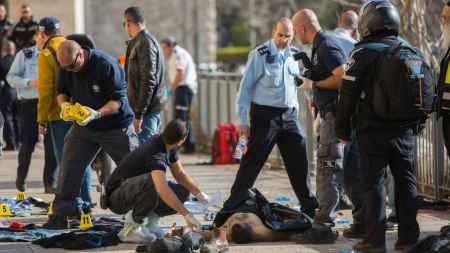
Master Sgt. Haiel Sitawe, the father of a newborn baby, and Kamil Shnaan, who was newly engaged, were murdered in an Islamic terrorist attack in Jerusalem. The two Israeli police officers were members of the Druze community in Israel. The terrorists who shot them were killed by other police officers.

While Israel will compensate the families of the dead police officers, the Palestinian Authority will compensate the families of the terrorists. And American taxpayers will compensate both.

This is typical of a foreign policy in which we fund both the terrorists and the terrorized.

Sooner or later, we are going to have to choose a side.

This mad policy is facing its biggest threat with the Taylor Force Act. The bill, named after a murdered Afghanistan and Iraq War veteran stabbed to death in Tel Aviv, would strip funding from the Palestinian Authority unless the terror state stops giving money to terrorists and their families for their crimes.

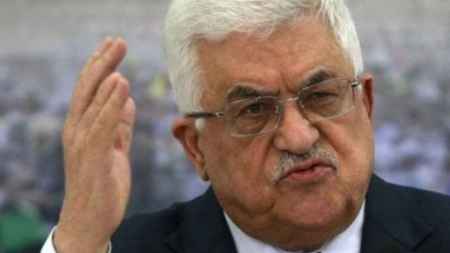
The Taylor Force Act has plenty of support in Congress. But the Palestinian Authority has made it abundantly clear that it will not stop paying terrorists to kill Israelis. PA terror boss Abbas is gambling that our politicians will blink first rather than stop sending him hundreds of millions of dollars.

And the tragedy of it is that he appears to be right.

Everyone condemns the Palestinian Authority’s policy of funding terrorists. Typical adjectives include “abhorrent” and “abominable”. But don’t expect them to actually cut off the cash.

Senators are scurrying to neuter the Taylor Force Act. There are dire warnings that if we stop funding the biggest Islamic terrorist group in Israel, it will collapse and make way for more terrorism.

If we don’t stop giving Islamic terrorists money to commit terrorism… the terrorists will win.

This sums up the insanity of our foreign policy in which we fund terrorism to fight terrorism, and in which the “moderate” Islamic terrorists of the Palestinian Authority and the Muslim Brotherhood are our best hope for restraining the really scary “extremist” Islamic terrorists of ISIS and Al Qaeda.

Senators have been complaining about the act’s “All or nothing” approach. All or nothing means that the Palestinian Authority would have to stop funding terror or lose funding. And since the Palestinian Authority won’t stop funding terror and they don’t want to cut its funding, they hate all or nothing.

AIPAC hasn’t gotten behind the Taylor Force Act. Instead it’s holding out for some “revised” version that would make it meaningless while attracting bipartisan support. Meaningless pro-Israel measures that pass with huge majorities are AIPAC’s bread and butter. They’re its political Potemkin villages.

The ideal Taylor Force Act, according to AIPAC, most Democrats and some Republicans, would condemn terrorism without cutting a cent in foreign aid to the Palestinian Authority. It would contain a national security waiver and plenty of gimmicks that would actually increase funding for terror.

Instead of the Taylor Force Act, the call is on for a “Taylor Force like” bill that would be like it the way that a $25 Rolex being peddled from a wheelbarrow outside Central Park is like a real Rolex.

There are calls for a more “targeted” bill that would go after some, but not all of the PA’s funding.

But what would a targeted bill actually target? There are calls to exempt humanitarian aid. Never mind that much of the humanitarian aid really finds its way into the pockets of PA and Hamas leaders. Then there is the “security assistance” that enables the terrorists to pretend to fight terrorism.

And then there’s all the institutional support to maintain the corrupt authoritarian institutions of the PA while still providing all of the social services that the PA is supposed to provide, but doesn’t. We have to build roads and schools, and provide electricity and fund hospitals for our worst enemies.

If we can’t cut social services to the biggest terrorist welfare state in the world or security assistance to its terrorist armies, what can we cut?

You guessed it. Nothing.

Cut social services and we’ll just “radicalize” and “embitter” them further. Cut security assistance and they’ll have no choice but to resort to more terrorism. What can we do except give them more money?

A Taylor Force like bill will just move money around. And nothing will change. Senators will pat themselves on the back. And the State Department will see to it that the terror funding continues.

Just to make a madly irrational policy even more absurdly insane, critics of the Taylor Force Act claim that ending funding for terror will undermine Israeli security. The basis for this claim comes from what is usually described in umpteen news stories as a coalition of retired Israeli military officers.

But Caroline Glick has already exposed Commanders for Israel’s Security as a left-wing group with links to Obama and Soros. CIS holds positions that undermine Israeli security. And it’s part of a pattern of recruiting retired Israeli security personnel and military people as fronts for anti-Israel agendas.

Prime Minister Netanyahu supports the Taylor Force Act. As do top former military officials. The first name on the list belonged to former Defense Minister Ya’alon; no friend of Netanyahu. The letter concludes by noting that, “The Knesset is considering passage of a law calling for deducting the amount the PA pays terrorists from the money Israel transfers to the PA. It is legislation sponsored by members of all parties, except the far-left Meretz and the Joint Arab List.”

And yet we have politicians and pundits who insist that “we should listen to the Israelis” and keep on funding the PLO. The “Israelis” they want us to listen to are not the country’s elected government and its voters, but a fake organization with an agenda and links to Israel’s opponents.

And so here we are funding terrorism to fight terrorism and listening to Israelis by ignoring them.

Sarah Yerkes of the Brookings Institution and the Carnegie Endowment for International Peace argues that threatening to defund the PA unless it stops funding terrorism could lead to it refusing to change its policy of funding terrorism. If the PA doesn’t stop financing terror out of the goodness of its heart, we’re utterly helpless to do anything except keep shoving more money into its dirty and bloody hands.

The consequences of not funding terrorism are too terrifying to contemplate. What else can we possibly do except nothing?

Cutting off money to the terrorists would just lead to more terrorism. That’s the sum of all the arguments. And there’s a word for it. Blackmail.

We can’t figure out how to stop paying blackmail money to Islamic terrorists. The most powerful nation on earth can’t stop writing big checks to one of the oldest active Islamic terror groups on the planet.

But it’s easy. You just stop sending the checks.

You stop worrying about stability, further radicalization and an imaginary peace process. You can’t buy stability by paying the biggest terrorist group to keep the smaller ones down. If you’re going to do that, you might as well start subsidizing the mafia to keep other criminals in line.

The PA, Fatah and the PLO constantly promote and celebrate Islamic terrorism. They’re not as bad as ISIS, but does that mean we should be funding every Islamic terrorist group less terrible than ISIS?

Finally, if the PA won’t stop funding Islamic terrorists who kill Israelis decades after signing what was supposed to be a peace accord with Israel, talk of a peace process is hollow nonsense.

The United States shouldn’t need a special bill to defund an Islamic terrorist group that has murdered many Americans over the years. We can’t end terrorism tomorrow. But we can at least stop funding it.

If only we can figure out how to stop writing the checks.

Abbas: Shut Up or I will Arrest You!

July 17, 2017

Abbas: Shut Up or I will Arrest You!, Front Page Magazine, Khaled Abu Toameh, July 17, 2017

Critics say the Palestinian Authority’s (PA) Cyber Crime Law, which permits the imprisonment of Palestinians for “liking” or sharing published material on the internet, paves the way for the emergence of a “police state” in PA-controlled territories in the West Bank. They also argue that the law aims to silence criticism of Abbas and the PA leadership.

“What is laughable is that this law carries penalties that are tougher than those imposed on thieves and sex offenders… the law, in its present form, is designed to limit the freedom of the media and punish people for simple matters.” — Journalist in Ramallah.

This latest dictatorial move in the PA-controlled territories might also serve to remind the international community about the current readiness of the Palestinian leadership for statehood, and what such statehood would look like. In its current incarnation, that state would fit in just fine with its brutal Arab neighbors.

A new Palestinian law combating information technology (IT) crimes has sparked a wave of protests from Palestinian journalists and human rights organizations.

The controversial Cyber Crime Law, signed by Palestinian Authority (PA) President Mahmoud Abbas on July 11, permits the imprisonment of Palestinians for “liking” or sharing published material on the internet.

Critics say the law paves the way for the emergence of a “police state” in PA-controlled territories in the West Bank. They also argue that the law aims to silence criticism of Abbas and the PA leadership.

The new law comes on the heels of the PA’s recent decision to block more than 20 Palestinian websites accused of publishing comments and articles critical of the PA leadership.

The law was approved by Abbas himself, without review by the Palestinian parliament, known as the Palestinian Legislative Council (PLC). The PLC has been paralyzed for the past decade, as a result of the power struggle between Abbas’s PA and Hamas — the Islamist movement that controls the Gaza Strip.

In the absence of parliamentary life, Abbas and his senior officials and advisors have felt free to pass their own laws to serve their interests and promote their personal and political agendas.

In the view of Palestinian journalists and human rights advocates, the new Cyber Crime Law will further restrict freedom of expression, especially on social media, which will now be closely monitored by the PA security forces. They say that the law makes a mockery of the PA leadership’s motto that the “sky is the limit when it comes to freedom of expression.”

Palestinian Authority (PA) President Mahmoud Abbas. (Photo by Drew Angerer/Getty Images)

The absence of a free and independent media in the PA-controlled territories has prompted many Palestinian journalists, bloggers and political activists to resort to Facebook and Twitter. There, they express their opinions, air their grievances, and discuss taboo issues — such as financial and administrative corruption among the top brass of the Palestinian Authority leadership.

The new law legalizes what has long been happening in the PA-controlled territories, however. PA security forces have long targeted Palestinians who post critical and controversial comments on social media.

Hardly a week passes without two or three Palestinians arrested or summoned for interrogation by the PA security forces regarding a Facebook or Twitter posting or comment. Many Palestinians have been taken into custody for “liking” or sharing a post, article or photo that was deemed offensive to Abbas or a senior PA official.

Yet, the Cyber Crime Law is indeed a watershed in repression: prior to it, no law existed that prohibited Palestinians from expressing their views on social media platforms.

Now, anyone who commits the offense of establishing a website with the intent of disseminating news that could “undermine the safety of the state or its internal or external security” is liable to a prison sentence and fine. The law also aims to punish anyone who promotes such news by “liking” or sharing it.

Palestinian journalists identify themselves as the real targets of the Cyber Crime Law. One journalist in Ramallah remarked:

“What is laughable is that this law carries penalties that are tougher than those imposed on thieves and sex offenders. This is a law with a purely political goal, although it has some positive aspects such as preventing extortion, fraud and impersonation on social media. But the law, in its present form, is designed to limit the freedom of the media and punish people for simple matters.”

Jihad Barakat, a Palestinian journalist who was recently arrested by the Palestinian Authority security forces for filming the motorcade of PA Prime Minister Rami Hamdallah while it was passing through an Israeli military checkpoint, expressed outrage over the new law. He too said that the law was aimed at curbing freedom of expression and intimidating critics of the PA.

“This is a dangerous law,” Barakat complained. “The law should conform with public freedoms and not be used to curb them.” Barakat later was charged with “begging and loitering in a public place in suspicious circumstances.” He was arrested because his filming of the PA prime minister at the checkpoint was considered embarrassing and offensive.

Palestinian journalists and human rights activists point out that the law contains ambiguous references, such as the “undermining or endangering of the safety of the state.”

Journalist Shatha Hammad said that she and her colleagues were not sure what this phrase actually means.

“As journalists, we are confused,” she said. “We don’t know what type of news or postings which are considered — according to this law — a threat to the security of the state.” She also pointed out that the new law comes amid a continued crackdown by the PA on Palestinian journalists and activists over their Facebook postings.

Alarmed by the new law, several Palestinian journalists and writers said it paves the way for the emergence of a repressive regime whose goal is to suppress public freedoms and violate the privacy of people.

“This law is aimed at providing the Palestinian Authority with a legal cover to suppress the voices of its opponents,” explained Palestinian writer Ahmed Al-Najjar.

“In this way, the PA can arrest any journalist or ordinary citizen for publishing an article or posting something on social media that is deemed harmful to the security of the state. This is a bleak scenario that makes it clear that we are facing a repressive police system. This dangerous law drives the final nail in the coffin of public freedoms.”

The Ramallah-based Palestinian human rights organization Al-Haq joined the chorus of critics of the new law restricting freedom of expression. “The law was issued by President Abbas without being presented to the public,” the organization said. “It was issued in a very secretive manner.”

Al-Haq also noted that the PA leadership turned down requests and appeals by Palestinian groups and individuals to receive copies of the new law before it was passed. The organization went on to denounce the law as a “Sword of Damocles” over the head of Palestinian journalists.

The Cyber Crime Law showcases the fact that the Palestinian Authority regime is being run as a one-man show.

This latest dictatorial move in the PA-controlled territories might also serve to remind the international community about the current readiness of the Palestinian leadership for statehood, and what such statehood would look like. In its current incarnation, that state would fit in just fine with its brutal Arab neighbors.

Video: Muslims murder two Israeli police officers in Temple Mount jihad attack

July 14, 2017

Video: Muslims murder two Israeli police officers in Temple Mount jihad attack, Jihad Watch

Hamas praised these jihad murders as “heroic,” which is a good example of the morally inverted world of Hamas and its U.S.-based front groups, along with their Leftist supporters.

“2 Israeli police officers confirmed dead following Temple Mount shooting,” RT, July 14, 2017 (thanks to the Geller Report):

Two police officers were fatally shot during an attack at the Temple Mount in Jerusalem Friday morning. Police Chief Roni Alsheich confirmed the deaths following the incident involving three assailants.

The two officers were amongst three people initially injured. Three armed assailants were then pursued, shot and killed by police.

The gunmen, reported by Reuters to be Arab-Israeli, arrived at the site which is holy to both Jews and Muslims, and made their way towards the Lions Gate in the Old City. “When they saw policemen they shot towards them and then escaped towards one of the mosques in the Temple Mount compound,” police spokeswoman Luba Simri.

According to Simri three firearms were found on the bodies of the attackers.

The officers were named by authorities as Hail Stawi, 30, and Kaamil Snaan, 22.

A spokesperson from Hamas praised the operation as “heroic” in a statement.

Authorities shut down the area following the attack, blocking access to the Aqsa Mosque. Palestinian Grand Mufti of Jerusalem, Mohammad Hussein encouraged Muslims to defy the shutdown, telling Reuters “We have urged our Palestinian people to rush to al Aqsa today and every day to hold their prayers.”

Israeli Prime Minister Benjamin Netanyahu, said the area, which can be accessed but not prayed at by Jews, will continue to be shared by both communities.

In a phone call to Netanyahu, Palestinian President Mahmoud Abbas condemned the attack. According to Palestinian news agency WAFA, Abbas urged Netanyahu to reopen access to the al-Aqsa Mosque.


The attackers’ identities have not yet been released.

 Friday prayers at the site were canceled for the first time in years, according to Haaretz….

Peace is light-years away

July 14, 2017

Peace is light-years away, Israel Hayom, Ruthie Blum, July 14, 2017

(Israel: give, give, give. Palestinians: take, take, take. But no peace. — DM)

So far, however, all Abbas has done is call the shots on the venue of a meeting ‎between his honchos and Trump’s team, agree to water and electricity deals that ‎benefit the PA and give the White House cause for false optimism. Undoubtedly, ‎he has already figured out how to get around the Taylor Force Act, if and when it ‎passes. A revised, bipartisan version of the bill, in particular — geared toward ‎guaranteeing that ordinary Palestinians are not robbed of humanitarian services ‎as a result of their leaders’ violations — will provide him with sufficient loopholes ‎to keep his “martyrs” in clover.‎

****************************

If the leaders of the Palestinian Authority had invested as much time, energy and ‎other people’s money in building a flourishing society as they do in the pursuit of ‎death and destruction, there would be no need for outside efforts to broker ‎peace between them and their Israeli counterparts. It takes only about 30 minutes ‎to drive from the Muqataa compound in Ramallah to the Prime Minister’s Office in ‎Jerusalem. Yet it is still easier for dignitaries from the United States and Europe to ‎spend hours on flights to Tel Aviv for the purpose of talking about a two-state ‎solution than it is for PA President Mahmoud Abbas to budge in any direction ‎other than backwards. ‎

Take this week, for instance, which began with the Palestinians’ refusal to host ‎U.S. Ambassador to Israel David Friedman — whom U.S. President Donald Trump ‎has included in his Mideast peacemaking team, along with advisers Jason ‎Greenblatt and Jared Kushner — in Ramallah. Friedman is too pro-Israel, as far as ‎Abbas is concerned. As a result, the meeting between American and Palestinian ‎officials on Tuesday took place at the King David Hotel in west Jerusalem. ‎

On Thursday, Greenblatt joined fellow envoys of the Middle East Quartet — the ‎U.S. (which he represents), the European Union, the United Nations and Russia — ‎in Jerusalem “to discuss current efforts to advance Middle East peace, as well as ‎the deteriorating situation in Gaza.”‎

Also on Thursday, Greenblatt announced that Israel had agreed to sell the PA 1.2 ‎billion cubic feet of water. This, he said, in addition to an electricity deal reached ‎between Israel and the PA on Monday, will improve the Palestinians’ standard of ‎living.‎

Meanwhile, in Washington, D.C. on Wednesday, the Senate Foreign Relations ‎Committee conducted a hearing on the proposed Taylor Force Act, named after ‎the former U.S. Army officer who — while on a trip to Israel in March 2016 — was ‎stabbed to death by a knife-wielding Palestinian on a rampage in Tel Aviv. The bill, ‎co-sponsored by Senators Lindsey Graham (R-S.C.), Dan Coats (R-‎Ind.) and Roy Blunt (R-Miss.), aims to halt American aid to the PA until it ‎stops paying salaries and stipends to imprisoned terrorists and the families of ‎those “martyred” while murdering Israelis. ‎

Testifying before the committee on behalf of the bill, Senior Fellow for Middle ‎Eastern Studies at the Council on Foreign Relations Elliott Abrams — who served as ‎deputy assistant to the president and deputy national security adviser in the ‎George W. Bush administration — railed against the “Palestinian practice of ‎making payments to individuals convicted of acts of terror, and their families or ‎survivors, in accordance with the severity of their acts and the length of their ‎sentences.” The “predictable effect of this practice,” he said, “is to reward and ‎incentivize acts of terror.”‎

Pointing to the billions of dollars that the U.S. has poured into the PA since its ‎establishment in the 1990s, Abrams said, “As long as the Palestinian government ‎is in effect rewarding terror, we need to be sure we make our objections — our ‎condemnation — known, and that cannot be merely in words. Our assistance ‎program must reflect our feeling of repugnance.” He then proposed a revision to ‎the bill that would enable the U.S. to continue funding hospitals and other ‎projects that benefit the Palestinian people, while preventing the money from ‎lining the pockets of corrupt bureaucrats.‎

Whether this carrot-and-stick approach to the PA was purposeful or inadvertent ‎is unclear. What is certain, however, is that the PA president is not turning over a ‎new leaf. Earlier this month, as Palestinian Media Watch reported, Abbas ‎was quoted on Fatah’s official Facebook page as proclaiming: “Even if I have to ‎leave my position, I will not compromise on the salary of a martyr or a prisoner, ‎as I am the president of the entire Palestinian people, including the prisoners, the ‎martyrs, the injured, the expelled and the uprooted.”‎

This sentiment was echoed recently by PA Prime Minister Rami Hamdallah. ‎Hamdallah — who launched the first-ever Palestinian-owned power substation in ‎Jenin with Israeli National Infrastructure, Energy and Water Resources Minister ‎Yuval Steinitz on Monday, and signed the electricity deal touted by Greenblatt — ‎vowed last month to continue rewarding terrorists.‎

On June 16, according to PMW, the official PA newspaper quoted Hamdallah ‎announcing: “On behalf of … Abbas and our Palestinian people, I salute all of the ‎martyrs’ families … [and] emphasize to them that their rights are protected. … We ‎remember the sacrifices and struggle of the pure martyrs, guardians of the land ‎and identity, who have turned our people’s cause into a historical epic of struggle ‎and resolve.”‎

Hamdallah’s reassurance came on the heels of U.S. Secretary of State Rex ‎Tillerson’s claim that the PA’s “intent is to cease the payments to the families of ‎those who have committed murder or violence against others.” Ironically, both ‎Israeli and Palestinian officials were incensed by the statement, and Tillerson was ‎forced to modify it. Washington and Ramallah — he said the following day — are ‎engaged in an “active discussion” on the matter.‎

So far, however, all Abbas has done is call the shots on the venue of a meeting ‎between his honchos and Trump’s team, agree to water and electricity deals that ‎benefit the PA and give the White House cause for false optimism. Undoubtedly, ‎he has already figured out how to get around the Taylor Force Act, if and when it ‎passes. A revised, bipartisan version of the bill, in particular — geared toward ‎guaranteeing that ordinary Palestinians are not robbed of humanitarian services ‎as a result of their leaders’ violations — will provide him with sufficient loopholes ‎to keep his “martyrs” in clover.‎

Ramallah may be a mere 10 miles from Jerusalem, but it — ‎like peace — is light-years away.‎

Palestinians: Mohammad Dahlan, the New Mayor of the Gaza Strip?

July 3, 2017

Palestinians: Mohammad Dahlan, the New Mayor of the Gaza Strip? Gatestone InstituteKhaled Abu Toameh, July 3, 2017

(Please see also, What Hamas Wants. — DM)

This new reality could buy quiet in the short term. In the long term, however, Hamas is likely to emerge as stronger and more prepared for the next war with Israel.

***********************************

Dahlan will be functioning under the watchful eye of Hamas, which will remain the real de facto and unchallenged ruler of the Gaza Strip. Hamas is willing to allow Dahlan to return to the Palestinian political scene through the Gaza Strip window. But he will be on a very short leash.

Dahlan’s presence in the Gaza Strip will not deter Hamas from continuing with its preparations for another war with Israel.

Dahlan will find himself playing the role of fundraiser for the Palestinians in the Gaza Strip while Hamas hides behind his formidable political shoulders.

Mohammed Dahlan is an aspiring Palestinian with huge political ambitions. Specifically, he hopes to succeed Mahmoud Abbas as president of the Palestinian Authority (PA). Knowing this, Abbas expelled him from the ruling Fatah faction in 2011. Since then, Dahlan has been living in the United Arab Emirates.

Hamas, the Islamist movement that has controlled the Gaza Strip for the past decade, used to consider Dahlan one of its fiercest enemies.

As commander of the notorious Preventive Security Service (PSS) in the Gaza Strip in the 1990s, Dahlan was personally responsible for the PA’s security crackdown on Hamas. On his instructions, hundreds of Hamas activists were routinely targeted and detained.

The enmity was mutual; Dahlan too considered Hamas a major threat to him and the PA regime in the Gaza Strip.

Dahlan’s contempt for Hamas knew no limits. On his orders, Hamas founder and spiritual leader Ahmed Yassin was placed under house arrest.

Two other senior Hamas officials, Mahmoud Zahar and Abdel Aziz Rantisi, were repeatedly detained and tortured by Dahlan’s agents. At one point, Dahlan ordered his interrogators to shave the two men’s beards as a way of humiliating them.

During and after its violent takeover of the Gaza Strip in 2007, Hamas targeted Dahlan’s PSS and loyalists. Some were killed or incarcerated, while many others were forced to flee the Gaza Strip to Egypt and the West Bank. For many years, Dahlan was at the top of Hamas’s most wanted fugitives. No longer.

Erstwhile enemies, Dahlan and Hamas today have a common foe: Mahmoud Abbas. They seem about to join forces to repay him for the humiliation they have suffered at his hands.

Dahlan has long sought revenge for Abbas’s decision to expel him from Fatah and prosecute him on charges of murder and embezzlement. Dahlan will never forgive Abbas for dispatching security officers to raid his Ramallah residence and confiscate documents and other equipment. On that day, Dahlan slunk out of Ramallah.

Dahlan found refuge in the United Arab Emirates, a wealthy Gulf country whose rulers seem very fond of him. He receives millions of dollars from his Gulf hosts. Until today, Abbas regards Dahlan, who was once an intimate associate, as his main enemy.

Exile has been good for Dahlan. Thanks to the United Arab Emirates and Egypt, Dahlan has amassed enough power and money to become a major player in the Palestinian arena.

In the past few years, he has succeeded in building bases of power in the West Bank and Gaza Strip, largely with the cash that he has been providing to his loyalists and others.

More importantly, Dahlan has succeeded in building a personal relationship with Egyptian President Abdel Fattah el-Sisi, who also seems rather partial to him. While this relationship has alienated Abbas, Hamas sees it as an opportunity to rid itself of its increased isolation in the Gaza Strip.

Hamas’s predicament has been exacerbated by the continued Egyptian blockade on the Gaza Strip, specifically the closure of the Rafah border crossing, and a series of punitive measures taken by Abbas in recent weeks.

These measures, which are being described by Hamas as a “declaration of war” on the Gaza Strip, include refusing to pay for electricity that Israel supplies to the Gaza Strip, halting the shipment of medicine from the West Bank, denying permits to patients to leave the Gaza Strip for medical treatment, and cutting off salaries to thousands of PA and Hamas civil servants and former security prisoners (who had served time in Israeli prisons).

Dahlan is desperate to make a comeback to the Palestinian political scene. He is fed up with exile, far from his friends in the West Bank and Gaza Strip. He is also aware that the 82-year-old Abbas may be nearing his end, especially in light of rumors concerning his failing health.

Mohammed Dahlan addresses a political rally on January 7, 2007 in Gaza City. (Photo by Abid Katib/Getty Images)

Dahlan also sees Hamas’s desperation now that its main patron, Qatar, is facing massive pressure from Saudi Arabia and other Arab countries to cease funding the Islamist movement and its mother group, Muslim Brotherhood.

Hamas wants to hold on to power in the Gaza Strip at any cost, even if that means swallowing the poison pill of aligning itself with someone like Dahlan.

Hamas has no intention of changing its ideology or engaging in any peace process with Israel. It will not recognize Israel’s right to exist or abandon the “armed struggle” to liberate all of Palestine, “from the Mediterranean Sea to the Jordan River.” The name of the game, as far as Hamas is considered, is survival.

Hamas fears that the continued Egyptian blockade and Abbas’s draconian measures may undermine its rule over the Gaza Strip.

Even worse, Hamas fears that the pressure and sanctions could trigger a Palestinian “intifada” in the Gaza Strip. Hamas knows full well that the electricity crisis and lack of medicine is destined to explode in its face.

Hamas believes it has now found a way out of the crisis.

Ironically, yesterday’s number one enemy, Dahlan, could prove to be the savior — the very Dahlan who imprisoned and tortured and killed many Hamas members and leaders. The same Dahlan who, as a security commander in the Gaza Strip, was responsible for security coordination with the “Zionist enemy.” The Dahlan who is one of the main byproducts and symbols of the Oslo Accords, which Hamas continues to reject to this day.

Last month, Hamas leaders traveled to Cairo for talks with Egyptian intelligence officials and representatives of Dahlan, on ways of ending the “humanitarian crisis” in the Gaza Strip. It was the first meeting of its kind between Dahlan’s men and Hamas leaders.

Mahmoud Zahar, a senior Hamas official, disclosed that the two sides reached “understandings” over a number of issues, including the reopening of the Rafah crossing between Egypt and Gaza, and allowing entry of medicine and fuel for the power plants in the Gaza Strip.

Hamas also reached an agreement with the Egyptians to build a security buffer zone along the border between the Gaza Strip and Egypt, to stop the smuggling of weapons and the infiltration of terrorists. This week, Hamas bulldozers were already seen breaking ground along the border.

The unexpected rapprochement between Dahlan and Hamas has already resulted in the return of some of Dahlan’s loyalists to the Gaza Strip. Now, everyone is waiting to see if and when Dahlan himself will be permitted to return to his home in the Gaza Strip.

Sources in the Gaza Strip believe that the countdown for Dahlan’s return has begun. The sources also believe that he may be entrusted with serving as “prime minister” of a new government, while Hamas remains in charge of overall security in the Gaza Strip.

In fact, Hamas already has its own “administrative committee” that functions as a government.

Dahlan’s role will be to help break the blockade on the Gaza Strip, attract Arab and Western funds, and improve living conditions and the economy.

Dahlan, in short, may be on his way to become Mayor of the Gaza Strip.

Already this week, there were signs that Dahlan may have already succeeded in convincing Hamas that he is indeed the long-awaited savior: Egyptians began dispatching trucks loaded with fuel to the Gaza Strip to help solve the electricity crisis. Moreover, the Egyptian authorities have expressed readiness to reopen the Rafah terminal.

The “understandings” reached between Dahlan and Hamas may help alleviate the suffering of the Palestinians in the Gaza Strip and pave the way for improving the economy. However, the biggest winner will be Hamas, which is not being required to make any meaningful concessions other than allowing Dahlan and his loyalists back into the Gaza Strip.

Dahlan will be functioning under the watchful eye of Hamas, which will remain the real de facto and unchallenged ruler of the Gaza Strip. Hamas is willing to allow Dahlan to return to the Palestinian political scene through the Gaza Strip window. But he will be on a very short leash.

Dahlan’s presence in the Gaza Strip will not deter Hamas from continuing with its preparations for another war with Israel.

Hamas is not going to stop digging tunnels along the border with Israel for fear of Dahlan. He will likely enjoy extensive civilian powers, but security matters will remain in the hands of Hamas and its military wing, Ezaddin al-Qassam.

Dahlan will find himself playing the role of fundraiser for the Palestinians in the Gaza Strip while Hamas hides behind his formidable political shoulders.

This new reality could buy quiet in the short term. In the long term, however, Hamas is likely to emerge as stronger and more prepared for the next war with Israel.

For Dahlan and Hamas, it’s win-win. No wonder, then, that Abbas and his friends in the West Bank are angry and anxious.

The unholy alliance between Dahlan and Hamas, in their view, is nothing less than an attempt to establish a separate Palestinian state in the Gaza Strip.

The international audience might wish to take note: it is now official — the division between the West Bank and Gaza Strip marks the end of the so-called two-state solution. On the Palestinian street, it appears that the Palestinians are closer than ever to achieving two separate entities of their own — one that is run by Abbas’s Palestinian Authority and another controlled by Hamas and Dahlan.

Khaled Abu Toameh, an award-winning journalist and television presence, is based in Jerusalem.

Obama’s Anti-Israel Diplomats Want to Gut Taylor Force Act

July 2, 2017

Obama’s Anti-Israel Diplomats Want to Gut Taylor Force Act, The Point (Front Page Magazine), Daniel Greenfield, July 2, 2017

It was only a matter of time.

The Taylor Force Act, which demands that the PLO stop funding terror or lose US taxpayer cash, is picking up steam. So the usual anti-Israel crowd is crawling into action.

Obama’s errand boy to Israel, Dan Shapiro and Ilan Goldenberg, who describes himself as a “former deep stater” on his Twitter profile, have a call to neuter it in Foreign Policy. The game plan is everything you would expect.

Warn about “instability” if the terrorists don’t get their cash. Cite Israeli lefties who warn against it. And then suggest a “national security waiver”. That waiver is why the embassy still isn’t in Jerusalem.

Also there are warnings that the US wouldn’t be able to provide “humanitarian aid” to Gaza the next time Hamas gets bombed. And, worst of all, the terrorists might stop accepting our money to train their terrorists.

This is an actual argument that Shapiro and Goldenberg make.

“But if security assistance is the only U.S. support that remains, and no other economic benefits for the Palestinians materialize, then it becomes politically much more difficult for the Palestinian leadership to accept these funds and continue the program.”

If we don’t give the terrorists more money to shove into their Swiss bank accounts under the guise of “improving life for Palestinians”, they won’t take our money to train their terrorists.

This isn’t an argument. This is a Monty Python skit. But what else would one expect from the author of “Why Israel’s Settlement Construction Must Be Stopped” and “How Israel Brought U.N. Resolution on Itself With Irrational Settlement Push”

Trump’s productive Middle East failure

June 30, 2017

Trump’s productive Middle East failure, Israel Hayom, Jonathan S. Tobin, June 30, 2017

What the Palestinians fail to understand is that ending PA support for terror is itself a core ‎issue that must be addressed now, and it is not a distraction from the real diplomatic ‎agenda.‎

It’s hardly surprising that the Palestinians are having trouble adjusting to the ‎administration’s mindset. Since neither the Americans nor the Europeans have ‎been much interested in the Palestinians’ terror payments and incitement, they seem to view ‎Trump’s focus on those issues as an indication that he is in Israel’s pocket. Former President Barack Obama was obsessed with the idea that pressure on Israel was ‎the key to peace and was willing to give the Palestinians a pass on anything they ‎did. But Trump rightly understands that as long as the Palestinians are funding ‎terror — and doing so with money given them by the West — they can’t be ‎considered serious about peace.‎

***************************

It didn’t take long for the bubble to burst. The chance of U.S. President Donald Trump achieving a breakthrough in Middle East peace that had eluded all his ‎predecessors was always slim. But reports about Palestinian Authority President ‎Mahmoud Abbas yelling at presidential adviser and son-in-law Jared Kushner during ‎their meeting last week may signal that the Trump initiative is over even ‎before it begins.‎

The president’s critics should acknowledge that even if the effort was ‎bound to end in failure, it nevertheless points toward the only way peace can be ‎achieved. By focusing on the Palestinians’ willingness to foment and subsidize ‎terror, the U.S. has exposed a key problem that the Obama administration ignored. ‎Rather than this obstructing peace, it is an important step without ‎which genuine progress toward ending the conflict will be impossible.‎

The meeting between Kushner and Abbas went badly. The Palestinians were ‎shocked that Kushner followed up on the key sticking point that had arisen ‎between Trump and the Palestinian leader during their two meetings in May. ‎Abbas claimed during their first encounter in the White House that the PA was not ‎engaging in incitement to hatred against Israelis and that it did not pay salaries or ‎pensions to terrorists and their families. By the time they met again, Trump had ‎learned that Abbas had lied to him about both issues and reportedly pounded the ‎table as he demanded that the Palestinian leader end these practices.‎

But when Kushner and chief U.S. peace negotiator Jason Greenblatt raised the issue ‎again with Abbas, the Palestinians were angry. As far as Abbas ‎was concerned, the Americans were merely relaying a list of demands from Israeli ‎Prime Minister Netanyahu, when Abbas had been expecting to hear about American ‎positions on “core issues of the conflict,” by which he meant strategies to stop ‎Israel from building in the West Bank and push it back to the 1967 ‎borders.‎

What the Palestinians fail to understand is that ending PA support for terror is itself a core ‎issue that must be addressed now, and it is not a distraction from the real diplomatic ‎agenda.‎

It’s hardly surprising that the Palestinians are having trouble adjusting to the ‎administration’s mindset. Since neither the Americans nor the Europeans have ‎been much interested in the Palestinians’ terror payments and incitement, they seem to view ‎Trump’s focus on those issues as an indication that he is in Israel’s pocket. Former President Barack Obama was obsessed with the idea that pressure on Israel was ‎the key to peace and was willing to give the Palestinians a pass on anything they ‎did. But Trump rightly understands that as long as the Palestinians are funding ‎terror — and doing so with money given them by the West — they can’t be ‎considered serious about peace.‎

The administration denies reports that it is considering backing away from the ‎push for negotiations. But the president may realize that his statement after his ‎first meeting with Abbas, in which he claimed that Middle East peace “is not as ‎difficult as most people thought,” was more than premature. ‎

While few thought his willingness to prioritize the peace process was likely to be ‎rewarded with success, his thinking that the time is ripe for a breakthrough was rational. With Sunni Arab states now looking at Israel as an ally against the ‎threat from Iran, it was reasonable to suppose that this confluence of ‎interests might result in an effort to pressure the Palestinians to settle their dispute ‎with Israel.

However, the theory that the Palestinians can be either pushed or ‎bribed by the Saudis into making peace is now being called into doubt.‎

As long as the Palestinians cling to the idea that their national identity is inextricably tied up with the ‎century-long war on Zionism, peace will remain a pipe dream. Neither Trump’s threats ‎nor the efforts of the Saudis are likely to persuade them to abandon a political ‎culture in which incitement and pensions for terrorists — on which they have ‎lavished more than $1.1 billion in just the last four years — are seen as laudable. ‎Trump is asking Abbas for something he cannot do and still ‎survive in power.‎

But with Congress looking to tie his hands by considering legislation that would ‎end U.S. aid unless the Palestinians stop the terror payments, Trump may not be ‎willing to let this issue drop. If so, his efforts won’t lead to the “ultimate deal” he ‎longs to broker, but it will lay the foundation for more realism about the peace ‎process. It will also put the Palestinians on ‎notice about what they must do if they genuinely want a two-state solution.‎

Jonathan S. Tobin is the opinion editor of JNS.org and a contributing writer for ‎National Review. 

Hamas’ Catch-22

June 29, 2017

Hamas’ Catch-22, Israel Hayom, Prof. Eyal Zisser, June 29, 2017

The dilemma facing Israel, and perhaps Egypt as well, is whether to tighten the noose around Hamas’ neck or, conversely, turn on the power and ease the pressure in an effort to sidestep entanglement in Abbas’ own grudge match with Hamas. Abbas, for his part, is trying to kill three birds with one stone: Hamas, Dahlan, and Israel — trying to embarrass the latter by making it the focus of international criticism. Water and electricity are one thing; visas abroad for Haniyeh and his cohort another thing altogether.

**********************

The voices rising from Gaza are not of war and certainly not of triumph, but of distress. It has been 10 years since its people took Gaza by force, and Hamas is not only looking at a dead end, but a Catch-22. Even as Qatar, its primary benefactor, is under a diplomatic barrage from its neighbors; the cries of despair are still emanating from Gaza, where residents are paying the price for Hamas’ isolation in the Arab world.

These are no longer the days of Muslim Brotherhood rule in Egypt, when Turkey and Qatar did as they pleased across the Arab world, and when Hamas leaders freely globe-trotted from capital to capital. Now, Hamas leader Ismail Haniyeh is caged in; forced to wait until his Egyptian guard feels like letting him out.

Cairo has its own grudge against Hamas. It wants to see action first and foremost, such as the buffer zone being built along Gaza’s border with Egypt, intended to prevent terrorists from Islamic State’s Sinai branch from finding shelter inside Gaza under Hamas’ blind eye.

Thus, bereft of outside support and facing boiling distress at home, the Strip is convulsing from one crisis to the next. With so many people struggling to keep their heads barely above water (in the dark no less), Hamas is now even willing to consider waiving a white flag and handing over the keys to Mohammed Dahlan — Palestinian Authority President Mahmoud Abbas’ detested political rival — who could very well be the only one capable of turning things around in Gaza.

Hamas hopes that Dahlan will suffice with the symbolic and powerless position of prime minister. But Dahlan is not a child, and with backing from Egyptian President Abdel-Fattah el-Sissi — and perhaps with a wink and a nod from Israel, as well — he can pull the rug out from under Hamas.

The dilemma facing Israel, and perhaps Egypt as well, is whether to tighten the noose around Hamas’ neck or, conversely, turn on the power and ease the pressure in an effort to sidestep entanglement in Abbas’ own grudge match with Hamas. Abbas, for his part, is trying to kill three birds with one stone: Hamas, Dahlan, and Israel — trying to embarrass the latter by making it the focus of international criticism. Water and electricity are one thing; visas abroad for Haniyeh and his cohort another thing altogether.

The PLO’s IDF Lobbyists

June 27, 2017

The PLO’s IDF Lobbyists, Front Page MagazineCaroline Glick, June 27, 2017

(The Israeli deep state? — DM)

CIS is a consortium of 260 left-wing retired security brass. It formed just before the 2015 elections. CIS refuses to reveal its funding sources. Several of its most visible members worked with the Obama administration through the George Soros-funded Center for a New American Security.

Since its inception, CIS has effectively served as a PLO lobby. It supports Israeli land giveaways and insists that Israel can do without a defensible eastern border.

Last Wednesday CIS released a common-sense defying statement opposing the Taylor Force Act.

The generals mind-numbingly insisted the US must continue paying the terrorism-financing PA because Israel needs the help of the terrorism-incentivizing PA to fight the terrorists the PA incentivizes. If the US cuts off funding to the PA because it incentivizes terrorism, then the PA will refuse to cooperate with Israel in fighting the terrorism it incentivizes.

************************

How radicalized Israeli generals are furthering the cause of Palestinian terrorists.

Originally published by the Jerusalem Post

Should the United States pay Palestinian terrorists? For the overwhelming majority of Americans and Israelis this is a rhetorical question.

The position of the American people was made clear – yet again – last week when US President Donald Trump’s senior envoys Jared Kushner and Jason Greenblatt met with Palestinian Authority chairman and PLO chief Mahmoud Abbas and repeated Trump’s demand that the PA cut off the payments.

Not only did Abbas reject their demand, he reportedly accused the presidential envoys of working as Israeli agents.

Abbas’s treatment of Kushner and Greenblatt was in line with his refusal to even meet with US Ambassador David Friedman, reportedly because he doesn’t like Friedman’s views.

The most amazing aspect of Abbas’s contemptuous treatment of the Trump administration is that he abuses Trump and his senior advisers while demanding that Trump continue funding him in excess of half a billion dollars a year, and do so in contravention of the will of the Republican-controlled Congress.

Abbas’s meeting last week took place as the Taylor Force Act makes its way through Congress.

Named for Taylor Force, the West Point graduate and US army veteran who was murdered in March 2016 in Tel Aviv by a Palestinian terrorist, the Taylor Force Act will end US funding of the PA until it ends its payments to terrorists and their families – including the family of Force’s murderer Bashar Masalha.

The Taylor Force Act enjoys bipartisan majority support in both the House and the Senate. It is also supported by the Israeli government.

Given the stakes, what could possibly have possessed Abbas to believe he can get away with mistreating Trump and his envoys? Who does he think will save him from Congress and the White House? Enter Commanders for Israel’s Security (CIS), stage left.

CIS is a consortium of 260 left-wing retired security brass. It formed just before the 2015 elections. CIS refuses to reveal its funding sources. Several of its most visible members worked with the Obama administration through the George Soros-funded Center for a New American Security.

Since its inception, CIS has effectively served as a PLO lobby. It supports Israeli land giveaways and insists that Israel can do without a defensible eastern border.

Last Wednesday CIS released a common-sense defying statement opposing the Taylor Force Act.

The generals mind-numbingly insisted the US must continue paying the terrorism-financing PA because Israel needs the help of the terrorism-incentivizing PA to fight the terrorists the PA incentivizes. If the US cuts off funding to the PA because it incentivizes terrorism, then the PA will refuse to cooperate with Israel in fighting the terrorism it incentivizes.

If you fail to follow this logic, well, you don’t have what it takes to be an Israeli general.

Moreover, if you fail to follow this logic, and you defy the position of Israel’s retired generals, then you may well endanger Israel.

After all, they know what’s best even better than the Israeli government because they are retired Israeli generals.

The CIS group would be bad enough for Israel on its own. But unfortunately, the radical politics of its members – and their anonymous funders – are all too resonant inside of the IDF itself.

And just as CIS members use the ranks they received in the past to undermine the powers of the government today, so the current crop of serving generals use their positions to advance policies that are contrary to the expressed position of the government.

This is nowhere more evident than in the behavior of the Civil Administration in Judea and Samaria.

Until Israel formed the PLO-controlled PA in 1994, the Civil Administration was responsible for governing Judea and Samaria as the governing arm of the military government that Israel set up in the area after the Six Day War.

In 1996, Israel transferred all Palestinian population centers in Judea and Samaria to the PA. Since then, the Civil Administration has been responsible only for Area C where all Israeli communities are located and where between 100,000 and 200,000 Palestinians also live.

The question of what the ultimate disposition of Area C will be is the top issue on the national agenda today. The majority of government ministers and the majority of the public support applying Israeli law to all or parts of the area.

Yet while the government debates the issue and formulates policies to advance whatever policies it adopts on this issue, the Civil Administration has for the past several years been acting independently to undermine and constrain the government’s ability to make strategic decisions relating to Area C.

Among other things, the Civil Administration has been independently initiating Palestinian settlement projects in Area C that undermine Israel’s ability to govern the areas. By the same token, the Civil Administration has used its powers to scupper, delay and prevent Israeli construction projects in the area.

The story of the Civil Administration’s rogue policymaking was catapulted to the headlines last week when Channel 2 reported that it was advancing a plan to massively expand the Palestinian city of Kalkilya into Area C. Among other things, the plan endangers Israeli communities whose territory abuts the expanded boundaries of Kalkilya advanced by the plan.

Channel 2 reported that the Netanyahu government’s security cabinet had given the Civil Administration a green light to begin construction.

The story caused a political outcry not only from Likud voters but from the security cabinet members themselves. Led by Minister Ze’ev Elkin, the Likud ministers insisted that they had been misled by the Civil Administration which deliberately hid the nature of the plan from them when it brought it to the cabinet for approval.

The ministers’ protests ring true because the Civil Administration has a history of acting in this manner.

In 2008 for instance, the Civil Administration initiated a building scheme in the Jordan Valley that would have taken land from Moshav Tomer to build Palestinian settlements.

The head of the local council complained to the government only to discover that the ministers had no idea what he was talking about. The Civil Administration had undertaken the plan, which undermined Israel’s control over a strategically vital area, without government knowledge or approval.

In contrast, and again against the wishes of the government, the Civil Administration has repeatedly acted to block Israeli construction in Area C. For instance, the IDF insists that no land deal between Israel and Palestinians is final until the IDF approves it. The policy harms Israeli construction in two ways.

First, it gives the Civil Administration the power – which it uses – to delay Israeli construction indefinitely.

Second, by forcing parties to land deals to come forward publicly, the Civil Administration intimidates Palestinian land sellers. They know that if their land deals with Israelis become public they will face execution by the PA.

Returning to Abbas for a moment, the PLO chief may have overplayed his hand by insulting Trump and his senior envoys. All the politicized retired and currently serving Israeli generals together cannot convince Trump to send US tax dollars to a terrorism supporting leader who trashes him and his senior officials. Consequently, there is every reason to believe that the Taylor Force Act will soon be signed into law and the US will end its financing of Palestinian terrorism.

But even if Washington cuts off funding to the PA, Israel is still left to deal with its radicalized generals who exploit their rank to undermine the government.

The best way to end this situation is for the government to shut down the Civil Administration and get the IDF out of the governing business in Judea and Samaria. So long as the government continues to empower unaccountable generals to administer civilian areas instead of its accountable, civilian bureaucracy, we will continue to be confronted with the surreal spectacle of Israeli generals lobbying for Palestinian terrorists.

If the government applies Israeli law to Area C, it can still negotiate with the PLO, just as it has negotiated about the Golan Heights and Jerusalem. But in the meantime, it will remove one of the most corrupting and corrosive forces preying on our generals and our democracy for the benefit of the Israeli and Palestinian residents of Area C alike and indeed for Israel as a whole.

Report: Trump May Exit Peace Talks After ‘Tense’ Kushner/Abbas Meeting

June 24, 2017

Report: Trump May Exit Peace Talks After ‘Tense’ Kushner/Abbas Meeting, Jerusalem Post, Asser Okbi/ Maariv Haskavua, Jpost.Com Staff, June 24, 2017

(“Abbas angrily accused Kushner and Trump’s lead international negotiator, Jason Greenblatt, of taking Israel’s side. . . ” After the Obama administration, he must be shocked. — DM)

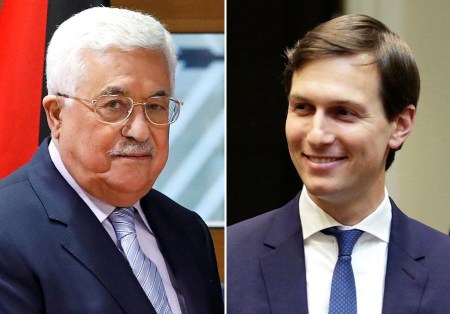
Abbas and Kushner. (photo credit:REUTERS)

US President Donald Trump is reportedly weighing whether to pull out of Israeli-Palestinian peace negotiations following a “tense” meeting with White House senior staff and officials in Ramallah, according to London-based Arabic daily al-Hayat on Saturday.

The report claimed that Trump is to determine the future of reigniting Mideast peace talks in the near future, including  the possibility of withdrawing completely from the process.

The al-Hayat report came just days after a meeting between the administration’s senior adviser Jared Kushner and Palestinian Authority President Mahmoud Abbas, which was described as “tense” by an Abbas advisor present at the talks.

Abbas was supposedly furious with the president’s son-in-law after Kushner relayed Israeli demands to the 81-year-old Palestinian leader which included the immediate halt of payments to terrorists and their families.

Abbas angrily accused Kushner and Trump’s lead international negotiator, Jason Greenblatt, of taking Israel’s side and refused to commit to the request.

The report claims that the Trump administration was equally upset with Abbas after he failed to denounce the latest stabbing attack in Jerusalem, leaving 23-year-old St.-Sgt. Maj. Hadas Malka brutally stabbed to death in a terror attack last week. Ties were further strained after Abbas reportedly refused to meet  American ambassador to Israel David Friedman.

The Palestinian official also told the paper that the Americans demanded Palestinian officials curb inflammatory statements regarding Israel.

“(Kushner) will submit his report to the president and, after it is submitted, Trump will decide if there’s a chance for negotiations or it might be preferable to pull out peace talks,” the official said.

Abbas claimed that Israel is using the issue of payments to terrorists and their families as a pretext to avoid entering peace-talks, saying that the payments are a part of the Palestinian government’s “social responsibility.”