Archive for the ‘P5+1’ category

Ron Dermer and Dore Gold on Fox

March 8, 2015

Ron Dermer and Dore Gold on Fox, via You Tube, March 8, 2015

(Giving Iran years to pursue its ambition of obliterating the U.S. and Israel, with few or no remaining sanctions as Iran continues its efforts to control the Middle East, and no significant progress in allowing the IAEA to pursue its investigations of Iran’s past and future progress in nuclear weaponry strikes me as worse than merely absurd.– DM)

Nuclear Truth; Clare Lopez, Hide the Nukes

March 8, 2015

Nuclear Truth; Clare Lopez, Hide the Nukes, via You Tube, March 7, 2015


Update: Iran May Have Faked Events to Show that Khamenei is not Dead

March 8, 2015

Update: Iran May Have Faked Events to Show that Khamenei is not Dead, The Jewish PressTzvi Ben-Gedalyahu, March 8, 2015

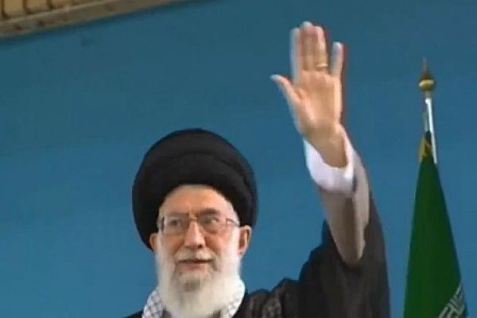
khameiniKhamenei may not raise his hand again.

[I]t was Iranian media that reported on Friday he had been hospitalized, and if he had been released, Fars certainly would have headlined it.

His critical condition – or death – will make it difficult for the Islamic Republic to reach an agreement with the P5+1 powers by the end of the month.

***************

Iran’s Supreme Leader Ayatollah Seyed Ali Khamenei supposedly met with environmental activists in Tehran on Sunday, two days after he was hospitalized and hours after social media chatter said he is dead.

“Frequent news about the death of Ali Khamenei, Supreme Leader of Iran, the Persian State might be a serious historical change doors,” tweeted Gamal Sultan, a Cairo-based journalist for Rassd News.

The claim by the regime’s propaganda organ Fars News Agency of his supposed attendance in public was not accompanied by any photograph or quotes, another indication that the paranoid propaganda machine is keeping a gag order on his reported death until it feels dissidents won’t exploit a power vacuum.

Fars reported Sunday:

The public meeting that was held in the national Week of Natural Resources was particularly important as it put an end to Israeli driven rumors in the social media and a number of western websites in the last three days that alleged the Iranian leader has been hospitalized due to critical health conditions.

Some western media outlets pushed the rumor so much that they claimed that Tehran would soon announce the leader’s demise.

But it was Iranian media that reported on Friday he had been hospitalized, and if he had been released, Fars certainly would have headlined it.

Furthermore, Khamenei’s “public meeting’ supposedly with environmentalist activists, is not an event that deserves headiness in Iran.

The Jewish Press reported here on Friday that Khamenei was critically ill from a stage four cancer condition.

Khamenei has ruled for 26 years and has led a regime based on strict Islamic law. He was behind the brutal suppression of the protest movement in 2009, which resulted in the deaths and disappearance of thousands of demonstrators, and the murders of American soldiers in Lebanon in the 1980s.

It is hard to ignore the timing of Khamenei’s hospitalization and reported death with Purim and talks on an agreement on Iran’s nuclear development.

His critical condition – or death – will make it difficult for the Islamic Republic to reach an agreement with the P5+1 powers by the end of the month.

Khamenei has called the shots, and a power vacuum leaves all of the little power mongers clawing at each other to replace him. If there is not an immediate replacement, it might give a green light to dissidents to come out of the woodwork and demand an end to the Islamic regime.

The leader of the free world

March 6, 2015

The leader of the free world, Truth Revolt, Bill Whittle, via You Tube, March 5, 2015

Scott Ott first described him thus… a brave, thoughtful, serious man doing a brave, thoughtful serious job. In his latest FIREWALL, Bill Whittle provides the amazing and disturbing contrast between The President of the United States and The Leader of the Free World

Dealing With the Iranian Death Cult

March 6, 2015

Dealing With the Iranian Death Cult, American ThinkerWarren Adler, March 2, 2015

The surprise attack on Pearl Harbor and the resultant bloodbath should stand as an example of how a rigidly brainwashed death cult like Iran will choose the apparent path of negotiation while hiding its lethal ambition under a camouflage of lies.

*****************

While Prime Minister Benjamin Netanyahu of Israel laid out a strong case for mistrusting Iranian intentions, he did not define the bedrock reason why Iran cannot be trusted. To do that, one must understand the captive mentality of the cult phenomena and how it distorts reason, brainwashes its adherents, and creates unquestioning followers.

For those of us with strong cognizant memories of the events before, during and after the stunning Japanese attack on Pearl Harbor on December 7th, 1941, the current negotiations with Iran to prevent this terror-sponsoring cultist state from developing a nuclear weapon seems chillingly similar.

Prior to that “day of infamy” as then President Franklin Roosevelt so aptly characterized it, the United States was locked in tense and complicated negotiations with Japan to settle conflicts that divided our two countries. They were many, involving a clash of perceived power divisions in the Pacific with underlying territorial and psychological issues leaving both countries at loggerheads.

The United States, satisfied that it had broken the Japanese military codes, felt secure enough that it could divine the Japanese positions on its statecraft and military plans. The Japanese, who had entered into a tripartite agreement with Hitler and Mussolini, felt secure in their military might and those of their Axis allies in the face of a largely militarily unprepared America to extract whatever concessions they were seeking from the United States.

It is true that America is not negotiating alone with Iran, but its position in the discussion and eventual outcome, by virtue of its historical leadership role, makes the comparison worth noting.

America in 1941 was facing comparative angst. President Roosevelt, who had promised to stay out of the war, was dealing with a reluctant public that had little appetite to enter the fray, although he had been persuaded by Winston Churchill to assist the Allies by providing armaments through the Lend-lease program. Even as negotiations with the Japanese proceeded, the Japanese had no intention of rapprochement and had actually been planning the assault on Pearl Harbor for many months before.

Worse, the American intelligence community was divided in their assessment of Japanese intentions and had not a clue about its cultist discipline. They were monstrously naive about the power of cult psychology and, unfortunately, they still are. Iran is run by death cult adherents operating under the guise of religion with all power, despite all the outward signs of alleged diversity, vested in one man.

Japan at that time was also being manipulated by cultists enmeshed in the doctrines of State Shinto, based on a degraded interpretation of the samurai Bushido code. They later initiated the suicide bomber pilot program, finding recruits eager to kill themselves for the emperor by smashing their planes into American ships. If that isn’t death cult conduct, then I’d like to know what is.

At the time of Pearl Harbor, Adolf Hitler, a charismatic and ruthless megalomaniac, had turned the Nazi Party into a brutal master race entitlement cult determined to make “Deutschland Uber Alles” a reality. Indeed, by then the Nazis had brainwashed the German people into the fanatic belief that they were going to fulfill that destiny in a thousand-year Reich, and Hitler had demonstrated his military prowess designed to reach that goal. He held total sway over the Germans, not unlike Ayatollah Khamenei and his cult followers in their control over Iran.

Nothing happens in Iran without the ayatollah’s approval. Indeed, the Islamic terrorist tentacles of the Iranian regime is considerable and unlikely to be deterred by mere negotiations. “Death to America” and “Death to Israel” are not just empty slogans. They are chosen statements of intent officially approved by the regime leader.

The State Shinto cult of emperor worship was manipulated by Japan’s power-hungry military to have the Japanese people believe in the inevitability of their own destiny to carve out their own empire in the Pacific. Indeed, they managed to persuade the revered Emperor Hirohito himself to agree to their machinations. His naive approval was all that was needed to bring the Japanese people on board, a typical cult scenario.

The weakest partner in this ménage a trois, Benito Mussolini, had earned himself some cred by an African adventure in Eritrea and North Africa.

Using the cult comparison, there seems to be little difference between Khomeini and Hitler, at least in terms of power. Hitler, like Khamenei today, calls the shots. Khamenei, his minions, and their vast network of Iranian-armed and financially-supported death cult Islamic terror cells is, by any rational measure, an existential danger to America, and certainly to Israel.

Indeed, nuclear bombs and long-range missiles in the hands of this cult could easily transform a mere perceived danger into a planetary disaster and fulfill their “death to” sloganeering.  Such power in the hand of the Iranian death cult will create a destructive capacity that by comparison makes Hitler’s armies seem like toy soldiers.

What history has taught us is that cults that have gained total power over their adherents will always use any means to gain their ends. They will employ any tactic that hastens their victory. They will lie, cheat, charm, brutalize, and kill anyone who stands in their way. They will demolish any obstacle that confronts them and inhibits their goals. They will dissimulate and deceive.

The idea that sanity will prevail when it comes to cult leaders is a false notion. Hitler, by the evidence of his suicide, appeared to have understood that death was a finality. Islamic terrorist’s have been brainwashed to believe that death, by sacrificing oneself to what they believe is their Prophet’s desire, is a continuation of physicality, offering perpetual pleasure through eternity in some imagined paradise.

The comparison with Pearl Harbor may seem farfetched and hysterical to some, but as 9/11 has illustrated, a cult in which adherents have no fear of death is a weapon of enormous power. Those who believe that leadership sanity and logic will prevail if Iran gets its bomb and actually uses it against their “Death to” objectives should understand that retaliation, which will surely come, could be welcomed by the Iranian perpetrators of the Jihad cult as a glorious suicide mission guaranteeing an entry ticket to their imagined paradise.

The surprise attack on Pearl Harbor and the resultant bloodbath should stand as an example of how a rigidly brainwashed death cult like Iran will choose the apparent path of negotiation while hiding its lethal ambition under a camouflage of lies.


Dr. Jasser gives reaction to Israeli Prime Minister Netanyahu’s speech

March 6, 2015

Dr. Jasser gives reaction to Israeli Prime Minister Netanyahu’s speech, You Tube, March 3, 2015

(Dr. Jasser is an American citizen and a Muslim. Is he also an “Islamophobe?” Please see also The ‘Islamophobia’ scam returns.– DM)


White House pushing Israel to recall ambassador?

March 5, 2015

White House pushing Israel to recall ambassador? Hot Air, Ed Morrissey, March 5, 2015

Yesterday, the Washington Post and former Obama adviser and Middle East envoy Dennis Ross urged Barack Obama to provide a serious response to the “strong case” presented by Benjamin Netanyahu to a joint session of Congress against the administration’s Iran deal. The left-leaning Israeli paper Ha’aretz reports that the “serious response” has been to treat Israeli ambassador Ron Dermer as an unwelcome guest to the party. Dermer created the embarrassment of Barack Obama this week, as Ha’aretz reports the White House’s thinking, and Dermer has to go if Netanyahu wants to do business over the next two years:

“We are not the ones who created this crisis,” said a senior administration official. “President Obama has another two years in office and we wish to go back to a reality where you can work together despite the differences. The prime minister of Israel is the one who needs to find a way to fix this.”

Although White House officials don’t say so explicitly, they seem to imply that one way to repair the relations between Netanyahu and Obama would be to replace Israel’s ambassador to Washington, Ron Dermer. The latter is seen as an instigator who concocted Netanyahu’s Congress speech behind Obama’s back with John Boehner, the Republican speaker of the House of Representatives.

In his speech to AIPAC, Netanyahu praised Dermer for standing firm and taking the heat in Washington. If Netanyahu wins the election and continues to back Dermer, the ambassador will find himself isolated in the American capital. As long as Obama is in the White House, nobody in the administration will work with him.

Ha’aretz reporter Barak Ravid reports this in a matter-of-fact manner, which misses the irony in this passage:

Over the past six years, there have been more than a few ups and downs in the Netanyahu-Obama relationship – tensions, crises, public recriminations and wrangling before the cameras. Senior U.S. officials say that to date, ongoing relations between the two countries continue to function despite these strains. But this time, they stressed, there was the feeling that Netanyahu was using these differences – in fact, highlighting and intensifying them – for his own political needs.

“Historians can probably find examples of times when there were similar crises in the U.S.-Israel relations in the past,” said a senior U.S. official. “In the last six years we had big differences over the peace process and on other issues, but the situation now is extremely difficult and feels more politically charged than ever before.”

Ahem. When Hamas opened fire on Israel last summer, which country went to Qatar to legitimize the terrorist group in negotiations in order to push Israel into recognizing them? That came just after the Bowe Bergdahl swap sent five high-ranking Taliban commanders to Doha, and the Obama administration needed to show that Qatar could be trusted, and to allow Qatar to curry favor in the region. It took Egypt Abdel Fatah al-Sisi to bigfoot John Kerry out of that particular folly.

Don’t think for a moment that the Obama administration hasn’t been playing politics with Iran all along, too. Which country in this equation has a foreign-policy track record so poor that it has desperately glommed onto the idea of a rapprochement with the largest state sponsor of terrorism in the world? For this White House to accuse another government, especially an ally as beleaguered as Israel, of playing politics with foreign policy and alliances is the height of hypocrisy. Obama’s entire policy in the region has been predicated on playing footsie with Iran since he first took office, either in a sham “containment” relationship or a fully endorsed policy of regional hegemony.

As for Dermer, he’s clearly not the problem. However, as one former US ambassador to Israel says, ambassadors are “an expendable lot,” and Netanyahu may need to find another envoy if he wins another term as Prime Minister. That won’t change the trajectory of this administration’s folly on Iran, though, nor the chronic ineptitude of Obama’s State Department on Israel and the region.

Update on the Update below: That story was from last year, actually, as Gabriel Malor pointed out later on Twitter. We both missed that. I’ve changed the headline to remove the red headline and wanted to post this above the link. My apologies for the confusion, even though it’s still a pretty good reminder of the threat Iran poses to Israel and the region.

Update: Here’s a timely reminder that Netanyahu accurately warned that Iranian support for terrorism was a direct threat to Israel (via Gabriel Malor):

The Israel Navy intercepted a ship early on Wednesday that Iran was using to smuggle dozens of long-range rockets to Gaza.

The IDF’s “Operation Discovery” took place in the Red Sea, 1,500 kilometers away from Israel and some 160 kilometers from Port Sudan. IDF Chief of Staff Lt.-Gen. Benny Gantz oversaw the raid.

Missile ships and navy commandos from the Flotilla 13 unit, backed by the air force, raided the Klos-C cargo ship, which was carrying Syrian- manufactured M-302 rockets.

The ship’s crew is in Israeli custody, and the navy is towing the vessel to Eilat, where it is expected to arrive in the coming days.

The rockets originated in Syria, according to Military Intelligence assessments. Iran reportedly flew the rockets from Syria to an Iranian airfield, trucked them to the seaport of Bander Abbas, and shipped them to Iraq, where they were hidden in cement sacks. The ship then set sail for Port Sudan, near the Sudanese-Eritrean border, on a journey that was expected to last some 10 days.

Hey, but I’m sure the Tehran mullahcracy will be totally trustworthy with those thousands of uranium centrifuges!


The Pointlessness of the Two-Phased Nuclear Deal

March 5, 2015

The Pointlessness of the Two-Phased Nuclear Deal, Front Page Magazine, March 5, 2015

(The pointless point is: Never mind the pesky details which you wouldn’t understand anyway; Obama achieved peace in our time! — DM)

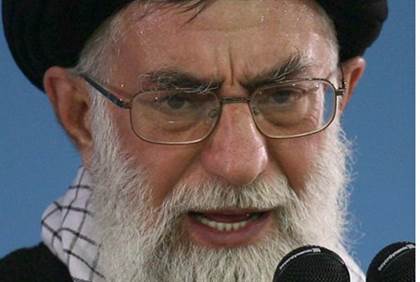
366376_Ayatollah-Khamenei-428x350

According to Kerry and Iranian leaders, the first phase is aimed at reaching a general outline by the end of March, while the second phase will chart a way to agree on the nuances and technical issues by June. But didn’t both sides previously reach an interim deal and discuss the major talking points for the final nuclear talks?

The major objective of this strategy by the Obama administration is to avoid criticism by projecting a pointless picture that “progress” is being made, that Iran is complying with the International Atomic Energy Agency (IAEA) and sanction rules, and that the Obama administration’s policy on Iran is effective. The administration appears to ignore that Iran is already skirting the sanction, as at least $1 billion has been smuggled into Tehran by the Iranian government in bank notes.

****************

The deadline for the “first phase” of nuclear talks between the Islamic Republic and the six world powers (known as the P5+1; the United States, the United Kingdom, Germany, France, Russia, and China) is approaching.

The prolonged negotiations appear to be making progress, according to Secretary of State John Kerry. In addition, Iranian Foreign Minister Mohammad Javad Zarif stated that both sides came to “a better understanding” at the negotiation.

After the interim nuclear deal was reached in November 2013, the nuclear negotiations between the two sides were again divided into two stages in order to reach a final and comprehensive nuclear deal. Kerry previously proposed the two-phased nuclear negotiations.

The question that is being ignored by the mainstream media is: What are the real objectives of dividing the final negotiations into two stages?

According to Kerry and Iranian leaders, the first phase is aimed at reaching a general outline by the end of March, while the second phase will chart a way to agree on the nuances and technical issues by June. But didn’t both sides previously reach an interim deal and discuss the major talking points for the final nuclear talks?

The major objective of this strategy by the Obama administration is to avoid criticism by projecting a pointless picture that “progress” is being made, that Iran is complying with the International Atomic Energy Agency (IAEA) and sanction rules, and that the Obama administration’s policy on Iran is effective. The administration appears to ignore that Iran is already skirting the sanction, as at least $1 billion has been smuggled into Tehran by the Iranian government in bank notes.

For President Obama, striking a ceremonial, pointless, and redundant deal by the proposed March deadline — rather than waiting until June to reach a final accord — would buttress his argument that “progress” is being continuously made with respect to his administration’s efforts to curb Iran’s nuclear program.

Domestically speaking, the administration has been heavily criticized by Congress (by both the Republicans and Democrats) for allowing the Islamic Republic to buy time, making unnecessary and unprecedented concessions, prolonging the talks, and not showing signs of real progress towards a credible final and comprehensive nuclear deal.

In addition, by striking a pointless deal in the “first phase” and projecting that “progress” has been made, President Obama would desire to ratchet up his leverage in vetoing any sanctions bill that might be proposed by Congress against the Islamic Republic’s nuclear and sanctions defiance.

In other words, President Obama will need this unnecessary first-phase deal in order to avoid further domestic pressure, show the effectiveness of spending so much political capital on the nuclear talks with Iran, ease sanctions on Iran, and justify making compromises.

It is in the interest of both President Obama and Hassan Rouhani to reach a deal in the first phase.

In addition to the aforementioned political reasons and interests of the Obama and Rouhani administrations to strike a deal in the first phase, other factors contribute to the increasing likelihood of reaching a general accord by the end of March.

The first phase agreement will not include the technical details regarding Iran’s nuclear program. The accord will likely include the major talking points that both sides repeatedly discussed previously. Some of the crucial points are:

·      US possible flexibility on the breakout timeline (The amount of time that Tehran will need to build a nuclear bomb from highly enriched uranium or Plutonium);

·      Iran’s flexibility for the immediate sanction reliefs;

·      Iran’s acceptance of providing more data regarding the military dimensions of Tehran’s nuclear program;

·      The heavy water Arak Reactor, and the production of plutonium at this site;

·      Flexibility on both sides to reduce and further discuss the scope and capacity of Tehran’s uranium enrichment; and

·      The possibility of allowing Iran to maintain an additional number of centrifuges.

The nuances and the technical details are not part of the first phase accord.  The following crucial questions are less likely to be included in the first phase of the agreement: What exactly will the minimum “breakout” time be? What will the duration of the deal be? 10 years? 15 years? 20 years? How many years will it take to remove all economic sanctions against Iran? Will Tehran keep 1,500, 4,500, or 6,500 centrifuges? What is the exact scope of nuclear research and development that Tehran can maintain?

Since the aforementioned crucial and nuanced questions are not part of the first phase accord, striking this dispensable accord of the first phase is very likely and not a strenuous task.

As a result, reaching this general outline by end of March will not be historic as some mainstream media suggest. It is in fact pointless, unnecessary, redundant, and it is more likely to occur.

Report: Iran’s Supreme Leader Hospitalized in Critical Condition

March 5, 2015

Report: Iran’s Supreme Leader Hospitalized in Critical Condition, Israel National News, Ari Yashar, March 5, 2015

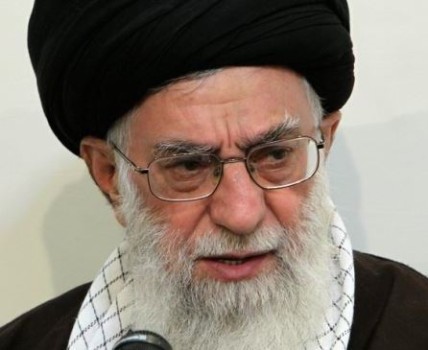
img569664Ayatollah Ali Khamenei Reuters

Arab media reports Ayatollah Khamenei brought for urgent care in Tehran after several of his body systems fail.

Just in time for Purim, the Jewish holiday celebrating the redemption of the Jewish people from plots of genocide in ancient Persia, Iranian Supreme Leader Ayatollah Ali Khamenei was reportedly hospitalized incritical condition on Wednesday.

According to Arab media reports cited by Israel Hayom, Khamenei was urgently brought to a hospital in Tehran after several of his bodily systems had already failed.

The reports add that the 76-year-old supreme leader of the Islamic regime has undergone surgery and remains in critical condition.

Recently it has been reported that he was suffering from prostate cancerwhich had spread to additional parts of his body, and due to his poorhealth condition he had largely ceased taking part in public events.

The hospitalization comes just days after Prime Minister Binyamin Netanyahu addressed Congress on Tuesday to warn of the existential threat to Israel and the world that Iran poses, urging America to avoid the deal being formed on Iran’s nuclear deal ahead of a March 31 deadline for talks.

Lending some credence to the reports is the fact that Khamenei’s official Twitter account hasn’t been updated since Netanyahu’s speech on Tuesday, when he wrote the “US is now facing a #dilemma. It should either stop unlimited services to #Israel or they’ll lose more face in the world.”

Khamenei has threatened Israel with destruction numerous times in the past; last October he used his annual message to Hajj pilgrims heading to Mecca to call for Muslim unity to bring Israel’s “annihilation.”

And last November he launched a series of anti-Israel Tweets, writing in one “This barbaric, wolflike & infanticidal regime of #Israel which spares no crime has no cure but to be annihilated.”

Khamenei has demanded Iran be allowed to increase to 190,000 centrifuges in the deal being formulated, an amount that would allow it to produce a nuclear arsenal within weeks.

And yet it was revealed last November that US President Barack Obama had sent secret letters to Khamenei in an overture looking for an alliance and cooperation in the fight against Islamic State (ISIS) terrorists in Iraq and Syria.

Iran is the largest state sponsor of terrorism, and as Netanyahu noted in his speech, has seized influence in Yemen through the Houthis, Lebanon through Hezbollah, Iraq by taking a lead role in the ISIS fight, and Syria by propping up President Bashar al-Assad militarily.

The World Bows to Iranian Regional Hegemony

March 4, 2015

The World Bows to Iranian Regional Hegemony, Asia Times Online via Middle East Forum, David P. Goldman, March 4, 2015. Originally published under the title, “World Bows to Iran’s Hegemony.”
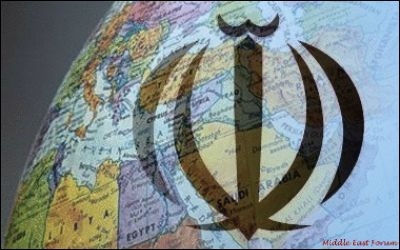
1025The looming nuclear agreement is a dark cloud for countries within range of Iranian ballistic missiles.

The powers of the world hope to delay, but not deter, Iran’s eventual acquisition of nuclear weapons.

The US has tacitly accepted the guiding role of Iranian commanders in Iraq’s military operations against ISIS.

Washington destroyed the balance of power that defined the region’s politics when it pushed through majority rule in Iraq.

****************

The problem with Israeli Prime Minister Benyamin Netanyahu’s address to Congress March 3 was not the risk of offending Washington, but rather Washington’s receding relevance. President Barack Obama is not the only leader who wants to acknowledge what is already a fact in the ground, namely that “Iran has become the preeminent strategic player in West Asia to the increasing disadvantage of the US and its regional allies,” as a former Indian ambassador to Oman wrote this week.

For differing reasons, the powers of the world have elected to legitimize Iran’s dominant position, hoping to delay but not deter its eventual acquisition of nuclear weapons. Except for Israel and the Sunni Arab states, the world has no desire to confront Iran. Short of an American military strike, which is unthinkable for this administration, there may be little that Washington can do to influence the course of events. Its influence has fallen catastrophically in consequence of a chain of policy.

The best that Prime Minister Netanyahu can hope for is that the US Congress will in some way disrupt the Administration’s efforts to strike a deal with Iran by provoking the Iranians. That is what the White House fears, and that explains its rage over Netanyahu’s appearance.

Tehran may overplay its hand, but I do not think it will. The Persians are not the Palestinians, who discovered that they were a people only a generation ago and never miss an opportunity to miss and opportunity; they are ancient and crafty, and know an opportunity when it presents itself.

Most of the world wants a deal, because the alternative would be war. For 10 years I have argued that war is inevitable whatever the diplomats do, and that the question is not if, but how and when. President Obama is not British prime minister Neville Chamberlain selling out to Hitler at Munich in 1938: rather, he is Lord Halifax, that is, Halifax if he had been prime minister in 1938. Unlike the unfortunate Chamberlain, who hoped to buy time for Britain to build warplanes, Halifax liked Hitler, as Obama and his camarilla admire Iran.

China is Chamberlain, hoping to placate Iran in order to buy time. China’s dependence on Middle East oil will increase during the next decade no matter what else China might do, and a war in the Persian Gulf would ruin it.

Until early 2014, China believed that the United States would guarantee the security of the Persian Gulf. After the rise of Islamic State (ISIS), it concluded that the United States no longer cared, or perhaps intended to destabilize the region for nefarious reasons. But China does not have means to replace America’s presence in the Persian Gulf. Like Chamberlain at Munich, it seeks delay.

Obama, to be sure, portrays his policy in the language of balance of power. He told the New Yorker’s David Remnick in 2014,

It would be profoundly in the interest of citizens throughout the region if Sunnis and Shias weren’t intent on killing each other. And although it would not solve the entire problem, if we were able to get Iran to operate in a responsible fashion – not funding terrorist organizations, not trying to stir up sectarian discontent in other countries, and not developing a nuclear weapon – you could see an equilibrium developing between Sunni, or predominantly Sunni, Gulf states and Iran in which there’s competition, perhaps suspicion, but not an active or proxy warfare.

That, as the old joke goes, is the demo version.

On the ground, the US has tacitly accepted the guiding role of Iranian commanders in Iraq’s military operations against ISIS. It is courting the Iran-backed Houthi rebels who just overthrow a Saudi-backed regime in Yemen. It looks the other way while its heavy arms shipments to the Lebanese army are diverted to Hezbollah.

At almost every point at which Iran has tried to assert hegemony over its neighbors, Washington has acquiesced. “In the end, peace can be achieved only by hegemony or by balance of power,” wrote Henry Kissinger. The major powers hope for peace through Iranian hegemony, although they differ in their estimate of how long this will last.

Apart from its nuclear ambitions, the broader deal envisioned by Washington would leave Iran as a de facto suzerain in Iraq. It would also make Iran the dominant power in Lebanon (via Hezbollah), Syria (via its client regime) and Yemen (through its Houthi proxies). Although Sunni Muslims outnumber Shi’ites by 6:1, Sunni populations are concentrated in North Africa, Turkey and South Asia. Iran hopes to dominate the Levant and Mesopotamia, encircling Saudi Arabia and threatening Azerbaijan.

It is grotesque for America to talk of balance of power in the Persian Gulf, because America destroyed the balance of power that defined the region’s politics from the end of the First World War until 2006, when Washington pushed through majority rule in Iraq.

The imperialist powers in their wisdom established a power balance on two levels. First, they created a Sunni-dominated state in Iraq opposite Shi’ite Iran. The two powers fought each other to a standstill during the 1980s with the covert encouragement of the Reagan administration. Nearly a million soldiers died without troubling the world around them.

Second, the Sykes-Picot agreement of 1916 created two states, Syria and Iraq, in which minorities ruled majorities – the Alawite minority in Syria, and the Sunni minority in Iraq. Tyranny of a minority may be brutal, but a minority cannot exterminate a majority.

America’s first great blunder was to force majority rule upon Iraq. As Lt General (ret.) Daniel Bolger explained in a 2014 book,

The stark facts on the ground still sat there, oozing pus and bile. With Saddam gone, any voting would install a Shiite majority. The Sunni wouldn’t run Iraq again. That, at the bottom, caused the insurgency. Absent the genocide of Sunni Arabs, it would keep it going.

Under majority Shi’ite rule, Iraq inevitably became Iran’s ally. Iranian Revolutionary Guards are now leading its campaign against the Sunni resistance, presently dominated by ISIS, and Iranian officers are leading Iraqi army regulars.

This was the work of the George W Bush administration, not Obama. In its ideological fervor for Arab democracy, the Republicans opened the door for Iran to dominate the region. Condoleezza Rice, then Bush’s National Security Advisor, proposed offering an olive branch to Iran as early as 2003. After the Republicans got trounced in the 2006 Congressional elections, defense secretary Donald Rumsfeld got a pink slip, vice president Dick Cheney got benched, and “realist” Robert Gates – the co-chairman of the 2004 Council on Foreign Relations task force that advocated a deal with Iran – took over at Defense.

China and Russia

In the past, China has sought to strike a balance between Saudi Arabia and Iran with weapons sales, among other means. One Chinese analyst observes that although China’s weapons deliveries to Iran are larger in absolute terms than its sales to Saudi Arabia, it has given the Saudis its best medium-range missiles, which constitute a “formidable deterrent” against Iran.
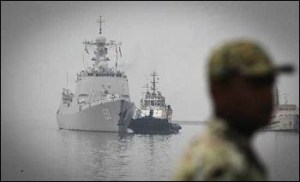
1026A Chinese warship arrives in Bandar Abbas, Iran in September 2014.

As China sees the matter, its overall dependency on imported oil is rising, and the proportion of that oil coming from Iran and its perceived allies is rising. Saudi Arabia may be China’s biggest provider, but Iraq and Oman account for lion’s share of the recent increase in oil imports. China doesn’t want to rock the boat with either prospective adversary.

Among the world’s powers, China is the supreme rationalist: it views the world in terms of cold self-interest and tends to assume that others also view the world this way. One of China’s most respected military strategists told me bluntly that the notion of a nuclear exchange between Israel and Iran (and by implication any regional nuclear power and Iran) was absurd: the Iranians, he argued, know that a nuclear-armed Israel could destroy them in retaliation.

Other Chinese analysts are less convinced and view Iran’s prospective acquisition of nuclear weapons with trepidation. It is not only war with Israel but with Saudi Arabia that concerns the oil-importing Chinese. For the time being, Beijing has decided to accommodate Iran. In a March 2 commentary, Xinhua explicitly rejected Israeli objections:

The US Congress will soon have a guest, Israeli Prime Minster Benjamin Netanyahu, who is expected to try to convince lawmakers that a deal with Iran on its nuclear program could threaten the very existence of the Jewish state.

Despite the upcoming pressure, policymakers in Washington should have a clear mind of the potential dangers of back-pedaling on the current promising efforts for a comprehensive deal on the Iranian nuclear issue before a March 31 deadline …

With a new round of talks in Switzerland pending, it is widely expected that the P5+1 [the five permanent members of the UN Security Council plus Germany] could succeed in reaching a deal with Iran to prevent the latter from developing a nuclear bomb, in exchange for easing sanctions on Tehran.

The momentum does not come easy and could hardly withstand any disturbances such as a surprise announcement by Washington to slap further sanctions on Tehran.

The Obama administration needs no outside reminder to know that any measures at this stage to “overwhelm” Iran will definitely cause havoc to the positive atmosphere that came after years of frustration over the issue.

While it is impossible for Washington to insulate itself from the powerful pro-Israel lobbyist this time, the US policymakers should heed that by deviating from the ongoing endeavor on Iran they may squander a hard-earned opportunity by the international community to move closer to a solution to the Iran nuclear issue, for several years to come if not forever.

Russia has taken Iran’s side explicitly, for several reasons.

First, Russia has stated bluntly that it would help Iran in retaliation for Western policy in Ukraine, as I wrote in this space January 28. Second, Russia’s own Muslim problem is Sunni rather than Shi’ite. It has reason to fear the influence of ISIS among its own Muslims. If Iran fights ISIS, it serves Russian interests. Russia, to be sure, does not like the idea of a nuclear power on its southern border, but its priorities place it squarely in Iran’s camp.

Demographic Time Bomb

The Israeli prime minister asserted that the alternative to a bad deal is not war, but a better deal. I do not think he believes that, but Americans cannot wrap their minds around the notion that West Asia will remain at war indefinitely, especially because the war arises from their own stupidity.

Balance of power in the Middle East is inherently impossible today for the same reason it failed in Europe in 1914, namely a grand demographic disequilibrium: Iran is on a course to demographic disaster, and must assert its hegemony while it still has time.

Game theorists might argue that Iran has a rational self-interest to trade its nuclear ambitions for the removal of sanctions. The solution to a multi-period game – one that takes into account Iran’s worsening demographic weakness – would have a solution in which Iran takes great risks to acquire nuclear weapons.

Between 30% and 40% of Iranians will be older than 60 by mid-century (using the UN Population Prospect’s Constant Fertility and “Low” Variants). Meanwhile, its military-age population will fall by a third to a half.

Belated efforts to promote fertility are unlikely to make a difference. The causes of Iranian infertility are baked into the cake – higher levels of female literacy, an officially-sanctioned culture of sexual license administered by the Shi’ite clergy as “temporary marriage,” epidemic levels of sexually-transmitted disease and inbreeding. Iran, in short, has an apocalyptic regime with a lot to be apocalyptic about.

Henry Kissinger is right: peace can be founded on either hegemony or balance of power. Iran cannot be a hegemon for long because it will implode economically and demographically within a generation. In the absence of either, the result is war. For the past 10 years I have argued in this space that when war is inevitable, preemption is the least damaging course of action. I had hoped that George W Bush would have the gumption to de-fang Iran, and was disappointed when he came under the influence of Condoleezza Rice and Robert Gates. Now we are back in 1938, but with Lord Halifax rather than Neville Chamberlain in charge.