Op-Ed: Chaos and 2nd Cold War, Part I: Israel’s Nuclear Strategy, Israel National News,Prof. Louis René Beres, October 9, 2015
To fashion a functional nuclear strategy would be difficult for any state in world politics, but it could be especially challenging for one that keeps its bomb more-or-less securely “in the basement.” Now, as the Middle East descends into an ever more palpable chaos,[1] Israel will have to make certain far-reaching decisions on this very complex task.
Among other nuanced and widely intersecting concerns, Jerusalem’s decisions will need to account for a steadily hardening polarity between Russia and the United States.
Here, almost by definition, there will be no readily available guidebook to help lead the way. For the most part, Israel will need to be directed by an unprecedented fusion of historical and intellectual considerations. In the end, any resultant nuclear strategy will have to represent the prospective triumph of mind over mind, not merely of mind over matter.[2]
Conceivably, at least for the Jewish State that is smaller than America’s Lake Michigan, an emergent “Cold War II” could prove to be as determinative in shaping its national nuclear posture as coinciding regional disintegration. Still, a new Cold War need not necessarily prove disastrous or disadvantageous for Israel. It is also possible, perhaps even plausible, that Jerusalem could sometime discern an even greater commonality of strategic interest with Moscow, than with Washington.
To be sure, any such stark shift of allegiance in Israeli geo-political loyalties ought not to be intentionally sought, or in any way cultivated for its own sake. Moreover, on its face, it would currently be hard to imagine in Jerusalem that a superpower mentor of both Syria and Iran could somehow also find strategic common ground with Israel. Yet, in these relentlessly tumultuous times, any normally counter-intuitive judgments could, at least on rare occasions, prove surprisingly correct.
Credo quia absurdum. “I believe because it is absurd.” In these tumultuous times, certain once preposterous counter-intuitive judgments should no longer be dismissed out of hand. Moreover, in seeking to best understand the Israel-relevant dynamics of any renewed Washington-Moscow bipolar axis of conflict, Jerusalem will need to consider the prospects for a conceivably “looser” form of enmity.
In other words, looking ahead, it would seem realistic that a now “restored” superpower axis might nonetheless reveal greater opportunities for cooperation between the dominant “players.” Understood in the traditional language of international relations theory, this points toward a relationship that could become substantially less “zero-sum.”[3]
By definition, regarding zero-sum relationships in world politics, any one state’s gain is necessarily another state’s loss. But in Cold War II, it is reasonable to expect that the still-emerging axis of conflict will be “softer.” Here, for both major players, choosing a cooperative strategy could sometimes turn out to be judged optimal.[4]
Recognizing this core difference in superpower incentives from the original Cold War, and to accomplish such recognition in a timely fashion, could prove vitally important for Israel. In essence, it could become a key factor in figuring out what should or should not be done by Jerusalem about any expected further increments of regional nuclear proliferation, and about Iran.
Iranian nuclearization remains the single most potentially daunting peril for Jerusalem. In this regard, virtually nothing has changed because of the recent Iran Nuclear Agreement (Joint Comprehensive Plan of Action, Vienna, 14 July, 2015).[5] To the contrary, in a situation fraught with considerable irony, Iran’s overall strategic latitude will actually have been expanded and improved by the terms of this concessionary pact.[6] Most plainly, these Iranian enhancements are the permissible result of a now no-holds-barred opportunity for transfer of multiple high-technology weapons systems, from Moscow to Tehran.
For the foreseeable future, the nuclear threat from Iran will continue to dwarf all other recognizable security threats.[7] At the same time, this enlarging peril could be impacted by certain multi-sided and hard to measure developments on the terrorism front. In more precisely military terminology, these intersecting terror threats could function “synergistically,” or as so-called “force multipliers.”
The “whole” of the strategic danger now facing Israel is substantially greater than the simple arithmetic sum of its parts.[8] This true combination could include a persistently shifting regional “correlation of forces,”[9] one that would continue to oscillate menacingly, and also to the observable benefit of Israel’s mortal enemies, both state and sub-state.
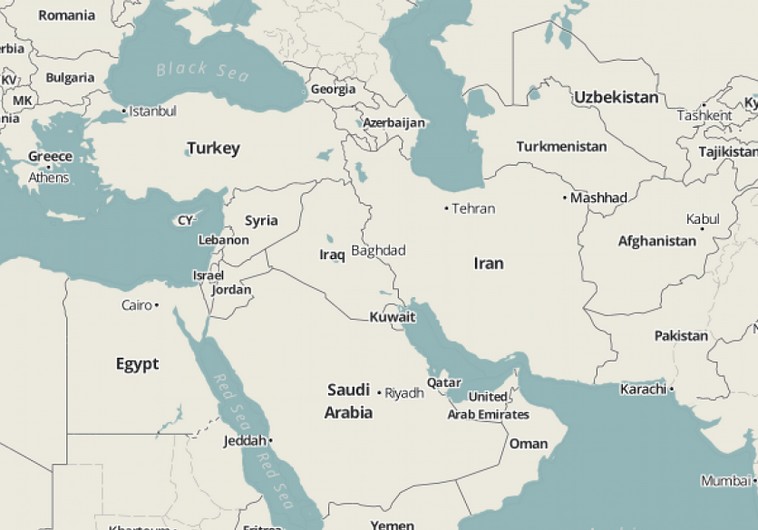
In Jerusalem and Tel-Aviv, serious derivative questions should now be addressed. What does this changing set of adversarial developments mean for Israel in very specifically operational and policy terms? Above all, this configuration of enmity should warn that a steady refinement and improvement of Israel’s nuclear strategy must be brought front and center. For Israel, there can be no other reasonable conclusion, not only because of ominous developments in Iran, but also because of the growing prospect of additional nuclear weapon states in the region, including perhaps Egypt, and/or Saudi Arabia.
Despite U.S. President Barack Obama’s continuing support for a “world free of nuclear weapons,” all of the world’s existing nuclear weapon states are already expanding and modernizing their nuclear arsenals. As of the end of September 2015, the world’s total inventory of nuclear warheads was reliably estimated as 17,000.[10] What Israel must also bear in mind is that this American president’s notion that nuclear weapons are intrinsically destabilizing, or even evil, makes no defensible intellectual sense.
It is plausible, rather, that only the perceived presence of nuclear weapons in the arsenals of both original superpowers prevented World War III. Equally convincing, Israel, without its atomic arsenal – whether ambiguous, or declared – could never survive, especially in a region that may soon combine further nuclear spread with steadily undiminished chaos.
Israel will have to decide, in prompt and sometimes inter-related increments, upon the precise extent to which the nation needs to optimize its composite national security policies on preemption, targeting, deterrence, war fighting, and active defense. A corollary imperative here must be to deal more purposefully with the complicated and politically stubborn issues of “deliberate ambiguity.” Going forward, it will not serve Israel’s best interests to remain ambiguous about ambiguity.
To date, at least, it seems that this longstanding policy of “opacity” (as it is also sometimes called) has made perfectly good sense. After all, one can clearly assume that both friends and enemies of Israel already acknowledge that the Jewish State holds persuasive military nuclear capabilities that are (1) survivable; and (2) capable of penetrating any determined enemy’s active defenses. Concerning projections of nuclear weapon survivability, Israel has made plain, too, its steady and possibly expanding deployment of advanced sea-basing (submarines).
Thus far, “radio silence” on this particular “triad” component has likely not been injurious to Israel. This could change, however, and rather quickly. Here, again, there is no room for error. Already, in delivering his famousFuneral Speech, with its conspicuously high praise of Athenian military power, Pericles had warned: “What I fear more than the strategies of our enemies, is our own mistakes.”[11]
Thus far, there have been no expressed indications that Israel’s slowly growing force of Dolphin-class diesel submarines has anything at all to do with reducing the vulnerability of its second-strike nuclear forces, but any such policy extrapolations about Israeli nuclear retaliatory forces would also be problematic to dismiss.[12]
Also significant for Israel’s overall security considerations is the refractory issue of “Palestine.” A Palestinian state, any Palestinian state, could pose a serious survival threat to Israel, in part, as a major base of operations for launching increasingly lethal terrorist attacks against Israeli citizens. A possibly more important “Palestine” security issue for Israel lies in an even larger generalized potential for creating a steadily deteriorating correlation of regional forces. More specifically, any such deterioration could include various destabilizing “synergies,” that is, tangible interactive effects resulting from instabilities already evident in Iraq and Syria, and from a manifestly concomitant Iranian nuclearization.
Leaving aside the various possibilities of any direct nuclear transfer to terrorists, a Palestinian state would itself remain non-nuclear. But, when viewed together with Israel’s other regional foes, this new and 23rd Arab state could still have the stunningly consequential effect of becoming a “force multiplier,” thereby impairing Israel’s already-minimal strategic depth, and further rendering the Jewish State vulnerable to a thoroughly diverse panoply of both conventional and unconventional attacks. Here, for a variety of easily determinable reasons, a “merely” non-nuclear adversary could still heighten the chances of involving Israel in assorted nuclear weapons engagements,[13] including, in the future, a genuine nuclear war.[14]
What, then, should Israel do next about its core nuclear posture, and about its associated “order of battle?” How, exactly, should its traditionally ambiguous nuclear stance be adapted to the increasingly convergent and inter-penetrating threats of Middle Eastern chaos, Iranian nuclearization, and “Palestine?” In answering these difficult questions, Jerusalem will have to probe very carefully into the alleged American commitment to “degrade” and “destroy” ISIS(IS). However well-intentioned, this pledge, especially if actually carried out effectively, could simultaneously aid both Syria’s President Assad, and the surrogate Shiite militia, Hezbollah.[15]
___________________________
[1] Although composed in the seventeenth century, Thomas Hobbes’Leviathan still offers an illuminating and enduring vision of chaos in world politics. Says the English philosopher in Chapter XIII, “Of the Naturall Condition of Mankind, as concerning their Felicity, and Misery:” during chaos, a condition which Hobbes identifies as a “time of Warre,” it is a time “…where every man is Enemy to every man… and where the life of man is solitary, poore, nasty, brutish, and short.” At the time of writing, Hobbes believed that the condition of “nature” in world politics was less chaotic than that same condition existing among individual human beings -because of what he called the “dreadful equality” of individual men in nature being able to kill others – but this once-relevant differentiation has effectively disappeared with the global spread of nuclear weapons.
[2] The core importance of literally thoughtful military doctrine – of attention to the complex intellectual antecedents of any actual battle – had already been recognized by early Greek and Macedonian armies. See, on this still-vital recognition, F.E. Adcock, The Greek and Macedonian Art of War (Berkeley, CA: University of California Press, 1962), especially Chapter IV.
[3] For much earlier, but still useful, scholarly assessments of polarity in world politics, by this author, See: Louis René Beres, “Bipolarity, Multipolarity, and the Reliability of Alliance Commitments,” Western Political Quarterly, Vol. 25, No. 4, December 1972, pp. 702-710; Louis René Beres, “Bipolarity, Multipolarity, and the Tragedy of the Commons,” Western Political Quarterly, Vol. 26, No. 4, December 1973, pp. 649-658; and Louis René Beres, “Guerillas, Terrorists, and Polarity: New Structural Models of World Politics,”Western Political Quarterly, Vol. 27, No.4., December 1974, pp. 624-636.
[4] Of course, in the context of any non-zero-sum game, ensuring enforceable agreements between the players (here, the United States and Russia) could still prove more-or-less decisively problematic.
[5] See Louis René Beres, “After the Vienna Agreement: Could Israel and a Nuclear Iran Coexist?” IPS Publications, IDC Herzliya, Institute for Policy and Strategy, Israel, September 2015.
[6] Significantly, this agreement also violates two major treaties, the 1968Non-Proliferation Treaty (NPT), and the 1948 Genocide Convention. The first violation has to do with subverting the NPT expectation that all non-nuclear state signatories must remain non-nuclear for a period of “indefinite duration.” The second violation centers on codified U.S. indifference to Genocide Convention obligations concerning responsibility to enforce the prohibition against “incitement to genocide.” In both cases, moreover, per article 6 of theU.S. Constitution – the “Supremacy Clause” – these violations are ipso factoalso violations of U.S. domestic law.
[7] See Louis René Beres, “Like Two Scorpions in a Bottle: Could Israel and a Nuclear Iran Coexist in the Middle East?” The Israel Journal of Foreign Affairs, Vol. 8., No. 1., 2014, pp. 23-32. See, also: Louis René Beres and (General/USAF/ret.) John T. Chain, “Living With Iran: Israel’s Strategic Imperative,” BESA Perspectives Paper No. 249, May 28, 2014, BESA Center for Strategic Studies, Israel. General Chain was Commander-in-Chief, U.S. Strategic Air Command.
[8] See Louis René Beres, “Core Synergies in Israel’s Strategic Planning: When the Adversarial Whole is Greater than the Sum of its Parts,” Harvard National Security Journal, Harvard Law School, June 2, 2015.
[9] See Louis René Beres, “Understanding the Correlation of Forces in the Middle East: Israel’s Urgent Strategic Imperative,” The Israel Journal of Foreign Affairs, Vol. IV, No. 1 (2010). Russia’s Putin, of course, is accustomed to thinking in such strategic terms; in the Soviet days, “correlation of forces” was already a tested yardstick for measuring Moscow’s presumptive military obligations.
[10] Se: Hans M. Kristensen, “Nuclear Weapons Modernization: A Threat to the NPT?” Arms Control Today, Arms Control Association, September 2015, 11 pp.
[11] From the Funeral Speech of 431 BCE, near the outbreak of the Peloponnesian War, when Sparta first invaded Attica. For greater detail, see:Thucydides, The Speeches of Pericles, H.G. Edinger, tr., New York: Frederick Ungar Publishing Co., 1979), 68 pp.
[12] On nuclear sea-basing by Israel (submarines) see: Louis René Beres and (Admiral/USN/ret.) Leon “Bud” Edney, “Israel’s Nuclear Strategy: A Larger Role for Submarine Basing,” The Jerusalem Post, August 17, 2014; and Professor Beres and Admiral Edney, “A Sea-Based Nuclear Deterrent for Israel,” Washington Times, September 5, 2014. Admiral Edney was NATO Supreme Allied Commander, Atlantic.
[13] Such engagements could include assorted enemy attacks on Israel’sDimona nuclear reactor. Already, in both 1991 and 2014, this small reactor came under combined missile and rocket attack from Iraq and Hamas aggressions, respectively. For fully authoritative assessments of these attacks, and related risks, see: Bennett Ramberg, “Should Israel Close Dimona? The Radiological Consequences of a Military Strike on Israel’s Plutonium-Production Reactor,” Arms Control Today, Arms Control Association, May 2008, pp. 6-13.
[14] Naturally, the risks of a nuclear war would be expected to increase together with any further regional spread of nuclear weapons. In this connection, returning to the prophetic insights of Thomas Hobbes, back in the seventeenth century (see Note #1, above), Leviathan makes clear that the chaotic condition of nature is substantially worse among individual human beings, than among states. This is because, opines Hobbes, also in Chapter XIII, within this particular variant of chaos, “…the weakest has strength enough to kill the strongest….” Now, however, with the spread of nuclear weapons, the “dreadful equality” of Hobbesian man could be replicated, more or less, in the much larger and more consequential arena of world politics.
[15] “Everything is very simple in war,” advises Clausewitz, “but the simplest thing is also very difficult.” See: Carl von Clausewitz, On War.




 anneinpt
 artaxes
 danmillerinpanama
 davidking1530
 Peter Hofman
 Joseph Wouk
 Peter
Peter Louisiana Steve
 WarSclerotic
Recent Comments