Archive for the ‘Nuclear arms race’ category

Iran Moves to Lift Its Nuclear Enrichment Capacity

June 5, 2018


The Natanz nuclear site in Iran, in 2007. A new centrifuge assembly center there hints at a future resumption of industrial-scale enrichment.Credit Hasan Sarbakhshian/Associated Press

By Thomas Erdbrink June 5, 2018 New York Times

Source Link: Iran Moves to Lift Its Nuclear Enrichment Capacity

{I remember when the media gleefully announced Iran’s nuclear weapons ‘breakout’ was only 10 years away. Then is was 5 years followed by 2 years. Finally, they said 6 months or less. That was years ago.  Makes you wonder just where they are today. – LS}

TEHRAN — Iran announced on Tuesday that it had completed a new centrifuge assembly center at the Natanz nuclear site, in a first step to increasing its enrichment capacity.

While Iran said it would keep enrichment within limits set by the 2015 nuclear accord, the center’s opening seemed to signal that it could swing to industrial-level enrichment if that agreement, which the United States withdrew from last month, should further unravel.

The head of the Atomic Energy Organization of Iran, Ali Akbar Salehi, told state television that the center’s construction had been “in line with our safeguard commitments but not publicly announced.”

A spokesman for the Iranian nuclear agency, Behrouz Kamalvandi, said a letter had been sent to the International Atomic Energy Agency explaining the action. He also told the semiofficial Iranian Students’ News Agency that Tehran would increase its capacity to produce uranium hexafluoride, a feedstock for centrifuges.


Iran’s supreme leader, Ayatollah Ali Khamenei, said on Monday that the country would adhere to enrichment limits set in the 2015 nuclear accord.CreditOffice of the Supreme Leader, via EPA

It was unclear whether the assembly center would actually begin to produce new centrifuges.

Under the 2015 nuclear deal, Iran stopped enriching uranium to the 20 percent level that would allow for rapid development of a nuclear weapon and agreed to a limit of under 5 percent. It will adhere to that limit, Iran’s supreme leader, Ayatollah Ali Khamenei, said in a speech on Monday.

It was also uncertain whether the opening of the centrifuge plant would have any significant impact on Iran’s nuclear program, which continues to be closely monitored by the International Atomic Energy Agency.

When Tehran agreed in 2015 to roll back its nuclear program in exchange for the lifting of international and United States sanctions, European companies rushed to enter the Iranian market. European governments have been working to keep the deal alive and protect those investments after President Trump dismayed many on the Continent by withdrawing and reimposing banking sanctions.

However, the American sanctions would still be a major problem, particularly for multinational companies, and several European firms have already announced plans to pull out of Iran. On Monday, the French group PSA, the maker of Peugeot and Citroën cars, which produces 440,000 vehicles a year in Iran, started closing its joint ventures with local auto manufacturers, though PSA said it would seek a waiver from the United States to maintain that production level.

In his speech, Ayatollah Khamenei warned the Europeans that Iran’s patience was limited, but analysts said that Tehran’s demands of guaranteed purchases of Iranian oil and free bank transfers with the European Union might exceed what the bloc could deliver in any rescue plan for the agreement.

“The Europeans expect the Iranian nation to tolerate and grapple with the sanctions, to give up their nuclear activities, which is an absolute requirement for the future of the country, and also to continue with the restrictions that have been imposed on them,” Ayatollah Khamenei said. “I would tell these governments that this bad dream will not come true.”

The Iran Deal’s Disastrous Legacy Has Nothing to Do with Nukes

May 10, 2018


AP Photo/Ebrahim Noroozi

Noah Rothman / May 9, 2018 Commentary Magazine

Source: The Iran Deal’s Disastrous Legacy Has Nothing to Do with Nukes

{In other words, things are a whole lot worse. – LS}

In March, State Department veteran and former adviser to Barack Obama, Frederic Hof, bid farewell to public life with a stunning admission. Amid a confession regarding his failure to prevent the expansion of the Syrian civil war into a regional crisis, Hof laid the blame for that all-consuming conflict (as well as a notable uptick in Russian aggression) at the feet of Barack Obama’s nuclear deal with Iran.

“[T]he administration sacrificed Syrian civilians and American credibility for the mistaken notion that Iran required appeasement in Syria as the price for a nuclear agreement,” Hof wrote. Today, with 500,000 dead, millions displaced, and the norm prohibiting chemical-weapons use shattered, we can confirm that the price of appeasement is as high as ever.

Indeed, the Iran nuclear deal was supposed to have a variety of positive knock-on effects entirely unrelated to the development of nuclear weapons, but they never materialized. As New York Times reporters David Sanger and David Kirkpatrick observe, Obama “regarded Iran as potentially a more natural ally” of the United States than America’s Sunni allies in Cairo, Abu Dhabi, and Riyadh. Iran is urbane, young, educated, and chafing under its theological government. The opening up of the Iranian economy in a post-deal world, so the thinking went, would facilitate—even necessitate—domestic liberalization. Purely out of self-interest, the Mullahs would soon agree to pare back their support for destabilizing activities in the region and cooperate with the West to “defeat the Islamic State.”

All these ambitious objectives went unrealized in the years that passed since the Joint Comprehensive Plan of Action’s (JCPOA) adoption. That is not to say that the JCPOA failed to induce some tectonic shifts in the region. The Obama administration’s effort to empower Iran and its Shiite proxies in the region compelled the Middle East’s Sunni states to rethink their alliances. The regularization of contacts between Washington and Tehran for the first time in nearly 40 years forced longtime foes, Israel and the Kingdom of Saudi Arabia, into a de facto pact. And just like that, the region’s all-consuming Palestinian question faded into the background. The remarkable diminution of the central issue of what we used to call the Middle East Peace Process underscores how stabilizing America’s forward posture can be, for good or for ill. It also demonstrates how American withdrawal can scramble regional dynamics with unforeseeable consequences.

Ultimately, the most welcome revelation the Iran nuclear deal has wrought is one to which only the accord’s most prideful defenders remain resistant. There can be no permanent accommodation with the regime in Tehran. The Islamic Republic can only be contained and weakened, with the eventual—if unstated—aim of nudging it toward radical democratic reform and, ultimately, dissolution.

Since Donald Trump announced his decision to withdraw from the JCPOA, the deal’s defenders and its detractors have largely argued over one another’s heads. The deal’s champions insist that everyone from IAEA inspectors to the Trump administration’s defense secretary and former secretary of state has certified that Iran is abiding by the arrangement. This is a red herring. Most of the deal’s opponents do not dispute that Iran is nominally in compliance with the terms of the deal. That’s the problem.

Iran can unilaterally deny international observers access to military sites, and it can shield an extensive trove of technical knowledge related to its nuclear program from inspectors. It can import tons of low-enriched uranium, manufacture nuclear fuel, test nuclear-capable delivery vehicles, and restart its centrifuges and develop a stockpile of fissionable material within weeks rather than a year. None of this is a violation of the terms of the JCPOA and its annexes. This experience has led even some of the deal’s defenders to confess that the regime in Tehran will never be a stabilizing and responsible force. Even Iran-deal proponents like Democratic Connecticut Senator Chris Murphy have confessed as much. “We have to continue to send signals to the Iranian people that, ultimately, what will secure the United States and our friends in Israel, in the long run, is for the Iranian people to demand that moderate, internationalist leadership ultimately prevail in the power struggles that are happening inside that country,” he said.

Bad news, Senator Murphy: This is what “moderate, internationalist leadership” in the Islamic Republic of Iran looks like. Iranian president Hassan Rouhani’s supposedly moderate credentials led Barack Obama to attempt to elevate and legitimize him through direct personal contacts, but there is nothing moderate about any element of the Iranian regime. A half a million deaths later and with no end in sight, this moderate Iranian president continues to back up the blood-soaked Assad regime. It has used the unfrozen assets and access to new markets attributable to the Iran deal to increase its defense spending by 30 percent and augment its support for rogue elements in Syria, Lebanon, Iraq, and Yemen even as consumer-goods prices skyrocket and the public takes to the streets. This is the moderate regime that holds American sailors hostage and parades them on television in violation of the Geneva Conventions. This regime persecutes and jails journalists, disenfranchises Christians, and executes homosexuals. These acts, Rouhani said in 2014, are “God’s commandments.”

If Murphy’s admission that the current Iranian regime will not be able to guarantee American security or regional peace is a cognitive breakthrough, it is one of many that the Iran deal has wrought. The Saudi awakening, the disillusionment of Obama officials like Hof, and the realignment of the Middle East follow in the wake of the Iran deal, as do bloody conflicts in Yemen, Syria, and Ukraine that resulted from great powers testing their boundaries in a new post-JCPOA environment.

When a full accounting of the Iran deal is done, it will be hard to avoid the conclusion that nuclear weapons were the least of our concerns.


Jubeir: Saudi Arabia will seek nuclear weapon if Iran does

May 9, 2018


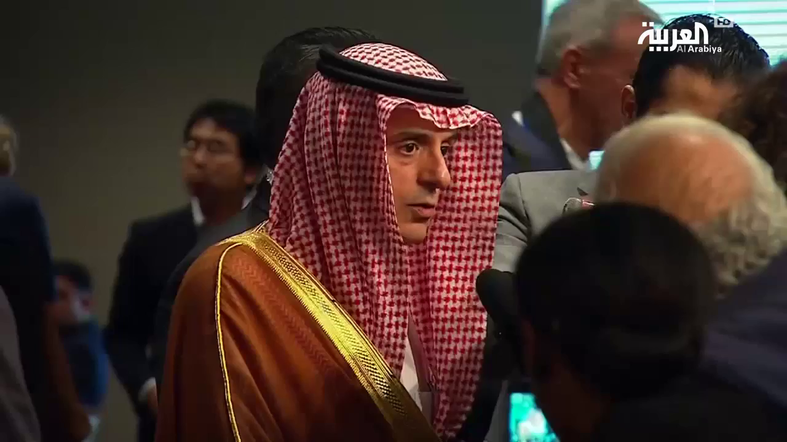
Foreign Minister Adel al-Jubeir made the statement during his interview with CNN. (Al Arabiya)

AFP Wednesday, 9 May 2018

Source: Jubeir: Saudi Arabia will seek nuclear weapon if Iran does

{Iran’s list of enemies grows longer. – LS}

Saudi Arabia will seek to develop its own nuclear weapons if Iran does, Foreign Minister Adel al-Jubeir told CNN on Wednesday, amid spiraling tension between the regional rivals.

Asked whether Riyadh would “build a bomb itself” if Tehran seizes on Washington’s withdrawal from the 2015 Iran deal to resume a nuclear weapons program, Jubeir said: “If Iran acquires nuclear capability we will do everything we can to do the same.”

Saudi Arabia has long said it would match any Iranian weapons development, but Jubeir’s renewed vow came after US President Donald Trump pulled the United States out of an accord designed to prevent Tehran’s alleged quest for the bomb.

And it came amid growing tension over Iran’s support for the Houthi rebels in Yemen, who have been firing rockets across the border.

Riyadh, which is part of a regional coalition that intervened in Yemen’s civil war to fight the Houthis, accuses Iran of supplying the militia with ballistic missiles.

“These missiles are Iranian manufactured and delivered to the Huthis. Such behavior is unacceptable. It violates UN Resolutions with regards to ballistic missiles. And the Iranians must be held accountable for this,” Jubeir told CNN.

“We will find the right way and at the right time to respond to this,” he warned. “We are trying to avoid at all costs direct military action with Iran, but Iran’s behavior such as this cannot continue. This amounts to a declaration of war.”


Saudi crown prince: If Iran develops nuclear bomb, so will Saudi

March 15, 2018

CBS News March 15, 2018, 4:32 AM

Source Link: Saudi crown prince: If Iran develops nuclear bomb, so will Saudi

{Everyone had to see this coming. – LS}

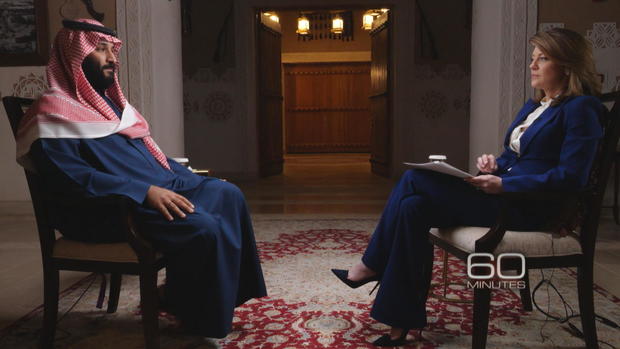
The next leader of Saudi Arabia says his country would quickly obtain a nuclear bomb if arch rival Iran successfully develops its own nuclear weapon. Crown Prince Mohammed bin Salman made the statement about a possible nuclear arms race in the Middle East to “CBS This Morning” co-host Norah O’Donnell, in an interview set to air on this Sunday’s “60 Minutes.”

The interview is the first with a Saudi leader for a U.S. television network since 2005. O’Donnell, a contributing correspondent for “60 Minutes,” asked the 32-year-old crown prince about the political, economic and social reforms unfolding in his kingdom.

The heir to the throne has ushered in significant changes for women in the conservative Sunni Muslim kingdom, including granting them the right to drive for the first time. The crown prince discussed foreign policy, including his views on Saudi Arabia’s longtime foe, Shiite Muslim-ruled Iran.

Below is a preview of O’Donnell’s conversation with the crown prince, and above is a clip in which Mohammed explains why, in his view, Iran’s supreme leader is behaving like Adolf Hitler during the rise of Nazi Germany.

NORAH O’DONNELL: You’ve been rivals for centuries. At its heart, what is this rift about? Is it a battle for Islam?

MOHAMMED BIN SALMAN: Iran is not a rival to Saudi Arabia. Its army is not among the top five armies in the Muslim world. The Saudi economy is larger than the Iranian economy. Iran is far from being equal to Saudi Arabia.

O’DONNELL: But I’ve seen that you called the Ayatollah Khamenei, “the new Hitler” of the Middle East.

MOHAMMED BIN SALMAN: Absolutely.

O’DONNELL: Why?

MOHAMMED BIN SALMAN: Because he wants to expand. He wants to create his own project in the Middle East very much like Hitler who wanted to expand at the time. Many countries around the world and in Europe did not realize how dangerous Hitler was until what happened, happened. I don’t want to see the same events happening in the Middle East.

O’DONNELL: Does Saudi Arabia need nuclear weapons to counter Iran?

MOHAMMED BIN SALMAN: Saudi Arabia does not want to acquire any nuclear bomb, but without a doubt if Iran developed a nuclear bomb, we will follow suit as soon as possible.


Ending North Korea nukes would be seen as act of peace, says me

January 31, 2018

Reuters January 31, 2018 Reporting by Jack Stubbs; Writing by Polina Ivanova; Editing by Richard Balmforth Via One America News Network

Source: Ending North Korea oil supplies would be seen as act of war, says Russia

{Of course, threatening to use nukes on the USA would never be construed as an act of war..right? – LS}

MOSCOW (Reuters) – The delivery of oil and oil products to North Korea should not be reduced, Moscow’s ambassador to Pyongyang was cited as saying by RIA news agency on Wednesday, adding that a total end to deliveries would be interpreted by North Korea as an act of war.

The U.N. and United States have introduced a wave of sanctions aimed at curbing North Korea’s development of nuclear weapons, including by seeking to reduce its access to crude oil and refined petroleum products.

“We can’t lower deliveries any further,” Russia’s envoy to Pyongyang, Alexander Matzegora, was quoted by RIA as saying in an interview.

Quotas set by the U.N. allow for around 540,000 tonnes of crude oil a year to be delivered to North Korea from China, and over 60,000 tonnes of oil products from Russia, China and other countries, he was quoted as saying.

“[This] is a drop in the ocean for a country of 25 million people,” Matzegora said.

Shortages would lead to serious humanitarian problems, he said, adding: “Official representatives of Pyongyang have made it clear that a blockade would be interpreted by North Korea as a declaration of war, with all the subsequent consequences.”

Last week, the United States imposed further sanctions on North Korea, including on its crude oil ministry.

In his first annual State of the Union speech to the U.S. Congress on Tuesday, President Donald Trump vowed to keep up the pressure on North Korea it from developing missiles which could threaten the United States.

North Korea on Saturday condemned the latest U.S. sanctions. and Russian deputy foreign minister Igor Morgulov said Russia had no obligation to carry out sanctions produced by the U.S.

The ambassador also denied charges by Washington that Moscow, in contravention of U.N. sanctions, was allowing Pyongyang to use Russian ports for transporting coal.

“We double-checked [U.S.] evidence. We found that the ships mentioned did not enter our ports, or if they did, then they were carrying cargo that had nothing to do with North Korea,” he is cited as saying.

Reuters reported earlier that North Korea had shipped coal to Russia last year which was then delivered to South Korea and Japan in a likely violation of U.N. sanctions.

Trump Said the U.S. Should Expand Nuclear Weapons. He’s Right.

December 24, 2016

Trump Said the U.S. Should Expand Nuclear Weapons. He’s Right, Politico, MATTHEW KROENIG, December 23, 2016

On Thursday, Donald Trump created controversy when he tweeted, “The United States must greatly strengthen and expand its nuclear capability until such time as the world comes to its senses regarding nukes.” In case anyone was confused, he followed up Friday morning with an off-air remark to MSNBC’s “Morning Joe” that clarified his intentions: “Let it be an arms race,” he said. “We will outmatch them at every pass and outlast them all.”

The backlash was swift and unanimous. Critics charged that there is no plausible reason to expand U.S. nuclear weapons, that Trump’s comments contradicted a decades-old bipartisan consensus on the need to reduce nuclear stockpiles, and that such reckless statements risk provoking a new nuclear arms race with Russia and China.

On this matter, however, Trump is right.

U.S. nuclear strategy cannot be static, but must take into account the nuclear strategy and capabilities of its adversaries. For decades, the United States was able to reduce its nuclear arsenal from Cold War highs because it did not face any plausible nuclear challengers. But great power political competition has returned and it has brought nuclear weapons, the ultimate instrument of military force, along for the ride.

In recent years, North Korea has continued to grow its nuclear arsenal and means of delivery and has issued chilling nuclear threats against the United States and its Asian allies. As recently as Thursday — before Trump’s offending tweet — Rodong Sinmum, the Pyongyang regime’s official newspaper, published an opinion article calling for bolstering North Korea’s “nuclear deterrence.”

The potential threats are everywhere. Washington faces an increasing risk of conflict with a newly assertive, nuclear-armed China in the South China Sea. Beijing is expanding its nuclear forces and it is estimated that the number of Chinese warheads capable of reaching the U.S. homeland has more than trebled in the past decade and continues to grow. And Russia has become more aggressive in Europe and the Middle East and has engaged in explicit nuclear saber rattling the likes of which we have not seen since the 1980s. At the height of the crisis over Crimea in 2014, for example, Russian President Vladimir Putin ominously declared, “It’s best not to mess with us … I want to remind you that Russia is one of the leading nuclear powers.” And on Tuesday, he vowed to “enhance the combat capability of strategic nuclear forces, primarily by strengthening missile complexes that will be guaranteed to penetrate existing and future missile defense systems.” As former Defense Secretary William Perry correctly notes, “Today, the danger of some sort of a nuclear catastrophe is greater than it was during the Cold War.”

The United States needs a robust nuclear force, therefore, not because anyone wants to fight a nuclear war, but rather, the opposite: to deter potential adversaries from attacking or coercing the United States and its allies with nuclear weapons of their own.

Under President Barack Obama, the United States mindlessly reduced its nuclear arsenal even as other nuclear powers went in the opposite direction, expanding and modernizing their nuclear forces. Such a path was unsustainable and Trump is correct to recognize that America’s aging nuclear arsenal is in need of some long overdue upgrades.

So, what would expanding and strengthening the nuclear arsenal look like?

First, the United States must modernize all three legs of the nuclear triad (submarines; long-range bombers, including a new cruise missile; and intercontinental ballistic missiles, or ICBMs). The Obama administration announced plans to modernize the triad under Republican pressure, but critics are already trying to kill off the ICBM and the cruise missile, and production timelines for these weapon systems keep slipping into the future. The Trump administration must make the timely modernization of all three legs of the triad a top priority.

Second, the United States should increase its deployment of nuclear warheads, consistent with its international obligations. According to New START, the treaty signed with Russia in 2011, each state will deploy no more than 1,550 strategic nuclear warheads, but those restrictions don’t kick in until February 2018. At present, according to the State Department, the United States is roughly 200 warheads below the limit while Russia is almost 250 warheads above it. Accordingly, Russia currently possesses a nuclear superiority of more than 400 warheads, which is worrisome in and of itself and also raises serious questions about whether Moscow intends to comply with this treaty at all. The United States, therefore, should expand its deployed arsenal up to the treaty limits and be fully prepared for further expansion should Russia break out — as Moscow has done with several other legacy arms control agreements.

Third, and finally, the United States and NATO need more flexible nuclear options in Europe. In the event of a losing war with NATO, Russian strategy calls for limited nuclear “de-escalation” strikes against European civilian and military targets. At present, NATO lacks an adequate response to this threat. As I explain in a new report, the United States must develop enhanced nuclear capabilities, including a tactical, air-to-surface cruise missile, in order to disabuse Putin of the notion that he can use nuclear weapons in Europe and get away with it.

These stubborn facts lay bare the ignorance or naivety of those fretting that Trump’s tweets risk starting a new nuclear arms race. It is U.S. adversaries, not Trump, who are moving first. It is a failure to respond that would be most reckless, signaling continued American weakness and only incentivizing further nuclear aggression.

The past eight years have been demoralizing for many in the defense policy community as Obama has consistently placed ideology over reality in the setting of U.S. nuclear policy. The results, an increasingly disordered world filled with intensifying nuclear dangers, speak for themselves.

Rather than express outrage over Trump’s tweet, therefore, we should take heart that we once again have a president who may be willing to do what it takes to defend the country against real, growing and truly existential threats.