Archive for the ‘North Korean missiles’ category

Kerry: Iran Nuclear Deal Could Be Lesson for North Korea

May 16, 2015

Kerry: Iran Nuclear Deal Could Be Lesson for North Korea, ABC News, Matthew Lee, May 16, 2015

(Please say that you will stop destabilizing the region, have a good human rights record and become moderate like The Islamic Republic of Iran and we will grant all concessions you seek. Pretty please? — DM)

U.S. Secretary of State John Kerry said Saturday he is hopeful that the successful conclusion of a nuclear deal with Iran will send a positive message to North Korea to restart negotiations on its own atomic program.

Speaking at a joint news conference with Chinese Foreign Minister Wang Yi in Beijing, Kerry said he believed an Iran agreement could have “a positive influence” on North Korea, because it would show that giving up nuclear weapons improves domestic economies and ends isolation. He stressed, though, that there was no way to tell if North Korea’s reclusive leadership would be able to “internalize” such a message.

“I am sure Foreign Minister Wang would join me in expressing the hope that if we can get an agreement with Iran, … that agreement would indeed have some impact or have a positive influence” on North Korea, Kerry said.

Although Wang did not appear to respond, Kerry explained that an Iran deal could help in showing North Korea how “your economy can do better, your country can do better, and you can enter into good standing with the rest of the global community by recognizing that there is a verifiable, irreversible, denuclearization for weaponization, even as you can have a peaceful nuclear power program.”

“Hopefully that can be a message, but whether or not DPRK is capable of internalizing that kind of message or not, that’s still to be proved,” he said, referring to North Korea by the acronym of its official name, the Democratic People’s Republic of Korea.

International negotiators are rushing to finalize a nuclear deal with Iran by the end of June under which Iran’s program would be curbed to prevent it from developing atomic weapons in exchange for the lifting of international sanctions that have crippled its economy.

Nuclear talks with North Korea, which has already developed atomic weapons despite previous attempts to forestall it, broke down three years ago as it has continued atomic tests and other belligerent behavior, including ballistic missile launches.

North Korea conducted its first nuclear test in 2006 and is now believed to have at least 10 such weapons despite some of the toughest international sanctions in existence. It conducted its third nuclear test in February 2013, and U.S.-based experts forecast that it could increase its nuclear arsenal to between 20 and 100 weapons by 2020.

Kerry travels on Sunday to South Korea, where North Korea will be a major topic of discussion.

He said the United States will continue to work with its partners “to make it absolutely clear to the DPRK that their actions, their destabilizing behavior is unacceptable against any international standard.”

N. Korea Submarine Missile Allows Covert Nuclear Strike on US

May 5, 2015

N. Korea Submarine Missile Allows Covert Nuclear Strike on US, Israel National News, Ari Yashar, May 5, 2015

(Perhaps North Korea and Iran can make a deal — North Korea gets sanctions-relief money and Iran gets missile equipment and nukes for its submarines. Or maybe Iran could just pay North Korea to attack the U.S. mainland.– DM)

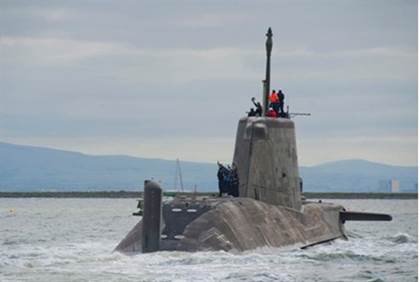
img369953Military submarine (illustration) Reuters

[I]t was reported last month that US President Barack Obama hid intel from the UN about North Korea transferring rocket components needed to create a nuclear missile to Iran even during the nuclear talks, to try and prevent the UN from acting on the information with increased sanctions.

[O]nce the KN-11 and mobile KN-08 “systems go operational, it potentially gives North Korea a dual threat for attacking the United States with nuclear or chemical weapons – a threat generated from difficult to detect mobile platforms on both land and sea.”

***********************

In a worrying step showing North Korea’s rapidly expanding nuclear strike capabilities, the Communist regime recently held a test of a new submarine-launched ballistic missile (SLBM), the first time it has launched a missile capable of carrying a nuclear warhead from underwater.

According to US defense officials cited by the Washington Free Beacon on Tuesday, the test took place on April 22 from an underwater test platform near the coastal city of Sinpo in the southeast of the country, and tested what the US is calling a KN-11 missile.

The test appears to have been successful, and is the third KN-11 test showing the high-priority of the nuclear missile program for North Korea. Previous tests in January and last October were from a sea-based platform not underwater and a land-based platform.

The KN-11 joins the KN-08 mobile intercontinental ballistic missile (ICBM) as being part of a varied North Korean missile arsenal on platforms that would be hard for the US to detect, and consequently allow a strike that would be difficult to shoot down.

Admiral Bill Gortney, Commander of North American Aerospace Defense Command (NORAD) and US Northern Command, admitted last month that North Korea could hit the continental US with a nuclear strike. That admission accompanied the announcement that NORAD is reopening its nuclear-EMP-proof Cheyenne Mountain bunker, apparently amid renewed concerns of an EMP attack by which a nuclear weapon would be detonated over the US, knocking out all of its electronic devices, and thereby rendering it defenseless to secondary nuclear strikes.

The latest launch test also comes after Chinese experts warned the US last month that American estimates are wrong and North Korea actually has 20 nuclear weapons, with that arsenal to double next year thanks to the regime’s higher than anticipated advanced enrichment capabilities.

Nuclear strikes the US won’t see coming

Admiral Cecil D. Haney, commander of the Strategic Command, confirmed the SLBM launch test in comments to the Senate on March 19, reports the Washington Free Beacon. The program is in violation of UN Security Council resolutions.

Regarding the UN, it was reported last month that US President Barack Obama hid intel from the UN about North Korea transferring rocket components needed to create a nuclear missile to Iran even during the nuclear talks, to try and prevent the UN from acting on the information with increased sanctions.

Former US Defense Intelligence Agency official Bruce Bechtol, Jr. told the paper that North Korea’s SLBM program is meant to give it the ability to strike the US, and to not have the strike be detected in advance.

“With an SLBM they get both,” said Bechtol. “The submarine can get the platform to launch the missile within range of the continental United States, Alaska, or Hawaii. Thus, once operational, this immediately brings key nodes in the United States within range of what would likely be a nuclear armed missile.”

He noted that once the KN-11 and mobile KN-08 “systems go operational, it potentially gives North Korea a dual threat for attacking the United States with nuclear or chemical weapons – a threat generated from difficult to detect mobile platforms on both land and sea.”

Obama is bringing the US to “tragedy”

A number of American officials responded sharply to the KN-11 test, placing the blame squarely on Obama’s shoulders.

“This missile, along with the KN-08, happened on Obama’s watch and nothing has been done,” one US intelligence official told the Washington Free Beacon.

Former US Ambassador to the UN John Bolton added his criticism, saying, “by utterly ignoring North Korea’s growing missile threats, Obama has allowed the threat of rogue state proliferators to fall out of the center of the national political debate.”

“This is a potential tragedy for the country,” Bolton warned.

Air Force Lt. Gen. (ret.) Thomas McInerney said that the KN-08 and KN-11 programs constitute “threats to the continental United States and have been developed under the Obama administration’s leadership.”

“Leading from behind is a failed strategy as evidenced by this very dangerous strategic threat to the continental United States of nuclear attack by a very unstable North Korean government,” said McInerney.

The general also spoke about Obama’s admission that the nuclear deal being formed with Iran will allow it to obtain a nuclear weapon in under 15 years if it doesn’t breach conditions and obtain it sooner, noting that the deal “puts the United States in the most dangerous threat of nuclear attack since the height of the Cold War but from multiple threats – North Korea, China, Russia, and Iran.”

Opponents of the nuclear deal being formulated with Iran ahead of a June 30 deadline have warned it follows in the footsteps of the failed deal sealed by then-President Bill Clinton with North Korea in 1994.

Despite the deal, North Korea tested its first nuclear weapon in 2006, just over ten years after the agreement.

A powerful totalitarian theocracy can bring peace. Of sorts.

May 2, 2015

A powerful totalitarian theocracy can bring peace. Of sorts. Dan Miller’s Blog, May 2, 2015

(The views expressed in this article are mine, and do not necessarily reflect those of Warsclerotic or its other editors. — DM)

a1  Obama and Kahameni -building a toaster

Iran, an already powerful theocratic totalitarian state with extensive hegemonic ambitions, is about to become (if it is not already) a nuclear power. So equipped, it can extend its rule over the Middle East and beyond, bringing the “peace” of submission to Islam. Obama may favor this outcome and in any event appears to be at best indifferent.

Iran is ruled by Ayatollah Khamenei, its supreme political and religious power. He has the ultimate authority to approve or reject any P5+1 agreement, should there be one — which seems increasingly likely due to Obama’s ludicrous efforts to concede every possible matter of substance. Obama wants a foreign policy legacy and needs a “deal;” Iran does not need a “deal.” It has already benefited greatly from sanctions relief. Other nations have also benefited economically to the point that even were the U.S. to try to reimpose sanction such trade would continue and expand. Moreover, it is highly likely that Iran has done all of the necessary technical research on nukes and on delivery devices to the extent that, regardless of whether there is a “deal,” Iran can have deliverable nukes within a few months if not sooner. As I pointed out here, the insanity of the 2013 framework, adhered to except when arguably in America’s favor, led inexorably to this result.

The North Korea – Iran linkage makes the problem worse. Chinese nuclear experts recently revised their estimation of North Korea’s current possession of nukes:.

China’s top nuclear experts have increased their estimates of North Korea’s nuclear weapons production well beyond most previous U.S. figures, suggesting Pyongyang can make enough warheads to threaten regional security for the U.S. and its allies.

The latest Chinese estimates, relayed in a closed-door meeting with U.S. nuclear specialists, showed that North Korea may already have 20 warheads, as well as the capability of producing enough weapons-grade uranium to double its arsenal by next year, according to people briefed on the matter. [Emphasis added.]

Iran and North Korea have a long history of nuclear cooperation. Delivering North Korean technology, materials and nukes to Iran would not be very difficult. I addressed the problem here, herehere and elsewhere.

Consequences of a nuclear Iranian theocracy

The Iranian Shiite theocracy is totalitarian in every sense of the word; it has not moderated under “moderate” President Rouhani. To the contrary, it seems to have worsened. To the extent that credible figures are available, sexually transmitted disease has risen and the birth rate in Iran has fallen, considerably in recent years. Despite sanctions relief, poverty has increased. Where has the money gone? Iran pursues its hegemonic ambitions, most recently to help the Houthi in Yemen, while continuing to provide economic, logistical and weapons support to its other proxy terrorist organizations such as Hamas, Hezbollah, the Muslim Brotherhood and others. Iran is very likely motivated by its own desire eventually to control the Middle East and beyond.

The recent Iranian hijacking of a cargo ship under “U.S. protection” may well have been an Iranian warning to Saudi Arabia, an American ally and leading opponent of the Iranian proxy war by Houthi in Yemen, that it can and might close the Strait of Hormuz to Saudi oil exports.

Strait-of-Hormuz

Although obligated under treaty to come to the defense of the Marshall Islands-registered cargo ship, the Obama Nation did not. Instead, it simply watched as the Iranian Navy fired shots across her bow and took her to an Iranian port to the North at Bandar Abbas. The ship and her crew remain there. Caroline Glick, in an article titled The Marshall Islands’ cautionary tale pointed out that

The Maersk Tigris is flagged to the Marshall Islands. The South Pacific archipelago gained its independence from the US in 1986 after signing a treaty conceding its right to self-defense in exchange for US protection. According to the treaty, the US has “full authority and responsibility for security and defense of the Marshall Islands.” [Emphasis added.]

Given the US’s formal, binding obligation to the Marshall Islands, the Iranian seizure of the ship was in effect an act of war against America.

. . . .

If the US allows Iran to get away with unlawfully seizing a Marshall Islands flagged ship it is treaty bound to protect, it will reinforce the growing assessment of its Middle Eastern allies that its security guarantees are worthless.

As the Israel Project’s Omri Ceren put it in an email briefing to journalists, “the US would be using security assurances not to shield allies from Iran but to shield Iran from allies.” [Emphasis added.]

What can other nations, with which America has treaties calling upon us to come to their defense, expect from the Obama administration if attacked by Iran? Precious little.

Under credible threat from nuclear attack by Iran and lacking actual (as distinguished from verbal) support from the Obama administration, Middle East Arab nations cannot be expected to resist very effectively, even as they seek to obtain their own nuclear arsenals.

Israel, the “Little Satan?” She would fight fiercely to the end, but might be overcome. Perhaps she will take the initiative and destroy Iran’s nuclear facilities before they become too extensive and better protected, perhaps by missiles provided by Russia. I suggested here that she can and should do so. Here is a link to a far more detailed analyses of what she can and should do, soon.

America, the “Great Satan,” is not immune to an Iranian nuclear attack. As I suggested here, a nuclear armed Iran could launch an EMP attack to drive the U.S. back to the stone age. Such an attack would increase Iran’s hegemonic potentials, and hence ambitions, by foreclosing the possibility of American help to nations with which we have protection treaties. However, even without an EMP attack, Obama would not provide much help. Therefore, I wonder whether — despite all of the continuing Iranian “death to America” bluster — Iran would be foolish enough to do it before Obama leaves office. He does His best to help Iran get nukes and pursue its hegemonic ambitions. Why try to kill a staunch friend like Obama’s America?

The Obama administration — and many voters — view global warming, climate change, climate disruption and whatever new phrases as may be developed as the most severe threat to humanity. An interesting article titled Progressives at the Poker Table compares “Progressive” attitudes toward “the threat of climate warming and that of a nuclear-armed Iran.” Predictably, the Obama Administration and most of the “legitimate news media” are far more concerned about the former than the latter, even though there is little if anything that we can do, even at great expense, about climate change (mostly natural in origin). If so disposed, there is quite a lot that we could do about the far greater, and in any event more immediate, threat from a nuclear Iran. Perhaps it’s simply easier to stage pious shows about costly but ineffective ways to “save the Earth” than to make useful efforts to save humanity from Islamic ravages.

Church of climatology

Conclusions

Andrew Klavan ridicules Obama’s P5+1 “deal” here:

The Congress probably won’t do anything to stop it, so Iran will very likely have nukes and the missiles with which to deliver them soon — if it does not already have them.

Hitler made a “deal” with Prime Minister Chamberlain years ago and returned from Munich to display a piece of paper signed by Hitler. Crowds cheered. Hitler laughed and continued his hegemonic pursuits throughout Europe. Hitler could have been stopped with relative ease long before World War II erupted but wasn’t. The “Peace in our time” meme was too powerful. Then we fought WWII.

Is that how the current mess with Iran will turn out?

code pink on Iran

China Warns Of Rising Nuclear Threat From North Korea – Lou Dobbs

April 24, 2015

China Warns Of Rising Nuclear Threat From North Korea – Lou Dobbs, Fox News via You Tube, April 23, 2015

(The first four minutes is about the mess in Yemen and the last four minutes is about the North Korean nuclear threat. — DM)


An EMP attack on America seems likely

April 19, 2015

An EMP attack on America seems likely, Dan Miller’s Blog, April 19, 2015

(The views expressed in this article are mine and do not necessarily reflect those of Warsclerotic or any of its other editors. — DM)

Some consider North Korea to be the rogue nation most likely to use an electromagnetic pulse (EMP) to attack America; Iran is also seen as quite likely to do it. It matters little which succeeds.

Here is a lengthy 2013 video about an EMP attack, what would happen and why:

The possibilities and consequences of an EMP attack on America are too horrific to contemplate; the “legitimate news media” generally ignore them. We therefore tend to relegate them to the realm of remote “tin foil hat conspiracy theories” and to focus instead on more congenial stuff — the latest sex scandal, Hillary Clinton’s campaign van parking in a disabled-only space and other matters unlikely to impact America to an extent even approaching that of an EMP attack. Meanwhile, most of “our” Congress Critters, who should know better, focus on opinion polls, filling their campaign coffers and getting richer personally while neglecting our atrophying missile defense systems and other potential means of avoiding or recovering from an EMP attack.

Here is a 2013 video about the likelihood of an Iranian EMP attack on America that would paralyze the country for a very long time.

North Korea and the Islamic Republic of Iran have long cooperated in the development of nukes and means to deliver them. I wrote about their cooperation here, herehere and elsewhere. It now appears that Iran intends to use them for an EMP attack on America.

The issue of a nuclear EMP attack was raised in the final hours of this week’s elections in Israel when U.S. authority Peter Vincent Pry penned a column for Arutz Sheva warning of Iran’s threat to free nations.

“Iranian military documents describe such a scenario — including a recently translated Iranian military textbook that endorses nuclear EMP attack against the United States,” he wrote. [Emphasis added.]

Here is a March 7, 2015 video about the impact of the P5+1 “negotiations” on Iran getting (or keeping) nukes and the likelihood of an Iranian EMP attack on America:

In April of this year, John Bolton had this to say about the Iran – North Korea connection, how much we don’t know and the ongoing P5+1 “negotiations.”

Perhaps Israel can take out Iran’s nuke capabilities.

Here is a February 2015 video about what’s (not) being done to harden our domestic power grid:

As of February of this year, Govtrack US opined that the chances of passage of the SHIELD act were zero percent. Be that as it may, simply hardening the power grid would not solve communications or transport problems — most modern communications devices, as well as vehicles built after 1987, depend on computer chips and, when the chips are fried, will not function. Even if food and water could be processed, getting them to consumers in sufficient quantities to keep them alive would be an enormous if not impossible task.

Problems of a human nature would also arise and remaining alive would be difficult. If one’s family were about to starve, how many would try to steal food and water from those who still have even enough for a few days? How many roving gangs of armed criminals, quite willing to kill, would do the same? The police would likely have no communications ability and might well be otherwise occupied, tending to their own families. Military forces not confined to base would likely have the same problems and be doing the same.

That suggests another problem in restoring infrastructure seriously damaged or destroyed by the EMP attack. It would not only require the availability of transport, communications and undamaged equipment. It would also require the availability of personnel, not otherwise occupied in scrounging for food, water, medical supplies and other resources to care for their own families, while protecting them from those lacking such resources, as well as from armed gangs.

Now, the U.S. military is taking steps to protect itself by reopening a cold war bunker at Cheyenne Mountain, abandoned in 2006.

Cheyene Mt. Complex

Cheyene Mt. Complex

The Pentagon last week [early April 2015] announced a $700 million contract with Raytheon Corporation to oversee the work for North American Aerospace Command (NORAD) and US Northern Command.

Admiral William Gortney, head of NORAD and Northern Command, said that ‘because of the very nature of the way that Cheyenne Mountain’s built, it’s EMP-hardened.’

. . . .

‘And so, there’s a lot of movement to put capability into Cheyenne Mountain and to be able to communicate in there,’ Gortney told reporters.

‘My primary concern was… are we going to have the space inside the mountain for everybody who wants to move in there, and I’m not at liberty to discuss who’s moving in there,‘ he said.  [Emphasis added.]

The Cheyenne mountain bunker is a half-acre cavern carved into a mountain in the 1960s that was designed to withstand a Soviet nuclear attack. From inside the massive complex, airmen were poised to send warnings that could trigger the launch of nuclear missiles.

But in 2006, officials decided to move the headquarters of NORAD and US Northern Command from Cheyenne to Petersen Air Force base in Colorado Springs. The Cheyenne bunker was designated as an alternative command center if needed.

Now the Pentagon is looking at shifting communications gear to the Cheyenne bunker, officials said.

‘A lot of the back office communications is being moved there,’ said one defense official.

Officials said the military’s dependence on computer networks and digital communications makes it much more vulnerable to an electromagnetic pulse, which can occur naturally or result from a high-altitude nuclear explosion.

Under the 10-year contract, Raytheon is supposed to deliver ‘sustainment’ services to help the military perform ‘accurate, timely and unambiguous warning and attack assessment of air, missile and space threats’ at the Cheyenne and Petersen bases.

Raytheon’s contract also involves unspecified work at Vandenberg Air Force Base in California and Offutt Air Force Base in Nebraska.

When will the site be fully operational, for what and who will be allowed to go there?

Some other military bases are probably being hardened, at least to an extent that might (or might not) preserve their electrical grids. If it works, they may serve as refugee centers for adjacent civilian populations. However, the military installations would likely run out of food and potable water before very long and, with food and water processing centers no longer operational, there would be substantial difficulties in getting — as well as transporting — large quantities of food and water. Were the processing centers to become operational, transportaion difficulties would remain. Communications between the military installations and the outside world? Likely zilch, at least initially, because radios, telephones and other modern communications devices (as most now are) depend on computer chips and would be fried by an EMP attack. Some might eventually be restored at some military bases, but that is not likely to be the case with those not on those bases.

Conclusions

What would you do in the event of an EMP attack? In a major metropolitan area, you would probably be SOL very quickly. In a small town? Marginally but not much better off. An isolated small farm, close to a mountain spring and adequately stocked with food, medical supplies, firearms and ammunition, could provide reason to hope that you might eventually be able to grow or slaughter sufficient food and have access to enough potable water to survive; at least until roving armed gangs arrive and overpower you.

This video is about a massive world-wide pandemic. In the event of a pandemic, electricity, automobiles and communications would still function, at least for a while. Following an EMP attack, the consequences would likely be substantially worse and last far longer.

Here is a link to a novel about one family in a small city and its efforts to survive an EMP attack on America. It does a reasonable job of summarizing the potential consequences.

Obama Hid North Korea Rocket Component Transfer to Iran

April 15, 2015

Obama Hid North Korea Rocket Component Transfer to Iran, Israel National News, Ari Yashar, April 15, 2015

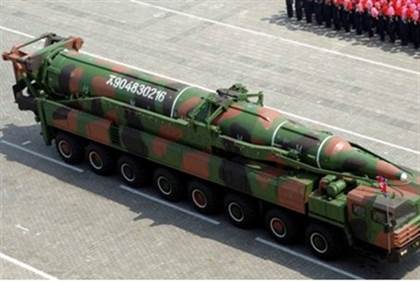
NK missileA North Korean rocket in a military parade (file)Reuters

The information is particularly damaging given that Admiral Bill Gortney, Commander of North American Aerospace Defense Command (NORAD) and US Northern Command (USNORTHCOM), admitted this month that the Pentagon fears that North Korea and possibly Iran can target the US with a nuclear EMP strike.

********************

US intelligence officials revealed that during the ongoing Iran nuclear negotiations, North Korea has provided several shipments of advanced missile components to the Islamic regime in violation of UN sanctions – and the US hid the violations from the UN.

The officials, who spoke to the Washington Free Beacon on Wednesday on condition of anonymity, said more than two shipments of missile parts since last September have been monitored by the US going from North Korea to Iran.

One official detailed that the components included large diameter engines, which could be used to build a long-range missile system, potentially capable of bearing a nuclear warhead.

The information is particularly damaging given that Admiral Bill Gortney, Commander of North American Aerospace Defense Command (NORAD) and US Northern Command (USNORTHCOM), admitted this month that the Pentagon fears that North Korea and possibly Iran can target the US with a nuclear EMP strike.

Critics have pointed out that the nuclear framework deal reached with Iran earlier this month completely avoids this question of Iran’s intercontinental ballistic missile (ICBM) program, which would allow it to conduct nuclear strikes.

US President Barack Obama was given details of the shipments in his daily intelligence briefings, but the officials say the information was hiddenfrom the UN by the White House so that it would not take action on the sanctions violations.

Back in 2010, the UN Security Council put sanctions on Iran’s illegal uranium enrichment program. Those sanctions prohibit Iran from buying ballistic missile parts, and any “technology related to ballistic missiles capable of delivering nuclear weapons.”

The US officials said the recent transfers fall within the scope of the sanctions.

In confirmation, a spokesperson for Spain’s mission to the UN, now in charge of the UN’s sanctions committee, said the committee has not been told about the incidents by the US since Spain took over in January.

White House and State Department spokespersons contacted by the paper refused to comment on the report.

Hiding transfers from the UN – “typical” Obama

A wave of experts came out with criticism against Obama’s administration for hiding the missile part transfer from the UN.

Former UN Ambassador John Bolton said the shipments violate UN sanctions on Iran, as well as those imposed on North Korea back in 2009.

“If the violation was suppressed within the U.S. government, it would be only too typical of decades of practice,” Bolton said. “Sadly, it would also foreshadow how hard it would be to get honest reports made public once Iran starts violating any deal.”

Former CIA analyst Fred Fleitz shared his assessment, saying “while it may seem outrageous that the Obama administration would look the other way on missile shipments from North Korea to Iran during the Iran nuclear talks, it doesn’t surprise me at all.”

“Iran’s ballistic missile program has been deliberately left out of the talks even though these missiles are being developed as nuclear weapon delivery systems,” noted Fleitz. “Since the administration has overlooked this long list of belligerent and illegal Iranian behavior during the Iran talks, it’s no surprise it ignored missile shipments to Iran from North Korea.”

The mounting criticism was added to by Thomas Moore, a former Senate Foreign Relations Committee arms control specialist, who told Washington Free Beacon that the transfer “certainly points out the glaring omission present in the Iran deal: the total lack of anything on its missile threat.”

“If true, allowing proliferation with no response other than to lead from behind or reward it, let alone bury information about it, is to defeat the object and purpose of the global nonproliferation regime – the only regime Obama may end up changing in favor of those in Tehran, Havana and Pyongyang,” Moore said.

And Henry Sokolski, head of the Nonproliferation Policy Education Center, said the missile transfer “more than suggests why the administration had to back away from securing any ballistic missile limits in its negotiations” with Iran.

Exposing the Iran-North Korea missile partnership

The Washington Free Beacon went into detail about the relationship between North Korea and Iran in building the latter’s advanced missile program, which is poised to construct ICBMs capable of delivering a strike with a nuclear warhead at astounding distances.

A classified State Department cable from October 2009 that was exposed by Wikileaks details that Iran is the leading missile customer of North Korean.

It stated how since the 1980s North Korea has been handing Scud missiles and technology for developing Nodong missiles with a 620-mile range to Iran.

“Pyongyang’s assistance to Iran’s [space launch vehicle] program suggests that North Korea and Iran may also be cooperating on the development of long-range ballistic missiles,” read the cable.

Another cable from September 2009 posited that the steering engines in Iran’s Safir rocket likely come from North Korea, and are based on Soviet-era SS-N-6 submarine launched ballistic missiles.

Importantly, that transfer of technology let Iran develop a self-igniting missile propellant that “could significantly enhance Tehran’s ability to develop a new generation of more-advanced ballistic missiles.”

“All of these technologies, demonstrated in the Safir [space launch vehicle] are critical to the development of long-range ballistic missiles and highlight the possibility of Iran using the Safir as a platform to further its ballistic missile development,” read the cable.

The assessments of the classified cables were confirmed by Joseph DeTrani, former director of the US intelligence agency National Counterproliferation Center, who said North Korea has kept “close and long term” relations with Iran in transferring missiles and related technology.

“U.N. Security Council resolutions prohibit this type of activity, and continued missile-related transfers from North Korea to Iran would be in violation of these Security Council resolutions,” added DeTrani, a former CIA officer and special envoy to North Korea nuclear talks.