Archive for the ‘Netanyahu’ category

Supporters of Deal Are Strengthening Iran’s Negotiating Position

March 10, 2015

Supporters of Deal Are Strengthening Iran’s Negotiating Position, The Gatestone InstituteAlan M. Dershowitz, March 10, 2015

The reality is that we are in a far stronger negotiating position than advocates of the deal have asserted, but we are negotiating from weakness because we have persuaded the Iranians that we need the deal — any deal — more than they do.

*******************************

Despite repeating the mantra that “no deal is better than a bad deal” with Iran, the United States seems to be negotiating on the basis of a belief that the worst possible outcome of the current negotiations is no deal. Many supporters of the deal that is now apparently on the table are arguing that there is no realistic alternative to this deal. That sort of thinking out loud empowers the Iranian negotiators to demand more and compromise less, because they believe — and have been told by American supporters of the deal — that the United States has no alternative but to agree to a deal that is acceptable to the Iranians.

A perfect example of this mindset was Fareed Zakaria on his CNN show this past Sunday. He had a loaded panel of two experts and a journalist favoring the deal, and one journalist opposed. This followed Zakaria’s opening essay in favor of the deal. All those in favor made the same point: that this deal is better than no deal, and that any new proposal — for example, to condition the sunset provision on Iran stopping the export of terrorism and threatening to destroy Israel — is likely to be rejected by Iran, and is therefore, by definition, “irrational” or “unproductive,” because it would result in no deal.

The upshot of this position is that Iran essentially gets a veto over any proposal, but the United States does not get to make new proposals. If it were true that this deal is better than no deal, it would follow that any proposed change in this deal that Iran doesn’t like is a non-starter.

That’s why Netanyahu’s reasonable proposal that the sunset provision be conditioned on changes in Iranian actions and words has been pooh-poohed by the so-called “experts.” They haven’t tried to respond on the merits. Instead, they are satisfied to argue that Iran would never accept such conditions, and therefore the proposal should be rejected as a deal breaker.

This is the worst sort of negotiation strategy imaginable: telling the other side that any proposal that is not acceptable to them will be taken off the table, and that any leader who offers it will be attacked as a deal breaker. This approach — attacking Netanyahu without responding to his proposal on their merits — characterizes the approach of the administration and its supporters.

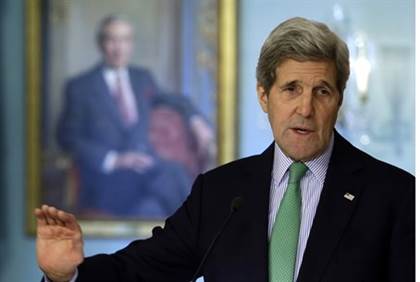
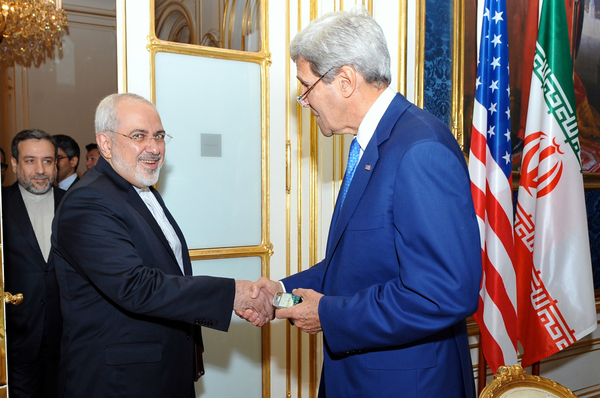
767U.S. Secretary of State John Kerry shakes hands with Iranian Foreign Minister Mohammad Javad Zarif during nuclear talks in Vienna, Austria, July 14, 2014. (Image source: U.S. State Department)

We will now never know whether Iran might have accepted a conditional sunset provision, because the advocates of the current deal, both inside and outside the administration, have told Iran that if they reject this proposal, it will be withdrawn, because it endangers the deal. What incentive would the Iranians then have to consider this proposal on its merits? None!

The current mindset of the deal’s advocates is that the United States needs the deal more than the Iranians do. That is why the U.S. is constantly leaking reports that the Mullahs may be reluctant to sign even this one-sided deal, which has shifted perceptibly in favor of the Iranian position over the past several months. But the truth is that Iran, which is suffering greatly from the combination of sanctions and dropping oil prices, needs this deal — a deal that would end sanctions and allow it unconditionally to develop nuclear weapons within ten years. That doesn’t necessarily mean they will accept it. They may push for even more compromises on the part of the United States. The reality is that we are in a far stronger negotiating position than advocates of the deal have asserted, but we are negotiating from weakness because we have persuaded the Iranians that we need the deal — any deal — more than they do.

Most Israelis seem to be against the current deal, especially the unconditional sunset provision. Author David Grossman, a left-wing dove who is almost always critical of Netanyahu, has accused the United States of “criminal naiveté.” He opposes Netanyahu’s reelection, but urges the world to listen to what Netanyahu told Congress.

“But what [Netanyahu] says about Iran and the destructive part it is playing in the Middle East cannot and should not be ignored,” Grossman said. “Netanyahu is right when he says that according to the emerging deal there is nothing to prevent the Iranians from developing a nuclear bomb once the deal expires in another 10 years, and on this matter there is no difference in Israel between Left and Right.”

There are considerable differences, however, between the Obama administrations’ negotiating position and the views of most Israelis, Saudis, Emiratis, Egyptians and Jordanians — as well as most members of our own Congress. We can get a better deal, but supporters of a deal must abandon their unhelpful public claims that the current deal is the best we can get.

Ron Dermer and Dore Gold on Fox

March 8, 2015

Ron Dermer and Dore Gold on Fox, via You Tube, March 8, 2015

(Giving Iran years to pursue its ambition of obliterating the U.S. and Israel, with few or no remaining sanctions as Iran continues its efforts to control the Middle East, and no significant progress in allowing the IAEA to pursue its investigations of Iran’s past and future progress in nuclear weaponry strikes me as worse than merely absurd.– DM)

Nuclear Truth; Clare Lopez, Hide the Nukes

March 8, 2015

Nuclear Truth; Clare Lopez, Hide the Nukes, via You Tube, March 7, 2015


The leader of the free world

March 6, 2015

The leader of the free world, Truth Revolt, Bill Whittle, via You Tube, March 5, 2015

Scott Ott first described him thus… a brave, thoughtful, serious man doing a brave, thoughtful serious job. In his latest FIREWALL, Bill Whittle provides the amazing and disturbing contrast between The President of the United States and The Leader of the Free World

Dealing With the Iranian Death Cult

March 6, 2015

Dealing With the Iranian Death Cult, American ThinkerWarren Adler, March 2, 2015

The surprise attack on Pearl Harbor and the resultant bloodbath should stand as an example of how a rigidly brainwashed death cult like Iran will choose the apparent path of negotiation while hiding its lethal ambition under a camouflage of lies.

*****************

While Prime Minister Benjamin Netanyahu of Israel laid out a strong case for mistrusting Iranian intentions, he did not define the bedrock reason why Iran cannot be trusted. To do that, one must understand the captive mentality of the cult phenomena and how it distorts reason, brainwashes its adherents, and creates unquestioning followers.

For those of us with strong cognizant memories of the events before, during and after the stunning Japanese attack on Pearl Harbor on December 7th, 1941, the current negotiations with Iran to prevent this terror-sponsoring cultist state from developing a nuclear weapon seems chillingly similar.

Prior to that “day of infamy” as then President Franklin Roosevelt so aptly characterized it, the United States was locked in tense and complicated negotiations with Japan to settle conflicts that divided our two countries. They were many, involving a clash of perceived power divisions in the Pacific with underlying territorial and psychological issues leaving both countries at loggerheads.

The United States, satisfied that it had broken the Japanese military codes, felt secure enough that it could divine the Japanese positions on its statecraft and military plans. The Japanese, who had entered into a tripartite agreement with Hitler and Mussolini, felt secure in their military might and those of their Axis allies in the face of a largely militarily unprepared America to extract whatever concessions they were seeking from the United States.

It is true that America is not negotiating alone with Iran, but its position in the discussion and eventual outcome, by virtue of its historical leadership role, makes the comparison worth noting.

America in 1941 was facing comparative angst. President Roosevelt, who had promised to stay out of the war, was dealing with a reluctant public that had little appetite to enter the fray, although he had been persuaded by Winston Churchill to assist the Allies by providing armaments through the Lend-lease program. Even as negotiations with the Japanese proceeded, the Japanese had no intention of rapprochement and had actually been planning the assault on Pearl Harbor for many months before.

Worse, the American intelligence community was divided in their assessment of Japanese intentions and had not a clue about its cultist discipline. They were monstrously naive about the power of cult psychology and, unfortunately, they still are. Iran is run by death cult adherents operating under the guise of religion with all power, despite all the outward signs of alleged diversity, vested in one man.

Japan at that time was also being manipulated by cultists enmeshed in the doctrines of State Shinto, based on a degraded interpretation of the samurai Bushido code. They later initiated the suicide bomber pilot program, finding recruits eager to kill themselves for the emperor by smashing their planes into American ships. If that isn’t death cult conduct, then I’d like to know what is.

At the time of Pearl Harbor, Adolf Hitler, a charismatic and ruthless megalomaniac, had turned the Nazi Party into a brutal master race entitlement cult determined to make “Deutschland Uber Alles” a reality. Indeed, by then the Nazis had brainwashed the German people into the fanatic belief that they were going to fulfill that destiny in a thousand-year Reich, and Hitler had demonstrated his military prowess designed to reach that goal. He held total sway over the Germans, not unlike Ayatollah Khamenei and his cult followers in their control over Iran.

Nothing happens in Iran without the ayatollah’s approval. Indeed, the Islamic terrorist tentacles of the Iranian regime is considerable and unlikely to be deterred by mere negotiations. “Death to America” and “Death to Israel” are not just empty slogans. They are chosen statements of intent officially approved by the regime leader.

The State Shinto cult of emperor worship was manipulated by Japan’s power-hungry military to have the Japanese people believe in the inevitability of their own destiny to carve out their own empire in the Pacific. Indeed, they managed to persuade the revered Emperor Hirohito himself to agree to their machinations. His naive approval was all that was needed to bring the Japanese people on board, a typical cult scenario.

The weakest partner in this ménage a trois, Benito Mussolini, had earned himself some cred by an African adventure in Eritrea and North Africa.

Using the cult comparison, there seems to be little difference between Khomeini and Hitler, at least in terms of power. Hitler, like Khamenei today, calls the shots. Khamenei, his minions, and their vast network of Iranian-armed and financially-supported death cult Islamic terror cells is, by any rational measure, an existential danger to America, and certainly to Israel.

Indeed, nuclear bombs and long-range missiles in the hands of this cult could easily transform a mere perceived danger into a planetary disaster and fulfill their “death to” sloganeering.  Such power in the hand of the Iranian death cult will create a destructive capacity that by comparison makes Hitler’s armies seem like toy soldiers.

What history has taught us is that cults that have gained total power over their adherents will always use any means to gain their ends. They will employ any tactic that hastens their victory. They will lie, cheat, charm, brutalize, and kill anyone who stands in their way. They will demolish any obstacle that confronts them and inhibits their goals. They will dissimulate and deceive.

The idea that sanity will prevail when it comes to cult leaders is a false notion. Hitler, by the evidence of his suicide, appeared to have understood that death was a finality. Islamic terrorist’s have been brainwashed to believe that death, by sacrificing oneself to what they believe is their Prophet’s desire, is a continuation of physicality, offering perpetual pleasure through eternity in some imagined paradise.

The comparison with Pearl Harbor may seem farfetched and hysterical to some, but as 9/11 has illustrated, a cult in which adherents have no fear of death is a weapon of enormous power. Those who believe that leadership sanity and logic will prevail if Iran gets its bomb and actually uses it against their “Death to” objectives should understand that retaliation, which will surely come, could be welcomed by the Iranian perpetrators of the Jihad cult as a glorious suicide mission guaranteeing an entry ticket to their imagined paradise.

The surprise attack on Pearl Harbor and the resultant bloodbath should stand as an example of how a rigidly brainwashed death cult like Iran will choose the apparent path of negotiation while hiding its lethal ambition under a camouflage of lies.


White House pushing Israel to recall ambassador?

March 5, 2015

White House pushing Israel to recall ambassador? Hot Air, Ed Morrissey, March 5, 2015

Yesterday, the Washington Post and former Obama adviser and Middle East envoy Dennis Ross urged Barack Obama to provide a serious response to the “strong case” presented by Benjamin Netanyahu to a joint session of Congress against the administration’s Iran deal. The left-leaning Israeli paper Ha’aretz reports that the “serious response” has been to treat Israeli ambassador Ron Dermer as an unwelcome guest to the party. Dermer created the embarrassment of Barack Obama this week, as Ha’aretz reports the White House’s thinking, and Dermer has to go if Netanyahu wants to do business over the next two years:

“We are not the ones who created this crisis,” said a senior administration official. “President Obama has another two years in office and we wish to go back to a reality where you can work together despite the differences. The prime minister of Israel is the one who needs to find a way to fix this.”

Although White House officials don’t say so explicitly, they seem to imply that one way to repair the relations between Netanyahu and Obama would be to replace Israel’s ambassador to Washington, Ron Dermer. The latter is seen as an instigator who concocted Netanyahu’s Congress speech behind Obama’s back with John Boehner, the Republican speaker of the House of Representatives.

In his speech to AIPAC, Netanyahu praised Dermer for standing firm and taking the heat in Washington. If Netanyahu wins the election and continues to back Dermer, the ambassador will find himself isolated in the American capital. As long as Obama is in the White House, nobody in the administration will work with him.

Ha’aretz reporter Barak Ravid reports this in a matter-of-fact manner, which misses the irony in this passage:

Over the past six years, there have been more than a few ups and downs in the Netanyahu-Obama relationship – tensions, crises, public recriminations and wrangling before the cameras. Senior U.S. officials say that to date, ongoing relations between the two countries continue to function despite these strains. But this time, they stressed, there was the feeling that Netanyahu was using these differences – in fact, highlighting and intensifying them – for his own political needs.

“Historians can probably find examples of times when there were similar crises in the U.S.-Israel relations in the past,” said a senior U.S. official. “In the last six years we had big differences over the peace process and on other issues, but the situation now is extremely difficult and feels more politically charged than ever before.”

Ahem. When Hamas opened fire on Israel last summer, which country went to Qatar to legitimize the terrorist group in negotiations in order to push Israel into recognizing them? That came just after the Bowe Bergdahl swap sent five high-ranking Taliban commanders to Doha, and the Obama administration needed to show that Qatar could be trusted, and to allow Qatar to curry favor in the region. It took Egypt Abdel Fatah al-Sisi to bigfoot John Kerry out of that particular folly.

Don’t think for a moment that the Obama administration hasn’t been playing politics with Iran all along, too. Which country in this equation has a foreign-policy track record so poor that it has desperately glommed onto the idea of a rapprochement with the largest state sponsor of terrorism in the world? For this White House to accuse another government, especially an ally as beleaguered as Israel, of playing politics with foreign policy and alliances is the height of hypocrisy. Obama’s entire policy in the region has been predicated on playing footsie with Iran since he first took office, either in a sham “containment” relationship or a fully endorsed policy of regional hegemony.

As for Dermer, he’s clearly not the problem. However, as one former US ambassador to Israel says, ambassadors are “an expendable lot,” and Netanyahu may need to find another envoy if he wins another term as Prime Minister. That won’t change the trajectory of this administration’s folly on Iran, though, nor the chronic ineptitude of Obama’s State Department on Israel and the region.

Update on the Update below: That story was from last year, actually, as Gabriel Malor pointed out later on Twitter. We both missed that. I’ve changed the headline to remove the red headline and wanted to post this above the link. My apologies for the confusion, even though it’s still a pretty good reminder of the threat Iran poses to Israel and the region.

Update: Here’s a timely reminder that Netanyahu accurately warned that Iranian support for terrorism was a direct threat to Israel (via Gabriel Malor):

The Israel Navy intercepted a ship early on Wednesday that Iran was using to smuggle dozens of long-range rockets to Gaza.

The IDF’s “Operation Discovery” took place in the Red Sea, 1,500 kilometers away from Israel and some 160 kilometers from Port Sudan. IDF Chief of Staff Lt.-Gen. Benny Gantz oversaw the raid.

Missile ships and navy commandos from the Flotilla 13 unit, backed by the air force, raided the Klos-C cargo ship, which was carrying Syrian- manufactured M-302 rockets.

The ship’s crew is in Israeli custody, and the navy is towing the vessel to Eilat, where it is expected to arrive in the coming days.

The rockets originated in Syria, according to Military Intelligence assessments. Iran reportedly flew the rockets from Syria to an Iranian airfield, trucked them to the seaport of Bander Abbas, and shipped them to Iraq, where they were hidden in cement sacks. The ship then set sail for Port Sudan, near the Sudanese-Eritrean border, on a journey that was expected to last some 10 days.

Hey, but I’m sure the Tehran mullahcracy will be totally trustworthy with those thousands of uranium centrifuges!


US State Department Slams Netanyahu’s ‘Magic Formula’

March 5, 2015

US State Department Slams Netanyahu’s ‘Magic Formula’, Israel National News, Ari Yashar, March 4, 2015

img569560John Kerry Reuters

Harf continued “you can throw out a lot of very scary hypotheticals, but if we look at the technology and we look at where they are today and where they could be in a double-digit duration (i.e. the ten years Obama has called for the deal to last which Iran rejected – ed.), that is further away from a nuclear weapon.”

*********************

US State Department Deputy Spokesperson Marie Harf responded to Prime Minister Binyamin Netanyahu’s Congress Address on Tuesday, and like US President Barack Obama her reaction was highly negative to Netanyahu’s criticism of the approaching Iran deal.

In a similar vein to Obama, she said: “we didn’t hear any – certainly any new ideas today, but more importantly, didn’t hear one single concrete alternative in today’s speech from the Prime Minister about how we could get to a double-digit duration, push breakout time to a year, and cut off the four pathways Iran could…use to get…fissile material for a nuclear weapon.”

Israeli officials responded to this point, arguing there was much new in Netanyahu’s proposal which would require Iran to take real actions indismantling its nuclear program instead of making mere promises to remove sanctions, and would also deal with its ballistic missile program which the current deal avoids.

While Netanyahu and US officials alike have argued no deal is better than a bad deal, Harf opined “no deal means much shorter breakout than under an agreement. Right now, outside experts have said publicly we’re at about two to three months breakout. Our goal is a year.”

Calling Netanyahu’s talk of a better deal “hypothetical” and “rhetoric,” she added “anyone who tells you there’s a magic formula that they have in their head that we don’t have is just not looking at the situation realistically.”

“We need to be very clear about what we’re trying to achieve and what the alternatives look like, not in a fantasy world, not in a world without specifics, but in the real world. And that’s what we’re doing,” she claimed.

Harf stated that Netanyahu said “some sort of perplexing things…including that all sanctions will eventually be lifted on Iran. That is not the case.” She admitted that the nuclear sanctions indeed would indeed be lifted, but “sanctions for terrorism, sanctions for human rights” will remain.

“He also said that at the end of the duration, Iran would have ‘fullinternational legitimacy,’ which is also a little overstated and just not accurate,” stated Harf.

When asked whether by maintaining the deal Iran’s nuclear program would not get legitimacy, she acknowledged that indeed the program would receive such legitimacy, but attempted to differentiate between “full legitimacy” for Iran as opposed to legitimacy for its nuclear program.

“We have always said they would be able to have a domestic enrichment that is peaceful in nature,” she added.

Iran has repeatedly threatened Israel with annihilation, and is the leading state sponsor of terrorism worldwide.

Centrifuges for a nuclear arsenal in weeks

Harf was asked about Netanyahu’s statement that US Secretary of State John Kerry had acknowledged Iran would be allowed to increase to 190,000 centrifuges as its Supreme Leader Ayatollah Ali Khamenei has demanded, a state of affairs that would allow the Islamic regime to produce a nuclear arsenal within weeks.

She insisted that Kerry had not said Iran would be allowed to increase to 190,000 centrifuges in the deal.

“When you are a member, a non-nuclear-weapons member of the NPT (Non-Proliferation Treaty) – and I’m not an NPT expert – but at the conclusion of the duration of this, in addition to the lasting transparency measures we have, Iran will not be able to do things to get to a nuclear weapon,” she claimed.

Harf continued “you can throw out a lot of very scary hypotheticals, but if we look at the technology and we look at where they are today and where they could be in a double-digit duration (i.e. the ten years Obama has called for the deal to last which Iran rejected – ed.), that is further away from a nuclear weapon.”

In response to the bill being proposed to allow Congress to vote on the Iran nuclear deal before it is agreed upon, Harf made clear Obama intends to shoot down any such motion.

“If that comes to the President’s desk, he will veto it. …We can’t negotiate an agreement while Congress is attempting to legislate either what might be in it or that it can’t be implemented, how it could be implemented, which is part of this as well,” she said.

Obama’s Iranian-nuclear strategy brings dividend: Rev Guards lead military assault on Tikrit

March 4, 2015

Obama’s Iranian-nuclear strategy brings dividend: Rev Guards lead military assault on Tikrit, DEBKAfile, March 4, 2015

(Please see also The World Bows to Iranian Regional Hegemony and Should We Give Up on the Iraqi Army? — DM)

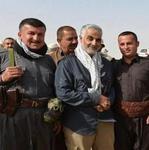
General_Qassam_Suleimani_IRAQ_1.15Iranian Gen. Qassem Soleimani on Tikrit battlefront

US President Barack Obama’s plans for Iran, which were spectacularly challenged by Binyamin Netanyahu in his Congress speech Tuesday, March 3, were manifested 10,000 kilometers from Washington in the firestorm over Tikrit, the important Sunni town north of Baghdad. There, Iranian-led Iraqi troops are on the offensive against the Islamic State in the biggest ground battle fought in Iraq since the Iraqi army fell apart and scattered last June against the conquering Islamist march through western and central Iraq.

For four reasons, this battle is loaded with ramifications for Obama’s Iran policy and the Islamic Republic’s drive for recognition as the leading Middle East power:

1.   For Tehran it is a high-stake gamble for prestige, Its top military strategist, Al Qods Brigades chief Gen. Qassem Soleimani, was thrown into the Tikrit operation, to become the first high-ranking general Iran has ever placed publicly up front in direct command of a key battle as a guarantee of its success.

2.  However, three days after the offensive was launched on Sunday, March 1, the 25,000 Iranian and Iraqi troops, backed by Iraqi Shiite militias, were still fighting outside its gates, upsetting the high hopes of a swift victory and breakthrough into the city.

Islamist forces slowed their advance by strewing hundreds of mines and roadside bombs on all the roads leading to Tikrit, while teams of suicide bombers jumped out and blew themselves up amidst the invading army – a tactic seen before in the battle for the Syrian Kurdish town of Kobani.
ISIS boasted that one of the suicide bombers was an American citizen whom they dubbed “Abu Dawoud al-Amriki.”

3.  The United States has no military input in the battle – neither US advisers on the ground nor aerial bombardment. On Tuesday, March 3, while Netanyahu was advising Congress in reference to the relative merits of radical Iran and ISIS that “the enemy of your enemy is the enemy,” Gen. Martin Dempsey, Chairman of the US Joint Chiefs of Staff, revealed some of the Obama administration’s thinking on the subject.

He said Iran and its allies (Iraqi Shiite militias) had taken part in the Iraq war ever since 2004. “But the Tikrit campaign signals a new level of involvement,” he said. “This is the most overt conduct of Iranian support in the form of artillery and other things” and “…could turn out to be a positive thing.”

These comments corroborated DEBKAfile’s disclosures on the US-led war on ISIS, which defined America as confining itself to air strikes over Iraq and Syria and assigning the brunt of the ground war to Iran’s Revolutionary Guards forces – a division of labor, which Israeli military chiefs watch with increasing concern as it brings the Iranian peril closer than ever to Israel, DEBKAfile’s military sources report.

The Iraq format is replicated in southern Syria, where the same Gen. Soleimani, joined by a group of fellow Iranian generals, is leading an operation to seize that part of the country from Syrian rebel hands, including the Golan town of Quneitra .

4. The role Obama has assigned Iran in the two embattled Middle East countries bears directly on the scope of his concessions in the bargaining for a comprehensive nuclear deal.

The World Bows to Iranian Regional Hegemony

March 4, 2015

The World Bows to Iranian Regional Hegemony, Asia Times Online via Middle East Forum, David P. Goldman, March 4, 2015. Originally published under the title, “World Bows to Iran’s Hegemony.”
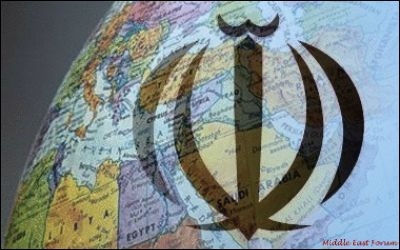
1025The looming nuclear agreement is a dark cloud for countries within range of Iranian ballistic missiles.

The powers of the world hope to delay, but not deter, Iran’s eventual acquisition of nuclear weapons.

The US has tacitly accepted the guiding role of Iranian commanders in Iraq’s military operations against ISIS.

Washington destroyed the balance of power that defined the region’s politics when it pushed through majority rule in Iraq.

****************

The problem with Israeli Prime Minister Benyamin Netanyahu’s address to Congress March 3 was not the risk of offending Washington, but rather Washington’s receding relevance. President Barack Obama is not the only leader who wants to acknowledge what is already a fact in the ground, namely that “Iran has become the preeminent strategic player in West Asia to the increasing disadvantage of the US and its regional allies,” as a former Indian ambassador to Oman wrote this week.

For differing reasons, the powers of the world have elected to legitimize Iran’s dominant position, hoping to delay but not deter its eventual acquisition of nuclear weapons. Except for Israel and the Sunni Arab states, the world has no desire to confront Iran. Short of an American military strike, which is unthinkable for this administration, there may be little that Washington can do to influence the course of events. Its influence has fallen catastrophically in consequence of a chain of policy.

The best that Prime Minister Netanyahu can hope for is that the US Congress will in some way disrupt the Administration’s efforts to strike a deal with Iran by provoking the Iranians. That is what the White House fears, and that explains its rage over Netanyahu’s appearance.

Tehran may overplay its hand, but I do not think it will. The Persians are not the Palestinians, who discovered that they were a people only a generation ago and never miss an opportunity to miss and opportunity; they are ancient and crafty, and know an opportunity when it presents itself.

Most of the world wants a deal, because the alternative would be war. For 10 years I have argued that war is inevitable whatever the diplomats do, and that the question is not if, but how and when. President Obama is not British prime minister Neville Chamberlain selling out to Hitler at Munich in 1938: rather, he is Lord Halifax, that is, Halifax if he had been prime minister in 1938. Unlike the unfortunate Chamberlain, who hoped to buy time for Britain to build warplanes, Halifax liked Hitler, as Obama and his camarilla admire Iran.

China is Chamberlain, hoping to placate Iran in order to buy time. China’s dependence on Middle East oil will increase during the next decade no matter what else China might do, and a war in the Persian Gulf would ruin it.

Until early 2014, China believed that the United States would guarantee the security of the Persian Gulf. After the rise of Islamic State (ISIS), it concluded that the United States no longer cared, or perhaps intended to destabilize the region for nefarious reasons. But China does not have means to replace America’s presence in the Persian Gulf. Like Chamberlain at Munich, it seeks delay.

Obama, to be sure, portrays his policy in the language of balance of power. He told the New Yorker’s David Remnick in 2014,

It would be profoundly in the interest of citizens throughout the region if Sunnis and Shias weren’t intent on killing each other. And although it would not solve the entire problem, if we were able to get Iran to operate in a responsible fashion – not funding terrorist organizations, not trying to stir up sectarian discontent in other countries, and not developing a nuclear weapon – you could see an equilibrium developing between Sunni, or predominantly Sunni, Gulf states and Iran in which there’s competition, perhaps suspicion, but not an active or proxy warfare.

That, as the old joke goes, is the demo version.

On the ground, the US has tacitly accepted the guiding role of Iranian commanders in Iraq’s military operations against ISIS. It is courting the Iran-backed Houthi rebels who just overthrow a Saudi-backed regime in Yemen. It looks the other way while its heavy arms shipments to the Lebanese army are diverted to Hezbollah.

At almost every point at which Iran has tried to assert hegemony over its neighbors, Washington has acquiesced. “In the end, peace can be achieved only by hegemony or by balance of power,” wrote Henry Kissinger. The major powers hope for peace through Iranian hegemony, although they differ in their estimate of how long this will last.

Apart from its nuclear ambitions, the broader deal envisioned by Washington would leave Iran as a de facto suzerain in Iraq. It would also make Iran the dominant power in Lebanon (via Hezbollah), Syria (via its client regime) and Yemen (through its Houthi proxies). Although Sunni Muslims outnumber Shi’ites by 6:1, Sunni populations are concentrated in North Africa, Turkey and South Asia. Iran hopes to dominate the Levant and Mesopotamia, encircling Saudi Arabia and threatening Azerbaijan.

It is grotesque for America to talk of balance of power in the Persian Gulf, because America destroyed the balance of power that defined the region’s politics from the end of the First World War until 2006, when Washington pushed through majority rule in Iraq.

The imperialist powers in their wisdom established a power balance on two levels. First, they created a Sunni-dominated state in Iraq opposite Shi’ite Iran. The two powers fought each other to a standstill during the 1980s with the covert encouragement of the Reagan administration. Nearly a million soldiers died without troubling the world around them.

Second, the Sykes-Picot agreement of 1916 created two states, Syria and Iraq, in which minorities ruled majorities – the Alawite minority in Syria, and the Sunni minority in Iraq. Tyranny of a minority may be brutal, but a minority cannot exterminate a majority.

America’s first great blunder was to force majority rule upon Iraq. As Lt General (ret.) Daniel Bolger explained in a 2014 book,

The stark facts on the ground still sat there, oozing pus and bile. With Saddam gone, any voting would install a Shiite majority. The Sunni wouldn’t run Iraq again. That, at the bottom, caused the insurgency. Absent the genocide of Sunni Arabs, it would keep it going.

Under majority Shi’ite rule, Iraq inevitably became Iran’s ally. Iranian Revolutionary Guards are now leading its campaign against the Sunni resistance, presently dominated by ISIS, and Iranian officers are leading Iraqi army regulars.

This was the work of the George W Bush administration, not Obama. In its ideological fervor for Arab democracy, the Republicans opened the door for Iran to dominate the region. Condoleezza Rice, then Bush’s National Security Advisor, proposed offering an olive branch to Iran as early as 2003. After the Republicans got trounced in the 2006 Congressional elections, defense secretary Donald Rumsfeld got a pink slip, vice president Dick Cheney got benched, and “realist” Robert Gates – the co-chairman of the 2004 Council on Foreign Relations task force that advocated a deal with Iran – took over at Defense.

China and Russia

In the past, China has sought to strike a balance between Saudi Arabia and Iran with weapons sales, among other means. One Chinese analyst observes that although China’s weapons deliveries to Iran are larger in absolute terms than its sales to Saudi Arabia, it has given the Saudis its best medium-range missiles, which constitute a “formidable deterrent” against Iran.

1026A Chinese warship arrives in Bandar Abbas, Iran in September 2014.

As China sees the matter, its overall dependency on imported oil is rising, and the proportion of that oil coming from Iran and its perceived allies is rising. Saudi Arabia may be China’s biggest provider, but Iraq and Oman account for lion’s share of the recent increase in oil imports. China doesn’t want to rock the boat with either prospective adversary.

Among the world’s powers, China is the supreme rationalist: it views the world in terms of cold self-interest and tends to assume that others also view the world this way. One of China’s most respected military strategists told me bluntly that the notion of a nuclear exchange between Israel and Iran (and by implication any regional nuclear power and Iran) was absurd: the Iranians, he argued, know that a nuclear-armed Israel could destroy them in retaliation.

Other Chinese analysts are less convinced and view Iran’s prospective acquisition of nuclear weapons with trepidation. It is not only war with Israel but with Saudi Arabia that concerns the oil-importing Chinese. For the time being, Beijing has decided to accommodate Iran. In a March 2 commentary, Xinhua explicitly rejected Israeli objections:

The US Congress will soon have a guest, Israeli Prime Minster Benjamin Netanyahu, who is expected to try to convince lawmakers that a deal with Iran on its nuclear program could threaten the very existence of the Jewish state.

Despite the upcoming pressure, policymakers in Washington should have a clear mind of the potential dangers of back-pedaling on the current promising efforts for a comprehensive deal on the Iranian nuclear issue before a March 31 deadline …

With a new round of talks in Switzerland pending, it is widely expected that the P5+1 [the five permanent members of the UN Security Council plus Germany] could succeed in reaching a deal with Iran to prevent the latter from developing a nuclear bomb, in exchange for easing sanctions on Tehran.

The momentum does not come easy and could hardly withstand any disturbances such as a surprise announcement by Washington to slap further sanctions on Tehran.

The Obama administration needs no outside reminder to know that any measures at this stage to “overwhelm” Iran will definitely cause havoc to the positive atmosphere that came after years of frustration over the issue.

While it is impossible for Washington to insulate itself from the powerful pro-Israel lobbyist this time, the US policymakers should heed that by deviating from the ongoing endeavor on Iran they may squander a hard-earned opportunity by the international community to move closer to a solution to the Iran nuclear issue, for several years to come if not forever.

Russia has taken Iran’s side explicitly, for several reasons.

First, Russia has stated bluntly that it would help Iran in retaliation for Western policy in Ukraine, as I wrote in this space January 28. Second, Russia’s own Muslim problem is Sunni rather than Shi’ite. It has reason to fear the influence of ISIS among its own Muslims. If Iran fights ISIS, it serves Russian interests. Russia, to be sure, does not like the idea of a nuclear power on its southern border, but its priorities place it squarely in Iran’s camp.

Demographic Time Bomb

The Israeli prime minister asserted that the alternative to a bad deal is not war, but a better deal. I do not think he believes that, but Americans cannot wrap their minds around the notion that West Asia will remain at war indefinitely, especially because the war arises from their own stupidity.

Balance of power in the Middle East is inherently impossible today for the same reason it failed in Europe in 1914, namely a grand demographic disequilibrium: Iran is on a course to demographic disaster, and must assert its hegemony while it still has time.

Game theorists might argue that Iran has a rational self-interest to trade its nuclear ambitions for the removal of sanctions. The solution to a multi-period game – one that takes into account Iran’s worsening demographic weakness – would have a solution in which Iran takes great risks to acquire nuclear weapons.

Between 30% and 40% of Iranians will be older than 60 by mid-century (using the UN Population Prospect’s Constant Fertility and “Low” Variants). Meanwhile, its military-age population will fall by a third to a half.

Belated efforts to promote fertility are unlikely to make a difference. The causes of Iranian infertility are baked into the cake – higher levels of female literacy, an officially-sanctioned culture of sexual license administered by the Shi’ite clergy as “temporary marriage,” epidemic levels of sexually-transmitted disease and inbreeding. Iran, in short, has an apocalyptic regime with a lot to be apocalyptic about.

Henry Kissinger is right: peace can be founded on either hegemony or balance of power. Iran cannot be a hegemon for long because it will implode economically and demographically within a generation. In the absence of either, the result is war. For the past 10 years I have argued in this space that when war is inevitable, preemption is the least damaging course of action. I had hoped that George W Bush would have the gumption to de-fang Iran, and was disappointed when he came under the influence of Condoleezza Rice and Robert Gates. Now we are back in 1938, but with Lord Halifax rather than Neville Chamberlain in charge.
Netanyahu: ‘Even if Israel has to stand alone, Israel will stand.’

March 4, 2015

Netanyahu: ‘Even if Israel has to stand alone, Israel will stand.’ Front Page Magazine, Daniel Greenfield, March 4, 2015

Screen-Shot-2015-03-03-at-10.57.51-PM-420x350

“America’s founding document promises life, liberty and the pursuit of happiness. Iran’s founding document pledges death, tyranny, and the pursuit of jihad,” he said. It was the type of clarity that he had brought to the difficult questions of life as a teenager. It is a clarity that still evades Obama today.

A measure of how thoroughly Netanyahu exposed Obama’s unseriousness can be found in Obama’s reply that before taking a position on a nuclear deal “it is very important not to be distracted by the nature of the Iranian regimes’ ambitions when it comes to territory or terrorism.”

For Netanyahu and for many in Congress, Iran’s terrorism is not a distraction; it is the main issue.

********************

In 1967, Benjamin Netanyahu skipped his high school graduation in Pennsylvania to head off to Israel to help in the Six Day War. That same year Obama moved with his mother to Indonesia.

When Obama suggested that Israel return to the pre-1967 borders, described by Ambassador Eban, no right-winger, as “Auschwitz borders,” it was personal for Netanyahu. Like many Israeli teens, he had put his life on hold and risked it protecting those borders.

In the seventies, Obama was part of the Choom Gang and Netanyahu was sneaking up on Sabena Flight 571 dressed as an airline technician. Inside were four terrorists who had already separated Jewish passengers and taken them hostage. Two hijackers were killed. Netanyahu took a bullet in the arm.

The Prime Minister of Israel defended the operation in plain language. “When blackmail like this succeeds, it only leads to more blackmail,” she said.

Netanyahu’s speech in Congress was part of that same clash of worldviews. His high school teacher remembered him saying that his fellow students were living superficially and that there was “more to life than adolescent issues.” He came to Congress to cut through the issues of an administration that has never learned to get beyond its adolescence.

Obama’s people had taunted him with by calling him “chickens__t.” They had encouraged a boycott of his speech and accused him of insulting Obama. They had thrown out every possible distraction to the argument he came to make. Unable to argue with his facts, they played Mean Girls politics instead.

Benjamin Netanyahu had left high school behind to go to war. Now he was up against overgrown boys and girls who had never grown beyond high school. But even back then he had been, as a fellow student had described him, “The lone voice in the wilderness in support of the conservative line.”

“We were all against the war in Vietnam because we were kids,” she said. The kids are still against the war. Against all the wars; unless it’s their own wars. Netanyahu grew up fast. They never did.

Netanyahu could have played their game, but instead he began by thanking Obama. His message was not about personal attacks, but about the real threat that Iran poses to his country, to the region and to the world. He made that case decisively and effectively as few other leaders could.

He did it using plain language and obvious facts.

Netanyahu reminded Congress that the attempt to stop North Korea from going nuclear using inspectors failed. The deal would not mean a denuclearized Iran. “Not a single nuclear facility would be demolished,” he warned. And secret facilities would continue working outside the inspections regime.

He quoted the former head of IAEA’s inspections as saying, “If there’s no undeclared installation today in Iran, it will be the first time in 20 years that it doesn’t have one.”

And Netanyahu reminded everyone that Iran’s “peaceful” nuclear program would be backed by ongoing development of its intercontinental ballistic missile program that would not be touched under the deal.

He warned that the deal would leave Iran with a clear path to a nuclear endgame that would allow it to “make the fuel for an entire nuclear arsenal” in “a matter of weeks”.

Iran’s mission is to export Jihad around the world, he cautioned. It’s a terrorist state that has murdered Americans. While Obama claims to have Iran under control, it has seized control of an American ally in Yemen and is expanding its influence from Iraq to Syria.

Its newly moderate government “hangs gays, persecutes Christians, jails journalists.” It’s just as bad as ISIS, except that ISIS isn’t close to getting a nuclear bomb.

“America’s founding document promises life, liberty and the pursuit of happiness. Iran’s founding document pledges death, tyranny, and the pursuit of jihad,” he said. It was the type of clarity that he had brought to the difficult questions of life as a teenager. It is a clarity that still evades Obama today.

A measure of how thoroughly Netanyahu exposed Obama’s unseriousness can be found in Obama’s reply that before taking a position on a nuclear deal “it is very important not to be distracted by the nature of the Iranian regimes’ ambitions when it comes to territory or terrorism.”

For Netanyahu and for many in Congress, Iran’s terrorism is not a distraction; it is the main issue.

Obama insists in that same interview that “sanctions are not sufficient to prevent Iran from pursuing its nuclear ambitions.” And yet the entire premise of the deal he’s pushing is that the sanctions forced Iran to come to the negotiating table and agree to give up its race for the bomb. Sanctions can’t stop Iran from going nuclear, but negotiations using the sanctions as leverage can.

And to believe all this, we have to avoid being distracted by Iran’s invasions of other countries and support for terrorists.

It’s self-contradictory nonsense that wouldn’t pass muster in a high school paper in 1967. And yet it’s the unchallenged argument dominating the political class, foreign policy experts and the media today.

Netanyahu came to challenge the argument that Iran could be appeased out of getting the bomb. He had to do it because Obama and his media allies had ignored or shut up everyone who had made it before him. By making Netanyahu’s very appearance into the issue, they hoped to shut him down the way they had senators from their own party. They succeeded in making his appearance controversial, but that just meant that more people were listening when he finally broke through and spoke.

“Would Iran be less aggressive when sanctions are removed and its economy is stronger? If Iran is gobbling up four countries right now while it’s under sanctions, how many more countries will Iran devour when sanctions are lifted? Would Iran fund less terrorism when it has mountains of cash with which to fund more terrorism?” he asked.

It’s a question that the administration and its defenders do not want to answer because it strikes at the heart of their logic of appeasement.

The appeasers claim that the negotiations will stabilize the region. Instead Netanyahu demonstrated that they will lead to a region in which every major Muslim country has nukes and is ready to use them.

The appeasers insist that we need to ally with Iran to stop ISIS. Netanyahu brought clarity to that as well.

“Iran and ISIS are competing for the crown of militant Islam. One calls itself the Islamic Republic. The other calls itself the Islamic State. Both want to impose a militant Islamic empire first on the region and then on the entire world,” he warned. “They just disagree among themselves who will be the ruler of that empire,”

Netanyahu offered an alternative to another worthless nuclear agreement by focusing not only on Iran’s nuclear capability, but on its intentions. He asked the world to turn its attention to stopping Iran from attacking its neighbors and engaging in terrorism.

The things that Obama calls a distraction are for Benjamin Netanyahu the main point.

The former high school student who had been described as a “lone voice in the wilderness” closed his speech by saying, “Even if Israel has to stand alone, Israel will stand.”

Netanyahu knows something about standing alone. No Israeli politician has faced the continuing level of hate by the left that he has. The mockery and sneers directed at him by Obama’s media allies in these past weeks have been nothing. The teenager who had learned to stand by his values in a high school in the sixties and as Israel’s ambassador to the United Nations in the eighties has let it all roll off him.

In war, Netanyahu had nearly drowned in the Suez Canal. In politics, he has kept his head above water. In Congress, he concluded by quoting Moses. “Be strong and resolute, neither fear nor dread them.”

It can refer to Iran or to the political mobs of the left who thought that smearing him would silence him.

Netanyahu understood what was at stake when Israel was fighting for its life in 1967. He did not let the comforts of suburbia blind him to the personal sacrifices that he had to make by going to Israel.

That is why he came to America now.