Archive for the ‘Middle East’ category

Why Trump’s bid to amplify Muslim reformers will keep Americans safer

December 30, 2016

Why Trump’s bid to amplify Muslim reformers will keep Americans safer, The Hill, Cynthis Farahat, December 29, 2016

sisi_egypt_president_458617936© Getty Images

Sisi’s supporters say the Obama administration’s tolerance of Islamism and harsh criticism of Egypt’s counter-terrorism efforts have been an enormous obstacle. In contrast, Trump’s campaign expressed “strong support for Egypt’s war on terrorism” and pledged that “under a Trump Administration, the United States of America will be a loyal friend, not simply an ally, that Egypt can count on in the days and years ahead.”

**********************************

The recent terror attacks in Berlin and Zurich highlight once again the danger that radical Islamism poses to the West. While many are searching for ways to improve security and defeat the threat on the ground, few appear to appreciate that the decisive blow against Islamism can only be administered by leaders in the Middle East.

President-elect Donald Trump pledged during his last major foreign policy speech before the election to “be a friend to all moderate Muslim reformers in the Middle East” “amplify their voices.”

President Abdel Fattah el-Sisi and most of the political and media establishment in Egypt warmly embraced this policy. After meeting with the Republican nominee on the sidelines of the UN General Assembly in September, Sisi told CNN he had “no doubt” Trump would make a strong leader. Sisi was also the first Arab leader to telephone Trump after his election win.

Egyptian affections for Trump are partly fueled by distaste for former Secretary of State Hillary Clinton, who many Egyptians believe conspired with the Muslim Brotherhood to help elect Islamist Muhammad Morsi as president in 2012 (after which she was greeted in Egypt with protestors hurling tomatoes).

However, the main attraction of Trump in the eyes of many Egyptians is his staunch anti-Islamism.

Since coming to power in 2013, Sisi has spoken passionately about the need for an Islamic reformation. For Sisi, Islamism isn’t merely a ruinously bad blueprint for modern governance and a chronic source of security threats, it is also a wedge fueling outside hostility to Muslims, both Islamists and non-Islamists alike. In a 2015 New Year’s Day speech at al-Azhar University, the world’s most prestigious seat of Sunni Islamic learning, Sisi warned that the “corpus of [Islamic] texts and ideas that we have sacralized over the years” are “antagonizing the entire world” and “caus[ing] the entire umma [Muslim world] to be a source of anxiety, danger, killing and destruction.”

Not surprisingly, Sisi has faced opposition in the region, especially from Turkey, Qatar, and powerful figures in the Saudi royal family, who have opened their media to Brotherhood operatives to attack Sisi and even call for his assassination. One of the only Arab governments openly backing Sisi’s uncompromising stance on Islamists is the United Arab Emirates (UAE), which in 2014 designated the Muslim Brotherhood as a terrorist organization (along with two of its U.S.-based affiliates, the Council on American-Islamic Relations and the Muslim American Society).

Within Egypt, Sisi’s calls for a religious revolution have made him extremely popular, but he has faced fierce resistance from Islamists, who still dominate many sectors of Egyptian civil society and exert influence in government, particularly the judiciary.

Sisi’s supporters say the Obama administration’s tolerance of Islamism and harsh criticism of Egypt’s counter-terrorism efforts have been an enormous obstacle. In contrast, Trump’s campaign expressed “strong support for Egypt’s war on terrorism” and pledged that “under a Trump Administration, the United States of America will be a loyal friend, not simply an ally, that Egypt can count on in the days and years ahead.” Walid Phares, a foreign policy advisor for the president-elect, stated in an interview that Trump will work to pass legislation designating the Muslim Brotherhood as a terrorist organization.

Trump’s election appears to have emboldened Sisi to step up his Islamic reformation campaign. Just days later, Sisi pardoned 82 prisoners, among them Islam Behery, a former TV host and prominent leader of a growing neo-Mu’tazilah-style movement that claims Islamic scriptures are man-made and should not overrule reason and critical thinking.

Behery’s movement has gained sweeping popularity as horrors committed by Al-Qaeda, Islamic State, and other Sunni jihadist groups have mounted in recent years.

Many across the Arab world, and Egyptians in particular, are hopeful that the election of Donald Trump will open a new page of cooperation between the United States and those who are seeking to challenge Islamic extremism in the war of ideas. Only together can we defeat the Islamists wreaking carnage on the streets in the West.

Cynthia Farahat is a fellow at the Middle East Forum and a columnist for the Egyptian daily Al-Maqal.

The views expressed by authors are their own and not the views of The Hill.;

Trump and Sisi discuss Middle East peace

December 23, 2016

Trump and Sisi discuss Middle East peace, Israel National News, Elad Benari, December 23, 2016

trumpandsisiTrump and Sisi meet in New YorkReuters

“The presidents agreed on the importance of affording the new U.S. administration the full chance to deal with all dimensions of the Palestinian case with a view of achieving a full and final settlement,” he added.

Sisi recently praised Trump and said he expected greater engagement in the Middle East from his administration.

******************************

Egyptian President Abdel Fattah al-Sisi on Thursday night spoke with U.S. President-Elect Donald Trump, Sisi’s office said, according to Reuters.

The call came hours after the UN Security Council postponed indefinitely a vote on Egypt’s draft resolution denouncing Israeli “settlements”.

“During the call they discussed regional affairs and developments in the Middle East and in that context the draft resolution in front of the Security Council on Israeli settlement,” said Sisi’s spokesman, Alaa Yousef.

“The presidents agreed on the importance of affording the new U.S. administration the full chance to deal with all dimensions of the Palestinian case with a view of achieving a full and final settlement,” he added.

Thursday’s vote on the UN Security Council resolution was reportedly postponed after Sisi instructed his nation’s delegation to push for a delay in the vote.

Trump had earlier called for the United States to veto the resolution, as it has traditionally done with similar proposals. American officials indicated that the Obama administration was planning to abstain from voting or even to vote yes.

Sisi recently praised Trump and said he expected greater engagement in the Middle East from his administration.

The Egyptian President has also been at the forefront of the effort to resume talks between Israel and the Palestinian Authority, having several months ago urged Israelis and Palestinian Arabs to seize what he said was a “real opportunity” for peace and hailed his own country’s peace deal with Israel.

The comments were welcomed by Prime Minister Binyamin Netanyahu, who stressed that “Israel is ready to participate with Egypt and other Arab states in advancing both the diplomatic process and stability in the region.”

Palestinian Authority (PA) chairman welcomed Sisi’s call as well, saying he welcomed the Egyptian president’s efforts to achieve peace and establish a Palestinian state.

The Trump Administration and the Kurds — A Conversation with Sherkoh Abbas

November 17, 2016

The Trump Administration and the Kurds — A Conversation with Sherkoh Abbas, Front Page MagazineJoseph Puder, November 16, 2016

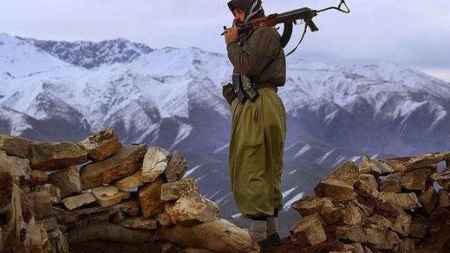
kurdishfighters

Kurdish Peshmerga forces fighting the Islamic State (IS) in both Iraq and Syria have exhibited courage, determination, and a unique pro-American attitude in the Arabic speaking world.  In Syria, however, the Kurdish forces combating the Islamic State bravely and successfully are being attacked by the Turkish army as ordered by President ErdoganHuman rights activist Dilovan Mirkhan told ARA News (November 13, 2016) that “The Turkish army stationed on the borderline with Syria, bombed residential buildings in the Mosako town in Afrin, adding that the bombardment led to massive destruction in the area.” Mirkhan reported that “Dead bodies of eight civilian victims were collected subsequent to the attack, and many others remained stranded under the rubble.”

It should be unacceptable for the incoming Trump administration to allow Turkey’s dictatorial president Erdogan to attack the very forces (the Kurds) who are liberating portions of Syria from the IS. Moreover, it is also high time for the U.N. and the U.S. to recognize the Kurdish people’s right to self-determination.  The U.N. has held endless sessions in support of Palestinian rights and requests for statehood. The Kurds, numbering tens-of-millions, deserve much more from the international community.  There are 22 Arab states but no Kurdish state.  Given the critical role the Kurds are playing in liberating Iraq and Syria from the barbarism of the IS, the time has come to reward the Kurds with a state of their own.

Kurds have been oppressed by Saddam Hussein in Iraq and gassed in Halabja. Hafez Assad, the dictator of Syria expelled hundreds of thousands of Kurds from the Al-Hasakeh region, with similar numbers becoming stateless.  The Islamic Republic of Iran has equally oppressed its largely Sunni-Muslim Kurds. It has denied political and cultural rights to its Kurdish citizens.  Turkey, where the Kurds count for almost 20% of the population, is currently bombing the Kurds at the Kurdish-majority region of southeastern Turkey, and in Syria.

This reporter asked Sherkoh Abbas, President of the Kurdish National Assembly of Syria (KNA-S), to respond to the current situation in Syria.

Joseph Puder (JP): With Donald Trump becoming the new occupant of the White House, and Republicans controlling both houses of Congress, what would you like the new administration to do in Syria?

Sherkoh Abbas (SA): I hope to see the Trump administration abandon the outdated policy of maintaining the unjust legacy of the colonial Sykes-Picot agreement. Similarly, Trump should reverse the previous U.S. administration’s investment in cozying up to ruthless Middle East regimes at the expense of its existing allies.  Instead, the new administration should support its natural allies such as the Kurds in the Middle East and the Amazigh people (Berbers) in North Africa.

Supporting an independent Kurdistan would help finish the Islamic State in Iraq and Syria, and reduce Iran’s influence in the region, particularly in Iraq and Syria.  Working with the Kurds would also sever the Shiite Crescent.  Moreover, open support for the Kurds would check Recep Tayyip Erdogan and his ambitious Neo-Ottoman Empire.

The U.S. under the Trump presidency, should provide full and direct support to the Kurds on all levels, including the delivery of arms, unlike the Obama administration.  Arms to the Kurds should bypass Baghdad, and go directly to the Kurds.

During the primaries, Trump expressed support for the Kurds.  We will call on him to do just that.  The Kurds share the same values with the U.S. and they are eager to work with America.

JP: What do you expect from the Trump administration with regards to an independent Kurdish state in Syria?

SA: Syrian Kurds are currently fighting on behalf of humanity in their struggle with the Islamic State.  As quid-pro-quo, the Kurds would like U.S. help in creating a federal system in Syria to start with, and ultimately supporting outright Kurdish independence in Syria. Israel, Russia, and some European nations are promoting a federal state for the failed states of Iraq and Syria.

JP: Are the leaders of the People’s Protection Units (YPG) ready for an independent Kurdish state in Syria?

SA: The YPG needs to distance itself from the Assad regime as well as the Kurdistan Workers Party (PKK), and work with all the Kurds, including over 5,000 Syrian Peshmerga forces currently fighting to take Mosul.  It must become inclusive instead of a dictatorial regime.  The YPG does not enjoy the overwhelming support of the Syrian Kurds.  The majority of Syrian Kurds want democracy and independence.

The YPG is vacillating between its work with the U.S., Russia, and the Assad regime.  The YPG has to face the Free Syrian Army (FSA) and IS, as well as other terror groups. The Arab Gulf states, particularly Qatar, is supporting the FSA, which is ideologically close to the Muslim Brotherhood.  Turkey, a NATO-member, is too close to the IS and al-Qaeda, and their agenda is to get rid of the Assad regime and the Kurds.

JP: What influence can you and the Kurdistan National Assembly of Syria (KNA-S) exert on the powers that be in your home town of al-Qamishli and Kurdish Syria?

SA: Most of the Syrian Kurds are loyal to Kurdish tribal and civic leaders, and have strong alliances with Iraqi Kurdistan Regional Government (KRG). The YPG opposes such relationships, and thus is not a consensus organization.  The Kurdistan National Assembly of Syria (KNA-S) is aligned with tribal and civic leaders and the KRG in Iraq.  We could deliver the “Kurdish street,” and additional soldiers to finish IS.

This year KNA-S has assembled a wide-ranging delegation of Syrian Kurds, including YPG officials, to come to Washington for talks with U.S. administration officials.  Unfortunately, the State Department did not furnish visas to the delegates from Syria to enter the U.S.  Hopefully, the Trump administration will invite the KNA-S to re-assemble the same delegation for talks in Washington.

JP: Given Erdogan’s dictatorial behavior toward the opposition in Turkey, and especially toward the Kurds in Southeastern Turkey, what would you advise the incoming President Donald Trump to do with regards to Erdogan and Turkey?

SA: Turkey ruled by Erdogan is a lost case, and it is not a friend of the U.S.  Turkey’s intimate relationship with radical Islamic groups requires explanation.  Erdogan’s regime has its eyes focused on Aleppo in Syria and Mosul in Iraq, ostensibly to prevent the formation of an independent and contiguous Kurdistan, comprised of Iraqi and Syrian Kurdistan.

The Trump administration should prevent the Turkish army forces from entering Syrian territory under the guise of fighting IS.  The reality is that Turkey is only interested in fighting the Kurds, and preventing the creation of an independent Kurdish state, or an autonomous Kurdish region in northeastern Syria.

Column One: From Yemen to Turtle Bay

October 14, 2016

Column One: From Yemen to Turtle Bay, Jerusalem Post, Caroline Glick, October 13, 2016
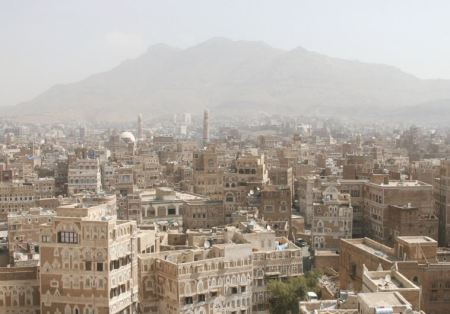
sana-yemen


As far as Obama is concerned, Iran is a partner, not an adversary.

****************************

Off the coast of Yemen and at the UN Security Council we are seeing the strategic endgame of Barack Obama’s administration. And it isn’t pretty.

Since Sunday, Iran’s Houthi proxies in Yemen have attacked US naval craft three times in the Bab al-Mandab, the narrow straits at the mouth of the Red Sea. The Bab al-Mandab controls maritime traffic in the Red Sea, and ultimately controls the Suez Canal.

Whether the Iranians directed these assaults or simply green-lighted them is really beside the point. The point is that these are Iranian strikes on the US. The Houthis would never have exposed themselves to US military retaliation if they hadn’t been ordered to do so by their Iranian overlords.

The question is why has Iran chosen to open up an assault on the US? The simple answer is that Iran has challenged US power at the mouth of the Red Sea because it believes that doing so advances its strategic aims in the region.

Iran’s game is clear enough. It wishes to replace the US as the regional hegemon, at the US’s expense.

Since Obama entered office nearly eight years ago, Iran’s record in advancing its aims has been one of uninterrupted success.

Iran used the US withdrawal from Iraq as a means to exert its full control over the Iraqi government. It has used Obama’s strategic vertigo in Syria as a means to exert full control over the Assad regime and undertake the demographic transformation of Syria from a Sunni majority state to a Shi’ite plurality state.

In both cases, rather than oppose Iran’s power grabs, the Obama administration has welcomed them. As far as Obama is concerned, Iran is a partner, not an adversary.

Since like the US, Iran opposes al-Qaida and ISIS, Obama argues that the US has nothing to fear from the fact that Iranian-controlled Shiite militias are running the US-trained Iraqi military.

So, too, he has made clear that the US is content to stand by as the mullahs become the face of Syria.

In Yemen, the US position has been more ambivalent. In late 2014, Houthi rebel forces took over the capital city of Sanaa. In March 2015, the Saudis led a Sunni campaign to overthrow the Houthi government. In a bid to secure Saudi support for the nuclear agreement it was negotiating with the Iranians, the Obama administration agreed to support the Saudi campaign. To this end, the US military has provided intelligence, command and control guidance, and armaments to the Saudis.

Iran’s decision to openly assault US targets then amounts to a gamble on Tehran’s part that in the twilight of the Obama administration, the time is ripe to move in for the kill in Yemen. The Iranians are betting that at this point, with just three months to go in the White House, Obama will abandon the Saudis, and so transfer control over Arab oil to Iran.

For with the Strait of Hormuz on the one hand, and the Bab al-Mandab on the other, Iran will exercise effective control over all maritime oil flows from the Arab world.

It’s not a bad bet for the Iranians, given Obama’s consistent strategy in the Middle East.

Obama has never discussed that strategy.

Indeed, he has deliberately concealed it. But to understand the game he has been playing all along, the only thing you need to do listen to his foreign policy soul mate.

According to a New York Times profile published in May, Obama’s deputy national security adviser Ben Rhodes is the president’s alter ego. The two men’s minds have “melded.”

Rhodes’s first foreign policy position came in the course of his work for former congressman Lee Hamilton.

In 2006, then-president George W. Bush appointed former secretary of state James Baker and Hamilton to lead the Iraq Study Group. Bush tasked the group with offering a new strategy for winning the war in Iraq. The group released its report in late 2006.

The Iraq Study Group’s report contained two basic recommendations. First, it called for the administration to abandon Iraq to the Iranians.

The group argued that due to Iran’s opposition to al-Qaida, the Iranians would fight al-Qaida for the US.

The report’s second recommendation related to Israel. Baker, Hamilton and their colleagues argued that after turning Iraq over to Iran, the US would have to appease its Sunni allies.

The US, the Iraq Study Group report argued, should simultaneously placate the Sunnis and convince the Iranians of its sincerity by sticking it to Israel. To this end, the US should pressure Israel to give the Golan Heights to Syria and give Judea and Samaria to the PLO.

Bush rejected the Iraq Study Group report. Instead he opted to win the war in Iraq by adopting the surge counterinsurgency strategy.

But once Bush was gone, and Rhodes’s intellectual twin replaced him, the Iraq Study Group recommendations became the unstated US strategy in the Middle East.

After taking office, Obama insisted that the US’s only enemy was al-Qaida. In 2014, Obama grudgingly expanded the list to include ISIS.

Obama has consistently justified empowering Iran in Iraq and Syria on the basis of this narrow definition of US enemies. Since Iran is also opposed to ISIS and al-Qaida, the US can leave the job of defeating them both to the Iranians, he has argued.

Obviously, Iran won’t do the US’s dirty work for free. So Obama has paid the mullahs off by giving them an open road to nuclear weapons through his nuclear deal, by abandoning sanctions against them, and by turning his back on their ballistic missile development.

Obama has also said nothing about the atrocities that Iranian-controlled militia have carried out against Sunnis in Iraq and has stopped operations against Hezbollah.

As for Israel, since his first days in office, Obama has been advancing the Iraq Study Group’s recommendations. His consistent, and ever escalating condemnations of Israel, his repeated moves to pick fights with Jerusalem are all of a piece with the group’s recommended course of action. And there is every reason to believe that Obama intends to make good on his threats to cause an open rupture in the US alliance with Israel in his final days in office.

Prime Minister Benjamin Netanyahu’s phone call with Secretary of State John Kerry on Saturday night made this clear enough. In the course of their conversation, Netanyahu reportedly asked Kerry if Obama intended to enable an anti-Israel resolution to pass in the UN Security Council after the presidential election next month. By refusing to rule out the possibility, Kerry all but admitted that this is in fact Obama’s intention.

And this brings us back to Iran’s assaults on US ships along the coast of Yemen.

Early on Sunday morning, the US responded to the Houthi/Iranian missile assaults by attacking three radar stations in Houthi-controlled territory. The nature of the US moves gives credence to the fear that the US will surrender Yemen to Iran.

This is so for three reasons. First, the administration did not allow the USS Mason destroyer to respond to the sources of the missile attack against it immediately. Instead, the response was delayed until Obama himself could determine how best to “send a message.”

That is, he denied US forces the right to defend themselves.

Second, it is far from clear that destroying the radar stations will inhibit the Houthis/Iranians.

It is not apparent that radar stations are necessary for them to continue to assault US naval craft operating in the area.

Finally, the State Department responded to the attack by reaching out to the Houthis. In other words, the administration is continuing to view the Iranian proxy is a legitimate actor rather than an enemy despite its unprovoked missile assaults on the US Navy.

Then there is the New York Times’ position on Yemen.

The Times has repeatedly allowed the administration to use it as an advocate of policies the administration itself wishes to adopt. Last week for instance, the Times called for the US to turn on Israel at the Security Council.

On Tuesday, the Times published an editorial calling for the administration to end its military support for the Saudi campaign against the Houthis/Iran in Yemen.

Whereas the Iranian strategy makes sense, Obama’s strategy is nothing less than disastrous.

Although the Iraq Study Group, like Obama, is right that Iran also opposes ISIS, and to a degree, al-Qaida, they both ignored the hard reality that Iran also views the US as its enemy. Indeed, the regime’s entire identity is tied up in its hatred for the US and its strategic aim of destroying America.

Obama is not the only US president who has sought to convince the Iranians to abandon their hatred for America. Every president since 1979 has tried to convince the mullahs to abandon their hostility. And just like all of his predecessors, Obama has failed to convince them.

What distinguishes Obama from his predecessors is that he has based US policy on a deliberate denial of the basic reality of Iranian hostility. Not surprisingly, the Iranians have returned his favor by escalating their aggression against America.

The worst part about Obama’s strategy is that it is far from clear that his successor will be able to improve the situation.

If Hillary Clinton succeeds him, his successor is unlikely to even try. Not only has Clinton embraced Obama’s policies toward Iran.

Her senior advisers are almost all Obama administration alumni. Wendy Sherman, the leading candidate to serve as her secretary of state, was Obama’s chief negotiator with the Iranians.

If Donald Trump triumphs next month, assuming he wishes to reassert US power in the region, he won’t have an easy time undoing the damage that Obama has caused.

Time has not stood still as the US has engaged in strategic dementia. Not only has Iran been massively empowered, Russia has entered the Middle East as a strategic spoiler.

Moreover, since 2001, the US has spent more than a trillion dollars on its failed wars in the Middle East. That investment came in lieu of spending on weapons development. Today Russia’s S-400 anti-aircraft missiles in Syria reportedly neutralize the US’s air force.

US naval craft in the Bab al-Mandab have little means to defend themselves against missile strikes.

The US’s trillion-dollar investment in the F-35 fighter jet has tethered its air wings to a plane that has yet to prove its capabilities, and may never live up to expectations.

Israel is justifiably worried about the implications of Obama’s intention to harm it at the UN.

But the harm Israel will absorb at the UN is nothing in comparison to the long-term damage that Obama’s embrace of the Iraq Study Group’s disastrous strategic framework has and will continue to cause Israel, the US and the entire Middle East.

Muslim Terrorists and Jewish Anti-Semites Against Trump

September 2, 2016

Muslim Terrorists and Jewish Anti-Semites Against Trump, Front Page Magazine, Daniel Greenfield, September 2, 2016

donald-trump-wikimedia-commons_xmo4y6

“I was often the ‘designated yeller.’”

That’s how Hillary Clinton described her relationship with the Israeli prime minister. Yelling and cursing was her particular specialty.

One marathon Hillary yelling session allegedly lasted 45 minutes. Afterward the Israeli ambassador said that relations between the United States and Israel had reached their lowest point.

Her favorite name for Netanyahu was, “F____ Bibi.”

But it wasn’t just about her hatred of any particular Israeli leader. The same year that Hillary was yelling herself hoarse at a man who had fought terrorists on the battlefield, she addressed the American Task Force on Palestine, a leading terror lobby, and blasted Israel and praised Islamic terrorists.

Hillary told the terror lobby, “I may have been the first person ever associated with an American administration to call for a Palestinian state.” She praised Mahmoud Abbas, the PA terror dictator who had boasted, “There is no difference between our policies and those of Hamas.”

She celebrated Naomi Shihab Nye who had written of the Hamas rocket attacks on Israeli cities, “Oppression makes people do desperate things.” Echoing her, Hillary denounced the “indignity of occupation”.  A few years later she accused Israelis of a lack of “empathy” in understanding “the pain of an oppressed people.”

Perhaps they were too busy mourning their dead to emphasize with the terrorists who were killing them.

But fighting for her political life, Hillary and Huma dug through her closet and threw on a blue and white pantsuit. Her campaign placed an editorial in the Forward headlined, “How I Would Reaffirm Unbreakable Bond With Israel — and Benjamin Netanyahu.”

Probably by yelling “F___ Bibi” at him for another 45 minutes.

When Hillary Clinton promised to reaffirm her “Unbreakable Bond With Israel — and Benjamin Netanyahu” it was in the pages of The Forward. And, striving to sell a rotten radical to skeptical Jews, the left-wing paper has decided to run a piece claiming that “Trump Would Be Israel’s Worst Nightmare”. As if anyone in Israel goes to bed dreaming of eight years of Hillary.

The Forward shares Hillary’s view of Netanyahu. And it violently loathes Israel.

Its quick costume change from denouncing anything and everything about the Jewish State to a sudden bout of concern for Israel is as unconvincing as Hillary Clinton’s southern accent.

Jay Michaelson, the author of the editorial warning us how bad Trump would be for Israel, followed that up with another piece accusing Israel of being an apartheid state. During Passover, Michaelson’s seething hatred for the Jewish State had pushed him to declare, “I’m Seeking Freedom From the Organized Jewish Community This Passover.”

Should American Jews take their cues on how dangerous Trump would be for Israel from a guy who hates Israel? Who hates Israel so much that he can’t even stand the Jewish community?

The Forward, like Hillary, hates Israel. Its pages are dedicated to rationalizing, justifying and defending the Muslim hatred of Israel and Jews. There’s Lisa Goldman explaining that the Muslim anti-Semitism displayed at the Rio Olympics was really a “Jewish persecution complex” that lacked “nuance.” It’s not an outlier. The Forward’s view of Israel is as hostile and negative as any white supremacist website.

Or Hillary Clinton’s inbox where the likes of Max Blumenthal regularly made appearances.

Do the Forward or Hillary Clinton actually care about Israel? All they’re trying to do is keep the American Jews who don’t believe that Israel is an apartheid state or that Muslim anti-Semitism is the fault of the Jews on the Democratic reservation by scaring them with bedtime stories about Trump.

Michaelson warns us that Trump would destabilize the Middle East and endanger Israel. It’s hard to imagine how he could do so more than Hillary’s Arab Spring which turned Egypt over to the Muslim Brotherhood, sowed terrorist dragon’s teeth across the region, including an ISIS affiliate in the Sinai.

Trump would destroy American credibility, he tells us. What credibility? Nobody thinks we have any credibility now. Not on Syria, Iran, Libya, China, Russia or anything else. And much of that took place under Hillary Clinton.

Then we are told that Trump is an “extremist” because “moderate Saudi businessmen” don’t like him.

Whom should American Jews better take their guidance from than “moderate Saudi businessmen”? Perhaps Jay Michaelson, Hillary Clinton and the Forward. It’s hard to tell who in that gruesome bunch hates Israel more.

The “moderate” Saudi businessman whom Michaelson quotes is Saudi Arabia’s Prince Alwaleed bin Talal. Alaweed had his post 9/11 donation thrown back in his face after blaming America for the attack. And Moussaoui, the 20th hijacker, claimed that he was an Al Qaeda supporter.

He had also donated $27 million to terrorism against Israel at a telethon whose host declared on television, “Do not have any mercy, neither compassion on the Jews, their blood, their money, their flesh. Their women are yours to take, legitimately. Allah made them yours. Why don’t you enslave their women? Why don’t you wage jihad? Why don’t you pillage them?”

The Forward and Jay Michaelson would like American Jews to heed this warning about Trump’s extremism from a “moderate Saudi” who donated to the mass murder and rape of Jews.

Also, Jay Michaelson and the Forward warn American Jews not to vote for Trump because he “famously promised to “bomb the s___ out of ISIS.” This, according to Jay, ”would entail the murder of thousands of innocent people.” Some of whom might even be “moderate Saudi businessmen.”

Finally, we are warned that under Trump, “Egypt and Syria will soon resemble Hamas and Hezbollah: extremist, Islamist and violent.” This was formerly known as Obama and Hillary’s Arab Spring.

Michaelson contends that Republicans are voting from “that part of the brain that sends out constant ‘fight or flight’ messages based on threats and fear.” That’s an odd lack of self-awareness from a man who just desperately tried to hammer together some “fight or flight” messages on Trump.

But attacking Trump is easier than defending Hillary. And so we get this pathetic showing of Muslim terrorist financiers and Jewish anti-Semites against Trump. It’s as meaningful as Hillary’s pro-Israel pandering.

The real Hillary, the one caught with an inbox full of attacks on Israel, including approval for the bigotry of Max Blumenthal whose work was cited by the Kansas City Jewish Community Center gunman, is quite a different creature from the public Hillary who suddenly loves Israel.

The real Hillary, the one who kissed Arafat’s wife and listened placidly to her rant about Israeli poison gas, has a long anti-Israel history. Her time as Secretary of State has already given us a preview of her policies. She will continue demanding apartheid segregation for Jews living in ’67 Israel and she will go on pushing for more concessions to Islamic terrorists. She will back the Iran deal that she championed.

Hillary will go on financing Iran’s wave of Islamic terrorism while ignoring its nuclear violations.

But there is nothing extraordinary about any of this. Hillary is not a radical in a party of moderates. The Democratic Party has drifted so far into the fever swamps of the radical left that opposition to Israel is mainstream. The only reason that Hillary reserves her fulminations for phone calls and private emails is that even though her inner circle of advisers is vocally anti-Israel, some in her outer circle of donors are pro-Israel. And she still needs their support. At least while the election is still going on.

Israel has ceased to be a bipartisan issue. Jimmy Carter and Bill Clinton reversed JFK and LBJ’s pro-Israel policies. This rejection has been cloaked in euphemisms about “two states for two people”, but that really means championing the creation of Islamic terror states inside Israel.

This policy, which has until recently been bipartisan, represents the greatest threat to Israel.

Donald Trump is the first Republican presidential nominee to firmly break with it. Unlike Hillary, Trump hasn’t kissed Arafat’s wife or spent an hour on the phone yelling at the Prime Minister of Israel. Instead he has said that Jews should be able to keep on living and building houses in ’67 Israel.

Jews living as a free people in their own land is the essence of Zionism. And it’s a rejection of the hateful ravings of Hillary Clinton, the Forward and the “moderate” Saudi businessmen of Islamic terror.

What if Chaos Were Our Middle East Policy?

August 31, 2016

What if Chaos Were Our Middle East Policy? Front Page Magazine, Daniel Greenfield, August 31, 2016

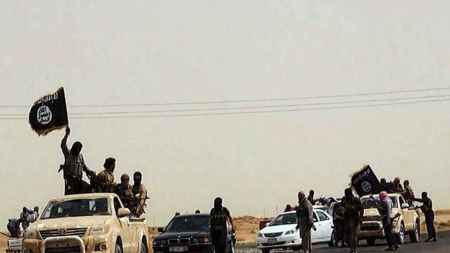
isis-caliphate

Sum up our failed Middle East policy in a nine-letter word starting with an S. Stability.

Stability is the heart and soul of nation-building. It’s the burden that responsible governments bear for the more irresponsible parts of the world. First you send experts to figure out what is destabilizing some hellhole whose prime exports are malaria, overpriced tourist knickknacks and beheadings. You teach the locals about democracy, tolerance and storing severed heads in Tupperware containers.

Then if that doesn’t work, you send in the military advisers to teach the local warlords-in-waiting how to better fight the local guerrillas and how to overthrow their own government in a military coup.

Finally, you send in the military. But this gets bloody, messy and expensive very fast.

So most of the time we dispatch sociologists to write reports to our diplomats explaining why people are killing each other in a region where they have been killing each other since time immemorial, and why it’s all our fault. Then we try to figure out how we can make them stop by being nicer to them.

The central assumption here is stability. We assume that stability is achievable and that it is good. The former is completely unproven and even the latter remains a somewhat shaky thesis.

The British wanted stability by replicating the monarchy across a series of Middle Eastern dependents. The vast majority of these survived for a shorter period than New Coke or skunk rock. Their last remnant is the King of Jordan, born to Princess Muna al-Hussein aka Antoinette Avril Gardiner of Suffolk, educated at the Royal Military Academy, Sandhurst, and currently trying to stave off a Muslim Brotherhood-Palestinian uprising by building a billion dollar Star Trek theme park.

The British experiment in stabilizing the Middle East failed miserably. Within a decade the British government was forced to switch from backing the Egyptian assault on Israel to allying with the Jewish State in a failed bid to stop the Egyptian seizure of the Suez Canal.

The American experiment in trying to export our own form of government to Muslims didn’t work any better. The Middle East still has monarchies. It has only one democracy with free and open elections.

Israel.

Even Obama and Hillary’s Arab Spring was a perverted attempted to make stability happen by replacing the old Socialist dictators and their cronies with the political Islamists of the Muslim Brotherhood. They abandoned it once the chaos rolled in and stability was nowhere to be found among all the corpses.

It might be time to admit that barring the return of the Ottoman Empire, stability won’t be coming to the Middle East any time soon. Exporting democracy didn’t work. Giving the Saudis a free hand to control our foreign policy didn’t work. Trying to force Israel to make concessions to Islamic terrorists didn’t work. And the old tyrants we backed are sand castles along a stormy shore.

Even without the Arab Spring, their days were as numbered as old King Farouk dying in exile in an Italian restaurant.

If stability isn’t achievable, maybe we should stop trying to achieve it. And stability may not even be any good.

Our two most successful bids in the Muslim world, one intentionally and the other unintentionally, succeeded by sowing chaos instead of trying to foster stability. We helped break the Soviet Union on a cheap budget in Afghanistan by feeding the chaos. And then we bled Iran and its terrorist allies in Syria and Iraq for around the price of a single bombing raid. Both of these actions had messy consequences.

But we seem to do better at pushing Mohammed Dumpty off the wall than at putting him back together again. If we can’t find the center of stability, maybe it’s time for us to embrace the chaos.

Embracing the chaos forces us to rethink our role in the world. Stability is an outdated model. It assumes that the world is moving toward unity. Fix the trouble spots and humanity will be ready for world government. Make sure everyone follows international law and we can all hum Lennon’s “Imagine”.

Not only is this a horrible dystopian vision of the future, it’s also a silly fantasy.

The UN is nothing but a clearinghouse for dictators. International law is meaningless outside of commercial disputes. The world isn’t moving toward unity, but to disunity. If even the EU can’t hold together, the notion of the Middle East becoming the good citizens of some global government is a fairy tale told by diplomats while tucking each other into bed in five-star hotels at international conferences.

It’s time to deal with the world as it is. And to ask what our objectives are.

Take stability off the table. Put it in a little box and bury it in an unmarked grave at Foggy Bottom. Forget about oil. If we can’t meet our own energy needs, we’ll be spending ten times as much on protecting the Saudis from everyone else and protecting everyone else from the Saudis.

Then we should ask what we really want to achieve in the Middle East.

We want to stop Islamic terrorists and governments from harming us. Trying to stabilize failed states and prop up or appease Islamic governments hasn’t worked. Maybe we ought to try destabilizing them.

There have been worse ideas. We’re still recovering from the last bunch.

To embrace chaos, we have to stop thinking defensively about stability and start thinking offensively about cultivating instability. A Muslim government that sponsors terrorism against us ought to know that it will get its own back in spades. Every Muslim terror group has its rivals and enemies waiting to pounce. The leverage is there. We just need to use it.

When the British and the French tried to shut down Nasser, Eisenhower protected him by threatening to collapse the British pound. What if we were willing to treat our Muslim “allies” who fill the treasuries of terror groups the way that we treat our non-Muslim allies who don’t even fly planes into the Pentagon?

We have spent the past few decades pressuring Israel to make deals with terrorists. What if we started pressuring Muslim countries in the same way to deal with their independence movements?

The counterarguments are obvious. Supply weapons and they end up in the hands of terror groups. But the Muslim world is already an open-air weapons market. If we don’t supply anything too high end, then all we’re doing is pouring gasoline on a forest fire. And buying the deaths of terrorists at bargain prices.

Terrorism does thrive in failed states. But the key point is that it thrives best when it is backed by successful ones. Would the chaos in Syria, Nigeria or Yemen be possible without the wealth and power of Saudi Arabia, Qatar and Iran? Should we really fear unstable Muslim states or stable ones?

That is really the fundamental question that we must answer because it goes to the heart of the moderate Muslim paradox. Is it really the Jihadist who is most dangerous or his mainstream ally?

If we believe that the Saudis and Qataris are our allies and that political Islamists are moderates who can fuse Islam and democracy together, then the stability model makes sense. But when we recognize that there is no such thing as a moderate civilizational Jihad, then we are confronted with the fact that the real threat does not come from failed states or fractured terror groups, but from Islamic unity.

Once we accept that there is a clash of civilizations, chaos becomes a useful civilizational weapon.

Islamists have very effectively divided and conquered us, exploiting our rivalries and political quarrels, for their own gain. They have used our own political chaos, our freedoms and our differences, against us. It is time that we moved beyond a failed model of trying to unify the Muslim world under international law and started trying to divide it instead.

Chaos is the enemy of civilization. But we cannot bring our form of order, one based on cooperation and individual rights, to the Muslim world. And the only other order that can come is that of the Caliphate.

And chaos may be our best defense against the Caliphate.

What’s the Plan for Winning the War?

August 25, 2016

What’s the Plan for Winning the War?, Counter Jihad, August 25, 2016

Who is even thinking about how to win the war?  Will the legacy of the Obama administration be a shattered NATO, a Turkey drawn into Russia’s orbit, an Iranian hegemony over the northern Middle East, and a resurgent Russia?  It certainly looks to be shaping up that way.  Russia is playing chess while the US is playing whack-a-mole.  The absence of a coherent governing strategy is glaring.

**********************

Michael Ledeen makes a clever observation:

Everyone’s talking about “ransom,” but it’s virtually impossible to find anyone who’s trying to figure out how to win the world war we’re facing.  The two keystones of the enemy alliance are Iran and Russia, and the Obama administration, as always, has no will to resist their sorties, whether the Russians’ menacing moves against Ukraine, or the Iranians’ moves against us.

The moves are on the chessboard, sometimes kinetic and sometimes psychological warfare.  Like a chess game, we are in the early stages in which maneuver establishes the array of forces that will govern the rest of the game.  Russia’s deployment of air and naval forces to Syria stole a march on the Obama administration.  Its swaying of Turkey, which last year was downing Russian aircraft, is stealing another.  Its deployment of bombers and advanced strike aircraft to Iran is another.  That last appears to be in a state of renegotiation, as Ledeen notes, but that too is probably for show.  The Iranians have too much to gain in terms of security for their nuclear program, at least until they’ve had time to build their own air force.

Iran is making strategic moves as well.  Ledeen notes the “Shi’ite Freedom Army,” a kind of Iranian Foreign Legion that intends to field five divisions of between twenty and twenty-five thousand men each.  Overall command will belong to Quds Force commander Qassem Suliemani, currently a major figure in the assault on Mosul, having recovered from his injury in Syria commanding Iranian-backed militia in the war there.  The fact of his freedom of movement is itself a Russian-Iranian demonstration that they will not be governed by international law:  Suliemani is under international travel bans for his assassination plot against world diplomats, but was received in Moscow and now travels freely throughout the northern Middle East.

Turkey, meanwhile, has been effectively cut off by Iran’s and Russia’s success in the opening game of this global chess match.  As late as the Ottoman Empire, the Turks looked south through Iran and Iraq to power bases as far away as Arabia.  Now the Ayatollahs are going to control a crescent of territory from Afghanistan’s borders to the Levant, leaving the Turks locked out.  One might have expected the Turks to respond by doubling their sense of connection to Europe and NATO.  Instead, the purge following the alleged coup attempt is cementing an Islamist control that leaves the Turks looking toward a world from which they are largely separated by the power of this new Russian-Iranian alliance.  The Turks seem to be drifting toward joining that alliance because being a part of that alliance will preserve their ties to the Islamic world.

For now, the Obama administration seems blind to the fact that these moves are closing off America’s position in the Middle East.  This is not a new policy.  Eli Lake reports that the Obama administration told the CIA to sever its ties to Iranian opposition groups in order to avoid giving aid to the Green revolution.  Their negotiation of last year’s disastrous “Iran deal” has led to Iran testing new ballistic missiles and receiving major arms shipments from Russia.  Yet while all these moves keep being made around them, the Obama administration proceeds as if this were still just an attempt to crush the Islamic State (ISIS).  The commander of the XVIIIth Airborne Corps has been given a task that amounts to helping the Iranians win.  Our incoherent policy has left us on both sides in Syria.  Our only real ally in the conflict, the Kurds, stand abandoned by America.

Who is even thinking about how to win the war?  Will the legacy of the Obama administration be a shattered NATO, a Turkey drawn into Russia’s orbit, an Iranian hegemony over the northern Middle East, and a resurgent Russia?  It certainly looks to be shaping up that way.  Russia is playing chess while the US is playing whack-a-mole.  The absence of a coherent governing strategy is glaring.

The covert dimension of Israeli-Egyptian ties

July 10, 2016

The covert dimension of Israeli-Egyptian ties, DEBKAfile, July 10, 2016

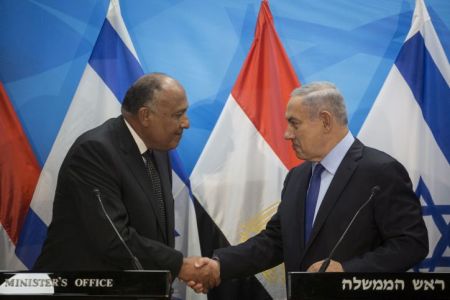
Prime Minister Benjamin Netanyahu meets with Egypt's Foreign Minister Sameh Shoukry at the Prime Minister's office in Jerusalem, on July 10, 2016, during a visit to Israel for the first time in nearly a decade. Foreign Minister Shoukry came to meet Netanyahu to support the peace process between Israel and the Palestinians. Photo by Hadas Parush/Flash90 *** Local Caption *** ????? ???? ?? ???? ???? ????? ????? ????? ???? ????? ??????? ??? ?????? ?????? ??????

Prime Minister Benjamin Netanyahu meets with Egypt’s Foreign Minister Sameh Shoukry at the Prime Minister’s office in Jerusalem, on July 10, 2016, during a visit to Israel for the first time in nearly a decade. Foreign Minister Shoukry came to meet Netanyahu to support the peace process between Israel and the Palestinians. Photo by Hadas Parush/Flash90

The Egyptian Foreign Minister Sameh Shoukry’s visit to Israel Sunday, July 10 and the two conversations he held with Prime Minister Binyamin Netanyahu that day underscored the intensified ties between the two governments and their leaders, President Abdel-Fatteh El-Sisi and the prime minister. The Palestinian issue rated a mention in passing, mostly as useful camouflage to disguise the real business under discussion. This, DEBKAfile’s intelligence sources reveal, revolved around a fresh update on the Syrian war and most of all on the sudden reversal of Syria’s Bashar Assad’s fortunes from wanted war criminal, whose head the US and its president Barack Obama demanded, to the master of a regime and army which is suddenly in the highest demand – even by Obama – as the only reliable military force capable of pursuing the war on jihadi terror, especially ISIS.

This astonishing reversal came to the fore in the last week of June. While putting the final touches on his reconciliation pact with Israel after six years of discord, Turkish President Tayyip Erdogan sent his intelligence chiefs on a clandestine mission to meet Assad’s aides and test the ground for burying the hatchet with him too.

This move was not taken into account by Netanyahu. Erdogan acted on the quiet, while in the midst of yet another maneuver, this one advanced talks for mending relations with the Egyptian president with the help of Algerian mediators who are flitting between Ankara and Cairo, DEBKAfile’s sources report.

While taking briefings from his foreign minister on the talks in Jerusalem, El-Sisi tried to assess whether Erdogan’s feelers to Assad would ripen into a deal between them   If so, the Turkish leader was perfectly capable of jumping aboard the Iranian-Syrian-Hizballah lineup on the Shiite side of the Middle East map and ditching the moves led by Saudi Arabia, Egypt and the UAE for a counter-alignment of Sunni nations.

The answer to this question will determine whether Iran’s position in Syria is strengthened or weakened.

Egypt and Israel share a strong common interest in this answer.

mistral_class_helicopter_carrier_Egypt_26.8.15

Meanwhile the balance of military strength in the region underwent a radical change with the delivery to the Egyptian Navy of its first helicopter carrier, an advanced Mistral-class vessel made in France and paid for by Saudi Arabia to the tune of half a billion dollars.

The second carrier is due later this year.

These acquisitions substantially upgrade Egypt’s military capabilities as the only power operating in the region in possession of helicopter carriers except Russia.

The highly versatile French amphibious assault ship, equipped with state-of the-art radar navigation and missile defense systems, can carry 16 helicopters plus a battalion of 40 Leclerc tanks and 450 soldiers. This makes the Egyptian navy the primary sea and air arm for defending the shores of the Sinai Peninsula, Suez Canal, the Gulf of Suez, the Red Sea and the approaches to the Gulf of Aqaba – not just against Islamist terrorists but also Iranian expansion.

Since the Saudi, Egyptian and Emirate governments are in close military and intelligence sync for combating the two threats, the Egyptian foreign minister had plenty of urgent business to discuss with Netanyahu.

John Kerry, The Islamic Republic’s New Lobbyist

June 2, 2016

John Kerry, The Islamic Republic’s New Lobbyist, Front Page MagazineAri Lieberman, June 2, 2016

(Please see also, Is Obama’s Iran Deal a ‘Dhimmi’ Contract? — DM)

john_kerry_senator_from_ma-2 (2)

Iran, the nation that has built a well-deserved reputation as the world’s premier state-sponsor of terrorism has a new lobbyist and he is none other than U.S. Secretary of State John Kerry. Since the Obama administration inked the Joint Comprehensive Plan of Action in January, Kerry has been busying himself with ensuring that European banks start doing business with the Iranians. Yes, you read that correctly. Not only has the United States and its European allies agreed to lift sanctions against the Islamic Republic, the administration is now encouraging the private banking sector to do the same. It appears however, that their intense lobbying efforts are being received with a healthy dose of skepticism.

HSBC’s chief legal officer, Stuart Levey confirmed that Kerry had requested that HSBC start opening its banking doors to the Iranians and transact business with them. Levey criticized Kerry’s misguided initiative noting that the U.S. still maintains other non-nuclear related sanctions against the Islamic Republic and that doing business with Iran runs the risk of running afoul of those sanctions. HSBC has had prior negative experience with the U.S. Treasury and Justice departments. In 2012, the bank was forced to fork over $1.9 billion to U.S. authorities to settle allegations involving money laundering for Mexican drug barons.

Levey also noted that the Iranian Revolutionary Guard Corps, which controls large swaths of the Iranian economy, has been slapped with sanctions by both the U.S. and Europe because of the central role it plays in illicit regional and international activities. Doing business with Iran will almost certainly result in facilitating IRGC operations. Adding to the uncertainty, Iran has over the years developed a penchant for hiding money, engaging in shady deals and money laundering thus making it difficult, if not impossible for banking institutions to engage the Iranians in legitimate business transactions without being complicit in their illegal dealings.

Kerry has assured the banks that they have nothing to fear if they perform their due diligence but banking representatives have expressed other legitimate concerns. Iran is one of the most corrupt nations on the planet and ranks poorly in the categories of transparency and ease of doing business. Banking institutions and large businesses are naturally reluctant to deal with such an opaque entity.

Practical matters and banking concerns aside, it is disturbing to witness the zeal in which Kerry is conducting his lobbying campaign on behalf of an enemy country whose national pastime involves chants of “Death to America” and “Down, Down U.S.A.” Even more disturbing is the fact that despite signing the JCPOA, Iran continues to act in defiance of United Nations Security Council resolution 2231 which calls on Iran to cease all research and testing activities relating to its ballistic missile program.

Since the conclusion of the Iran deal, the Islamic Republic has test-fired eight ballistic missiles. The Iranians boasted that some of their missiles were capable of reaching targets 1,200 miles away. Israel is only 1,000 miles away from Iran placing it well within the target radius. Emblazoned on the side of at least one test-fired missile was an ominous threat; “Israel must be wiped out from the face of the earth.”

The Iranians are continuously attempting to increase the range and accuracy of their ballistic missiles. Iran’s illicit ballistic missile program has only one aim, to deliver weapons of mass destruction (WMDs). That apocalyptic prospect does not seem to worry Kerry who seems more interested in propping up the Islamic Republic rather than ensuring that it lives up to its international obligations and stops behaving like a pariah state. Indeed, in an effort to prevent derailment of the JCPOA, the administration asked the Iranians not to publicize their launches. Iran’s illicit ballistic missile program doesn’t seem to bother the Obama administration so long as the Iranians keep their activities below the radar.

Iran’s nefarious undertakings extend far beyond its illicit ballistic missile program. The IRGC, the group that runs Iran in partnership with the ayatollahs, represents the life-blood of Hezbollah. Both Hezbollah and the IRGC are engaged in a full-fledged operation to destabilize the region. From Syria to Yemen, Iranian and Hezbollah operatives are fomenting chaos and bloodshed with the aim of establishing a Shiite arc extending from Iran through Syria and Lebanon as well as securing control of two of the region’s most important chokepoints, the Strait of Hormuz and the Bab-el-Mandeb Strait.

Hezbollah’s main source of funding comes from Iran, which trains, arms and pays the salaries of its operatives. Its other sources, though minor in comparison to Iranian assistance, include drug trafficking and extortion. Last week, Adam Szubin, the acting Treasury undersecretary for terrorism and financial intelligence, noted that Hezbollah was “in its worst financial shape in decades.” It’s hard to take that near-comical boast seriously in light of the $150 billion cash infusion the Obama administration injected into the anemic Iranian economy. It’s hard to imagine that Iran will spend any of that money on improving the quality of life of its citizens and promoting human rights. Iran will almost certainly channel a large portion of those funds to its proxy stooges in Syria, Lebanon, Iraq, Yemen and elsewhere.

Kerry’s lobbying efforts on behalf of Iran in connection with the banking industry will make Iran’s ability to transfer funds to these terrorist groups less difficult. The lengths to which the Obama administration will go to indulge the Iranians is beyond shocking, it’s frightening. But we should expect no more from an administration that expressed gratitude to the Islamic Republic after its naval pirates kidnapped and humiliated 10 American sailors when their craft encountered mechanical difficulties in the Arabian Gulf. Sadly, the Obama administration continues to lose the trust of its allies, while emboldening its enemies and has given new meaning to the term appeasement.

That Kissinger Promise and Obama’s Fulfillment

May 30, 2016

That Kissinger Promise and Obama’s Fulfillment, The Jewish PressVic Rosenthal, May 30, 2016

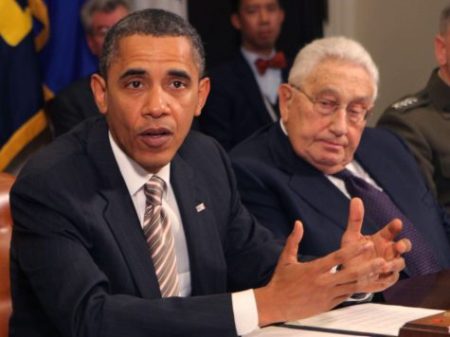
Obama-Kissinger-e1464550543436Pres. Obama seated with Henry Kissinger

{Originally posted to the author’s website, Abu Yehuda}

Old realpolitiker Henry Kissinger was in the news recently when he sat down with Donald Trump, to give him the benefit of his experience. It brought to mind Kissinger’s numerous attempts to get Israel out of the territories it conquered in 1967, before, during and – especially – after the Yom Kippur War.

Kissinger went to Iraq in December of 1975 to try to wean the regime away from the Soviet Union and improve relations with the US. In a discussion with Sa’dun Hammadi, the Iraqi Foreign Minister, Kissinger suggested that American support for Israel was a result of Jewish political and financial power, promised that the US would work to force Israel back to pre-1967 boundaries, and indicated that while the US would not support the elimination of Israel, he believed that its existence was only temporary. Here is an excerpt (the whole thing is worth reading):

I think, when we look at history, that when Israel was created in 1948, I don’t think anyone understood it. It originated in American domestic politics. It was far away and little understood. So it was not an American design to get a bastion of imperialism in the area. It was much less complicated. And I would say that until 1973, the Jewish community had enormous influence. It is only in the last two years, as a result of the policy we are pursuing, that it has changed.

We don’t need Israel for influence in the Arab world. On the contrary, Israel does us more harm than good in the Arab world. You yourself said your objection to us is Israel. Except maybe that we are capitalists. We can’t negotiate about the existence of Israel, but we can reduce its size to historical proportions. I don’t agree that Israel is a permanent threat. How can a nation of three million be a permanent threat? They have a technical advantage now. But it is inconceivable that peoples with wealth and skill and the tradition of the Arabs won’t develop the capacity that is needed. So I think in ten to fifteen years, Israel will be like Lebanon—struggling for existence, with no influence in the Arab world.  [my emphasis] …

Kissinger also promised that aid to Israel, which he presented as a result of Jewish political influence, would be significantly reduced. He indicated that legal changes in the US – he must have been referring to the creation of the Federal Electoral Commission in 1974 to regulate campaign contributions – would attenuate Jewish power and therefore American support for Israel. Naturally, he didn’t foresee the Israel-Egypt peace agreement, which permanently established a high level of military aid to both countries.

He further promised that the US would support a PLO-run Palestinian state if the PLO would accept UNSC resolution 242 and recognize Israel. This of course is what (supposedly) happened in the Oslo accords.

Kissinger insisted that “No one is in favor of Israel’s destruction—I won’t mislead you—nor am I.” But his hint that a smaller Israel might not survive is clear. Surely he understood that a pre-1967-sized Israel (within what Eban called “Auschwitz lines”) would have no chance of surviving, simply because of the strategic geography of the area.

Kissinger was wrong about the Arabs developing the capability to challenge Israel, but their place has been taken by soon-to-be-nuclear Iran and its proxies, who are significantly more dangerous than the Arab states ever were.

US policy, however, has kept more or less the same shape, except that the hypocrisy of insisting that the US supports the existence of Israel but in a pre-1967 size is even more glaring. The substitution of the PLO for the Arab states as the desired recipient of the land to be taken from Israel has barely made a ripple either in America or among the Arabs, suggesting that the policy is more about Israel giving up land than about the Arabs getting it.

The original motivation for Kissinger’s promises was supposedly the desire of the US to replace the Soviet Union as the patron of the Arab states. After the collapse of the USSR and the end of the Cold War in 1991, however, there was no change in policy. Although the Oslo Accords were initiated by left-wing Israelis, the US eagerly embraced them, and the so-called ‘peace process’ became a permanent stick to beat Israel with.

President Obama is especially adept at emphasizing support for Israel’s existence while at the same time demanding that Israel make concessions that would make her continued existence impossible. Apparently agreeing with Kissinger about Jewish power, Obama has worked to reduce the pro-Israel influence of American Jews in numerous ways, such as by providing access to the White House for groups like J Street and the Israel Policy Forum, while marginalizing traditional Zionist organizations like ZOA.

Kissinger’s almost anti-Semitic claim that US support for Israel is bought with Jewish money was probably untrue in 1975 and is even less so today, when a large proportion of American Jews, including wealthy ones, have chosen their liberal or progressive politics over Zionism. The coming struggle over the introduction of a pro-Palestinian plank into the Democratic platform is an indication that the party and with it, many of its Jewish supporters, is moving toward Obama’s position.

The Obama Administration’s program to extricate itself from the Middle East by empowering Iran as the new regional power has given a new impetus to the policy of shrinking Israel. Iran sees Israel as a major obstacle to its hegemony, for both geopolitical and religious/ideological reasons, and is committed to eliminating the Jewish state. Obama found it necessary to restrain Israel from bombing Iran’s nuclear facilities at least once (in 2012), and seems to be prepared to sacrifice Israel in order to achieve his goal of establishing Iranian regional dominance.

Some would go even further and say that Obama’s primary ideological goal is to eliminate Israel and the Iranian gambit is a means to this end, but that is highly speculative! Or maybe it’s a matter of two birds with one stone.

Henry Kissinger didn’t do us any favors, but I think the anti-Israel thread in American policy would have been strong enough without him, running from Truman’s Secretary of State George C. Marshall all the way to Obama’s stable of anti-Zionists like Rob Malley and Ben Rhodes.

Today Israel is long gone from the Sinai, more recently from Gaza, and probably only thanks to the disintegration of Syria, still holding the Golan Heights. I would like to believe that PM Netanyahu was correct when he said that Israel will never leave the Golan. Regarding Judea, Samaria and Jerusalem, I expect that we are about to begin a very difficult time, as the Obama Administration is likely to mount a campaign in its last days to fulfill Kissinger’s promise to the Arabs at long last.