Archive for the ‘Leftists’ category

Pulling down the slaver flags of Islam and Africa

July 2, 2015

Pulling down the slaver flags of Islam and Africa, Front Page Magazine, Daniel Greenfield, July 2, 2015

flag_of_muslim_league_1

In our incredibly tolerant culture, it has become politically incorrect to watch the General Lee jump a fence or a barn, but paying tribute to the culture that sent the slaves here and that still practices slavery is the culturally sensitive thing to do.

*********************

The return of the Confederacy was averted in the summer of 2015 when major retailers frantically scoured through their vast offerings to purge any images of a car from the Dukes of Hazzard. If not for their quick thinking, armies of men in gray might have come marching down the streets of New York and San Francisco to stop off for an Iced Mocha Frappucino ™ at a local Starbucks before restoring slavery.

History will little note nor long remember the tired wage slaves making $7.25 an hour while checking Amazon and eBay databases for tin models of an orange car with a Confederate flag on top. During this courageous defense of the homeland from the scourge of a mildly politically incorrect 80s show, Hillary Clinton committed her own unpardonable racist hate crime by saying, “All lives matter”.

The politically correct term is, “Black lives matter.”

Even while our own Boss Hoggs in DC and SF are locking up the Duke boys as a symbol of racism, they are loudly arguing that black lives matter, all lives don’t. The proportion that the weight of a life should be measured by race is the sort of idea that we might have associated with slavery. Today it’s an idea that we associate with racial tolerance as we heal our nation’s racial wounds one race riot at a time.

Romanticizing the South means a whipping from our cultural elite. Instead of romanticizing the culture that bought slaves, they romanticize the Middle Eastern and African cultures that sold them the slaves.

When Obama condemned Christianity for the Crusades, only a thousand years too late, in attendance was the Foreign Minister of Sudan; a country that practices slavery and genocide. Obama could have taken time out from his rigorous denunciation of the Middle Ages to speak truth to the emissary of a Muslim Brotherhood regime whose leader is wanted by the International Criminal Court for crimes against humanity. But our moral liberals spend too much time romanticizing actual slaver cultures.

It’s a lot easier for Obama to get in his million dollar Cadillac with its 5-inch thick bulletproof windows, a ride Boss Hogg could only envy, and chase down a couple of good ole boys than it is to condemn a culture that committed genocide in our own time, not in 1099, and that keeps slaves today, not in 1815.

Even while the Duke boys were being chased through Georgia, Obama appeared at an Iftar dinner; an event at which Muslims emulate Mohammed, who had more slaves than Robert E. Lee. There are no slaves in Arlington House today, but in the heartlands of Islam, from Saudi mansions to ISIS dungeons, there are still slaves, laboring, beaten, bought, sold, raped and disposed of in Mohammed’s name.

Slavery does not exist under the Confederate flag eagerly being pulled down. It does exist under the black and green flags of Islam rising over mosques in Iraq, Saudi Arabia and America today.

In our incredibly tolerant culture, it has become politically incorrect to watch the General Lee jump a fence or a barn, but paying tribute to the culture that sent the slaves here and that still practices slavery is the culturally sensitive thing to do. In 2015, slavery is no longer freedom, but it certainly is tolerance.

And it’s not just about Islam.

If romanticizing Dixie is wrong, so is romanticizing those ancient African cultures so beloved by amateur anthropologists and professional sociologists with more plastic tribal jewelry than sense. Slavery was an indigenous African and Middle Eastern practice. Not to mention an indigenous practice in America among indigenous cultures.

If justice demands that we pull down the Confederate flag everywhere, even from the top of the orange car sailing through the air in the freeze frame of an old television show, then what possible justification is there for all the faux Aztec knickknacks? Even the worst Southern plantation owners didn’t tear out the hearts of their slaves on top of pyramids. The romanticization of Aztec brutality plays a crucial role in the mythology of Mexican nationalist groups like La Raza promoting the Reconquista of America today.

Black nationalists romanticize the slave-holding civilization of Egypt despite the fact that the narrative of the liberation of the Hebrew slaves from bondage played a crucial role in the end of slavery in America. The endless stories about the “Amazons” of the African kingdom of Dahomey neatly fit into the leftist myth of a peaceful matriarchal Africa disrupted by European colonialism, but Dahomey ran on slavery.

The “Amazons” helped capture slaves for the Atlantic slave trade. White and black liberals are romanticizing the very culture that captured and sold their forefathers into slavery. “In Dahomey,” the first major mainstream black musical was about African-Americans moving to Dahomey. By then the French had taken over old Dahomey and together with the British had put an end to the slave trade.

The French dismantled the “Amazons” and freed many of Dahomey’s slaves only for the idiot descendants of both groups to romanticize the noble last stand of Dahomey fighting for the right to export black slaves to Cuba and condemn the European liberators who put a stop to that atrocity.

If we crack down on romanticizing Dixie, how can we possibly justify romanticizing Dahomey or the Aztecs or Mohammed? If slavery and racism are wrong, then they are wrong across the board.

Even by the miserably racist standard under which all lives don’t matter, only black lives matter, Dahomey and Mohammed had bought, sold and killed enough black lives to be frowned upon.

If we go back far enough in time, most cultures kept slaves. The Romans and Greeks certainly did. That’s why the meaningful standard is not whether a culture ever had slaves, but whether it has slaves today. If we are going to eradicate the symbols of every culture that ever traded in slaves, there will be few cultural symbols that will escape unscathed. But the academics who insist on cultural relativism in 19th century Africa, reject it in 19th century South Carolina thereby revealing their own racism.

And so instead of fighting actual modern day slavery in Africa and the Middle East, social justice warriors are swarming to invade Hazzard County.

As Ben Carson pointed out, we will not get rid of racism by banning the Confederate flag. Even when it is used at its worst, by the likes of Dylann Storm Roof, it is a symptom, not the problem. Roof was not radicalized by the dead Confederacy, but by the racial tensions kicked off by the Trayvon Martin case.

The same racial tensions that led to the murder of two police officers by a #BlackLivesMatter protester in New York City led to the massacre of nine black congregants in a church in Charleston. This surge of violence has its roots in racist activism by Obama and his supporters seeking power and political gain, but feeding racial tensions for political purposes eventually risks leading to actual violence.

The Confederate flag is a matter of history. The racial tensions stirred up by Obama have actually gotten people killed. Slavery is not making a comeback and Robert E. Lee will not come riding into San Francisco any time soon. The Civil War ended long ago. The country would be a better place if modern racists who believe that some lives, whether black or white, matter more than others would stop trying to start one.

The Myth of Muslim Radicalization

June 18, 2015

The Myth of Muslim Radicalization, Front Page Magazine, Daniel Greenfield, June 18, 2015

Usaama RahimUsaama Rahim

Mainstreaming extremism is . . . Obama’s policy. It’s the logic behind nearly every Western diplomatic move in the Middle East from the Israel-PLO peace process to the Brotherhood’s Arab Spring. And these disasters only created more Islamic terrorism.

****************

After some of its quarter of a million Muslims headed to join ISIS, Quebec decided the answer was a $2 million anti-radicalization center headed by a specialist in cultural sensitivity. But if you’re about to be beheaded by a masked ISIS Jihadist, a specialist in cultural sensitivity isn’t going to help you much.

Western governments nevertheless keep rolling out their culturally sensitive approaches to fighting ISIS.

The key element in Obama’s strategy for fighting ISIS isn’t the F-15E Strike Eagle, it’s a Twitter account run by a Muslim Brotherhood sympathizer which claims to “Counter Violent Extremism” by presenting moderate Islamists like Al Qaeda as positive role models for the Islamic State’s social media supporters.

So far 75% of planes flown on combat missions against ISIS return without engaging the enemy, but the culturally sensitive State Department Twitter account has racked up over 5,000 tweets and zero kills.

Cultural sensitivity hasn’t exactly set Iraq on fire in fighting ISIS and deradicalization programs here start from the false premise that there is a wide gap between a moderate and extremist Islam.  Smiling news anchors daily recite new stories about a teenager from Kentucky, Boston or Manchester getting “radicalized” and joining ISIS to the bafflement of his parents, mosque and community.

And who is to blame for all this mysterious radicalization? It’s not the parents. It certainly can’t be the moderate local mosque with its stock of Jihadist CDs and DVDs being dispensed from under the table.

The attorney for the family of Usaama Rahim, the Muslim terrorist who plotted to behead Pamela Geller, claims that his radicalization came as a “complete shock” to them.

It must have come as a truly great shock to his brother Imam Ibrahim Rahim who claimed that his brother was shot in the back and that the Garland cartoon attack had been staged by the government.

It must have come as an even bigger shock to Imam Abdullah Faaruuq, the Imam linked to Usaama Rahim and his fellow terrorist conspirators, as well as the Tsarnaev brothers, who had urged Muslims to “grab onto the gun and the sword.”

The culturally insensitive truth about Islamic ‘radicalization’ is that it is incremental.

There is no peaceful Islam. Instead of two sharply divided groups, peaceful Islam and extremist Islam, there is a spectrum of acceptable terrorism.

Muslim institutions have different places on that spectrum depending on their allegiances and tactics, but the process of radicalization is rarely a sharp break from the past for any except converts to Islam.

The latest tragic victim of radicalization is Munther Omar Saleh; a Muslim man living in New York City who allegedly plotted to use a Tsarnaev-style pressure cooker bomb in a major landmark such as the Statue of Liberty or the Empire State Building. Saleh claimed to be following orders from ISIS.

Media coverage of the Saleh arrest drags out the old clichés about how unexpected this sudden radicalization was, but what appears to be his father’s social media account shows support for Hamas.

Likewise one of Usaama Rahim’s fellow mosque attendees said that Rahim and another conspirator had initially followed the “teachings of the Muslim Brotherhood” but that he had been forced to cut ties with them when they moved past the Brotherhood and became “extreme”.

Despite the media’s insistence on describing the Muslim Brotherhood as a moderate organization, it has multiple terrorist arms, including Hamas, and its views on non-Muslims run the gamut from the violent to the genocidal.

A year after Obama’s Cairo speech and his outreach to the Muslim Brotherhood, its Supreme Guide announced that the United States will soon be destroyed, urged violent terrorist attacks against the United States and “raising a jihadi generation that pursues death just as the enemies pursue life.”

Despite this, Obama continued backing the Muslim Brotherhood’s rise to power across the region.

There are distinctions between the Muslim Brotherhood and Al Qaeda, but the latter is a splinter group of the former. Al Qaeda’s current leader came out of the Muslim Brotherhood. A move from one to the other is a minor transition between two groups that have far more in common than their differences.

And since the Brotherhood controls much of the Islamic infrastructure in the United States, the idea that Munther Omar Saleh or Usaama Rahim became radicalized because they went from a Jihadist group that takes the long view in the struggle against the infidel, putting political structures into place to make a violent struggle tactically feasible, to a Jihadist group that focuses more on short term violence, is silly.

Radicalization isn’t transformational; it’s incremental.

It’s the Pakistani kid down the block deciding that instead of joining the Muslim Students Association and then CAIR to build Islamist political structures in America, he should just cut to the chase and kill a few cops to begin taking over America now.

Radicalization is the moderate Imam who stops putting on an act for PBS and the local politicians and moves to Yemen where he openly recruits terrorists to attack America instead of doing it covertly at his mosque in Virginia.

Radicalization is the teenage Muslim girl who forgets about marrying her Egyptian third cousin and bringing him and his fifty relatives to America and goes to join ISIS as a Caliphate brood mare instead.

It’s not pacifism giving way to violence. Instead it’s an impatient shift from tactical actions meant to eventually make Islam supreme in America over many generations to immediate bloody gratification. ISIS is promising the apocalypse now. No more waiting. No more lying. You can have it tomorrow.

Radicalization does not go from zero to sixty. It speeds up from sixty to seventy-five.

It builds on elements that are already there in the mosque and the household. The term “extremism” implicitly admits that what we are talking about is not a complete transformation, but the logical extension of existing Islamic beliefs.

Omar Saleh seemed cheerful enough about Hamas dropping Kassam rockets on Israeli towns and cities. Would he have supported his son setting off a bomb in the Statue of Liberty? Who knows, but his son was already starting from a family position that Muslim terrorism against non-Muslims was acceptable.

Everything else is the fine print.

When Usaama Rahim followed the way of the Muslim Brotherhood, he was with a moderate group whose spiritual guide, the genocidal Qaradawi was the godfather of cartoon outrage and had endorsed the murderous Iranian fatwa against Salman Rushdie.

The slope that leads from Qaradawi’s cartoon rage to trying to behead Pamela Geller isn’t a slippery one; it’s a vertical waterfall. And this is what radicalization really looks like. It doesn’t mean moderates turning extreme. It means extremists becoming more extreme. And there’s always room for extremists to become more extreme which turns old extremists into moderates while mainstreaming their beliefs.

In the UK, Baroness Warsi, Cameron’s biggest mistake, blamed Muslim radicalization on the government’s refusal to engage with… radicals. Or as she put it, “It is incredibly odd and incredibly worrying that over time more and more individuals, more and more organisations are considered by the government to be beyond the pale and therefore not to be engaged with.”

The reason why the government is refusing to “engage” with these organizations is that they support terrorism in one form or another. Warsi is proposing that the UK fight radicalization by mainstreaming it.

Mainstreaming extremism is also Obama’s policy. It’s the logic behind nearly every Western diplomatic move in the Middle East from the Israel-PLO peace process to the Brotherhood’s Arab Spring. And these disasters only created more Islamic terrorism.

The Muslim teenagers headed to join ISIS did not come out of a vacuum. They came from mosques and families that normalized some degree of Islamic Supremacism and viewed some Muslim terrorists as heroes and role models. It’s time for Western governments to admit that the ISIS Jihadist is more the product of his parents and his teachers than of social media Jihadis on YouTube and Twitter.

Radicalization doesn’t begin with a sheikh on social media. It begins at home. It begins in the mosque. It just ends with ISIS.

The Postcolonial Rot Spreads Beyond Middle East Studies

June 15, 2015

The Postcolonial Rot Spreads Beyond Middle East Studies, Front Page Magazine, June 15, 2015

middle-east-scholarships

Middle East Studies programs, Kramer writes, “came under a take-no-prisoners assault, which rejected the idea of objective standards, disguised the vice of politicization as the virtue of commitment, and replaced proficiency with ideology.” The ideology, of course, comprised the old Marxist narrative of Western colonial and imperial crimes, a Third Worldism that idealizes the dark-skinned, innocent “other” victimized by Western depredations, and the juvenile romance of revolutionary violence.

*****************

In theory, Middle East Studies programs are a good idea. One of the biggest impediments to countering modern jihadism has been the lack of historical knowledge about the region and Islam. But even the attention and urgency that followed the terrorist attacks on 9/11 have not led to such knowledge. The result has been policies pursued both by Republicans and Democrats that are doomed to fail, as the current chaos in the region attests.

Rather than enlightening citizens and policy-makers, Middle Eastern Studies programs have darkened our understanding. As Martin Kramer documented in his important 2002 study Ivory Towers on Sand, most programs have become purveyors not of knowledge but of ideology. Under the influence of literary critic Edward Said’s historically challenged book Orientalism––“a work,” historian Robert Irwin has written, “of malignant charlatanry, in which it is hard to distinguish honest mistakes from willful misrepresentations”­­––Middle East Studies programs, Kramer writes, “came under a take-no-prisoners assault, which rejected the idea of objective standards, disguised the vice of politicization as the virtue of commitment, and replaced proficiency with ideology.” The ideology, of course, comprised the old Marxist narrative of Western colonial and imperial crimes, a Third Worldism that idealizes the dark-skinned, innocent “other” victimized by Western depredations, and the juvenile romance of revolutionary violence.

Yet Said’s baleful influence has not been limited to Middle East Studies programs, one of which has been created at my campus of the California State University, replete with the problems Kramer catalogues. It has insidiously corrupted much of the humanities and social sciences, operating under the innocuous rubric of “postcolonial” studies, which to the unwary suggests a historical rather than an ideological category. Through General Education courses that serve students across the university, and in departments like English that train primary and secondary school teachers, Saidian postcolonial ideology has been shaping the attitudes and presumed knowledge of Islam and the Middle East far beyond the reach of Middle East Studies programs.

Said’s dubious argument in Orientalism is that the work of Western scholars on the Middle East embodied “a Western style for dominating, restructuring, and having authority over the Orient,” thus creating the intellectual infrastructure for justifying colonialism and imperialism. As such, every European scholar perforce was “a racist, an imperialist, and totally ethnocentric.” For social science and humanities departments committed totally to the multiculturalist melodrama of white racism and oppression of the dark-skinned “other,” Said’s work seemingly provides scholarly bona fides to ideas that are in fact expressive of illiberal grievance politics.

English departments have been particularly vulnerable to Said’s work, for he overlaid his bad history with watered down Foucauldian ideas about the relationship of power to discourse. Thus English professors seduced by the poststructuralist theory ascendant in 1978 when Orientalism was published found in that book a seemingly sophisticated theoretical paradigm that shared both poststructuralism’s disdain for objectivity and truth, and its “hermeneutics of suspicion,” the notion that the apparent meaning of a discourse is a mask for the sinister machinations of power at the expense of the excluded “other.”

More important, postcolonialism is a politically activist theory, bound up as it is in the politics of the Middle East, especially the Arab-Israeli conflict. Now English professors could avoid the legitimate charge that poststructuralism, despite its patina of leftist ideology, was in fact an evasion of politics, a “symbolic politics,” as historian Russell Jacoby put it, “a replacement for, and a diversion from, the gritty politics of the community and the street.” On the contrary, the purveyors of postcolonialism were on the barricades, struggling to liberate Palestinians and other Muslims oppressed by a neo-imperialist America and its puppet Israel. Rather than pampered elitists guaranteed jobs for life, now the professors could fancy themselves freedom fighters and champions of the ex-colonial brown peoples still exploited and oppressed by the capitalist, racist West.

Finally, the dogma of multicultural “diversity” now firmly enshrined in American universities likewise has found Saidian postcolonialism a useful tool for interpreting and teaching literature, one that exposes the Western literary canon’s hidden racism and oppression. Moreover, in a university like Fresno State, half of whose students are minorities, a postcolonial perspective can establish a rapport with minority students who are encouraged to interpret their own experiences through the same lens of unjust exclusion and hurtful distortions of their culture and identity. At the same time white students are schooled in their privilege and guilt, minorities can be comforted by a narrative that privileges them as victims of historical oppression, one masked by the unearned prestige of the classics written by “dead white males.” Now minority students learn that Shakespeare’s Caliban is the true hero the Tempest with whom they should identify, the displaced victim of rapacious colonialists and slavers like Prospero who unjustly define the indigenous peoples as savages and cannibals in order to justify the brutal appropriation of their lands and labor.

Over the thirty years I have taught in the California State University, I have seen this transformation of the English department. Reading lists dominated by contemporary ethnic writers are increasingly displacing the classics of English literature, and even when traditional works are on the list, the books are often taught from the postcolonial perspective. New hires more and more comprise those Ph.D.’s whose specialties lie in ethnic or “world” literature, replacing the Shakespeare scholars and others trained to teach the traditional English and American literary canon. The traditional content of a liberal education––“the best which has been thought and said in the world,” as Matthew Arnold wrote––is disappearing, replaced by multicultural melodramas of Western crime and guilt.

More important for the culture at large, many of these students will go on to earn teaching credentials and staff public schools. They will carry the postcolonial ideology into their own classrooms, influencing yet another generation and reinforcing a received wisdom that will shape their students’ understanding of the important threats to our national security and interests emanating from the Middle East, especially jihadism. And it will encourage ordinary citizens to assent to the demonization of our most valuable regional ally, Israel, currently battling the Boycott, Divest, and Sanction movement that can more easily gain traction among those who from grade school to university have been exposed to the postcolonial ideology.

The damage done to our foreign policy by Middle East Studies is obvious. The influence of the godfather of such programs, Edward Said, on the social sciences and humanities departments like English is more insidious and subtle. But it is no less dangerous.

As ISIS Brutalizes Women, a Pathetic Feminist Silence

June 9, 2015

As ISIS Brutalizes Women, a Pathetic Feminist SilenceThe New York Post via Middle East Forum, Phyllis Chester, June 7, 2015

1354

While the most recent Women’s Studies annual conference did focus on foreign policy, they were only interested in Palestine, a country which has never existed, and support for which is often synonymous with an anti-Israel position. Privately, feminists favor non-intervention, non-violence and the need for multilateral action, and they blame America for practically everything wrong in the world.

Feminists strongly criticize Christianity and Judaism, but they’re strangely reluctant to oppose Islam — as if doing so would be “racist.” They fail to understand that a religion is a belief or an ideology, not a skin color.

**************************

Oh, how the feminist movement has lost its way. And the deafening silence over ISIS’s latest brutal crimes makes that all too clear.

Fifty years ago, American women launched a liberation campaign for freedom and equality. We achieved a revolution in the Western world and created a vision for girls and women everywhere.

Second-wave feminism was an ideologically diverse movement that pioneered society’s understanding of how women were disadvantaged economically, reproductively, politically, physically, psychologically and sexually.

Feminists had one standard of universal human rights — we were not cultural relativists — and we called misogyny by its rightful name no matter where we found it.

As late as 1997, the feminist majority at least took a stand against the Afghan Taliban and the burqa. In 2001, 18,000 people, led by feminist celebrities, cheered ecstatically when Oprah Winfrey removed a woman’s burqa at a feminist event — but she did so safely in Madison Square Garden, not in Kabul or Kandahar.

Six weeks ago, Human Rights Watch documented a “system of organized rape and sexual assault, sexual slavery, and forced marriage by ISIS forces.” Their victims were mainly Yazidi women and girls as young as 12, whom they bought, sold, gang-raped, beat, tortured and murdered when they tried to escape.

In May, Kurdish media reported, Yazidi girls who escaped or were released said they were kept half-naked together with other girls as young as 9, one of whom was pregnant when she was released. The girls were “smelled,” chosen and examined to make sure they were virgins. ISIS fighters whipped or burned the girls’ thighs if they refused to perform “extreme” pornography-influenced sex acts. In one instance, they cut off the legs of a girl who tried to escape.

These atrocities are war crimes and crimes against humanity — and yet American feminists did not demand President Obama rescue the remaining female hostages nor did they demand military intervention or support on behalf of the millions of terrified Iraqi and Syrian civilian refugees.

An astounding public silence has prevailed.

1355The National Organization for Women (NOW) apparently doesn’t think ISIS is a problem.

The upcoming annual conference of the National Organization for Women (NOW) does not list ISIS or Boko Haram on its agenda. While the most recent Women’s Studies annual conference did focus on foreign policy, they were only interested in Palestine, a country which has never existed, and support for which is often synonymous with an anti-Israel position. Privately, feminists favor non-intervention, non-violence and the need for multilateral action, and they blame America for practically everything wrong in the world.

What is going on?

Feminists are, typically, leftists who view “Amerika” and white Christian men as their most dangerous enemies, while remaining silent about Islamist barbarians such as ISIS.

Feminists strongly criticize Christianity and Judaism, but they’re strangely reluctant to oppose Islam — as if doing so would be “racist.” They fail to understand that a religion is a belief or an ideology, not a skin color.

The new pseudo-feminists are more concerned with racism than with sexism, and disproportionately focused on Western imperialism, colonialism and capitalism than on Islam’s long and ongoing history of imperialism, colonialism, anti-black racism, slavery, forced conversion and gender and religious apartheid.

And why? They are terrified of being seen as “politically incorrect” and then demonized and shunned for it.

The Middle East and Western Africa are burning; Iran is raping female civilians and torturing political prisoners; the Pakistani Taliban are shooting young girls in the head for trying to get an education and disfiguring them with acid if their veils are askew — and yet, NOW passed no resolution opposing this.

Twenty-first century feminists need to oppose misogynistic, totalitarian movements. They need to reassess the global threats to liberty, and rekindle our original passion for universal justice and freedom.

The “Speech-Denialists”

June 2, 2015

The “Speech-Denialists,” The Gatestone InstituteDaniel Mael, June 2, 2015

  • In denying the average college student the opportunity to hear, think, question and learn, these minority organizations violated the basic principles of a liberal arts education and what higher learning should presumably be about: challenging assumptions and talking openly about issues that might cause discomfort.
  • Both micro-sensitivity and political correctness require at best, obfuscating information, and at worst, silencing it.

On college campuses, teachers, students and sometimes even administrators seem to have become ever more eager to block any idea with which they disagree.

Often it appears as if their first impulse is to demonize the individual or organization presenting the offending idea, rather than to address the substance of the argument and open a discussion in the “free marketplace of ideas.”

On the campus of Lake Superior State University, wall postings “deemed offensive, sexist, vulgar, discriminatory or suggestive will not be approved.” The campus code of conduct states that if students fail to comply, they may be disciplined — a rule that was named “Speech Code of the Month” for May by the Foundation for Individual Rights in Education (FIRE).

1092Lake Superior State University’s campus code of conduct states that wall postings “deemed offensive, sexist, vulgar, discriminatory or suggestive will not be approved.” (Image source: Bobak Ha’Eri/Wikimedia Commons)

Increasingly, individuals and groups, perhaps unknowingly betraying the spirit of classic liberalism, seek to shame or ridicule dissenting opinion into silence. Both in politics and on college campuses, it seems as if aggressive shaming has replaced the art of persuasion as the favored means of argumentation. Substantive, non-politically correct discussion is now at a premium.

In her recently published book The Silencing, life-long liberal and Fox News contributor Kirsten Powers documents the escalating efforts of people claiming to be liberal to silence dissent on issues they regard as contentious. The tactic follows what Powers calls the “authoritarian impulse to silence.”

On issues ranging from campus “speech codes” to feminism, these self-described liberals are unwilling to entertain the notion that a well-intentioned individual from the other side of the aisle might have a different remedy for the problems of the day.

When feminist scholar Christina Hoff Sommers of the American Enterprise Institute gave a lecture on the campus of Oberlin University on the topic of campus sexual assault and due process, protesters labeled her a “rape denialist” and claimed that they felt “unsafe.” Perhaps we should begin calling such protesters “due-process denialists.”

When the subject is religion, these “liberals” maintain a disingenuous double standard. “While the illiberal left seems to hold a special animosity to Christianity,” Powers notes, in a remark that could also apply to Israel, “it is strangely protective of Islam, despite the fact that orthodox Muslims oppose same-sex marriage.” Not only are Muslim attitudes toward gay marriage overlooked or roadsided completely, but if anyone dares to discuss the issue of minorities in the Muslim-majority world, they are labeled “racist,” “Islamophobic,” or other slurs at arm’s reach.

Meanwhile, critics are unrelenting in their animosity toward observant Christians’ views of homosexuality. “If you think about it, we are at the water’s edge of the argument that mainstream Christian teaching is hate speech,” Senator Marco Rubio recently told CBN News. “Because today we’ve reached the point in our society where if you do not support same-sex marriage you are labeled a homophobe and a hater.”

Last year, at Brandeis University, when I sought to bring a human rights display highlighting the oppression of LGBTQ individuals in Yemen, Saudi Arabia and Iran, the initiative was blocked in a flood of administrative bureaucracy. The member of the administration with whom I met was clearly not thrilled by the idea.

Meetings with a gay rights group and the Muslim Students Association (MSA), however, were just as telling. Hoping to solicit partnerships in the initiative, I explained to leaders and members of both organizations that the project was not about Islam, but about how, on a routine basis, certain governments murder people who identify as LGBTQ. Members of the gay rights organization expressed concern about “Islamophobia,” while members of the Muslim Students Association expressed concern about “homophobia.” The initiative was rejected. Both groups evidently prioritized the emotional and intellectual comfort of the campus community over drawing attention to the plight of innocent LGBTQ individuals in the Muslim world.

In denying the average college student the opportunity to hear, think, question and learn, these minority organizations violated the basic principles of a liberal arts education and what higher learning should presumably be about: challenging assumptions and talking openly about issues that might cause discomfort. It is still puzzling why the LGBTQ club and the MSA are not at the forefront of defending other members of their respective groups, regardless of where they may live.

Both micro-sensitivity and political correctness require at best, obfuscating information, and at worst, silencing it. It is incumbent upon those who recognize the dangers of the ever-expanding “speech-denialists” in the “political correctness” movement to put up a fight — figuratively, of course.

Why Obama Will Just Keep Making the Middle East Worse

May 6, 2015

Why Obama Will Just Keep Making the Middle East Worse, Front Page Magazine, Daniel Greenfield, May 6, 2015

obama9-350x350

In its own perverse way, Iran is becoming a client state of America. But it’s a client state that, like the Palestinian Authority with Israel, is actively trying to destroy us. The lesson from that failed effort was that you can’t use terrorists to stabilize territory. All that terrorists can do is destabilize it even more.

****************

A few years ago it was the Muslim Brotherhood. These days it’s Iran. Next week it may be ISIS or Al Qaeda. Obama stands with the worst elements in the Middle East. That’s always been his philosophy.

If the left had a foreign policy, it would be, “The squeaky wheel gets the grease.” But the wheel is a sword and it’s lubricated with blood. The squeakiest wheels and the bloodiest swords get the most grease from the State Department because they hate us the most. And hating us the most means that somewhere along the way we must have hurt them the worst. They hate us, therefore we’re guilty.

The squeaky wheel runs on blood and on American guilt. The worse they are, the guiltier we must be. Instead of reinforcing the moderates, whose shortage of ravening hatred suggests that they don’t have any legitimate complaints about us worth listening to, the left seeks out the extremes of extremists.

When he wasn’t vowing to lower the oceans, abolish taxes on seniors or heal up race relations, Obama was campaigning on fixing our alliances with our allies. But that’s not what he really had in mind.

Any old Joe can ally with allies. It takes a real Barack to ally with enemies.

Our allies were the problem, so he started shedding them. The least crazy Muslims went first. Then Israel. Now he’s down to deciding which enemies will be his allies and he sits on a golf course, like that little girl in the LBJ ad, picking petals off a daisy trying to choose between Iran and the Muslim Brotherhood. Meanwhile the nuclear countdown is building from one to a mushroom cloud.

Allying with moderates is out of the question. Egypt is fighting terrorists, but its moderate government forced out the Muslim Brotherhood, ruining Obama’s best appeasement effort not directed at Russia. Even the Saudis, who stone people to death like it’s a national sport, have become too sensible for him.

Obama won’t have anything to do with moderates. If they aren’t screaming, banging flabby fists on the table and threatening a nuclear war every Wednesday, they aren’t aggrieved enough to be the root cause of our problems in the region. And there’s no point in wasting our time and goodwill on them.

Animated by American guilt, the left’s foreign policy obsessively seeks to mollify the angriest and most violent enemies in the region. And that poisoned foreign policy philosophy of American appeasement leaves him with few other options.

The left insists that the conventional approach of upholding allies just reinforces a hegemony which makes us more hated. The only way to get to the root of the problem, their way, is to find those who hate us the most, apologize and work through their issues with us.

Instead of building a hegemony of allies, Obama has built up a hegemony of enemies.

But rewarding the angriest and most violent enemies in the region has made the Middle East unstable. Instead of fixing the violence and instability in the region, Obama has made it that much worse.

A policy that is inherently opposed to moderates will either end up destroying the stable countries in the region or destabilize them by involving them in regional wars. Obama’s foreign policy is hostile to moderates because it sidelines them as being incapable of resolving the problems in the region.

If you aren’t the problem, then to Obama and the left, you can’t be the solution.

The emphasis on stabilizing the region by enlisting the aid of the violent and the unstable is a dead end. It rewards exactly the sort of behavior that it claims to want to discourage while punishing the stable behavior it claims to want to encourage.

The left’s foreign policy in the region is a Pavlovian experiment for creating more terrorists and cutting down the list of countries that aren’t expansionistic or involved in terrorism.

Obama talks about stabilizing the Middle East, but you can’t fix a hole by making a bigger hole and you can’t put out a fire by pouring gasoline on it, and gasoline and holes are all he has to work with. By making the violent and angry the focus of his outreach efforts, he has made violence and anger into the unstable pivot of the region. The future of the region now belongs to the angry and the violent.

Jimmy Carter tried to stabilize Iran and the region by aiding the Ayatollah. Instead of stabilizing anything, a revolutionary Shiite Iran became a loose cannon that not only threatened the United States, but dragged the rest of the region into its wars. From the Iran-Iraq war to terrorism in Lebanon and all the way to Al Qaeda looking for some experts to teach its terrorists how to hijack a lot of planes, the peanut farmer’s crop was a harvest of wars and bombings that killed a lot of Americans and even more locals.

Obama picked up where Carter left off. And the problems are bigger, but basically the same. The difference is that Obama had the leisure and disregard for national security to move the same foreign policy philosophy into destructive testing mode. America’s traditional alliances have collapsed. The rest of the region is handling problems on its own with Obama stuck trying to lobby the Saudis or Israel on behalf of Iran. When the Saudis bomb the Shiite Houthi terrorists in Yemen, the Iranians run to Obama. When the Israelis urge sanctions on Iran, the Iranians run to Obama to fix the problem for them.

In its own perverse way, Iran is becoming a client state of America. But it’s a client state that, like the Palestinian Authority with Israel, is actively trying to destroy us. The lesson from that failed effort was that you can’t use terrorists to stabilize territory. All that terrorists can do is destabilize it even more.

But the lessons of that failed peace process were never learned and attempts to use terrorists to stabilize entire countries continued.

Obama is still attempting to negotiate with the Taliban to stabilize Afghanistan. Negotiations with Iran to stabilize the region are going so well that every Sunni Muslim country that can afford it is rushing off to get its own nuclear program started.

There’s no telling how stable the Middle East will be once it has more nuclear nations than existed in the entire world a generation ago; probably even more unstable than the atomic structure of Plutonium.

The only thing Obama can keep doing is making the Middle East worse because it’s the only possible outcome of his foreign policy. American guilt requires perpetual atonement and the only people we can get it from are tearing apart the Middle East and the world.

Vladimir Putin: Thanks to Hillary, I now own America’s Uranium Future!

April 24, 2015

Vladimir Putin: Thanks to Hillary, I now own America’s Uranium Future!
By Andrew G. Benjamin April 24, 2015 Via Canada Free Press


(Ladies and Gentlemen, please allow me to introduce your next President, Hillary Rotten Clinton. The best candidate money can buy. – LS)

Hillary Clinton’s campaign releases rebuttal to stories about her corruption and greed: “There isn’t a shred of evidence.”

That’s true.
Not a shred.
A mountain.

A $140 million mountain that landed at the Clinton Foundation, courtesy of Vladimir Putin, who may have also sent a bouquet of roses with the money transfers.

Team Hill adds: “It’s a RIGHT WING CONSPIRACY financed by the Koch Brothers!”

Sure it is.

Questions keep arising about the largest deposit-only ATM machine in the world: The Clinton Foundation.

Just as the Clinton Foundation is refiling its taxes for the last five years, we hear that Hillary Clinton expects to raise an unheard record $2.5 billion for her presidential run. With these new stories hitting the headlines daily, the left is circling the wagons around Hillary. What you’ll read next is about the woman the progressive left presents to the American people as its viable presidential candidate, the person that represents the political left’s values.

Several sources reveal allegations about the Clintons self-enriching through the sale of political favors at the expense of America’s national security. These recall earlier stories now confirmed: the Clintons selling of missile secrets to the Chinese. Behind these curtain calls are other chapters that raise the curtain to reveal how the largest North American uranium refiners’ executives “charitably” and brazenly funneled money to the Clintons and their cohorts.

This group of American and Canadian investors and executives first built, and then sold off to (whom Mitt Romney correctly identified during the presidential debates, America’s primary nuclear-armed enemy), the Russians, the largest and most productive North American uranium mining enterprise.

The New York Times’ headline:

Cash Flowed to Clinton Foundation as Russians Pressed for Control of Uranium Company

“The headline in Pravda trumpeted President Vladimir V. Putin’s latest coup, its nationalistic fervor recalling an era when its precursor served as the official mouthpiece of the Kremlin: “Russian Nuclear Energy Conquers the World.”

The article, in January 2013, detailed how the Russian atomic energy agency, Rosatom, had taken over a Canadian company with uranium-mining stakes stretching from Central Asia to the American West. The deal made Rosatom one of the world’s largest uranium producers and brought Mr. Putin closer to his goal of controlling much of the global uranium supply chain.”

The Russians are the largest producers of uranium, and this deal that allegedly a former United States president and his now-candidate wife for the same office facilitated, will make Russia the owner of 20% of US uranium production – a clear national security matter that was approved by the State Department while Clinton was its chief.

The New York Times:

“Since uranium is considered a strategic asset, with implications for national security, the deal had to be approved by a committee composed of representatives from a number of United States government agencies. Among the agencies that eventually signed off was the State Department, then headed by Mr. Clinton’s wife, Hillary Rodham Clinton.

As the Russians gradually assumed control of Uranium One in three separate transactions from 2009 to 2013, Canadian records show, a flow of cash made its way to the Clinton Foundation.”

In isolation this story would be mind-biggling and certainly would make Hillary’s presidential prospects charitably described, “unclear.” With all the other stories circling Clinton’s wife like vultures, it is explosive!

Consider: The US sells uranium to Russia which then sells it to Iran.

It’s been understood for years that the Clintons who advised Obama during his presidency to do likewise, are above and beyond the law and human decency.

Impressively, Team Hillary went on the attack for earlier allegations of her bribe-taking and funneling money to the Clinton Foundation, by attacking the character of Peter Schweizer, the author of the new book that unravels the Clintons’ activities. They then attacked the Vast Right Wing Conspiracy, while not rebutting the content of the stories circling the media that is taking notice…this time.

She tells us “they” (the Vast Right Wing Conspiracy) have nothing else to talk about but me.”

Narcissists to the core, just like Barry Obama, the Clintons always see themselves as the center of the universe.

“The New York Times’s examination of the Uranium One deal is based on dozens of interviews, as well as a review of public records and securities filings in Canada, Russia and the United States. Some of the connections between Uranium One and the Clinton Foundation were unearthed by Peter Schweizer, a former fellow at the right-leaning Hoover Institution and author of the forthcoming book “Clinton Cash.”…“the episode underscores the special ethical challenges presented by the Clinton Foundation, headed by a former president who relied heavily on foreign cash to accumulate $250 million in assets even as his wife helped steer American foreign policy as secretary of state, presiding over decisions with the potential to benefit the foundation’s donors.”

It gets worse, The Times continues:

“Uranium One’s chairman used his family foundation to make four donations totaling $2.35 million. Those contributions were not publicly disclosed by the Clintons, despite an agreement Mrs. Clinton had struck with the Obama White House to publicly identify all donors.”

The Clinton Foundation is now refiling its IRS returns for five years based on stories from the Vast Right Wing Conspiracy.

”…shortly after the Russians announced their intention to acquire a majority stake in Uranium One, Mr. Clinton received $500,000 for a Moscow speech from a Russian investment bank with links to the Kremlin that was promoting Uranium One stock.”

Mere words added to the above will not add to the impact of this story that must leave the reader as speechless as it has left this writer. Three words however, come to my mind, reflecting on the historical record of the Clinton’s behavior, deceptions, subterfuge, lack of transparency, abuse of power,obvious criminality,and their willful self-enriching, greed and shenanigans:

The Rico Act.

Column One: Managing Obama’s war against Israel

March 27, 2015

Column One: Managing Obama’s war against Israel, Jerusalem Post, Caroline Glick, March 26, 2015

ShowImageUS President Barack Obama meets with Prime Minister Benjamin Netanyahu at the White House, October 1, 2014. (photo credit:REUTERS)

As Max Boot explained Wednesday in The Wall Street Journal, the administration’s animosity toward Israel is a function of Obama’s twin strategic aims, both evident since he entered office: realigning US policy in the Middle East toward Iran and away from its traditional allies Israel and the Sunni Arab states, and ending the US’s strategic alliance with Israel.

Obama has reached a point in his presidency where he is prepared to give full expression to his plan to end the US’s strategic alliance with Israel.

He thinks that doing so is both an end to itself and a means of succeeding in his bid to achieve a rapprochement with Iran.

*********************

On Wednesday the Jerusalem Municipality announced it is shelving plans to build 1,500 apartments in the Har Homa neighborhood. Officials gave no explanation for its sudden move. But none was needed.

Obviously the construction of apartments for Jews in Jerusalem was blocked in the hopes of appeasing US President Barack Obama.

But is there any reason to believe he can be appeased? Today the White House is issuing condemnations of Israel faster than the UN.

To determine how to handle what is happening, we need to understand the nature of what is happening.

First we need to understand that the administration’s hostility has little to do with Israel’s actions.

As Max Boot explained Wednesday in The Wall Street Journal, the administration’s animosity toward Israel is a function of Obama’s twin strategic aims, both evident since he entered office: realigning US policy in the Middle East toward Iran and away from its traditional allies Israel and the Sunni Arab states, and ending the US’s strategic alliance with Israel.

Over the past six years we have seen how Obama has consistently, but gradually, taken steps to advance these two goals. Toward Iran, he has demonstrated an unflappable determination to accommodate the terrorism supporting, nuclear proliferating, human rights repressing and empire building mullahs.

Beginning last November, as the deadline for nuclear talks between the US and its partners and Tehran approached, Obama’s attempts to accommodate Tehran escalated steeply.

Obama has thrown caution to the winds in a last-ditch effort to convince Iranian dictator Ali Khamenei to sign a deal with him. Last month the administration published a top secret report on Israel’s nuclear installations. Last week, Obama’s director of national intelligence James Clapper published an annual terrorism threat assessment that failed to mention either Iran or Hezbollah as threats.

And this week, the administration accused Israel of spying on its talks with Iran in order to tell members of Congress the details of the nuclear deal that Obama and his advisers have been trying to hide from them.

In the regional context, the administration has had nothing to say in the face of Iran’s takeover of the Bab el-Mandeb Strait and the Gulf of Aden this week. With its Houthi-proxy now in charge of the strategic waterway, and with its own control over the Straits of Hormuz, Iran is poised to exercise naval control over the two choke points of access to Arab oil.

The administration is assisting Iranian Shi’ite proxies in their battle to defeat Islamic State forces in the Iraqi city of Tikrit. It has said nothing about the Shi’ite massacres of Sunnis that come under their control.

Parallel to its endless patience for Tehran, the Obama administration has been treating Israel with bristling and ever-escalating hostility. This hostility has been manifested among other things through strategic leaks of highly classified information, implementing an arms embargo on weapons exports to Israel in time of war, ending a 40-year agreement to provide Israel with fuel in times of emergency, blaming Israel for the absence of peace, expressing tolerance and understanding for Palestinian terrorism, providing indirect support for Europe’s economic war against Israel, and providing indirect support for the BDS movement by constantly accusing Israel of ill intentions and dishonesty.

Then there is the UN. Since he first entered office, Obama has been threatening to withhold support for Israel at the UN. To date, the administration has vetoed one anti-Israel resolution at the UN Security Council and convinced the Palestinians not to submit another one for a vote.

In the months that preceded these actions, the administration exploited Israel’s vulnerability to extort massive concessions to the Palestinians.

Obama forced Benjamin Netanyahu to announce his support for Palestinian statehood in September 2009. He used the UN threat to coerce Netanyahu to agree to negotiations based on the 1949 armistice lines, to deny Jews their property rights in Jerusalem, Judea and Samaria, and to release scores of terrorist murderers from prison.

Following the nationalist camp’s victory in last week’s election, Obama brought to a head the crisis in relations he instigated. He has done so for two reasons.

First, next week is the deadline for signing a nuclear agreement with Iran. Obama views Netanyahu as the prospective deal’s most articulate and effective opponent.

As Obama sees it, Netanyahu threatens his nuclear diplomacy with Iran because he has a unique ability to communicate his concerns about the deal to US lawmakers and the American people, and mobilize them to join him in opposing Obama’s actions. The letters sent by 47 senators to the Iranian regime explaining the constitutional limitations on presidential power to conclude treaties without Senate approval, like the letter to Obama from 367 House members expressing grave and urgent concerns about the substance of the deal he seeks to conclude, are evidence of Netanyahu’s success.

The second reason Obama has gone to war against Israel is because he views the results of last week’s election as an opportunity to market his anti-Israel and pro-Iranian positions to the American public.

If Netanyahu can convince Americans to oppose Obama on Iran, Obama believes that by accusing Netanyahu of destroying chances for peace and calling him a racist, Obama will be able to win sufficient public support for his anti-Israel policies to intimidate pro-Israel Democratic lawmakers into accepting his pro-Iranian policies.

To this end, Obama has announced that the threat that he will abandon Israel at the UN has now become a certainty. There is no peace process, Obama says, because Netanyahu had the temerity to point out that there is no way for Israel to risk the transformation of Judea and Samaria into a new terror base. As a consequence, he has all but made it official that he is abandoning the peace process and joining the anti-Israel bandwagon at the UN.

Given Obama’s decision to abandon support for a negotiated peace between Israel and the Palestinians, modes of appeasement aimed at showing Israel’s good faith, such as Jewish building freezes, are no longer relevant. Scrapping plans to build apartments in Jewish neighborhoods like Har Homa will make no difference.

Obama has reached a point in his presidency where he is prepared to give full expression to his plan to end the US’s strategic alliance with Israel.

He thinks that doing so is both an end to itself and a means of succeeding in his bid to achieve a rapprochement with Iran.

Given this dismal reality, Israel needs to develop ways to minimize the damage Obama can cause.

Israel needs to oppose Obama’s policies while preserving its relations with its US supporters, including its Democratic supporters. Doing so will ensure that it is in a position to renew its alliance with the US immediately after Obama leaves office.

With regards to Iran, such a policy requires Israel to act with the US’s spurned Arab allies to check Iran’s expansionism and nuclear progress. It also requires Israel to galvanize strong opposition to Obama’s goal of replacing Israel with Iran as America’s chief ally in the Middle East and enabling it to develop nuclear weapons.

As for the Palestinians, Israel needs to view Obama’s abandonment of the peace process as an opportunity to improve our diplomatic position by resetting our relations with the Palestinians. Since 1993, Israel has been entrapped by the chimerical promise of a “two-state solution.”

By late 2000, the majority of Israelis had recognized that there is no way to achieve the two-state solution. There is no way to make peace with the PLO. But due to successive governments’ aversion to risking a crisis in relations with Washington, no one dared abandon the failed two-state strategy.

Now, with Obama himself declaring the peace process dead and replacing it with a policy of pure hostility toward Israel, Israel has nothing to gain from upholding a policy that blames it for the absence of peace.

No matter how loudly Netanyahu declares his allegiance to the establishment of a Palestinian state in Israel’s heartland, Obama will keep castigating him and Israel as the destroyer of peace.

The prevailing, 23-year-old view among our leadership posits that if we abandon the two-state model, we will lose American support, particularly liberal American support. But the truth is more complicated.

Inspired by the White House and the Israeli Left, pro-Israel Democrats now have difficulty believing Netanyahu’s statements of support for the establishment of a Palestinians state. But those who truly uphold liberal values of human rights can be convinced of the rightness of Israel’s conviction that peace is currently impossible and as a consequence, the two-state model must be put on the back burner.

We can maintain support among Republicans and Democrats alike if we present an alternative policy that makes sense in the absence of an option for the two-state model.

Such a policy is the Israeli sovereignty model. If the government adopts a policy of applying Israeli sovereignty over Judea and Samaria in whole – as I recommend in my book The Israeli Solution: A One- State Plan for Peace in the Middle East, or in part, in Area C, as Economy Minister Naftali Bennett recommends, our leaders will be able to defend their actions before the American people, including pro-Israel Democrats.

Israel must base its policy of sovereignty on two principles. First, this is a liberal policy that will ensure the civil rights of Palestinians and Israelis alike, and improve the Palestinians’ standard of living.

Second, such a policy is not necessarily a longterm or permanent “solution,” but it is a stable equilibrium for now.

Just as Israel’s decision to apply its laws to united Jerusalem and the Golan Heights in the past didn’t prevent it from conducting negotiations regarding the possible transfer of control over the areas to the Palestinians and Syrians, respectively, so an administrative decision to apply Israeli law to all or parts of Judea and Samaria will not block the path for negotiations with the Palestinians when regional and internal Palestinian conditions render them practicable.

The sovereignty policy is both liberal and strategically viable. If the government adopts it, the move will rebuild Israel’s credibility and preserve Israel’s standing on both sides of the aisle in Washington.

Never before has Israel had to deal with such an openly hostile US administration. Indeed, until 2009, the very notion that a day would come when an American president would prefer an alliance with Khamenei’s Iran to its traditional alliances with Israel and the Sunni Arab states was never even considered. But here we are.

Our current situation is unpleasant. But it isn’t the end of the world. We aren’t helpless. If we act wisely, we can stem Iran’s nuclear and regional advance. If we act boldly, we can preserve our alliance with the US while adopting a policy toward the Palestinians that for the first time in decades will advance our interests and our liberal values on the world stage.

Column One: Israel’s next 22 months

March 15, 2015

Column One: Israel’s next 22 months, Jerusalem Post, Caroline Glick, March 12, 2015

(The article is about more than the elections. The disconnect between Israel and the Obama administration seems likely to continue to worsen regardless of who wins, unless Israel falls completely into line with Obama’s views. — DM)

Given the stakes, the choice of Israeli voters next Tuesday is an easy one.

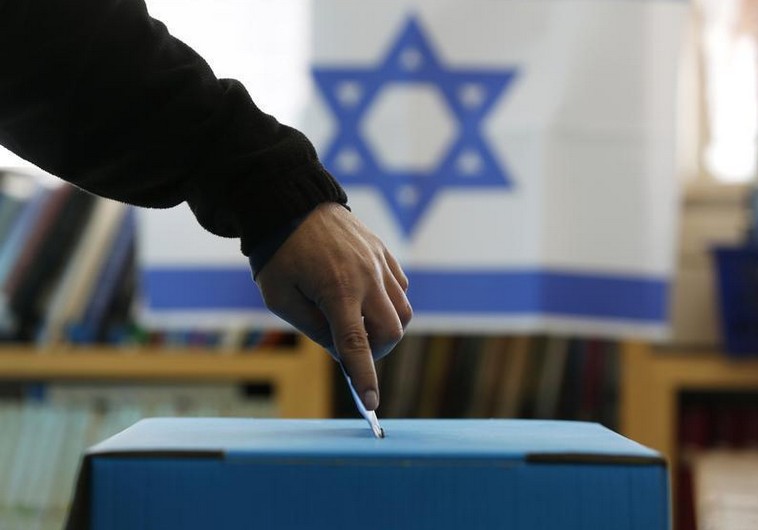
An Israeli flag is seen in the background as a man casts his ballot at a polling in a West Bank Jewish settlement, north of RamallahAn Israeli flag is seen in the background as a man casts his ballot for the parliamentary election at a polling in the West Bank settlement of Ofra. (photo credit:REUTERS)

The next 22 months until President Barack Obama leaves office promise to be the most challenging period in the history of US-Israel relations.

Now unfettered by electoral concerns, over the past week Obama exposed his ill-intentions toward Israel in two different ways.

First, the Justice Department leaked its intention to indict Democratic Sen. Robert Menendez on corruption charges. Menendez is the ranking Democratic member, and the former chairman, of the Senate Foreign Relations Committee. He is also the most outspoken Democratic critic of Obama’s policy of appeasing the Iranian regime.

As former US federal prosecutor Andrew McCarthy wrote this week at PJMedia, “It is perfectly reasonable to believe that Menendez may be guilty of corruption offenses and that his political opposition on Iran is factoring into the administration’s decision to charge him. Put it another way, if Menendez were running interference for Obama on the Iran deal, rather than trying to scupper it, I believe he would not be charged.”

The Menendez prosecution tells us that Obama wishes to leave office after having vastly diminished support for Israel among Democrats. And he will not hesitate to use strong-arm tactics against his fellow Democrats to achieve his goal.

We already experienced Obama’s efforts in this sphere in the lead-up to Prime Minister Benjamin Netanyahu’s speech before the joint houses of Congress on March 3 with his campaign to pressure Democratic lawmakers to boycott Netanyahu’s address.

Now, with his move against Menendez, Obama made clear that support for Israel – even in the form of opposition to the nuclear armament of Iran – will be personally and politically costly for Democrats.

The long-term implications of Obama’s moves to transform US support for Israel into a partisan issue cannot by wished away. It is possible that his successor as the head of the Democratic Party will hold a more sympathetic view of Israel. But it is also possible that the architecture of Democratic fund-raising and grassroots support that Obama has been building for the past six years will survive his presidency and that as a consequence, Democrats will have incentives to oppose Israel.

The reason Obama is so keen to transform Israel into a partisan issue was made clear by the second move he made last week.

Last Thursday, US National Security Adviser Susan Rice announced that the NSC’s Middle East Coordinator Phil Gordon was stepping down and being replaced by serial Israel-basher Robert Malley.

Malley, who served as an NSC junior staffer during the Clinton administration, rose to prominence in late 2000 when, following the failed Camp David peace summit in July 2000 and the outbreak of the Palestinian terror war, Malley co-authored an op-ed in The New York Times blaming Israel and then-prime minister Ehud Barak for the failure of the negotiations.

What was most remarkable at the time about Malley’s positions was that they completely contradicted Bill Clinton’s expressed views. Clinton placed the blame for the failure of the talks squarely on then-Palestinian leader Yasser Arafat’s shoulders.

Not only did Arafat reject Barak’s unprecedented offer of Palestinian statehood and sovereignty over all of Gaza, most of Judea and Samaria and parts of Jerusalem including the Temple Mount, he refused to make a counter-offer. And then two months later, he opened the Palestinian terror war.

As Jonathan Tobin explained in Commentary this week, through his writings and public statements, Malley has legitimized Palestinian rejection of Israel’s right to exist. Malley thinks it is perfectly reasonable that the Palestinians refuse to concede their demand for free immigration of millions of foreign Arabs to the Jewish state in the framework of their concocted “right of return,” even though the clear goal of that demand is to destroy Israel. As Tobin noted, Malley believes that Palestinian terrorism against Israel is “understandable if not necessarily commendable.”

During Obama’s 2008 presidential campaign, then-senator Obama listed Malley as a member of his foreign policy team. When pro-Israel groups criticized his appointment, Obama fired Malley.

But after his 2012 reelection, no longer fearing the ramifications of embracing an openly anti-Israel adviser, one who had documented contacts with Hamas terrorists and has expressed support for recognizing the terror group, Obama appointed Malley to serve as his senior adviser for Iraq-Iran-Syria and the Gulf states. Still facing the 2014 congressional elections, Obama pledged that Malley would have no involvement in issues related to Israel and the Palestinians. But then last week, he appointed him to direct the NSC’s policy in relation to the entire Middle East, including Israel.

The deeper significance of Malley’s appointment is that it demonstrates that Obama’s goal in his remaining time in office is to realign US Middle East policy away from Israel. With his Middle East policy led by a man who thinks the Palestinian goal of destroying Israel is legitimate, Obama can be expected to expand his practice of placing all the blame for the absence of peace between Israel and the Palestinians solely on Israel’s shoulders.

Malley’s appointment indicates that there is nothing Israel can do to stem the tsunami of American pressure it is about to suffer. Electing a left-wing government to replace Prime Minister Binyamin Netanyahu will make no difference.

Just as Malley was willing to blame Barak – a leader who went to Camp David as the head of a minority coalition, whose positions on territorial withdrawals were rejected by a wide majority of Israelis – for the absence of peace, so we can assume that he, and his boss, will blame Israel for the absence of peace over the next 22 months, regardless of who stands at the head of the next government.

In this vein we can expect the administration to expand the anti-Israel positions it has already taken.

The US position paper regarding Israeli-Palestinian negotiation that was leaked this past week to Yediot Aharonot made clear the direction Obama wishes to go. That document called for Israel to withdraw to the indefensible 1949 armistice lines, with minor revisions.

In the coming 22 months we can expect the US to use more and more coercive measures to force Israel to capitulate to its position.

The day the administration-sponsored talks began in July 2013, the EU announced it was barring its member nations from having ties with Israeli entities that operate beyond the 1949 armistice lines unless those operations involve assisting the Palestinians in their anti-Israel activities. The notion that the EU initiated an economic war against Israel the day the talks began without coordinating the move with the Obama administration is, of course, absurd.

We can expect the US to make expanded use of European economic warfare against Israel in the coming years, and to continue to give a backwind to the anti-Semitic BDS movement by escalating its libelous rhetoric conflating Israel with the apartheid regime in South Africa.

US-Israel intelligence and defense ties will also be on the chopping block.

While Obama and his advisers consistently boast that defense and intelligence ties between Israel and the US have grown during his presidency, over the past several years, those ties have suffered blow after blow. During the war with Hamas last summer, acting on direct orders from the White House, the Pentagon instituted a partial – unofficial – embargo on weapons to Israel.

As for intelligence ties, over the past month, the administration announced repeatedly that it is ending its intelligence sharing with Israel on Iran.

We also learned that the vice chairman of the Joint Chiefs of Staff is being fingered as the source of the leak regarding the Stuxnet computer virus that Israel and the US reportedly developed jointly to cripple Iran’s nuclear centrifuges.

In other words, since taking office, Obama has used the US’s intelligence ties with Israel to harm Israel’s national security.*

He has also used diplomacy to harm Israel. Last summer, Obama sought a diplomatic settlement of Hamas’s war with Israel that would have granted Hamas all of its war goals, including its demand for open borders and access to the international financial system.

Now of course, he is running roughshod over his bipartisan opposition, and the opposition of Israel and the Sunni Arab states, in the hopes of concluding a nuclear deal with Iran that will pave the way for the ayatollahs to develop nuclear weapons and expand their hegemonic control over the Middle East.

Amid of this, and facing 22 months of ever more hostility as Obama pursues his goal of ending the US-Israel alliance, Israelis are called on to elect a new government.

This week the consortium of former security brass that has banded together to elect a leftist government led by Isaac Herzog and Tzipi Livni accused Netanyahu of destroying Israel’s relations with the US. The implication was that a government led by Herzog and Livni will restore Israel’s ties to America.

Yet as Obama has made clear both throughout his tenure in office, and, over the past week through Malley’s appointment and Menendez’s indictment, Obama holds sole responsibility for the deterioration of our ties with our primary ally. And as his actions have also made clear, Herzog and Livni at the helm will receive no respite in US pressure. Their willingness to make concessions to the Palestinians that Netanyahu refuses to make will merely cause Obama to move the goalposts further down the field. Given his goal of abandoning the US alliance with Israel, no concession that Israel will deliver will suffice.

And so we need to ask ourselves, which leader will do a better job of limiting the danger and waiting Obama out while maintaining sufficient overall US support for Israel to rebuild the alliance after Obama has left the White House.

The answer, it seems, is self-evident.

The Left’s campaign to blame Netanyahu for Obama’s hostility will make it all but impossible for a Herzog-Livni government to withstand US pressure that they say will disappear the moment Netanyahu leaves office.

In contrast, as the US position paper leaked to Yediot indicated, Netanyahu has demonstrated great skill in parrying US pressure. He agreed to hold negotiations based on a US position that he rejected and went along with the talks for nine months until the Palestinians ended them. In so doing, he achieved a nine-month respite in open US pressure while exposing Palestinian radicalism and opposition to peaceful coexistence.

On the Iranian front, Netanyahu’s courageous speech before Congress last week energized Obama’s opponents to take action and forced Obama onto the defensive for the first time while expanding popular support for Israel.

It is clear that things will only get more difficult in the months ahead. But given the stakes, the choice of Israeli voters next Tuesday is an easy one.

_______________

* Correction: An earlier version of this article incorrectly reported that Hillary Clinton was reportedly involved in leaking sensitive information related to joint Israel-US operations to the media.

Bibi’s a bad deal

March 14, 2015

Bibi’s a bad deal
Mar 14th 2015 | From the print edition Via The Economist


(In an effort to be more ‘fair and balanced, I’m going to play the devil’s advocate and post this opinion piece I just found. With the elections coming up, it will be interesting to see if and who gets a mandate to take a more aggressive stand against the threats facing Israel today. Like the old saying goes, “Let’s run it up the flagpole and see who salutes.” – LS)

The prime minister’s failures outweigh his achievements. Israelis should back Yitzhak Herzog

BINYAMIN NETANYAHU is articulate, dashing—and distrusted, by friends and foes alike. Nicolas Sarkozy, a former French president, was once heard telling Barack Obama: “I can’t stand him. He’s a liar.” Mr Obama did not demur.

This month the Israeli prime minister offered fresh glimpses of his deviousness. Following reports that he had offered the Palestinians more generous terms than his rhetoric admits, Mr Netanyahu (pictured, right) tried to regain right-wing support by repudiating his acceptance, in a speech in 2009, of (strictly limited) Palestinian statehood. This leaves a big question: is the real Bibi a man of negotiation, or of occupation? Recklessly, he gambled with bipartisan American support for Israel when he defied Mr Obama by brazenly appearing before a Republican-dominated Congress to denounce the administration’s nuclear negotiations with Iran: “This is a bad deal. It’s a very bad deal. We’re better off without it.”

On March 17th Israeli voters will have their say on Bibi (see article). In this newspaper’s view he has been a bad deal for Israel. It is better off without him. His challenger, Yitzhak “Bougie” Herzog (pictured, left), is not charismatic. But he is level-headed and has a credible security and economic team. He wants talks with the Palestinians and to heal ties with Mr Obama. He deserves a chance to prove himself.

Prime minister, you’re no David Ben-Gurion. In office for the past six years, having served a three-year stint in the 1990s, Mr Netanyahu is now Israel’s longest-serving leader since David Ben-Gurion. That is a remarkable feat for a man whose father once doubted his suitability for the job. Mr Netanyahu’s longevity is due to many factors, not least luck, cunning, a silver tongue and the loyalty of the Likud party. But his achievements are outweighed by his many flaws.

On the positive side, he has liberalised the Israeli economy and promoted a thriving high-tech sector. He navigated skilfully through the financial crisis and the long slump in Europe, Israel’s largest trading partner. He kept Iran’s nuclear programme at the forefront of world attention. He also kept Israel safe after the Arab-spring revolts of 2011, which toppled leaders and cracked fossilised states across the region. The jihadists and Shia militias that filled the void might have turned their guns on Israel, and may yet do so. For the time being they are killing each other. In the turmoil Israel has forged closer ties with Egypt and, more secretly, with Arab monarchies.

Against this, Bibi’s preservation of the military occupation in the West Bank and the stranglehold over Gaza Strip must count heavily against him. He has refused to make any genuine concessions to the Palestinians, on the ground that “there is no partner for peace”—even though Mahmoud Abbas, the Palestinian president, has abjured violence and maintained security co-operation with Israel in the West Bank (Gaza is controlled by the Islamist Hamas movement). Mr Abbas himself has plenty of shortcomings, but he has also been deliberately weakened by Mr Netanyahu. Israel has cut off Palestinian tax revenues in retaliation for Mr Abbas’s decision to join the International Criminal Court. The pragmatism that Mr Netanyahu sometimes expresses is belied by his actions: he has expanded settlements, thus breaking up Palestinian areas and making a mockery of the very notion of Palestinian statehood.

To Israelis traumatised by missiles and rockets, Mr Netanyahu sounds plausible when he claims that giving the Palestinians control over their own land will bring more violence. The turmoil of the Arab world deepens these fears. Had Israel handed the Golan Heights back to Syria, it might now find itself facing fighters from Hizbullah, al-Qaeda or Islamic State on the Sea of Galilee.

However, without a Palestinian state, Israel will either endanger its Jewish majority or lose its moral standing by subjugating and disenfranchising the Palestinian population. Israel will lose support abroad even when it legitimately defends itself. In the final days of the campaign, Mr Netanyahu may well play up the dangers from Iran, jihadists and Hamas. But the truth is that immobilism, too, is endangering Israel.