Archive for the ‘Kerry’ category

The veneer of civilization

May 19, 2015

The veneer of civilization, Israel Hayom, Sarah N. Stern, May 19, 2015

Throughout the negotiations with Iran over its nuclear program, U.S. President Barack Obama frequently stated that “no deal is better than a bad deal” and that “all options are on the table.”

And then, on April 2, after a framework agreement was concluded in Lausanne, Switzerland (but without even a piece of paper to wave, Neville Chamberlain-like), Obama said, “Do you really think that this verifiable deal, if fully implemented … is a worse option than the risk of another war in the Middle East?”

As soon as the choice was altered from “a good deal or no deal” to “either this deal or war,” we witnessed a sudden surge in Iranian swagger and bravado, in both their words and their actions.

On May 7, Iranian Revolutionary Guard Corps Deputy Commander Brig. Gen. Hussein Salami told Fars television: “We welcome war with the United States, as we do believe that it will be the scene for our success, to display the real potential of our power. We have prepared ourselves for the most dangerous scenarios, and this is no big deal.”

On May 12, Mojtaba Zolnour, a member of the IRGC and a close personal friend of Supreme Leader Ali Khamenei, said: “The government of the Islamic Republic of Iran has divine permission to destroy Israel. The noble Quran permits the Islamic republic to destroy Israel. Even if Iran gives up its nuclear program, it will not weaken this country’s determination to destroy Israel.”

This Iranian saber rattling has been accompanied by renewed provocations. On April 28, in the Strait of Hormuz — a major oil route — an Iranian crew commandeered the Maersk Tigris, a cargo ship flying under the flag of the Marshall Islands, a U.S. protectorate. They held the ship for six days before releasing it and its crew members. And just a few days after that, Iranian gunboats opened fire on the Alpine Eternity, a Singaporean-flagged ship, and tried to force it into Iranian territorial waters.

The more the U.S. treats Iranians with kid gloves so as not to offend them and to keep them at the negotiating table, the more the Iranians feel a renewed sense of triumph, and disdain toward the United States and its allies. (One would think the Americans were the ones who needed sanctions lifted to help our ailing economy).

On May 6, Jason Rezaian, a Washington Post reporter who has been held in an Iranian prison since July 2014, was charged with espionage. This trumped-up charge was a direct rebuke to the United States, demonstrating just how much contempt the Iranians have for the U.S. It is clear that the Iranians believe that we are determined to give them their cake, and to let them eat it, too. And like a spoiled child in the midst of a temper tantrum, the more we give the Iranians, the more they demand.

The sad fact is that the American negotiating team is basing its entire strategy on little more than wishful thinking. While visiting Beijing at the weekend, U.S. Secretary of State John Kerry said that a deal with Iran “will have a positive influence on North Korea” (although he did add that he wasn’t sure that the North Koreans were capable of “internalizing the message”). One wonders whether the secretary of state also believes in unicorns and fairies.

History indicates that the nuclear negotiations with North Korea were precisely what led to their possession of a nuclear bomb. It is actually the Iranians who have taken note and learned from the North Koreans, and not the other way around.

It has become increasingly obvious that the Obama administration does not know how to negotiate. It seems that they are intent on making a deal, any deal, with the Iranians. And the more they grovel, the more contemptible the United States becomes in the eyes of the Iranians.

That is why the United States Senate needs to hold a free and open debate on the details of the negotiations. Over the last two weeks, the leadership of both the House and the Senate did no one any favors by putting the Iran Nuclear Review Act of 2015 (Corker-Cardin) on the suspension calendar. This means it requires a straight up or down vote, with no room for attaching amendments or for discussion.

The real danger in the Iran Nuclear Review Act of 2015 is that it has turned this negotiation, which has the standing of an international arms treaty, into a bill that would require a veto-proof majority to block. That means that it will become law even if only 34 Senate Democrats support it. While a treaty requires a positive action of two-thirds of the Senate to approve it, now it will take two-thirds of the Senate to veto it, which is much more difficult to achieve, particularly during the immediate aftermath of a euphoric deal-signing ceremony, probably on the White House Lawn, replete with lofty speeches of “peace in our time.”

The framers of the Constitution were prescient when they required two-thirds of the Senate to ratify a treaty. And these negotiations are nothing short of a nuclear arms treaty that will impact the order of the world for generations to come.

When the final deal is signed on June 30, the U.S. Senate must insist that it has the international standing of a treaty and demand that if it does not have the support of 67 senators, it is null and void.

In the meantime, those congressmen and senators who want to pretend that they are attentive to the genuine concerns of the Saudis, the Israelis and patriotic Americans wary of the Iranian negotiations, are now able to hide behind the Iran Nuclear Review Act, this piece of paper that they recently signed.

As the late Congressman Tom Lantos — the only Holocaust survivor in the U.S. House of Representatives — was fond of saying, “The veneer of civilization is paper thin.”

Liberating Our Jerusalem

May 18, 2015

Liberating Our Jerusalem, Sultan Knish Blog, Daniel Greenfield, May 17, 2015

[T]here are still Jews in the West Bank and they have to be gotten rid of. Once enough Jews have been expelled, there will be peace. That’s not a paragraph from Mein Kampf, it’s not some lunatic sermon from Palestinian Authority television– it is the consensus of the international community. This consensus states that the only reason there still isn’t peace is because enough Jews haven’t been expelled from their homes. The ethnic cleansing for peace hasn’t gone far enough.

There will be peace when all the Jews are gone.

Jerusalem Day is a reminder of what the real problem is and what the real solution is. Muslim occupation of Israel is the problem. The Islamization of Jerusalem is the problem. Muslim violence in support of the Muslim occupation of Israel and of everywhere else is the problem. Israel is the solution. Only when we liberate ourselves from the lies, when we stop believing that we are the problem and recognize that we are the solution. Only then will we be free of the Joe Bidens and the Peter Beinarts, the Jimmy Carters and Barack Obamas, the Gilad Atzmons and Jeremy Ben Amis. Only then will the liberation that began in 1967 be complete.

**********************

When Jordan’s Arab Legion seized half of Jerusalem, ethnically cleansed its Jewish population and annexed the city– the only entity to recognize the annexation was the United Kingdom which had provided the officers and the training that made the conquest possible. Officers like Colonel Bill Newman, Major Geoffrey Lockett and Major Bob Slade, under Glubb Pasha, better known as General John Bagot Glubb, whose son later converted to Islam, invaded Jerusalem and used the Muslim forces under their command to make the partition and ethnic cleansing of Jerusalem possible.

MigdalDavid0002

Since then, the annexation and ethnic cleansing has become an international mandate. It would be absolutely inconceivable for the international community to denounce an ethnically cleansed group which survived attempted genocide for moving back into a city where they had lived. It is, however, standard policy at the State Department and the Foreign Office to denounce Jews living in those parts of Jerusalem that had been ethnically cleansed by Muslims, as “settlers” living in “settlements,” and describe them as an “obstruction to peace.” Peace being the state of affairs that sets in when an ethnic cleansing goes unchallenged.

Describing Jewish homes in Jerusalem, one of the world’s oldest cities, a city that all three religions in the region associate with Jews and Jewish history, as “settlements” is a triumph of distorted language that Orwell would have to tip his hat to. How does one have “settlements” in a city older than London or Washington D.C.? To understand that, you would have to ask London and Washington D.C., where the diplomats insist that one more round of Israeli compromises will bring peace to the region.

They say that there are three religions in Jerusalem, but there are actually four. The fourth religion is the true Religion of Peace, the one that demands constant blood sacrifices to make peace possible, that insists that there will be peace when the Jews have been expelled from Judea and Samaria, driven out of their homes in Jerusalem, and made into wanderers and beggars once again. Oddly enough, this religion’s name isn’t even Islam– it’s diplomacy.

Diplomacy says that the 1948 borders set by Arab countries invading Israel should be the final borders and that, when Israel reunified a sundered city in 1967, it was an act of aggression, while, when seven Arab armies invaded Israel in 1948, it was a legitimate way to set boundaries. When Jordan ethnically cleansed East Jerusalem, it set a standard that Israelis are obligated to follow to this day by staying out of East Jerusalem.

Vice President Biden was so upset that the Jerusalem municipality had partially approved some buildings in the city during his visit that he threw a legendary hissy fit. Hillary Clinton stopped by MSNBC to tell Andrea Mitchell that, “It was insulting. And it was insulting not just to the Vice President who didn’t deserve that.” David Axelrod browsed through his thesaurus and emerged on the morning shows calling it an “affront” and an “insult.” Two for the price of one.

Editorials in newspapers denounced the Israeli government for this grave insult to the Obama Administration.”Israel’s Provocation”, the Chicago Tribune shrieked in bold type, describing it as a “diplomatic bomb” that went off in Biden’s face. The Atlantic, eager to get in on the action metaphors, described Israel slapping Biden in the face. A horde of other columnists jumped in to depict the Israelis kicking and bashing the poor Vice-President, while holding his head in the toilet.

Whether Joe Biden was the victim of the Jews or the Jews were the victims of Joe Biden is all a matter of perspective. The Hitler Administration was quite upset to find that Jewish athletes would be competing in the 1936 Munich Olympics. When you ethnically cleanse people, they are supposed to stay ethnically cleansed. It’s in poor taste for them to show up and win gold medals at the Olympics or rebuild their demolished synagogues. It’s insulting to the ethnic cleansers and their accomplices.

That sounds like a harsh accusation, but it’s completely and undeniably true.

bauernfeind-mur-lamentation-jerusalem

When Muslims move into a Jewish town, poor Joe doesn’t come crying that he’s been bombed with a diplomatic affront and slapped with a Menorah. When Muslim countries fund Muslim housing in Israel, there are no angry statements from Clinton and no thesaurus bashing from David Axelrod. Muslim housing in Jerusalem or anywhere in Israel is not a problem. Only Jewish housing is. The issue is not Israel. If it were, then Arabs with Israeli citizenship would get Biden to howl as loudly. It’s only the Jews who are the problem.

The entire Peace Process is really a prolonged solution to the latest phase of the Jewish Problem. The problem, as stated by so many diplomats, is that there are Jews living in places that Muslims want. There were Jews living in Gaza before 1948, but they were driven out, they came back, and then they were driven out again by their own government in compliance with international demands. Now only Hamas lives in Gaza and it’s as peaceful and pleasant without the Jews as Nazi Germany.

But there are still Jews in the West Bank and they have to be gotten rid of. Once enough Jews have been expelled, there will be peace. That’s not a paragraph from Mein Kampf, it’s not some lunatic sermon from Palestinian Authority television– it is the consensus of the international community. This consensus states that the only reason there still isn’t peace is because enough Jews haven’t been expelled from their homes. The ethnic cleansing for peace hasn’t gone far enough.

There will be peace when all the Jews are gone. That much is certainly undeniable. Just look at Gaza or Egypt or Iraq or Afghanistan, which has a grand total of two Jews, both of them in their seventies. Or Pakistan, Saudi Arabia and Syria where peace reigns now that the Jews are gone. Some might say that violence seems to increase proportionally with the number of Muslims, but we all know that would be a racist thing to say. On the other hand suggesting that violence increases with the number of Jews living on land that Muslims want, that’s just diplomacy. A common sense fact that everyone who is anyone in foreign policy knows to be true.

How will we know when the Muslims have gotten all the land that they want? When the violence stops. Everyone knows that agreements mean nothing. No matter how many pieces of paper are signed, the bombs and rockets still keep bursting; real ones that kill people, not fake ones that upset Vice Presidents. The only way to reach an agreement is by groping blindly in the dark, handing over parcel after parcel of land, until the explosions stop or the Muslims fulfill their original goal of pushing the Jews into the sea.

That’s the wonderful thing about diplomacy if you’re a diplomat and the terrible thing about it if you are anyone else without a secure way out of the country when diplomacy fails. And diplomacy in the region always fails. Camp David and every single agreement Israel has signed with Muslim countries aren’t worth the paper they’re written on. The only peace treaty that counts is the one made by tanks and rifles. It’s the one made by Israeli planes in Egyptian skies and Israeli soldiers walking the border. It’s the one made by Jewish farmers and ranchers, tending their sheep and their fields, with rifles strung over their backs. The only peace that’s worth anything is the peace of the soldiers and settlers.

In 1966, Jerusalem was a city sundered in two, divided by barbed wire and the bullets of Muslim snipers. Diplomacy did not reunite it. Israel pursued diplomacy nearly to its bitter end until it understood that it had no choice at all but to fight. Israel did not swoop into the fight, its leaders did their best to avoid the conflict, asking the international community to intervene and stop Egypt from going to war. Read back the headlines for the last five years on Israel and Iran, and you will get a sense of the courage and determination of the Israeli leaders of the day.

When Israel went to war, its leaders did not want to liberate Jerusalem, they wanted Jordan to stay out of the war. Even when Jordan entered the war, they did not want to liberate the city. Divine Providence and Muslim hostility forced them to liberate Jerusalem and forced them to keep it. Now some of them would like to give it back, another sacrifice to the bloody deity of diplomacy whose altar flows with blood and burnt sacrifices.

As we remember Yom Yerushalayim, Jerusalem Day, it is important to remember that the city is united and free because diplomacy failed. The greatest triumph of the modern state happened only because diplomacy proved hopeless and useless in deterring Muslim genocidal ambitions. Had Israel succumbed to international pressure and had Nasser been as subtle as Sadat, then the Six-Day War would have looked like the Yom Kippur War fought with 1948 borders– and Israel very likely would not exist today.

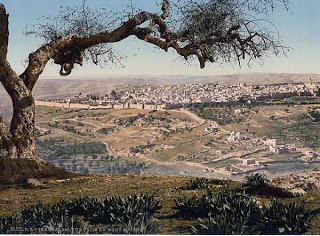
Jerusalem-Scopus

Even as Jews remember the great triumph of Jerusalem Day, the ethnic cleansers and their accomplices are busy searching for ways to drive Jews out of Jerusalem, out of towns, villages and cities. This isn’t about the Arab residents of Jerusalem, who have repeatedly asserted that they want to remain part of Israel. It’s not about peace, which did not come from any previous round of concessions, and will not come from this one either. It’s about solving the Jewish problem.

As long as Jews allow themselves to be defined as the problem, there will be plenty of those offering solutions. And the solutions invariably involve doing something about the Jews. It only stands to reason that if Jews are the problem, then moving them or getting rid of them is the solution. The bloody god of diplomacy always assumes that they are the problem. There is less friction in defining Jews as the problem, than in defining Muslims as the problem. The numbers alone mean that is so.

Jerusalem Day is a reminder of what the real problem is and what the real solution is. Muslim occupation of Israel is the problem. The Islamization of Jerusalem is the problem. Muslim violence in support of the Muslim occupation of Israel and of everywhere else is the problem. Israel is the solution. Only when we liberate ourselves from the lies, when we stop believing that we are the problem and recognize that we are the solution. Only then will we be free of the Joe Bidens and the Peter Beinarts, the Jimmy Carters and Barack Obamas, the Gilad Atzmons and Jeremy Ben Amis. Only then will the liberation that began in 1967 be complete.

Only then will we have liberated our Jerusalem. The Jerusalem of the soul. It is incumbent on all of us to liberate that little Jerusalem within. The holy city that lives in all of us. To clean the dross off its golden gates, wash the filth from its stones and expel the invaders gnawing away at our hearts until we look proudly upon a shining city. Then to help others liberate their own Jerusalems. Only then will we truly be free.

Ramadi’s fall opens ISIS road to Baghdad. Jordan warns US air strikes won’t stop the terrorists’ advance

May 18, 2015

Ramadi’s fall opens ISIS road to Baghdad. Jordan warns US air strikes won’t stop the terrorists’ advance, DEBKAfile, May 18, 2015


Jordan’s King Abdullah has warned the Obama administration in an urgent message that US air strikes alone won’t stop the Islamic State’s advances in Iraq and Syria and, what is more, they leave his kingdom next door exposed to the Islamist peril. ISIS would at present have no difficulty in invading southern Jordan, where the army is thin on the ground, and seizing local towns and villages whose inhabitants are already sympathetic to the extremist group. The bulk of the Jordanian army is concentrated in the north on the Syrian border. Even a limited Islamist incursion in the south would also pose a threat to northern Saudi Arabia, the king pointed out.

Abdullah offered the view that the US Delta Special Forces operation in eastern Syria Saturday was designed less to be an effective assault on ISIS’s core strength and more as a pallliative to minimize the Islamist peril facing Saudi Arabia, Jordan and the Gulf emirates.

DEBKAfile’s Washington sources report that US officials refused to heed Abdullah’s warning and tried to play it down, in the same way as Secretary John Kerry tried Monday, May 18, to de-emphasize to the ISIS conquest of Ramadi, the capital of Iraq’s largest province.

At a news conference in Seoul, Kerry dismissed the Islamists’ feat as a “target of opportunity” and expressed confidence that, in the coming days, the loss “can be reversed.”

The Secretary of State’s words were unlikely to scare the Islamists, who had caused more than 500 deaths in the battle for the town and witnessed panicky Iraqi soldiers fleeing Ramadi in Humvees and tanks.

Baghdad, only 110 km southeast of Ramadi, has more reason to be frightened, in the absence of any sizeable Iraqi military strength in the area for standing in the enemy’s path to the capital.

The Baghdad government tried announcing that substantial military reinforcements had been ordered to set out and halt the Islamists’ advance. This was just whistling in the dark. In the last two days, the remnants of the Iraqi army have gone to pieces – just like in the early days of the ISIS offensive, when the troops fled Mosul and Falujah. They are running away from any possible engagement with the Islamist enemy.

The Baghdad-sourced reports that Shiite paramilitaries were preparing to deploy to Iraq’s western province of Anbar after Islamic State militants overran Ramadi were likewise no more than an attempt to boost morale. Sending armed Shiites into the Ramadi area of Anbar would make no sense, because its overwhelmingly Sunni population would line up behind fellow-Sunni Islamist State conquerors rather than help the Shiite militias to fight them.

Iran’s Defense Minister Hossein Dehghan, who arrived precipitately in Baghdad Monday, shortly after Ramadi’s fall, faces this difficulty. Our military sources expect him to focus on a desperate effort to deploy Shiite militias as an obstacle in ISIS’s path to Baghdad, now that the road is clear of defenders all the way from Ramadi.

In Amman, King Abdullah Sunday made a clean sweep of senior security officials, firing the Minister of Interior, the head of internal security (Muhabarat) and a number of high police officers. They were accused officially of using excessive violence to disperse demonstrations in the southern town of Maan.

The real reason for their dismissal, DEBKAfile’s counter-terror sources disclose, is the decline of these officials’ authority in the Maan district,  in the face of the rising influence of extremist groups identified with Al Qaeda and ISIS, in particular.

Kerry – North Korea can have a great nuke deal like Iran if it becomes as moderate

May 17, 2015

Kerry – North Korea can have a great nuke deal like Iran if it becomes as moderate, Dan Miller’s Blog, May 17, 2015

(The views expressed in this article are mine and do not necessarily reflect those of Warsclerotic or its other editors. — DM)

North Korea played those negotiating its denuclearization for fools, much as Iran has been doing more recently with Obama. It must not have been difficult to do. To continue the process with Iran, and to repeat it with North Korea, makes no sense.

Speaking in the People’s Republic of China on May 16th, Secretary Kerry offered North Korea a nuke deal

Kerry explained that an Iran deal could help in showing North Korea how “your economy can do better, your country can do better, and you can enter into good standing with the rest of the global community by recognizing — just like Iran — that there is a verifiable, irreversible, denuclearization for weaponization, even as you can have a peaceful nuclear power program.”

Iran has not agreed to “a verifiable, irreversible, denuclearization for weaponization” and likely never will. On April 15th, Iran disputed the accuracy of the Obama Administration’s April 2nd “fact sheet,” which had made such claims about the deal. In the highly unlikely event that Iran were it to claim to do accept such terms, it would “cheat” as it has done in the past. In this video, John Bolton speaks about the “deal” with Iran as well as the North Korean connection.

Nevertheless, Iran has already received many of the rewards of essentially irreversible sanctions relief, including augmented power, both military and financial, in the Middle East.

A deal like the one Iran is about to get by virtue of the Iran scam should be welcomed by North Korea. The countries have long cooperated on nukes and missile development, a matter apparently ignored during Obama’s P5+1 “negotiations” with Iran.

Kerry also said,

the United States will continue to work with its partners “to make it absolutely clear to the DPRK that their actions, their destabilizing behavior — unlike Iran’s — is unacceptable against any international standard.” [Emphasis added.]

Iran’s destabilization efforts and successes are, in Kerry’s view, apparently not “against any international standard.” Yet Iran does far more regional destabilizing than does North Korea — North Korea mainly relies upon bellicose bluster (with infrequent military actions against South Korea). Iran — a major if not the most active sponsor of terrorism —  sends its proxies throughout the Middle East while accusing America and others of destabilization. A likely “signing bonus” of up to fifty billion dollars for Iran if and when the “deal” is finalized will substantially further Iran’s hegemonic ambitions and power as well as its missile and nuclear weapons development.

Here’s a video of Iran having some fun:

According to Hossein Salami, Deputy Commander of the Iranian Revolutionary Guard, Iran welcomes war with the United States:

This North Korean propaganda video purports to displays North Korean military prowess:

Conclusions

The rogue nations of Iran and North Korea are both intent upon maximizing their nuclear weapon capabilities. Both are totalitarian and have obscene human rights records. To trust either would be a gross mistake; yet that appears to be what Obama intends to do.

The only thing notably missing from Kerry’s offer is a requirement that North Korea abandon the Religion of Kim and adopt the glorious “Religion of Peace” instead. That would help North Korea to fit even better than at present into Obama’s policy of supporting America’s enemies and rejecting her friends. If Kim Jong-un would merely recognize Allah as the superior power, perhaps he could become the first Korean Ayatollah. Obama would probably be thrilled were North Korea to become the Democratic Islamic Republic of Korea (DIRK).

Kerry: Iran Nuclear Deal Could Be Lesson for North Korea

May 16, 2015

Kerry: Iran Nuclear Deal Could Be Lesson for North Korea, ABC News, Matthew Lee, May 16, 2015

(Please say that you will stop destabilizing the region, have a good human rights record and become moderate like The Islamic Republic of Iran and we will grant all concessions you seek. Pretty please? — DM)

U.S. Secretary of State John Kerry said Saturday he is hopeful that the successful conclusion of a nuclear deal with Iran will send a positive message to North Korea to restart negotiations on its own atomic program.

Speaking at a joint news conference with Chinese Foreign Minister Wang Yi in Beijing, Kerry said he believed an Iran agreement could have “a positive influence” on North Korea, because it would show that giving up nuclear weapons improves domestic economies and ends isolation. He stressed, though, that there was no way to tell if North Korea’s reclusive leadership would be able to “internalize” such a message.

“I am sure Foreign Minister Wang would join me in expressing the hope that if we can get an agreement with Iran, … that agreement would indeed have some impact or have a positive influence” on North Korea, Kerry said.

Although Wang did not appear to respond, Kerry explained that an Iran deal could help in showing North Korea how “your economy can do better, your country can do better, and you can enter into good standing with the rest of the global community by recognizing that there is a verifiable, irreversible, denuclearization for weaponization, even as you can have a peaceful nuclear power program.”

“Hopefully that can be a message, but whether or not DPRK is capable of internalizing that kind of message or not, that’s still to be proved,” he said, referring to North Korea by the acronym of its official name, the Democratic People’s Republic of Korea.

International negotiators are rushing to finalize a nuclear deal with Iran by the end of June under which Iran’s program would be curbed to prevent it from developing atomic weapons in exchange for the lifting of international sanctions that have crippled its economy.

Nuclear talks with North Korea, which has already developed atomic weapons despite previous attempts to forestall it, broke down three years ago as it has continued atomic tests and other belligerent behavior, including ballistic missile launches.

North Korea conducted its first nuclear test in 2006 and is now believed to have at least 10 such weapons despite some of the toughest international sanctions in existence. It conducted its third nuclear test in February 2013, and U.S.-based experts forecast that it could increase its nuclear arsenal to between 20 and 100 weapons by 2020.

Kerry travels on Sunday to South Korea, where North Korea will be a major topic of discussion.

He said the United States will continue to work with its partners “to make it absolutely clear to the DPRK that their actions, their destabilizing behavior is unacceptable against any international standard.”

FIG LEAVES FALLING

May 15, 2015

Fig leaves falling, Power LineScott Johnson, May 14, 2015

Certain impediments complicate Barack Obama’s selling of the arrangement with the Islamic Republic of Iran. Obama seeks to camouflage the arrangement as one that deters Iran from the acquisition of nuclear weapons. In reality, the arrangement will finance and expedite the mullahs’ acquisition of nuclear weapons.

John Kerry has issued ludicrous “guarantees” in connection with the arrangement. One such guarantee is categorical, but it’s not a money-back sort of a guarantee: “I say to every Israeli that today we have the ability to stop [the Iranians] if they decided to move quickly to a bomb and I absolutely guarantee that in the future we will have the ability to know what they are doing so that we can still stop them if they decided to move to a bomb.”

We may doubt the omniscience that is the predicate of Kerry’s guarantee. But this is strictly a limited warranty. Kerry doesn’t even “guarantee” that his boss would do anything about it if Iran were to break out. Kerry only guarantees that “we” could. Good to know. Kerry’s “guarantee” amounts to nothing more than meaningless verbiage two or three time over.

The arrangement will also provoke an equal and opposite reaction from the Sunni rivals of Iran such as Saudi Arabia. The Sunni rivals understand the nature of the arrangement in process. Their understanding accounts for Obama’s “lonely Arab summit.”

President Obama’s dubious fact-sheet setting forth Parameters for a Joint Comprehensive Plan of Action reflects the fig leaves with which the president seeks to cover the nuts of the deal. Senator Rubio couldn’t get to first base in his proposal requiring any final deal to include the fig leaves. (Eli Lake dubbed it “Rubio’s new and improved poison pill.”)

The fig leaves are falling. The official Farsnews outlet reports that inspection of military sites is not included in the arrangement in process — this according to Iranian envoy to the IAEA Reza Najafi and despite the alleged parameter requiring Iran “to grant access to the IAEA to investigate suspicious sites or allegations of a covert enrichment facility, conversion facility, centrifuge production facility, or yellowcake production facility anywhere in the country.”

The alleged parameters regarding sanctions provide that Iran “will receive sanctions relief, if it verifiably abides by its commitments” and that “•U.S. and E.U. nuclear-related sanctions will be suspended after the IAEA has verified that Iran has taken all of its key nuclear-related steps. If at any time Iran fails to fulfill its commitments, these sanctions will snap back into place.”

We have already learned that President Obama intends to reward Iran with a huge “signing bonus” at the outset of the arrangement. He will agree to the removal of all United Nations sanction on Iran at the same time. He will also waive our own statutory sanctions on Iran. Just about the last fig leaf remaining on this element of the deal is the (utterly meaningless) assertion: “If at any time Iran fails to fulfill its commitments, these sanctions will snap back into place.”

Now Bloomberg News reports that this fig leaf is falling too: “Russia rejects automatic sanctions return if Iran cheats on deal.” Bloomberg quotes Russia’s UN Ambassador Vitaly Churkin bluntly asserting yesterday, “There can be no automaticity, none whatsoever” in reimposing UN sanctions if Iran violates the terms of an agreement to curb its nuclear program.

Omri Ceren writes to comment this morning (footnotes omitted):

The statement really shouldn’t count as breaking news, even though it is. Reuters reported toward the very end of Lausanne that the Russians and Chinese were still rejecting the multilateral snapback. But then the Lausanne announcement happened, and President Obama declared from the Rose Garden that in fact “if Iran violates the deal, sanctions can be snapped back into place.” But then a week later the Associated Press reported that, no, “Russia and China are unlikely to accept any process that sees them sacrifice their veto power.”

At the end of April the American Enterprise Institute quoted Russian Deputy Foreign Minister Sergey Ryabkov saying the exact same thing that Churkin just told Bloomberg News: “in the hypothetical situation that Iran should fail to honour its commitments, then this process should not in any way be automatic.”

And yet the policy conversation has been proceeding as if multilateral snapback is actually a real thing that could happen in our reality.

Part of the reason is that snapback is all the Obama administration has left on the sanctions debate. White House officials had assured lawmakers for literally years that sanctions relief would be phased out only as Iran met a series of nuclear obligations. But after Lausanne, Supreme Leader Ayatollah Ali Khamenei set a new red line, in which he demanded that the relief must be immediate. The administration began trying to find ways to concede to his demand without violating its previous “phase out” promises, which is how the WSJ’s scoop about a $50 billion signing bonus came to be.

That apparently didn’t work, and so instead the administration went all-in on snapback. At his press conference with Renzi in the middle of April the President signaled the that he was prepared to cave on upfront sanctions relief because – he told journalists – what was actually important was snapback: “with respect to the issue of sanctions coming down, I don’t want to get out ahead of John Kerry and my negotiators… [o]ur main concern here is making sure that if Iran doesn’t abide by its agreement that we don’t have to jump through a whole bunch of hoops in order to reinstate sanctions. That’s our main concern.”

The arrangement’s alleged Iranian concession are, you might say, phony baloney all the way down.

In Advance Of Obama-GCC Camp David Summit, Saudi Press Warns: Iran’s Interference In Region Poses Greater Danger Than Iranian Nuclear Bomb

May 13, 2015

In Advance Of Obama-GCC Camp David Summit, Saudi Press Warns: Iran’s Interference In Region Poses Greater Danger Than Iranian Nuclear Bomb, MEMRI, May 12, 2015

(The linked Saudi press articles suggest that Obama’s efforts to reassure Saudi and other regional powers about Iran will not succeed. — DM)

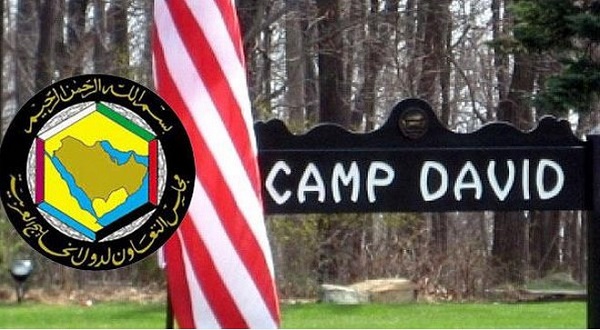
May 14, 2015 is the date set for the summit at Camp David between U.S. President Barack Obama and heads of state of the member countries of the Gulf Cooperation Council (GCC) – Saudi Arabia, Qatar, Kuwait, Bahrain, UAE, and Oman. A meeting at the White House with President Obama and the conferees is planned for the preceding day, May 13.

The objective of the Camp David summit, as announced several weeks ago, is to reassure the GCC countries about the nuclear agreement slated to be signed with Iran next month, as well as to discuss tighter U.S.-Gulf security cooperation.[1]In advance of the summit, the GCC held several preparatory meetings at various diplomatic levels, including: an April 20 meeting of GCC foreign ministers; a May 4 summit of GCC heads of state which was attended also by French President François Hollande; a May 7 meeting in Riyadh of Saudi Foreign Minister ‘Adel Al-Jubeir and his U.S. counterpart Secretary of State John Kerry; and a May 8 meeting in Paris of all the GCC foreign ministers and Kerry.

However, on May 9, Saudi Arabia announced that Saudi King Salman would not be at the Camp David summit as planned, and that Crown Prince Mohammed bin Nayef and Deputy Crown Prince Mohammed bin Salman would be participating in his stead. Saudi Foreign Minister ‘Adel Al-Jubeir explained that the monarch would not attend because he had to stay home to ensure peace and security in Yemen and to oversee the arrival of humanitarian assistance to the Yemeni people.[2]

Later, it was reported that the Bahraini king, the UAE president, and the Sultan of Oman would also not be attending the summit, sending representatives instead. As of this writing, the Emirs of Kuwait and Qatar are the only GCC heads of state who are planning to attend.

The downgrade of the level of representation at the summit appears to constitute a message to the U.S. that Saudi Arabia and the other GCC member countries were not pleased with the preliminary talks with Secretary of State Kerry, and also that they were disappointed at what the summit would achieve. According to a May 2, 2015 New York Times report, the Saudis had even then hinted that they would downgrade their representation if they felt that the summit was not going to produce results that conformed to their expectations.[3]

In fact, Arab press reports that preceded the announcement of downgraded representation pointed to what the GCC countries were demanding from the U.S., as well as to dissatisfaction on their part. At the May 4 summit of GCC heads of state with Hollande, Saudi King Salman called on the international community, especially the P5+1 that is negotiating with Iran, to “set stricter rules that guarantee the region’s security and prevent it from plunging into an arms race.” The king also stipulated that any final agreement with Iran must include unambiguous security guarantees.[4] Additionally, on May 7, UAE Ambassador to the U.S. Yousef Al Otaiba announced that the GCC would demand from the U.S. guarantees in writing that the latter would defend it from Iran.[5] Likewise, on May 9, the London-based Saudi daily Al-Hayat reported that even at the May 8 meeting with Kerry, the GCC foreign ministers had demanded U.S. guarantees that their countries would havemilitary superiority over Iran.[6]

Elaph.com also reported, on May 9, that the Gulf heads of state, headed by the Saudi monarch, would not settle for aid, military contracts, and defense systems provided by the U.S., but that they were seeking “clear, honest, and practical clarification, by means of absolutely firm, long-term resolutions, that Iran would be prevented from actualizing its expansionist aspirations in the region and from developing nuclear weapons…” Elaph also reported that “the Gulf leaders are headed for confrontation with the American president, and they want answers and explanations about his positions on these burning issues…”[7]

On May 12, three days after the Saudis announced that King Salman would not be attending the summit, it was reported that President Obama and King Salman had spoken by phone about the preparations for the summit, and had discussed the agenda of the meetings that would take place during it.[8] Both the White House, in an announcement, and Saudi Foreign Minister ‘Adel Al-Jubeir, at a press conference, emphasized the continuing Saudi-U.S. partnership. According to the White House announcement, Obama and Salman had, in their phone conversation, “reviewed the agenda for the upcoming meetings” and had “agreed on the necessity of working closely, along with other GCC member states, to build a collective capacity to address more effectively the range of threats facing the region and to resolve regional conflicts.” The two also discussed “the importance of a comprehensive agreement between the P5+1 and Iran that verifiably ensures the exclusively peaceful nature of Iran’s nuclear program” and “emphasized the strength of the two countries’ partnership, based on their shared interest and commitment to the stability and prosperity of the region, and agreed to continue… close consultations on a wide range of issues.”[9] Also, at a Washington press conference, the Saudi foreign minister stressed that King Salman’s “absence from the summit is not in any way connected to any disagreement between the two countries,” adding, “We have no doubts about the U.S.’s commitment to Saudi and Gulf security. The U.S. will present the Gulf countries with a new level of cooperation that will meet the needs on the ground.”[10]

At the same time, the Saudi press published numerous articles, including op-eds and editorials, fiercely attacking the Obama administration’s Middle East policy, stating that it had repeatedly disappointed the Arab countries, in its positions on Syria, Iraq, Bahrain, Yemen, and Iran. The articles accused the Obama administration of reinforcing Iran’s power in the region – so much so that it was now threatening GCC interests – and claimed that it was not the Iranian nuclear bomb but Iran’s imperialism in the region and Iran’s interference in the affairs of the Arab countries that was the “real bomb threatening [the Arab countries’] security,” and called on the U.S. to curb these. These articles focused on the demands that the GCC countries would be presenting to Obama at the summit, including that he change his policy towards Iran and “restore the regional balance,” while at the same time he would undertake unprecedented security military cooperation with the GCC. The articles emphasized that “the Gulf countries no longer believe the U.S.’s promises and guarantees,” and that they would now demand guarantees in writing. Some of the articles even warned that U.S.-GCC relations were now at a point of a grave, even critical crisis of confidence, and that the Camp David summit was a chance for the U.S. to prevent the collapse of its alliance with the GCC. If this alliance did fall apart, they said, U.S. interests in the region would suffer, and the smoldering regional conflict would erupt into a conflagration.

Below are translated excerpts from some of the articles:

23277

‘Al-Sharq Al-Awsat’ Editor: The Dissolution Of The U.S.-Gulf Alliance Will Harm U.S. Interests In The Region

Salman Al-Dosari, editor of the London-based Saudi daily Al-Sharq Al-Awsat, argued that the mutual trust between the US and the Gulf states had eroded to an extent that jeopardizes the alliance between them: “The upcoming Camp David summit may be the most important Gulf-U.S. meeting to take place in 50 years, [because] the U.S.-Gulf alliance is going through a phase of tension and a crisis of confidence… Washington is aware of this and it is no secret. Who knows, perhaps the summit will be an opportunity to put the train of this historic alliance back on the track from which it slipped in recent years. The summit will be an opportunity for the American administration to shift from talk to action, and quell the doubts in the region regarding its credibility, that has been put to the test  [by a series of events,] starting with the Syrian crisis, continuing with [America’s]feeble position on the events in Bahrain, Egypt and Iraq, and culminating in the nebulous and secret agreement that is expected to be signed with Iran…

“All [U.S.] institutions are aware of the negative repercussions for American interests that will ensue if the alliance with the Gulf States is dissolved. Naturally, the two parties do not have to be [perfectly] coordinated in their policies. However, it is unreasonable for U.S. policy to threaten the interests of the Gulf States, and later we [are bound to] discover that U.S. interests in the region have been harmed as well. This proves that Washington’s policy in the region is completely misguided…

“President Obama undoubtedly has a clear plan that will translate American talk into action, as reflected in statements by a senior American official last Thursday, published in Al-Sharq Al-Awsat, regarding ‘unprecedented military cooperation’ that will be revealed at the Camp David summit. It is also important that the U.S. give [the Gulf States] its assurances in writing… Only by such actions can the U.S. restore the cordiality to its relations with the Gulf States and truly demonstrate that the final nuclear agreement expected to be signed [with Iran] will not include ambiguous meanings and unclear details.

“The US wants to kill two birds with one stone, [namely achieve] excellent relations with the Gulf States and with Iran simultaneously. This equation is unacceptable, not because the Gulf States hate [Iran], but because the Iranian regime is predicated on hostility to its neighbors in the Arabian Gulf, and its entire policy is geared towards intervening in their internal affairs. This is the entire story, honorable President Barack Obama.”[11]

Al-Hayat Editor: U.S. Hesitation At Camp David Will Cause The Regional Conflict To Erupt

Ghassan Charbel, editor-in-chief of the London-based Saudi daily Al-Hayat, wrote: “The U.S. is not interested in playing the role of the Middle East’s policeman. It does not wish to squander additional billions [of dollars] and blood. However, it certainly cannot wash its hands of the fate of this region of the world – not just  because [it seeks to preserve] the security of oil and of Israel, but also for the sake of the security of the U.S. and the West. Experience teaches us that Middle East diseases are contagious, and that the terrorism that is taking root there threatens the safety of New York, Washington, Paris, Berlin, and so on.

“It would be no exaggeration to say that the U.S.-Gulf summit at Camp David creates an unusual encounter that will leave its mark on the fate of the Middle East for years or [even] decades to come. The summit demands more than just dispersing [messages of] reconciliation and calm [to alleviate Gulf fears]. The situation is too grave to be treated with painkillers and hopes. The framework of a new regional order must be outlined; [such an order] must restore the necessary balance and provide safety valves to stop the chain of collapses, coups, and infiltrations [of foreign elements]. It is clear that the Iranian specter will be at the summit, bearing two bombs [that is, both nuclear bomb and the bomb represented by the regional role that Iran is seeking]…

“The problem that the GCC countries have with Iran does not end with Iran’s nuclear program. The GCC countries maintain that Iran’s current interference… is the real bomb threatening the security of the GCC countries, and [also] threatening the stability and status of the Arabs in the region. Therefore, what the Gulf is demanding at Camp David is measures to curb Iran’s involvement in the region, in addition to curbing its nuclear ambitions…

“It appears, therefore, that the Camp David summit must clarify the American position vis-à-vis the two Iranian ‘bombs’ – the first being the nuclear program, and the second being the regional role [that Iran covets]. The GCC is against the view that an agreement concerning the first bomb is a character reference providing it with what it needs in order to protect and expand the second bomb. This goes beyond the issue of missile defense [to be provided by the U.S. to] the Gulf countries, and beyond providing it with a deterrent arsenal, and has to do with the U.S.’s perception regarding its own interests in the next stage, how committed it is to its allies, and how serious it is in thwarting Iran’s takeover of the region – as well as how [willing] it is to give [the Gulf countries] unequivocal [security] guarantees.

“It is impossible to establish a suitable regional order without first restoring balance to the region. The bomb of [the regional]role [for which Iran strives] contradicts the required balance, and the American hesitation to deal with it [i.e. with Iran] decisively and seriously will diminish the importance of the summit and increase the Gulf countries’ apprehensions about Obama’s ‘Iran policy.’ American hesitation will also cause the regional conflict to erupt, especially the Syrian link [in the chain]… That is, if the Camp David summit does not address these two bombs, it will add fuel to the alarming Middle East conflagration.”[12]

‘All-Hayat’ Columnist: We No Longer Believe Obama’s Promises; Saudi Arabia Has Alternatives To The U.S. – Such As China And France

George Sama’an, a columnist for the London-based Saudi daily Al-Hayat, wrote about the U.S. president’s dilemma, under the headline “Obama Stuck Between Losing Saudi Arabia and Stopping Iran’s Expansion”: “Iran. There is no other issue butIran on the agenda of the U.S.-Gulf summit set for this week in Washington and Camp David. The [Iranian] nuclear program has worried, and continues to worry, the members of the GCC. In their meetings in Paris with U.S. Secretary of State John Kerry, the GCC foreign ministers did not focus on technical clarifications related to the program nor on those related to the mechanism of economic sanctions. What they fear is the day after the anticipated agreement between Iran and the five superpowers and Germany.

“Like many who oppose the approach of the American dialogue [with Iran], they fear Iran’s getting its hands on the region. [Iran] could gain from the lifting of the siege and of the sanctions on its frozen assets by continuing its regional expansionist program. Despite its [economic] distress, Iran has accelerated this expansionism, with brazen persistence. Its strategy relies on two main elements: the advanced, developed, and extensive arsenal of missiles in its possession, which are conventional weapons that are not subject to an international ban such as nuclear energy, and on continuing its expansion using its Shi’ite forces and militias in several Arab countries…

“The Gulf states are among the countries that no longer believe the promises and guarantees that the U.S. is providing these days. Obama has not kept any of the promises he made to the residents of the region since his speeches in Egypt and Turkey… The American indifference regarding the events in Iraq, for instance, left that country in Iran’s hands, and this scenario has been repeated in all the countries of the Levant [i.e. Syria and Lebanon]. The Obama administration has made no serious attempts to arrive at an arrangement [to resolve] the Syria crisis, leaving that country in [the hands of] Tehran and Moscow… [Obama] also kept out of the events in Yemen prior to [Operation] Decisive Storm…

“[The U.S.’s] partners did not have the sense that it wanted to end Iran’s lack of restraint and expansionism in the region, even if it led to damage to several Arab countries and their national unity. It [i.e. the U.S.] also did not do enough to address the conventional missile industry, at which Iran excels, possibly as a temporary substitute for the banned nuclear bomb…

“Today, the strategic arena is no longer solely in the hands of the U.S. and Iran. Arabs have a say and a policy [in them,]following Saudi Arabia’s establishment of the new coalition… No matter how far overboard the U.S. goes in relying on its future relations with Iran and on [Iran’s] role in the stability of the region, it can no longer ignore the positions of the residents of the Gulf, headed by Saudi Arabia – which has proven itself as the central player with regard to energy… Operation Decisive Storm has increased the Saudis’ ability to correct the imbalance in the power balance with Iran…

“In light of the changes in the regional and strategic arenas, it is not enough for President Obama to provide guarantees or attempt to calm the situation, to make do with talk about ABM [systems] for the Gulf as he did five years ago, or to focus on the war on terror. What [he] must do [now] is take an active role in a policy that will restore the balance among the region’s major powers, and reexamine his policy in Iraq, Syria, Yemen, and Lebanon. Will he do this, and grow closer to the U.S.’s traditional partners instead of pushing them away?

“The Arab coalition will not stop. Many elements that could replace the U.S., from China to France, should be considered. [Likewise,] the Gulf states might possibly decide to initiate an arms race, for which they have the suitable economic capacities.”[13]

In the same vein, Saudi columnist Muhammad Aal Al-Sheikh wrote, in the Saudi Al-Jazirah daily: “Last Tuesday in Riyadh, a GCC consultation summit was held, led by King Salman; during it, the countries stressed the unity, adherence, and solidarity amongst them… At this summit, the participation of French President Hollande, as a guest of honor, stood out. It constituted a clear and highly significant message to the American president, Obama, who has been chasing down the Persian ayatollahs to get them to sign a final agreement regarding the peacefulness of the Iranian nuclear facilities and to remove the sanctions from them.

“The message [sent by Hollande’s presence] said clearly to Obama, prior to the summit with the Gulf heads of state at Camp David: ‘Gulf residents, there are other options. You are not alone in the arena. France is an independent decision-maker, as Francophones tend to be. France is a world power, a permanent member of the U.N. Security Council with a veto, and a major and advanced manufacturer of developed weaponry. And, some of the armament agreements and military deals of the Gulf countries are going to be [signed] with it.’

“This is an extremely clear message, and the [U.S.] Republican Party will necessarily use it against the Democrats, particularly in the upcoming presidential election campaign between the two parties.”[14]

Endnotes:

[1] Alarabiya.net April 3, 2015, April 6, 2015.

[2] Alarabiya.net, May 10, 2015.

[3] Nytimes.com, May 2, 2015.

[4] Arabnews.com, May 5, 2015.

[5] Al-Riyadh (Saudi Arabia), May 7, 2015.

[6] Al-Hayat (London), May 9, 2015.

[7] Elaph.com, May 9, 2015.

[8] Alarabiya.net; Al-Quds Al-Arabi (London), May 12, 2015.

[9] Al-Quds Al-Arabi (London), May 12, 2015; Whitehouse.gov/the-press-office/2015/05/11/readout-president-s-call-king-salman-bin-abdulaziz-al-saud-saudi-arabia. May 11, 2015.

[10] Telegraph (London) May 12, 2015; Usatoday.com, May 11, 2015; Al-Sharq Al-Awsat (London) May 12, 2015.

[11] Al-Sharq Al-Awsat (London), May 11, 2015.

[12] Al-Hayat (London), May 11, 2015.

[13] Al-Hayat (London), May 11, 2015.

[14] Al-Jazirah (Saudi Arabia) May 10, 2015.

Why the Snub? Saudis Know Obama’s Replaced Them With Iran

May 11, 2015

Why the Snub? Saudis Know Obama’s Replaced Them With Iran, Commentary Magazine, May 11, 2015

Will Obama get the message and change course? That’s even less likely than him embracing Netanyahu. An administration that came into office determined to create more daylight between itself and Israel has now embarked on a policy designed to alienate all of America’s traditional allies in order to appease a vicious Islamist foe. Anyone who thinks this will turn out well simply isn’t paying attention to the same events that have left the Saudis and other U.S. allies thinking they are more or less being left on their own.

**********************

If the Obama administration thought it’s half-hearted efforts to make up with Saudi Arabia and other Arab states outraged by its Iran policies, it’s got another thing coming. On Sunday, the Saudis told the White House that King Salman would not be attending meetings there or at Camp David this week. Later, Bahrain said its King Hamad would skip the same meeting. The snubs are as pointed as President Obama’s recent signals that he has no intention of meeting with Israeli Prime Minister Benjamin Netanyahu anytime soon. But while the president has little interest in patching things up with America’s sole democratic ally in the Middle East, he was quite interested in making nice with the Saudi monarch. But the Saudis and Bahrain, like the Israelis, are deeply concerned by the U.S. effort to create a new détente with Iran. It’s not just that Salman apparently has better things to do than to schmooze with Obama. The president may have thought he could essentially replace the Saudis with Iran as the lynchpin of a new Middle East strategic vision without paying a price. But the Saudis understandably want no part of this. The result will be a region made even more dangerous by the Arabs, as well as the Israelis, coming to the realization that they can’t rely on Washington.

The conceit of Obama’s strategy rests on more than a weak deal that he hopes will be enough to postpone the question of an Iranian bomb even as it essentially anoints Tehran as a threshold nuclear power. Rather it is predicated on the notion that once Iran is allowed to, in the president’s phrase, “get right with the world” and reintegrated into the global economy, it can be counted on to keep peace in a region from which Obama wants to withdraw.

That’s why the administration has tacitly allied itself with Iran in the struggle against ISIS in Iraq and, bowed to Tehran’s desire to leave its ally Bashar Assad in power in Syria even as they sought to restrain the Islamist regime’s Houthi friends in their effort to take over Yemen. But given Iran’s desire for regional hegemony, it’s reliance on terrorist allies like Hezbollah and Hamas as well as Assad’s criminal regime, the notion that it is a force for stability is as much a delusion as the idea that it is giving up its quest for nuclear weapons.

Just as important, the Obama foreign policy team was convinced that it could afford to ignore the Saudis’ concerns about their intended entente with Iran with as much impunity as it did those of Israel. As one expert quoted in the New York Times said, the Saudis have no alternative to the U.S. as a superpower ally. But it has not failed to escape their attention that “there’s a growing perception at the White House that the U.S. and Saudi Arabia are friends but not allies, while the U.S. and Iran are allies but not friends.”

Under the circumstances, the Saudis are now prepared to show the president the extent of their disdain. But it may not stop at that.

The Saudis, like the Israelis, know that America’s promises about both the nuclear deal and the future of the region are not worth much. The Iranians have been granted two paths to a bomb by the United States. One is by cheating via the easily evaded restrictions in the nuclear pact with little fear of sanctions being snapped back. The other is by patiently waiting for it to expire while continuing their nuclear research with little interference from a West that will be far more interested in trade than anything else.

That leaves the Saudis thinking they may need to procure their own nuclear option and to flex their muscles, as they have been doing in Yemen. It also sets up the region for what may be an ongoing series of confrontations between Iranian allies and the Saudis and their friends, a recipe for disaster.

Will Obama get the message and change course? That’s even less likely than him embracing Netanyahu. An administration that came into office determined to create more daylight between itself and Israel has now embarked on a policy designed to alienate all of America’s traditional allies in order to appease a vicious Islamist foe. Anyone who thinks this will turn out well simply isn’t paying attention to the same events that have left the Saudis and other U.S. allies thinking they are more or less being left on their own.

Exclusive: Obama to back Palestinian state at Security Council – payback for Israel’s right-wing cabinet

May 7, 2015

Exclusive: Obama to back Palestinian state at Security Council – payback for Israel’s right-wing cabinet, DEBKAfile, May 6, 2015

Net-0b_clash_5.15Barack Obama plans to punish Israel again

DEBKAfile reports exclusively from Washington: US President Barack Obama did not wait for Binyamin Netanyahu to finish building his new government coalition by its deadline at midnight Wednesday, May 6, before going into action to pay him back for forming a right-wing cabinet minus any moderate figure for resuming negotiations with the Palestinians.

Banking on Netanyahu’s assertion while campaigning for re-election that there would be no Palestinian state during his term in office, Obama is reported exclusively by our sources to have given the hitherto withheld green light to European governments to file a UN Security Council motion proclaiming an independent Palestinian state. Although Netanyahu left the foreign affairs portfolio in his charge and available to be filled by a suitably moderate figure as per the White House’s expectations did not satisfy the US President.

The White House is confident that, with the US voting in favor, the motion will be passed by an overwhelming majority and therefore be binding on the Israeli government.

To show the administration was in earnest, senior US officials sat down with their French counterparts in Paris last week to sketch out the general outline of this motion. According to our sources, they began addressing such questions as the area of the Palestinian state, its borders, security arrangements between Israel and the Palestinians and whether or not to set a hard-and-fast timeline for implementation, or phrase the resolution as  a general declaration of intent.

Incorporating a target date in the language would expose Israel to Security Council sanctions for non-compliance.

It was indicated by the American side in Paris that the Obama administration would prefer to give Netanyahu a lengthy though predetermined time scale to reconsider his Palestinian policy or even possibly to broaden and diversify his coalition by introducing non-aligned factions or figures into such key posts as foreign affairs.

At the same time, both American and French diplomats are already using the club they propose to hang over the Netanyahu government’s head for gains in other spheres.

French President Francois Hollande, for instance, the first foreign leader ever to attend a Gulf Council of Cooperation summit, which opened in Riyadh Tuesday to discuss Iran and the Yemen war, used the opportunity to brief Gulf Arab rulers on Washington’s turnaround on the Israeli-Palestinian issue.

And US Secretary of State John Kerry plans to present the Obama administration’s new plans for Palestinian statehood to Saudi leaders during his visit to Riyadh Wednesday and Thursday, May 6-7. Kerry will use Washington’s willingness to meet Palestinian aspirations as currency for procuring Saudi and Gulf support for a Yemen ceasefire and their acceptance of the nuclear deal shaping up with Iran.

Why Obama Will Just Keep Making the Middle East Worse

May 6, 2015

Why Obama Will Just Keep Making the Middle East Worse, Front Page Magazine, Daniel Greenfield, May 6, 2015

obama9-350x350

In its own perverse way, Iran is becoming a client state of America. But it’s a client state that, like the Palestinian Authority with Israel, is actively trying to destroy us. The lesson from that failed effort was that you can’t use terrorists to stabilize territory. All that terrorists can do is destabilize it even more.

****************

A few years ago it was the Muslim Brotherhood. These days it’s Iran. Next week it may be ISIS or Al Qaeda. Obama stands with the worst elements in the Middle East. That’s always been his philosophy.

If the left had a foreign policy, it would be, “The squeaky wheel gets the grease.” But the wheel is a sword and it’s lubricated with blood. The squeakiest wheels and the bloodiest swords get the most grease from the State Department because they hate us the most. And hating us the most means that somewhere along the way we must have hurt them the worst. They hate us, therefore we’re guilty.

The squeaky wheel runs on blood and on American guilt. The worse they are, the guiltier we must be. Instead of reinforcing the moderates, whose shortage of ravening hatred suggests that they don’t have any legitimate complaints about us worth listening to, the left seeks out the extremes of extremists.

When he wasn’t vowing to lower the oceans, abolish taxes on seniors or heal up race relations, Obama was campaigning on fixing our alliances with our allies. But that’s not what he really had in mind.

Any old Joe can ally with allies. It takes a real Barack to ally with enemies.

Our allies were the problem, so he started shedding them. The least crazy Muslims went first. Then Israel. Now he’s down to deciding which enemies will be his allies and he sits on a golf course, like that little girl in the LBJ ad, picking petals off a daisy trying to choose between Iran and the Muslim Brotherhood. Meanwhile the nuclear countdown is building from one to a mushroom cloud.

Allying with moderates is out of the question. Egypt is fighting terrorists, but its moderate government forced out the Muslim Brotherhood, ruining Obama’s best appeasement effort not directed at Russia. Even the Saudis, who stone people to death like it’s a national sport, have become too sensible for him.

Obama won’t have anything to do with moderates. If they aren’t screaming, banging flabby fists on the table and threatening a nuclear war every Wednesday, they aren’t aggrieved enough to be the root cause of our problems in the region. And there’s no point in wasting our time and goodwill on them.

Animated by American guilt, the left’s foreign policy obsessively seeks to mollify the angriest and most violent enemies in the region. And that poisoned foreign policy philosophy of American appeasement leaves him with few other options.

The left insists that the conventional approach of upholding allies just reinforces a hegemony which makes us more hated. The only way to get to the root of the problem, their way, is to find those who hate us the most, apologize and work through their issues with us.

Instead of building a hegemony of allies, Obama has built up a hegemony of enemies.

But rewarding the angriest and most violent enemies in the region has made the Middle East unstable. Instead of fixing the violence and instability in the region, Obama has made it that much worse.

A policy that is inherently opposed to moderates will either end up destroying the stable countries in the region or destabilize them by involving them in regional wars. Obama’s foreign policy is hostile to moderates because it sidelines them as being incapable of resolving the problems in the region.

If you aren’t the problem, then to Obama and the left, you can’t be the solution.

The emphasis on stabilizing the region by enlisting the aid of the violent and the unstable is a dead end. It rewards exactly the sort of behavior that it claims to want to discourage while punishing the stable behavior it claims to want to encourage.

The left’s foreign policy in the region is a Pavlovian experiment for creating more terrorists and cutting down the list of countries that aren’t expansionistic or involved in terrorism.

Obama talks about stabilizing the Middle East, but you can’t fix a hole by making a bigger hole and you can’t put out a fire by pouring gasoline on it, and gasoline and holes are all he has to work with. By making the violent and angry the focus of his outreach efforts, he has made violence and anger into the unstable pivot of the region. The future of the region now belongs to the angry and the violent.

Jimmy Carter tried to stabilize Iran and the region by aiding the Ayatollah. Instead of stabilizing anything, a revolutionary Shiite Iran became a loose cannon that not only threatened the United States, but dragged the rest of the region into its wars. From the Iran-Iraq war to terrorism in Lebanon and all the way to Al Qaeda looking for some experts to teach its terrorists how to hijack a lot of planes, the peanut farmer’s crop was a harvest of wars and bombings that killed a lot of Americans and even more locals.

Obama picked up where Carter left off. And the problems are bigger, but basically the same. The difference is that Obama had the leisure and disregard for national security to move the same foreign policy philosophy into destructive testing mode. America’s traditional alliances have collapsed. The rest of the region is handling problems on its own with Obama stuck trying to lobby the Saudis or Israel on behalf of Iran. When the Saudis bomb the Shiite Houthi terrorists in Yemen, the Iranians run to Obama. When the Israelis urge sanctions on Iran, the Iranians run to Obama to fix the problem for them.

In its own perverse way, Iran is becoming a client state of America. But it’s a client state that, like the Palestinian Authority with Israel, is actively trying to destroy us. The lesson from that failed effort was that you can’t use terrorists to stabilize territory. All that terrorists can do is destabilize it even more.

But the lessons of that failed peace process were never learned and attempts to use terrorists to stabilize entire countries continued.

Obama is still attempting to negotiate with the Taliban to stabilize Afghanistan. Negotiations with Iran to stabilize the region are going so well that every Sunni Muslim country that can afford it is rushing off to get its own nuclear program started.

There’s no telling how stable the Middle East will be once it has more nuclear nations than existed in the entire world a generation ago; probably even more unstable than the atomic structure of Plutonium.

The only thing Obama can keep doing is making the Middle East worse because it’s the only possible outcome of his foreign policy. American guilt requires perpetual atonement and the only people we can get it from are tearing apart the Middle East and the world.