Archive for the ‘Israeli government’ category

New Palestinian pact-for-terror

April 25, 2016

New Palestinian pact-for-terror, DEBKAfile, April 25, 2016

TerrorTunnels480

Israel embarked on a P. R. campaign to play down the extent of the threat which surfaced in one day in the discovery of Hamas tunnel near Kibbutz Sufa, and the suicide bombing of Jerusalem bus No. 12 on April 18, with 20 people injured. The police initially claimed for example that the explosion was due to a technical problem with the engine. But the two developments actually represented a sharp and serious escalation of the Palestinian wave of terror against Israel.

Neither of the operations was carried out by “lone wolves” but rather by large terror networks. The secret tunnel discovered in the Gaza border area was built by the Hamas military wing, the Izaddin al-Qassam brigades, while the suicide bombing in Jerusalem was carried out by the Hamas infrastructure in Judea and Samaria, specifically its operatives in the Bethlehem area.

Each of these terror networks poses a different challenge to Israel.

In Gaza, the Hamas political leadership is no longer in contact with the heads of its military wing. Neither the top commanders nor the regional commanders of the brigades obey any Hamas political body. They only heed three sources:

1. The Hamas military command framework headed by Mohammad Deif and Marwan Issa.

2. Iranian or Hizballah intelligence services, which maintain contacts with them and often provide funds or weapons.

3. The ISIS affiliate in the Sinai, with which the Hamas military wing maintains operational ties.

There is an equally serious problem in Judea and Samaria. Over the past few weeks, the Hamas terror networks have started to make contact with sleeper cells from Fatah’s Tanzim paramilitary force that have the knowledge, ability, means and experience for major terrorist attacks against Israel, such as the Jerusalem bus bombing.

This dormant wing of Mohammad Abbas’s Fatah has began to show signs of life and willingness to return to the path of terror.

These contacts began immediately after publication of a letter from jailed Tanzim leader Marwan Barghouti to members of the force that called on them to start coordinating their operations against Israel with Hamas. Nobody has bothered to explain how a senior terrorist jailed in a high-security Israeli prison succeeded in smuggling such a letter out.

The link between part of the Tanzim and the Hamas terror networks is no less dangerous than the tunnel discovered near Kibbutz Sufa, and it presages an escalation of terror operations in the future.

The only way to prevent a major deterioration of the security situation is to strike targets of the Izzadin al-Qassam brigades. There is no need to launch a total war against Hamas or to occupy Gaza.

But instead of responding as needed, Israel’s government and security establishment have released pictures of digging equipment that has finally succeeded in locating a single Hamas infiltration tunnel out of the many that exist, and claimed that those responsible for the Jerusalem bombing have yet to be identified. At the same time, senior officials and IDF officers continue to assert that Hamas is not seeking escalation.

Unfortunately, this can only mean a resurgence of the wave of terror.

Column One: Our estranged generals

April 21, 2016

Column One: Our estranged generals, Jerusalem Post, Caroline B. Glick, April 21, 2016

(But, but if Israel accepts that weakness is strength and strength is weakness, as Obama and Europe have agreed, they will support Israel and a lasting peace will break out. Not. — DM)

IDF generalsIDF chief of staff Gadi Eisenkot (R), Defense Minister Moshe Ya’alon, and Prime Minister Benjamin Netanyahu. (photo credit:GPO)

It’s been a long time coming, but it finally happened.

The IDF General Staff has lost the public trust.

This is terrible for the General Staff. But it is more terrible for the country, because the public is right not to trust our military leaders. They have earned our distrust fair and square.

The final straw came in less than optimal circumstances.

But such is life. Things are never cut and dry. On Purim, Sgt. Elor Azaria killed a terrorist in Hebron as he lay on the ground, shot, following his attempted murder of one of Azaria’s comrades.

Still today, we don’t know whether Azaria acted properly or improperly. He claims that he believed the terrorist had a bomb beneath the heavy jacket he was wearing in the middle of a heat wave.

Azaria claims that he shot him because he feared that the terrorist – who was moving – was trying to detonate the bomb. This view was shared by emergency personnel at the scene caring for the wounded soldier.

But even before he had a chance to tell his story, IDF Chief of Staff Lt.-Gen. Gadi Eisenkot and Defense Minister Moshe Ya’alon had already declared Azaria guilty of murder. Based on an initial field investigation and a snuff film produced by the European-funded anti-Israel group B’Tselem, Eisenkot and Ya’alon excoriated Azaria and pronounced the soldier, who was decorated for his service just last year, a rotten apple.

Prime Minister Benjamin Netanyahu initially joined them in their condemnations. But when he realized that the public wasn’t buying it and that the evidence was far from cut and dry, to his credit, Netanyahu walked back his remarks.

Ya’alon and Eisenkot, in contrast, have refused to let the uncertainty of the situation affect them.

Their continued assaults on the soldier have compounded the damage. Their stubborn refusal to give Azaria the benefit of the doubt and admit that he may well have comported himself properly indicates that they have no idea how their statements are being viewed by the public, or worse, they may not care. They may simply be playing for another audience.

And here lies the beginning of the real problem.

For the public – including the five thousand citizens who came to the support rally for Azaria at Rabin Square on Tuesday – the critical moment was when the film of Azaria being led away from the scene in handcuffs was broadcast on the evening news. That image, of a combat soldier who killed a terrorist being treated like a criminal, was the breaking point for the public. Whether he was guilty or innocent was beside the point. The point was that his commanders – beginning with the defense minister and the chief of General Staff – were treating him like a criminal instead of a combat soldier on the front lines defending our country from an enemy that seeks our destruction.

This image, combined with Ya’alon’s and Eisenkot’s increasingly shrill and caustic condemnations of Azaria, was a breach of the social contract between the IDF and the public. That social contract says that we serve in the IDF. We send our children to serve in the IDF. And the IDF values us and values our sons and daughters as its own.

The sense that our generals are not on the same page as the rest of us has been gnawing at us since at least April 2002, in the aftermath of the battle in Jenin, during the course of Operation Defensive Shield.

Back then, fearing CNN and the UN, IDF commanders sent a reserve battalion into Jenin refugee camp, the epicenter of the Palestinian murder machine, without air cover and without armored vehicles. Thirteen reservists were killed in one day. Twenty-three soldiers were killed in the three-day battle.

The sense of alienation continued through the war in Lebanon four years later when the IDF conducted one of the most inept campaigns in its history. Soldiers were sent willy-nilly into battles with no strategic purpose because the General Staff wanted to “stage a picture of victory.”

This sense has been maintained in successive inconclusive campaigns in Gaza.

Now, with the General Staff’s decision to turn Azaria into a scapegoat at a time when it is failing to defeat the Palestinian terrorist wave in Judea and Samaria, that gnawing sense that something is amiss has become a certainty.

Our generals are not on the same page as the rest of us. In fact, they aren’t even reading the same book.

Our generals are motivated by three impulses and strategic assumptions that are not shared by the majority of Israelis.

The first of those is their willingness to sacrifice soldiers in battles, and, in the case of Azaria, in show trials, in the hopes of winning the support of the Europeans and other Western elites. This impulse is not simply problematic. It is insane, because for more than a decade, it has been continuously proven futile.

At least since the battle in Jenin, it has been abundantly obvious that the Europeans will never support us. The Europeans, along with the UN and the Western media, ignored completely the lengths Israel went to prevent Palestinian civilian casualties in Jenin. They accused us of committing a Nazi-style massacre despite the fact that not only wasn’t there a shred of evidence to back their wild allegations. There were mountains of evidence proving the opposite. The Palestinians were massacring Israelis and would have continued to do so, had the IDF not retaken their population centers and so ended their ability to strike us at will.

And yet, despite the trail of UN blood libels from Jenin to the Goldstone Report and beyond, despite the faked media images of purported IDF bombings of civilians in Lebanon and Gaza, despite the hostility of EU diplomats and politicians and the open anti-Semitism of the European media and public, our generals still care what these people think about us.

Eisenkot and his generals still believe that by giving soldiers sometimes life-threateningly limited rules of engagement, by forcing every battalion commander to have a legal adviser approve his targeting decisions, the Europeans will be convinced that they should stop supporting our enemies.

The second impulse separating our generals from us is that almost to a man, members of the General Staff want a Palestinian state to be established in Judea, Samaria and Jerusalem and they want that state to be joined in some way with Gaza.

After 15 years of Palestinian terrorism and political warfare, our security brass still believe that the PLO is Israel’s partner. It doesn’t matter to them that the PLO is driving the current wave of terrorism just as it drove all the previous ones.

This is the reason that Eisenkot and his ideologically driven generals insist that we leave the Palestinian population centers after we spent so much blood and treasure fighting our way into them 14 years ago.

This is the reason that while Eisenkot and his generals insist that the PA security services are helping us fight terrorism even though no help would be necessary if the PA wasn’t inciting terrorism.

The generals’ stubborn faith in the notion that Palestinian terrorists who seek the destruction of our country will magically be transformed into allies the minute we turn the keys to our security over to them, sets them apart from the vast majority of Israelis.

Most Israelis support a theoretical Palestinian state that is at peace with us. Most Israelis would be willing to give up substantial amounts of territory if doing so would bring peace with the Palestinians.

But most Israelis also recognize that the Palestinians are not interested in peace with us and as a consequence, it makes no sense to give them any land. Most Israelis recognize that you can’t trust the good intentions of leaders who tell their school-age children to stab our school-age children.

The third impulse separating our generals from the public is their embrace and glorification of weakness. On every front, for more than 20 years, members of the General Staff have embraced the notion that there is no military solution to any of the security threats facing the country.

Until the Syrian civil war, the generals believed that if we left northern Israel vulnerable to attack and invasion by giving the Assad dynasty the Golan Heights, then the Assads would be magically convinced to ditch their Iranian sponsors and make common cause with an Israel that could no longer defend itself.

They have opposed attacking Iran’s nuclear facilities, insisting that we can trust the US, even though it has been obvious for years that the US would take no action to prevent Iran from acquiring nuclear weapons.

As for the US, the IDF embraces strategic dependency on the US. They insist that we can trust the Americans even though the Obama administration sided with Hamas in Operation Protective Edge. They continue to argue that we can depend on American even though the Obama administration is actively enabling Iran to acquire nuclear weapons. Utterly foreign to them is the notion that Israel would strengthen its alliance with the US by acting independently against Iran’s nuclear facilities, because doing so would prove that Israel is not a strategic basket case but a regional power that commands respect.

They oppose destroying Hamas’s military capabilities.

As a consequence, they have conducted four campaigns in Gaza since the 2005 withdrawal that all lacked a concept of victory. And by the way, the General Staff enthusiastically supported the strategically irrational withdrawal from Gaza.

When the public gets angry at our generals for not striving to defeat Hamas, for instance, they look at us like we fell off of Mars. Why would they want to defeat Hamas? Their job is to contain Hamas. And they are doing their job so well that Hamas managed to dig a tunnel right under their feet.

What explains our generals’ embrace of positions that most Israelis reject? Why are they willing to sacrifice soldiers and embrace Orwellian notions that weakness rather than strength is the key to peace? It is hard to say. Perhaps it’s groupthink. Perhaps it’s the selection process. Perhaps it’s overexposure to Europeans or Americans. Perhaps they are radicals in uniforms. Perhaps it is none of those things.

But whatever the cause of their behavior, the fact is that behavior has alienated them from Israeli society. In treating Palestinian terrorists with more respect than it accords its own soldiers, the IDF General Staff is earning the public’s fury. And in their contemptuous dismissal of the public’s loss of trust, our generals – including Ya’alon – are demonstrating that they have become strangers to their own society. This of course is a calamity.

The IDF lost the public’s trust at Purim. Let us hope that at Passover, our generals will leave their bubble and begin repairing the damage they caused. They are not in Europe. They are here.

And they need to be with us.

The Fourth Strategy

March 11, 2016

The Fourth Strategy,  Front Page Magazine, Caroline Glick, March 11, 2016
mideast-lebanon-bulga_horo

Originally published by the Jerusalem Post

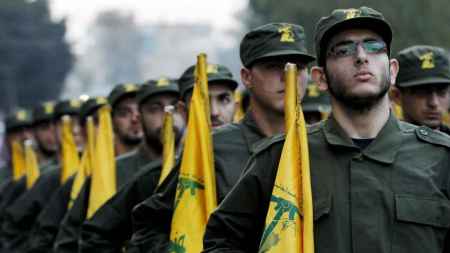
This week we learned that Lebanon is no more. It has been replaced by Hezbollah’s Iranian colony in Lebanon.

Two weeks ago, Saudi Arabia listed Hezbollah as a terrorist organization and canceled its $3 billion aid package to the Lebanese military. The Gulf Cooperation Council followed suit. Rather than support the move by his sponsors and allies, Saad Hariri, the head of the anti-Hezbollah March 14 movement, flew to Syria to meet with Hezbollah leaders.

Saudi Arabia’s decision to end its support for the Lebanese Armed Forces (LAF) doesn’t mean that Saudi Arabia is making peace with Hezbollah.

It means that the Saudis are no longer willing to maintain the fiction that with enough support, the LAF will one day challenge Hezbollah’s effective control of Lebanon.

Hezbollah and its bosses in Tehran don’t seem too upset about the Sunnis’ decision to acknowledge that Hezbollah is a terrorist group. And they are right not to care. In essence, the Saudi move is simply an admission that they have won. Lebanon is theirs.

Hezbollah’s isn’t the dominant force in Lebanon because it has better weapons than the LAF.

Unlike the LAF, Hezbollah has no air force. It has no armored divisions.

Hezbollah is able to dominate Lebanon because unlike the LAF and the March 14 movement, Hezbollah is willing to destroy Lebanon if doing so advances its strategic goals.

This has all been fairly clear for more than a decade. But it took the war in Syria to force the truth above the surface.

And now that it is clear to everyone that Lebanon has ceased to exist and that the country we once knew is now an Iranian colony, the time has come for Israel to reckon with the lessons of its own misadventures in our neighbor to the north.

Since the mid-1990s, Israel has implemented three strategies in Lebanon and in Syria. All of them originated on the Left. All of them failed.

The first strategy was appeasement.

From the mid-1990s until the Syrian war began five years ago, Israel’s strategic framework for understanding Syria was appeasement. Initially, the notion was that Syria was our enemy because we control the Golan Heights. If we surrendered the Golan to Syria, we would have peace in exchange.

In the years leading up to the Syrian war, our leaders embraced the idea that Syria was the weakest link in the Iranian axis. If we gave the Golan Heights to Syria, they said, then the Assad regime would withdraw from the Iranian axis.

As it turned out, these positions had no basis in reality. Appeasement failed.

Then there was unconditional surrender – or disengagement. Then-prime minister Ehud Barak implemented this strategy when he removed IDF units from the security zone in south Lebanon in May 2000.

From the mid-1990s on, Yossi Beilin was the chief advocate of unconditional surrender in Lebanon. The logic of surrender was similar to that of appeasement – of which he was also a principal architect and advocate.

The surrender strategy in Lebanon was based on the idea that Hezbollah fought the IDF in south Lebanon because the IDF was in south Lebanon. If the IDF were to leave south Lebanon, Hezbollah was have no reason to fight us anymore.

So if we were gone, Beilin argued, Hezbollah would stop fighting, ditch terrorism and Iran, and become a normal Lebanese political party.

The war with Hezbollah in 2006 destroyed the credibility of the surrender strategy. But the Left didn’t despair. They simply replaced surrender with the strategy of internationalization.

The internationalization strategy forms the basis of UN Security Council Resolution 1701 that set the cease-fire terms at the end of the war with Hezbollah. IDF soldiers, who left Lebanon without victory, were replaced by UN forces from UNIFIL. UNIFIL forces were supposed to block Hezbollah’s reassertion of control over south Lebanon by facilitating the LAF’s takeover of the border with Israel. While UNIFIL was protecting the LAF on the ground, the LAF itself would be empowered by a massive infusion of US and Saudi aid.

Saudi Arabia’s belated recognition that Hezbollah dominates the LAF, and controls Lebanon, makes clear that like appeasement and disengagement, internationalization is an utter failure.

To a certain degree, Israel’s serial strategic blundering did have one ameliorative effect. Through them, Hezbollah has become so powerful that it now poses a threat to the great powers. So Russia in Syria now needs to curb it. So, too, it is so powerful that Iran is loath to waste it on a war with Israel that it will lose when it is fighting to win the war in Syria.

For now then, Hezbollah is not an immediate threat. This is the case despite Hezbollah chief Hassan Nasrallah’s recent threat to bomb Haifa’s chemical depots and cause a fireball with the cataclysmic effect of a nuclear bomb.

But that doesn’t mean that the lessons of our repeated strategic mistakes in Syria and Lebanon shouldn’t be applied today. They should be applied, but toward another, more immediate foe – the Palestinians, toward whom Israel has applied the same failed policies, one after another, with similarly destructive outcomes.

After the first intifada ground to a halt in 1991, Israel adopted the Left’s first strategy. The so-called peace process with the PLO, which began in 1993, was an attempt to implement a strategy of appeasement. We would gradually give the PLO Judea, Samaria, Gaza and Jerusalem.

In return, the PLO would stop supporting terrorism and live at peace with Israel.

The failure of the appeasement strategy led to the second intifada. The second intifada caused Israel to adopt the Left’s second strategy – unconditional surrender.

Israel’s 2005 disengagement from Gaza failed just as spectacularly as its 2000 disengagement from Lebanon. Not only did it lead to the Hamas takeover of Gaza in 2007. It led to the further radicalization of the PLO and Palestinian society as a whole. The latter became convinced that terrorism worked. The former became convinced that the only way to garner public support was by being just as anti-Israel as Hamas.

Today, the center-left parties – the Zionist Union and Yesh Atid – cling to the failed strategy of disengagement. The far Left, together with the Arab political parties, have already moved on to the internationalization strategy. In the Palestinian context, the goal of the internationalization strategy is the collapse of Israeli sovereignty.

This strategy was in evidence this week with Peace Now head Yariv Oppenheimer’s outrageous claim Wednesday that in killing the terrorists who were in the midst of murdering innocents in Petah Tikva and Tel Aviv, civilians and security forces carried out summary executions.

Oppenheimer, whose group is funded by foreign governments, did not make the claim because he wished to build his support base at home. He demonized his fellow citizens to advance his paymasters’ goal of delegitimizing Israeli sovereignty by among other things, criminalizing Israel’s right to self-defense.

The goal of this delegitimization campaign is to make it impossible for Israel to function as a coherent nation-state and for it instead to become a powerless ward of Europe and the US.

In the face of both the rise in Palestinian terrorism and of efforts by Oppenheimer and his comrades to use Palestinian terrorism as a means to cause the collapse of Israeli sovereignty, the government is at a loss. Its paralysis doesn’t owe to a lack of will. Rather it is the consequence of the government’s difficulty in contending with the coalition of powerful domestic and foreign actors that together make it all but impossible for Prime Minister Binyamin Netanyahu and his ministers to abandon the Left’s failed strategies and embark on a new strategic course.

Perhaps the most poignant and infuriating expression of the government’s distress is its constant demand that PLO chief Mahmoud Abbas condemn Palestinian terrorism.

On seemingly a daily basis our leaders voice the demand that the man who heads a regime that indoctrinates its youth – including its young children – to murder Jews condemn his own actions.

Beyond being irrational, the demand is both defeatist and self-defeating. By demanding action from Abbas, we legitimize him and empower him. But so long as Israel refuses to abandon the appeasement strategy, and continues to accept that there is a peace process that can be resuscitated, the government will be unable to stop treating Abbas as legitimate and moderate.

So, too, so long as the Knesset fails to take serious, concerted action against the nonprofit groups funded by hostile foreign governments and foundations, the government will be unable to take effective action against the radical Left and its partners from the Joint (Arab) List that openly support both Palestinian terrorists and Hezbollah.

Just as Oppenheimer’s remarks weren’t directed toward the domestic audience, but to his European sponsors, so the Arab Knesset members who this week announced their opposition to Saudi Arabia’s decision to label Hezbollah a terrorist group, were directing their remarks toward their supporters – and Hezbollah’s sponsors – in Qatar.

While adopting in turn every failed strategy the Left could invent and recycle, for the past generation, Israel has avoided implementing the only strategy that has ever worked. That is the strategy of sovereignty – or, more broadly, of governing territories necessary for our defense.

From 1982 through 2000, Israel restrained Hezbollah and prevented it from taking over Lebanon by maintaining security control over the security zone in Lebanon. For 28 years, Israel prevented the Palestinians from becoming a terrorist society dedicated to the destruction of the people of Israel, by exerting security and civil authority over Judea, Samaria and Gaza through its military government and its civil administration.

And it worked. By fighting our enemies rather than empowering them, we weakened them.

The image of the first intifada that convinced us to legitimize the PLO was the teenager with a slingshot.

The image of the second intifada that convinced us to run away from Gaza was a bombedout bus.

So far, the image of the third intifada is a girl wielding scissors attempting to stab Jews. And we still haven’t figured out our response to her, although the Left would like us to run away or collapse.

It is time to let this image guide us though.

The girl with the scissors is not empowered. She is both dangerous and pathetic. She is both an enemy and a victim. You cannot destroy her. You can only punish her and then raise her up. In other words, you need to govern her.

Governing enemies is unpleasant. It brings no instant gratification. Instead it promises only thankless, Sisyphean efforts. In other words, governing your enemies is the price you pay to be free.

Terror slowdown as Israelis absorb first shock and gear up for the next round

October 14, 2015

Terror slowdown as Israelis absorb first shock and gear up for the next round, DEBKAfile, October 14, 2015

Central_Bus_Station_in_Jerusalem_14.10.15Anti-terror operations in Jerusalem

Israelis have absorbed the first shock of the wave of Palestinian terror unleashed in the last two weeks. The Palestinians are likely absorbing the package of tough penalties for terror and deterrents the Netanyahu government began putting together Tuesday night. Wednesday, Oct. 14, saw relative calm after the deadly violence reached a new peak Tuesday with the first Palestinian shooting attack on a Jerusalem bus – this time by adults.

The relative lull is expected to last only until the Palestinians and their Israeli Arab supporters take stock, before inevitably launching their next round of terror.

Meanwhile, Jerusalem saw “only” two stabbing attacks. In the first, a terrorist wearing army fatigues tried to stab a Border Guardsman at Nablus Gate in Jerusalem, and was shot and killed by policemen and visitors. Two hours later, another terrorist attacked a woman bus passenger at the city’s central station. A police special ops officer ran after him up and shot him dead.

One of the counter-terror measures that went into effect Wednesday morning was the Knesset Foreign Affairs and Security Committee’s approval of Emergency Order 8 authorizing the mobilization of an additional 600 Border Guards combatants from the reserves, over and above the 800 already called up.

DEBKAfile’s military experts note that the rapid processing of this new intake with equipment and operational orders will reduce the need to detach from their regular duties the 500 IDF soldiers allocated for manning the streets of Jerusalem.

That is all to the good, because managing police officers and soldiers in harness is bound to be problematic.

Israel is not the first country to inject military strength into its capital to fight terror. The British and French governments have been known to deploy paratroops and armed personnel carriers into the streets of London and Paris when they were beset by a rising level of terror. This deployment never lasted more than a few days – just enough to calm a terrified citizenry.

But Jerusalem is different. The state of security is such that soldiers once in place may face a long-term stay in the capital to contend with a long-running security threat.

Another difficulty is that the soldiers assigned to this mission have been pulled out of tank, artillery and engineering courses with no training for combating urban terror. Those who come from outside the city will furthermore need to familiarize themselves with a new environment and its rhythms.

The Jerusalem Police are special. They must cope with complex, demanding and multi-tasking challenges to the town’s security. More than one terror attack may take place at different parts of the city. Unlike ordinary soldiers, they are trained and have the experience to quickly spot and take action against a terrorist in ordinary clothes who may pop up suddenly from among a large crowd to sow death.

A seasoned police officer can judge when to cut the assailant down to save lives and when to arrest him.

But the IDF servicemen to be recruited for anti-terror duties in support of security forces are much younger than the average policeman – on average around nineteen years old. Their firearms and kits are designed for conventional warfare on the Golan in the north or the Gaza Strip in the south – not for securing civilian buses or heavy vehicular and pedestrian traffic in a crowded city center.

That Border Guards reservists were hastily mobilized at the same time as the military units indicates that someone had the sense to understand that the presence of IDF troops on the streets and buses was good psychological first aid for people jumping at shadows for fear of a lone terrorist, but hardly an effective operational arm for the war on terror.

Why now?

October 12, 2015

Why now? Israel Hayom, Judith Bergman, October 12, 2015

Among the several unanswered questions about the ongoing terror onslaught against Israelis, one of the most pertinent is why this is happening now, entirely unprovoked and spurred on by the incendiary incitement of Palestinian Authority President Mahmoud Abbas and his ilk.

Relying on brainwashed youths to perpetrate the terrorist attacks, Abbas instigated the onslaught now simply because he had to do something to take back the world stage.

Abbas and his flock are used to the spotlight on the international stage, but in recent months, the influx of migrants and refugees from the Middle East and North Africa into Europe has completely swallowed the headlines there, and Abbas saw himself being marginalized to the point of being entirely forgotten. Abbas had to do something, so he unleashed terror on Israel, and he knew from years of experience with the so-called international community, as represented by the U.N., the Obama administration and the international media that he would be able to do so with impunity. In fact, the choreography of his little dance with the international media is so well-rehearsed and so perfectly tuned to his interests that Abbas knows he can rely on it to achieve his goals.

And that is exactly what is happening now. Abbas knew he could count on the major news outlets not to question why the terrorism is occurring now. Instead, the ragged old cliches of the mysteriously self-igniting “cycle of violence” are being re-hashed, while Israel’s legitimate self-defense against the stabbings, shootings and rock throwings is being increasingly reported in negative terms.

True to form, Israel has been unable thus far to counter the media dynamic that has worked so well for Abbas in the past. It appeared to be too little and too late when Deputy Foreign Minister Tzipi Hotovely several days ago announced a media campaign, as well as the formation of an inter-ministerial team to prepare a series of informational videos on the subject of Palestinian incitement. We have had 20 years to prepare those videos. Do not wait for the international media to hold its breath.

In his next move, truly Orwellian in a way that only the old Soviet cadres could have trumped, Abbas is now asking the U.N. Human Rights Council to quickly dispatch a commission of inquiry to the region “to investigate all crimes perpetrated by Israel against our people.” While this may sound outlandish to right-minded people, Abbas is not entirely wrong in his calculations that the U.N. will respond to his exhortations. Abbas knows that the dance he performs for the benefit of the U.N. is usually met with applause, and is just as predictably choreographed as his dance with the international media. All is possible when it comes to the U.N., particularly the U.N. Human Rights Council, where Saudi Arabia is currently chairing the U.N. Human Rights Council panel in charge of appointing independent experts.

While Abbas is craving the attention, other Middle East players are stoking the fire to deflect attention from them. Iran’s puppet, Hamas, has not only been sending rockets into Israel, aiming to add tension to the situation, but has also been sending Gazans to riot on the border with Israel, knowing fully well that confrontations and the likelihood of Palestinian casualties will further stoke the headlines against Israel and deflect attention from Iran’s own murky business in the region. The brutal murder of the Henkin couple in front of their four children was committed by a Hamas terror cell.

The Soviet-style inversion of truth and lies and the incredible willingness of the mainstream media not only to play along with it, but to exacerbate it with uncritical and bigoted reporting, is of course maddening. The answer, however, is not bitter resignation or long deliberations over future strategies, but to present the truth, as it happens and when it happens. The truth needs to be put out there, because the media create its own truth according to a pre-rehearsed template that we have seen ad nauseam, most damagingly during Operation Protective Edge in the summer of 2014. The time to speak out is now.