Archive for the ‘Israel’ category

Throw Islamists out or give them the “peace” of Islam they seek

January 10, 2015

Throw Islamists out or give them the “peace” of Islam they seek, Dan Miller’s Blog, January 10, 2015

(The opinions expressed in this article are mine, and do not necessarily reflect those of Warsclerotic or any of its other editors. — DM)

They should welcome Islamic peace, including eternal bliss with their beautiful virgins.

Many more await you

Many more of us await you. Hurry up!

The attacks by adherents to the Religion of “Peace” in France were not the first, nor will they be the last, by “extremists” who live for nothing better than to demonstrate Islamic tolerance by slaughtering blasphemers who mock their “holy prophet” or otherwise insult Islam. We are told, ad nauseam, that they and their cohorts — like the Islamic State — are not Islamic: the Fort Hood massacre was mere “workplace violence” that had nothing to do with Islam, the Islamic Republic of Iran can be trusted with nukes and Saudi Arabia is our friend.

No matter that Major Hasan, a Muslim, yelled “Allah Akbar” while he slaughtered thirteen people and injured thirty more, and now wants to be a citizen of the Islamic State. No matter that there were many more Islamic jihad attacks during 2014.

nypd-hatchet-jms-2023_7dd2624c5c872567bf59b371d60e9444-794x600

No matter that Iran has long sought (and may already have) nukes and the death of Israel. Is Iran non-Islamic? No matter that our “ally,” Saudi Arabia, just applied to Raif Badaw the first fifty of the one thousand lashes imposed as part of his punishment for blasphemy for calling for religious freedom and thereby insulting Islam. Is Saudi Arabia non-Islamic?

A lengthy article from the Catholic World Report dated January 8, 2015 is titled “What is Islam?” Revisited, by Father James V. Schall, S.J. He

taught political philosophy at Georgetown University for many years until recently retiring. He is the author of numerous books and countless essays on philosophy, theology, education, morality, and other topics. His most recent book is Reasonable Pleasures: The Strange Coherences of Catholicism (Ignatius Press).

After highlighting only a few of many Islamic murders* and persecutions of Christians, Father Schall contends, quite persuasively, that

In the Quran, there is no mention of the Trinity or Incarnation, except explicitly to deny them. It is blasphemy to believe in them, as well as to question anything connected with the Quran. Allah intends the whole world to observe the Sharia, the Muslim legal code, observing its letter. As soon as it can, this law is imposed in every Muslim land or smaller community, even in democratic states. No distinction between Islam and the state exists. Everyone is born a Muslim. If he is not a Muslim, it is because his parents or teachers corrupted him. It is impossible to convert from Islam to another religion, without grave, often lethal, consequences. [Emphasis added.]

It is not against the Quran to use violence to spread or enforce Islamic law. Those Islam conquers, even from its beginnings till now, it either kills, forces conversion, or imposes second class citizenship. The Islamic State, now so much to the forefront, seems to have the correct understanding of what the Quran intends and advocates. The voluntarist presuppositions of Islamic thought allow what is prohibited to become good. Allah is not bound by the distinction of good and evil. Whatever Allah wills, even if it was the opposite yesterday, is good. [Emphasis added.]

. . . . To most Muslims, the West is itself morally decadent. Many think that the decline of population in the West and the high birth rate of Muslims almost guarantee eventual control of many European countries by Islam. And no talk exists of “converting” Islam by Christians. With Fatima, Reagan and  John Paul II could talk of ending the evil empire of the Soviet Union, but the question, “What is Islam?”, is seldom addressed. There is certainly nothing said about really changing Islam, only containing it. [Emphasis added.]

[I]t is possible that Islam will follow its pattern in the early modern world. Much of its recent success has depended on its good fortune with oil and other resources. But no Islamic state or group has been the origin of any properly modern inventions or developments. There seems to be theological reasons for this, as there is no reason to investigate a world that is based solely on the arbitrary will of Allah. Islam lacks any real notion of a natural law or a basis in reason that would allow it to criticize itself and recognize the extremism of many of its own practices, and especially the killings. [Emphasis added.]

. . . .

[N]o real basis for the much-appealed-to “dialogue” with Islam seems to exist. Almost all the initiative for dialogue has come from the Christian side. Islam has no central authority. It has no fixed theology except what is in the Quran and attempts to defend its consistency.

Dialogue is looked upon as a sign of weakness unless it can be used to further Muslim goals. In the case of the killings that Coren lists, if they are looked upon as legitimate means, there is no need either to talk about them or to cease their presumed effectiveness in spreading Islam. One cannot really appeal to the Quran to cease these killings, as there is ample reason within it to justify them as worthy means. Had it not been possible to justify these means in the Quran, the whole history of Islam would be different. Indeed, it probably never would have expanded at all. [Emphasis added.]

Somebody should tell the Pope, who wants more interfaith dialogue.

Speaking at the start of a three-day trip to Turkey, Pope Francis said “terrorist violence” showed no sign of abating in Turkey’s southern neighbours, where Islamist insurgents had declared a caliphate and persecuted Shiite Muslims, Christians and others who do not share their ultra-radical brand of Sunni Islam.

“It is licit, while always respecting international law, to stop an unjust aggressor,” the leader of the world’s 1.2 billion Roman Catholics said in reference to the Islamic State militants after a meeting with Turkish president Tayyip Erdogan.

What is required is a concerted commitment on the part of all … [to] enable resources to be directed, not to weaponry, but to the other noble battles worthy of man: the fight against hunger and sickness.”[Emphasis added.]

Sure. That should take care of the problem. In an Islamic pig’s eye.

Perhaps Obama and His devotees should read the article, even though it would not likely change their minds even a whit.

Why do many refer to Islamic terrorists as “extremists” or “radicals?” Aren’t they actually Islamists, dedicated to defending their religion against “slander?”

Are Christians and Jews, who actually practice their religions, “extremists” or “radicals?” Aren’t they practicing Christians and Jews? Or are Christians, in the eyes of Obama and His supporters, just bitter little people who cling to their religion or their guns and hate those who are not like them? (That’s a good characterization of Islamists.)

You go into these small towns in Pennsylvania and, like a lot of small towns in the Midwest, the jobs have been gone now for 25 years and nothing’s replaced them. And they fell through the Clinton administration, and the Bush administration, and each successive administration has said that somehow these communities are gonna regenerate and they have not.

And it’s not surprising then they get bitter, they cling to guns or religion or antipathy toward people who aren’t like them or anti-immigrant sentiment or anti-trade sentiment as a way to explain their frustrations. [Emphasis added.]

How about the Jews of Israel, who would much rather live in peace with their neighbors than kill or be killed by them? Are they also “bitter clingers?” They cling to life, so they must be, in Obama’s view.

An article at Breitbart titled ‘Don’t denigrate Islam’ says Obama after calling Americans ‘butter clingers’ notes,

President Obama finally remarked upon the attacks on our consulate in Libya — but was silent on the attack on our embassy in Egypt — and stressed the importance of not disrespecting religion in his speech, something he’s newly concerned about:

While the United States rejects efforts to denigrate the religious beliefs of others, we must all unequivocally oppose the kind of senseless violence that took the lives of these public servants.

It’s interesting that only when Islamists riot is Obama concerned for religious respect. I assume that Islam is excluded from what is called his ‘war on religion’ as he’s never before shown any concern for the denigration of other faiths. He’s demonstrated none of what he asks these past several years. Who could forget his demeaning characterization of middle America as ‘bitter clingers?’ [Emphasis added.”

obama-with-muslims-450x300

Remember Obama’s October 3, 2014 Eid greeting to Muslims around the world?

As our Muslim neighbors and friends gather for Eid celebrations, Muslim Americans are among the millions of pilgrims joining one of the world’s largest and most diverse gatherings.  Hajj brings together Muslims from around the world – Sunni and Shiite – to share in reverent prayer, side by side.  It serves as a reminder that no matter one’s tribe or sect, race or religion, gender or age, we are equals in humanity.

On Eid, Muslims continue the tradition of donating to the poor and joining efforts with other faith communities in providing assistance to those suffering from hunger, sickness, oppression, and conflict.  Their service is a powerful example of the shared roots of the world’s Abrahamic faiths and how our communities can come together in shared peace, with dignity and a sense of justice. [Emphasis added.]

Is there such a thing as “moderate” Islam of the type to which Obama may have referred? After searching high and low and finding none, Daniel Greenfield finally found an example:

There is no moderate Islam in the mosques or in Mecca. You won’t find it in the Koran or the Hadiths. If you want to find moderate Islam, browse the newspaper editorials after a terrorist attack or take a course on Islamic religion taught by a Unitarian Sociologist wearing fake native jewelry.

You can’t find a moderate Islam in Saudi Arabia or Iran, but you can find it in countless network news specials, articles and books about the two homelands of their respective brands of Islam.

You won’t find the fabled land of moderate Muslims in the east. You won’t even find it in the west. Like all myths it exists in the imagination of those who tell the stories. You won’t find a moderate Islam in the Koran, but you will find it in countless Western books about Islam.

Moderate Islam isn’t what most Muslims believe. It’s what most liberals believe that Muslims believe. [Emphasis in original]

The new multicultural theology of the West is moderate Islam. Moderate Islam is the perfect religion for a secular age since it isn’t a religion at all. [Emphasis added.]

Take Islam, turn it inside out and you have moderate Islam. Take a Muslim who hasn’t been inside a mosque in a year, who can name the entire starting lineup of the San Diego Chargers, but can’t name Mohammed’s companions and you have a moderate Muslim. Or more accurately, a secular Muslim. [Emphasis added.]

Perhaps such secular Muslims are not “bitter clingers.”

Islam and the multicultural “blessings” of “shared peace, with dignity and a sense of justice” (from Obama’s Eid greeting) it brings are rampant in Europe. They could have been avoided but were not, on the apparent theories (a) that there is no evil in the world, (b) that all religions are equally evil, (c) that all religions are equally good and/or (d) that no other evil is even comparable in its insidiousness to Islamophobia.

Some in Europe are learning, but their principal leaders seem to be too dense, too devoted to their ideologies or both, to absorb the lessons of even recent history. French President Hollande decried “racism and anti-Semitism” and proclaimed that the Islamic attacks in France had “nothing to do with Islam.” Apparently, in his twisted view, “true” Islam rejects racism and “antisemitism.” This Islamic preacher must not be Islamic.

In similar vein, a Palestinian envoy to Iran recently “said that ‘Israel is a cancer’ that ‘will be destroyed.”

Islamists throughout the world are as antisemitic as they are anti-Christian and appear to be proud of it.

Here are five more short videos:


Appeasement (is that another name for multiculturalism?) is not a viable solution; it merely postpones evil until it become stronger and multitudes are slaughtered, unnecessarily. Unfortunately many of us, as well as many of our “leaders,” have yet to learn the lessons of history; hence appeasement continues to be the preferred, but most deadly, response to evil.

Meanwhile, Obama and all too many leading RINOs insist that massive immigration must continue in the United States and that amnesty for illegal immigrants already in the there is good. I have found no credible statistics suggesting the numbers of Islamists or other murderers among actual and potential illegal immigrants, but their numbers cannot rationally be assumed to be insignificant. Nor can it be assumed that the apparent hopes of our “leaders” that all will turn out just fine will be realized; it may all depend on their definitions of “just fine.” It can reasonably be assumed that the Obama Nation is galloping, and will continue to gallop, down a path similar to that trod by Europe and that the consequences will be comparable in lives and freedoms lost, to say nothing of the financial burdens incurred by Federal, State and local governments and, of course, their citizens.

Here are eighteen points adopted by the American Freedom Defense Initiative in April of 2013.

– AFDI denounces the crippling rules of engagement under which our soldiers are forced to labor. They should be given the freedom to defend themselves and protect their comrades.

— AFDI calls for profiling of Muslims at airports and in hiring in professions in which national security and public safety could be compromised.

— AFDI calls for immediate investigation into foreign mosque funding in the West and for new legislation making foreign funding of mosques in non-Muslim nations illegal.

— AFDI calls for surveillance of mosques and regular inspections of mosques in the U.S. and other non-Muslim nations to look for pro-violence materials. Any mosque advocating jihad or any aspects of Sharia that conflict with Constitutional freedoms and protections should be closed.

— AFDI calls for curriculum and Islam-related materials in textbooks and museums to describe the Islamic doctrine and history accurately, including its violent doctrines and 1,400-year war against unbelievers.

— AFDI calls for a halt of foreign aid to Islamic nations with Sharia-based constitutions and/or governments.

– AFDI denounces the use of Sharia law in any Western court or nation.

– AFDI advocates deportation hearings against non-citizens who promote jihad in our nations.

– AFDI calls for an immediate halt of immigration by Muslims into nations that do not currently have a Muslim majority population.

— AFDI calls for laws providing that anyone seeking citizenship in the United States should be asked if he or she supports Sharia law, and investigated for ties to pro-Sharia groups. If so, citizenship should not be granted.

– AFDI calls for the cancellation of citizenship or permanent residency status for anyone who leaves the country of his residence to travel for the purpose of engaging in jihad activity, and for the refusal of reentry into his country of residence after that jihad activity.

— AFDI calls careful investigation of Muslims resident in non-Muslim country who have obtained naturalized citizenship or permanent residency status, to ensure that that status was not obtained under false pretenses.

— AFDI calls for the designation of the following as grounds for immediate deportation: fomenting, plotting, financing, attempting or carrying out jihad attacks; encouraging or threatening or attempting to carry out the punishments Islamic law mandates for apostasy, adultery, blasphemy, fornication or theft; threatening or attempting or carrying out honor murders, forced marriage, underage marriage, female genital mutilation, or polygamy.

— AFDI calls for the U.S. and other free nations to have jihad, as it is traditionally understood in Islamic jurisprudence to involve warfare against and subjugation of non-Muslims, declared a crime against humanity at the U.N., or to withdraw from the U.N. and have its headquarters moved to a Muslim nation.

– AFDI calls for legislating making illegal the foreign funding of Islamic Studies departments and faculty positions in our universities.

– AFDI demands the repeal of U.N. resolution 16/18 and any other resolutions that might limit the freedom of speech.

– AFDI calls for all Muslim chaplains in prisons and the military to be thoroughly vetted, and dismissed if they have ties to any Islamic supremacist group, or if they advocate jihad.

– AFDI calls for the development of energy policies that will free us from dependence upon oil from Muslim countries.

Through SION, AFDI establishes a common American / European coalition of free people determined to stand for freedom and oppose the advance of Islamic law, Sharia. Islamic law is not simply a religious system, but a political system that encompasses every aspect of life; is authoritarian, discriminatory, and repressive; and contradicts Western laws and principles in numerous particulars. SION respects Muslims as fellow human beings and rejects Islamization as a comprehensive political, religious, cultural and social system of behavior and ideology.

AFDI and SION stand for:

— The freedom of speech – as opposed to Islamic prohibitions of “blasphemy” and “slander,” which are used effectively to quash honest discussion of jihad and Islamic supremacism;

— The freedom of conscience – as opposed to the Islamic death penalty for apostasy;

— The equality of rights of all people before the law – as opposed to Sharia’s institutionalized discrimination against women and non-Muslims.

Here’s a link to an essay by Allen West proposing much the same. It’s well worth reading.

That's racist

The Obama Nation won’t take any of the suggested steps, of course, and no European nation seems likely to; they are too preoccupied with fighting Islamophobia and pursuing the “blessings” of multiculturalism. However, it’s worth pushing hard for. After all, it’s more humane than giving Islamists the “peace” they claim to want, wholesale, and sending them to their virgins.

In the meantime, let’s load up on neat gifts and get ready for a merry Christmas.

_________________

*An exhaustive list of Christians slaughtered during November of 2014 is available in an article titled Christians Burned Alive, published on January 10, 2015 by the Gatestone Institute.

Can Charlie Hebdo’s Spirit Include Israel?

January 9, 2015

Can Charlie Hebdo’s Spirit Include Israel? Algemeiner, Noah Beck, January 9, 2015

parisians-300x167Grieving Parisians gathered to mourn the victims of the Charlie Hebdo shooting. Photo: Screenshot, Vice News.

[H]ad Palestinian gunmen similarly attacked Israel’s most important daily newspaper and then escaped, would the event inspire such constant coverage or international sympathy? Israel has suffered countless massacres followed by a suspenseful manhunt for the Islamist terrorists; in each of these incidents, the world hardly noticed until Israel forcefully responded and Palestinians died (prompting global condemnation of Israel).

The best response to the Charlie Hebdo attack is to redouble the free expression Islamists meant to stifle. Similarly, the best response to Islamist attacks on the only Mideast democracy, Israel, is to increase support for it.

****************

The Islamist massacre at Charlie Hebdo has understandably captured global attention because it was a barbaric attack on France and freedom of expression. In a moment of defiant moral clarity, “je suis Charlie” emerged as a popular phrase of solidarity with the victims. Hopefully such clarity persists and extends to those facing similar challenges every day in the Middle East.

Christians and other religious minorities have been beheaded by Islamists for years, but it wasn’t until US journalist James Foley was beheaded that the West cared. The Islamic State raped and slaughtered thousands of Yazidis — leaving the surviving refugees stranded on Mount Sinjar — before the West took notice. But one Islamist besieging a cafe in Sydney, killing two, dominated global coverage for the entire 16-hour incident.

Western leaders and media must realize that religious minorities in the Middle East are the canary in the coalmine for the West when it comes to Islamist threats. And Israel provides the clearest early warning of all, precisely because — despite Israel’s location in a region of Islamists and dictatorships — the Jewish state has free elections, freedom of speech, a vigorous political opposition and independent press, equal rights and protections for minorities and women (who are represented in all parts of civil, legal, political, artistic, and economic life), and a prosperous free market economy.

But had Palestinian gunmen similarly attacked Israel’s most important daily newspaper and then escaped, would the event inspire such constant coverage or international sympathy? Israel has suffered countless massacres followed by a suspenseful manhunt for the Islamist terrorists; in each of these incidents, the world hardly noticed until Israel forcefully responded and Palestinians died (prompting global condemnation of Israel).

However, when there is an attack in Europe, North America, or Australia, there is widespread grief, solidarity, and an acceptance of whatever policy reaction is chosen. But when Israel is targeted, there is almost always a call for “restraint,” as happened last November after fatal stabbings by Palestinian terrorists in Tel Aviv and the West Bank.

If two Palestinians entered a European or North American church and attacked worshipers with meat cleavers, killing five people, including priests, the outrage would be palpable in every politician and journalist’s voice. But when Israelis were victims of such an attack, Obama’s reaction was spineless and tone deaf. Did Obama condemn the Charlie Hebdo massacre by noting how many Muslims have died at the hands of French military forces operating in Africa and the Middle East? Of course not. Such moral equivocation would be unthinkable with any ally or Western country except Israel.

Similarly, would Secretary of State John Kerry ever suggest that the Islamic State is somehow motivated by French policies (whether banning Muslim headscarves at public schools or fighting Islamists in Mali)? Obviously not. Yet Kerry did just that sort of thing with Israel when he suggested that the Islamic State is driven by the Israeli-Palestinian conflict.

And the media’s anti-Israel bias is well known but became even more obvious when they couldn’t get a simple story about vehicular terrorism against Israelis correct. Compare how The Guardian writes accurate headlines when France or Canada suffers an Islamist car attack but not when Israel does.

Consider all of the justifiable news coverage and outrage over the 2013 Boston bombings, and imagine if one of those happened every week. Would anyone dare suggest that the US make peace with any Islamists demanding changes to US policy? And yet Israel had such bomb attacks almost every week of 2002 and was invariably asked to restrain itself and make concessions to the very people bombing them (as happened again last summer, when Hamas fired thousands of rockets at Israel).

As Israeli Prime Minister Netanyahu has ruefully observed, “There is a standard for dictatorships, there is a standard for democracies, and there is still a third standard for the democracy called Israel.”

Even when compared to Western democracies, what other country gives incredibly forgiving medical care to terrorists and agrees to treat the children of those working to destroy it? Israel is where a Hamas family member finds refuge when he is a gay convert to Christianity but this is yet another inconvenient fact for the mainstream media (as is the fact that some Israeli Arabs supported the IDF’s 2014 war against Hamas). Why report what contradicts the one-sided, anti-Israel narrative that the media and groups like Human Rights Watch have adopted? That narrative is only reinforced on college campuses (leftist college history professors openly supported Hamas last summer). Nevertheless, US funding of anti-Israel groups continues to aggravate the misinformation problem.

Israel is still the country that everyone loves to hate. So it’s the cheap way to please Muslim voters in Europe and oil producers in the Gulf. But what happens to Israel eventually comes to the West, because Israel is an extension of the West. And just as surrendering Czechoslovakia failed to appease the expansionist appetite and murderous rampage of Nazi totalitarianism, so too will feeding Israel to Islamist totalitarianism fail to appease that movement. In the end, there is no set of concessions — short of civilizational surrender — that the Islamists will accept.

Nevertheless, an EU court decided to remove Hamas from the European Union’s terror list, even though Hamas is responsible for scores of terrorist attacks that have murdered hundreds of Israelis, North Americans, and Europeans, and has a charter calling for the destruction of Israel. And Western European countries have voted for Palestinian statehood at the UN and in their parliaments, effectively rewarding Palestinian terrorism and intransigence. Europe supports the Palestinian Authority as if Hamas couldn’t overthrow it in the West Bank as easily as Hamas did in Gaza Strip in 2007. How can Europe not know that Hamas has designs on the West Bank and that any Israeli withdrawal from that territory will only facilitate such a takeover? And how can Europe believe that Israel could ever make peace with Hamas, which has launched three unprovoked wars on Israel in the last five years (in the decade since Israel withdrew from Gaza)?

Moreover, if lofty concerns about self-determination and human rights are the true motivation behind Europe’s vocal support for Palestinian independence (despite its undemocratic and violent record), why is Europe deafeningly quiet on Kurdish statehood? Given that six million Jews were annihilated by a genocide on European soil, Europe’s hypocrisy on Israel should embarrass the continent even more.

Worse still, Europe’s gestures of appeasement only encourage the Islamists. The best response to the Charlie Hebdo attack is to redouble the free expression Islamists meant to stifle. Similarly, the best response to Islamist attacks on the only Mideast democracy, Israel, is to increase support for it.

Terrorist Nation

January 9, 2015

Terrorist Nation, Truth Revolt via You Tube, Bill Whittle, January 9, 2014

(A brief history of “Palestine” and its friends.– DM)

We Are Charlie: Free Speech v. Self-Censorship

January 8, 2015

We Are Charlie: Free Speech v. Self-Censorship, Gatestone InstituteDouglas Murray, January 8, 2015

(How many of our “allies” against the (non-Islamic, we are told) Islamic State, et al, take comparable measures under their laws against those who “insult” Islam or its prophet? Why does Obama persist in advancing, directly or indirectly, the notion that “the future must not belong to those who slander the prophet of Islam?” Does the future instead belong to Islam and its prophet? Unless and until the evil that is Islam is recognized as an existential evil that threatens our lives as well as our freedoms, rather than ignored and/or tolerated, the future may well belong to it. How will the appeasers of all things Islamic react when Iran gets “the bomb” and uses it, not only on the “evil” they perceive as Israel, but on them as well?– DM)

— DM)

It is easier to denigrate the people warning us about a danger . . . than it is to address the danger they are warning us about. The same holds true for Europe’s policy toward Israel: It is easier to bully an open, pluralistic democracy than to take on all those terrorists and the countries that support them, and it is to do what is necessary to get them to stop.

***********************

Will we keep on blaming the victims? Perhaps the media assume that it is easier to force good people to keep quiet, or keep their own media offices from being attacked, than to than to tackle the problem of Islamic extremism head-on. It is easier to blame Geert Wilders, Ayaan Hirsi Ali, Lars Hedegaard, Suzanne Winters, Salman Rushdie or Charlie Hebdo — and even put some of them on trial — than to attack the attackers, who might even attack back!

The press and the media seem to prefer coerced self-censorship: It is your own fault if you get hurt: none of this would be happening to you if you had only kept your mouth shut. It is easier to denigrate the people warning us about a danger than it is to address the danger they are warning us about.

Do you think a country should change its policies because segments of one community will run into newspaper offices and gun people down if you don’t?

If those in positions of influence do not deal with this problem now, we will not like those who deal with it later.

Wednesday’s massacre at the Paris offices of the magazine Charlie Hebdo was not just a barbaric act of jihadist violence. It was also a test for the West and for the freedom of speech in the West. It is a test that we all have been failing.

Those of us who have proposed that all Western — and in particular European — news outlets should multilaterally publish the Charlie Hebdo cartoons have been greeted in return with a terrified and terrifyingly self-conscious silence. The papers and broadcasters do not want to do it. Last time they refused to republish the cartoons, from Denmark’s Jyllands Posten, they said it was because the cartoons were from a “right wing” newspaper. This time they refuse to republish cartoons from a “left-wing” newspaper. It does not matter what the politics are — it is not about the politics, it is about the cartoons. The sooner the press at least has the guts to admit this, the better.

But there has been much worse than the cringing surrender that this refusal denotes. Consider just a couple of even worse examples from the mainstream media’s coverage of these barbaric events.

In the United Kingdom on Wednesday, the Daily Telegraph newspaper was straight out of the starting blocks. Within a couple of hours of the attack, as the bodies of the slain journalists had not even been identified, The Telegraph chose to run a report headlined, “France faces rising tide of Islamophobia“!

The press was already blaming the victims. Commentators on CNN opined that Charlie Hebdohad been “provoking Muslims” for some time. Perhaps they assum that it is easier to force good people to keep quiet, or keep their own media offices from being attacked, than to tackle to the problem of Islamic extremism head-on. It is easier blame Geert Wilders, Ayaan Hirsi Ali, Lars Hedegaard, Suzanne Winters, Salman Rushdie or Charlie Hebdo — and even put some of them on trial — than to attack the attackers, who might even attack back!

The press and the media seem to prefer a policy of coerced self-censorship: It is your own fault if you get hurt; none of this would be happening to you if you had only kept your mouth shut. It is easier to denigrate the people warning us about a danger on than it is to address the danger they are warning us about. The same holds true for Europe’s policy toward Israel: It is easier to bully an open, pluralistic democracy than to take on all those terrorists and the countries that support them, and it is to do what is necessary to get them to stop. That is also what Germany’s Chancellor Angela Merkel broadcast in her New Year’s message when she warned against the anti-Islamic “Pegida” marches in Germany: she said it was the marchers against Islamic extremism that have “coldness” in their hearts, not the propagators of Islamic extremism.

And so the Telegraph’s first response piece listed the terrible events of the rise of right-wing and other forces — as though the attack were the response to radical Islam, rather than even suggest that it might be radical Islam itself that was at fault. Once again, the “backlash” against Muslims took precedence over the actual murder of non-Muslims at the hands of Muslim fanatics.

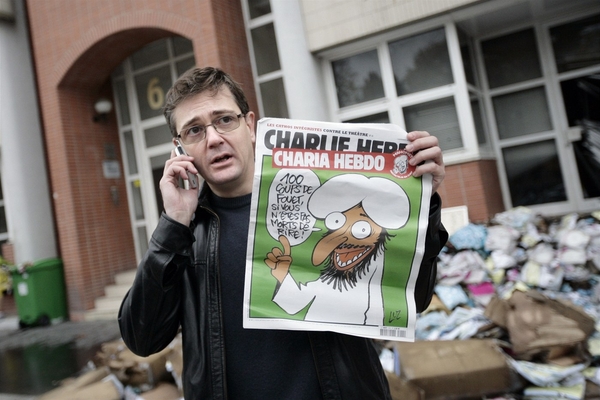
Over in New York, The New York Daily News is not a newspaper that tends to pull its punches. But consider what it did while the dead were still lying in the magazine’s offices. It ran a story which showed images of a Parisian policeman at the moment that the terrorists — shouting “Allahu Akhbar” [“Allah is Greater!”] — gunned him down in cold blood. It also showed an image from 2011 of Charlie Hebdo editor and publisher Stéphane Charbonnier standing outside his firebombed offices, the last time the magazine was attacked, holding up an edition of the paper with an image of Mohammed on the front. But the image was pixelated. Yes — that’s right. The paper was willing to show a man who had been alive that morning in the process of being murdered. But they chose not to publish a cartoon of a historical figure who died 1400 years ago.

871Stéphane Charbonnier, the editor and publisher of Charlie Hebdo, who was murdered yesterday along with many of his colleagues, is shown here in front of the magazine’s former offices, just after they were firebombed in November 2011.

This is the pass that the free press has come to, even in countries such as America, and even in places where there has been no attack on a newspaper’s offices for “insulting” somebody else’s prophet. And then again, in the tide-wave of bafflement, the same excuses have begun to get rolled out:

“Has this to do with France’s foreign policy?” interviewers and pundits have mused. In this particular instance, the answer to that question is “no more than usual.” But the follow-on bit of the answer should be even more easily said: “So what if it were?” Let us say that you do not like France’s foreign policy. Do you think that a country should change its policies because segments of one community will run into newspaper offices and gun people down if you don’t?

Another diversionary question has been, has been, “Does this have something to do with the situations in which many French Muslims find themselves – the banlieues (less-affluent French suburbs) and so forth?” The only answer I have so far managed to give to this question is that there are really people out there who may not like where they live but do not run into newspaper offices with Kalashnikov rifles and start firing off. Many people do not like their neighborhoods. It is not the point.

Other media have gone straight for the placatory option. Across in Britain, from left to right, the response was the same: “British Muslim leaders all come out in opposition to Paris magazine attack.” As though head-shaking constituted some great breakthrough. There seems to be a long-term pattern — no matter how often the attackers shout “Allahu Akbar!” or announce, as yesterday, that, “The Prophet [Mohammad] has been avenged” — of condemning terrorist attacks in general, accompanied by bewilderment at the thought that they that it could have anything do with “Islam.”

There are also great loud woolly condemnations of “terrorism,” but never accompanied by naming the men or groups involved. And will we keep on blaming the victims? This all bodes very ill.

Charlie Hebdo was — I hope I can still say “is” — a magazine that satirizes any and all ideas. Their targets have included not only Mohammed, but also Christians, Jews, the French novelist Michel Houellebecq and the Front National leader Marine le Pen. At this moment, mainstream media and politicians should be ensuring that they understand the concerns of their publics, rather than treating them as radioactive “racists” and “Islamophobes.” If those in positions of influence do not deal with this problem now, we will not like those who deal with it later.

IDF pulls units from locations bordering Gaza, ignoring rising Egyptian military and al Qaeda activity

January 4, 2015

IDF pulls units from locations bordering Gaza, ignoring rising Egyptian military and al Qaeda activity, DEBKAfile, January 4, 2015

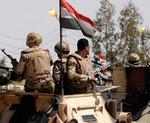
Egyptian_troops_SinaiEgyptian troops battling terrorists in Sinai

Israelis living in a string of villages and towns bordering on the Gaza Strip protested in vain against Defense Minister Moshe Ya’alon’s decision to withdraw the military presence keeping them safe, especially since the summer war on Gaza.

Four significant security events in the last 48 hours on both sides of the border added to their concerns:

Their government, at its weekly cabinet meeting in Jerusalem Sunday, Jan. 4, set up a committee to expedite the transfer of the bulk of IDF facilities from the center of the country to the south.

At the same time, Israelis living in the south within range of the Hamas-ruled Gaza Strip saw the soldiers heading out and were advised to put their trust in local paramilitary “preparedness squads” taking over from the army. The local population believes that they are not up to the job of safeguarding them from more terrorist aggression – by missile, tunnel or intrusion.

Also Sunday, Egypt began expanding the security buffer zone along the 14km of the Gaza-Sinai-Israel border, doubling its breadth from one half to a whole kilometer. The mostly Palestinian inhabitants of this zone were evacuated.

Saturday, Jan. 3, Egyptian troops raided three towns in northern Sinai: Rafah (which is part located in the Gaza Strip), El Arish and Sheikh Zuweid, killing 7 militants of Ansar Beit al-Maqdis, which last month pledged allegiance to the Islamic State of Iraq and the Levant, and jihad against Egypt and Israel.

A few hours later, an Egyptian army explosives expert was killed and several soldiers injured when a large bomb planted on a road in Sheikh Zuweid blew up when they tried to dismantle it.

Saturday night, the IDF commander of the Gaza Division, Brig. Gen. Itay Virov tried to calm dwellers across from the Gaza Strip, who were up in arms about the withdrawal of their military safety net. He addressed members of Kibbutz Nahal Oz with a rare burst of frankness. He spoke of military policy, but his words no doubt reflected the strategic thinking of Prime Minister Binyamin Netanyahu, Defense Minister Ya’alon, the outgoing Chief of Staff, Lt. Gen. Benny Gantz, and his successor next month Maj. Gen. Gadi Eisenkott.

The general may be commended for laying the truth about official policy on the table. However, instead of calming his audience, he bared evaluations that may give the rest of the country sleepless nights as well.

Here are the high points of his Nahal Oz lecture:

  • Israel can’t deter Gazan Palestinians from making war, because they have no other options. So deterrence in this case is an empty value.
  • Israel deliberately avoided going all the way to remove Hamas from power in Gaza in the summer war because salafist jihadists and al Qaeda would have moved in to replace them. It was deemed better to rely on Egypt to grapple with the terrorist threat, including al Qaeda, rather than the IDF.
  • Brig. Virov termed the last Gaza operation a campaign based on the doctrine of prevention rather than a war of aggression.
  • The political wing of Hamas looks after the population and wants peace and quiet, whereas the military wing lost no time in restoring the tunnels Israel blew up, conducting scores of test launches of rockets, and training hard for the next round of combat with Israel.
  • Israel therefore has no option but to prepare for a replay of Defense Edge with operations 2, 3 or even 4. Hamas must be degraded militarily each time – but not so far as to be rendered incapable of buttressing the Hamas regime.
  • The conclusion drawn from Gen. Virov’s lecture was that the Netanyahu government has provided Hamas-Gaza with a political and military guarantee of safety.

Like all policies, even those well thought out, this one too carries a price tag.

The general spoke of Hamas in terms of an independent entity whose operations and impact are confined to the Gaza Strip. He refrained from mentioning that, as recently as December, both of Hamas’ branches, the military and the political, jumped aboard the Iran-led Iraqi-Syrian-Hizballah alliance. This Palestinian group is now subject to Tehran’s policy decisions and directives. This omission from Israel’s policy calculations could be dangerous. Clearly, an undefeated Hamas remains a lasting menace.

Tehran’s decisions regarding Hamas may have an overarching effect, possibly touching on the moves directed by President Barack Obama. (See our Jan. 1 article on Obama’s New Year gift to Israel and the Middle East.).

Israel’s policy of relying on the Egyptian army to contain Al Qaeda’s Sinai network also comes at a price.

For now, Israel has quietly consented to large-scale Egyptian military strength entering Sinai: One and a half divisions, including fighter squadrons and tank battalions, have taken up positions, nullifying the key demilitarization clause of their 1979 peace treaty.

And that’s just for starters.

What Were Armed US Consulate Staff Doing near Adei Ad?

January 4, 2015

What Were Armed US Consulate Staff Doing near Adei Ad? Israel National News,  Ari Soffer, January 4, 2015

(Please see also ‘Deport US Consulate Staff Who Threatened Jews’ and related update links in my parenthetical comment there. This is a further update.– DM)

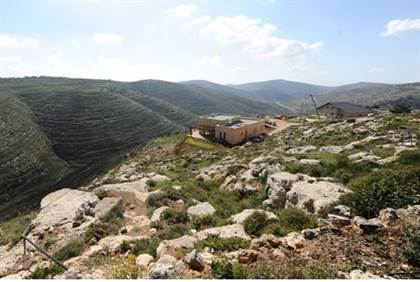
img557200Adei Ad is located in the Shiloh bloc north of JerusalemMendy Hechtman/Flash 90

Security source says ‘no question’ US Consulate staff pointed their weapons during Friday confrontation. Planned provocation or blunder?

****************

The full details of Friday’s clash between residents of the Jewish village of Adei Ad in Samaria and a delegation from the US Consulate in Jerusalem – which very nearly escalated into a fully-fledged shootout between the sides – are still emerging.

But those details which have emerged so far paint a worrying picture regarding the conduct of Consulate staff – who either willingly took part in a planned provocation, or else, in a staggering show of irresponsibility and unprofessionalism, recklessly blundered into a volatile and potentially deadly situation without the slightest idea of what they were doing.

Roughly two hours before the start of Shabbat, a group from the Consulate, escorted by armed (apparently American) guards and several residents of the Arab village of Turmus Ayya, descended en-masse and unannounced on an area within 50 meters of Adei Ad’s southwestern edge. Neither the IDF nor local residents were informed of the visit beforehand.

The Consulate delegation had apparently been “invited” by Palestinian Arabs from Turmus Ayya, many of whom hold US citizenship, ostensibly to see the site of what Arabs claim was an “attack” by Adei Ad residents on an olive orchard. That incident was originally reported Thursday night by the PA’s Bethlehem-based Maan News, which claimed that Jewish “settlers” had uprooted 5,000 olive trees – a rather incredible number to those familiar with quite what such a mammoth task would entail. Subsequent reports later revised the number down to 500, although no independent verification or evidence of the alleged damage has surfaced as yet.

Adei Ad residents, alarmed at the unannounced arrival of a large groupfrom a Palestinian village within meters of their community, rushed out to confront them. A brief verbal altercation ensued which quickly escalated, with youths from Adei Ad hurling rocks at the delegation, causing some damage to a Consulate vehicle.

At this point the accounts vary; witnesses from Adei Ad say Consulate staff drew their weapons – an M-16 and a handgun – following which residents called for backup from Adei Ad’s own security team. The Consulate, for its part, has denied any weapons were drawn at all. Either way, the American delegation beat a hasty retreat.

Notably, at no point during the confrontation was the IDF alerted by the Consulate team; only after leaving the scene did the Americans call the army, who quickly responded and launched an investigation, which is still ongoing.

img73901Damage to US Consulate vehicle Rabbis for Human Rights

Whatever the case, Jewish residents of Adei Ad and surrounding communities in the Shiloh bloc, located in the Binyamin region to the north of Jerusalem, are demanding answers. Angry residents say the incident was clearly a planned provocation, and have expressed their astonishment at the fact that an armed entourage from the US Consulate would arrive at a contested spot without coordinating their visit with the IDF in advance.

Indeed, regardless of the intent behind the visit, one Adei Ad resident pointed out that it was a clear recipe for disaster.

Apart from being the location of a protest in December 10th in which senior PA official Ziad Abu Ein died of a heart attack, the site of Friday’s confrontation is also the precise spot where a group of Palestinians attempted to infiltrate Adei Ad just two weeks ago.

“Two weeks ago at that exact place a horse was stolen,” said the resident, who asked to remain anonymous. “At 10 p.m. that same night dozens of Arabs from a nearby village came up to Adei Ad at the same spot, and residents came out to keep them away.”

Recounting Friday’s incident, he said residents had no idea Consulate staff were present at all. All they saw, he said, was “Arabs approaching, accompanied by what looked like a group of Europeans – we didn’t know who they were exactly. Often foreign anarchists join the Arabs in carrying out violence or provocation.”

Due to the tense relations between Jews and Arabs in the area, Arab farmers must contact the IDF before working land that abuts Adei Ad in order to avoid any confrontations. For their part, Adei Ad residents have long complained that they have been regularly targeted by Arab thieves and vandals.

“About two years ago a group of Arabs actually came right up to my house, right into the enter of Adei Ad, and stole a whole herd of sheep. In the past they’ve stolen horses, they stole a tractor, building equipment,” the resident recounted.

“The Arabs know that if they want to come that close to Adei Ad to do agricultural work they need to let the army know first to escort them. So any time Arabs approach without army supervision – particularly in that place where two weeks ago there was an incident – that’s a sign that they are coming to cause trouble… to attack or damage property,” he added.

He said locals had long given up on the prospect of receiving help from police, who he accused of totally avoiding their responsibilities and only agreeing to investigate Palestinian accusations against them.

“We receive no backing from the police,” he lamented. “Every time there is an incident of robbery by the Arabs the military refuses to deal with it because they don’t look at it as life-threatening; and the police… they tell us that it’s out of their jurisdiction.

“On the other hand, every time the Arabs steal something or cause trouble they then go and report us to the police – that’s how they work – so it’s always a one-sided investigation, because the police claim they have no jurisdiction over the Arab villages, only over us! No one has ever been charged, no property has ever been returned.”

He emphasized that despite the negative characterization of Adei Ad and surrounding Jewish communities in the area by some media outlets, residents are not interested in trouble and just want to get on with their daily lives in peace.

“We have much better things to do with our lives – we have our children and families, and we have jobs,” he said. “We don’t enjoy going out and having rock-throwing fights… no one seems to realize… but we feel we are under threat and that if we don’t do it the next step is a terrorist attack.”

Responding to American denials that Consulate staff pointed their guns at residents, a local security source said there was “no question” they hadindeed drawn their weapons, based on the individual testimony of numerous witnesses.

The security source, who also asked to remain anonymous, said one American “with ginger hair” was seen pointing his pistol at residents, who were unarmed, from inside of his car after rolling down the window. The other armed man then did the same with an M-16 rifle.

It was then that the situation threatened to get out of control.

“News spread that some people had approached the town with weapons, and they called for help,” prompting armed members of the local civilianfirst-response team to rush to the site, he recounted.

Luckily, “at that point it seems like the Americans thought it would be a good time to leave… and after that there was a brief confrontation between the Arabs and (Jewish) residents until the army arrived.”

He said that although an investigation was still ongoing, the conduct of the Consulate delegation was “suspicious.”

“Why didn’t they call anyone while the confrontation was going on?” he asked.

He also described the “strange” behavior of the Consulate guards when they were finally met by IDF forces and first-responders, describing them as looking sheepish and, unprompted, immediately insisting they hadn’t drawn their weapons.

Marc Prowisor, a resident of the nearby town of Shiloh, said the latest confrontation posed some “difficult questions.”

“Were members of the American Consulate knowingly taking part in a larger provocation – which is against the law?” asked Prowisor who, as Director of the One Israel Fund charity which helps secure local communities, is in regular contact with local security forces.

Islamic State Cell Detained by IDF in Hebron‏, Special Unit Established to Track Activities

January 4, 2015

Islamic State Cell Detained by IDF in Hebron‏, Special Unit Established to Track Activities, Algemeiner, Dave Bender, January 4, 2015

ISIS-militants-300x266

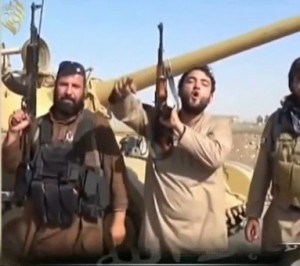
ISIS Militants. Photo: Screenshot, Fox News Sunday

“The IDF is deeply concerned with the fact that IS’s videos affect the Palestinian public which is very frustrated with its leadership; we are following this potential phenomenon closely,” the senior official said.

**************

The Israel Security Agency (Shin Bet) and the IDF in November busted what it revealed Sunday was a three-member Islamic State (IS) terror cell in Hebron, Israel’s Walla News reported, as the army said it has ratcheted up surveillance of the growing regional threat.

Officials said they suspected the trio of planning to carry out attacks in Israel including bombings against the IDF. One of the detainees admitted to planning to kill a local Jewish resident at nearby “Abraham’s Well.”

Ahmed Wadeh Salah Shehadeh, 22, Muhammad Fayyad Abd al-Qader, 21, and Ktzai Ibrahim Dib Maswadeh, 23 admitted to interrogators that they had established the military cell, constructed several bombs, and plotted to kill an Israeli soldier and use his weapons and uniform in a shooting attack.

The cell had actually set off to perpetrate the attack, but did not follow through for reasons not detailed in the report.

Their cases were transferred to court in recent days for indictment on offenses of membership and activity in an unlawful association, and other, unspecified charges.

Also on Sunday, Israel’s Channel 2 News reported that army intelligence recently dedicated a separate force to exclusively focus on IS activities, particularly across social media.

“We have made adjustments inside the IDF’s intelligence-collecting units because we came to the understanding that IS is breaking historic boundaries,” the commander of the “Hatzav,” intelligence unit said.

“Most of the information we gather comes from the internet; IS does not belong to a particular region in which we may have sources,” he noted.

Previously, the IDF primarily tracked IS via its division in charge of Syria. However, senior officials soon began to understand that the organization was a unique phenomena.

“Once we saw the first beheading videos we understood IS was something new, never seen before,” according to the unit commander.

“The IDF is deeply concerned with the fact that IS’s videos affect the Palestinian public which is very frustrated with its leadership; we are following this potential phenomenon closely,” the senior official said.

The recent arrests in Hebron apparently bear out that warning about the emerging threat.

‘Deport US Consulate Staff Who Threatened Jews’

January 3, 2015

‘Deport US Consulate Staff Who Threatened Jews’ Israel National News, Uzi Baruch and Tova Dvorin, January 3, 2014

(Huh? If the report is accurate, the U.S. consular officials went way too far. Cf this 2008 video:

Please see also American Security Guards Clash with Jews in Binyamin. Please see also this article, apparently (but not clearly) about what happened later when the consular officials got to the olive trees. — DM)

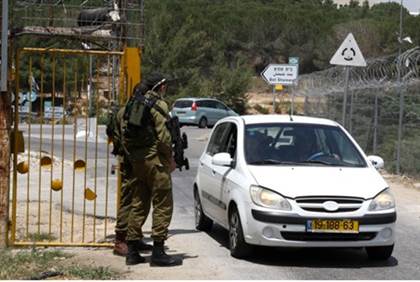
img510743Soldiers guard Samaria community (illustration) Flash 90

An argument erupted between the convoy and the community’s security guards, as all official visits to Jewish communities in Judea-Samaria must be coordinated with the IDF and police – a protocol the consulate allegedly ignored. At least one of the American guards allegedly pulled out his handgun and M-16 during the course of the argument.

*****************

Acting Head of the Samaria Regional Council, Yossi Dagan, has filed a request to the Minister of the Interior Gilad Erdan demanding he immediately expel the American Consulate staff members who entered the Samaria village of Adei Ad Friday and threatened Israeli Jews with an M-16. 

“As revealed through Wikileaks few years ago, these supposed ‘officials’ are intelligence agents and spies in every respect,” said Dagan, adding “this time, they went too far and participated in a provocative tour with the Palestinians in the southern Samaria and north Binyamin, without any coordination as required with the IDF and police, and pulled out a firearm and threatened Israeli civilians.”

“This is a crossing of all red lines,” he continued. “This event could have descended easily into bloodshed and only as a result of the settlers’ responsible behavior was [a scenario like that] prevented.”

“I request that in view of the serious and criminal conduct, that these [US] security guards and officials be deported,” he added.

“If Israeli intelligence officials and armed Israeli security guards stationed in one of the Israeli consulates in the United States had participated in a political provocation without any coordination with the police and threatened American citizens with weapons, at best, they would bearrested and deported, and the more likely case would be them spending several years in federal prison.”

It is unclear exactly what prompted the incident at Adei Ad Friday, but reports say that several consulate officials arrived with armed guards at the community to investigate Palestinian Arabs’ claims of vandalism of a nearby olive orchard.

An argument erupted between the convoy and the community’s security guards, as all official visits to Jewish communities in Judea-Samaria must be coordinated with the IDF and police – a protocol the consulate allegedly ignored. At least one of the American guards allegedly pulled out his handgun and M-16 during the course of the argument.

Muslim Leaders in Australia Say Banning Terrorism Will Ban Islam

January 2, 2015

Muslim Leaders in Australia Say Banning Terrorism Will Ban Islam, Front Page Magazine, Daniel Greenfield, January 1, 2015

864170-islamic-protest-in-sydney-e1347747005141-450x259

They have a point. It’s just usually one that they aren’t willing to admit in public. The Jihad comes from the Koran. Every act of Muslim violence that is religiously sanctioned, from terrorism to rape, is derived from the Koran. If you ban incitement to violence against non-Muslims, you criminalize the Koran.

A Muslim cleric who preaches from certain passages of the Koran could be caught in the “broad” net of the government’s new anti-terror law, Islamic leaders have warned.

Grand Mufti of Australia Ibrahim Abu Mohammad and the Australian National Imams Council have called for the offence of “advocating terrorism” to be removed from the so-called Foreign Fighters Bill, currently before Parliament.

Islam and terrorism. The two are intertwined.

Quran (2:191-193) – “And kill them wherever you find them, and turn them out from where they have turned you out. And Al-Fitnah [disbelief] is worse than killing.”

Quran (8:12) – “I will cast terror into the hearts of those who disbelieve. Therefore strike off their heads and strike off every fingertip of them”

Quran (9:5) – “So when the sacred months have passed away, then slay the idolaters wherever you find them.”

You can’t ban terrorism without banning Islam.

In its submission, the Islamic Council of Victoria said the new law would incriminate Muslims who support “legitimate forms of armed struggle”, including resistance to the Assad regime in Syria and the Palestinian conflict with Israel.

So the argument is that they want to promote “good terrorism” against Jews and they don’t want to be sanctioned for it. Muslim settlers. Australia clearly needs more of them to create a tolerant society. A tolerant society which promotes the “legitimate” murder of Jews.

“Criminalising the act of ‘advocating terrorism’ adds another layer of complexity to this issue. The scope of what constitutes ‘advocating terrorism’ is unclear.”

It’s not that unclear, except to Muslims, who insist that killing terrorists is terrorism… but terrorism is legitimate.

The council identified what it says is a double standard in Muslims wanting to go to Syria and Iraq to provide aid having their passports cancelled “while ignoring the travel of Zionist Jews wishing to travel to Israel – a state which illegally occupies Palestinian territory with intention of fighting in a war against Gazans and has been accused of war crimes”.

#IllridewithyouallthewaytoISIS

But setting aside whatever views anyone may have on Israel, Aussies traveling to Israel to fight with the IDF are not going to go back to Sydney and kill people. The same can’t be said for Muslim settlers in Australia traveling to join terrorist groups.

It’s not a double standard. Australia is trying to prevent terror attacks on its own soil. Muslim leaders insist that banning terrorism will outlaw their legitimate right to kill Jews and promote the murder of non-Muslims for “legitimate” reasons.

A Sad State of Affairs: The Kerry Record

January 2, 2015

A Sad State of Affairs: The Kerry Record, World Affairs JournalJoshua Muravchik, November/December, 2014

(Kerry likely agrees with Obama as to his quite foreign foreign policies and, equally likely, we are stuck with both at least until Obama leaves the White House.

Kerry I'm an idiot

The most bothersome current aspects of Obama-Kerry foreign policies are the extent to which they trust Iran and how they deal with it and the P5+1 negotiating group. — DM)

John_Kerry_and_Benjamin_Netanyahu_July_2014 (1)

Although Kerry’s anti-American ideology has moderated to some degree from his fiery days as an antiwar leader, he has misrepresented but never repudiated his past. Especially consistent has been his inclination to see the best in America’s enemies, from Madame Binh to Comandante Ortega to Bashar Assad. Israelis were shocked this summer that Kerry came up with a plan molded by Turkey and Qatar to fit the interests of Hamas at their own expense. Had they known him and his record better, they might not have been.

***************

The Gaza war of July and August 2014 occasioned the sharpest frictions in memory between the United States and Israel, highlighted by a cease-fire proposal offered by Secretary of State John Kerry that Israel’s security cabinet rejected unanimously. Kerry’s plan envisioned a seven-day cease-fire, during which the parties would negotiate “arrangements” to meet each of Hamas’s demands about the free flow of people and goods into Gaza and the payment of salaries of Hamas’s tens of thousands of employees. As for Israel’s demands about destruction of tunnels and rockets and the demilitarization of Gaza, these were not mentioned at all, except in the add-on phrase that the talks would also “address all security issues.”

The document cited the important role to be played by “the United Nations, the Arab League, the European Union, the United States, Turkey, [and] Qatar.” Conspicuous by their absence from this list were Israel, Egypt, and the Palestinian Authority. These three had also not been invited to the Paris meetings where Kerry worked on his ideas with leaders of the countries and bodies mentioned.

Barak Ravid, diplomatic correspondent for the liberal Israeli newspaper Haaretz, wrote that the proposal “might as well have been penned by Khaled Meshal [head of Hamas]. It was everything Hamas could have hoped for.” The centrist Times of Israel’s characteristically circumspect editor, David Horovitz, branded Kerry’s initiative “a betrayal.” And left-leaning author Ari Shavit commented that “Kerry ruined everything. [He] put wind in the sails of Hamas’ political leader Khaled Meshal, allowed the Hamas extremists to overcome the Hamas moderates, and gave renewed life to the weakened regional alliance of the Muslim Brotherhood.”

Turkey and Qatar are the mainstays of that alliance and were chosen by Kerry as his principal interlocutors because they are Hamas’s main backers. This brought protests from the Palestinian Authority, led by President Mahmoud Abbas’s movement, Fatah, the secularist rival to Hamas. That group declared that “whoever wants Qatar and Turkey to represent them can emigrate and go live there. Our only legitimate representative is the PLO.”

The shock of Palestinian and Israeli leaders would have been less, however, if they had been more familiar with the record of John Kerry. Spurning America’s friends in pursuit of deals with their nemeses was perfectly in character for the secretary of state. The hallmark of his career has been to denigrate America itself, while supporting the claims of its enemies.

That career began in 1969, when, months after returning from a tour of duty in Vietnam, Kerry sought and received a military discharge so that he might run for Congress. His campaign as a peace candidate sputtered, but his authenticity as a Vietnam vet established him as a presence in the burgeoning antiwar movement. In May 1970, he traveled to Paris for an unpublicized meeting with Viet Cong representatives, and, perhaps at their suggestion, he joined up upon his return with Vietnam Veterans Against the War. VVAW was headed by Al Hubbard, a former Black Panther. Kerry was instantly given a top role, twinning with Hubbard as the public face of the organization.

At a VVAW protest in Washington, DC, in April 1971, Kerry joined other veterans in throwing away their military medals in front of news cameras. The entire demonstration was punctuated by Kerry’s appearance before the Senate Foreign Relations Committee, where he offered dramatic testimony about American atrocities in Vietnam based on accounts heard at a VVAW inquest a few months earlier. He spoke of veterans who said:

They had personally raped, cut off ears, cut off heads, taped wires from portable telephones to human genitals and turned up the power, cut off limbs, blown up bodies, randomly shot at civilians, razed villages . . . poisoned food stocks, and generally ravaged the countryside.

These acts, Kerry emphasized, “were not isolated incidents but crimes committed on a day-to-day basis with the full awareness of officers at all levels of command.”

When, at the behest of aghast senators, the Naval Criminal Investigative Service conducted a formal inquiry into the stories presented at the VVAW inquest, it reported that many of the VVAW witnesses cited by Kerry refused to cooperate, although promised immunity. Others were clearly crackpots, and several swore, and provided witness corroboration, that they had not participated at the inquest at all and had no idea who had appeared in their names. The entire exercise had been inspired and largely engineered by Mark Lane, whose book on the same subject earlier that year had been panned by New York Times columnist James Reston Jr. as “a hodgepodge of hearsay,” while that paper’s book reviewer, Neil Sheehan, who had reported from Vietnam and would soon break the Pentagon Papers, revealed that some of Lane’s “witnesses” had not served in Vietnam. (The political scientist Guenter Lewy documents these events in his 1978 book America in Vietnam.)

In August 1971, four months after his Senate appearance, Kerry made another trip to Paris, to meet with Madame Nguyen Thi Binh, foreign minister of the Viet Cong, this time in full view, for his first exercise in international diplomacy. He returned touting the “peace plan” of the Viet Cong, explaining: “If the United States were to set a date for withdrawal, the prisoners of war would be returned.” Although he frequently accused American leaders of lying, he took the Communist leaders’ statements at face value, asserting that their peace plan “negates very clearly the argument of the president [Nixon] that we have to maintain a presence in Vietnam to use as a negotiating [chip] for the return of those prisoners.”

Kerry’s dismissal of the statements of US leaders as lies and his credulity toward those of the Vietnamese Communists reflected a broader difference in attitude toward the two sides to the conflict. Ho Chi Minh, who had spent long years as a henchman of Stalin’s, serving the Comintern in several countries, was in Kerry’s admiring eyes “the George Washington of Vietnam” who aimed only “to install the same provisions into the government of Vietnam” that appeared in the American Constitution. America, in contrast, had itself strayed so far from those principles that it needed a “revolution” to restore them.

Kerry’s colleagues in VVAW undoubtedly shared this sentiment, and in November 1971, at a conference of its leadership in Kansas, the group considered just how far down the path of revolution it was willing to go. It debated, although ultimately rejected, a proposal to commence a campaign of terrorist violence and assassination of pro-war US senators. When he ran for president in 2004, Kerry denied he had been present at this conclave, but when FBI files secured by the Los Angeles Times under the Freedom of Information Act placed him there, he retracted that denial in favor of the statement that he had “no personal recollection” of it.

Is this plausible? Gerald Nicosia, author of a highly sympathetic history of the antiwar movement, reported, in May 2004, that “several people at the Kansas City meeting recently said to me or to mutual friends that they had been told by the Kerry campaign not to speak about those events without permission.” Why the urgency to cover up? And how would the campaign know who was there, that is, whose silence to seek, if Kerry had no recollection of the meeting? One of Nicosia’s interviewees, John Musgrave, said “he was asked by Kerry’s veterans coordinator to ‘refresh his memory’ after he told the press Kerry was in Kansas City. Not only is Musgrave outraged that ‘they were trying to make me look like a liar,’ but he also says ‘there’s no way Kerry could have forgotten that meeting—there was too much going on.’”

This puts it mildly: the event was memorably raucous, with debates over the proposals for violence and for napalming the national Christmas tree, furious factional fighting, the discovery of eavesdropping bugs in the building leading to a quick move to another location, and above all an angry showdown between Kerry and Hubbard over revelations that the latter had never been in Vietnam. This particular contretemps was punctuated by Hubbard’s dramatically pulling down his pants to show scars he claimed he sustained in Vietnam. The mayhem culminated in Kerry’s announcing his resignation from the group’s executive. And Kerry had “no personal recollection” of being there?

Although Kerry appeared as a speaker for VVAW for about a year following this resignation, he then faded from national view for a decade, climbing the ladder of local and state politics in Massachusetts before winning election to the US Senate in 1984. The Senate, he later said, “was the right place for me in terms of . . . my passions. The issue of war and peace was on the table again.” What put it on the table were the anti-communist policies of President Ronald Reagan, which Kerry deeply opposed. A year earlier, Reagan had ordered the invasion of Grenada, which Kerry scorned as “a bully’s show of force [that] only served to heighten world tensions and further strain brittle US-Soviet and North-South relations.”

In contrast, Kerry ran on a platform of the Nuclear Freeze, a popular movement opposing US plans to counterbalance a large Soviet nuclear buildup over the previous decade. Kerry made sure to score one hundred percent on a test of candidates’ positions presented by a group called Freeze Voter ’84, and he proposed to cut the defense budget by nearly twenty percent, including “cancellation of twenty-seven weapons systems” and “reductions in eighteen other[s],” according to the Boston Globe. He cited his own work with VVAW as a counterpoint: “We were criticized when we stood up on Vietnam. . . . But we’ve been borne out. We were correct. Sometimes you just have to stand and hold your ground.”

In the Senate, he secured a coveted seat on the Foreign Affairs Committee and turned his attention to the fraught issue of policy toward Central America, a small region that had assumed inordinate geopolitical importance by becoming one of the front lines in the Cold War. A Marxist-Leninist party, the Sandinista National Liberation Front, had seized power in Nicaragua and was aiding likeminded movements in El Salvador and other nearby states while the Reagan administration supported anti-Communist guerrillas inside Nicaragua, the so-called “Contras.”

Kerry lent his name to Medical Aid for El Salvador, which gave non-lethal aid to the Communist side in that civil war. On February 16, 1982, an Associated Press story quoted actor Ed Asner, leader of a Hollywood group that raised much of the funding for this project, as explaining that “medical supplies are to be purchased in Mexico and shipped clandestinely to the Democratic Revolutionary Front in El Salvador.” However, the issue of US aid to El Salvador’s anti-Communist government became overshadowed by debate about aid to the Nicaraguan “Contras.”

As the Senate neared a decisive vote, Kerry and Senator Tom Harkin undertook a dramatic maneuver to try to head off approval of the Reagan administration’s request for Contra funding. They flew to Managua, the Nicaraguan capital, for their own summit meeting with the country’s strongman, “Comandante” Daniel Ortega. The results resembled those of his 1971 meeting with Madame Binh. Ortega handed Kerry a “peace plan” according to which the US would first end all aid to the Contras, and the Sandinistas would then initiate a cease-fire and restore civil liberties. Kerry justified undercutting the US government in this way by faulting Reagan’s failure “to create a climate of trust” with the Sandinistas. He, in contrast, offered them trust in abundance, calling Ortega’s plan “a wonderful opening.” He took to the Senate floor to say, “Here, in writing, is a guarantee of the security interest of the United States.”

A year later, in 1986, in another Senate debate on Contra aid, Kerry voiced one of the odder claims about his Vietnam experience. Warning against the slippery slope of military involvement and against the duplicity of our own government, Kerry delivered a floor speech containing this assertion:

I remember Christmas of 1968, sitting on a gunboat in Cambodia. I remember what it was like to be shot at by Vietnamese and Khmer Rouge and Cambodians, and have the president of the United States telling the American people that I was not there; the troops were not in Cambodia. I have that memory which is seared—seared—in me.

The “seared” part was a nice touch, especially in view of the fact that the whole thing had not happened (although Kerry had been repeating the story since as early as 1979). In the course of Kerry’s 2004 presidential campaign, the Swift Boat Veterans for Truth, former crewmen on the type of vessel on which Kerry served who were angered by his antiwar activities, attacked this claim among other aspects of Kerry’s military history. In this case, however, unlike in response to some points raised by Kerry’s detractors, no shipmate of Kerry’s could be found to corroborate his version. Soon, his spokesmen began to hedge. One aide explained that Kerry’s boat had been “between” Vietnam and Cambodia. But the two countries are contiguous: there is no “between,” so another spokesman backed down further, explaining that Kerry had merely been “near” Cambodia.

Then, Douglas Brinkley, who authored a laudatory history of Kerry’s military service, issued another explanation, apparently at the behest of the campaign. On Christmas 1968, the moment of Kerry’s “seared” memory, he was fifty miles from Cambodia, said Brinkley, but his boat “went into Cambodia waters three or four times in January and February 1969.” Oddly, however, Brinkley’s book, which covered those two months in painstaking detail at a length of nearly one hundred pages, even to the extent of locating the sites of battles, made no mention of Kerry’s having crossed into Cambodia. And the campaign soon pulled the rug from under Brinkley by issuing a new claim, namely, that Kerry’s boat had “on one occasion crossed into Cambodia.” Three of Kerry’s shipmates, two of whom were supporting his campaign, categorically denied even this minimized claim.

In that, they are supported by no less a source than Kerry himself, in the form of a journal he kept while on duty. Substantial passages of it are reproduced in Brinkley’s book, and one of them reads:

The banks of the [Rach Giang Thanh River] whistled by as we churned out mile after mile at full speed. On my left were occasional open fields that allowed us a clear view into Cambodia. At some points, the border was only fifty yards away and it then would meander out to several hundred or even as much as a thousand yards away, always making one wonder what lay on the other side.

He was never to learn the answer because this diary entry was from his final mission.

Kerry was of course right to link Central America to Southeast Asia. They were both nodes in the Cold War, the epic struggle that defined international politics for forty years, including the first two decades of Kerry’s political engagement, from the time he returned from Vietnam in 1969 until the Berlin Wall came down in 1989. Whatever the rights and wrongs of America’s entry into Vietnam, or its actions in Central America or elsewhere, Kerry perverted the basic issue of the Cold War, always viewing America’s actions as bellicose and malign, while casting those of the Communists, like “George Washington” Ho Chi Minh, in the most favorable light.

To many, the Cold War’s benign denouement—the fall of the Wall and the USSR’s disappearance into the ash bin of history—vindicated Reagan’s approach, but Kerry appears to have entertained no second thoughts despite these outcomes. When it came to addressing post–Cold War issues, he remained reflexively averse to the exercise of American power. Kerry had lamented as “not proportional” Reagan’s 1986 bombing of Libyan dictator Muammar el-Qaddafi’s residence in response to a Libyan terror attack on US servicemen in Germany. The Middle East was also the scene of the first military showdown after the Cold War, when Saddam Hussein’s Iraq swallowed whole the neighboring state of Kuwait, in 1990. At the time, Kerry opposed the Bush administration’s request for authorization of military action, saying that those “of the Vietnam generation . . . come to this debate with a measure of distrust [and] a resolve . . . not [to be] misled again.” He concluded his Senate speech by reading a passage from an antiwar novel by the American Communist Dalton Trumbo.

With the Cold War’s end, and America’s demonstration of will and strength in driving Hussein’s forces from Kuwait, the defining issue of the 1990s became the wars of Yugoslavia’s dissolution. Here, the prime issue was whether or not to lift an international arms embargo that rendered Bosnia’s Muslims naked before their predators, the well-armed Serbs. As public opinion reacted to news accounts of the grisly results of this imbalance, the Senate voted to lift the embargo, over the objections of Kerry, who helped to lead the opposition.

With the terrorist attacks of September 11, 2001, the American public was awakened from its post–Cold War indifference toward foreign affairs. A fierce patriotism burst forth, and with it a determination to take down those who had attacked us. Thus, preparing for a 2004 presidential bid, Kerry moved to reconfigure his image. The antiwar veteran was suddenly replaced by the military hero, and the Democratic nominating convention was replete with uniforms and military gestures, highlighted by Kerry’s sharp salute to the assemblage while uttering the words, “reporting for duty.” Already, his rejected service medals had miraculously reappeared mounted and framed on his Senate office wall. Asked how that was possible, as he had been photographed throwing them away, Kerry explained that the medals he tossed were not his own but actually belonged to another veteran.

The dramatic reincarnation did not quite come off, as Kerry was dogged by Vietnam veterans, led by fellow Swift Boat crewmen, still furious at how he had blackened their names. And the awkwardness of his transformation was symbolized by his much-ridiculed explanation of his stance on funding the 2003 US invasion of Iraq: “I actually did vote for the $87 billion before I voted against it.”

In his later years in the Senate, Kerry made the issue of Syria his own. He took several trips to Damascus where, according to a June 2011 account in the Wall Street Journal, he “established something approaching a friendship with [Syrian dictator Bashar] Assad.” When Barack Obama came to office, he made Kerry his point man in efforts to improve US-Syrian relations. Kerry put his endorsement on diplomatic proposals he received in Damascus, including an offer by Assad to engineer a Palestinian unity government embracing Fatah and Hamas. The benefits to the US, not to mention Israel, of such unity were not self-evident, but in any event, talks between the two Palestinian factions were already under way, mediated by Egypt, which was closer to Fatah. Why it would be advantageous to switch the sponsorship to Syria, the ally of Hamas, was hard to grasp. Nonetheless, Kerry saw in Assad’s proposal the prospect of “a major step forward in terms of how you reignite discussions for the two-state solution . . . . Syria indicated to me a willingness to be helpful in that respect.” In all, as the Journal put it, “Kerry . . . became . . . Assad’s champion in the US, urging lawmakers and policymakers to embrace the Syrian leader as a partner in stabilizing the Mideast.”

In sum, although Kerry’s anti-American ideology has moderated to some degree from his fiery days as an antiwar leader, he has misrepresented but never repudiated his past. Especially consistent has been his inclination to see the best in America’s enemies, from Madame Binh to Comandante Ortega to Bashar Assad. Israelis were shocked this summer that Kerry came up with a plan molded by Turkey and Qatar to fit the interests of Hamas at their own expense. Had they known him and his record better, they might not have been.