Archive for the ‘Islamic State’ category

Is it a ‘war’? An ‘armed conflict’? Why words matter in the U.S. fight vs. the Islamic State.

October 8, 2014

Is it a ‘war’? An ‘armed conflict’? Why words matter in the U.S. fight vs. the Islamic State, Washington PostKaren DeYoung, October 7, 2014

(The teachings of “international law” are amorphous; meanings depend largely on who interprets it and why. See also  Humpty Dumpty: “”When I use a word,” Humpty Dumpty said, in rather a scornful tone, “it means just what I choose it to mean—neither more nor less.” “The question is,” said Alice, “whether you can make words mean so many different things.”  “The question is,” said Humpty Dumpty, “which is to be master—that’s all.” — DM)

When is a war not a war? Does it matter, when a bomb is dropped or a missile launched, whether it’s called “counterterrorism,” or “armed conflict,” or “hostilities”?

Actually, it does — especially to a president who has said he wants to keep American military action within the bounds of U.S. and international law, and to administration officials who have spent countless hours in recent weeks parsing the language used to describe operations in Syria.

It matters to the American people, who have said in surveys that they favor airstrikes against Islamic State militants in both Syria and Iraq but aren’t much interested in fighting another Middle East ground war. It also matters to Congress, which has not authorized a war since World War II but may decide to approve this specific “use of military force.”

For civilians on the ground, the likelihood of being hit by a U.S. airstrike may be different under President Obama’s narrow guidelines for non-war counterterrorism than under broader international rules governing “armed conflict.” And European allies, several of which have joined U.S. air operations in Iraq, remain uncertain of the international legal justification for military action in Syria.

The administration’s definition of what it is doing has continued to evolve in recent weeks. As government lawyers struggle to provide the president with maximum flexibility under both domestic and international law, the results at times have seemed both inconsistent and confusing.

When Obama announced on Sept. 10 that he had authorized offensive U.S. military action, he emphasized the potential threat the Islamic State posed to the U.S. homeland and said his objective was to “degrade and ultimately destroy” the group. Neither the president nor White House briefers who provided additional context for his remarks mentioned a request by the government of Iraq to conduct airstrikes in Syria.

Yet that request is now cited as a key international legal underpinning for the strikes that began on Sept. 22. It is not clear when it was initially made. On Sept. 23, U.S. Ambassador to the United Nations Samantha Power referred to an Iraqi letter sent to the U.N. secretary general three days earlier reporting an appeal to the United States to “lead international efforts to strike ISIL sites and military strongholds in Syria in order to end the continuing attacks on Iraq.”

Power cited the U.N. Charter’s recognition of the legitimacy of using force for both individual and collective self-defense. She did not mention the objective of destroying the Islamic State, also known as ISIL and ISIS.

The day after Obama’s nationwide address, CNN asked Secretary of State John F. Kerry whether the United States was at war with the Islamic State. That was the “wrong terminology,” Kerry said. “What we are doing is engaging in a very significant counterterrorism operation.”

Three days later, on CBS’s “Face the Nation,” Kerry called such semantic debates “a waste of time.” But, he said, “If people need a place to land . . . yes, we’re at war with ISIL.”

Obama, who has said in the past that the United States is “at war with al-Qaeda,” seemed to disagree when asked the war question about the Islamic State on CBS’s “60 Minutes” on Sept. 28.

“This is not America against ISIL,” he said. “This is America leading the international community to assist a country [Iraq] with whom we have a security partnership with, to make sure that they are able to take care of their business.”

When reporters asked the Pentagon press secretary, Rear Adm. John F. Kirby, on Tuesday whether the U.S. military was “at war with ISIL,” his response was succinct. “Yes, yes,” Kirby said.

Administration lawyers, seeking outside advice, have discussed the Iraq and Syria operations with a number of former officials. “We have encouraged them . . . to clarify publicly their legal theories under both domestic and international law,” said a participant in some of those closed-door discussions who would only discuss a private meeting on the condition of anonymity.

‘Armed conflict’ vs. ‘war’

International law, which uses the words “armed conflict” instead of “war,” applies whether states are fighting each other or against “non-state actors,” such as terrorist groups, although terrorists by definition do not follow the rules.

The law recognizes the possibility of civilian casualties. But governments cannot intentionally target civilians, and any action putting civilians at risk must be proportionate to the importance of the military objective.

In guidelines for lethal counterterrorism action he outlined last year, Obama imposed the narrower standard of “near certainty” that there would be no civilian casualties. But “that was then and this is now,” said John B. Bellinger III, State Department legal counsel in the George W. Bush administration. “I mean that seriously. When they were coming up with all those rules a year ago, they thought the terrorist threat was heading in one direction. Now it seems to be a completely different direction.”

Amid reports of civilian casualties from U.S. strikes in Syria — which the Pentagon said it had not confirmed — administration officials said the “near certainty” standard applied only “outside areas of active hostilities,” based on “among other things, the scope and intensity of the fighting,” said a senior administration official who spoke on the condition of anonymity about legal conclusions.

“We consider Iraq and Syria to be ‘areas of active hostilities,’ based on what we are seeing on the ground right now,” the official said. “This is not the same as a determination that an armed conflict is taking place in the country at issue.” Nevertheless, the official said, the administration has chosen to comply with laws applicable to armed conflict where possible civilian casualties are concerned.

But “in international law, there is only one concept — an armed conflict, or not,” said one former senior administration official who spoke on the condition of anonymity to candidly describe the administration’s quandary. The United States, the former official said, now recognizes something in between — a new category of “a hot battlefield, or an area of active hostilities.”

The administration has also said its actions are a legal response to the threat because Syria is “unwilling or unable” to fight the Islamic State itself. Naz Modirzadeh, founding director of the Harvard Law School Program on International Law and Armed Conflict, called that concept an example of “folk international law.”

Established law, she wrote Thursday on the Lawfare blog, includes no such distinction for violations of sovereignty.

The role of Congress

Under the Vietnam-era War Powers Resolution, the president must notify Congress whenever he sends U.S. forces into “hostilities” and must withdraw them after 60 days unless lawmakers agree.

Obama observed the requirement when launching U.S. military operations in Libya in the spring of 2011 but then adopted what critics called an elastic definition in deciding that the situation did not constitute “hostilities” that put U.S. military personnel at risk, and thus was not subject to the deadline.

In Iraq and Syria, Obama sent the notifications but has said he does not need congressional approval, because U.S. actions are separately justified by the president’s constitutional authority as commander in chief and the 2001 Authorization for Use of Military Force (AUMF) against al-Qaeda and its associates.

Last year, Obama proposed narrowing, and ultimately repealing, the al-Qaeda measure as outdated in an era in which that organization’s core leadership had been “decimated” and new, independent terrorist threats were emerging. Although he pledged to consult Congress on new authorizations for new threats, and some legislation was proposed, nothing had happened by the time the Islamic State took over vast territory in both Syria and Iraq.

The Islamic State and al-Qaeda have mutually and publicly rejected any association with each other. But the administration has said the once-rejected AUMF is valid, because the Islamic State is rooted in an al-Qaeda-linked group born in Iraq a decade ago.

Col. Ralph Peters: Massacre Looms in Kobane Thanks to Obama Cowardice

October 7, 2014

Col. Ralph Peters: Massacre Looms in Kobane Thanks to Obama Cowardice, You Tube, October 6, 2014

(Don’t worry. They are just Kurds and our ally Turkey does not like them. — DM)


Who Does Turkey Support?

October 7, 2014

Who Does Turkey Support? Gatestone InstituteBurak Bekdil, October 7, 2014

(Oh well.

— DM)

In short, to finish off jihadists, Washington will now work with the man who until recently funded and reinforced these same jihadists, and is proud of his love affairs with Hamas and the Muslim Brotherhood. Hamas’s overseas command center happens to be based in Turkey. Good luck.

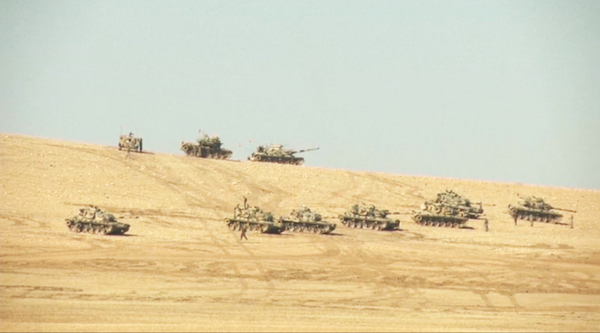
Turkish soldiers in tanks are lined up along Turkey’s border with Iraq, “observing” ISIS troops close in on the Syrian Kurdish town of Kobani, in what appears an approaching massacre.

In pragmatic Islamist thinking, one does not properly become a “martyr” if he gets killed by an army other than Israel’s.

As of this writing, on the Turkey-Syria border, CNN correspondent Phil Black hourly beams pictures of the Syrian Kurdish city of Kobani, with a black ISIS flag atop a building in the eastern part of the city, as Turkish soldiers in tanks lined up along the Turkish border “observe” ISIS troops close in for the approaching massacre.

Washington is expecting Ankara wholeheartedly to fight the rougher boys of the Islamist camp to which it belongs? Good luck.

*****************

Last week, U.S. Vice President Joe Biden had to zigzag between the truth that accidentally spilled out of him and Washington’s pragmatism. In a speech at Harvard’s Kennedy School of Government, Biden said: “[Turkish] President (Recep Tayyip) Erdogan, he is an old friend, said you were right, we let too many people through, now we are trying to seal the border.”

The “people,” however, whom Erdogan said Ankara had “let through” were the jihadists whom Turkey had supported with arms and money, and who have now become an international nightmare.

In other words, the U.S. vice president was publicly saying that the Turkish president had confessed to supporting terrorists.

Then Erdogan threatened: “If he [Biden] really said that, he would become history for me.” Finally, a White House statement announced: “The vice president apologized for any implication that Turkey or other allies and partners in the region had intentionally supplied and facilitated the growth of ISIL or other extremists in Syria.”

Erdogan has never hidden that he is ideologically a next of kin to the Muslim Brotherhood and Hamas. Hamas’s overseas command center happens to be based in Turkey. Erdogan has been Hamas’s staunchest (non-Hamas) cheerleader in the last decade, and the Brotherhood’s key regional ally. Press reports say that Turkey has recently welcomed in the Brotherhood’s top brass, who were expelled on Sept. 13 from their five-million-star hotels in Qatar. Ankara has not denied that it is offering a safe haven to the leaders of the Islamist organization.

In short, to finish off the jihadists who have captured large swathes of land in Iraq and Syria, Washington will now work with the man who until recently funded and reinforced these same jihadists (and their various offspring) and is proud of his love affairs with Hamas and the Brotherhood. More ironically, a U.S.-led coalition of nations including Arab states recently killed one of Erdogan’s heroes when the coalition forces struck an ISIS camp in Syria.

733Turkish tanks near the border with Syria, October 2014

When, in 2010, a Turkish-led flotilla that included the ship Mavi Marmara sailed towards Gaza to “break Israel’s siege” of the Hamas-controlled land, Erdogan greeted everyone on board as “heroes.” And when the Israel Defense Forces [IDF] raided the Mavi Marmara and killed nine Turks aboard, Erdogan greeted the Turks as “martyrs.”

Since then, Erdogan has vehemently denied any Turkish governmental support for the Mavi Marmara. He claims he was merely objecting to “Israel’s unjust oppression of the Palestinians.”

But, he insists, no governmental involvement at all.

About a fortnight after the incident, the foreign press in Turkey received a package from the Press and Information General Directorate, a government office reporting to Erdogan. The envelope did not contain a letter, or an explanatory note. Instead, its only content was a DVD, the cover of which showed a photomontage of an Israeli soldier pointing a rifle at a vessel. The vessel was encircled in David’s Star. The DVD cover read: “Moments of Horror.” The line below that read: “Interviews With the Injured Aboard the Aid for Gaza Ship / With English Subtitles.”

As the package arrived, the radio was still quoting Erdogan and his ministers as saying that the flotilla was entirely a nongovernmental initiative.

The Mavi Marmara incident was a wake-up call to Jerusalem, where diplomats had earlier been unrealistically optimistic about building a working relationship with Erdogan despite several other, earlier, warnings, including Erdogan’s famous tirade in Davos against (then) Israeli President Shimon Peres that, “You (Jews) know well how to kill!” The Turkish government has since frozen ambassadorial-level diplomatic relations between Turkey and Israel, and Erdogan has increased his calculated explosive rhetoric against Israel.

Erdogan’s principal argument was that a foreign military had killed Turkish nationals outside of Turkey; that those who were killed were martyrs; and that he would never allow a foreign military to harm one single Turkish citizen. Once again, he was wrong.

One of the lucky survivors of the Mavi Marmara was Yakup Bulent Alniak, an Islamist activist for the Turkish “humanitarian aid group” IHH which organized the Gaza-bound flotilla. IHH is listed by many Western countries as a terrorist organization; but its members, including Alniak, were simply heroes for Erdogan.

Alniak survived the IDF raid in 2010 but lost his life recently, at the end of September, when a U.S.-Arab coalition struck one of the largest ISIS camps in Syria. A coalition of foreign armies had killed a Turkish citizen whom the Turkish leader had declared a hero, but since then Erdogan has remained mute.

Will Erdogan downgrade Turkey’s diplomatic ties with the U.S. and five Muslim nations because their militaries killed a Turkish citizen outside of Turkish territory? No. Probably because, in the pragmatic Islamist thinking, one does not properly qualify as a “martyr” if he gets killed by an army (or armies) other than Israel’s.

As of this writing, on the Turkey-Syria border, CNN correspondent Phil Black hourly beams pictures of the Syrian Kurdish city of Kobani, with a black ISIS flag atop a building in the eastern part of the city, as Turkish soldiers in tanks lined up along the Turkish border “observe” ISIS troops close in for the approaching massacre.

Washington is expecting Ankara wholeheartedly to fight the rougher boys of the Islamist camp to which it belongs? Good luck.

Wiping out Israel would be easier from West Bank, Hamas official says

October 7, 2014

Wiping out Israel would be easier from West Bank, Hamas official says, Israel Hayom, Dr. Ronen Yitzhak, October 7, 2014

[Some] have said Hamas wants to create an Islamic emirate in Gaza,” says senior Hamas official Mahmoud al-Zahar tells Palestinian news outlet Al-Ayyam. “We won’t do that, but we will build an Islamic state in Palestine, all of Palestine.” Daniel Siryoti.

al-ZaharSenior Hamas official Mahmoud al-Zahar | Photo credit: Reuters

If Hamas manages to establish a foothold in the West Bank, it would be able to wipe out Israel and establish an Islamic state in its stead, senior Hamas official Mahmoud al-Zahar told Palestinian news outlet Al-Ayyam on Wednesday.

The interview, translated and posted by Palestinian Media Watch on Sunday, revealed Hamas’ previously covert intention of taking over the West Bank.

“[Some] have said Hamas wants to create an Islamic emirate in Gaza. We won’t do that, but we will build an Islamic state in Palestine, all of Palestine,” he said.

According to al-Zahar, if Hamas could “transfer what it has or just a small part of it to the West Bank, we [Hamas] would be able to settle the battle of the final promise with a speed that no one can imagine.”

Al-Zahar alluded to Hamas’ goal with a passage from the Quran: “Then when the final promise came, [We sent your enemies] … to enter the Temple in Jerusalem, as they entered it the first time, and to destroy what they had taken over with [total] destruction,” implying a war in which Israel is wiped out.

In August, it was released for publication that the Shin Bet security agency uncovered a Hamas plot to topple the Palestinian Authority in the West Bank. Hamas then claimed it was an Israeli ploy to disrupt the recently struck Palestinian unity deal.

Surrender in the War of Ideas

October 7, 2014

Surrender in the War of Ideas, Washington Free Beacon, October 7, 2014

(The U.S. Constitution, ignored by the Obama Administration whenever convenient, has very little to do with the matter. In any event, Obama has repeatedly claimed that the Islamic State is not Islamic, thus erroneously interpreting and supporting what he apparently considers to be Islamic religious doctrine. — DM)

Constitutional religious clause prevents Obama administration from countering Islamic State ideology.
Mideast IraqIslamic State militants pass a checkpoint bearing the group’s trademark black flag in the village of Maryam Begg in Kirkuk, 290 kilometers (180 miles) north of Baghdad, Iraq / AP

Obama stated in a speech on Sept. 10 that ISIL is “not Islamic” despite the group’s use of a fundamental Islamic precept of jihad, or holy war, in expanding its reach and imposing anti-democratic, hardline Islamic sharia law in areas it now controls.

Analysts and statements by the president and other administration spokesmen also indicate the administration may not clearly understand ISIL ideology, a required first step in developing a counter to it.

The Obama administration, under pressure from domestic Muslim advocacy organizations, has adopted a politically correct approach toward Islam and terrorism that has resulted in removing mentions of Islam from its current policies and programs. Instead, counterterrorism programs and policies are carried out under the less-specific rubric of “countering violent extremism” (CVE).

******************

The Obama administration is failing to wage ideological war against Islamic State of Iraq and the Levant (ISIL or ISIS) terrorists over fears that attacking its religious philosophy will violate the constitutional divide between church and state, according to an in-depth inquiry by the Washington Free Beacon.

Instead, the task of countering what President Obama called the “warped ideology” of ISIL is being farmed out to foreign states and Muslim communities that often share some of the same goals as the groups the administration calls violent extremists. This approach allows the administration to avoid identifying links between terrorism and Islam.

“While the government has tried to counter terrorist propaganda, it cannot directly address the warped religious interpretations of groups like ISIL because of the constitutional separation of church and state,” said Quintan Wiktorowicz, a former White House counterterrorism strategist for the Obama administration.

“U.S. officials are prohibited from engaging in debates about Islam, and as a result will need to rely on partners in the Muslim world for this part of the ideological struggle,” he said in an email interview.

Is ISIL Islamic?

Obama announced last month for the first time that his new counterterrorism strategy includes programs aimed at countering ISIL’s ideology. But a review of administration efforts shows very little—if anything—is being done to defeat or destroy the terrorist group’s religious ideology in a war of ideas.

At the United Nations on Sept. 24, the president asked the world body to come up with a plan over the next year designed to counter ISIL and al Qaeda’s ideology. He said ending religious wars through an ideological campaign in the Middle East will be “generational” and led by those who live in the region. No external power, the president insisted, can change “hearts and minds,” and as a result the United States would support others in the unspecified program of “counter extremist ideology.”

The administration’s so-called soft power approach to countering Islamist terrorism also appeared to have difficulty with clearly defining the religious doctrine behind the ideology of the resurgent al Qaeda offshoot now rampaging its way across Iraq and Syria.

Obama stated in a speech on Sept. 10 that ISIL is “not Islamic” despite the group’s use of a fundamental Islamic precept of jihad, or holy war, in expanding its reach and imposing anti-democratic, hardline Islamic sharia law in areas it now controls.

Analysts and statements by the president and other administration spokesmen also indicate the administration may not clearly understand ISIL ideology, a required first step in developing a counter to it.

Sebastian Gorka, a counterterrorism specialist, said the major problem for the administration in countering ISIL ideology is that most senior officials hold “post-modern” and “secular” views.

“As a result, they have almost no ability to understand the drivers of violent terrorists which are religious,” said Gorka, the Horner chairman of military theory at the Marine Corps University.

“When you don’t take religion seriously, it’s almost impossible for you to comprehend the philosophy of a suicide bomber, or someone who cuts off the heads of people in the name of jihad,” Gorka said.

Senior State Department officials have expressed the view that ideology plays no role in Islamist terror and is spawned instead by “local grievances” such as poverty or other economic and social privation, Gorka said. “That is utterly fallacious. If that were true, half of India would be terrorists,” he said.

The latest issue of the ISIL English-language magazine Dabiq reveals some of the group’s ideology, using references to Islamic practices of jihad and sharia law. “The Islamic State has long maintained an initiative that sees it waging jihad alongside a dawah [proselytizing campaign] that actively tends to the needs of its people,” the magazine said, adding that the group “fights to defend the Muslims, liberate their lands, and bring an end to tawaghit[the evil corrupt system].”

The magazine also sought to legitimize its mass executions, beheadings, and other atrocities as religiously justified responses to all opponents who refuse to submit to its ideology.

The president stated in his Sept. 10 speech announcing the anti-ISIL strategy that the group is “not Islamic” because it kills Muslims and innocents, something he asserted no religion condones, and a claim disputed by many experts on Islam.

“I’ve studied Islam and I did not find a very peaceful religion,” said a current senior U.S. counterterrorism specialist who disagrees with the administration’s approach of not directly addressing the Islamic nature of terrorism in counter-ideology efforts.

Wictorowicz, the former counterterrorism strategist, defended the State Department approach. “Having spoken to them at length about this, their position is that Islam, as a religion, is not the issue,” he said. “It is particular interpretations of Islam that are, in part, driving support for violence.”

Not fighting a war of ideas

The Obama administration, under pressure from domestic Muslim advocacy organizations, has adopted a politically correct approach toward Islam and terrorism that has resulted in removing mentions of Islam from its current policies and programs. Instead, counterterrorism programs and policies are carried out under the less-specific rubric of “countering violent extremism” (CVE).

Discussing Islam also has been placed off limits in many government and intelligence community counterterrorism programs as a result of pressure groups and Muslim advisers who insist such topics would violate constitutional separation of church and state issues.

That pressure has inhibited the U.S. government from addressing Islamist ideology in a significant way, critics say. Instead, the government has been forced to indirectly counter claims by terrorists, such as the false notion that the United States and the West are at war with Islam. It used public diplomacy programs and global “messaging” campaigns whose effectiveness has been questionable, to try and counter such claims.

James Glassman, former undersecretary of state for public diplomacy, said “absolutely,” that the administration is hampered by concerns over First Amendment constitutional religious issues from conducting aggressive counter-ideology efforts against groups such as al Qaeda and ISIL.

“There is reticence, especially at State, to criticize a noxious political ideology based on a religion,” said Glassman, now with the American Enterprise Institute.

Glassman said from the start, Obama has played down the war of ideas in the struggle against terrorism.

During the transition from the Bush to Obama administration, “I was told by the Obama operatives assigned to State that the term ‘war of ideas’ was not to be used,” Glassman said.

“The war of ideas had been my focus at State, but the administration had no interest in continuing the work we were doing,” he said. “Ideology provides the environment and the justification for the activities of al Qaeda and ISIL. It must be dealt with—just as we dealt with communism from 1945 to 1990. It’s a long battle.”

“The way around the problem is leadership,” Glassman said. “The president needs to make clear—as President Bush did immediately after 9/11—that the terrorists have constructed a phony ideology and that they are trying to take over an entire religion.”

Obama appears to be in the early stages of doing that “but it is very late in the game and he needs to devote resources, not just words, to the war of ideas,” Glassman said.

Looking for allies

Obama told the United Nations in a speech to the General Assembly Sept. 24 that “extremist ideology” has spread despite more than a decade of military and intelligence efforts to kill al Qaeda leaders. Groups such as ISIL and al Qaeda have “perverted one of the world’s great religions,” he said.

The world, and specifically “Muslim communities,” the president said, must now take steps to “explicitly, forcefully, and consistently reject the ideology of al Qaeda and ISIL.”

However, most of the Islamic countries, such as Saudi Arabia and Turkey, so far have not denounced the ISIL ideology and do not appear to be engaged in counter-ideological campaigns designed to discredit the motivating force behind the group.

The president elaborated in the U.N. speech on his administration’s approach to countering ISIL’s message, but not its Islamist ideology. He called for a “new compact” among civilized peoples to stop the “corruption of young minds by violent ideology.”

He called for cutting off funding and contesting terrorists’ use of social media to recruit and propagandize. Additionally, he called upon religious leaders of all faiths to join together and propagate the Christian concept of “do unto thy neighbor as you would have done unto you.”

“The ideology of ISIL or al Qaeda or Boko Haram will wilt and die if it is consistently exposed, confronted, and refuted in the light of day,” Obama said.

Wiktorowicz said he agrees more needs to be done. “Not enough resources are being devoted to the counter-ideology component of the administration’s strategy,” he said. “The long war is the war against violent ideologies and there hasn’t been the resource investment since 9/11. As a result of this and other factors, we’re seeing the reincarnation of al Qaeda as ISIL in Iraq and Syria.”

Wiktorowicz also said the administration is working with partners in the Muslim world “who can push back against the ideology.”

“The Salafi jihadists, however, have assassinated and intimidated Islamic scholars and others who have spoken out against violence, increasing the danger for the brave individuals involved in the counter-ideological struggle,” he said.

A hashtag campaign

To date, the allied campaign against ISIL is limited to U.S.-led missile, drone, and air strikes against vehicles and command posts of the group in territories it controls in Iraq and Syria. The bombing has slowed but not reversed territorial gains by the group.

The Obama strategy as outlined last month will involve four elements: Air strikes; support for local forces on the ground; counterterrorism efforts to prevent ISIL attacks; and humanitarian assistance to deal with the mass of refugees fleeing ISIL control.

Under the counterterrorism program, the president declared: “Working with our partners, we will redouble our efforts to cut off its funding; improve our intelligence; strengthen our defenses; counter its warped ideology; and stem the flow of foreign fighters into and out of the Middle East.”

Asked for specifics on what the White House is doing to counter ISIL ideology, White House and National Security Council spokesmen declined to discuss the matter. Ned Price, an NSC spokesman, provided a recent White House “fact sheet” that contains no reference to counter-ideology efforts.

Price said White House counterterrorism coordinator Lisa Monaco was “too busy” to discuss the counter-ideology campaign.

The fact sheet mentions various steps being taken, including the adoption of a “whole-of-government-approach,” cutting off funds to ISIL, and preventing foreigners from joining the group. An international group called the Global Counterterrorism Forum and other, non-government organizations also are said to be focusing on unspecified efforts to prevent foreign fighters from joining ISIL.

At the State Department, a State-led interagency Center for Strategic Counterterrorism Communications is engaged in “messaging” on social media and elsewhere. But those efforts appear limited to a counter-terror Twitter feed with few followers and limited reach.

A glimpse into the center’s activity was disclosed in February by a Saudi national who said he was paid to use Twitter in an online campaign to discredit Syrian jihadists.

The Saudi said he was unemployed when he was approached with an offer of money to attend a U.S. workshop with instructors who schooled him on the covert campaign against both al Qaeda and rival ISIL in Syria. The goal was to use Twitter to link both groups to Iran and its Lebanese surrogate, Hezbollah, he said.

The training included the use of hashtags designed to expand the reach of tweets to the largest number of people, particularly women. Instructions were relayed to the Saudi from a special iPhone application downloaded from the State Department web site.

State Department spokesmen ignored repeated emails seeking comment on the counter-ideology campaign, and the department’s public affairs office blocked the Free Beacon from speaking to officials in the center, without explanation.

Ideology as the center of gravity

At the Pentagon, spokesman Adm. John Kirby told reporters two days after the president’s speech that a “purely military solution” would not be enough to destroy ISIL.

“It also is going to take the ultimate destruction of their ideology,” Kirby said.

Ideological destruction, Kirby said, will be done through “good governance” in Iraq and in Syria. “And in a responsive political process so that the people that are falling sway to this radical ideology are no longer drawn to it,” he said. “That’s really the long-term answer.”

Because ISIL is not a formal military organization but a terrorist group, its center of gravity, in military terms, is the group’s ideology, Kirby said, adding that one non-military goal is delegitimizing ISIL while using U.S. and allied forces to destroy its ability to conduct attacks and control territory in the region.

Kirby did not elaborate and referred questions to the Central Command, the military command in charge of military operations against ISIL.

Lt. Col. Steven Wollman, a Central Command spokesman, said the command’s counter ideology efforts against ISIL are focused on exposing al Qaeda and ISIL “fallacies, particularly their incongruity with Islam and their penchant for violence, crime, and terror.”

“We demonstrate that despite their claims of creating a Caliphate for the good of the Muslim world their sole method is violence and only violence which has no positive short term or long term impact on the population,” Wollman said in a statement to the Free Beacon.

“To do so we highlight their total disregard for basic human needs and desires such as education, medical care, a free press, use of tobacco, and an expectation of freedom of choice.”

Additionally, the command said ISIL’s use of extreme violence such as beheadings, mass executions, and rape are “totally out of line of any Islamic teachings,” an aspect highlighted to local and regional audiences.

Terrorist groups also are using all forms of communication, including social media to recruit, fundraise, and spread violent ideology, Wollman said.

“It would be inappropriate to disclose all the specifics of what we are currently doing to counter the al Qaeda and ISIL fallacies campaign, but I can tell you that this command’s information operations activities are focused on foreign audiences across the region,” Wollman said, adding that message dissemination includes website, social media, print media, radio, and television in local languages.

“We align our efforts with other U.S. government agencies, and often are in direct support of U.S. ambassadors and with the knowledge of our partnered nations,” he said.

Additionally, “all of this is conducted by, with, and through our partner nations, often with our partner’s face on the message,” Wollman said.

“We also conduct training on how to combat extremist ideologies with our regional partner nations, as part of Foreign Internal Defense, Security Force Assistance, Building Partner Capacity, and other State Department-led activities.”

‘We won that battle already’

The administration’s point man for propaganda and so-called “soft power,” Rick Stengel, a former Time magazine reporter who is now undersecretary for public diplomacy, said in a recent speech that the administration is not trying to wage a war of ideas against ISIL.

“I would say that there is no battle of ideas with ISIL,” Stengel said. “ISIL is bereft of ideas, they’re bankrupt of ideas. It’s not an organization that is animated by ideas. It’s a criminal, savage, barbaric organization—I feel like we won that battle already.”

However, ISIL and its supporters are using social media effectively both to promote their Islamic-centered ideology and to recruit both foreign and regional fighters to their cause.

Twitter and Facebook have cracked down on ISIL supporters since the new counterterrorism campaign began last month. But the group has found ways to circumvent the crackdown, through innovative ways of creating new social media accounts.

In fact, the group has been so successful online that U.S. and foreign intelligence agencies have been able to use information publicly available on the Internet to track and identify ISIL targets for bombing. In response, ISIL supporters on Twitter and Facebook have launched a campaign to limit the information about the group online to undermine the bombing strikes.

ISIL also uses social media to link to recruitment videos and publications that, according to U.S. officials, have gained wide circulation.

All the videos and publications highlight the group’s adherence to Islamic principles.
Syrian Rebels Seize Russian Spy Station Near Israeli Border

October 7, 2014

Syrian Rebels Seize Russian Spy Station Near Israeli Border, Daily BeastJosh Rogin, October 7, 2014

Russian spy baseYouTube

The FSA found photos and lists of senior Russian intelligence and military officials who visited the facility, pictures of Russian personnel running the base, and maps showing the location of Israeli military units. Israeli news reports earlier this year said the Russian government had upgraded an advanced surveillance and intelligence gathering station in that area which could snoop on Israel, large parts of Jordan, and western Iraq, potentially to warn Iran in advance of an Israeli strike. Initial reports said documents from the facility suggested the Russian equipment was used to spy on Israel, Saudi Arabia and Jordan

***************

When the Free Syrian Army pushed Assad’s soldiers out of a town south of Damascus, the last thing they expected to find was a Russian spy post, a few miles from the Golan Heights.

Syrian rebels have overtaken a joint Russian-Syrian secret facility that they claim was a covert intelligence collection base. Opposition fighters say the post was used to snoop in on the communications of opposition groups — and perhaps even the nearby Israelis.Free Syrian Army officials, U.S. officials, and independent experts told The Daily Beast that the evidence of Russian involvement in the facility, just a few miles from Syria’s border with Israel, if verified, would show a level of Russian involvement in the Syrian civil war that was not previously known.

Free Syrian Army officials posted several videos on YouTube showing both the outside and the inside of the facility, which the FSA captured over the weekend during a battle near Al Harah, south of Damascus, next to the Golan Heights.

The videos and accompanying photos show insignias representing a branch of Syrian intelligence and the Russian Osnaz GRU radio electronic intelligence agency. The FSA found photos and lists of senior Russian intelligence and military officials who visited the facility, pictures of Russian personnel running the base, and maps showing the location of Israeli military units. Israeli news reports earlier this year said the Russian government had upgraded an advanced surveillance and intelligence gathering station in that area which could snoop on Israel, large parts of Jordan, and western Iraq, potentially to warn Iran in advance of an Israeli strike. Initial reports said documents from the facility suggested the Russian equipment was used to spy on Israel, Saudi Arabia and Jordan.

U.S. defense officials told The Daily Beast the photos of the Russian insignia first shared on blogs were legitimate. But that evidence, at the same time, may not necessarily mean the facility captured by the opposition was controlled by Russia’s military; it could just mean that Russians were working there, as advisors or partners to Syrian troops.

Mark Galeotti, an expert on Russia’s military and intelligence services at New York University said the term “Osnaz” on the insignia just meant a special unit of any kind. “It’s the kind of unit that the Russians would have had there because Syria is not the easiest area to operate in, they are an element of the radio-technical intelligence boys who do this.”

Firas Al Hawrani, the official spokesman for the FSA in southern Syria, told The Daily Beast Monday that FSA forces had seen about 15 Russian personnel operating in the Al Harah area before the FSA took the facility, but they left before the area fell out of regime control.

“The Russians who were at the Al Harah mountain, the regime took them to Damascus by plane two weeks ago,” he said.

Galeotti said these Russian advisers would specifically be working on intercepting radio communications of opposition figures. “They would be running an operation for detailed radio technical intelligence, we are not talking about intercepting telemetry and aircraft,” he said. “This is for eavesdropping on rebel radio communications. Cell communications are easier identified through other means. And this is also for identifying the presence of these units, which leads directly into targeting.”

Russia has been one of Syria’s most important allies for years. The port of Tartus is Russia’s only naval base on the Mediterranean, for example. And since the civil war in the country broke out in 2011, Russia has provided the country with advisers and billions of dollars’ worth of heavy military equipment. Galeotti said Syria’s security services are good as “traditional secret police skills,” such as interrogation and bugging telephones. The facility taken over by the Syrian opposition, however, suggests the Russians gave the regime “a whole new capability,” Galeotti said. “A lot of the Syrians are very clumsy. Some of the more precise attacks in the last year have suggested a new sophistication.”

Sen. John McCain told The Daily Beast Monday that the apparent Russian involvement in the base, which was also reportedly tasked with collecting signals intelligence and communications of rebel groups, showed of the depth of Moscow’s collusion with Damascus in the Syrian civil war.

“If what they’ve recovered is true and I have no reason to believe it’s not, it really is very indicative of the significant involvement of Russia in this conflict,” he said. “It shows significant coordination, establishment of a facility they could use for coordination and intelligence capabilities including intercepts. It’s a pretty sophisticated operation there that they’ve uncovered.”

Meanwhile, in Northern Syria, ISIS continued a major assault on the city of Kobani near the Turkish border as Kurdish and tribal forces tried to repel them. Dr. Najmaldin Karim, the governor of Kirkuk, was in Washington last week asking U.S. officials to expand the airstrikes in both Iraq and Syria and to increase aid to the Kurdish forces in both countries.

Not only is ISIS advancing in Northern Syria, they are digging in their positions in several Iraqi cities, including Mosul and Ramadi, Karim told The Daily Beast in an interview. Gen. John Allen, whom President Obama appointed to coordinate the international coalition against ISIS, said in Baghdad that the drive to free key cities like Mosul may take as long as a year.

“A lot of the front lines are basically frozen,” said Karim. “The worst thing would be for the United States, the region, and for Iraq, would be if the situation stays like this and festers. These guys have been there since June. If it goes further, it becomes a way of life. It will become like Somalia.”

Turkey, the Kurds and Iraq: The Prize and Peril of Kirkuk

October 7, 2014

Turkey, the Kurds and Iraq: The Prize and Peril of Kirkuk, Stratfor, Reva Bhalla, October 7, 2014

Turkey cannot be comfortable with the idea that Kirkuk is in the hands of the Iraqi Kurds unless Ankara is assured exclusive rights over that energy [oil] and the ability to extinguish any oil-fueled ambitions of Kurdish independence.

***************

In June 1919, aboard an Allied warship en route to Paris, sat Damat Ferid Pasha, the Grand Vizier of a crumbling Ottoman Empire. The elderly statesman, donning an iconic red fez and boasting an impeccably groomed mustache, held in his hands a memorandum that he was to present to the Allied powers at the Quai d’Orsay. The negotiations on postwar reparations started five months earlier, but the Ottoman delegation was prepared to make the most of its tardy invitation to the talks. As he journeyed across the Mediterranean that summer toward the French shore, Damat Ferid mentally rehearsed the list of demands he would make to the Allied powers during his last-ditch effort to hold the empire together.

He began with a message, not of reproach, but of inculpability: “Gentlemen, I should not be bold enough to come before this High Assembly if I thought that the Ottoman people had incurred any responsibility in the war that has ravaged Europe and Asia with fire and sword.” His speech was followed by an even more defiant memorandum, denouncing any attempt to redistribute Ottoman land to the Kurds, Greeks and Armenians, asserting: “In Asia, the Turkish lands are bounded on the south by the provinces of Mosul and Diyarbakir, as well as a part of Aleppo as far as the Mediterranean.” When Damat Ferid’s demands were presented in Paris, the Allies were in awe of the gall displayed by the Ottoman delegation. British Prime Minister David Lloyd George regarded the presentation as a “good joke,” while U.S. President Woodrow Wilson said he had never seen anything more “stupid.” They flatly rejected Damat Ferid’s apparently misguided appeal — declaring that the Turks were unfit to rule over other races, regardless of their common Muslim identity — and told him and his delegation to leave. The Western powers then proceeded, through their own bickering, to divide the post-Ottoman spoils.

Under far different circumstances today, Ankara is again boldly appealing to the West to follow its lead in shaping policy in Turkey’s volatile Muslim backyard. And again, Western powers are looking at Turkey with incredulity, waiting for Ankara to assume responsibility for the region by tackling the immediate threat of the Islamic State with whatever resources necessary, rather than pursuing a seemingly reckless strategy of toppling the Syrian government. Turkey’s behavior can be perplexing and frustrating to Western leaders, but the country’s combination of reticence in action and audacity in rhetoric can be traced back to many of the same issues that confronted Istanbul in 1919, beginning with the struggle over the territory of Mosul.

The Turkish Fight for Mosul

Under the Ottoman Empire, the Mosul vilayet stretched from Zakho in southeastern Anatolia down along the Tigris River through Dohuk, Arbil, Alqosh, Kirkuk, Tuz Khormato and Sulaimaniyah before butting up against the western slopes of the Zagros Mountains, which shape the border with Iran. This stretch of land, bridging the dry Arab steppes and the fertile mountain valleys in Iraqi Kurdistan, has been a locus of violence long before the Islamic State arrived. The area has been home to an evolving mix of Kurds, Arabs, Turkmen, Yazidis, Assyro-Chaldeans and Jews, while Turkish and Persian factions and the occasional Western power, whether operating under a flag or a corporate logo, continue to work in vain to eke out a demographic makeup that suits their interests.

mosul-vilayet

At the time of the British negotiation with the Ottomans over the fate of the Mosul region, British officers touring the area wrote extensively about the ubiquity of the Turkish language, noting that “Turkish is spoken all along the high road in all localities of any importance.” This fact formed part of Turkey’s argument that the land should remain under Turkish sovereignty. Even after the 1923 signing of the Treaty of Lausanne, in which Turkey renounced its rights to Ottoman lands, the Turkish government still held out a claim to the Mosul region, fearful that the Brits would use Kurdish separatism to further weaken the Turkish state. Invoking the popular Wilsonian principle of self-determination, the Turkish government asserted to the League of Nations that most of the Kurds and Arabs inhabiting the area preferred to be part of Turkey anyway. The British countered by asserting that their interviews with locals revealed a prevailing preference to become part of the new British-ruled Kingdom of Iraq.

The Turks, in no shape to bargain with London and mired in a deep internal debate over whether Turkey should forego these lands and focus instead on the benefits of a downsized republic, lost the argument and were forced to renounce their claims to the Mosul territory in 1925. As far as the Brits and the French were concerned, the largely Kurdish territory would serve as a vital buffer space to prevent the Turks from eventually extending their reach from Asia Minor to territories in Mesopotamia, Syria and Armenia. But the fear of Turkish expansion was not the only factor informing the European strategy to keep northern Iraq out of Turkish hands.

The Oil Factor

Since the days of Herodotus and Nebuchadnezzar, there have been stories of eternal flames arising from the earth of Baba Gurgur near the town of Kirkuk. German explorer and cartographer Carsten Niebuhr wrote in the 18th century: “A place called Baba Gurgur is above all remarkable because the earth is so hot that eggs and meat can be boiled here.” The flames were in fact produced by the natural gas and naphtha seeping through cracks in the rocks, betraying the vast quantities of crude oil lying beneath the surface. London wasted little time in calling on geologists from Venezuela, Mexico, Romania and Indochina to study the land and recommend sites for drilling. On Oct. 14, 1927, the fate of Kirkuk was sealed: A gusher rising 43 meters (around 140 feet) erupted from the earth, dousing the surrounding land with some 95,000 barrels of crude oil for 10 days before the well could be capped. With oil now part of the equation, the political situation in Kirkuk became all the more flammable.

The British mostly imported Sunni Arab tribesmen to work the oil fields, gradually reducing the Kurdish majority and weakening the influence of the Turkmen minority in the area. The Arabization project was given new energy when the Arab Baath Socialist Party came to power through a military coup in 1968. Arabic names were given to businesses, neighborhoods, schools and streets, while laws were adjusted to pressure Kurds to leave Kirkuk and transfer ownership of their homes and lands to Arabs. Eviction tactics turned ghastly in 1988 under Saddam Hussein’s Anfal campaign, during which chemical weapons were employed against the Kurdish population. The Iraqi government continued with heavy-handed tactics to Arabize the territory until the collapse of the Baathist regime in 2003. Naturally, revenge was a primary goal as Kurdish factions worked quickly to repopulate the region with Kurds and drive the Arabs out.

ethnic-composition-of-kirkuk

Even as Kirkuk, its oil-rich fields and a belt of disputed territories stretching between Diyala and Nineveh provinces have remained officially under the jurisdiction of the Iraqi central government in Baghdad, the Kurdish leadership has sought to redraw the boundaries of Iraqi Kurdistan. After the Iraqi Kurdish region gained de facto autonomy with the creation of a no-fly zone in 1991 and then formally coalesced into the Kurdistan Regional Government after the fall of Saddam Hussein, Kurdish influence gradually expanded in the disputed areas. Kurdish representation increased through multi-ethnic political councils, facilitated by the security protection these communities received from the Kurdish peshmerga and by the promise of energy revenues, while Baghdad remained mired in its own problems. Formally annexing Kirkuk and parts of Nineveh and Diyala, part of the larger Kurdish strategy, would come in due time. Indeed, the expectation that legalities of the annexation process would soon be completed convinced a handful of foreign energy firms to sign contracts with the Kurdish authorities — as opposed to Baghdad — enabling the disputed territories to finally begin realizing the region’s energy potential.

Then the unexpected happened: In June, the collapse of the Iraqi army in the north under the duress of the Islamic State left the Kirkuk fields wide open, allowing the Kurdish peshmerga to finally and fully occupy them. Though the Kurds now sit nervously on the prize, Baghdad, Iran, local Arabs and Turkmen and the Islamic State are eyeing these fields with a predatory gaze. At the same time, a motley force of Iran-backed Shiite militias, Kurdish militants and Sunni tribesmen are trying to flush the Islamic State out of the region in order to return to settling the question of where to draw the line on Kurdish autonomy. The Sunnis will undoubtedly demand a stake in the oil fields that the Kurds now control as repayment for turning on the Islamic State, guaranteeing a Kurdish-Sunni confrontation that Baghdad will surely exploit.

The Turkish Dilemma

The modern Turkish government is looking at Iraq and Syria in a way similar to how Damat Ferid did almost a century ago when he sought in Paris to maintain Turkish sovereignty over the region. From Ankara’s point of view, the extension of a Turkish sphere of influence into neighboring Muslim lands is the antidote to weakening Iraqi and Syrian states. Even if Turkey no longer has direct control over these lands, it hopes to at least indirectly re-establish its will through select partners, whether a group of moderate Islamist forces in Syria or, in northern Iraq, a combination of Turkmen and Sunni factions, along with a Kurdish faction such as Kurdistan Regional Government President Massoud Barzani’s Kurdistan Democratic Party. The United States may currently be focused on the Islamic State, but Turkey is looking years ahead at the mess that will likely remain. This is why Turkey is placing conditions on its involvement in the battle against the Islamic State: It is trying to convince the United States and its Sunni Arab coalition partners that it will inevitably be the power administering this region. Therefore, according to Ankara, all players must conform to its priorities, beginning with replacing Syria’s Iran-backed Alawite government with a Sunni administration that will look first to Ankara for guidance.

However, the Turkish vision of the region simply does not fit the current reality and is earning Ankara more rebuke than respect from its neighbors and the West. The Kurds, in particular, will continue to form the Achilles’ heel of Turkish policymaking.

In Syria, where the Islamic State is closing in on the city of Kobani on Turkey’s border, Ankara is faced with the unsavory possibility that it will be drawn into a ground fight with a well-equipped insurgent force. Moreover, Turkey would be fighting on the same side as a variety of Kurdish separatists, including members of Turkey’s Kurdistan Workers’ Party, which Ankara has every interest in neutralizing.

Turkey faces the same dilemma in Iraq, where it may unwittingly back Kurdish separatists in its fight against the Islamic State. Just as critical, Turkey cannot be comfortable with the idea that Kirkuk is in the hands of the Iraqi Kurds unless Ankara is assured exclusive rights over that energy and the ability to extinguish any oil-fueled ambitions of Kurdish independence. But Turkey has competition. Iraqi President Jalal Talabani’s Patriotic Union of Kurdistan is not willing to make itself beholden to Turkey, as did Barzani’s Kurdistan Democratic Party, while financial pressures continue to climb. Instead, the Patriotic Union of Kurdistan is staying close to Iran and showing a preference to work with Baghdad. Meanwhile, local Arab and Turkmen resistance to Kurdish rule is rising, a factor that Baghdad and Iran will surely exploit as they work to dilute Kurdish authority by courting local officials in Kirkuk and Nineveh with promises of energy rights and autonomy.

This is the crowded battleground that Turkey knows well. A long and elaborate game of “keep away” will be played to prevent the Kurds from consolidating control over oil-rich territory in the Kurdish-Arab borderland, while the competition between Turkey and Iran will emerge into full view. For Turkey to compete effectively in this space, it will need to come to terms with the reality that Ankara will not defy its history by resolving the Kurdish conundrum, nor will it be able to hide within its borders and avoid foreign entanglements.

Turkey, the Kurds and Iraq: The Prize and Peril of Kirkuk is republished with permission of Stratfor.”

Changing only our rules of engagement won’t help much – Updated October 6th

October 6, 2014

Changing only our rules of engagement won’t help much – Updated October 6th, Dan Miller’s Blog, October 6, 2014

(The rather “defeatist” views expressed here are mine and do not necessarily reflect those of Warsclerotic. — DM)

I posted this article from Israel Hayom at Warsclerotic, of which I am an editor. The article argues that to fight the Islamic State we need to change our rules of engagement. The parenthetical comment at the top of the Warsclerotic post is mine and is reproduced below.

(Could the U.S. and her allies put effective boots on the ground, or have the boots and the nation become too multiculturally damaged to do what needs to be done? More than the rules of war needs to change.

When the U.S. responded to the Russian supplied, trained and initially led North Korean invasion on June 25, 1950, we had been at peace for only five years. We were tired and wanted peace to continue but war came to us unexpectedly; it should have been expected. Our peacetime boots were badly supplied, trained and, more often than not, led. Some but not enough officers and senior noncoms had experienced war and knew what to do. Very few in the lower enlisted ranks had or did and “bug out” became a much used phrase. The NK troops had been hardened in combat, were adequately supplied, well trained and well led. Those who did not fight were executed. They pushed us back nearly to Pusan. By mid-September, we had more better led and trained troops; they had also become very angry at the NK troops, and intense anger is a powerful force multiplier. The NK tide was reversed, for a couple of years.

Were we now to try to put green boots on the ground to do what is necessary against well trained, led and financed Islamic troops, a  majority  of the public would oppose it and it would be politically unpopular. Were we to put boots on the ground anyway, they would likely need to undergo lengthy and deadly immersion-style baptism by fire. There would be substantial casualties and the opposition would increase.

Should we do it anyway if only the rules of engagement change? Can we, or is that now a fantasy? — DM)

Can the Obama Nation field a well trained, led and supplied contingent, of adequate size, to defeat the “non-Islamic” Islamic State, its cohorts and friends? Or are we too multicultural and decadent? Is our multicultural focus more on such nonsense as, for only one example, “gender equality” in the military than on winning wars?

I have few if any concerns about real gender equality. Kurdish women fighting against the Islamic State have disabused me of most that I once had. Please watch the video embedded below. One of the commanders was asked why she joked and smiled when around her troops. She answered, “I have to in order to keep their morale high.” That is a statement one would expect from a seasoned and competent commander.

However, when politically correct gender “equality” means that military training and other standards are lowered so that young ladies can serve, it becomes gender inequality and diminishes the effectiveness of our military. It would be only slightly less absurd, and only slightly less dangerous — to them and to those around them — to send such green “boots” on the ground into combat wearing high heel shoes and carrying only their purses.

Compare the Kurdish women fighters to this specimen of our deranged, multicultural and politically correct society:

Back to the Korea “police action:” President Truman had served in World War I as an artillery battery commander and rose to colonel in the reserves. Although a far from perfect Commander in Chief, he knew more about war than Obama could ever learn. Obama has no desire to learn; the “smartest person” in any room, He commonly ignores advice from those who have learned. Truman knew about the need for good military discipline, Obama has very little discipline himself and does not.

We fared poorly during the June 25 through mid-September period in South Korea. Could we now expect green boots on the ground to do even as well if plucked from a peaceful, multicultural environment and sent to fight against the Islamic State, et al, no less brutal than were the North Korean and later Chinese forces? Is there sufficient reason to try, now, even though our “kinetic activity” can not be successful with air power alone?

Do we even know the enemy, when Obama and others continue to refer to Islam as the “Religion of Peace” and praise its contributions to American culture? From Obama’s 2014 Eid Greeting:

While Eid marks the completion of Ramadan, it also celebrates the common values that unite us in our humanity and reinforces the obligations that people of all faiths have to each other, especially those impacted by poverty, conflict, and disease.

In the United States, Eid also reminds us of the many achievements and contributions of Muslim Americans to building the very fabric of our nation and strengthening the core of our democracy. [Emphasis added.]

When the Islamic State is erroneously deemed non-Islamic? When we continue to label Islamic terrorism at home as “workplace violence?” When, shortly after the recent Oklahoma beheading by an Islamist, Obama sends a special messenger from the White House to deliver a belated note of thanks to the mosque he attended for “helping rebuild the Moore community after a destructive tornado tore through the city in 2013.” [Emphasis added.]

Your service is a powerful example of the powerful roots of the Abrahamic faiths and how our communities can come together with shared peace with dignity and a sense of justice,” President Barack Obama said.

The Imam, the leader of the prayer service, stated during his sermon that the Muslim faith has been called a “cancer that needs to be cut off from the American society.

It seems unlikely, at best, that we — or at least too many of us — know the enemy that cannot be named.

According to the linked Israel Hayom article,

Islamic State is not an organization that can be defeated with slow, uncertain, limited action. It cannot be defeated without “boots on the ground.” It is imperative to hit them with force; with waves of growing intensity. They must be attacked continuously, without breaks, without cease-fires and with the utmost determination. [Emphasis added.]

I agree, and wish that we could field a fighting force of that caliber to move quickly and effectively, before too many get clobbered and before we have to bring them all home, many in body bags. We seem less able to do that now than we were during the opening months of the “police action” in Korea. Since we can’t defeat the Islamic State, et al, with “slow, uncertain, limited action,” can we dispatch boots in the tens of thousands to do the job effectively? For the reasons suggested above, that seems even less likely.

Unfortunately, fantasy now trumps reality; until that changes, we should not send green boots into combat; we have few others to send. We. Are. Screwed.


Iran Orders Elite Troops: Lay Off U.S. Forces in Iraq

October 6, 2014

Iran Orders Elite Troops: Lay Off U.S. Forces in Iraq, Daily BeastEli Lake, October 6, 2014

Quds forcesVahid Salemi/AP

U.S. intelligence officials tell The Daily Beast that the apparent Iranian decision not to target American troops inside Iraq reflects Iran’s desire to strike a nuclear bargain with the United States and the rest of the international community before the current negotiations expire at the end of November.

“They are not going after Americans,” one senior U.S. intelligence official told The Daily Beast familiar with the recent assessments. “They want the nuclear talks to succeed and an incident between our guys and their guys would not be good for those talks.”

******************

The last time Iranian and American forces were in Iraq, the two sides quietly fought each other. Now Iran’s Quds Force officers in Iraq are purposely leaving the Americans alone.

Pay no attention to the Shi’ite militias threatening to kill U.S. troops in Iraq. The elite Iranian forces backing those militias have been ordered not to attack the Americans.

That’s the conclusion of the latest U.S. intelligence assessment for Iraq. And it represents a stunning turnaround for Iran’s Quds Force, once considered America’s most dangerous foe in the region.

U.S. intelligence officials tell The Daily Beast that the apparent Iranian decision not to target American troops inside Iraq reflects Iran’s desire to strike a nuclear bargain with the United States and the rest of the international community before the current negotiations expire at the end of November.

“They are not going after Americans,” one senior U.S. intelligence official told The Daily Beast familiar with the recent assessments. “They want the nuclear talks to succeed and an incident between our guys and their guys would not be good for those talks.”

The Quds Force, named for the Arabic word for Jerusalem, are believed to have hundreds of troops in Iraq. As the primary arm of the Iranian state that supports allied terrorist organizations, their operatives worried Obama’s predecessor so much that the Treasury Department began sanctioning its members in 2007 for sabotaging the government of Iraq. The U.S. military accused the Quds Force of orchestrating cells of terrorists in Iraq. In 2012, Wired magazine dubbed Quds Force leader Qassem Suleimani the most dangerous person on the planet. In 2013, the New Yorker arrived at a similar conclusion, and claimed he has “directed Assad’s war in Syria.”

More recently, the Treasury Department has accused the Quds Force of international heroin trafficking and conducting terrorism and intelligence operations against the Afghanistan government. That’s why it’s so extraordinary that the Quds Force would be perceived to be laying off U.S. forces in Iraq.

But in some ways, the assessment is not surprising. Both Iran and the United States share a common enemy in the Islamic State of Iraq and al-Sham (ISIS). In late August, U.S. airpower and Iranian-backed militias broke the ISIS siege on the town of Amerli. Suleimani, the commander of the Quds Force, was photographed in Amerli, after the town was liberated from ISIS.

The latest assessments from the U.S. intelligence community also interpret Iran’s behavior in part as linked to the ongoing negotiations between Iran, the United States, the United Kingdom, France, Germany, Russia and China.

A U.S. intelligence official said the Quds Force behavior was the equivalent of a confidence building measure, a diplomatic term that refers to a concession offered to improve the atmosphere of negotiations. (Iran had already offered to play a more “active role” in the regional fight against ISIS, in exchange for nuclear concessions.)

The latest U.S. nuclear proposal to Iran would be favorable to the Islamic Republic and allow Iran to keep many of its declared centrifuges so long as they were disconnected from one another. Iran’s declared facilities in Qom and Natanz use a centrifuge process to enrich uranium into nuclear fuel.

The latest U.S. assessment also undercuts the public warnings from Iranian backed militias in Iraq that are doing much of the fighting now against ISIS.

Last month, the three largest Shiite militias told President Obama not to send ground troops into Iraq. But because the Quds Force is so instrumental in funding, training and in some cases providing strategic direction to these militias, it would suggest these public warnings were merely idle boasts.

To date, the Pentagon acknowledges that there are more than 1,600 U.S. forces inside Iraq, but these forces do not engage in combat missions, according to the Defense Department. Instead, the U.S. presence in Iraq is to advise Iraqi and Kurdish forces, assess the state of those forces and protect U.S. facilities inside Iraq.

Earlier this month in New York, Iran’s foreign minister Javad Zarif said the presence of foreign forces inside Iraq “creates domestic opposition and domestic resentment.” But in response to a question about the Shi’ite militias’ warnings against the United States, he also stressed that Iran did not support “anything that would complicate the situation” in Iraq..

The recent public warnings from groups like the Mahdi Army and the Asa’ib al-Haq were reminiscent of Iraq between 2006 and 2009. That’s when Shiite militias, working closely with Iran’s Quds Force, placed the sophisticated improvised bombs on routes traveled by U.S. forces. In the later years of the conflict, American forces captured what they said were dozens of Quds Force operatives working inside Iraq.

Exactly how long this informal Quds Force truce lasts is anyone’s guess. But Kimberly Kagan, the president of the Washington-based Institute for the Study of War and a one-time adviser to Gen. David Petraeus, cautioned that this alliance of convenience could break down quickly. “Without a doubt, Iranian backed elements have declared their intention many times in the past to attack the U.S. inside Iraq,” she said. “Whether or not those elements have immediate intentions to attack the United is irrelevant. They are declared enemies of the United States.”

That said, Kagan added that she believed “The Iranians do have a short term interest in being on their best behavior during these nuclear negotiations.” Those negotiations are set to expire at the end of November.

Netanyahu: ‘The Malignancy of Militant Islam Is Growing and Spreading’

October 5, 2014

Netanyahu: ‘The Malignancy of Militant Islam Is Growing and Spreading’ You Tube, October 5, 2014

(Disregarding the obligatory kind words for the Obama Administration and the multicultural nation it has spawned, PM Netanyahu’s words ring true. — DM)