Deadly Fighting Between Hezbollah and Israel, Fox News with Oliver North via You Tube, January 29, 2015
(Obama: acting like a “petulant child.” — DM)
Deadly Fighting Between Hezbollah and Israel, Fox News with Oliver North via You Tube, January 29, 2015
(Obama: acting like a “petulant child.” — DM)
White House Struggles To Distinguish Between The Islamic State and Taliban Prisoner Swaps, Jonathan Turley’s Blog, Jonathan Turley, January 30, 2015
(President Humpty Dumpty:
‘When I use a word,’ Humpty Dumpty said, in rather a scornful tone, ‘it means just what I choose it to mean — neither more nor less.’
‘The question is,’ said Alice, ‘whether you can make words mean so many different things.’
‘The question is,’ said Humpty Dumpty, ‘which is to be master — that’s all.’
Hence, Islam is the religion of peace and terrorists aren’t terrorists. Will all of the king’s horses and all of the king’s men be able to put him back together again?– DM)
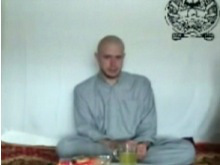

The White House again seems to be struggling with barriers of both language and logic as many raise comparisons between the controversial Bergdahl swap and the effort this week of Jordan to swap a terrorist for one of its downed pilots with Islamic State. During a week where one of the five Taliban leaders released by the Administration has been found trying to communicate with the Taliban, the Jordanian swap has reignited the criticism of the swap for Army Sgt. Bowe Bergdahl, which violated federal law and released Taliban leaders with long and bloody records. The White House seems to be trying to argue that the Taliban are not terrorists in direct contradiction to its prior position that they are indeed terrorists. It shows the fluidity of these terms and how the government uses or withdraws designations as terrorists to suit its purposes. The familiarities between Islamic State (IS) and the Taliban appear to be something in the eye of beholder or, to quote a certain former president, “It depends on what the meaning of the word ‘is’ is.”
As a refresher, the Taliban has long been viewed as terrorists, even when they were in power. They have destroyed religious sites, art, and in one of the most infamous acts in modern history, blew up the giant ancient Buddhas at Bamiyan.The United Nations and human rights groups have documented a long list of civilian massacres and bombings carried out by the Taliban. One report described “15 massacres” between 1996 and 2001. The UN estimates that the Taliban were responsible for 76% of civilian casualties in Afghanistan in 2009, 75% in 2010 and 80% in 2011. The Human Rights Watch estimates that “at least 669 Afghan civilians were killed in at least 350 armed attacks, most of which appear to have been intentionally launched at non-combatants.” This includes the widespread use of suicide belts. The Taliban has always had a close alliance with al Qaeda.
That record was put into sharp relief with the swap for Bergdahl with ties to terrorism including one who was the head of the Taliban army, one who had direct ties to al-Qaeda training operations, and another who was implicated by the United Nations for killing thousands of Shiite Muslims. While we have always said that we do not negotiate with terrorists, we not only negotiated for Bergdahl but gave them what they wanted.
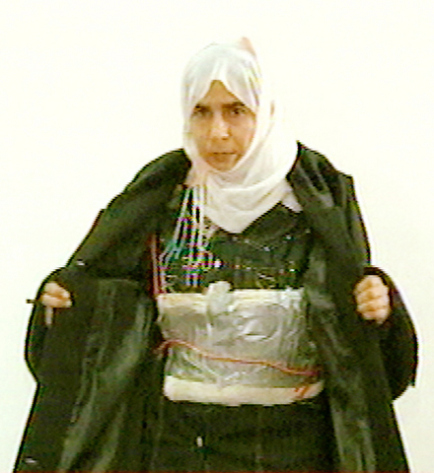
The Jordanian swap raised the same obvious concerns. Many have objected, for good reason, to the idea of releasing Sajida al-Rishawi, who participated with her husband in a terrorist attack on a wedding party at the luxury Radisson hotel in the Jordanian capital of Amman on Nov. 9, 2005. al-Rishawi hoped to be welcomed to paradise by walking into a wedding of 300 people enjoying a family gathering with children and murdering them in cold blood. Her husband’s bomb went off but not her bomb. It goes without saying that she is a hero to the murderous Islamic State for her effort to kill men, women, and children at a wedding.
The swap appears in part the result of pressure from Japan to secure the release of one of its citizens. In my view, such a propose swap was disgraceful. al-Rishawi is as bad as it gets as a terrorist. To yield to terrorists who engage in weekly demonstrations of beheading unarmed captives is morally wrong and practically suicidal. Just as the West is funding this terrorist organization through millions of ransom payments, the exchange of a terrorist only fuels their effort to capture and torture more Western captives.
This brings us back to the White House. When asked about the proposed swap with Islamic State, the White House was aghast. White House spokesman Eric Schultz stated “Our policy is that we don’t pay ransom, that we don’t give concessions to terrorist organizations. This is a longstanding policy that predates this administration and it’s also one that we communicated to our friends and allies across the world.”
The media understandably sought guidance on why the swap with Bergdahl was the right thing to do (despite the flagrant violation of federal law) while the swap for the pilot was not. The White House acknowledged that the Taliban are still on a terrorist list but then tried to rehabilitate the organization into something else. The White House is now referring to the Taliban as an “armed insurgency.” It notes that the Taliban are not listed by the State Department as a terrorist organization. However, they are listed as one of the “specially designated global terrorist” groups by the Department of the Treasury. Indeed, they have been on that list since 2002. Worse yet, the statement from the White House came in the same week that the Taliban claimed responsibility for killing three U.S. contractors.
John Earnest tried to thread the needle by explaining “They do carry out tactics that are akin to terrorism, they do pursue terror attacks in an effort to try to advance their agenda.” He seems to struggle to explain what is terrorist attacks and what are attacks “akin to terrorism.” Most people view suicide belts and civilian massacres to be a bit more than “akin to terrorism.”
Earnest also note that, while the Taliban has links to al Qaeda, they “have principally been focused on Afghanistan.” However, “Al Qaeda is a terrorist organization that has aspirations that extend beyond just the border between Afghanistan and Pakistan.” That is diametrically opposed to the position of the Administration in claiming sweeping powers to strike targets around the world against any forces linked to al Qaeda and many who have few such links. Indeed, while referencing to the authorization to attack al Qaeda, the Administration attacked Islamic State, which was actively fighting with al Qaeda.
The spin of the White Hosue also ignores the role of the Taliban-aligned Haqqani network in holding Bergdahl, a well-known terrorist group.
There are obviously arguments to make for the Bergdahl swap (though I find little compelling in the arguments that justify the violation of federal law by the White House). However, the argument must acknowledge that we negotiated with a group of hostage taking terrorists and we need to address the implications of that fact. Alternatively, if the White House now believes that the Taliban is no longer a terrorist organization, it needs to take it off its listing of such groups (a listing that subjects people to criminal charges for material support or assistance with the group). It cannot have it both ways and call it a terrorist group unless such a label is inconvenient.
Swapping Prisoners with Terrorists, National Review Online, Andrew C. McCarthy, January 29, 2015
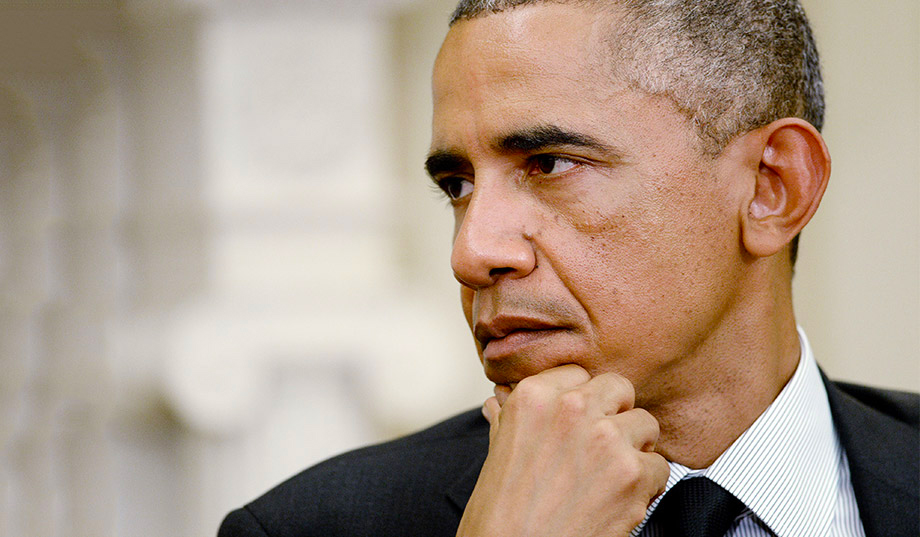
Obama’s disastrous policy dates back to his earliest days in office.
Suddenly, there is outrage in the land over President Obama’s policy of negotiating prisoner swaps with terrorist organizations, a national-security catastrophe that, as night follows day, is resulting in more abductions by terrorist organizations.
Well, yes, of course. But what took so long? Sorry if I sometimes sound like I work the “I Told You So” beat at the counter-jihad press. But as recounted in these pages, immediately upon assuming power in 2009, Obama started negotiating exchanges of terrorists — lopsided exchanges that sell out American national security for a net-zero return.
Critics now point to the indefensible swap Obama negotiated with our Taliban enemies in 2012 as if it were the start of the problem. In reality, the springing of five top Taliban commanders in exchange for the Haqqani terror network’s release of U.S. soldier Bowe Bergdahl was fully consistent with what was by then established Obama policy. There was nothing new in our president’s provision of material support to terrorists even as those terrorists continued to conduct offensive terrorist operations against our troops.
Clearly, the Bergdahl–Taliban swap was a disaster. As I’ve previously noted, it would be a profound dereliction of duty for a commander-in-chief to replenish enemy forces in this manner even if the captive we received in exchange had been an American war hero. To the contrary, Obama replenished our enemies in exchange for a likely deserter who may have voluntarily provided intelligence to the enemy and whose treachery cost the lives of American soldiers who tried to find and rescue him.
Even the conservative media are now suggesting it was the Bergdahl–Taliban swap that marked Obama’s reckless departure from longstanding American policy against negotiation with terrorists, and in particular against exchanging captured terrorists for hostages. This policy reversal has indeed incentivized jihadists to capture more Westerners, and prompted state sponsors of jihadists, such as Qatar, to propose more prisoner swaps. Moreover, the Obama strategy has deprived the U.S. of any moral authority or leadership influence to dissuade other countries, such as Jordan, from releasing anti-American jihadists in similar prisoner exchanges.
But the disaster did not begin with the Bergdahl–Taliban swap.
As I detailed in a column soon after Obama took office — specifically, on June 24, 2009 (“Negotiating with Terrorists: The Obama administration ignores a longstanding — and life-saving — policy”):
Even as the mullahs [i.e., the rulers of Iran’s Shiite regime] are terrorizing the Iranian people, the Obama administration is negotiating with an Iranian-backed terrorist organization and abandoning the American proscription against exchanging terrorist prisoners for hostages kidnapped by terrorists. Worse still, Obama has already released a terrorist responsible for the brutal murders of five American soldiers in exchange for the remains of two deceased British hostages.
To summarize: The Iranian government implanted a network of Shia jihadist cells in Iraq in order to spearhead the terror campaign against American troops. The point was to duplicate the Hezbollah model by which Iran controls other territory beyond its borders. In fact, the network of cells, known as Asaib al-Haq (League of the Righteous), was organized by Hezbollah veteran Ali Musa Daqduq.
The network was run day-to-day by two brothers, Qais and Layith Qazali. Both brothers and Daqduq were captured by U.S. forces in Basrah after they orchestrated the assassination-style murders of five American soldiers abducted in Karbala on January 20, 2007.
A few months later, in May 2007, the terror network kidnapped five British civilians. As American troops put their lives on the line to protect Iraq, the terrorist network told Iraq’s Iran-friendly prime minister, Nouri al-Maliki, that they would release the Brits in exchange for Daqduq and the Qazali brothers. The Bush administration refused the offer.
But soon after entering office in 2009, President Obama decided to change course and entertain the offer. The new administration rationalized that the trade could serve the purpose of Iraqi political reconciliation — which is to say: Obama, in the midst of pleading for negotiations with the “Death to America” regime in Tehran, prioritized the forging of political ties between Iraq and an Iran-backed terror network over justice for the murderers of American soldiers.
Conveniently, Iran’s influence over Maliki ensured that Iraq would play ball: Maliki’s government would serve as the cut-out, enabling Obama to pretend that (a) he was negotiating with Iraq, not terrorists; and (b) he was releasing terrorists for the sake of Iraqi peace, not as a ransom for hostages.
Layith Qazali was released in July. This failed to satisfy the terror network, which continued to demand the release of Daqduq and Qais Qazali. The terrorists did, however, turn over two of the British hostages — or rather, their remains.
I know you’ll be shock-shocked to hear this, but while Obama’s minions were practicing their so-very-smart diplomacy, the jihadists were killing most of their hostages. At least three of the Brits were murdered. Yet even that did not cause Obama to reconsider his position.
In late 2009, the administration released Qais Qazali in a trade for the last living British hostage, Peter Moore. As The Long War Journal’s Bill Roggio reported at the time, an enraged U.S. military official aware of the details of the swap presciently observed: “We let a very dangerous man go, a man whose hands are stained with U.S. and Iraqi blood. We are going to pay for this in the future.”
Meanwhile, as I related in July 2009, Obama released the “Irbil Five” — five commanders from the Iranian Revolutionary Guard’s Quds force. Like Daqduq, the Quds force was coordinating Iran’s terror cells in Iraq. At the time, General Ray Odierno, then the top U.S. military commander in Iraq, publicly stated that Iran was continuing to support, fund, and train the terrorists attacking American and allied forces.
As Michael Ledeen pointed out, the release of the five Iranian terrorist commanders – three years before Obama’s release of the five Taliban commanders – was the price the mullahs had demanded to free Roxana Saberi, a freelance journalist the mullahs had been holding. The Obama administration, naturally, claimed that it was not negotiating with terrorists but with sovereign governments (just as it claimed only to be negotiating with Qatar as it cut the Bergdahl deal with the Taliban and the Haqqanis). Besides, said the administration, the president’s hands were tied by the status-of-forces agreement, which purportedly required turning prisoners over to the Iraqi government (for certain return to Iran) — even prisoners responsible for killing hundreds of Americans, even prisoners sure to persevere in the ongoing, global, anti-American jihad.
And then there was Daqduq. His comparative notoriety, coupled with a smattering of negative publicity over the other terrorist negotiations and swaps, caused a delay in his release. But in July 2011, with the Beltway distracted by the debt-ceiling controversy, the Obama administration tried to pull off Daqduq’s stealth transfer to Iraq.
As I noted at the time, however, the Associated Press got wind of the terrorist’s imminent release, and its short report ignited fury on Capitol Hill. Several senators fired off a letter, outraged that the United States would surrender “the highest ranking Hezbollah operative currently in our custody” — a man who would surely return to the jihad “to harm and kill more American servicemen and women” when Iraq inevitably turned him over to Iran, as it had done with other released terrorists.
The administration retreated . . . but only for the moment. Realizing it would be explosive to spring Daqduq during his reelection campaign, Obama waited until the Christmas recess after the election. The president then had the terrorist quietly handed over to Iraq, which, after acquitting Daqduq at a farce of a “trial,” duly released him to Hezbollah in Lebanon.
There is a reason why the Arab press was reporting that the Obama State Department was entertaining discussions with Egyptian authorities about freeing the Blind Sheikh — Omar Abdel Rahman, the convicted terrorist serving a life sentence for running the jihadist cell that bombed the World Trade Center and plotted other attacks against New York City landmarks. There is a reason why, when he assumed power in 2011, Muslim Brotherhood–leader-turned-Egyptian-president Mohamed Morsi proclaimed that his top priorities included pressuring the United States to return the Blind Sheikh to Egypt.
Long before the Bergdahl–Taliban swap, it was well known that the Obama administration was open for business — if the business meant releasing terrorists.
Are Liberals Actually Admitting Islamic Terrorists Exist?!? PJ Media Trifecta via You Tube, January 29, 2015
(The phrase “literal Islam” is an excellent substitute for “radical Islam.” Literal readings of the Koran and other Islamic “holy” texts support and demand what so called “radical Islamic extremists” do. Perhaps Obama and others who claim that Islam is “the religion of peace” should be labeled “extremist” and/or “radical” because they — rather than the Islamic State, et al — pervert the basic teachings of Islam. They apparently want us to believe, all evidence to the contrary notwithstanding, that Islam is just another peaceful religion much like others and is therefore not a problem for secular societies. — DM)
Andrew Klavan: Attack of the But-Heads! Truth Revolt via You Tube, January 29, 2015
How to lose friends and empower radicals: the peace prize president’s more dangerous world, Breitbart, Dr. Sebastian Gorka, January 29, 2015
(Please see the video at the link. — DM)
 AP Photo/Susan Walsh
Since 2008, the world has become a significantly more dangerous place. In every region, new threats have emerged or old ones have reasserted them. The scorecard is clear: the bad guys are winning and America’s interests are being undermined daily.
As a nation, America has yet to recover from the experience of September 11th, 2001. Public opinion on our national response to the attacks against the World Trade Center, the Pentagon, and Flight 93 is today divided. On one side we have the “Bush lied, People Died!” crowd who portray President George W. Bush’s response in terms of a conspiracy, despite the fact that we now know Saddam Hussein indeed possessed thousands of WMD warheads (and had used them in the past).
On the other, we have conservatives who are themselves split between the unsophisticated isolationists/non-interventionists who believe that an American withdrawal from the world will make us safe, and the quietly resurgent neoconservatives who see in the rise of ISIS/The Islamic State a justification for more foreign engagements.
For a moment, let us put Operations Enduring Freedom (Afghanistan), and Operations Iraqi Freedom (OIF), to one side. Instead, let us take an unemotional snap-shot of the global geostrategic situation to see whether the administration whose head was awarded a Nobel Peace Prize during his first year in office has indeed make the world a safer and more peaceful place.
Europe: During most of the last century, American security was tied directly to the continent of Europe. Whether is was the generational genocide of World War One, the racial genocide of WWII, or the class-based totalitarianism of the Cold War, Europe was the source of strategic, and at times existential, threats to America.
During the first Obama Administration, Secretary of State Hilary Clinton declared a “Pivot to Asia” which would deemphasize Europe’s importance and see Washington focus more on our Pacific partners than on old Atlantic Allies.
Since that announcement, an emboldened Vladimir Putin has seen fit to break an almost 70-year-old international taboo by using force to redraw national borders with his annexation of Crimea. This includes, incredibly, the shooting down of a civilian jet-liner by forces armed by Moscow.
At the same time, we have seen the European Union become evermore centralizing and undemocratic as untenable economic and fiscal policies are propped up by a Brussels bureaucracy in the name of “broader and deeper union.” This has naturally led to two types of responses: the unprecedented success of a paleo-conservative backlash,f best typified by the insurgent victories of UKIP in Great Britain, as well the reverse: Utopian socialist populists such as the victorious Syriza party of Greece.
Then there are Europe’s ties to the Global Jihadist Movement. The recent slaughter in Paris, the beheading of a British serviceman on the streets of the UK, and Spanish and Belgian terror-related arrests all attest to the failure of the current international campaign against Islamist terrorism.
The flawed immigration policies of many EU nations have also facilitated the establishment of literally hundreds of ethnic and religious enclaves across the continent where integration is seen as a bad thing and where radical talent spotters for groups such as Al Qaeda and ISIS/IS identify, indoctrinate and recruit murderers such as the Charlie Hebdo killers, as well as thousands of fighters for The Islamic State.
This has led to a grass-roots response from Europeans afraid of the future survival of their countries embodied in the ever-broadening PEGIDA movement that Breitbart London has covered in great detail. The failure of multiculturalist immigration policies has not only encouraged the enclave phenomenon, but is also clearly linked to the disturbing rise of anti-Semitism on the continent which has led to unprecedented numbers of European jews deciding to leave the nations of their birth for good.
If we include Turkey in our European snapshot, the situation is even worse, as we have seen the one viable example of a secular Muslim state slip even deeper into the corruption-ridden maelstrom of Islamic fundamentalism under the Erdogan government which is either incapable or unwilling to prevent Turkey becoming a pre-deployment site for jihadist fighters traveling into Syria and Iraq. All this from a formal NATO ally of the US.
Asia: The much-vaunted Pivot to Asia has clearly not worked. China has, over the last several years, openly challenged the post-Cold War peace in the region with a commitment to its own military build-up coupled with a concerted campaign of intimidation against its smaller and weaker neighbors.
While challenging and intimidating our regional partners, China has continued to grow economically at such a rate that the nation which was once universally ridiculed as the maker of plastic toys for McDonalds Happy Meals has now surpassed the US economy in terms of gross output. At the same time, China is waging a covert war against America in the cyber domain, stealing not only state secrets for use in developing its new weapons systems, but also billions of dollars worth of intellectual property and commercial secrets from American businesses. See the remarkable report from Mandiant on scale of the threat.
North Korea has also used the internet to assault American interests as the Sony hacking attack attests, while Washington has proven totally ineffective in undermining the world’s last truly fully-fledged Stalinist regime, or its regionally destabilizing nuclear weapons capabilities.
Africa: A giant continent, with threats as bad as they were in 2008, or in several cases much worse. The Global Jihadist Movement continues to consolidate its control in Nigeria through the horrific attacks of Boko Haram, the group made famous for the kidnapping of the girls from Chibok, an attack which is just one part of a vast campaign targeting Christians and anyone who does not want to live under a theocratically run system based upon sharia and 7th century interpretation of the Koran.
In addition to the insurgent-like threat of Boko Haram, we have also witnessed horrific hit and run terrorist tactics used by other African jihadists, as in the Westgate Mall attack in Nairobi by Al Shabaab. At the same time, China proceeds to build its vast network of economic interests in the continent in ways that far outstrip American geostrategic investment in Africa.
Australasia: Of course, the Pivot to Asia should have pleased our Antipodean allies. But the concrete consequences of the declarations and speeches by Secretary Clinton and the White House have amounted to little more than the deployment of a handful of US Marines from Camp Pendleton to Australia. Instead of the security situation improving, Australia faced its own Jihadist attack just before Christmas last year as a self-styled imam took hostages and brought the violent jihad so familiar to New York, London, Madrid, and Paris, to the streets of Sydney.
The Americas: Canada likewise became a direct victim of the Global Jihadist Movement after a spate of attacks against its armed forces and even its parliament which was only stopped when a brave sergeant-at-arms applied deadly force in the face of a rampaging jihadi.
Those who like illicit quality cigars may be celebrating the White House’s “normalization” of relations with Communist Cuba, but if statements by the Castro regime are to be credited as expressing Havana’s true intentions, then the deal was good for the dictatorship and bad for America. And despite the US government’s historic decision, conditions inside Cuba have remained the same, or in many case deteriorated, with last year seeing record-breaking numbers of political arrests on the island nation. And Cuba’s anti-democratic influence is a problem for the region, not just its wretched population, with Raul Castro’s secret police providing aid and expertise in the oppression of dissidentsto the government of Venezuela.
The Middle East and North Africa: Leaving the worst for last we have, of course, the Middle East, and North Africa. The highs hopes for the Arab Spring turned very rapidly into a “Christian Winter” and a victory for the fundamentalist and anti-Democratic forces of the Muslim Brotherhood. One after another, one-man authoritarian regimes fell to Islamist MB governments, or collapsed into deadly civil wars which are still being fought in places like Syria and Libya. Throughout the region, proto-democrats and vulnerable minorities, especially ancient Christian communities, have been targeted for death or persecution, or have been forced to flee.
The one ray of hope, the people’s revolt in Egypt against the Brotherhood government of Mohammad Morsi, which led to his being ousted by a secular military, was rejected by the US administration as a coup, despite the fact that General, now President, Sisi, has been fighting his own war against Jihadi fundamentalists since he was the Chief of the Egyptian Armed Forces.
And now Yemen, which was lauded just a few months ago by President Obama as the poster-child of his successful counterterrorism strategy, has collapsed under insurgent attacks and the resignation of the government in Sanaa.
Then there is Iran, which, much like Cuba, has squeezed concession after concession out of the administration without either stopping its acquisition of nuclear weapons capability, or curtailing its support of Shiite terrorist fighters in either Iraq or Syria.
I said I would leave Afghanistan and Iraq of our the equation, but nevertheless, it is important to recognize that this is a new jihadist threat that is even more dangerous than Al Qaeda. ISIS, the Islamic State, is today a full-fledged insurgency, one that in four dimensions is much more of a threat that [Sic] Al Qaeda ever was.
The Islamic State is more than a terrorist group, it now functions as a quasi-state and controls territory equivalent to the size of the UK. It is the richest non-state threat group in human history. It has an incredibly sophisticated understanding of information warfare and how to use social media as a propaganda platform, and lastly – and relatedly – it has recruited ten of thousands of young Muslim men from around the world, including Europe and the US, to fight for the new Caliphate of Abu Bakr al Baghdadi. Bin Laden dreamt of being this powerful. The Islamic State has turned his dream into a horrific reality.
There is not one area of the world of import to America in which we have either not lost friends, or failed to help our allies to defend themselves against the common enemies that threaten us all. Whatever your politics, or whomever you favor for the next Commander-in-Chief of the United States, one thing is certain: without resolute American leadership the world can become, and now is, a much more dangerous place.
The Imaginary Islamic Radical, Front Page Magazine, Daniel Greenfield, January 28,2015
(Ask Secretary Kerry.
Please see also Muslim Brotherhood-Aligned Leaders Hosted at State Department. — DM)
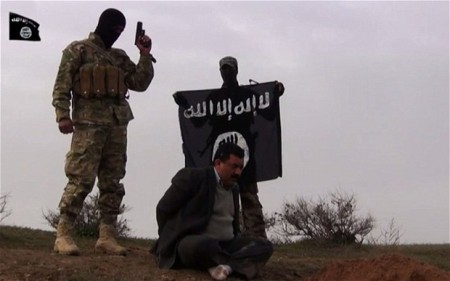
Our problem is not the Islamic radical, but the inherent radicalism of Islam. Islam is a radical religion. It radicalizes those who follow it. Every atrocity we associate with Islamic radicals is already in Islam. The Koran is not the solution to Islamic radicalism, it is the cause.
******************
The debate over Islamic terrorism has shifted so far from reality that it has now become an argument between the administration, which insists that there is nothing Islamic about ISIS, and critics who contend that a minority of Islamic extremists are the ones causing all the problems.
But what makes an Islamic radical, extremist? Where is the line between ordinary Muslim practice and its extremist dark side?
It can’t be beheading people in public.
Saudi Arabia just did that and was praised for its progressiveness by the UN Secretary General, had flags flown at half-staff in the honor of its deceased tyrant in the UK and that same tyrant was honored by Obama, in preference to such minor events as the Paris Unity March and the Auschwitz commemoration.
It can’t be terrorism either. Not when the US funds the PLO and three successive administrations invested massive amounts of political capital into turning the terrorist group into a state. While the US and the EU fund the Palestinian Authority’s homicidal kleptocracy; its media urges stabbing Jews.
Clearly that’s not Islamic extremism either. At least it’s not too extreme for Obama.
If blowing up civilians in Allah’s name isn’t extreme, what do our radicals have to do to get really radical?
Sex slavery? The Saudis only abolished it in 1962; officially. Unofficially it continues. Every few years a Saudi bigwig gets busted for it abroad. The third in line for the Saudi throne was the son of a “slave girl”.
Ethnic cleansing? Genocide? The “moderate” Islamists we backed in Syria, Libya and Egypt have been busy doing it with the weapons and support that we gave them. So that can’t be extreme either.
If terrorism, ethnic cleansing, sex slavery and beheading are just the behavior of moderate Muslims, what does a Jihadist have to do to be officially extreme? What is it that makes ISIS extreme?
Our government’s definition of moderate often hinges on a willingness to negotiate regardless of the results. The moderate Taliban were the ones willing to talk us. They just weren’t willing to make a deal. Iran’s new government is moderate because it engages in aimless negotiations while pushing its nuclear program forward and issuing violent threats, instead of just pushing and threatening without the negotiations. Nothing has come of the negotiations, but the very willingness to negotiate is moderate.
The Saudis would talk to us all day long while they continued sponsoring terrorists and setting up terror mosques in the West. That made them moderates. Qatar keeps talking to us while arming terrorists and propping up the Muslim Brotherhood. So they too are moderate. The Muslim Brotherhood talked to us even while its thugs burned churches, tortured protesters and worked with terrorist groups in the Sinai.
A radical terrorist will kill you. A moderate terrorist will talk to you and then kill someone else. And you’ll ignore it because the conversation is a sign that they’re willing to pretend to be reasonable.
From a Muslim perspective, ISIS is radical because it declared a Caliphate and is casual about declaring other Muslims infidels. That’s a serious issue for Muslims and when we distinguish between radicals and moderates based not on their treatment of people, but their treatment of Muslims, we define radicalism from the perspective of Islamic supremacism, rather than our own American values.
The position that the Muslim Brotherhood is moderate and Al Qaeda is extreme because the Brotherhood kills Christians and Jews while Al Qaeda kills Muslims is Islamic Supremacism. The idea of the moderate Muslim places the lives of Muslims over those of every other human being on earth.
Our Countering Violent Extremism program emphasizes the centrality of Islamic legal authority as the best means of fighting Islamic terrorists. Our ideological warfare slams terrorists for not accepting the proper Islamic chain of command. Our solution to Islamic terrorism is a call for Sharia submission.
That’s not an American position. It’s an Islamic position and it puts us in the strange position of arguing Islamic legalism with Islamic terrorists. Our politicians, generals and cops insist that the Islamic terrorists we’re dealing with know nothing about Islam because that is what their Saudi liaisons told them to say.
It’s as if we were fighting Marxist terrorist groups by reproving them for not accepting the authority of the USSR or the Fourth International. It’s not only stupid of us to nitpick another ideology’s fine points, especially when our leaders don’t know what they’re talking about, but our path to victory involves uniting our enemies behind one central theocracy. That’s even worse than arming and training them, which we’re also doing (but only for the moderate genocidal terrorists, not the extremists).
Secretary of State Kerry insists that ISIS are nihilists and anarchists. Nihilism is the exact opposite of the highly structured Islamic system of the Caliphate. It might be a more accurate description of Kerry. But the Saudis and the Muslim Brotherhood successfully sold the Western security establishment on the idea that the only way to defeat Islamic terrorism was by denying any Islamic links to its actions.
This was like an arsonist convincing the fire department that the best way to fight fires was to pretend that they happened randomly on their own through spontaneous combustion.
Victory through denial demands that we pretend that Islamic terrorism has nothing to do with Islam. It’s a wholly irrational position, but the alternative of a tiny minority of extremists is nearly as irrational.
If ISIS is extreme and Islam is moderate, what did ISIS do that Mohammed did not?
The answers usually have a whole lot to do with the internal structures of Islam and very little to do with such pragmatic things as not raping women or not killing non-Muslims.
Early on we decided to take sides between Islamic tyrants and Islamic terrorists, deeming the former moderate and the latter extremists. But the tyrants were backing their own terrorists. And when it came to human rights and their view of us, there wasn’t all that much of a difference between the two.
It made sense for us to put down Islamic terrorists because they often represented a more direct threat, but allowing the Islamic tyrants to convince us that they and the terrorists followed two different brands of Islam and that the only solution to Islamic terrorism lay in their theocracy was foolish of us.
We can’t win the War on Terror through their theocracy. That way lies a real Caliphate.
Our problem is not the Islamic radical, but the inherent radicalism of Islam. Islam is a radical religion. It radicalizes those who follow it. Every atrocity we associate with Islamic radicals is already in Islam. The Koran is not the solution to Islamic radicalism, it is the cause.
Our enemy is not radicalism, but a hostile civilization bearing grudges and ambitions.
We aren’t fighting nihilists or radicals. We are at war with the inheritors of an old empire seeking to reestablish its supremacy not only in the hinterlands of the east, but in the megalopolises of the west.
A special kind of hate, Pat Condell via You Tube, January 27, 2015
( IMPORTANT ! PLEASE watch this video… – JW )
Obama and cognitive dissonance, Dan Miller’s Blog, January 26, 2015
(The views expressed in this article are mine and do not necessarily reflect those of Warsclerotic or its other editors. — DM)
It has been argued that Obama’s cognitive dissonance is demonstrated by His dealings with Iran and His other disruptive efforts in the Middle East. Perhaps the contrary is more accurate.

Basis of His foreign policies?
An article at Front Page Magazine by Bruce Thorton is titled The Dangers of Obama’s cognitive dissonance (also at Warsclerotic). It argues that Obama mistakenly believes that Iran and “we” want many of the same things and that He acts on that belief.
The heart of this mistake is the belief that whatever their professed beliefs, all peoples everywhere are just like us and want the same things we want. Since our highest goods are peace and prosperity, we think other nations’ privilege the same things. If peoples behave differently, it’s because they are warped by poverty or bad governments or religious superstitions, and just need to be shown that they can achieve those boons in rational, peaceful ways, especially by adopting liberal democracy and free-market economies. Once they achieve freedom and start to enjoy the higher living standards economic development brings, they will see the error of their traditional ways and abandon aggression and violence, and resolve conflicts with the diplomacy and negotiation we prefer. [Emphasis added.]
The Islamic Republic of Iran most likely does want peace and prosperity, but on its own terms.

Iran wants Islamic “peace” — the peace of universal submission to (a Shiite?) Allah — and at least sufficient prosperity to force its will on others who do not want “peace” of that sort. If Iran gets (or gets to keep) nuclear weapons, along with increasingly longer range missiles, it will be in an increasingly improved position to do that.
Obama may well have very similar goals for Iran. His demands that the P5+1 process continue despite Iran’s persistent refusals to make significant concessions, even as it continues to enhance its nuclear war machine, and His disposition to give Iran whatever concessions it wants, suggest that His and Iran’s objectives are similar. There is support for an alternative, that Obama is simply delusional. However, unless His closest, most trusted and therefore most important advisors are at least equally delusional, that alternative makes little sense. Although she appears to be a despicable person, Valerie Jarrett seems quite competent at what she does on His behalf. Others fall on their swords, fall into line and salute or leave.
Obama’s “extraordinary disconnect” in foreign policy was recently highlighted on CBS’ Face the Nation.
John Bolton said much the same.
Is it more likely that Obama merely fails to understand what’s happening, or that He understands and likes it? His State of Union address was full of foreign policy nonsense, much of it about Iran. However, it seems to have worked quite well with the large segment of the American public which neither understands nor cares about foreign affairs (except amusing affairs of a salacious nature) and believes that He strives mightily to give them the “free stiff” they believe they want, without understanding the economic hardships it has brought and will bring to them. If members of the public who already worship Him (and that includes most of the “legitimate news” media) continue to do so, it may well make little if any difference to Him or to His closest advisors whether those who disagree with Him still like, or continue to like, Him.

After all, as we learned at the Democrat National Convention that nominated Obama for a second term, “we all belong to the Government,” it’s “one big happy family” and Obama is the head of “our family.”
In the final analysis, it may make little difference whether Obama is incompetent and delusional or is competent, understands His plans for Iran and the rest of the world far better than the rest of us and has perverse conceptions of evil and good.
Both theories are worth considering because both can help us to understand what He does, why He does it and what He intends to accomplish. However, delusional actions and intentions are difficult for those who are not delusional to understand and therefore to challenge. Actions and intentions that are, instead, based on a rational thought process — but one that views evil as good and good as evil — are easier to understand and therefore to challenge.
As I have watched Obama and His accomplishments over the years, I have come to lean toward the notion that He is competent, evil, understands what He is trying to achieve and likes it.
The Dangers of Obama’s Cognitive Dissonance, Front Page Magazine,
The worst crisis we face is the relentless progress Iran is making toward creating nuclear weapons, a development that would set off an arms race in the Middle East and destabilize an already chaotic region. The Islamic Republic has already extended its malign influence into Syria, Lebanon, and Yemen, creating a Shi’a crescent that threatens our allies in the region, especially Israel, Jordon, Egypt, and Saudi Arabia. If a failed gangster-state like North Korea can demand so much international attention just because it possesses nuclear weapons, think what Iran––with 3 times the population and the world’s 3rd largest oil reserves––could do. Oil won’t stay cheap forever.
Obama, in short, can say that “all options are on the table” all he wants, but the mullahs know he will not take military action against them, nor help Israel to. They know that Obama has withdrawn from the region, and at best will make only token gestures of engagement, like the current bombing campaign against ISIL. They know his ultimatums and “red line” threats are empty. They know he wants a deal more than they do, so he can burnish his legacy. Thus the Iranians are spinning out the negotiations, cadging extensions, pocketing concessions without reciprocating, and giving Obama just enough hope to think he can achieve what he thinks will be a Nixon-goes-to-China foreign policy coup, but will in fact will go down in history as a humiliating and dangerous blunder like Chamberlain’s Munich debacle.
*********************
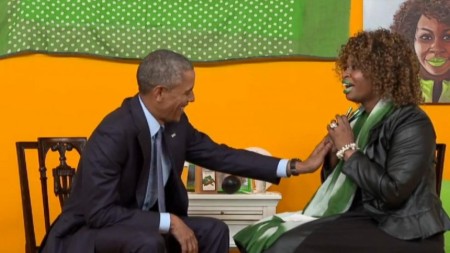
There are many moments from the past 6 years that demonstrate the criminal incompetence of this president and his administration. But for me, Obama’s interview with GloZell––whose claim to YouTube fame comes from eating Cheerios in a bathtub filled with milk––represents best the essential emptiness, triviality, and sheer dumbness of this president. Imagine Franklin D. Roosevelt in 1938 being interviewed by a carnival geek, and you can gauge just how low the most consequential political office in the world has sunk.
This interview, remember, took place the same time as problems requiring urgent presidential attention were escalating. Libya imploding, Iran inching toward a nuclear bomb, ISIS expanding in Syria and holding ground in northern Iraq, Iranian military assets active in Iraq, Yemen falling to an Iranian proxy terrorist group, another Iranian client, Bashar al Assad, strengthening his hold over Syria––and that’s just the Middle East. And don’t forget, the GloZell farce followed hard on Obama’s State of the Union address, a congeries of wishful thinking, narcissistic braggadocio, and outright-lies, a preposterous catalogue in which generous sprinklings of first-person-pronoun fairy dust transmuted every failure into an achievement.
It is the contradiction between fact and fiction, evident in every line of the president’s speech, that typifies progressives in general. This cognitive dissonance may simply be nothing more than the grubby machinations of those who will say and do anything for political power and the wealth and influence it brings. In other words, they know they are hypocrites. But it also could be something more dangerous than a venal character and moral corruption. One gets the feeling that many progressives actually believe what they say, that they are reciting the mantras of their ideological cult, no matter how contrary to reality or their own actions. What’s more important is that whatever the source, this failure to acknowledge reality, to think critically, and to respect intellectual coherence is dangerous to all of us, especially in the many foreign policy crises that have mushroomed on Obama’s watch.
And the worst crisis we face is the relentless progress Iran is making toward creating nuclear weapons, a development that would set off an arms race in the Middle East and destabilize an already chaotic region. The Islamic Republic has already extended its malign influence into Syria, Lebanon, and Yemen, creating a Shi’a crescent that threatens our allies in the region, especially Israel, Jordon, Egypt, and Saudi Arabia. If a failed gangster-state like North Korea can demand so much international attention just because it possesses nuclear weapons, think what Iran––with 3 times the population and the world’s 3rd largest oil reserves––could do. Oil won’t stay cheap forever.
But in the face of this threat, Obama has appeased the mullahs under the guise of diplomatic “engagement” and negotiations, the time-proven way to avoid action while pretending to do something. Indeed, so besotted is he by his faith in diplomacy that he has threatened to veto a Congressional bill that would strengthen his negotiating position by toughening economic sanctions, the best non-lethal shot we have for changing the Iranians’ behavior, given the current decline in their oil revenues. But what we see here is a problem that transcends any one president or Secretary of State, for it reflects the intellectual error and failure of imagination peculiar to modernity.
The heart of this mistake is the belief that whatever their professed beliefs, all peoples everywhere are just like us and want the same things we want. Since our highest goods are peace and prosperity, we think other nations’ privilege the same things. If peoples behave differently, it’s because they are warped by poverty or bad governments or religious superstitions, and just need to be shown that they can achieve those boons in rational, peaceful ways, especially by adopting liberal democracy and free-market economies. Once they achieve freedom and start to enjoy the higher living standards economic development brings, they will see the error of their traditional ways and abandon aggression and violence, and resolve conflicts with the diplomacy and negotiation we prefer.
The problem with this scenario is not that other peoples don’t want freedom and prosperity, or are incapable of achieving them. Rather, it is that they often have other goals more important than the ones we prize. Like religion, for example, or national honor, or revenge. We may think such motives are irrational avatars from an uncivilized past, but they are still drivers of action in individuals and nations alike. They may be, to quote Orwell on the Nazis, “ghosts” out of the premodern world, but they’re still “ghosts which need a strong magic to lay them.”
Of course, if weaker than an enemy or rival, such a people may conceal these motives, and pretend to play by the rules of the more powerful, until they are strong enough to use force to achieve their aims. In such situations, diplomatic engagement becomes a tactic for achieving through words what cannot be gained through deeds. As Robert Conquest said of our Cold War negotiations with the Soviets, “The Soviets did what their interests required when the alternative seemed less acceptable, and negotiation was merely a technical adjunct.”
History shows the truth of this insight, from the Munich Conference in 1938, to the many arms reduction treaties with the Soviet Union, which we know the Soviets and now the Russians have serially violated. More pertinent for Iran is the sorry history of the diplomatic attempts to prevent North Korea from developing nuclear weapons. For decades we indulged in cycles of concessions, agreements, conferences, and violations that all ended up with the North announcing it had gone nuclear. The failure to learn from that recent history is evident in Obama’s current reprise of that sordid dance in his engagement with Iran.
This is not to say that diplomacy can’t ever work. But to be effective, negotiation has to start with a clear understanding of the other side’s motives. One must avoid the “trap,” as Conquest called it, “of thinking that others think, within reason, like ourselves. But this trap is precisely the error that must be avoided in foreign affairs.” The rulers of Iran may lust after wealth and secular power, the default materialist motives recognized by the West. But that greed can coexist with their messianic, apocalyptic strain of Shi’a Islam, and the acceptability of violence in service to their faith that characterizes traditional Islam.
Thus when Muslim warriors tell us, as they have for 14 centuries, that they love death as we love life; when they proclaim, as Mohammed, Iran’s Ayatollah Khomeini, Osama bin Laden, and the Fort Hood jihadist did, “I was instructed to fight all men until they say there is no god but Allah,” we’d better listen and take them seriously, rather than brush aside such profound religious beliefs as mere camouflage for materialist motives. Yet so blind is Obama to this truth, that he and his officials stubbornly refuse even to utter a phrase like “Islamic extremist,” since he has decided that all the Muslim violence roiling the world every day has “nothing to do with Islam.”
Second, diplomacy can work only when backed by a credible threat of force. The other side must believe that mind-concentrating violence will punish them for negotiating in bad faith and violating agreements. In the case of Iran, the mullahs must believe that we will put to the test their love of death and longing for paradise. But our long history with the Islamic Republic has proved the opposite. Iran has never been punished for taking our embassy staff hostage in 1979, for instigating the murder of 241 of our soldiers in Beirut in 1983, or for training and funding the terrorists who have killed our troops in Iraq and Afghanistan, or for being the world’s leading promoter of terrorist violence.
Obama, in short, can say that “all options are on the table” all he wants, but the mullahs know he will not take military action against them, nor help Israel to. They know that Obama has withdrawn from the region, and at best will make only token gestures of engagement, like the current bombing campaign against ISIL. They know his ultimatums and “red line” threats are empty. They know he wants a deal more than they do, so he can burnish his legacy. Thus the Iranians are spinning out the negotiations, cadging extensions, pocketing concessions without reciprocating, and giving Obama just enough hope to think he can achieve what he thinks will be a Nixon-goes-to-China foreign policy coup, but will in fact will go down in history as a humiliating and dangerous blunder like Chamberlain’s Munich debacle.
So much is obvious. Yet in his State of the Union speech Obama astonished even his loyal media retainers when he asserted that his negotiations have “halted the progress of its [Iran’s] nuclear program and reduced its stockpile of nuclear material.” In reality, Iran continues to enrich uranium and is building new nuclear reactors, not to mention constructing missile sites and nuclear facilities in Syria. International inspectors are still barred from numerous sites in Iran, and so the West has no real idea of how many facilities exist there. This means that even if an agreement is signed, it will be worthless if it leaves Iran with the knowledge and technology needed to make nuclear bombs at a time of its choosing. And it means that someday we all will pay the price for our president’s cognitive dissonance.




 anneinpt
 artaxes
 danmillerinpanama
 davidking1530
 Peter Hofman
 Joseph Wouk
 Peter
Peter Louisiana Steve
 WarSclerotic
Recent Comments