Archive for the ‘Islam and colonialism’ category

The EU’s Kiss of Death

May 10, 2016

The EU’s Kiss of Death, Gatestone InstituteJudith Bergman, May 10, 2016

♦ The European Union may yet come to realize that this latest ill-concealed jab at the Central- and Eastern European members of the European Union may signal the beginning of the unraveling of the European Union, an event which, considering the authoritarian structure of the organization, might be a good thing. The EU’s authority comes, undemocratically, from the top down, rather than from the bottom up; it is non-transparent, unaccountable and there is no mechanism for removing European Commission representatives.

♦ “We especially do not like it when people who have never lived in Hungary try to give us lectures on how we should cope with our own problems. Calling us racists or xenophobes is the cheapest argument. It’s used just to dodge the issues.” — Zoltán Kovács, spokesman for Hungary’s Prime Minister Viktor Orban.

♦ By persisting in pushing their agendas on European Union member states that still consider themselves sovereign and not merely provinces of the EU, Timmermans and his European Commission bureaucrats may just have given the European Union its kiss of death.

The European Union is hell-bent on forcing member states to take “their share” of migrants. To this end, the European Commission has proposed reforms to EU asylum rules that would see enormous financial penalties imposed on members refusing to take in what it deems a sufficient number of asylum seekers, apparently even if this means placing those states at a severe financial disadvantage.

The European Commission is planning sanctions of an incredible $290,000 for every migrant that recalcitrant EU member states refuse to receive. Given that EU countries such as Hungary, Poland, the Czech Republic, Slovakia and Austria have closed their borders to migrants or are in the process of doing so, it is not difficult to discern at whom the EU is aiming its planned penalties.

The EU may yet come to realize, however, that this latest ill-concealed jab at the Central- and Eastern European members of the European Union — if it passes muster by most member states and members of the European parliament — may just signal the beginning of the unraveling of the European Union, an event which, considering the authoritarian structure of the organization, might be a good thing. The EU’s authority comes, undemocratically, from the top down, rather than from the bottom up; it is non-transparent, unaccountable and there is no mechanism for removing European Commission representatives.

The migrant crisis has revealed a deep and seemingly irreconcilable rift between those countries that roughly two decades ago still found themselves on the wrong side of the Iron Curtain and have not forgotten it, and Western European countries spared from a merciless Soviet totalitarianism. The soft Western Europeans, instead, developed politically correct credos of “diversity” and “multiculturalism,” which they intractably push down the throats of those recently released from captivity, refusing to show the tolerance of which they themselves purport to be high priests.

In September, European Commission Vice President Frans Timmermans said,

“We should know more about Central European history. Knowing that they were isolated for generations, that they were under oppression by Moscow for so long, that they have no experience with diversity in their society, and it creates fear in the society.

“Any society, anywhere in the world, will be diverse in the future — that’s the future of the world. So [Central European countries] will have to get used to that. They need political leaders who have the courage to explain that to their population instead of playing into the fears as I’ve seen Mr Orbán doing in the last couple of months.”

Exactly because central Europeans were subjected to a totalitarian ideology for half a century, they are rather unenthusiastic about submitting to a new, increasingly totalitarian ideology, especially one which seeks to impose itself as the “only truth,” and in its intolerance is averse to any nonconformity — as Timmermans’ comments make condescendingly clear.

The European Union’s vision of an ideal “multicultural” and “diverse” society seems to be viewed by the central Europeans as humbug, perhaps because they have correctly observed that the “multiculturalism” on display in Western Europe is largely a monoculture of the Islamic variety.

If there is anything at which the Central Europeans became experts during their Soviet internment, it was deciphering the doublespeak of communist apparatchiks, which may account for their adeptness at deciphering the doublespeak coming from Eurocrats such as Timmermans. As the Hungarian Prime Minister’s spokesman, Zoltán Kovács, said in September, “… multi-culturalism in Western Europe has not been a success in our view. We want to avoid making the same mistakes ourselves.”

The magic that the European Union once held for Central European countries, which rushed to join the organization after the demise of communism — believing it to be the very antithesis of what they had just experienced under communist rule — is fast evaporating.

In February, Czech Prime Minister Bohuslav Sobotka said that, “If Britain leaves the EU, we can expect debates about leaving the EU in a few years too.” Three-fifths of Czechs say that they are unhappy with EU membership, and according to an October 2015 poll by the STEM agency, 62% said they would vote against it in a referendum.

In March, after the Brussels terrorist attacks, Polish Prime Minister Beata Szydło said, “I see no possibility at this time of immigrants coming to Poland.”

“Until procedures to verify the refugees are put in action, we cannot accept them,” Rafał Bochenek, a government spokesman, told reporters.

“The priority of the government is the safety of Poles … We understand the previous government … signed commitments which bind our country. We cannot allow a situation in which events taking place in the countries of Western Europe are carried over to the territory of Poland.”

In Poland, 64 percent of Poles want the country’s borders closed to migrants.

1593The European Commission, led by Jean-Claude Juncker and Frans Timmermans (left), is hell-bent on forcing member states to take “their share” of migrants. In March, Polish Prime Minister Beata Szydło (right) bluntly stated: “I see no possibility at this time of immigrants coming to Poland.”

In Hungary, Prime Minister Viktor Orban’s spokesman, Zoltán Kovács, stated:

“Mr. Timmermans is right that we have not had the same experience as Western Europe, where countries such as Holland, Britain and France have had mass immigration as a result of their colonial legacies. But we would like to deal with our problems in a way that suits us. And we especially do not like it when people who have never lived in Hungary try to give us lectures on how we should cope with our own problems. Calling us racists or xenophobes is the cheapest argument. It’s used just to dodge the issues.”

Even among those Eastern European countries still waiting to be admitted to the EU, the enthusiasm for the EU seems to have dwindled. “The EU that all of us are aspiring to, it has lost its magic power,” Serbian Prime Minister, Aleksander Vucic said in February, “Yes we all want to join, but it is no longer the big dream it was in the past.”

The reactions of countries such as Poland and Hungary are the normal, healthy reactions of nations who wish to remain prosperous, sovereign and safe for the sake of their own citizens. In addition, entertaining no illusions about “multiculturalism,” they appear to have a justifiable apprehension about the detrimental effects of the current migration crisis on national security and finances.

It is not only the newest members of the EU that have begun to realize that is a bad idea to defer decisions about borders and national security to an unelected supranational entity, which appears completely oblivious to the concerns of its member states.

In Norway, the government announced that it will not accommodate any more migrants beyond the 1500 that the country has already agreed to take during the next two years, as part of the EU’s refugee relocation scheme. “We have set a quota for refugees from the EU. Increasing it is not of current interest,” Immigration Minister Sylvi Listhaug said in April. Norway, in fact, has begun paying asylum seekers to return to their own countries.

In Austria, the government is imposing border controls at the Brenner Pass, the main Alpine crossing into Italy, and erecting a barrier between the two countries.

In the face of such resistance from member states, the European Commission’s plan to penalize them for not accepting “their share” of migrants could not possibly be more ill-timed and out of touch. It comes across as a desperate attempt by the EU’s executive body to force its way of handling the migrant crisis onto disobedient EU member states, like an authoritarian parent disciplining its unruly children. There is, however, such a thing as bending something until it snaps. By persisting in pushing their agendas on EU member states that still consider themselves sovereign and not merely provinces of the European Union, Timmermans and his European Commission bureaucrats may just have given the European Union its kiss of death.

Islam and terror: Attempts at apologetics

April 8, 2016

Islam and terror: Attempts at apologetics, Israel Hayom, Martin Sherman, April 8, 2016

Barely 20 days before the bloody massacre at the Paris offices of the satirical magazine Charlie Hebdo and the subsequent slaughter among the shelves of the kosher supermarket Hyper Cacher in the French capital — both perpetrated in the name of Islam — I took part in a televised debate on “The rise of anti-Muslim sentiment in the West”( i24 News, Dec. 16, 2014).

In an attempt to debunk the claim that Islam could or should be blamed for the wave of terror carried out overtly in its name, my opponent, Sami Abu Shehadeh, secretary general of the Tel Aviv-Jaffa branch of the anti-Zionist Israeli-Arab faction Balad, made the following pronouncement:

“One out of every six people all over the world is a Muslim. … Trying to say anything in general about this huge community — 1.5 billion people — will be wrong. … The vast majority of these populations are not involved with what’s happening with violence and terror all over the world. … I don’t think there is anything essential that connects between this huge and historically important religion, and all the terrorism that’s going on.”

Of course, there is much truth to Abu Shehadeh’s claim that most Muslims are not actively involved in terrorism. However, while this claim is factually correct, substantively it is meaningless.

(Obama Video at the link. — DM)

Islam is to terror as rainfall is to flooding

Indeed, for anyone with a reasonably informed grasp of world affairs and an iota of intellectual integrity, the answer to whether Islam and violence/terrorism are causally connected should be unequivocally clear. To ask whether Islam is associated with terrorism is a little like asking if rainfall is associated with flooding.

Of course it is, as can be irrefutably deduced from Abu Shehadeh’s very attempt to exonerate it. After all, if one in six people in the world is Muslim, then five out of six are not. Accordingly, if there were no inordinate Islamic affinity for violence/terrorism, the number of Muslim acts of terrorism should be one-fifth that of non-Muslim terrorism — that is, one would expect five times as many non-Muslim acts of terrorism as Muslim acts of terrorism.

Clearly, this is not the case. Terrorist attacks committed by adherents of Islam far outstrip those carried out by non-Muslims.

So, in stark contrast to the dubious precepts of political correctness, it seems there is little choice but to accept the commonsense conclusion that there is a wildly disproportionate causal connection between Islam on the one hand and acts of ideologically-politically motivated violence against civilian populations — terrorism — on the other.

Try as one may, in the modern world, there is no way that any other faith or creed can be as associated with such violence/terrorism, in scope, size, frequency or ubiquity.

The ‘colonialism’ canard

Numerous attempts have been made to explain away much of the prevalence of violence in the Muslim world and its conflict with the West.

Arguably, the most prominent among such apologists has been none other than U.S. President Barack Obama. In his 2009 “outreach address” in Cairo, he offered the following explanation for the sad state of affairs between the West and Islam, which, he alleged, followed “centuries of coexistence and cooperation” (yeah, right). Obama suggested that “more recently, tension has been fed by colonialism that denied rights and opportunities to many Muslims.”

This argument clearly holds no water whatsoever, for while it is true that much of the Middle East was under imperial rule for centuries, this was mostly Muslim imperialism — the Ottoman Empire. After all, with perhaps the exception of North Africa, Western colonialism was imposed only for a relatively short period after World War I, and ended soon after World War II. This hardly seems sufficient to engender the obdurate Islamic enmity we see today.

So if complaints are to be lodged regarding colonialist deprivation of Muslim rights and opportunities, shouldn’t they be directed at Muslim imperialism?

Significantly, the crucibles of today’s most extreme anti-Western Islam were barely touched by colonialism — the Arabian Peninsula and Iran.

Although neither has endured any imperial — including Western — rule of any consequence, the former birthed the Sunni-derivative version of Islamic radicalism; the latter, the Shia-derivative.

Clearly, this fact sits uneasily with the diagnosis ascribing ongoing tensions between Muslims and the West to colonial injustices.

No cries of ‘Kill for Krishna’?

Moreover, one might well ask why the iniquities of colonialism have not afflicted, say, the Hindu majority in India, certainly “denied rights and opportunities” under the same yoke of British imperialism, no less than the Muslims in adjacent Pakistan.

Yet, in stark contrast to the bloodcurdling yells of “Allahu Akbar” (“Allah is great”) so frequently heard as a precursor to some act of Muslim-related atrocity, we somehow hear no cries of “Kill for Krishna” or “Ganesh is Great” from embittered Hindu terrorists, blowing themselves up in crowded buses, markets, cafes and mosques. Nor do we see aggrieved devotees of Shiva embarking on a global holy war, dedicated to the subjugation of all to the Hindu creed.

So why has India, to a large extent, been able to put its colonial past behind it, and become a vibrant economic juggernaut? Why has it not allowed itself to remain tethered to its past and mired in fratricidal frustration that has so beset its Muslim neighbor, Pakistan? After all, since by far most victims of Muslim violence are other Muslims, rights and opportunities allegedly denied by foreign occupiers, seven decades ago, seem an unpersuasive explanation for Islam’s current conduct.

Modernity as culprit?

Some have tried to contend that the onset of modernity and globalization has generated a perceived threat to Islamic values, which has precipitated tensions with the West. Thus, in Cairo, Obama suggested that “the sweeping change brought by modernity and globalization led many Muslims to view the West as hostile to Islamic traditions.” This, too, is difficult to accept.

After all, Islam is the youngest of all major religions, founded centuries — even in some cases, millennia — after Hinduism, Buddhism, Judaism and Christianity. Why would the newest religion find that the developments of modernity threaten its traditions in a manner that, apparently, does not threaten the traditions of faiths far more ancient? Why do they not generate the same tensions with the West that we find in the case of the Muslim faith? Could it perhaps be that Islam is fundamentally incompatible, not only with modernity, not only with anything that is not Islam, but even with variations of Islam within itself?

After all, as appalling as Muslim violence against non-Muslims might be, it pales in comparison to the violence between Muslims.

Horrors of intra-Muslim strife

Indeed, as the Pakistani website Dawn lamented (June 17, 2013): “From Aleppo in Syria to Quetta in Balochistan, Muslims are engaged in the slaughter of other Muslims. The numbers are enormous. … Millions have perished in similar intra-Muslim conflicts in the past four decades. Many wonder if the belief in Islam was sufficient to bind Muslims in peace with each other.”

And wonder we might. For even before the unspeakable barbarism of al-Nusra and Islamic State began to sweep across the Levant, and the ghastly savagery of Boko Haram and al-Shabaab ravaged huge swathes of Africa, and merciless massacres of Muslims at the hands of Muslims abounded.

For example, in the almost 10-year Algerian civil war, internecine frictions between rival Islamist factions resulted in massive fratricide, with a death toll reaching, by some estimates, 150,000. Acts of unimaginable brutality were perpetrated, with entire villages wiped out and victims’ bodies mutilated.

Likewise, regular bombings of markets and mosques across countries such as Iraq, Afghanistan and Pakistan have produced massive loss of Muslim life at the hands of belligerent brethren, yet hardly generate a footnote in the mainstream media. The intra-Muslim conflict seems so intense and complex that even a reasonably informed layman would find it almost impossible to figure out who is killing whom, and why.

The majority of Muslims

The pervasive violence in the Muslim world inevitably raises the question of the general character of Islam, and the kind of behavioral patterns it seems to generate. It also raises the thorny question of minority actions versus majority inaction.

Thus, while Abu Shehadeh is probably right to claim that only a minority of Muslims engage in abhorrent acts of terrorism, it is highly unlikely they would be able to sustain this activity without the support — or at least the tacit approval — of much larger segments of the population.

Even if the majority does not actively endorse the conduct of a delinquent minority, there is little evidence of effective disapproval, let alone active opposition to it. So, although, as Abu Shehadeh contends, it is difficult to formulate accurate generalizations for 1.5 billion people, several edifying measures are available that paint a daunting picture of the views held by much of the Muslim world.

The Pew Research Center has conducted numerous in-depth surveys across much of the Muslim world. Its findings show solid — at times, overwhelming — majorities in many countries (and significant minorities in others) in favor of harsh corporal punishments (whipping/amputation) for theft/robbery; death by stoning for adultery; and death for apostasy.

With such a propensity for violence as a widely accepted cultural norm, it is not implausible to assume that wide sections of the Muslim population would not find the use of violence and terrorism overly incompatible with their core beliefs.

Islam is a political theory of conquest

We, in the West, would do well to heed the clarion call from someone who has intimate firsthand knowledge of Islam — the Somalian-born former Dutch MP Ayaan Hirsi Ali, who was forced to flee to the U.S. because of threats to her life over her criticism of Islam. She warned: “Islam is not a religion of peace. It’s a political theory of conquest that seeks domination by any means it can. Every accommodation of Muslim demands leads to a sense of euphoria and a conviction that Allah is on their side. They see every act of appeasement as an invitation to make fresh demands” (March 21, 2009).

The consequences of disregarding this will be dire — and deadly.

The Religion of Colonialism

April 5, 2016

The Religion of Colonialism, Front Page Magazine, Daniel Greenfield, April 5, 2016

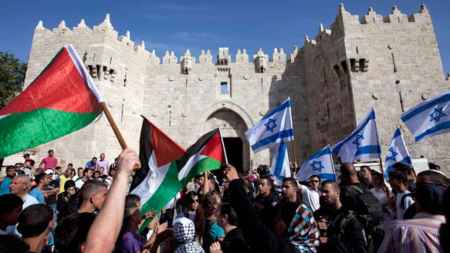
130730_israel_palestine_ap_328

At Israeli Apartheid Week, campus haters claim to be fighting “colonialism” by fighting Jews. Columbia University’s Center for Palestine Studies, dedicated to a country that doesn’t exist and which has produced nothing worth studying except terrorism, features diatribes such as Abdul Rahim al-Shaikh’s Palestine Re-Covered: Reading a Settler Colonial Landscape”. This word salad is a toxic stew of historical revisionism being used to justify the Muslim settler colonization of the indigenous Jewish population. 

Colonialism is CPS’ favorite word. When Israeli social workers remove abused children from Muslim homes, that’s colonialism. Israeli farms are a form of environmental “colonialism”. When non-profits aren’t representative enough, it’s the fault of the “Israeli settler-colonial regime.”  If it rains on Thursday, it’s caused by “colonialism,” preferably of the “Israeli Zionist colonial settler regime” variety.

But you can’t colonize colonizers. The Muslim population in Israel is a foreign colonist population. The indigenous Jewish population can resettle its own country, but it can’t colonize it.

Not even if you accuse Jews of being a “super-double-secret settler colonial regime.”

Muslims invaded, conquered and settled Israel. They forced their language and laws on the population. That’s the definition of colonialism. You can’t colonize and then complain that you’re being colonized when the natives take back the power that you stole from them.

There are Muslims in Israel for the same reason that there are Muslims in India. They are the remnants of a Muslim colonial regime that displaced and oppressed the indigenous non-Muslim population.

There are no serious historical arguments to be made against any of this.

The Muslim conquests and invasions are well-documented. The Muslim settlements fit every historical template of colonialism complete with importing a foreign population and social system that was imposed on the native population. Until they began losing wars to the indigenous Jewish population, the Muslim settlers were not ashamed of their colonial past, they gloried in it. Their historical legacy was based on seizing indigenous sites, appropriating them and renaming them after the new conquerors.

The only reason there’s a debate about the Temple Mount is because Caliph Omar conquered Jerusalem and ordered a mosque built on a holy Jewish site. The only reason there’s a debate about East Jerusalem is because invading Muslim armies seized half the city in 1948, bombed synagogues and ethnically cleansed the Jewish population to achieve an artificial Muslim settler majority. The only Muslim claim to Jerusalem or to any other part of Israel is based purely on the enterprise of colonial violence.

There is no Muslim claim to Israel based on anything other than colonialism, invasion and settlement.

Israel is littered with Omar mosques, including one built in the courtyard of the Church of the Holy Sepulchre, because Islam is a colonial entity whose mosques testify to their invasive origins by celebrating colonialism as their true religion. The faith of Islam is the sworn religion of the sword.

Islam is a religion of colonialism that spread through invasion, settlement and conquest. Its caliphs, from the original invaders, including Omar, to the current Caliph of ISIS, wielded and wield religious authority in the service of the Islamic colonial enterprise.

Allah is the patron deity of colonialism. Jihad is just colonialism in Arabic. Islamic theology is nothing but the manifest destiny of the Muslim conquest of the world, colonial settler enterprises dressed up in the filmy trappings of religion appropriated from the culture of conquered Jewish and Christian minorities. Muslim terrorism is a reactionary colonial response to the liberation movements of the indigenous Jewish population.

Even “Allahu Akbar” did not originate as a religious sentiment. It does not mean “God is Great”, as it is often mistranslated. It was Mohammed’s taunt to the Jews he was ethnically cleansing. His purge of a minority group proved that “Allah was Greater.” Islamic colonialism is used to demonstrate the existence of Allah. And the best way to worship Allah is through the colonialism of the Jihad.

Islam would not have existed without colonialism. It still can’t exist without it. That is why the violence continues. The only way to end the violence is for Muslims to reject their theology of colonialism.

But instead of taking ownership of their real history, the Muslim settler population evades its guilt through propaganda by claiming to be the victims of colonialism by the indigenous Jewish population. This twisted historical revisionism is backed by bizarre nonsense such as claiming that Jesus was a Palestinian or that the Arabs are descended from the Philistines. The Muslim settlers insist on continuing to celebrate colonialism while claiming to be an indigenous population that was always living in Israel.

You can have one or the other. You can have your mosques celebrating the conquest and suppression of the indigenous population or your claims of being the indigenous population. But you can’t switch from being the indigenous population to being its conquerors whenever it suits your pseudo-historical narrative. You can’t claim to be the Philistines, the Jews and their Islamic conquerors at the same time.

From its Roman origins, Palestine has always been a colonial fantasy of remaking Israel by erasing its original Jewish identity. The Arab mercenaries who were deployed by the Romans in that original colonial enterprise continued it by becoming self-employed conquerors for their own colonial empire. The name Palestine remains a linguistic settlement for reimagining a country without a people and a past as a blank slate on which the colonial identity of the invaders can be written anew.

That is still the role that the Palestine myth and mythology serves.

Abdul Rahim al-Shaikh complains about “linguistic colonialism”. When Muslims rename the Spring of Elisha, a Jewish biblical figure, Ein as-Sultan in honor of an Islamic colonial ruler, that’s linguistic colonialism. When Jews restore the original indigenous names that Jewish sites held before Muslim colonialism, that’s not colonization. It’s the exact opposite. It’s decolonization.

Promoting mythical claims of a Palestinian state isn’t decolonization, it’s colonization. Or recolonization.

Advocates for “Palestine” are not fighting colonialism, but promoting it. They are advocating for a discredited Muslim settler fantasy and against the indigenous Jewish population of Israel.

Abdul Rahim al-Shaikh complains about “geographic amnesia” among “Palestinians”. There’s no geographic amnesia because you can’t remember what never existed. There’s only paramnesia because there was never a country named Palestine.

Palestine has no history. It has no people. It has no borders. It has never been anything except a colonial invention. It is a name used by a variety of foreign settlers operating on behalf of colonial empires.

You can’t colonize Palestine. How can you colonize a colonial myth? You can only decolonize it.

Every Jewish home built on land formerly under the control of the Caliphs is decolonization and decaliphization. When Jews ascend the Temple Mount, they are also engaging in decolonization and decaliphization. When the liberation forces of the Jewish indigenous population shoot a Jihadist colonist fighting to impose yet another Islamic State on Israel, that too is decolonization and decaliphization.

Resistance to Islamic terrorism is resistance to colonialism. And Jews have the longest history of resisting the Islamic State under its various Caliphs throughout history. Israel is still resisting the colonialist Jihadist plans for the restorations of the Caliphate. Zionism is a machine that kills Islamic colonialism.

The existence of Israel not only means the decolonization of Abdul Rahim al-Shaikh’s imaginary colonial fantasies of “Palestine,” but inspires resistance in peoples struggling against Islamic colonialism throughout the region, from the Copts to the Berbers to secular intellectuals fighting for freedom.

Islamic colonialism has always been defeated, whether at the Gates of Vienna or in the Sinai Desert. Its colonial fantasies are false and will be defeated as many times as it takes, whether in the form of Palestine or ISIS.

